Lead Certification Requirements: A Practical Guide for Contractors and Renovators

Working on an older property can create risks that are not obvious when a renovation first begins. Layers of newer paint may hide older lead-based coatings, and activities such as sanding, cutting, drilling, scraping, demolition, or window replacement can release contaminated dust when those surfaces are disturbed.
For contractors and renovators, understanding lead certification requirements is therefore part of responsible project planning. The goal is not simply to hold a certificate. Contractors also need to know when lead-related rules may apply, who must be trained, how the work area should be managed, what records should be maintained, and when state or local requirements need to be checked.
In the United States, the EPA’s Renovation, Repair and Painting (RRP) program applies to many paid renovation projects that disturb painted surfaces in pre-1978 housing and child-occupied facilities. Covered firms must meet certification, training, work-practice, pre-renovation education, and documentation requirements.
Lead Certification Requirements at a Glance
Before beginning work on an older property, contractors should determine:
- When the property was built.
- Whether painted surfaces will be disturbed.
- Whether the building is housing or a child-occupied facility covered by applicable rules.
- Whether the company itself requires certification.
- Whether a certified renovator must be assigned to the project.
- How workers will be trained and supervised.
- Which containment and dust-control procedures apply.
- What records must be created and retained.
- Whether the state, Tribe, territory, or local authority operates requirements that differ from the federal EPA program.
This assessment should happen during project planning rather than after demolition or surface preparation has started.
Why Lead Certification Matters During Renovation
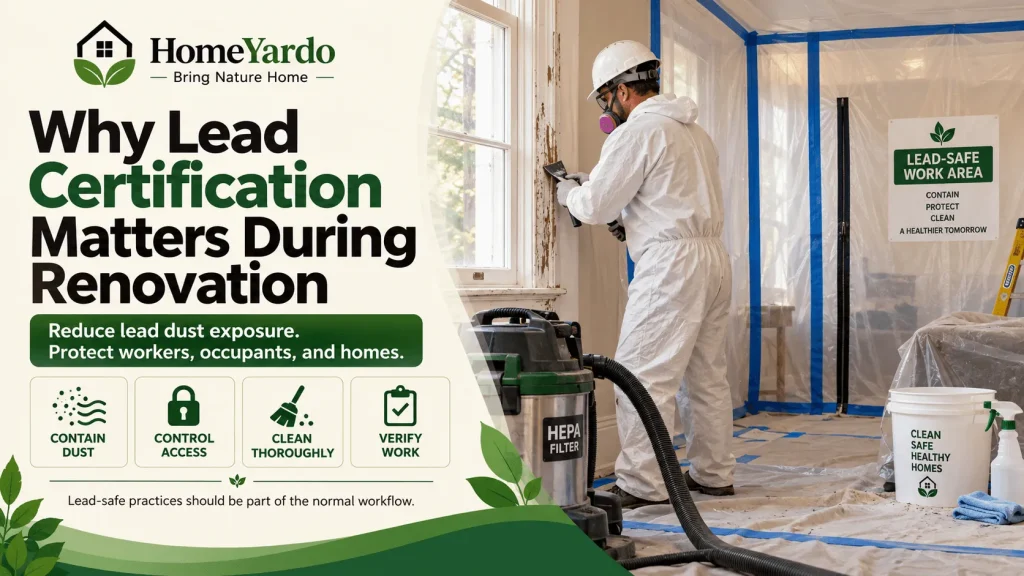
Lead certification programs are designed to reduce exposure to lead-contaminated dust and debris created during renovation work.
Paint that appears stable before construction can become a hazard when it is cut, sanded, drilled, scraped, or otherwise disturbed. Dust can move beyond the immediate work area and settle on floors, furniture, equipment, outdoor surfaces, or other parts of the building.
EPA lead-safe work practices address this risk through measures such as containment, dust control, restricted work methods, cleaning, and post-work verification.
For contractors, these procedures should become part of the normal project workflow rather than being treated as a separate task added after work begins.
Contractors planning larger residential projects can also review HomeYardo’s home remodeling planning guide to coordinate permits, project scope, contractor responsibilities, scheduling, and other pre-construction decisions.
Which Projects May Require Lead Certification?
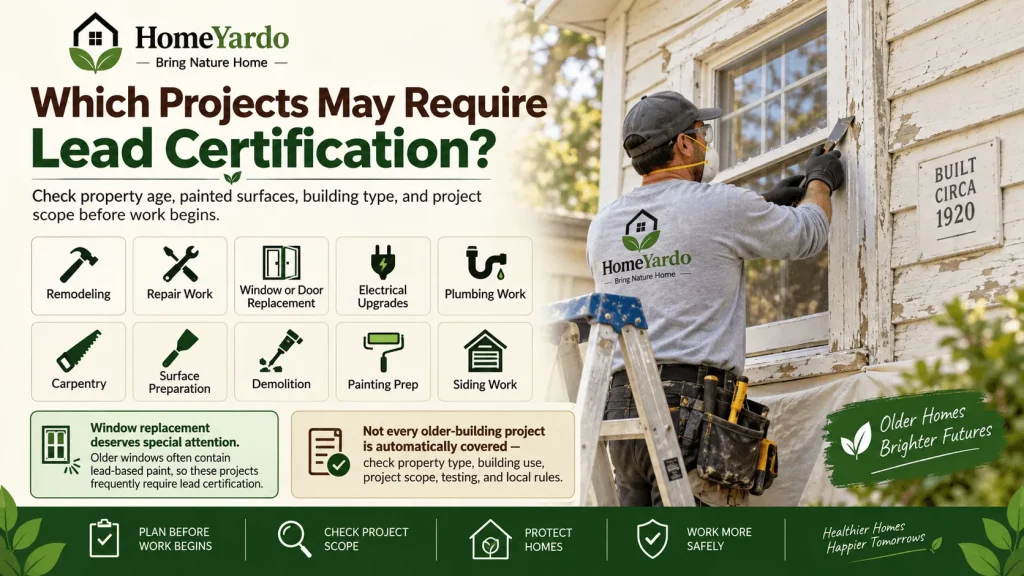
Property age is one of the first factors to check.
EPA’s RRP program generally applies when a contractor or other paid professional disturbs painted surfaces in housing or child-occupied facilities built before 1978. Contractors covered by the program can include general contractors as well as painters, plumbers, carpenters, electricians, and other specialty trades.
This means lead-related requirements are not limited to projects described as painting jobs.
Potentially affected work can include:
- remodeling;
- repair work;
- window or door replacement;
- electrical upgrades;
- plumbing work;
- carpentry;
- surface preparation;
- demolition;
- painting preparation;
- siding work; and
- other activities that disturb existing painted materials.
Window replacement deserves particular attention because removing old frames, trim, sashes, or painted components can disturb multiple surfaces. Contractors planning this type of work can also review HomeYardo’s window replacement planning guide before finalizing the project scope.
Not every older-building project is automatically subject to the same requirements. Property type, building use, project scope, testing results, jurisdiction, and specific regulatory exceptions can affect what applies.
The safest planning approach is to determine applicability before work begins rather than assuming a small or familiar project is exempt.
Firm Certification and Certified Renovators Are Not the Same Thing
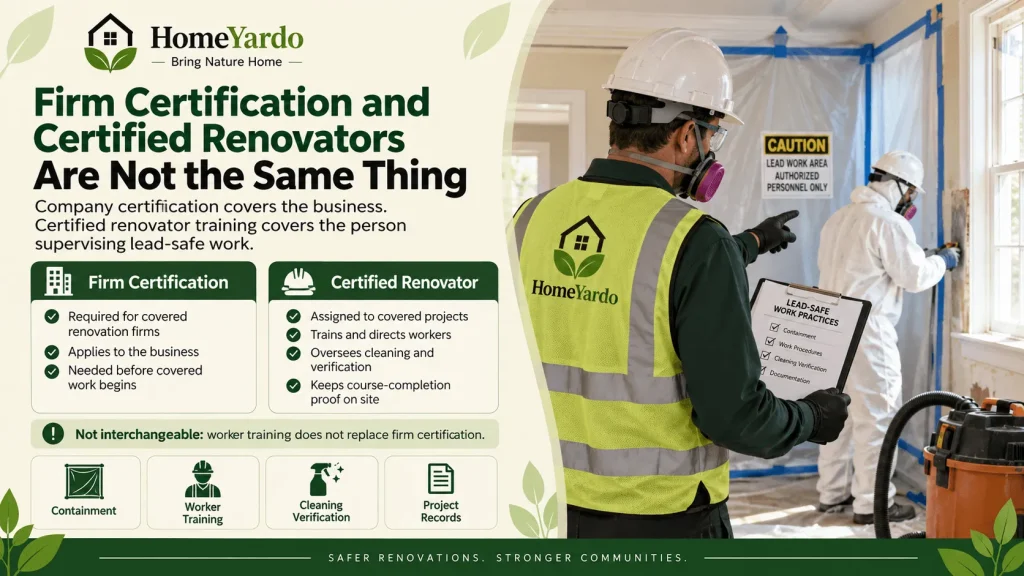
One point that can cause confusion is the difference between certification of the renovation business and training of the person supervising lead-safe work.
Under the federal RRP program, covered renovation firms must be certified. A covered project must also have a certified renovator assigned to it, and other workers must receive the required training for the work they perform.
The certified renovator has specific responsibilities on the job.
These can include:
- helping establish required containment;
- providing on-the-job instruction to workers who are not certified renovators;
- directing work so lead-safe procedures are followed;
- monitoring containment;
- overseeing required cleaning;
- completing cleaning verification; and
- preparing required project records.
EPA guidance also requires certified renovators to have their applicable course-completion documentation available at the worksite.
Contractors should therefore avoid treating an employee’s training certificate as a substitute for firm certification, or vice versa.
Preparing for Lead Certification Training
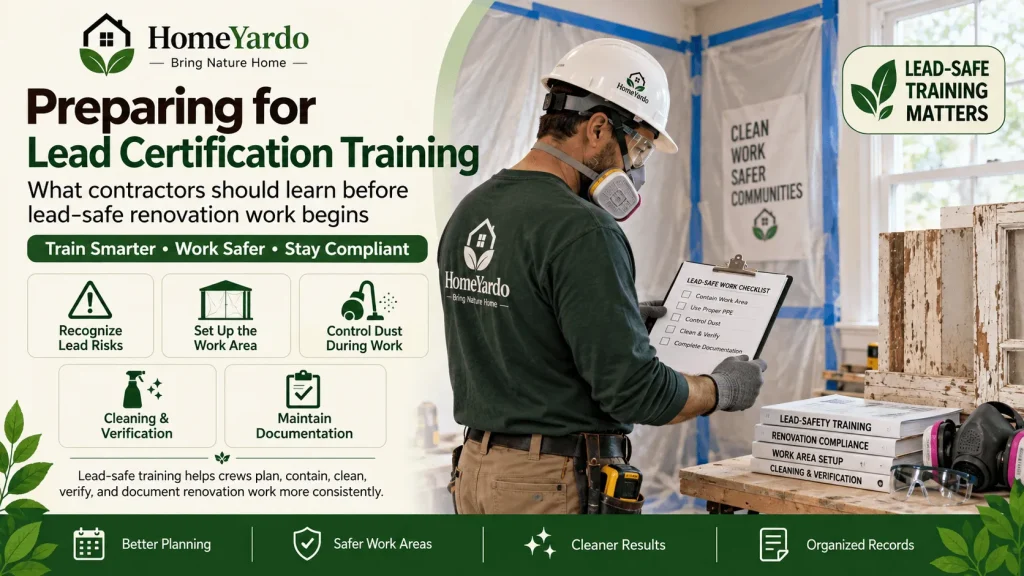
Professional training helps contractors understand how to manage renovation work when lead-safe requirements apply.
Training commonly addresses subjects such as:
Recognizing Potential Lead Risks
Contractors learn how building age, painted components, work methods, and project scope affect lead-related planning.
Setting Up the Work Area
Containment helps prevent dust and debris from spreading into occupied rooms, adjacent spaces, or surrounding outdoor areas.
Controlling Dust During Work
Work methods should reduce unnecessary dust generation and keep debris inside the controlled area.
Cleaning and Verification
Cleanup is not simply a normal end-of-day sweep. Covered RRP work includes specific cleaning and verification procedures intended to confirm that the work area has been properly addressed before normal use resumes.
Maintaining Required Documentation
Contractors need a repeatable process for documenting certification, worker training, project procedures, pre-renovation education, testing where applicable, and other required information.
Organizations such as Lead Classes offer educational options that can help professionals understand these procedures.
Contractors should still confirm that the course or training provider they choose satisfies the requirements that apply in the jurisdiction where they will actually perform work.
What Should Contractors Check Before Starting Work?

Lead-related planning should begin alongside the normal project assessment.
Before disturbing painted surfaces, review the following questions.
When Was the Property Built?
Confirming the construction date helps determine whether pre-1978 lead requirements need closer review.
Which Painted Components Will Be Disturbed?
Do not evaluate only walls.
Windows, doors, trim, baseboards, cabinets, siding, railings, ceilings, and other painted components may also be affected.
What Type of Building Is It?
Requirements can differ depending on whether the property is a private residence, rental unit, apartment building, school, childcare facility, commercial building, or another type of property.
Has Applicable Lead Testing Been Completed?
Where permitted and appropriate, testing or existing inspection records may affect how the project is handled. Contractors should use testing methods and professionals that satisfy the governing program rather than relying on informal assumptions about paint age.
Which Regulatory Program Applies?
Some states and other jurisdictions operate EPA-authorized RRP programs instead of the federal program. Contractors working across jurisdictional lines may therefore face different certification or renewal requirements.
Applying Lead-Safe Practices on the Job
Certification has the most value when training becomes part of everyday jobsite procedures.
A lead-safe workflow should address the entire project rather than only the moment when paint is being removed.
Control Access to the Work Area
Workers, occupants, pets, and visitors should not move freely through an area where contaminated dust or debris may be present.
Establish Containment Before Disturbing Surfaces
Protect surrounding surfaces and prevent dust from leaving the work zone.
Use Appropriate Work Methods
EPA requirements prohibit or restrict certain high-dust practices on covered projects and call for methods that reduce the movement of contaminated dust and debris.
Manage Debris Carefully
Waste from painted surfaces should be handled so dust and debris are not spread during collection, transport through the building, or disposal.
Complete Thorough Cleaning
Cleaning should follow the applicable lead-safe procedure rather than normal construction housekeeping alone.
For contractors handling occupied properties, HomeYardo’s commercial painting project planning guide also explains how work zones, access, occupants, surface conditions, and project scheduling can be coordinated before painting or surface preparation begins.
Pre-Renovation Communication Is Part of Compliance
Lead-safe renovation is not limited to what happens after tools come out.
EPA’s RRP requirements include pre-renovation education for covered projects. Firms performing applicable work must provide the required lead-hazard information before renovation begins and document that the requirement was met.
Contractors should therefore build owner or occupant communication into the pre-construction checklist.
That may include confirming:
- who receives required notices;
- when documents are provided;
- who records receipt or delivery;
- which areas will be restricted;
- how occupants should use the property during work; and
- who should be contacted if project conditions change.
Clear communication also reduces confusion when containment affects entrances, rooms, walkways, parking areas, or normal building use.
Keep Lead-Safe Project Records Organized
Documentation is one of the areas contractors can easily overlook when the physical renovation receives most of the attention.
Under the federal RRP program, renovation firms generally must retain required project records for three years after completion of the renovation. EPA identifies records related to matters such as certified-renovator credentials, worker training, assignment of the certified renovator, testing information where applicable, pre-renovation education, and work-practice documentation.
A simple project file can organize:
- property information;
- project dates;
- applicable certification documents;
- assigned certified renovator;
- worker training records;
- testing or inspection information;
- pre-renovation documentation;
- jobsite checklists;
- cleaning and verification records; and
- other records required by the applicable program.
EPA permits required RRP records to be stored electronically as long as applicable records remain accessible when required.
A consistent documentation system can make compliance easier across multiple projects and crews.
Lead-Safe Renovation and Lead Abatement Are Different
Contractors should also distinguish ordinary renovation work from lead abatement.
Renovation, repair, and painting activities may disturb lead-based paint while accomplishing another purpose, such as replacing a window, remodeling a kitchen, or repairing a wall.
Lead abatement is work specifically intended to permanently eliminate lead-based paint hazards and is subject to a different regulatory framework.
A contractor qualified for renovation work should not assume that the same credentials automatically authorize specialized lead-abatement activities.
Keeping Certification and Training Current
Lead certification should not be treated as something a contractor completes once and never reviews again.
Firm certifications, individual training credentials, refresher requirements, approved training formats, and state rules can change or expire.
EPA firm certification is time-limited, and contractors are advised to submit recertification applications before the existing certification expires.
A practical internal review might include:
- checking firm certification expiration dates;
- checking employee training dates;
- confirming whether refresher training is needed;
- reviewing current EPA or state guidance;
- confirming training-provider accreditation;
- updating project forms;
- reviewing containment and cleaning procedures; and
- making sure new workers receive appropriate instruction.
Building these checks into normal business operations is easier than discovering an expired credential immediately before a scheduled project.
A Simple Lead-Safe Pre-Project Workflow
A repeatable process can make lead-related planning easier.
Step 1: Confirm the property’s construction date and use.
Step 2: Identify every painted component likely to be disturbed.
Step 3: Determine which federal, state, Tribal, territorial, or local rules apply.
Step 4: Verify firm certification and renovator training before scheduling covered work.
Step 5: Complete required pre-renovation communication and documentation.
Step 6: Plan containment, dust control, worker responsibilities, and occupant protection.
Step 7: Follow the required lead-safe work practices throughout the project.
Step 8: Complete cleaning and verification procedures.
Step 9: Organize and retain the required records.
Using the same process from project to project makes it less likely that an important compliance step will be missed during a busy renovation schedule.
Staying Prepared for Work on Older Properties
Understanding lead certification requirements helps contractors plan older-property renovations before painted surfaces are disturbed.
The strongest approach combines proper certification with early project screening, trained workers, clear containment procedures, controlled work methods, thorough cleaning, communication with occupants, and organized documentation.
Requirements can differ by property and jurisdiction, so contractors should verify the rules that apply to each project rather than relying solely on practices used on a previous job.
When lead-safe procedures become part of standard project planning, contractors are better prepared to manage older buildings consistently while reducing unnecessary lead-dust exposure for workers, occupants, and surrounding areas.
FAQ’s
Lead certification requirements are rules governing contractors and renovation firms that disturb painted surfaces where lead-based paint may be present. Under the federal EPA RRP program, covered firms must be certified, appropriate workers must be trained, lead-safe work practices must be followed, and required records must be maintained.
Federal RRP requirements generally apply to firms paid to disturb painted surfaces in covered pre-1978 housing and child-occupied facilities. This can include general contractors, painters, plumbers, electricians, carpenters, and other specialty trades.
Not necessarily. Applicability depends on factors such as building use, work being performed, painted surfaces affected, applicable exceptions, and jurisdiction. Contractors should determine which program applies before starting work.
No. Firm certification applies to the renovation business, while certified renovator training applies to the individual performing designated responsibilities on covered projects. A contractor should confirm that both firm-level and worker-level requirements are satisfied where applicable.
Window replacement can be covered by the RRP Rule when performed in applicable pre-1978 housing or child-occupied facilities because removing windows and trim can disturb painted surfaces.
Under the federal RRP program, required renovation records generally must be retained for three years after completion of the project. State or other authorized programs may have their own requirements.
No. EPA administers the federal RRP program in many jurisdictions, while certain states and Tribal authorities operate their own EPA-authorized programs. Contractors should verify the rules for every jurisdiction in which they work.
Confirm the property’s age and use, identify which painted components will be disturbed, determine which lead regulations apply, verify required certifications and training, provide any required pre-renovation information, and plan containment, cleaning, documentation, and worker responsibilities before work begins.