Why Garden Aesthetic Appeal Matters In Your Garden
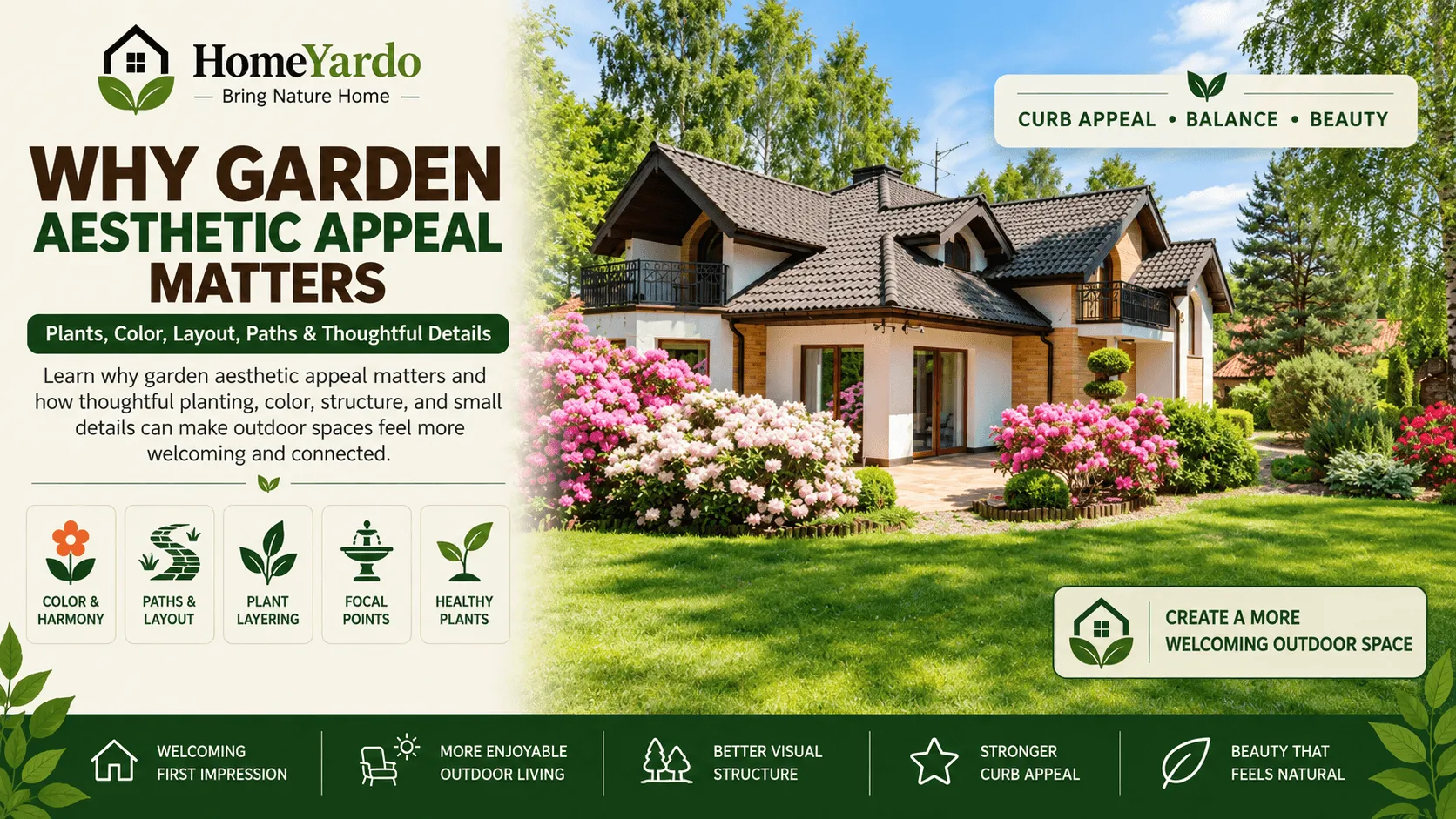
Have you ever walked into a garden and immediately felt that everything seemed to belong where it was? The flowers may not be rare, the yard may not be large, and the design may not be expensive, yet the space feels balanced and inviting.
That feeling is closely connected to garden aesthetic appeal.
Garden aesthetic appeal comes from the way plants, colors, textures, pathways, decorative features, and open spaces work together. It is not simply about filling a yard with flowers or adding ornaments. A visually appealing garden usually has a sense of order while still feeling natural and comfortable.
Small improvements can make a noticeable difference. Defining a flower bed, repeating a few colors, choosing plants that fit the available space, or adding a single focal point can change how the entire garden looks and feels.
More importantly, attractive garden design should work alongside good plant care. A garden is easier to enjoy when its plants are healthy, its paths are usable, and its layout fits how the outdoor space is actually used.
What Is Garden Aesthetic Appeal?
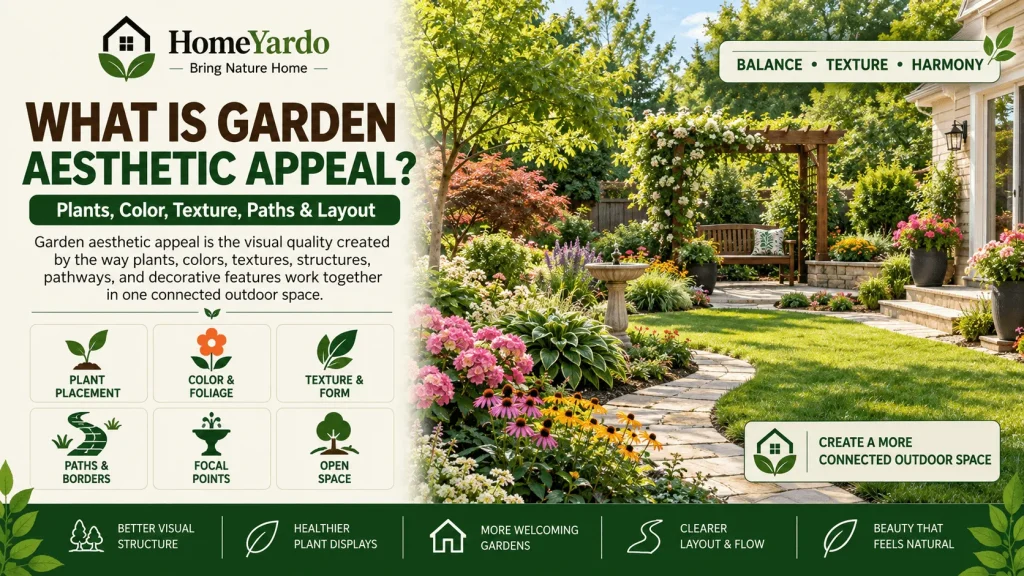
Garden aesthetic appeal is the visual quality created by the relationship between plants, colors, textures, structures, paths, decorative elements, and the overall layout of an outdoor space.
A garden does not need perfect symmetry or an elaborate landscape plan to look attractive. What matters more is whether the different elements feel connected.
Several design features commonly influence how a garden looks:
- Plant height and placement
- Flower and foliage colors
- Plant shapes and textures
- Defined beds and borders
- Paths and walkways
- Containers and planters
- Garden furniture
- Decorative accents
- Focal points
- Open space between features
The condition of these elements matters too. Healthy plants, trimmed edges, clean paths, and well-maintained containers often have a greater visual effect than adding more decorations.
The aim is not to make every part of the garden demand attention. A well-planned space allows some areas to stand out while others provide a quieter background.
Why Garden Aesthetic Appeal Matters
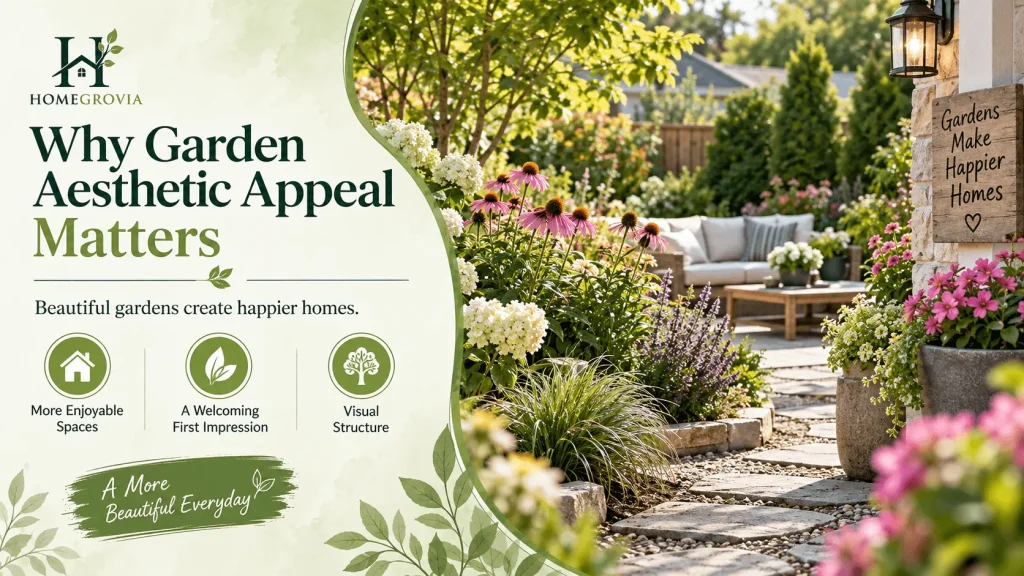
A garden is part of the home environment, so its appearance can influence how people experience the property.
An attractive garden can make an entrance feel friendlier, turn a patio into a more enjoyable sitting area, or make a backyard feel like a purposeful extension of the home.
Garden aesthetic appeal also gives the landscape visual structure. Instead of seeing unrelated plants, pots, paths, and furniture, the eye begins to read the garden as one connected space.
It Makes Outdoor Spaces More Enjoyable
People are more likely to use outdoor areas that feel comfortable and cared for.
A garden with clear pathways, healthy plants, suitable seating, and a pleasant view gives homeowners more reasons to spend time outdoors. It can become a place for reading, eating, talking with family, tending plants, or simply sitting outside for a while.
This does not require a large property. A small courtyard, patio garden, side yard, or balcony can still have strong visual appeal when its layout fits the available space.
The same principle applies to larger yards. HomeYardo’s guide to designing a backyard around the way you live explains why the best outdoor layouts begin with how the space will actually be used rather than appearance alone.
It Creates a Welcoming First Impression
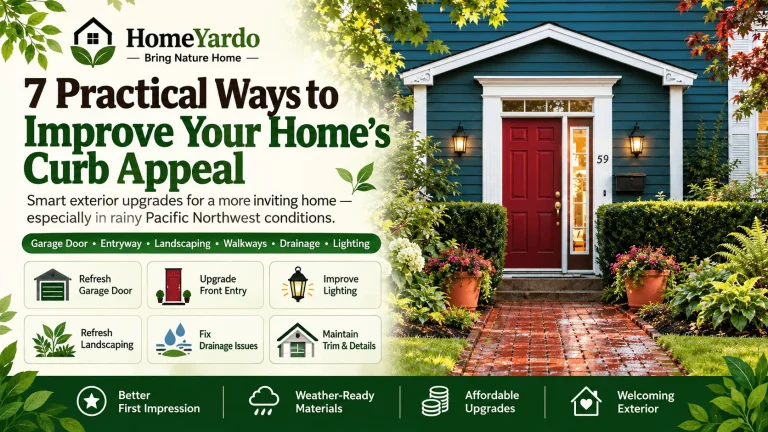
The front garden is often one of the first parts of a property that visitors notice.
Overgrown plants, damaged edging, empty containers, or cluttered pathways can make an otherwise attractive home feel less cared for. Simple changes can have the opposite effect.
Defined borders, appropriately sized plants, a visible entrance path, and repeated colors can make the front garden appear more organized.
You do not need to redesign the entire yard. Cleaning one prominent bed or improving the planting around the entrance may be enough to change the overall impression.
It Gives the Garden Visual Structure
Without some structure, even a garden filled with attractive plants can look disconnected.
Structure can come from many places:
- A pathway leading through the garden
- Evergreen shrubs providing a permanent framework
- Repeated plants along a border
- A tree acting as a focal point
- Low plants defining the front of a bed
- Taller plants creating a background
- Containers connecting a patio with nearby planting
This organization helps guide the eye through the space rather than making every element compete for attention.
The Elements That Make a Garden Look Attractive
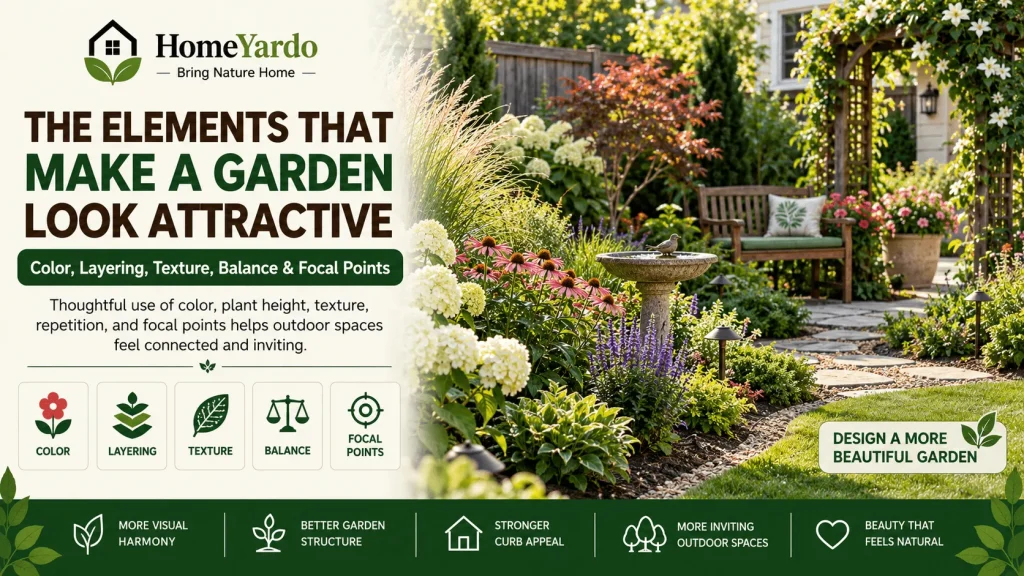
There is no single formula for an attractive garden. Formal landscapes, cottage gardens, native gardens, contemporary yards, and naturalistic planting styles can all look appealing.
What they often share is thoughtful use of a few basic visual elements.
Color
Color is one of the easiest ways to influence garden aesthetic appeal.
A garden filled with many unrelated flower colors can sometimes feel busy. Repeating a smaller number of colors across beds or containers can make separate sections feel connected.
You might use two or three flower colors throughout the main planting areas, then let green foliage act as the background.
Color does not come only from flowers. Leaves, bark, berries, containers, furniture, walls, stone, and garden art also affect the palette.
Seasonal planning matters as well. HomeYardo’s guide to summer flowers for heat, pots, and garden color can help when choosing plants that provide color during warmer months.
Plant Height and Layering
Different plant heights create depth.
A simple border might include:
- Taller shrubs or ornamental grasses toward the back
- Medium-height flowering plants through the middle
- Shorter perennials or ground covers along the front
The exact arrangement depends on where the bed will be viewed from.
An island bed viewed from several sides may place taller plants closer to the center, while a border against a fence usually places height toward the back.
Mature plant size matters more than the size of the plant when purchased. Crowding young plants together for an immediate full appearance may create problems once they grow.
Texture and Plant Form
Two plants can be the same shade of green and still look very different because of their texture and shape.
Fine grasses, broad hosta leaves, glossy evergreen foliage, delicate flowers, rough bark, and rounded shrubs each reflect light and occupy space differently.
Combining a few contrasting textures can make planting more interesting without relying on constant flowers.
Hardscape materials add another layer. Stone, timber, gravel, brick, metal, and ceramics can provide visual contrast against softer plant material.
Repetition and Balance
Repetition helps connect one part of the garden with another.
You might repeat:
- The same flower in several beds
- Similar containers near different entrances
- One edging material throughout the yard
- A recurring foliage color
- The same paving material along connected paths
Repetition does not mean every section must look identical. The goal is to give the eye familiar elements as it moves through the garden.
Balance is also different from symmetry. A natural-looking garden can feel balanced even when the left and right sides are not mirror images.
Focal Points
A focal point gives the eye somewhere to rest.
Common garden focal points include:
- A specimen tree
- A flowering shrub
- A large planter
- A birdbath
- A bench
- A sculpture
- An arbor
- A small water feature
The strongest focal points have enough surrounding space to stand out.
Adding too many statement pieces can weaken their effect. One carefully positioned feature may have more impact than several unrelated ornaments placed close together.
Small Details Can Improve Garden Aesthetic Appeal
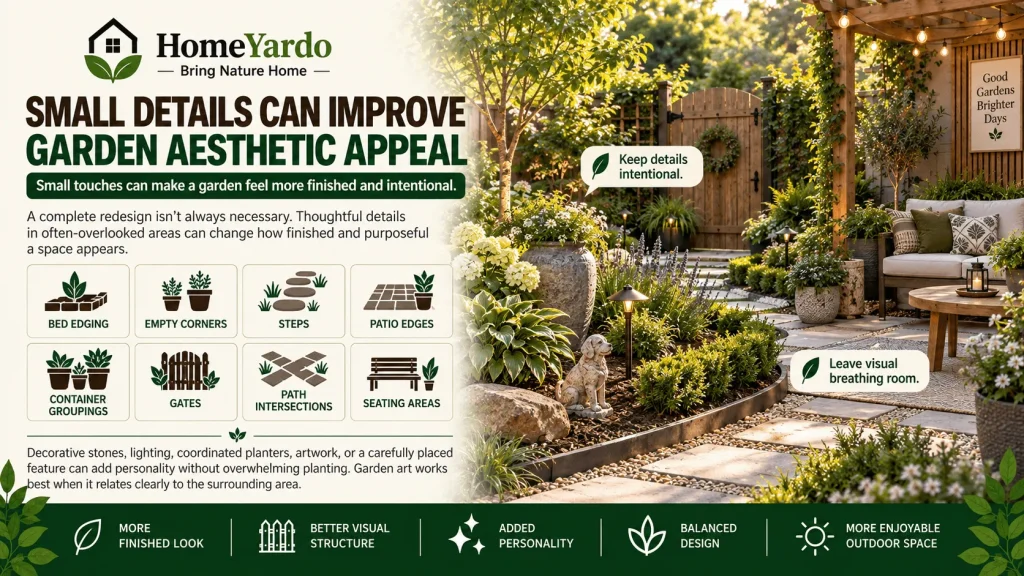
A complete garden redesign is not always necessary. Small details can change how finished and intentional a space appears.
Consider areas that are easy to overlook:
- Bed edging
- Empty corners
- Steps
- Patio edges
- Container groupings
- Gates
- Path intersections
- Seating areas
Decorative stones, lighting, coordinated planters, artwork, or a carefully placed feature can add personality without overwhelming the planting.
Garden art works best when it has a clear relationship with the surrounding area. Homeowners may use sculptures, decorative planters, patterned stepping stones, or unique mosaic art and decor to introduce color and texture to a quiet corner.
The goal should be to support the garden rather than cover every open area with decoration.
Leaving some visual breathing room often makes the details you do choose more noticeable.
Healthy Plants Are the Foundation of an Attractive Garden
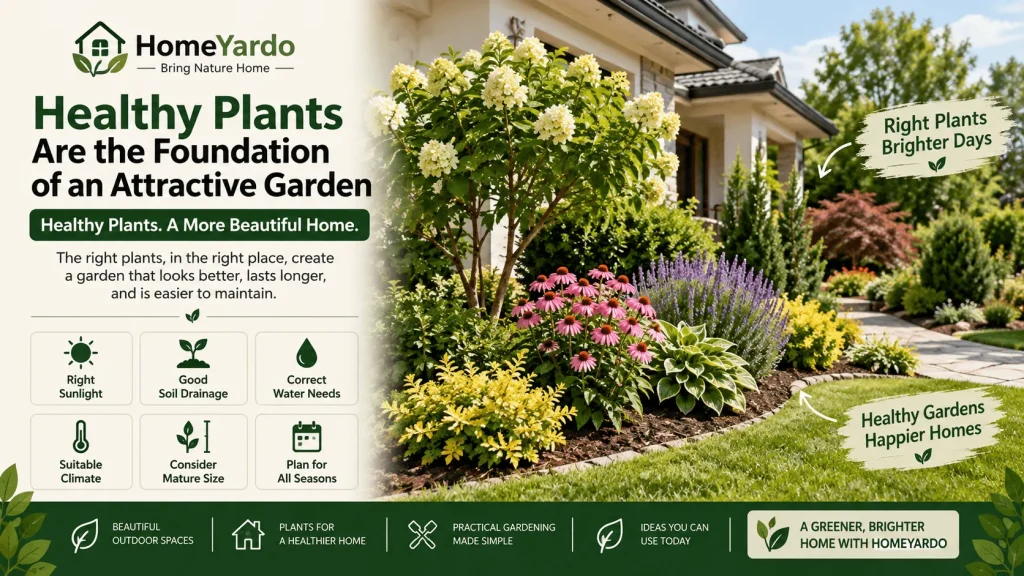
Garden aesthetics and plant health should not be treated as separate subjects.
A beautifully arranged flower bed will lose much of its appeal if the plants are repeatedly stressed, overcrowded, diseased, or unsuitable for the site.
Before choosing a plant because of its appearance, consider:
- Available sunlight
- Soil drainage
- Water requirements
- Local climate
- Mature height and width
- Maintenance needs
- Seasonal appearance
A plant that naturally suits its location is usually easier to keep looking healthy.
Choose Plants for the Site, Not Appearance Alone
It is easy to select plants at a garden center based on how they look while flowering. Their long-term needs matter more.
A shade-loving plant placed in intense afternoon sun may struggle no matter how carefully the surrounding bed was designed. A shrub that becomes eight feet wide will eventually cause problems if it is planted beside a narrow walkway.
HomeYardo’s guide to shrubs for full sun shows why light is only one consideration. Mature size, heat, soil drainage, water requirements, and local conditions also affect plant performance.
Use Shrubs to Create Long-Term Structure
Flowers provide seasonal interest, but shrubs can give the landscape a more permanent framework.
They can be used around foundations, entrances, fences, patios, and garden boundaries.
Evergreen shrubs may hold their shape and foliage through much of the year, while deciduous flowering shrubs can provide seasonal changes in flowers, foliage, berries, or stem color.
If you are planning a mixed border, HomeYardo’s guide to flowering bushes and shrubs can help compare plants by light, size, flowering season, and landscape use.
The aim is not to fill every available space with shrubs. Use them where lasting structure improves the composition.
Can an Attractive Garden Increase Home Value?
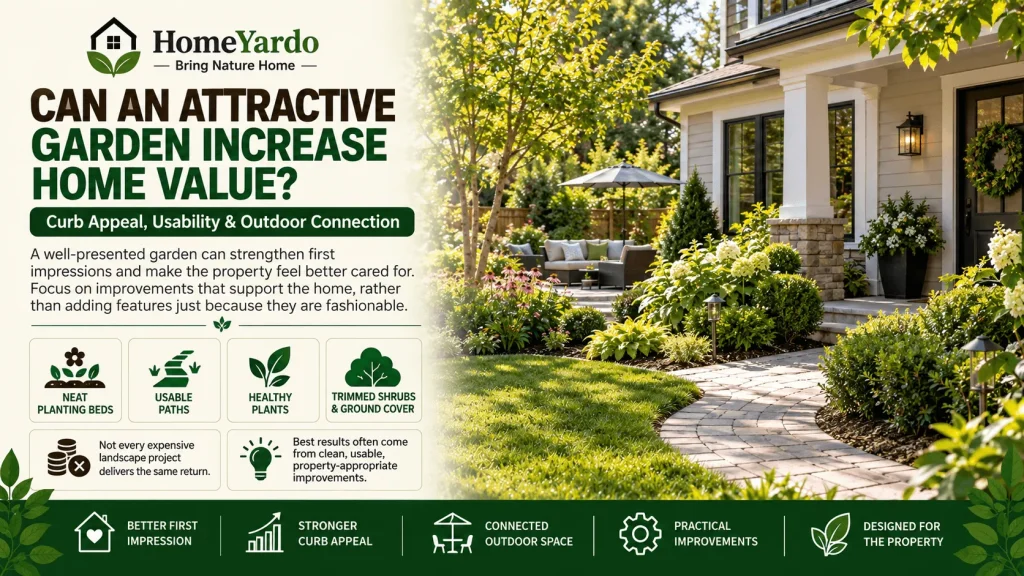
A well-presented garden can contribute to the overall curb appeal of a home.
Potential buyers often form an early impression from what they see outside. Neat planting beds, usable paths, healthy plants, trimmed shrubs, and maintained lawns or ground covers can make the property appear better cared for.
That does not mean every expensive landscape project will produce an equal financial return.
Garden improvements are often most useful when they make the property feel clean, usable, and appropriate for its setting.
The garden also forms part of the wider outdoor space, so its appearance can influence how connected the patio, yard, walkways, and exterior of the home feel.
When preparing a garden for visual appeal, focus on improvements that work with the property rather than adding features simply because they are fashionable.
How to Improve Garden Aesthetic Appeal Without a Major Redesign
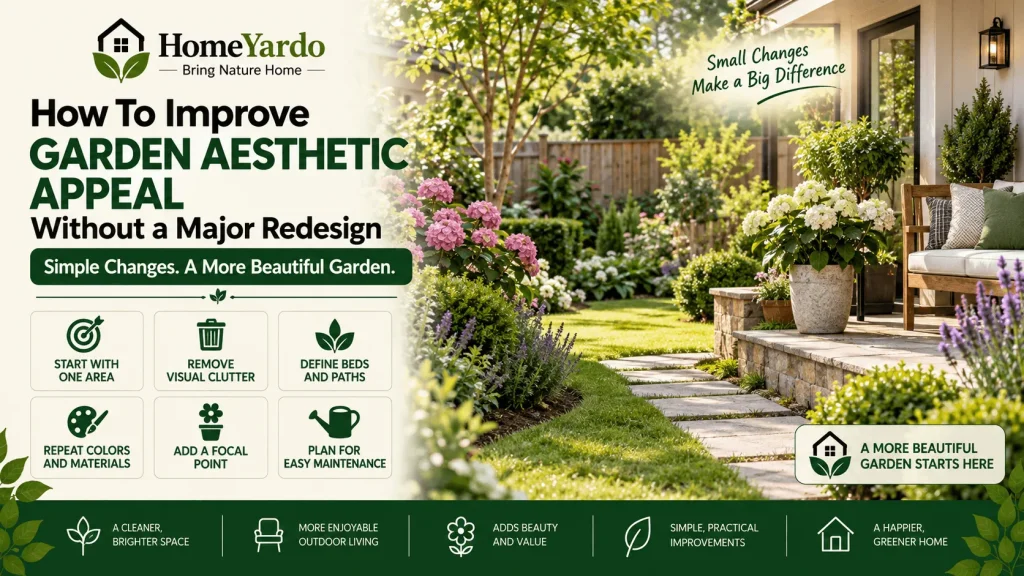
You can improve an existing garden gradually. Starting with the most visible problems usually produces better results than changing everything at once.
Start With One Visible Area
Choose the part of the garden you notice most often.
That might be:
- The front entrance
- The patio
- A flower border
- The main walkway
- The area outside a kitchen window
- A seating corner
Improving one area gives you a reference point for later changes elsewhere.
Remove Visual Clutter
Before buying anything new, look at what can be removed.
Old plastic pots, damaged ornaments, broken edging, dead plants, unused furniture, weeds, and piles of garden supplies can make a small space appear crowded.
Removing unnecessary items may improve the view more than purchasing new decorations.
Define Garden Beds and Paths
Clear boundaries help the garden feel organized.
A bed does not need expensive edging. A neat cut edge between lawn and planting can provide enough definition in many gardens.
Paths should also be easy to identify and use. Plants repeatedly spilling across narrow walkways can make the landscape feel untidy and may eventually interfere with access.
Repeat Colors and Materials
Look around the garden for elements that can be repeated.
If one patio contains terracotta pots, using the same material near another entrance can connect the two areas.
If a particular flower color already works well, repeat it elsewhere instead of introducing several unrelated colors.
Small repetitions help separate areas feel as though they belong to the same garden.
Add One Strong Focal Point
Look for an area that lacks direction.
A large container, flowering shrub, bench, piece of artwork, or specimen plant may be enough to anchor the view.
Position the feature where it can be seen naturally from an entrance, pathway, window, or seating area.
Make Maintenance Part of the Design
Some gardens look attractive immediately after installation but become difficult to maintain.
Consider how much time you realistically want to spend:
- Watering
- Weeding
- Pruning
- Deadheading
- Replacing annual plants
- Cleaning surfaces
- Maintaining lawn
A simpler garden that remains healthy and tidy often has stronger long-term aesthetic appeal than an elaborate design that requires more maintenance than the homeowner can provide.
HomeYardo’s low-maintenance backyard landscaping ideas offer practical ways to reduce repeated work while keeping the yard attractive.
Common Garden Design Mistakes That Reduce Visual Appeal
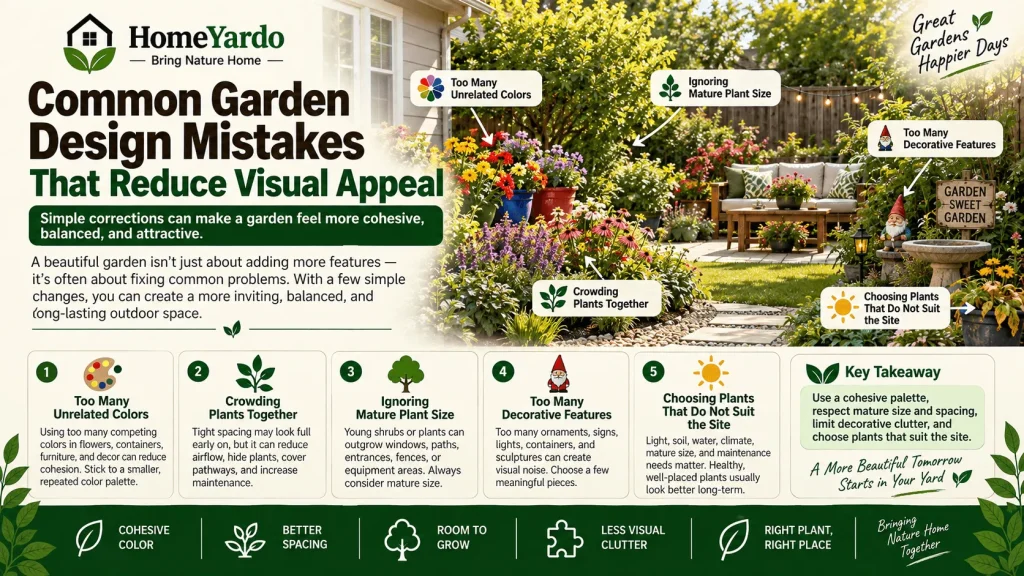
Sometimes improving garden aesthetic appeal is more about correcting existing problems than adding new features.
Using Too Many Unrelated Colors
Colorful does not have to mean using every available color.
Too many unrelated flower, container, furniture, and decorative colors can compete for attention.
Choose a smaller palette and repeat it throughout the garden when you want a more cohesive appearance.
Crowding Plants Together
Plants are often sold when they are much smaller than their mature size.
Planting them too closely can create quick fullness, but overcrowding may eventually restrict airflow, cover pathways, hide smaller plants, and create more maintenance.
Check mature dimensions before planting.
Ignoring Mature Plant Size
A shrub that looks perfect beside a window when young may eventually cover it.
The same issue occurs near paths, entrances, driveways, air-conditioning units, fences, and other structures.
Plan for the garden several years from now rather than only how it looks on planting day.
Adding Too Many Decorative Features
Garden ornaments should have enough space to be noticed.
Too many sculptures, signs, lights, containers, and decorative pieces can make the garden visually noisy.
Select pieces that support the style of the space and remove anything that no longer contributes to the design.
Choosing Plants That Do Not Suit the Site
An attractive plant is not automatically the right plant.
Light, soil, water, climate, mature dimensions, and maintenance requirements all affect whether it will continue looking good after planting.
A healthy plant in an appropriate location usually contributes more to garden aesthetics than a more dramatic plant constantly struggling to survive.
Let Your Garden Reflect Your Style
Garden aesthetic appeal does not require copying someone else’s landscape.
One homeowner may prefer structured evergreen beds and straight paths. Another may enjoy loose cottage-style planting filled with flowers. A third may want a simple patio surrounded by containers and low-maintenance shrubs.
All of these approaches can work.
What makes a garden feel complete is the relationship between its elements. Plants should suit the location. Paths should serve a purpose. Colors and materials should feel connected. Decorative pieces should have enough space to stand out.
Start with the area that matters most to you and improve it gradually.
A few well-chosen plants, cleaner borders, repeated colors, healthy foliage, and one thoughtful focal point can often improve garden aesthetic appeal more successfully than filling the yard with new features.
When appearance, plant health, usability, and personal style work together, the garden becomes more than something to look at. It becomes an outdoor space that feels like a natural part of the home.
FAQ’s
Garden aesthetic appeal is the visual quality of an outdoor space created by the way plants, colors, textures, paths, structures, decorations, and open areas work together. Good aesthetic appeal usually comes from balance and organization rather than simply adding more plants or ornaments.
Aesthetic appeal can make a garden feel more welcoming, organized, and enjoyable to use. It also helps individual elements such as flower beds, paths, patios, containers, shrubs, and seating areas feel like parts of one connected outdoor space.
Start by removing clutter, defining garden beds, keeping pathways clear, choosing plants suited to the location, repeating a few colors or materials, and adding one or two focal points. Regular maintenance also has a strong effect on the way a garden looks.
Begin with low-cost improvements such as weeding, pruning, cleaning paths, defining bed edges, refreshing mulch, rearranging containers, and removing damaged or unnecessary decorations. Improve one visible area at a time rather than redesigning the entire garden.