Summer Flowers: 80 Best Blooms for Heat, Pots, Color, and Pollinator Gardens
The flowers add colour, fragrance, texture and pollinator activity in the height of summer. Some are fast from seed, some come back for multiple seasons and others thrive in pots and hanging baskets, in cutting gardens, borders, or hot climate landscapes.
80 unique flowers are included in this guide, each with a name, time of bloom, light requirements, water requirements, notes, height, use in the garden and care information. Annuals, perennials, bulbs, corms, rhizomes, vines, shrubs and tropical flowering plants.
Not all flowers will flower all summer. Some are early summer bloomers, some hold color in midsummer and some last to late summer or fall. This will be determined by sun, heat, water, soil drainage, pot size and local climate.
Quick Answer: What Are The Best Summer Flowers?
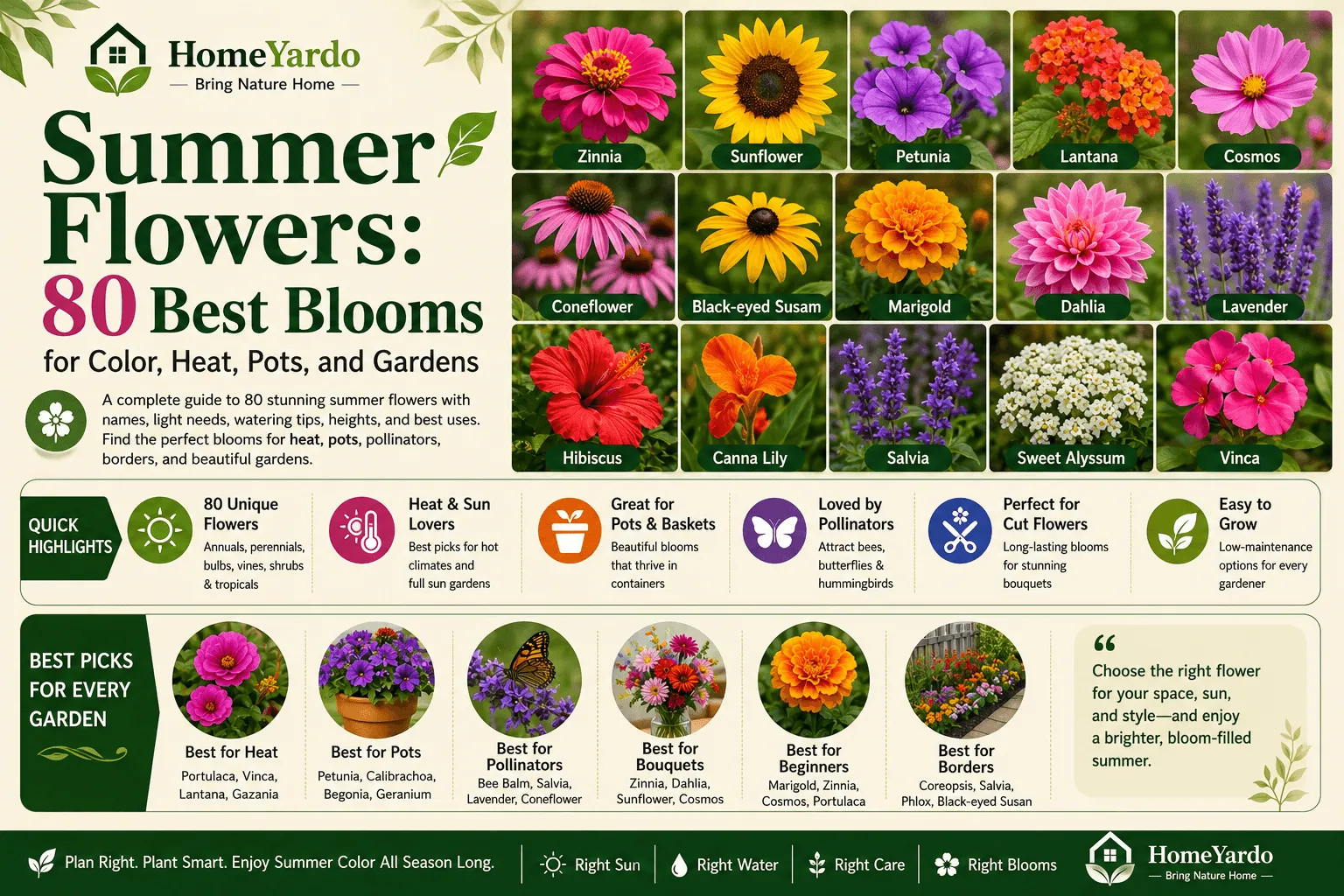
The top flowers for most gardens are marigold, zinnia and sunflowers, as well as petunia, cosmos, lantana and the black-eyed Susan. They are vibrant readily available and are great for borders, beds, pots and areas that are pollinator-friendly.
The most sought-after summer flowers include zinnias marigolds. sunflowers, cosmos, petunias, lantanas coneflowers, black-eyed Susans. These gorgeous summer flowers are great in the garden because they are able to withstand the warm sun and provide a strong hue and can be used in borders, beds, containers, and other pollinator-friendly areas.
The most appropriate choice is based on the type of space you have. complete sun or part shade dry or humid, container-based or is used for cutting flowers.
- Best for beginners: Marigold, zinnia, cosmos, portulaca, vinca, sunflower
- The best for high temperatures: Portulaca, Vinca, Lantana, Gazania, Celosia, Mexican sunflower
- Best for pots: Petunia, calibrachoa, begonia, geranium, fuchsia, verbena
- Ideal for pollinators: Bee balm, salvia, butterfly weed, lavender coneflower and Liatris
- Ideal for bouquets: Zinnia, dahlia sunflower, cosmos gladiolus, snapdragon
Summer Flowers Names At A Glance
A quick look at the comparison can to narrow down the top flowers to choose from the complete list. Find the appropriate sun level and water requirement, as well as the flower window and garden usage to ensure a stronger development.
| Flower | Type | Best Use | Light Need | Water Need | Bloom Window | Height | Container Friendly |
|---|---|---|---|---|---|---|---|
| Zinnia | Annual | Cutting garden, borders | Full sun | Moderate | Summer to frost | 1 to 4 ft | Yes |
| Marigold | Annual | Edging, beds, pots | Full sun | Low to moderate | Summer to frost | 6 in to 3 ft | Yes |
| Sunflower | Annual | Back borders, pollinators | Full sun | Moderate | Mid to late summer | 1 to 12 ft | Dwarf types |
| Petunia | Annual | Pots, baskets, borders | Full sun to part sun | Moderate | Spring to frost | 6 in to 2 ft | Yes |
| Lantana | Tender perennial | Heat, butterflies, pots | Full sun | Low once settled | Summer to fall | 1 to 6 ft | Yes |
| Cosmos | Annual | Cottage beds, bouquets | Full sun | Low to moderate | Summer to frost | 2 to 6 ft | Yes |
| Coneflower | Perennial | Pollinators, dry beds | Full sun | Low once settled | Mid to late summer | 2 to 5 ft | Some types |
| Black Eyed Susan | Perennial or annual | Borders, long color | Full sun | Low to moderate | Summer to fall | 1 to 4 ft | Some types |
| Dahlia | Tuber | Cut flowers, borders | Full sun | Moderate | Summer to fall | 1 to 6 ft | Dwarf types |
| Hibiscus | Shrub or perennial | Tropical color | Full sun | Moderate to high | Summer to fall | 2 to 10 ft | Yes |
| Canna Lily | Rhizome | Tall color, containers | Full sun | Moderate | Summer to fall | 3 to 8 ft | Yes |
| Lavender | Perennial | Fragrance, bees, edging | Full sun | Low | Early to midsummer | 1 to 3 ft | Yes |
| Begonia | Annual or tuber | Shade pots, beds | Part shade | Moderate | Summer to frost | 6 in to 2 ft | Yes |
| Portulaca | Annual | Hot dry spots | Full sun | Low | Summer to frost | 4 to 8 in | Yes |
| Calibrachoa | Annual | Hanging baskets | Full sun to part sun | Moderate | Spring to frost | 6 to 12 in | Yes |
How This List Of Summer Flowers Was Chosen
The flowers chosen were to meet a variety of gardening needs in the summer, such as full sun beds hot climates, containers border as well as pollinator gardens. They are also cutting flower arrangements plants for balconies, as well as huge backyard beds.
The list does not contain duplicate entries when a single flower has several commonly used names. Each flower was selected because of at least one important quality, such as the length of bloom temperature tolerance, the ability to tolerate heat, the value of the container colour range, pollinator support, scent, cutting value or ease of maintenance.
What Counts As A Summer Flower?
The term “summer flower” refers to a plant that blooms in the summer months or provides vibrant seasonal color during the warm season. Some flowering plants begin in late spring and bloom throughout summer, whereas others bloom later and keep flowering through the autumn.
Flowers that bloom in summer include perennials, annuals, bulbs corms, rhizome plants, vines, along with tropical and tropical-type plants. Certain plants are planted primarily to bloom, while others are also used for scent, foliage and height. They also provide structure.
This guide is focused on flowers in outdoor plants that are not vegetables, grass plants or even foliage-only plants.
Annual Vs Perennial Summer Flowers

Annual flowers for summer complete their life cycle in one growing season. They often grow fast, bloom heavily, and work well for instant color. Zinnias, marigolds, cosmos, sunflowers, petunias, and vincas are common examples.
Perennial flowers for summer return in suitable climates. Coneflowers, daylilies, bee balm, black-eyed Susans, phlox, catmint, and yarrow can give repeat color year after year when planted in the right conditions.
Bulbs, corms, rhizomes, and tubers add another group. Dahlias, cannas, lilies, gladiolus, crocosmia, and tuberose often bring bold flowers, but some may need winter protection in cold regions.
Shrubs and vines add height, screening, shade, and structure. Roses, hydrangeas, hibiscus, clematis, mandevilla, passionflower, bougainvillea, and morning glory can shape the whole garden, not just fill empty spots.
Seasonal Summer Flowers And Bloom Timing

Summer seasonal flowers are flowering plants that bloom during the warm months or perform best when temperatures rise. These flowers in the summer season may include annuals, perennials, bulbs, vines, shrubs, and tropical plants, depending on the local climate. Some flowers that bloom in summer bloom for only a few weeks, while others keep producing color from early summer into fall.
Seasonal summer flowers are best chosen by bloom window, heat tolerance, water needs, and garden use. For steady color, mix early, mid, and late summer bloomers instead of relying on one flower type
Bloom Time Guide For Summer Flowering

Bloom timing depends on climate, planting date, soil, water, and heat level. The same flower may bloom earlier in warm regions and later in cooler areas.
| Bloom Window | Common Flower Examples | Best Use |
|---|---|---|
| Early summer | Sweet pea, poppy, columbine, foxglove, snapdragon, delphinium | Cottage gardens, cool summer beds, cut flowers |
| Mid summer | Lily, dahlia, canna lily, coreopsis, daylily, bee balm, salvia, gladiolus | Borders, flower beds, bouquets |
| Late summer | Aster, helenium, Joe Pye weed, black-eyed Susan, Russian sage, coneflower | Late color, pollinator gardens, large borders |
| Summer to frost | Zinnia, petunia, lantana, vinca, verbena, calibrachoa, cosmos, pentas, globe amaranth, angelonia | Long color, pots, warm beds, beginner gardens |
Soil And Water Needs For Warm-Season Flowers

Most warm-season flowers need soil that drains well, especially in pots and hot weather. Good drainage keeps roots from sitting in water while still allowing enough moisture for flowers to keep forming.
| Soil Or Water Need | Best Flower Examples | Care Notes |
|---|---|---|
| Moist soil | Canna lily, hibiscus, impatiens, hydrangea, bee balm | Keep evenly moist, especially during heat |
| Dry soil once settled | Lavender, yarrow, Russian sage, portulaca, gazania, globe thistle | Avoid soggy soil and heavy watering |
| Container mix | Petunia, calibrachoa, geranium, fuchsia, begonia | Use drainage holes and fresh potting mix |
| Rich garden soil | Dahlia, rose, phlox, delphinium, sunflower | Add compost where the soil is poor |
| Lean well-drained soil | Lavender, sea holly, catmint, gaillardia, coreopsis | Do not overfeed drought-tolerant plants |
Mulch can help garden beds stay cooler and hold moisture longer. Containers need closer attention because potting mix dries faster than ground soil during hot weather.
80 Summer Flowers With Names And Growing Notes

The following list includes 80 flowers without repeating the same flower under different names. Each flower has a simple growing profile, so it is easy to compare bloom time, light needs, height, water use, and garden placement.
1. Zinnia
- Botanical name: Zinnia elegans
- Type: Annual
- Best for: Full sun beds, borders, cutting gardens, butterflies
- Bloom window: Summer to frost
- Light: Full sun
- Height: 1 to 4 feet
- Water and soil note: Moderate water, well-drained soil
- Care note: Sow after warm weather settles and cut often to encourage more blooms. Profusion and Benary’s Giant are useful varieties.
2. Marigold
- Botanical name: Tagetes
- Type: Annual
- Best for: Edging, beds, pots, beginner gardens
- Bloom window: Summer to frost
- Light: Full sun
- Height: 6 inches to 3 feet
- Water and soil note: Low to moderate water, average well-drained soil
- Care note: Remove faded blooms to keep plants neat. Marigolds handle heat well and grow easily from seed.
3. Sunflower
- Botanical name: Helianthus annuus
- Type: Annual
- Best for: Back borders, pollinators, seed heads, children’s gardens
- Bloom window: Mid to late summer
- Light: Full sun
- Height: 1 to 12 feet
- Water and soil note: Moderate water, fertile, well-drained soil
- Care note: Use dwarf types for containers and tall types for open beds. Teddy Bear and Autumn Beauty are common choices.
4. Petunia
- Botanical name: Petunia
- Type: Annual
- Best for: Pots, baskets, window boxes, sunny borders
- Bloom window: Spring to frost
- Light: Full sun to part sun
- Height: 6 inches to 2 feet
- Water and soil note: Moderate water, rich potting mix
- Care note: Feed container plants regularly. Wave and Supertunia types are useful for trailing color.
5. Lantana
- Botanical name: Lantana camara
- Type: Tender perennial or annual
- Best for: Heat, butterflies, pots, dry borders
- Bloom window: Summer to fall
- Light: Full sun
- Height: 1 to 6 feet
- Water and soil note: Low water once settled, well-drained soil
- Care note: Let roots establish before reducing water. Lantana is a strong choice for hot patios and sunny beds.
6. Cosmos
- Botanical name: Cosmos bipinnatus
- Type: Annual
- Best for: Cottage beds, bouquets, pollinators
- Bloom window: Summer to frost
- Light: Full sun
- Height: 2 to 6 feet
- Water and soil note: Low to moderate water, average soil
- Care note: Avoid heavy feeding because rich soil can create more leaves than flowers.
7. Coneflower
- Botanical name: Echinacea
- Type: Perennial
- Best for: Pollinator gardens, dry beds, summer borders
- Bloom window: Midsummer to fall
- Light: Full sun
- Height: 2 to 5 feet
- Water and soil note: Low water once settled, well-drained soil
- Care note: Leave some seed heads for birds. PowWow and Cheyenne Spirit are useful garden varieties.
8. Black Eyed Susan
- Botanical name: Rudbeckia
- Type: Perennial or annual
- Best for: Borders, meadow-style beds, long summer color
- Bloom window: Summer to fall
- Light: Full sun
- Height: 1 to 4 feet
- Water and soil note: Low to moderate water, average soil
- Care note: Plant in groups for stronger color. It pairs well with coneflower, salvia, and ornamental grasses.
9. Dahlia
- Botanical name: Dahlia
- Type: Tuber
- Best for: Cut flowers, borders, showy blooms
- Bloom window: Summer to fall
- Light: Full sun
- Height: 1 to 6 feet
- Water and soil note: Moderate water, rich, well-drained soil
- Care note: Tall types need staking. Café au Lait and Bishop of Llandaff are popular garden choices.
10. Hibiscus
- Botanical name: Hibiscus
- Type: Shrub, perennial, or tropical plant
- Best for: Large flowers, tropical beds, containers
- Bloom window: Summer to fall
- Light: Full sun
- Height: 2 to 10 feet
- Water and soil note: Moderate to high water, fertile soil
- Care note: Keep hydrated during heat. Summerific types are useful for large perennial-style blooms.
11. Canna Lily
- Botanical name: Canna indica and hybrids
- Type: Rhizome
- Best for: Tall color, large pots, tropical style beds
- Bloom window: Summer to fall
- Light: Full sun
- Height: 3 to 8 feet
- Water and soil note: Moderate water, rich soil
- Care note: Cannas love warmth and moisture. Use them where height and bold foliage are needed.
12. Daylily
- Botanical name: Hemerocallis
- Type: Perennial
- Best for: Borders, slopes, low-care sunny beds
- Bloom window: Early to midsummer, with some repeat bloomers
- Light: Full sun to part sun
- Height: 1 to 4 feet
- Water and soil note: Moderate water, average soil
- Care note: Each flower lasts briefly, but mature clumps usually produce many buds.
13. Salvia
- Botanical name: Salvia
- Type: Annual or perennial
- Best for: Pollinators, upright spikes, full sun beds
- Bloom window: Summer to fall
- Light: Full sun
- Height: 1 to 4 feet
- Water and soil note: Low to moderate water, well-drained soil
- Care note: Trim after heavy bloom flushes. Victoria Blue and Hot Lips are common garden choices.
14. Lavender
- Botanical name: Lavandula
- Type: Perennial
- Best for: Fragrance, bees, edging, dry borders
- Bloom window: Early to midsummer
- Light: Full sun
- Height: 1 to 3 feet
- Water and soil note: Low water, sharply drained soil
- Care note: Avoid wet roots. Munstead and Hidcote are popular compact choices.
15. Coreopsis
- Botanical name: Coreopsis
- Type: Annual or perennial
- Best for: Sunny borders, low care beds, pollinators
- Bloom window: Summer to fall
- Light: Full sun
- Height: 1 to 3 feet
- Water and soil note: Low to moderate water, well-drained soil
- Care note: Trim spent flowers for more color. Moonbeam and Jethro Tull are useful cultivars.
16. Geranium
- Botanical name: Pelargonium
- Type: Annual or tender perennial
- Best for: Pots, window boxes, sunny patios
- Bloom window: Spring to frost
- Light: Full sun to part sun
- Height: 1 to 2 feet
- Water and soil note: Moderate water, well-drained potting mix
- Care note: Remove faded blooms and avoid soggy roots. Calliope and Maverick types are common container choices.
17. Begonia
- Botanical name: Begonia
- Type: Annual or tuber
- Best for: Shade pots, part shade beds, patios
- Bloom window: Summer to frost
- Light: Part shade
- Height: 6 inches to 2 feet
- Water and soil note: Moderate water, moist well-drained soil
- Care note: Protect from harsh afternoon sun. Wax begonias handle beds, while tuberous types have larger flowers.
18. Impatiens
- Botanical name: Impatiens walleriana and hybrids
- Type: Annual
- Best for: Shade color, patio pots, sheltered beds
- Bloom window: Summer to frost
- Light: Shade to part shade
- Height: 6 inches to 2 feet
- Water and soil note: Moderate water, moist soil
- Care note: Keep soil evenly moist and allow airflow around plants.
19. Portulaca
- Botanical name: Portulaca grandiflora
- Type: Annual
- Best for: Hot dry beds, rock gardens, sunny pots
- Bloom window: Summer to frost
- Light: Full sun
- Height: 4 to 8 inches
- Water and soil note: Low water, sandy or well-drained soil
- Care note: Do not overwater. Flowers open best in strong sunlight.
20. Calibrachoa
- Botanical name: Calibrachoa
- Type: Annual
- Best for: Hanging baskets, mixed pots, trailing color
- Bloom window: Spring to frost
- Light: Full sun to part sun
- Height: 6 to 12 inches
- Water and soil note: Moderate water, well-drained potting mix
- Care note: Feed often in containers. Superbells types are popular for baskets.
21. Sweet Alyssum
- Botanical name: Lobularia maritima
- Type: Annual
- Best for: Edging, pot filler, fragrance
- Bloom window: Spring to early summer, may return in cooler weather
- Light: Full sun to part sun
- Height: 4 to 10 inches
- Water and soil note: Moderate water, well-drained soil
- Care note: Trim lightly if plants become tired in the heat.
22. Verbena
- Botanical name: Verbena
- Type: Annual or perennial
- Best for: Baskets, borders, pollinators
- Bloom window: Summer to fall
- Light: Full sun
- Height: 6 inches to 2 feet
- Water and soil note: Low to moderate water, well-drained soil
- Care note: Trim long stems to keep growth full and flowering.
23. Celosia
- Botanical name: Celosia argentea
- Type: Annual
- Best for: Bold color, texture, hot beds
- Bloom window: Summer to fall
- Light: Full sun
- Height: 8 inches to 3 feet
- Water and soil note: Moderate water, well-drained soil
- Care note: Plume and cockscomb types add unusual shapes to flower beds.
24. Globe Amaranth
- Botanical name: Gomphrena globosa
- Type: Annual
- Best for: Heat, dried flowers, butterflies
- Bloom window: Summer to frost
- Light: Full sun
- Height: 1 to 2 feet
- Water and soil note: Low to moderate water, well-drained soil
- Care note: Round flower heads hold color well and dry nicely for arrangements.
25. Angelonia
- Botanical name: Angelonia angustifolia
- Type: Annual or tender perennial
- Best for: Heat, upright color, pots, borders
- Bloom window: Summer to frost
- Light: Full sun
- Height: 1 to 2 feet
- Water and soil note: Moderate water, well-drained soil
- Care note: Angelface types perform well in hot container gardens.
26. Pentas
- Botanical name: Pentas lanceolata
- Type: Annual or tender perennial
- Best for: Butterflies, hummingbirds, warm beds
- Bloom window: Summer to fall
- Light: Full sun to part sun
- Height: 1 to 3 feet
- Water and soil note: Moderate water, fertile soil
- Care note: Keep watered during dry spells for steady star-shaped flowers.
27. Gaillardia
- Botanical name: Gaillardia
- Type: Annual or perennial
- Best for: Hot sunny beds, low water borders
- Bloom window: Summer to fall
- Light: Full sun
- Height: 1 to 3 feet
- Water and soil note: Low water once settled, well-drained soil
- Care note: Avoid heavy wet soil around the crown.
28. Yarrow
- Botanical name: Achillea millefolium
- Type: Perennial
- Best for: Dry borders, pollinators, natural style beds
- Bloom window: Early to late summer
- Light: Full sun
- Height: 1 to 3 feet
- Water and soil note: Low water once settled, well-drained soil
- Care note: Flat flower clusters work well with grasses and meadow style planting.
29. Bee Balm
- Botanical name: Monarda
- Type: Perennial
- Best for: Bees, butterflies, hummingbirds, cottage beds
- Bloom window: Mid to late summer
- Light: Full sun to part sun
- Height: 2 to 4 feet
- Water and soil note: Moderate water, moist, well-drained soil
- Care note: Give airflow to reduce mildew. Mildew-resistant types are best in humid areas.
30. Liatris
- Botanical name: Liatris spicata
- Type: Perennial or corm
- Best for: Purple spikes, butterflies, vertical structure
- Bloom window: Mid to late summer
- Light: Full sun
- Height: 2 to 4 feet
- Water and soil note: Low to moderate water, well-drained soil
- Care note: Purple flower spikes bloom from top to bottom and pair well with coneflowers.
31. Phlox
- Botanical name: Phlox paniculata
- Type: Perennial
- Best for: Fragrant borders, summer clusters, cottage gardens
- Bloom window: Mid to late summer
- Light: Full sun to part sun
- Height: 2 to 4 feet
- Water and soil note: Moderate water, fertile soil
- Care note: Choose mildew resistant varieties and avoid crowding.
32. Shasta Daisy
- Botanical name: Leucanthemum x superbum
- Type: Perennial
- Best for: White flowers, cottage gardens, cutting patches
- Bloom window: Early to midsummer
- Light: Full sun
- Height: 1 to 3 feet
- Water and soil note: Moderate water, well-drained soil
- Care note: Deadheading helps extend flowering and keeps clumps tidy.
33. Aster
- Botanical name: Symphyotrichum and related genera
- Type: Perennial
- Best for: Late summer color, pollinators, fall transition
- Bloom window: Late summer to fall
- Light: Full sun
- Height: 1 to 5 feet
- Water and soil note: Moderate water, well-drained soil
- Care note: Aster supports pollinators after many early flowers fade.
34. Hydrangea
- Botanical name: Hydrangea
- Type: Shrub
- Best for: Large flower heads, part sun borders, structure
- Bloom window: Summer to fall
- Light: Morning sun to part shade
- Height: 2 to 8 feet
- Water and soil note: Moderate to high water, rich soil
- Care note: Water deeply during heat. Limelight and Incrediball are popular landscape choices.
35. Rose
- Botanical name: Rosa
- Type: Shrub or climber
- Best for: Fragrance, repeat bloom, borders, cutting
- Bloom window: Late spring to fall
- Light: Full sun
- Height: 1 to 12 feet, depending on type
- Water and soil note: Moderate water, rich, well-drained soil
- Care note: Mulch, airflow, and pruning help reduce stress and disease.
To compare shrub, climbing, miniature, and repeat-blooming choices, see types of roses before adding roses to a summer border or cutting garden.
36. Bougainvillea
- Botanical name: Bougainvillea
- Type: Vine or shrub
- Best for: Hot climates, walls, large pots, bold bracts
- Bloom window: Summer to fall in warm regions
- Light: Full sun
- Height: 3 to 30 feet, depending on support and climate
- Water and soil note: Low water once settled, well-drained soil
- Care note: Avoid constantly wet roots. It performs best in strong light.
37. Morning Glory
- Botanical name: Ipomoea
- Type: Annual vine
- Best for: Trellises, fences, fast cover
- Bloom window: Summer to fall
- Light: Full sun
- Height: 6 to 15 feet
- Water and soil note: Moderate water, average soil
- Care note: Plant carefully because it may self-seed heavily in some regions.
38. Clematis
- Botanical name: Clematis
- Type: Perennial vine
- Best for: Trellises, fences, vertical flowers
- Bloom window: Depends on variety, often summer
- Light: Sun on top growth, cool roots
- Height: 6 to 20 feet
- Water and soil note: Moderate water, well-drained soil
- Care note: Mulch roots or shade the base with low plants.
39. Mandevilla
- Botanical name: Mandevilla
- Type: Tropical vine
- Best for: Pots, trellises, patios
- Bloom window: Summer to fall
- Light: Full sun to part sun
- Height: 3 to 10 feet
- Water and soil note: Moderate water, rich potting mix
- Care note: Give support and warmth for the best flowering.
40. Passionflower
- Botanical name: Passiflora
- Type: Vine
- Best for: Unusual flowers, warm gardens, pollinators
- Bloom window: Summer to fall
- Light: Full sun to part sun
- Height: 6 to 30 feet
- Water and soil note: Moderate water, well-drained soil
- Care note: Some types need winter protection in cold climates.
41. Fuchsia
- Botanical name: Fuchsia
- Type: Annual or tender perennial
- Best for: Hanging baskets, part shade, pendant flowers
- Bloom window: Summer to fall
- Light: Part shade
- Height: 1 to 3 feet
- Water and soil note: Moderate water, moist potting mix
- Care note: Swingtime is a popular basket choice. Protect plants from extreme afternoon heat.
42. Nasturtium
- Botanical name: Tropaeolum majus
- Type: Annual
- Best for: Edible flowers, trailing pots, poor soil
- Bloom window: Summer to fall
- Light: Full sun to part sun
- Height: 1 to 10 feet, depending on type
- Water and soil note: Low to moderate water, average soil
- Care note: Rich feeding can reduce flowers and increase leafy growth.
43. Nicotiana
- Botanical name: Nicotiana
- Type: Annual or tender perennial
- Best for: Evening fragrance, cottage beds, hummingbirds
- Bloom window: Summer to fall
- Light: Full sun to part sun
- Height: 1 to 5 feet
- Water and soil note: Moderate water, fertile soil
- Care note: Plant where evening scent can be enjoyed near patios or paths.
44. Four O’clock
- Botanical name: Mirabilis jalapa
- Type: Tender perennial or annual
- Best for: Late day bloom, fragrance, hot beds
- Bloom window: Summer to fall
- Light: Full sun to part sun
- Height: 2 to 4 feet
- Water and soil note: Moderate water, average soil
- Care note: Flowers open later in the day. In some local gardening contexts, it may be called Gul e Abbasi.
45. Cleome
- Botanical name: Cleome hassleriana
- Type: Annual
- Best for: Back borders, airy height, heat
- Bloom window: Summer to fall
- Light: Full sun
- Height: 3 to 5 feet
- Water and soil note: Moderate water, well-drained soil
- Care note: Give room for its tall, branching shape.
46. Mexican Sunflower
- Botanical name: Tithonia rotundifolia
- Type: Annual
- Best for: Heat, butterflies, back borders
- Bloom window: Summer to fall
- Light: Full sun
- Height: 4 to 8 feet
- Water and soil note: Low to moderate water, average soil
- Care note: Orange flowers are strong in pollinator beds and hot sunny gardens.
47. Helenium
- Botanical name: Helenium
- Type: Perennial
- Best for: Late summer borders, warm colors, pollinators
- Bloom window: Mid to late summer
- Light: Full sun
- Height: 2 to 5 feet
- Water and soil note: Moderate water, well-drained soil
- Care note: Keep soil from drying fully for stronger flowers.
48. Heliotrope
- Botanical name: Heliotropium arborescens
- Type: Annual or tender perennial
- Best for: Fragrance, containers, purple clusters
- Bloom window: Summer to fall
- Light: Full sun to part sun
- Height: 1 to 2 feet
- Water and soil note: Moderate water, fertile soil
- Care note: Protect from severe dryness in pots.
49. Scaevola
- Botanical name: Scaevola aemula
- Type: Annual or tender perennial
- Best for: Hanging baskets, hot patios, trailing flowers
- Bloom window: Summer to frost
- Light: Full sun to part sun
- Height: 6 to 12 inches
- Water and soil note: Moderate water, well-drained potting mix
- Care note: Fan-shaped flowers trail neatly over container edges.
50. Torenia
- Botanical name: Torenia fournieri
- Type: Annual
- Best for: Shade pots, sheltered beds, moist containers
- Bloom window: Summer to fall
- Light: Part shade to shade
- Height: 6 to 12 inches
- Water and soil note: Moderate water, moist soil
- Care note: Keep roots evenly moist but not waterlogged.
51. Balsam
- Botanical name: Impatiens balsamina
- Type: Annual
- Best for: Part shade, old-fashioned beds, seed growing
- Bloom window: Summer to fall
- Light: Part shade to filtered sun
- Height: 1 to 2 feet
- Water and soil note: Moderate water, fertile soil
- Care note: Balsam suits informal gardens and warm, sheltered beds.
52. Vinca
- Botanical name: Catharanthus roseus
- Type: Annual or tender perennial
- Best for: Heat, bedding, low water once settled
- Bloom window: Summer to frost
- Light: Full sun
- Height: 8 inches to 2 feet
- Water and soil note: Low to moderate water, well-drained soil
- Care note: Avoid overwatering. Cora and Titan types are popular for bedding.
53. Cuphea
- Botanical name: Cuphea
- Type: Annual or tender perennial
- Best for: Hummingbirds, hot pots, small tubular flowers
- Bloom window: Summer to fall
- Light: Full sun to part sun
- Height: 1 to 3 feet
- Water and soil note: Moderate water, well-drained soil
- Care note: Use near patios where hummingbird activity can be seen.
54. Plumbago
- Botanical name: Plumbago auriculata
- Type: Shrub
- Best for: Blue flowers, warm climates, large pots
- Bloom window: Summer to fall
- Light: Full sun to part sun
- Height: 3 to 10 feet
- Water and soil note: Moderate water, well-drained soil
- Care note: Light pruning keeps the relaxed shrub shape tidy.
55. Blue Daze
- Botanical name: Evolvulus glomeratus
- Type: Tender perennial or annual
- Best for: Low edging, hot beds, blue flowers
- Bloom window: Summer to fall
- Light: Full sun
- Height: 6 to 12 inches
- Water and soil note: Low to moderate water, well-drained soil
- Care note: Use near edges or containers where its spreading habit can show.
56. Gazania
- Botanical name: Gazania rigens
- Type: Annual or tender perennial
- Best for: Dry soil, sunny borders, bright color
- Bloom window: Summer to fall
- Light: Full sun
- Height: 6 to 12 inches
- Water and soil note: Low water, sharply drained soil
- Care note: Flowers open best in bright sun and may close in dull weather.
57. Agapanthus
- Botanical name: Agapanthus
- Type: Perennial or bulb-like plant
- Best for: Blue or white flower clusters, warm regions, pots
- Bloom window: Summer
- Light: Full sun to part sun
- Height: 1 to 4 feet
- Water and soil note: Moderate water, well-drained soil
- Care note: Let clumps mature for a stronger bloom.
58. Allium
- Botanical name: Allium
- Type: Bulb
- Best for: Globe flower heads, bees, structure
- Bloom window: Late spring to early summer, some into midsummer
- Light: Full sun
- Height: 1 to 4 feet
- Water and soil note: Low to moderate water, well-drained soil
- Care note: Allow foliage to fade naturally after flowering.
59. Gladiolus
- Botanical name: Gladiolus
- Type: Corm
- Best for: Tall flower spikes, cutting gardens, summer bouquets
- Bloom window: Summer
- Light: Full sun
- Height: 2 to 5 feet
- Water and soil note: Moderate water, well-drained soil
- Care note: Stake tall stems where wind is common.
60. Lily
- Botanical name: Lilium
- Type: Bulb
- Best for: Fragrance, height, cut flowers
- Bloom window: Early to late summer, depending on type
- Light: Full sun to part sun
- Height: 2 to 6 feet
- Water and soil note: Moderate water, well-drained soil
- Care note: Many lilies are dangerous for cats, so avoid planting where cats may chew them.
61. Calla Lily
- Botanical name: Zantedeschia
- Type: Rhizome
- Best for: Elegant flowers, pots, warm beds
- Bloom window: Summer
- Light: Full sun to part sun
- Height: 1 to 3 feet
- Water and soil note: Moderate moisture, rich soil
- Care note: Good drainage matters, especially in containers.
62. Crocosmia
- Botanical name: Crocosmia
- Type: Corm
- Best for: Hummingbirds, arching stems, orange and red flowers
- Bloom window: Mid to late summer
- Light: Full sun to part sun
- Height: 2 to 4 feet
- Water and soil note: Moderate water, well-drained soil
- Care note: Crocosmia adds movement among grasses and perennials.
63. Tuberose
- Botanical name: Polianthes tuberosa
- Type: Bulb or tuber
- Best for: Fragrance, white flowers, cut stems
- Bloom window: Summer to early fall
- Light: Full sun
- Height: 2 to 3 feet
- Water and soil note: Moderate water, fertile soil
- Care note: Plant where evening fragrance can be enjoyed.
64. Amaranthus
- Botanical name: Amaranthus
- Type: Annual
- Best for: Dramatic tassels, cutting gardens, bold borders
- Bloom window: Summer to fall
- Light: Full sun
- Height: 2 to 8 feet
- Water and soil note: Moderate water, average soil
- Care note: Give enough space because some types grow large.
65. Snapdragon
- Botanical name: Antirrhinum majus
- Type: Annual or short-lived perennial
- Best for: Upright spikes, cut flowers, cool summer beds
- Bloom window: Early summer, longer in cool areas
- Light: Full sun to part sun
- Height: 1 to 3 feet
- Water and soil note: Moderate water, well-drained soil
- Care note: Performs best before extreme heat arrives.
66. Carnation
- Botanical name: Dianthus caryophyllus
- Type: Perennial or annual, depending on climate
- Best for: Fragrance, bouquets, sunny beds
- Bloom window: Late spring to summer
- Light: Full sun
- Height: 1 to 2 feet
- Water and soil note: Moderate water, well-drained soil
- Care note: Afternoon protection helps flowers last longer in hot areas.
67. Sweet Pea
- Botanical name: Lathyrus odoratus
- Type: Annual vine
- Best for: Fragrance, trellises, bouquets
- Bloom window: Late spring to early summer, longer in cool climates
- Light: Full sun to part sun
- Height: 4 to 8 feet
- Water and soil note: Moderate water, rich soil
- Care note: Cut often to encourage more buds before the heat slows growth.
68. Delphinium
- Botanical name: Delphinium
- Type: Perennial
- Best for: Tall spikes, blue flowers, cottage gardens
- Bloom window: Early to midsummer
- Light: Full sun in cool areas, light shade in heat
- Height: 2 to 6 feet
- Water and soil note: Moderate water, rich soil
- Care note: Tall stems usually need staking and wind protection.
69. Foxglove
- Botanical name: Digitalis
- Type: Biennial or short-lived perennial
- Best for: Tall spires, part shade, cottage gardens
- Bloom window: Late spring to early summer
- Light: Part sun to part shade
- Height: 2 to 5 feet
- Water and soil note: Moderate water, well-drained soil
- Care note: Foxglove is toxic if eaten, so plant with care around pets and children.
70. Hollyhock
- Botanical name: Alcea rosea
- Type: Biennial or short-lived perennial
- Best for: Back borders, fences, cottage height
- Bloom window: Summer
- Light: Full sun
- Height: 4 to 8 feet
- Water and soil note: Moderate water, well-drained soil
- Care note: Give airflow and support where wind may bend stems.
71. Columbine
- Botanical name: Aquilegia
- Type: Perennial
- Best for: Part shade, woodland edges, early summer color
- Bloom window: Late spring to early summer
- Light: Part sun to part shade
- Height: 1 to 3 feet
- Water and soil note: Moderate water, well-drained soil
- Care note: It can self-seed gently in suitable spots.
72. Poppy
- Botanical name: Papaver
- Type: Annual or perennial, depending on species
- Best for: Papery petals, seed heads, sunny beds
- Bloom window: Late spring to early summer
- Light: Full sun
- Height: 1 to 4 feet
- Water and soil note: Low to moderate water, well-drained soil
- Care note: Avoid disturbing roots once seedlings are growing.
73. Queen Anne’s Lace
- Botanical name: Daucus carota
- Type: Biennial
- Best for: Wildflower style beds, airy bouquets
- Bloom window: Summer
- Light: Full sun
- Height: 2 to 4 feet
- Water and soil note: Low to moderate water, average soil
- Care note: Plant carefully because it can self-seed and spread.
74. Globe Thistle
- Botanical name: Echinops
- Type: Perennial
- Best for: Blue globes, dry beds, bees, texture
- Bloom window: Mid to late summer
- Light: Full sun
- Height: 2 to 4 feet
- Water and soil note: Low water once settled, well-drained soil
- Care note: Stiff stems add structure to dry borders and arrangements.
75. Sea Holly
- Botanical name: Eryngium
- Type: Perennial
- Best for: Metallic blue flowers, dry borders, coastal style gardens
- Bloom window: Summer
- Light: Full sun
- Height: 1 to 3 feet
- Water and soil note: Low water, gritty, well-drained soil
- Care note: Avoid rich, wet soil. Sea holly performs best in lean conditions.
76. Russian Sage
- Botanical name: Salvia yangii
- Type: Perennial
- Best for: Lavender blue haze, dry sunny borders, silver foliage
- Bloom window: Mid summer to fall
- Light: Full sun
- Height: 3 to 5 feet
- Water and soil note: Low water once settled, well-drained soil
- Care note: Give space for its airy habit.
77. Catmint
- Botanical name: Nepeta
- Type: Perennial
- Best for: Edging, bees, dry borders, soft blue flowers
- Bloom window: Late spring to summer, may repeat
- Light: Full sun
- Height: 1 to 2 feet
- Water and soil note: Low to moderate water, well-drained soil
- Care note: Cut back lightly after bloom to refresh growth.
78. Calamint
- Botanical name: Calamintha nepeta
- Type: Perennial
- Best for: Bees, edging, low-maintenance beds
- Bloom window: Summer to fall
- Light: Full sun to part sun
- Height: 1 to 2 feet
- Water and soil note: Low to moderate water, well-drained soil
- Care note: Tiny pale flowers create a soft cloud effect around paths and borders.
79. Joe Pye Weed
- Botanical name: Eutrochium
- Type: Perennial
- Best for: Butterflies, moist soil, tall back borders
- Bloom window: Mid to late summer
- Light: Full sun to part sun
- Height: 4 to 7 feet
- Water and soil note: Moderate to high water, moist soil
- Care note: Use at the back of borders or in rain garden style plantings.
80. Butterfly Weed
- Botanical name: Asclepias tuberosa
- Type: Perennial
- Best for: Monarch butterflies, orange flowers, dry sunny beds
- Bloom window: Summer
- Light: Full sun
- Height: 1 to 3 feet
- Water and soil note: Low water once settled, well-drained soil
- Care note: Avoid moving mature plants because the taproot dislikes disturbance.
How To Identify Common Heat-Tolerant Blooms?
Heat-tolerant blooms become easier to recognize when grouped by flower shape. Use bloom form, plant height, and leaf habit together because color alone can be misleading. For more standout bloom ideas beyond standard warm-season flowers, cool flowers can add unusual shapes, colors, and textures to garden planning.
| Flower Shape | Examples | Easy Identification Tip |
|---|---|---|
| Daisy-shaped blooms | Zinnia, cosmos, coneflower, Shasta daisy, black-eyed Susan | Petals spread around a visible center |
| Spike flowers | Salvia, snapdragon, liatris, gladiolus, delphinium | Flowers climb along upright stems |
| Cluster flowers | Hydrangea, pentas, phlox, lantana, bee balm | Many small flowers form one larger head |
| Trumpet flowers | Hibiscus, mandevilla, morning glory, nicotiana | Funnel or trumpet-shaped bloom |
| Globe flowers | Allium, globe thistle, globe amaranth | Round flower heads on stems |
| Trailing flowers | Petunia, calibrachoa, verbena, scaevola, sweet alyssum | Stems spill over pot edges |
Best Summer Flowers For The Garden

The 80 flower list becomes easier to use when flowers are grouped by purpose. Choose by light, heat, pot size, water level, and the role each plant should play in the garden.
Use these groupings for a hot patio, full sun border, small balcony, cutting garden, or pollinator space.
Best Flowers For Full Sun In Summer
Full sun usually means at least 6 hours of direct sunlight each day. These flowers perform best in open, bright spaces when soil moisture is managed well.
- Zinnia
- Sunflower
- Marigold
- Lantana
- Portulaca
- Lavender
- Coneflower
- Coreopsis
- Gazania
- Mexican sunflower
Best Heat-Tolerant Flowers
Heat-tolerant flowers are better for exposed beds, hot patios, and long sunny days. Flowers for hot weather still need regular watering while roots are settling.
- Portulaca
- Vinca
- Lantana
- Celosia
- Globe amaranth
- Gazania
- Mexican sunflower
- Cuphea
- Blue daze
- Bougainvillea
Best Summer Flowers For Pots
Container flowers that bloom all summer need drainage holes, light potting mix, regular watering, and steady feeding. Small pots and hanging baskets dry faster than garden soil during hot weather.
- Petunia
- Calibrachoa
- Geranium
- Begonia
- Fuchsia
- Verbena
- Scaevola
- Torenia
- Mandevilla
- Calla lily
Best Low Maintenance Summer Flowers
Low-maintenance flowers still need correct placement. These choices are easier when planted in the right light, spacing, and soil from the start.
- Zinnia
- Marigold
- Vinca
- Portulaca
- Coreopsis
- Yarrow
- Catmint
- Russian sage
- Coneflower
- Black-eyed Susan
Best Flowers That Bloom All Summer Long
Long-lasting summer flowers are the best choice when steady color matters from early summer into fall. Flowers that bloom all summer often need full sun, regular watering, light feeding, and deadheading to keep producing new buds. Choose zinnia, petunia, lantana, calibrachoa, verbena, vinca, angelonia, pentas, globe amaranth, and cosmos for reliable seasonal color.
- Zinnia
- Petunia
- Lantana
- Calibrachoa
- Verbena
- Vinca
- Angelonia
- Pentas
- Globe amaranth
- Cosmos
Best Heat-Tolerant Blooms For Pollinators
Pollinator flowers provide nectar, pollen, landing space, or tubular blooms for visiting insects and hummingbirds. A mix of shapes and bloom times works best.
- Bee balm
- Butterfly weed
- Liatris
- Salvia
- Lavender
- Coneflower
- Black-eyed Susan
- Joe Pye weed
- Catmint
- Yarrow
Avoid unnecessary pesticide use around open flowers because it can reduce pollinator activity in the garden.
Best Cut Flowers For Summer Bouquets
Cut flowers should have strong stems, useful vase life, or repeat bloom after cutting. Harvest in the morning, use clean water, and remove leaves that would sit below the water line.
- Zinnia
- Dahlia
- Sunflower
- Cosmos
- Snapdragon
- Gladiolus
- Rose
- Carnation
- Tuberose
- Sweet pea
Change water in the vase regularly and recut stems if flowers begin to droop.
Best Flowers For Small Garden Summer
Small gardens need flowers that stay compact, trail neatly, grow upward, or give strong color without taking over. Dwarf and compact varieties are often the safest choice.
- Dwarf sunflower
- Calibrachoa
- Sweet alyssum
- Compact zinnia
- Dwarf dahlia
- Geranium
- Begonia
- Torenia
- Catmint
- Scaevola
Summer Flower Colors To Plan A Brighter Garden

Color planning can make a summer garden look calmer and more organized. Choose two or three main colors, then repeat them through pots, borders, and entryway beds.
Pink and white create a softer garden look. Yellow and orange feel warm and sunny. Purple and blue cool down strong summer colors. White and green are useful for evening gardens. Red and yellow make a bold tropical-style bed.
Pink Summer Flowers
Pink flowers soften borders and mix well with white, purple, silver foliage, and deep green leaves. Good choices include zinnia, cosmos, petunia, dahlia, hibiscus, rose, phlox, fuchsia, snapdragon, and carnation.
Yellow Summer Flowers
Yellow flowers add warmth and brightness to sunny beds. Strong options include sunflower, marigold, coreopsis, black-eyed Susan, yarrow, gazania, daylily, helenium, rudbeckia, and nasturtium.
White Summer Flowers
White flowers brighten shaded corners, evening gardens, and mixed borders. Useful choices include sweet alyssum, Shasta daisy, rose, phlox, tuberose, lily, hydrangea, nicotiana, cleome, and Queen Anne’s lace.
Purple And Blue Flowers
Purple and blue flowers help cool down hot color schemes. Lavender, salvia, agapanthus, plumbago, catmint, Russian sage, liatris, heliotrope, globe thistle, and sea holly are good choices. For more long-lasting purple garden options, purple perennials can help compare flowers that return each year with seasonal summer bloomers.
Orange And Red Flowers
Orange and red flowers create a strong summer impact. Marigold, canna lily, Mexican sunflower, butterfly weed, crocosmia, celosia, lantana, hibiscus, gaillardia, and cuphea work well in warm color beds.
Flowers To Plant In Summer

Summer planting works best when the flower choice matches the heat level. In mild early summer, seeds can still grow well. In strong heat, nursery starts are often safer because they already have roots and leaves.
Plant in the cooler part of the day, water before and after planting, and protect new flowers from harsh afternoon sun while roots settle. Mulch helps in ground plantings to hold moisture longer.
Flowers To Grow From Seed In Summer
Fast annuals are best for summer seed growing. Warm soil helps germination, but dry soil can kill seedlings quickly.
- Zinnia
- Marigold
- Cosmos
- Sunflower
- Nasturtium
- Morning glory
- Four o’clock
- Balsam
- Mexican sunflower
Keep seedbeds lightly moist and thin seedlings once they grow enough to compete for space.
Flowers To Plant As Nursery Starts In Summer
Nursery starts give quicker color and reduce the risk of seedling failure during heat. Water before planting, plant in the cooler part of the day, and check moisture daily during the first week.
- Petunia
- Vinca
- Lantana
- Salvia
- Begonia
- Geranium
- Impatiens
- Pentas
- Angelonia
- Calibrachoa
Shade new transplants lightly if the afternoon sun is severe.
Bulbs, Corms, And Tubers For Summer Blooms
Summer bulbs and similar storage roots can add height, fragrance, and bold flowers. Plant them in well-drained soil and protect tender types where winters are cold.
- Dahlia
- Canna lily
- Gladiolus
- Lily
- Calla lily
- Crocosmia
- Tuberose
Tall flowers such as gladiolus and dahlias may need staking before stems become heavy.
How To Choose Flowers For Your Climate

Climate matters more than the calendar. A flower that grows well in a cool coastal summer may struggle in a hot, dry city, while a heat-loving flower may slow down in cool shade.
Check sun exposure, humidity, soil drainage, wind, pot size, water access, frost timing, and whether the plant behaves as an annual or perennial in the local region.
Hot And Dry Climates
Hot, dry gardens need flowers that handle sun, reflected heat, and lower water once established. Good choices include portulaca, lantana, gazania, yarrow, Russian sage, lavender, gaillardia, globe thistle, and blue daze.
Use well-drained soil and avoid pairing low-water flowers with thirsty plants in the same small bed.
Hot And Humid Climates
Hot, humid gardens need flowers that can handle warm nights and moisture in the air. Hibiscus, canna lily, pentas, vinca, impatiens, salvia, mandevilla, and plumbago are useful choices when soil drainage is managed.
Airflow matters in humid regions. Crowded plants can stay wet longer and may develop mildew or leaf problems.
Pakistan And Very Hot Summer Gardens
Very hot summer gardens need heat-tolerant seeds or nursery starts, morning watering, mulch, and protection for new transplants during harsh afternoon sun. Good choices include zinnia, marigold, vinca, portulaca, sunflower, celosia, lantana, cosmos, gazania, and globe amaranth.
When buying seeds, check the season, germination date, heat tolerance, and expected height on the packet. Starting seeds before peak summer heat often gives stronger plants.
Small Gardens And Balconies
Small spaces need controlled growth, strong container performance, and easy watering access. Calibrachoa, petunia, fuchsia, begonia, geranium, torenia, sweet alyssum, scaevola, and dwarf sunflower work well in pots and rail planters.
Use compact varieties, vertical supports for vines, and trailing plants around pot edges.
Large Borders And Backyard Beds
Large beds can carry taller flowers, shrubs, vines, and wide perennials. Sunflower, hollyhock, dahlia, Joe Pye weed, hydrangea, rose, canna lily, delphinium, and Russian sage give height and shape. For taller structures around the edges of a yard, privacy plants can help create screening behind summer flower beds.
Place tall flowers at the back, medium flowers in the middle, and low flowers at the front so each plant stays visible.
Summer Flower For Garden Design Tips

A better summer garden uses height, color, bloom time, and water needs together. Place tall flowers where they do not shade smaller full sun plants, and keep thirsty flowers away from drought-loving ones.
Repeat colors across the garden to make the planting look planned. Use trailing flowers for pot edges, vines for height, shrubs for structure, and low growers for borders.
Thriller, Filler, And Spiller Flowers For Containers
Container planting looks balanced when one plant gives height, one fills the middle, and one trails over the edge.
- Thriller flowers: Canna lily, angelonia, geranium, mandevilla
- Filler flowers: Petunia, begonia, vinca, pentas
- Spiller flowers: Calibrachoa, sweet alyssum, verbena, scaevola
A simple summer pot can use canna lily as the tall center, petunia and vinca as the middle color, and calibrachoa or sweet alyssum around the edges.
Summer Border Placement
Borders look cleaner when flower heights move from tall to short. This keeps smaller flowers visible and gives the bed a natural shape.
- Back of border: Sunflower, hollyhock, Joe Pye weed, canna lily
- Middle of border: Coneflower, salvia, phlox, dahlia
- Front of border: Sweet alyssum, portulaca, catmint, calibrachoa
Check mature height before planting because young plants can look small at first, but may quickly cover lower flowers.
Summer Flower Care Checklist

They last longer if the water, feeding, pruning and spacing are constant. Check this list for hot weather.
- Water deeply at the root in the morning if possible
- Mulch Beds to lessen the drying of soil
- Feed containers with flowers since the nutrients get absorbed faster.
- Deadhead flowering repeaters, such as zinnia petunias, dahlias, and marigolds
- Stake flowers taller than the stems become weak or break.
- Watch new transplants carefully for the first week
- Remove the yellow or damaged, diseased or damaged growth
- Group flowers based on similar water requirements
- Avoid late night overhead watering, where fungal issues are frequent
- Check containers every day during heat waves
- Refresh the potting mix that is old prior to planting containers
Common Mistakes To Avoid
A lot of summer flower issues stem from poor positioning rather than poor quality plants. Sun-lovers who is shaded may grow and produce less flowers, whereas a flower that is shaded in the harsh afternoon sun could cause scorching or wilting.
- Shade flowers that are planted in the full afternoon sun could result in leaf burn and weak flowering
- Pots that do not have drainage could cause roots to turn brown
- Drying the containers completely can prevent buds from opening
- Stressed plants that are fed too much can cause weak growth
- In the case of crowding flowers, it can decrease airflow and increase the risk of contracting diseases.
- Ignoring mature height can hide smaller flowers
- Mixing drought-tolerant flowers with high-water flowers may cause unbalanced care issues
- Planting too late in the extreme heat can cause stress to young plants
- Using garden soil in containers can cause poor drainage
- A purchase without examining the pattern of annual or permanent behaviour can result in false expectations
- Pets and pets who are surrounded by toxic flowers or children could result in unavoidable risks
Summer Flowering Plants That Need Caution Around Pets Or Children
Some are beautiful however, they must be handled with care with children and pets. The risk is determined by the species of plant, the amount consumed, and also the animal or person affected.
Be cautious with lilies, morning glory seeds, foxglove, some bulbs, and some tuber plants. Oleander is a major warning plant in warmer regions, despite the fact that it’s not listed in the list of 80 flowers above.
When planting near children or pets ensure the safety of your plants by using an extension that is reliable or poison control source or a poison control source for veterinary use.
Conclusion
Flowers for summer are simple to select when they are in harmony with heat, sun, space, water, and a purpose. A dry, hot bed will require distinct flowers from a pot for a shaded balcony or a garden that is cut.
The above 80 flowers offer the option of full sun, pots border, pollinators, borders, bouquets, as well as very hot summer landscapes. Begin with 5 to 10 flowers that are suitable for the growing conditions, and then increase the kinds as the garden gets easier to maintain.
FAQ’s
The best flowers include zinnias, marigolds, sunflowers, petunias, lantanas, cosmos, coneflowers, and black-eyed Susans. These flowers give strong seasonal color and handle warm weather well. They also work in many spaces, including beds, borders, pots, and pollinator-friendly gardens.
Zinnias, petunias, lantanas, calibrachoas, vincas, angelonias, pentas, and globe amaranths can bloom for much of summer. Regular watering, feeding, and deadheading help them keep producing new flowers. Bloom length also depends on heat, sunlight, soil quality, and local climate.
Portulaca, lantana, vinca, gazania, celosia, globe amaranth, Mexican sunflower, and yarrow are strong, heat-tolerant flowers. These plants perform well in sunny, hot spaces once their roots settle. New plants still need steady water during the first few weeks after planting.
Zinnias, cosmos, marigolds, sunflowers, nasturtiums, and morning glories grow quickly from seed in warm soil. They are useful when fast seasonal color is needed in beds, borders, or containers. Keep seedbeds lightly moist because summer heat can dry young seedlings quickly.
Low-maintenance flowers include zinnias, marigolds, portulaca, vinca, coreopsis, yarrow, catmint, and black-eyed Susans. These flowers usually need less attention when planted in the right sun, soil, and spacing. They still need basic watering while getting established.
Petunias, calibrachoas, geraniums, begonias, fuchsias, verbena, scaevola, and torenia work well in summer pots. Choose containers with drainage holes and use fresh potting mix. In hot weather, small pots and hanging baskets may need water more often than in-ground beds.
Plant flowers during the cooler part of the day, water deeply, and mulch garden beds to protect the soil. New transplants may need light afternoon protection until roots settle. For exposed areas, choose heat-tolerant flowers such as portulaca, lantana, vinca, gazania, and celosia.
Zinnias, sunflowers, marigolds, lantanas, portulaca, lavender, coneflowers, coreopsis, and gazanias prefer full sun. Full sun usually means at least 6 hours of direct sunlight each day. These flowers bloom best when they receive enough light and have suitable soil drainage.
Portulaca, lavender, yarrow, Russian sage, gazania, lantana, gaillardia, and globe thistle can handle drier conditions after roots establish. They are useful for hot beds, dry borders, and lower water gardens. Even drought-tolerant flowers need regular moisture when newly planted.
Marigolds, zinnias, sunflowers, petunias, vincas, cosmos, and portulaca are easy flowers for beginners. They are colorful, widely available, and forgiving when matched with the right light. Start with a few reliable choices before adding more demanding flowers.
Some flowers grow in shade or part shade, including begonias, impatiens, fuchsias, torenias, and columbines. These are better choices for patios, sheltered beds, and spaces with morning light but limited afternoon sun. Shade flowers still need steady moisture and airflow.
Flowers are flowering plants that bloom or perform strongly during warm months. They can include annuals, perennials, bulbs, vines, shrubs, and tropical flowering plants. Some bloom all season, while others peak in early, mid, or late summer.
Zinnia, marigold, cosmos, sunflower, vinca, lantana, pentas, angelonia, and portulaca can be planted in summer when conditions are suitable. Plant during cooler hours and water well after planting. In very hot weather, nursery starts are often safer than seeds.
Zinnia, lantana, petunia, vinca, calibrachoa, verbena, pentas, and globe amaranth can last for much of summer. Their bloom length improves with steady water, good light, feeding, and deadheading. Local heat levels and soil conditions can also affect how long flowers keep blooming.
References