65 Beautiful Variety Of Flowers That Starting With Y You Didn’t Know About
Y flower names can be a difficult one in a flower list because the strongest direct names are limited. A clear guide needs to separate the most natural Y flower names from broader yellow-named entries in a way that stays easy to follow.
This guide starts with the clearest direct Y flower names, then expands into broader yellow-name entries that are labeled clearly. This guide separates direct Y flower names from broader yellow-named entries so the list stays useful.
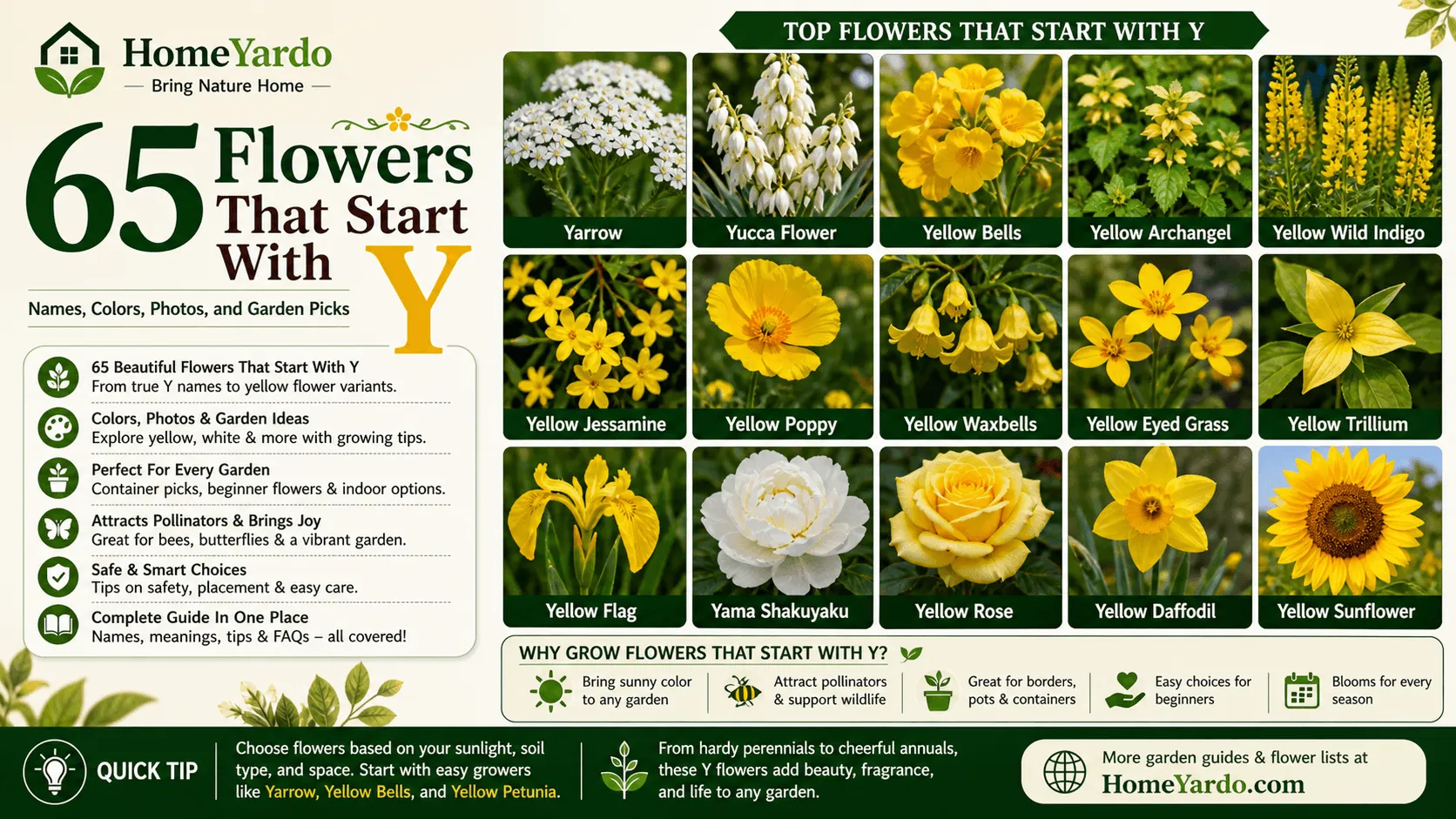
Yarrow, yucca flower, yellow bells, yellow archangel, yellow jessamine, and yellow wild indigo are some of the best-known examples. Along with the full list, the guide also covers color options, container-friendly picks, beginner choices, indoor possibilities, fragrance, and overall garden fit. For the previous letter in the flower alphabet, see flowers that start with X.
Quick Answer: What Are Flowers That Begin With Y?
Flowers that start with the letter Y include yarrow, yucca flower, yellow bells, yellow archangel, yellow wild indigo, and yellow jessamine. Broader garden lists often add yellow-named blooms such as yellow rose, yellow tulip, yellow chrysanthemum, and yellow petunia to create a fuller Y collection.
How Many Flowers Start With Y?
There is no single fixed number because the answer changes with the rules used. A strict common name list stays short. That short-list pattern also shows up in flowers that start with Q, where the natural name pool is limited. A broader garden style list grows larger once yellow-named flowers and a few flowering plant edge cases are added in a clear and honest way.
This article uses a count of 65 names. The strongest direct Y flower names come first, then the wider yellow-named group follows. That makes the list practical while still showing which entries are strongest for the topic.
Types of Flowers That Starting With Y
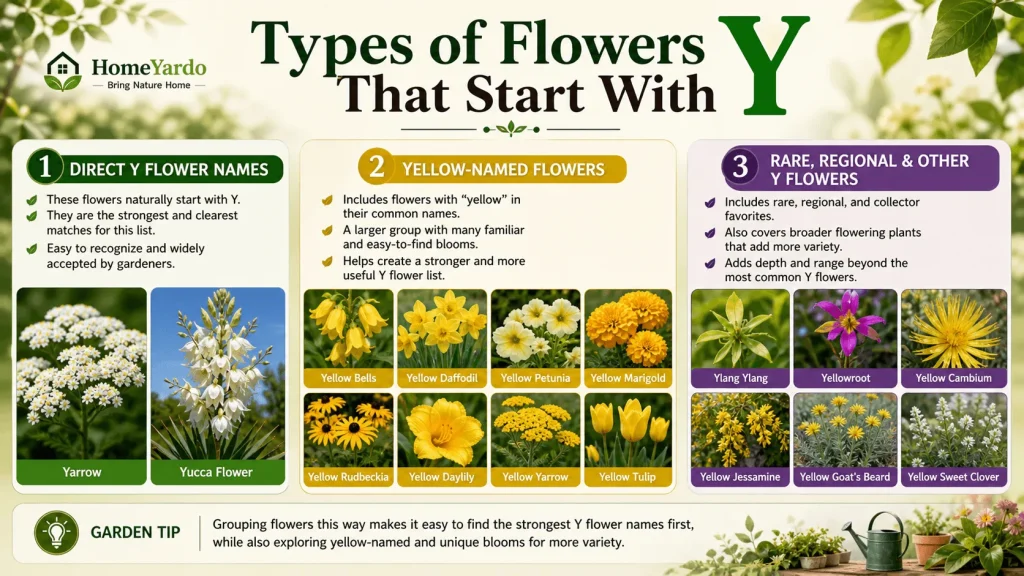
Flowers that start with Y usually fit into three useful categories. The first includes direct Y flower names, which are the clearest and strongest answers for the topic. Names such as yarrow and yucca flower fall into this group because they begin naturally with the letter Y and are easy to recognize in a flower list.
The second category includes yellow-named flowers. This group is much larger because many familiar blooms are listed under yellow-based common names, such as yellow bells, yellow daffodil, yellow petunia, and yellow marigold. These entries help build a fuller Y collection while still matching the way gardeners commonly search and sort flower names.
The third category includes rare, regional, and collector-friendly flowers, along with a few broader flowering plant entries. These names add range and depth to the page, but they are not always as direct or as widely recognized as the strongest Y flower names. Grouping the list this way keeps the article clear and makes it easier to separate the most natural answers from the broader additions.
How This 65 Flower List Was Built
This list was built to stay broad enough to be useful without turning into a random plant inventory. The strongest direct Y flower names were placed first, followed by widely used yellow-named flowers, and then a smaller group of rarer or more specialized entries.
Duplicate names, weak filler, and off-topic non-flower additions were avoided. A few flowering plant edge cases were kept only when they added real value to the Y category and were still relevant to bloom-focused searches. This approach keeps the count practical while making the structure easier to trust and easier to scan.
For a cleaner contrast with a more familiar letter, flowers that start with B usually feel easier to build into a natural flower list.
Important Safety And Naming Notes Before The List
Some flowers and flowering plants in the Y group can be toxic if eaten by pets or children. A few may spread aggressively in the right conditions. Some are also stronger flower answers than others, which is why the list is grouped by fit.
It helps to treat the first group as the strongest answer set, then use the broader groups for color planning, containers, and alphabet collecting.
At a Glance: The Strongest Y Flower Names
These are the names most likely to be useful first. They are easier to recognize, easier to place in a garden setting, or more natural fits for the letter Y.
| Common Name | Botanical Name | Plant Type | Main Color | Perennial or Annual | Light | Best Use | Beginner Friendly |
|---|---|---|---|---|---|---|---|
| Yarrow | Achillea millefolium | Herbaceous flower | White, yellow, pink, red, purple | Perennial | Full sun | Borders, pollinator gardens | Yes |
| Yucca Flower | Yucca spp. | Flowering plant | White, cream | Perennial | Full sun | Dry landscapes, structure | Yes |
| Yellow Bells | Tecoma stans | Flowering shrub | Yellow | Perennial in warm climates | Full sun | Bright color, warm gardens | Yes |
| Yellow Archangel | Lamium galeobdolon | Groundcover | Yellow | Perennial | Part shade | Shade planting | Moderate |
| Yellow Wild Indigo | Baptisia sphaerocarpa | Flowering perennial | Yellow | Perennial | Full sun | Native style planting | Yes |
| Yellow Jessamine | Gelsemium sempervirens | Flowering vine | Yellow | Perennial | Sun to part shade | Fragrance, vertical growth | Moderate |
| Yellow Poppy | varies by species | Flowering perennial or annual | Yellow | Varies | Full sun | Seasonal color | Moderate |
| Yellow Waxbells | Kirengeshoma palmata | Woodland perennial | Soft yellow | Perennial | Part shade | Woodland gardens | Moderate |
| Yellow Eyed Grass | Sisyrinchium spp. | Flowering perennial | Yellow | Perennial | Sun to part sun | Naturalistic planting | Moderate |
| Yellow Trillium | Trillium luteum | Woodland perennial | Yellow | Perennial | Part shade | Spring woodland planting | Moderate |
| Yellow Flag | Iris pseudacorus | Moisture-loving perennial | Yellow | Perennial | Full sun | Pond edges, wet soils | Moderate |
| Yama Shakuyaku | Paeonia japonica | Perennial | White | Perennial | Part shade | Collector gardens | Moderate |
The Full List Of Flowers That Begin
With Y
The list below begins with the strongest and most defensible names, then widens into yellow-named flowers that are commonly accepted in Y lists. That gives enough range for garden planning, color matching, alphabet pages, and plant comparison without blurring the structure.
Group 1: Core And Common Y Flower Names
These are the strongest answers for the topic. They are the names most likely to feel natural in a flower list built around the letter Y.
| No. | Name | Botanical Name | Flower Color | Plant Type | Best Setting | Short Note |
|---|---|---|---|---|---|---|
| 1 | Yarrow | Achillea millefolium | White, yellow, pink, red, purple | Perennial | Sunny borders | One of the best-known Y flower names, easy to grow, useful for pollinators, and available in several colors. |
| 2 | Yucca Flower | Yucca spp. | White, cream | Flowering plant | Dry sunny sites | Bold flower spikes on a tough, drought-tolerant plant with strong architectural value. |
| 3 | Yellow Bells | Tecoma stans | Yellow | Flowering shrub | Warm sunny gardens | Showy trumpet flowers that suit bright landscapes and bring a lively tropical feel. |
| 4 | Yellow Archangel | Lamium galeobdolon | Yellow | Groundcover perennial | Shade | A creeping plant with yellow blooms and attractive foliage, often used where light is softer. |
| 5 | Yellow Wild Indigo | Baptisia sphaerocarpa | Yellow | Perennial | Sunny native gardens | Upright habit, durable structure, and a strong fit for natural style planting. |
| 6 | Yellow Jessamine | Gelsemium sempervirens | Yellow | Flowering vine | Trellises, fences | Fragrant flowers and climbing growth make it a standout for vertical garden color. |
| 7 | Yellow Poppy | varies by species | Yellow | Annual or perennial | Sunny beds | Light-textured petals give it a bright, easygoing look in open planting. |
| 8 | Yellow Waxbells | Kirengeshoma palmata | Soft yellow | Perennial | Woodland gardens | Graceful late-season flowers with a refined shade garden character. |
| 9 | Yellow Eyed Grass | Sisyrinchium spp. | Yellow with darker eye | Perennial | Naturalistic planting | Grass-like leaves and star-shaped flowers make it feel delicate but useful. |
| 10 | Yellow Trillium | Trillium luteum | Yellow | Perennial | Woodland settings | Spring-flowering woodland plant with strong collector appeal. |
| 11 | Yellow Flag | Iris pseudacorus | Yellow | Perennial | Wet areas | Moisture-loving iris with bold color that suits pond edges and damp ground. |
| 12 | Yama Shakuyaku | Paeonia japonica | White | Perennial | Collector gardens | A peony type valued for its refined flower form and rarer name recognition. |
| 13 | Young’s Helleborine | Epipactis youngiana | Greenish to muted tones | Orchid | Specialized habitats | A rarer orchid entry that appears in more niche flower collections. |
Yarrow leads the group because it is both familiar and useful. It also works across several support topics in this article, including color, beginner planting, and pollinator value. Yucca flower stands out because the plant itself is widely recognized, even when the bloom is not the first thing that comes to mind.
Yellow jessamine and yellow wild indigo add more range to the group. One brings fragrance and a climbing habit. The other brings structure and a stronger native garden feel. Yellow waxbells and yellow trillium lean more refined and habitat-specific, which is why they feel less common in ordinary bedding or border schemes.
Group 2: Expanded Yellow Named Flower Entries Commonly Included In Y Lists
These names begin with Yellow and are commonly used in broader Y flower lists. They are useful for color planning and fuller alphabet style collections, even though they are not as strong as the first group.
| No. | Name | Botanical Name | Flower Color | Plant Type | Best Setting | Short Note |
|---|---|---|---|---|---|---|
| 14 | Yellow Cosmos | Cosmos sulphureus | Yellow | Annual | Sunny beds | Warm bright annual with an airy habit and long seasonal color. |
| 15 | Yellow Coneflower | Echinacea paradoxa | Yellow | Perennial | Sunny borders | Strong daisy form with good garden durability. |
| 16 | Yellow Daylily | Hemerocallis spp. | Yellow | Perennial | Mixed borders | Reliable garden flower with many cultivars and easy summer color. |
| 17 | Yellow Foxglove | Digitalis spp. | Yellow | Biennial or perennial | Cottage gardens | Tall flower spikes with a soft vertical shape. |
| 18 | Yellow Ginger | varies by species | Yellow | Flowering plant | Tropical gardens | Bold leaves and strong flower presence in warmer settings. |
| 19 | Yellow Water Lily | Nymphaea spp. | Yellow | Aquatic flowering plant | Ponds | Floating blooms for still water and ornamental water gardens. |
| 20 | Yellow Primrose | Primula spp. or evening primrose types | Yellow | Annual or perennial | Cool beds or borders | Soft yellow flowers that can feel delicate or meadow like. |
| 21 | Yellow Lupine | Lupinus spp. | Yellow | Annual or perennial | Sunny borders | Vertical spikes that bring height and meadow character. |
| 22 | Yellow Iris | Iris spp. | Yellow | Perennial | Borders or moist soils | Broad category with clear flower form and strong garden value. |
| 23 | Yellow Rose | Rosa spp. | Yellow | Flowering shrub | Beds, cutting gardens | A classic flower choice with wide recognition and strong color impact. |
| 24 | Yellow Freesia | Freesia spp. | Yellow | Bulb flower | Containers, cutting | Sweet scent and clean stem form make it useful for a floral display. |
| 25 | Yellow Marigold | Tagetes spp. | Yellow | Annual | Beds, pots | Easy warm-season color and simple maintenance. |
| 26 | Yellow Columbine | Aquilegia spp. | Yellow | Perennial | Woodland edges | Nodding flowers with a softer, lighter garden feel. |
| 27 | Yellow Coreopsis | Coreopsis spp. | Yellow | Perennial | Sunny beds | Long blooming and dependable in bright planting. |
| 28 | Yellow Snapdragon | Antirrhinum majus | Yellow | Annual | Containers, borders | Upright flower spikes with classic bedding style appeal. |
| 29 | Yellow Crocus | Crocus spp. | Yellow | Bulb flower | Early spring beds | Early seasonal color that lifts a planting area quickly. |
| 30 | Yellow Hibiscus | Hibiscus spp. | Yellow | Flowering shrub | Warm gardens | Large showy flowers with a tropical look. |
| 31 | Yellow Camellia | Camellia spp. | Yellow | Flowering shrub | Mild climate gardens | Elegant flowers with a more uncommon yellow presentation. |
| 32 | Yellow Chrysanthemum | Chrysanthemum spp. | Yellow | Perennial or seasonal bedding | Fall planting | Reliable late-season color with strong garden familiarity. |
| 33 | Yellow Zinnia | Zinnia spp. | Yellow | Annual | Sunny beds, cutting | Heat-loving bloom with a strong summer display. |
| 34 | Yellow Carnation | Dianthus caryophyllus | Yellow | Flowering perennial or cut flower crop | Cutting gardens | Layered petals and familiar florist appeal. |
| 35 | Yellow Daisy | varies by genus | Yellow | Broad flower category | Mixed planting | Bright daisy form used in many garden styles. |
| 36 | Yellow Tulip | Tulipa spp. | Yellow | Bulb flower | Spring beds | Clean upright shape and a very familiar spring look. |
| 37 | Yellow Orchid | Orchidaceae | Yellow | Orchid flower | Indoor display or warm climates | A broad but useful flower group with elegant floral form. |
| 38 | Yellow Petunia | Petunia spp. | Yellow | Annual | Pots, baskets, beds | Long bloom season and strong container performance. |
| 39 | Yellow Lantana | Lantana camara | Yellow | Flowering shrub or bedding plant | Sunny warm climates | Heat tolerant flower clusters with bright impact. |
| 40 | Yellow Begonia | Begonia spp. | Yellow | Flowering plant | Shade containers | Good for containers and patio spaces with softer light. |
| 41 | Yellow Geranium | Pelargonium types and related forms | Yellow | Seasonal flowering plant | Pots and beds | Tidy form and classic patio garden style. |
| 42 | Yellow Dahlia | Dahlia spp. | Yellow | Tuberous flower | Borders, cutting | Wide range of flower sizes and strong late-season interest. |
| 43 | Yellow Aster | Aster and related genera | Yellow | Perennial | Borders | Late-season daisy form useful for extended color. |
| 44 | Yellow Alyssum | Aurinia saxatilis and related types | Yellow | Perennial | Edges, rock gardens | Low mounded bloom with neat edge planting value. |
| 45 | Yellow Anemone | Anemone spp. | Yellow | Perennial | Woodland or cool beds | Soft-petaled flowers with gentle movement. |
| 46 | Yellow Bachelor’s Button | Centaurea spp. | Yellow | Annual | Cottage gardens | Simple open flower shape with a lighter country garden feel. |
| 47 | Yellow Bellflower | Campanula relatives and similar forms | Yellow | Perennial | Mixed borders | Bell-shaped bloom that adds a softer ornamental note. |
| 48 | Yellow Canna | Canna spp. | Yellow | Tropical perennial | Large warm beds | Bold leaves and upright flowers suit dramatic planting. |
| 49 | Yellow Clematis | Clematis spp. | Yellow | Flowering vine | Supports, fences | Climbing flower with a more specialized look than common clematis shades. |
| 50 | Yellow Daffodil | Narcissus spp. | Yellow | Bulb flower | Spring beds | One of the clearest spring favorites in home gardens. |
| 51 | Yellow Delphinium | Delphinium spp. | Yellow | Perennial | Tall borders | Vertical flower spikes used for height and contrast. |
| 52 | Yellow Gerbera | Gerbera jamesonii | Yellow | Flowering perennial or seasonal crop | Cutting, pots | Bright daisy form that works well in floral use. |
| 53 | Yellow Hollyhock | Alcea rosea | Yellow | Biennial or perennial | Cottage style planting | Tall stems and old garden character. |
| 54 | Yellow Hyacinth | Hyacinthus orientalis | Yellow | Bulb flower | Spring beds, pots | Fragrant clustered flowers on short upright stems. |
| 55 | Yellow Lotus | Nelumbo spp. | Yellow | Aquatic flowering plant | Water gardens | Strong form and ornamental value in still water planting. |
Yellow-named flowers create the widest part of the Y group because color becomes part of the common name. That is why this middle group is so large. It gives far more choice for beds, bouquets, containers, and seasonal planting while still staying within a common naming pattern that fits the letter.
A few names in this group are especially useful beyond the alphabet angle. Yellow petunia, yellow begonia, yellow marigold, and yellow geranium are strong container choices. Yellow freesia and yellow hyacinth bring scent. Yellow daffodil and yellow tulip give clear spring value.
Group 3: Rare, Regional, And Collector-Friendly Y Entries
These names are less familiar in everyday planting language, but they help round out a fuller Y flower guide with added depth and variety.
| No. | Name | Botanical Name | Flower Color | Plant Type | Best Setting | Short Note |
|---|---|---|---|---|---|---|
| 56 | Yellow Nasturtium | Tropaeolum majus | Yellow | Annual | Pots, borders | Trailing or mounding bloom with edible flowers and lively garden use. |
| 57 | Yellow Peony | Paeonia hybrids | Yellow | Perennial | Collector borders | Rich spring flower that feels less common than pink or white forms. |
| 58 | Yellow Ranunculus | Ranunculus asiaticus | Yellow | Flowering bulb or corm crop | Cutting gardens | Layered petals and strong bouquet value. |
| 59 | Yellow Salvia | Salvia spp. | Yellow | Annual or perennial | Sunny beds | Flower spikes that work well in bright planting. |
| 60 | Yellow Verbena | Verbena spp. | Yellow | Annual or perennial | Pots, beds | Useful for warm-weather color and spreading habit. |
| 61 | Yellow Viola | Viola spp. | Yellow | Cool-season annual or short-lived perennial | Small containers | Compact flower with neat seasonal color. |
| 62 | Yellow Wallflower | Erysimum spp. | Yellow | Biennial or short-lived perennial | Edges, beds | Spring-blooming plant with a soft fragrance. |
| 63 | Yellow Sunflower | Helianthus annuus and related species | Yellow | Annual | Sunny beds | Bright, bold flower with strong visual presence and pollinator value. |
| 64 | Yulan Magnolia | Magnolia denudata | White to creamy white | Flowering tree | Feature planting | Better known as a flowering tree, but still useful in broader bloom lists. |
| 65 | Yellow Pitcher Plant | Sarracenia flava | Yellow | Carnivorous flowering plant | Specialty planting | Unusual flowering plant with a striking yellow bloom and collector appeal. |
Some names feel rare because they are harder to find in ordinary garden centers. Others feel rare because the common name itself is not widely used in everyday flower talk. Yellow pitcher plant, yellow peony, and yulan magnolia lean more specialist or collector-friendly than common bedding favorites.
Edge Cases And Flowering Plant Entries
A few names in the full list work best when they are understood as flowering plants rather than straightforward cut flower or bedding flower answers. Yulan magnolia, yucca flower, and yellow pitcher plant fit that description. They still belong in a broad Y bloom guide, but they should not carry the same weight as names like yarrow or yellow bells.
That distinction keeps the page more useful. Strong flower answers stay easy to spot, while broader flowering plant entries remain available for anyone who wants a fuller Y collection.
Most Popular Flower Names Starting With Y
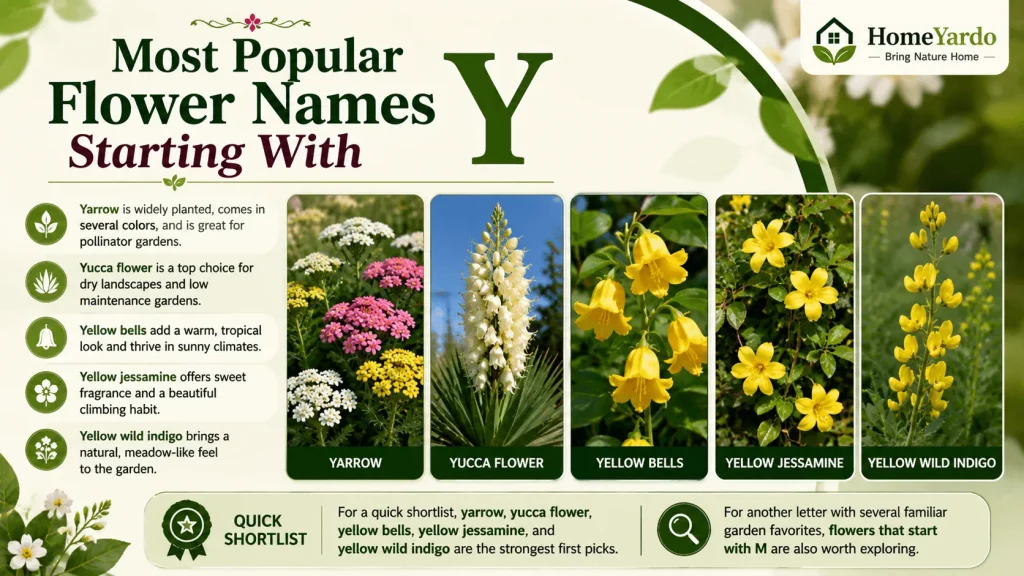
A few names stand out more than the rest because they are easier to recognize and easier to place in ordinary garden settings.
Yarrow usually leads the group. It is widely planted, comes in several colors, and works well in pollinator gardens. Yucca flower ranks high because the plant is so familiar in dry landscapes. Yellow bells bring a stronger, warmer climate look, while yellow jessamine adds fragrance and climbing habit. Yellow wild indigo rounds out the group with a more natural planting feel.
For a quick shortlist, yarrow, yucca flower, yellow bells, yellow jessamine, and yellow wild indigo are the strongest first picks. For another letter with several familiar garden favorites, flowers that start with M are also worth exploring.
Common Flowers Beginning With Y
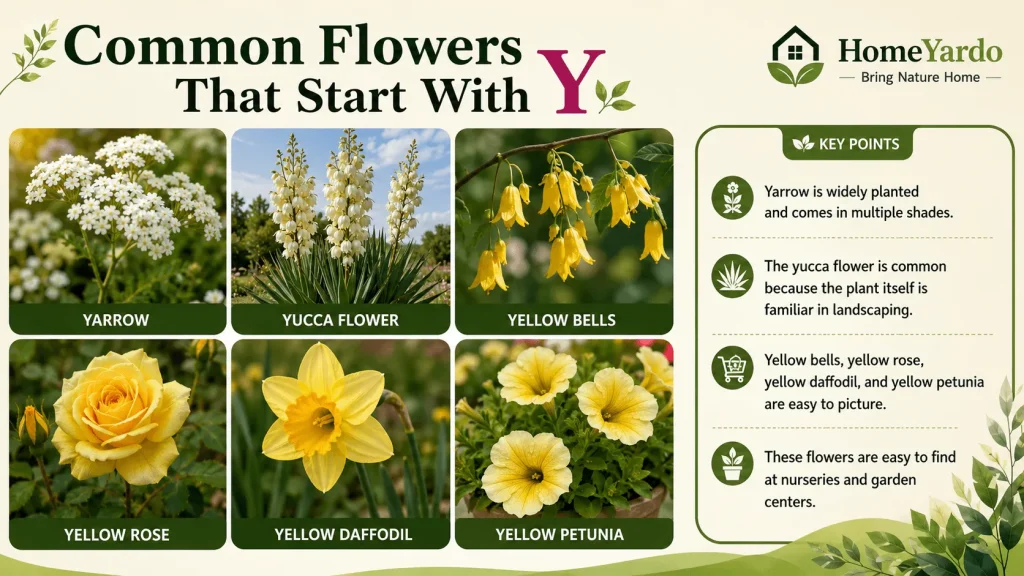
Common in this case means easier to recognize, easier to find, or easier to place in a typical home garden.
Yarrow is common because it is widely planted and comes in multiple shades. If you want another list with plenty of recognizable garden names, flowers that start with C make a strong comparison. The yucca flower is common because the plant itself is familiar in landscaping. Yellow bells, yellow rose, yellow daffodil, and yellow petunia also fit here because they are easy to picture and easy to source in nursery or garden center settings.
Rare Flowers Beginning With Y
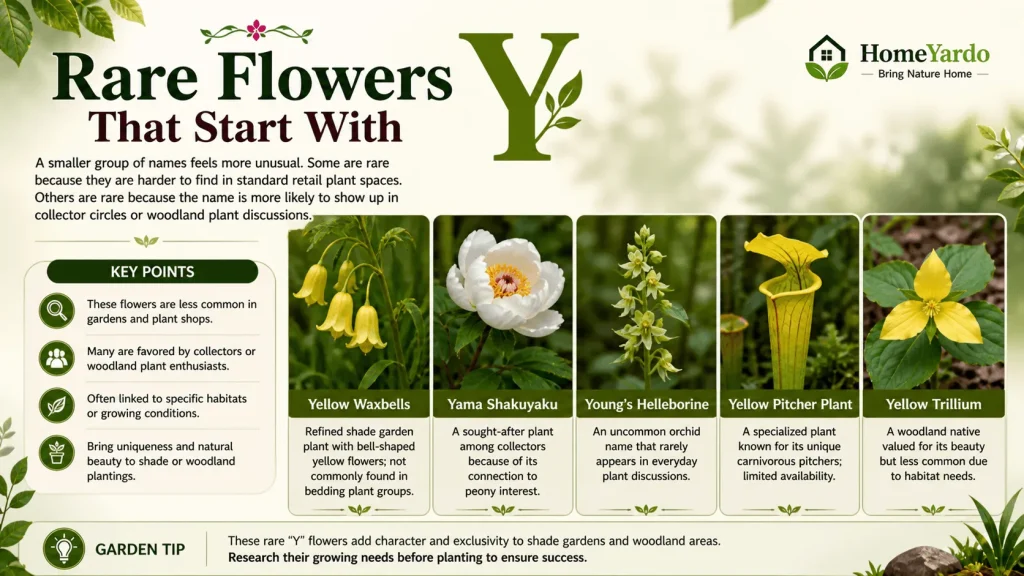
A smaller group of names feels more unusual. Some are rare because they are harder to find in standard retail plant spaces. Others are rare because the name is more likely to show up in collector circles or woodland plant discussions.
Yellow waxbells have a refined shade garden look and are not part of the usual bedding plant group. Yama shakuyaku carries collector appeal because it is tied to peony interest. Young’s helleborine is an uncommon orchid name in ordinary plant writing. Yellow pitcher plant and yellow trillium also lean more specialized because of habitat, availability, or both.
Color Guide To Flower Names That Start With Y
Color changes how a flower works in a garden, pot, border, or arrangement. Since so many Y names begin with Yellow, the letter naturally leans toward brighter palettes. Even so, there is still enough variety to shape softer or cooler looks through cultivar choice and pairing.
White Flowers
White-leaning choices include yucca flower, yama shakuyaku, and pale yarrow cultivars. These flowers soften bold planting schemes and work especially well with silver foliage, dark green leaves, and lighter stone or gravel settings.
White forms are useful when the goal is a cleaner, calmer composition rather than a bright, hot border.
Yellow Flowers
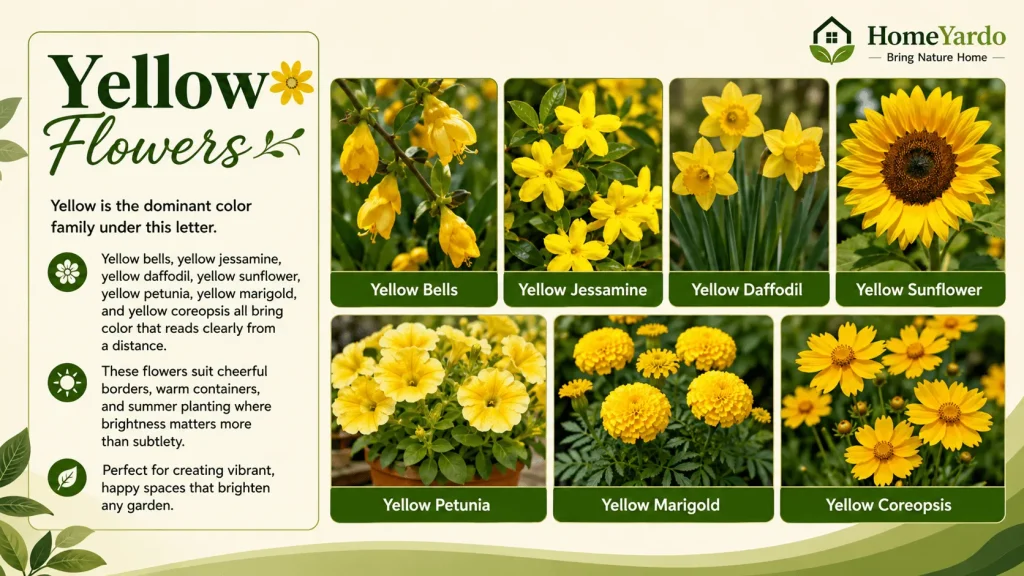
Yellow is the dominant color family under this letter. Yellow bells, yellow jessamine, yellow daffodil, yellow sunflower, yellow petunia, yellow marigold, and yellow coreopsis all bring color that reads clearly from a distance.
These flowers suit cheerful borders, warm containers, and summer planting where brightness matters more than subtlety.
Red And Warm-Toned Flowers
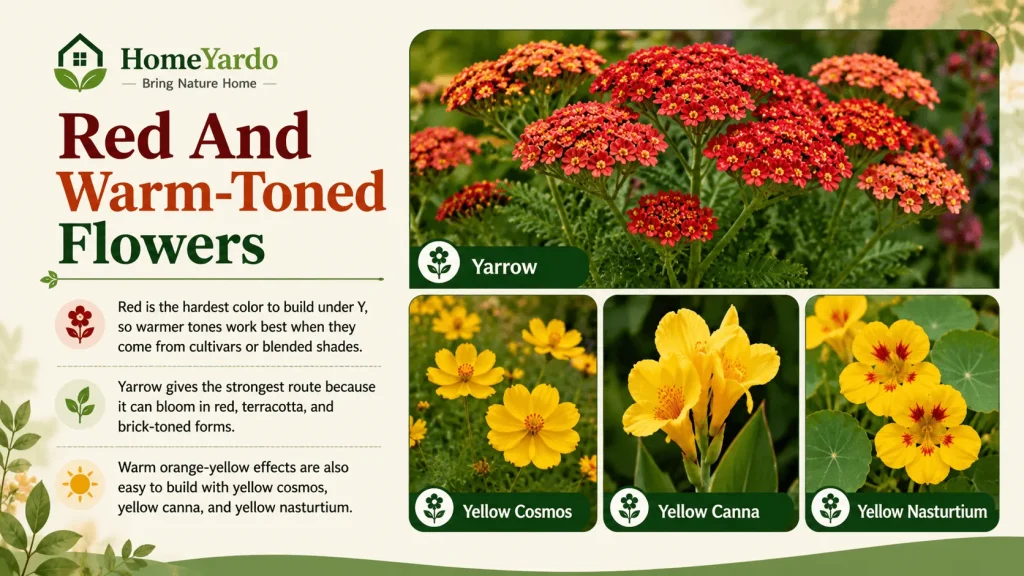
Red is the hardest color to build under Y, so warmer tones work best when they come from cultivars or blended shades.
Yarrow gives the strongest route because it can bloom in red, terracotta, and brick-toned forms. Warm orange-yellow effects are also easy to build with yellow cosmos, yellow canna, and yellow nasturtium.
Pink And Soft -Toned Flowers
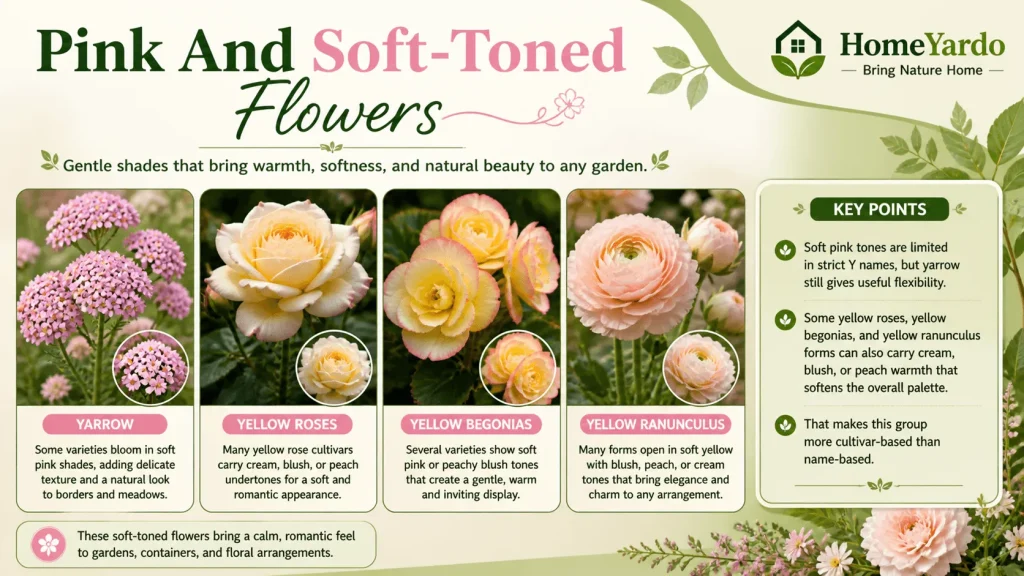
Soft pink tones are limited in strict Y names, but yarrow still gives useful flexibility. Some yellow roses, yellow begonias, and yellow ranunculus forms can also carry cream, blush, or peach warmth that softens the overall palette.
That makes this group more cultivar-based than name-based.
Purple Flowers That Start With Y
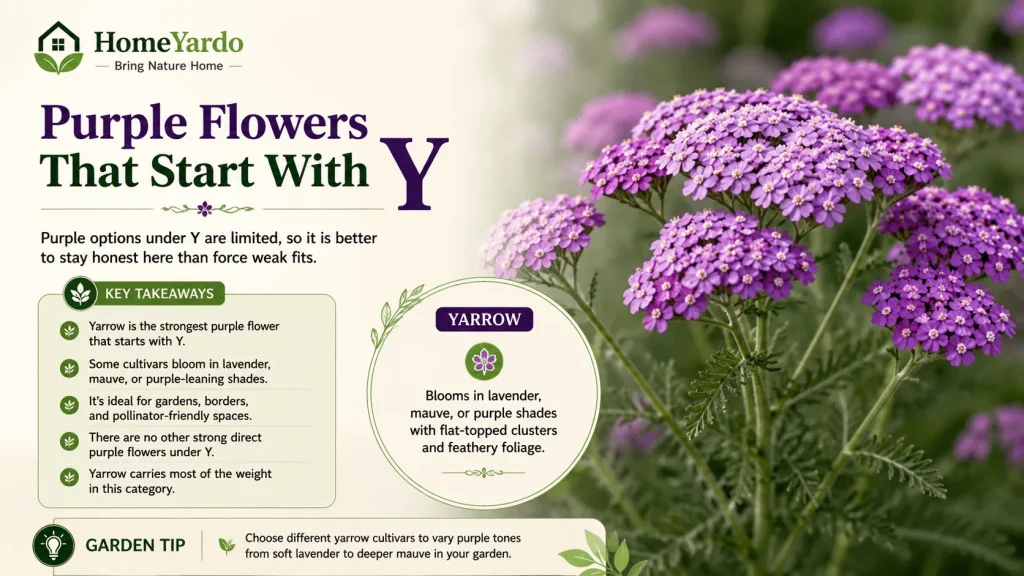
Purple options under Y are limited, so it is better to stay honest here than force weak fits.
Yarrow is the strongest answer because some cultivars bloom in lavender, mauve, or purple leaning shades. That makes it the easiest route for anyone trying to keep the letter Y while still building a purple color palette. The group does not offer many other strong direct examples, which is why yarrow carries most of the weight in this category.
Flower Meanings And Symbolism
Flower meaning can shift by culture, color, and use, but yellow flowers are often linked with warmth, brightness, friendship, and renewal. That makes many Y list flowers feel naturally uplifting, especially when they are used in spring beds, sunny borders, or cheerful container displays.
Yarrow often carries a longer history tied to resilience and usefulness. Yellow roses are commonly associated with friendship and positive feelings. Yellow daffodils and yellow tulips can suggest fresh beginnings because they appear in spring and read as seasonal change.
Meaning should stay secondary to plant identity, but it can still help when the goal is to choose flowers for a mood, gift, or color-driven planting plan.
Perennial Flowers That Start With Y
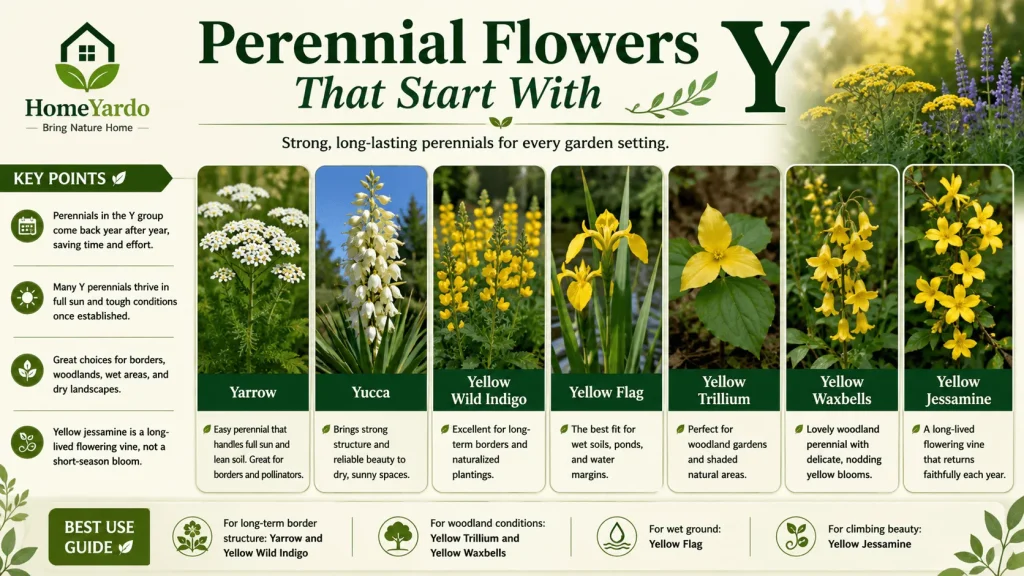
Perennials make up a strong share of the Y group, which is useful for long-term planting.
Yarrow is one of the easiest perennial picks because it handles full sun and leaner soil well once established. Yucca flowers bring structure year after year in dry settings. Yellow wild indigo, yellow flag, yellow trillium, and yellow waxbells also sit firmly in the perennial category. Yellow jessamine behaves as a long-lived flowering vine rather than a short-season bloom.
For long-term border structure, yarrow and yellow wild indigo are especially strong. For woodland conditions, yellow trillium and yellow waxbells make more sense. For wet ground, the yellow flag is the clearer fit.
Annual Flowers That Start With Y
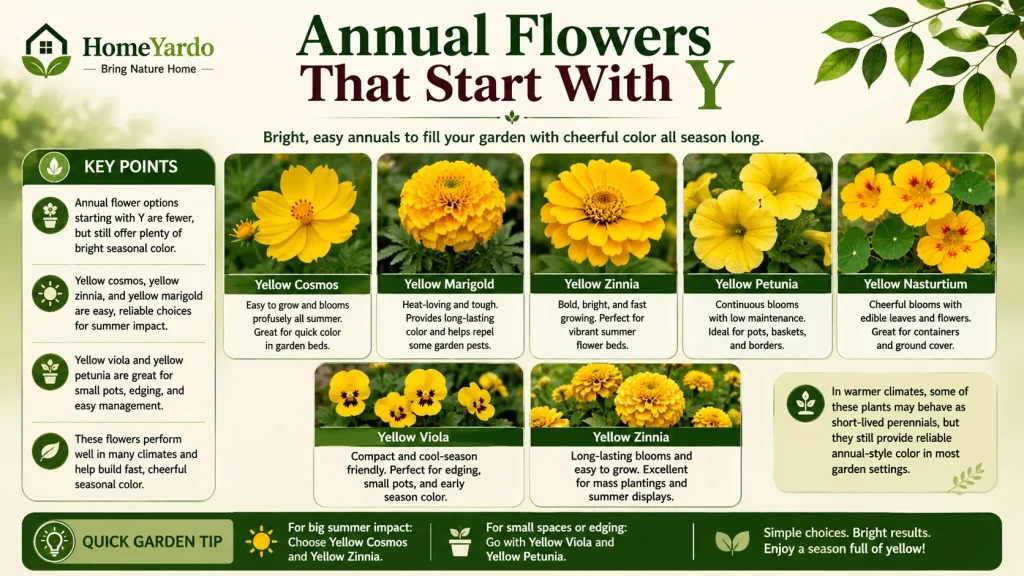
Annual choices are narrower, but there are still enough useful names to work with for one season of color.
Yellow cosmos is one of the easiest annual options in the group. Yellow marigold, yellow zinnia, yellow petunia, yellow nasturtium, and yellow viola also help build a bright seasonal planting fast. In warmer climates, some of these plants behave differently, but they still function as reliable annual style color in many garden settings.
For a quick summer impact, yellow cosmos and yellow zinnia are strong picks. For smaller pots or edging, yellow viola and yellow petunia are easier to manage.
Are There Indoor Flowers That Start With Y?
Most Y flowers are better outdoors than indoors, but a few can still work in bright interior spaces or protected growing areas.
Yucca is the best-known indoor plant in the group, even though indoor flowering is not common. The yellow orchid is useful when indoor bloom is the real goal. Yellow begonia and yellow geranium can also perform in containers when there is enough light, steady airflow, and regular care.
Indoor placement works best when the goal is container display rather than long-term heavy flowering.
Which Y Flowers Are Good For Beginners?
A beginner-friendly flower should be easy to place, easy to understand, and forgiving enough not to fail after a small mistake.
Yarrow is one of the safest picks because it tolerates heat and lean soil well once established. Yellow bells is a strong, warm climate option for bold color. Yellow petunia and yellow marigold give easy seasonal impact with less guesswork. Yucca works well in dry sunny conditions where drainage is strong.
A simple beginner rule is to start with one reliable perennial, such as yarrow, and one easy seasonal flower, such as yellow petunia or yellow marigold.
Y Flowers For Containers And Patio Pots
Containers need flowers that hold their shape, bloom well, or adapt easily to limited soil space. Drainage matters, feeding matters, and pot size should match the plant’s mature spread.
Yellow petunia is one of the strongest Y-list options for pots, hanging baskets, and rail planters. Yellow begonia works well in a brighter shade. Yellow geranium gives a classic patio look, and yellow viola adds cool-season color in smaller containers. Yellow marigold, yellow nasturtium, and yellow zinnia also suit containers when the pot is large enough for their root spread.
Yucca can work as a larger statement plant in a container because it brings height and strong form. A balanced patio pot often looks best with one upright plant, one fuller mounding flower, and one softer edge plant.
| Best Container Flower | Why It Works in Pots | Light |
|---|---|---|
| Yellow Petunia | Long bloom season and neat spreading habit | Full sun |
| Yellow Begonia | Strong flower color in a brighter shade | Part shade |
| Yellow Geranium | Tidy shape and classic patio performance | Full sun to part sun |
| Yellow Viola | Compact growth for cool-weather containers | Sun to part shade |
| Yellow Marigold | Simple, bright, and easy for seasonal color | Full sun |
| Yellow Nasturtium | Soft trailing growth and edible flowers | Full sun |
| Yucca Flower | Strong structure for large statement containers | Full sun |
A simple container mix can use yucca as the upright anchor, yellow petunia as the filling flower, and yellow nasturtium as the trailing edge.
Which Flower Starting With Y Smells The Best?
Yellow jessamine is the strongest scent in the group. It brings a softer, sweet fragrance and works especially well near an entry, support, or fence where the flowers can be enjoyed at close range.
Yellow freesia is another good choice when fragrance matters. Yellow hyacinth also deserves attention because spring bulbs often produce a more noticeable scent than many warm-season annuals. Under the letter Y, fragrance is a smaller category, so the best result usually comes from choosing a few strongly scented flowers rather than trying to build a large list.
Plants vs Flowers That Starting With Y
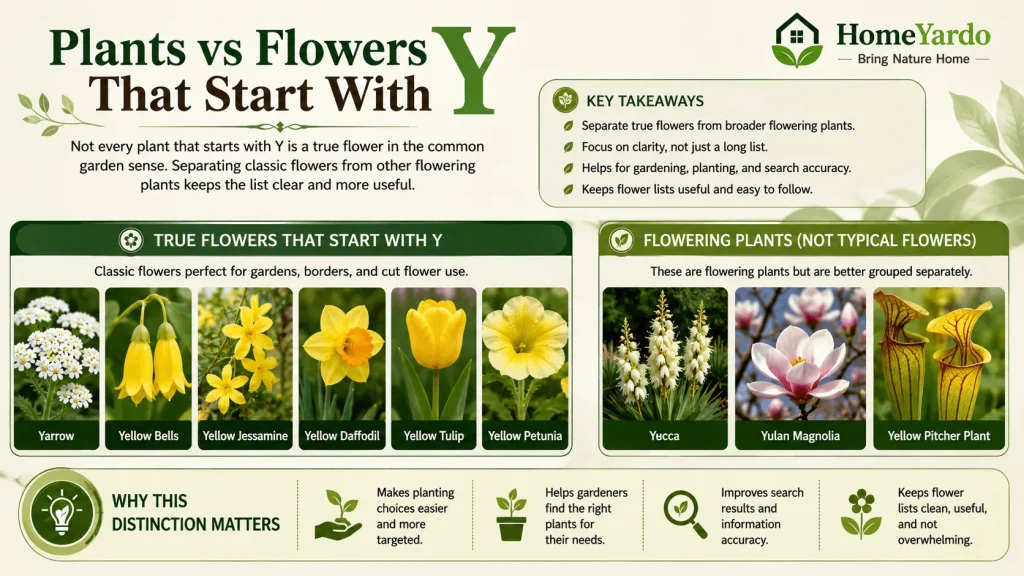
The topic becomes messy when broader plant names start showing up in flower lists. Some pages mix true flower entries with shrubs, vines, bulb crops, and even flowering trees.
A cleaner approach is to separate the strongest flower answers from the broader flowering plant group. Yarrow, yellow bells, yellow jessamine, yellow daffodil, yellow tulip, and yellow petunia feel like clear flower answers. Yucca, yulan magnolia, and yellow pitcher plant are still useful, but they work better when labeled as flowering plants rather than treated exactly like bedding flowers or cut flower staples.
That distinction keeps a longer list useful without turning it into a random plant inventory.
How To Choose The Right Y Flower For Your Garden
The best choice depends on light, moisture, size, and planting style.
For sunny borders, yarrow, yellow coreopsis, yellow daffodil, yellow zinnia, and yellow sunflower are easy to use. For part shade or softer light, yellow begonia, yellow archangel, and yellow waxbells fit better. For dry conditions, yucca, yarrow, and yellow bells stand out. For moist areas, yellow flag, yellow water lily, and yellow lotus make more sense. For woodland planting, yellow trillium and yellow waxbells are stronger choices. For containers, yellow petunia, yellow geranium, yellow begonia, and yellow viola are among the easiest fits.
A practical way to narrow the list is to choose by light first, then by plant height, then by how long the flowers should carry the display.
Conclusion
Flower names that start with Y are harder to collect than flower names under many other letters, but that does not make the group less useful. It simply means the best guide should be clear about how the names are grouped and why the count works.
For an easy place to begin, yarrow, yucca flower, yellow bells, yellow jessamine, and yellow petunia give a strong mix of garden value, visual appeal, and name recognition. After that, the wider yellow-named group adds enough variety for color plans, patio pots, seasonal beds, and more specialized planting ideas.
FAQ’s
Yarrow is usually the most popular answer because it is widely planted, easy to recognize, and available in several colors. Yucca flowers and yellow bells are also familiar names, especially in landscaping and warm climate gardens. Popularity here comes more from garden use and recognition than from rarity.
Yarrow, yucca flower, yellow wild indigo, yellow flag, yellow trillium, and yellow waxbells are all good perennial examples. These flowers return more reliably than short-season annuals when they are planted in the right conditions. That makes them useful for long-term garden structure and repeat color.
Most Y flower names work better outdoors, but a few can still fit bright indoor or protected spaces. Yucca is the best-known indoor adjacent plant in the group, while yellow orchids, yellow begonias, and yellow geraniums can work in containers with enough light. Indoor flowering depends heavily on the plant type and the growing conditions.
Yellow waxbells, yama shakuyaku, young’s helleborine, yellow pitcher plant, and yellow trillium all feel rarer than the more familiar garden names. Some are harder to find in standard garden centers. Others are simply less common in everyday planting conversation.
Purple options under Y are limited, which is why yarrow is the strongest practical answer in this color group. Some cultivars bloom in lavender or purple leaning shades that work well in mixed borders. A strict Y list does not offer many other strong purple names beyond that.
A flower list focuses on the bloom itself and the common flower name, while a broader plant list may include vines, shrubs, trees, or specialty species that happen to flower. Yulan magnolia, yucca, and yellow pitcher plant show how the categories can overlap. Clear labeling helps keep a long list useful instead of confusing.
Some flowers and flowering plants in broader Y lists can be harmful if chewed or eaten. That risk depends on the species, not the letter itself. It is always worth checking the exact plant before bringing it into a home or yard where pets roam freely.
Yes, several do. Yarrow is especially helpful for pollinators, and yellow wild indigo also supports a more wildlife-friendly planting style. Many open, nectar-rich flowers in the broader yellow-named group can help bees and other pollinating insects when grown in suitable conditions.
References
- A Z Animals Flowers That Start With Y
- LearningVale Flowers That Start With Y
- BloomHowTo Flowers That Start With Y
- Harvest Savvy Flower Names
- Burncoose Y Plant List
- Royer’s Floral Library Y Page
- A To Z Flowers Letter Y
- FlowersLib Flowers That Start With Y
- FlowersNames Flowers That Start With Y
- Frosting And Glue Flowers That Start With Y
- Plant Delights Plants That Start With Y
- AboutAdjectives Flowers That Start With Y