50 Beautiful Varieties of Flowers That Start With W You Didn’t Know About
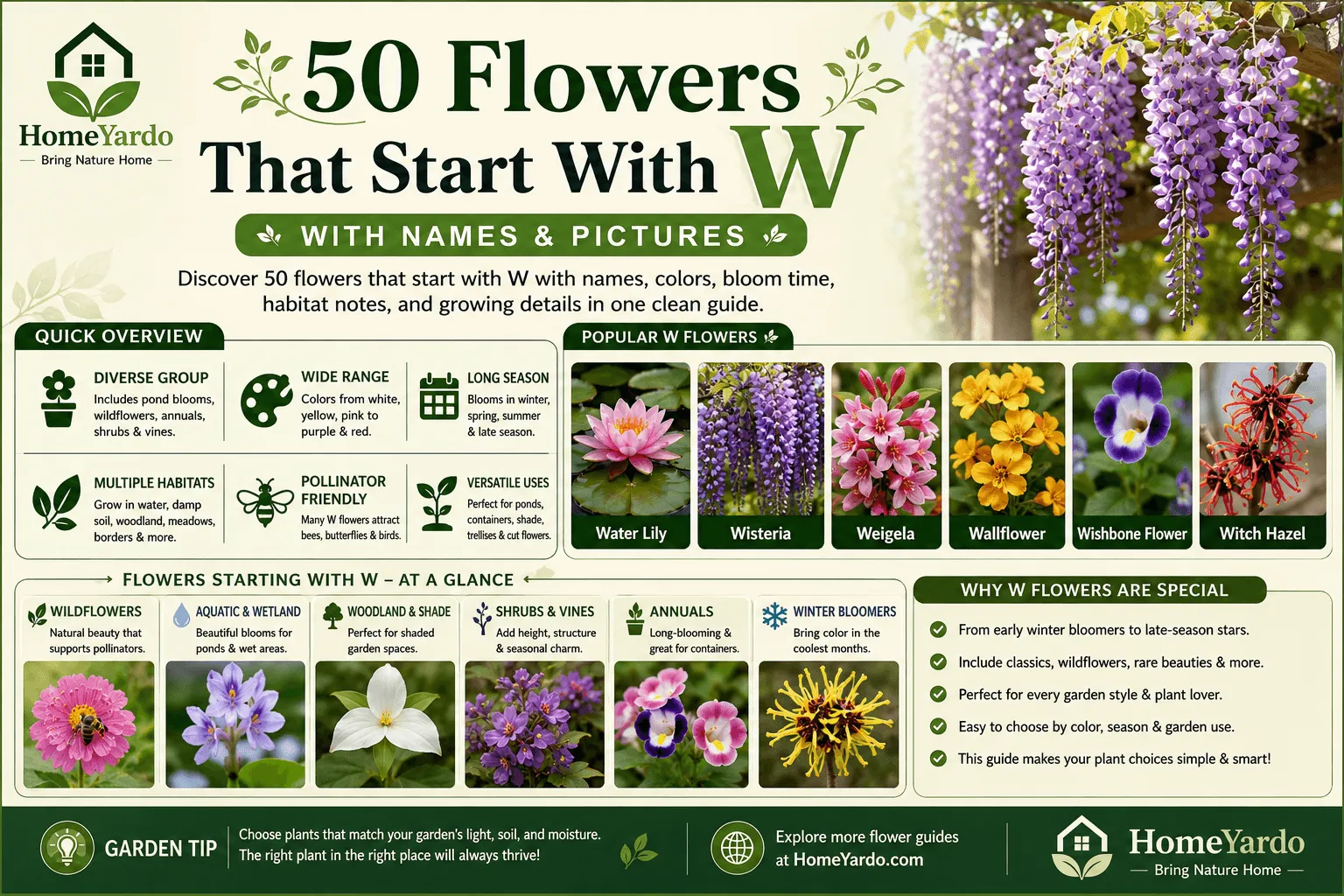
Flowers starting with W include classic pond blooms, spring woodland flowers, border plants, wildflowers, flowering shrubs, and climbing vines. Some names are easy to recognize at a glance, while others are less common and show up more often in specialty gardens or regional plant lists.
A useful W flower guide needs more than a loose list of names. It should stay focused on real flowering plants, keep the naming consistent, and help narrow the list by color, season, and planting style. The guide below does that with a full master table, grouped categories, practical comparison blocks, and short descriptions for all 50 entries.
Quick Answer: What Are Flowers That Start With W?
Flowers starting with W are flowering plants whose common names begin with the letter W. Familiar examples include Wallflower, Water Lily, Weigela, Wishbone Flower, Wisteria, and Witch Hazel. The group also includes wildflowers, aquatic blooms, woodland plants, flowering shrubs, and vines with showy blooms.
Flower Names Starting With W: At A Glance
This quick filter gives a fast overview before the full list.
| Category | Example Flowers | Main Colors | Typical Bloom Season |
|---|---|---|---|
| Common garden flowers | Wallflower, Weigela, Wishbone Flower | Yellow, pink, purple, mixed | Spring to summer |
| Wildflowers | Wild Bergamot, Wild Columbine, Wild Geranium | Pink, red, lavender, blue | Spring to summer |
| Perennials | Water Lily, White Trillium, Wood Anemone | White, pink, blue, yellow | Spring to summer |
| Annuals or annual flowers | Wishbone Flower, Wax Begonia | Pink, white, violet, blue | Summer to frost |
| Aquatic and wetland flowers | Water Lily, Water Hyacinth, Water Violet | White, blue, violet, mixed | Spring to summer |
| Rare or less familiar flowers | Waling waling, Waratah, Woadwaxen | Purple, red, yellow | Varies |
| Purple-toned flowers | Wisteria, Wild Indigo, Water Hyacinth | Purple, violet, blue | Spring to summer |
| Winter bloomers | Winter Aconite, Winter Jasmine, Wintersweet, Witch Hazel | Yellow, cream, orange | Winter to early spring |
Some flowers appear in more than one group because plant type, color, and season often overlap.
Complete List Of 50 Flowers Starting With Letter W
The master table below keeps the core details in one place. The list of flowers that start with W focuses on flowering plants and bloom-led shrub or vine names, rather than broad plant fillers.
| Three-petaled woodland flower | Common Name | Botanical Name | Color | Bloom Season | Plant Type | Best Known For |
|---|---|---|---|---|---|---|
| 1 | Wake robin | Trillium erectum | Maroon, red, purple | Spring | Woodland perennial | Early woodland bloom |
| 2 | Wallflower | Erysimum spp. | Yellow, orange, red, purple | Spring | Perennial or biennial | Fragrant flower clusters |
| 3 | Wandflower | Dierama spp. | Pink, mauve, white | Summer | Perennial | Arching flower stems |
| 4 | Waratah | Telopea spp. | Red, pink, cream | Spring | Shrub | Bold flower heads |
| 5 | Water Avens | Geum rivale | Pink, cream, purple | Spring to summer | Moisture loving perennial | Nodding bell shaped blooms |
| 6 | Water Hyacinth | Pontederia crassipes | Lavender, violet | Summer | Aquatic plant | Floating flower spikes |
| 7 | Water Iris | Iris laevigata | Blue, violet, white | Late spring to summer | Aquatic perennial | Pond edge blooms |
| 8 | Water Lily | Nymphaea spp. | White, pink, yellow, blue | Summer | Aquatic perennial | Floating flowers |
| 9 | Water Lotus | Nelumbo nucifera | Pink, white | Summer | Aquatic perennial | Tall lotus flowers |
| 10 | Water Violet | Hottonia palustris | Pale lilac, white | Spring to early summer | Aquatic perennial | Delicate starry blooms |
| 11 | Watsonia | Watsonia spp. | Pink, orange, red, white | Spring to summer | Corm perennial | Upright flower spikes |
| 12 | Wax Begonia | Begonia × semperflorens cultorum | White, pink, red | Summer to frost | Annual grown bedding plant | Long bloom period |
| 13 | Waxflower | Chamelaucium uncinatum | Pink, white, purple | Spring | Shrub | Small waxy flowers |
| 14 | Wedelia | Sphagneticola trilobata | Yellow | Warm seasons | Groundcover perennial | Daisy like flowers |
| 15 | Weigela | Weigela spp. | Pink, red, white | Spring to early summer | Shrub | Trumpet blooms |
| 16 | Western Red Lily | Lilium philadelphicum | Orange red | Summer | Perennial | Bright upright lily flowers |
| 17 | Western Wallflower | Erysimum capitatum | Yellow, orange | Spring to summer | Wildflower | Bright clustered blooms |
| 18 | Whirling Butterflies | Oenothera lindheimeri | White, pink | Summer to fall | Perennial | Airy fluttering flowers |
| 19 | White Campion | Silene latifolia | White | Late spring to summer | Wildflower | Clean white blooms |
| 20 | White Snakeroot | Ageratina altissima | White | Late summer to fall | Perennial | Soft flower clusters |
| 21 | White Trillium | Trillium grandiflorum | White | Spring | Woodland perennial | Three petaled woodland flower |
| 22 | White Wood Aster | Eurybia divaricata | White | Late summer to fall | Woodland perennial | Small starry blooms |
| 23 | Wild Bergamot | Monarda fistulosa | Lavender, pink | Summer | Perennial | Pollinator friendly flowers |
| 24 | Wild Columbine | Aquilegia canadensis | Red, yellow | Spring | Wildflower perennial | Nodding spurred blooms |
| 25 | Wild Geranium | Geranium maculatum | Pink, lavender | Spring to early summer | Perennial | Soft five petaled flowers |
| 26 | Wild Indigo | Baptisia spp. | Blue, purple, yellow | Late spring | Perennial | Lupine like flower spikes |
| 27 | Wild Petunia | Ruellia humilis | Lavender, violet | Summer | Perennial | Petunia like flowers |
| 28 | Wild Phlox | Phlox divaricata | Blue, lavender, white | Spring | Perennial | Fragrant loose clusters |
| 29 | Wild Rose | Rosa spp. | Pink, white | Spring to summer | Shrub | Open simple rose flowers |
| 30 | Wild Senna | Senna hebecarpa | Yellow | Summer | Perennial | Loose yellow sprays |
| 31 | Wild Sunflower | Helianthus spp. | Yellow | Summer to fall | Perennial or annual species | Bright daisy heads |
| 32 | Willowherb | Epilobium spp. | Pink, purple | Summer | Wildflower | Tall bloom spikes |
| 33 | Windflower | Anemone spp. | White, pink, blue, purple | Spring | Perennial | Soft anemone blooms |
| 34 | Wine Cup | Callirhoe involucrata | Magenta, purple | Late spring to summer | Perennial | Cup shaped trailing flowers |
| 35 | Winged Monkey Flower | Mimulus alatus | Purple, pink | Summer | Moist soil wildflower | Snapdragon like blooms |
| 36 | Winter Aconite | Eranthis hyemalis | Yellow | Late winter to early spring | Bulbous perennial | Very early flowers |
| 37 | Winter Jasmine | Jasminum nudiflorum | Yellow | Winter to early spring | Shrub | Bare branch blooms |
| 38 | Wintersweet | Chimonanthus praecox | Yellow, cream | Winter | Shrub | Fragrant winter flowers |
| 39 | Wishbone Flower | Torenia fournieri | Blue, violet, pink, white | Summer to frost | Annual | Long flowering bedding plant |
| 40 | Wisteria | Wisteria spp. | Purple, white, pink | Spring | Flowering vine | Hanging flower clusters |
| 41 | Witch Hazel | Hamamelis spp. | Yellow, orange, red | Winter to early spring | Shrub | Ribbon like petals |
| 42 | Woadwaxen | Genista tinctoria | Yellow | Summer | Shrub like perennial | Pea type flowers |
| 43 | Wood Anemone | Anemonoides nemorosa | White, pale pink | Spring | Woodland perennial | Early shade bloom |
| 44 | Wood Sorrel | Oxalis acetosella | White, pale pink | Spring | Woodland perennial | Delicate veined flowers |
| 45 | Wood Violet | Viola odorata | Violet, purple, white | Spring | Perennial | Fragrant violet blooms |
| 46 | Woodland Sunflower | Helianthus divaricatus | Yellow | Summer to fall | Perennial | Shade tolerant sunflower |
| 47 | Woodruff | Galium odoratum | White | Spring | Groundcover perennial | Tiny star shaped flowers |
| 48 | Woolly Yarrow | Achillea tomentosa | Yellow | Summer | Perennial | Mat forming flower clusters |
| 49 | Wreath Flower | Stephanotis floribunda | White | Summer | Flowering vine | Fragrant waxy flowers |
| 50 | Waling waling | Vanda sanderiana | Pink, rose, purple | Warm season cycles | Orchid | Large, dramatic orchid blooms |
Habitat note: the list includes pond flowers, damp soil flowers, woodland species, wildflowers, bedding plants, shrubs, and flowering vines because each entry is known mainly for its blooms.
Online flower counts vary because some pages mix flowers with broader plants, repeat names, or stretch the letter with weak matches. This guide uses a flower first rule to keep the list cleaner.
Popular Flower Names Starting With W
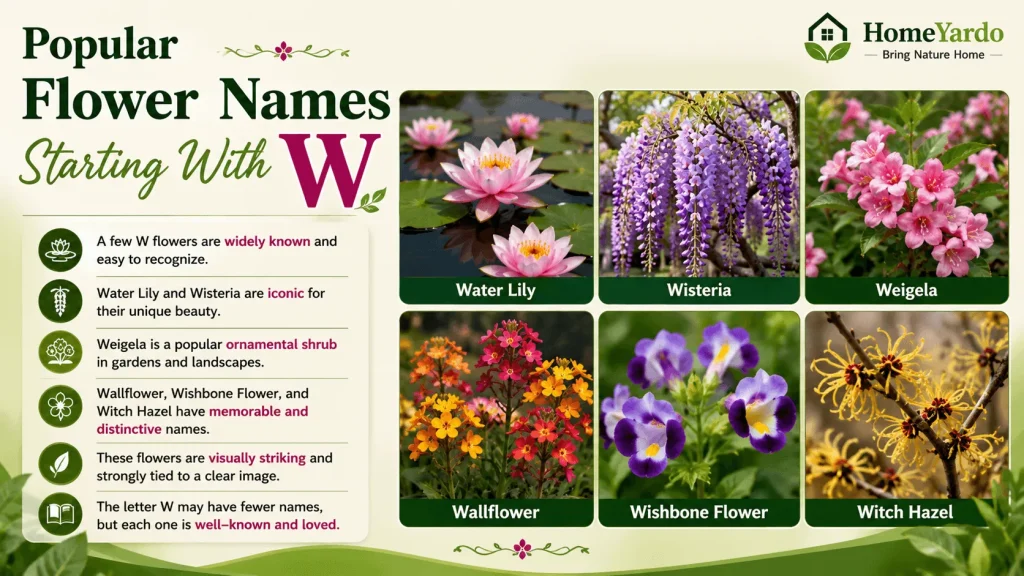
A handful of W flowers stand out because the names are easy to recognize even outside gardening circles. Water Lily is one of the strongest examples because it appears in ponds, botanical collections, and decorative art. Wisteria is widely known for its long hanging flower clusters, and Weigela is a familiar shrub in ornamental landscapes.
Wallflower, Wishbone Flower, and Witch Hazel also fit here. These names stand out because they are memorable, visually distinct, and strongly tied to a clear flower image rather than a vague plant identity. Some flower letters have many familiar garden names, and the flowers that start with B list is another strong example of a letter with several well-known blooms.
Common Flowers That Start With W
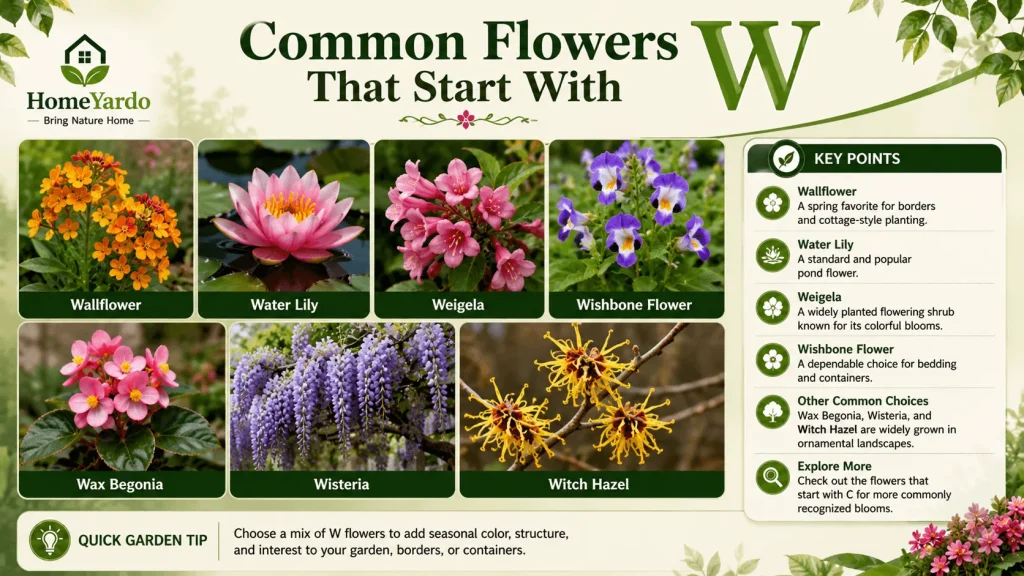
Common W flowers are the ones most likely to appear in ordinary garden use, nursery labels, or simple flower lists. Wallflower is a spring favorite for borders and cottage-style planting. Water Lily is a standard pond flower. Weigela is a widely planted shrub, and Wishbone Flower is a dependable bedding and container choice.
Wax Begonia belongs here because it is commonly grown as a seasonal bedding plant. Wisteria and Witch Hazel also count as common in ornamental planting, even though they are much larger in habit than bedding flowers. Gardeners looking for more familiar alphabet flower names can also explore the flowers that start with C list for another group of commonly recognized blooms.
Rare Flowers That Start With W
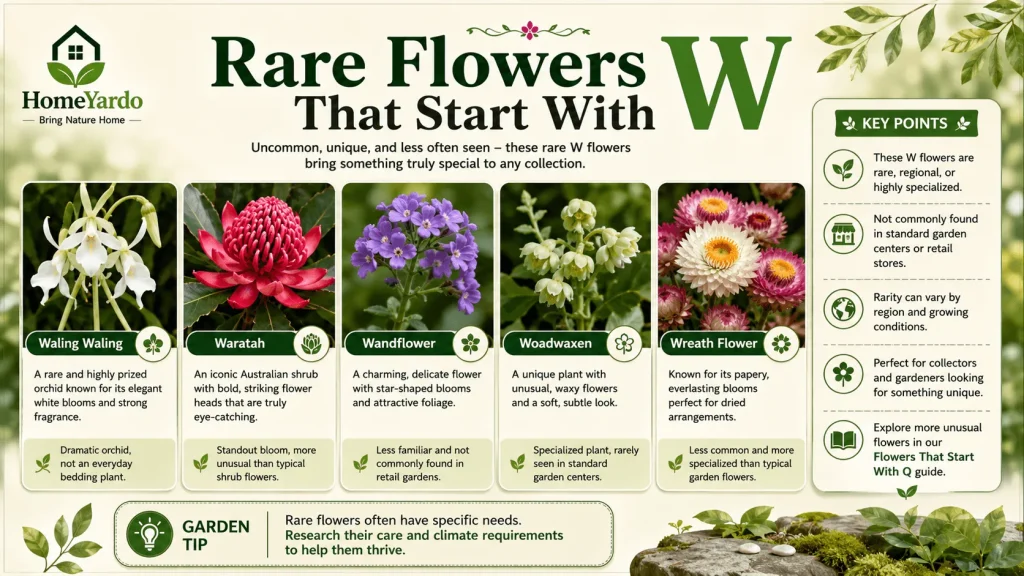
Some W flowers feel rarer because they are more regional, more specialized, or less common in standard garden centers. Waling waling is a dramatic orchid rather than an everyday bedding plant. Waratah is another standout with bold flower heads that feel much more unusual than the average shrub bloom.
Wandflower, Woadwaxen, and Wreath Flower are also less familiar in ordinary retail settings. Rare can shift by region, though, so this group is best seen as less commonly encountered rather than universally hard to find. For another letter with fewer familiar names and more unusual entries, see the flowers that start with Q guide.
Types Of Flowers That Start With W
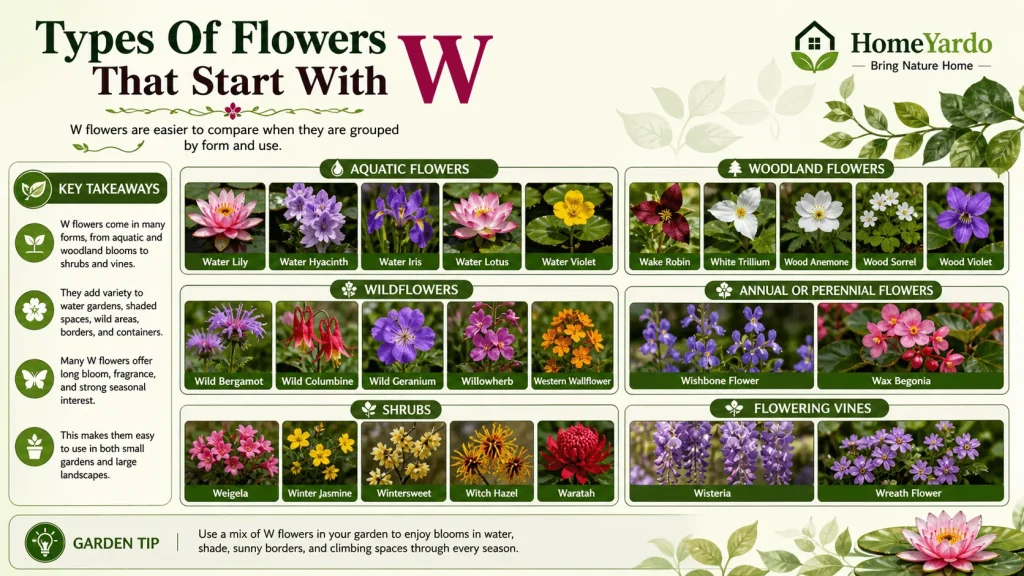
W flowers are easier to compare when they are grouped by form and use. Aquatic flowers include Water Lily, Water Hyacinth, Water Iris, Water Lotus, and Water Violet. Woodland flowers include Wake Robin, White Trillium, Wood Anemone, Wood Sorrel, and Wood Violet.
Wildflowers include Wild Bergamot, Wild Columbine, Wild Geranium, Willowherb, and Western Wallflower. Annual or perennial flowers include Wishbone Flower and Wax Begonia. Shrubs include Weigela, Winter Jasmine, Wintersweet, Witch Hazel, and Waratah. Flowering vines include Wisteria and Wreath Flower. Another helpful way to compare flower names across the alphabet is by checking the flowers that start with M list, which also includes a mix of garden flowers, wildflowers, and ornamental favorites.
Plants Vs Flowers That Start With W
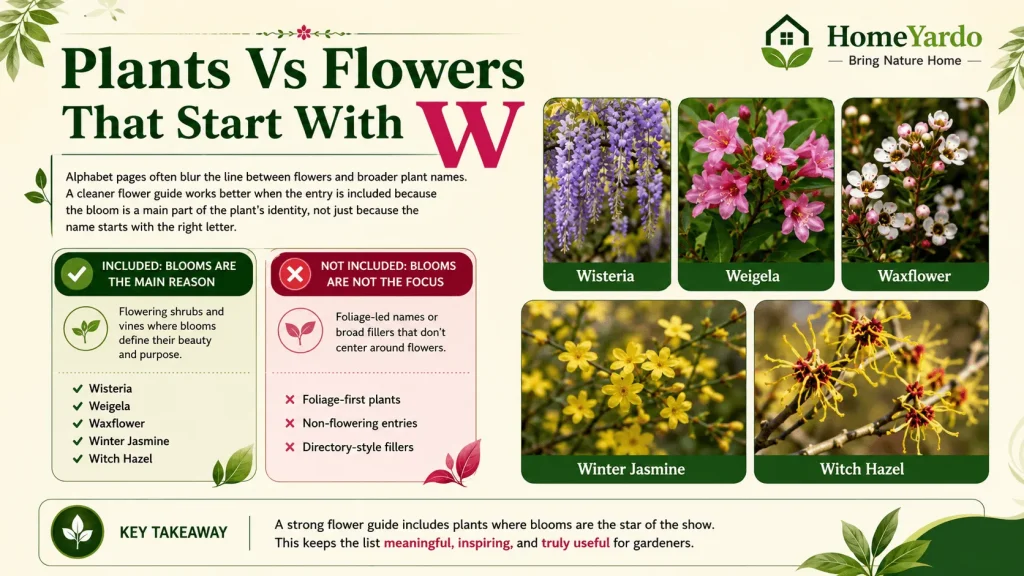
Alphabet pages often blur the line between flowers and broader plant names. A cleaner flower guide works better when the entry is included because the bloom is a main part of the plant’s identity, not just because the name starts with the right letter.
That is why flowering shrubs and vines such as Wisteria, Weigela, Waxflower, Winter Jasmine, and Witch Hazel still fit here. Their blooms are the main reason they are grown and recognized. By contrast, foliage-led names or broad directory fillers weaken the list and make the results less useful.
Perennials That Start With W
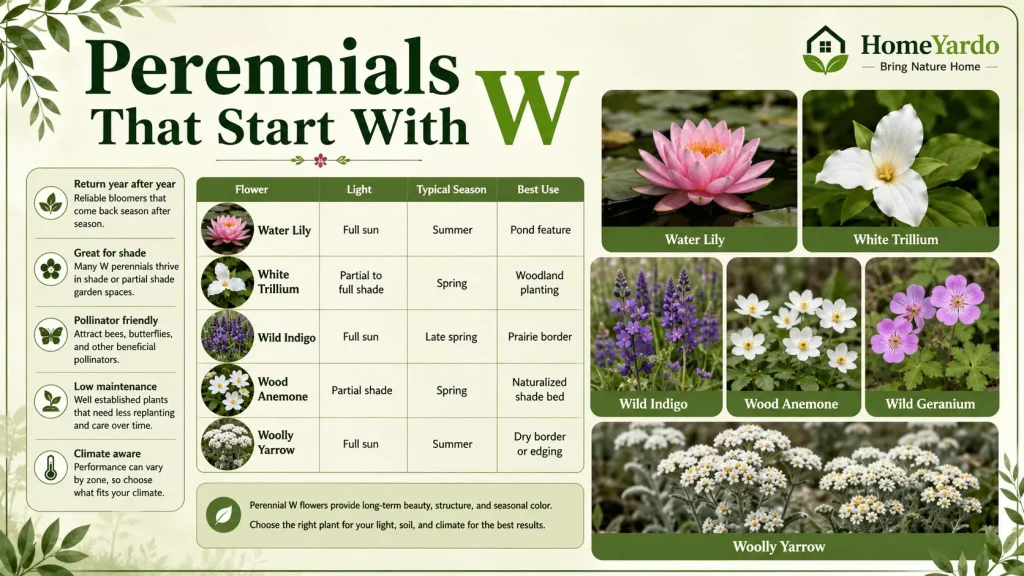
Many of the strongest W flowers are perennials. Water Lily returns year after year in the right pond setting. White Trillium, Wood Anemone, and Wood Violet are classic shade garden options. Wild Bergamot, Wild Indigo, and Wild Geranium are also dependable repeat bloomers in borders and naturalized planting.
Perennial W flowers are especially useful for long-term structure, repeat color, and lower replanting needs. Climate still matters, though, since some plants behave differently across zones.
| Flower | Light | Typical Season | Best Use |
|---|---|---|---|
| Water Lily | Full sun | Summer | Pond feature |
| White Trillium | Partial to full shade | Spring | Woodland planting |
| Wild Indigo | Full sun | Late spring | Prairie border |
| Wood Anemone | Partial shade | Spring | Naturalized shade bed |
| Woolly Yarrow | Full sun | Summer | Dry border or edging |
Annual Flowers That Start With W
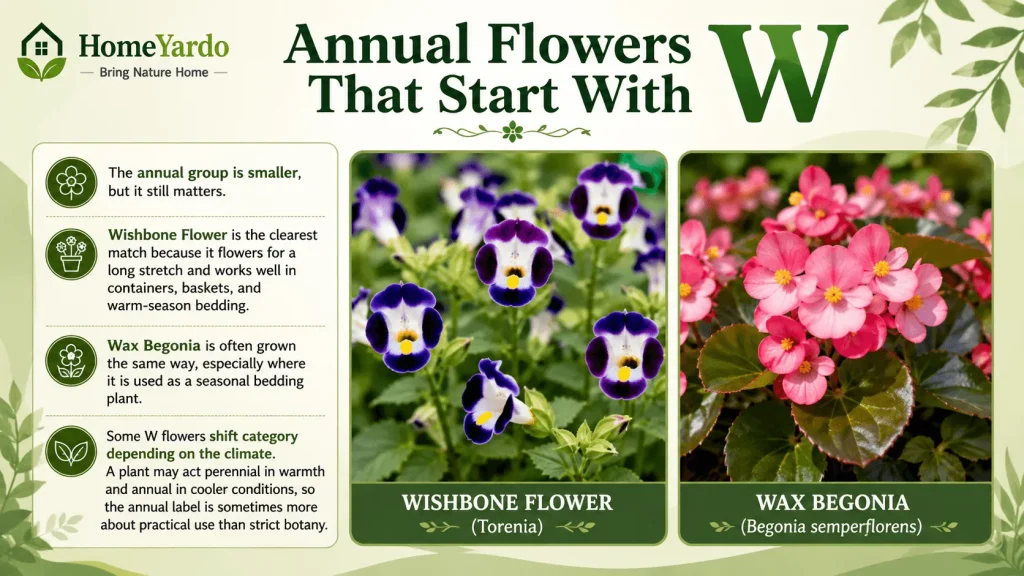
The annual group is smaller, but it still matters. Wishbone Flower is the clearest match because it flowers for a long stretch and works well in containers, baskets, and warm-season bedding. Wax Begonia is often grown the same way, especially where it is used as a seasonal bedding plant.
Some W flowers shift category depending on the climate. A plant may act perennial in warmth and annual in cooler conditions, so the annual label is sometimes more about practical use than strict botany.
Purple Flowers That Start With W
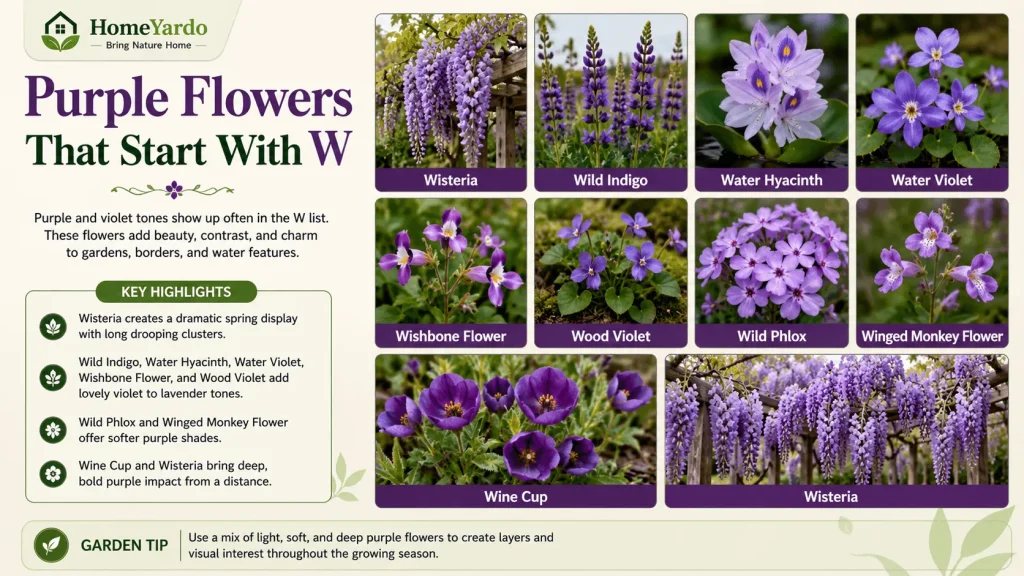
Purple and violet tones show up often in the W list. Wisteria is the most dramatic example, with long drooping clusters that create a strong spring display. Wild Indigo, Water Hyacinth, Water Violet, Wishbone Flower, and Wood Violet all add violet to lavender tones.
For a softer color, Wild Phlox and Winged Monkey Flower work well. For deeper, stronger tones, Wine Cup and Wisteria make a bigger visual impact from a distance.
Wildflowers That Begin With The Letter W
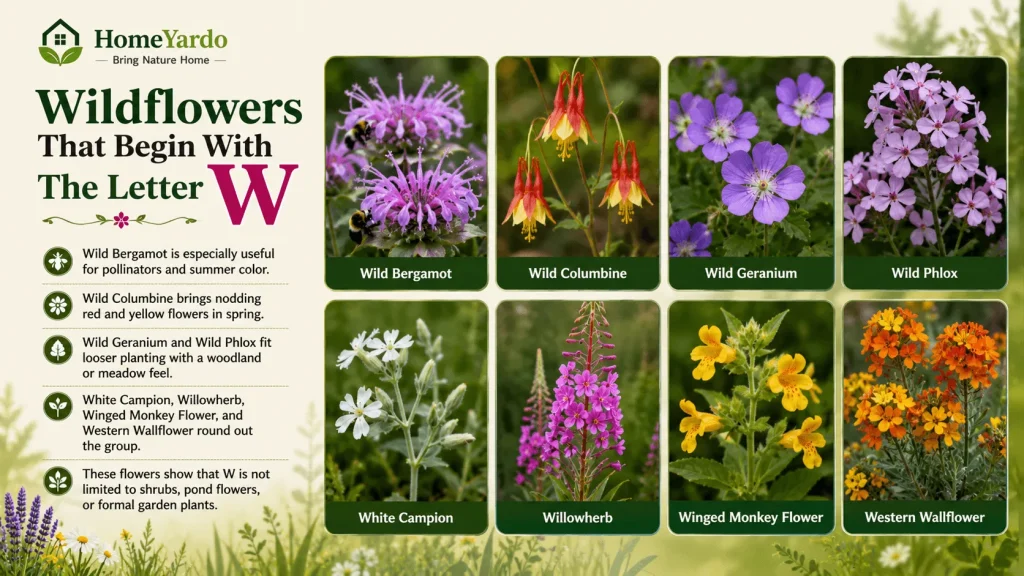
The wildflower group gives the letter W a more natural character. Wild Bergamot is especially useful for pollinators and summer color. Wild Columbine brings nodding red and yellow flowers in spring, while Wild Geranium and Wild Phlox fit looser planting with a woodland or meadow feel.
White Campion, Willowherb, Winged Monkey Flower, and Western Wallflower round out the group. These flowers help show that W is not limited to shrubs, pond flowers, or formal garden plants.
Aquatic And Wetland Flowers That Begin With The W
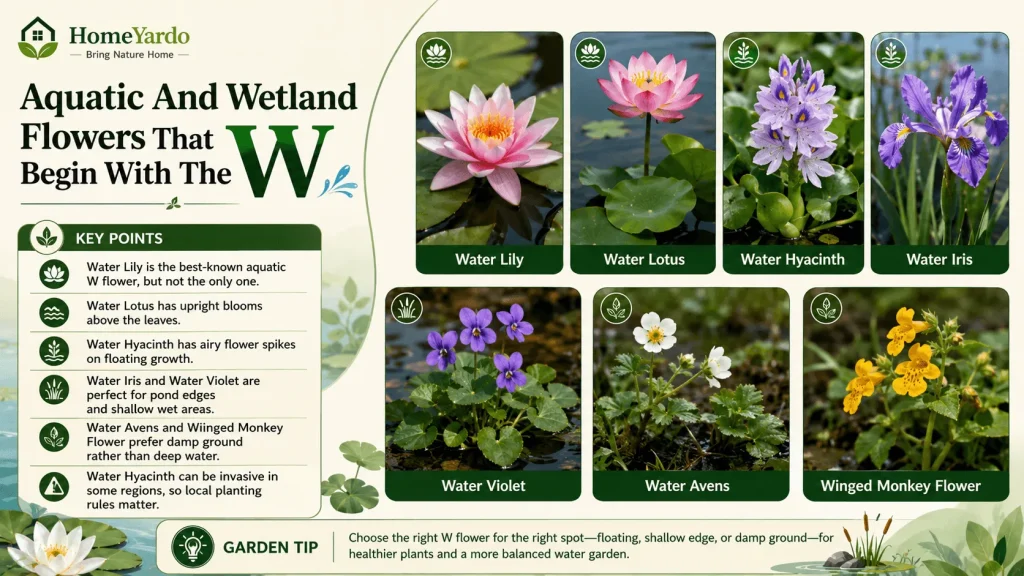
Water Lily is the best-known aquatic W flower, but it is not alone. Water Lotus brings upright blooms above the leaves, while Water Hyacinth carries airy flower spikes on floating growth. Water Iris and Water Violet fit pond edges and shallow wet conditions.
Water Avens and Winged Monkey Flower are better matches for damp ground than deeper open water. That difference matters because some wetland flowers prefer moist soil or shallow margins rather than floating conditions. Water Hyacinth can also be invasive in some regions, so local planting rules matter.
Woodland And Shade Friendly W Flowers
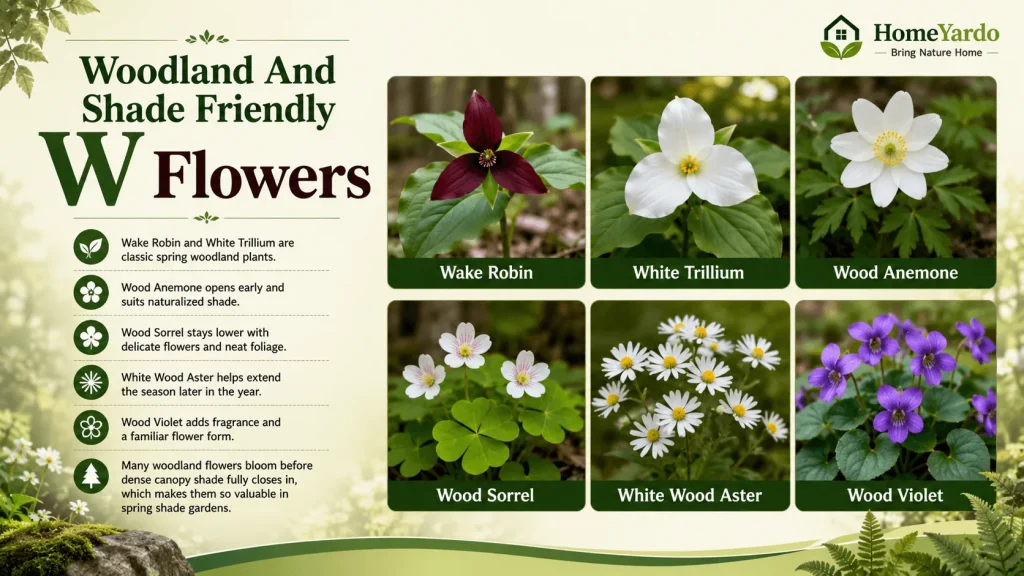
Shade-friendly W flowers are one of the strongest parts of this letter. Wake Robin and White Trillium are classic spring woodland plants. Wood Anemone opens early and suits naturalized shade, while Wood Sorrel stays lower with delicate flowers and neat foliage.
White Wood Aster helps extend the season later in the year. Wood Violet adds fragrance and a familiar flower form. Many woodland flowers bloom before dense canopy shade fully closes in, which is part of why they are so useful in spring shade gardens.
Shrubs, Vines, And Structural Bloomers
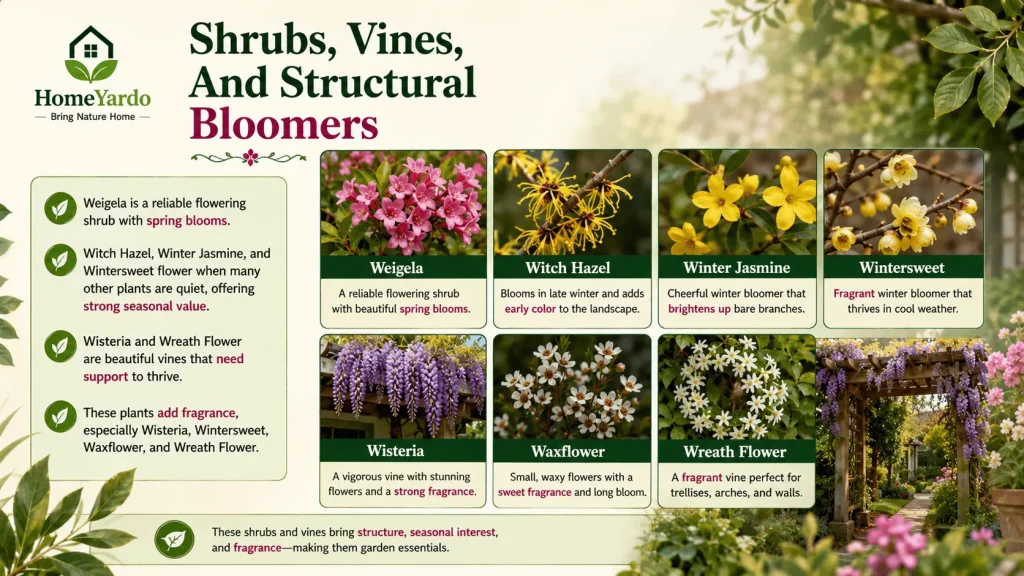
Some W flowers belong to larger plant forms that shape the garden as much as they color it. Weigela is a reliable flowering shrub with spring blooms. Witch Hazel, Winter Jasmine, and Wintersweet flower when many other plants are quiet, which gives them strong seasonal value.
Wisteria and Wreath Flower represent the vining side of the group. They need support and work best on pergolas, trellises, or walls. Fragrance is another strength here, especially with Wisteria, Wintersweet, Waxflower, and Wreath Flower.
Best W Flowers By Color
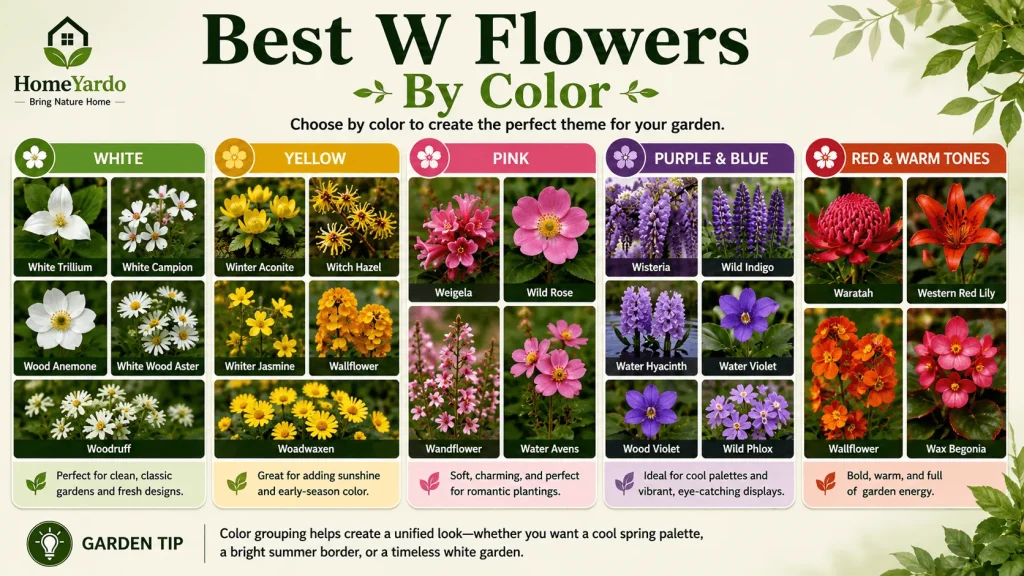
Choosing by color is one of the fastest ways to narrow a long flower list. White choices include White Trillium, White Campion, White Wood Aster, Wood Anemone, and Woodruff. Yellow choices include Winter Aconite, Winter Jasmine, Witch Hazel, Wallflower, and Woadwaxen.
Pink tones show up in Weigela, Wild Rose, Wandflower, and Water Avens. Purple and blue flowers include Wisteria, Wild Indigo, Water Hyacinth, Water Violet, Wood Violet, and Wild Phlox. Red or warmer shades appear in Waratah, Western Red Lily, Wallflower, and some Wax Begonia forms. For more color-rich flower names across the alphabet, the flowers that start with L guide adds another useful set of bright and recognizable blooms.
| Color Group | Standout Examples |
|---|---|
| White | White Trillium, White Campion, Wood Anemone, Woodruff |
| Yellow | Winter Aconite, Witch Hazel, Winter Jasmine, Woadwaxen |
| Pink | Weigela, Wild Rose, Wandflower, Water Avens |
| Purple and blue | Wisteria, Wild Indigo, Water Hyacinth, Wood Violet |
| Red and warm tones | Waratah, Western Red Lily, Wallflower, Wax Begonia |
Color grouping can also help with theme planting, especially when the goal is a cool spring palette, a bright summer border, or a simple white garden look.
Best W Flowers By Bloom Season
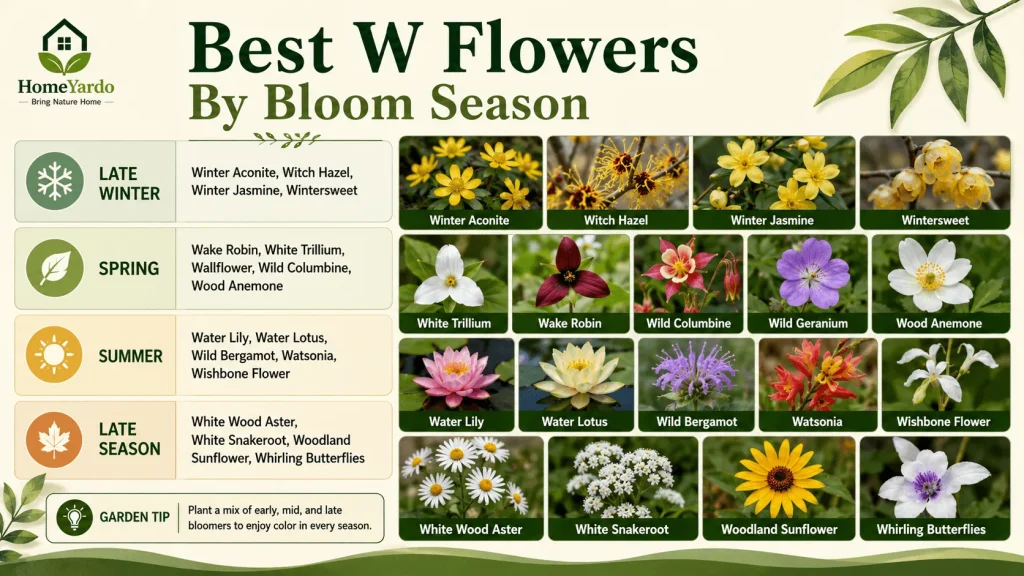
One reason W flowers are useful is that they cover a long part of the year. Winter Aconite, Winter Jasmine, Wintersweet, and Witch Hazel carry the list into winter and early spring. White Trillium, Wake Robin, Wild Columbine, Wild Geranium, and Wood Anemone keep spring moving.
Summer brings Water Lily, Water Lotus, Wild Bergamot, Wine Cup, Wishbone Flower, Watsonia, and Wax Begonia. Later color can come from White Wood Aster, White Snakeroot, Whirling Butterflies, and Woodland Sunflower.
| Season | Good Choices |
|---|---|
| Late winter | Winter Aconite, Witch Hazel, Winter Jasmine, Wintersweet |
| Spring | Wake Robin, White Trillium, Wallflower, Wild Columbine, Wood Anemone |
| Summer | Water Lily, Water Lotus, Wild Bergamot, Watsonia, Wishbone Flower |
| Late season | White Wood Aster, White Snakeroot, Woodland Sunflower, Whirling Butterflies |
Best Picks For Different Garden Uses
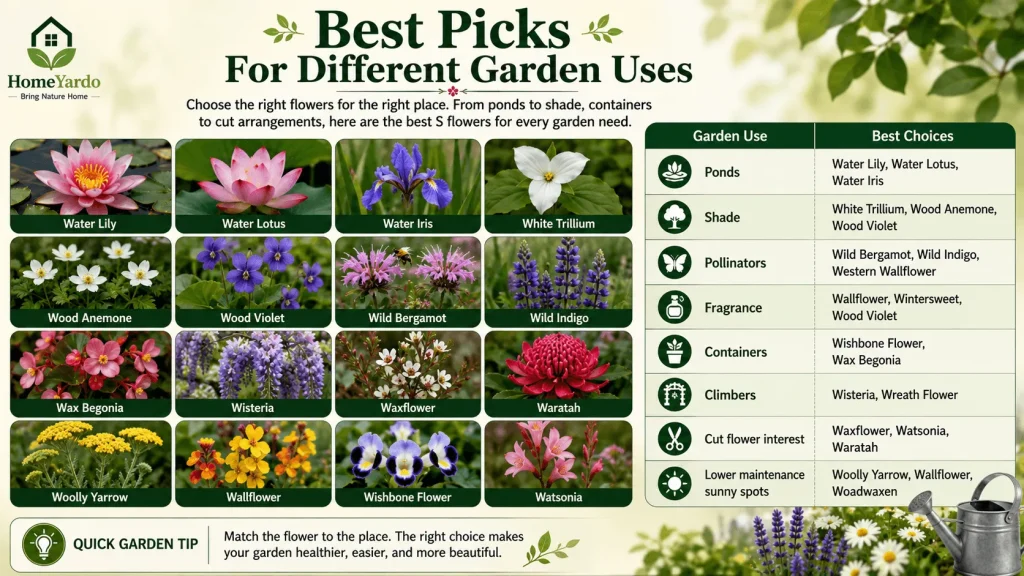
Choosing by use is often more practical than choosing by name alone. Water Lily and Water Lotus suit ponds much better than ordinary borders. White Trillium, Wood Anemone, and Wood Violet fit shade. Wild Bergamot and Wild Indigo help pollinator-focused planting.
Wishbone Flower and Wax Begonia are good for containers and seasonal bedding. Wisteria is a strong pick for vertical support. Waxflower, Watsonia, and Waratah suit floral interest where cut stems matter. Woolly Yarrow and Wallflower are helpful where a lower-maintenance sunny edge is preferred.
| Garden Use | Best Choices |
|---|---|
| Ponds | Water Lily, Water Lotus, Water Iris |
| Shade | White Trillium, Wood Anemone, Wood Violet |
| Pollinators | Wild Bergamot, Wild Indigo, Western Wallflower |
| Fragrance | Wallflower, Wintersweet, Wood Violet |
| Containers | Wishbone Flower, Wax Begonia |
| Climbers | Wisteria, Wreath Flower |
| Cut flower interest | Waxflower, Watsonia, Waratah |
| Lower maintenance sunny spots | Woolly Yarrow, Wallflower, Woadwaxen |
Quick Comparison
A side-by-side table helps separate growth habit, season, and best use more quickly than long descriptions alone.
| Flower | Habit | Bloom Season | Light | Moisture | Best Use |
|---|---|---|---|---|---|
| Wallflower | Low border perennial or biennial | Spring | Full sun | Moderate | Bedding and borders |
| Water Lily | Aquatic perennial | Summer | Full sun | Water | Pond display |
| Waxflower | Flowering shrub | Spring | Full sun | Moderate | Floral detail and shrub borders |
| Weigela | Shrub | Spring to early summer | Full sun to light shade | Moderate | Foundation planting |
| White Trillium | Woodland perennial | Spring | Shade | Even moisture | Woodland gardens |
| Wild Indigo | Upright perennial | Late spring | Full sun | Moderate | Prairie style planting |
| Windflower | Herbaceous perennial | Spring | Full sun to partial shade | Moderate | Spring color |
| Winter Aconite | Bulbous perennial | Late winter | Sun to partial shade | Moderate | Early seasonal interest |
| Wishbone Flower | Annual | Summer to frost | Partial shade | Even moisture | Containers and bedding |
| Wisteria | Flowering vine | Spring | Full sun | Moderate | Pergolas and supports |
| Witch Hazel | Shrub | Winter to early spring | Sun to partial shade | Moderate | Winter bloom |
| Wood Anemone | Woodland perennial | Spring | Partial shade | Even moisture | Naturalized shade planting |
Visual Identification Tips
A few visual clues make W flowers easier to tell apart. Water Lily and Water Lotus are both aquatic, but the flower position helps separate them. Water Lily blooms sit at or near the surface, while lotus flowers usually rise above the leaves.
Wisteria is easy to recognize by its long hanging clusters. Witch Hazel has narrow ribbon-like petals that open in cool weather. White Trillium has three broad petals and a clean woodland form. Wood Violet stays low with smaller violet-shaped flowers, while Weigela carries trumpet blooms on a shrub rather than a ground-level plant.
Short Descriptions For All 50 Flowers
1. Wake Robin
A woodland trillium with deep-toned spring flowers. It suits shady, humus-rich ground and has a natural forest floor look.
2. Wallflower
Known for warm colored clusters and a light, sweet scent. It works well in spring borders and cottage-style planting.
3. Wandflower
A graceful perennial with arching stems and hanging bells. It adds movement and elegance to sunny borders.
4. Waratah
A bold shrub flower with large, rounded heads. It works best where one dramatic focal bloom is needed.
5. Water Avens
This damp soil perennial carries nodding flowers in soft pink or cream tones. It fits streamside planting and moisture-rich beds.
6. Water Hyacinth
A floating aquatic plant with upright lavender flower spikes. It is most often linked with warm-season pond display.
7. Water Iris
A pond edge iris with clear blue to violet blooms. It suits shallow water and wet margins.
8. Water Lily
One of the best-known pond flowers, with broad floating leaves and showy blooms. It brings strong summer color to still water.
9. Water Lotus
Lotus flowers rise above the leaves rather than sitting flat on the surface. The effect is more upright and architectural than a typical water lily.
10. Water Violet
A delicate aquatic perennial with pale starry flowers. It gives a finer, softer look than larger pond blooms.
11. Watsonia
A corm grown flower with upright spikes and sword-like foliage. It is useful for strong vertical color in warm-season borders.
12. Wax Begonia
A tidy bedding plant with glossy leaves and long-lasting blooms. It performs well in containers and formal seasonal planting.
13. Waxflower
A shrub flower with small, waxy blooms that hold well in arrangements. The flowers look neat and refined.
14. Wedelia
A spreading groundcover with bright yellow daisy-like flowers. It works best where a low flowering cover is needed in warm conditions.
15. Weigela
A reliable shrub with trumpet-shaped spring flowers. It fits foundation planting, mixed borders, and informal flowering hedges.
16. Western Red Lily
A striking lily with upward-facing orange-red flowers. It stands out more boldly than many softer meadow blooms.
17. Western Wallflower
A wildflower wallflower with bright yellow or orange clusters. It gives a dry sunny site a cheerful look.
18. Whirling Butterflies
A loose airy perennial whose flowers seem to flutter above the stems. It brings movement into summer planting.
19. White Campion
A white wildflower with a simple, clean flower form. It fits meadow style or informal planting well.
20. White Snakeroot
A late-season perennial with cloudy white flower clusters. It softens borders and naturalized planting as summer fades.
21. White Trillium
One of the most classic woodland flowers. Its three white petals make it easy to recognize in spring shade.
22. White Wood Aster
A fine-textured woodland perennial that blooms later than many shade flowers. It keeps the white color going into the later season.
23. Wild Bergamot
A pollinator-friendly flower with tufted lavender pink blooms. It works well in sunny borders, prairie planting, and habitat gardens.
24. Wild Columbine
A spring wildflower with nodding red and yellow flowers. It gives woodland edges and naturalized beds a light, airy look.
25. Wild Geranium
A soft, mounded perennial with open pink to lavender flowers. It is useful for calm, natural-looking spring planting.
26. Wild Indigo
An upright perennial with spike-like flowers and strong structure. It is especially good for prairie-style borders and pollinator planting.
27. Wild Petunia
A low to medium perennial with soft trumpet-shaped flowers. It gives a relaxed summer look in sunny or lightly dry ground.
28. Wild Phlox
A fragrant spring perennial with loose clusters of pale blooms. It suits woodland edges and informal garden settings.
29. Wild Rose
A simple rose with open flowers and a natural character. It is less formal than hybrid roses and better suited to wild or hedgerow planting.
30. Wild Senna
A taller perennial with yellow blooms and a loose, airy habit. It fits naturalized, and pollinator-focused borders.
31. Wild Sunflower
A cheerful daisy flower with a more natural habit than many garden sunflower cultivars. It adds strong yellow tones later in the season.
32. Willowherb
A tall wildflower with upright spikes of pink or purple blooms. It often feels more meadow-like than formal.
33. Windflower
An anemone-type flower with soft, open petals and a light spring appearance. It suits borders and naturalized planting.
34. Wine Cup
A trailing perennial with bold cup-shaped magenta flowers. It works well for edging, dry slopes, and sunny spreads.
35. Winged Monkey Flower
A moist soil wildflower with tubular snapdragon-like blooms. It is useful for damp garden edges or natural wet ground.
36. Winter Aconite
A very early bulb flower with bright yellow blooms close to the ground. It brings color when many gardens are still quiet.
37. Winter Jasmine
A shrub with clear yellow flowers that open on bare or lightly leaved stems. It adds brightness in colder months.
38. Wintersweet
Known for sweetly scented winter flowers. It is grown as much for fragrance as for color.
39. Wishbone Flower
A long-blooming annual with tubular flowers in blue, purple, pink, or white. It is especially useful in containers and partial shade.
40. Wisteria
A vigorous vine with hanging flower clusters. It creates one of the strongest spring displays on pergolas and supports.
41. Witch Hazel
A winter-flowering shrub with narrow ribbon-like petals. It stands out because of its unusual flower shape and cold-season bloom.
42. Woadwaxen
A shrubby perennial with yellow pea flowers. It suits sunny, dry ground and has a light, fine texture.
43. Wood Anemone
A small spring woodland flower that opens in soft shade. It is ideal for a natural carpet effect in deciduous woodland settings.
44. Wood Sorrel
A delicate ground-level plant with fine flowers and clover-like leaves. It gives woodland planting a soft, understated finish.
45. Wood Violet
A fragrant violet with low-growing spring flowers. It works well in shade and brings a familiar classic look.
46. Woodland Sunflower
A sunflower suited to a lighter shade than many other Helianthus types. It helps extend the yellow flower color into less exposed spots.
47. Woodruff
A low groundcover with tiny white flowers and neat foliage. It is useful for softening shade beds and path edges.
48. Woolly Yarrow
A mat-forming perennial with yellow clusters and gray-green foliage. It suits dry edging and sunny low borders.
49. Wreath Flower
A twining vine with white fragrant blooms. It is valued for its floral elegance and perfume.
50. Waling waling
A large orchid with showy pink to purple flowers. It feels refined and dramatic rather than casual or ordinary.
How This Flower List Was Built
The list was built around one rule: include flowering plants whose common names start with W and whose blooms are a clear part of how the plant is recognized or used. That allows room for true garden flowers, wildflowers, aquatic species, flowering shrubs, and flowering vines without drifting into broad plant filler.
Common names can vary by region, so consistency matters. Where a plant is better known at the genus level in everyday use, the genus-level name is used to keep the guide readable. The list also avoids obvious duplicate padding and tries to keep each name bloom-led rather than foliage-led.
Conclusion
Flowers starting with W cover a wider range than a short alphabet list might suggest. The group includes pond flowers, shade plants, wildflowers, annuals, flowering shrubs, and vines with strong seasonal value.
A simple way to narrow the list is by bloom season, color, or planting use. That turns a long set of names into a practical choice for a real garden, container, pond edge, or shade bed.
FAQ’s
Wallflower, Water Lily, Weigela, Wishbone Flower, Wisteria, and Witch Hazel are among the best-known W flowers. They stand out because they cover several garden styles, including ponds, borders, shrubs, vines, and winter bloom. Some are popular for color, while others are better known for shape, fragrance, or season.
There is no single fixed count because flower lists often use different rules. Some include flowering shrubs and vines, while others mix broader plant names or repeat similar entries under different common names. A well-filtered flower-first list can reasonably cover 50 names without leaning too much on filler.
Water Lily, Wallflower, Weigela, and Wisteria are some of the most common and recognizable examples. The answer can shift depending on whether the focus is garden use, pond planting, or wildflower identification. In everyday ornamental planting, Wallflower and Weigela are especially familiar.
Yes, a few W flowers are much less familiar than the standard garden names. Waling waling, Waratah, Woadwaxen, Wandflower, and Wreath Flower often feel rarer because they are more regional, more specialized, or less common in standard nurseries. Their visibility depends a lot on climate, local plant culture, and availability.
Wisteria, Wild Indigo, Water Hyacinth, Water Violet, Wishbone Flower, and Wood Violet all fit the purple or violet group. Some lean toward soft lavender tones, while others are richer and deeper in color. Wine Cup is another strong choice when a bolder magenta-purple flower is needed.
Many W flowers are perennials, which makes this letter useful for repeat color in established gardens. Water Lily, White Trillium, Wild Indigo, Wood Anemone, Wood Violet, and Woolly Yarrow are good examples. They cover a wide range of settings, from ponds and woodland beds to sunny borders and dry edges.
Yes, although the annual group is smaller than the perennial group. Wishbone Flower is one of the clearest examples because it blooms for a long stretch and works well in containers and bedding displays. Wax Begonia is also often grown like an annual, especially where it is used as a seasonal planting.
Water Lily, Water Lotus, Water Hyacinth, Water Iris, and Water Violet are the strongest aquatic examples. These flowers vary in how they grow, with some floating on the surface and others sitting at the pond edge or in shallow water. Water Avens also suits wet conditions, though it prefers damp soil rather than open water.
Wisteria is a flowering vine, not a low-growing flower bed plant. It still belongs in flower lists because the bloom is the main ornamental reason it is planted and recognized. Its long hanging clusters make it one of the most visually distinctive W flowers in spring.
White Trillium, Wood Anemone, Wood Violet, and Wood Sorrel are strong shade choices. These flowers suit woodland planting, soft spring displays, and naturalized areas where direct sun is limited. White Wood Aster can also help extend interest later in the season in a lighter shade.
Yes, there are several white flowering options under W. White Trillium, White Campion, White Wood Aster, Wood Anemone, Water Lily, and Woodruff are among the best examples. They work well in woodland planting, white-themed beds, and mixed gardens that need a lighter look.
Yes, yellow appears often in the W group. Winter Aconite, Winter Jasmine, Witch Hazel, Wallflower, Woadwaxen, and Wild Senna are all good examples. They range from early-season bloomers to summer flowers, so yellow can be carried across a long part of the year.
Winter Aconite, Winter Jasmine, Wintersweet, and Witch Hazel are the clearest winter or near-winter bloomers. That makes W unusually strong for early seasonal interest compared with many other alphabet flower groups. These plants are especially useful when most borders are still quiet.