85 Beautiful Variety Of Flowers That Start With M You Didn’t Know About
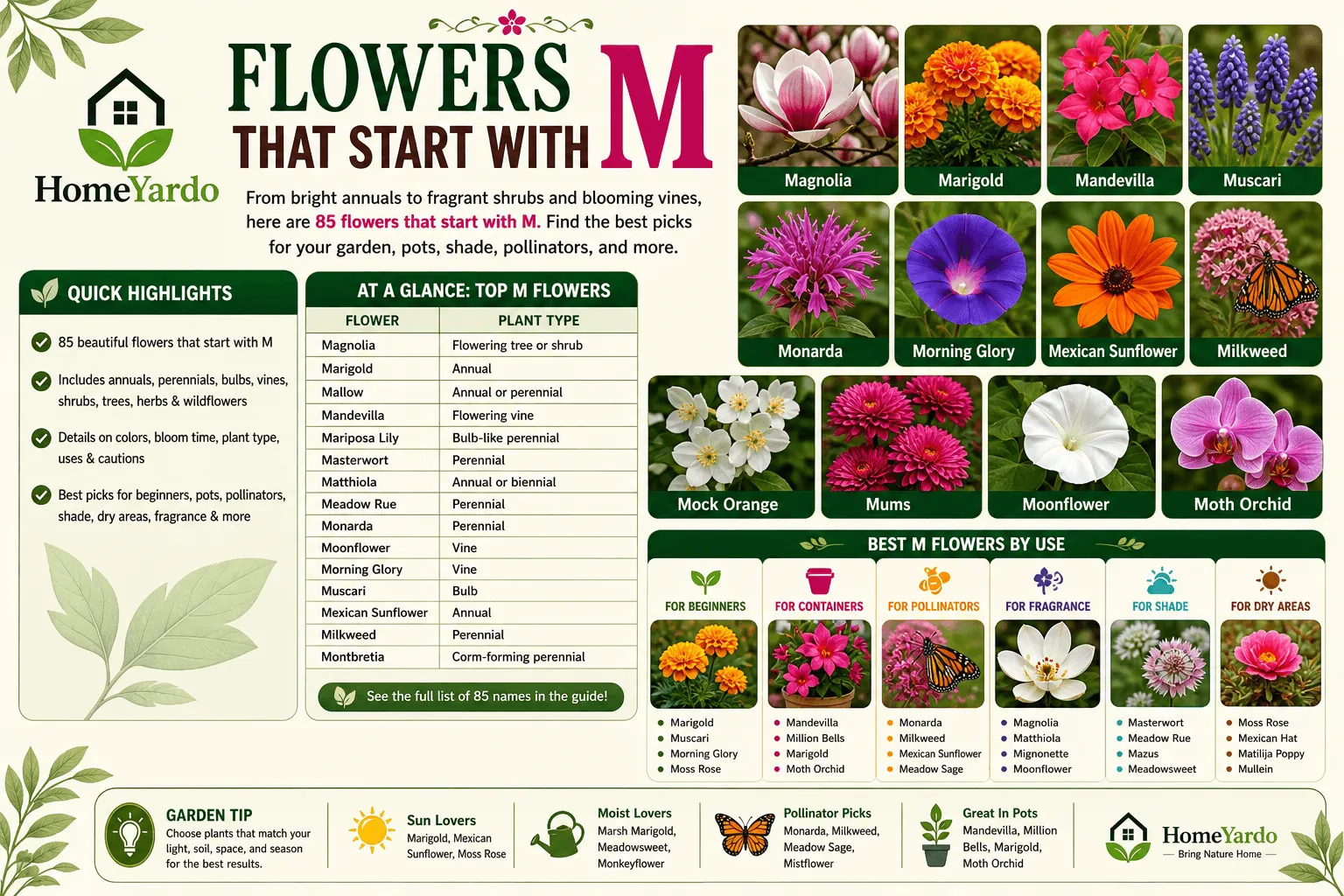
Flowers that start with M include bright annuals, fragrant shrubs, spring bulbs, climbing vines, wildflowers, flowering herbs, and several ornamental trees grown for their blooms. Marigold brings easy warm color, magnolia gives large fragrant blossoms, muscari adds early spring blue, and mandevilla offers polished vertical flowers for patios and containers.
Some M names are classic flowers. Others are flowering shrubs, trees, herbs, or vines that appear in broad flower lists because their blooms are noticed first. That is why magnolia, mock orange, myrtle, mountain laurel, mimosa, and maple flowers can appear beside marigold, mallow, monarda, and muscari.
This guide covers 85 M flower names with plant type, colors, bloom season, garden use, and key cautions. It also sorts the best choices for beginners, containers, pollinators, fragrance, shade, dry areas, bouquets, and indoor displays.
Quick Answer: What Are Flowers That Start With M?
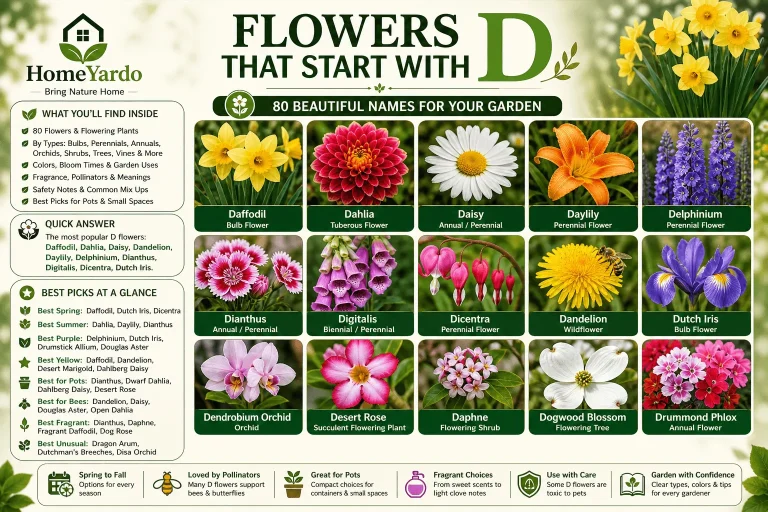
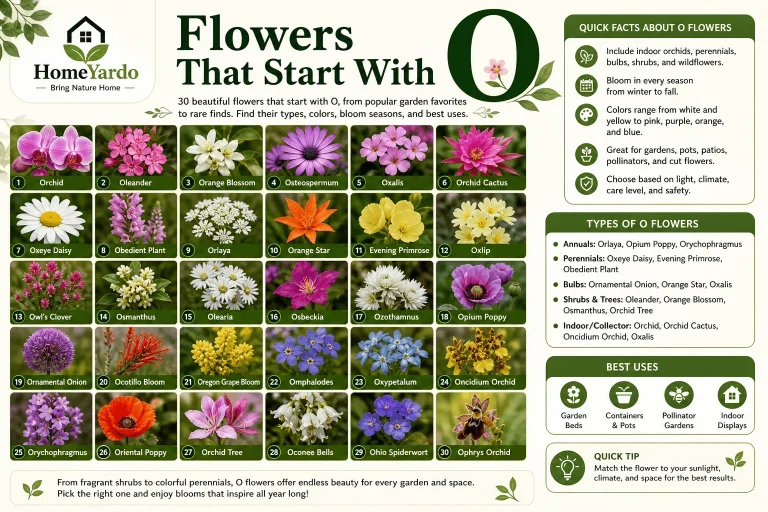
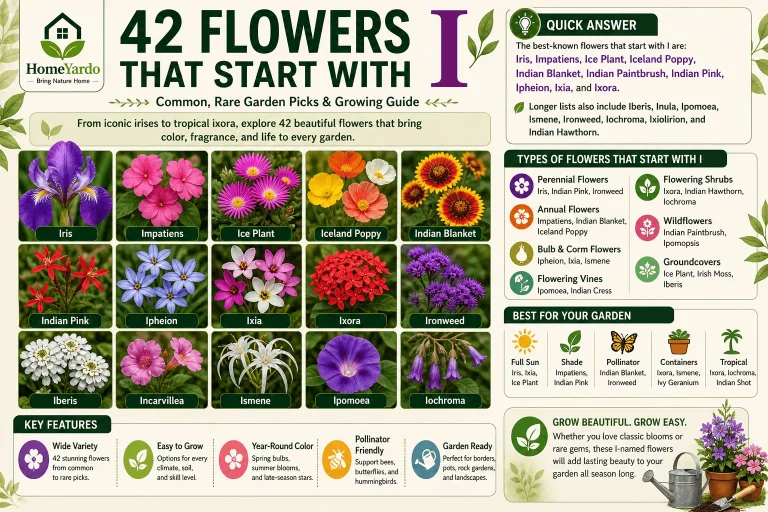
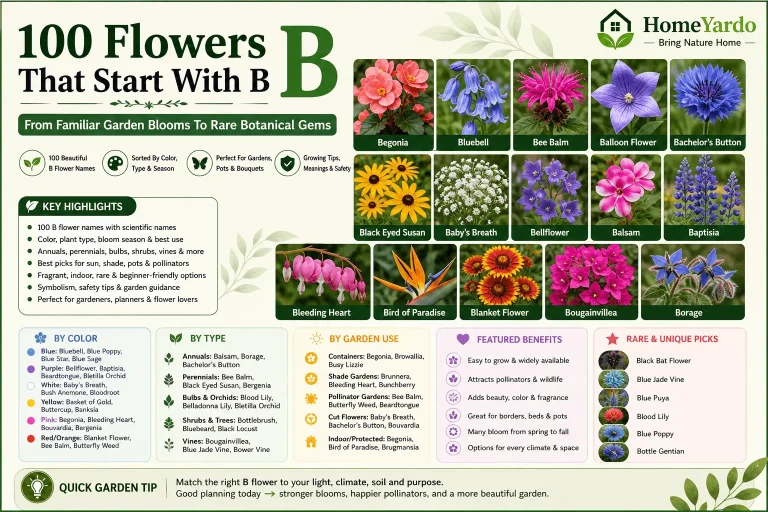
Flowers that start with the letter M include magnolia, marigold, mallow, mandevilla, mariposa lily, masterwort, matthiola, meadow rue, monarda, moonflower, morning glory, muscari, Mexican sunflower, milkweed, montbretia, mimosa, mock orange, monkeyflower, moth orchid, and myrtle.
The full list in this guide includes 85 names. Some are true bedding flowers or perennials, while others are flowering vines, shrubs, trees, herbs, and wildflowers commonly included because their blooms are ornamental.
| Popular M Flower | Plant Type |
|---|---|
| Magnolia | Flowering tree or shrub |
| Marigold | Annual |
| Mallow | Annual or perennial |
| Mandevilla | Flowering vine |
| Mariposa Lily | Bulb-like perennial |
| Masterwort | Perennial |
| Matthiola | Annual or biennial |
| Meadow Rue | Perennial |
| Monarda | Perennial |
| Moonflower | Vine |
| Morning Glory | Vine |
| Muscari | Bulb |
| Mexican Sunflower | Annual |
| Milkweed | Perennial |
| Montbretia | Corm-forming perennial |
| Mimosa | Flowering tree |
| Mock Orange | Flowering shrub |
| Monkeyflower | Annual or perennial |
| Moth Orchid | Indoor orchid |
| Myrtle | Flowering shrub or small tree |
For a nearby alphabet guide, compare flowers that start with L with this M flower list.
Best M Flowers At A Glance
The best M flower depends on the purpose. Some bring fast seasonal color, some support pollinators, some work in containers, and some are better for scent, shade, or bouquet stems.
- Beginners: Marigold, muscari, morning glory, and moss rose are easy starting choices.
- Containers: Mandevilla, million bells, marigold, and moth orchid work well in pots with proper drainage.
- Pollinators: Monarda, milkweed, Mexican sunflower, and meadow sage support bees, butterflies, and other garden visitors.
- Fragrance: Magnolia, Matthiola, mignonette, and moonflower are useful when scent matters.
- Part shade: Masterwort, meadow rue, mazus, and meadowsweet can handle gentler light.
- Dry areas: Moss rose, Mexican hat, matilija poppy, and mullein suit drier garden spots once established.
- Cut flowers: Montbretia, Matthiola, mums, and marigolds can add color, scent, or structure to arrangements.
- Blue or purple blooms: Muscari, meconopsis, mountain bluet, and monkshood are useful for cooler flower tones.
For more beginner-friendly garden names, see flowers that start with H.
Plants vs Flowers That Start With M

Not every M name fits the same plant category. Marigold, mallow, monarda, muscari, and mariposa lily are easy flower matches. Magnolia, mimosa, mock orange, mountain laurel, and myrtle are better described as flowering trees or shrubs, but they still belong in a broad M flower guide because people recognize them by their blossoms.
This distinction matters for garden planning. A compact marigold can fill a pot in one season, while a magnolia needs years of space. A muscari bulb can edge a walkway, while morning glory or mandevilla needs vertical support. The same flower versus flowering plant distinction also appears in flowers that start with S.
| Category | Examples | Why They Appear In M Flower Lists |
|---|---|---|
| Classic flowers | Marigold, mallow, monarda, muscari | Usually recognized as flowers first |
| Flowering vines | Mandevilla, moonflower, morning glory | Grown for visible blooms and vertical color |
| Bulbs and corms | Muscari, montbretia, mariposa lily | Valued for seasonal bloom |
| Flowering shrubs | Mock orange, mountain laurel, myrtle | Included because blooms are ornamental |
| Flowering trees | Magnolia, mimosa, maple | Broader ornamental plant intent |
| Herbs with flowers | Marjoram, mint, motherwort | Included when blooms support pollinators |
| Wildflowers | Milkweed, mountain avens, meadow sage | Useful in native and pollinator planting |
Flower Names That Start With M: At A Glance
The table below compares 30 important M flowers by scientific name, color, season, type, sun preference, use, beginner fit, and caution. Bloom time can shift by climate, variety, and growing conditions.
| Flower Name | Scientific Name | Main Colors | Bloom Season | Plant Type | Sun Preference | Best Use | Beginner Friendly | Quick Caution |
|---|---|---|---|---|---|---|---|---|
| Magnolia | Magnolia spp. | White, pink, purple, cream | Spring | Tree or shrub | Full sun to part sun | Focal planting, fragrance | Moderate | Needs space |
| Marigold | Tagetes spp. | Yellow, orange, red | Summer to fall | Annual | Full sun | Beds, pots, borders | Yes | Can decline in soggy soil |
| Mallow | Malva spp. | Pink, purple, white | Summer | Annual or perennial | Full sun | Cottage planting | Yes | Some types self-seed |
| Mandevilla | Mandevilla spp. | Pink, red, white | Summer to fall | Vine | Full sun | Trellis, patio pots | Moderate | Frost sensitive |
| Mariposa Lily | Calochortus spp. | White, pink, purple, yellow | Spring to summer | Bulb-like perennial | Full sun | Wildflower style beds | Moderate | Needs good drainage |
| Masterwort | Astrantia major | Pink, red, white, purple | Summer | Perennial | Part sun | Soft borders | Moderate | Prefers steady moisture |
| Matthiola | Matthiola incana | Pink, purple, white, red | Spring to summer | Annual or biennial | Full sun to part sun | Fragrance, cut flowers | Moderate | Dislikes extreme heat |
| Meadow Rue | Thalictrum spp. | Purple, pink, white, yellow | Late spring to summer | Perennial | Part sun to shade | Airy height | Moderate | May need moisture |
| Monarda | Monarda spp. | Red, pink, purple | Summer | Perennial | Full sun to part sun | Pollinators | Yes | Needs airflow |
| Moonflower | Ipomoea alba | White | Summer to fall | Vine | Full sun | Evening scent | Moderate | Seeds can be toxic |
| Morning Glory | Ipomoea spp. | Blue, purple, pink, white | Summer to fall | Vine | Full sun | Fences, arches | Yes | Can self seed |
| Muscari | Muscari spp. | Blue, purple, white | Spring | Bulb | Full sun to part sun | Edging, drifts | Yes | Foliage appears early |
| Mexican Sunflower | Tithonia rotundifolia | Orange, red orange | Summer to fall | Annual | Full sun | Pollinators, bold color | Yes | Needs room |
| Milkweed | Asclepias spp. | Orange, pink, white | Summer | Perennial | Full sun | Butterfly planting | Moderate | Sap can irritate |
| Montbretia | Crocosmia spp. | Orange, red, yellow | Summer | Corm perennial | Full sun | Borders, cut flowers | Moderate | Can spread in mild areas |
| Mimosa | Albizia julibrissin | Pink | Summer | Flowering tree | Full sun | Ornamental canopy | Moderate | Can be invasive in some regions |
| Mock Orange | Philadelphus spp. | White | Late spring | Shrub | Full sun to part sun | Fragrant hedges | Moderate | Prune after bloom |
| Monkeyflower | Mimulus spp. | Yellow, orange, pink, red | Spring to summer | Annual or perennial | Sun to part shade | Moist borders | Moderate | Needs suitable moisture |
| Moth Orchid | Phalaenopsis spp. | White, pink, purple, yellow | Variable indoors | Orchid | Bright indirect light | Indoor blooms | Moderate | Avoid wet crown |
| Myrtle | Myrtus communis | White | Summer | Shrub or small tree | Full sun | Fragrance, hedging | Moderate | Frost sensitive in cold areas |
| Moss Rose | Portulaca grandiflora | Pink, yellow, orange, red | Summer | Annual | Full sun | Dry pots, hot beds | Yes | Needs sun to open well |
| Million Bells | Calibrachoa spp. | Many colors | Spring to fall | Tender perennial grown annual | Full sun | Hanging baskets | Yes | Needs steady feeding |
| Meadow Sage | Salvia pratensis | Purple, blue, pink | Late spring to summer | Perennial | Full sun | Pollinator borders | Yes | Avoid wet soil |
| Marsh Marigold | Caltha palustris | Yellow | Spring | Perennial | Sun to part shade | Moist soil, pond edges | Moderate | Needs moisture |
| Marguerite Daisy | Argyranthemum frutescens | White, yellow, pink | Spring to fall | Tender perennial | Full sun | Containers, borders | Yes | Heat may reduce bloom |
| Mexican Petunia | Ruellia simplex | Purple, pink, white | Summer to fall | Perennial | Full sun to part sun | Warm climate color | Moderate | Can spread aggressively |
| Mums | Chrysanthemum spp. | Yellow, orange, pink, purple, white | Fall | Perennial | Full sun | Fall color, pots | Yes | Hardy types vary |
| Meconopsis | Meconopsis spp. | Blue, purple, yellow | Spring to summer | Perennial | Part shade | Cool gardens | Difficult | Dislikes heat |
| Mountain Laurel | Kalmia latifolia | Pink, white | Late spring | Shrub | Part sun | Woodland shrubs | Moderate | Toxic if eaten |
| Monkshood | Aconitum spp. | Blue, violet, white | Summer to fall | Perennial | Part sun | Cool borders | No | Highly toxic |
Common Flowers That Start With M

Common M flowers include easy annuals, showy vines, spring bulbs, scented shrubs, and long-blooming perennials. These are the names most likely to appear in gardens, containers, bouquets, or seasonal displays.
Magnolia
Magnolia is a flowering tree or shrub grown for large, elegant blooms. Many types flower in spring, sometimes before the leaves fully open, which makes the blossoms especially noticeable. Flower colors include white, cream, pink, purple, and soft yellow in some cultivars.
Magnolia works best as a focal plant where it has enough space to mature. Smaller shrub forms suit compact landscapes better than large tree forms. Many magnolias also bring fragrance, making them useful near paths, patios, and entry areas.
Marigold
Marigolds are one of the easiest M flowers for warm seasonal color. It grows quickly, flowers heavily, and gives strong yellow, orange, gold, and red tones from summer into fall.
Compact marigolds suit pots, edging, and small beds, while taller forms can add brighter mass planting. Marigolds prefer full sun and soil that drains well. They are a dependable choice for beginners because they usually flower with basic care.
Mallow
Mallow has a soft cottage garden look with rounded blooms in pink, purple, white, or lavender. Some mallows are annuals, while others are perennials or short-lived perennials.
The plant works well in informal borders, pollinator beds, and natural-style planting. It brings a looser shape than formal bedding flowers and pairs well with grasses, salvias, and other soft flowering plants.
Mandevilla
Mandevilla is a flowering vine with glossy foliage and large trumpet-shaped blooms. Common colors include red, pink, and white. It is often grown on trellises, patio supports, balcony rails, and large containers.
This vine prefers warmth, bright light, and steady watering without soggy soil. In cold climates, it is usually treated as a tender seasonal plant or moved into protection before frost.
Morning Glory
Morning glory is a fast-climbing vine with funnel-shaped flowers that often open early in the day. Blue and purple forms are especially popular, though pink, white, and mixed colors are also common.
It is useful for quick coverage on fences, arches, and simple supports. Morning glory can self-seed in some areas, so local growing behavior should be checked before planting.
Muscari
Muscari, often called grape hyacinth, is a small spring bulb with dense spikes of blue, purple, or white flowers. Its compact size makes it useful for edging, underplanting, rock gardens, and spring drifts.
Muscari is beginner-friendly because bulbs can return year after year in suitable conditions. It pairs well with tulips, daffodils, pansies, and early spring perennials.
Monarda
Monarda, also called bee balm, is a perennial flower with red, pink, purple, or lavender blooms. The flower heads have a shaggy look that adds texture and movement to summer borders.
It is valued for pollinator planting because bees, butterflies, and hummingbirds often visit the blooms. Monarda prefers sun to part sun, steady moisture, and good airflow around the foliage.
Mexican Sunflower
Mexican sunflower produces bold orange to red orange flowers through hot weather. It has a strong upright habit and brings intense color when many softer flowers begin to fade.
This annual is useful for pollinator beds, sunny back borders, and late summer color. It needs room, strong sun, and soil that drains well. Its height makes it better for larger beds than tight containers.
Milkweed
Milkweed includes several Asclepias species grown for butterfly planting and native garden value. Flowers may be orange, pink, white, yellow, or purple, depending on species.
It is best used where wildlife support matters. Some types suit dry sunny sites, while others prefer moist soil. Milkweed sap can irritate skin and can be toxic if eaten, so placement should be chosen with care.
Mock Orange
Mock orange is a flowering shrub loved for its fragrant white blooms. It usually flowers in late spring or early summer and works well as a specimen shrub, loose hedge, or background planting.
The scent is one of its strongest qualities. It should be planted where the fragrance can be enjoyed. Pruning is usually done after flowering because many types bloom on older wood.
Mums
Mums, or chrysanthemums, are popular for late-season color. They come in yellow, bronze, orange, purple, pink, red, and white. Garden mums are often used in autumn containers, porch displays, and seasonal borders.
They prefer full sun and consistent moisture. Hardy performance depends on cultivar and climate. Earlier planting gives roots more time to settle before winter.
Moth Orchid
Moth orchid, or Phalaenopsis, is one of the most common indoor flowering plants. Its arching stems carry long-lasting blooms in white, pink, purple, yellow, and patterned forms.
It prefers bright indirect light, airy potting media, and careful watering. The crown should stay dry to reduce rot risk. Moth orchid is one of the best M flowers for bright indoor spaces.
85 Flowers That Start With M Directory
The directory below includes classic flowers plus flowering vines, trees, shrubs, herbs, and wildflowers commonly grouped by bloom name. Some are practical garden picks, while others are included for botanical reference, floral design, or plant identification.
| # | Flower Name | Scientific Name | Type | Main Colors | Bloom Season | Best For | Note |
|---|---|---|---|---|---|---|---|
| 1 | Madagascar Periwinkle | Catharanthus roseus | Tender perennial grown annual | Pink, white, rose | Summer to fall | Sunny beds, pots | Good heat tolerance in warm sites |
| 2 | Madder | Rubia tinctorum | Herbaceous perennial | Yellow green | Summer | Dye gardens, pollinators | Small flowers, valued more for roots |
| 3 | Maiden Pink | Dianthus deltoides | Perennial | Pink, red, white | Spring to summer | Edging, rock gardens | Compact and tidy in sunny soil |
| 4 | Magnolia | Magnolia spp. | Tree or shrub | White, pink, purple | Spring | Focal planting | Needs space and suitable site |
| 5 | Mallow | Malva spp. | Annual or perennial | Pink, purple, white | Summer | Cottage borders | Soft flowers, relaxed habit |
| 6 | Mamane | Sophora chrysophylla | Flowering tree | Yellow | Variable by region | Native style planting | Best known in Hawaiian landscapes |
| 7 | Manchineel | Hippomane mancinella | Flowering tree | Greenish yellow | Variable | Reference only | Dangerous plant, not for casual planting |
| 8 | Mandevilla | Mandevilla spp. | Vine | Pink, red, white | Summer to fall | Trellises, patios | Tender in cold climates |
| 9 | Mandrake | Mandragora officinarum | Perennial herb | Purple, white | Spring | Botanical interest | Toxic plant, handle with caution |
| 10 | Manzanita | Arctostaphylos spp. | Shrub | White, pink | Winter to spring | Dry gardens | Needs excellent drainage |
| 11 | Maple Flower | Acer spp. | Flowering tree | Red, yellow, green | Spring | Tree bloom interest | Flowers are small but ornamental |
| 12 | Marguerite Daisy | Argyranthemum frutescens | Tender perennial | White, yellow, pink | Spring to fall | Containers, borders | Best in mild weather |
| 13 | Marigold | Tagetes spp. | Annual | Yellow, orange, red | Summer to fall | Easy color | Strong beginner flower |
| 14 | Marigold African | Tagetes erecta | Annual | Yellow, orange | Summer to fall | Tall bedding color | Large blooms, upright habit |
| 15 | Marigold French | Tagetes patula | Annual | Yellow, orange, red | Summer to fall | Edging, pots | Compact and reliable |
| 16 | Marigold Signet | Tagetes tenuifolia | Annual | Yellow, orange | Summer to fall | Edible flowers, edging | Fine foliage, small blooms |
| 17 | Mariposa Lily | Calochortus spp. | Bulb like perennial | White, pink, purple | Spring to summer | Wildflower beds | Needs sharp drainage |
| 18 | Marjoram | Origanum majorana | Herb | White, pink | Summer | Pollinator herb beds | Grown mostly for leaves |
| 19 | Marsh Gladiolus | Gladiolus palustris | Corm perennial | Pink, purple | Summer | Moist meadows | Less common garden plant |
| 20 | Marsh Mallow | Althaea officinalis | Perennial | Pale pink, white | Summer | Moist borders | Tall and soft-looking |
| 21 | Marsh Marigold | Caltha palustris | Perennial | Yellow | Spring | Pond edges, wet soil | Needs moisture |
| 22 | Masterwort | Astrantia major | Perennial | Pink, red, white | Summer | Part shade borders | Fine-textured blooms |
| 23 | Matilija Poppy | Romneya coulteri | Perennial | White, yellow center | Summer | Dry sunny gardens | Needs room and drainage |
| 24 | Matthiola | Matthiola incana | Annual or biennial | Pink, purple, white | Spring to summer | Fragrance, cutting | Often called stock |
| 25 | Matsumoto Aster | Callistephus chinensis | Annual | Pink, purple, red, white | Summer to fall | Cut flowers | Strong florist style bloom |
| 26 | Mayapple | Podophyllum peltatum | Woodland perennial | White | Spring | Woodland gardens | Plant parts can be toxic |
| 27 | Mayflower | Epigaea repens | Woodland evergreen | Pink, white | Spring | Woodland interest | Needs acidic, humus rich soil |
| 28 | Mazus | Mazus reptans | Groundcover perennial | Purple, white | Spring to summer | Groundcover | Works in moist soil |
| 29 | Meadow Anemone | Anemone canadensis | Perennial | White | Spring to summer | Naturalized beds | Can spread in rich soil |
| 30 | Meadow Beauty | Rhexia spp. | Perennial | Pink, purple | Summer | Moist native beds | Best in damp acidic soil |
| 31 | Meadow Rue | Thalictrum spp. | Perennial | Purple, white, yellow | Late spring to summer | Airy shade borders | Needs moisture in many areas |
| 32 | Meadow Sage | Salvia pratensis | Perennial | Blue, purple, pink | Late spring to summer | Pollinator beds | Good sunny perennial |
| 33 | Meadow Saffron | Colchicum autumnale | Bulb like perennial | Pink, purple | Fall | Autumn flowers | Toxic, not edible saffron |
| 34 | Meadowfoam | Limnanthes douglasii | Annual | White, yellow | Spring | Pollinators, edging | Cheerful low annual |
| 35 | Meadowsweet | Filipendula ulmaria | Perennial | Cream, white | Summer | Moist borders | Soft clustered blooms |
| 36 | Meconopsis | Meconopsis spp. | Perennial | Blue, yellow, purple | Spring to summer | Cool gardens | Difficult in heat |
| 37 | Mediterranean Bells | Nectaroscordum siculum | Bulb | Cream, pink, green | Late spring | Naturalistic beds | Related to ornamental alliums |
| 38 | Meehania | Meehania cordata | Perennial groundcover | Purple, lavender | Spring | Woodland edges | Low spreading habit |
| 39 | Melampodium | Melampodium divaricatum | Annual | Yellow | Summer to fall | Hot sunny beds | Easy warm color |
| 40 | Melastoma | Melastoma spp. | Shrub | Purple, pink | Summer | Tropical gardens | Needs warm climate |
| 41 | Melic Grass Flower | Melica spp. | Ornamental grass | Cream, tan | Spring to summer | Meadow texture | Grown for airy seed heads |
| 42 | Mentzelia | Mentzelia spp. | Wildflower | Yellow, white | Summer | Dry native planting | Often suits open sunny sites |
| 43 | Mexican Bush Sage | Salvia leucantha | Perennial | Purple, white | Late summer to fall | Pollinators | Velvety flower spikes |
| 44 | Mexican Flame Vine | Pseudogynoxys chenopodioides | Vine | Orange | Warm season | Fences, trellises | Strong color in warm climates |
| 45 | Mexican Hat | Ratibida columnifera | Perennial | Yellow, red, brown | Summer | Dry prairie beds | Distinct cone-shaped center |
| 46 | Mexican Heather | Cuphea hyssopifolia | Tender perennial | Purple, pink, white | Warm season | Edging, pots | Small flowers, neat habit |
| 47 | Mexican Honeysuckle | Justicia spicigera | Shrub | Orange | Warm season | Pollinator shrubs | Best in warm regions |
| 48 | Mexican Petunia | Ruellia simplex | Perennial | Purple, pink, white | Summer to fall | Warm climate color | Can spread aggressively |
| 49 | Mexican Sunflower | Tithonia rotundifolia | Annual | Orange, red orange | Summer to fall | Pollinators | Tall and bold |
| 50 | Michaelmas Daisy | Symphyotrichum spp. | Perennial | Purple, blue, pink | Late summer to fall | Late color | Valuable autumn bloom |
| 51 | Mignonette | Reseda odorata | Annual | Cream, green, red | Summer | Fragrance | Modest flowers, strong scent |
| 52 | Milkweed | Asclepias spp. | Perennial | Orange, pink, white | Summer | Butterflies | Sap can irritate |
| 53 | Million Bells | Calibrachoa spp. | Tender perennial grown annual | Many colors | Spring to fall | Hanging baskets | Needs feeding and drainage |
| 54 | Mimosa | Albizia julibrissin | Flowering tree | Pink | Summer | Ornamental tree bloom | Invasive in some areas |
| 55 | Mint Flower | Mentha spp. | Herbaceous perennial | Purple, white, pink | Summer | Pollinator herb beds | Spreads strongly |
| 56 | Missouri Evening Primrose | Oenothera macrocarpa | Perennial | Yellow | Summer | Dry sunny beds | Large bright blooms |
| 57 | Mistflower | Conoclinium coelestinum | Perennial | Blue, lavender | Late summer to fall | Pollinator beds | Can spread in moist soil |
| 58 | Mistletoe | Viscum or Phoradendron spp. | Parasitic plant | Yellow green | Variable | Reference, holiday greenery | Berries can be toxic |
| 59 | Mock Orange | Philadelphus spp. | Shrub | White | Late spring | Fragrance, hedges | Prune after flowering |
| 60 | Monkey Orchid | Dracula simia | Orchid | Brown, orange, cream | Variable | Botanical interest | Specialist orchid care |
| 61 | Monkeyflower | Mimulus spp. | Annual or perennial | Yellow, orange, pink | Spring to summer | Moist borders | Needs suitable moisture |
| 62 | Monkshood | Aconitum spp. | Perennial | Blue, violet, white | Summer to fall | Cool borders | Highly toxic |
| 63 | Montbretia | Crocosmia spp. | Corm perennial | Orange, red, yellow | Summer | Borders, cut stems | Can spread in mild climates |
| 64 | Moon Daisy | Leucanthemum vulgare | Perennial | White, yellow center | Summer | Meadow style beds | Can naturalize strongly |
| 65 | Moonflower | Ipomoea alba | Vine | White | Summer to fall | Evening gardens | Seeds can be toxic |
| 66 | Morning Glory | Ipomoea spp. | Vine | Blue, purple, pink, white | Summer to fall | Quick coverage | Can self seed |
| 67 | Moss Campion | Silene acaulis | Alpine perennial | Pink | Spring to summer | Rock gardens | Needs cool, lean sites |
| 68 | Moss Phlox | Phlox subulata | Perennial groundcover | Pink, purple, white | Spring | Slopes, edging | Good spring carpet |
| 69 | Moss Rose | Portulaca grandiflora | Annual | Pink, red, yellow, orange | Summer | Hot dry pots | Needs strong sun |
| 70 | Motherwort | Leonurus cardiaca | Herbaceous perennial | Pink, purple | Summer | Pollinator herb beds | Can self seed |
| 71 | Moth Orchid | Phalaenopsis spp. | Orchid | White, pink, purple | Variable indoors | Indoor flowers | Avoid overwatering |
| 72 | Mountain Avens | Dryas octopetala | Alpine perennial | White, yellow center | Spring to summer | Alpine gardens | Needs cool conditions |
| 73 | Mountain Bluet | Centaurea montana | Perennial | Blue, purple | Late spring to summer | Cottage borders | May spread by seed |
| 74 | Mountain Garland | Clarkia unguiculata | Annual | Pink, purple, red | Spring to summer | Wildflower beds | Best in sunny sites |
| 75 | Mountain Laurel | Kalmia latifolia | Shrub | Pink, white | Late spring | Woodland shrubs | Toxic if eaten |
| 76 | Mountain Phlox | Phlox austromontana or related spp. | Perennial | Pink, purple, white | Spring to summer | Rock gardens | Needs suitable drainage |
| 77 | Mountain Sandwort | Minuartia or Arenaria spp. | Alpine perennial | White | Spring to summer | Rock gardens | Small, neat flowers |
| 78 | Mountain Thistle | Cirsium spp. | Wildflower | Purple, pink | Summer | Wildlife planting | Some thistles are weedy |
| 79 | Mugwort | Artemisia vulgaris | Herbaceous perennial | Greenish yellow | Summer | Reference, pollinators | Can spread strongly |
| 80 | Mullein | Verbascum spp. | Biennial or perennial | Yellow, white, purple | Summer | Dry sunny beds | Tall flower spikes |
| 81 | Mum | Chrysanthemum spp. | Perennial | Many colors | Fall | Autumn pots | Hardiness varies |
| 82 | Muscari | Muscari spp. | Bulb | Blue, purple, white | Spring | Edging, drifts | Easy spring bulb |
| 83 | Musk Mallow | Malva moschata | Perennial | Pink, white | Summer | Cottage borders | Soft open blooms |
| 84 | Myrtle | Myrtus communis | Shrub or small tree | White | Summer | Hedges, fragrance | Tender in cold regions |
| 85 | Mezereon | Daphne mezereum | Shrub | Pink, purple | Late winter to spring | Woodland shrubs | Toxic berries and plant parts |
Types Of Flowers That Start With M

M flowers can be sorted by growth habit. This makes selection easier because annuals, perennials, bulbs, vines, shrubs, trees, and herbs play different roles in a planting plan.
Annual Flowers That Start With M

Annual M flowers are useful for fast color in one growing season. Marigolds, Mexican sunflowers, melampodium, moss roses, and many morning glories are grown this way in cold climates.
| Annual M Flower | Main Color Range | Best Use | Difficulty |
|---|---|---|---|
| Marigold | Yellow, orange, red | Beds, pots, edging | Easy |
| Mexican Sunflower | Orange, red orange | Pollinator beds, tall borders | Easy |
| Melampodium | Yellow | Hot sunny beds | Easy |
| Moss Rose | Pink, orange, yellow, red | Dry pots, hot borders | Easy |
| Million Bells | Many colors | Hanging baskets, containers | Easy to moderate |
| Matthiola | Pink, purple, white | Scent, cut flowers | Moderate |
| Morning Glory | Blue, purple, pink, white | Fences, arches | Easy |
These flowers are good choices when a quick seasonal impact matters. Most prefer full sun, and many perform best when old blooms are removed or when plants are kept evenly watered.
Perennials That Start With M

Perennial M flowers return in suitable climates and are better for long-term structure. They work well in borders, wildlife gardens, cottage planting, and layered landscapes.
- Monarda: Best for sunny perennial beds where pollinator activity is wanted.
- Meadow Rue: Adds airy texture and works well in part-shade borders.
- Meadowsweet: Produces soft, creamy flower clusters and suits moist soil.
- Masterwort: Offers fine, detailed blooms for part-sun planting.
- Milkweed: Supports butterflies and fits native-style beds.
- Meadow Sage: Gives upright flower spikes for pollinator borders.
- Mullein: Adds tall flower spikes and performs well in dry sunny sites.
- Mums: Provide fall color for autumn garden displays.
- Moss Phlox: Creates a spring carpet for edging, slopes, and low borders.
- Mazus: Works as a low spreading groundcover with seasonal blooms.
Perennials need better site matching than annuals. Light, soil moisture, airflow, and winter hardiness matter more because these plants are meant to stay in place.
Bulbs, Corms, And Bulb-Like Flowers

Bulbs and corms bring seasonal rhythm to a garden. Some bloom in spring, while others flower in summer or fall. Many are compact enough for edges, drifts, and mixed beds.
| Flower | Storage Type | Bloom Season | Best Use |
|---|---|---|---|
| Muscari | Bulb | Spring | Edging, mass planting |
| Montbretia | Corm | Summer | Borders, cutting |
| Mariposa Lily | Bulb-like perennial | Spring to summer | Wildflower style beds |
| Marsh Gladiolus | Corm | Summer | Moist meadows |
| Meadow Saffron | Bulb-like corm | Fall | Autumn flower interest |
Meadow saffron deserves extra care because it is toxic and should not be confused with edible saffron. Muscari is the easiest choice for most beginner spring bulb plantings.
Flowering Vines That Start With Letter M

Flowering vines are useful when a garden needs height without taking up much ground space. They can soften fences, cover arches, climb trellises, and add flowers to patios or balconies.
- Mandevilla: A polished tropical vine with large trumpet-shaped flowers. Best for patio pots, trellises, and decorative containers.
- Morning Glory: A fast-climbing vine that gives quick seasonal coverage on fences, arches, or string supports.
- Moonflower: An evening-blooming vine known for white flowers and scent. Best for gardens enjoyed later in the day.
- Mexican Flame Vine: A warm-climate vine with bright orange flower clusters. Useful for fences, pergolas, and sunny vertical spaces.
- Madder: A climbing or trailing perennial with small blooms and historical dye value. Best for low support or informal planting.
Morning glory is best for speed. Mandevilla is better for polished containers. Moonflower is strongest where evening bloom and fragrance matter.
Flowering Shrubs And Trees Start With Letter M

Some M plants are included for their flowers, even though they are shrubs or trees rather than small garden flowers. These need more planning because size, roots, pruning, and long-term placement matter.
| Flowering Shrub Or Tree | Plant Type | Main Flower Value |
|---|---|---|
| Magnolia | Tree or shrub | Large fragrant spring blooms |
| Mimosa | Tree | Pink fluffy summer flowers |
| Mock Orange | Shrub | Fragrant white late spring flowers |
| Mountain Laurel | Shrub | Clusters of pink or white blooms |
| Myrtle | Shrub or small tree | White flowers and aromatic leaves |
| Manzanita | Shrub | Early small bell flowers |
| Maple | Tree | Small spring flowers |
| Mezereon | Shrub | Early scented blooms |
These plants work best when chosen for the right mature size. A shrub or tree can be a strong garden feature, but it should not be treated like a temporary bedding flower.
Herb Flower Names Starting With M
Some M plants are grown mainly as herbs, but their flowers still support pollinators, add texture, and bring small seasonal blooms to edible or wildlife-friendly beds.
- Marjoram: Origanum majorana produces small white or pink blooms that are useful for pollinators.
- Mint: Mentha species can produce purple, white, or pink flowers, but the plant spreads strongly.
- Motherwort: Leonurus cardiaca is a tall herb with small pink to purple flowers.
- Mugwort: Artemisia vulgaris has greenish-yellow flowers and can become weedy if not controlled.
Herb flowers are usually less showy than ornamental annuals, but they can still be useful in informal gardens. Mint and mugwort should be placed carefully because they can spread.
Flowers That Start With M By Color
Color grouping helps narrow a large M list into usable planting choices. Some M flowers have many cultivars, so color can vary by variety.
| Color | Examples |
|---|---|
| Purple | Muscari, monkshood, meadow rue, Mexican petunia, masterwort, meconopsis |
| Blue | Meconopsis, mountain bluet, morning glory, muscari |
| White | Magnolia, moonflower, mock orange, myrtle, matthiola, moth orchid |
| Yellow | Marigold, marsh marigold, mullein, melampodium, Missouri evening primrose |
| Orange | Mexican sunflower, marigold, montbretia, moss rose, Mexican hat |
| Pink | Mallow, mandevilla, milkweed, maiden pink, moth orchid |
| Red | Mandevilla, monarda, montbretia, mums, matsumoto aster |
Purple and blue M flowers are especially popular because muscari, meconopsis, mountain bluet, and morning glory give cooler color that contrasts well with yellow, orange, and white blooms. For more pink, purple, and pollinator-friendly options, compare flowers that start with P.
Rare Flowers That Start With M

Less familiar M flowers add interest to the list, but they are not always easy or practical. Some need cool alpine conditions, some need tropical warmth, and some are best treated as botanical references rather than everyday garden choices.
| Rare Or Less Familiar M Flower | Why It Stands Out | Practical Note |
|---|---|---|
| Monkey Orchid | Unusual flower shape | Specialist orchid care |
| Mariposa Lily | Delicate cup-shaped blooms | Needs good drainage |
| Mountain Avens | Alpine character | Best in cool sites |
| Meconopsis | Striking blue blooms | Difficult in the heat |
| Matilija Poppy | Large white flowers | Needs space and dry soil |
| Mediterranean Bells | Elegant bell clusters | Good naturalistic bulb |
| Meadowfoam | Low cheerful annual | Useful for pollinators |
| Mamane | Hawaiian native tree | Regional planting fit |
| Manchineel | Notable tropical flowering tree | Dangerous, reference only |
| Mezereon | Early fragrant blooms | Toxic berries and plant parts |
Rare does not always mean better for a garden. The best choice still depends on climate, soil, safety, and available space. For unusual botanical names, see flowers that start with Q.
Best M Flowers By Use Case

A long flower list becomes more helpful when it is sorted by real planting needs. The groups below show which M flowers fit vertical planting, beginner gardens, pollinator beds, fragrance, shade, dry sites, cut flowers, containers, and bright indoor spaces.
Best M Flowers For Vertical Interest
Vertical M flowers work well on fences, trellises, balcony rails, arches, and patio containers with support. Morning glory is the fastest option for quick coverage, while mandevilla gives a cleaner container display with glossy tropical blooms. Moonflower is best for evening gardens because its white flowers open later in the day.
Mexican flame vine suits warm areas where bright orange clusters can climb over a fence or pergola. Madder grows more moderately and works better with low support or trailing space, adding small flowers and historical dye value.
Best For Beginners
Beginner-friendly M flowers usually germinate or establish easily, flower with basic care, and do not need strict pruning or special soil.
| Flower | Why It Is Beginner Friendly |
|---|---|
| Marigold | Easy from seed, long bloom, heat tolerant |
| Muscari | Simple spring bulb, good for small spaces |
| Morning Glory | Fast coverage with minimal training |
| Moss Rose | Handles hot, sunny, dry spots |
| Million Bells | Reliable in baskets with feeding |
| Mums | Easy autumn color in pots |
| Melampodium | Strong, warm-season yellow blooms |
Marigolds and muscari are the safest starting points for many gardens. Moss rose is useful where summer heat and dry containers are common problems.
Best For Pollinators
Pollinator-focused M flowers provide nectar, pollen, or habitat value, and they work best when several bloom seasons are mixed together. Monarda is a strong choice for bees, butterflies, and hummingbirds, while milkweed supports butterfly activity and native-style planting. Mexican sunflower can bring late-season insect activity, and meadow sage is useful for bees and butterflies during the warmer months.
Mistflower adds late-season nectar, marjoram attracts beneficial insects with its small blooms, and mint can draw pollinators when it is allowed to flower. Mallow also works well because its open blooms are easy for many insects to reach.
Milkweed is especially useful in wildlife-style planting, but species choice matters. Native milkweeds are often better for local butterfly support than ornamental substitutes.
Best For Fragrance
Fragrant M flowers work well near patios, entries, paths, seating areas, and windows. Some offer daytime fragrance, while others are more noticeable in the evening.
| Flower | Fragrance Style | Best Placement |
|---|---|---|
| Magnolia | Rich, sweet, often strong | Paths, lawns, entry areas |
| Matthiola | Clove-like, sweet | Cut flower beds, containers |
| Mignonette | Soft sweet scent | Edging, cutting beds |
| Moonflower | Evening scent | Trellises near seating |
| Mock Orange | Orange blossom-like | Hedges, walkways |
| Myrtle | Aromatic flowers and leaves | Warm climate hedges |
Fragrance can vary by cultivar and weather. Warm, still evenings often make scent easier to notice.
Best For Shade
Most bright annual M flowers prefer sun, but several options handle part shade or woodland-style planting. Deep shade is more limiting.
- Masterwort: Fits part sun to part shade and works well in soft mixed borders.
- Meadow Rue: Handles part sun to shade and adds airy height to planting beds.
- Meadowsweet: Grows best in part sun with moist soil and suits natural-style planting.
- Mazus: Works in part sun to part shade and can be used as a low groundcover.
- Mountain Laurel: Prefers part sun and acidic soil, making it useful for woodland shrub planting.
Part shade means some direct light or bright filtered light. Dense shade under heavy trees may reduce flowering for many plants.
Best For Dry Areas
Dry-site flowers still need water while establishing. Once settled, these M choices can handle leaner, sunnier conditions better than moisture-loving plants.
- Moss Rose: Grows well in sandy, well-drained soil and needs full sun for best flowering.
- Mexican Hat: Suits lean, open soil and may self-seed in suitable conditions.
- Matilija Poppy: Prefers dry, well-drained soil and needs enough room to spread.
- Mullein: Handles dry, sunny soil but can look tall and coarse in formal beds.
- Marigold: Grows in average well-drained soil, but soggy roots should be avoided.
- Manzanita: Prefers dry, sharply drained soil and is hard to move once established.
Dry gardens benefit from gravel mulch, proper spacing, and steady watering during the first establishment period.
Best For Cut Flowers
M flowers can add color, scent, height, and structure to arrangements. Some work best as fresh stems, while others are better as branch accents.
- Matthiola: A fragrant stem valued for scent and soft color.
- Montbretia: A line flower with an arching shape that adds movement.
- Mums: Useful as focal flowers or fillers because they give long-lasting color.
- Marigold: A bold accent flower with warm orange, yellow, and gold tones.
- Marguerite Daisy: A cheerful filler flower with a simple daisy shape.
- Milkweed: A textural accent with unique flower clusters.
- Mignonette: A fragrant filler with a gentle scent.
- Magnolia: A branch accent used for large leaves, broad blooms, and statement arrangements.
Cut stems usually last longer when harvested in the cool part of the day and placed quickly into clean water.
Best M Flowers For Containers And Bright Indoor Spaces
Containers suit many M flowers because pots allow better control of soil, drainage, and placement. True indoor options are fewer, but some plants work well in bright, protected spaces.
| Flower | Best Container Use |
|---|---|
| Mandevilla | Trellised patio pots |
| Marigold | Sunny porch containers |
| Million Bells | Hanging baskets |
| Moth Orchid | Bright indoor display |
| Madagascar Periwinkle | Warm sunny planters |
| Muscari | Forced spring bowls |
| Moss Rose | Dry sunny containers |
| Mums | Autumn porch pots |
Most outdoor M flowers need more light than a normal indoor room can provide. Moth orchid is the most practical long-term indoor choice.
How To Choose The Right M Flower For Your Garden
The right M flower depends on role, light, season, size, and safety. A compact pot needs a different plant than a pollinator border or a flowering tree placement.
| Step | What To Check | Good Examples |
|---|---|---|
| 1 | Choose the role | Border, pot, vine, tree, bouquet, pollinator bed |
| 2 | Match the light | Marigold for sun, masterwort for part shade |
| 3 | Match the season | Muscari for spring, mums for fall |
| 4 | Check plant size | Moss rose for low pots, magnolia for open space |
| 5 | Review cautions | Monkshood, meadow saffron, mountain laurel, mint |
A simple choice path works well: choose the plant role first, then narrow by light and season. After that, check the mature size and any toxic or spreading behavior.
Flower Meanings And Symbolism
Flower meanings can add value for gifts, memorial plantings, floral arrangements, and themed gardens. Meanings vary by culture, but several M flowers have common associations.
| Flower | Common Meaning Angle | Good Use |
|---|---|---|
| Magnolia | Dignity, beauty, lasting grace | Formal gardens, gifts, focal trees |
| Marigold | Warmth, remembrance, boldness | Seasonal displays, bright borders |
| Morning Glory | Renewal, fresh start | Arches, fence planting |
| Moonflower | Evening beauty, mystery | Night gardens, patios |
| Mallow | Softness, affection | Cottage gardens |
| Myrtle | Love, prosperity | Wedding style arrangements |
| Moth Orchid | Elegance, refinement | Indoor gifting |
| Mums | Cheer, seasonal warmth | Fall displays |
| Milkweed | Transformation, wildlife support | Butterfly gardens |
Symbolism should support the plant choice, not replace practical planning. A flower still needs the right light, space, soil, and climate.
Quick Cautions Before You Plant
Some M flowers need extra care because they may be toxic, spread too strongly, or struggle outside the right climate. A plant can look beautiful but still be a poor fit for a household garden.
- Monkshood: Highly toxic and not a casual choice near children or pets.
- Meadow Saffron: Toxic and easily confused by name with edible saffron.
- Mountain Laurel: Toxic if eaten by people or animals.
- Mezereon: Toxic berries and toxic plant parts.
- Mistletoe: Toxic berries and not a standard edible garden plant.
- Moonflower: Seeds can be toxic if eaten.
- Manchineel: A dangerous tropical tree and best treated as a reference only.
- Mexican Petunia: Can spread aggressively in warm regions.
- Mugwort: Can spread strongly and become weedy.
- Milkweed: Sap can irritate skin, and some species are toxic if eaten.
Local rules and climate matter. Plants such as mimosa, Mexican petunia, mint, mugwort, and some thistles can become troublesome in certain regions.
Seasonal Timing And Planting Notes For M Flowers
Bloom windows vary by climate, but M flowers can cover spring color, summer display, fall interest, evening blooms, and protected indoor flowers.
- Spring interest: Magnolia, muscari, marsh marigold, and mayflower are good choices for early seasonal bloom.
- Summer color: Marigold, mallow, monarda, meadow sage, and mandevilla bring strong warm-season color.
- Late summer to fall: Mexican sunflower, mums, montbretia, and morning glory can help extend color later in the garden season.
- Evening bloom: Moonflower opens later in the day, so it works well for evening garden interest.
- Indoor or protected display: Moth orchid, forced muscari, and mandevilla need bright, suitable light and protection from harsh outdoor conditions.
Spring bulbs and early shrubs should be planned before bloom time. Summer annuals are better for quick seasonal color. Fall flowers work best when planted early enough to settle before they reach display season.
Care Notes By Growing Condition
Grouping M flowers by growing condition makes selection easier than memorizing each plant one by one. Sun, moisture, soil type, and container fit are the main filters.
- Full sun: Marigold, Mexican sunflower, moss rose, and mandevilla are good options for strong seasonal color.
- Part shade: Meadow rue, masterwort, meadowsweet, and mazus usually perform better in gentler light.
- Moist soil: Meadowsweet, marsh marigold, and monkeyflower can work well near damp borders or naturally moist garden spots.
- Dry soil: Mullein, matilija poppy, moss rose, and Mexican hat can handle drier conditions once established, but young plants still need careful watering at first.
- Containers: Mandevilla, million bells, marigold, and moth orchid can grow well in pots when drainage is strong.
- Pollinator beds: Monarda, milkweed, meadow sage, and mistflower are useful choices when bloom seasons are mixed for longer pollinator support.
Full sun plants usually flower poorly in too much shade. Moisture-loving flowers may struggle in hot, dry beds unless irrigation is consistent
Best M Flowers For Bouquets And Floral Arrangements

Several M flowers work well in floral design because they offer strong stems, scent, vivid color, structure, or seasonal character.
- Focal flowers: Mums, magnolia, and moth orchid work well when the arrangement needs a main visual point.
- Fragrant stems: Matthiola, mignonette, and mock orange are useful when scent is part of the arrangement.
- Bright accents: Marigold, Mexican sunflower, and montbretia can add bold seasonal color.
- Filler flowers: Marguerite daisy, mallow, and milkweed can soften gaps and support larger blooms.
- Line and shape: Montbretia, meadow rue, and magnolia branches help create height, movement, and structure.
- Seasonal accents: Mums, muscari, and marigolds can bring clear seasonal character to bouquets.
Matthiola is best when scent matters. Montbretia adds movement. Mums give long-lasting autumn color. Magnolia branches work better as statement pieces than small filler stems.
Extended List Of Flowers That Start With M
The full 85-name directory gives the most complete list, but grouping the names by plant role makes the list easier to use for planning. The same flower may fit more than one group.
| Group | M Flower Names |
|---|---|
| Classic garden flowers | Marigold, mallow, monarda, muscari, mariposa lily, marguerite daisy, mums |
| Vines | Mandevilla, morning glory, moonflower, Mexican flame vine, madder |
| Shrubs and trees | Magnolia, mimosa, mock orange, mountain laurel, myrtle, manzanita, maple flower, mezereon |
| Moist soil flowers | Marsh marigold, marsh mallow, meadowsweet, monkeyflower, meadow beauty |
| Dry site flowers | Moss rose, Mexican hat, matilija poppy, mullein, manzanita |
| Fragrant choices | Magnolia, matthiola, mignonette, moonflower, mock orange, myrtle |
| Indoor or protected display | Moth orchid, forced muscari, mandevilla, Madagascar periwinkle |
| Botanical interest | Monkey orchid, manchineel, mandrake, meadow saffron, mistletoe |
A filtered list is more useful than choosing by name alone. The strongest M flower for a garden is the one that matches light, soil, season, space, and safety.
Conclusion
M Named flower names range from simple beginner annuals to rare botanical curiosities. Marigold, muscari, mallow, and monarda are strong true flower choices. Magnolia, mock orange, mimosa, myrtle, and mountain laurel belong to the broader flowering shrub and tree group.
The best choice depends on the purpose. Marigold and moss rose suit quick sunny color. Mandevilla, morning glory, and moonflower add vertical interest. Muscari brings spring impact. Monarda, milkweed, meadow sage, and Mexican sunflower support pollinators. Matthiola, magnolia, mignonette, and mock orange add fragrance.
For the strongest result, choose by plant type, bloom season, color, space, growing conditions, and caution level rather than by name alone.
FAQ’s
Marigold is one of the most popular flowers that starts with M because it is easy to grow, bright, and widely used in garden beds, pots, borders, and seasonal displays. Magnolia is also very popular, especially where large fragrant spring blooms are wanted. Muscari, morning glory, mandevilla, and monarda are other familiar M flowers.
There is no single fixed number because many lists include true flowers along with flowering shrubs, trees, vines, herbs, and wildflowers. This guide includes 85 M flower names. The list is broad enough for reference use but still separates classic flowers from larger ornamental plants.
Marigold, Mexican sunflower, moss rose, mandevilla, morning glory, Mexican hat, and melampodium are good full sun choices. These flowers usually produce stronger blooms with direct light. Soil drainage still matters, especially for moss rose, marigold, and dry-site flowers.
Masterwort, meadow rue, meadowsweet, mazus, and mountain laurel can handle part shade in suitable conditions. Part shade is not the same as deep shade. Most flowering plants still need bright filtered light or a few hours of sun to bloom well.
Mandevilla, marigold, million bells, Madagascar periwinkle, moss rose, mums, and moth orchid work well in pots. Mandevilla is best for tall patio containers with support. Million bells suits hanging baskets. Moth orchid is the most practical indoor potted flower.
Yes, several M flowers are good for pollinators. Monarda, milkweed, Mexican sunflower, meadow sage, mistflower, marjoram, mint, and mallow are useful choices. A stronger pollinator planting includes flowers from different seasons. Milkweed and monarda are especially helpful in wildlife-style gardens.
Magnolia, Matthiola, mignonette, moonflower, mock orange, and myrtle are among the best fragrant M flowers. Magnolia and mock orange are strong landscape fragrance choices. Matthiola and mignonette are better for smaller beds and cut flower use.
Monarda, meadow rue, meadowsweet, masterwort, milkweed, montbretia, meadow sage, muscari, mazus, mums, and moss phlox are perennials in suitable climates. Hardiness depends on species, cultivar, and region. Some plants sold as perennials may behave like annuals in colder or hotter climates.
Moth orchid is the strongest indoor flower that starts with M. It can bloom indoors when given bright indirect light, suitable orchid media, and careful watering. Muscari can be forced indoors for a short spring display. Mandevilla and Madagascar periwinkle may work in bright protected spaces, but they are not low-light houseplants.
Marigold, muscari, morning glory, moss rose, melampodium, million bells, and mums are good beginner choices. Marigolds are the easiest warm-season annuals. Muscari is a simple spring bulb. Moss rose works well in sunny, dry containers.
Rare or less familiar M flowers include monkey orchid, mariposa lily, mountain avens, meconopsis, matilija poppy, Mediterranean bells, meadowfoam, mamane, manchineel, and mezereon. Some are difficult to grow or suited only to special climates. Rare names should be checked for safety and local suitability before planting.
Muscari is one of the clearest purple M flowers. Monkshood, meadow rue, Mexican petunia, masterwort, meconopsis, and mountain bluet can also provide purple, violet, blue, or lavender tones. Color depends on the species or cultivar. Some flowers sold under one common name may appear in several shades.
The 85 flower names include Madagascar periwinkle, madder, maiden pink, magnolia, mallow, mandevilla, marigold, mariposa lily, masterwort, matthiola, meadow rue, monarda, moonflower, morning glory, muscari, Mexican sunflower, milkweed, montbretia, moth orchid, myrtle, and many others. The full directory also includes flowering shrubs, trees, vines, herbs, and wildflowers because broad M flower lists often include ornamental plants grown for their blooms.
Magnolia, moonflower, mock orange, myrtle, matthiola, moth orchid, mayapple, marsh mallow, and moon daisy can have white flowers. White M flowers can serve different roles. Moonflower is a vine, mock orange is a fragrant shrub, moth orchid is an indoor flower, and muscari has white cultivars.
Marigold, marsh marigold, mullein, melampodium, Missouri evening primrose, Mexican hat, and African marigold can have yellow flowers. Yellow M flowers are strong choices for bright seasonal color. Some prefer dry sun, while marsh marigolds need moist soil.
Mexican sunflower, marigold, montbretia, moss rose, Mexican hat, and Mexican flame vine can produce orange blooms. Orange M flowers are useful for warm color schemes and pollinator beds. Mexican sunflower is especially strong for bold late-season color.
Meconopsis, mountain bluet, morning glory, and muscari are good blue or blue-toned M flowers. True blue is less common in garden flowers than purple or violet. Meconopsis is striking but difficult in hot climates, while Muscari is much easier for spring planting.
Matthiola, montbretia, mums, marigold, marguerite daisy, mignonette, milkweed, moth orchid, and magnolia branches can work in bouquets or arrangements. Matthiola and mignonette bring fragrance. Montbretia adds shape. Mums provide long-lasting color, and magnolia branches add structure.
Monkshood, meadow saffron, mountain laurel, mezereon, mistletoe, mandrake, manchineel, and some parts of moonflower and milkweed can be toxic. Toxic plants should be handled carefully and kept away from children, pets, and grazing animals. Local extension guidance can help confirm regional risks.
Mandevilla, morning glory, moonflower, Mexican flame vine, and madder can be treated as climbing or trailing M flowers. Morning glory is best for fast seasonal coverage. Mandevilla is better for patio containers. Moonflower adds evening bloom and scent.
Magnolia, mimosa, mock orange, mountain laurel, myrtle, manzanita, maple, mezereon, Mexican honeysuckle, and melastoma are shrubs or trees rather than small bedding flowers. They are included because their blooms are ornamental. These plants need more space and longer-term planning than annual flowers.
Magnolia, muscari, marsh marigold, mayflower, meadowfoam, maiden pink, mountain laurel, and some maple flowers can bloom in spring. Spring bloomers are useful for early color before summer annuals take over. Bulbs and flowering shrubs are especially strong in this season.
Marigold, mallow, monarda, mandevilla, Mexican sunflower, milkweed, meadow sage, moonflower, morning glory, matthiola, and montbretia often bloom in summer. Summer M flowers include annuals, perennials, vines, and corm plants. Sun and watering needs vary, so plant choice should match the site.
Magnolia and mock orange are not small bedding flowers. Magnolia is a flowering tree or shrub, and mock orange is a flowering shrub. They still belong in a broad M flower guide because their blooms are the main ornamental feature. For strict flower-only lists, marigold, mallow, muscari, monarda, and mariposa lily are clearer matches.
References