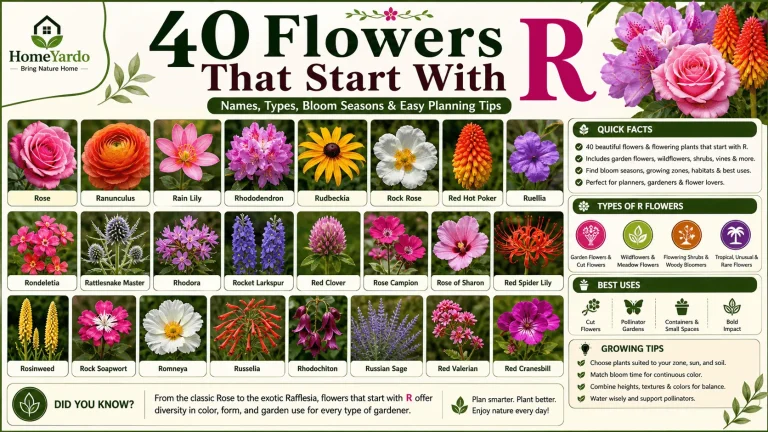
40 Beautiful Varieties of Flowers That Start With Z You Didn’t Know About
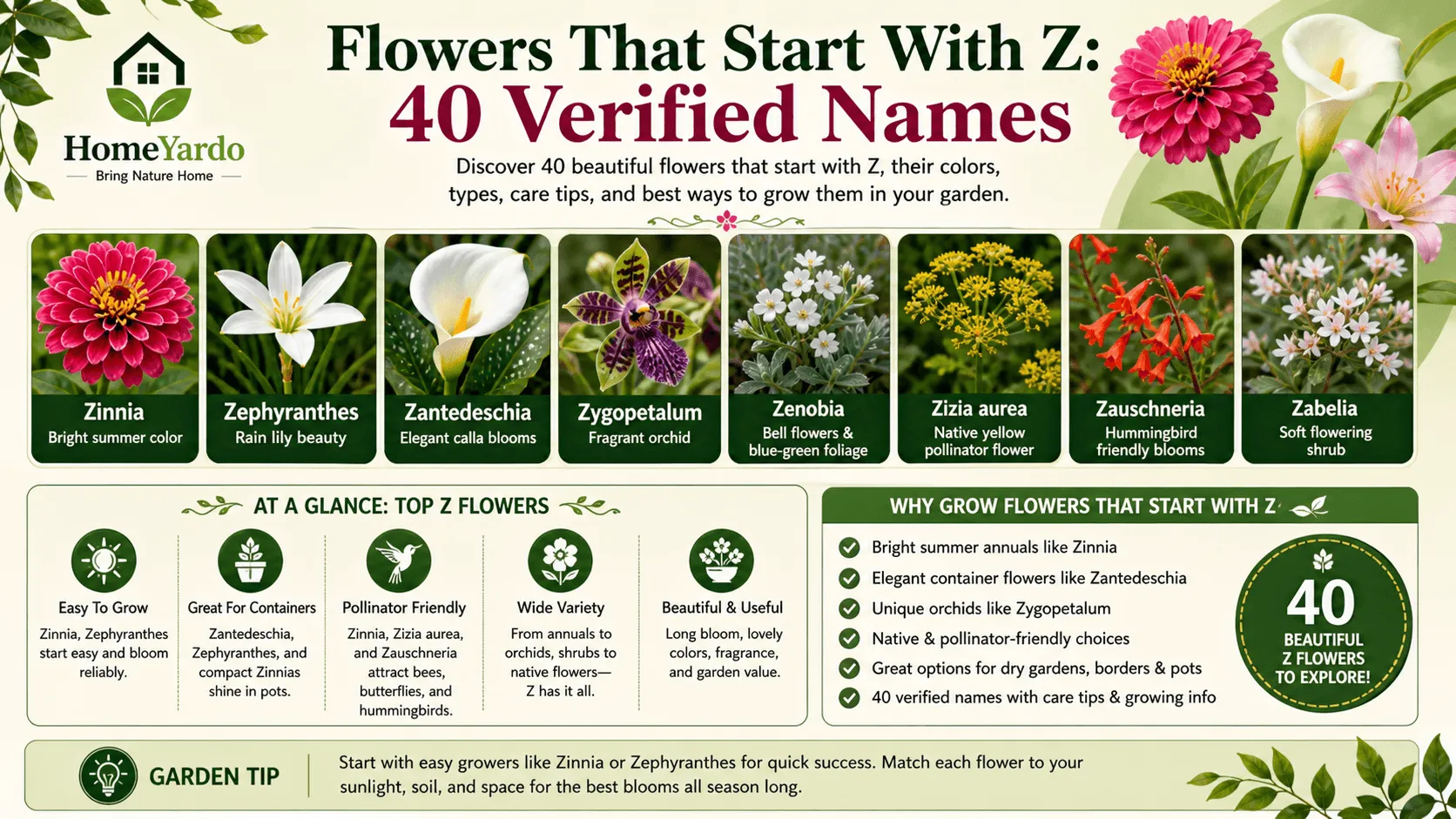
Z flower names cover a wider range than they first appear to. Some are easy annuals like zinnia. Some are bulb bloomers like zephyranthes. Some are elegant container plants like Zantedeschia, and some belong to orchid groups such as Zygopetalum. There are also shrub bloomers, native flowers, and a few garden-use names that show up often enough to matter.
The guide starts with the best-known Z flowers, then moves into types, care snapshots, color groups, growing use, and a full 40-name list that stays organized and transparent.
Quick Answer: What Are Flowers That Start With Z?
Some of the best-known flowers that begin with the letter Z are zinnia, zephyranthes, zantedeschia, and zygopetalum. Other useful Z flower names include zenobia, zizia, zaluzianskya, zauschneria, and zabelia, which add more variety in fragrance, flower form, and garden use.
Some Z names are common flower names, while others belong to botanical flower groups or garden use labels.
Best Z Flowers To Know First
The letter Z has fewer familiar flower names than many other alphabet groups, so it helps to start with the strongest choices first. These flowers cover the main reasons most gardeners search for Z flower names: easy color, container display, indoor growing, fragrance, pollinator value, and unusual botanical interest.
| Need | Best Z Flower | Why It Fits |
|---|---|---|
| Easiest flower from seed | Zinnia | Fast growth, bright color, and reliable summer bloom |
| Best bulb flower | Zephyranthes | Simple rain lily type with clean seasonal flowers |
| Best elegant container flower | Zantedeschia | Polished calla style bloom for pots and displays |
| Best indoor orchid | Zygopetalum | Patterned flowers and fragrance in bright indoor spaces |
| Best yellow native style flower | Zizia aurea | Useful for natural borders and beneficial insects |
| Best hummingbird flower | Zauschneria | Tubular red to orange flowers for dry gardens |
| Best fragrant evening flower | Zaluzianskya | Scent is often stronger later in the day |
| Best flowering shrub | Zenobia or Zabelia | Adds structure, foliage value, and soft bloom |
For most beginners, zinnia is the easiest starting point. For containers, Zantedeschia and Zephyranthes are more useful. For collectors, Zygopetalum and Zaluzianskya bring more unusual flower form, scent, or color.
At A Glance: Flowers That Begin With The Letter Z
The quickest way to sort through Z flower names is to start with the ones that are easiest to recognize and easiest to place in a garden plan. For a larger group of well-known garden and florist choices, flowers that start with C include many familiar names that are easier to recognize than most Z flowers.
| Name | Best Known For | Main Colors | Annual or Perennial | Best Use | Difficulty |
|---|---|---|---|---|---|
| Zinnia | Long blooming summer color | Red, pink, orange, yellow, white, purple | Annual | Beds, borders, cutting | Easy |
| Zephyranthes | Rain-triggered blooms | White, pink, yellow | Perennial bulb | Pots, edging, rock gardens | Easy |
| Zantedeschia | Elegant calla-style flowers | White, yellow, pink, plum | Tender perennial | Containers, floral display | Moderate |
| Zygopetalum | Fragrant orchid blooms | Purple, green, burgundy | Perennial orchid | Indoor culture | Moderate |
| Zenobia | Bell flowers and blue-green foliage | White | Shrub perennial | Mixed borders | Moderate |
| Zizia aurea | Native yellow blooms | Yellow | Perennial | Pollinator planting | Easy |
| Zauschneria | Hummingbird-friendly tubular flowers | Red to orange red | Perennial | Dry gardens | Moderate |
| Zabelia | Soft flowering shrub | White to pale pink | Shrub perennial | Borders, hedges | Easy to moderate |
For most gardens, zinnia is the easiest starting point. Zephyranthes is one of the simplest bulb bloomers in the group, while Zantedeschia is the strongest option for a more polished container display. Zygopetalum stands apart as the indoor orchid choice.
How This List Was Built
A Z flower guide becomes more useful when the labels are clear. Not every Z entry belongs in the same category. Some are common flower names used every day in gardening. Some are accepted flowering genera. Some are species. A few are garden use or cultivar style names that still show up often enough to deserve mention.
To keep the list of flowers that start with Z more trustworthy, the names below are treated in a transparent way. The most familiar and expected Z flowers appear as the main group. Related flowering plants and garden use names appear in their own block later in the list, so the page stays broad without pretending every name has the same level of familiarity.
Why Z Flower Lists Often Feel Messy
Z flower pages often become confusing for a few predictable reasons:
- flower names and full plant names get blended together
- genera, species, cultivars, and trade labels are mixed without explanation
- Thin lists get stretched with weak entries
- familiar flowers and obscure botanical names are treated as equally common
- Practical use, color, and care details are often missing
A cleaner guide works better because it tells the difference between a flower that most gardeners know and a name that mainly appears in plant references or specialty collections.
Types of Flowers That Start With Z

Z flowers cover more than one garden style. Some are quick annuals for summer color. Some are bulbs or shrubs that return year after year. Others are orchids or specialty flowers better suited to protected spaces.
Annual Flowers
Zinnias lead the annual group by a wide margin. They grow fast, bloom heavily, and come in the broadest color range under Z. Taller types suit cutting gardens, while lower forms work in borders and pots. For more annual and seasonal garden ideas beyond zinnias, flowers that start with S include several familiar bedding and border choices.
Perennial Flowers
Perennial Z flowers include bulb bloomers such as Zephyranthes, shrubs such as Zenobia and Zabelia, and native choices such as Zizia aurea. Some Zantedeschia forms act as tender perennials in mild climates.
Orchid And Specialty Types
Zygopetalum and Zygosepalum labiosum belong in the specialty group. They offer unusual flower form, rich coloring, and better performance in protected growing conditions with steady moisture and good air movement.
Native And Wildflower Types
Zizia aurea, Zauschneria, and Zexmenia fit a more natural planting style. These flowers often bring pollinator value and can work well in meadow-inspired or water-wise planting plans.
Shrub And Structural Types
Zabelia and Zenobia add shape as well as bloom. They are useful when the planting needs more structure than a bulb or annual can provide, and they hold a stronger presence in mixed borders over time.
Common Flowers That Start With Z

The most common flowers with Z are zinnia, zephyranthes, zantedeschia, and zygopetalum. These names are the easiest to recognize because they appear often in gardens, seed catalogs, nursery collections, and flower reference lists.
Zinnia is the most familiar choice for home gardens because it grows easily from seed and gives bright summer color. Gardeners comparing easier alphabet groups may also find flowers that start with M useful because that group includes more widely known ornamental flowers. Zephyranthes is common among bulb growers because it produces simple rain lily blooms. Zantedeschia is widely known for its calla-style flowers, while Zygopetalum is familiar to orchid growers for its patterned blooms and fragrance.
| Common Z Flower | Why It Is Common | Best Use |
|---|---|---|
| Zinnia | Easy to grow and widely planted | Beds, borders, cutting gardens |
| Zephyranthes | Known as a rain lily type | Pots, edging, bulb beds |
| Zantedeschia | Popular calla style flower | Containers, floral displays |
| Zygopetalum | Recognized orchid group | Indoor orchid growing |
Popular Flower Names Starting With Z

Popular Z flower names are not always popular for the same reason. Some are planted often in home gardens, while others are popular in containers, floral design, orchid collections, native planting, or specialty gardens.
Zinnia is the most popular overall because it is colorful, affordable, and easy to grow. Zantedeschia is popular for decorative pots and floral arrangements. Zephyranthes is popular with gardeners who like small bulbs and surprise blooms after rain. Zygopetalum has a smaller but loyal following among orchid growers.
Other popular or useful Z names include Zaluzianskya for fragrance, Zizia aurea for pollinator planting, Zenobia for shrub borders, and Zauschneria for dry gardens and hummingbird interest.
| Hummingbird-friendly tubular blooms | Popularity Reason | Best Match |
|---|---|---|
| Zinnia | Bright color and easy seed growing | Beginner gardens |
| Zantedeschia | Elegant shape and container appeal | Formal pots and floral use |
| Zephyranthes | Rain triggered blooms | Bulb gardens and edging |
| Zygopetalum | Fragrant orchid flowers | Indoor collectors |
| Zaluzianskya | Evening scent | Fragrance gardens |
| Zizia aurea | Native style yellow blooms | Pollinator borders |
| Zenobia | Shrub structure and white flowers | Mixed borders |
| Zauschneria | Hummingbird friendly tubular blooms | Dry sunny gardens |
How To Choose The Right Flower For Your Garden

The best Z flower depends on where it will grow. Light, moisture, winter cold, soil drainage, and available space matter more than the first letter of the flower name.
A sunny summer bed usually suits zinnia. A neat container display often suits Zantedeschia. A bright indoor room is better for Zygopetalum. A wildlife-friendly border may work well with Zizia aurea or Zauschneria.
| Garden Need | Best Direction |
|---|---|
| Full sun and long summer bloom | Zinnia, Zagreb Coreopsis, Zauschneria |
| Decorative containers | Zantedeschia, compact zinnias, Zephyranthes |
| Indoor growing | Zygopetalum, Zantedeschia, Zonal Geranium |
| Pollinator value | Zinnia, Zizia aurea, Zauschneria |
| Low-maintenance planting | Zinnia angustifolia, Zephyranthes, Zabelia |
| Fragrance | Zaluzianskya, Zygopetalum |
| Shrub structure | Zenobia, Zabelia |
| Dry garden use | Zauschneria, Zinnia grandiflora, Zexmenia |
Best Choices For Sunny Beds
Zinnia, Zinnia angustifolia, Zinnia haageana, and Zagreb Coreopsis are strong choices for bright open ground. They give clear color, long bloom periods, and steady performance through warm weather. Some also cope better with drier conditions once settled.
Best Choices For Low-Maintenance Gardens
Zephyranthes gives seasonal impact without a lot of work. Zinnia angustifolia handles heat and weather more calmly than taller forms. Zabelia and Zenobia are useful when the planting needs structure and bloom without frequent replanting.
Best Choices For Pollinator Gardens
Zinnia helps attract butterflies, while Zauschneria is better known for hummingbird appeal. For more pollinator-friendly ideas across the alphabet, flowers that start with p can add even more color and nectar value to the planting plan. Zizia aurea supports a broader beneficial insect pattern and fits nicely into native style planting.
Best Choices For Small Spaces
Zantedeschia, Zephyranthes, compact zinnia varieties, and Zygopetalum work well where room is limited. They suit pots, narrow borders, balcony containers, and bright indoor corners much better than broader shrubs or wide spreading plantings.
Growing Guide Snapshot For The Most Important Z Flowers
A quick care view makes it easier to compare the most useful names before diving into the longer list.
| Flower | Light | Water | Soil Preference | Best Setting | Difficulty |
|---|---|---|---|---|---|
| Zinnia | Full sun | Moderate | Well-drained, fertile | Beds, borders, cutting patch | Easy |
| Zephyranthes | Full sun to part sun | Moderate, more during active growth | Well drained | Pots, edging, bulb beds | Easy |
| Zantedeschia | Bright sun to light shade | Even moisture | Rich, moisture-retentive but drained | Containers, sheltered beds | Moderate |
| Zygopetalum | Bright indirect light | Even moisture, never soggy | Airy orchid mix | Indoor orchid culture | Moderate |
| Zizia aurea | Sun to part shade | Moderate | Moist to average garden soil | Native border, pollinator planting | Easy |
| Zenobia | Sun to part shade | Moderate | Slightly acidic, well-drained | Shrub border | Moderate |
This snapshot is enough to narrow the shortlist quickly. It also shows how different the main Z flowers are from one another in use and growing habits.
Best Z Flowers By Climate And Site

Some Z flowers are flexible, while others need a narrower growing setup. This quick site guide helps match the flower to the garden before choosing from the full list.
| Site Or Climate | Best Z Flowers | Notes |
|---|---|---|
| Hot sunny beds | Zinnia, Zinnia angustifolia, Zauschneria | Best for open spaces with strong light |
| Dry gardens | Zauschneria, Zexmenia, Zinnia grandiflora | Better suited to heat and lower water once settled |
| Moist borders | Zantedeschia, Zephyranthes, Zizia aurea | Needs a better moisture balance than dry garden plants |
| Bright indoor rooms | Zygopetalum, Zonal Geranium, seasonal Zantedeschia | Needs bright light and good air movement |
| Small patios | Compact zinnia, Zephyranthes, Zantedeschia | Useful where space is limited |
| Native style plantings | Zizia aurea, Zauschneria, Zexmenia | Good for natural borders and pollinator-focused spaces |
| Collector plants | Zygopetalum, Zygosepalum labiosum, Zaluzianskya villosa | Better for growers who enjoy specialty plants |
How To Read The Labels In This Guide
Not every Z entry belongs to the same naming group. Some are common flower names used in everyday gardening. Some are botanical genera. Some are species. Others are flowering shrubs, older garden names, or cultivar style labels that appear in plant lists.
This guide separates those labels so the list stays broad without making every entry sound equally common.
| Label | Meaning | Example |
|---|---|---|
| Common flower name | A familiar name widely used by gardeners | Zinnia |
| Genus | A botanical group with several flowering species | Zantedeschia |
| Species | One specific plant within a genus | Zephyranthes candida |
| Flowering shrub or plant | A plant valued for its flowers, but not always used as a classic flower name | Zenobia |
| Garden use name | A common nursery, cultivar, or trade style label | Zagreb Coreopsis |
The key names to remember are zinnia, zephyranthes, zantedeschia, zygopetalum, zaluzianskya, zenobia, zizia, and zauschneria. Together, they cover annuals, bulbs, orchids, shrubs, native flowers, fragrant flowers, and dry garden choices.
The Full List Of 40 Flowers That Start With Z
The names below are divided into two groups. The first group covers the core Z flowers most likely to match the query. The second group adds related flowering plants and garden use names that broaden the list while staying clearly labeled.
Each entry includes the name, label, main colors, best growing setting, familiarity, and the main feature that makes it useful. This format keeps the list easier to compare and avoids mixing common flowers, species names, shrubs, and garden labels without context.
The most important names to remember are zinnia, zephyranthes, zantedeschia, zygopetalum, zaluzianskya, zenobia, zizia, and zauschneria.
Core Z Flowers
These are the names that should feel most central to a Z flower guide.
| No. | Name | Label | Main Colors | Best Growing Setting | Familiarity | What Makes It Stand Out |
|---|---|---|---|---|---|---|
| 1 | Zinnia | Common name and genus | Red, pink, orange, yellow, white, purple | Sunny beds, cutting patch | Most common | Broad color range and long bloom season |
| 2 | Zinnia elegans | Species | Red, pink, orange, white, purple | Cutting garden, border | Common | Large flowers and good stem length |
| 3 | Zinnia angustifolia | Species | White, yellow, orange | Borders, edging | Common | Compact habit and reliable bloom |
| 4 | Zinnia haageana | Species | Orange, yellow, red | Annual beds | Common | Warm bicolor tones and tidy growth |
| 5 | Zinnia linearis | Species | White, yellow | Containers, edging | Moderately common | Fine foliage and neat low form |
| 6 | Zinnia grandiflora | Species | Yellow, gold | Dry sunny beds | Less common | Good drought tolerance and small golden flowers |
| 7 | Zinnia acerosa | Species | White | Rock gardens, dry beds | Less common | Narrow foliage and clean daisy shape |
| 8 | Zinnia marylandica | Hybrid group | Orange, red, pink, yellow | Beds, containers | Moderately common | Strong heat performance and disease resistance |
| 9 | Zinnia peruviana | Species | Orange, red | Wildflower style beds | Less common | More open, natural looking blooms |
| 10 | Zephyranthes | Genus | White, pink, yellow | Pots, bulb beds | Common | Rain lilies bloom after moisture |
| 11 | Zephyranthes candida | Species | White | Beds, edging, pots | Common | Clean white flowers and tidy clumps |
| 12 | Zephyranthes carinata | Species | Pink | Containers, bulb beds | Common | One of the strongest pink rain lilies |
| 13 | Zephyranthes citrina | Species | Yellow | Warm borders, pots | Less common | Bright yellow flowers after rain |
| 14 | Zephyranthes minuta | Species | Soft pink | Small pots, edging | Less common | Compact scale and delicate bloom |
| 15 | Zantedeschia | Genus | White, yellow, pink, plum | Pots, sheltered beds | Common | Calla lily form and refined display value |
| 16 | Zantedeschia aethiopica | Species | White | Moist border, container | Common | Classic white calla look |
| 17 | Zantedeschia elliottiana | Species | Yellow | Containers, summer display | Moderately common | Strong yellow color and bold shape |
| 18 | Zantedeschia rehmannii | Species | Pink to rose | Pots, mixed containers | Moderately common | Slender flowers and rich color |
| 19 | Zantedeschia albomaculata | Species | Cream to pale yellow | Warm beds, pots | Less common | Spotted foliage and softer flower tones |
| 20 | Zygopetalum | Genus | Purple, green, burgundy | Indoor orchid culture | Common in orchid circles | Fragrance and patterned petals |
| 21 | Zygopetalum maculatum | Species | Green, purple brown | Protected orchid setting | Less common | Marked blooms with collector appeal |
| 22 | Zaluzianskya | Genus | White, pink, mauve | Cool beds, containers | Less common | Evening fragrance |
| 23 | Zaluzianskya capensis | Species | White, mauve | Sunny cool spots | Less common | Starry blooms with late-day scent |
| 24 | Zaluzianskya ovata | Species | White, lilac tones | Sunny beds | Rare | Fine texture and evening charm |
| 25 | Zaluzianskya villosa | Species | White with darker reverse | Pots, edging | Rare | Fragrant flowers that shine late in the day |
Related Z Flowering Plants And Garden Use Names
These entries help complete the Z landscape, but they are either more specialized, more botanical, or more rooted in garden use language than in broad everyday flower naming.
| No. | Name | Label | Main Colors | Best Growing Setting | Familiarity | What Makes It Stand Out |
|---|---|---|---|---|---|---|
| 26 | Zenobia | Genus | White | Shrub border | Moderately common | Bell flowers and blue green foliage |
| 27 | Zenobia pulverulenta | Species | White | Acidic mixed borders | Less common | Soft foliage tone and neat bloom form |
| 28 | Zizia | Genus | Yellow | Native border, pollinator bed | Less common | Umbel flowers useful for beneficial insects |
| 29 | Zizia aurea | Species | Yellow | Native plantings, moist meadows | Moderately common | Golden Alexanders is one of the best-known native Z flowers |
| 30 | Zabelia | Genus | White, pale pink | Borders, hedges | Less common | Graceful flowering shrub |
| 31 | Zauschneria | Legacy garden uses the genus name | Red, orange red | Dry gardens | Moderately common | Excellent hummingbird plant |
| 32 | Zexmenia | Garden use name | Yellow, orange yellow | Sunny dry sites | Less common | Heat tolerance and wildflower look |
| 33 | Zoegea | Genus | Purple, lavender | Dry sunny sites | Rare | Unusual thistle-like flower heads |
| 34 | Zigadenus elegans | Species | White, green white | Meadow-style planting | Rare | Star-shaped flowers and unusual habit |
| 35 | Zeuxine strateumatica | Species | White, cream | Moist sites | Rare | Small ground orchid character |
| 36 | Zingiber zerumbet | Species | Cream with red bracts | Tropical protected beds | Less common | Bold ornamental ginger heads |
| 37 | Zebra Iris | Common use name | White, violet, blue violet | Warm borders, pots | Less common | Marked petals and striking foliage form |
| 38 | Zagreb Coreopsis | Cultivar style garden name | Bright yellow | Sunny beds, borders | Moderately common | Long season yellow color |
| 39 | Zonal Geranium | Common use garden name | Red, pink, white, salmon | Pots, windows, patios | Common | Familiar potted flower with strong display value |
| 40 | Zygosepalum labiosum | Species | Purple, rose, green | Orchid collection, humid shelter | Rare | Rich coloring and exotic form |
Borderline Z Flower Names You May See In Other Lists

Some Z flower lists include names that are useful but less direct. These names may be cultivars, older labels, common garden terms, edible blooms, or plants that are known more for foliage than flowers.
They can still help readers understand the wider Z plant group, but they should not be treated the same way as core flower names like zinnia, zephyranthes, zantedeschia, or zygopetalum.
| Name | Why It Is Borderline | Best Way To Treat It |
|---|---|---|
| Zonal Geranium | Common garden label, but not a true Z genus | Useful as a garden use name |
| Zebra Plant | Better known for foliage, though it can flower | Useful only with a naming context |
| Zygocactus | Older name often linked with holiday cactus groups | Useful only with naming context |
| Zucchini Flower | Edible squash bloom, not usually an ornamental flower name | Mention only if covering edible flowers |
| Zamia | A cycad plant, not a classic flower entry | Avoid treating it as a main flower |
| Cultivar names beginning with Z | Some lists include cultivar names from non-Z genera | Keep them separate from true Z flower names |
Flower Gallery: What The Top Z Flowers Look Like
A few Z flowers stand out visually right away.
- Zinnia brings full, bright daisy-style blooms in bold summer colors.
- Zephyranthes produces smaller cup or star-shaped flowers that often appear after rain.
- Zantedeschia shows the clean, sculptural form most people associate with calla lilies.
- Zygopetalum carries patterned orchid petals in rich purple and green shades.
- Zenobia adds smaller bell flowers against cooler, blue-green foliage.
- Zizia aurea creates airy yellow umbels that fit pollinator plantings and native borders.
A page built around these top forms feels more grounded because it balances familiar flowers with less expected entries.
Meaning And Symbolism Of Flower Names Starting With Z
Symbolism is stronger for some Z flowers than for others. The most useful associations usually come from flowers that are already well known in gardens, gifts, or arrangements.
Z flowers with the strongest symbolic value tend to fall into two groups. Bright long-blooming flowers often carry ideas of endurance and lasting affection. White or scented flowers often lean toward elegance, calm, purity, or quiet beauty.
Zinnia Meaning
Zinnia is often linked with endurance, remembrance, and steady affection. That suits its garden habit well because it keeps flowering through heat and bright summer weather with very little hesitation.
Zantedeschia Meaning
Zantedeschia is often tied to elegance, purity, devotion, and formal beauty. White forms are especially strong in that role and are common in refined floral arrangements.
Zephyranthes Meaning
Zephyranthes carries a feeling of renewal and surprise. Its bloom cycle after rain gives it a fresh, hopeful quality that fits seasonal change and quiet resilience.
Zaluzianskya Meaning
Zaluzianskya suits themes of evening beauty and understated charm. Its scent grows more noticeable later in the day, which gives it a softer and more intimate character.
White Flowers That Begin With The Letter Z

White is one of the strongest color groups under Z. The clearest examples are Zantedeschia aethiopica, Zephyranthes candida, Zenobia, Zabelia, and white forms of zinnia.
White Z flowers work well in moon gardens, formal entry pots, and mixed borders where the planting needs contrast against darker foliage. They also pair well with silver leaves, blue flowers, and deep green shrubs.
| Flower | Shade Tone | Best Use |
|---|---|---|
| Zantedeschia aethiopica | Pure white | Formal pots, elegant borders |
| Zephyranthes candida | Crisp white | Edging, bulb drifts, small pots |
| Zenobia | Soft white | Shrub border, cool-toned mixed planting |
| Zabelia | White to pale blush | Hedges, soft border planting |
| White zinnia forms | Bright white | Cutting, summer beds |
Yellow Flowers That Begin With The Letter Z

Yellow Z flowers bring warmth and visibility. The strongest names here are Zantedeschia elliottiana, Zinnia grandiflora, Zizia aurea, Zagreb Coreopsis, and Zephyranthes citrina.
Yellow flowers show clearly from a distance and work especially well in bright beds where cooler shades can fade into the background. For sunny planting, Zizia aurea and Zagreb Coreopsis are especially useful because they combine color with practical garden value.
Purple Flowers That Start With Z

Purple under Z leans toward orchids, specialty flowers, and a few garden use entries. Zygopetalum, Zygosepalum labiosum, Zoegea, and some mauve-toned Zaluzianskya forms fit this group best. Purple and plum calla lily forms can also deepen the color range.
For indoor growers, Zygopetalum is the strongest purple option. For outdoor planting, Zoegea and selected purple-toned calla forms add more variety. Shade can shift by cultivar, season, and growing conditions, so purple is best treated as a broad range rather than one exact color.
Perennials That Start With Z

The strongest perennial Z flowers include Zephyranthes, Zenobia, Zizia aurea, Zabelia, Zauschneria, and tender perennial Zantedeschia types in mild regions. These flowers return more reliably than annual zinnias and help build a longer-lasting structure.
Cold climate performance varies. Bulbs and shrubs may return cleanly in one region and need more protection in another. That is why perennial behavior should always be matched to climate, soil drainage, and winter conditions.
Annual Flowers That Start With Z

Annual Z flowers are led almost entirely by the zinnia group. Zinnia elegans, Zinnia angustifolia, Zinnia haageana, and Zinnia linearis cover the broadest range of form and use.
Zinnias are easy to direct sow in warm soil, and many gardeners prefer that approach because it keeps the plants stockier and simpler to establish. Transplants still work well for earlier color, especially in shorter growing seasons.
Container Flowers That Begin With The Letter Z

Container growing opens up more Z options than many gardens suggest at first glance. Zantedeschia, compact zinnia types, Zephyranthes, and some orchids all perform well in pots when drainage and light are handled properly.
A good Z container planting usually needs four basics: a pot with drainage, the right depth for roots or bulbs, strong light suited to the flower, and steady feeding during active growth.
Best Z Flowers For Patio Pots
Zantedeschia, Zinnia linearis, Zinnia marylandica, and Zephyranthes carinata are strong patio choices. They stay showy in containers and keep their form without looking oversized or unruly.
Best Z Flowers For Balcony Containers
Compact zinnias, rain lilies, and potted calla lilies work well on balconies because they stay neat and do not need a large footprint. Wind exposure matters more here than it does in many garden beds, so lower and sturdier forms tend to perform better.
Best Z Flowers For Decorative Entry Pots
Calla lily types in Zantedeschia are the strongest decorative entry pot flowers under Z. Their upright flowers and clean lines give a polished look without crowding the container visually.
Indoor Or Protected Space Picks

Indoor Z flowers are led by orchids and potted display plants. Zygopetalum is the clearest indoor choice because it handles container culture well and often carries a pleasant scent. Zantedeschia can work indoors for a seasonal flowering display, and Zonal Geranium stays useful in bright windows.
Indoor success usually depends on four things: bright light, good drainage, steady air movement, and restraint with watering. A flower that works in a pot does not always want to live indoors year-round, so it helps to separate seasonal display from long-term indoor growing.
Best Indoor Z Flowers For Bright Rooms
Zygopetalum and Zonal Geranium fit bright rooms best. East and south-facing light usually suits them better than dim corners. Leaves and blooms stay cleaner when air moves gently, and the potting mix never turns stagnant.
Best Indoor Z Flowers For Seasonal Display
Zantedeschia is the strongest short-term indoor display option. It brings a refined look for a bloom cycle, then often does better once it is rested or moved back to more suitable outdoor or protected conditions.
Beginner Friendly Choices
Zinnia is the easiest Z flower for most beginners. It grows quickly, flowers generously, and forgives small mistakes. Zephyranthes is another friendly choice because it settles into pots or borders without demanding complicated care.
For quick success, beginners can think of the group like this:
- easiest from seed: zinnia
- easiest in pots: zephyranthes
- easiest in hot summers: zinnia angustifolia, zinnia marylandica
Flowers that bloom freely and recover quickly usually make the best starting point, and the zinnia group fits that pattern better than any other Z flower category.
Rare Flowers That Start With Z

Rare Z flowers include Zaluzianskya villosa, Zeuxine strateumatica, Zygosepalum labiosum, Zoegea, and Zigadenus elegans. These names are not usually found in ordinary garden centers and may appear more often in specialist plant lists, botanical references, or collector collections.
A rare Z flower is most useful when it has a clear purpose. Zaluzianskya adds evening fragrance. Zygosepalum labiosum adds orchid interest. Zoegea brings an unusual thistle-like flower form. Zeuxine strateumatica is more of a specialist ground orchid name than a common garden flower.
Fragrant Z Flowers

The strongest fragrance candidate is Zaluzianskya, often linked with evening scent and quiet garden charm. Its fragrance tends to be most noticeable later in the day. Zygopetalum orchids can also be pleasantly scented, though the strength varies by type.
Fragrance is never completely fixed. Time of day, age of the bloom, temperature, and growing conditions all affect how strong a flower smells.
Plants Vs Flowers That Start With Z

Some Z names refer to flowers directly, while others refer to whole flowering plants, genera, shrubs, or garden labels. This is why Z flower lists often show different counts.
Zinnia is a familiar flower name. Zantedeschia is a flowering genus. Zenobia and Zabelia are flowering shrubs. Zagreb Coreopsis and Zonal Geranium are garden use labels rather than true Z genera.
Quick Safety Notes For Z Flowers
Some Z flowers need extra care around pets, children, and edible garden spaces. A plant can be beautiful and still need safe placement.
| Flower Or Plant | Safety Note |
|---|---|
| Zantedeschia | Calla style plants can irritate the mouth if chewed and should be kept away from pets and young children |
| Zigadenus elegans | Should be treated with caution because some species in this group are known for toxicity concerns |
| Zamia | Not a classic flower entry, and should not be handled as an edible or casual garden plant |
| Zingiber entries | Culinary ginger and ornamental ginger labels should not be confused |
| Unknown rare Z flowers | Check plant-specific safety before planting near pets, children, or food beds |
The safest approach is to confirm the plant identity before planting. This matters most for rare flowers, older botanical names, and entries that appear in mixed plant lists.
Best Z Flowers By Use Case

Sorting the names by purpose makes the list easier to act on. Some Z flowers are best for cutting, some for decorative pots, some for indoor display, and some for wildlife planting.
| Best Use | Top Pick | Strong Alternate | Why It Works |
|---|---|---|---|
| Cut flowers | Zinnia elegans | Zinnia | Long stems and wide color range |
| Containers | Zantedeschia | Zinnia marylandica | Strong display and clean form |
| Indoor display | Zygopetalum | Zantedeschia | Pot culture and visual appeal |
| Pollinators | Zinnia | Zizia aurea | Nectar value and insect support |
| Dry gardens | Zauschneria | Zinnia grandiflora | Better heat and drought handling |
| Small spaces | Zephyranthes | Zinnia linearis | Compact growth |
| Collector interest | Zygosepalum labiosum | Zaluzianskya villosa | Distinctive and less common |
| Fragrant option | Zaluzianskya | Zygopetalum | Noticeable scent, especially later in the day |
| Formal containers | Zantedeschia | Zenobia | Refined shape and elegant effect |
Cut Flower And Bouquet Favorites
Tall zinnia forms are the strongest choice for cutting gardens and summer bouquets. They produce long stems, repeat well through the season, and come in enough colors to work easily in mixed arrangements. For a fuller cutting patch, larger zinnia types usually give the most reliable stem length and the most useful repeat harvest.
Pollinator Friendly And Meadow Picks
Zinnia is one of the strongest choices for pollinator planting because its open blooms attract butterflies through the warmer months. Zizia aurea fits well in meadow-style borders and supports a wider range of beneficial insects. Zauschneria is especially useful in dry, sunny gardens where hummingbird activity is part of the planting goal.
Water And Pond Flower Picks
Z flowers are better suited to pond edges and moist borders than to deep-water planting. Zantedeschia is the strongest choice for this use because it handles rich, evenly moist soil well and brings a clean, upright look beside water. Zephyranthes can also suit damp edges or pots near a water feature during active growth. For a more natural transition in moist ground, Zizia aurea fits best, especially in softer wildlife-friendly planting.
Best For Collectors
Zygopetalum, Zygosepalum labiosum, and Zaluzianskya villosa offer the most collector appeal. They bring fragrance, pattern, or rarity that stands apart from ordinary summer bedding flowers.
Conclusion
Flowers starting with Z are fewer than many other alphabet groups, but the category still has real variety. Zinnia leads for easy summer color. Zephyranthes brings simple bulb blooms. Zantedeschia adds a polished container look. Zygopetalum gives the group an orchid choice.
The most useful way to read a Z flower list is to separate common flower names from botanical names, species, shrubs, and garden use labels. That keeps the list broad without making every entry seem equally familiar.
For most gardens, start with zinnia, zephyranthes, zantedeschia, or zizia aurea. For indoor growing, look at zygopetalum. For dry gardens and hummingbird interest, Zauschneria is one of the strongest choices.
FAQ’s
Zinnia is the most popular flower that starts with Z in most gardens. It is easy to grow, comes in many bright colors, and blooms heavily through warm weather. It also works well in borders, cutting gardens, containers, and pollinator-friendly planting.
Zinnia is the best beginner Z flower for most gardens. It grows quickly from seed, blooms heavily in warm weather, and comes in many colors. Zephyranthes is another good beginner choice for pots or edging. It is especially useful for gardeners who want a small bulb flower that can bloom after rain or seasonal moisture.
Several flowers that begin with the letter Z are perennial, depending on climate and growing conditions. Strong examples include zephyranthes, zenobia, zizia aurea, zabelia, and zauschneria. Some zantedeschia types also return year after year in milder regions with good soil and winter protection.
Yes, some Z flowers can do well indoors when light and drainage are handled properly. Zygopetalum is one of the best-known indoor-capable Z flowers because it suits pot culture well. Zantedeschia and Zonal Geranium can also work indoors, especially for seasonal display in bright rooms.
Rare Z flowers are names that do not appear often in ordinary garden centers or common flower lists. Examples include Zaluzianskya villosa, Zeuxine strateumatica, Zoegea, and Zygosepalum labiosum. Some are rare because they are specialist plants, while others are simply unfamiliar outside botanical or collector circles.
A few Z flowers can bring purple, violet, or plum tones into the garden or indoor collection. Zygopetalum is one of the strongest purple-leaning examples and is especially valued among orchid growers. Zygosepalum labiosum and Zoegea can also add purple-toned flowers, depending on the species and form.
Yes, white is one of the easiest color groups to build under the letter Z. Good examples include Zantedeschia aethiopica, Zephyranthes candida, Zenobia, and white forms of zinnia. These flowers work especially well in formal containers, moon gardens, and mixed borders with darker foliage.
Yes, several strong yellow flower options start with Z. Some of the best examples are Zantedeschia elliottiana, Zizia aurea, Zinnia grandiflora, Zephyranthes citrina, and Zagreb Coreopsis. Yellow flowers are especially useful in sunny beds because they show up clearly from a distance.
Not always, and that is where many Z flower lists become confusing. Some names refer directly to a flower, while others refer to a whole flowering plant, shrub, genus, or garden trade label. A clearer guide separates common flower names from botanical group names, so the list stays easier to understand.
Not usually, but difficulty depends on which Z flower is being grown. Zinnia and Zephyranthes are fairly easy and suit most gardeners well. More specialized flowers, such as Zygopetalum, need more attention to light, moisture, and growing conditions.
Zantedeschia is one of the easiest Z flowers for a polished container display. It has a clean, upright shape and works well in decorative pots near entrances or patios. For a simpler and lower effort option, compact zinnia varieties are also very good container flowers.
References