Guide To The Most Prettiest, And Beautiful Flowers for Colorful Garden Spaces
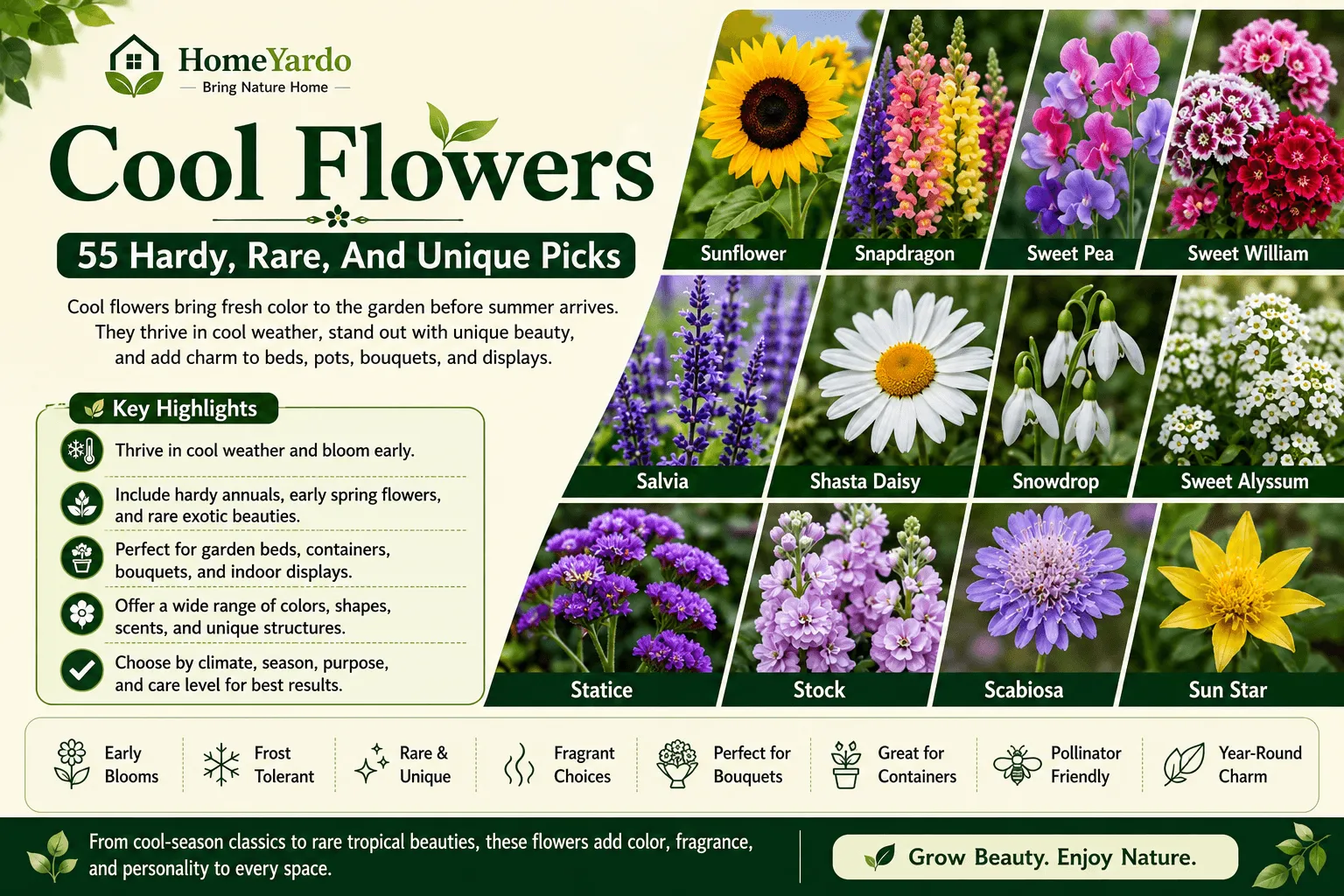
Cool flowers provide new colour in the garden when summer plants have yet to show. Some thrive in mild weather, others are known for their unusual shape, rare color, fragrance or dramatic form. From a practical standpoint, the flowers that are grown during the cooler seasons are the most significant group in gardening.
These can also be plants which can be cultivated in fall, winter or early spring in appropriate climates. Many are hardy annuals that establish themselves well prior to warm weather. There’s even a pictorial interpretation.
There are some flowers, which are called cool because they don’t look the same as garden flowers. Among them are bat flower, jade vine, passion flower, protea, orchid, bleeding heart, and bird of paradise. The first question is what the climate is. Once that, the selection of flowers is made easier by season, hardiness, color, purpose in the garden, container size and care.
Quick Answer: What Are Cool Flowers?
They are flowers that are cultivated for cool weather performance, unusual beauty, rarity or high garden effect. Snapdragon, larkspur, calendula, pansy, viola, sweet pea, stock, poppy, nigella, bachelor’s button and cornflower are good choices for early planting.
They are good for early spring beds, cutting gardens, containers and cottage planting. Standout flower varieties for visual interest include bat flower, jade vine, orchid, protea, lotus, passion flower, bleeding heart and bird of paradise.
These are appreciated for their shape, color, rarity, and/or dramatic structure. All unusual flowers are not cold tolerant. Tropical and protected space flowers require different care than cool weather flowers.
Beautiful Flowers: At A Glance

It’s easier to select flowers when they’re organized by their purpose. Some are useful early crop plants, others are primarily selected for form, fragrance, colour and scarcity.
Hardy Annuals
- Cool start annual flowers: meaning those that will grow from a cool start.
- Flowers that tap on the shoulder via a long stem.
- Flowers with a long stem that tap on the shoulder, such as: snapdragon, larkspur, calendula, stock, sweet pea.
- Ideal for early blooming and Spring cutting gardens and cottage beds.
Cold Hardy Flowers
- Flowers with cold tolerance are those that are tolerant of cold temperatures.
- These are all examples of flowers that are either daisies or daisy-like in their appearance. These are all daisy or daisy-like flowers.
- Highlights: great in cool weather color, containers and early borders.Use for: Cool weather color, containers, early borders.
Frost-Tolerant Flowers
- The meaning of the term is flowering plants that can withstand light frost once established.
- A plant that is produced sexually.Sexually produced plants, such as calendula, bachelor’s button, poppy, larkspur, or viola.
- Recommended for: early spring beds and mild fall planting.
Unique Flowers
- Unusual shape: flowers with a shape that is not common.
- Unusual color: flowers that are not typically colored. Passion flower, bat flower, protea, bleeding heart, jade vine are a few examples.
- The best uses of the area include rare displays and creating visual interest.
Beautiful Flowers
- Meaning describes the characteristics of an ornamental flower that has good garden or bouquet value.
- Some of the species are rose, lily, tulip, peony, hydrangea, and iris.
- Ideal for: borders, bouquets, gifts, seasonal displays.
More than one group can be a strong garden. Pansies can be used to fill cool containers and orchids or proteas can be used to create a protected display inside or on a warm patio.
Cool Season Flowers Vs Cool Looking Flowers

Cool can apply to plant performance or plant appearance. The difference is important since the care needs may be totally different.
Cool season flowers are best planted in cold or mild weather. Members of this group include pansy, viola, snapdragon, stock, sweet pea, calendula, poppy, nigella, and bachelor’s button. Flowers are chosen for their coolness if they appear rare, unusual, sculptural, colourful or dramatic. Here belong bat flower, jade vine, orchid, protea, lotus, passion flower, bleeding heart and bird of paradise.
Hardy annuals are closest to the gardening meaning. In mild climates many can be planted out in the fall or very early spring in colder climates. They frequently flower early in the season when the warm season annuals are not yet flowering.
Tropical or exotic flowers are not suitable for cold soil conditions in the outdoor garden because they are in a cool flower list. Orchid, jade vine, bat flower and bird of paradise generally require warmth or protection in colder climates.
What The Cool Flowers Method Means
The method is used for the cultivation of hardy annuals in the cooler months of the year to enable them to establish roots before the heat.
In mild climates, many hardy annuals will be able to be sown in the fall. They grow slowly in cool weather and flower early in spring. Sowing seeds very early in the spring or indoors in colder climates might be safer.
The key to the method is that the roots grow first, before the plant needs to deal with heat, longer days or more top growth. Improved root growth can result in improved stem growth, earlier flowering, and more uniform flowering.
Common flowers used in this method include:
• Snapdragon
• Larkspur
• Stock
• Sweet pea
• Calendula
• Bachelor’s button
• Poppy
• Nigella
• Cornflower
• Bells of Ireland
• Orlaya
• Scabiosa
Drainage is an important soil characteristic. Many cool weather plants will withstand cold air temperatures better than wet, cold roots. Raised beds, careful watering, compost, and loose soil can help to produce strong plants and avoid failed seedlings.
Hardy Annuals Vs Tender Annuals

Hardy annual flowers tolerate cool weather better than tender annuals. They complete their life cycle in one year, but many can be planted earlier than summer annuals.
Good hardy annual choices include:
• Larkspur
• Calendula
• Bachelor’s button
• Cornflower
• Stock
• Sweet pea
• Poppy
• Nigella
• Snapdragon
Tender annuals are damaged by frost and should be planted after frost danger has passed.
Tender examples include:
• Zinnia
• Cosmos
• Dahlia
• Marigold
• Celosia
• Many tropical flowers
Zinnia and cosmos are easy to grow, but they are usually warm-season plants. Planting them too early can cause weak growth, cold damage, or poor germination.
List Of Cool Flowers

A useful flower list should group plants by purpose, not only by name. Some flowers belong because they handle cool weather. Others belong because they look rare, beautiful, colorful, or unusual.
Best Cool-Season Flowers
• Snapdragon
• Larkspur
• Sweet pea
• Stock
• Calendula
• Pansy
• Viola
• Bachelor’s button
• Nigella
• Poppy
These are strong choices for early spring beds, cottage gardens, and cutting gardens.
Best Hardy Annuals For Cutting Gardens
• Bupleurum
• Bells of Ireland
• Orlaya
• Scabiosa
• Ammi
• Feverfew
• Cornflower
• Dara
These plants add height, texture, filler stems, or soft movement to bouquets.
Best Cold Hardy Or Early Spring Flowers
• Hellebore
• Primrose
• Iceland poppy
• Dianthus
• Columbine
• Lupine
• Foxglove
• Delphinium
These work well where early color, perennial structure, or cold-season garden interest matters.
Best Rare And Unique Flowers
• Bat flower
• Jade vine
• Passion flower
• Protea
• Bird of paradise
• Bleeding heart
• Lotus
• Orchid
These are strong choices for unusual displays, although many need protected conditions.
Best Classic Beautiful Flowers
• Rose
• Lily
• Tulip
• Peony
• Iris
• Hydrangea
• Lavender
• Lilac
• Dahlia
• Ranunculus
• Anemone
These flowers bring familiar beauty, bouquet value, fragrance, and seasonal color. For late-season color after many classic flowers slow down, a mum plant can add strong fall bloom to pots, borders, and garden displays
Top 25 Cool-Season Flowers With Growing Notes

Plant-level notes help match each flower to the right space and season. The flowers below are useful for early color, spring displays, and cool-weather planting.
Snapdragon
• Best for: borders and cutting gardens
• Start: indoors or as transplants
• Light: full sun
• Note: plant before the heat arrives for stronger stems
Larkspur
• Best for: cottage beds and vertical color
• Start: direct sow
• Light: full sun
• Note: dislikes root disturbance
Sweet Pea
• Best for: fragrance and bouquets
• Start: direct sow or transplant
• Light: full sun with cool roots
• Note: needs support for climbing
Stock
• Best for: fragrant spring flowers
• Start: indoors or as transplants
• Light: full sun
• Note: performs best in cool weather
Calendula
• Best for: beginner gardens and pollinators
• Start: direct sow or transplant
• Light: full sun
• Note: handles cool spring weather well
Pansy
• Best for: pots and early color
• Start: transplant or seed
• Light: sun to partial shade
• Note: declines when heat rises
Viola
• Best for: containers and edging
• Start: transplant or seed
• Light: sun to partial shade
• Note: small blooms give strong cool-weather color
Bachelor’s Button
• Best for: blue flowers and pollinators
• Start: direct sow
• Light: full sun
• Note: easy in open beds
Nigella
• Best for: airy flowers and seed pods
• Start: direct sow
• Light: full sun
• Note: also called love in a mist
Poppy
• Best for: soft spring color
• Start: direct sow
• Light: full sun
• Note: transplanting is not ideal
Cornflower
• Best for: easy spring color
• Start: direct sow
• Light: full sun
• Note: useful in meadow-style beds
Bupleurum
• Best for: bouquet filler
• Start: direct sow or transplant carefully
• Light: full sun
• Note: valued for green airy stems
Bells Of Ireland
• Best for: tall green bouquet stems
• Start: indoors or direct sow
• Light: full sun
• Note: may benefit from cool germination conditions
Orlaya
• Best for: white lacy flowers
• Start: direct sow or transplant
• Light: full sun
• Note: pairs well with cottage flowers
Scabiosa
• Best for: cut flowers and pollinators
• Start: indoors
• Light: full sun
• Note: needs steady spacing for airflow
Ammi
• Best for: airy white filler flowers
• Start: direct sow or transplant
• Light: full sun
• Note: gives a wildflower style look
Feverfew
• Best for: small white bouquet flowers
• Start: indoors or transplant
• Light: full sun
• Note: useful as filler in cutting gardens
Foxglove
• Best for: vertical garden structure
• Start: indoors or transplant
• Light: sun to partial shade
• Note: all parts are toxic if ingested
Delphinium
• Best for: tall blue flower spikes
• Start: indoors or transplant
• Light: full sun in cool climates
• Note: needs support and good airflow
Iceland Poppy
• Best for: soft early blooms
• Start: transplant carefully
• Light: full sun
• Note: prefers cool temperatures
Primrose
• Best for: early containers and shade edges
• Start: transplant
• Light: partial shade
• Note: keep soil evenly moist but not soggy
Hellebore
• Best for: winter and early spring interest
• Start: nursery plant
• Light: partial shade
• Note: useful under shrubs and trees
Dianthus
• Best for: edging and containers
• Start: seed or transplant
• Light: full sun
• Note: likes well-drained soil
Columbine
• Best for: woodland style gardens
• Start: seed or transplant
• Light: partial shade to sun
• Note: often self-seeds in suitable areas
Lupine
• Best for: tall spring color
• Start: seed or transplant
• Light: full sun
• Note: needs good drainage and room for roots
Cool Flower Types And Exotic List

Types of cool flowers can be grouped by hardiness, season, color, scent, appearance, and care level.
Main groups include:
• Hardy annuals
• Cold tolerant plants
• Frost tolerant flowers
• Spring annuals
• Rare flowers
• Exotic flowers
• Unusual flowers
• Fragrant flowers
• Aesthetic flowers
An exotic flowers list may include orchid, bird of paradise, protea, anthurium, lotus, jade vine, passion flower, hibiscus, bat flower, and heliconia.
Exotic plants do not share one care routine. Some need tropical humidity. Some need sharp drainage. Some are better in containers, greenhouses, conservatories, or bright indoor rooms.
Best Hardy Annual Flowers

The best hardy annual flowers are valuable for early blooms, cut flowers, pollinator beds, and cottage garden color.
Good choices include:
• Snapdragon
• Larkspur
• Calendula
• Bachelor’s button
• Cornflower
• Sweet pea
• Stock
• Nigella
• Poppy
• Bupleurum
• Bells of Ireland
• Orlaya
• Ammi
• Scabiosa
• Feverfew
Some hardy annuals grow best from direct sowing because their roots dislike disturbance.
Other spring annual flowers worth considering include cleome, lisianthus, statice, saponaria, cress, and godetia. These flowers are useful when a garden needs extra height, filler stems, soft texture, or bouquet value.
Some are easier than others, so timing matters. In colder climates, they may need an indoor start or extra protection. In mild climates, some can work well as spring blooming annuals when planted before the heat arrives.
Direct Sow Choices
• Larkspur
• Poppy
• Nigella
• Bachelor’s button
• Cornflower
Other hardy annuals benefit from an early indoor start because they need extra time before outdoor planting.
Indoor Start Choices
• Snapdragon
• Stock
• Foxglove
• Scabiosa
• Rudbeckia
Some plants work either way, depending on climate and timing.
Flexible Choices
• Calendula
• Sweet pea
• Alyssum
Best Cold Hardy Flowers

Cold hardy flowers can handle chilly weather better than tender plants. Some tolerate light frost after establishment, while others need cover during hard freezes.
Handles Cool Weather Well
• Pansy
• Viola
• Calendula
• Snapdragon
• Stock
• Sweet pea
May Handle Light Frost When Established
• Larkspur
• Bachelor’s button
• Foxglove
• Iceland poppy
• Cornflower
• Poppy
Needs Protection In Harsh Cold
• Young seedlings
• Newly transplanted flowers
• Container plants
• Tender annuals planted too early
• Tropical and exotic flowers
Cold tolerance changes with plant age, soil drainage, wind exposure, moisture level, and frost length. A plant that handles a light frost can still fail during a hard freeze or in wet winter soil.
Most Beautiful Flowers And Pretty Flowers For Gardens And Bouquets

Beautiful flowers and prettiest flowers are chosen for petal shape, color, fragrance, balance, and overall garden presence.
Classic choices include:
• Rose
• Peony
• Lily
• Tulip
• Hydrangea
• Ranunculus
• Anemone
• Orchid
• Iris
• Dahlia
• Lavender
• Lilac
For garden beds, tulip, iris, peony, hydrangea, rose, lily, lavender, and dahlia give strong seasonal value.
For bouquets, roses, peonies, ranunculus, anemone, lily, orchid, tulip, sweet pea, and stock are stronger choices because of shape, scent, stem quality, or vase appeal.
Not all elegant flowers fit cool-weather planting. Dahlia, zinnia, and many tropical plants need warmth. Tulips, pansies, violas, stock, sweet peas, and some poppies fit cooler planting plans more naturally.
Cute Flower For Soft Garden Color
Cute flowers usually has a small, soft, charming look rather than a bold or dramatic form. Pansy, viola, primrose, alyssum, sweet pea, daisy, mini rose, and forget-me-not are some of the cutest flowers for pots, borders, cottage gardens, and soft bouquet designs.
Best Unique Flowers

Unique flowers are distinguished by shape, colour, texture, bloom habit and/or unusual structure. Passion flower has multiple layers of petals and filaments that form a beautiful star-shaped flower. In spring, Bleeding heart has hanging heart-shaped blooms.
The flowers of the bat are dark with wing-like petals and long whiskers. Bird of paradise has a sculptural bloom, as if it were a bird in a tropical land.
Other excellent options are:
• Protea
• Orchid
• Jade vine
• Lotus
• Unusual hellebores
• Parrot tulip
• Black pansy
Unique doesn’t necessarily mean difficult. Here are some uncommon flowers that require specific lighting, humidity, soil conditions, drainage, warm temperature and protected containers.
Rare Flowers In The World

Rare flowers in the world are hard to find because they have a small habitat, can only reproduce slowly, must be pollinated by a particular pollinator, or must have a specific climate condition.
Here are some examples that are commonly used in discussing rare flowers:
• Ghost orchid
• Jade vine
• Corpse flower
• Chocolate cosmos
• Middlemist red camellia
• Rare orchids
• Rare hellebores
• Rare colored camellias
It isn’t just appearance that makes something rare. It’s not just about habitat range, pollination requirements, climate sensitivity, slow growth and limited availability. In some cases rare exotic flowers will find a better home at a botanical garden or specialized collection or under protected growing conditions than in ordinary home beds.
All rare plants must be obtained responsibly. It is not recommended to take wild plants out of protected habitats.
Weird Looking Flowers And Flowers That Look Fake But Are Real
Some weird-looking flowers seem artificial because their shape, color, or structure looks far from ordinary bedding plants.
Strong examples include:
• Bat flower
• Jade vine
• Passion flower
• Bleeding heart
• Bird of paradise
• Parrot tulip
• Orchid
• Protea
The dark winged bloom with long whiskers of the bat flower makes it seem almost supernatural. Blue-green chains of flowers are rare on jade vine. The details of rings and filaments are present in the passion flower. The bloom of the bird of paradise is sculptural and looks like a bird.
Many of the “false” flowers are actually real, and have evolved unusual shapes as a result of pollination, habitat, plant family characteristics, or natural color patterns.
Bioluminous or glowing plants and flowers.

There are two aspects to glowing flowers.
Certain flowers look like they glow due to their very light colored petals, vibrant color, reflective features or high level of contrast when they are in dim lighting. In evening gardens, white moonflower, evening primrose, white lily, pale orchids, soft yellow flowers and cream tulips may appear as bright as they would be by day.
The glowing flowers – or bioluminescent plants – are different. Ordinary garden flowers cannot naturally glow like the fireflies. The examples of glowing plants are numerous, many of which originate in fungi, algae, scientific experiments or decorative lighting. The best option for home gardeners is to select flowers that look like they are more vibrant at night.
For patios, moon gardens, shady corners or evening containers, there are white, cream, pale yellow, soft lavender and light pink varieties to illuminate.
Rare Flowers For Home Gardens

Rare flowers for home gardens should be unusual but still realistic to grow. A plant does not need to be nearly impossible to find to feel special in a garden. A simple rare flowers cultivation guide starts with climate matching. Choose rare-looking flowers that suit the garden’s light, soil, and winter conditions before choosing by appearance. Unusual hellebores, dark pansies, specialty irises, and parrot tulips often give a rare look with more realistic care than jade vine, bat flower, or rare orchids.
Practical, rare-looking choices include:
• Unusual hellebores
• Black pansies
• Parrot tulips
• Rare colored irises
• Chocolate cosmos in suitable climates
• Beginner orchids indoors
• Passion flower in mild regions
• Protea where drainage and winter temperatures allow
In colder gardens, dark pansies, hellebores, unusual tulips, and specialty irises are more practical than tropical rarities.
In warm climates or protected containers, passion flower, bird of paradise, orchid, and protea may be easier to manage. The best rare flower is often the one that fits the growing conditions without constant rescue.
Exotic Flowers Care Guide

Exotic flowers are chosen for bold color, unusual form, tropical appearance, or rare structure. Exotic does not always mean tropical, and tropical does not always mean easy. The tropical vs exotic flowers difference is simple. Tropical flowers usually come from warm, humid climates, while exotic flowers are described as unusual, rare, dramatic, or unfamiliar in appearance. A protea can look exotic but prefers sharp drainage, while an anthurium may need warmer, more humid indoor conditions.
To grow exotic flowers at home, start with easier choices before trying rare specialty plants. Beginner orchids, anthurium, amaryllis, hibiscus in warm climates, and bird of paradise in bright rooms are more realistic than jade vine, bat flower, or rare tropical vines.
Common tropical flower names include:
• Bird of paradise
• Hibiscus
• Anthurium
• Orchid
• Heliconia
• Lotus
• Passion flower
• Jade vine
• Bat flower
Care depends on the native habitat.
Light
Some exotic flowers need strong sunlight. Others prefer bright filtered light. Orchids vary widely, so care should match the type.
Warmth
Many tropical flowers need warm nights and protection from cold soil. Bird of paradise, hibiscus, jade vine, and bat flower should not be treated like hardy annuals.
Humidity
Orchid, anthurium, and bat flower may need steadier humidity than ordinary garden annuals.
Drainage
Protea often needs sharp drainage and should not be grown like a moisture-loving tropical plant.
Container Size
Large exotic plants need room for roots. Bird of paradise, hibiscus, and some passion flowers can outgrow small pots quickly.
Winter Protection
In cold climates, most exotic flowers need indoor shelter, greenhouse conditions, or seasonal container growing. Some low-maintenance exotic flowers are easier for home growers than others. Anthurium, beginner orchids, amaryllis, hibiscus in warm climates, and bird of paradise in bright rooms are more realistic than rare tropical vines or specialist greenhouse plants.
Care should still match the plant. An orchid, lotus, protea, and bat flower do not grow the same way, even though all may appear in an exotic flower list.
Indoor Flowers That Look Unique

Indoor flowers can bring unusual color and shape into homes where outdoor conditions are too cold for tropical or specialty plants. For greenery that works above floor level, an indoor hanging plant can add soft trailing growth beside flowering indoor displays.
Good choices include:
• Orchid
• Anthurium
• African violet
• Peace lily
• Amaryllis
• Holiday cactus
• Bird of paradise
African violet is compact and works well in bright indoor spots without harsh sun. Amaryllis gives bold seasonal blooms in containers. Anthurium has glossy leaves and long-lasting flowers. Many beginner orchids can bloom indoors when light and watering are managed well.
Bird of paradise needs more room and stronger light than smaller houseplants. It is better for bright rooms, sunrooms, and large containers.
Indoor flowers are usually cool because of their appearance, not because they tolerate frost.
Cool Flowers By Color

Color planning helps organize flowers for borders, containers, bouquets, and garden themes. Short color groups make selection easier without turning the page into a large chart.
Purple And Blue Cool Flowers
• Lavender
• Iris
• Sweet pea
• Viola
• Cornflower
• Delphinium
• Nigella
Purple and blue flowers create a calm look in cottage gardens, borders, and spring beds. For longer lasting color in this palette, purple perennials can support cool season flowers with repeat structure across the garden.
White And Soft Flowers
• Lily
• Orlaya
• Queen Anne’s lace
• Alyssum
• Stock
• White tulip
• Pale orchid
White and soft flowers brighten shade edges, evening gardens, and bouquet designs.
Yellow And Orange Flowers
• Calendula
• Rudbeckia
• Primrose
• Tulip
• Iceland poppy
• Pansy
Yellow and orange flowers add warmth to early beds and containers.
Dark Or Near Black Flowers
• Bat flower
• Dark hellebore
• Black pansy
• Dark Dahlia
• Black tulip
Most black flowers are deep purple, burgundy, maroon, or near black rather than pure black. These flowers add contrast and drama. Black flowers’ meaning and types are often linked with mystery, elegance, contrast, formality, and dramatic garden design. Common near-black flowers include black pansy, dark hellebore, black tulip, dark dahlia, black petunia, and bat flower.
Multicolor Flowers
• Pansy
• Orchid
• Passion flower
• Tulip
• Iris
• Dahlia
Multicolor flowers are useful when a garden needs movement, contrast, or a playful mixed planting style. Colorful flower varieties are useful when a garden needs a strong contrast without relying on only one bloom type. Tulips, dahlias, pansies, zinnias, irises, orchids, roses, calendula, ranunculus, and bird of paradise offer some of the widest color choices.
Rainbow flower varieties usually mean flowers available in many colors rather than one flower that naturally blooms in every color at once. Pansy, tulip, rose, dahlia, iris, zinnia, ranunculus, and orchid are good options for mixed color planting.
The best colorful flowers for landscaping include tulip, dahlia, zinnia, pansy, calendula, rudbeckia, iris, hydrangea, rose, salvia, and bird of paradise, where the climate is suitable. These flowers create strong color blocks along walkways, borders, front yards, patio edges, and seasonal beds.
Best Flowers For Garden Aesthetics

Aesthetic flowers are chosen for shape, height, texture, color harmony, fragrance, and season. The best flowers depend on the garden style being created.
Cottage Garden
• Larkspur
• Foxglove
• Sweet pea
• Nigella
• Cornflower
• Poppy
These flowers bring height, softness, and a relaxed meadow style effect.
Minimal Garden
• White tulip
• Iris
• Lily
• Hydrangea
• Lavender
• White rose
Minimal gardens work best with clean shapes, limited colors, and strong structure.
Dark Or Moody Garden
• Black pansy
• Dark hellebore
• Bat flower
• Deep purple tulip
• Dark Dahlia
Dark flowers give contrast and work well with silver foliage, deep green leaves, and pale blooms.
Pollinator Garden
• Calendula
• Alyssum
• Lavender
• Cornflower
• Scabiosa
• Bachelor’s button
Open flower forms and staggered bloom times help support bees, butterflies, hoverflies, and other beneficial insects.
Unique Flowers For Bouquets And Gifting

Unique flowers for bouquets need more than color. Stem strength, fragrance, shape, season, and vase life all matter.
Sweet pea and stock are strong choices for fragrance. Rose, peony, ranunculus, and tulip create soft seasonal arrangements. Orchid, protea, anthurium, and bird of paradise feel more unusual than standard bouquet flowers. For classic bouquet planning, learning the types of roses can help match rose shape, color, and style with cool-season stems.
Lilies and hydrangeas bring larger blooms and stronger visual weight. Snapdragon and larkspur add height. Anemone gives contrast with its dark center and clean petals.
For gifting, choose flowers by mood and setting. Sweet pea and stock feel fragrant and gentle. Protea and orchid feel modern. Peony and ranunculus feel soft and romantic. For a more refined arrangement, use a luxury flower bouquet with strong form and clean stems. Orchid, protea, peony, rose, calla lily, ranunculus, anemone, and hydrangea can make a bouquet feel fuller, more structured, and more polished.
Best Cool Flowers For Pollinators

Best flowers cool for pollinators provide nectar, pollen, or early-season food before many summer plants bloom.
Useful choices include:
• Calendula
• Alyssum
• Rudbeckia
• Lavender
• Cornflower
• Bachelor’s button
• Scabiosa
• Poppy
• Foxglove
• Borage
These are useful flowers that attract butterflies and bees because many have open blooms, accessible pollen, or nectar value. Calendula, lavender, scabiosa, cornflower, alyssum, bachelor’s button, borage, and rudbeckia are especially helpful in mixed garden beds.
Single and open flower forms are often easier for pollinators to access than heavily doubled blooms. A mix of early, mid-season, and later flowers gives insects steadier support.
Avoid heavy pesticide use around pollinator flowers. Mixed planting, clean water nearby, and bloom succession can make a small garden more useful for beneficial insects.
When To Plant Cool Flowers?
Planting time depends on climate, frost dates, soil temperature, winter severity, and whether the plant is grown from seed, bulb, corm, tuber, or transplant.
Fall Planting
• Best for mild climates
• Works for many hardy annuals
• Helps roots develop before spring bloom
• Needs well-draining soil
Late Winter Indoor Starting
• Useful for slow growers
• Works for snapdragon, stock, foxglove, and scabiosa
• Gives seedlings a head start before outdoor planting
Very Early Spring Direct Sowing
• Useful in colder climates
• Works for larkspur, poppy, nigella, bachelor’s button, and cornflower
• Should be timed when the soil can be worked
After Frost Danger Passes
• Best for tender annuals
• Use this timing for zinnia, cosmos, dahlia, marigold, and many tropical flowers
A fixed calendar does not work for every garden. Frost dates, soil drainage, and local weather patterns matter more than the month alone. The best outdoor spring flowers are planted early enough to build roots before warm weather. Pansy, viola, stock, snapdragon, calendula, sweet pea, larkspur, and bachelor’s button are useful choices for early outdoor color.
For a longer display, combine early cool-weather flowers with warm-season annuals. Pansy, stock, sweet pea, larkspur, and calendula can cover early color, while zinnia, cosmos, dahlia, and marigold can extend the garden as flowers that bloom from spring to fall. For warmer months, summer flowers can continue the color after many cool-season blooms begin to fade.
Cool Flower Sowing Calendar

A simple sowing calendar helps separate cold-tolerant flowers from warm-season plants.
Fall
• Sow hardy annuals in mild regions
• Focus on root development
• Protect young plants if cold snaps arrive
• Avoid soggy beds
Late Winter
• Start slow growers indoors
• Prepare seed trays, labels, and lights
• Plan spacing before transplanting
Early Spring Annuals
• Direct sow cold-tolerant flowers when the soil can be worked
• Harden off indoor seedlings before planting
• Use a frost cloth during sudden cold
Late Spring
• Plant tender flowers after frost danger passes
• Add zinnia, cosmos, dahlia, and other heat lovers
• Keep cool-season flowers watered as temperatures rise
Summer
• Collect seed where suitable
• Note which flowers performed best
• Plan fall sowing for the next cool season
This calendar keeps the planting plan flexible while still giving each flower group the right season.
Fall Planting Vs Spring Planting

Fall planting and spring planting can both work, but the better choice depends on the climate.
Fall Planting Works Better When:
• Winters are mild
• Soil drains well
• Seedlings can establish before severe cold
• Row cover is available when needed
• Plants are not sitting in wet winter soil
Fall planting often helps hardy annuals bloom earlier because roots develop before spring warmth.
Spring Planting Works Better When:
• Winters are severe
• Soil freezes deeply
• Wet cold damages young seedlings
• Indoor seed starting is safer
• Frost events are unpredictable
In colder regions, early spring planting can still produce strong results when flowers are started before the heat builds.
Best Cool Flowers By Growing Zone

Growing zones help with planning, but they do not tell the whole story. Microclimate, snow cover, drainage, wind, and sudden frost events can all change plant performance.
Zones 3 To 5
• Start more flowers indoors
• Direct sow when the soil can be worked
• Use protection for young seedlings
• Avoid relying too heavily on fall planting
• Choose hardy plants with short-season performance
Cold climate gardens may still need both frost cloth and shade cloth. Frost cloth protects young plants during sudden cold, while shade cloth can help sensitive cool-weather flowers during unexpected warm spells.
Early pests can also appear before the main summer garden is active. Check seedlings regularly for chewing damage, weak growth, or crowded spots where airflow is poor.
Zones 6 To 8
• Fall sowing often works for many hardy annuals
• Frost cloth may help during a sudden cold
• Wet winter soil can still cause losses
• Early spring planting remains useful
Zones 9 To 10
• Cool-season planting may happen in winter
• Pansy, viola, stock, and sweet pea often perform better before the heat arrives
• Summer heat can shorten cool-season bloom time
• Containers may need afternoon protection
Zones give a starting point, but local frost dates and soil conditions should guide final timing.
How To Grow Cool Flowers?
Good growth starts with three basic rules.
• Plant before the heat builds
• Use well-draining soil
• Match the flower to light, climate, and season
Most flowers need soil that stays moist but not soggy. Compost can improve soil structure, but heavy clay beds may need raised planting areas or better drainage. Some cool-season bulbs, corms, and specialty flowers need extra preparation before planting. Ranunculus and anemone often perform better when corms are soaked and pre-sprouted before they go into the garden.
These are not handled like simple, direct-seeded annual seeds. Always check planting depth, soaking time, and temperature needs before planting them outdoors.
Light needs vary. Snapdragon, larkspur, calendula, cornflower, poppy, stock, and sweet pea often prefer sun. Hellebore, primrose, bleeding heart, and some woodland-style flowers handle partial shade better.
Spacing matters in cool, damp weather. Crowded plants can stretch, flop, or develop fungal problems. Tall flowers such as snapdragon, delphinium, larkspur, foxglove, and bells of Ireland may need staking, netting, or sheltered placement.
Deadheading can extend bloom on many flowers. Removing spent blooms keeps plants cleaner and may encourage fresh growth in suitable species.
Direct Sow Vs Start Indoors

Some flowers grow better when planted directly into the garden. Others need an indoor start, so they have enough time to develop before outdoor planting.
Direct Sow
• Larkspur
• Poppy
• Nigella
• Bachelor’s button
• Cornflower
These flowers often dislike root disturbance. Direct sowing helps them settle where they will grow.
Start Indoors
• Snapdragon
• Stock
• Foxglove
• Rudbeckia
• Scabiosa
These usually benefit from extra growing time before outdoor planting.
Either Method
• Calendula
• Sweet pea
• Alyssum
Indoor seedlings should be hardened off before planting outside. Gradual exposure to outdoor light, wind, and temperature changes reduces transplant stress.
Which Cool Flowers Need Cold Stratification?
Cold stratification is when some seeds are provided a cool and moist growing period before they are able to germinate. A few seeds require a “cold” treatment to sprout.
Flowers which could benefit from cool treatment include:
• Larkspur
• Poppy
• Bells of Ireland
• Some delphinium types
• Some columbine types
Not all seeds require cold treatment. The method should be used according to the directions written on the seed packet, as the needs in terms of time, temperature and moisture vary. Cold treatment may occur naturally when growing in the home garden with fall sowing.
Sometimes seeds may have to be stored in a refrigerator prior to planting. The purpose is to replicate a cool period that a seed may have when planted outside.
Cold Protection Checklist
Cold protection helps young plants handle sudden temperature drops, drying wind, and exposed conditions.
Before Frost
• Water dry soil before a mild freeze
• Add frost cloth or row cover
• Move containers to a sheltered place if possible
• Avoid planting into soggy ground
During Frost
• Keep cover above the foliage
• Avoid plastic touching leaves
• Do not seal plants without airflow
• Protect seedlings from harsh wind
After Frost
• Remove covers when temperatures rise
• Check seedlings for damage
• Avoid overwatering cold soil
• Watch containers because pots dry and freeze faster than beds
Protection should support the plant without trapping too much heat and moisture for too long.
Common Mistakes To Avoid
Many cool flower failures come from timing, plant choice, or care habits.
Timing Mistakes
• Planting too late
• Starting seeds too warm
• Moving indoor seedlings outside too quickly
• Ignoring local frost dates
Late planting can cause weak bloom because many flowers cool need time to establish before the heat arrives.
Plant Choice Mistakes
• Treating tropical flowers like hardy annuals
• Choosing only from photos
• Planting tender annuals before frost danger passes
• Ignoring soil drainage
A flower may look perfect in a photo, but fail if the climate, soil, or season is wrong.
Care Mistakes
• Overwatering seedlings
• Crowding plants
• Forgetting support for tall stems
• Leaving covers on too long
• Planting in exposed windy beds without protection
Small care choices matter more during cool, damp weather because seedlings grow slowly and recover less quickly.
Why Cool Flowers Fail
- Flowers that are cool usually fail because timing, soil, light, or protection do not match the plant’s needs.
- Weak seedlings often come from low light, poor airflow, crowding, or overly warm indoor starts. Stronger light and better spacing help create sturdier growth.
- No blooms may happen when hardy annuals are planted too late. Many need a cool establishment time before spring growth.
- Heat stress can stop pansies, violas, stock, sweet pea, and some poppies from performing well. These flowers may fade once temperatures rise.
- Frost damage happens when tender plants or young seedlings are exposed without cover. Even cold-tolerant plants need protection during hard freezes.
- Root rot often comes from cold, wet soil. Raised beds, better drainage, and careful watering can reduce risk.
- Poor germination may come from wrong sowing depth, old seed, dry soil, or temperature mismatch.
Conclusion
Cool flowers can add early color, unusual beauty, scent, and interest to gardens, containers, bouquets and protected indoor areas. When planting for practical use, these are some of the hardy annuals, cold-tolerant flowers and early spring bloomers that perform well: snapdragon, larkspur, calendula, pansy, viola, sweet pea, stock, poppy, and bachelor’s button.
Use some unusual flowers like bat flower, jade vine, passion flower, protea, orchid, lotus, bleeding heart and bird of paradise for a visual impact.
FAQ’s
The best flowers to grow include snapdragon, larkspur, calendula, pansy, viola, sweet pea, stock, poppy, nigella, bachelor’s button, and cornflower. These choices give early color, useful stems, and strong garden value before warm-season plants take over. The best option depends on climate, frost dates, soil drainage, and whether the flowers are grown in pots, beds, or cutting gardens.
Flowers that are cool are not always the same as hardy annuals. Hardy annuals are one important group because they tolerate cool weather better than tender annuals. The same term can also include rare, unusual, beautiful, or exotic-looking flowers. A snapdragon fits the cool-season group, while bat flower fits the unusual-appearance group.
Pansy, viola, calendula, larkspur, bachelor’s button, foxglove, hellebore, snapdragon, and some poppies can handle chilly weather better than tender plants. Frost survival depends on plant age, drainage, wind, and frost length. Young seedlings may still need frost cloth, row cover, or sheltered placement during hard freezes.
Some of the coolest flowers in the world include jade vine, bat flower, passion flower, bird of paradise, protea, bleeding heart, orchid, lotus, and corpse flower. These flowers stand out because of unusual colors, dramatic structures, rare shapes, or uncommon growth habits. Some can grow in home gardens, while others need protected or specialist conditions.
The most unique flowers often have unusual shapes, colors, scents, or pollination features. Passion flower has layered filaments, bat flower has dark wing-like petals, and jade vine has rare blue-green hanging blooms. Protea, orchid, bleeding heart, lotus, and bird of paradise also have strong visual identity. Many need specific care, so selection should match the climate and growing space.
Bat flower, bleeding heart, passion flower, jade vine, parrot tulip, orchid, black pansy, and bird of paradise can look unusual but are real flowers. Their shapes, colors, or petal patterns make them stand apart from common bedding plants. Some are easy to find, while others need specialist growers, mild climates, or indoor protection.
The rarest flower depends on how rarity is measured. Some flowers are rare because they grow in limited habitats, while others are difficult to cultivate or protected in the wild. Ghost orchid, Middlemist red camellia, jade vine, corpse flower, and certain rare orchids are often discussed. Rare plants should be sourced responsibly and never removed from protected habitats.
Exotic flowers examples include bird of paradise, orchid, protea, anthurium, hibiscus, lotus, passion flower, jade vine, bat flower, and heliconia. Many exotic flowers come from warm or specialized habitats. Some grow outdoors in mild climates, while others need indoor care, greenhouse conditions, or seasonal containers.
The best flowers for aesthetic gardens depend on the design style. Cottage gardens suit larkspur, sweet pea, foxglove, nigella, and poppy. Minimal gardens work well with white tulip, iris, lily, hydrangea, and lavender. Dark gardens can use black pansy, dark hellebore, bat flower, and deep purple tulips. Pollinator gardens benefit from calendula, lavender, cornflower, scabiosa, and alyssum.
African violet, peace lily, amaryllis, beginner-friendly orchids, anthurium, and holiday cactus are some of the easiest flowering plants to grow indoors. Each plant still needs the right light, potting mix, and watering routine. African violet stays compact, amaryllis gives bold seasonal blooms, and many moth orchids can bloom well in bright indoor light.
Some flowers look strange because their shape, color, scent, or markings help with pollination. Certain blooms attract specific insects, birds, or bats. Others develop unusual forms because of habitat, climate, or plant family traits. Passion flower, bat flower, orchid, protea, and bird of paradise show how flower structure can become highly specialized.
Some of the most colorful flowers naturally include tulip, dahlia, zinnia, pansy, iris, orchid, rose, calendula, bird of paradise, and ranunculus. These flowers can appear in strong reds, yellows, oranges, purples, blues, pinks, whites, and multicolor patterns. Color depends on variety, growing conditions, and natural pigmentation.
Some of the best-smelling flowers include rose, sweet pea, stock, lilac, lavender, gardenia, jasmine, lily, hyacinth, and freesia. Fragrance strength changes by variety, time of day, temperature, and bloom age. Sweet pea and stock are especially useful in cool-season bouquets, while lavender and lilac add fragrance in garden beds and borders.
Roses, lilies, orchids, tulips, peonies, ranunculus, hydrangeas, sweet peas, stock, and anemones are strong flowers for gifting. Roses and lilies feel classic, while orchids and proteas feel more unusual. Sweet peas and stock are valued for fragrance. Peonies, ranunculus, and tulips work well for soft seasonal arrangements.
Spring blooming flowers include pansy, viola, primrose, tulip, ranunculus, anemone, larkspur, snapdragon, sweet pea, stock, calendula, and bachelor’s button. Some are fall-planted, while others can be started in very early spring. Timing depends on frost dates, winter severity, and soil drainage.
Yes, many flowers can grow well in pots. Pansy, viola, alyssum, primrose, dwarf snapdragon, calendula, and dianthus are good container choices. Pots need drainage holes because cold, wet soil can damage roots. Containers also dry and freeze faster than garden beds, so they may need extra protection during sudden cold.
Zinnias and cosmos are easy annuals, but they are usually warm-season flowers. They should be planted after frost danger passes and the soil has warmed. They may appear in broad flower lists because they are colorful and easy to grow. For true cool-weather planting, choose larkspur, calendula, pansy, viola, stock, sweet pea, or bachelor’s button instead.
Calendula is one of the easiest cool flowers for beginners because it germinates well, grows quickly, and handles mild spring conditions. Bachelor’s button, pansy, viola, alyssum, and cornflower are also forgiving choices. Beginners should choose based on local climate, frost timing, and available space. Containers are easier with transplants, while open beds work well for direct-sown flowers.
Flowers that bloom in unusual colors include jade vine, black pansy, dark hellebore, parrot tulip, rare orchids, blue poppy, green hellebore, and some specialty irises. Many unusual colors are actually blue-green, smoky gray, deep purple, burgundy, or near black rather than pure black or true blue. These flowers work best as accent plants because their color stands out more beside white, cream, silver, or soft green foliage. Choose by climate before color because rare shades often come from plants with specific care needs.
Good flowers for luxury bouquets include orchids, peonies, roses, ranunculus, anemones, lilies, tulips, protea, hydrangeas, and sweet peas. These flowers are valued for shape, texture, fragrance, stem quality, and strong visual presence. Protea and orchid create a modern look, while peony, ranunculus, rose, and tulip feel softer and more romantic. For fragrance, sweet pea, stock, rose, and lily can add more depth to a bouquet.
Exotic flowers grow in many different habitats, so they should not all receive the same care. Some grow in humid forests, some climb as vines, some grow near water, and others prefer dry, sharply drained soil. Orchid, lotus, protea, jade vine, bat flower, and bird of paradise all have different natural growing patterns. At home, the safest approach is to match light, warmth, humidity, drainage, and container size to the plant’s original habitat.
References