Mums Plant Guide: Care, Types, Planting, and Seasonal Growth Tips
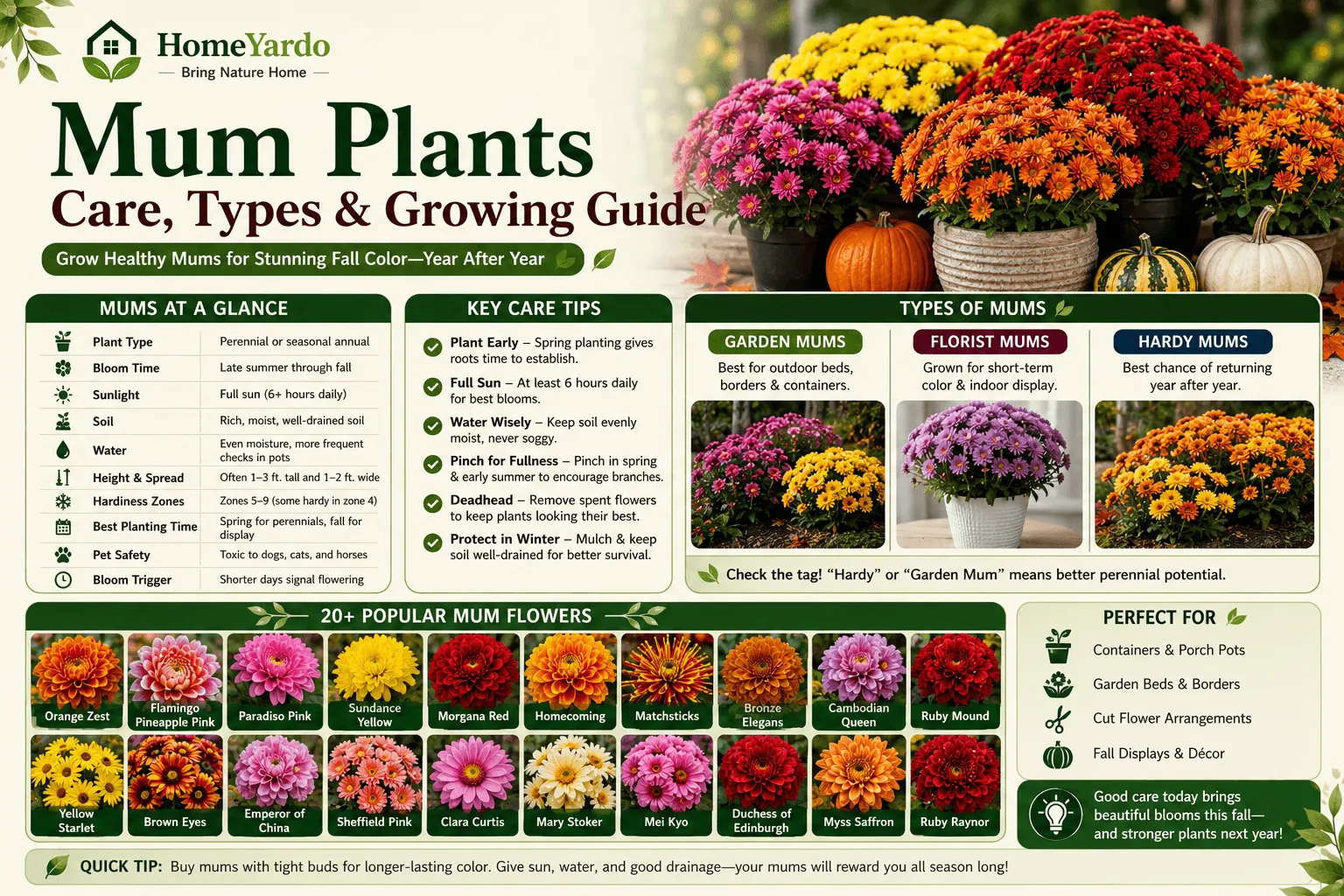
Mum plants provide strong fall colour to borders, pots patios, borders, and garden beds as many summer flowers start to fade. They are chrysanthemums however the title on the tag is crucial since not all mums are planted for the same reason.
Certain mums are flowering plants that are intended for short-term color. They also have gardening mums that are able to grow outdoors. The most robust mums have the highest chances of reappearing in the event that they’re planted at an early time and in full sun and planted in well-drained soil.
This guide focuses on mum types, varieties, sun watering, potted maintenance Indoor care, flowers types and colors 20 mum flower arrangements, autumn displays, overwintering common issues, as well as questions and answers.
Quick Answer: What Are Mum Plants?
These are chrysanthemums cultivated for vibrant late-season blooms. They are typically sold in the fall and late summer for borders, containers display on porches, borders, and gardens.
The majority of mums bloom from the end of in the summer until fall, based on the type and climate. Their flowers could resemble pompons, daisies and spiders, cushions or even large, decorative flowers.
The most significant differentiation is that between garden moms, florist mums, and tough mums. Garden mums are ideal for planting outdoors. They are generally only used for display purposes. They have the greatest chances of reappearing in the right conditions.
Mum Plants At A Glance
| Feature | Best Guidance |
|---|---|
| Common Name | Mum, garden mum, florist mum, hardy mum, chrysanthemum |
| Botanical Name | Chrysanthemum species and hybrids |
| Plant Type | Herbaceous perennial or seasonal annual, depending on type |
| Bloom Time | Late summer through fall |
| USDA Hardiness Zones | Many garden mums are grown in zones 5 to 9, with some hardy selections tolerating zone 4 |
| Sunlight | Full sun, usually 6 or more hours daily |
| Soil | Rich, moist, well-drained soil |
| Water | Even moisture, with more frequent checks in pots |
| Height And Spread | Often 1 to 3 feet tall and 1 to 2 feet wide |
| Flower Colors | Yellow, white, purple, red, bronze, orange, pink, lavender, green, and bicolor |
| Best Planting Time | Spring for perennial growth, fall for seasonal display |
| Pet Safety | Toxic to dogs, cats, and horses if eaten |
| Bloom Trigger | Shorter late-season days help trigger flowering; strong night lighting may interfere |
Horticulture note: A hardy label improves the chance that a mum will return, but it is not a guarantee. Plant type, planting time, drainage, root growth, winter moisture, and local climate all affect survival.
Are Mums And Chrysanthemums The Same?
Mums and chrysanthemums can be described as the identical in the common garden languages. “Mum” is the short common name, whereas “chrysanthemum” is the formal plant name.
Garden centers might identify the plants mums, garden moms, florist mums, hardy mums cushion mums, and chrysanthemums. The label will indicate what the plant is designed for outdoor or indoor show, seasonal containers or even for perennial use.
The question of chrysanthemum or mum is mostly about the naming. The more important inquiry concerns whether or not the flower is flower mum, garden mum, or a hardy mum.
What Do Mums Look Like?
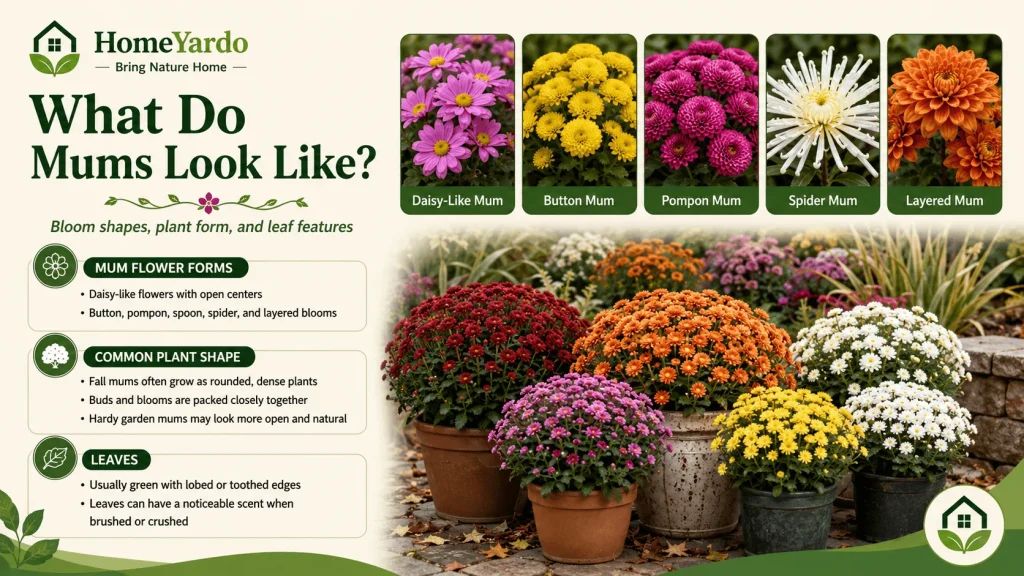
Mum flowers are diverse. There are daisy-like flowers that open with a clear center. Some form button-like blooms like rounded pompons or spoon-shaped or spider-like flowers or big layered blooms.
The majority of fall mums offered in pots feature the shape of a round, dense plant with a lot of buds packed to each other. Older, hardy garden varieties could have an open, natural shape that works well within perennial border.
The leaves are typically green, lobed or toothed. The leaves often have an odor that is noticeable when it is crushed or brushed.
Garden Mums vs Florist Mums

Flower mums and garden moms and hardy moms might look alike at first however, they aren’t employed in the same way. Tags are more trustworthy than the flower colour or shape.
| Type | Best Use | Perennial Potential | Main Care Note |
|---|---|---|---|
| Garden Mums | Outdoor beds, borders, fall gardens, containers | Good in suitable zones when planted early | Need sun, drainage, spacing, and winter protection |
| Florist Mums | Gift pots, indoor color, short term displays | Low for outdoor return | Best treated as seasonal flowers |
| Hardy Mums | Long term garden planting | Best chance of returning | Plant in spring for stronger roots |
| Buying Clue | Check the plant tag | Tag should show hardy or garden mum for perennial use | Long-term garden planting |
Flowers are not bad plants. They’re simply designed for a particular reason. They make great gifts as well as indoor color and temporary displays for fall.
The garden mums as well as the hardy Mums are better options for growing outdoors or if you want to return the growth in the next year.
Mum vs Chrysanthemum

Mum and chrysanthemum typically refer to the identical plant. “Mum” is the short common name commonly used in garden centers, whereas “chrysanthemum” is the formal name of the plant that is often found on tags, databases of plants as well as nursery descriptions.
The name doesn’t explain what the plant needs to be cultivated. For maintenance, the best indication is if the tag is ascribed to flower mum, garden mum, or tough mum.
Hardy Mums Vs Garden Mums

The hardy mum is a kind of garden mum designed to provide more resistance to cold and better return growth. The garden mum is typically designed for outdoor use. However, its winter survival may vary according to the cultivar, planting date soil drainage, and the climate of the area.
Make use of “hardy mum” when the aim is to choose a plant that has the highest chance of returning. You can use “garden mum” as the broad term used to describe outdoor mums planted in borders, beds or in containers.
How To Tell Which Mum You Bought
First, check the tag on the plant. Find words like “hardy,” “garden mum,” or a reference to a USDA zone of hardiness.
A plant that is sold in the spring months has more time to develop roots before the winter months, which means it offers better potential as a perennial. Fall mums can be planted, however it could show more autumnal colors in the event of frost.
Before buying, be sure to look for:
- A tough or garden mum label
- Many close buds
- Some color hints
- The soil is moist, but not spongy.
- The dense green foliage
- Stems that are firm
- There is no major yellowing or wilting.
- Roots that aren’t around the pot
Mums that are fully open give instant color, budded plants typically last longer.
Are Mum Plants Perennials Or Annuals?

Mums are perennials as well as annuals. The answer is contingent on the variety of the plant, its zone of hardiness, time for planting soil drainage, and winter maintenance.
Garden mums and tough mums can be resuscitated in the right conditions. The flowering mums of the garden are generally classified as annuals that are seasonal because they are cultivated for a display that are only for a short time.
A robust garden mum that is planted in spring will be able to establish roots before winter comes around. The mum that was planted in autumn may flower beautifully, however the roots are usually weaker as winter approaches.
Why Some Mums Come Back, And Others Die
Mums may fail to return for several reasons:
- The plant was a florist mum.
- It was planted too late in the fall.
- The pot was root-bound.
- The soil stayed wet in winter.
- The plant grew in too much shade.
- The roots did not establish before frost.
- No winter mulch was added in cold regions.
- The stems were cut back too early.
- The site had poor drainage.
These problems do not always show during bloom. A plant can look healthy above the soil while the roots are still too weak for winter.
Hardiness Zones For Mum Plants

Many garden mums are sold for USDA zones 5 to 9. Some hardy selections may tolerate zone 4 when planted early and grown in the right conditions.
Zone numbers are a guide, not a promise. A mum can fail in a mild zone if the soil is wet, compacted, or poorly drained. A mum in a colder zone may survive when planted early and protected well.
Open blooms can be damaged by hard frost even when the plant itself is hardy. For perennial use, focus on hardy garden mums, early planting, full sun, and well-drained soil.
When To Plant Mums?

The best time to plant mums depends on the goal. Spring is best for hardy mums that are expected to return. Late summer and fall are best for seasonal color.
| Goal | Best Time | Why |
|---|---|---|
| Perennial garden mum | Spring | Best root establishment |
| Fall display | Late summer to fall | Fast seasonal color |
| Fall planting for return | 6 plus weeks before killing frost | Gives roots some time |
Spring planting gives mums a full growing season to develop roots. It also allows pinching, which helps create a fuller plant before bloom.
Fall planting is useful for instant color, but it is less reliable for winter survival.
Best Time To Buy Mums For Long Bloom
Buy mums when most buds are still tight, and a few flowers are just beginning to show color. This gives a longer display than buying a plant already at peak bloom.
A fully open mum is good for quick decoration, but the flowers may fade sooner. A budded plant opens gradually and usually looks good longer.
Check the soil before buying. Very dry pots, yellow leaves, broken stems, or badly wilted plants are warning signs.
Where To Plant Mums?
Plant mums in a sunny spot with good airflow and well-drained soil. Garden beds, raised beds, borders, and large containers can all work if water drains away from the roots.
Avoid low areas where water collects after rain. Wet roots are a common reason hardy mums fail in winter.
Mums are short-day plants, meaning their bloom timing responds to longer nights. Strong porch lights, streetlights, or landscape lights near the plants may reduce or delay buds.
In hot climates, potted mums may benefit from light afternoon shade after the flowers open. Deep shade is not suitable because it reduces bloom count and weakens stems.
Do Mums Like Sun Or Shade?

Mums bloom best in the sun. Most need at least 6 hours of sunlight daily, and 6 to 8 hours is better for strong bud formation.
Too much shade can lead to weak stems, fewer flowers, and a thin plant shape. A shaded mum may stay green but produce fewer blooms.
In very hot regions, potted mums can be moved to bright afternoon shade after buds open. This can help flowers last longer without reducing earlier bud development.
How To Plant Mum Plants In The Ground?

Plant mums when the root ball is moist, and the soil is workable. Choose a sunny site with rich, well-drained soil.
Follow these steps:
- Water the mum while it is still in the pot.
- If the root ball is very dry, soak the pot briefly until the soil is evenly moist.
- Choose a sunny site with good drainage.
- Remove the plant from the container carefully.
- Loosen tight roots if the plant is root-bound.
- Dig a hole wider than the root ball.
- Set the plant at the same soil level it had in the pot.
- Backfill with improved garden soil.
- Water deeply after planting.
- Add light mulch around the plant without covering the stems.
- Keep soil evenly moist while new roots settle.
Space garden mums about 18 to 24 inches apart. Good spacing supports airflow and reduces disease pressure.
How To Care For Mum Plants?

Mum care depends on whether the plant is grown as a seasonal color or as a perennial garden plant. Both need sun, steady moisture, and drainage.
Garden mums need more seasonal care if they are expected to return. Watering, feeding, pinching, mulching, and winter cleanup all affect plant health.
Watering Mums
Potted mums dry faster than ground-planted mums. Check the top layer of soil often, especially during warm or windy weather.
Water when the top inch or top layer begins to dry. Do not let the pot dry until the plant wilts, because one severe wilt can shorten bloom quality.
Ground-planted mums need steady moisture while roots settle. Established garden mums still bloom better when the soil stays evenly moist but not soggy.
Water the soil at the level when possible. Wet foliage and flowers can increase disease problems in crowded plants.
Soil And Drainage
Mums grow best in fertile, moist, well-drained soil. The soil should hold enough moisture for roots but drain fast enough to avoid soggy conditions.
Heavy clay can be improved with organic matter before planting. Raised beds are helpful where garden soil stays wet.
Containers must have drainage holes. Decorative pots without drainage can trap water around the roots and cause decline.
Drainage affects both bloom quality and winter survival. A hardy mum in waterlogged soil may not return.
Fertilizer For Healthy Growth
Garden mums can be fed in spring and early summer while they are growing leaves and stems. A balanced fertilizer can support fuller growth.
Stop heavy feeding once buds begin to form or show color. Late feeding can push soft growth instead of improving bloom.
Potted seasonal mums often need little fertilizer if they are kept only for fall display. Steady watering matters more at that stage.
Temperature For Mums
Mums perform best in mild fall weather. Warm days and cool nights help flowers hold longer.
Hot, dry weather can shorten bloom life, especially in containers. Move potted mums away from harsh afternoon sun after flowers open if heat is causing stress.
Frost can damage open blooms. Potted mums can be moved under cover during cold nights if the display needs to last longer.
Pinching And Pruning
Pinching helps garden mums grow fuller. When spring growth reaches about 6 inches, pinch the growing tips to encourage branching.
Repeat pinching through early summer. Early bloomers should stop by mid-June, while later bloomers can often be pinched until mid-July. Do not pinch within about 3 months of expected bloom.
Do not pinch mums bought in bud during late summer or fall. Removing tips at that stage removes flowers.
In cold regions, leave dead stems through winter and clean them up in spring when new shoots appear.
Deadheading For Longer Bloom
Deadheading means removing faded flowers. It keeps the plant tidy and helps the remaining buds look better.
Use clean snips or fingers to remove spent blooms. Avoid pulling hard on stems because nearby buds can break.
Deadheading can improve the display, but it does not make mums bloom endlessly. Mums naturally finish their seasonal bloom cycle.
Potted Mum Care

Potted mums need steady moisture, drainage, and enough light. They are often bought in small nursery pots, and many dry quickly once they are full of buds.
If the plant is root-bound, move it into a slightly larger container. Use fresh potting mix and a pot with drainage holes.
How To Pot A Mum
- Choose a pot with drainage holes.
- Add fresh potting mix.
- Remove the mum and loosen tight roots.
- Set the plant at the same depth.
- Leave 1 to 2 inches below the rim.
- Water until excess drains from the bottom.
After flowers open, bright shade during the hottest part of the day can help the display last longer. During cold nights, move containers to a protected spot.
How Long Do Mum Plants Last In Pots?
Plants in pots often last 4 to 8 weeks when bought in bud and cared for well. Fully open plants usually fade sooner.
Heat, dry soil, frost, and small pots shorten the display. Tight buds, steady moisture, drainage, and frost protection help blooms last longer.
To make potted mums last longer:
- Buy plants with tight buds and some color showing.
- Keep soil evenly moist.
- Use a pot with drainage holes.
- Avoid severe wilting.
- Protect open flowers from frost.
- Move pots out of harsh afternoon heat when needed.
Can Mum Plants Survive Indoors?
Florist mums can survive indoors for a short-term display. They need bright light, even moisture, and a place away from heat vents.
Indoor florist mums usually hold flowers longer in a cool room. A range of 50°F to 65°F can help blooms last longer than warm rooms near heaters or sunny glass.
Keep the soil lightly moist, not soggy. Low light and warm indoor air can shorten the display.
Indoor mums usually decline after blooming. They are not dependable long-term houseplants. For longer-lasting indoor greenery, choose an indoor hanging plant instead of relying on florist mums after their bloom cycle ends.
How To Keep Mums Blooming Longer

Use these simple steps to extend the bloom display:
- Buy tight buds instead of fully open flowers.
- Keep soil evenly moist.
- Give strong sunlight during bud formation.
- Move potted mums to bright shade after blooms open in hot weather.
- Remove faded flowers.
- Protect open blooms from frost.
- Water at the soil level.
- Avoid severe wilting.
Mums are seasonal bloomers, so even healthy plants will finish flowering. Good care helps the display last as long as the plant allows.
Types Of Mums

The main practical types are garden mums, florist mums, and hardy mums. Garden mums are used outdoors in beds, borders, and containers. Florist mums are grown for gift pots and short-term display. Hardy mums are garden mums selected for better perennial performance.
There are also broader chrysanthemum groups. Rubellum types are often valued for garden use. Spray chrysanthemums produce multiple blooms on branching stems. Charm and cushion mums form compact plants with many flowers.
Exhibition and bloom chrysanthemums are grown for larger or showier flowers. For most home gardeners, the main choice is still seasonal potted mums or hardy garden mums.
Mum Flowers: Forms Explained
Mum flower forms describe bloom shape. Flower form does not prove hardiness, but it helps explain why different mums look so different.
| Flower Form | What It Looks Like | Best Use |
|---|---|---|
| Daisy | Petals around a visible center | Natural garden beds and informal borders |
| Button | Small rounded blooms | Compact pots and edging |
| Pompon | Tight round flowers | Containers and floral arrangements |
| Cushion | Dense mound of many blooms | Fall porch pots and mass planting |
| Decorative | Full-layered petals | Borders, containers, and cutting |
| Spoon | Petals with spoon-shaped tips | Unusual container displays |
| Quill | Narrow tube-like petals | Texture and contrast |
| Spider | Long, thin curling petals | Focal plants and cut flowers |
| Football | Large rounded blooms | Show flowers and cut flowers |
| Incurved | Petals curve inward toward the center | Large decorative blooms |
| Anemone | Raised center with surrounding petals | Mixed borders and flower interest |
A flower may look unusual or delicate and still need the same basics: sun, drainage, moisture, and the right plant type for the goal. Gardeners who enjoy unusual bloom shapes can also explore cool flowers for more distinctive flower forms and color ideas.
Colors Of Mums And Appearance

Mum flowers come in many fall-friendly colors. Yellow mums brighten porch pots and pair well with pumpkins, bronze grasses, and purple blooms.
White mums add clean contrast. They work well with red, purple, ornamental kale, and dark foliage.
Red mums create strong autumn color. They look good with bronze, orange, yellow, and cream flowers.
Purple and lavender mums add cooler tones. They pair well with white blooms, silver foliage, and yellow accents. For more long-lasting cool-toned garden color, pair lavender mums with purple perennials that bloom across different parts of the season.
Orange and bronze mums give a classic fall look. Pink mums soften containers and cottage-style beds. Bicolor mums can stand alone because the flower already has built-in contrast.
15 Plus Mum Flowers To Know

Named mum flowers add more interest than basic fall pots. Use these examples to compare color, form, and best use before choosing plants.
- Orange Zest
Warm orange mum with a strong fall look. Best for containers, porch pots, and autumn beds where bright seasonal color is needed. - Flamingo Pineapple Pink
Pink and yellow-toned mum with a softer display than dark red or bronze types. Good for mixed containers and lighter fall palettes. - Paradiso Pink
Clear pink mum that works well in patio pots and garden edges. Pair with white, purple, or silver foliage for contrast. - Sundance Yellow
Bright yellow mum suited to sunny beds and fall containers. It adds strong contrast beside bronze, red, and purple flowers. - Morgana Red
Rich red mum for bold seasonal color. Use in containers, borders, or entry displays with pumpkins and ornamental grasses. - Homecoming
Large warm-toned mum is often used where a showy fall bloom is needed. Good for cutting and larger seasonal displays. - Matchsticks
Unusual spoon form mum with bright petal contrast. Useful for containers that need texture and a less common flower shape. - Bronze Elegans
Bronze-toned mum that blends well with fall foliage and rustic garden displays. Good for borders and cottage-style plantings. - Cambodian Queen
Lavender pink mum with a softer garden look. Works well in perennial beds where a natural form is preferred. - Ruby Mound
Deep ruby red mum for mass planting, borders, and containers. Pairs well with yellow, white, or bronze companions. - Yellow Starlet
Small bright yellow mum useful as a cheerful accent. Good for pots, edges, and sunny fall displays. - Brown Eyes
Daisy likes mum with warm centers. Gives a looser, more natural look than dense cushion mums. - Emperor of China
Soft pink garden mum with a refined late-season look. Good for perennial borders when grown in suitable conditions. - Sheffield Pink
Apricot pink mum with a relaxed garden habit. Strong choice for cottage-style beds and late-season borders. - Clara Curtis
Pink daisy-like mum with a natural perennial look. Pairs well with asters, sedum, and ornamental grasses. - Mary Stoker
Creamy yellow mum that gives a softer color than bright gold types. Good for gentle fall palettes. - Mei Kyo
Small pink mum with a compact habit. Useful in borders where a finer texture is needed. - Duchess of Edinburgh
Deep red mum for strong late-season color. Works in borders and fall displays with bronze or yellow companions. - Myss Saffron
Warm saffron-toned mum for rustic fall combinations. Pairs well with bronze grasses and muted yellow flowers. - Ruby Raynor
Red-toned mum that adds depth to containers and mixed beds. Useful where a rich color accent is needed.
Best Mums For Containers
The best mums for containers are compact, budded, and evenly shaped. Cushion mums, button mums, and dense florist mums give the fullest pot display.
Choose a container with drainage holes and enough room for the root ball. A pot around 12 inches wide or larger usually works better than a very tight nursery pot.
Bright yellow, orange, bronze, red, and purple mums are strong container choices. White and pink mums create a softer look with grasses, kale, or trailing foliage.
Best Mums For Garden Beds
The best mums for garden beds are hardy garden mums planted early enough to establish roots. Spring planting gives the strongest chance of return growth.
Garden mums need full sun, good spacing, and well-drained soil. Crowded plants may look full at first, but can trap moisture and reduce airflow.
Hardy and older garden style mums work well with asters, sedum, ornamental grasses, coneflowers, salvias, and late season foliage plants.
Best Mums For Cut Flowers
Decorative mums, spider mums, quill mums, spoon mums, and football mums are useful for cutting because they offer strong flower shapes.
Cut stems early in the day when flowers are fresh. Remove lower leaves before placing stems in water.
Large-flowered mums can act as focal blooms. Smaller spray mums work well as filler flowers. For mixed arrangements, learning about the types of roses can help balance large mum blooms with classic cut flower shapes.
Fall Mums Guide

Fall mum flowers are used for porch pots, borders, steps, patios, entry displays, and garden beds. They bring color when many warm-season flowers are finished.
For a strong fall display, group mums with pumpkins, gourds, ornamental kale, sedum, asters, grasses, and pansies. Use warm colors for a classic fall look or white and purple for a stronger contrast.
In containers, mums often work as the full-rounded “filler.” Ornamental grasses can add height, while trailing plants soften the pot edge.
Keep fall pots watered. Wind, sun, and tight roots can dry containers quickly.
Best Companion Plants For Mums
Mums pair well with plants that add color, height, or texture. Asters and sedum bring more late-season blooms. Salvias can add upright color in mild climates.
Ornamental grasses, heuchera, and dusty miller add foliage contrast. Pansies and ornamental kale work well in containers.
Pumpkins and gourds are not true companion plants, but they help build a seasonal display around mum pots.
What To Do With Mums After They Bloom
After blooming, the next step depends on the type of mum and where it is growing.
- Florist mum in a pot: compost after bloom if it was bought for temporary display.
- Garden mum in a pot: protect it or plant it if timing and weather allow.
- Hardy mum in the ground: mulch the root zone and wait for spring cleanup.
- Unknown type: treat as seasonal unless the tag says hardy or garden mum.
Stop feeding after bloom. Keep the soil lightly moist, but do not leave the roots in wet soil.
How To Propagate And Divide Mums?
Garden mums can be divided in the spring when new growth appears. Division helps refresh older clumps and gives healthy shoots more room.
Lift the clump carefully and separate the strong outer pieces with roots and shoots. Remove weak, woody, or dead centers before replanting.
Many garden mums benefit from division every 2 to 3 years. Replant divisions in sunny, well-drained soil and water them well.
Mums can also be grown from cuttings taken from healthy spring growth. Check plant labels before propagating named cultivars, because some patented plants may have restrictions.
How To Overwinter Mums

Hardy garden mums overwinter best when planted in spring. A full growing season helps roots spread before freezing weather.
Good drainage is necessary. Wet winter soil can damage roots even when the mum is rated hardy.
In colder zones, leave stems standing through winter and add loose mulch after frost. In milder zones, mums can often be cut back after bloom and mulched lightly.
Potted mums are harder to overwinter because their roots are exposed to sharper temperature changes. If saving a potted hardy mum, move it to a sheltered location and keep the soil slightly moist, not wet.
Overwintering Decision Chart
Follow this simple decision path:
- Is it a florist mum?
Yes: treat it as a seasonal display. - Is it a hardy garden mum?
Yes: check planting time. - Was it planted in spring or at least several weeks before frost?
Yes: survival odds are better. - Is the soil well-drained?
Yes: mulch and monitor. - Is the mum in a pot?
Move it to a sheltered place or plant early if conditions allow.
Overwintering is possible, but it is not guaranteed. The best results come from hardy garden mums planted early in well-drained soil.
Common Mums Problems

Mum problems often come from watering stress, poor drainage, shade, crowding, pests, heat, or frost. Start by checking soil moisture, light, and airflow.
| Problem | Likely Cause | Best Fix |
|---|---|---|
| Wilting | Dry soil, root-bound pot, heat, or overwatering | Check soil, water correctly, repot if needed |
| Yellow Leaves | Wet soil, poor drainage, nutrient stress, or aging foliage | Improve drainage and avoid soggy soil |
| Brown Blooms | Heat, frost, age, or dry conditions | Deadhead and protect from weather stress |
| Few Buds | Too much shade, late pinching, or outdoor night lighting | Move to sun and stop pinching on time |
| Leggy Growth | Low light or lack of pinching | Grow in more sun and pinch earlier in season |
| Root Rot | Soggy soil or poor container drainage | Use well-drained soil and drainage holes |
| Powdery Mildew | Poor airflow and humid foliage | Space plants and avoid overhead watering |
| Rust Or Leaf Spot | Wet leaves and crowded growth | Remove affected leaves and improve airflow |
| Botrytis | Cool, damp, crowded flowers or foliage | Remove affected blooms, improve airflow, and avoid wet flowers |
| Aphids | Soft new growth | Rinse off or use a suitable insecticidal soap |
| Spider Mites | Hot, dry stress | Improve moisture and check leaf undersides |
| Leaf Miners | Larvae feeding inside leaves | Remove damaged leaves and monitor new growth |
| Caterpillars | Chewed leaves or buds | Hand remove when possible and monitor new damage |
| Frost Damage | Cold nights on open blooms | Cover or move potted mums before frost |
Healthy mums start with the right setup. Sun, airflow, drainage, and steady moisture prevent many common problems.
Why Are My Mums Wilting?
Wilting is typically caused by a lack of moisture, however, moist roots can lead to wilting as well. Wait until the soil has dried out before watering again. If the pot is light and soil is coming away from the rim, water thoroughly until the soil drains through.
If the root ball is very dry it may require slow soaking. If the plant is still wilted, the roots could be the problem due to poor drainage, overwatering or a tight root ball.
Sometimes wilting occurs temporarily due to heat, frost or transplant shock. Relocate potted plants from difficult conditions until they recover.
Why Are My Mums Not Blooming?
Shade may not be ideal for mums to bloom in. The good thing about this is that full sun will create stronger stems and more flower buds. Pinching can be done late and cause loss of developing buds. Early to midsummer is the best time to stop pinching, to allow time for fall bloom. Bud timing can also be influenced by strong night time outdoor lighting.
Excessive nitrogen fertilization, drought stress, or purchasing the plant too early in his blooming season can also cause a delay in blooms.
Are Mums Safe Around Pets?
Mums are poisonous to dogs, cats and horses when ingested. Prevent pets (leaf- or flower-chewing) from visiting plants. These symptoms may include vomiting, diarrhea, drooling, skin irritation or stomach discomfort.
The reaction is dependent on the pet and the quantity consumed. If a pet ingests the plant material of a mum, seek veterinary help or a telephone hotline for animal poison control.
Best Care Calendar For Mums

A seasonal care rhythm helps garden mums stay full, bloom well, and survive longer.
| Season | What To Do |
|---|---|
| Spring | Plant hardy mums, divide older clumps, start pinching when growth is strong |
| Early Summer | Water consistently, feed lightly, continue pinching |
| Midsummer | Stop pinching so buds can form |
| Late Summer | Watch bud development and avoid drought stress |
| Fall | Buy budded plants, water pots, deadhead, and protect from frost |
| Winter | Mulch garden mums, protect pots, avoid wet soil, and leave stems in cold regions |
The timing of events is affected by the climate. Warmer regions might require more protection from heat, while colder regions require more winter protection as well as more careful drainage.
Small Details That Help Mums Last Longer
Budded plants typically last longer than those bought with full flowering. Some open flowers are acceptable, but plants that are fully open are already halfway through their bloom.
Pots that are root-bound dry fast. Moving the pot into a larger container may help the plant retain moisture more evenly.
A severe wilt may reduce the quality of blooms. The plant might recover, but the flowers usually appear tired following the treatment.
A durable tag is more important than color, especially when the growth of perennial plants is the objective. The drainage is more important than the mulch by itself. The strong lights on the porch can hinder the timing of blooms.
Final Takeaway
Mums are chrysanthemums cultivated to provide a rich color in the late season. Flowers are great for display on a temporary basis, while robust garden mums give the highest chance of coming back.
For a long-lasting result, choose the best type, provide the plant plenty of sun, keep soil evenly damp, make sure the soil is well-drained and plant it in the early stages of growth when perennial growth is the aim.
FAQ’s
Hardy garden mums can come back every year when they have time to establish strong roots before winter. Spring planting gives the best chance of return growth. Fall-planted mums may not survive if freezing weather arrives before the roots settle into the soil.
Water mums when the top layer of soil begins to dry. Potted mums may need more frequent checks because containers dry faster in the sun and wind. The soil should stay evenly moist, but never soggy, because wet roots can lead to decline.
Yes, garden mums can be planted in the ground. Spring planting gives them the best chance to build roots before winter. Fall planting is useful for seasonal color, but it is less reliable for perennial return unless frost is still several weeks away.
The main practical types are garden mums, florist mums, and hardy mums. Garden mums are used outdoors, florist mums are usually short-term display plants, and hardy mums have better perennial potential. Flower forms include daisy, button, pompon, spider, cushion, decorative, spoon, quill, and football mums.
Yes, mums are the common name for chrysanthemums. Garden centers may use either name on plant tags. The more useful distinction is not the name, but whether the plant is a florist mum, garden mum, or hardy mum.
After blooming, florist mums can usually be composted if they were bought for short-term display. Hardy garden mums can stay in the ground for winter with mulch around the root zone. In colder areas, leave stems until spring, then trim dead growth when new shoots appear.
Hardy garden mums tolerate cold better than florist mums, especially when planted early in well-drained soil. Open blooms can still be damaged by hard frost. Potted display mums should be moved under cover or protected during cold nights to preserve the flowers.
Mums are often avoided by deer and rabbits because of their scent and leaf texture. This does not make them completely damage-proof. Hungry animals may still nibble on the plants when other food is limited.
Mums grow best in mild conditions with warm days and cool nights. Ideal outdoor temperatures are around 60°F to 70°F during the day and cooler at night. Very high heat can shorten bloom life, while frost can damage open flowers. For indoor display, cooler rooms help flowers last longer.
Mums may come back every year or act like seasonal plants, depending on the type and growing conditions. Hardy garden mums have a better chance of returning when planted early and grown in well-drained soil. Florist mums are usually treated as temporary plants and often do not survive long-term outdoors.
Mums can be perennials when they are hardy garden types grown in suitable zones. These plants can return each year if they develop strong roots before winter and are protected with mulch. Many store bought mums are not selected for long term growth, so they are often used as seasonal flowers.
A mum flower is a chrysanthemum bloom known for its wide range of shapes and colors. Flowers can appear as daisy forms, button types, pompons, or large layered blooms. Mums are popular in late summer and fall because they provide strong color when many other plants are fading.
Chrysanthemums can be either perennial or annual, depending on the variety and how they are grown. Garden and hardy types may return each year in the right conditions. Florist types are usually treated as annuals because they are bred for short-term display rather than long-term survival.
Mums need at least 6 hours of direct sunlight each day to produce strong growth and full blooms. More sunlight usually leads to more flowers and better plant shape. In very hot climates, light afternoon shade can help protect open blooms from heat stress.
Mums can survive in partial shade, but they do not bloom well without enough sunlight. Too much shade can lead to weak stems and fewer flowers. For the best results, plant mums in a location that receives full sun for most of the day.
Chrysanthemums are flowering plants known for their late-season blooms and wide variety of colors and forms. They belong to the same plant group as daisies and asters. These plants are commonly grown for garden beds, containers, and seasonal displays in the fall.
They can come back every year if they are hardy garden types planted in the right conditions. Early planting, full sun, and well-drained soil improve the chances of survival. Mums planted late in fall often do not return because their roots are not strong enough before winter.
References