Perennial Plants for Full Sun: Sunny Gardens That Return Every Year
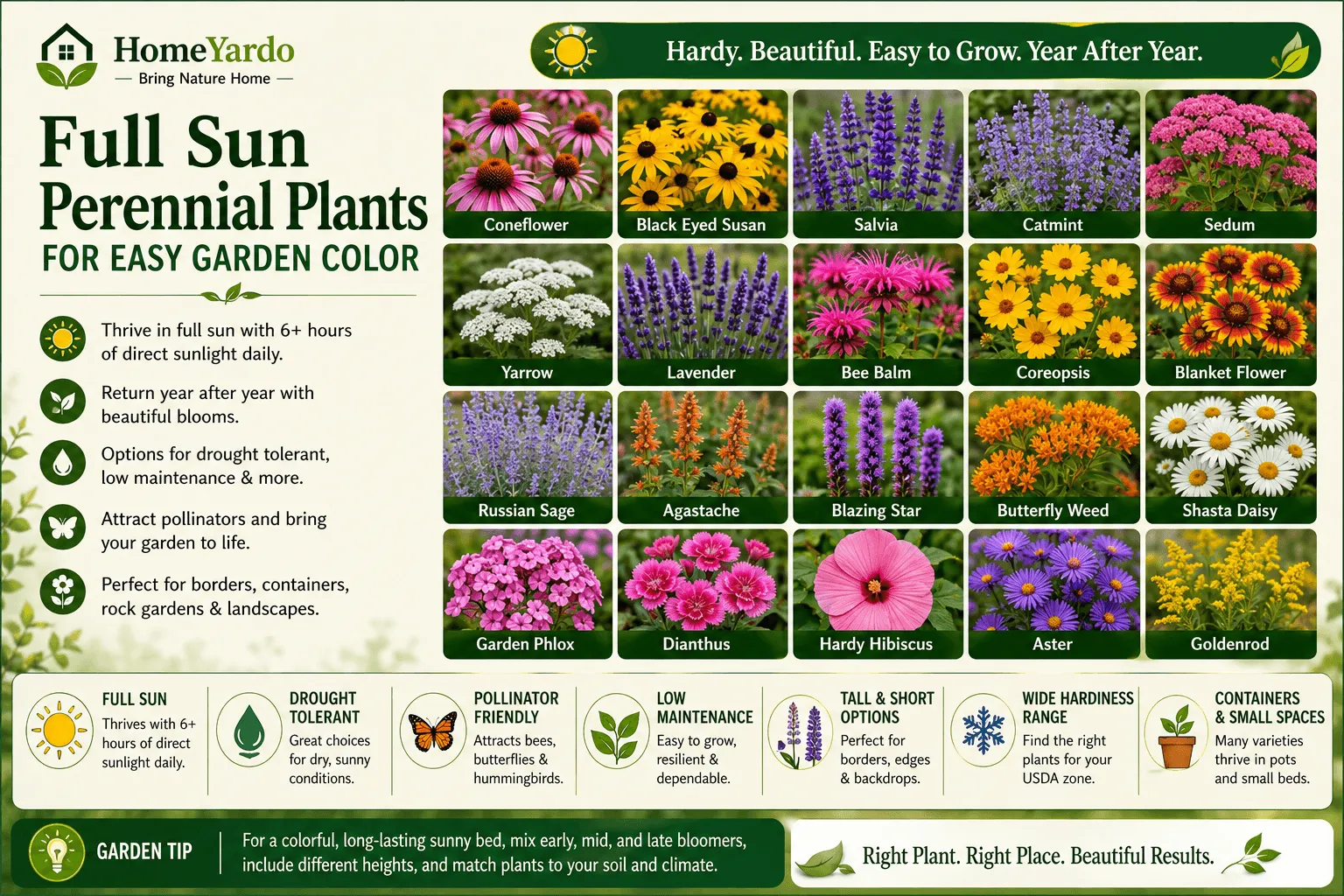
Perennial plants that are able to withstand full sun will regenerate each year and thrive in areas with lots of daily sunshine. Most require at least 6 hours of direct exposure to sunlight, and many will perform best with 6 to 8 hours of sun.
There’s more involved in the best choice than light. Plants perform well with soil drainage, summer heat, water requirement, mature size, bloom time, deer pressure and USDA zone. A sunny garden bed that is dry, sandy will require different plants than a sunny bed with rich, moist soil.
This guide focuses on full sun perennial plants, perennial by use plants, such as easy color, long bloom time, drought tolerant, low maintenance, tall borders, low growing edges, pollinator value, containers, and climate. It also contains planting and maintenance suggestions for maintaining a full, colorful, easy-to-care-for sunny perennial bed.
Quick Answer: Best Full Sun Perennials To Start With
In many home gardens, a few types of hardy, widely available, and easy-to-maintain full sun perennials can be successfully planted. They are excellent early bloomers for sunny gardens, borders, pollinator gardens and low maintenance landscapes.
| Best Need | Best Plant Choices |
|---|---|
| Easiest to grow | Daylily, black eyed Susan, sedum, coneflower |
| Long bloom | Salvia, catmint, coreopsis, blanket flower |
| Dry soil | Lavender, yarrow, sedum, Russian sage |
| Pollinators | Bee balm, coneflower, milkweed, blazing star |
| Tall borders | Garden phlox, bee balm, Russian sage, hardy hibiscus |
| Low borders | Creeping thyme, dianthus, lamb’s ear, compact sedum |
| Hot climates | Blanket flower, agastache, yarrow, salvia |
| Poor soil | Yarrow, coreopsis, sedum, blanket flower |
These make good perennials for full sun as they are easy to grow, bloom, are hardy and provide garden structure.
In a simple sunny garden, use one long blooming plant, one low growing edge plant, one tall plant that provides background, and one late season bloomer. This provides the bed with shape, color and interest throughout the growing season.
What Full Sun Means For Perennial Plants

Full Sun plant that needs to grow in at least 6 hours of direct sunlight daily. Some perennials that grow in full sun require less than 6 to 8 hours of full sun, particularly those that are being grown for prolific blooming. For mixed beds, combine perennials with other full sun plants that need the same light, water, and soil conditions.
The strength of the sun is also important. Morning sunlight is less hot and damaging to plants. Avoid planting in areas with afternoon sun that will heat up more and dry the soil quicker, particularly near patios, driveways, walls and open slopes.
Don’t assume that everything that can be grown in full sun requires a lot of water, no drainage or extreme temperatures. Other perennials that require full sun, such as lavender and sedum, prefer a dry, well drained soil. Others like bee balm, garden phlox and hardy hibiscus love bright sun but require more moisture.
Morning Sun Vs Afternoon Sun

Morning sun provides bright light, but at a time when the heat is not as severe. A good choice for plants that need full sun but don’t tolerate dry, hot afternoon conditions.
Tough plants like yarrow, blanket flower, Russian sage, salvia, sedum, agastache and coneflower thrive best in the afternoon sun. Once established these plants can tolerate sunnier, warmer locations.
Light afternoon shade may be beneficial to some full sun perennials in the very hot climate. Some plants will still be sun loving whether they are covered for a few hours during the peak heat or not.
Full Sun Does Not Always Mean Drought Tolerant
One of the most frequent planting errors is planting all full sun perennials in dry soil conditions. A number of flowering perennials require sun to flower but continue to require regular watering.
Sunny soil with more moisture is ideal for growing bee balm, garden phlox, cardinal flower, hardy hibiscus and joe pye weed. Dry beds are best filled with lavender, sedum, yarrow and Russian sage.
Additionally, new plantings will need frequent watering until they are one year old. Although drought tolerant, a dry spell may be beyond the ability of drought tolerant full sun perennials until they have time for deeper root systems to develop.
How To Choose The Right Full Sun Perennial

The best perennial for full sun is the plant that will grow in it. Beauty is not the only determining factor of a plant’s success; if the soil is too wet, the bed is too full, and the climate is too extreme, the plant may not thrive.
Prior to purchase, find out about sunlight, soil drainage, mature height, mature spread, USDA zone, bloom time and water requirements. Consider deer resistance, pollinator benefits, container use and post-flower needs.
Plants that are suitable for layers are better in a sunny garden bed. The tall plants are placed towards the rear; the medium plants form the bulk of the flower bed; the low growing plants fill in the forward edge.
Herbaceous Perennials, Grasses, Vines, And Shrubs
Many of the plants in this guide are herbaceous perennials and flowers. The plants typically die down in winter and sprout from the roots in spring.
Ornamental grasses, hardy vines or woody shrubs may be part of some full sun perennial garden plants. Little bluestem, switchgrass, canna and hardy hibiscus can be incorporated into sunny perennial designs due to their late season structure or foliage texture, or for height and movement.
If you want a flowering garden bed, consider using flowering perennials as the dominant plants, and consider grasses and taller landscape plants to enhance shape, season interest and background structure only where they enhance these other plants.
Best Full Sun Perennial Plants At A Glance

This comparison chart provides quick information on bloom time, height, soil requirements, uses, and USDA hardiness. For a sunny bed, use it to eliminate the choices as you consider plant combinations.
| Plant | Botanical Name | Bloom Time | Height | Soil | Best Use | Zones |
|---|---|---|---|---|---|---|
| Coneflower | Echinacea | Summer | 1 to 5 ft | Well drained | Pollinators, drought | 3 to 9 |
| Black eyed Susan | Rudbeckia | Summer to fall | 1 to 4 ft | Average | Easy color | 3 to 9 |
| Salvia | Salvia | Late spring to summer | 1 to 3 ft | Well drained | Long bloom | 4 to 10 |
| Catmint | Nepeta | Late spring to fall | 1 to 3 ft | Well drained | Borders, bees | 3 to 9 |
| Sedum | Hylotelephium or Sedum | Late summer to fall | 6 in to 2 ft | Dry | Late color | 3 to 9 |
| Yarrow | Achillea | Summer | 1 to 3 ft | Dry, lean | Poor soil | 3 to 9 |
| Lavender | Lavandula | Summer | 1 to 3 ft | Dry, well drained | Fragrance | 5 to 9 |
| Bee balm | Monarda | Summer | 2 to 4 ft | Moist, rich | Hummingbirds | 3 to 9 |
| Coreopsis | Coreopsis | Summer | 1 to 3 ft | Average to dry | Long bloom | 3 to 9 |
| Blanket flower | Gaillardia | Summer to fall | 1 to 3 ft | Sandy, drained | Heat | 3 to 10 |
| Russian sage | Salvia yangii | Summer to fall | 2 to 5 ft | Dry, drained | Heat, borders | 4 to 9 |
| Agastache | Agastache | Summer to fall | 2 to 4 ft | Well drained | Hummingbirds | 5 to 10 |
| Blazing star | Liatris | Summer | 1 to 5 ft | Well drained | Butterflies | 3 to 9 |
| Butterfly weed | Asclepias tuberosa | Summer | 1 to 3 ft | Dry, drained | Monarchs | 3 to 9 |
| Shasta daisy | Leucanthemum | Summer | 1 to 3 ft | Average | Cut flowers | 4 to 9 |
| Garden phlox | Phlox paniculata | Summer | 2 to 4 ft | Moist, rich | Fragrance | 4 to 8 |
| Dianthus | Dianthus | Spring to summer | 6 in to 2 ft | Well drained | Edges | 3 to 9 |
| Hardy hibiscus | Hibiscus moscheutos | Summer to fall | 3 to 7 ft | Moist | Large blooms | 4 to 9 |
| Aster | Symphyotrichum | Fall | 1 to 4 ft | Average | Fall color | 3 to 8 |
| Goldenrod | Solidago | Late summer to fall | 1 to 5 ft | Average to dry | Late pollinators | 3 to 9 |
| Little bluestem | Schizachyrium scoparium | Late season seed heads | 2 to 4 ft | Dry, lean | Winter interest | 3 to 9 |
| Switchgrass | Panicum virgatum | Summer seed heads | 3 to 6 ft | Average to moist | Structure | 4 to 9 |
The zones for plants will vary depending upon cultivar, and the plant tag must be consulted before planting. Plant performance may vary with local climate, winter moisture, summer heat and soil drainage.
Best Perennials For Full Sun And Easy Yearly Color

Plants that tolerate bright light and yet give reliable color in a sunny garden. Here are the best flowering perennials for full sun gardens, both for mixed and border gardens, cottage gardens, and pollinator gardens and for low maintenance planting plans.
Coneflower
Coneflower (Echinacea) is one of the most heat-tolerant perennial flowers; it attracts pollinators and it is a plant for many gardens when planted in full sun. The majority of varieties have a mature height of 1-5 feet, flower in summer and prefer well drained soils.
Purple coneflower is the traditional variety, but new varieties are available in white, yellow, orange, red, pink and green. If birds are included in the garden design, leave some seed heads in the fall.
Black Eyed Susan
Rudbeckia (black eyed Susan) adds a good amount of golden color to summer to fall beds. Thrives in standard garden soil, tolerates heat and pairs beautifully with coneflower, salvia, yarrow and ornamental grasses.
Most varieties will reach 1 to 4 feet in height, but a few will reach heights of 5 ft. or more. Use good air flow to minimise leaf problems, particularly in humid environments.
Salvia
Salvia produces flower spikes that stand up in purple, blue, pink, red or white. It is among the longest blooming, most pollinator-friendly, deer resistant, and tidy border flowers that thrive in full sun.
Some salvia species are prone to blooming late in the spring or early summer, and may rebloom if cut back. They like well-drained soil and will not do well if allowed to stand in wet soil.
Coreopsis
Tickseed (Coreopsis) is a sunny, simple perennial. It tends to be prolific in its flowering, and is available in yellow, gold, red, pink, and bicolored varieties.
Grows in average to dry soil and will not tolerate heavy feeding. Taller varieties are used in the middle layer of a border, compact varieties are used towards the front.
Catmint
Catmint (Nepeta) forms soft mounds of gray green foliage and purple blue flowers. A good low maintenance full sun perennial for edges, bed fronts and bee food.
There are many kinds that bloom from late spring through the summer and refresh following a light cutback. Catmint droughts after establishment, works well with roses, salvia, coneflower and yarrow.
Daylily
Hemerocallis, commonly known as daylily, is a simple perennial full-sun plant. It makes long-lived clusters and varies in colour from yellow to orange, pink, red, purple and cream.
Flowers last only one day, although it is common to have many buds on mature clumps. Daylilies are suitable for mass planting, sunny slopes and mixed borders.
Sedum
Sedum is a hardy, full sun, late season interest plant that tolerates dry soil. Upright varieties like autumn sedum offer flower heads late in the summer and fall, and low varieties can be used to fill borders, rock gardens and dry sites.
Sedum has succulent leaves and requires good drainage. Excessive moisture or excess fertility can result in poor growth.
Yarrow
Achillea, or Yarrow, is a drought hardy, full sun, upright perennial herb with flat topped clusters of blooms that are yellow, white, pink, red, peach and orange. It is adaptable to poor soil and is beneficial to low water garden beds.
Yarrow is a butterfly and pollinator friendly plant. Don’t overgrow; some are more productive than they should be and plant those that grow compact in small gardens.
Lavender
Lavender is a sweet-smelling, full sun, dry, well drained perennial. It is used for borders, pathways, herb gardens, cottage gardens and in low water gardens.
Lavender does not tolerate wet clay and does not tolerate heavy mulch around the crown. Thrives in well-drained soil with full sun.
Bee Balm
Bee balm, or Monarda, provides tubular shaped flowers, which hummingbirds, bees and butterflies love. Prefers moist, fertile, well-drained soil and full sun.
Bee balm can mildew when it is planted too close together or if it receives too much humidity, so space and air circulation are important. Cultivars that are resistant to mildew should be used in warm, humid summer areas.
Blanket Flower
Blanket flower or Gaillardia is an evergreen, warm-weather plant with big red, orange, yellow, and bicolored flowers. Can bloom over a prolonged period in sunny, dry beds.
It is a species that likes well drained soil but dislikes winter wetness. It can behave as an annual in some climates, but also tends to reseed in light areas that are suitable for it.
Russian Sage
Salvia yangii, commonly known as Russian sage, adds silvery stems and purple blue flowers to hot, dry, sunny areas. Suitable for use as a tall, airy border species in the middle or back of a border.
It is not a soil- or organic matter-loving plant. Allow for space as the older plants can spread out and may be best suited when planted in clusters.
Agastache
Hummingbird mint (Agastache) has an attractive fragrance and tubular-shaped flowers that are visited by bees, butterflies and hummingbirds.
Suitable for well drained soils in full sun. There are many drought and heat-tolerant varieties. Enjoys the company of coneflower, yarrow, salvia and ornamental grasses.
Blazing Star
Blazing star, also known as Liatris, has tall purple or white spikes of flowers that create a vertical interest and highlight in sunny beds. Butterflies and bees come into the flowers in large numbers.
Prefers full sun and tolerates good drainage. It is suitable for prairie style gardens, pollinator gardens and mixed borders with coneflower, black eyed Susan and grass.
Butterfly Weed Or Milkweed
Asclepias tuberosa, butterfly weed, is a perennial that thrives in full sun, known for its bright orange blooms and monarch attractiveness. Some other milkweed species may be pink or white or purple in color and have varying moisture requirements.
Butterfly weed is a deep rooting plant and does not like to be transplanted after establishment. Carefully plant it in a sunny, well drained location and give it time to settle.
Shasta Daisy
The Shasta daisy has clean white petals and sunny yellow centers to brighten sunny borders. It is also a very good cut flower and will combine well with salvia, catmint, coneflower and coneflower.
Deadheading might help to prolong the display. Clumps should be divided when the flower stalks die out or become sparse in the center of older clumps.
Garden Phlox
Garden phlox is a tall summer perennial that blooms with fragrant pink, white, purple, lavender and red flowers. It is suitable for sunny cottage gardens and border plantings at the rear of the garden.
Prefers well-drained, rich soil and airflow. In humid gardens mildew resistance varieties are more appropriate.
Dianthus
Dianthus is a low growingfull sun perennial that is ideal for edging, rock gardens and small sunny beds. Frequent fragrant pink, red, white or bicolored flower types.
It seeks out well-drained soil and will typically flower in spring to early summer, and again later. Deadheading aids in the maintenance of neatness.
Hardy Hibiscus
Hardy hibiscus has large tropical looking blooms in full sun. Prefers moist soils and will make a good back border plant in warm sunny areas.
May appear late in spring; don’t assume that it is dead prematurely. Leave it space as it could grow into a large plant.
Aster
Aster is a natural late season bloomer when many other summer flowers have wilted. Fall flowers include purple, blue, pink and white flowers that provide sustenance for bees and butterflies.
Asters will thrive in full sun and adequate air circulation. Some varieties will benefit from pinching out in late spring to keep them from flopping and bushier.
Goldenrod
Goldenrod puts on bright yellow late summer and fall blooms. Prairie style beds and sunny borders are important to pollinators and beneficial in naturalistic plantings.
Choose garden friendly cultivars rather than aggressive roadside varieties for limited areas. While goldenrod has been linked to allergic symptoms during the fall and summer months, ragweed is more frequently the cause of these symptoms.
Little Bluestem
Little bluestem is a grass that thrives in full sun, has blue green summer foliage, and a warm fall color. It is a great addition to sunny perennial beds for interest, texture and movement in winter.
It has a preference for lean and well-drained soils but may flop if planted in overly rich soils. Beautiful with coneflower, black eyed Susan, blazing star and goldenrod.
Switchgrass
Switchgrass is a tall ornamental grass suitable for full sun borders, for meadows or for large garden beds. It adds upright form, seed-heads and winter interest.
Tolerant of average to moist soils, more than many dryland grasses. Use with robust flowering perennials for shape outside of bloom.
Full Sun Perennials That Bloom All Summer

Sunny beds are typically constructed using combinations of plants and not a single flower. Long color in a sunny bed is generally achieved through combinations, and not through a single flower. Some perennials will flower throughout the season for several weeks, while others will have color for a particular season. Pairing long blooming perennials with summer flowers can help keep sunny beds colorful when individual plants move in and out of bloom.
A successful plan includes a combination of late spring flowers, early summer flowers, mid summer anchors, late summer plants, and fall color. Some plants may respond to deadheading and trimming with increased blooms.
Long Blooming Choices
For sunny beds that will maintain color for a long time, consider plants such as salvia, catmint, coreopsis, blanket flower, coneflower, bee balm, daylily, garden phlox, Russian sage and hardy geranium.
To create a longer display, combine two or more bloom windows. Salvia and catmint can get the show on the road early in the season, coneflower and daylily can take over the middle of summer, then sedum, aster, goldenrod and Russian sage can hold their own late in the season.
Bloom Season Planner
Salvia, catmint, dianthus and coreopsis can provide some late spring color. These plants are awakening the sunny edge of the garden before the best of the summer flowers.
Lavender, yarrow, Shasta daisy and bee balm can make the early summer season a lovely one. Coneflower, black eyed Susan, daylily and blanket flower are all mid summer color options.
Plants that don’t finish too early are needed in late summer and fall. Russian sage, garden phlox, blazing star, sedum, aster, and goldenrod keep the bed alive during the changing seasons.
Low Maintenance Full Sun Perennials

Low-maintenance full-sun perennials are plants that regrow consistently, grow under average garden conditions and are not demanding in terms of pruning, feeding, or special care. They require watering when young and some housekeeping throughout the year.
Choices that fit the bill are generally the easiest options to cultivate with desirable disease resistance, good roots, moderate water requirements, and adaptable soil tolerances. They’re great for new gardeners, sunny front yards, and gardeners with too much on their plates to give the garden a lot of attention.
Easiest Choices For Beginners
For full sun, you can start with daylily, sedum, black eyed Susan, coneflower, coreopsis, catmint, yarrow, blanket flower, Russian sage or Shasta daisy.
These plants are more tolerant of minor care errors than are more sensitive perennials. Most will grow in average soil and a few can withstand dry periods after being established. When growing easy perennials full sun, select those that can thrive in average soil and that do not require frequent deadheading or fertilizing.
What Makes A Perennial Low Maintenance?
A low maintenance plant for full sun typically grows and comes back every year without much hassle. Does not require regular fertilizing, weekly cutting back or specific soil requirements.
Good selections are also resistant to typical issues, maintain form and recover from seasonal stress well. There’s still spacing, first year watering and proper sun exposure.
Drought Tolerant Full Sun Perennials

Drought tolerant full sun perennials are useful for dry beds, slopes, curbside plantings, and hot open spaces. They need well drained soil and enough water while their roots are becoming established.
Dry soil plants often struggle more from wet roots than from heat. Lavender, sedum, and Russian sage may fail in soggy clay even when the light is perfect.
Best Choices For Dry Sunny Beds
Lavender, yarrow, sedum, Russian sage, blanket flower, agastache, butterfly weed, lamb’s ear, creeping thyme, and penstemon are strong choices for dry sunny areas.
These plants often have traits that help them handle dry spells, such as silver foliage, deep roots, narrow leaves, or succulent leaves. They still need careful watering during the first growing season.
Where Drought Tolerant Plants Fail
Drought tolerant plants often fail in wet clay, poorly drained beds, and heavily watered areas. Crown rot, weak growth, and short plant life can happen when dryland plants sit in moisture too long.
Heavy fertilizer can also make some drought tolerant plants floppy. Lean soil, drainage, sun, and moderate watering usually give better results.
Heat Tolerant Perennials For Hot Afternoon Sun

Hot afternoon sun is one of the toughest garden conditions. It dries soil, raises leaf temperature, and can make soft plants wilt even when they receive enough light.
Heat tolerant perennials are better suited to exposed beds, sunny slopes, curbside gardens, and areas near pavement. Dry heat and humid heat are not the same, so airflow and soil moisture still matter. Plants that love full sun and heat are best placed in exposed beds only after the soil has been prepared, and watering is steady during establishment.
Best Plants For Full Sun And Heat
Perennial plants that like full sun and heat include blanket flower, salvia, yarrow, agastache, Russian sage, sedum, butterfly weed, and coneflower.
In dry climates, lavender can also do well with sharp drainage. In humid climates, choose plants that tolerate both heat and moisture, and avoid crowding.
Heat Stress Signs
A heat stressed perennial may wilt at midday, show brown leaf edges, stop blooming, or develop crispy foliage. Some plants recover in the evening, while others stay limp after watering.
Mulch, proper spacing, deeper watering, and choosing tougher plants can reduce heat stress. New plants need extra care until their roots grow into the surrounding soil.
Tall Full Sun Perennials For Back Borders

Tall sun loving perennials create height, structure, and a planted backdrop. They work well along fences, at the back of mixed borders, around open lawns, and in cottage or pollinator gardens.
Tall plants should not block shorter flowers. Place them where they support the bed and leave lower plants visible.
Best Tall Choices
Bee balm, garden phlox, Russian sage, blazing star, tall coneflower, hardy hibiscus, Joe Pye weed in moist sun, canna in warm zones, goldenrod, and delphinium in cooler regions are good tall options.
Height varies by variety and growing conditions. Rich soil can make some tall plants grow softer and more likely to lean, so support or spacing may be needed.
Placement Tips
Tall plants are generally placed in the rear of a border or in the middle of an island bed. Low growing plants complete the edge and medium plants can be placed in the foreground.
Air flow is important for plants such as bee balm and garden phlox. Leave room for mature spread instead of planting based only on nursery pot size.
Low Growing Perennials For Full Sun Borders

Low-growing perennials help finish the front of sunny beds. They soften paths, edge borders, cover small bare spots, and add color without hiding taller flowers.
Many short full sun perennials also work in rock gardens, containers, dry slopes, and small spaces. Choose compact plants that match the soil and do not spread more than the area allows.
Best Short And Low Growing Choices
Creeping thyme, dianthus, lamb’s ear, ice plant, compact sedum, hens and chicks, compact catmint, low salvia, candytuft, and snow in summer are useful short plants for full sun.
Some remain tidy and neat in small groups, others form mats. Creeping thyme, ice plant can fill open areas; dianthus, compact salvia provide more flower points.
Where To Use Low Growing Plants
It is important to keep in mind a few tips when selecting low growing plants to use. Low growing full sun perennials are used near paths, patios, stone edges, dry slopes, front borders and container rims. They are also useful in places with stepping stones as the taller plants would look untidy.
Use them to create a finished edge. A border with only medium and tall plants can look bare at the front, even when the blooms are strong.
Perennial Border Plants Full Sun

A good sunny border needs more than bright flowers. It needs height, repeated shapes, steady bloom timing, and a front edge that keeps the planting clean.
The strongest border plants are chosen in layers. Tall plants give background shape, medium plants provide the main color, and low plants soften the front. Behind the perennial layer, shrubs for full sun can add longer lasting structure and help the bed look finished outside the main bloom season.
Simple Border Formula
For the back row, use Russian sage, bee balm, garden phlox, or tall coneflower. These plants add height and help frame the bed.
For the middle row, use salvia, coreopsis, yarrow, and black eyed Susan. This layer carries much of the flower color.
For the front row, use catmint, dianthus, lamb’s ear, compact sedum, or creeping thyme. Add sedum, aster, or goldenrod as late season anchors so the border does not fade too early.
Easy Color Pairings
Purple and yellow are a strong sunny garden combination. Salvia with coreopsis or catmint with black eyed Susan gives high contrast without looking heavy. A few purple perennials can give sunny borders a cooler color balance when paired with yellow, white, or silver foliage plants.
Pink and silver work well with coneflower and lamb’s ear. Blue and white can come from catmint and Shasta daisy. Orange and purple can come from blanket flower and agastache. Gold and burgundy can come from black eyed Susan and late season sedum.
Full Sun Perennials By Soil Type

Soil is often the real reason a full sun plant succeeds or fails. Some plants like dry, lean ground. Others need more moisture. Matching plants to soil saves time, water, and replacement costs.
| Soil Type | Best Choices | Avoid |
|---|---|---|
| Dry sandy soil | Lavender, yarrow, sedum, thyme | Moisture lovers |
| Average soil | Coneflower, daylily, black eyed Susan | Plants needing very lean soil |
| Clay soil | Bee balm, black eyed Susan, blazing star, switchgrass | Lavender without drainage |
| Poor soil | Coreopsis, yarrow, blanket flower, sedum | Heavy feeders |
| Moist sunny soil | Hardy hibiscus, bee balm, garden phlox | Dry soil plants |
A plant tag may say full sun, but soil can still limit growth. When drainage is poor, choose plants that tolerate heavier soil or improve the bed before planting.
Plants For Poor Soil
Yarrow, sedum, coreopsis, blanket flower, butterfly weed, black eyed Susan, and Russian sage can handle poor soil better than many heavy feeding perennials.
Poor soil does not mean compacted, airless ground. Even tough plants need drainage and some root space. Avoid overfertilizing because rich soil can make these plants weak or floppy.
Plants For Clay Soil
Bee balm, blazing star, black eyed Susan, switchgrass, hardy hibiscus, and garden phlox can work in clay when the site is not constantly waterlogged.
Clay soil holds moisture longer than sandy soil. Improve structure with organic matter, avoid planting too deeply, and choose plants that do not demand dry roots.
Native Full Sun Perennial And Pollinator Plants

Garden wildlife including bees, butterflies, birds and other natives can benefit from native style full sun perennials. They are also appropriate for prairie plantings, meadow borders, naturalistic beds and low water designs when paired with the appropriate area.
Native range depends on location. A plant can be native in one part of North America and not native in another, so regional guidance still matters.
Best Native Inspired Choices
Coneflower, black eyed Susan, bee balm, blazing star, butterfly weed, milkweed, coreopsis, goldenrod, aster, penstemon, little bluestem, and switchgrass are strong native style choices for sunny beds.
These plants often work well together because many share open sun conditions and pollinator value. Soil moisture still varies, so dryland plants and moisture loving plants should not be treated the same.
Best Pollinator Choices
Bee balm is useful for hummingbirds, bees, and butterflies. Coneflower supports bees and butterflies, then feeds birds through seed heads. To attract more nectar feeding birds, add flowers for hummingbirds near bee balm, salvia, and agastache so the bed offers repeated summer blooms.
Milkweed and butterfly weed are important for monarchs. Salvia and agastache attract hummingbirds and bees. Aster and goldenrod provide late season nectar when many summer flowers are done.
Why Native Range Matters
Native plant value is strongest when plants match the local region. Local extension offices, native plant societies, and reputable nurseries can help confirm better choices.
Native plants still need the right sun, soil, spacing, and water. A native plant placed in the wrong soil can struggle like any other garden plant.
Deer Resistant Full Sun Perennials

Deer resistant plants are not deer proof. Deer may browse almost anything when food is limited, especially tender spring growth.
Still, plants with strong scent, rough texture, fuzzy foliage, or tougher leaves are often less appealing. These are good choices where browsing is a common garden problem.
Better Choices Where Deer Browse
Lavender, salvia, catmint, Russian sage, yarrow, lamb’s ear, agastache, bee balm, ornamental allium, and blanket flower are often less attractive to deer.
Planting several less appealing plants together can help protect a sunny bed. Strongly scented herbs and fuzzy foliage near the edge may reduce casual browsing.
Plants Deer May Still Eat
Daylilies are often browsed in many areas. Tender phlox, some coneflowers, and soft spring growth may also be eaten.
If deer pressure is heavy, plant choice alone may not be enough. Fencing, repellents, and repeated planting of less preferred species may be needed.
Full Sun Perennials By Color, Fragrance, And Season Interest

A sunny perennial bed feels more planned when color, scent, and season interest are chosen on purpose. Flower color brings the first impression, but fragrance, seed heads, foliage, and winter shape help the planting last longer.
Mix warm colors for energy, cool colors for a softer look, and silver or grass texture to calm the bed.
Best Color Choices
For yellow flowers, use coreopsis, black eyed Susan, goldenrod, yarrow, and some daylilies. Yellow brightens a sunny border and pairs well with purple or blue flowers.
For purple and blue tones, use salvia, catmint, blazing star, aster, Russian sage, and agastache. Pink can come from coneflower, bee balm, garden phlox, dianthus, and hardy hibiscus. Orange can come from butterfly weed, blanket flower, canna, and some daylilies. White can come from Shasta daisy, white salvia, white garden phlox, and white coneflower.
Fragrant Full Sun Perennials
Lavender is one of the best fragrant choices for dry sunny beds. Bee balm, garden phlox, dianthus, agastache, and catmint also add scent through flowers or foliage.
Place fragrant plants near paths, patios, doors, and sitting areas. This makes the scent easier to notice during normal garden use.
Cut Flower Choices
Shasta daisy, coneflower, black eyed Susan, bee balm, garden phlox, yarrow, salvia, and blazing star can be used as cut flowers.
For longer vase life, cut in the morning when stems are hydrated. Remove lower leaves before placing stems in water.
Winter Interest Choices
Sedum, coneflower, black eyed Susan, ornamental grasses, little bluestem, and switchgrass can add winter structure when seed heads and stems are left standing.
Winter interest is especially useful in front yard beds and larger borders. It keeps the garden from looking empty after frost.
Full Sun Perennials For Containers And Small Gardens

Containers and small beds need compact plants, good drainage, and careful watering. Pots dry faster than garden soil, especially in full sun.
Choose smaller varieties when space is limited. A plant that looks small in a nursery pot may become too wide for a patio container or narrow border.
Best Container Choices
Compact salvia, dwarf coneflower, dianthus, compact catmint, lavender, sedum, hens and chicks, creeping thyme, compact blanket flower, and coreopsis are useful choices for sunny containers.
Low growing plants can trail or soften the edge of a pot. Upright plants can create height in the center or back of a container.
Container Care Notes
Use containers with drainage holes and a good quality potting mix. Garden soil is usually too heavy for pots and may hold water unevenly.
Check water often during hot weather. Container perennials may also need winter protection because roots are more exposed in pots than in the ground.
Best Full Sun Perennials By USDA Zone And Climate

Hardy perennials for full sun should be chosen by both winter survival and summer performance, since USDA zones only measure cold tolerance.
Climate guidance should include cold tolerance, heat tolerance, rainfall, soil type, and local disease pressure. The same perennial can perform differently in two gardens with the same zone number.
Zone 5 Full Sun Perennials
Good Zone 5 full sun perennials include coneflower, black eyed Susan, catmint, salvia, daylily, sedum, yarrow, bee balm, coreopsis, and Shasta daisy.
These plants can handle cold winters when matched to the right cultivar and planted in suitable soil. Winter drainage is especially important for plants that dislike wet roots.
Zone 7 Full Sun Perennials
Zone 7 gardens can grow salvia, lavender, yarrow, coneflower, black eyed Susan, coreopsis, Russian sage, sedum, daylily, and agastache.
Zone 7 often allows a wide planting range, but summer heat and humidity can affect plant health. Choose mildew resistant varieties where summers are damp.
Hot Southern Gardens
Hot Southern gardens can use blanket flower, black eyed Susan, salvia, hardy hibiscus, perennial lantana in suitable zones, bee balm with moisture, coneflower, and canna where hardy.
Soil moisture matters in the South. Some heat tolerant plants need dry soil, while others need moisture to keep blooming through summer.
Cold Hardy Sunny Beds
Cold hardy sunny beds can include catmint, sedum, yarrow, daylily, coneflower, black eyed Susan, bee balm, and blazing star.
Snow cover, drainage, wind exposure, and winter wetness can all affect survival. Choose plants rated for the local zone and avoid late season stress when possible.
How To Plant Full Sun Perennials

Establishing a good planting foundation can help perennials grow roots deep before they are exposed to the heat, drought, and winter cold. Long term success depends on planting depth, spacing, drainage and early watering.
A plant in a poor location may still die even if it is a healthy one. Before digging, inspect the site, particularly if it gets a lot of afternoon sunlight or has dense soil.
Planting Steps
Find the right location after first determining the plant’s mature size, zone and soil requirements from the plant tag.
If necessary, turn the soil to improve drainage. Plant at the same level as the pot, water thoroughly and allow the soil to settle around the roots.
Mulch lightly to help prevent moisture loss. Note that at the same time, mulch should be kept away from the crown and stems. Water regularly during the 1st growing season to establish roots.
Spacing And Airflow
Spread is what is important and not pot size at purchase as pot size will not determine spread. If full sun perennials are planted too densely, they may be weak-stemmed, infected with mildew or may not flower.
Bee balm, garden phlox, Shasta daisy and many tall border plants benefit from airflow. Leave some space for spreading plants, as they may take over smaller plants.
How To Keep Full Sun Perennials Blooming

The performance of blooms relies on the variety of plants, sunlight, soil, watering and seasonal maintenance. Some perennials will re-bloom when pruned and others will bloom once and then offer foliage, seed heads or structure.
The combination of early, mid and late season plants keeps a sunny garden colorful. The natural bloom habit of each plant should be maintained.
Deadheading
Deadheading will take out spent flowers and may stimulate some plants to flower again. Some salvia, coreopsis, blanket flower, Shasta daisy and coneflowers can be responsive.
When bird value is important, remove no more than all of seed heads. Later in the season, food and structure can be provided by coneflower, black eyed Susan and sedum.
Cutting Back
Attractive plants such as catmint and salvia tend to be better looking once they have been pruned when the initial heavy bloom has ended. Pruning can promote new growth and a more restricted form.
Light mowing may also be undertaken to prevent flopping in some plants. Don’t prune fall bloomers too soon as this can eliminate flower buds.
Dividing
Daylily, Shasta daisy, bee balm, garden phlox and coreopsis may require division if they become overcrowded or flower less.
Division is done to rejuvenate older plants and to provide more plants for the garden. The timing is dependent upon the plant and local climate and can be done in spring and fall.
Common Mistakes With Full Sun Perennial Plants

Most of the perennial issues under full sun are caused by a mismatch. A plant may require full sun but not thrive in wet soil, either in dense planting areas or in an unsuitable climate.
Plant tags are helpful, however, the decision should be made based on garden conditions. Light, soil, drainage, water and mature size are all important.
Mistakes To Avoid
Avoid planting plants like lavender, sedum or Russian sage which require dry conditions in wet clay soils, without making the soils drier first. These plants tend to die from soggy feet, rather than die from the sun.
Avoid thinking of drought tolerant plants as “water-proof” and, therefore, water-free. Do not plant tall perennials in the foreground of a border, plant too many mildew susceptible plants together, over fertilize plants that require light soil, or plant full sun perennials in an area that only gets 3-4 hours of daylight.
Quick Fixes
Transplant plants that are struggling into more light or more well-drained soil, if possible. Thin out overgrown clumps, apply mulch properly and remove poor plants and select appropriate replacements.
Use small cultivars for small beds or areas. To dry sunny places, plant moisture resistant perennials, don’t make the plant adapt to dry conditions.
Simple Full Sun Perennial Garden Plans

A planting plan assists in making individual plants a garden space. The aim is to balance out height, flowering time, texture and maintenance to ensure a balanced bed.
These plans can be modified to fit the space. In a small space use fewer plantings and repeat plants in a larger border.
A starter guide to an easy sunny border plan
Add some Russian sage and bee balm for interest at the rear. To ensure continuous color, centerpiece coneflower, black eyed Susan and salvia.
Position catmint, dianthus and lamb’s ear on the front edge. For late season interest, add sedum and aster.
Low Water Sunny Bed Plan
Lavender, yarrow, sedum, Russian sage, blanket flower, agastache and creeping thyme are all suitable plants for a low water, sunny bed.
Ensure good soil drainage and do not over fertilize. Group plants together according to their watering requirements; do not water dry soil plants with moisture-loving perennials.
Pollinator Full Sun Plan
Bee balm, milkweed, coneflower, blazing star, salvia, goldenrod, and aster are all possible components of a pollinator friendly sunny bed.
This mix provides multiple blooms for various pollinators. Allow some seed heads to stand up in fall for birds and winter interest.
Conclusion
Sun, soil, water, USDA zone, mature size, bloom time and garden use all contribute to selecting the best full sun perennial plants for your garden. Early, mid and late-bloomers plus fall-bloomers can provide a colorful sunny bed for months.
Coneflower, black eyed Susan, salvia, sedum, catmint, daylily, yarrow and coreopsis are an easy starting mix. For sunny soil, add lavender, Russian sage or blanket flower for dry heat; for more moisture in the soil, use bee balm, garden phlox or hardy hibiscus.
Select different flower times, layer flowers and provide regular attention during the first season. A well-designed perennial bed that is planted in the sun can be a reliable source of colour, texture and pollination for many years.
FAQ’s
The best perennial plants for full sun include coneflower, black eyed Susan, salvia, coreopsis, daylily, catmint, sedum, yarrow, lavender, and bee balm. These plants return yearly and perform well when matched with the right soil and water.
Salvia, catmint, coreopsis, blanket flower, coneflower, bee balm, daylily, and garden phlox can help keep sunny beds colorful through summer. For the best result, mix early, mid, and late season bloomers.
Russian sage, yarrow, blanket flower, salvia, agastache, sedum, coneflower, and butterfly weed handle hot afternoon sun well once established. New plants still need regular watering during their first season.
Low-maintenance full sun perennials include sedum, daylily, black eyed Susan, coneflower, catmint, coreopsis, yarrow, and Russian sage. They usually need less fertilizer, less pruning, and fewer special soil adjustments.
Coneflower, daylily, black eyed Susan, sedum, bee balm, catmint, yarrow, garden phlox, Shasta daisy, and coreopsis can return each year in suitable zones. Check the plant tag because hardiness changes by cultivar.
Lavender, sedum, yarrow, Russian sage, blanket flower, agastache, butterfly weed, and lamb’s ear are good drought tolerant full sun perennials. They need well drained soil and regular watering while establishing.
Bee balm, garden phlox, Russian sage, blazing star, hardy hibiscus, tall coneflower, Joe Pye weed, canna, and goldenrod are strong tall choices. Use them behind shorter plants so they create structure without blocking the bed.
Creeping thyme, dianthus, lamb’s ear, ice plant, compact sedum, hens and chicks, compact catmint, and low salvia work well in sunny edges. They suit paths, rock gardens, containers, and front borders.
The easiest full sun perennials to grow include daylily, black eyed Susan, coneflower, sedum, coreopsis, catmint, yarrow, and Shasta daisy. These plants are forgiving, return in suitable zones, and usually need less special care once established.
Russian sage, blanket flower, yarrow, agastache, salvia, sedum, butterfly weed, coneflower, and black eyed Susan are strong choices for hot sunny beds. They still need regular water during the first season while their roots settle into the soil.
Salvia, catmint, coreopsis, blanket flower, coneflower, daylily, garden phlox, and Russian sage can give long lasting color in full sun. For steady blooms, combine early, mid, and late summer plants instead of relying on one perennial.
Sedum, lavender, yarrow, Russian sage, blanket flower, agastache, butterfly weed, lamb’s ear, and creeping thyme need less water after they are established. These plants perform best in well drained soil and usually struggle in wet, heavy ground.
Colorful perennials for sunny gardens include coneflower, black eyed Susan, salvia, coreopsis, blanket flower, bee balm, daylily, garden phlox, lavender, and aster. Mixing yellow, purple, pink, orange, white, and blue blooms helps the bed stay bright across the season.
Zone 5 sunny gardens can grow coneflower, black eyed Susan, salvia, catmint, daylily, sedum, yarrow, bee balm, coreopsis, and Shasta daisy. Always confirm the cultivar’s hardiness before planting.
Yarrow, sedum, blanket flower, coreopsis, butterfly weed, black eyed Susan, and Russian sage can handle poor soil better than many heavy feeding plants. Good drainage is still needed, especially for dry soil plants.
Lavender, salvia, catmint, Russian sage, yarrow, lamb’s ear, bee balm, agastache, and ornamental allium are often less appealing to deer. Deer resistance varies by region and food pressure.
Coneflower, black eyed Susan, bee balm, blazing star, milkweed, butterfly weed, coreopsis, goldenrod, aster, and little bluestem are strong native style choices. Native range depends on the region, so local checking is still useful.
References
- Hicks Nurseries perennial sun guide. (Hicks Nurseries)