Plants Feng Shui Guide: Best Lucky Plants For Wealth, Energy, And Harmony
Feng shui plants can bring life-giving greenery into your bedroom, office or entryway. They can also be used to create a garden that has a purpose. They are usually associated with renewal, growth harmony, and softness since they symbolize the wood element in Feng Shui.
The meanings are both traditional and symbolic. The meanings are symbolic and traditional. Money Tree, Jade Plants and lucky Bamboo can support a good luck or wealth theme. However, no plant will guarantee prosperity, wealth health, or positive energy. The plant needs appropriate sunlight and water, as well as temperature, space, and maintenance.
A healthy plant selection is compatible with both the meaning and space. A Healthy Golden Pothos in the right place is much better than an unsustainable Money Tree kept only for the sake of prosperity. The health of the plant is more important than its count.
This guide focuses on lucky house plants and plants that can bring wealth and positive energy, plants with positive energy Feng Shui plant placement in bedrooms Office desk plants, outdoor plants, indoor plants and plants to stay clear of pets, pet safety, and 35 Feng Shui examples of plants.
Quick Answer: Best Feng Shui Plants For Home
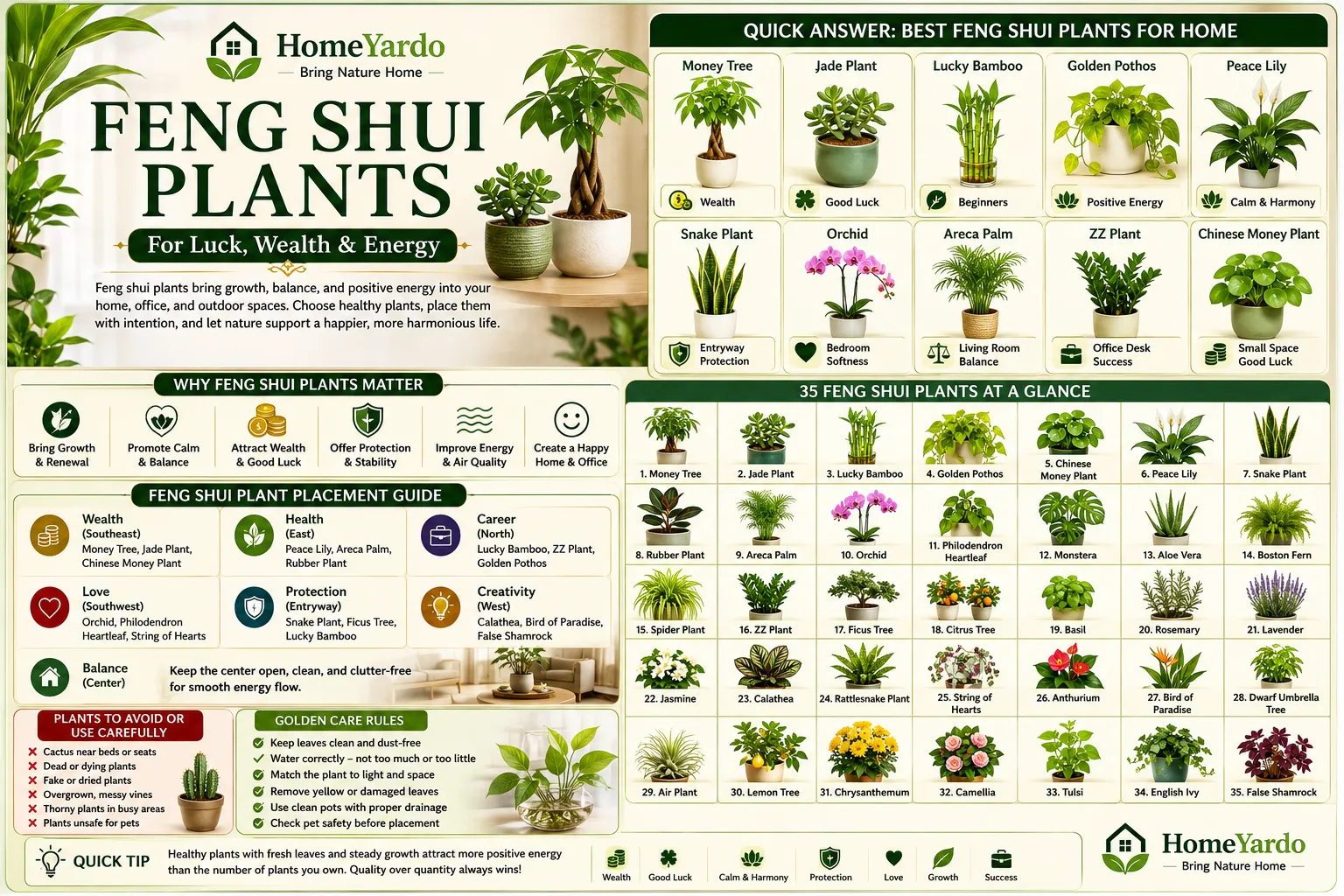
The most effective feng shui-friendly plants for homes are safe, easy to set up and are suited to the space in which they are planted. Money Tree, Jade Plant, Lucky Bamboo, Golden Pothos, Peace Lily, Snake Plant, Orchid, Areca Palm, ZZ Plant along with Chinese Money Plant are strong selections for homes of all kinds.
| Best For | Plant |
|---|---|
| Overall, feng shui use | Money Tree |
| Wealth | Jade Plant |
| Good luck | Lucky Bamboo |
| Beginners | Golden Pothos |
| Positive energy | Peace Lily |
| Entryway protection | Snake Plant |
| Bedroom calm | Orchid |
| Living room balance | Areca Palm |
| Office desk | ZZ Plant |
| Small spaces | Chinese Money Plant |
A clean pot, fresh leaves, and steady growth matter more than filling every corner with greenery. Start with one plant that fits the light and space, then add more only when the care routine is easy to maintain.
For a fast choice, use Money Tree for wealth, Lucky Bamboo for good luck, Peace Lily for calm, Snake Plant for entryway protection, ZZ Plant for office desks, and Orchid for bedroom softness.
What Are Feng Shui Plants?

The concept of feng shui for plants is to have either outdoor or indoor plants set in order to enhance the feeling and flow of the space. They can be used to soften sharp edges or refresh areas that have become dull as well as brighten the entrances and create a sense of growing indoors. In Feng Shui, living plants are tied to wood energy. Wood energy is usually associated to renewal, flexibility as well as steady growth and upward mobility.
A decorative plant fills space. A feng Shui plant is picked for its reason, carefully placed, and cared for so that it looks vibrant and well-balanced. Feng Shui plants should fit the room. The plant that requires light should not be kept in an unlit hallway. Large palms should not overtake a bedroom with a small space. The best result is achieved by the right meaning and practical care.
Feng Shui indoor plants are commonly utilized in living spaces as well as bedrooms, offices and bathrooms, kitchens and even in entryways. Outdoor plants can help to support the entrance, porch balcony, patio and garden energy if they are healthy, clean and well-placed.
What Makes A Plant Good For Feng Shui?

A feng shui-friendly plant will usually have healthy green leaves, a steady development, as well as a design that makes it feel at ease in the room. Soft, round, heart-shaped or coin-shaped leaves are typically recommended for general house placement.
The most effective choices typically include:
- Green healthy leaves
- The heart-shaped, rounded or coin-shaped foliage
- Smooth or upright growth
- Cleanse the pot and the soil
- The size of the space
- Light requirements that correspond to the site
- There are no dead leaves, polluted foliage or soggy soil
Certain plants require careful arrangement. Sharp spines close to beds and huge pots in narrow hallways as well as crowded vines and dying or yellowing plants could make a room feel less serene.
A Snake Plant can be a good choice in the vicinity of an office or entryway and a cactus in front of the bed could be unnatural in a peaceful space. The plant should be designed to complement the room and not create visual stress or create obstructions, visual pressure or clutter.
35 Feng Shui Plants At A Glance
This table provides 35 examples of fengshui that are not repeated. Make use of it to assess the intent location, lighting, maintenance level and pet safety prior to selecting the right plant.
| Often considered pet-friendly | Best Use | Best Placement | Light Need | Care Level | Pet Safety Note |
|---|---|---|---|---|---|
| Money Tree | Wealth and prosperity | Southeast, wealth corner, office | Bright indirect light | Easy to moderate | Keep away from pets that chew |
| Jade Plant | Money, luck and business growth | Living room, office, low-light area | Bright light | Easy | Toxic to cats and dogs |
| Lucky Bamboo | Luck and growth | Office, desk, east, southeast | Low to bright indirect light | Easy | Keep out of pet’s reach |
| Golden Pothos | Abundance and easy care | Shelves, corners, office | Low to medium indirect light | Very easy | Toxic to cats and dogs |
| Chinese Money Plant | Coin leaf symbolism | Bright shelf, wealth area | Bright indirect light | Easy | Usually pet safer, confirm the variety |
| Peace Lily | Calm and harmony | Living room, office, low light area | Low to medium indirect light | Easy | Toxic to cats and dogs |
| Snake Plant | Protection and focus | Entryway, office, hallway | Low to bright indirect light | Very easy | Toxic to cats and dogs |
| Rubber Plant | Stability and prosperity | Living room, east, southeast | Bright indirect light | Moderate | Sap can irritate pets |
| Areca Palm | Soft home energy | Living room, dining room, entry | Bright indirect light | Moderate | Often used in pet-conscious homes |
| Orchid | Love and beauty | Bedroom, relationship area | Bright indirect light | Moderate | Often considered pet-friendly |
| Philodendron Heartleaf | Gentle relationship energy | Bedroom, shelf, living room | Medium indirect light | Easy | Toxic to cats and dogs |
| Monstera | Expansion and bold growth | Living room, bright corner | Bright indirect light | Moderate | Toxic to cats and dogs |
| Aloe Vera | Protection and healing symbolism | Bright kitchen or sunny window | Bright light | Easy | Toxic to cats and dogs |
| Boston Fern | Softness and humidity | Bathroom, shaded porch | Medium indirect light | Moderate | Often considered pet friendly |
| Spider Plant | Family balance and freshness | Bathroom, kitchen, hanging basket | Bright indirect light | Easy | Often considered pet friendly |
| ZZ Plant | Office resilience | Desk, office corner, low light | Low to medium indirect light | Very easy | Toxic if chewed |
| Ficus Tree | Growth and structure | Entryway, living room | Bright indirect light | Moderate | Can irritate pets |
| Citrus Tree | Abundance and brightness | Porch, patio, bright room | Full sun or very bright light | Moderate | Fruit and oils may bother pets |
| Basil | Kitchen luck and growth | Kitchen window, outdoor pot | Bright light | Easy | Usually safe in small amounts |
| Rosemary | Clarity and memory | Kitchen, patio, sunny spot | Bright light | Moderate | Usually safe in small amounts |
| Lavender | Calm and protection | Bedroom window, porch | Bright light | Moderate | Can upset pets if eaten |
| Jasmine | Love and gentle fragrance | Bedroom, sunny room | Bright indirect to bright light | Moderate | Check the exact species |
| Calathea | Calm patterned foliage | Bedroom, living room | Medium indirect light | Moderate | Often considered pet-friendly |
| Rattlesnake Plant | Movement and pattern | Living room, bright indirect light | Medium indirect light | Moderate | Often considered pet-friendly |
| String Of Hearts | Love and small space styling | Bedroom, shelf, hanging pot | Bright indirect light | Easy | Usually low concern, confirm variety |
| Anthurium | Heart-shaped symbolism | Relationship area, bright room | Bright indirect light | Moderate | Toxic to cats and dogs |
| Bird Of Paradise | Growth and creativity | Tall living room corner | Bright light | Moderate | Toxic to cats and dogs |
| Dwarf Umbrella Tree | Prosperity and office greenery | Office, bright corner | Bright indirect light | Moderate | Toxic to cats and dogs |
| Air Plant | Compact desk energy | Desk, shelf, small apartment | Bright indirect light | Easy | Keep away from curious pets |
| Lemon Tree | Freshness and abundance | Bright entrance, patio | Full sun | Moderate | Citrus can bother pets |
| Chrysanthemum | Joy and front door color | Porch, entryway | Bright light | Moderate | Toxic to cats and dogs |
| Camellia | Balance and welcome | Front garden, shaded entry | Partial shade | Moderate | Generally low concern |
| Tulsi | Spiritual doorway symbolism | Sunny entry, balcony | Bright light | Easy to moderate | Usually safe in small amounts |
| English Ivy | Soft trailing green | Shelf, bathroom, entry shelf | Medium indirect light | Moderate | Toxic to cats and dogs |
| False Shamrock | Creativity and warmth | Office, bright desk area | Bright indirect light | Easy | Toxic to cats and dogs |
A plant table helps narrow options quickly, but final placement should still depend on light, watering needs, temperature, pet access, and room size.
Best Feng Shui By Goal

Different objectives require different dimensions, shapes and locations. Follow the short notes below to help you choose the right plant for an area.
To increase wealth, select Money Tree, Jade Plant For wealth, choose a Jade Plant, Money Tree, and Chinese Money Plant. These are the most popular money-making plants since they are typically associated with prosperity, coin-shaped leaves or continuous growth.
If you want to have luck, go with Lucky Bamboo, Jade Plant as well as Golden Pothos. These are great plants for the home. are simple to put on shelves, in offices or entrance areas.
To create a peaceful space, select Peace Lily, Orchid, or Calathea. These plants that are positive in energy have soft shapes and a more gentle aesthetic.
To focus on office work, pick ZZ Plant, Lucky Bamboo for office focus, as well as Snake Plant. The office feng shui plants are small, organized and simple to handle.
For entranceways, pick Snake Plant, Ficus Tree For entryways, choose Ficus Tree, Snake Plant, and Jade Plant. These plants can help define the entrance while not overwhelming the space.
For a bedroom with a soft, romantic feel, pick Orchid, Jasmine, or String of Hearts. They are best suited when the space is well-lit with lighting, and the plant doesn’t take up too much space.
If you live in areas with low light, consider ZZ Plant, Snake Plant and Golden Pothos. Low light doesn’t mean no light, however these plants are tolerant of indoor conditions better than other varieties.
For homes with pets, begin by introducing Areca Palm, Boston Fern, Calathea, Rattlesnake Plant or Orchid and confirm the botanical name prior to purchasing.
Common Money Plant Confusion

The expression “money plant” could refer to different types of plants in different areas. People use it to make Money Tree, some use it to cultivate Jade Plant, some use it to grow Chinese Money Plant, and some use it for Golden Pothos.
Money Tree generally refers to Pachira aquatica. It is usually used for wealth, prosperity, and office space.
Jade Plant usually means Crassula Ovata. It is often associated to business luck desk placement, as well as entrance symbolism.
Chinese Money Plant usually means Pilea peperomioides. The leaves’ circular shape is linked with the symbolism of a coin-shaped wealth.
Money Plant usually means Golden Pothos throughout many areas. It is among the easiest indoor plants to cultivate prosperity and luck themes.
For those who are new to gardening, Golden Pothos is often the simplest money plant to care for. Jade Plant and Chinese Money Plant require more light to remain healthy and compact. Money Tree works best when there is enough room to accommodate an even taller plant.
Money Attracting Plants

Plants that can bring in cash are typically chosen for round leaves, coin-shaped leaves that grow steadily or a lasting connection to prosperity. These plants are typically situated in the southeast or in a bright office corner, or the left-hand side of the entrance of a room.
The most powerful plants that attract money include Money Tree, Jade Plant, Chinese Money Plant, Golden Pothos, Rubber Plant, Citrus Tree, and Lemon Tree. They are also commonly used to attract wealth, plants to boost prosperity, as well as plants to attract luck and money in a variety of feng shui-inspired houses.
Money Tree is a strong option for your living room or office corner. It requires bright indirect light and shouldn’t be placed in water.
Jade Plant is a strong desk plant or an entry plant when there is bright lighting. The leaves’ rounded shape is often connected to coin-shaped symbols of money.
Chinese Money Plant works well on side tables, shelves and in bright windows. Make sure to rotate it regularly so it maintains a form that is balanced.
Golden Pothos is one of the easiest plants to prosper on corners and shelves. It can grow quickly, but it is best to keep it far from pets.
Rubber Plant can be useful when it is necessary to have a bigger plant. It provides a solid complete appearance to your living area or workplace corner.
Citrus Trees as well as Lemon Tree work best outdoors in sunny areas, on porches with sun, as well as in sunny indoor areas. Fruiting plants are typically associated with abundance since they produce visible growth.
A plant that is struggling in the wealth zone transmits a wrong message visually. Select a plant for money that thrives in the illumination of the space.
Plants That Bring Positive Energy

The plants that are positive in energy are generally delicate healthy and simple to take in visually. They can make a space feel more relaxed, refreshed and more balanced if they are placed in a light-filled space.
The best energy plants are Peace Lily, Areca Palm, Orchid, Calathea, Boston Fern, Philodendron Heartleaf, Jasmine, and Lavender. They are commonly utilized as plants that provide positive energy due to their gentleness, greenery or soft scent.
Peace Lily works well in quiet offices and living rooms with indirect lighting. It should not be planted in muddy soil and must be kept out of the reach of pets.
Areca Palm adds softness to bigger spaces. It is ideal for the living room or dining area, or in a bright entryway.
Orchids are often used to symbolize beauty as well as love and relationships. It is most effective in indirect, bright light.
Calathea as well as Rattlesnake Plant add movement through patterns on the leaves, without being harsh or sharp.
Boston Fern softens bathrooms, shaded porches, and humid corners. It requires more water than a lot of simple indoor plants.
Jasmine and Lavender can help to create a calm mood with their scents, the fragrances must be carefully chosen. A strong scent near the sleeping area can disturb sleep for some.
Plants that bring positive energy shouldn’t take up the space. Allow each plant to breathe, keep the leaves tidy, and take away damaged leaves quickly.
Feng Shui Plant Placement

Feng Shui plant placement links the significance of the plant with the intention of the room. Wealthy plants are typically located to the east or the far left-hand corner of wealth. The plants that are calm work best in living and bedroom spaces. The plants that protect you from the sun can be used to support entranceways and hallways.
There are two commonly used methods of placement.
Compass-based fengshui usually connects the southeast to prosperity The east is linked to health The north is linked to career and the southwest with love.
The doorway technique uses the entrance to the room as the point of entry. In this way, the left-hand corner of the entryway is typically considered to be the wealth area.
Make use of these easy placement notes:
- Wealth: Southeast or the left-hand corner, featuring Money Tree, Jade Plant or Chinese Money Plant
- Health: East area that includes Peace Lily, Areca Palm or Rubber Plant
- Career: North or desk space that is equipped with Lucky Bamboo, ZZ Plant or Pothos
- Love: Southwest or relationship area Orchid, Philodendron Heartleaf, or String of Hearts
- Security: hallway or entryway equipped with Snake Plant, Ficus Tree or Lucky Bamboo
- Creativity West or Study Corner and Calathea, Bird of Paradise or False Shamrock
- Balance: The center of the home should be kept clean, free of clutter and easy to move around
What is the best location for plants to be placed in the house, feng Shui is dependent on meaning as well as the possibility of survival. Plants that require bright light shouldn’t be put in a dark area just because the map states so. Transfer the plant to the most convenient place where it can thrive effectively.
Room By Room Feng Shui Plant Guide

Room function matters. A plant that works beautifully in a living room may not suit a bedroom, bathroom, or desk. Choose plants by light, space, room activity, and the feeling each area should support.
| Room | Best Plants | Why They Fit | Avoid |
|---|---|---|---|
| Living room | Areca Palm, Rubber Plant, Money Tree | Adds fullness and softness | Too many large pots |
| Bedroom | Orchid, Jasmine, String Of Hearts | Softer mood | Spiky or oversized plants |
| Bathroom | Boston Fern, Spider Plant, Pothos | Handles humidity | Dry-loving plants |
| Kitchen | Basil, Rosemary, Aloe Vera | Fresh growth near food prep | Plants near the heat |
| Office | Lucky Bamboo, ZZ Plant, Jade Plant | Focus and growth | Messy trailing vines on the desk |
| Entryway | Snake Plant, Ficus Tree, Jade Plant | Strong first impression | Plants blocking the door |
| Balcony or porch | Citrus, Lavender, Camellia | Outdoor abundance | Dead pots or dry planters |
A room-by-room plan prevents plant clutter. It also makes placement easier because each room has a clear job.
Lucky Plants For Home

Plants for the home should be easy to keep healthy and pleasant to look at every day. The best choices bring greenery without making the room feel crowded or difficult to maintain.
Strong good luck plants for the home include Money Tree, Lucky Bamboo, Jade Plant, Golden Pothos, Peace Lily, Snake Plant, Orchid, and Areca Palm. These lucky house plants bring wealth, good luck, calm, protection, and balanced home energy.
For living rooms, Areca Palm, Rubber Plant, Money Tree, and Peace Lily work well because they have a fuller presence. For shelves, Golden Pothos, Chinese Money Plant, and String of Hearts are better choices.
For entryways, Snake Plant, Lucky Bamboo, Jade Plant, and Ficus Tree can create a stronger first impression. These plants inside the house should sit to the side rather than block the doorway.
In small homes, choose compact feng shui plants for the home, such as Lucky Bamboo, Chinese Money Plant, Air Plant, or small Jade Plant. In larger homes, use Money Tree, Areca Palm, Rubber Plant, or Ficus Tree where there is enough space.
A lucky plant for the house should not interrupt movement. Avoid placing large pots in narrow walkways, behind doors, or too close to seating.
Feng Shui Plants For Bedroom

Best plants for bedroom feng shui should feel gentle, clean, and restful. Bedroom plants are not automatically bad, but they should be chosen with more care than plants for living rooms or offices.
Good bedroom choices include Orchid, Jasmine, Lavender, String Of Hearts, Philodendron Heartleaf, small Peace Lily, and Calathea. These plants have softer forms, flowers, trailing stems, or calm foliage that can suit a restful room.
Keep the number of bedroom plants low. One or two healthy plants are usually enough for a small room. Avoid large, spiky, messy, or strongly scented plants near the bed.
Plants for the bedroom should also match the room’s light. A bright bedroom window may suit Orchid, Lavender, or Jasmine. A lower light room may work better with Peace Lily or a small Philodendron Heartleaf.
Best Bedroom Plant Placements
Bedroom plants should sit where they add calm without disturbing sleep or movement. A dresser, bright windowsill, shelf, or small plant stand often works better than a crowded bedside table.
Good placements include a dresser away from the pillow, a bright window, a shelf where leaves do not touch the bed, or a balanced pair of small plants if the room has enough space.
A pair of small Orchids or matching String Of Hearts plants can support relationship symbolism when the room has enough light and surface space.
Keep plants away from walkways, air vents, bedding, and areas where leaves may brush against the face during sleep.
Bedroom Plants To Use Carefully
Some bedroom plants need more caution because of their shape, scent, size, or care needs. Strong fragrance, sharp leaves, and oversized plants can make a bedroom feel less restful.
Use strongly scented plants carefully because they may disturb sleep. Use oversized plants carefully because they can crowd small rooms. Use sharp leaf plants away from the bed.
Messy trailing plants should stay trimmed. Bright light plants should only be used if the bedroom has enough natural light.
Bedroom plants should look soft, clean, and easy to maintain. A calm bedroom needs open space as much as greenery.
Feng Shui Plants For Office

Plants for office spaces should support focus, steady growth, and a cleaner work environment. The best office feng shui stays compact, tolerates indoor light, and does not create clutter around screens, papers, or meeting areas.
Good office choices include Lucky Bamboo, Jade Plant, ZZ Plant, Snake Plant, Golden Pothos, Peace Lily, Air Plant, Dwarf Umbrella Tree, and Rubber Plant.
Place larger office plants in corners, near entrances, or beside seating areas where they soften the room without blocking movement. A Rubber Plant or Dwarf Umbrella Tree can suit a bright office corner. Snake Plant works well near doors and hallways.
Lucky plants for business, the Jade Plant and Money Tree are common choices. Keep them in clean pots and avoid overwatering. A weak plant on a desk can make the area feel neglected.
Best Office Plant Placement
Office plant placement should support focus without adding clutter. A desk plant should stay small. A reception plant can be larger because it has more room to create a first impression.
Use Lucky Bamboo, ZZ Plant, or Air Plant on a desk. These plants are small and low-cluttering.
Use Rubber Plant, Ficus Tree, Areca Palm, or Money Tree in reception areas. These plants create a stronger first impression.
Use Peace Lily or Snake Plant in meeting rooms. They add calm, structure, and clean vertical shape.
Use ZZ Plant or Snake Plant in low-light office corners. They tolerate indoor conditions better than many plants.
Lucky Plants For Office Desk
Plants for the office desk should be small, tidy, and easy to care for. Lucky Bamboo, Jade Plant, ZZ Plant, Air Plant, and small Golden Pothos are strong choices.
Lucky Bamboo supports growth and should be kept in clean water. Jade Plant supports business luck but needs bright light. ZZ Plant is better for low-light desks. Air Plant suits tiny desks and shelves. Golden Pothos works better on a nearby shelf where vines can stay tidy.
The southeast area of a desk is often used for wealth symbolism. A small plant can also sit on the left side of the desk if the goal is growth and active energy.
Keep the plant away from keyboards, cords, papers, and hot laptop vents.
Lucky Bamboo Stalk Meanings
Lucky Bamboo is popular for office feng shui because it stays compact and can grow in a simple container. Stalk counts are traditionally linked with different meanings.
Two stalks are linked with love and partnership. Three stalks are linked with happiness and long life. Five stalks are linked with wealth or balanced life areas. Six stalks are linked with smooth luck and progress. Eight stalks are linked with growth and abundance. Nine stalks are linked with good fortune.
These meanings are symbolic. Clean water, healthy stalks, and bright indirect light matter more than the number alone.
Plants For Business Reception Areas
Reception areas need plants that look clean, stable, and welcoming. The best choices are usually upright, full, and easy to maintain.
Good reception plants include Rubber Plant, Ficus Tree, Areca Palm, Money Tree, Dwarf Umbrella Tree, and Snake Plant. These plants can frame seating areas, soften corners, and make the entrance feel more cared for.
Avoid plants that drop leaves often, smell too strongly, or block walking paths. A business entrance should feel open, organized, and easy to move through.
Feng Shui Front Door Plants

Feng shui front door plants are used to make the entrance feel clean, welcoming, and alive. The front door is treated as a major point where energy enters the home, so plant health and placement matter.
Good feng shui for front door placement includes Lucky Bamboo, Jade Plant, Chinese Money Plant, Snake Plant, Ficus Tree, Areca Palm, Citrus Tree, Lemon Tree, Chrysanthemum, Camellia, and Lavender.
Front door plants feng shui placement should not block the door, steps, or walkway. Plants should frame the entrance, not crowd it.
For an apartment hallway, use Lucky Bamboo, Snake Plant, or Jade Plant. Keep the plant compact and away from the door swing.
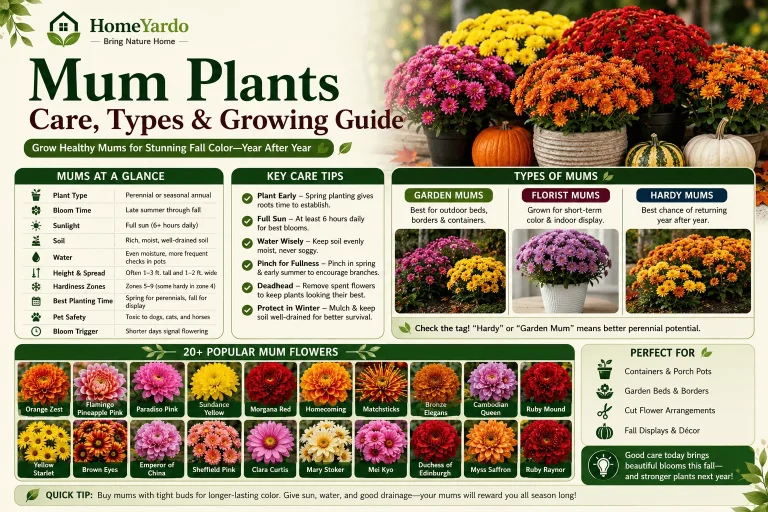
For a bright indoor entry, use a Chinese Money Plant or a Rubber Plant on a clean side table or plant stand. For a sunny porch, use Lemon Tree, Citrus Tree, Lavender, Rosemary, or Basil in well-drained pots. A seasonal mum plant can also add front-door color when the porch has enough light, and the container does not block the walkway.
For a shaded porch, use Camellia, Fern, or Ficus Tree if the climate allows. Match the plant to shade and airflow. For wide front steps, paired planters can work well if the path stays clear.
Lucky plants in front of the house should look fresh and cared for. Remove dead planters, cracked pots, weeds, and dry leaves. Avoid thorny, oversized, or messy plants directly in the doorway path.
Front house lucky plants should match the climate. Citrus and Lavender need sun. Camellia prefers shade. Ficus and Areca Palm need warmth. Choose by real conditions first.
Feng Shui Outdoor Plants

Outdoor plants can support balconies, gardens, porches, patios, and front steps. They should match the local climate, sun exposure, wind, and watering routine.
Strong outdoor choices include Citrus Tree, Lemon Tree, Camellia, Chrysanthemum, Lavender, Rosemary, Basil, Tulsi, Ficus Tree in warm climates, and Areca Palm in warm climates.
Outdoor plant placement should keep entrances open and pathways clean. Empty pots, dry soil, and broken containers near the front of the home can make the space feel neglected. For larger outdoor boundaries, privacy plants can support a calm garden layout while adding screening, structure, and natural separation.
Outdoor Plants That Bring Money And Good Luck
Outdoor plants that bring money and good luck often have fruit, fragrance, bright flowers, or steady evergreen growth. Citrus Tree and Lemon Tree are linked with abundance because they produce fruit.
Lavender and Rosemary add scent and structure. Basil and Tulsi work well in sunny pots near kitchens, balconies, or entries. Camellia and Chrysanthemum add color near a front path or porch.
Choose outdoor plants by light first. A money plant idea will not work well if the plant cannot survive in the chosen spot.
Balcony And Patio Plant Placement
Balconies and patios need plants that fit the space without blocking doors, chairs, or walking paths. Use corners, rail planters, shelves, or compact stands.
Good balcony and patio choices include Lemon Tree, Citrus Tree, Basil, Rosemary, Tulsi, Lavender, Camellia, and small Ficus in warm climates.
Keep heavy pots stable, especially in windy areas. Avoid placing thorny plants where people brush past them. Use fewer, healthier plants instead of many crowded containers.
Feng Shui Garden Plants
Garden plants should support a balanced entrance, open walking path, and healthy growth around the home. Front gardens should feel welcoming rather than overgrown.
Good plants for a front path include Camellia, Chrysanthemum, Lavender, and Rosemary. Keep them trimmed and away from the walking line.
Good plants for a sunny border include Lavender, Rosemary, Basil, Tulsi, Lemon Tree, and Citrus Tree. These need stronger light and good drainage.
Good plants for a shaded entry include Fern and Camellia. They should stay clean, full, and free from dry leaves.
Warm climate corners can support the Areca Palm or the Ficus Tree. These add height and structure where there is enough space.
For small patios and balconies, use fewer pots with healthier plants. A pair of balanced planters near the entrance can look better than many mismatched containers.
Indoor Feng Shui Plants

Indoor feng shui is useful for apartments, bedrooms, living rooms, offices, kitchens, bathrooms, and shelves. They work best when the plant fits the room rather than forcing a symbolic choice into the wrong condition.
Good indoor choices include Golden Pothos, ZZ Plant, Peace Lily, Snake Plant, Lucky Bamboo, Chinese Money Plant, Rubber Plant, and Philodendron Heartleaf.
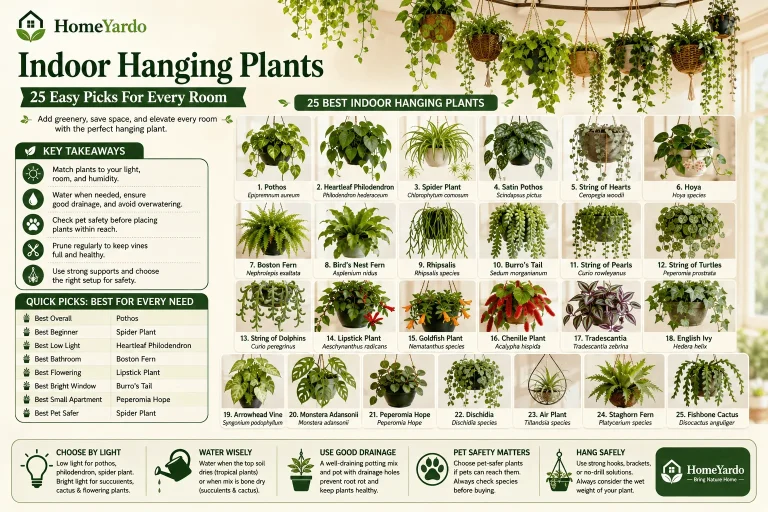
For low-care indoor plants, choose the ZZ Plant or the Snake Plant. For shelves, choose Golden Pothos or String of Hearts. For a soft room feel, choose Peace Lily or Calathea. For small spaces, choose the Chinese Money Plant or Air Plant. For wealth symbolism, choose Money Tree or Jade Plant. For more vertical styling ideas,indoor hanging plant options can help soften shelves, corners, and small rooms without crowding the floor.
Indoor plants for good luck should be kept clean and healthy. Dusty leaves reduce the fresh look of the plant. Wipe large leaves gently, remove yellow foliage, and rotate the pot for even growth.
Lucky indoor plants should also be placed safely. If pets or children can reach the leaves, check the plant by botanical name before buying or moving it into the room.
Plants To Avoid Or Use Carefully In Feng Shui

Some plants are better used with care because of their shape, condition, symbolism, or placement. That does not mean every cactus, bonsai, or artificial plant is forbidden. The concern is how the plant feels in the room and whether it looks healthy.
- Use cactus carefully because sharp spines can feel harsh indoors, especially near beds or seats.
- Use bonsai carefully because some practitioners see it as restricted growth symbolism. It can still work as art when it is healthy and intentionally placed.
- Use fake plants carefully because they do not bring living growth energy. If used, they should look realistic and stay clean.
- Use dried plants carefully because they can feel stale or lifeless in a room meant to feel fresh.
- Use overgrown vines carefully because they can create visual clutter when they are not trimmed.
- Remove or revive dying plants because they suggest neglect and weak energy.
- Move toxic plants out of pet reach. Safety matters more than symbolism.
If a favorite spiky plant is healthy and loved, it does not need to be thrown away. Move it to a brighter shelf, outdoor spot, or protective entry position where it feels suitable.
Feng Shui Plant Care Rules

Plant care is part of the feng shui result. A plant chosen for luck, wealth, or positive energy should look alive, clean, and stable.
Use these simple care rules:
- Remove yellow, dry, or damaged leaves quickly.
- Wipe dust from broad leaves.
- Match the plant to the room’s brightness.
- Avoid both dry stress and soggy soil.
- Replace cracked, dirty, or overcrowded pots.
- Rotate plants so leaves grow evenly.
- Repot when roots are packed or unhealthy.
- Keep tropical plants away from cold doors and vents.
- Move risky plants out of pet reach.
- Replace plants that cannot recover.
A simple routine keeps plant care easier. Check soil, remove yellow leaves, and wipe dust weekly. Rotate pots and inspect pests monthly. Move plants seasonally if sun, heat, or drafts change.
Healthy plants do not need perfect styling. They need the right light, enough space, clean leaves, and steady care.
Feng Shui And Pet Safety

Pet safety should be checked before choosing plant placement. Many common plants used for feng shui are unsafe for cats or dogs if chewed, including Pothos, Peace Lily, Jade Plant, Snake Plant, Aloe Vera, Rubber Plant, and Monstera.
Common names can be confusing, so botanical names help when checking safety. A plant sold under a lucky name may still be risky for pets.
For cat homes, better starting choices include Areca Palm, Calathea, Boston Fern, Rattlesnake Plant, and Orchid. Use Pothos, Peace Lily, Jade Plant, and Monstera with caution.
For dog homes, better starting choices include Spider Plant, Boston Fern, Orchid, Areca Palm, and Calathea. Use Snake Plant, Aloe Vera, Rubber Plant, and Jade Plant with caution.
For desk plants near pets, Air Plant and Lucky Bamboo kept safely may work better than Jade or Pothos within reach.
Pet safety should be verified by botanical name because common names vary by region. If a pet chews a plant and shows vomiting, drooling, swelling, weakness, or unusual behavior, contact a veterinarian or poison helpline.
Place risky plants high, behind barriers, or in rooms pets cannot access. Even lower-risk plants should be moved if a pet likes chewing leaves.
Best Feng Shui By Need

Different homes need different plants. For a beginner, it is possible to have more tolerant plants, whereas the entranceway could require plants that love sun. A pet-friendly home requires plants that are safe prior to the symbolism.
Use the categories below to narrow down the most effective choices without having to look through the plant table over again.
Best For Beginners
Golden Pothos, ZZ Plant, Snake Plant, and Lucky Bamboo are the best Feng Shui for those who are just beginning. They are tolerant of typical indoor conditions and do not require extensive maintenance.
Golden Pothos works well on shelves and in corners. ZZ Plant is useful in office spaces and rooms with less light. Snake Plant works well in entrances and hallways. Lucky Bamboo stays compact for small tables and desks.
Best For Low Light
ZZ Plant, Snake Plant, Golden Pothos, and Peace Lily are better low-light options than sun-loving herbaceous as well as citrus plants. They are tolerant of the lower brightness of indoors, however they require some lighting.
A lack of light doesn’t mean there is no light. If your room lacks a window or has only artificial light, you can rotate your plants to brighter spots or make use of a suitable grow light.
Best For Small Apartments
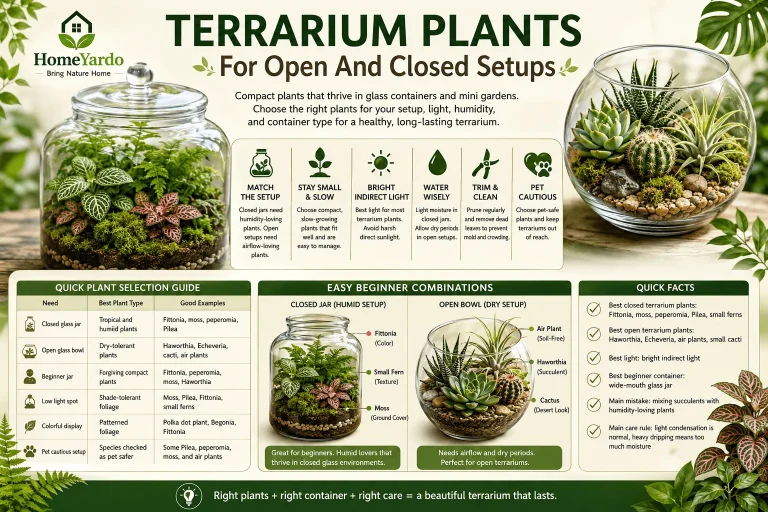
Chinese Money Plant, Air Plant, String Of Hearts, Lucky Bamboo, and smaller Jade Plant are good choices for apartments with small spaces. They are suitable for desks, shelves, windowsills, and small plant stands. They fit shelves, desks, windowsills, and compact plant stands. For compact glass displays, air plants for terrariums are a low-space option that can fit desks, shelves, and bright apartment corners.
Smaller apartments work best when you have fewer plants. Avoid pots with large dimensions that hinder circulation or make the room appear overcrowded.
Best For Pet Conscious Homes
Areca Palm, Orchid, Boston Fern, Calathea, and Rattlesnake Plant along with Spider Plant are great places to start for homes that are pet-friendly. These are usually picked when dogs or cats are allowed to live in the same space.
The safety of plants can differ based on the species and the pet’s behavior. Make sure to verify the plant’s name before purchasing, and keep even safer plants away from reach if your pet is fond of chewing on leaves.
Best For Renters
Renters typically require smaller, lightweight and low-stress plants. Lucky Bamboo, Air Plant, Chinese Money Plant, Golden Pothos, and ZZ Plant are all good choices.
They can be positioned on windowsills, desks, shelves as well as small stands, without the need for permanent fixtures. Make use of pots with light weights that are able to move easily during cleaning or relocating.
Best For Busy Homes
The most crowded homes require plants that are tolerant of simple routines for care. ZZ Plant, Snake Plant, Golden Pothos, and Lucky Bamboo are strong options.
These plants are more gentle than a lot of flowers or fruiting plants. Maintain them in the right light keep them dry, don’t overwater and inspect leaves every week to check for damage or dust.
Common Mistakes With Feng Shui
Feng Shui mistakes that are common typically stem from choosing symbolic meaning instead of actual care. The plant must be suitable for the space first.
- Don’t buy just for the sake of luck. Make sure you are aware of light, space and other requirements before deciding on the plant.
- Do not ignore the health of your plants. Healthy plants with fewer problems are better than weak plants.
- Be sure to not block the front entrance. Plants for entry should be kept to the sides so that the door opens fully.
- Beware of overcrowded bedrooms. Choose one or two tranquil plants instead of a large number of pots.
- Avoid keeping dead leaves. Cut off damaged foliage as quickly as possible.
- Avoid fake plants with dust. Make sure to clean them regularly or select living plants that will thrive.
- Do not put a cactus in the bed. Relocate spiky plants to a more suitable spot.
- Do not forget to ensure your pet’s security. Verify the names of the plants prior to placement.
- Avoid confusion with plants that are a source of money. Know the exact plant’s name prior to taking care of.
- Avoid indoor use of outdoor plants to get more sunlight or more airflow.
- Do not leave any water in the saucers. Clean out saucers after watering to avoid root issues.
- Be careful not to put more than one plant in one place of wealth. A couple of healthy plants will look better than a display that is crowded.
- Don’t throw away the labels of plants. Save botanical names for future maintenance and safety checks.
- Beware of ignoring seasonal changes in light. Plants should be moved as the sun changes throughout the year.
The ideal placement is easy, neat and practical. If plants cause tension, clutter or is causing extra work relocate it or select the best one.
How To Choose The Right Feng Shui Plant
Selecting the best feng Shui plant is simpler when the end goal is to name of the plant. The first step is to determine the intention of the space, and then adapt the plant to the actual environment.
Follow this easy procedure.
- Prioritize the goal. The goal might include calm, wealth and focus, or protection love, growth.
- Examine the room again. Examine the lighting as well as humidity, space temperature and the amount of foot movement.
- Select a plant that will suit the conditions. Don’t choose plants in dark corners.
- Verify the safety of the plant before placing. Be aware of children’s and pets allergies, as well as plant toxicity.
- The plant should be placed in the bagua, room function or the flow of a doorway. Make sure that walkways, doors and desks are free of clutter.
- Maintain the plant by paying regular attention. Clean the leaves, trim the damaged growth, water it correctly and examine the plant regularly.
A carefully selected plant can enhance the appearance and feel of your room, without causing unnecessary clutter. Start with a single sturdy plant, and then grow more until the space is able to support the plants.
Conclusion
Feng shui is most effective when the plants are well-placed, healthy, and suitable for the room. Money Tree, Jade Plant, Lucky Bamboo, Golden Pothos, Peace Lily, Snake Plant, Orchid, Areca Palm, and ZZ Plant are excellent selections for many homes.
The best plant is determined by the purpose. Select Money Tree or Jade Plant for its wealth symbolism, Peace Lily or Areca Palm to bring calm, Orchid or String Of Hearts to soften the bedroom as well as Lucky Bamboo or ZZ Plant to focus on work.
Begin with a single primary goal, a healthy plant in a suitable spot. You can add more plants only if the lighting, space and maintenance routine are able to support the plants.
FAQ’s
Money Tree is one of the best all-around choices because it is traditionally linked with wealth, balance, and growth. For easier care, Golden Pothos, Lucky Bamboo, and ZZ Plant are also strong options. The best plant is the one that stays healthy in the room where it is placed.
Common placements include southeast or far left for wealth, east for health, north for career, and near the entrance for fresh energy. The plant should also match the room’s light, space, and temperature. A thriving plant in a practical spot is better than a weak plant in a symbolic corner.
Money Tree, Jade Plant, Chinese Money Plant, Golden Pothos, and Rubber Plant are common money and luck plants. They are often placed in a wealth area, office, entryway, or bright living room corner. Keep the plant clean and healthy, so it supports the feeling of growth.
Yes, healthy living plants are commonly used because they bring wood energy, growth, and softness into a space. They can help a room feel fresher and more balanced when placed carefully. Dead, dusty, or neglected plants should be removed or revived.
Dead plants, dried plants, dusty fake plants, and thorny plants near beds or seats are usually avoided. Cactus and bonsai can be used carefully, but placement matters. The main concern is whether the plant feels healthy, balanced, and suitable for the room.
Southeast is commonly linked with wealth in compass-based feng shui. In the doorway method, the far left corner of the room entrance is also used as the wealth area. A money plant should still be placed where it gets enough light to stay healthy.
Lucky Bamboo is traditionally associated with luck, growth, and resilience. Its meaning is symbolic, so it should be kept clean, healthy, and placed with care. Dirty water or yellow stalks weaken the fresh look people want from the plant.
There is no fixed number that works for every home. One healthy plant in the right place is better than many weak or crowded plants. Choose the number based on room size, light, and the time available for care.
Yes, bedroom plants can work when they are soft, healthy, and limited in number. Orchid, Lavender, Jasmine, String of Hearts, and Calathea are gentle choices. Avoid large, sharp, messy, or strongly scented plants too close to the bed.
No plant works instantly, but healthy green plants can quickly make a room feel fresher. Peace Lily, Areca Palm, Golden Pothos, and Lucky Bamboo are common choices for a softer feel. The effect is strongest when the plant is clean, well-placed, and easy to maintain.
Living plants are preferred because they represent growth and active energy. Fake plants can be used if they look realistic, stay clean, and do not gather dust. Avoid dried, faded, or dirty artificial plants because they can make a room feel stale.
Lucky Bamboo, Jade Plant, ZZ Plant, Air Plant, and small Golden Pothos are good desk choices. They stay compact and can support focus, growth, or prosperity symbolism. Keep desk plants tidy and away from keyboards, cords, and work equipment.
Cactus plants are often used carefully because sharp spines can feel harsh near beds, seats, or relationship areas. They do not need to be thrown away if they are healthy and loved. Place them outdoors, near strong light, or away from resting spaces.
Jade Plant, Snake Plant, Lucky Bamboo, Ficus Tree, and Citrus Tree are strong front door options. The best choice depends on light, space, and whether the plant is indoors or outdoors. A front door plant should welcome without blocking the entrance.
References
Good Housekeeping Feng Shui Plants
Homes & Gardens Feng Shui Plants