How To Create A More Welcoming And Functional Home Exterior
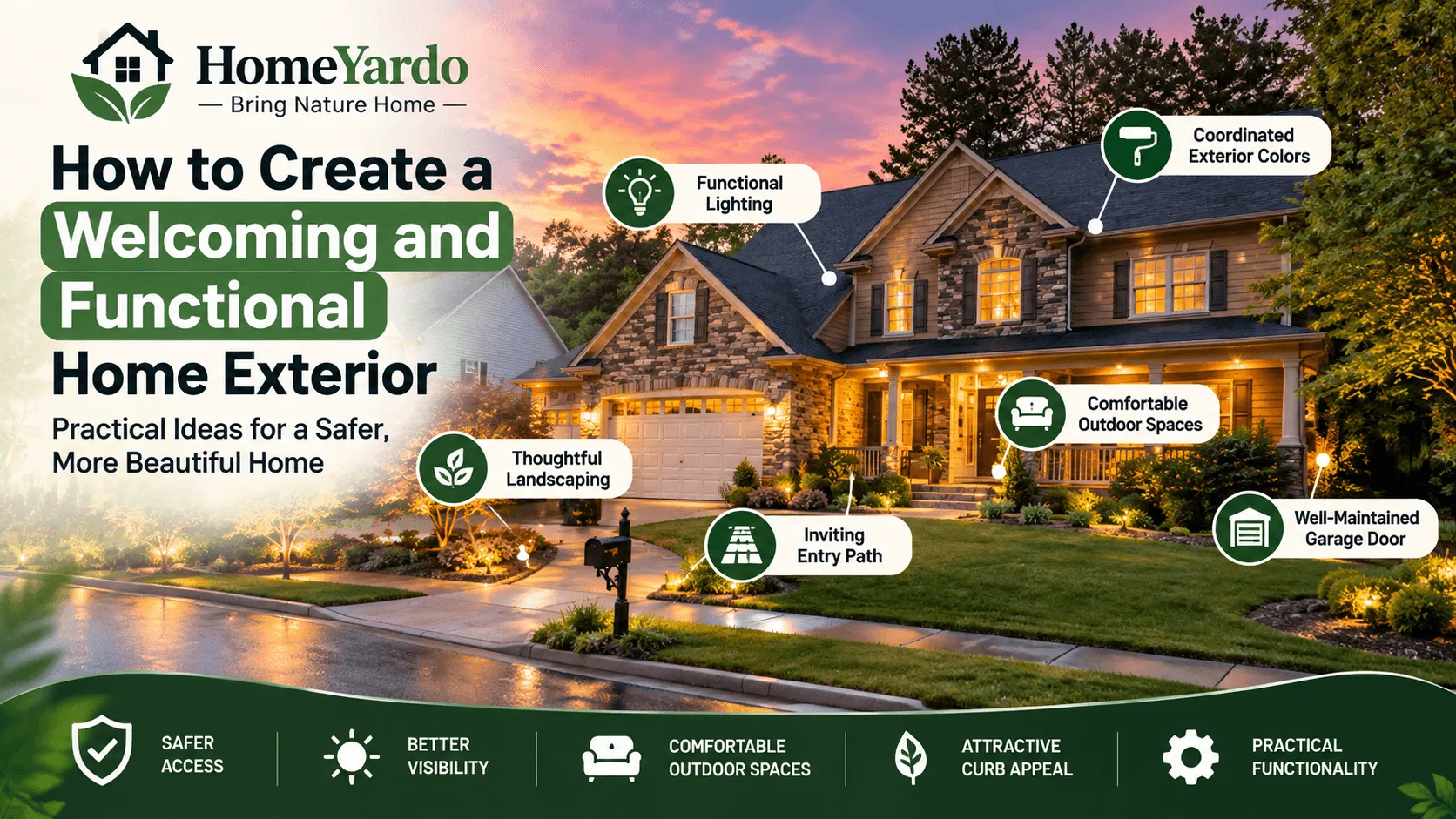
Your home’s exterior creates the first impression visitors have of your property. But a welcoming home exterior should do more than look attractive. It should also provide safe access, comfortable outdoor spaces, reliable lighting, and practical features that make everyday life easier.
For homeowners in Raleigh, North Carolina, exterior improvements also need to account for the local climate. Hot, humid summers, heavy rainfall, and occasional severe storms can gradually affect outdoor paint, wooden trim, lighting fixtures, and garage doors.
Fortunately, creating a more attractive and functional exterior doesn’t necessarily require an expensive renovation.
Thoughtful improvements to your entryway, outdoor lighting, landscaping, and garage can make a noticeable difference. The following ideas will help you decide where to start and which improvements deserve your attention.
Make Your Entry Path Clear and Inviting
Your front walkway is one of the first things visitors encounter when approaching your home. A clean, attractive, and accessible pathway can create a welcoming impression while making the entrance easier to navigate.
Uneven paving, overgrown plants, poor drainage, and inadequate lighting can make even an attractive home feel neglected.
Before purchasing new decorations or landscaping materials, inspect your existing pathway and address any problems affecting access.
Simple Ways to Improve Your Front Walkway
Consider these practical improvements:
- Repair uneven surfaces: Replace damaged pavers, repair cracks, and address uneven sections that create tripping hazards.
- Define pathway borders: Use edging materials, small shrubs, or suitable ground-cover plants to create a clear walking route.
- Remove obstructions: Trim overhanging branches and keep plants from spreading across frequently used walkways.
- Improve entrance visibility: Install suitable pathway lighting and ensure your house number is visible from the street.
- Add finishing touches: Place a durable outdoor mat near the front door and consider coordinating planters.
Choose landscaping materials that complement your home’s existing architecture rather than introducing several unrelated colors and textures.
Thoughtful planting can also connect your entrance to the surrounding landscape. If your front garden needs attention, consider improving your garden’s appearance through coordinated planting, defined borders, and manageable landscaping.
For frequently used pathways, prioritize stable surfaces that remain comfortable to navigate during wet weather.
Add Lighting That’s Both Functional and Warm
Outdoor lighting influences how your property looks after sunset. It also helps homeowners and visitors navigate steps, walkways, entrances, and driveways.
The goal is to illuminate important areas without making your exterior excessively bright.
A combination of entrance lights, pathway lighting, and strategically positioned accent fixtures can improve visibility while creating a comfortable atmosphere.
Where Outdoor Lighting Makes the Biggest Difference
Focus on locations where lighting improves both appearance and everyday usability.
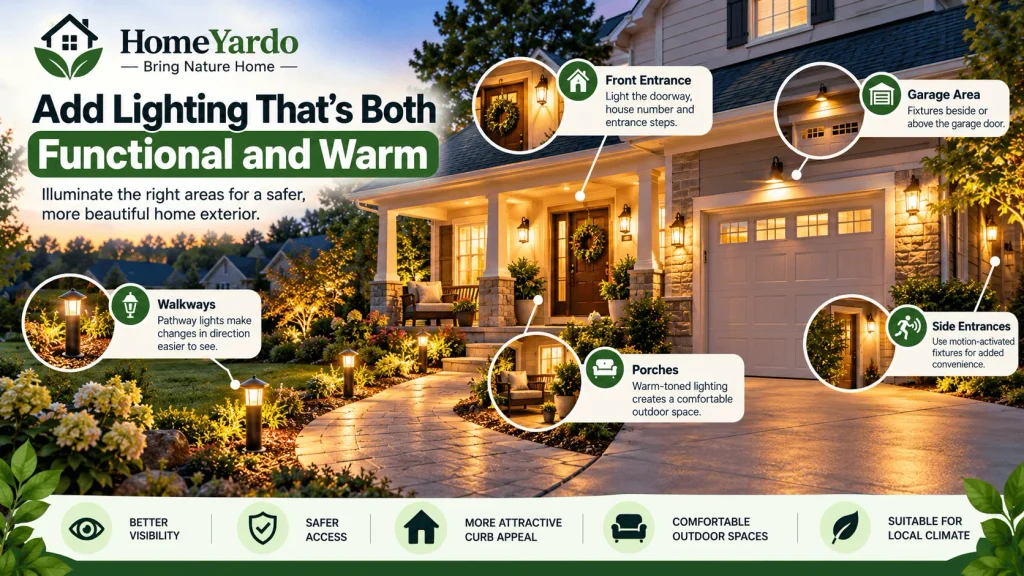
- Front entrance: Position exterior fixtures to illuminate the doorway, house number, and entrance steps.
- Garage area: Consider fixtures beside the garage door or above the entrance, depending on your home’s layout.
- Walkways: Use suitable pathway lights to make changes in direction and elevation easier to see.
- Side entrances: Motion-activated fixtures can provide convenient lighting when approaching less frequently used entrances.
- Porches: Warm-toned lighting can make outdoor seating areas more comfortable during the evening.
For a softer residential appearance, consider warm-white lighting rather than excessively bright, cool-white fixtures.
Choose outdoor fixtures with appropriate weather-resistance ratings. Raleigh’s humid summers and frequent rainfall make moisture protection particularly important.
Electrical installations should follow applicable local requirements. Hire a qualified electrician when new wiring or electrical modifications are necessary.
Choose Colors That Feel Warm Without Feeling Dated
Exterior colors influence how your home looks from the street. A coordinated color scheme can connect the siding, front door, trim, garage door, and surrounding landscaping.
You don’t need to repaint the entire house to create a noticeable improvement.
Refreshing a faded front door or updating worn trim may be enough to make your exterior appear better maintained.
The goal is to create a consistent appearance that complements your home’s architectural features.
Picking an Exterior Color Palette That Works Together
Start by examining the colors and materials already present on your property.
Consider these recommendations:
- Choose a primary exterior color that complements your roofing, siding, brick, or stone.
- Select a contrasting front door color to create a welcoming focal point.
- Coordinate your garage door with the overall exterior rather than treating it as an unrelated feature.
- Repeat selected accent colors through planters, outdoor furniture, or decorative accessories.
- Test paint samples outdoors before committing to a complete color change.
Natural colors, muted greens, warm neutrals, and carefully selected contrasting accents can work well with many residential architectural styles.
For Raleigh properties, prioritize exterior coatings suitable for humid conditions and the specific surface being painted.
Inspect wooden trim and siding for moisture damage before painting. Applying new paint over damp or deteriorating materials may conceal an existing problem without solving it.
Upgrade Small Details Around the Porch and Entry
Your front porch connects your home’s exterior appearance with its everyday functionality.
It’s where visitors pause, deliveries arrive, and household members enter or leave throughout the day.
Small upgrades can improve this area without changing its overall structure.
A comfortable seating arrangement, properly maintained entrance door, and clearly visible doorbell can all contribute to a welcoming entrance.
Porch and Entry Upgrades Worth Prioritizing
Consider making the following changes:
- Introduce practical seating: Add a weather-resistant bench or compact outdoor chair if sufficient space is available.
- Update worn hardware: Replace damaged door handles, outdated house numbers, or a malfunctioning doorbell.
- Inspect the screen door: Check its hinges, closing mechanism, and overall condition. Repair or replace damaged components when necessary.
- Refresh the entrance: Clean the door, remove cobwebs, and repair damaged trim.
- Check weatherstripping: Inspect door seals for gaps that allow drafts, insects, or moisture to enter.
Keep entrance decorations proportional to the available space.
Oversized furniture and decorative accessories can obstruct a narrow porch or make the entrance difficult to navigate.
Choose weather-resistant materials that can handle exposure to humidity and changing temperatures.
Keep Your Garage Door Working as Well as It Looks
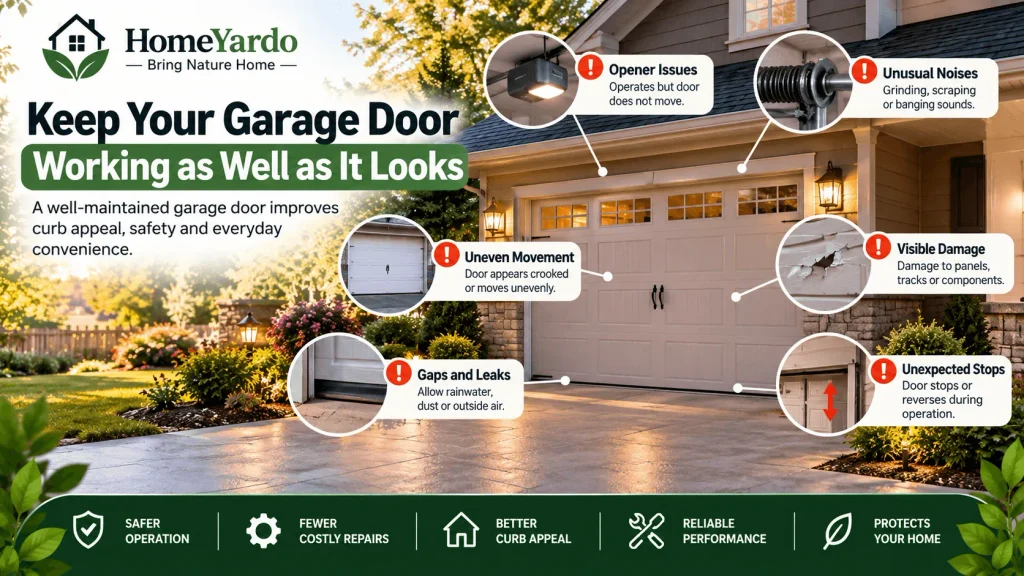
For many homes, the garage door occupies a substantial portion of the front exterior.
Its color, style, and condition can influence the property’s overall appearance. However, its mechanical performance deserves just as much attention.
A garage door that operates inconsistently can disrupt everyday routines and create safety concerns.
Routine visual inspections can help homeowners recognize problems before they become more serious.
Signs Your Garage Door Needs Attention
Watch for these common warning signs:
- Unusual grinding, scraping, or banging sounds during operation.
- Uneven movement or a door that appears crooked while opening or closing.
- Visible damage to panels, tracks, or other components.
- Gaps around the closed door that allow rainwater or outside air to enter.
- Unexpected stopping or reversing during operation.
- An opener that operates while the garage door remains stationary.
These symptoms can have different underlying causes. Avoid assuming that a noisy door simply needs lubrication or that uneven movement can be corrected through a minor adjustment.
If your garage door develops multiple warning signs, arrange a professional inspection.
Homeowners considering garage door repair in Raleigh, NC, can have a qualified technician assess the problem and determine whether repairs are appropriate.
Weather protection also matters. Damaged seals can allow moisture, dust, insects, and outside air to enter the garage.
If gaps appear around the door, inspect the condition of the existing seals. Understanding different types of garage door weather stripping can help you identify possible problems before purchasing replacement materials.
Never attempt to adjust garage door springs or cables yourself. These components operate under considerable tension and can cause serious injuries if handled incorrectly.
Create Shade and Comfort for Warmer Months

Raleigh’s warm summers can make unshaded porches, patios, and outdoor seating areas uncomfortable.
Adding suitable shade can help you use these spaces more frequently while improving their appearance.
The most appropriate solution depends on your property’s orientation, available space, landscaping, and budget.
A compact porch may benefit from a retractable awning, while a larger outdoor seating area could accommodate a pergola.
Ways to Add Shade Without Major Construction
Several options can improve outdoor comfort without requiring a complete landscape redesign.
- Retractable awnings: Provide adjustable shade above suitable patios, decks, or entrance areas.
- Shade sails: Offer a relatively simple option for covering selected outdoor spaces when properly anchored.
- Pergolas: Create defined seating areas and can accommodate additional shade materials.
- Shade trees: Provide natural shade when suitable species are planted in appropriate locations.
- Light-colored outdoor materials: Can reduce heat absorption on certain exposed surfaces.
Consider the direction of afternoon sunlight before choosing where to install permanent or adjustable shade.
Keep trees an appropriate distance from your foundation, underground utilities, and overhead power lines. Account for their mature size rather than their appearance when newly planted.
If you’re planning a larger outdoor seating area, explore ideas for designing a functional backyard before purchasing expensive structures or furniture.
For permanent outdoor installations, check applicable local building requirements and any homeowners association restrictions.
Improve Drainage and Airflow Around the Home
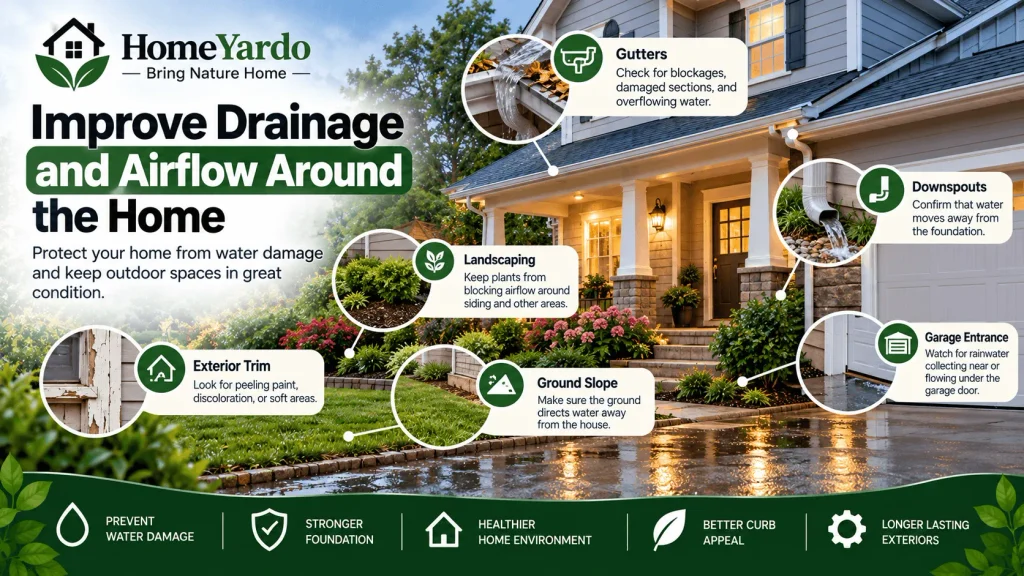
Exterior improvements need to withstand local weather conditions.
In Raleigh, heavy rainfall and humid conditions can contribute to drainage problems, moisture accumulation, and deterioration of exposed building materials.
Standing water near the foundation or garage can also affect landscaping and make outdoor access less convenient.
Addressing drainage problems before undertaking decorative improvements may prevent additional repair work.
What to Check for Drainage-Related Wear
Inspect your property during routine maintenance and after significant rainfall.
Pay particular attention to these areas:
- Gutters: Check for blockages, damaged sections, and overflowing water.
- Downspouts: Confirm that discharged water moves away from the foundation.
- Ground slope: Look for areas where the ground directs surface water toward the house.
- Garage entrance: Watch for rainwater collecting near the garage door or flowing beneath it.
- Exterior trim: Inspect wooden surfaces for peeling paint, discoloration, or soft areas.
- Landscaping: Keep dense vegetation from restricting airflow around siding and other vulnerable surfaces.
Water collecting near your foundation should not be treated as a cosmetic issue.
If puddles repeatedly develop after rainfall, consider improving yard drainage before investing in new planting beds or exterior finishes.
Garage door seals can help reduce water entry, but they cannot correct every drainage problem.
When water repeatedly flows toward the garage, the surrounding ground level and driveway drainage may require professional assessment.
Keep Up With Garage Door Maintenance Year-Round
Your garage door contains numerous moving components that work together during every opening and closing cycle.
Routine maintenance helps identify developing problems and supports reliable operation.
This is particularly useful for homeowners who use their garages as primary household entrances.
However, garage door maintenance should always distinguish between tasks homeowners can safely perform and work requiring trained technicians.
A Simple Seasonal Garage Door Maintenance Routine
Use the following routine to monitor your garage door throughout the year.
| Maintenance task | What to check | Recommended approach |
|---|---|---|
| Visual inspection | Door panels, visible hardware, and weather seals | Inspect periodically |
| Cleaning | Dirt, pollen, and debris near accessible track openings | Remove loose debris without adjusting hardware |
| Weather protection | Damaged seals and signs of water entry | Inspect after heavy rainfall |
| Safety sensors | Obstructions, dirt, and visible damage | Follow the manufacturer’s testing instructions |
| Moving components | Unusual noise or visible wear | Arrange appropriate lubrication or service |
| Springs and cables | Rust, fraying, visible damage, or unusual movement | Professional inspection only |
Follow the garage door manufacturer’s instructions for lubrication.
Do not automatically apply lubricant to every component. In particular, garage door tracks should generally be kept clean rather than coated with grease.
Test your garage door opener’s safety-reversal system according to the manufacturer’s instructions. Stop using the system and arrange professional service if a safety feature fails.
Inspect cables and springs visually without touching or adjusting them.
Homeowners who want a more detailed routine can follow this garage door maintenance checklist.
Professional maintenance is appropriate when your garage door produces unusual sounds, moves unevenly, or develops problems involving springs, cables, tracks, or other mechanical components.
Which Exterior Improvements Should You Prioritize First?
Not every exterior improvement needs to happen immediately.
The most practical approach is to separate repairs affecting safety and building condition from upgrades intended primarily to improve appearance.
Start with existing problems, then introduce cosmetic improvements that complement the repaired areas.
| Priority | Exterior improvement | Primary benefit |
|---|---|---|
| High | Repair damaged walkways | Safer access |
| High | Address garage door safety problems | Reliable operation |
| High | Correct persistent drainage issues | Moisture management |
| Medium | Improve entrance and pathway lighting | Better visibility |
| Medium | Replace damaged exterior seals | Weather protection |
| Flexible | Refresh exterior paint | Improved appearance |
| Flexible | Add landscaping and porch decorations | Improved curb appeal |
| Flexible | Install shade features | Greater outdoor comfort |
Consider your budget and the condition of your property when planning these projects.
A home with drainage problems may need corrective work before installing new landscaping. Similarly, a garage door with mechanical problems should receive attention before cosmetic upgrades.
Completing repairs in a sensible order can help prevent unnecessary expenses and repeated work.
Bring It All Together, One Project at a Time
Creating a welcoming and functional home exterior doesn’t require changing everything at once.
Start by identifying the areas that affect your everyday routine. Improving entrance lighting, repairing a damaged walkway, refreshing the front door, or addressing drainage problems can all make your property more comfortable and attractive.
Remember that exterior appearance and practical maintenance should work together.
A freshly painted garage door may improve curb appeal, but its mechanical components still need to operate safely and reliably.
If your garage door makes unusual noises, closes unevenly, or shows signs of significant wear, Ready to Roll Garage Doors can inspect its condition and help determine whether repair or replacement is appropriate.
Contact the company to request a free estimate and discuss suitable options for your property.
FAQ’s
Start with a clean entrance, well-maintained walkway, suitable outdoor lighting, and coordinated landscaping. Refreshing the front door, updating house numbers, and maintaining visible exterior features can improve your home’s appearance without requiring a complete renovation.
Cleaning walkways, trimming overgrown plants, repainting the front door, replacing damaged entrance hardware, and adding a few coordinated planters are relatively affordable improvements. Prioritize maintenance before purchasing decorative accessories.
Focus on improvements that make everyday activities easier. Maintain clear walkways, install suitable entrance lighting, improve drainage, provide comfortable outdoor seating, and ensure exterior doors and garage doors operate correctly.
Choose weather-resistant outdoor fixtures, appropriate exterior paint, durable landscaping materials, and shade features suited to warm summers. Regular drainage inspections and moisture-related maintenance are also useful because the area experiences humid conditions and periods of heavy rainfall.