The Details That Make a Home Exterior Stand Out
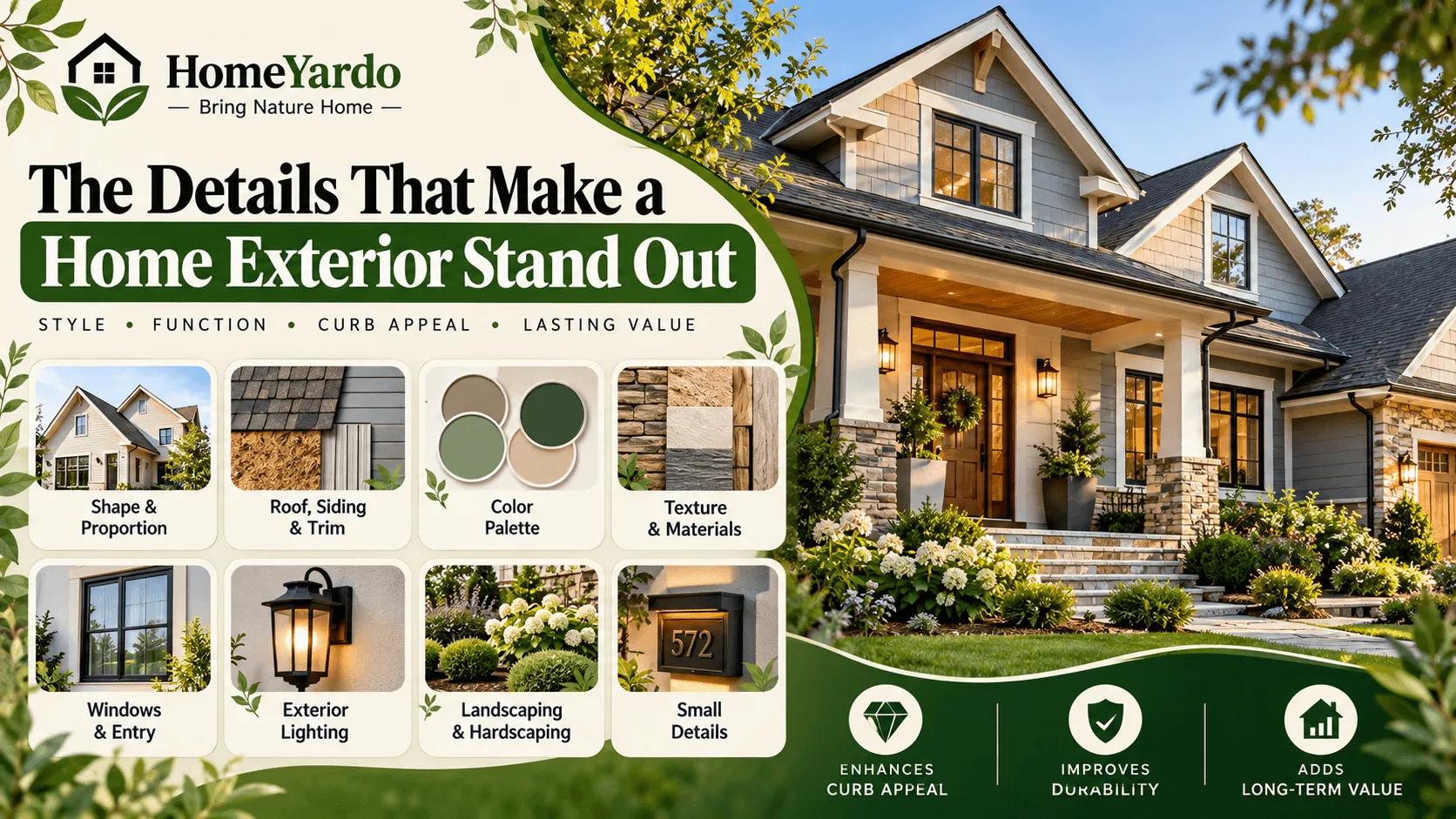
A standout home exterior rarely comes from one dramatic feature. More often, it is the result of several elements working together: the shape of the house, roofing and siding, color, texture, windows, entry details, lighting, and landscaping.
Good home exterior design creates a clear visual hierarchy. The eye should naturally move from the overall shape of the house to its entrance and architectural features without competing colors or materials pulling attention in too many directions.
Whether the home is traditional, Craftsman, farmhouse, transitional, or contemporary, the goal is similar: preserve its architectural character while making the exterior feel balanced, intentional, and well maintained.
What Makes a Home Exterior Stand Out?
A strong exterior usually has three qualities: balanced proportions, a coordinated material and color palette, and details that support rather than compete with the architecture.
The roof, siding, windows, entry, trim, garage, hardscaping, and landscaping should read as parts of the same design.
That does not mean every home needs elaborate architecture. A modest house can have excellent curb appeal when its proportions work, materials suit the building, and smaller details have been selected with care.
Before changing individual features, look at the house from the street. Identify which architectural elements already work well and which ones appear dated, visually heavy, undersized, or disconnected from the rest of the exterior.
Shape and Proportion Set the Foundation
Before color or decoration enters the picture, the shape and proportions of a house establish much of its character.
Roof pitch, window size and placement, porch depth, garage position, column dimensions, and the relationship between walls and openings all affect how balanced the facade appears.
Different architectural styles also depend on different proportions. Farmhouse-inspired homes often use broad porches and straightforward roof forms. Craftsman homes typically emphasize substantial columns, deep roof overhangs, and grounded proportions. Contemporary homes may rely on simpler geometric forms, larger expanses of glass, and cleaner transitions between materials.
If you are updating an existing property, avoid forcing a completely unrelated architectural style onto it. Instead, identify the home’s strongest existing features and choose exterior features that complement your home and its underlying architecture.
Roof, Siding, and Trim Create Visual Structure
Roofing and siding cover some of the largest visible areas of a house, which gives them considerable influence over its appearance.
The roof establishes the upper outline, while siding creates much of the color and texture seen at eye level. Trim defines windows, doors, corners, eaves, and other transitions.
When coordinating these elements, consider:
- Roof color and profile: Roofing should work with the siding and architectural style without visually overpowering the facade.
- Siding orientation and texture: Horizontal, vertical, shingle-style, and panel siding each create different visual effects.
- Trim scale: Trim should be proportional to the windows, doors, roofline, and overall size of the house.
- Material transitions: Changes between siding, masonry, wood, and other finishes should occur at logical architectural points.
- Installation quality: Straight lines, properly fitted flashing, neat joints, and clean transitions influence both appearance and weather resistance.
Exterior materials should also be selected for the conditions they will face. Sun exposure, rainfall, humidity, snow, freeze-thaw cycles, wind, and salt exposure can affect how roofing, siding, paint, sealants, and metal components perform over time.
If a roof replacement is part of the project, working with a skilled local roofer or an Amish roofing contractor can help ensure the design looks good and performs well over time.
How Does Color Affect Curb Appeal?
Exterior color can emphasize architecture, reduce the visual weight of a large surface, or direct attention toward the entrance.
A practical starting point is a three-part palette:
- Body color for the largest wall surfaces
- Trim color for windows, doors, corners, fascia, and other defined edges
- Accent color for selected features such as the front door
These colors do not always need strong contrast. Subtle differences can work well on traditional homes, while contemporary architecture can support sharper contrasts when they reinforce its clean lines.
Also consider permanent or expensive-to-replace elements before selecting paint. Roofing, brick, stone, paving, and other fixed materials often contain undertones that should influence the final palette.
Test exterior colors on the actual house whenever possible. Sunlight, shade, landscaping, roofing, and surrounding buildings can make a color look different from a small sample.
Texture Adds Depth Without Making the Facade Busy
Texture keeps large exterior surfaces from appearing flat, but using too many unrelated materials can make a facade feel fragmented.
Brick, stone, wood, fiber-cement siding, metal, shingles, stucco, and smooth panels all interact differently with light. The goal is not to use as many materials as possible but to give each material a clear purpose.
A simple approach is to use:
One dominant material + one supporting material + one accent material.
For example, siding may cover most of the house, masonry may visually anchor the lower portion, and wood may highlight the entrance.
Material changes tend to look more convincing when they follow the architecture rather than stopping at arbitrary points on a wall.
Windows and the Front Entry Need Visual Priority
Windows and the main entrance strongly influence how people read the facade.
Window replacements should respect the proportions and rhythm of the original architecture whenever practical. A mix of unrelated window sizes, grille patterns, trim treatments, and frame colors can disrupt an otherwise coordinated exterior.
The front entrance should usually be easier to identify than secondary doors. You can establish that hierarchy through porch structure, lighting, door color, hardware, landscaping, or a combination of these elements.
The goal is not necessarily to make the entrance bold. It simply needs enough visual emphasis that visitors can immediately understand where to go.
Small Exterior Details Make the Design Feel Finished
Once the major surfaces are coordinated, smaller features can make the exterior feel complete.
These include:
- Front door: Choose a style, material, and color that suit the architecture.
- Exterior lighting: Size fixtures in proportion to doors, garages, porches, and walls.
- House numbers: Keep them visible from the street and consistent with the overall style.
- Hardware: Coordinate door handles, railings, hinges, and other visible metal finishes where practical.
- Mailboxes: Choose a size and finish that do not look disconnected from the property.
- Planters: Use them to frame or soften an entrance rather than obstruct circulation.
- Seasonal decor: Keep decorations secondary to permanent architectural features.
If the house needs several smaller cosmetic changes rather than a complete redesign, these simple ways to improve your home’s exterior can help prioritize manageable upgrades.
Lighting and Landscaping Guide the Eye
Lighting and landscaping connect the building to the rest of the property.
Exterior lighting should support visibility and safe movement while reinforcing important features such as entrances, steps, walkways, and gathering areas. Porch lights, wall-mounted fixtures, path lighting, and selected landscape lights can create layers rather than relying on one overly bright source.
Avoid placing fixtures where glare makes steps, pathways, or doorways harder to see.
Landscaping performs a similar visual function during the day. Trees can frame the house, shrubs can soften foundations, and lower planting can define walkways and entrances.
Scale matters. Plants that are too large may hide windows and architectural features, while planting that is too small can look disconnected from a large facade.
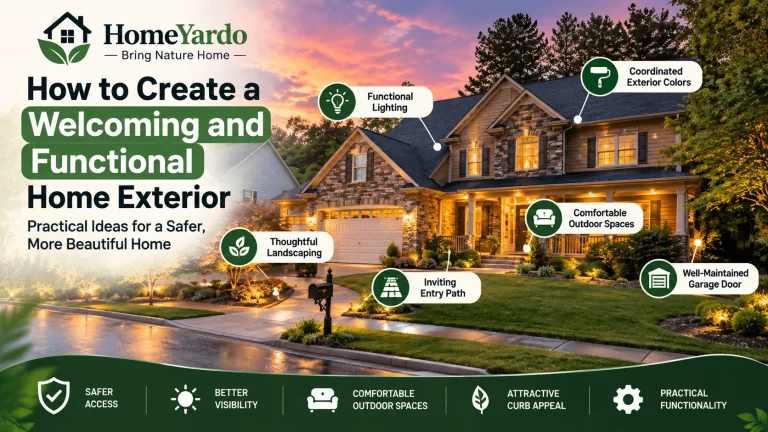
The most successful welcoming and functional home exterior combines appearance with safe access, useful lighting, clear pathways, and practical outdoor features.
Design for Durability as Well as Appearance
An exterior should still work after the initial renovation looks new.
Before selecting a finish only for appearance, consider how it will handle water, sunlight, temperature changes, dirt, vegetation, and routine maintenance.
Pay particular attention to areas where materials meet. Roof-to-wall intersections, windows, doors, penetrations, siding transitions, decks, and areas near grade need appropriate detailing so water can drain away rather than becoming trapped.
Decorative choices should never interfere with drainage, ventilation, flashing, access for maintenance, or other building-performance requirements.
Local building codes, manufacturer installation instructions, and site-specific conditions should take priority where they apply.
Modern Updates Should Still Respect the Home
Modernizing an exterior does not require erasing the character of the original building.
Often, the better approach is to keep strong architectural features and simplify elements that have become visually dated. Updating lighting, repainting trim, reducing unnecessary material changes, refining landscaping, or replacing an incompatible door can make a considerable difference without redesigning the entire facade.
Contemporary updates tend to work best when the number of competing finishes is reduced and the lines of the existing architecture become easier to see.
Before starting several projects independently, planning them as a residential exterior refresh can help establish the correct order for repairs, materials, painting, landscaping, and finishing work.
A Standout Exterior Comes From Coordination
A memorable home exterior is rarely about having the most expensive roof, the boldest front door, or the largest landscape.
It comes from coordination.
Start with the architecture and proportions. Then consider the roof, siding, windows, color, and material palette. Once those major elements work together, use lighting, landscaping, hardware, and smaller details to complete the design.
Durability matters too. Materials that suit the climate and details that manage water properly can help the exterior continue to look good rather than requiring constant corrective work.
After the design is complete, regular care also matters. A simple plan to maintain a beautiful home exterior can help preserve finishes, landscaping, walkways, and other visible features throughout the year.
The strongest exterior design is therefore not a collection of individual upgrades. It is a series of related decisions that make the house look like every part belongs there.
FAQ’s
A house can look refined without using the most expensive materials. Balanced proportions, a limited color palette, appropriately scaled lighting, clean material transitions, consistent hardware, healthy landscaping, and good maintenance often have more visual impact than adding numerous decorative features.
Start by identifying the home’s architectural style and strongest existing features. Coordinate the roof, siding, trim, windows, and color palette before adding smaller elements such as lighting, house numbers, planters, and landscaping.
The main elements include architectural proportions, roofing, siding, windows, doors, trim, exterior colors, material textures, lighting, hardscaping, and landscaping. The relationship between these features matters more than any single feature by itself.
There is no universal number, but limiting the palette usually creates a more coherent appearance. One dominant material, one supporting material, and an accent material can be an effective starting point. More materials can work when the architecture provides clear places for transitions.
Colors that complement the home’s architecture, roofing, masonry, and surroundings usually work best. Warm whites, muted grays, taupes, greens, charcoal tones, and natural wood finishes are common options, but the right choice depends on the individual property.
Keep defining architectural features and update secondary elements instead. A simpler color palette, new lighting, refreshed trim, improved landscaping, coordinated hardware, or carefully selected siding accents can modernize the exterior without making the house look like a different architectural style.
They do not need to match exactly. They should have a compatible relationship in color, undertone, contrast, and visual weight. Because roofing is expensive to replace, its color should usually be considered before selecting new siding or exterior paint.
Address functional problems before cosmetic ones. Roof leaks, damaged siding, drainage issues, deteriorated trim, unsafe steps, and other defects should generally be handled before painting or decorative upgrades. Once those issues are resolved, work from larger visual elements toward smaller finishing details.