How To Choose And Use The Right Mulch For Garden Beds
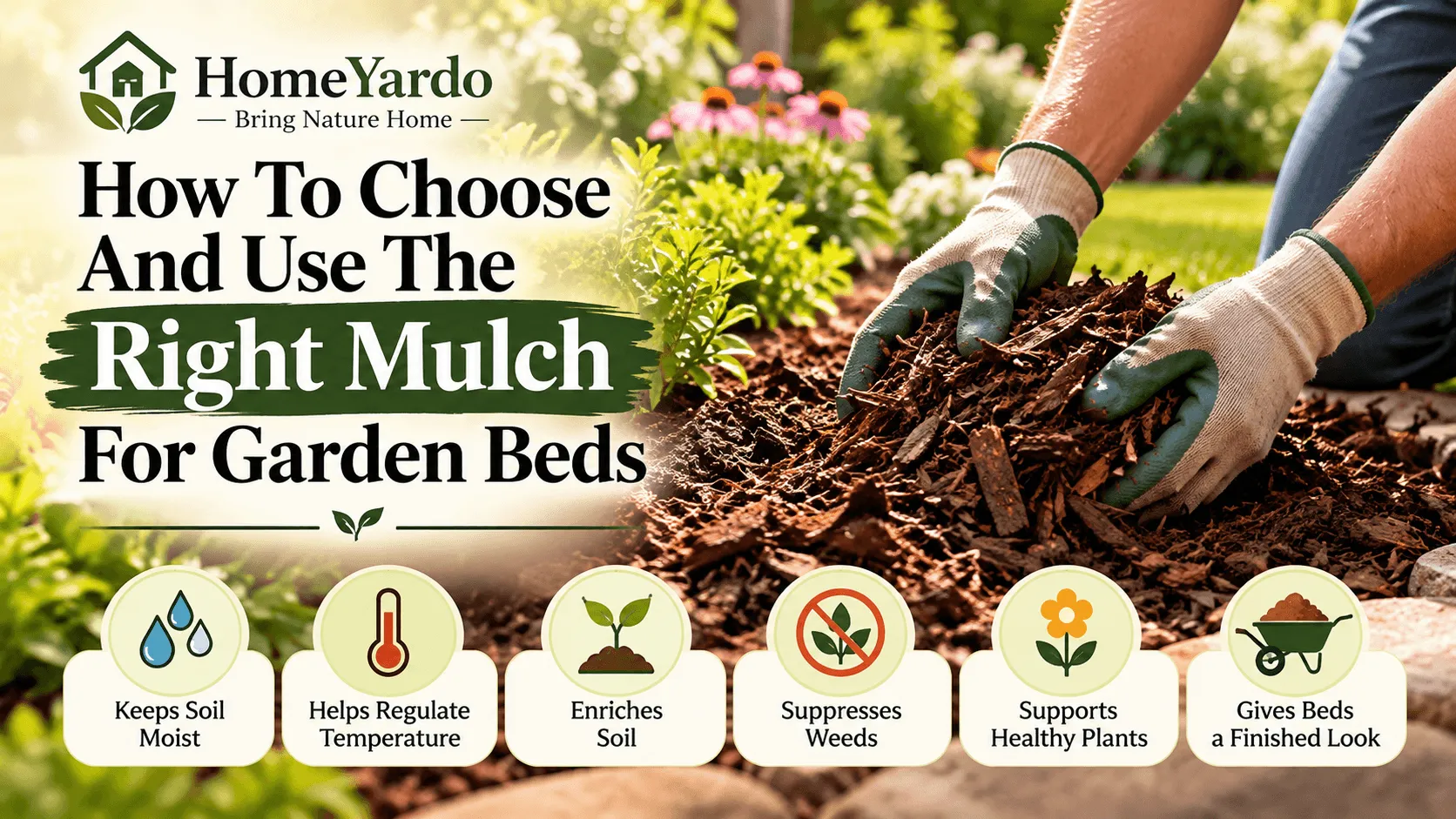
A flourishing garden starts with healthy soil. During the sweltering summer months, basic seasonal care can help soil retain moisture, shield plant roots, minimize weeds, and make garden maintenance simpler.
One of the easiest ways to protect exposed soil in open flower beds is to apply an appropriate layer of mulch. Throughout the growing season, mulch can help control temperature and moisture levels while giving garden beds a tidy, finished look.
Plants are better able to establish healthy root systems when the soil is cared for early in the growing season.
Keeping Soil Moisture And Temperature Balanced
Gardens need consistent moisture to support strong roots during spring and summer. Many local gardeners choose to buy bulk mulch in Plainfield, IL, when getting flower beds ready for warmer weather.
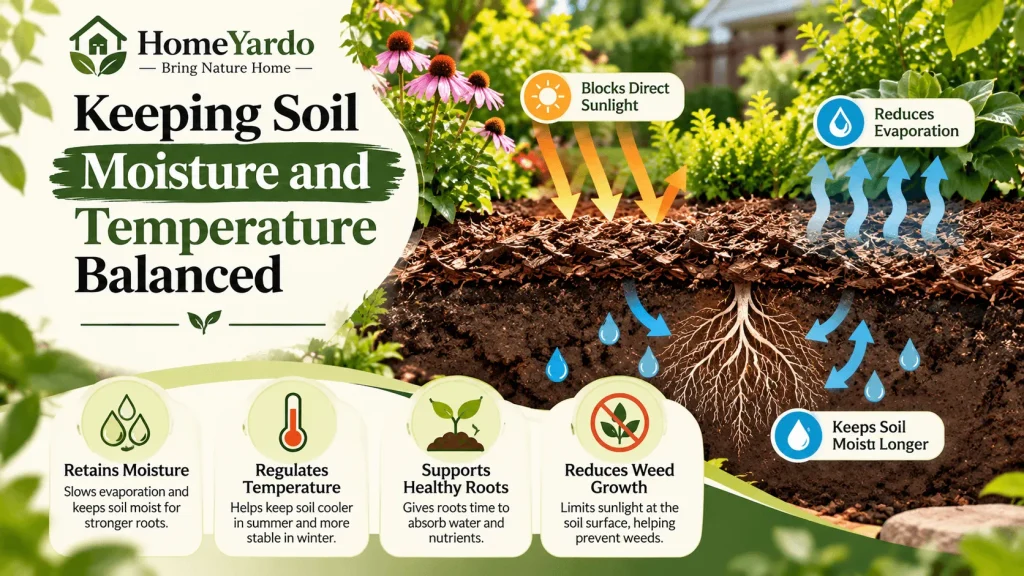
A good layer of mulch protects the soil surface from direct sunlight and wind. Bare soil can lose moisture quickly during hot or dry weather, while mulch slows evaporation and helps the ground remain moist for longer.
Plant roots then have more time to absorb available water without experiencing the same rapid swings between wet and dry conditions.
Gardeners who want to manage irrigation more carefully can also monitor their garden water usage so watering schedules better reflect plant and soil needs.
How Mulch Helps Moderate Soil Temperature
Mulch also helps buffer the soil against sudden temperature changes.
During warm weather, covering exposed soil can reduce direct heating around plant roots. During colder periods, an appropriate mulch layer can help protect shallow roots from rapid temperature fluctuations.
This can be particularly useful around suitable full-sun plants, where uncovered soil may become hot and dry during long periods of direct sunlight.
Enriching Soil with Organic Mulch
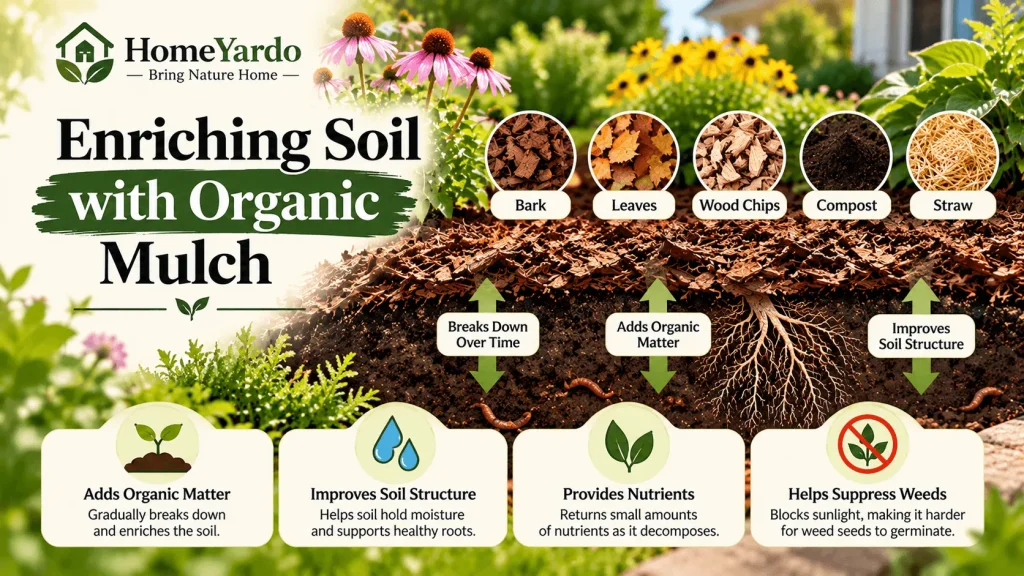
Mulch does more than make outdoor spaces look neat. Organic mulch can gradually break down and contribute organic matter to the soil.
Materials such as shredded leaves, bark, wood chips, compost, and straw decompose at different rates. Over time, this organic matter may improve soil structure, moisture retention, and biological activity.
Some organic mulches can also return small amounts of nutrients to the soil as they decompose. However, their nutrient content varies, so mulch should not be treated as a complete replacement for fertilizer when plants have specific nutritional needs.
How Mulch Can Help Suppress Weeds
Mulch can also reduce the number of weeds appearing in established garden beds.
A suitable layer limits the amount of light reaching many weed seeds near the soil surface, making germination more difficult. Mulch does not eliminate all weeds, especially perennial weeds that are already established.
Removing existing weeds before mulching usually gives better results than simply covering them.
Selecting the Best Mulch Type for Your Yard
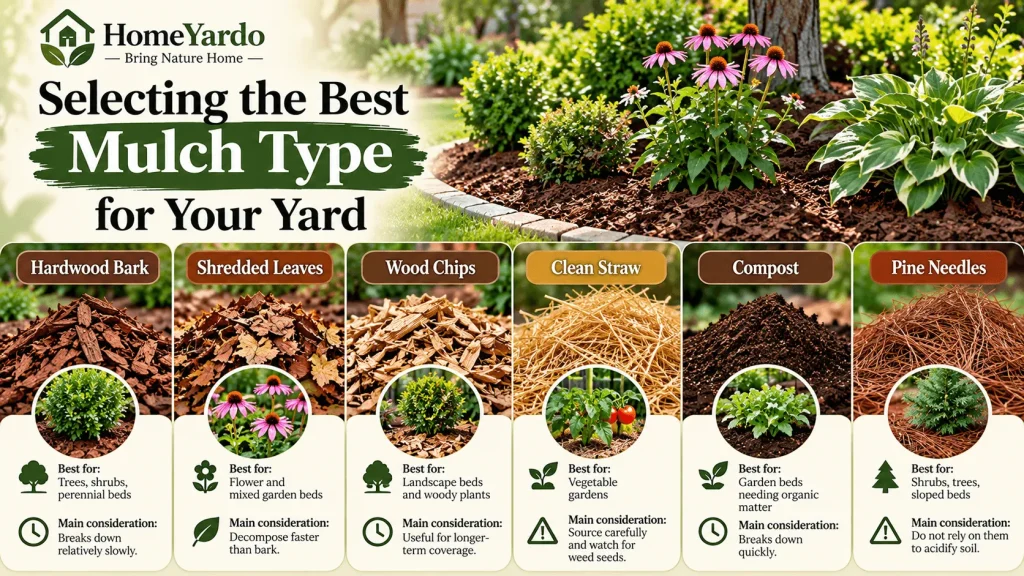
The best mulch depends on the garden’s plants, purpose, layout, and maintenance needs.
Wood-based mulch breaks down relatively slowly, making it useful around shrubs, trees, perennial beds, and other permanent plantings. Lighter organic materials generally decompose faster and can work well in vegetable beds or seasonal gardens.
Common options include:
- Hardwood bark for trees, shrubs, and perennial beds
- Shredded leaves for flower and mixed garden beds
- Clean straw for vegetable crops
- Compost for beds where additional organic matter is useful
- Wood chips for landscape beds and woody plants
- Pine needles for suitable garden and landscape areas
Pine needles can work well as an organic mulch around many plants. Although fresh pine needles are acidic, they generally do not reduce the underlying soil pH enough to be considered a dependable method for acidifying garden soil.
The right choice depends more on the plants, drainage, climate, maintenance schedule, and how quickly you want the material to break down.
In larger yards, mulch can also form part of a broader low-maintenance landscaping strategy that reduces exposed soil, unnecessary turf, frequent watering, and repetitive weeding.
Comparing Common Garden Mulches
| Mulch Type | Best Use | Main Consideration |
|---|---|---|
| Shredded hardwood or bark | Shrubs, trees, perennial beds | Breaks down relatively slowly |
| Wood chips | Landscape beds and woody plants | Useful for longer-term coverage |
| Shredded leaves | Flower and mixed beds | Decompose faster than bark |
| Clean straw | Vegetable gardens | Source carefully and watch for weed seeds |
| Compost | Garden beds needing organic matter | Breaks down quickly |
| Pine needles | Shrubs, trees, sloped beds | Do not rely on them to acidify soil |
Proper Application Techniques For Healthy Beds
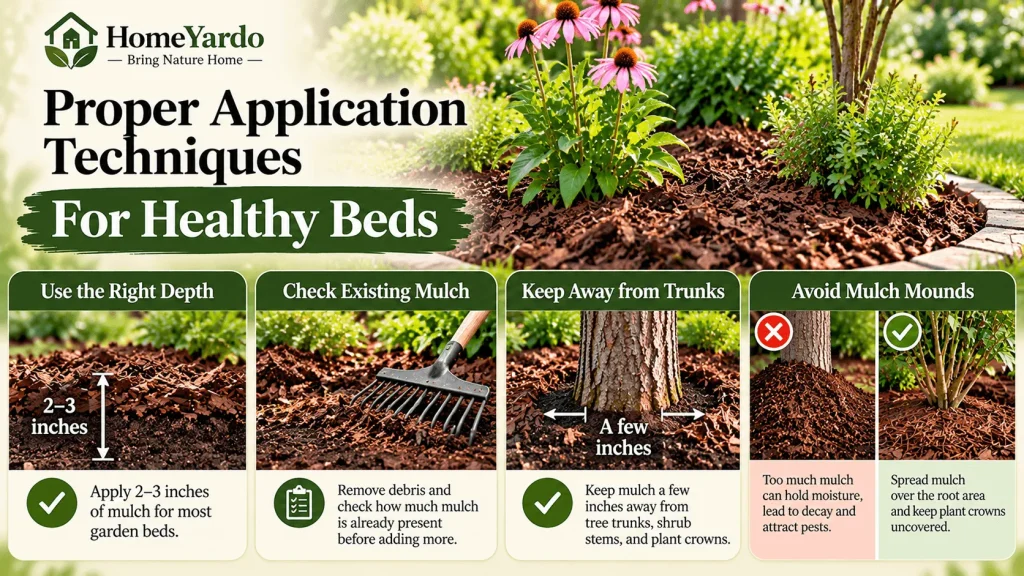
The degree to which mulch protects garden soil depends on its depth.
Two to three inches of organic mulch is sufficient to cover many flower, shrub, and landscape beds without burying plant crowns. The material, soil, drainage, and amount of mulch present can all affect the optimal depth.
Determine the amount of old mulch left before applying a new layer. An excessively deep layer can be gradually created by adding several inches every year.
Keep Mulch Away From Tree Trunks and Plant Stems
Keep mulch a few inches away from tree trunks, shrub stems, and plant crowns.
When mulch is piled directly against bark or stems, it can hold moisture against plant tissue for long periods. This may encourage decay and create conditions that favor some pests and diseases.
Around trees, spread mulch outward over the surrounding root area instead of creating a mound against the trunk.
The same principle applies when caring for flowering bushes: spread mulch over the surrounding root zone while leaving the stems and crown uncovered.
Seasonal Maintenance And Timing
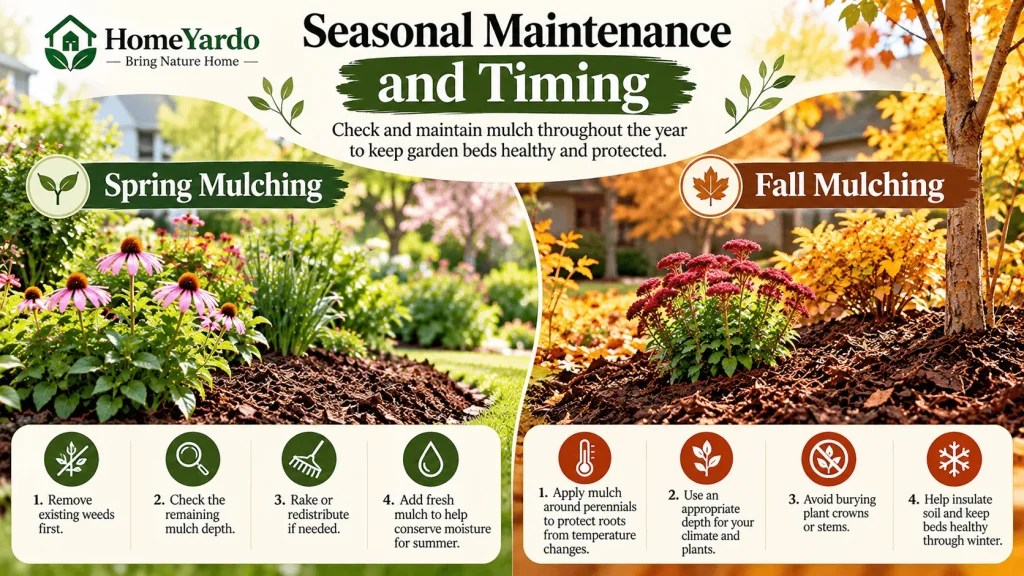
Mulch performs best when it is checked and maintained rather than simply added on a fixed schedule.
The timing of application depends on the plants, climate, weather, and condition of the existing mulch.
Spring Mulching
Adding or refreshing mulch in spring can prepare garden beds before hotter weather arrives.
Remove existing weeds first, then check the remaining mulch depth. If a suitable layer is already present, lightly raking or redistributing it may be enough.
Fresh mulch can help conserve spring soil moisture before summer heat increases evaporation.
Fall Mulching
Mulch can also be useful during autumn.
An appropriate layer around perennial plants can help buffer soil and shallow roots against rapid temperature changes as colder weather arrives.
The amount needed depends on the local climate and the plants being protected. Avoid burying crowns or stems when preparing beds for winter.
Common Mulching Mistakes To Avoid
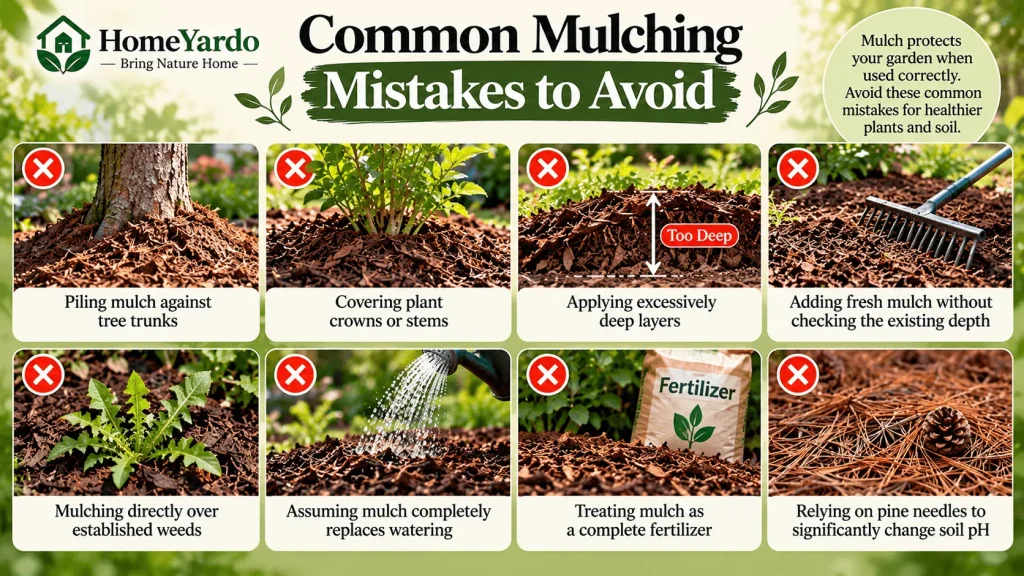
Mulch is useful, but applying too much can create problems.
Common mistakes include:
- Piling mulch against tree trunks
- Covering plant crowns or stems
- Applying excessively deep layers
- Adding fresh mulch without checking the existing depth
- Mulching directly over established weeds
- Assuming mulch completely replaces watering
- Treating mulch as a complete fertilizer
- Relying on pine needles to significantly change soil pH
The goal is to protect the soil surface without burying the plants growing in it.
How Often Should Mulch Be Replaced?
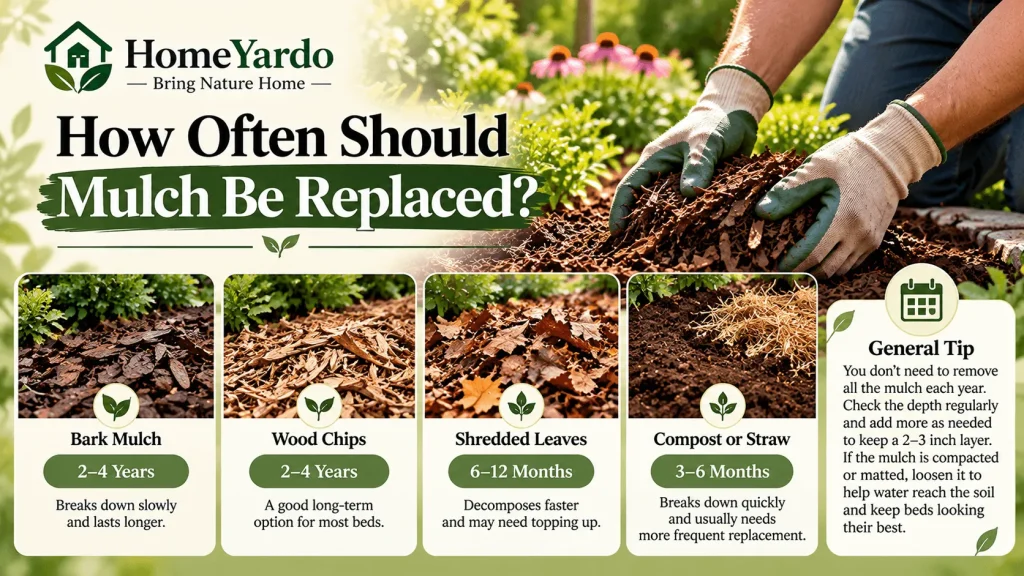
Organic mulch does not need to be completely removed and replaced every year.
Instead, inspect the bed periodically and replenish only enough material to restore an appropriate depth after decomposition, settling, or displacement.
Bark and wood chips generally last longer than compost, shredded leaves, or straw. If mulch becomes compacted or matted, lightly loosening it may improve its appearance and help water reach the soil.
How Mulch Supports A Lower-Maintenance Garden
Mulching can reduce several recurring garden tasks at the same time.
By covering exposed soil, mulch can slow moisture loss, suppress some weeds, moderate soil temperature, and reduce the amount of bare ground that requires regular attention.
Mulching works especially well as part of a broader low-maintenance backyard landscaping plan that combines covered soil, climate-suited plants, efficient watering, and clearly defined garden beds.
It will not make a garden maintenance-free, but it can make routine care more manageable throughout the growing season.
Invest In Healthier Soil With The Right Mulch
A healthier growing environment can be created in exposed garden soil by applying the appropriate mulch.
Keep mulch away from trunks, stems, and crowns, select a material appropriate for the plants and location, and maintain a reasonable depth.
When applied properly, mulch can preserve moisture, regulate soil temperature, lessen weed pressure, shield plant roots, and progressively enrich the soil with organic matter.
In addition to supporting stronger, healthier planting beds all year round, high-quality mulch can facilitate seasonal garden maintenance.
FAQ’s
The best mulch depends on the plants and purpose of the bed. Bark and wood chips work well around permanent landscape plants, while leaves, compost, and clean straw may suit vegetable or seasonal garden beds.
Around two to three inches is suitable for many organic mulches and garden beds. The material type, drainage, plants, and amount of existing mulch should also be considered.
Yes. Mulch covers the soil surface and reduces direct exposure to sunlight and wind, which can slow evaporation and help soil remain moist for longer.
Mulch can suppress many weed seedlings by reducing light at the soil surface. It will not reliably eliminate established perennial weeds, so existing weeds should usually be removed before mulching.