Why A Healthy Yard Starts With Healthy Trees
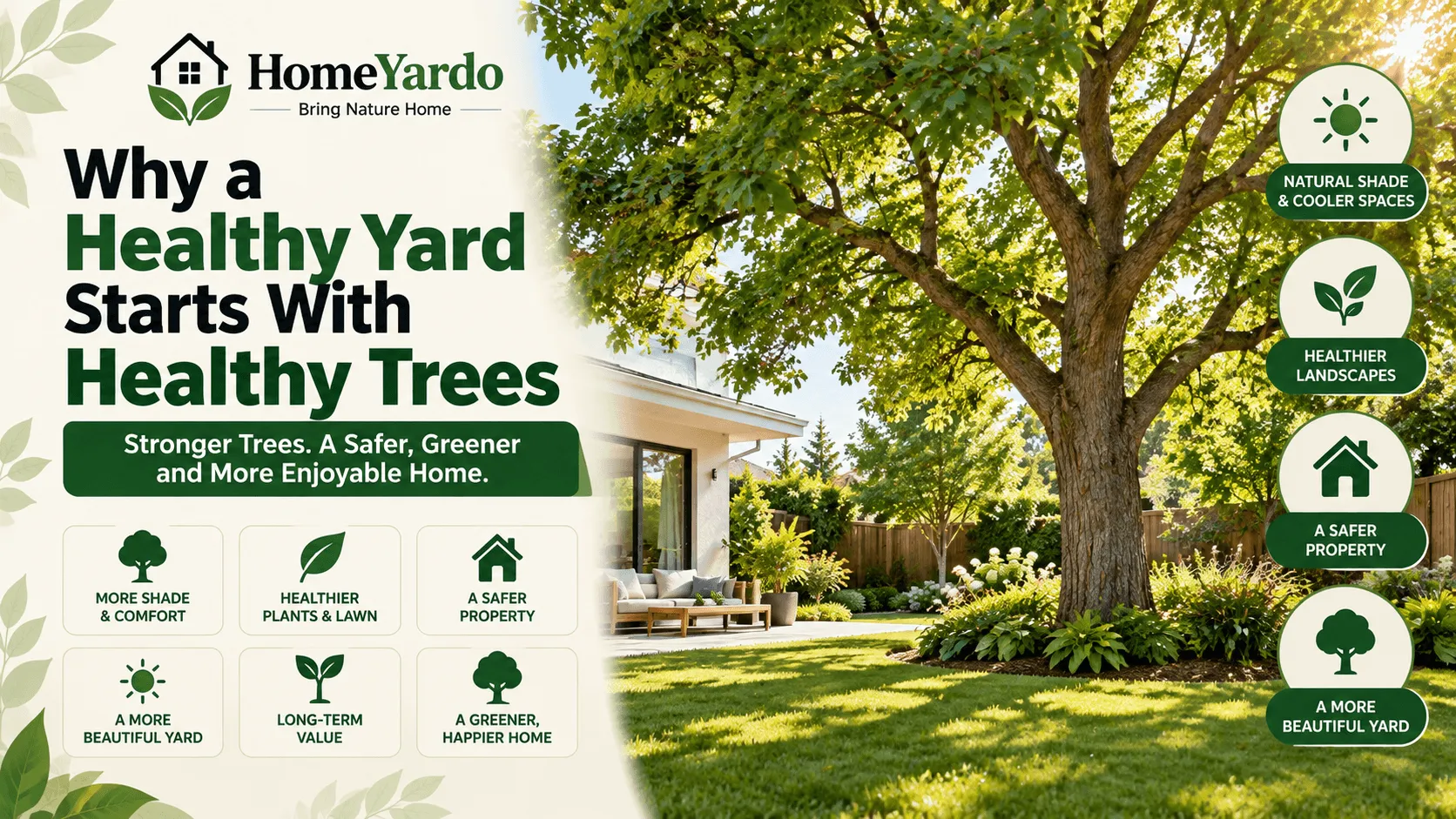
A healthy yard is about more than green grass and tidy garden beds. The condition of the trees growing around a home can affect shade, planting conditions, usable outdoor space, and, in some cases, property safety.
Healthy trees can become long-term features of a landscape. Trees that are declining, badly damaged, poorly positioned, or structurally compromised may need closer attention.
That does not mean every struggling tree should come down. Many tree problems can be managed through proper care, while healthy trees growing in the wrong location may sometimes be relocated. The important part is knowing when a tree needs routine care and when professional assessment is warranted.
For trees that have become unsafe or are no longer realistic to retain, professional tree removal services may be one option for restoring a safer, more usable yard.
Why Tree Health Matters to the Whole Yard
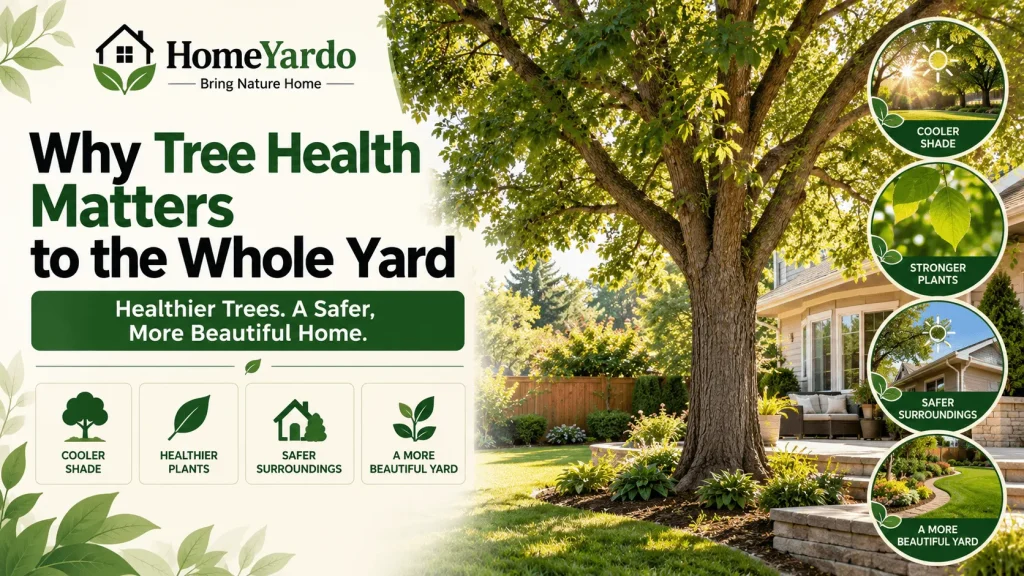
A mature tree influences much more than the patch of ground directly beneath its trunk.
Its canopy creates shade, its roots occupy a large area of soil, and its branches can affect nearby roofs, paths, garden beds, fences, and outdoor living areas. Healthy trees can therefore contribute structure and comfort to the landscape.
Problems can also spread beyond the tree itself.
A declining tree may contain dead branches, damaged wood, cavities, root problems, or weakened structural unions. Some problems develop slowly, while storm damage can change a tree’s condition very quickly.
That is why tree health should be considered part of regular yard maintenance rather than something homeowners think about only after a branch falls.
What Does a Healthy Tree Usually Look Like?
There is no single appearance that proves a tree is healthy because normal growth differs between species and seasons.
Still, encouraging signs generally include:
- Foliage appropriate for the species and season
- New growth during the expected growing period
- A reasonably balanced canopy
- Bark that is not showing major new areas of damage or decay
- No widespread branch dieback
- No obvious movement or lifting around the root plate
- Branches without major cracks or recently broken attachments
Changes matter as much as appearances. A tree that suddenly develops extensive dead foliage, large cracks, abnormal leaning, or major branch failure deserves more attention than one simply displaying its normal seasonal pattern.
Warning Signs a Tree May Need Professional Assessment
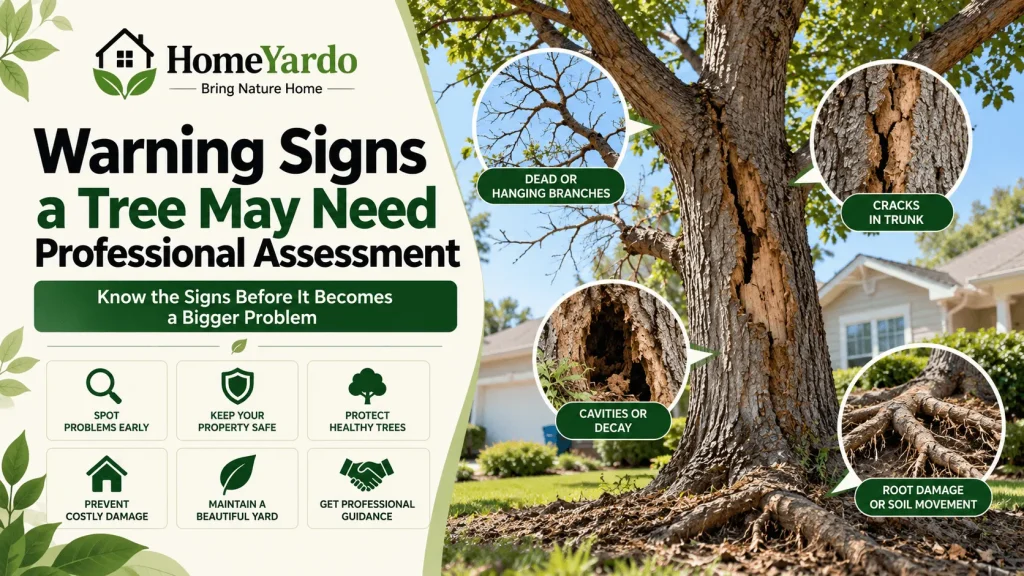
Homeowners can spot obvious changes, but diagnosing why they are happening is more difficult.
Pay closer attention when a tree develops:
- Large dead or hanging branches
- New or increasing lean
- Major cracks in the trunk or branch unions
- Extensive canopy dieback
- Large cavities or visible decay
- Significant root damage
- Soil movement around the root plate
- Repeated major branch failures
- Sudden decline after construction or excavation
- Serious storm damage
Fungal growth around a tree does not automatically prove that the tree is unsafe. Likewise, peeling bark, sparse leaves, or a hollow area does not by itself tell you how likely a tree is to fail.
Tree condition should be assessed as a whole, especially when the tree is large enough to reach a house, driveway, road, play area, or another frequently used space.
When Tree Removal May Be the Right Choice
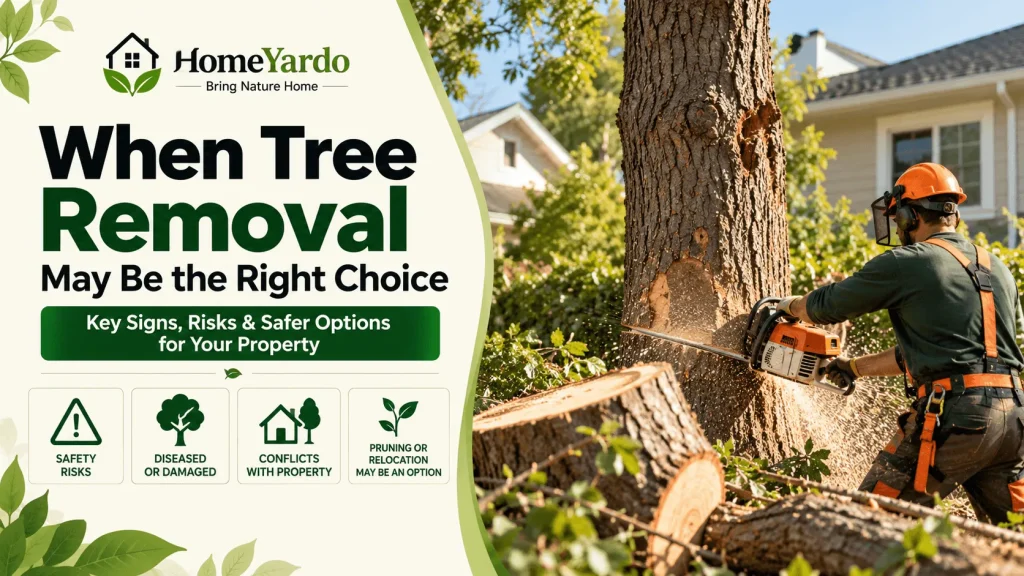
Keeping an established tree is often worthwhile when it remains healthy and suitable for its location.
Removal becomes more reasonable when the tree itself has serious problems that cannot realistically be corrected or when its condition presents an unacceptable risk to people or property.
Situations that may justify considering tree removal include severe structural damage, extensive decay, major root loss, advanced decline, or repeated failure of significant limbs.
Location can matter too. A tree may remain reasonably healthy while creating an increasing conflict with buildings, utilities, access routes, or another part of the landscape.
Large-tree decisions should be based on the condition of the individual tree rather than appearance alone. A qualified arborist can inspect the roots, trunk, canopy, defects, surrounding targets, and site conditions before recommending pruning, monitoring, treatment, relocation, or removal.
When Removal Is Not the Only Option
A tree does not necessarily need to be removed simply because its current location has become inconvenient.
A healthy tree affected by a planned driveway, patio, building project, or landscape redesign might be suitable for relocation in some circumstances.
HomeYardo’s guide to moving a healthy tree explains how tree health, size, root condition, species, site access, transplant timing, and the proposed new location influence whether relocation is realistic.
Pruning may solve other problems, particularly when the concern involves dead, damaged, rubbing, or poorly positioned branches rather than failure of the entire tree.
The aim should be to match the response to the actual problem instead of treating removal as the automatic answer.
The Part People Forget: The Stump
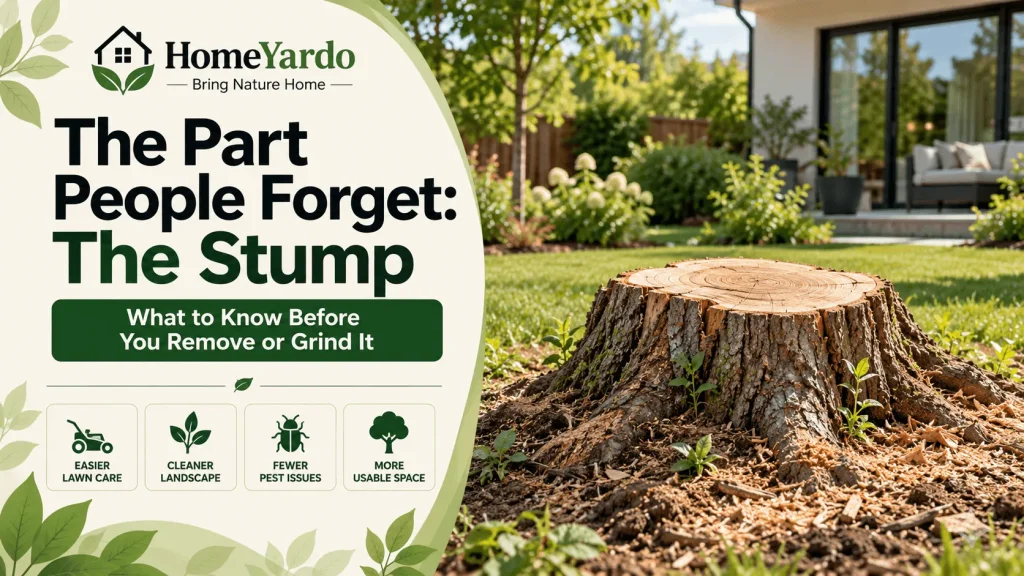
Tree work does not necessarily end once the trunk and canopy have been removed.
Leaving a stump may be perfectly acceptable in parts of a yard where it does not interfere with how the space is used. In other locations, however, an old stump can become an obstacle when mowing, walking, landscaping, or creating a new planting bed.
Some stumps also produce shoots from surviving roots, depending on the tree species. As the wood decays, it may provide habitat for fungi and wood-associated insects.
Should You Remove or Grind the Stump?
The answer depends largely on what you want to do with the area afterward.
Stump grinding may be appropriate when the main objective is to remove the visible obstruction and restore the surface for landscaping. Full stump and root removal is more disruptive because large roots can extend well beyond the trunk.
Before deciding, consider:
- Whether people regularly walk through the area
- Future lawn or garden plans
- Nearby underground utilities
- Whether the tree is producing unwanted shoots
- Access for equipment
- Whether construction is planned for the location
Clearing the site should serve a purpose rather than simply becoming an automatic extra step.
Check the Whole Yard, Not Just the Tree
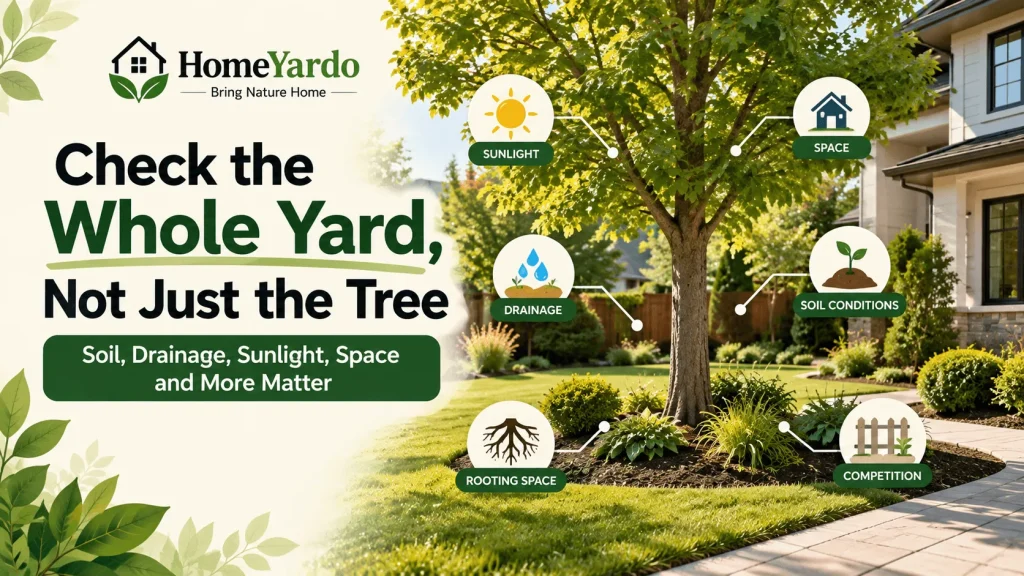
Trees grow as part of a larger landscape system.
Soil condition, available rooting space, water movement, sunlight, competition, construction activity, and planting location can all influence how successfully a tree grows.
Poor drainage deserves particular attention. Soil that remains saturated for extended periods can create unsuitable root-zone conditions for species that require better drainage.
If water regularly pools around trees or elsewhere on the property, investigate the underlying yard drainage problems rather than treating each struggling plant separately.
Construction can create problems as well. Excavation, trenching, grade changes, heavy equipment, and soil compaction around established trees may damage roots even when the trunk and canopy initially look unchanged.
Give Trees Enough Room to Mature
Many future tree problems begin with the planting location.
A young tree can look tiny beside a house, driveway, path, fence, or overhead line. That relationship may be very different 10 or 20 years later.
Before planting, check the expected mature height and canopy spread rather than basing placement on the tree’s current size.
Also consider:
- Distance from buildings
- Overhead and underground utilities
- Driveways and walkways
- Available root space
- Nearby trees and shrubs
- Sun exposure
- Soil drainage
- How the surrounding yard is used
Choosing a suitable site at the beginning can reduce future pruning, conflicts, transplanting, and unnecessary removals.
After Tree or Stump Removal
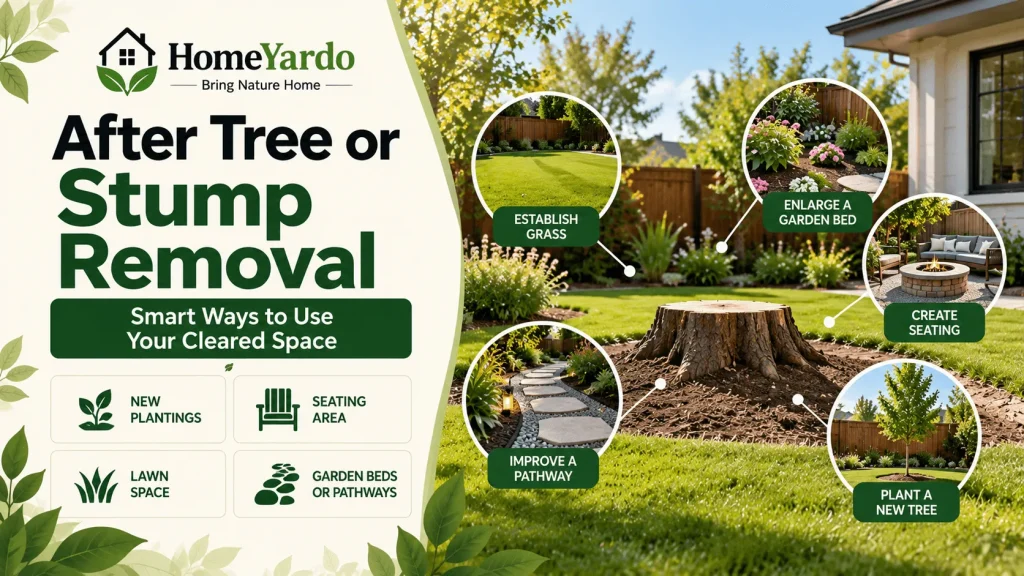
Removing a problematic tree creates an opportunity to reconsider how that part of the yard should function.
You might establish grass, enlarge a garden bed, improve a pathway, create seating, or eventually plant a replacement tree better suited to the available space.
Do not rush to plant another large tree in exactly the same spot without considering why the original tree was removed.
If poor drainage, restricted rooting space, unsuitable soil, utility conflicts, or inadequate room contributed to the original problem, correct those issues first.
HomeYardo’s guide to low-maintenance backyard landscaping can help when redesigning the cleared space around long-term maintenance needs.
A Healthy Yard Starts With Regular Observation
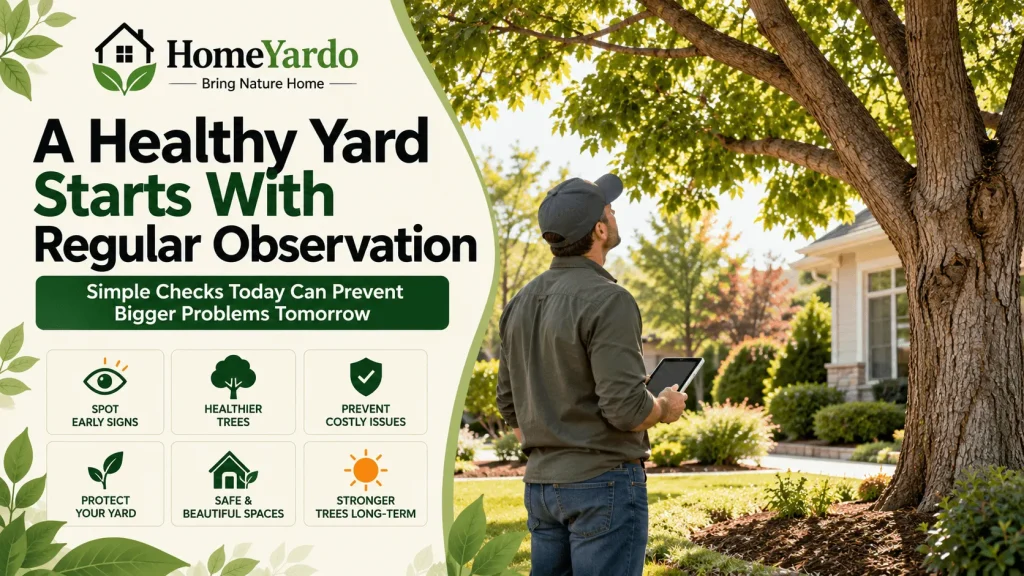
Tree care does not have to mean constantly treating, pruning, or altering trees.
One of the most useful habits is simply paying attention.
Walk around the property occasionally and look at trees from the roots to the canopy. Notice broken branches, major changes in lean, new trunk wounds, unusual canopy thinning, storm damage, or changes around the root zone.
Also look at the surrounding site. Construction, erosion, persistent standing water, soil compaction, and changes to nearby hardscaping can affect trees even when the problem is not immediately visible above ground.
Early observation gives you more options. A manageable pruning issue today can be very different from a large structural problem that has been ignored for years.
A Healthier Yard Is About Keeping the Right Trees
Healthy trees can provide shade, structure, visual interest, and a strong framework for the rest of a landscape.
The goal is not to remove trees whenever something looks imperfect. It is to preserve suitable trees, address manageable problems early, and recognize when a badly damaged or declining tree needs professional evaluation.
Look at tree health as part of the whole yard. Consider the canopy, trunk, roots, drainage, growing space, surrounding structures, and how the property is used.
A yard works best when its trees have enough room to grow safely and the trees that can no longer do so are dealt with appropriately.
FAQs
Healthy trees generally show normal seasonal foliage, expected new growth, a reasonably balanced canopy, and no obvious widespread dieback or major structural damage. Because normal appearance varies between species, sudden changes are often more useful warning signs than any single feature.
Possible warning signs include extensive dead branches, canopy decline, large trunk cracks, significant cavities or decay, root damage, abnormal leaning, repeated branch failure, and sudden changes following storms or construction.
No. Some problems can be managed through pruning, improved site conditions, monitoring, or other appropriate care. Removal is generally considered when serious structural, health, location, or safety problems cannot be reasonably corrected.
Not automatically. If location rather than tree health is the problem, pruning, redesigning the surrounding space, or transplanting may sometimes be possible. Suitability depends on the tree, site, root system, size, and reason it needs to move.