When Is It Worth Moving A Tree Instead Of Removing It?
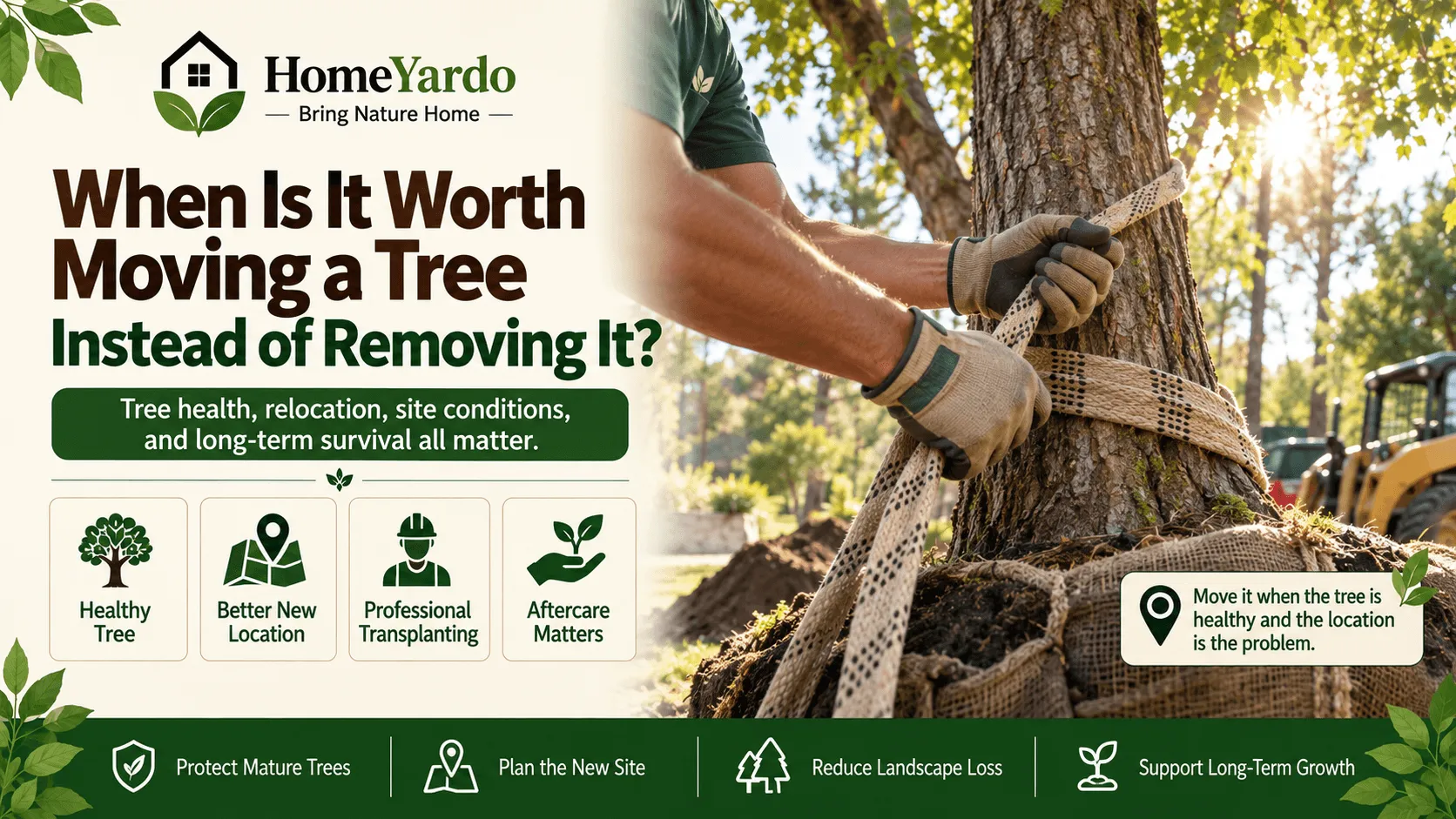
A tree can be healthy and still end up in the wrong place. It may sit too close to a planned addition, block a new walkway, interfere with a driveway, or simply outgrow the space around it.
Removing the tree may seem like the obvious solution, but it is not always the only one. Professional tree transplanting can relocate a suitable tree to another part of the property where it has enough space and the right growing conditions.
Moving an established tree is a significant project, though, and not every tree is a good candidate. Its health, size, species, root system, current location, transplant timing, and new growing site all affect the decision.
Before choosing between relocation and removal, consider whether the tree is healthy enough to move and whether its new location can support it for years to come.
When Does Moving a Tree Make Sense?
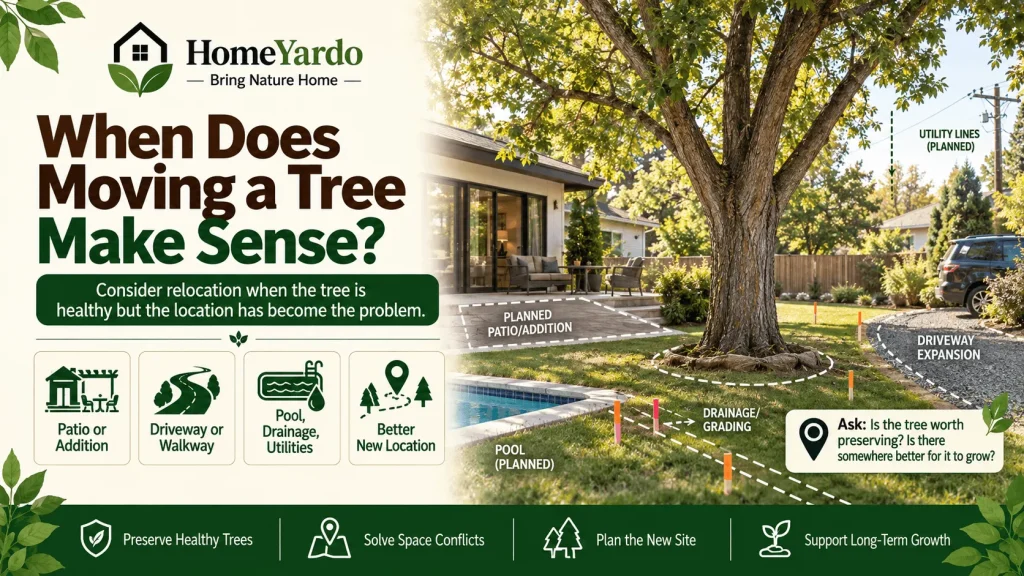
Start with the reason the tree needs to leave its current location.
Home and yard projects are common causes. A tree may stand where you plan to:
- Build a patio or home addition
- Expand a driveway
- Install a pool
- Create a new walkway
- Change grading or drainage
- Install or repair utility lines
Sometimes the problem is simply poor placement. A tree that seemed small when planted may eventually crowd a building, shade an area where sunlight is needed, or extend into a space that was never large enough for its mature canopy.
Tree transplanting is most worth considering when the tree itself remains healthy but its location has become the problem.
Before deciding, ask two basic questions: Is this tree worth preserving, and is there somewhere better for it to grow?
If both answers are yes, relocation may deserve a closer look.
Check the Health of the Tree
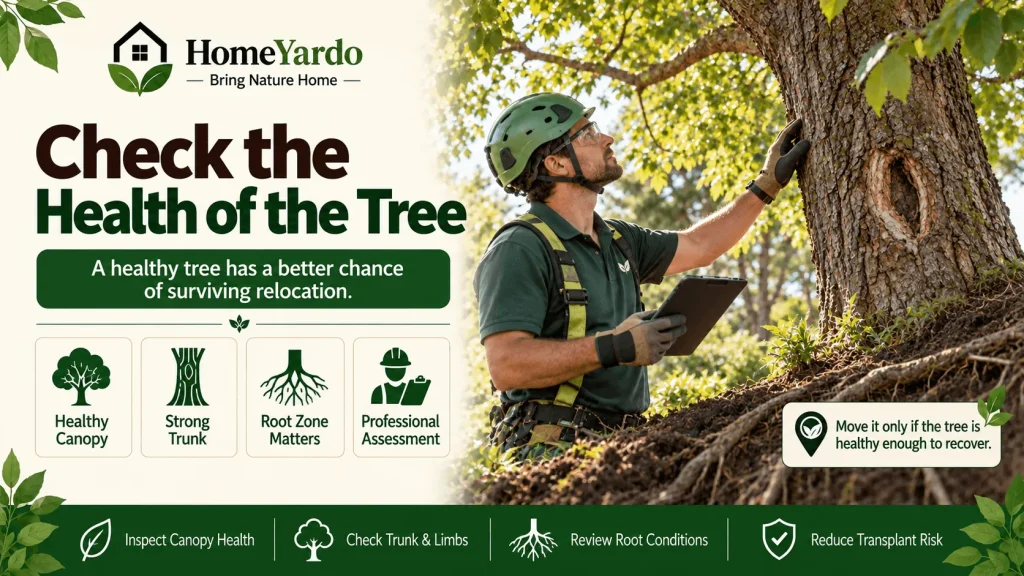
A tree should generally be in good condition before being considered for relocation because transplanting inevitably places additional stress on it.
Start with the canopy. Healthy foliage, normal seasonal growth, and a reasonably balanced branch structure are encouraging signs.
Then inspect the trunk and major limbs. Warning signs may include:
- Large cavities
- Significant decay
- Major cracks
- Dead or declining branches
- Serious pest damage
- Extensive disease symptoms
- Previous structural failure
The root zone matters too. Construction damage, severe soil compaction, repeated flooding, major root cutting, and prolonged drought stress may reduce the tree’s ability to recover after relocation.
Some visible stress does not automatically mean a tree cannot be moved. However, a tree that is already seriously declining may have less capacity to recover from the root loss and environmental change associated with transplanting.
For large, valuable, old, or questionable trees, an assessment by a qualified tree professional can help determine whether relocation is realistic.
Consider the Tree’s Size and Age
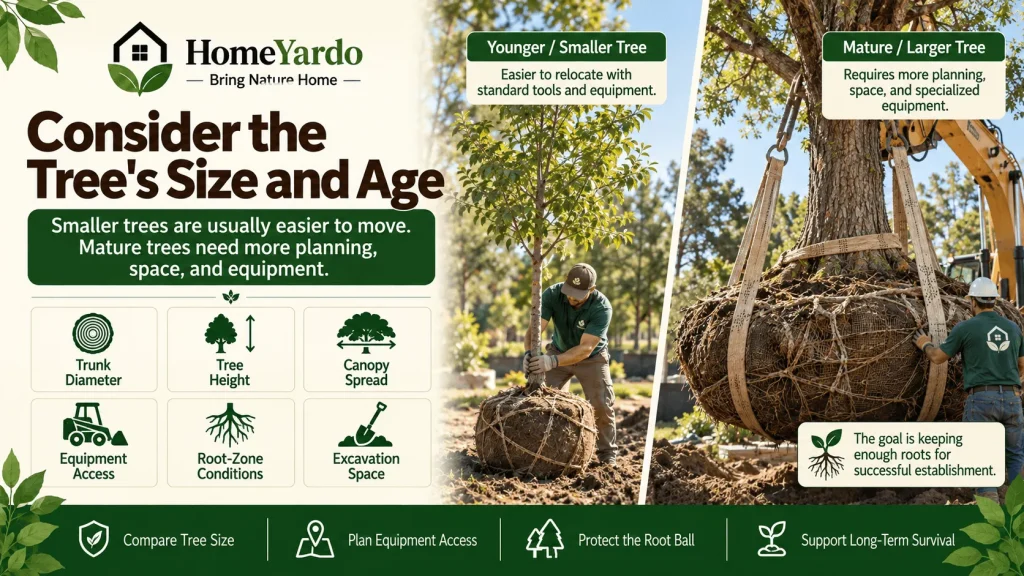
Younger and smaller trees are generally simpler to relocate because a greater proportion of their roots can usually be moved with them.
The situation changes as a tree matures.
An established tree can have a broad root system, while the root ball needed for relocation may become extremely heavy. Digging, lifting, transporting, and positioning it can require specialized machinery and careful site access.
That does not mean a large tree cannot be transplanted. Mature-tree relocation is possible in suitable situations, but it becomes a specialized landscaping operation rather than an ordinary digging project.
Consider:
- Trunk diameter
- Overall tree height
- Canopy spread
- Accessibility for equipment
- Root-zone conditions
- Distance to the new site
- Space available for excavation
The question is not simply whether the tree is physically movable. It is whether it can be moved while retaining enough of its root system to make establishment at the new site realistic.
Does Tree Species Affect Transplanting Success?
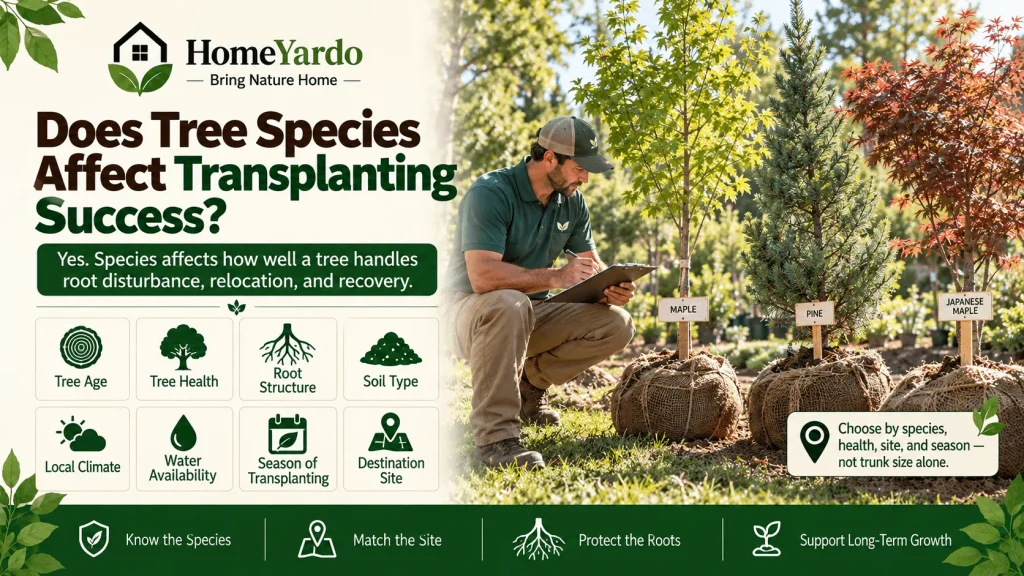
Yes. Different tree species respond differently to root disturbance and relocation.
Some have growth habits and root systems that make transplanting relatively manageable under suitable conditions. Others can be less tolerant of substantial root disturbance, particularly as they mature.
Species is only one part of the assessment. Other factors include:
- Tree age
- Tree health
- Root structure
- Soil type
- Local climate
- Water availability
- Season of transplanting
- Conditions at the destination site
Avoid making the decision from trunk diameter alone.
Identify the tree species and understand its mature size, preferred soil conditions, moisture needs, light requirements, and general tolerance of transplantation before planning the move.
Choose the New Location Before Moving the Tree
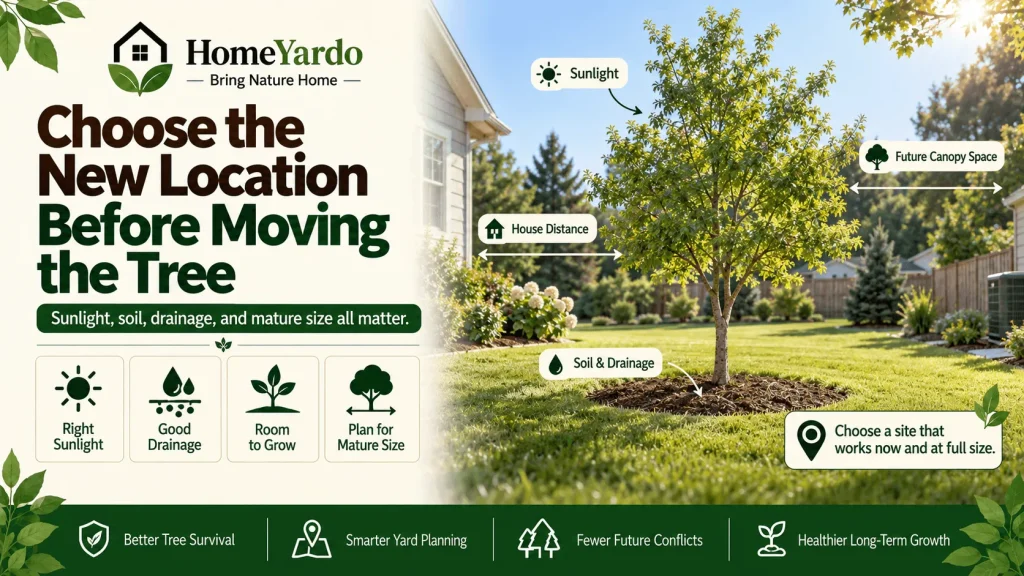
A successful relocation starts before the tree ever leaves the ground.
The destination should provide appropriate conditions for both the tree now and the much larger tree it may become.
Check the site’s:
Sunlight
Make sure the location provides the amount of sun or shade appropriate for the species.
A tree adapted to open sun may perform poorly in a deeply shaded part of the yard, while a shade-tolerant species may struggle in an exposed location with intense heat.
Soil and Drainage
The destination needs soil conditions that suit the tree.
Pay particular attention to drainage. A low area that remains saturated after rain may not suit a tree that needs well-drained soil.
If water already collects in the proposed location, address the underlying problem before moving a tree there. HomeYardo’s guide on how to fix yard drainage explains some of the common causes of persistent standing water.
Mature Size
Do not choose a new location based only on the tree’s current canopy.
Think about where its canopy and roots may extend at maturity. Check its distance from:
- The house
- Garages and sheds
- Fences
- Driveways
- Walkways
- Utility lines
- Other trees
- Outdoor living areas
HomeYardo’s guide to low-maintenance backyard landscaping ideas also explains why planting for mature size can prevent repeated pruning and future landscape conflicts.
Moving a tree is too much work to solve only a short-term placement problem.
What Is the Best Time to Transplant a Tree?
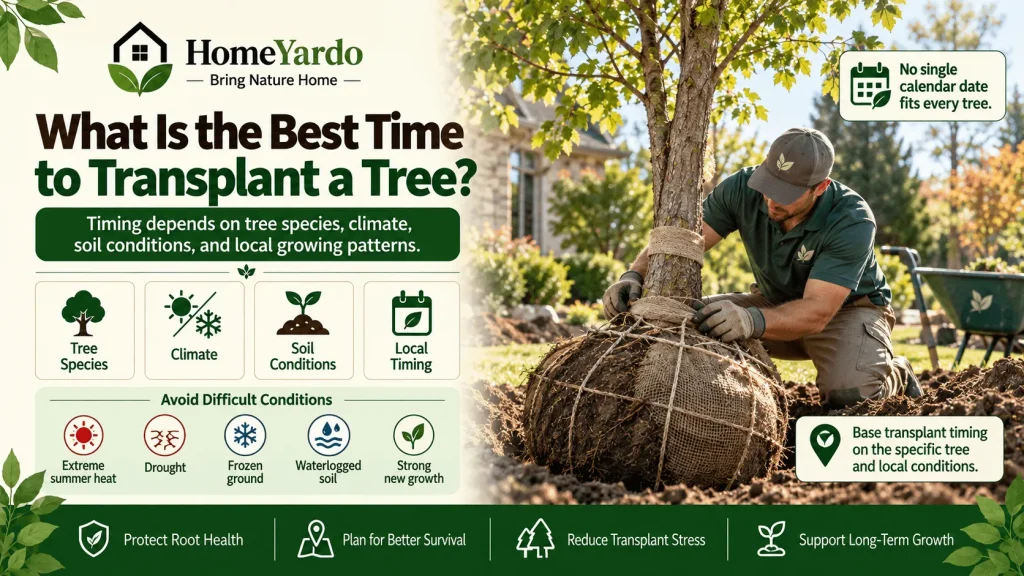
The best transplanting season varies by tree species, climate, soil conditions, and location.
In many climates, moving deciduous trees while they are dormant or experiencing relatively low active growth can reduce some of the demands placed on the root system. Local conditions still matter, so there is no universal calendar date that works everywhere.
Conditions that can make transplanting more difficult include:
- Extreme summer heat
- Drought
- Frozen ground
- Saturated or waterlogged soil
- Periods of unusually strong new growth
Evergreens and certain other species can have different timing requirements.
For that reason, transplant timing should be based on the specific tree and local growing conditions rather than a general rule such as “always transplant in fall.”
Protect the Root System During Tree Transplanting
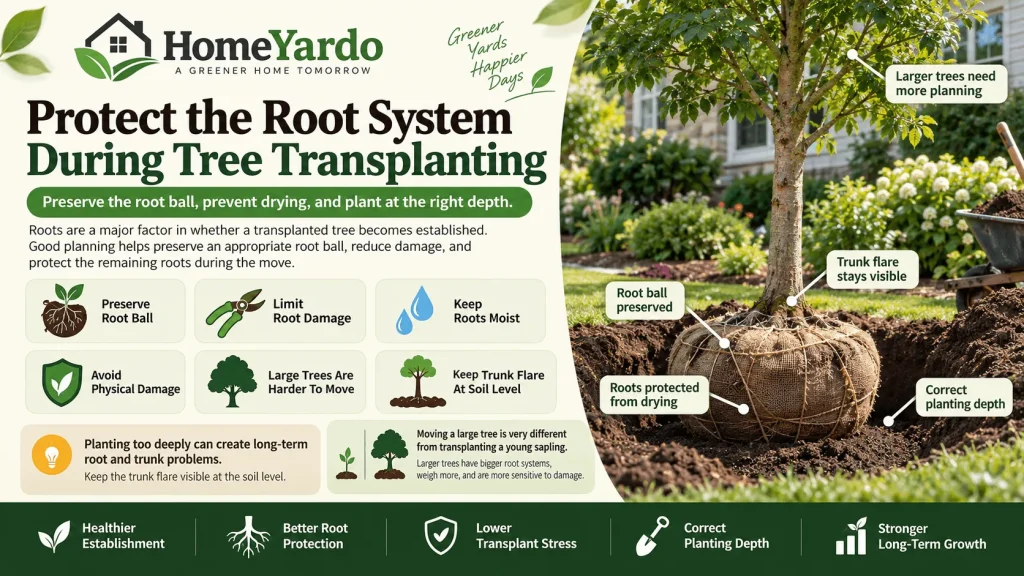
Roots are one of the biggest factors in whether a transplanted tree becomes established.
Trees use roots to obtain water and nutrients while also anchoring themselves in the soil. Because an established root system extends well beyond the trunk, moving a tree inevitably means leaving some roots behind.
Good planning aims to preserve an appropriate root ball, limit unnecessary root damage, and prevent the remaining roots from drying out or being physically damaged during the move.
The larger the tree, the more difficult this becomes.
That is one reason moving a large tree is different from transplanting a young sapling with a shovel.
Once the tree reaches its new location, planting depth matters as well. The trunk flare—the area where the base of the trunk widens into the main roots—should remain at the appropriate level rather than being buried deeply beneath new soil.
Planting too deeply can create long-term root and trunk problems.
Plan for Watering and Aftercare
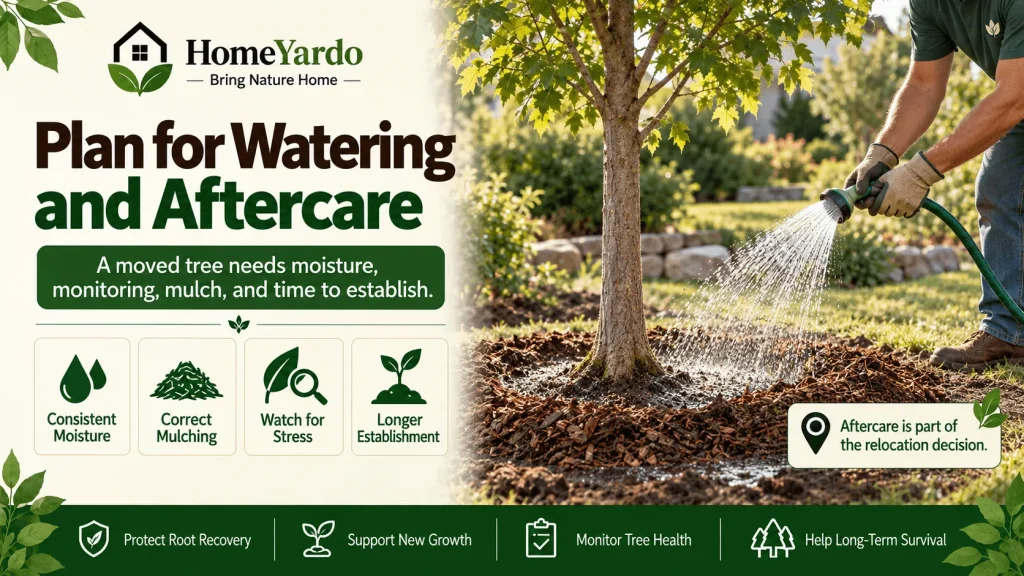
Tree transplanting does not end when the tree is placed in its new hole.
A relocated tree has a reduced root system and needs time to develop roots into the surrounding soil. During this establishment period, soil moisture deserves close attention.
Watering needs vary according to tree size, soil type, rainfall, weather, season, and drainage. The objective is consistent moisture in the active root zone without keeping poorly drained soil permanently saturated.
Mulch can also help conserve soil moisture and reduce competition from weeds and turf.
Apply mulch over the root area rather than piling it against the trunk. The trunk flare should remain visible instead of disappearing beneath a mound of mulch.
Continue monitoring the tree during the months and growing seasons after the move.
Possible signs of transplant stress include:
- Wilting
- Reduced shoot growth
- Early leaf drop
- Leaf scorch
- Canopy thinning
- Branch dieback
Some temporary stress can occur after relocation, but progressive decline deserves closer attention.
Larger transplanted trees may require a longer establishment period than smaller ones, making aftercare an important part of the relocation decision rather than an optional extra.
When Does Tree Removal Make More Sense?
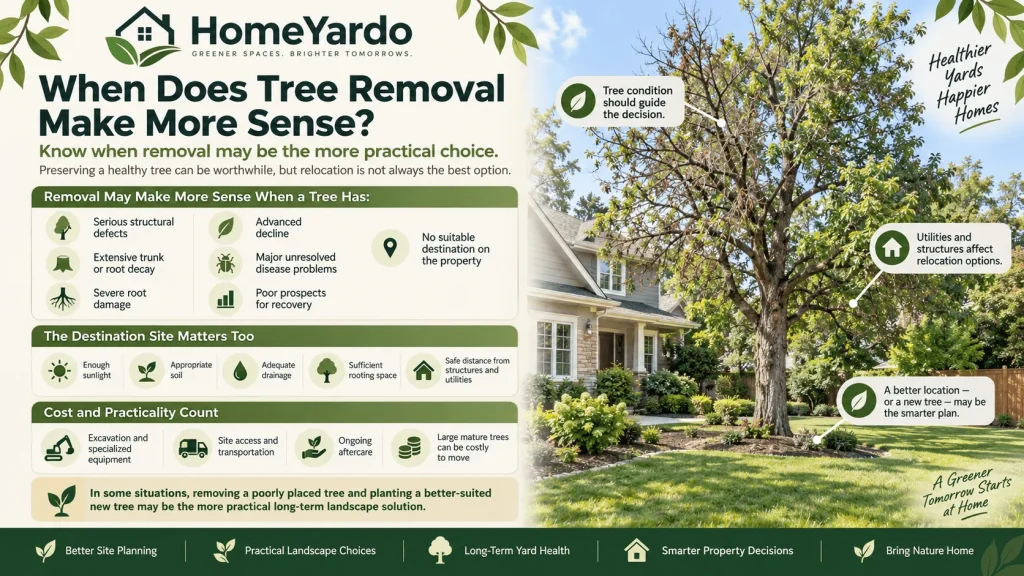
Preserving a healthy tree can be worthwhile, but relocation is not always the best option.
Removal may make more sense when a tree has:
- Serious structural defects
- Extensive trunk or root decay
- Severe root damage
- Advanced decline
- Major unresolved disease problems
- Poor prospects for recovery
- No suitable destination on the property
The destination site can also rule out relocation.
A healthy tree still needs enough sunlight, appropriate soil, adequate drainage, sufficient rooting space, and enough distance from structures and utilities.
Cost and practicality matter too. Moving a large mature tree may require substantial excavation, specialized equipment, site access, transportation, and ongoing aftercare.
In some situations, removing a poorly placed tree and planting an appropriately selected new tree may provide a more practical long-term landscape solution.
Tree Transplanting vs. Removal: A Quick Comparison
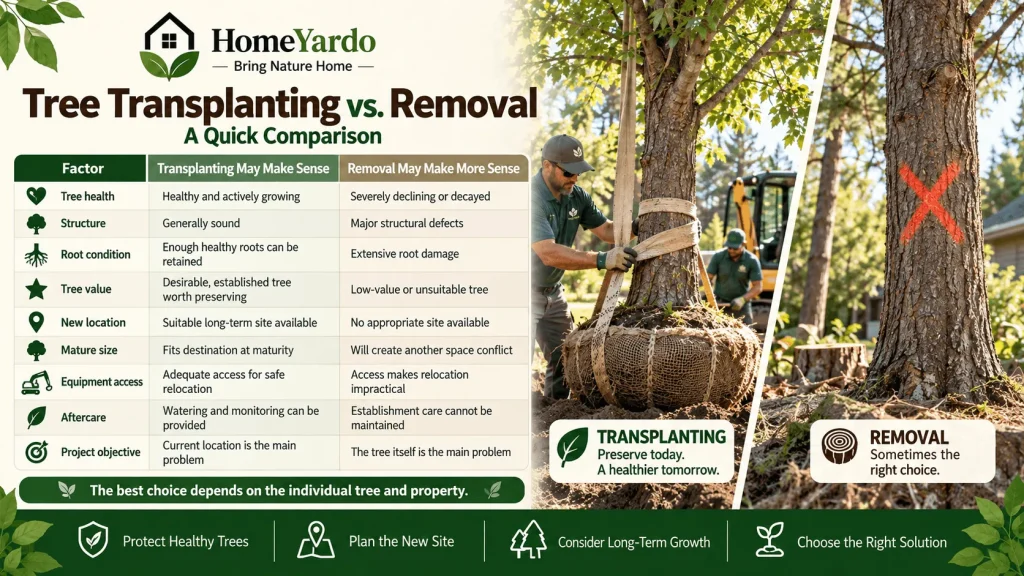
| Factor | Transplanting May Make Sense | Removal May Make More Sense |
|---|---|---|
| Tree health | Healthy and actively growing | Severely declining or decayed |
| Structure | Generally sound | Major structural defects |
| Root condition | Enough healthy roots can be retained | Extensive root damage |
| Tree value | Desirable, established tree worth preserving | Low-value or unsuitable tree |
| New location | Suitable long-term site available | No appropriate site available |
| Mature size | Fits destination at maturity | Will create another space conflict |
| Equipment access | Adequate access for safe relocation | Access makes relocation impractical |
| Aftercare | Watering and monitoring can be provided | Establishment care cannot be maintained |
| Project objective | Current location is the main problem | The tree itself is the main problem |
The best choice depends on the individual tree and property rather than one factor alone.
Give a Healthy Tree a Future
Moving an established tree can preserve something that has taken years to grow while allowing a yard, driveway, patio, or building project to move forward.
The strongest candidates are usually healthy trees being displaced because of where they are growing, not because something is seriously wrong with them.
Before deciding, assess the tree’s health, species, size, root condition, transplant timing, equipment access, and destination site. Then consider what care will be needed while the tree becomes established again.
When those factors line up, tree transplanting can give a healthy tree another place to grow instead of bringing its life in the landscape to an unnecessary end.
FAQs
It depends on the tree’s health, size, root condition, species, location, and whether a suitable new site is available. A healthy tree displaced by construction or poor placement may be worth moving. A severely damaged, structurally unsound, or declining tree may be a poor transplant candidate.
Some mature trees can be relocated, but the process becomes more complex as tree size increases. Larger root balls, heavier equipment, greater root disturbance, site access, and longer establishment periods all have to be considered.
Look at foliage, recent growth, branch structure, trunk condition, roots, pest problems, and signs of disease or decay. Large or valuable trees should be assessed individually when their condition is uncertain.
The best time varies by species and climate. Many trees are moved during cooler or dormant periods, when environmental stress may be lower, but local soil conditions, rainfall, temperature, tree type, and species requirements should guide the actual timing.