Best Plants for Bathroom: 25 Easy Picks for Humidity, Low Light, and Small Spaces
Bathrooms are surprisingly good for houseplants. Warmth and humidity are often highe, the room is steamier and even a simple shelf can be softer with a little green on it. However, not all plants will thrive in home bathroom settings.
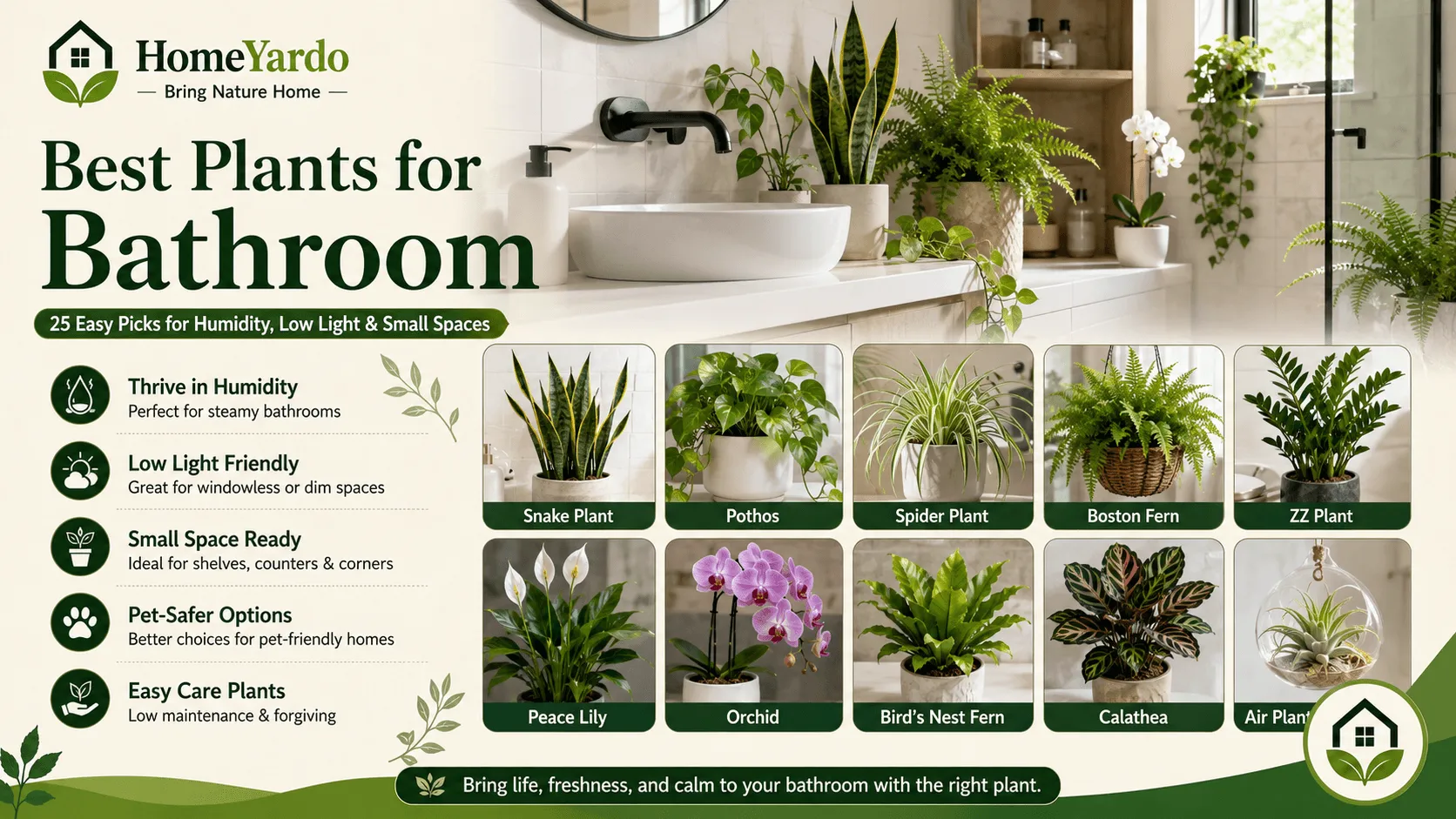
Plants that thrive in humidity, low light and mild temperature fluctuations are the best plants for bathroom spaces. Solid first-time plants include snake plant, pothos, spider plant, Boston fern and ZZ plant. Then it is up to you, your window, your pet’s window, your pets and how often you can remember to water.
Consider the bathroom a mini climate. It might get transformed into a mini greenhouse during the morning showers, and then the fan or door opening brings a change once again. That’s why a plant that thrives in one bathroom doesn’t necessarily thrive in another. Matching a little in the beginning prevents crispy leaves, yellow leaves and the “what did I do wrong?” moment.
Quick Answer: What Are The Best Plants For Bathroom Spaces?
Plants to keep in bathroom include Snake plant, pothos, spider plant, Boston fern, ZZ plant, peace lily, bird’s nest fern, orchid, air plant, calathea and they are the best bathroom plants. They can thrive in many situations found in the bathroom, from steamy showers to smaller shelves and darker corners.
Snake plant, ZZ plant, pothos, cast iron plant and Chinese evergreen are good low light options. Humidifiers recommended for ferns include Boston fern, bird’s nest fern, calathea, fittonia, peace lily, and orchid. Choose spider plant, Boston fern, bird’s nest fern, calathea, parlor palm, air plant, orchid or staghorn fern if you share your home with pets.
Bathroom Plant Chooser Table
If you need one answer and don’t want to compare the plants in detail, use a quick table. This is a starting point but if you are looking to purchase, please review the plant information below first.
| Bathroom situation | Best plant choices | Why they fit |
|---|---|---|
| Low-light bathroom | Snake plant, ZZ plant, pothos, cast iron plant | They tolerate dim rooms better than most houseplants |
| Bright bathroom | Orchid, aloe vera, rubber plant, anthurium | They need stronger indirect light to grow well |
| Windowless bathroom | ZZ plant, snake plant, pothos with grow light or rotation | No plant thrives in darkness without support |
| Small bathroom | Air plant, lucky bamboo, fittonia, spider plant | They fit shelves, counters, and tight spaces |
| Large bathroom | Monstera, rubber plant, parlor palm, cast iron plant | They need more room and make a stronger visual impact |
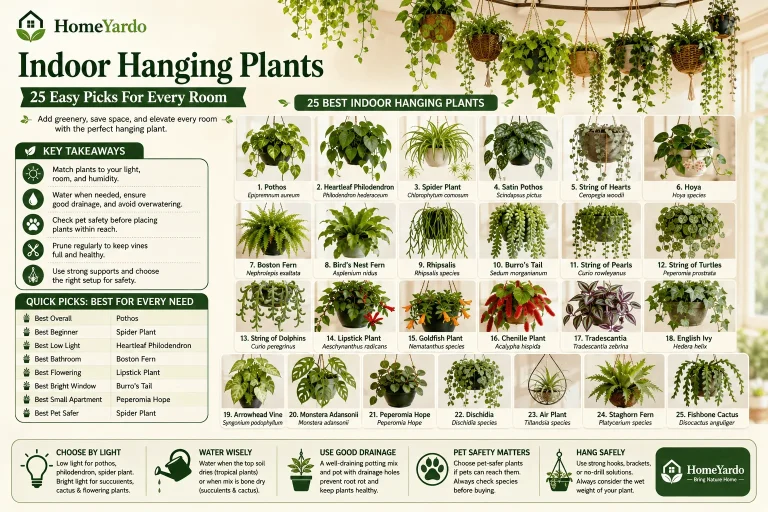
| Hanging display | Pothos, spider plant, English ivy, heartleaf philodendron | Their trailing growth works well from hooks or shelves |
| Shower-adjacent area | Boston fern, bird’s nest fern, air plant, calathea | They enjoy humidity but should not sit under constant water |
| Pet home | Spider plant, Boston fern, bird’s nest fern, calathea | These are safer choices for many cats and dogs |
| Beginner care | Snake plant, ZZ plant, pothos, spider plant | They forgive missed watering and imperfect light |
Why Bathrooms Can Be Good Places For Plants?
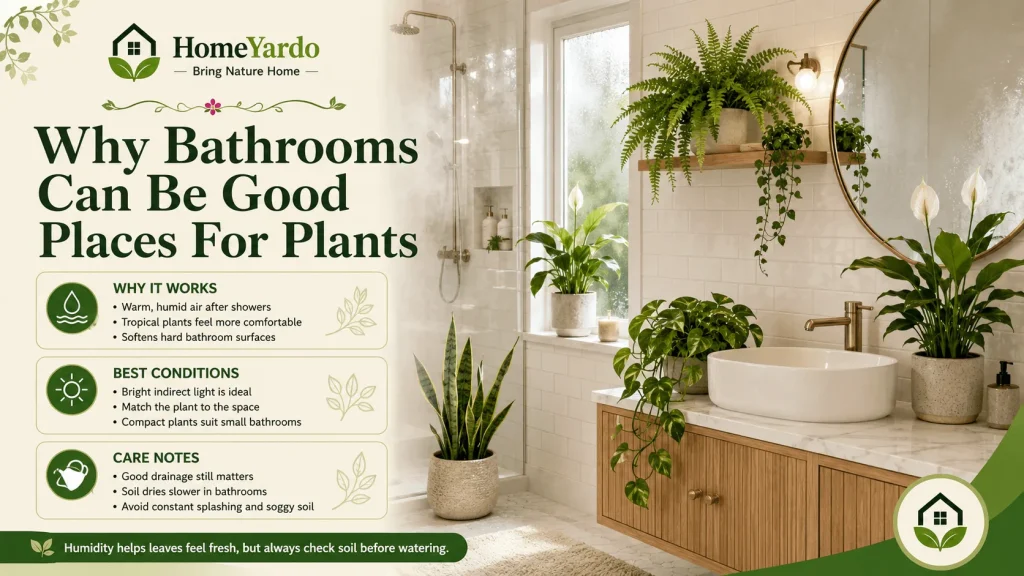
The right houseplants can adapt well to bathroom conditions, especially when the room stays warm and humid after showers. Many tropical house plants naturally prefer warmer conditions and higher humidity, although each species still has its own requirements for light, watering, and airflow.
Plants also help to make tiles, mirrors, taps and glass look softer. Just a small plant in a corner of the bathroom can make it feel more peaceful. You might think this thing is a trifle, but it can make the room feel much warmer and more comfortable.
It’s all about selecting a plant that is appropriate for the space. Very different plants can be given in a bright window in a steamy bathroom, compared to those in a dark guest bathroom. If the plants in your bathroom are properly matched with regard to light, air flow and space, they will be much easier to keep happy.
Bathroom Indoor Plants And House Plants For Bathroom Spaces
Bathroom houseplants for indoors must be able to resist more than humidity. After the shower, a bathroom may feel warm and moist, and after the fan circulates or the door remains open, it will be cooler and drier. This rapid change is the primary reason some typical houseplants don’t do well in bathrooms.
Plants that will thrive in the bathroom atmosphere of limited space, slower soil drying, moist air, and indirect light are generally the best choices. They should also be easily transferable when the counter, shelf or floor has to be cleaned.
Look at the exact location where the plant will be placed before selecting the plant. A bright windowsill is a different growing environment than a shaded vanity or shower ledge, or a dark powder room. Plants that are located near a shower can get steam, but not if it splashes the leaves or keeps the soil constantly wet.
In small bathrooms, consider compact plants, wall holders, narrow pots or hanging baskets. If the bathroom is large, floor plants may be suitable as long as they don’t obstruct towels, doors, mirrors or air flow. When plants are healthy and placed properly, one individual plant looks better than a few plants in crowded pots in most bathrooms.
Good drainage is still required. Humidity in the bathroom will freshen leaves, but not water the plants correctly. Before watering, always look at the soil to see if it is moist because bathroom plants may not dry out as quickly as plants in other rooms where they are in brighter, drier conditions.
How To Choose The Right Bathroom Plant?
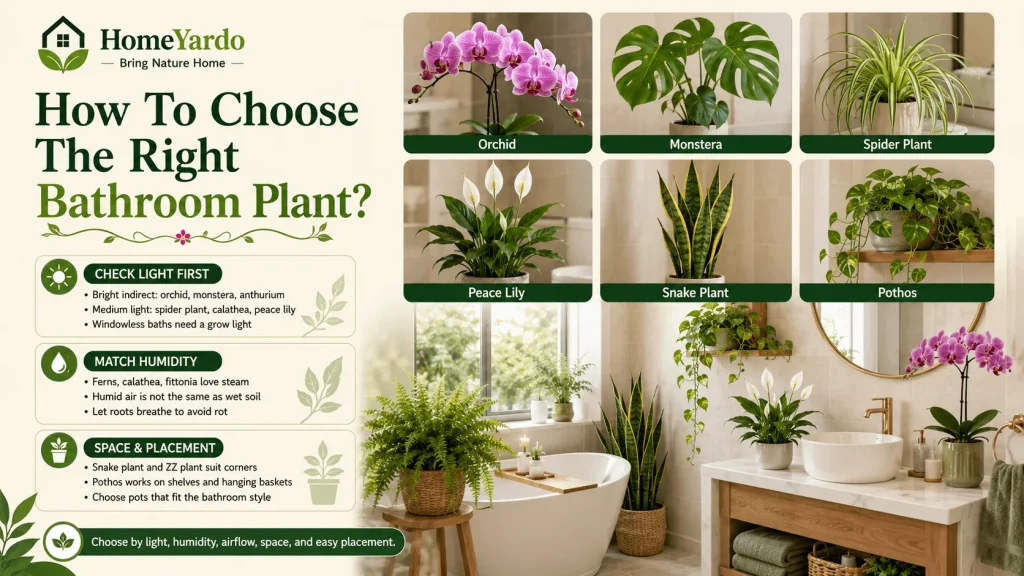
There is no bathroom in the living room or bedroom. The room can be damp for half an hour followed by dryness again. Bright windows can turn into a hot patch of sun and dark guest baths generally lack light until someone flicks a switch.
Start with light. Next consider humidity, air flow, space, and pet safety. You’ll find a picture-perfect plant will have the “hump in its shoulders” when that room has inadequate lighting or watering is excessive.
Check Bathroom Light First
Above all, it’s light that decides. Orchids, aloe vera, rubber plant, monstera and anthurium thrive in bright indirect light. Medium light is best for spider plant, bird’s nest fern, calathea and peace lily.
Low light is different from no light. Low light bathroom has some natural or artificial light. If there is a windowless bathroom space, have a grow light or plant rotation plan available. Otherwise, even hardy plants gradually lose their vitality.
Match The Plant To Bathroom Humidity
For many tropical plants humidity can make them blossom and be healthier and fuller. Steamy air is enjoyed by Boston fern, bird’s nest fern, calathea, maidenhair fern and fittonia. Peace lily and orchid will perform well in a more consistent humidity as well.
Don’t confuse humid air with wet soil! This is where most bathroom plants run into trouble. Roots continue to require oxygen. Even a humidity-loving plant can go yellow, sour or begin to rot if the soil remains damp.
Check Ventilation And Temperature
Many plants like the steam, but not stale damp air. After showering, bathrooms must be ventilated. The plant and the room dry at a healthy rate through an exhaust fan, open window or a cracked door.
Temperature fluctuations are also a factor. Avoid using drafty cool air, extremely hot water splashes and heating vents. The water vapor may be beneficial to a plant growing next to the shower, but it’s not so good for it if it gets drenched each morning, like a loofah.
Choose By Space And Placement
Shape is important in a bathroom. Snake plant, ZZ plant, and cast iron plant thrive in narrow corners and are upright plants. Shelf plants and wall planters are enhanced by trailing plants such as pothos and heartleaf philodendron.
For small bathrooms, consider the use of small plants like air plants, fittonia, lucky bamboo, and small orchids. Monstera, rubber plant or parlor palm can be accommodated in large bathrooms. Allow space for towels, mirrors, doors and life. You should not attack a plant when you brush your teeth.
If you’re looking for a clean design, go for the same style as the bathroom. A white ceramic pot can keep things simple. A textured clay pot can help to warm up a simple room. Plant placement can also be planned around the rest of the home rather than treating the bathroom separately. This feng shui plants guide compares plant choices for bathrooms, bedrooms, living rooms, kitchens, offices, and entryways while still accounting for practical growing conditions.
Take advantage of height to create a more natural space. Pothos can dangle from a high shelf, Boston ferns can be displayed on a stool next to a bathtub, and a snake plant can be placed so that it fits in a tight corner. Don’t put a pot in a walkway—the smaller the floor, the better, so use wall hooks, open shelves or a hanging basket.
Remember to clean this as well. Bathrooms lose luster of soap marks, water marks and dust. Select locations that provide easy access for wiping down surfaces, moving pots as needed, and not daily brushing of wet towels.
25 Best Plants For Bathroom Spaces
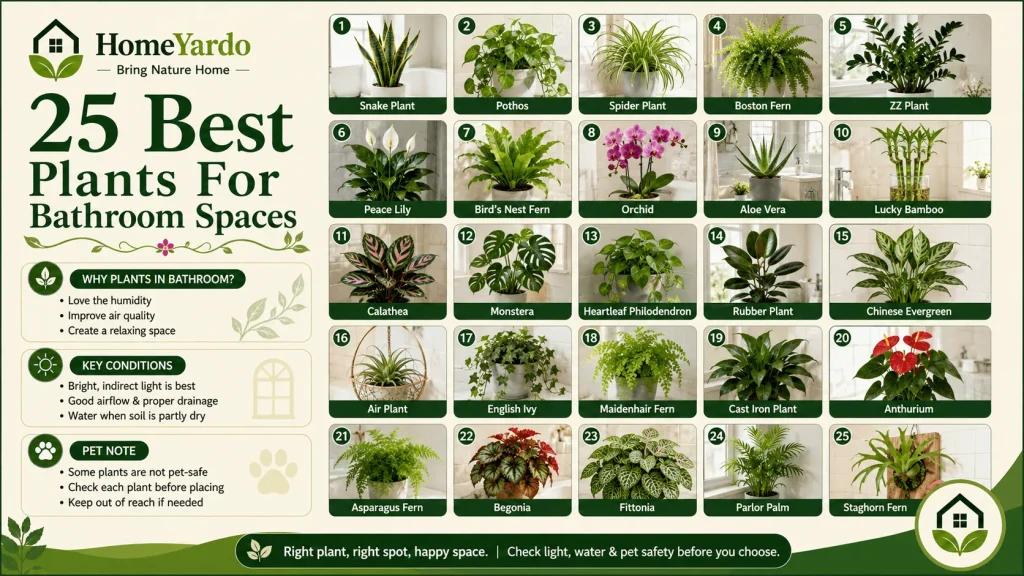
Here are the top 25 bathroom plants that perform well when they are placed in the proper conditions. Each has their own personal comfort zone so make sure you check the lighting and water levels, the placement and note to pet before deciding.
A plant’s name may vary depending on the shop, region or cultivar. The names of plants below can provide you with a way to double-check the products you are purchasing, especially when it comes to pet safety.
1. Snake Plant
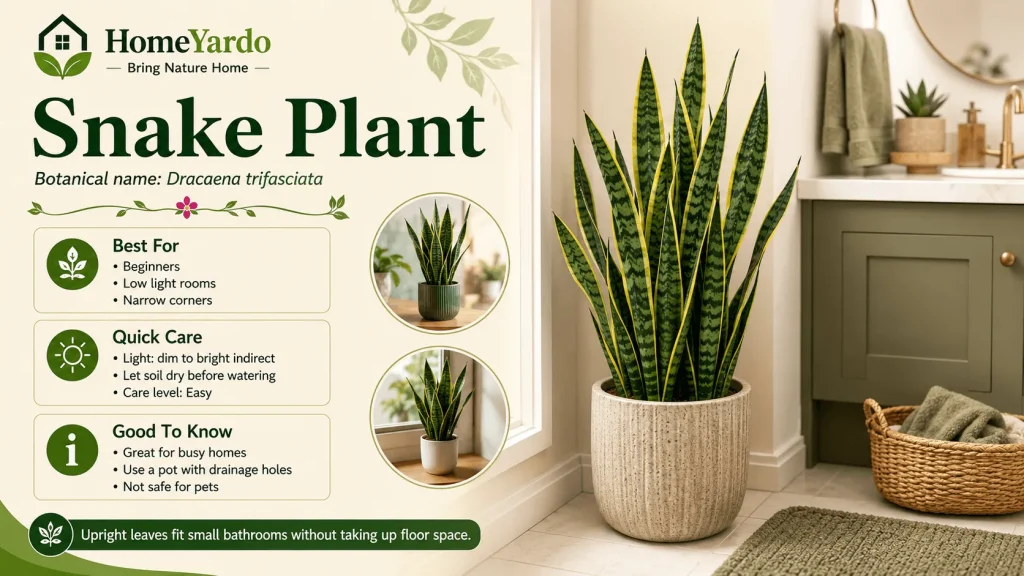
The Botanical Name: Epipremnum aureum
Great for beginner’s lighting, low light, and narrow corners
Light: dim to bright indirect light
Care level: Easy
Pet note: not safe for pets.
Snake plant is among the simplest bathroom plants to use for busy and dim people. Its upright, tall leaves can be positioned in narrow corners or guest bathrooms without taking up the flooring. It is important to let the soil dry prior to watering, particularly in rooms with high humidity. It is better at coping with missed watering than with additional watering. Make sure to use a pot that has drainage holes. Keep it out of reach of cats and dogs who chew on leaves.
2. Pothos
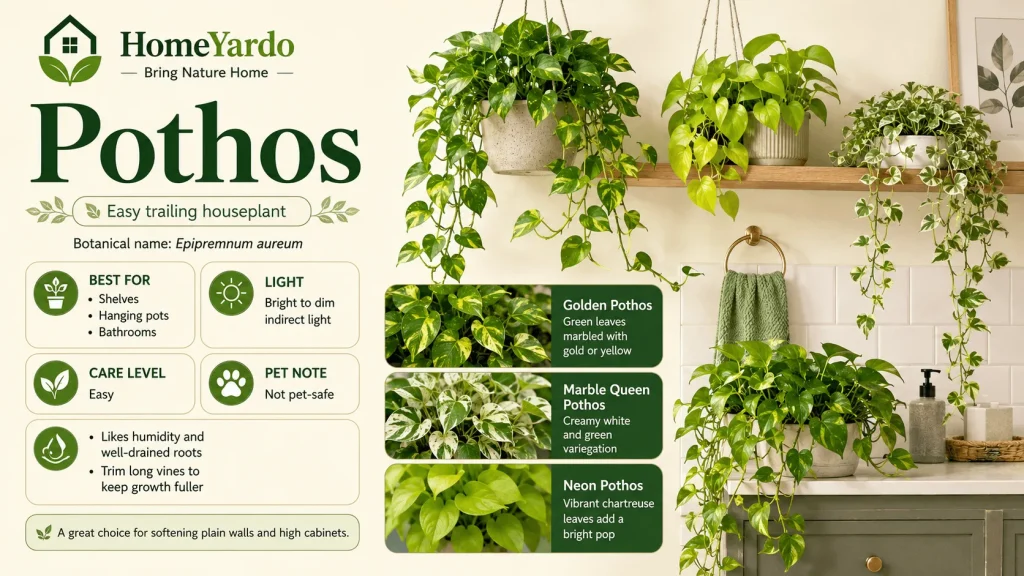
The Botanical Name: Epipremnum aureum
The best option is shelves, hanging pots and low to medium
Light: bright to dim indirect light
Care level: Easy
Pet Note: Not pet-safe.
Pothos is a good option for hanging shelves, pots as well as bathroom fixtures that are low to medium-light. The vines that grow through it are beautiful which makes it a great choice to help soften the look of a plain wall and high cabinets. The marble queen, gold pothos and neon pothos have slightly different appearances. The humidity helps the plant develop, the roots need to be drained. Cut long vines in order to make sure the plant is hydrated.
3. Spider Plant
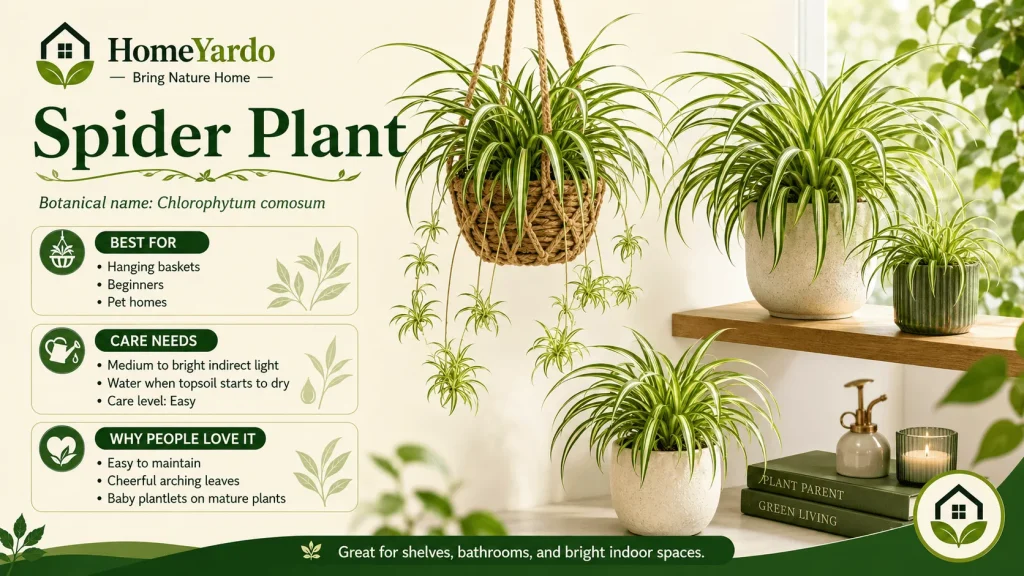
Botanical name: Chlorophytum comosum
Best for: hanging baskets, beginners, pet homes
Light: Medium to Bright indirect light
Care level: Easy
Pet note: pet-safety
Spider plants are easy to maintain, cheerful and tolerant. It’s great in hanging baskets or placed on a sunny shelf, where its arched leaves are able to be spread. The mature plants are often the ones to make tiny plantlets that feel like a little gardening bonus. It prefers light that is moderately indirect and can withstand the normal humidity of a bathroom. The topsoil should be watered when it starts to dry.
4. Boston Fern
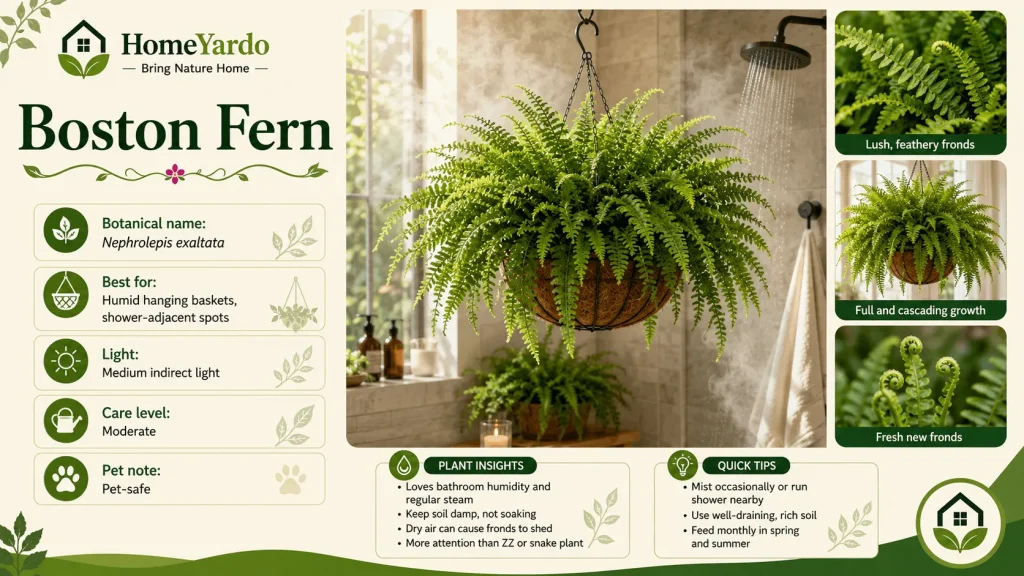
Botanical name Nephrolepis exaltata
The best for humidity hang baskets, shower-adjacent spots
Light: medium indirect light
Care level: moderate
Pet note: pet-safety
Boston ferns love bathrooms that receive regular steam. It looks lush and soft when it is placed in hanging baskets, on an upright, or in an area of the shower with indirect lighting. Keep the soil damp, but not soaking. Dry air can cause the fronds to fall. This fern requires more attention than the ZZ or snake plant; however, the humidity of the bathroom will make it easier to care for it.
5. ZZ Plant
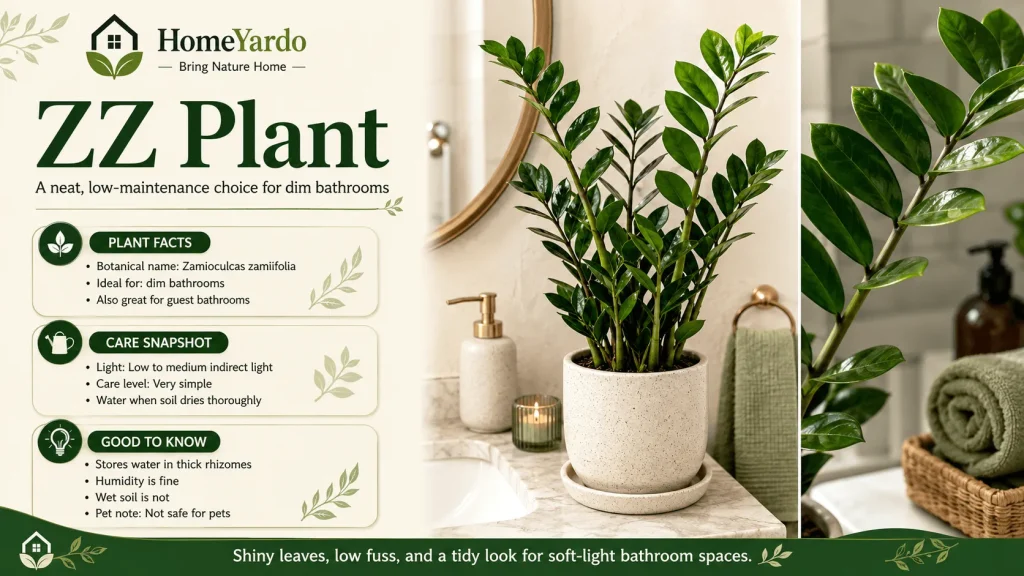
Botanical name: Zamioculcas zamiifolia
Ideal for: dim lighting bathroom, guest bathroom, and bathrooms that are low maintenance.
Light: Low to Medium indirect light
Care level: very simple
Pet note: not safe for pets.
ZZ plants are peaceful low-maintenance choice for bathroom spaces that are dim and for those who do not remember to water the plant. The plant stores its water inside large rhizomes and, therefore, does not require continuous watering. The soil should dry thoroughly between irrigations. The shiny leaves look neat in powder rooms, guest bathrooms or in corners that have soft light. The humidity is good, but wet soil isn’t.
6. Peace Lily
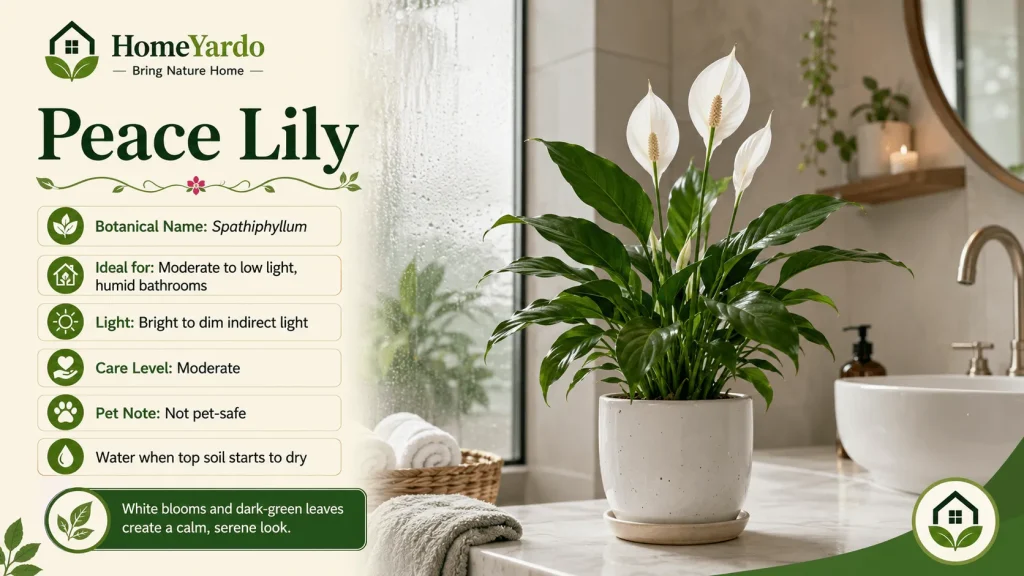
Botanical Name: Spathiphyllum.
Ideal for: moderate to low light, humidity White flowers
Light: bright to dim indirect light
Care level: moderate
Pet Note: Not pet-safe.
Peace lily is a great choice for bathrooms with moderate to low light levels and steady humidity. The dark-green leaves as well as the white flowers, create a calm, serene appearance. It might droop during thirsty times, but it is striking though it is beneficial. Make sure to water it when the soil’s top layer begins to dry out, and utilize a container that drains. Very dark bathrooms may reduce flowering.
7. Bird’s Nest Fern
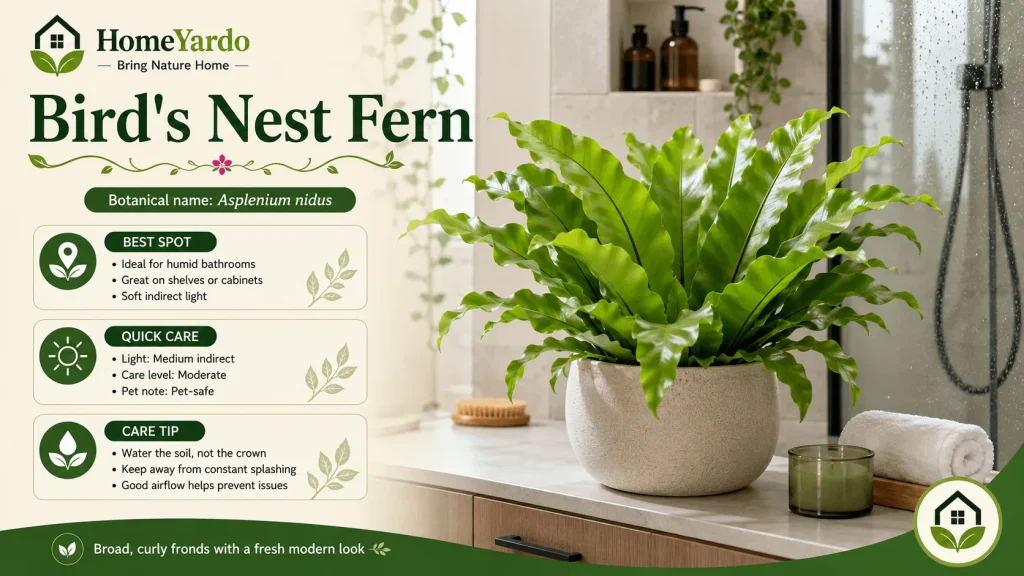
Botanical name Asplenium nidus
Ideal for bathrooms with humidity and shelves. Also with soft indirect light
Light: medium indirect light
Care level: moderate
Pet note: pet-safety
Bird’s Nest fern has broad, curly leaves that feel modern and fresh. It prefers bathrooms that are humid with subtle indirect sunlight. Set it up on a cabinet, a shelf or a shower ledge that is adjacent to it where it is surrounded by steam, but not a constantly splashing. The soil should be watered around the plant but be sure not to fill the crown in the middle. Airflow is a good way to prevent root and leaf issues.
8. Orchid
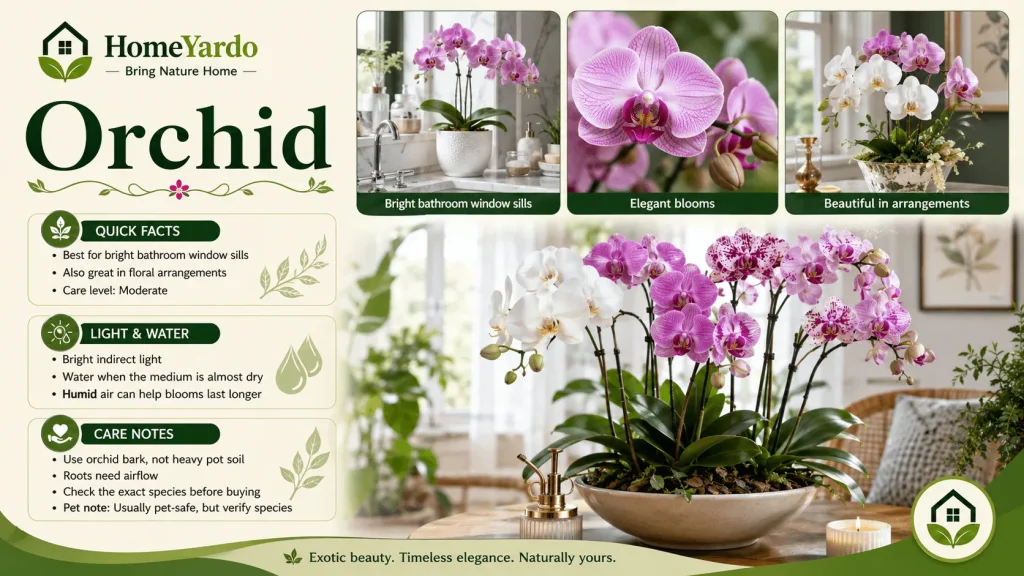
Botanical name Orchidaceae
The best choice is bright bathroom window sills, and floral arrangements
Light: Bright indirect light
Care level: moderate
Pet note: Typically, pet-safe is a matter of what kind of pet.
The orchid is a beautiful option for bathrooms when it is lit by indirect light. A bright or windowsill will work, particularly with moth orchids. A humid environment can make flowers last longer but the roots require air. Choose orchid bark over heavy pot soil. Only water when the growth medium is almost dry. Make sure you know the exact orchid species before purchasing.
9. Aloe Vera
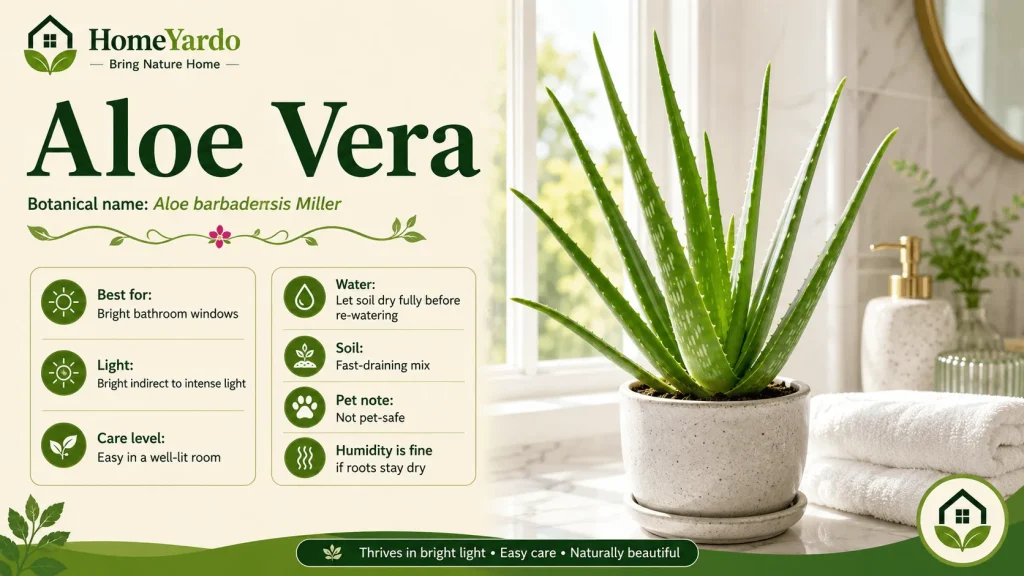
Botanical name Aloe barbadensis Miller
Best for: bright bathroom windows
Light: Bright indirect to intense light
Care level: Easy when the room is well-lit.
Pet Note: Not pet-safe.
Aloe vera can thrive in a bathroom, but only when the bathroom is well-lit. It requires bright lighting, fast draining soil, and cautious watering. A bright bathroom window is more appealing than a dim shower area. The soil should be completely dry before re-watering. Bathroom humidity is fine provided that the roots remain dry enough. Keep aloe away from the reach of curious animals.
10. Lucky Bamboo
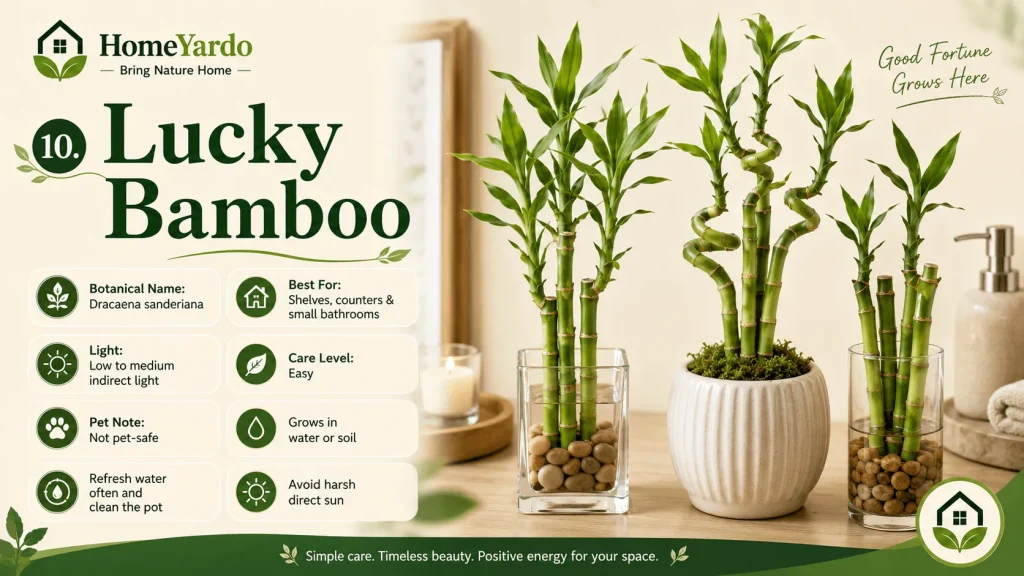
Botanical Name: Dracaena Sandersiana
The best for shelves, counters, and small bathrooms
Light: Low to Medium indirect light
Care level: Easy
Pet Note: Not pet-safe.
Lucky bamboo is an excellent alternative for counters, shelves and bathrooms with small spaces. It thrives in soil or water and is best suited to indirect sunlight. If you are growing your plants in water you should refresh the water frequently and clean the pot. Avoid direct sunlight that is too intense, which can burn the leaves. Lucky bamboo isn’t actually bamboo, despite the name being a cliche.
11. Calathea
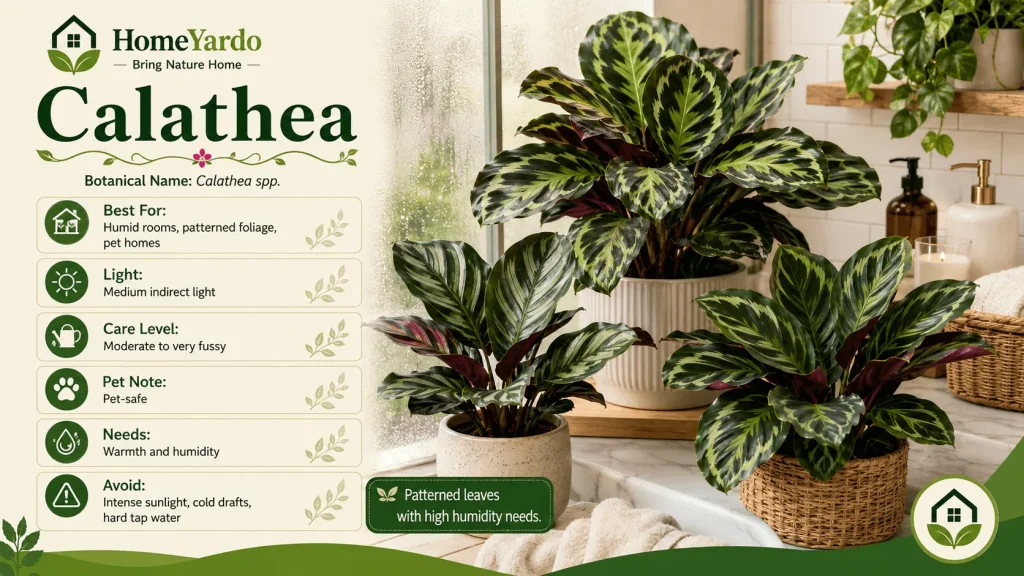
Botanical Name: Calathea spp.
The best for the humidity, patterns on leaves and pet homes.
Light: medium indirect light
Care level Moderate to very fussy
Pet note: pet-safety
Calathea is adored for its patterned leaves. Bathrooms can provide it with the humidity it craves. It is a fan of warmer temperatures with indirect light and mildly humid soil. Dry spells, cold drafts and hard tap water can cause leaves’ edges to turn brown. It’s not the simplest plant, but it pays off with regular care and beautiful leaves. Be sure to keep it away from intense sunlight.
12. Monstera
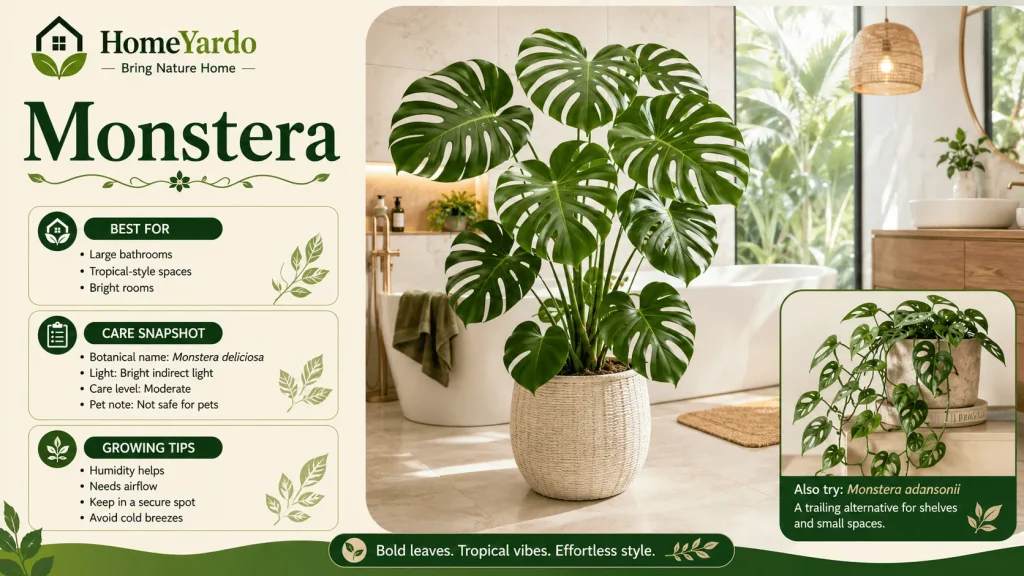
Botanical name: Monstera deliciosa
The best for large bathrooms and tropical styles, light spaces
Light: Bright indirect light
Care level: moderate
Pet note: not safe for pets.
Monstera is ideal for large bathrooms that have bright indirect light and ample space for growth. The split leaves of Monstera give an exotic look. Humidity is helpful but the plant requires airflow and a secure location. Be sure to keep it out of cold breezes and edges where leaves may be damaged. Monstera adansonii works best in smaller trailing configurations.
13. Heartleaf Philodendron
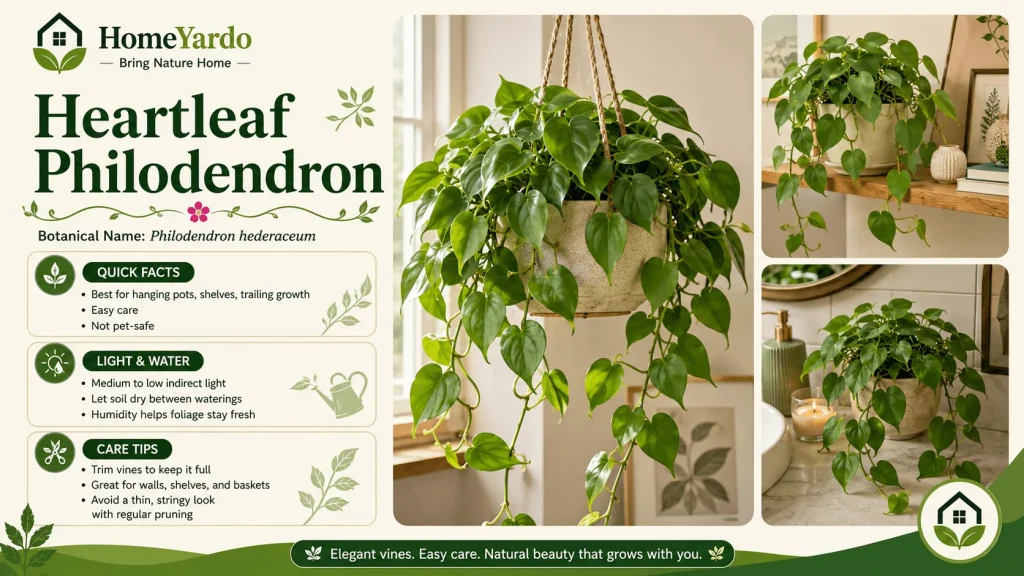
Botanical Name: Philodendron hederaceum
Best for: hanging pots, shelves, trailing growth
Light: medium to low indirect light
Care level: Easy
Pet Note: Not pet-safe.
Heartleaf is a trailing plant that has soft, heart-shaped leaves. It is a great choice for walls, shelves or hanging baskets that receive moderate to low indirect light. The humidity in bathrooms can make the foliage look fresh. The vines should be cut every now and again so that the plant is full and not slim and stringy. The soil should dry out between irrigations.
14. Rubber Plant
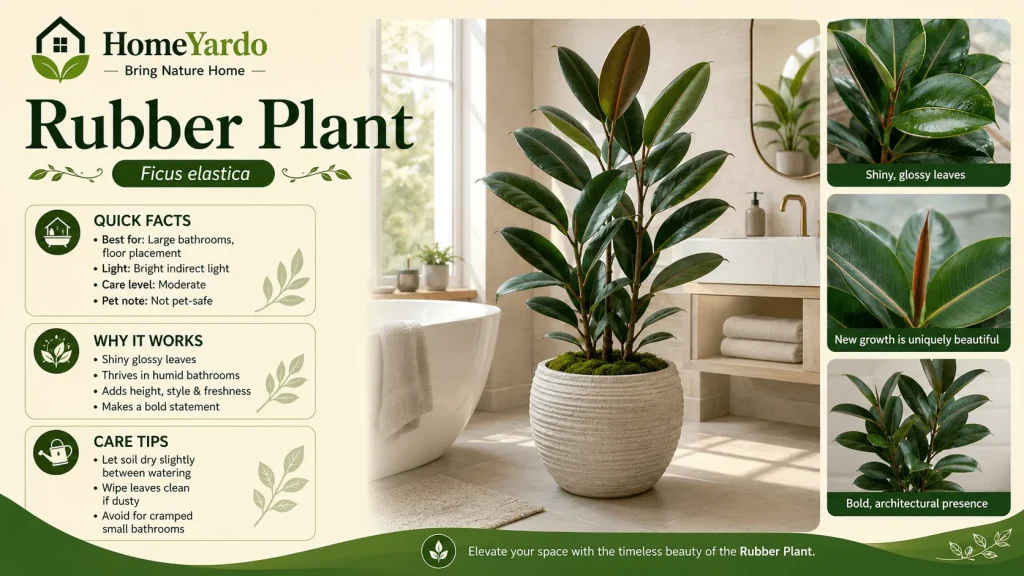
Botanical Name: Ficus elastica
The best for large bathrooms, floor layout and shiny leaves
Light: Bright indirect light
Care level: moderate
Pet Note: Not pet-safe.
The rubber plant is a sturdy floor plant suitable for bathrooms that are larger with bright indirect light. The leaves are glossy and provide the space with a neat and polished appearance without the need for flowers. It loves warm, steady light and soil that is dry slightly between irrigations. Wipe the leaves clean when they become dusty so that they can absorb sunlight. Bathrooms with small spaces can seem crowded when there is only one.
15. Chinese Evergreen
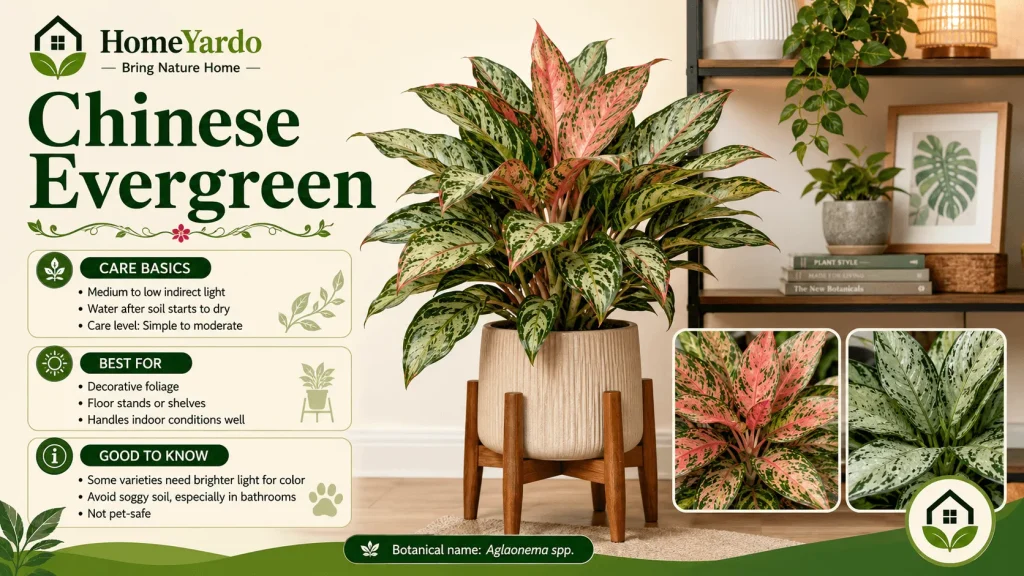
Botanical Name: Aglaonema spp.
Ideal for: medium to light in the afternoon and decorative foliage
Light: medium to low indirect light
Care level: simple to moderate
Pet Note: Not pet-safe.
Chinese evergreen is a pretty low to medium light plant with beautiful leaf designs. It can handle indoor conditions better than plants that are more demanding in their environment. Different varieties may require brighter lighting to preserve their colors. In bathrooms, stay clear of moist soil and use water only after the soil has begun to dry. It is a great option to place it on a stand for the floor or a shelf.
16. Air Plant
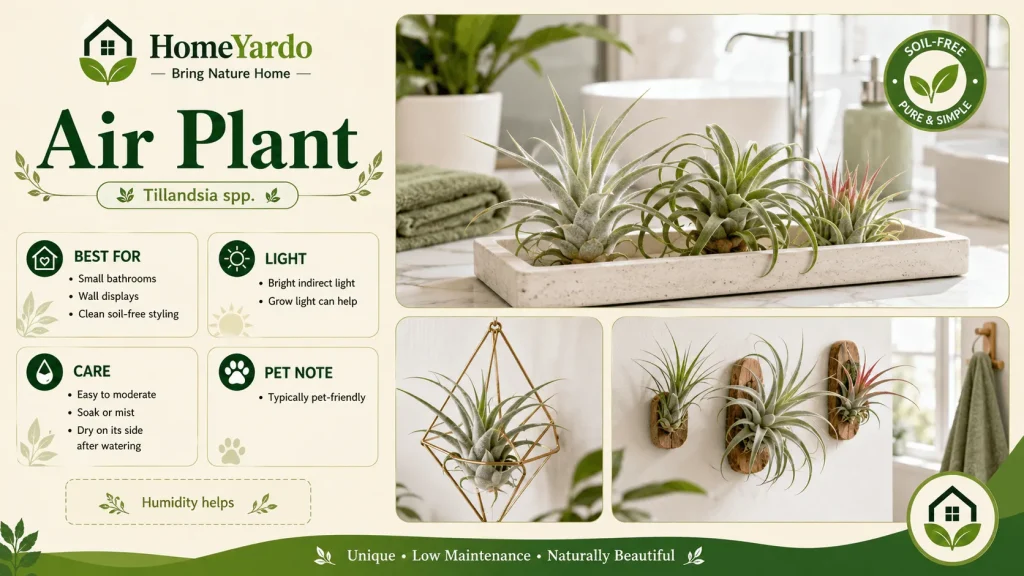
The botanical name is Tillandsia spp.
Ideal for bathrooms with small spaces, wall displays, clean styling, and soil-free style
Light: Bright indirect light
Care level: Easy to moderate
Pet note: typically, pet-friendly
A plant that is air-conditioned is ideal for bathrooms with small spaces because it does not require soil. It can be placed in an open holder in a display on the wall, or even on a tray. Humidity is helpful, it requires soaking or washing. It also requires bright indirect light or a grow light. After watering, let the plant dry thoroughly with good airflow so water does not remain trapped around its base.
If you want to use Tillandsia in a glass or mounted display, this guide to air plants for terrariums explains suitable types, lighting, watering, airflow, and open-container setups in more detail.
17. English Ivy
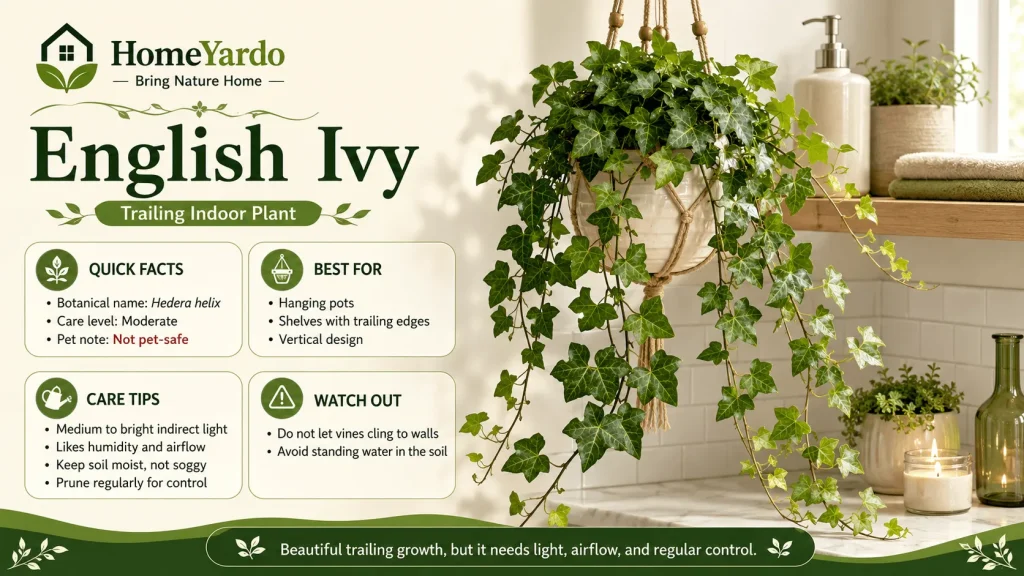
Botanical Name: Hedera helix
Ideal for hanging pots, shelves with trailing edges, Vertical design
Light: Medium to Bright indirect light
Care level: moderate
Pet Note: Not pet-safe.
English Ivy is great as a trailing or hanging bathroom plant if it is exposed to an indirect light source and has good airflow. It can soften shelves as well as tall planters, but it requires periodic pruning. Don’t let vines stick to the walls, fixtures and damp areas. The plant loves humidity, but the soil shouldn’t remain in water. It’s beautiful but it requires some kind of control.
18. Maidenhair Fern
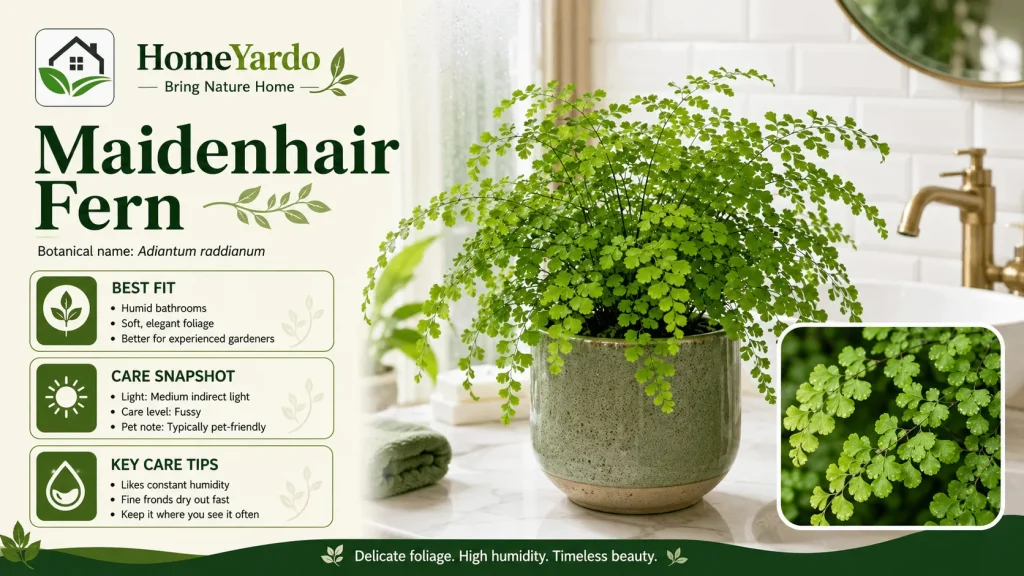
Botanical name Adiantum raddianum
Ideal for low humidity and soft foliage. Experienced gardeners
Light: medium indirect light
Care level: fussy
Pet note: typically pet-friendly
Maidenhair fern is soft, elegant, and gorgeous in humid bathrooms. It is a fan of constant humidity, indirect light and air that doesn’t dry out excessively. If it gets dry the fine fronds may dry out quickly. It is not an appropriate plant to be neglected in your watering routine. It is best to place it in a spot where you can frequently see it, so that it isn’t forgotten about.
19. Cast Iron Plant
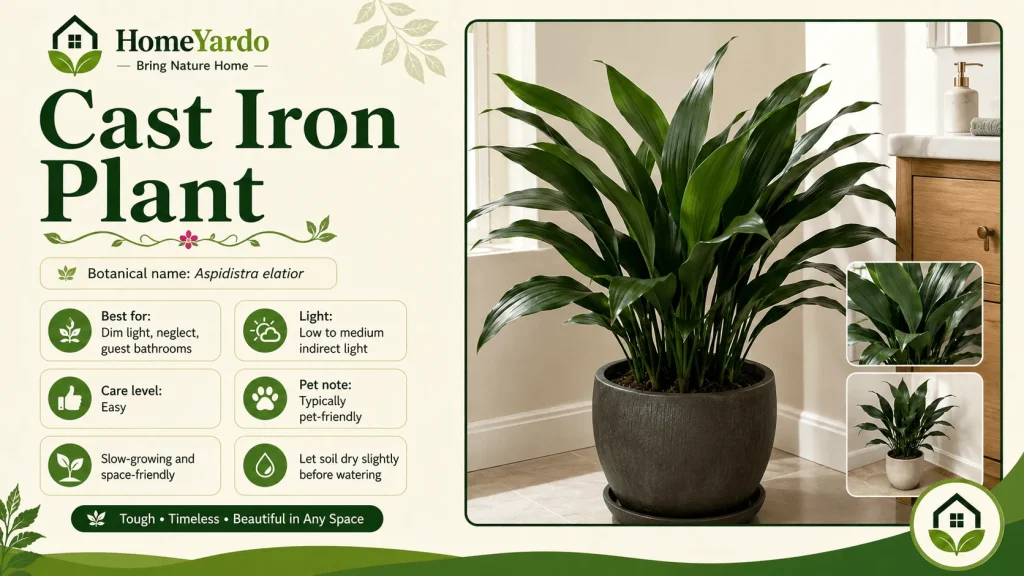
Botanical name: Aspidistra elatior
Ideal for: dim light or neglect, guest bathrooms
Light: Low to Medium indirect light
Care level: Easy
Pet note: typically pet-friendly
Cast iron plants earn their name. It is tolerant of the glare of the sun, watering issues that aren’t noticed and a variety of indoor conditions that are less than perfect. Its dark, long leaves are great for bathrooms for guests and in shaded corners. Its growth is slow, it won’t quickly grow out of the area it is in. Allow the soil to dry a bit before you water it. It’s a great choice for those who have had poor luck with houseplants that are fussy.
20. Anthurium
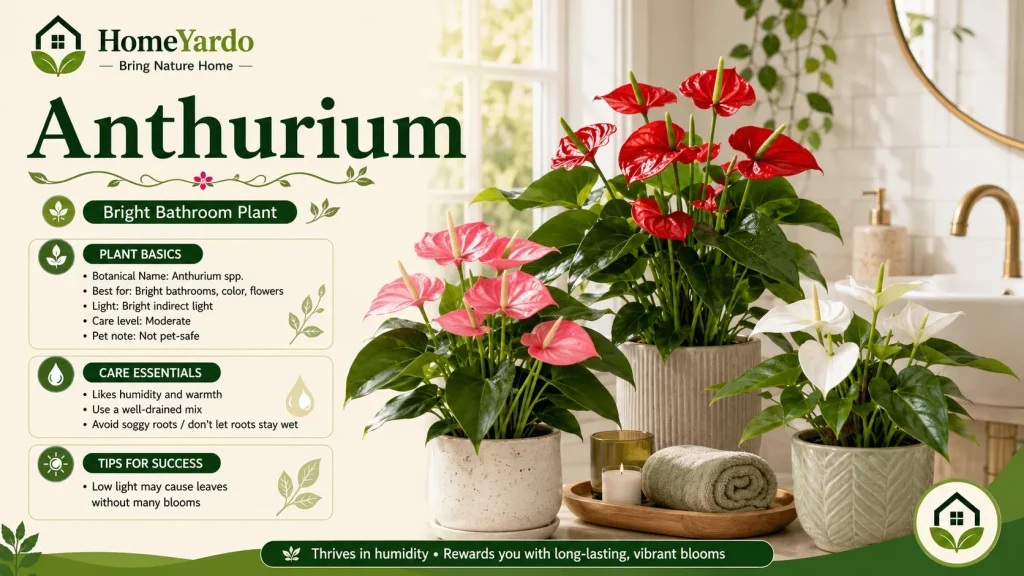
Botanical Name: Anthurium spp.
Best for: bright bathrooms, color, flowers
Light: Bright indirect light
Care level: moderate
Pet Note: Not pet-safe.
Anthurium provides colour to bright bathrooms with pink, red and white spathes. It prefers humidity and indirect light. If it isn’t getting sufficient light, it could develop leaves, but not bloom as well. Make sure to use a well-drained mix and don’t let the roots get wet. A warm vanity space near the window could work well. Beware of it in homes with chewing pets.
21. Asparagus Fern
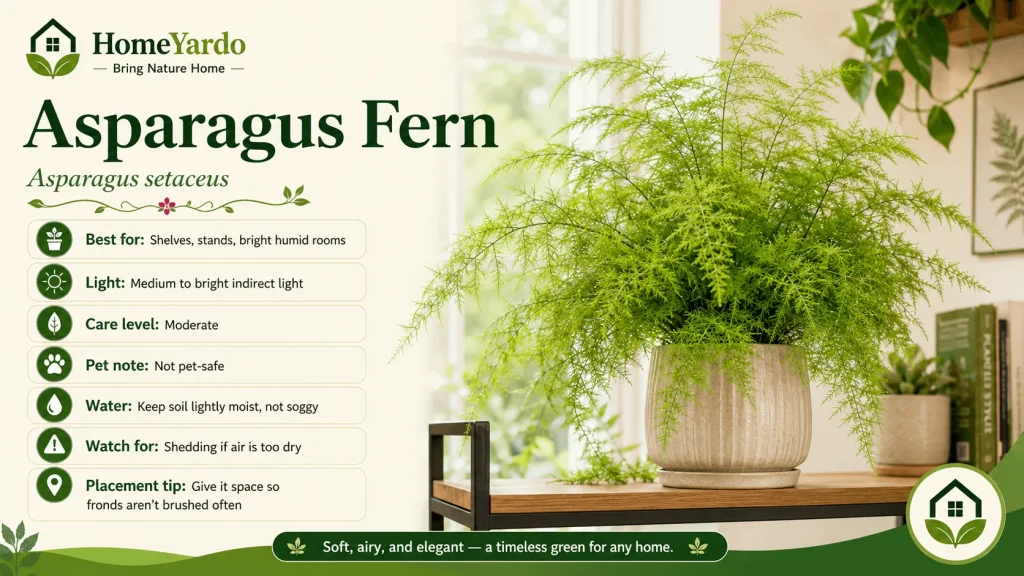
Name of the plant: Asparagus setaceus
The best for shelves, soft texture, bright and humid rooms
Light: Medium to Bright indirect light
Care level: moderate
Pet Note: Not pet-safe.
Asparagus fern is a great addition to shelves and stands with a soft, airy look. It’s not really a plant but it is a fan of the humidity and direct light that is bright and intense. Make sure the soil is kept damp but not wet. If the room becomes humid or the rug gets uneven, it might shed. Put it in a place where it will be able to grow without having to rub against towels throughout the day.
22. Begonia
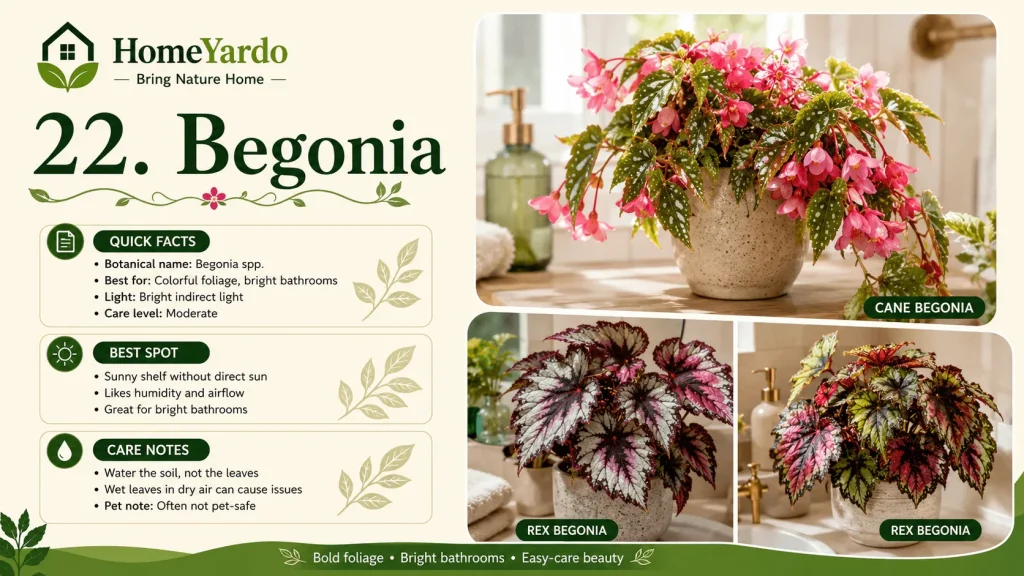
Botanical name: Begonia spp.
Best for: colorful foliage, bright bathrooms
Light: Bright indirect light
Care level: moderate
Note to pet owners: Often, pets are not pet-safe
Begonia can add vibrant colour to bathrooms thanks to the good indirect lighting and adequate airflow. Cane and Rex begonias are the most popular selections for foliage. They love humidity, damp leaves sitting in dry air can lead to problems. It is better to water the soil instead of giving the plants a bath. A sunny shelf free from direct sunlight is a great location.
23. Fittonia
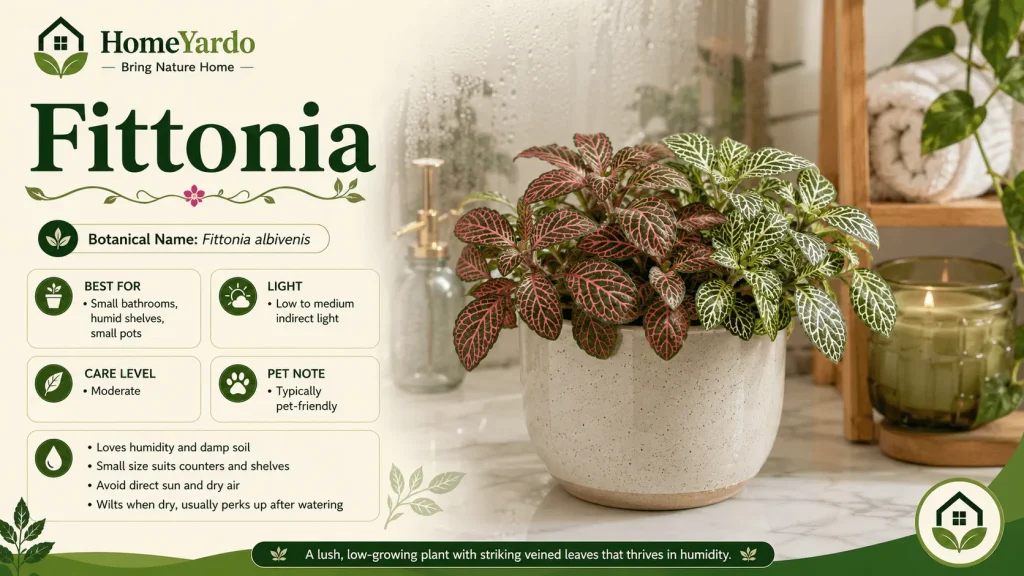
Botanical Name: Fittonia albivenis
The best for small bathrooms and humid shelves, small pots
Light: Low to Medium indirect light
Care level: moderate
Pet note: typically, pet-friendly
Fittonia, also known as the nerve plant, is a compact bathroom plant with distinctive veined leaves. It prefers humidity, indirect light, and evenly moist but well-drained soil. Its preference for humid conditions also makes it one of the popular terrarium plants for suitable closed or semi-closed setups. In a bathroom, its small size works particularly well on counters and shelves. Protect it from strong direct sunlight and prolonged dry conditions.
24. Parlor Palm
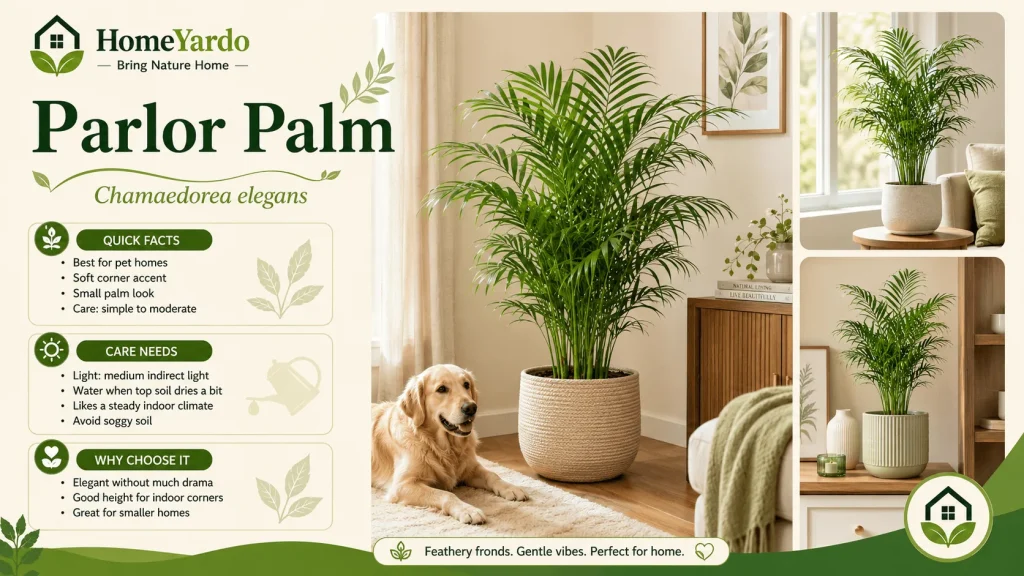
Botanical name: Chamaedorea elegans
Best for: pet homes, soft corners, small palm look
Light: medium indirect light
Care level: simple to moderate
Pet note: pet-safety
Parlor palm provides an elegant palm style without requiring a large bathroom. It prefers light indirect and a steady indoor climate. Let the soil above dry a bit before watering it, since humid environments can cause slow drying. It is ideal for corners that require the height of a tree but without drama. This palm is a great choice for pet houses in comparison to other big houseplants.
25. Staghorn Fern
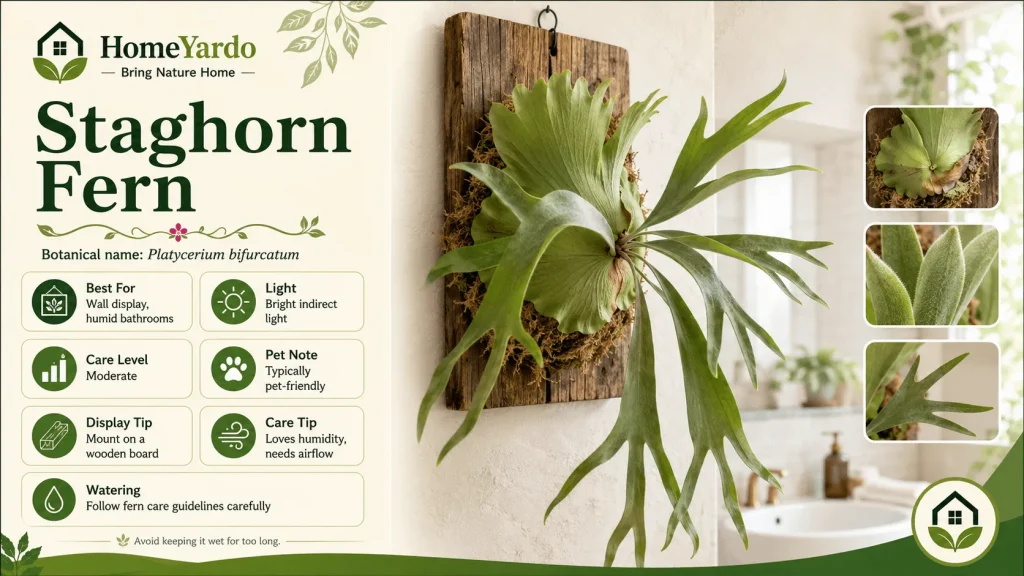
Botanical name: Platycerium bifurcatum
Ideal for display on walls, bathrooms that are humid and lighting fixtures that shine in indirect, bright light
Light: Bright indirect light
Care level: moderate
Pet note: typically pet-friendly
Staghorn Fern is a striking option for bathrooms with humid conditions that have bright indirect light. It can be placed on a wooden board, which makes it ideal to display on walls. The plant is a fan of humidity, however, it requires airflow so that the plant isn’t wet too long. Watering needs are different than the normal potted plant; therefore, follow the care guidelines carefully.
Plants That Are Good For The Bathroom By Situation
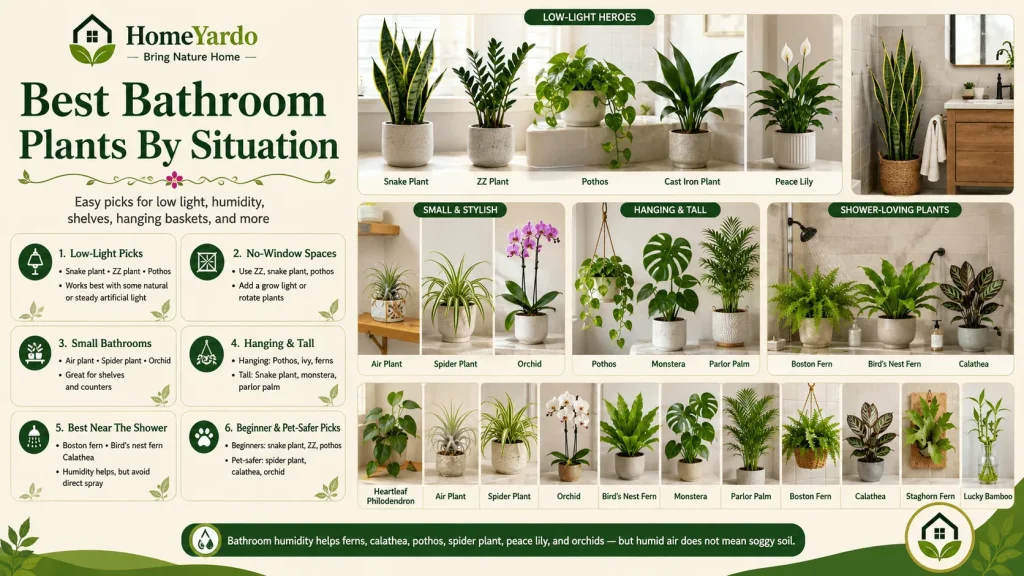
Once you select the proper type of plant, link it with the overall situation in your bathroom. Different plants are needed for a bright bathroom, dark powder room, small shelf, hanging basket and the corner that is adjacent to the shower.
| Bathroom Situation | Best Plant Choices | Why They Fit | Quick Care Note |
|---|---|---|---|
| Best Low-Light Bathroom Plants | Snake Plant, ZZ Plant, Pothos, Cast Iron Plant, Chinese Evergreen, Peace Lily, Heartleaf Philodendron | These plants tolerate dimmer bathrooms better than flowering or high-light plants. | Low light still means some natural light or steady artificial light. Growth may be slower. |
| Best Plants For Bathroom With No Window | ZZ Plant, Snake Plant, Pothos, Cast Iron Plant, Chinese Evergreen | These are tougher choices for dark spaces when supported with a grow light or rotation. | No plant thrives in total darkness. Use a grow light or rotate plants into a brighter room. |
| Best Small Bathroom Plants | Air Plant, Lucky Bamboo, Fittonia, Spider Plant, Small Pothos, Orchid, Bird’s Nest Fern | These plants fit shelves, counters, wall holders, and compact bathroom corners. | Avoid oversized pots that make the bathroom harder to clean or move around in. |
| Best Tall Bathroom Plants | Snake Plant, Rubber Plant, Monstera, Parlor Palm, Cast Iron Plant | These add height and structure in larger bathrooms or empty corners. | Choose upright plants for narrow spaces and fuller plants only where there is room. |
| Best Hanging Plants For Bathroom | Pothos, Spider Plant, Heartleaf Philodendron, English Ivy, Boston Fern, Asparagus Fern, Staghorn Fern | Trailing and cascading plants work well from shelves, wall hooks, and hanging baskets. | Keep them away from constant shower spray so the soil does not stay wet and heavy. |
| Best Plants For Shower Areas | Boston Fern, Bird’s Nest Fern, Air Plant, Pothos, Calathea, Maidenhair Fern | These plants enjoy humid air near showers when they also get light and airflow. | Place them near the shower, not directly under running water. |
| Best Fragrant Bathroom Plants | Orchid, Gardenia, Hoya, Jasmine, Peace Lily | These can add flowers or scent to bathrooms with bright indirect light. | Fragrant plants usually need more light than basic foliage plants. |
| Best Bathroom Plants For Beginners | Snake Plant, ZZ Plant, Pothos, Spider Plant, Cast Iron Plant, Lucky Bamboo | These are forgiving plants that handle imperfect watering and normal bathroom conditions. | Start with one easy plant and learn how fast the soil dries in your bathroom. |
| Pet-Safe Bathroom Plants | Spider Plant, Boston Fern, Bird’s Nest Fern, Calathea, Parlor Palm, Air Plant, Orchid, Staghorn Fern | These are safer choices for many homes with cats and dogs. | Pet-safer does not mean snack-safe. Keep plants away from pets that chew leaves. |
Humidity Note:
Plants for bathroom humidity include Boston Fern, Bird’s Nest Fern, Calathea, Peace Lily, Pothos, Spider Plant, and Orchid. These plants usually handle steamy bathroom air better than dry-room plants, but humidity does not mean wet soil. High humidity plants still need drainage, airflow, and protection from constant shower spray.
What To Know About The Best Plants For Bathrooms With No Light
Not all plants that thrive in dark rooms are suitable for bathrooms with no light. They are low light plants that can only thrive in the presence of a grow light, constant artificial light or a rotating schedule.
If you want a bathroom without any plants at all, opt for harder-to-kill plants like ZZ plant, snake plant, pothos, cast iron plant, and Chinese evergreen. Temporarily place one plant in the bathroom and then transfer it to a different room with indirect light where it can recover.
A small grow light on a timer is readily available for bathrooms which may be kept dark much of the day. Plants with weak growth, yellow foliage, soft stems, or wet soil for too long can occur without natural or artificial light. If so, a realistic Artificial plant might prove to be a better solution.
Pet-Safe Bathroom Plants
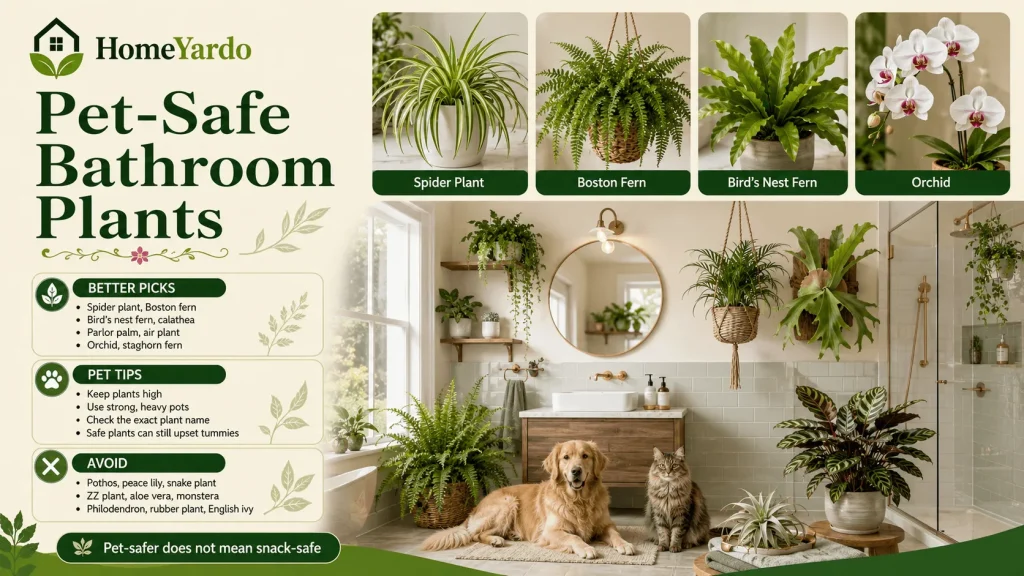
It’s important to give pet safety its own section as many popular bathroom plants are not safe for cats and dogs. In many instances, spider plant, Boston fern, bird’s nest fern, calathea, parlor palm, air plant, orchid and staghorn fern make better alternatives for many pet homes.
Pets can cause upset stomach even if the plant is safe for them, if the pet eats too many leaves. Plants should be kept high and provided with a strong pot; verify the exact name of a plant before purchase. If your pets chew plants, avoid pothos, peace lily, snake plant, ZZ plant, aloe vera, monstera, philodendron, rubber plant or English ivy.
Another friendly reminder: “pet-safer” is not a synonym for “snack-safe”. Boredom is another reason cats chew. Many dogs taste leaves as if they were to eat salad. If you know what I’m talking about, then here are the tips: hang up the plants, use heavy pots, and avoid toxic plants, even if they are perfect.
Can Bathroom Plants Help With Air Quality, Moisture, And Mold?
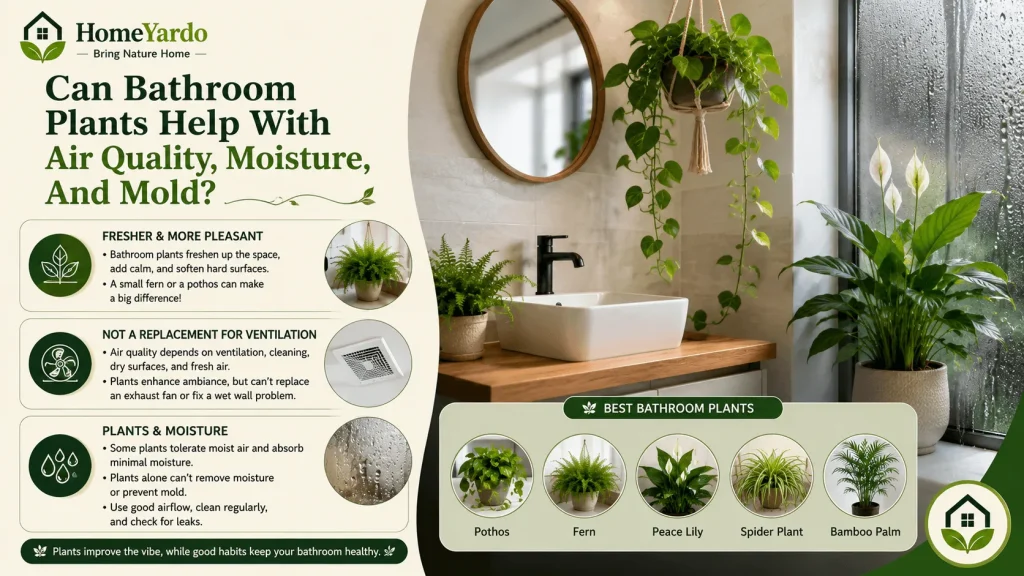
Bathroom plants will freshen up, calm down and make that room more pleasant. Bathrooms are typically full of hard surfaces and a small fern near the sink or a pothos hanging from the wall can help add a soft touch. That’s enough to warrant the addition of one!
But, don’t use the plants as a pot bathroom fan! The actual air quality is more related to ventilation, cleaning, dry surfaces and fresh air. A plant can add to a room’s ambiance but it can’t take the place of an exhaust fan or solve a wet wall problem that is wet.
The same applies to moisture. A few bathroom plants can tolerate moist air while a few may absorb minimal moisture from their foliage. However, plants are not enough to remove moisture to prevent mold. When it appears, it’s all about improved air circulation, frequent cleaning and inspecting for leaks.
Plants To Avoid In Bathrooms
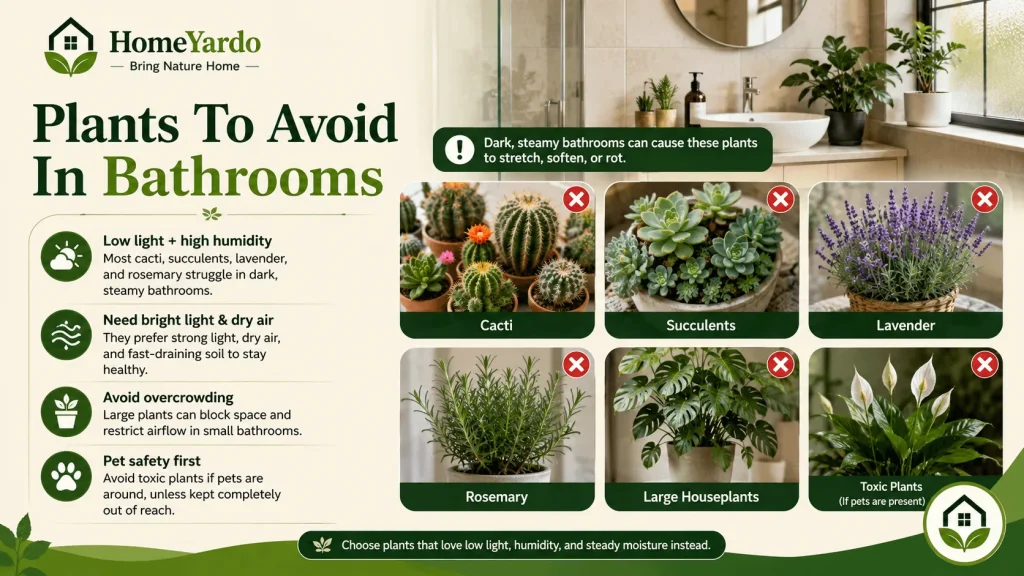
Some plants are simply better suited to drier, brighter spaces. Many cacti and succulents prefer stronger light, fast-draining soil, and enough airflow for their growing medium to dry properly. Dark, consistently steamy bathrooms can therefore increase the risk of weak growth or root problems. If you prefer these plants, succulents for terrariums and other open, well-drained displays are generally better suited to their moisture requirements than closed or persistently damp setups.
Along with lavender and rosemary, they also don’t like the sun and the air-conditioning. It can block walking around and restrict air flow in small spaces if the plants are too large. If pets are present, avoid toxic plants unless kept safely out of pets’ reach.
Bathroom Plant Care Tips
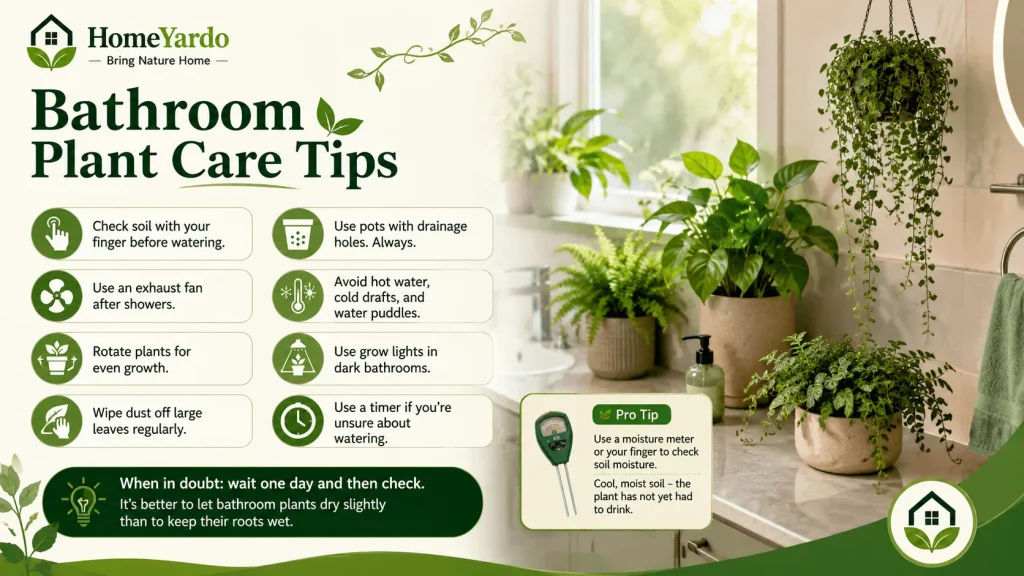
Care involves a lot of balance. Although there may be moisture in the air, the soil needs to dry the right amount. A drainage hole will be your best friend here.
Use your finger to probe the soil before watering it. Always use an exhaust fan after showers. Turn plants to grow even when they grow toward light. When dust accumulates on large leaves, wipe them off. Avoid hot water, cold draughts and puddles in pots.
Grow lights can be used in dark bathrooms. If you’re not sure when to water the plant, set it on a timer so it has constant watering without any prompting from you. These little things can help a bathroom plant live for a number of years.
When in doubt: wait one day and then check. It is best to let most bathroom plants dry slightly rather than to keep their roots wet. A low cost moisture meter will help, or you can use your finger! Cool, moist soil – the plant has not yet had to drink.
Common Bathroom Plant Problems And Fixes
Most bathroom plant issues can be easily related to the bathroom’s condition and solved. If a plant is becoming too “moody,” use this table.
| Problem | Likely cause | Quick fix |
|---|---|---|
| Yellow leaves | Overwatering, low light, or poor drainage | Let the soil dry, check the pot, and move to brighter indirect light |
| Brown tips | Dry spells, tap water sensitivity, or uneven watering | Water more evenly and trim damaged tips if needed |
| Mold on soil | Soil stays wet with poor airflow | Remove moldy topsoil, reduce watering, and improve ventilation |
| Fungus gnats | Constantly damp soil | Let the topsoil dry and use sticky traps if needed |
| Drooping leaves | Thirst, overwatering, or temperature shock | Check the soil first, then adjust the water and placement |
| Leggy growth | Not enough light | Move closer to a window or add a grow light |
| Leaf spots | Wet leaves plus poor airflow | Avoid splashing leaves and increase ventilation |
| Root rot smell | Soggy soil and damaged roots | Remove from pot, trim bad roots, and repot in fresh mix |
Final Takeaway
Bathroom plants thrive best when the plant is a match for the actual bathroom environment. Humidity is not the only factor of importance; light, airflow, space, drainage, and pet safety are also important. Orchids, ferns, peace lilies and larger foliage plants will thrive in a bright bathroom while tougher plants like snake plant, ZZ plant, pothos or cast iron plant will thrive in darker bathrooms. If no windows, have a grow light or move plants to brighter rooms. Choose one plant that’s easy to grow, observe how it fares, then introduce more once the bathroom watering and lighting schedule is known.
FAQ ‘s
This includes snake plant, pothos, spider plant, Boston fern, ZZ plant, peace lily, bird’s nest fern, orchid, air plant, and calathea. Choose based on light, humidity, space, and pet safety.
Boston fern, bird’s nest fern, calathea, maidenhair fern, fittonia, peace lily, and orchids usually enjoy humid bathroom air. They still need drainage and airflow so the soil does not stay wet.
Plants cannot thrive in total darkness long-term. For a bathroom with no window, use a grow light or rotate hardy plants like ZZ plant, snake plant, pothos, and cast iron plant into brighter rooms.
The best low-light bathroom plants include snake plant, ZZ plant, pothos, cast iron plant, Chinese evergreen, peace lily, and heartleaf philodendron. Low light may slow growth.
Yes, pothos is a good bathroom plant because it tolerates humidity, handles low to medium light, and trails well from shelves or hanging pots. Keep it away from pets because it is not pet-safe.
Yes, a snake plant can live in a bathroom if the pot drains well and the soil dries between waterings. It works well in low light, narrow corners, and guest bathrooms.
Bathroom plants may absorb a small amount of moisture, but they do not replace ventilation. Use an exhaust fan, dry wet surfaces, and fix leaks if moisture or mold is a problem.
Air plants, lucky bamboo, fittonia, spider plants, small pothos, orchids, and bird’s nest ferns are good for small bathrooms. Choose compact plants for shelves, counters, or hanging holders.
Pet-safer bathroom plants include spider plant, Boston fern, bird’s nest fern, calathea, parlor palm, air plant, orchid, and staghorn fern. Keep all plants away from pets that chew leaves.
Avoid plants that usually need dry air and strong sun, such as many cacti, succulents, lavender, and rosemary. Also avoid oversized plants in tight bathrooms because they can block airflow.
Boston fern, peace lily, spider plant, bird’s nest fern, pothos, calathea, and orchid handle humid bathroom air well. They may take in small amounts of moisture, but they will not replace ventilation.
Orchid, gardenia, hoya, jasmine, and peace lily can add flowers or scent to a bathroom with bright indirect light. Dark bathrooms are better suited to foliage plants than fragrant bloomers.
Snake Plant, ZZ Plant, Pothos, Cast Iron Plant, Chinese Evergreen, Peace Lily, and Heartleaf Philodendron can handle low light and bathroom humidity better than many houseplants. Low light still means some natural light or steady artificial light. Humidity helps the leaves, but the soil should not stay wet. Use drainage holes and check the soil before watering.
Yes, a Peace Lily can grow well in a bathroom with low to medium indirect light and steady humidity. It may produce more white blooms if the room is brighter. Keep the soil lightly moist, but not soggy. Peace Lily is not pet-safe, so keep it away from cats and dogs.
Peace Lily, Snake Plant, Pothos, Spider Plant, and Boston Fern are often chosen for a fresher bathroom feel. Still, bathroom plants should not be treated as a replacement for ventilation. An exhaust fan, open window, dry surfaces, and regular cleaning matter more for real air quality. Choose the plant that fits your bathroom’s light and humidity first.
Snake Plant, ZZ Plant, Cast Iron Plant, and Pothos are among the longest-lasting bathroom plants when the room has some light and the pot drains well. These plants handle imperfect watering better than fussy humidity plants. Snake Plant and ZZ Plant are especially good for low-care bathrooms. Avoid overwatering, because humid rooms can keep soil wet longer.
The best hanging plants for bathrooms include Pothos, Spider Plant, Heartleaf Philodendron, English Ivy, Boston Fern, Asparagus Fern, and Staghorn Fern. These plants look good from shelves, ceiling hooks, wall hooks, or mounted displays. Keep them away from constant shower spray. Steam is helpful for many, but soaked soil can cause root problems.
Boston Fern, Peace Lily, Spider Plant, Bird’s Nest Fern, Pothos, Calathea, and Orchid can handle humid bathroom air and may take in small amounts of moisture. They will not remove enough moisture to prevent mold or replace a bathroom fan. Use plants for greenery and comfort, not moisture control. Good airflow is still needed after showers.
Bathroom plants that need little sunlight include Snake Plant, ZZ Plant, Pothos, Cast Iron Plant, Chinese Evergreen, Peace Lily, and Heartleaf Philodendron. These plants tolerate dimmer rooms better than most flowering plants. Growth may be slower in low light. If the room stays dark most of the day, add a grow light.
References
- https://www.plantsandflowersfoundationholland.org/en/top-10-plants-perfect-for-bathrooms/
- https://riluxa.com/blog/guides-18/the-10-best-plants-for-your-bathroom-247
- https://www.bloomandwild.com/the-blog/bathroom-plants
- https://www.bunnings.com.au/diy-advice/garden/planting-and-growing/best-plants-for-a-bathroom
- https://www.sanctuary-bathrooms.co.uk/journal/the-best-plants-for-your-bathroom
- https://bouqs.com/blog/bathroom-plants-flowers/
- https://nerotapware.com.au/design-hub/best-plants-for-a-bathroom
- https://www.gardenersworld.com/house-plants/best-plants-for-a-bathroom/
- https://www.greenwithpurpose.com/what-plants-for-bathroom/
- https://www.thespruce.com/best-houseplants-for-bathroom-11833935
- https://www.aspca.org/pet-care/animal-poison-control/toxic-and-non-toxic-plants
- https://plants.ces.ncsu.edu/
- https://extension.psu.edu/houseplant-care