8 Smart Ways To Write A Home Listing That Buyers Actually Trust

Selling a home is not only about creating an appealing listing. The writing should be informative enough and help attract the right buyers by describing the benefits they will get from buying the house and its features.
An untruthful listing will make buyers skeptical and not interested in scheduling a showing. At the same time, a good description will help hand-pick the most suitable customers for the property.
Check out some helpful tips and examples on how to create an informative ad that will get buyers to the house without having them waste your time.
You Should Start With Facts Buyers Can Verify
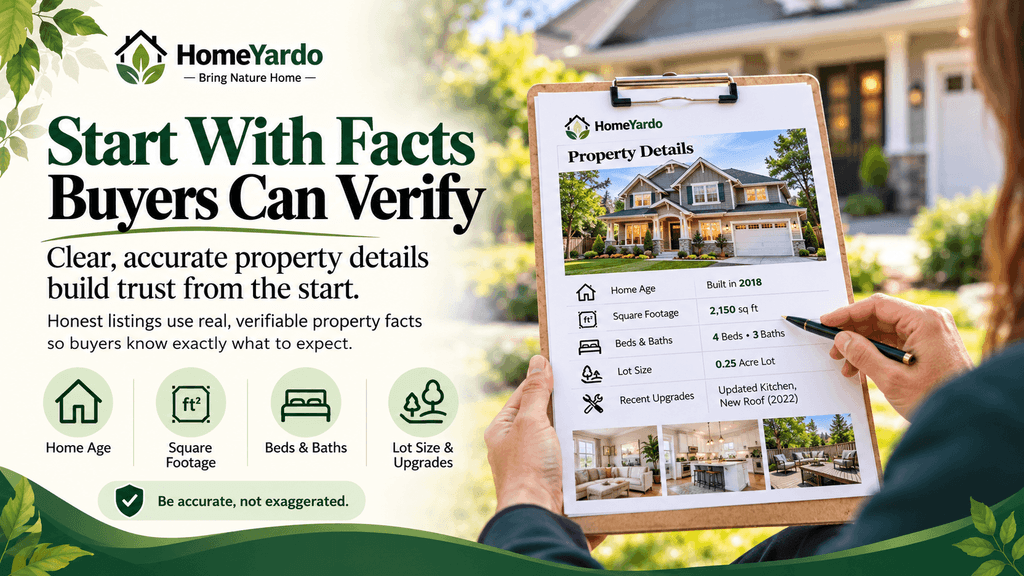
A reliable listing should be honest. Put the house’s age, square footage, number of bedrooms and bathrooms, lot size, significant upgrades, and other facts as accurately as possible. For example, it’s better not to describe a small room as huge or an old kitchen as brand new if you just painted it.
If you used an AI to help you with your text, then using the best AI detector is an optional step in the quality control process, but accuracy and human touch remain crucial to the final listing’s quality.
It is essential that your text sounds natural and, most importantly, it describes real estate as accurately as possible.
You Can Highlight Security Without Making Big Claims

Security can be a valuable selling point, especially if the residence has features such as exterior lighting, a video doorbell, monitored alarm systems, cameras, or controlled entry.
When you write the home description, it is best to state precisely what security features are present instead of assuring potential buyers that the house or the apartment is crime-proof or 100% safe.
It is possible to highlight the advantages of having a smart home security system in place if it is actually present. It is important to explain precisely how it works and state whether the equipment is sold separately or is included in the sale.
This approach to describing security will provide the buyer with specific information they might be looking for without resorting to outright advertising.
You Should Describe What Buyers Cannot See in Photos
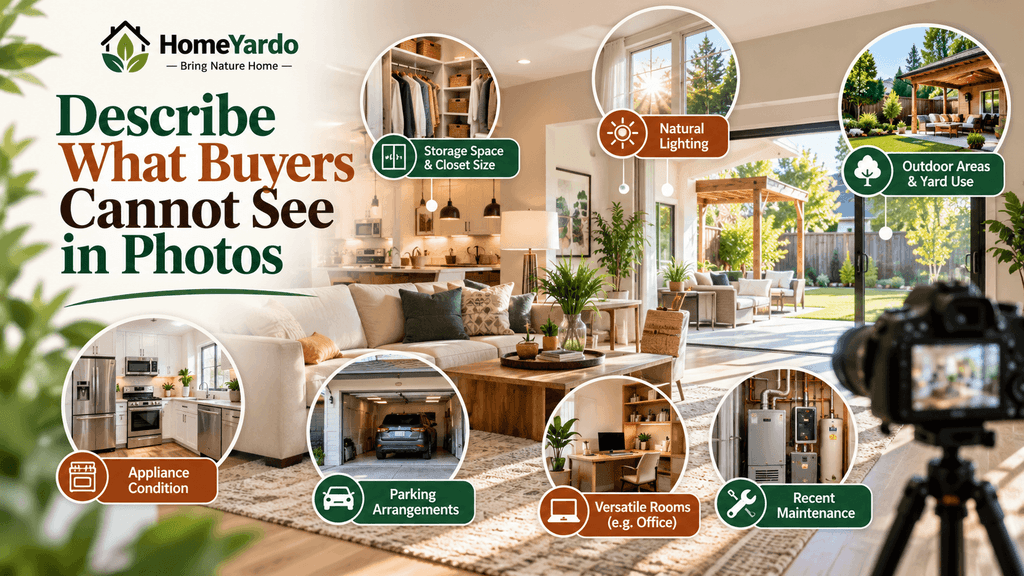
Photos tell us a lot, but they cannot tell everything. Your ad should say the rest.
Specify features such as storage space or closet size, natural lighting, recent maintenance, appliance condition, parking arrangements, any outdoor areas, or a versatile room that could be used as an office. If your yard has been recently improved, tell us how it can be used, not just that it is beautiful.
Try to think what the buyer will be asking after seeing the photos. Your ad should answer some of these questions.
You Should Use Specific Details Instead of Empty Superlatives
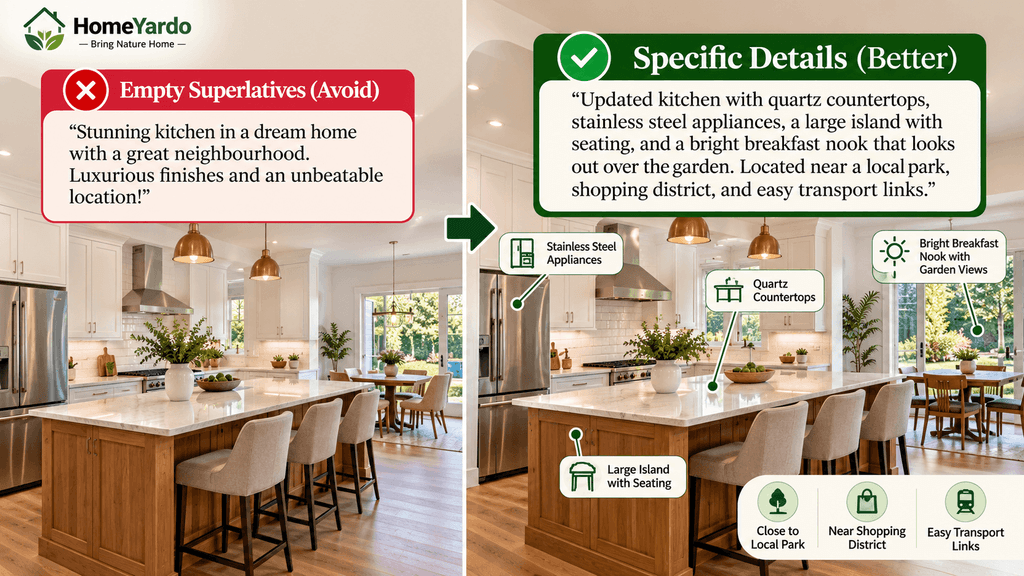
Words like “stunning”, “dream home”, “unbeatable”, “luxurious,” etc. are often used in property listings. As overused and abused intensifiers, they should be avoided in any serious copywriting.
Specificity is far more important than general adjectives. Instead of describing the kitchen as amazing, it’s better to specifically say that it has been updated, includes lots of counter space, newer appliances and a breakfast nook that looks out over the garden.
The same goes for the location. Instead of saying “great neighbourhood”, give specifics about what makes this area desirable: a park, a shopping district, transport links, etc.
You Can Show Buyers How the Home Fits Their Routine

Tell the reader about the home’s features and how they can be of practical use. Maybe the dining room opens to the kitchen, the first-floor bedroom is great for guests, or the covered patio is perfect for family dinners. Tell the buyer about any office and where it’s located.
This tells the reader a little about who you are and what the home has that they might need. It makes a statement that you aren’t just trying to sell them a house, but help them see what the house can be for them.
You Should Be Honest About Condition and Recent Improvements
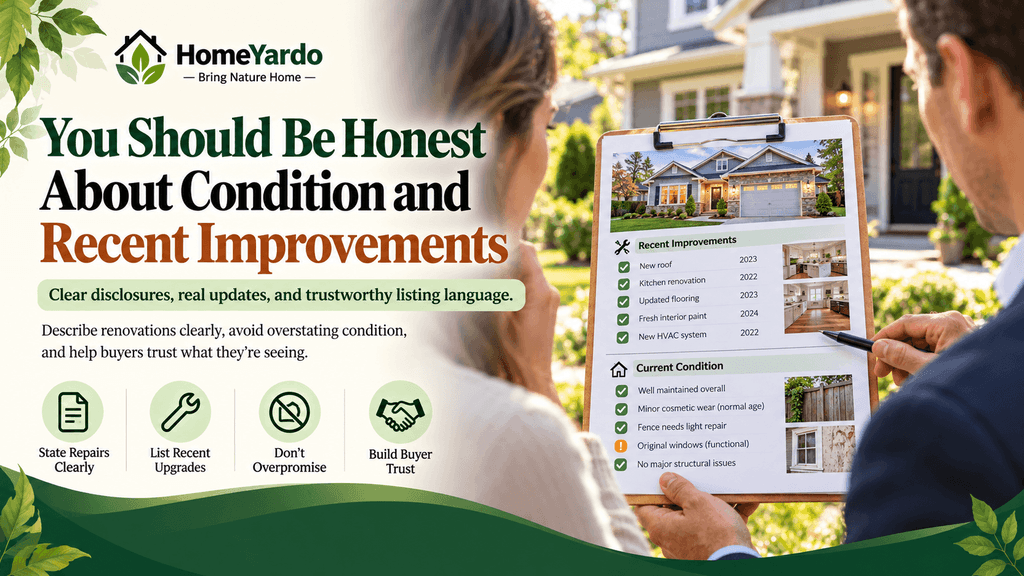
You do not want to disclose all the slightest imperfections at your place. However, you must not lie about the essential stuff.
If something was newly renovated or repaired, state it clearly and shortly. If the bathroom was renovated, describe all the changes you have made there. If your house or apartment requires some minor cosmetic procedures, do not call it “move-in ready condition.”
Being completely honest about the house’s state will increase the trust you have built with prospective buyers, thus raising the chances of making a deal.
You Should Make the Neighbourhood Part of the Story

The home is only one consideration in the purchase decision; buyers will also wish to know what it is like to live in the area.
Wherever possible, you should provide details of amenities such as local parks, shops, restaurants, schools, walking routes, public transport links, main roads and other facilities. Give enough information for someone unfamiliar with the area to form an impression.
You should avoid giving opinions on schools, journeys, crime rates or other factors that may affect the region, as these can fluctuate and are subjective. Instead, give accurate information, where possible, allowing the buyer to research the area for themselves.
You Should Finish With a Clear and Realistic Invitation
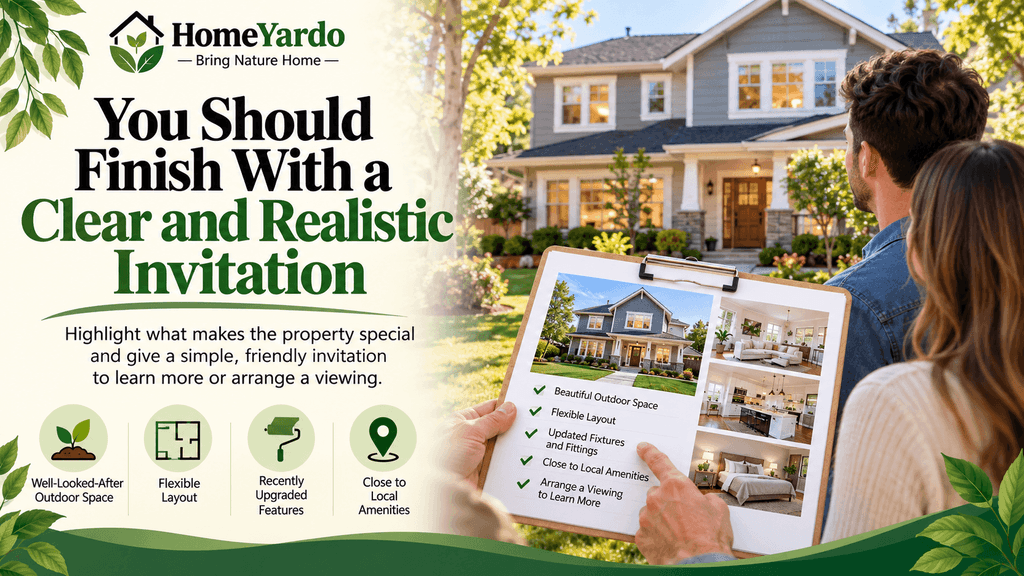
Your final lines should make it easy for the reader to take the next step and put them in no rush to act. You want to tell them what they need to do if they want to know more or see the property.
This is also a good place to highlight a couple of real strengths for the property; perhaps it has well-looked-after outside space, a flexible layout, recently upgraded fixtures or fittings, handy proximity to local amenities, etc.
Don’t use language that implies there is artificial urgency about the property; language such as this will not stand up to scrutiny and could lose you sales. Offers of “call us before this is gone,” etc., are not a good tactic to use. A calm invitation to come and see is best.
How You Can Make Your Listing Easier to Read

Dense blocks of text may hide relevant details. Use short paragraphs to present key listing details in an organized manner. Start with the home’s greatest assets, followed by interior features, upgrades, yard details, and practical matters.
Double-check all measurements, features, amenities, and dates prior to publication. Ensure that all included appliances and office equipment are clearly mentioned. Correct information will prevent misunderstandings and faulty assumptions on the buyers’ side.
Make sure that your photos complement the copy rather than contradict it. Capturing bright and lively images will enable you to make the most of your compelling property descriptions and accentuate the main points without resorting to unsubstantiated adjectives.
What Makes a Real Estate Listing Feel Untrustworthy?

Excessive adjectives, vague claims, and lack of measurements damage the credibility of property listings. Overstatements of ordinary items as luxury retreats kill the trust of the target audience, while clarity is more often than not the best tool for persuasion.
Avoid suggesting what a buyer would feel or do as if they already know the property. Eliminate statements that tell what would happen to children or what they will feel like. Instead, focus on presenting exactly what is on the property.
The most efficient way to describe property listings is to provide clear statements that include verifiable facts, figures, and exact measurements. Presenting honest and clear information to the buyers will push them to make a decision on their own regarding your property.
The Bottom Line
A home listing that buyers can trust does not have to be perfect. It has to be realistic. By giving buyers accurate information, highlighting desirable characteristics, describing the area with honesty, and showing how the home could fit into their lives, you will find more success with realistic copy.
You need to ensure you are providing exact details about upgrades and the overall condition of the home, and avoid overinflated claims to help the most inquisitive buyers take action.
By answering their questions through the description rather than trying to attract buyers by using fancy terms, you will create a listing that allows you to engage with buyers who have an interest in exactly what your home has to offer.
FAQ’s
While the use of the first person is optimal to provide a warm and personal feel for the home seller, a brief third-person description is optimal to focus attention on the house.
The description needs to be long enough to cover all details about the house, its upgrades, and location.
All problems and shortcomings need to be mentioned and disclosed according to the local laws and regulations with the help of a real estate agent.
It is optimal to include information about the nearby amenities in a home description.