
6 Common Mistakes That Reduce Rigging Hardware Performance
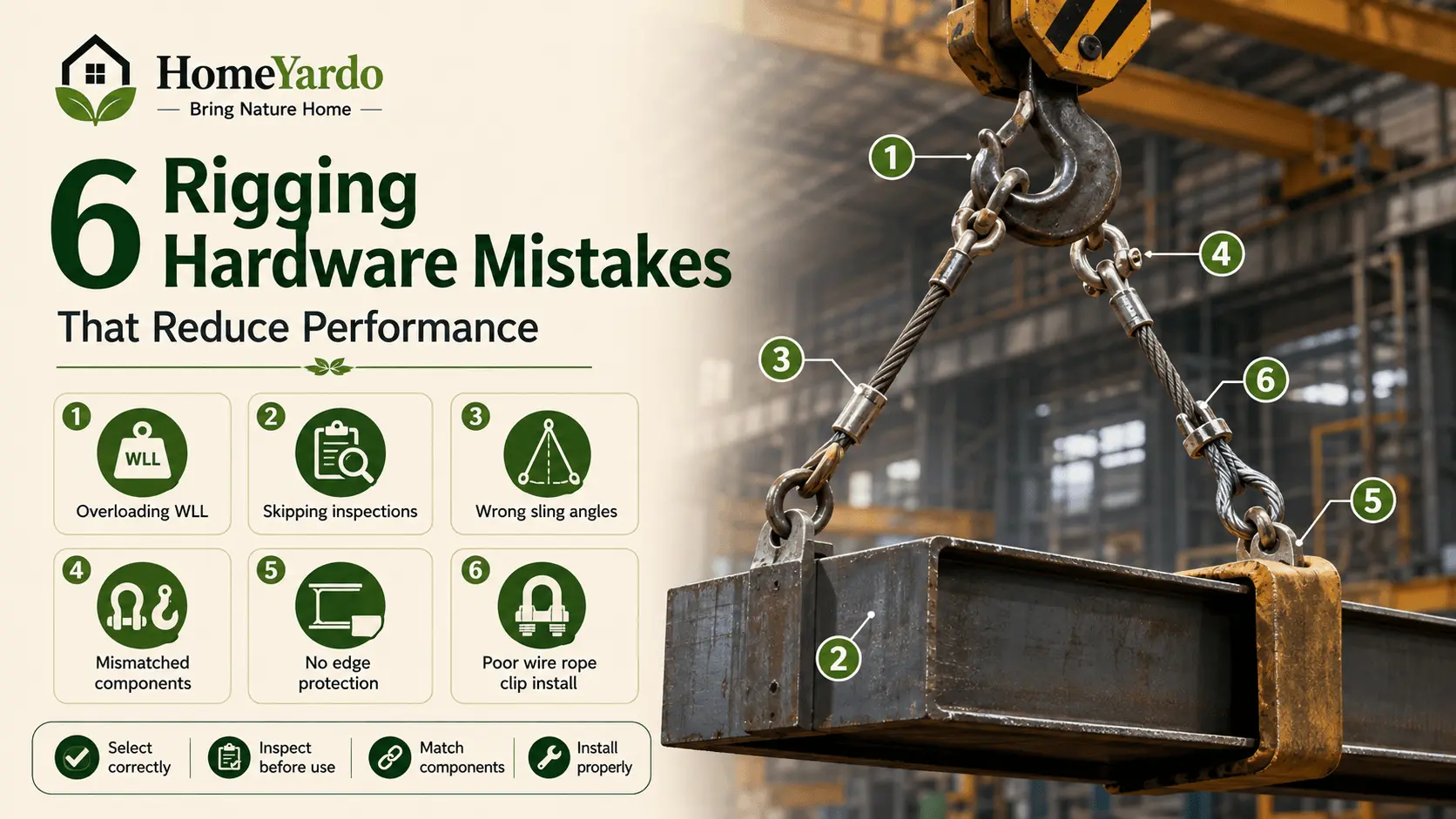
In industry rigging equipment is the important interface between lifting equipment and heavy loads. For a person to be able to perform regulated lifting responsibilities, shackles, hooks, wire rope clips and fittings must be able to endure certain forces. Errors during selection inspection or installation may influence the strength reliability and service life of these lifting components.
Selecting reliable rigging hardware for heavy lifting requires careful attention to load ratings, connection methods, and application requirements. Even well designed objects can fail to do what they are supposed to do if they miss critical features of preparation or use. The next few parts will talk about frequent mistakes that can cause the hardware to perform poorly, and what you can do to help keep things functioning reliably.
1. Working Load Limit Overload

All rigging gear has a Working Load Limit ( WLL ) . The maximum load that the gear can safely hold under certain conditions . Loads over this rating can place undue stress on shackles, hooks and lifting fittings. Repeated overload events might lead to deformation, capacity reduction or damage at crucial connection points.
If weight is incorrectly approximated or an inappropriate type of gear is employed, a lifting arrangement may exceed permissible constraints. When selecting components for a certain application, professionals need to examine load specifics, attachment points and expected forces. Evaluating capacity correctly assists in keeping the intended strength and function of each piece of hardware.
2. Not Performing Pre-Use Inspections Of The Hardware

Physical changes might affect the performance of specific parts in lifting activities. For this reason, lifting gear should be checked often. Cracks, corrosion, deformation, thread wear, damaged pins and identification that is not obvious may indicate problems that require more inspection. If these cautions are not heeded, weakened shackles, hooks or fittings may continue to be placed in service.
A pre-use evaluation establishes that each item is still fit for its intended usage. Teams can evaluate load-bearing surfaces, connection points and moving parts for faults that could impact reliability. Regular inspection techniques improve decision making and add to the well-being of the lifting equipment.
3. Incorrect Estimates Of Sling Angles

The angles of the slings will directly effect the amount of tension placed on the rigging gear being used for the lift. Angles that are lower could increase tension on sling legs and cause stress on shackles, hooks and connecting points. Higher forces at these joints can influence the load-carrying capacity of the various sections of the applied load.
For the sling structure and force distribution, professionals should evaluate the choice of reliable gear for heavy lifting for a certain application. The load weight alone is not enough to estimate the required capacity, because the stress levels are also affected by the lifting geometry. Correct calculations are needed to make sure that the chosen hardware can handle the forces from the arrangement.
4. Hardware Components Don’t Match And/Or Are Not Compatible

For load-handling devices to function together properly, the lift set-up needs to transmit the load correctly. If the dimensions, ratings or types of connections of the components are not acceptable, the pressure on the separate portions may be unequal. Incompatibilities between shackles, hooks, slings and fittings may lead to operational problems.
Make sure that sizing, working limits and attaching demands are checked before combining separate items. If a shackle is not properly connected to a sling or lifting point there is a chance it could cause unwanted tension on the connection. The hardware is compatible enabling each piece to perform to its designated purpose and use.
5. Guarding Around Load Sharp Edges

Point loads of contact can be created by sharp edges on loads and can damage lifting materials and hardware. Rough surfaces can cause damage or wear to synthetic slings or wire rope assemblies by direct contact with them. If the full lifting system is exposed to these conditions over a period of time, it can reduce the service life.
Before the lift is started, specialists must check the regions of contact and decide which means of protection is suitable to the application. Adequate edge protection avoids undesired abrasion and pressure on neighboring parts. A steady operation of the hardware during lifting operations is promoted by meticulous planning around load surfaces.
6. Defective Installation Of The Wire Rope Clip

Wire rope clips are an important part of a lifting gear that must be installed properly to be able to provide a successful rope termination. If the connection is misaligned, misspaced, over-tightened or wrongly orientated, the holding power of the connection can be impaired. If the termination is not properly assembled to transmit forces correctly during lifting operations, the performance of the termination may be affected.
The proper procedures for the specific wire rope and clip combination should be followed by professionals. Proper saddle position, proper tightness and diligent inspection are the keys to confirming that the connection meets the minimum requirements. Attention to installation specifics will help to enhance dependable function and retain the reliability of the complete rigging arrangement.
Conclusion
Proper selection, inspection, compatibility and installation techniques of sound rigging hardware are required for heavy lifting performance. Using a reputable source for shackles, hooks, wire rope clips and fittings makes it easy to match the right products to the lifting application. The gear is well treated and selected carefully to assure its reliability and service life in lifting operations.
FAQ’s
The Working Load Limit (WLL) is the maximum load that a piece of rigging hardware may safely carry, under certain conditions. Overloading can cause undue tension on components like shackles, hooks and lifting fittings.
Inspect rigging hardware before use and at regular intervals as required by equipment requirements and related safety procedures. Cracks, corrosion, deformation, damaged pins, worn threads and unclear identifying markings are signs that a component may need additional investigation.
Sling angles influence the tension on rigging components during a lift. Lower sling angles can increase the tension on the sling legs and associated hardware, so the weight of the load alone should not be used to determine the needed capacity.
Compatible rigging components provide for proper force transfer thru the lifting arrangement. Differences in size, working load restrictions or connection types can lead to unequal pressure and may influence the performance of shackles, hooks, slings and fittings.
Synthetic slings and wire rope assemblies can be damaged and wear increased by sharp or rough load edges. Proper edge protection can minimize abrasion and point loading at contact locations during lifting activities.
Wire rope clips must be installed in accordance with the specifications for that particular wire rope and clip combination. Proper location, spacing, tightness and orientation of the saddles are essential to an effective rope termination and a reliable connection.