Electric Chain Hoist Inspection Prior to Lift – Safety Checklist
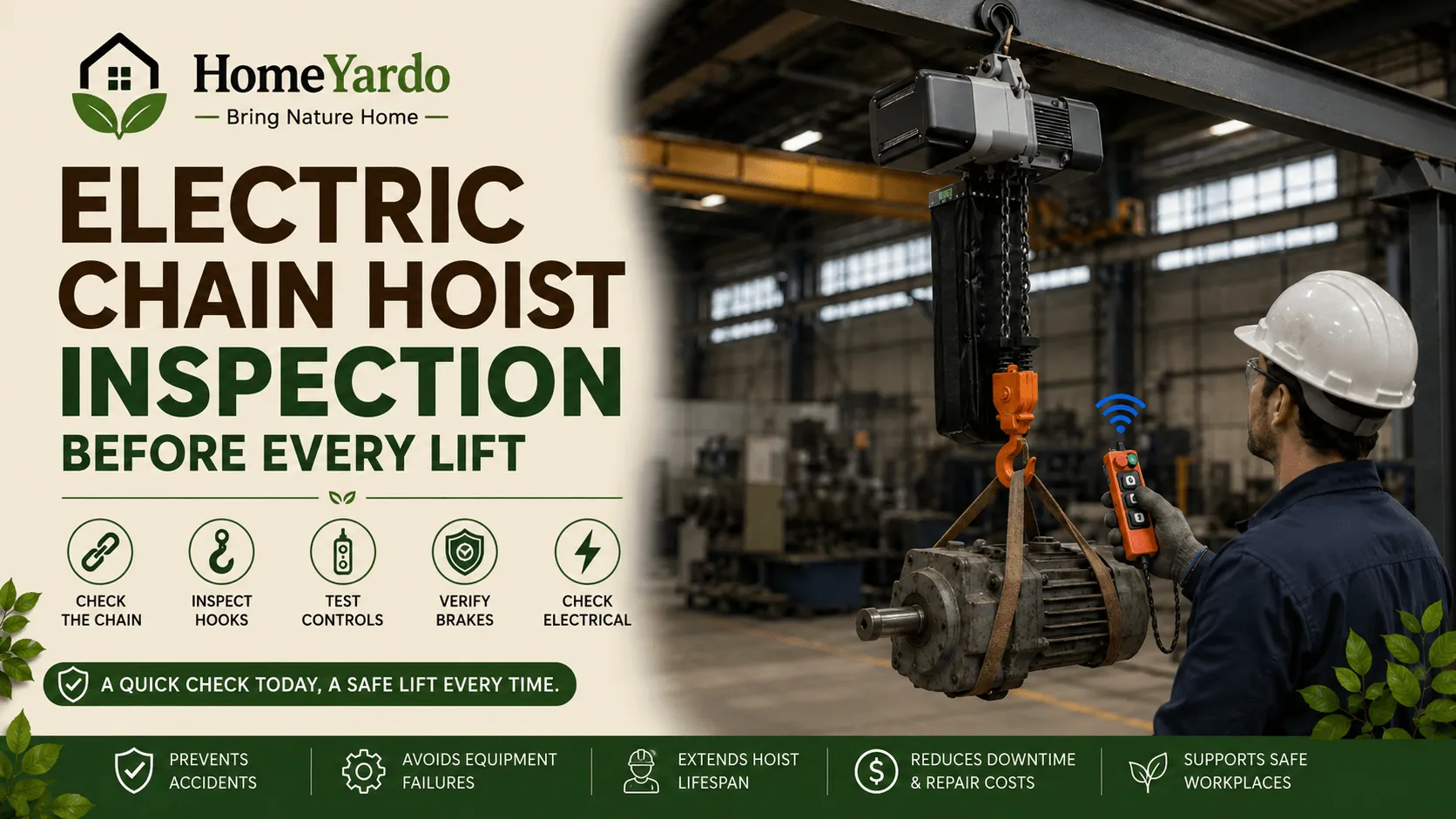
Electric chain hoist inspection is a vital aspect of everyday operations before lifting a load in a garage, workshop, warehouse, manufacturing plant, or other work location. Before the equipment is put to work, a quick check can discover broken chain links, bent hooks, malfunctioning controls, braking problems or electrical damage.
The examination should not be used as evidence that a hoist will be safe for all time. Wear, damage, overloading, pollution, corrosion or inappropriate operation might affect the condition of your equipment. Operators shall adhere to the hoist manufacturer’s handbook, rated capacity, workplace practices and any safety standards.
This article describes what to look for before a lift, warning indications to watch for and when a hoist should be taken out of operation.
Why Electric Chain Hoist Inspection Matters

A pre-lift inspection is designed to identify any visible or functional faults prior to hoisting a suspended load. The chain, hook, brake, controls, mounting system and electrical components are all interrelated, so a fault in one area might impact the safety of the entire lifting process.
Regular checkups can assist:
Detect obvious damage and wear early
- Minimize the chance of dropped or uncontrolled loads
- detect anomalous operation prior to loading
- Scheduled maintenance support
- Minimize equipment unavailability
- Avoid return of damaged equipment to servicing
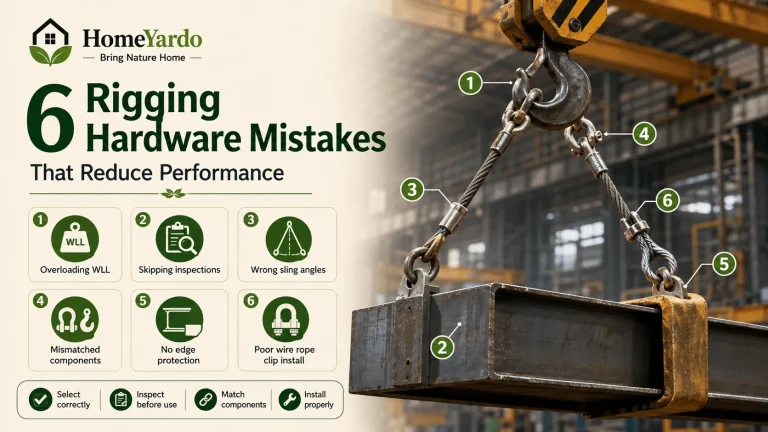
A proper pre-use inspection should also include the lifting hardware connected to the hoist, since damaged or incorrectly selected components can affect the safety of the lifting setup.
Inspection criteria depend on equipment, workplace, service conditions and jurisdiction. A brief operator check also does not replace official inspections needed under a maintenance or regulatory program.
What to Look Before Using an Electric Chain Hoist?

Before lifting, check the hoist body and mounting, load chain, hooks and latches, chain guide, controls, brake response, electrical components and general operating behavior.
The core routine is simple: look, test, listen, and stop if anything sounds wrong.
1. Begin With the Hoist Body and Mounting
Start before you touch controls.
Check the hoist housing for cracks, dents, loose or missing hardware, broken coverings, abnormal corrosion or signs of impact. Ensure essential labels and capacity indications are readable.
Then look at the mounting arrangement that is visible, for example, the trolley, the beam connection, the suspension hook, or the supporting structure.
Look out for:
- Loose or missing fasteners
- Obvious structural warping
- Parts of suspension damaged
- Strange movement at the mounting points
- Significant rusting
- Guards or coverings missing
Do not run any equipment that is incorrectly mounted or seems to be structurally damaged. Have any dubious equipment checked by a suitably qualified individual.
2. Check the Load Chain Carefully
The load chain merits careful consideration as it is the chain that directly carries the load.
Look at visible parts of the chain for:
- Bent connections or kinks
- Fractures or cracks
- Dents and scratches
- Corrosive or pit damage
- Abnormal pattern wear away
- damage to welds
- Elongation or stretching
- Contamination that stops motion
The chain should not leap, bind or twist, and should track properly on the hoist.
Do not physically hammer, weld, heat, or bend a damaged load chain back into operation. The manufacturer gives an inspection technique and criteria to be used to check chain elongation and wear.
3. Check the Top and Bottom Hooks
Check each hook before connecting the load.
Check for cracks, twists, bends, wear, an expanded throat opening, damage around the saddle and difficulties with the hook’s holding components.
If a safety latch is fitted, check that it slides freely and shuts properly.
Any hook that is obviously damaged should not be re-shaped, welded, or heated as an improvised repair. Remove dubious equipment from service Follow manufacturer’s replacement or inspection procedure.
4. Verify Chain Guide and Load Sheave
The chain guide keeps the load chain properly aligned as it goes in and out of the hoist mechanism.
Check for visible damage , severe wear , misalignment , or debris around the guide . Visible portions of the load sheave or sprocket should be inspected for damage that could hinder chain motion.
See chain movement during the time of testing.
It should feed consistently without:
*Jump
*Binding
- Repeatedly catching.
- Heavy vibration
- Sideways movement out of the blue
Any abnormal chain travel can suggest a chain, guide, sprocket, or internal hoist fault requiring further evaluation.
5. Pendant or Remote Controls Check
Before mounting a working load check the operational controls and follow the manufacturer’s instructions.
Check if
- UP creates the correct movement
- DOWN makes the right movement
- Release buttons to usual position
- The emergency-stop mechanism is working properly
- Direction signs are legible and accurate
- When you let go of the control, the hoist stops.
If the response is slow, the direction is not what you expected, the equipment operates intermittently, or you find it is moving out of control, stop using the equipment.
6. Check the brakes input
The braking system is to manage the load when the stop of lifting motion.
Perform the manufacturer’s pre-use brake check. During a permissible no-load or test operation, the hook shall stop normally when the control is withdrawn, and shall not continue to travel abruptly.
Watch for signs:
- Unforeseen downhill drift
- stop after delay
- Irregular ownership
- Strange sounds from brakes
- Inconsistent halting characteristics
Do not change the way you work the controls to compensate for suspected trouble with the brakes. Take the hoist out of operation until the cause is assessed.
7. Electrical Components Check (Visible)
The electric hoist also needs to be electrically checked.
Examine visible cables, plugs, connectors, pendant leads and other accessible parts without opening electrical enclosures, unless you are permitted and qualified to do so.
Look for:
- Damaged or torn cable insulation
- Naked wires
- Loose connections
- Cables smashed
- Burn or heat mark
- Damage to pendant housing
- Moisture ingress
- Electrical repairs (improvised)
Repairs to electrical issues must be carried out by qualified professionals. Before electrical maintenance is carried out, isolate equipment in accordance with workplace procedures.
8. Listen and Watch While Doing Functional Testing
Some difficulties are only obvious when the hoist begins to move.
Listen for grinding, repeated clicking, scraping, strange humming or other sounds that differ from typical operation during the manufacturer’s allowable pre-use test.
Also look out for:
- Over vibration
- Motor rotational inertia
- Uneven hook travel
- Jumping chains
- Quick movement
- abrupt stopping
Users of the same equipment on a frequent basis may detect a difference in the sound or feel of movement before a flaw is visible. Handle a new anomalous behavior as a problem to be solved, not a problem to be ignored.
Formal Hoist Inspection vs. Pre-Use Inspection: What’s the Difference?
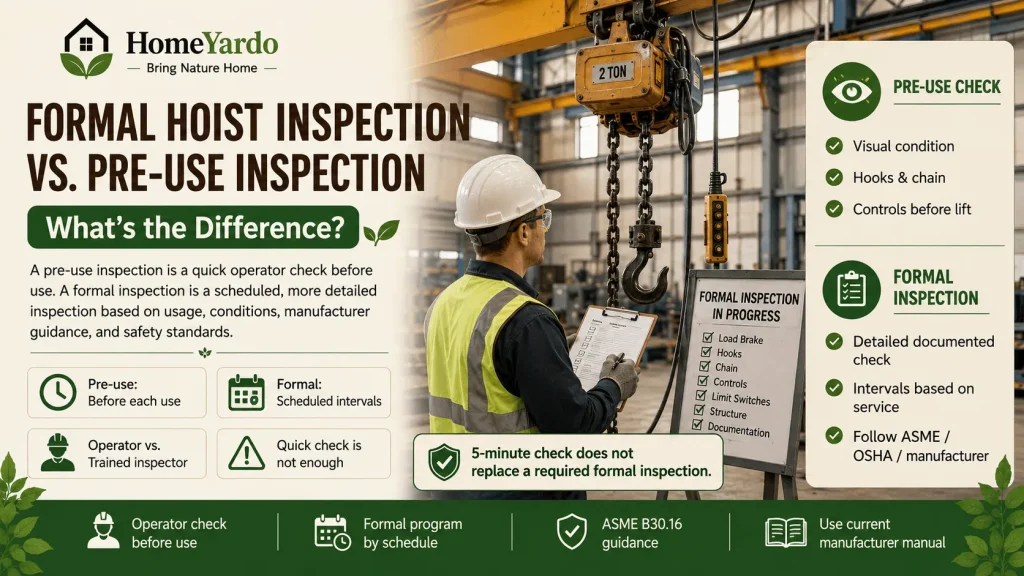
A pre-use check is a check performed by an operator before use. Formal inspection programs may include more detailed checks at intervals dictated by equipment usage, service conditions, manufacturer requirements, applicable standards and workplace norms.
ASME B30.16 Inspection of overhead and stationary hoists. Differentiates inspection standards according to condition and service of equipment. OSHA rules also cover inspection of hoist chains and hooks in the proper types of workplace.
This difference is crucial.
A five minute visual check should not substitute for a planned inspection by a designated or trained person when one is required.
The operator shall ascertain the proper inspection frequency and rejection criteria by reference to the current manufacturer’s manual and the applicable workplace safety standards.
Common Mistakes Made When Inspecting Electric Hoists
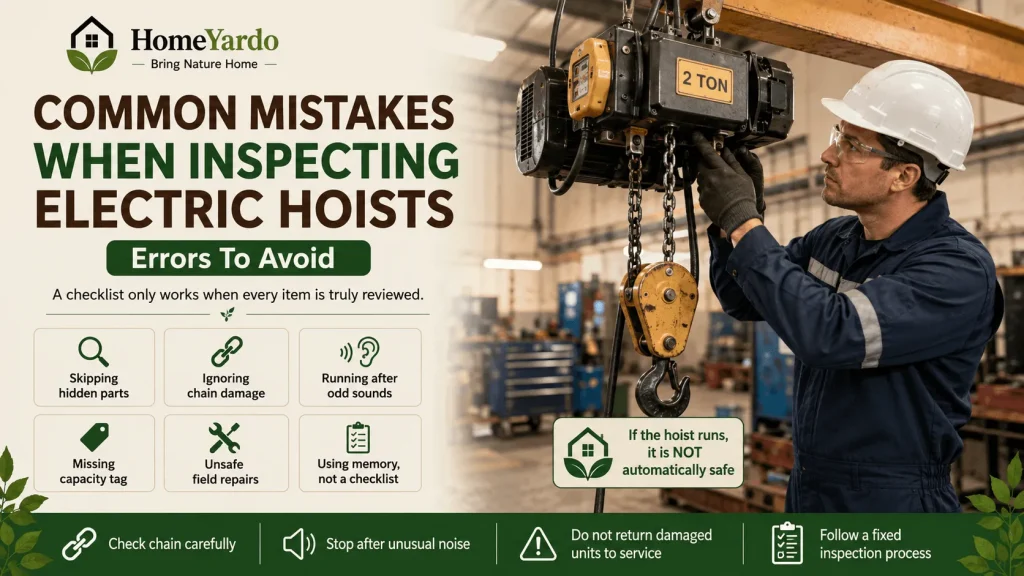
A checklist only works if you really review each item.
A common mistake is to inspect the body of the hoist and hardly inspect the chain. Another is presuming that the state of the equipment today is the same as yesterday’s examination.
Habits to keep away from:
- Inspecting just easily accessible components
- Small chain deformations are ignored
- Continue after odd sounds occur
If the motor is operational, then the entire hoist is safe” - Unreadable or missing capacity tag
- Performing field repairs
- Return of damaged equipment to service without authority
- The employment of memory rather than a fixed inspection process
The operation of the hoist is not a reason why the problem should be acceptable.
How Do You Properly Lube a Hoist Chain?
Proper lubrication can reduce friction between chain surfaces, thus preventing premature wear and corrosion. The lubricant and manner of application required will vary upon the hoist and chain manufacturer.
Do not just pick up a lubricant because it is sitting in the workshop.
Before lubricating, examine the chain and remove any contamination using a manufacturer-approved method. Use the recommended amount and locations of the specified lubricant.
Too much lubrication can trap dirt and abrasive material, and the wrong product may not give adequate protection.
Lubrication is preventative maintenance, not a cure for a chain that is worn, strained, broken or warped.
Safe operating practices after-inspection
A correctly performed operation is still required to pass the pre-use check.
Do not exceed the load rating of the device. Check that the load, lifting gear and attachment technique are adequate before lifting.
Usually, loads should be hung to avoid unintentional side pull unless the equipment and technique particularly allow for it. The operator shall also prevent shock loading and make sure the load is correctly seated in the hook.
Good electric chain hoist safety procedures include keeping people away from suspended loads, maintaining a clear path for lifting, using proper rigging, and following the manufacturer’s operating instructions.
Never use the load chain as a sling unless the equipment is explicitly developed and approved by the manufacturer for that application.
When Does an Electric Chain Hoist Become Unserviceable?
Do not use the hoist if an inspection reveals a condition that may impact safe operation. “Please don’t do ‘just one more lift’ before reporting the defect.
These may include conditions for removal from service or qualified evaluation:
- Chain links that are cracked, badly worn or deformed
Extending the chain past the limit of the manufacturer - Bent, broken or seriously twisted hooks
- Components for holding the defective hook
Brake problems >
Motion that is uncontrolled or unpredictable
*Defective electrical wiring or controllers - Structural damage to major buildings
- Chain that constantly leaps or binds
- Abnormal mechanical sounds
- Missing safety-related parts
- Damage to the mounting/suspension system
An operator should not have to guess what the exact rejection limit is.” Measure and examine components to hoist manufacturer’s specifications and the appropriate inspection standard.
Do You Need to Document Electric Hoist Inspections?
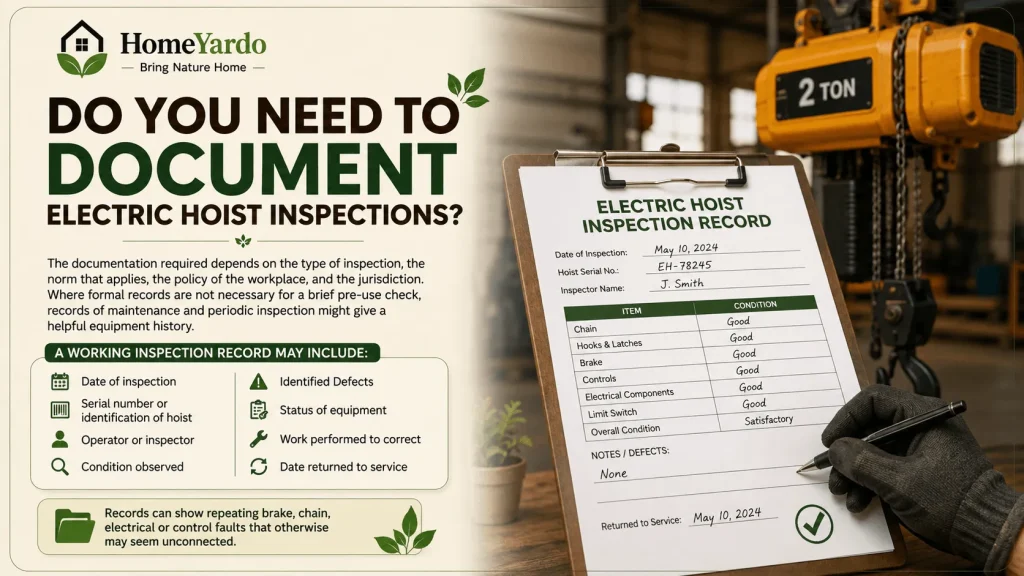
The documentation required depends on the type of inspection, the norm that applies, the policy of the workplace, and the jurisdiction. Where formal records are not necessary for a brief pre-use check, records of maintenance and periodic inspection might give a helpful equipment history.
A working inspection record may include:
Date of inspection
- Serial number or identification of hoist
Operator or inspector - Condition observed
Identified Defects - Status of equipment
- Work performed to correct
- Date returned to service.
Records can show repeating brake, chain, electrical or control faults that otherwise may seem unconnected.
Developing a Repeatable Pre-Lift Inspection Procedure
A regular sequence decreases the probability of forgetting an element.
Use this order before surgery:
- Identify the hoist. Verify that the equipment and rated capacity are correct.
- Check the mountings Check suspension, trolley, supporting structure and visible fasteners.
- Check the chain. Check for wear, distortion, corrosion and damage on the links that you can see.
- Check the hooks. Inspect the hook body, throat, retaining parts and latch where fitted.
- Check the chain path. Make sure the chain is not twisted or out of position.
- Check wires and controls. Check for electrical or physical damage.
- Conduct the authorized functional test. Inspect direction, halting, chain travel and control response.
- Listen for aberrant operation. If you hear unfamiliar mechanical or electrical behavior, stop.
- Report equipment defects. Tag out or isolate risky equipment as per workplace procedure.
- Lift when the check is satisfactory.
Keep the same order. Repeat. That makes it a defined procedure not a passing glimpse.
Selecting Equipment for the Intended Hoist Application
Inspection and equipment selection go hand in hand. The hoist should have the proper rated capacity, lift height, duty characteristics, electrical requirements, control arrangement and environmental appropriateness for the function it is to do.
When considering a industrial electric chain hoist, don’t just buy equipment for the lifting capacity. Consult manufacturer’s specifications for duty cycle, suspension arrangement, power requirements, lifting speed, chain specifications, operating conditions and maintenance needs.
Equipment will be installed, inspected, operated and maintained in accordance with the manufacturer’s documentation and workplace standards.
Pre-Lift Check List for Electric Chain Hoist
Before running the hoist, check:
- The hoist and mount reveal no apparent structural damage.
- Easy to read safety and capacity labels.
- The load chain exhibits no apparent splits, twists, excessive wear or deformation.
- Hooks are plainly not bent, fractured or twisted.
- Hook latches function properly where fitted.
- The chain is in the correct place and feeds normally.
- Properly responds to pendant or remote controls.
- Emergency-stop controls operate correctly.
The brake system is working as it should be. - The visible cables and connectors show no damage.
No abnormal noise or excessive vibration is evident during testing.
The lift method and the load are within the rated limitations of the device.
If any safety item fails, halt and follow the equipment-isolation and reporting process for the workplace.
Final Safety Check Before Lift
An electric chain hoist can appear okay and still be showing early indicators of chain degradation, hook deformation, brake difficulty, faulty controls or inadequate chain travel. A systematic inspection allows the operator to catch those signals before the device is carrying a load.
Start with the hoist body and mount, check the chain and hooks, check the electrical components that are accessible, and do the functional test that is permitted by manufacturer. Listen for changes in sound and movement, and watch for visual damage.
Most essential, do not make up acceptable wear limits or field repair methods. Work to current manufacturer’s handbook, workplace procedures and relevant safety regulations. If a fault potentially impact lifting safety, remove the equipment from service until a proper check has been made.
FAQ’s
Operators must carry out the pre-use tests specified in their equipment manual and workplace procedure. The frequency of inspection intervals is dependent upon intensity of service, manufacturer specifications, applicable standards and local restrictions. Equipment in heavy or severe use may require more frequent evaluation than equipment in regular usage.
Check the visible chain links for cracks, gouges, corrosion, unusual wear, bending, twisting, distortion and signs of elongation. Watch the chain too as it runs through the hoist. Binding, leaping, twisting or uneven movement should be addressed before lifting a working load.
A clearly bent or distorted load-chain link should not be straightened and returned to service. Cease use of the hoist and compare condition of the chain to the manufacturer’s rejection criteria. Damaged load-chain components should be inspected and replaced in accordance with the manufacturer’s protocol.
However, a hook may be dangerous if it has cracks, bends, twists, abnormal wear, excessive opening of the throat or damage to any of the retention components. Do not eyeball acceptable distortion, when measurements are required. Follow the inspection dimensions of the manufacturer and the appropriate occupational requirements.
A no-load functional test permitted by the manufacturer can validate control direction, stopping response, chain travel and unusual sounds before attaching a working load. Refer to the equipment instructions, as testing techniques and limit device inspections can be different amongst hoist designs.
Stop the hoist and either remove it from service or isolate it from service as per workplace procedure. If a brake does not retain or stop as intended, load movement may become uncontrolled. The braking system is to be inspected and repaired by adequately qualified people prior to returning the hoist to lifting service.
Load-chain links shall not be field straightened, welded, heated or otherwise improvised back into operation. If damage is found during inspection that exceeds the limitations allowed by the manufacturer, replace the chain using the replacement technique and make that the replacement chain is approved for this hoist.
Inspection date, equipment identification, inspector, noticed problems, equipment status, corrective action, repair accomplished, and return-to-service information are useful fields to record or keep. The formal record requirements shall be in accordance with the appropriate standard, employer process and local regulations.