
Hidden Costs of Building a Home in Western Canada
Building a new home gives you control over the layout, finishes, storage, energy features, and everyday details that are difficult to change in an existing property.
The budget, however, involves far more than the price of the house itself.
People researching the hidden costs of building a home in Canada often begin with land, construction, and materials. Those are major expenses, but site preparation, municipal approvals, utility connections, builder allowances, exterior work, financing, and changes made during construction can all move the final price higher.
These costs deserve extra attention in fast-growing Western Canadian communities, where development activity, labour demand, lot conditions, and municipal requirements can differ considerably from one area to another.
Before committing to a project, build your budget around the finished property, not simply the advertised construction price.
Why The Advertised Building Price Is Rarely The Final Cost
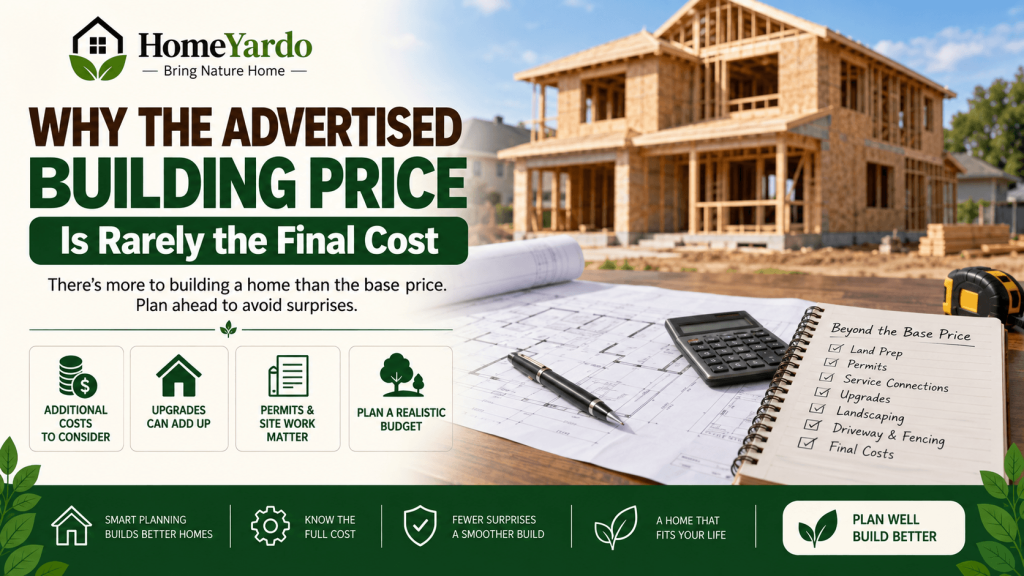
A builder’s starting price can be useful for comparing homes, but it rarely represents every dollar required to complete a property.
The base price may cover the house using specified materials, layouts, fixtures, and finishes. Your total project cost can also include land preparation, permits, engineering, service connections, upgrades, financing costs, landscaping, fencing, decks, driveways, and other work outside the standard package.
The same applies to design decisions. A floor plan may look affordable until structural changes, additional windows, upgraded electrical service, custom cabinetry, or higher-end finishes are added.
Thinking about how the building plan that works in everyday life will function before construction begins can reduce expensive changes later.
Land Costs Are Only the Beginning
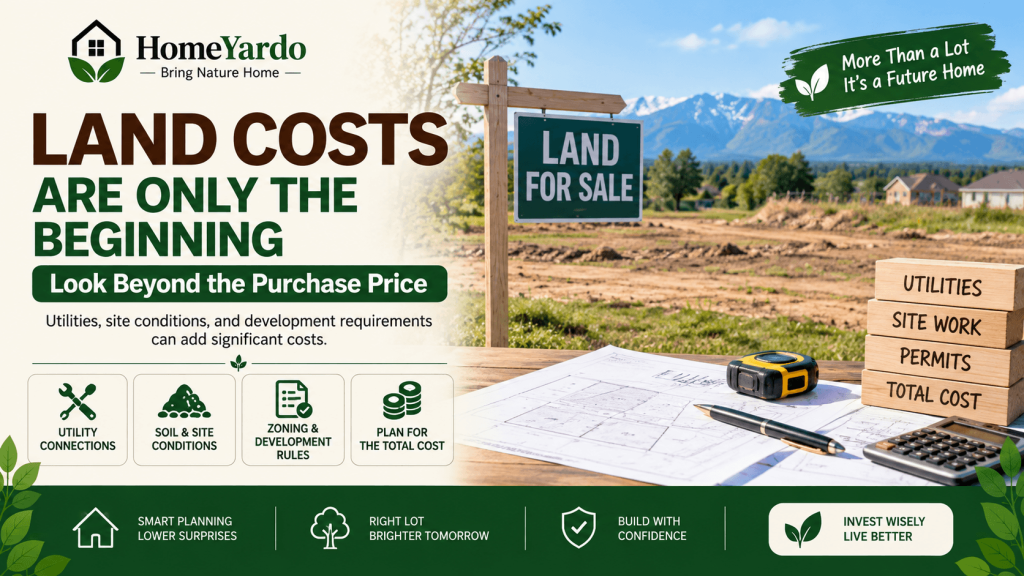
Buying the lot is often the first large expense, but the purchase price tells you very little about how much the property will cost to build on.
Two similarly priced lots can have very different development costs.
Utility Connections and Servicing
A serviced urban lot may already have water, sewer, electricity, natural gas, and telecommunications available near the property line.
A rural or partially serviced parcel may require much more work.
Depending on the property, expenses may include:
- Extending electrical service
- Drilling or connecting a water supply
- Installing a septic system
- Bringing natural gas or another heating source to the property
- Trenching for utilities
- Installing culverts or driveway access
- Connecting internet or telecommunications services
Ask exactly which services reach the lot and which costs remain the homeowner’s responsibility before purchasing land.
Lot Conditions and Development Restrictions
The physical characteristics of the property matter as much as its location.
Slope, drainage, soil conditions, vegetation, easements, setbacks, access, and local development rules can affect what can be built and how much preparation is required.
A less expensive lot can therefore become the more expensive choice once development work is included.
Site Preparation Can Change the Budget Quickly
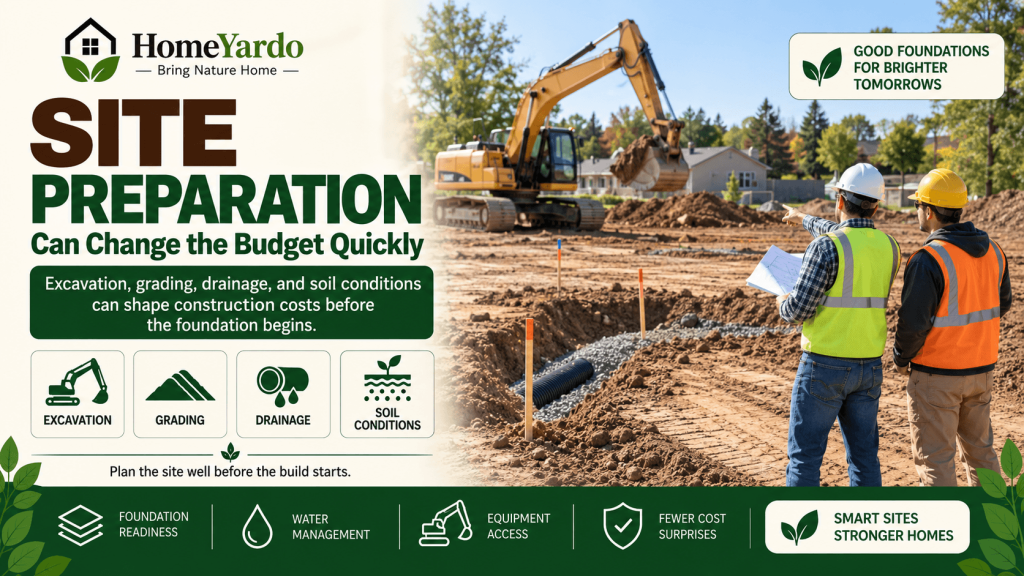
Before a foundation can be poured, the site must be made suitable for construction.
This may involve clearing vegetation, removing unsuitable material, excavating, grading, installing drainage, preparing access for construction equipment, or importing fill.
Excavation, Grading, Drainage, and Soil Conditions
Soil conditions can have a large effect on foundation work.
A straightforward site may require standard excavation. A more difficult property might need additional engineering, drainage measures, soil replacement, retaining structures, or a foundation solution adapted to local ground conditions.
Water management also needs attention before construction begins. Poor grading or drainage can create problems around foundations, driveways, landscaping, and neighbouring properties.
A geotechnical or site assessment, when appropriate for the project, can help identify these conditions before they turn into expensive changes during construction.
Permits, Engineering, and Municipal Fees Add Up
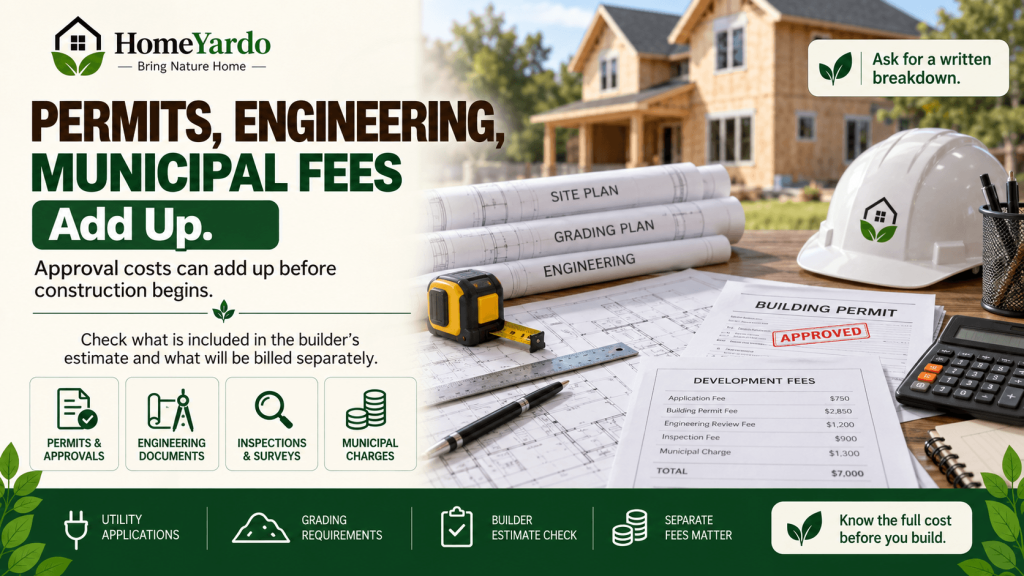
Permit and approval costs vary by municipality and type of development.
A project may involve building permits, development approvals, inspections, engineering documents, utility applications, grading requirements, or other municipal charges.
A suburban development can also have different requirements from an acreage or rural municipality.
Do not assume that every administrative or professional cost is included in the builder’s estimate.
Ask for a written breakdown showing which permits, inspections, drawings, surveys, engineering services, and municipal charges are included and which are billed separately.
Material Prices and Allowances Can Move During Construction
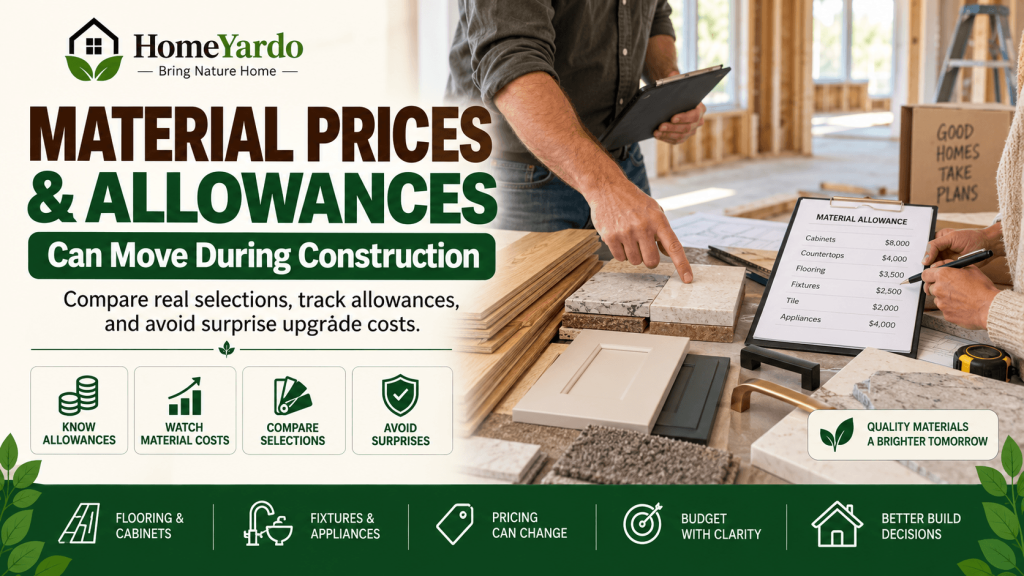
Materials make up a substantial part of a new home’s cost.
Lumber, concrete, roofing, windows, insulation, flooring, cabinetry, plumbing fixtures, appliances, and electrical equipment may all be affected by pricing and availability.
There is another issue homeowners sometimes miss: allowances.
A contract might include a fixed allowance for flooring, lighting, cabinets, countertops, plumbing fixtures, or other selections. If your actual choices exceed those allowances, you pay the difference.
Before signing, ask for the allowance amount for each major category.
Then compare those figures with the products you realistically expect to choose. A generous-looking building price can become much less attractive if many of the included allowances are below the level of finish you want.
Upgrades Can Quietly Push the Budget Higher
A single upgrade may appear manageable.
Ten or twenty upgrades can change the economics of the entire project.
A larger kitchen island, taller cabinets, additional electrical outlets, upgraded flooring, extra windows, smart controls, premium plumbing fixtures, heated floors, finished basement areas, or custom storage may each add another charge.
The problem is rarely one dramatic decision. It is the accumulation of many smaller ones.
Create three groups before making selections:
| Priority | Meaning |
|---|---|
| Must have | Features that affect function, safety, or how the family will use the home |
| Worth upgrading now | Items that would be expensive or disruptive to replace later |
| Can wait | Cosmetic or non-structural improvements that can be added after moving in |
This approach keeps spending focused on the parts of the home where upgrading during construction makes the most sense.
Labour and Builder Pricing Vary by Location
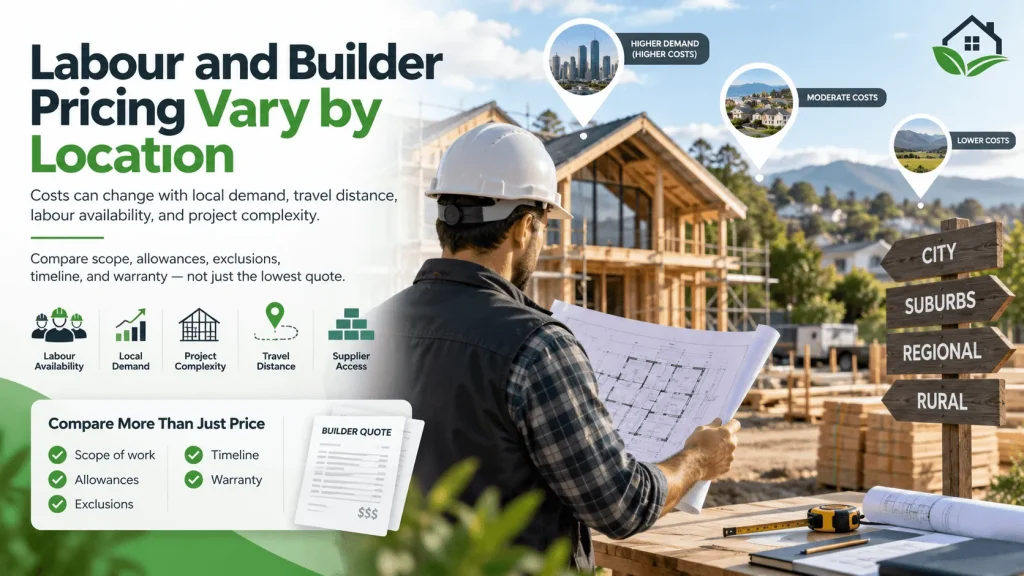
Construction costs are influenced by local labour availability, subcontractor demand, project complexity, travel distance, and the amount of building activity taking place in the area.
Fast-growing communities can place greater demand on qualified trades.
Rural projects may also involve travel time, mobilization costs, equipment transportation, or fewer nearby suppliers.
Choosing a builder solely because the initial quote is lower can therefore be risky.
Compare the scope of work, specifications, allowances, exclusions, payment schedule, change-order process, warranty terms, and construction timeline along with the price.
Homeowners who want additional regional context can review current information about Alberta home building costs before setting their project budget.
People considering moving to Alberta should also compare communities at the property level rather than assuming construction conditions will be identical across the province.
Rural and Acreage Builds Have Extra Infrastructure Costs
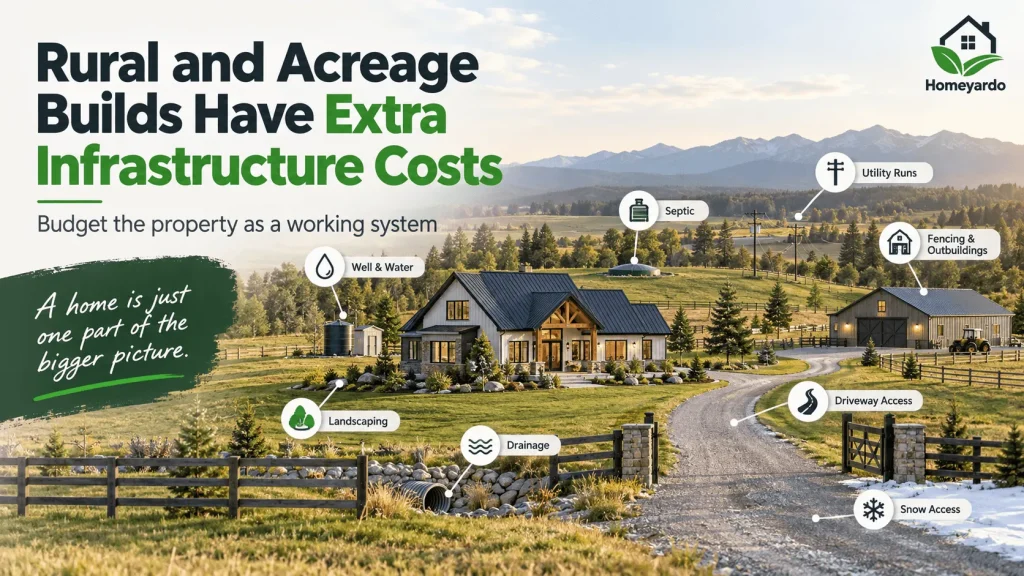
An acreage can provide privacy, open space, and flexibility that are difficult to find in a suburban development.
That extra space can also bring extra infrastructure responsibilities.
Depending on the property, the budget may need to account for a well, water treatment, septic system, propane storage, longer utility runs, driveway construction, snow access, drainage, fencing, outbuildings, and larger landscaping areas.
Emergency access and regular maintenance can matter too. A long private driveway may require gravel, grading, drainage, snow clearing, and periodic repairs long after construction is finished.
The house is only one component of an acreage project. Budget for the property as a working system.
Exterior Work Is Often Missing From the Initial Budget
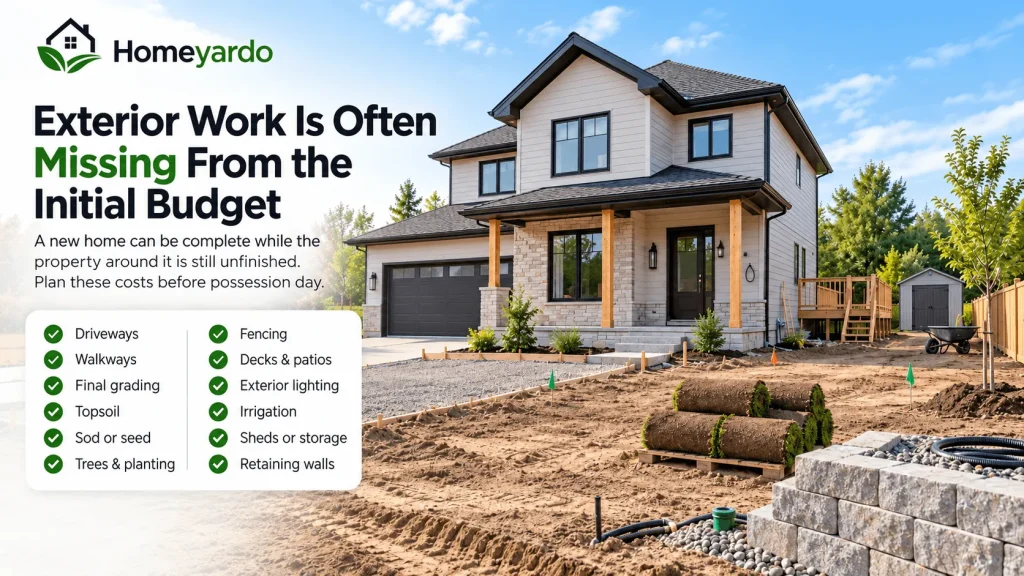
A new home can be technically complete while the property around it is still unfinished.
Common post-construction expenses include:
- Driveways
- Walkways
- Final grading
- Topsoil
- Sod or seed
- Trees and planting
- Fencing
- Decks and patios
- Exterior lighting
- Irrigation
- Sheds or storage
- Retaining walls
Some builders include portions of this work. Others do not.
Find out exactly what the site will look like on possession day.
If landscaping or exterior projects need to be completed later, include estimated amounts in the original financial plan rather than treating them as unrelated future expenses.
Financing and Carrying Costs Deserve Their Own Budget
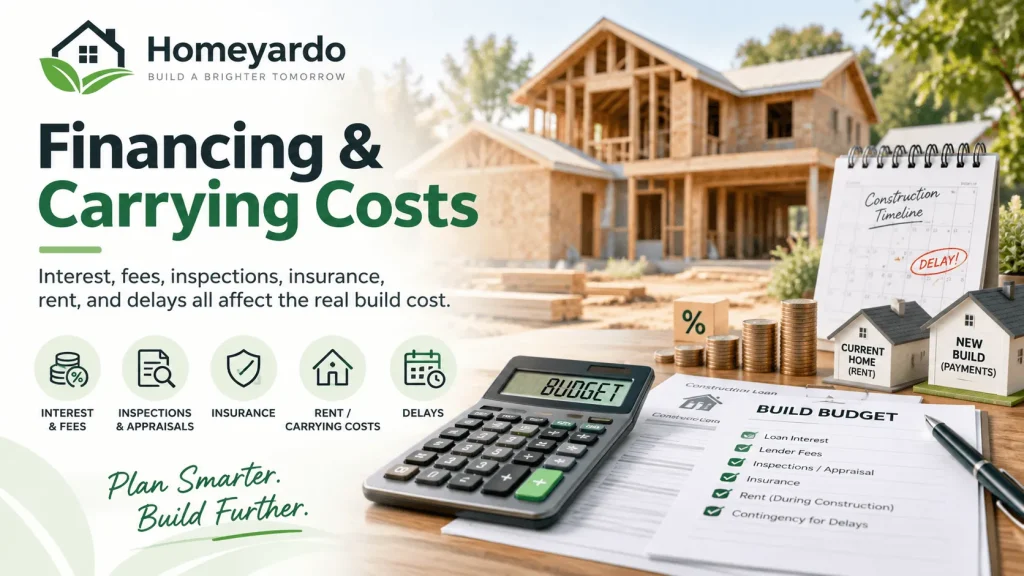
Construction financing works differently from buying an existing finished home.
Depending on the project and financing arrangement, homeowners may face interest charges during construction, appraisal costs, legal expenses, lender inspections, insurance requirements, or fees associated with construction draws.
Delays can create indirect expenses too.
If you are renting while the new home is built, an extended construction schedule may mean several additional months of rent. If you already own another property, carrying two homes for longer than expected can put pressure on cash flow.
These expenses are easy to overlook because they are not part of the physical house.
They are still part of what it costs to complete the project.
How Much Contingency Should You Plan For?
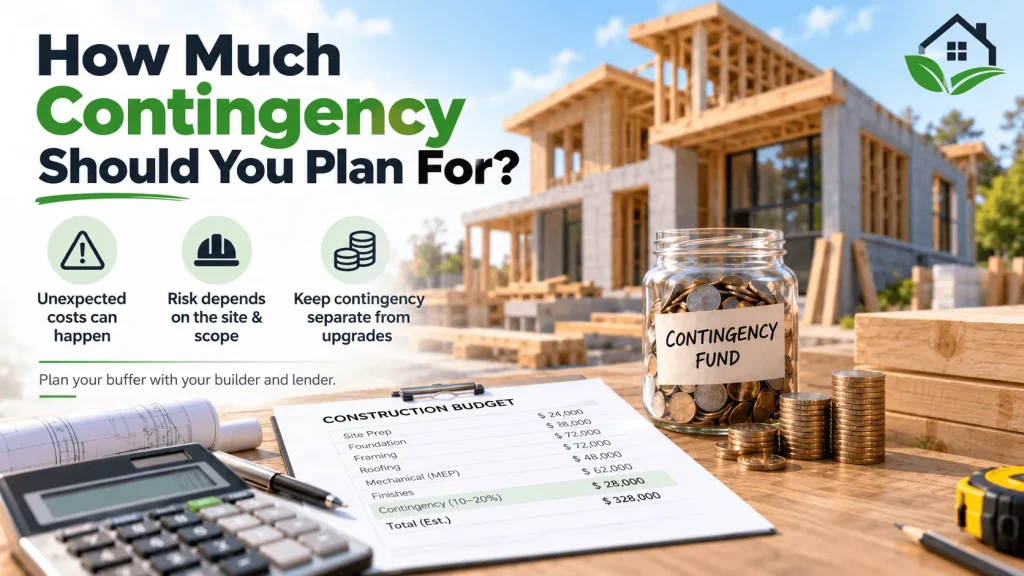
No budget can predict every construction issue.
A contingency fund provides room for conditions that were not apparent when the original estimate was prepared, necessary changes, or costs that increase during the project.
There is no single percentage that fits every build.
A straightforward serviced lot with a detailed fixed-price contract presents a different risk profile from a custom acreage project involving extensive excavation, private utilities, or uncertain site conditions.
Rather than choosing an arbitrary number, discuss contingency planning with your builder, lender, and relevant professionals after the scope and site conditions are understood.
Keep contingency money separate from your upgrade budget.
If the same money is already earmarked for premium flooring or a larger kitchen, it is not really protecting you from unexpected construction costs.
Questions to Ask Before Signing a Building Contract
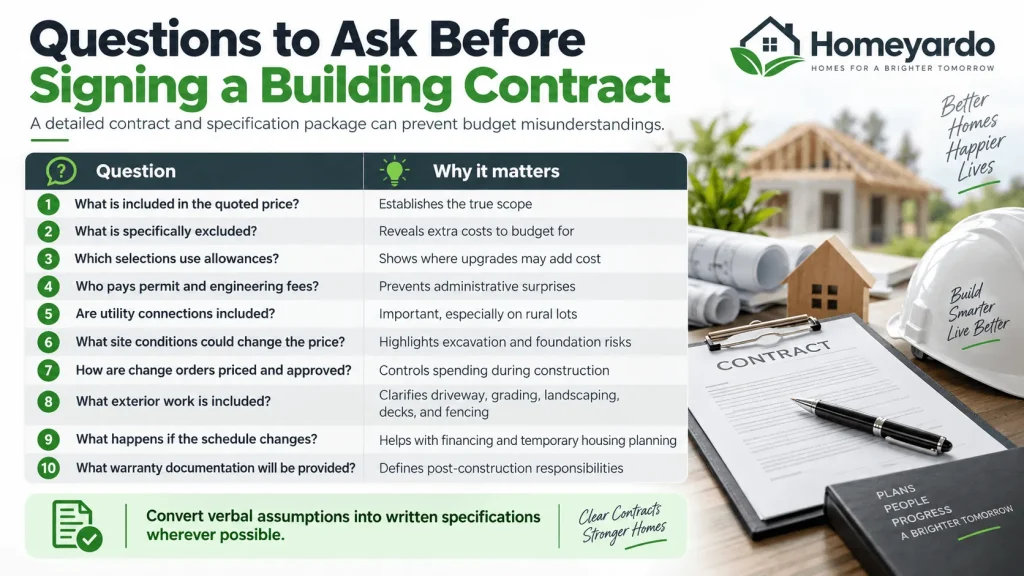
A detailed contract and specification package can prevent many budget misunderstandings.
Before signing, make sure you can answer these questions:
| Questions | Why it matters |
|---|---|
| What is included in the quoted price? | Establishes the true scope |
| What is specifically excluded? | Reveals expenses you must budget separately |
| Which selections use allowances? | Shows where upgrade charges may occur |
| Who pays permit and engineering fees? | Prevents administrative surprises |
| Are utility connections included? | Particularly important on rural lots |
| What site conditions could change the price? | Helps identify excavation and foundation risks |
| How are change orders priced and approved? | Controls spending during construction |
| What exterior work is included? | Clarifies grading, driveway, landscaping, decks, and fencing |
| What happens if the schedule changes? | Helps with financing and temporary housing planning |
| What warranty documentation will be provided? | Establishes post-construction responsibilities |
Verbal assumptions should be converted into written specifications wherever possible.
Plan for the Total Finished Property, Not Just the House
The best way to control home-building costs is not to predict every surprise.
It is to identify as many cost categories as possible before construction starts.
Land development, site preparation, permits, utilities, labour, material allowances, upgrades, exterior work, financing, and contingency should all be visible in the budget.
This is where careful planning your home improvement project becomes useful. Decisions made early are usually easier to price and coordinate than changes requested after work is underway.
Building in Western Canada can still be a rewarding way to create a home that suits your family and property.
The goal is simply to compare the full project cost with the amount you are prepared to spend.
A realistic budget should describe the home you expect to live in on move-in day—not merely the price required to begin building it.
FAQ’s
Common overlooked expenses include site preparation, utility connections, permits, engineering, builder allowances, upgrades, driveway construction, landscaping, financing costs, temporary housing, and contingency funds. The exact costs depend heavily on the property, municipality, builder contract, and type of home.
It depends on the city or municipality, lot, house design, materials, labour availability, servicing, and site conditions. Alberta contains very different construction markets, so province-wide averages should be treated as planning references rather than quotes for an individual project.
Exclusions vary by builder. Landscaping, fencing, decks, window coverings, appliances, utility connections, upgraded finishes, certain permit costs, and unusual site work may be outside the base price. Always review the contract specifications and exclusions rather than relying on the advertised starting price.