The Hidden Details That Protect Your Home: Why Exterior Carpentry Matters
A beautiful home exterior is about more than fresh paint, attractive siding, and a well-maintained roof. Behind those visible features are smaller structural elements that help protect the building from moisture, pests, and everyday weather exposure. Homeowners exploring services such as horch roofing and carpentry may be surprised to learn how much exterior woodwork contributes to the overall condition of a property. From deteriorating trim to damaged fascia boards, seemingly minor problems can develop into costly repairs when ignored. Understanding how these components work together makes it easier to recognize warning signs and keep a home’s exterior in good condition.
The Small Exterior Details That Do the Heavy Lifting
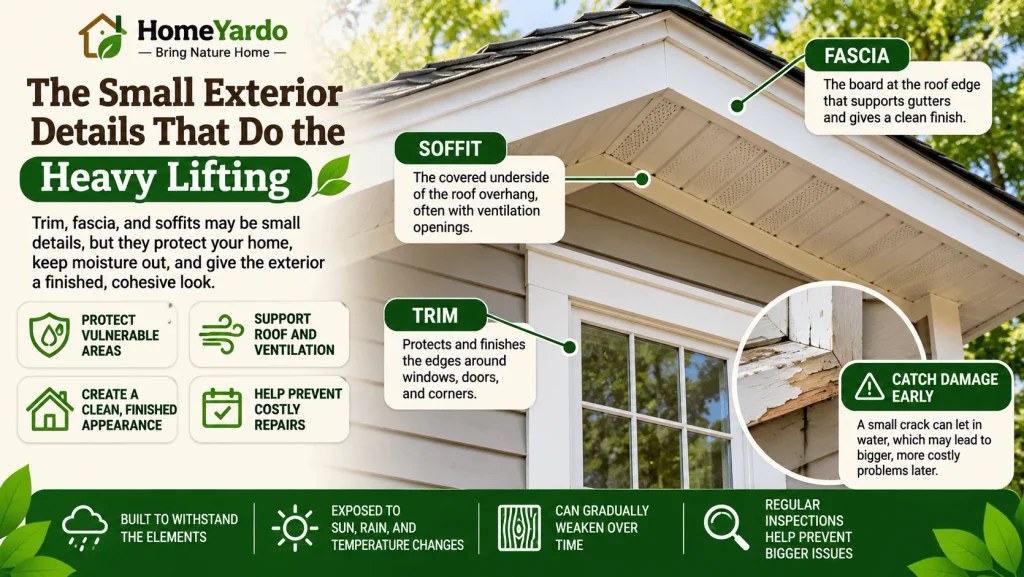
Exterior carpentry often receives less attention than roofing or siding, even though it connects and supports many important parts of a building.
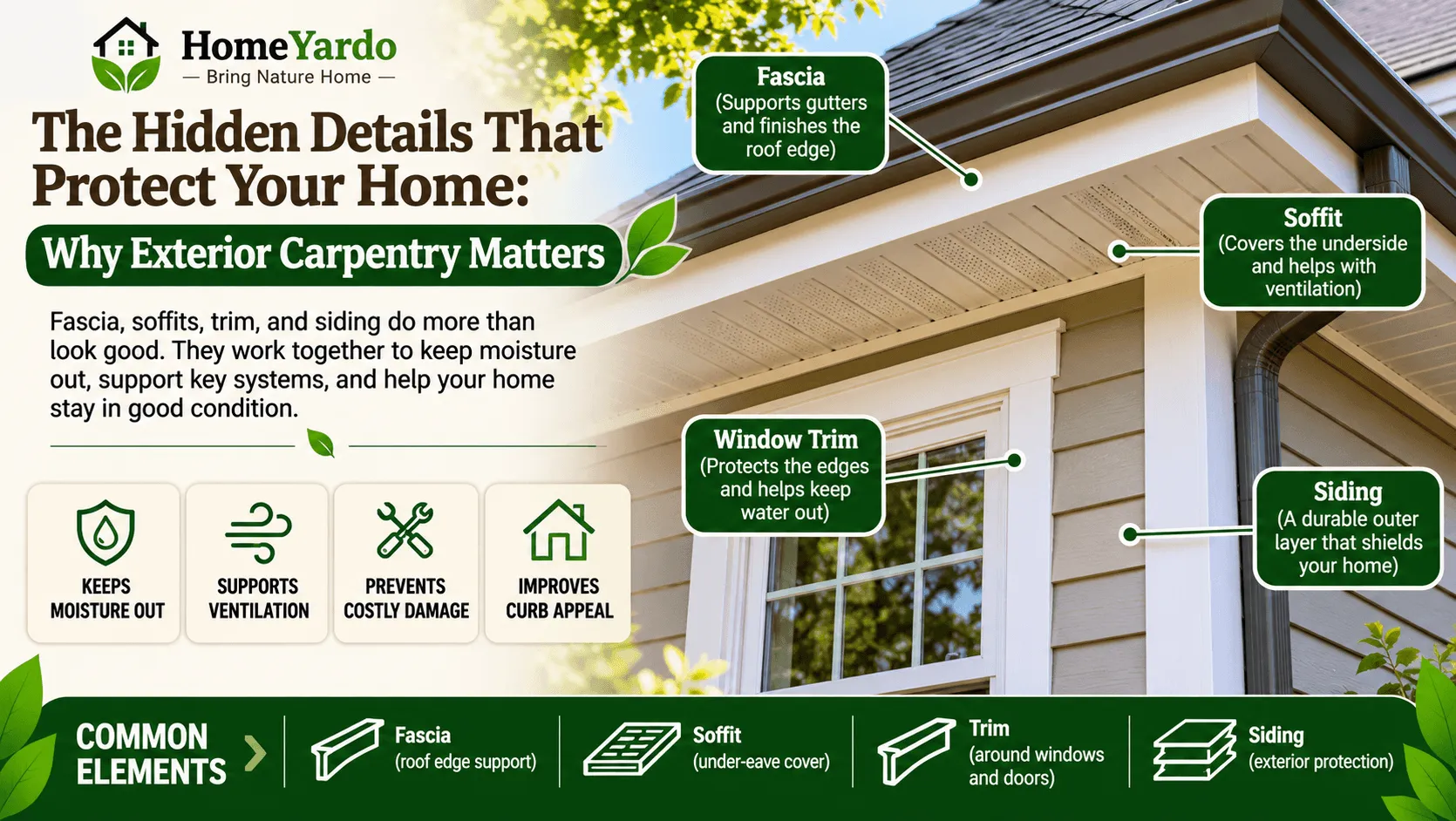
Trim boards protect vulnerable transitions around windows, doors, and corners. Fascia boards finish the edges of the roof, while soffits cover the underside of roof overhangs and may incorporate ventilation openings.
These components also give the exterior a finished appearance, helping different architectural elements look consistent.
Unfortunately, constant exposure to rain, sunlight, temperature changes, and moisture can gradually weaken wood and other materials.
A small crack might initially appear harmless, but water entering through damaged surfaces can eventually affect concealed areas.
Regular inspections help homeowners identify deterioration before repairs become more complicated.
Why Fascia and Soffits Deserve More Attention
Most homeowners rarely think about the boards running along their roofline until something starts looking wrong.
Fascia boards are positioned along the lower edges of the roof, often providing a mounting surface for gutter systems. Soffits cover the exposed underside of the roof overhang and, when properly vented, contribute to attic airflow.
When these components deteriorate, the consequences may extend beyond appearance.
Damaged fascia can affect gutter attachment, while failing soffit panels may create openings that allow insects or small animals into vulnerable areas.
Moisture can also damage nearby wood and contribute to deterioration around the roof edge.
Watch for peeling paint, sagging sections, visible gaps, and soft or discolored materials.
If damage appears, a professional should determine whether individual sections can be repaired or whether the surrounding assembly requires more extensive attention.
Replacing visible boards without addressing the source of moisture may allow the same problem to return.
Siding Problems Don’t Always Stay on the Surface
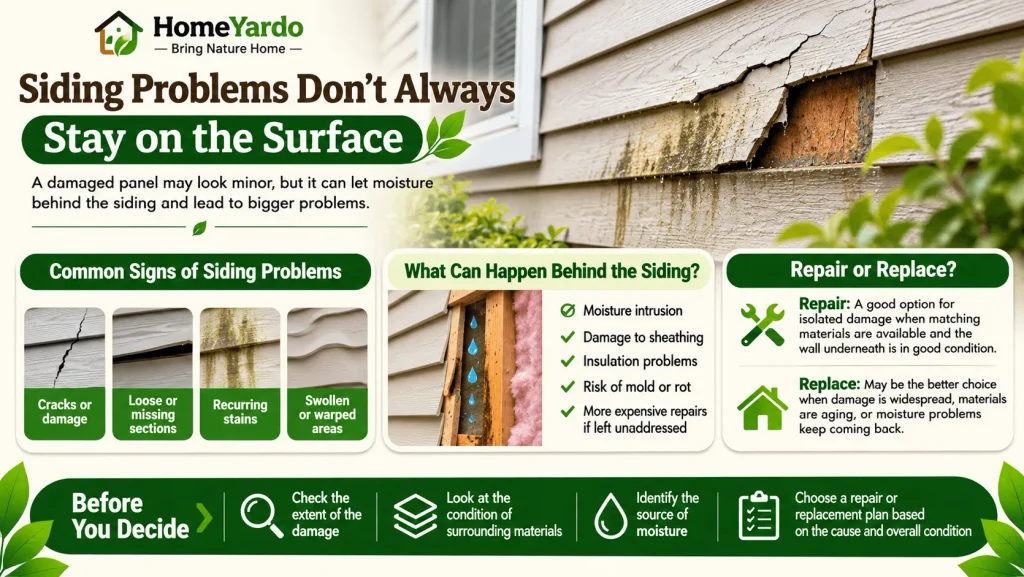
Siding creates an important protective layer around a house, helping manage exposure to wind, rain, and other environmental conditions.
However, siding materials can crack, loosen, warp, or deteriorate as they age.
A damaged panel might appear to be a simple cosmetic problem, but openings and installation defects can allow moisture to reach materials beneath the exterior finish.
Signs of trouble include missing sections, unusual gaps, recurring stains, and areas that appear swollen or distorted.
The right repair depends on the extent of the damage and the condition of the surrounding materials.
Isolated problems may be addressed through targeted replacement, provided compatible materials are available and the underlying wall remains sound.
Widespread deterioration or repeated moisture intrusion may justify a larger replacement project.
Before choosing either option, it is important to determine why the siding failed.
Window and Door Trim: More Than Decoration
Exterior trim gives windows and doors a polished appearance, but its function extends beyond creating clean architectural lines.
Properly installed trim helps finish and protect the edges of these openings. Together with suitable flashing and water-resistant detailing, it contributes to keeping moisture out of vulnerable areas.
Over time, wood trim may develop cracks, peeling paint, or rot. Joints can separate, and poorly maintained sections may allow water to reach adjacent materials. When deterioration is extensive, replacing damaged trim may be necessary. If the window itself is failing, HomeYardo’s window replacement planning guide explains the broader factors homeowners should consider.
Pay particular attention to areas beneath windowsills and around lower door frames, where water exposure can be persistent.
If paint repeatedly bubbles or wood feels soft, applying another coat of paint is unlikely to solve the underlying problem.
The damaged material may need repair or replacement, along with an assessment of surrounding flashing and drainage details.
Matching replacement trim to the home’s existing style also helps preserve its appearance without making repaired sections stand out.
Skylights Bring Natural Light But Require Careful Installation
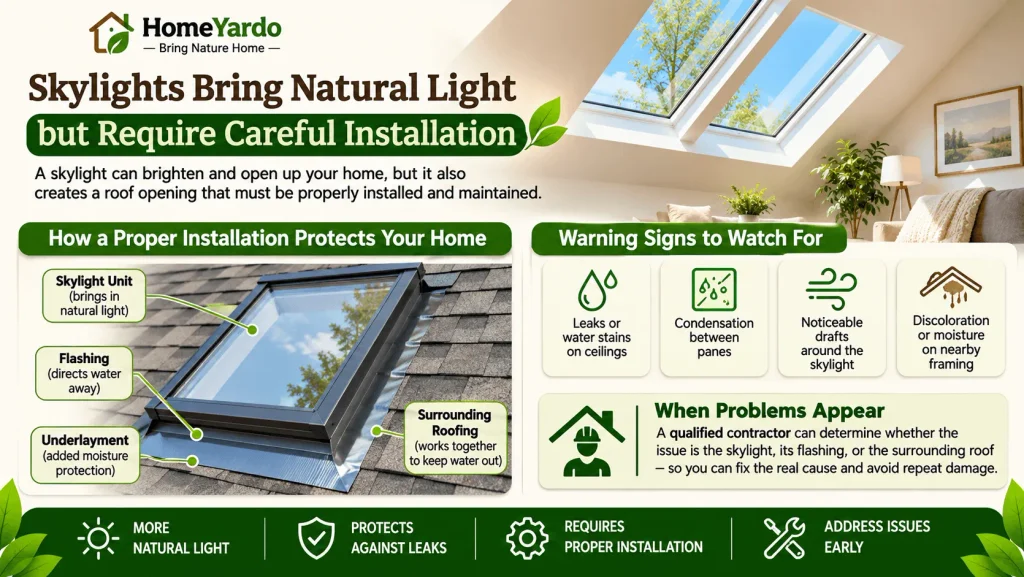
Few architectural features can transform a dark interior as dramatically as a skylight. Natural light entering from above can make hallways, bathrooms, and living spaces feel more open.
However, skylights introduce an opening into the roof, making proper installation particularly important.
A reliable installation requires more than placing a window into the roof surface. Flashing, underlayment, and surrounding materials must work together to direct water away from the opening.
A poorly integrated skylight may eventually develop leaks that damage ceilings, insulation, or nearby framing.
Condensation between panes, persistent drafts, and visible water stains can also indicate that attention is needed.
When problems appear, a qualified contractor should determine whether the issue involves the skylight itself, its flashing, or the surrounding roof.
Replacing a unit without identifying the cause of the problem can leave homeowners facing the same damage again.
Repair or Replace? Knowing When Each Option Makes Sense
Not every damaged exterior component requires complete replacement. In some situations, replacing a small section of trim or repairing limited siding damage can restore function without extensive construction.
The decision becomes more complicated when deterioration affects concealed materials.
For example, a fascia board showing surface damage may require a relatively straightforward replacement. However, widespread rot extending into nearby framing changes the scope of the work.
Age, material condition, previous repairs, and the availability of matching components should all influence the recommendation.
Homeowners should ask contractors to explain what can be repaired, what needs replacement, and whether any underlying damage has been identified.
A written estimate should distinguish essential repairs from optional cosmetic improvements.
Understanding these differences helps prevent unnecessary expenses while ensuring that important problems receive appropriate attention. Homeowners planning multiple improvements can use HomeYardo’s guide to planning a residential exterior refresh to organize repairs before decorative projects.
Choosing Materials That Can Handle The Outdoors
Exterior carpentry materials must withstand conditions that interior woodwork rarely experiences.
Moisture, ultraviolet exposure, temperature fluctuations, and seasonal expansion can all affect performance.
Traditional wood remains popular because of its appearance and versatility, but it requires appropriate finishing and ongoing maintenance.
Engineered wood, fiber cement, PVC, and certain composite materials offer alternatives for specific exterior applications.
Each option has advantages and limitations involving appearance, cost, expansion, installation requirements, and maintenance.
Material compatibility matters as much as the product itself. Proper flashing, fastening, joint detailing, and drainage are essential for long-term performance.
A more expensive material cannot compensate for poor installation or unresolved water intrusion.
Discuss available options with a contractor who understands how the selected materials will interact with the home’s existing construction.
A Little Maintenance Prevents Bigger Surprises
Exterior damage is easier to manage when homeowners inspect vulnerable areas regularly rather than waiting for obvious problems.
Walk around the property periodically and look for loose trim, cracked siding, deteriorating paint, and gaps around openings.
Pay particular attention after severe weather, when strong winds and heavy rainfall may expose existing weaknesses.
Keep gutters functioning properly and make sure water is directed away from vulnerable building surfaces.
Avoid allowing vegetation to remain pressed against exterior walls, where trapped moisture may contribute to deterioration.
When suspicious damage appears in difficult-to-reach areas, arrange a professional inspection instead of attempting unsafe ladder work.
Keeping photographs and records of previous repairs can also help identify recurring issues.
A Strong Exterior Starts With the Right Details
Maintaining a home’s exterior means looking beyond the most visible surfaces. The trim surrounding a window, the boards beneath a roof overhang, and the siding covering an exterior wall all contribute to the building’s performance.
When these components are properly installed and maintained, they help protect vulnerable areas while supporting a consistent, attractive appearance.
Ignoring deterioration, on the other hand, can allow relatively small problems to affect larger sections of the structure.
The most practical approach combines regular observation, timely repairs, and careful material selection.
A well-maintained exterior does not depend on constant renovation. It depends on recognizing which details matter, addressing damage at its source, and giving the home’s protective components the attention they deserve.
Final Takeaway: Protect The Details That Protect Your Home
The smallest exterior features are often the easiest to ignore. Yet fascia boards, soffits, window trim, corner boards, and adjoining assemblies help complete the protective layers around a home.
Maintaining them does not mean constantly replacing materials. It means checking their condition, investigating moisture problems, and repairing damage before it spreads.
The most effective approach combines suitable materials, properly integrated flashing and drainage, safe inspections, and timely professional repairs.
A home exterior can look attractive while hiding developing problems. Paying attention to the details behind that appearance helps keep it sound for years to come.
Frequently Asked Questions
Exterior carpentry includes the installation, construction, repair, and replacement of outdoor woodwork and compatible trim components. Common examples include fascia boards, window and door trim, corner boards, and selected structural framing details.
It helps finish and protect vulnerable building edges, supports adjoining components, and contributes to the performance of the exterior assembly. Proper installation and maintenance can reduce exposure to moisture-related deterioration.
Fascia runs along the roof edge and may provide a surface for gutter attachment. Soffit covers the underside of a roof overhang and may include openings for attic ventilation.
Damaged trim can expose vulnerable joints and indicate problems with nearby flashing or drainage. However, trim alone is not the primary waterproofing system, so the underlying cause should be investigated.