Windows That Belong: How To Match Your Home’s Style
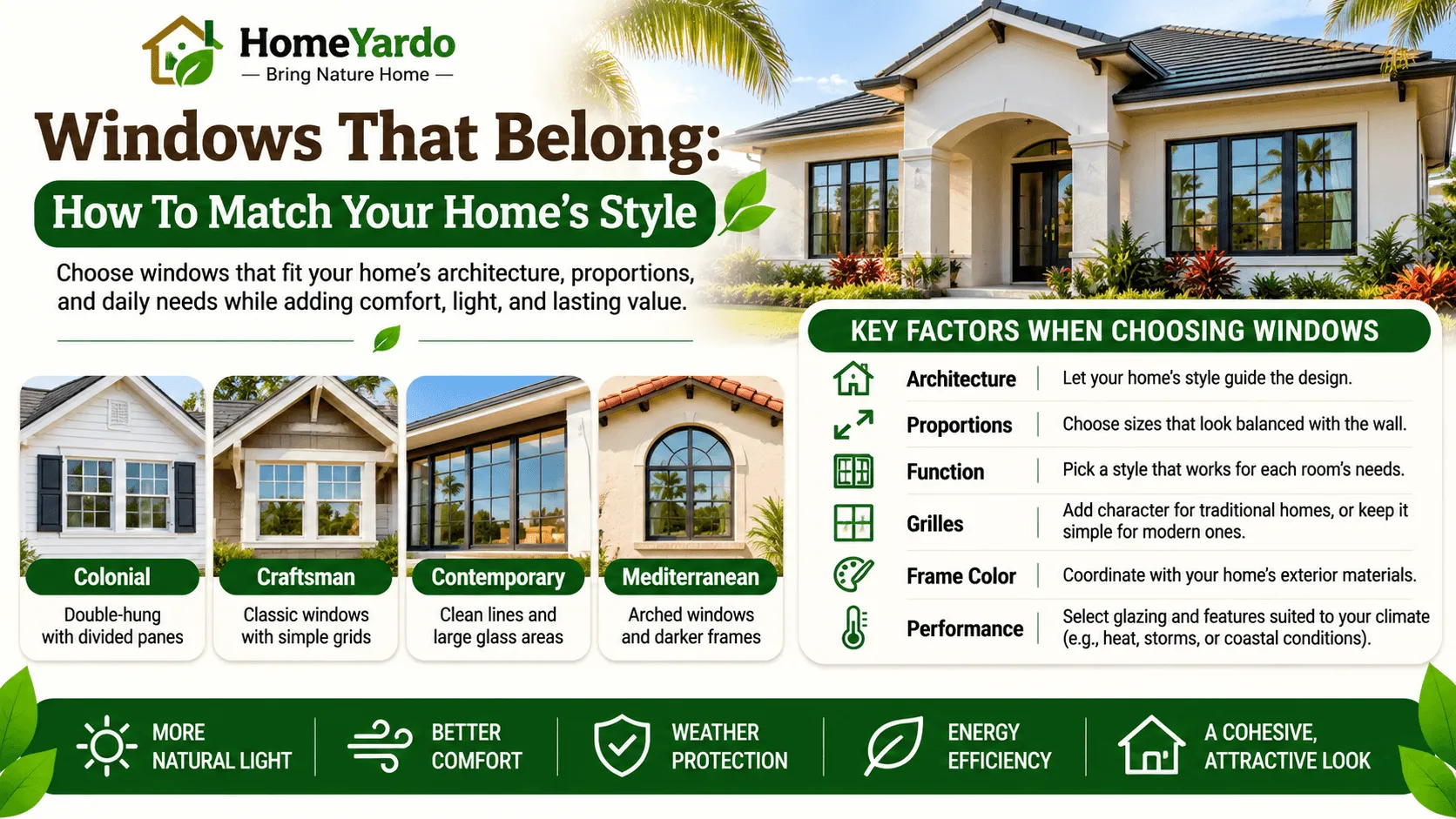
Windows have a bigger influence on a home’s appearance than most people realize. They shape the exterior, bring natural light into rooms, and help establish the character of the entire property. Homeowners considering replacements should think beyond basic functionality and explore what https://www.thewindowdepotllc.com/service-area/fort-myers-fl/ offers when choosing designs that complement their home’s architecture. The right combination of shape, size, frame material, and color can make a house feel balanced and inviting without changing its original personality.
Let Your Home’s Architecture Lead The Way
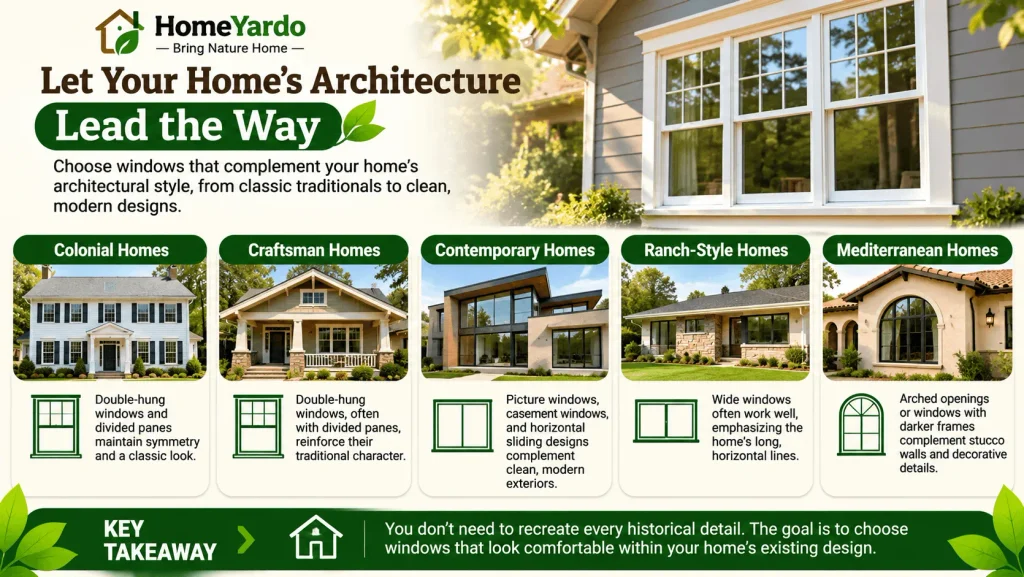
Every house has architectural features that give it a recognizable identity. Rooflines, exterior materials, decorative trim, and overall proportions all influence which windows will look appropriate.
Traditional homes, particularly Colonial and Craftsman designs, often look attractive with double-hung windows and divided panes. These details reinforce the symmetry and familiar patterns associated with older architectural styles.
Contemporary homes generally benefit from cleaner lines and larger glass surfaces. Picture windows, casement windows, and horizontal sliding designs can complement minimalist exteriors without introducing unnecessary decoration.
Ranch-style houses offer more flexibility. Their long, low profiles often work well with wide windows that emphasize horizontal lines. Mediterranean-inspired homes, meanwhile, may feature arched openings or windows with darker frames that complement stucco walls and decorative exterior details.
You don’t need to recreate every historical feature perfectly. The goal is to choose windows that look comfortable within the home’s existing design.
Size Matters, But Proportion Matters More
A beautiful window can still look awkward when its dimensions don’t suit the surrounding wall. Getting the proportions right is one of the most important parts of window selection.
Tall, narrow windows can make a home appear more elegant and emphasize vertical architectural features. Wide windows create a more open appearance and are particularly effective on houses with horizontal rooflines.
Pay attention to the spacing between windows as well. On a symmetrical facade, uneven placement can disrupt the overall appearance. Windows positioned at noticeably different heights may also make the exterior look less organized.
Before choosing larger replacement windows, consider how the changes will affect the entire building. A dramatic picture window might look impressive in a showroom but overwhelm a modest front elevation.
If you’re replacing existing windows without changing their openings, matching the original proportions is often the simplest way to preserve architectural harmony.
Find a Window Style That Fits Your Daily Life
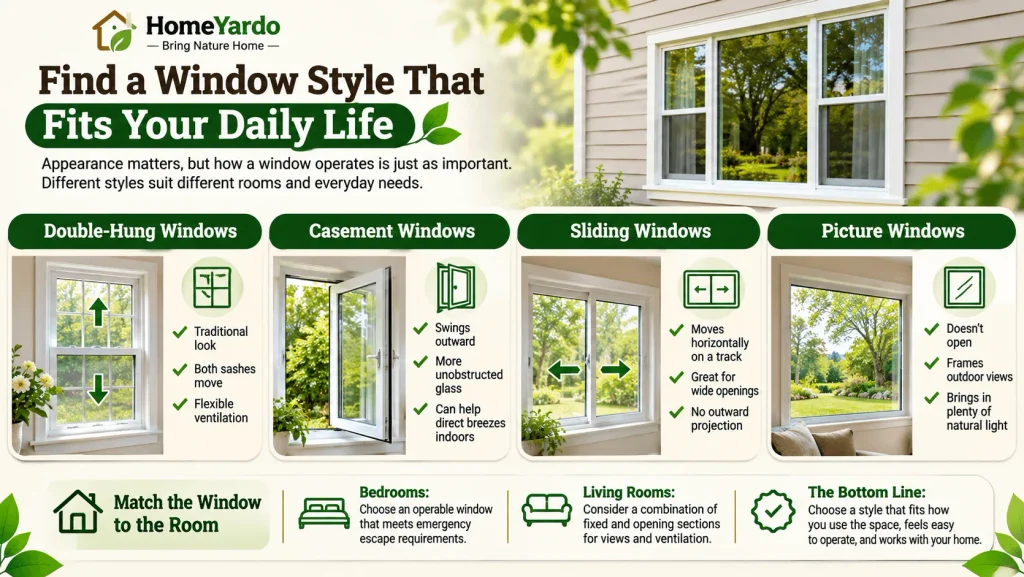
Appearance should guide your choices, but the way windows operate matters just as much. Different opening mechanisms suit different rooms and household needs.
Double-hung windows remain popular because their traditional appearance works with many home designs. Both sashes can move, allowing ventilation through the upper or lower portion.
Casement windows swing outward from side hinges. Their relatively unobstructed glass area makes them suitable for contemporary spaces, while the opening design can help direct breezes indoors.
Sliding windows move horizontally along a track and work particularly well in rooms with wide openings. They also avoid the outward projection of casement designs.
Picture windows don’t open, but they can frame attractive outdoor views and allow generous amounts of daylight into living areas.
Consider how each room functions before making a decision. A bedroom may need an operable window that meets emergency escape requirements, while a living room overlooking a garden could benefit from a combination of fixed and opening sections.
The most successful choices feel natural to use every day. For homeowners interested in additional opening options, HomeYardo’s guide to tilt-and-turn windows explains another design that combines ventilation and cleaning access.
Window Grilles: Charming Detail or Unnecessary Distraction?
Those decorative bars dividing a window into smaller sections can completely change its appearance. Known as grilles or muntins, they are particularly influential in traditional architecture.
Colonial-style houses frequently feature evenly spaced grids that create a classic, orderly appearance. Craftsman homes often look attractive with simpler patterns concentrated near the upper sash.
On modern homes, however, elaborate grids can interrupt the clean lines that make the architecture appealing. Larger, uninterrupted glass surfaces generally provide a better fit.
Think about the view from inside, too. Decorative divisions may add character to the exterior but can make a scenic view feel visually crowded.
If you choose grilles, maintain a consistent pattern across windows that are visible together. Mixing several unrelated designs can make the exterior feel pieced together rather than thoughtfully planned.
Give Frame Colors the Attention They Deserve
Frame color may seem like a minor decision until you see how strongly it affects the finished appearance of a house.
White frames remain a familiar choice for traditional homes and pair well with many siding colors. They can also help create a lighter appearance around smaller window openings.
Black and dark bronze frames create stronger contrast. These finishes are common in contemporary designs, although they can also work beautifully on certain farmhouse and transitional exteriors.
Warm neutrals, such as beige and softer brown tones, may complement brick, stone, or earth-colored stucco without drawing excessive attention.
Frame material deserves consideration alongside color. Vinyl generally requires little routine maintenance, while aluminum can accommodate slim profiles in suitable window systems. Other materials and finishes offer different combinations of appearance, durability, and upkeep.
Look at physical samples against your home’s exterior whenever possible. Colors can appear surprisingly different in direct sunlight, shade, and indoor showroom lighting.
Make Room for Sunlight Without Sacrificing Privacy
Large windows can brighten interiors and make rooms feel more spacious, but more glass isn’t automatically better.
A living room facing a private backyard may benefit from expansive windows that connect the interior to the outdoors. A bedroom facing a busy street might need a different approach.
Window placement can make a significant difference. Higher windows can introduce daylight while limiting direct views into a room. Carefully positioned casement windows may provide ventilation without exposing the entire interior.
Consider the direction each wall faces. Windows receiving strong afternoon sunlight can contribute to unwanted heat gain, especially in warmer climates. Appropriate glazing, exterior shading, and window coverings can help manage that exposure.
Furniture placement matters as well. A window that looks perfect from the street may become inconvenient if it prevents you from positioning a sofa, bed, or storage cabinet where you want it.
A good design should improve the appearance and comfort of the room simultaneously.
Beautiful Windows Still Need to Handle the Weather
A window that matches your home’s architecture won’t be a satisfying purchase if it struggles with local conditions.
In hot climates, energy-efficient glazing can help reduce unwanted heat entering through the glass. Low-emissivity coatings and insulated glass units are worth comparing, particularly for rooms with prolonged sun exposure.
Homes exposed to coastal weather may need additional protection against moisture, corrosion, high winds, or windborne debris. In hurricane-prone areas, properly rated impact-resistant windows may be appropriate or required under applicable building codes.
Check performance ratings rather than relying entirely on appearance or product descriptions. Air leakage, solar heat gain, and thermal performance all affect how a window performs after installation.
The installation itself is equally important. Poorly fitted windows can allow water intrusion and drafts regardless of how attractive or efficient the product looks on paper.
The Finishing Touch Is Consistency
One of the easiest ways to make replacement windows look intentional is to consider the house as a whole.
That doesn’t mean every window must be identical. A large picture window in the living room can coexist with smaller bedroom windows. Different rooms naturally have different requirements.
What matters is maintaining a connection between them. Similar frame finishes, compatible grille patterns, and consistent trim details help create a unified appearance.
Take photographs of each exterior wall before making final selections. Looking at the entire house rather than individual openings can reveal mismatched proportions or design choices that might otherwise go unnoticed.
Choosing windows is ultimately an exercise in balance. Architectural character, personal taste, natural light, privacy, and performance all deserve attention. When those elements work together, new windows can make a home look refreshed while preserving the features that made it appealing in the first place.
Final Takeaway
Choosing windows that match your home’s style comes down to finding the right balance between architectural character and practical needs.
Start with the building’s proportions and design. Select window types that suit individual rooms, coordinate finishes and decorative details, and compare performance features appropriate for your local climate.
The best windows don’t need to attract attention. They should feel like a natural part of the house while making it brighter, more comfortable, and easier to enjoy.
FAQs About Choosing Windows For Your Home
Start by identifying your home’s architectural style, exterior proportions, and existing trim. Choose window shapes, frame colors, and grille patterns that complement those features while meeting each room’s practical needs.
Picture windows, casement windows, and sliding windows often complement modern architecture. Simple frames, clean lines, and larger uninterrupted glass areas generally work well with contemporary exteriors.
Double-hung and casement windows are common choices for traditional houses. Appropriate grille patterns, frame proportions, and trim details help maintain the home’s established appearance.
Not necessarily. Different rooms can use different window styles, but coordinating frame colors, grille patterns, and exterior trim helps maintain a consistent appearance.