Small Plant Guide: 20 Best Indoor Picks For Every Room
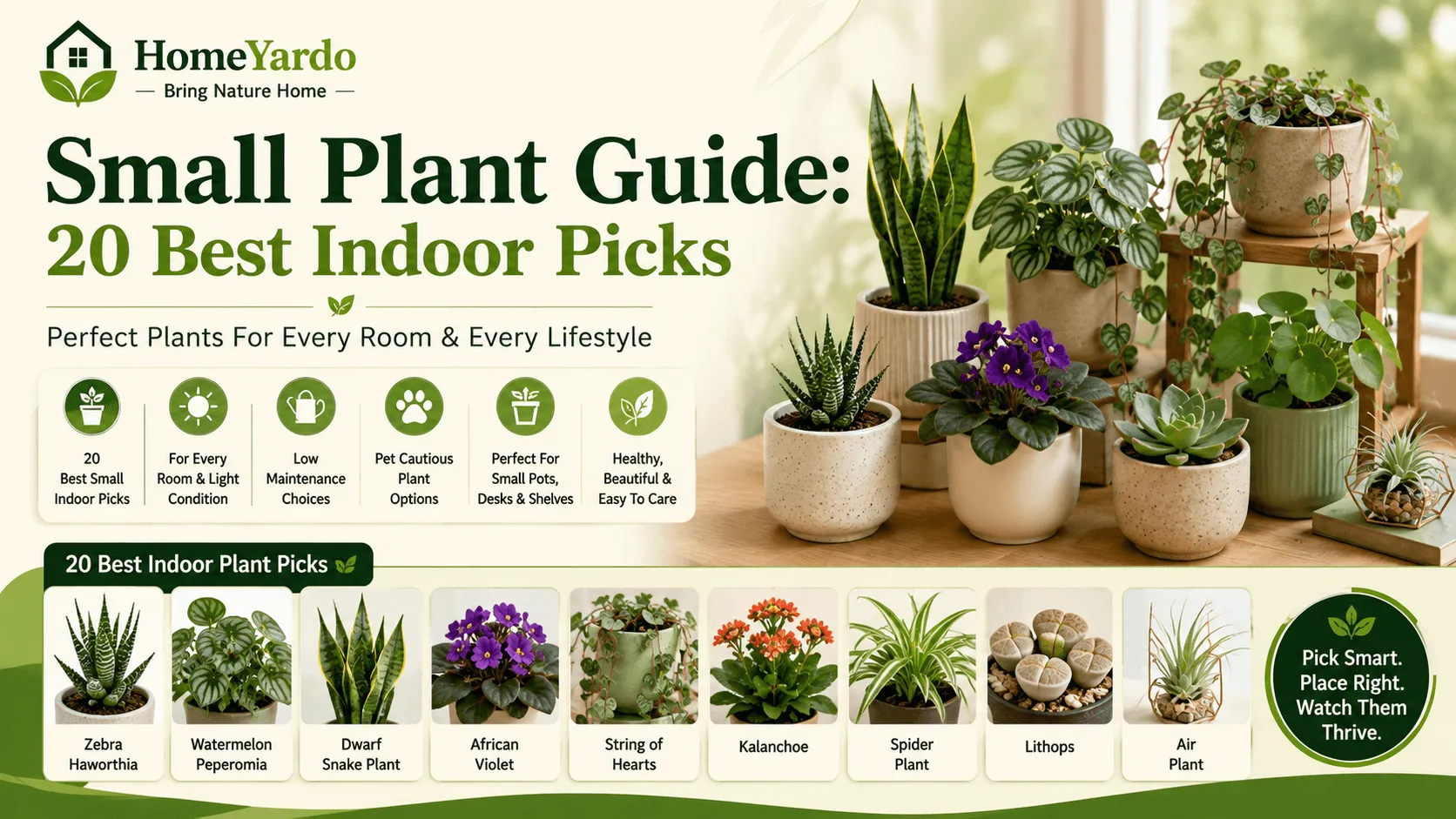
A small plant can soften the look of a dull desk, add a pop of color to an uninspiring shelf, and make a tranquil bedroom feel more well-cared for. It doesn’t need to be huge to alter the atmosphere of a room. Sometimes a tiny pot close to a window can do more than a corner packed with stressed plants.
The hardest part is picking the right plant for your needs. Some plants appear tiny in the store, but expand later. Some require a bright, sunny window. Some people don’t like the dry air that comes from the AC vent. A pretty pot also requires the proper soil, drainage and plenty of room for the roots.
This guide provides 20 options for small plants that can be used on tables, desks, shelves windowsills, kitchens, bedrooms, bathrooms, apartments and even small pots. It also explains the best plants for the space type, light level and routine of care.
Make use of the tables to assess the size, light, habits, and the level of care prior to deciding. A small-sized plant that is healthy should be natural-looking in the area remain manageable, and be easy to maintain.
Best Picks Summary
An instant decision can be helpful when the space is set but the plant selection is uncertain. Begin with the element that is most important, and after that, you can review the entire detail of the plant prior to purchasing.
| Need | Top Pick |
|---|---|
| Best overall | Zebra haworthia |
| Best desk plant | Watermelon peperomia |
| Best low light choice | Dwarf snake plant |
| Best tiny pot plant | Lithops |
| Best flowering t | African violet |
| Best shelf plant | String of hearts |
| Best kitchen plant | Kalanchoe |
| Best pet cautious choice | Spider plant |
| Best advanced | Venus flytrap |
These are the choices that serve as a basis for starting. The final selection should correspond to the air, light, pot size, and the daily maintenance available in the room.
What Counts As A Small Plant?
A tiny plant isn’t necessarily the same as one that is a plant that is young. It is possible for a plant to look small in a nursery pot, but yet be too large to fit on a shelf, desk or smaller side table later on.
A smaller plant that is a good choice has several beneficial traits. It can be small or grow slowly, have the shape of a small one, move downwards, or settle nicely in a pot that is small. Height and spread of mature plants are far more important than size at the time it’s purchased.
The smallest indoor plant can be placed on a table, desk or even a window or counter in the kitchen or bathroom ledge, or bedside table. Some plants grow upright and neat. Others spread out gently and help save surfaces. The ideal fit is contingent on light, root and the need for water, as well as how the plant performs indoors.
| Type | What It Means | Good Example |
|---|---|---|
| Naturally tiny | Stays very small with little pruning | Lithops |
| Slow growing | Takes time to outgrow the pot | Zebra haworthia |
| Compact upright | Grows narrow instead of wide | Dwarf snake plant |
| Trailing | Saves surface space by hanging down | String of hearts |
| Small pot friendly | Performs well in compact containers | African violet |
| Small when young | May need more space later | Money tree |
The safest approach is simple. Check the mature size before buying, then match the plant to the light and pot size at home.
Types Of Small Indoor Plants
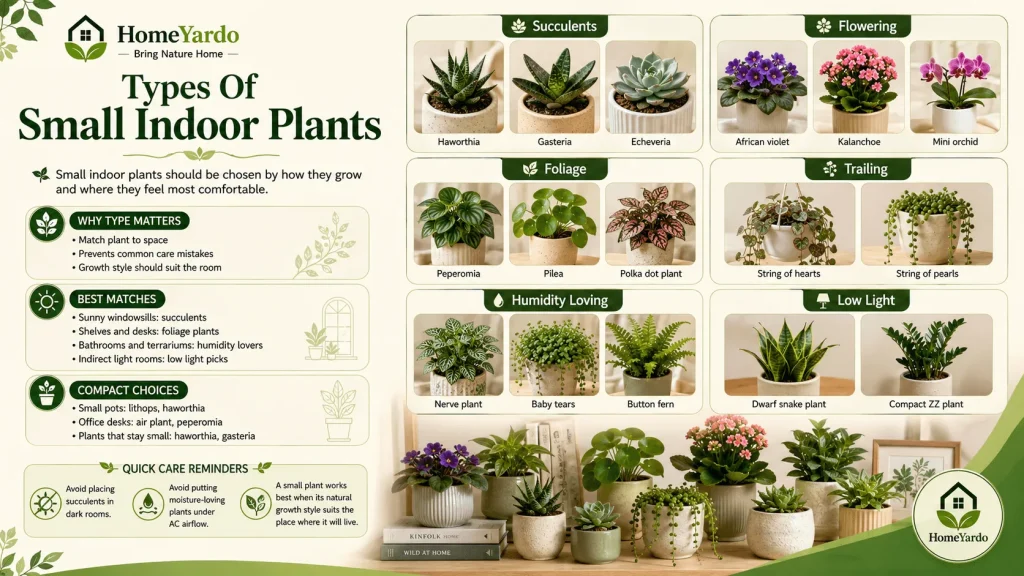
Indoor plants that are small can be divided according to their growth patterns and the place they feel at ease. A sunny window requires an alternative plant to an unlit bookcase. A bathroom shelf requires an alternative to the dry desk.
The idea of thinking about the type of plant helps you make the right choice. It also avoids common blunders like placing a succulent inside an unlit room or placing plants that love moisture under AC airflow.
| Type | Best For | Examples |
|---|---|---|
| Succulent plants | Sunny windowsills and dry rooms | Haworthia, gasteria, echeveria |
| Flowering plants | Compact color | African violet, kalanchoe, mini orchid |
| Foliage plants | Tables, shelves, desks | Peperomia, pilea, polka dot plant |
| Trailing indoor plants | Shelves and hanging pots | String of hearts, string of pearls |
| Humidity loving | Bathrooms and terrariums | Nerve plant, baby tears, button fern |
| Low light | Rooms with indirect light | Dwarf snake plant, compact ZZ plant |
| Small plants for small pots | Tiny containers and compact displays | Lithops, haworthia, gasteria |
| Mini plants for the office desk | Tidy workspace greenery | Air plant, peperomia, haworthia |
| Small plants that stay small | Long term compact spaces | Haworthia, lithops, gasteria |
These work best when their natural growth style suits the place where they will live.
Dwarf Plants, Miniature Plants, And Tiny Indoor Plants
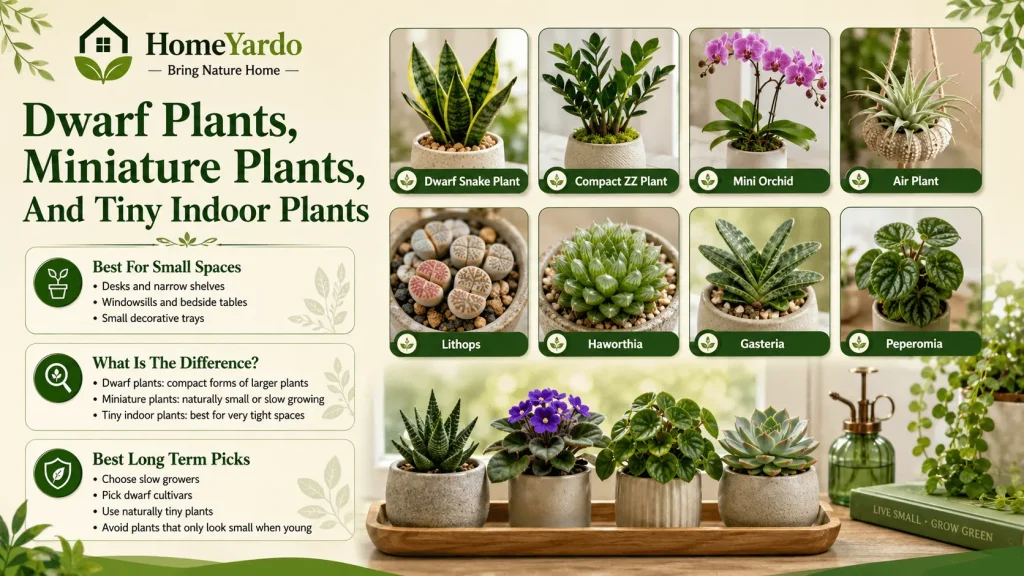
Dwarf plants, miniature plants indoors, and tiny plants are great when space is very restricted. They can be used on shelves that are narrow, desks, window sills, bedside tables and even small trays for decorative purposes in areas where larger plants would appear overcrowded.
The two groups are not identical. The dwarf species is generally smaller than an established plant. The tiny plant remains tiny due to its nature of slow or even sluggish growth. Minimal house plants and potted plants in tiny sizes are the best choices for spaces that are tight, glass displays and tiny pots.
| Group | What It Means | Good Choices |
|---|---|---|
| Dwarf plants | Compact versions of larger indoor plants | Dwarf snake plant, compact ZZ plant |
| Miniature plants indoors | Plants that stay small in indoor conditions | Mini orchid, air plant, lithops |
| Tiny indoor plants | Very small for tight spaces | Lithops, baby tears, air plant |
| Tiny house plants | Houseplants for desks and shelves | Haworthia, gasteria, peperomia |
| Tiny houseplants | Compact indoor plants with a small mature size | African violet, nerve plant, mini orchid |
| Tiny potted plants | Plants that suit very small containers | Lithops, haworthia, echeveria |
| Tiny pot plants | Plants that can handle small root space | Gasteria, kalanchoe, African violet |
| Very small plants | Plants that stay short and compact | Lithops, air plant, baby tears |
| Little plants | Small decorative plants for light indoor use | Peperomia, polka dot plant, haworthia |
The best option is dependent on whether the plant remains tiny naturally or appears smaller when young. For long-term use, pick the slow growing plants or dwarf cultivars or plants that are naturally small and don’t require constant pruning.
Best Small Indoor Plants By Light Level
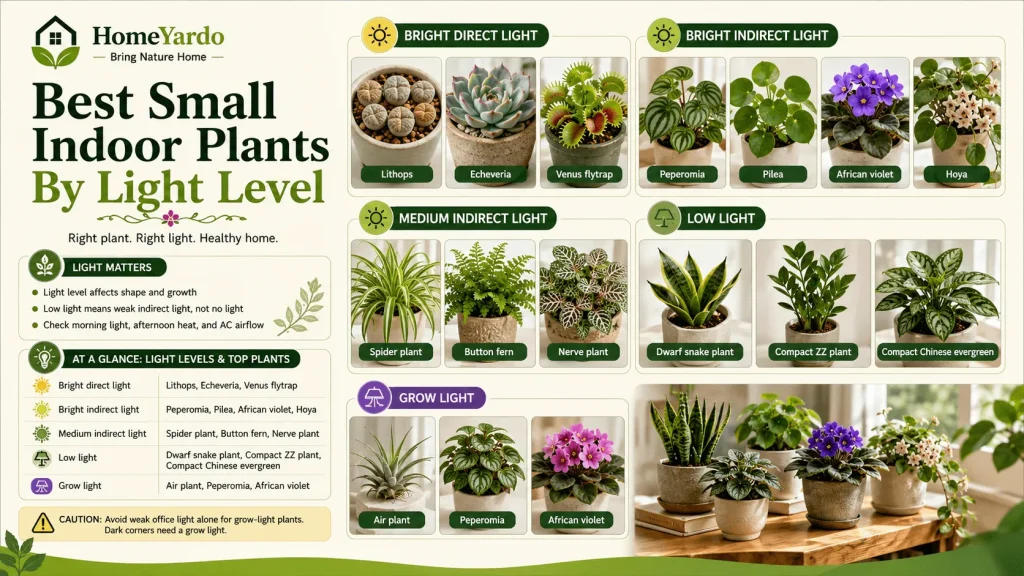
The light is often the main factor between a plant that remains neat, or one that loses shape slowly. A bright window can help support small succulents. The room should be soft and have plants that can tolerate indirect light. Dark corners require an outdoor grow light and not wishful thinking.
Low light refers to dim indirect light. It also means no light.
| Light Condition | Better Small Plants | Avoid |
|---|---|---|
| Bright direct light | Lithops, Echeveria, Venus flytrap | Nerve plant, baby tears |
| Bright indirect light | Peperomia, Pilea, African violet, Hoya | Dark corners |
| Medium indirect light | Spider plant, button fern, nerve plant | Harsh afternoon sun |
| Low light | Dwarf snake plant, compact ZZ plant, compact Chinese evergreen | Lithops, Echeveria, Venus flytrap |
| Artificial grow light | Air plant, peperomia, African violet | Weak office light alone |
Select the plant after examining the space at various times of the day. The light of the morning, the heat in the afternoon and the AC airflow all can affect the way a tiny plant will settle in.
Best Indoor Plants At A Glance
This table provides a quick overview of all 20 indoor choices. It can be used to evaluate sizes, placement, light of growth, as well as care levels before you read the entire descriptions.
| Plant | Best Spot | Light | Mature Indoor Size | Growth Habit | Care Level |
|---|---|---|---|---|---|
| Zebra Haworthia | Desk, shelf | Bright indirect | 3 to 8 inches tall and wide | Compact rosette | Easy |
| Gasteria | Table, office | Bright indirect | 4 to 10 inches tall, 4 to 12 inches wide | Slow succulent | Easy |
| Dwarf Snake Plant | Bedroom, desk | Low to bright indirect | 6 to 12 inches tall | Upright compact | Easy |
| Watermelon Peperomia | Table, shelf | Bright indirect | 6 to 12 inches tall and wide | Rounded foliage | Easy |
| Chinese Money Plant | Desk, living room | Bright indirect | 8 to 12 inches tall and wide | Upright rounded | Moderate |
| African Violet | Window, bedroom decor | Bright indirect | 6 to 12 inches tall and wide | Compact flowering | Moderate |
| Air Plant | Desk, wall holder | Bright filtered | 2 to 8 inches | Soil free rosette | Moderate |
| Lithops | Sunny window | Bright direct | 1 to 2 inches tall and wide | Naturally tiny | Moderate |
| Echeveria | Window, kitchen | Bright light | 3 to 8 inches tall and wide | Rosette succulent | Easy |
| String Of Hearts | Shelf, hanging pot | Bright indirect | Vines often 2 to 4 feet indoors | Fine trailing | Easy |
| String Of Pearls | Shelf, hanging pot | Bright indirect | Vines often 1 to 3 feet indoors | Beaded trailing | Moderate |
| Spider Plant | Shelf, bedroom | Bright indirect | 8 to 16 inches tall and wide | Arching foliage | Easy |
| Nerve Plant | Bathroom, terrarium | Medium indirect | 3 to 6 inches tall, 6 to 12 inches wide | Low foliage | Moderate |
| Baby Tears | Terrarium | Bright filtered | 2 to 4 inches tall, spreads gently | Mat forming | Moderate |
| Button Fern | Bathroom, shaded shelf | Medium indirect | 8 to 12 inches tall and wide | Compact fern | Moderate |
| Mini Orchid | Table, bedroom | Bright indirect | 6 to 12 inches tall | Small flowering | Moderate |
| Kalanchoe | Window, kitchen | Bright light | 6 to 12 inches tall and wide | Flowering succulent | Easy |
| Polka Dot Plant | Table, decor pot | Bright indirect | 6 to 12 inches tall and wide | Colorful foliage | Moderate |
| Hoya Compacta | Shelf, hanging pot | Bright indirect | Slow trailing vines | Thick trailing | Moderate |
| Venus Flytrap | Sunny window | Bright direct | 3 to 6 inches tall and wide | Carnivorous rosette | Advanced |
How To Buy A Small Plant
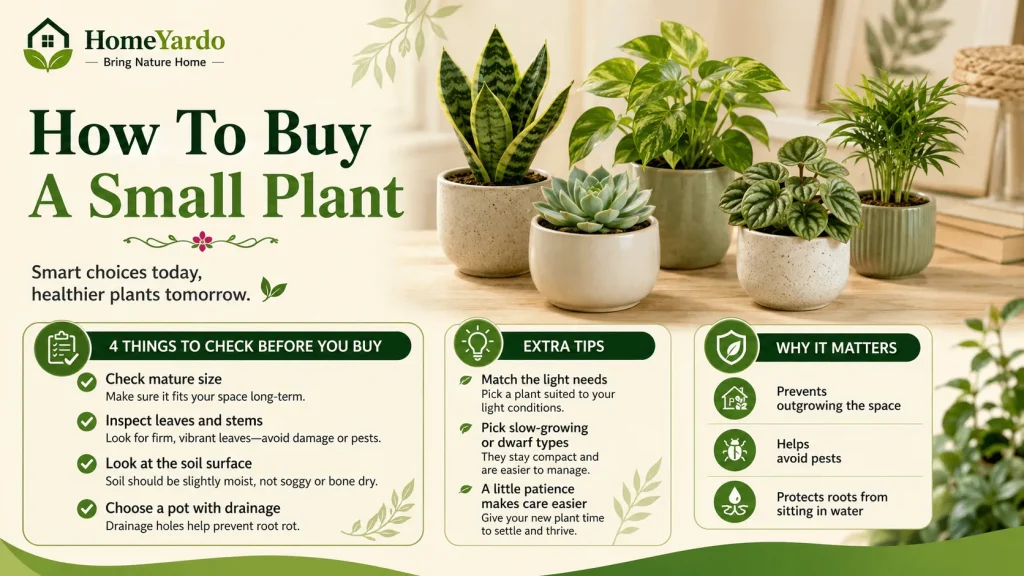
A small-sized plant purchase should appear easy but a quick look could save you months of stress. It is not the intention to select the smallest container at the store. The aim is to select an item that will remain well in the space that is waiting for it.
Be sure to check the height and spread of the mature plant first. The plant might look great in a small pot for a nursery but it will grow too big to fit on a shelf or desk later. The slow-growing plants and the small ones are best suited to a small space.
Take a look at the stems, leaves and the soil surface prior to purchasing. Healthy leaves should be solid for the type of plant. Avoid plants that have mushy stems, webbing, sticky residue, black spots, fungus gnats or lots of yellowing leaves.
Make sure to check the pot as well. Drainage holes are more important than color. pot. If the plant is in the cover pot of a decorative design ensure that there is no excess water after watering.
| Buying Check | Why It Matters |
|---|---|
| Mature size | Prevents choosing a plant that outgrows the space |
| Leaf condition | Helps avoid stressed or pest affected plants |
| Soil surface | Fungus gnats, mold, or a sour smell can signal trouble |
| Light needs | Stops bright light plants from going into dark rooms |
| Drainage | Protects roots from sitting in water |
| Growth habit | Helps match upright, trailing, or tiny plants to the right place |
A little patience at the buying stage makes plant care much easier later.
Best Small Houseplants: 20 Indoor Picks
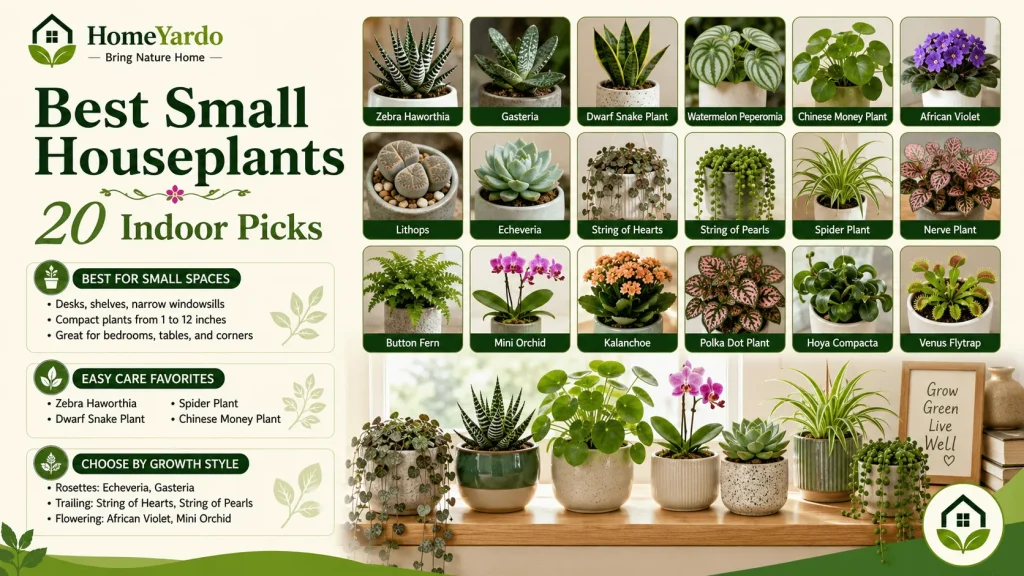
These plants have been profiled at least once to ensure that the guide is free of dirt. Room sections later on indicate where each plant will be well without repeating the exact maintenance tips.
1. Zebra Haworthia
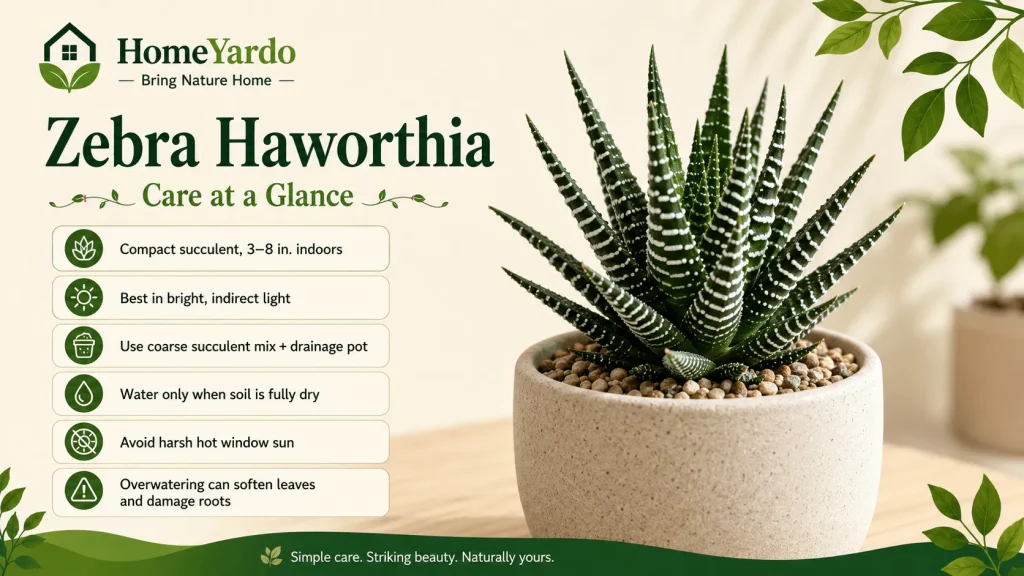
Zebra haworthia, also known as Haworthiopsis attenuata, is a succulent that is compact with leaves that are striped and arranged in an elongated circle. It typically grows 3-8 inches in height and width indoors which makes it a great tiny plant that can be used on shelves, desks, and window sills with narrow windows.
Set it in indirect, bright sunlight. A bit of gentle morning sunlight is a good idea, but the excessive heat from glass can scald the leaves. Utilize a succulent mix with a coarse texture and a pot that has drainage.
The soil is dried thoroughly. The problem begins when the plant is watered in the same way as the leaves of a tropical plant. Watering can cause softening of the leaves and damage to the roots.
2. Gasteria
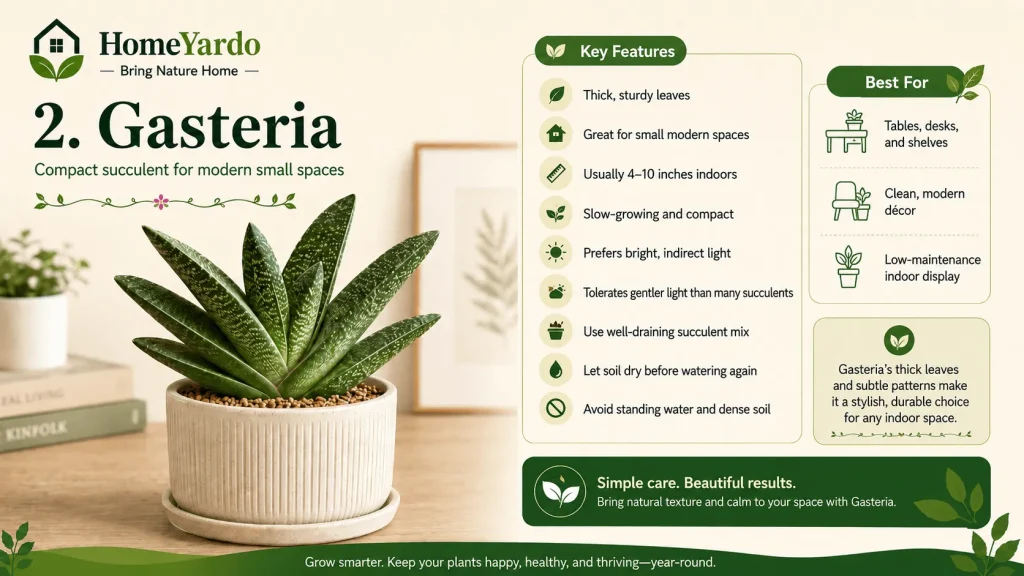
Gasteria features thick, sturdy leaves and a unique shape which is ideal for smaller modern areas. A lot of them are 4-to-10 inches high indoors and have a slow growing pattern that allows them to be used for tables, desks, and work shelves.
It prefers bright light, but not too harsh a sun. It is able to tolerate gentler light than other succulents; it requires an area with a bright light source to remain sturdy and small.
Make sure to use a well-draining succulent mix. The soil should dry prior to applying water again. Standing water and soil that is dense are common problems.
3. Dwarf Snake Plant
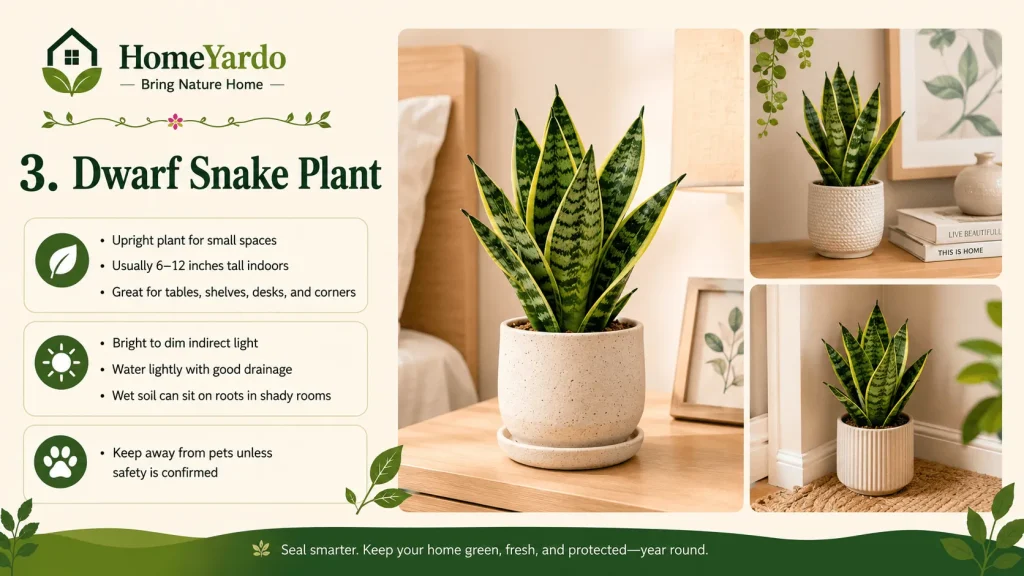
The dwarf snake plant is an excellent option when you need plants that are upright and have a large spread. Small cultivars typically stand between 6 and 12 inches tall indoors, whereas the larger sized plants may be much taller.
It can be used on bedroom tables, desk shelves, desks, and even tiny corners. Light that is bright to dim indirect is ideal, but the growth rate slows when there is less light.
Give it a light watering and drainage. In rooms with shade, the wet soil can sit over the roots. Avoid it from chewing on it unless safety is confirmed.
4. Watermelon Peperomia
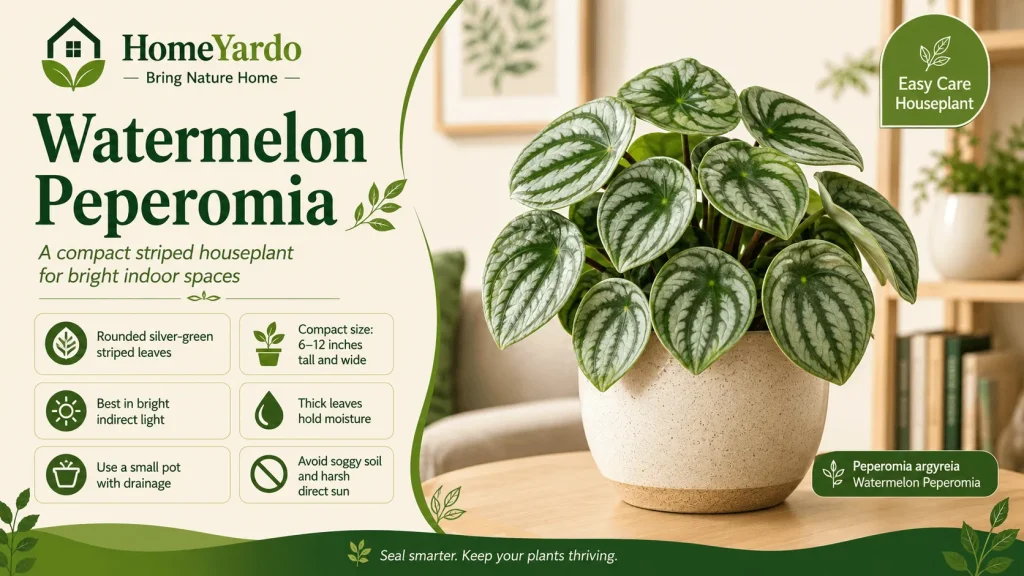
Peperomia of watermelon, or Peperomia argyreia, has leaves rounded and have silver-colored green stripes. It is usually 6-12 inches in height and width making it an ideal plant for a table, shelf or even a small living room accent.
It is a fan of bright indirect lighting and an indoor mix of potting. The thick leaves retain moisture, and therefore it isn’t necessary to water constantly.
A small container with drainage can help control the amount of water. Wet soil that is heavy can weaken the roots while harsh, dry sun could cause a mark on the leaves.
5. Chinese Money Plant
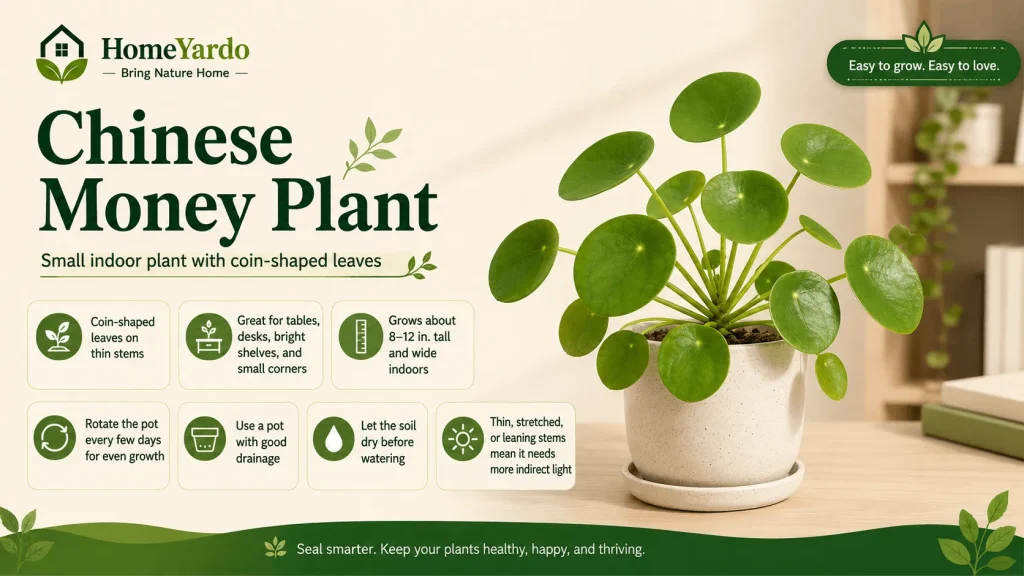
Chinese money plants, also known as Pilea peperomioides, bring an attractive form to small rooms. Its leaves in the shape of coins rest on thin stems, providing an attractive appearance for tables, desks with bright shelves, as well as living rooms with corners.
Indoors, it can be about 8-12 inches wide and tall if it is kept in a pot with good drainage. The plant should be rotated every few days so that it grows evenly, not being slanted towards the bright light.
The soil is dry. If stems are stretched or tilted, or appear like they are thin, then the plant requires more indirect light.
6. African Violet
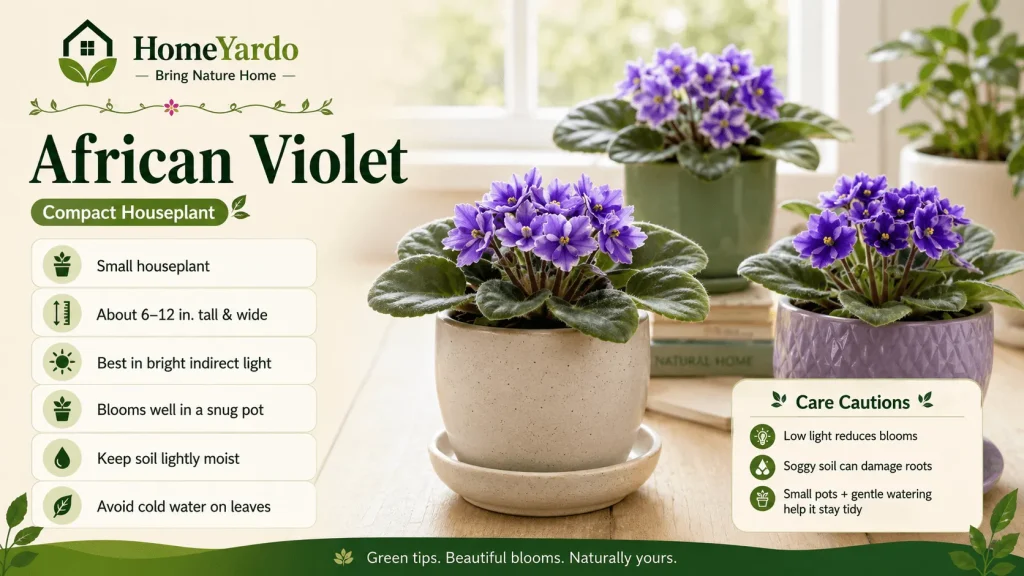
African violet, also called Saintpaulia Ionantha, is a small-sized houseplant that is usually 6-12 inches in height and width. It is a soft shade for tiny tables, bedrooms and bright windowsills that aren’t exposed to intense direct sunlight.
It is most likely to bloom best when it is in bright indirect light and in a pot that is snug. Make sure the soil is kept moist, but don’t splash cold water over the leaves.
Insufficient light can harm flowers. The soil that is wet can harm roots. Small pots with gentle watering and constant light can ensure that it stays tidy.
7. Air Plant
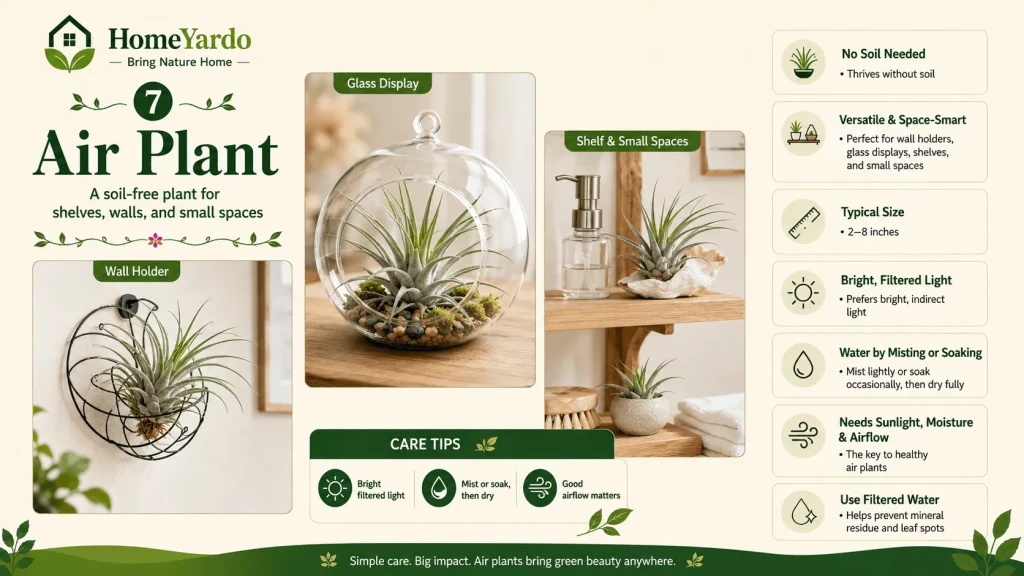
Air plants, which belong to the Tillandsia group, don’t require soil. They are therefore ideal for wall holders, desk glass displays as well as kitchen shelves and even small bathroom accessories. Based on the type, they can be between 2 and 8 inches.
They require bright, filtered light and frequent watering. A lot of air plants are misted or soaked before being dried completely so that water does not get trapped inside the leaves.
The absence of soil doesn’t mean you should not perform maintenance. Air plants require sunlight, moisture and airflow. Mineral heavy water may leave behind a residue; the water that is filtered can benefit sensitive plants.
8. Lithops
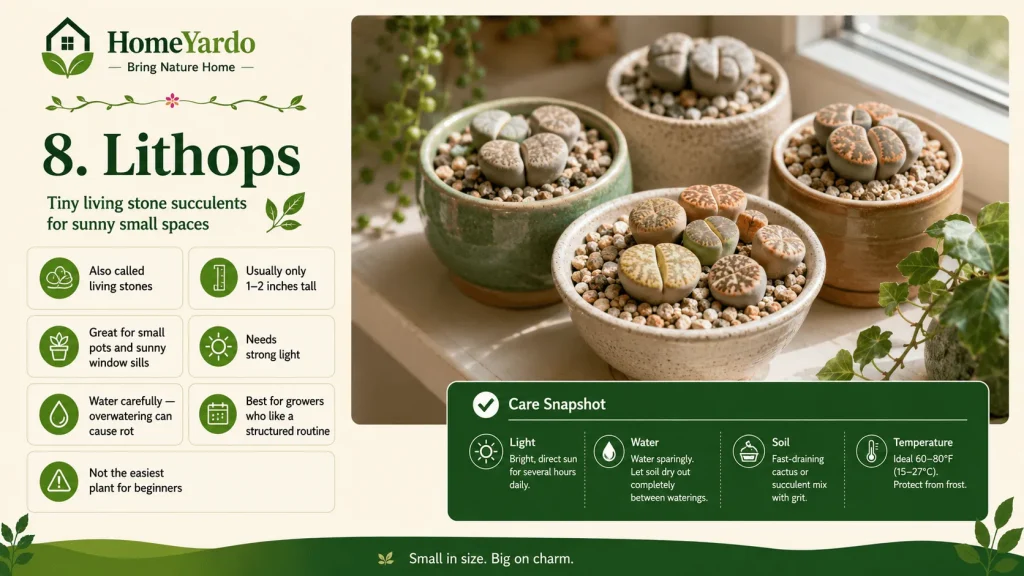
Lithops are small succulents, often known as living stones. They typically last from 1 to 2 inches in height, making them among the most compact plants to be used in small pots and sunny windowsills.
They require strong lighting and careful watering. Their growth cycles differ from those of typical houseplants, and making the wrong watering decision could cause rot.
Lithops are not the most straightforward to learn about and grow. They’re ideal for people who prefer an organized routine and would like plants that are truly small.
9. Echeveria
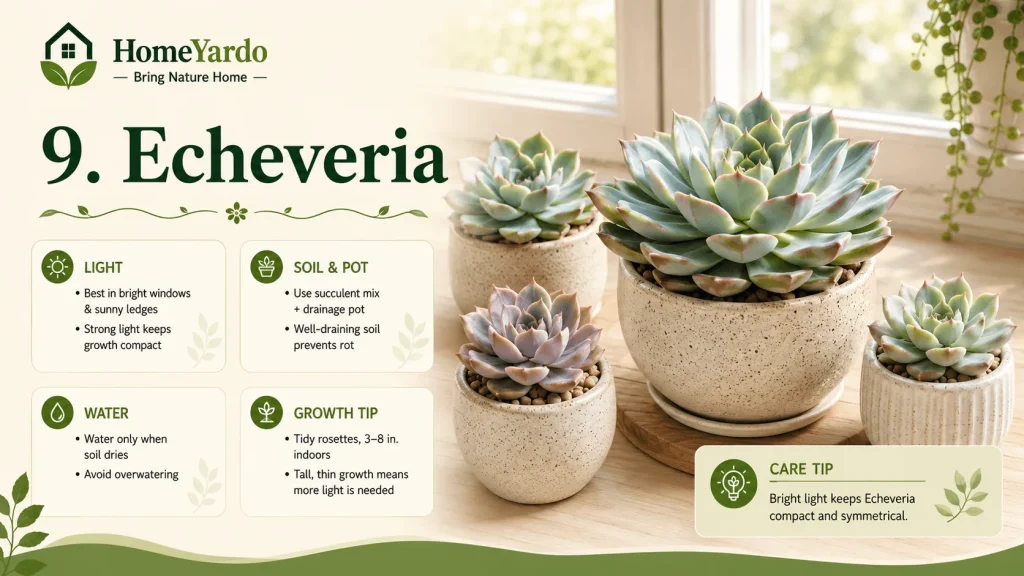
Echeveria has tidy rosettes and will last for 3-8 inches indoors, based on the type. It’s ideal for bright windows as well as bright kitchen ledges and even small pots for decoration.
A strong light source ensures that the rosette stays tight and symmetrical. In dim light, Echeveria stretches upward and begins to lose its compact shape.
Make use of a succulent mix as well as an earthenware pot that has drainage. Only water when the soil has dried. If the plant grows tall and thin and slender, move it closer to an area with a larger window.
10. String Of Hearts
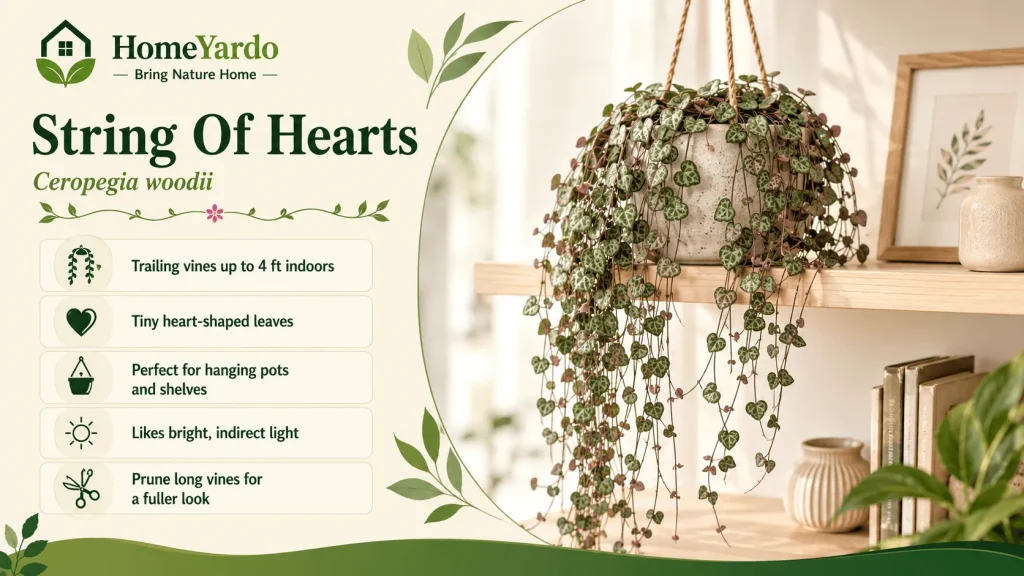
String of Hearts, also known as Ceropegia woodii, is a beautiful plant with beautiful trailing vines and tiny heart-shaped leaves. On top, the plant remains small, and the vines can extend up to four feet indoors without trimming.
It’s great for the shelves of hanging containers and in the living room display because it expands downwards instead of across the table.
It should be given an indirect, bright light and an easy potting mix. Cut long vines off when they become tangled or thin. Pruning can make the plant look fuller and more graceful. Its slender trailing vines also make it a lovely indoor hanging plant for a bright shelf or small suspended pot.
11. String Of Pearls
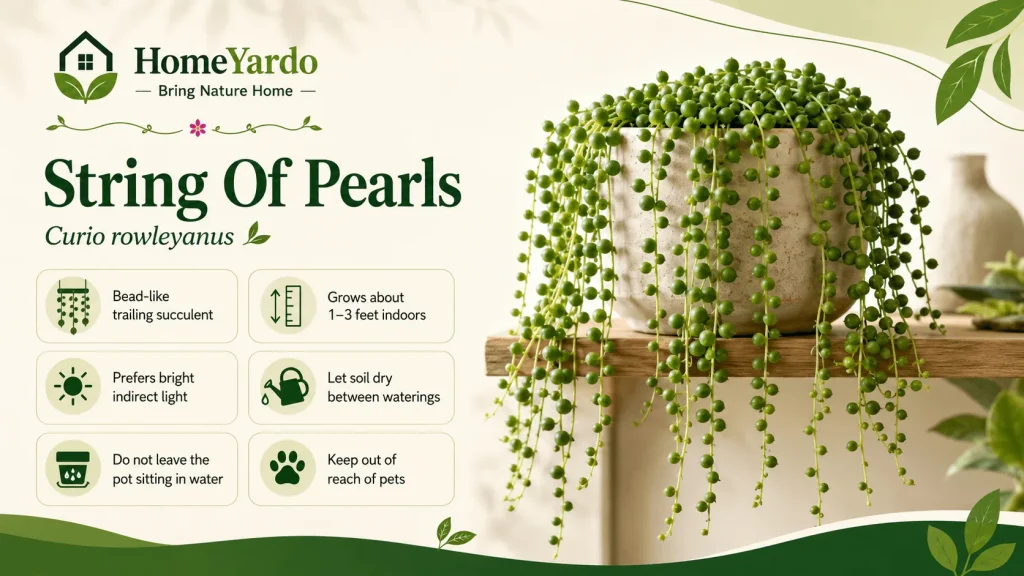
The String of Pearls also known as Curio rowleyanus, is a round bead-like leaf that grows across shelves and planters that hang. The vines typically reach about 1 to 3 feet indoors, but they can be reduced by trimming.
It requires bright indirect light and a careful approach to watering. The soil must dry between waterings and the pot should not remain in water.
The plants are less sensitive than simple indoor plants. It could also pose a danger in the presence of pets. Therefore, make sure it is kept out of the reach of pets.
12. Spider Plant
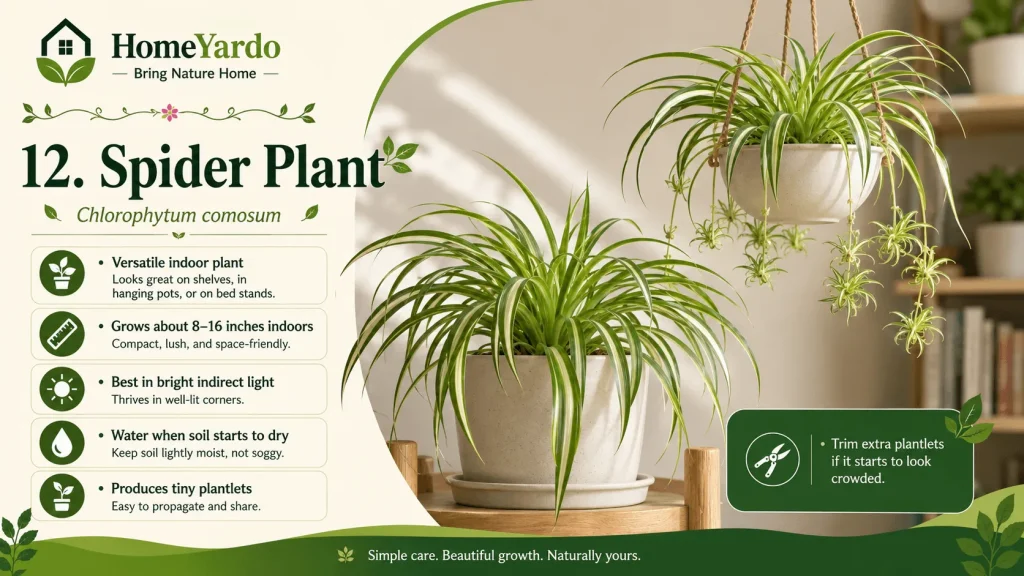
Spider plant, also called Chlorophytum comosum, is versatile and fun to put in. It can grow anywhere from 8 to 16 inches indoors. It has arched leaves that work well with shelves or hanging pots, bed stands and bright corners.
It thrives in bright indirect light, but can tolerate gentle light. It is best to water when the soil starts to dry.
Spider plants often produce tiny plantlets. They are charming but too many could make the plant appear crowded. Cut off extras when the pot begins to look unclean.
13. Nerve Plant
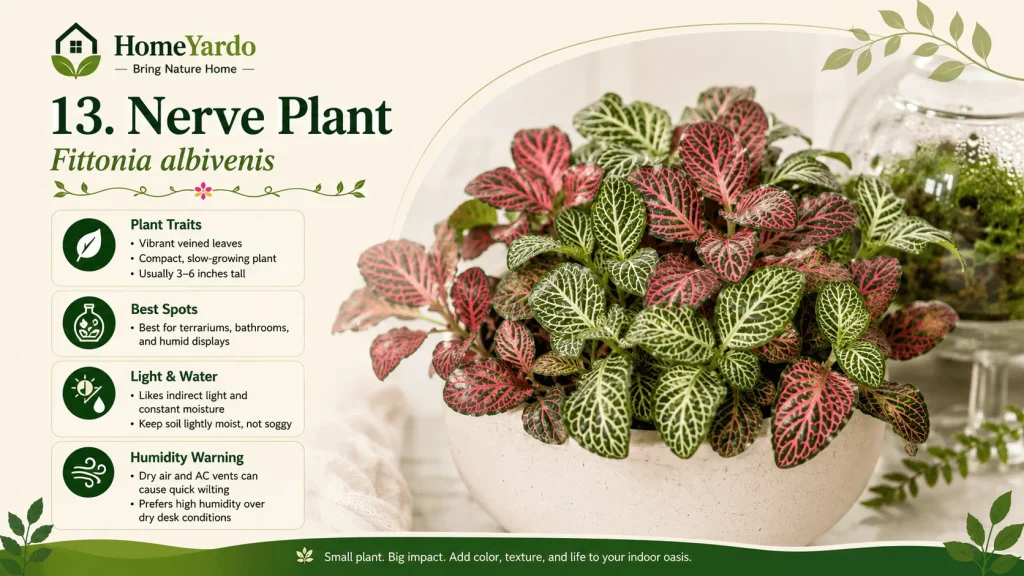
Nerve plant, also known as Fittonia albivenis, is a plant with vibrant veined leaves and a compact habit. It typically grows 3 – 6 inches tall, and grows slowly, which makes it suitable in terrariums, bathrooms and humid displays.
It favors indirect light and constant moisture. The soil should feel light and humid, not soggy.
Dry air can cause it to quickly wilt, particularly near AC vents. It’s better to have an environment that is humid rather than a desk that is dry.
14. Baby Tears
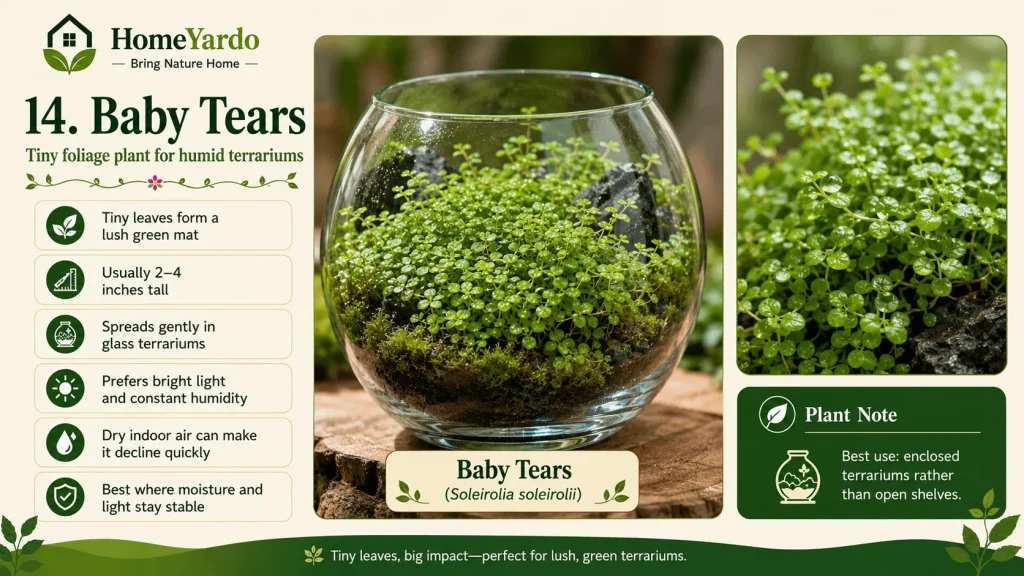
Baby tears, also known as Soleirolia soleirolii, has tiny leaves that make an enveloping green mat. It is usually low, between 2 and 4 inches in height and spreads out gently in glass or terrariums.
It is attracted to bright light and constant humidity. Dry and open indoor air can cause it to fall rapidly.
Baby tears isn’t a plant that can be easily placed on a shelf. It’s best when light and moisture can remain in place.
15. Button Fern
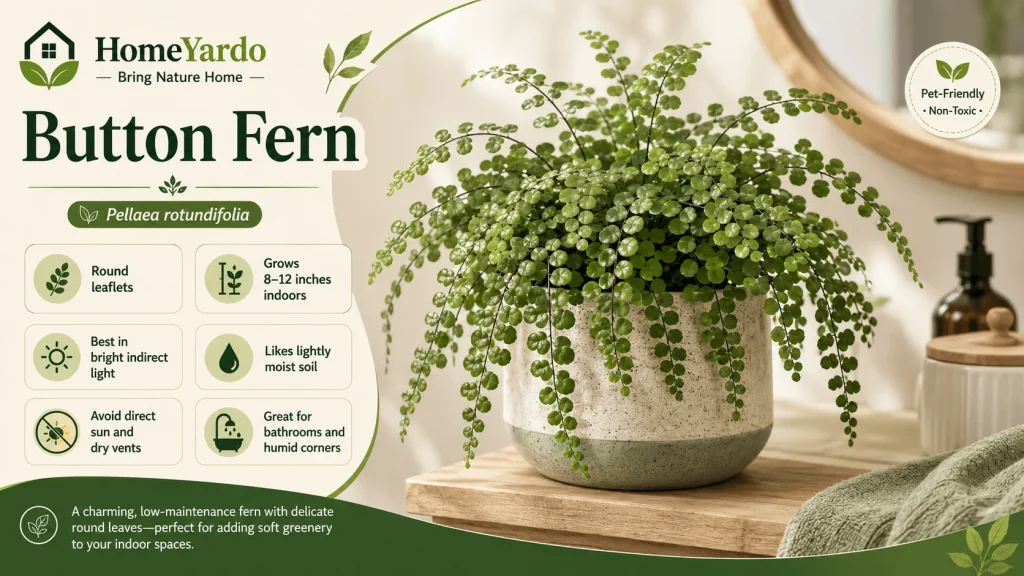
Button fern, which is commonly sold as Pellaea Rotundifolia, is a fern that has round leaflets. It typically grows 8-12 inches indoors and is therefore ideal to use as a bathroom shelf as well as tables with shade and humid corners.
It is a fan of indirect light and is more moist than succulents. The soil shouldn’t remain dry for prolonged periods but it shouldn’t remain soggy.
Be sure to keep it out of direct sunlight or dry vents. A bright bathroom could work well as long as the airflow is smooth.
16. Mini Orchid
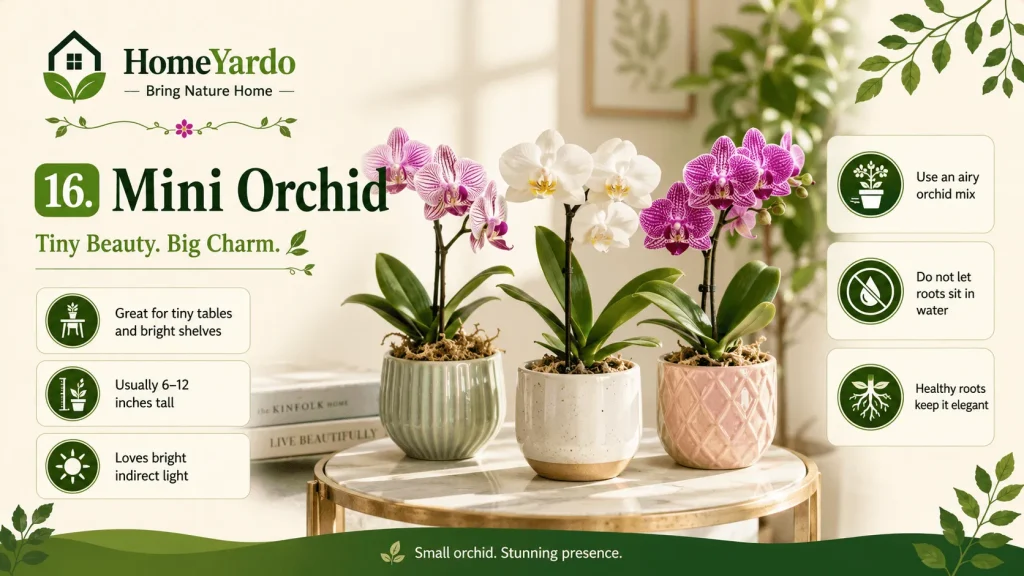
Mini orchids are usually miniature Phalaenopsis varieties. They are a great addition to tiny tables, displays for bedrooms, and even bright shelves, without an enormous pot.
The majority of them are 6-12 inches tall. They love bright indirect light as well as an airy orchid mix that allows roots to breathe.
Don’t let the roots remain in the water. When you have watered them, leave the extra water to evaporate. Mini orchids can appear elegant and serene when their roots remain well-maintained.
17. Kalanchoe
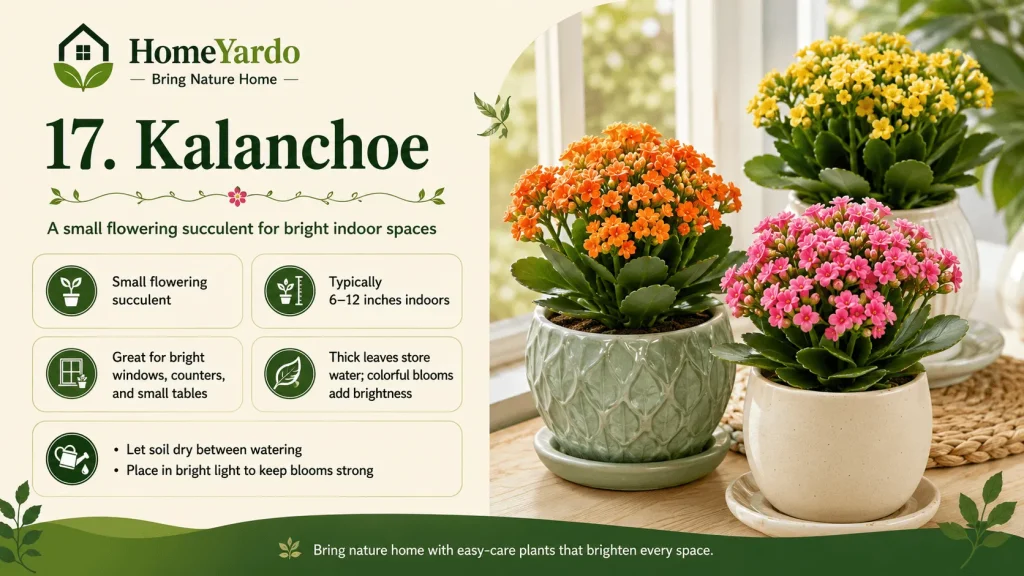
Kalanchoe, specifically Kalanchoe blossfeldiana, is a small flowering succulent that typically grows 6-12 inches indoors. It’s ideal for use with bright windows, kitchen counters as well as small table arrangements.
Its leaves are thick and hold water, and the flowers provide a clear hue. Light-colored plants remain strong and flower better.
Allow the soil to dry between irrigations. Flowers can disappear after purchase if the plant is placed in low light, so be sure to make sure to place it in the most brilliant place available.
18. Polka Dot Plant
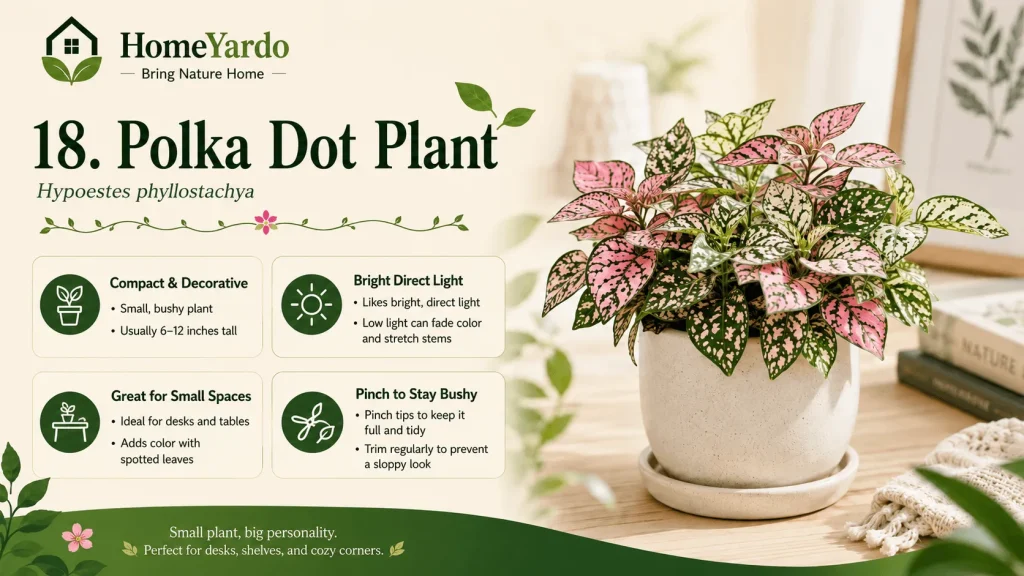
The plant known as the Polka Dot, also called Hypoestes Phyllostachya, is a plant that has spots of leaves that can be seen in white, pink, green, red or pink shades. The plant usually lasts between 6 and 12 inches once cut, which makes it an ideal small-sized decorative plant for tables and desks.
It loves direct light that is bright and friendly. Insufficient light can cause the stems to stretch and colors to fade.
Make sure to pinch at the edges to ensure that the plant remains bushy. If it is not trimmed, it could be sloppy which can cause it to lose its tidy appearance.
19. Hoya Compacta
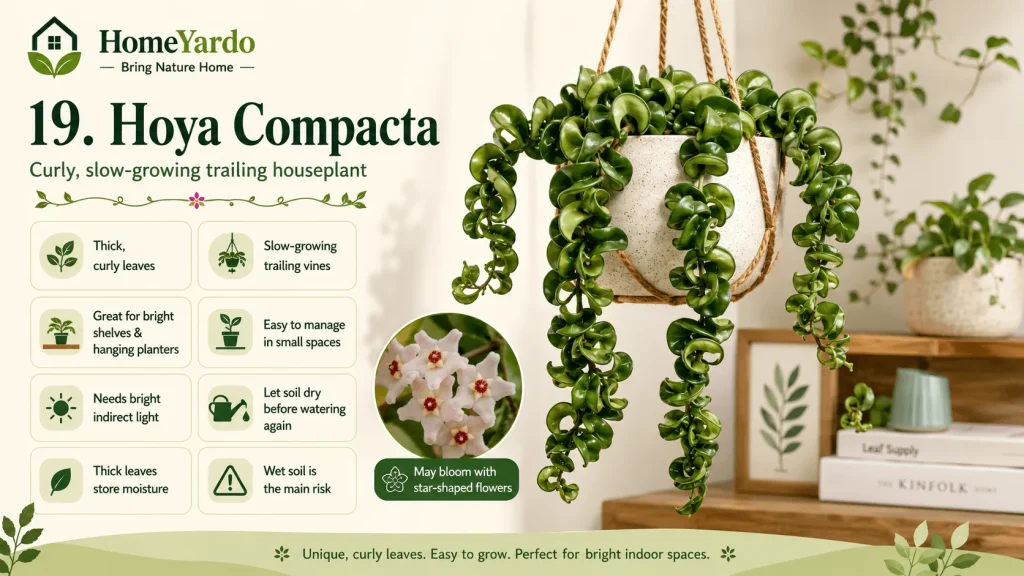
Hoya compacta, also known as Hoya carnosa “Compacta”, has thick, curly leaves and slow growing trailing growth. It is a great choice for bright shelves and hanging planters, where its texture is visible in close proximity.
The plant is slow growing and stays easy to manage in a smaller space. Vines may grow longer over time, but it is simple to maintain cleanliness with carefully placed plants.
It should be exposed to an indirect, bright light and allowed to dry out before watering it again. Thicker leaves store moisture therefore wet soil is the most risky.
20. Venus Flytrap
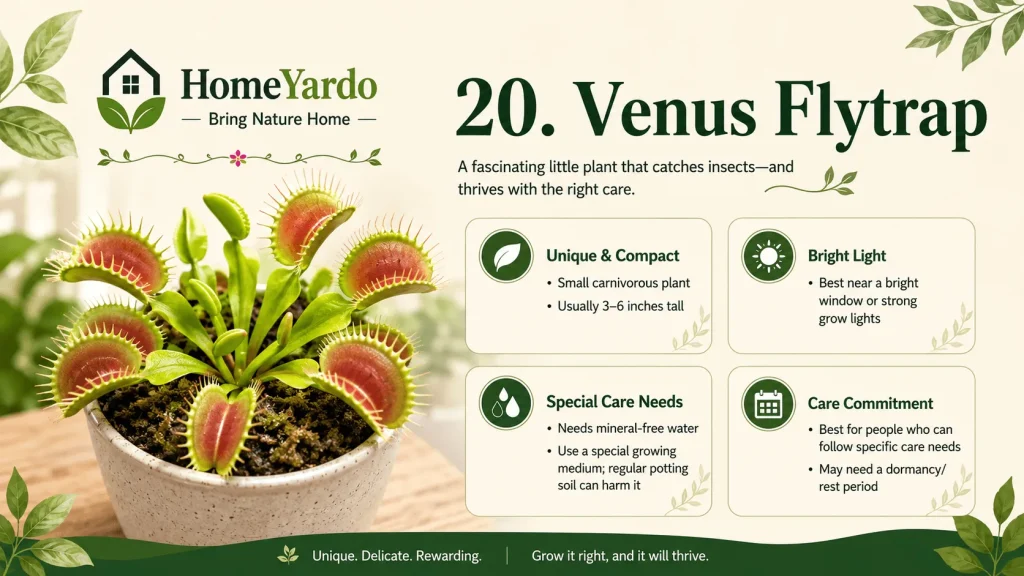
Venus flytrap, also known as Dionaea Muscipula, is a small, carnivorous plant that has a distinct care regimen. It is usually kept between three and six inches tall and is best placed near a bright window or under powerful grow lights.
It requires water that is mineral free as well as strong light and a specially-designed medium for growth. The normal potting soil could harm it.
This plant isn’t an unintentional novelty. It’s ideal for people who adhere to its needs for care that include careful watering and a rest period during the summer, if needed.
Low Maintenance Small Indoor Plants
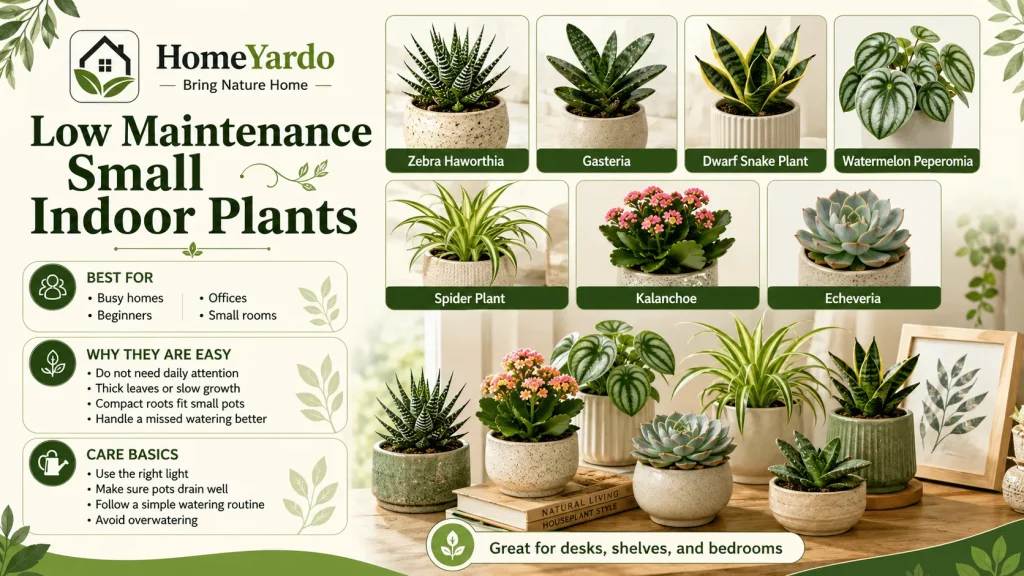
Plants that require little maintenance are perfect for busy home office spaces, beginner homes or small spaces in which care must be easy. They don’t require constant attention, but they do require lighting, drainage, and regular watering.
Many low maintenance options come with long, thick leaves, slow growth or roots that are compact. They are less likely to die after one watering mistake and easier to keep clean within small containers, tables, shelves, and bedrooms.
| Low Maintenance Small Indoor Plant | Why It Is Easy | Main Mistake |
|---|---|---|
| Zebra Haworthia | Slow growing and low water | Watering too often |
| Gasteria | Tough and compact | Poor drainage |
| Dwarf Snake Plant | Handles missed watering | Wet soil in low light |
| Watermelon Peperomia | Compact and tidy | Heavy soil |
| Spider Plant | Adaptable indoors | Crowded plantlets |
| Kalanchoe | Colorful and drought tolerant | Too little light |
| Echeveria | Simple in bright windows | Weak light |
Small Plants For Home Decoration And Cute Indoor Plant Ideas
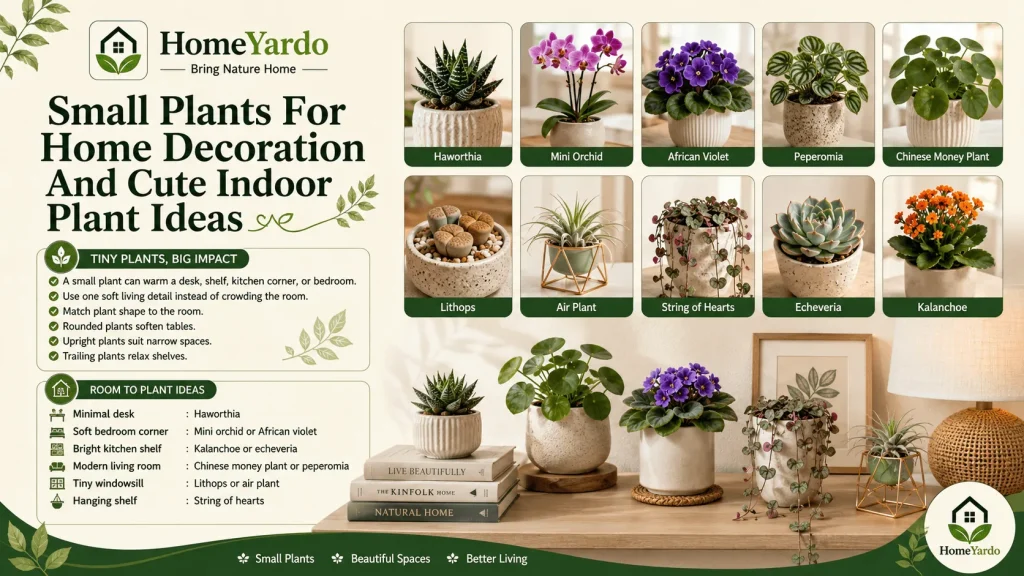
Plants that can be used for home decor will look best if they are natural to the room, not looking forced. One healthy plant placed in the right pot could make the desk, shelf or kitchen corner bedside table feel more inviting and more polished.
Cute small indoor plants are easy to come up with. You can use a tiny rosette placed on a windowsill that is bright or a miniature orchid on the bedside table or a peperomia placed on a table or a heart-shaped string hanging from shelves. The idea is not to fill the space, but to create a soft living element in a space that seems empty.
| Decoration Style | Cute Indoor Plant Ideas |
|---|---|
| Minimal desk | Haworthia in a small ceramic pot |
| Soft bedroom corner | Mini orchid or African violet |
| Bright kitchen shelf | Kalanchoe or echeveria |
| Modern living room | Chinese money plant or peperomia |
| Tiny windowsill | Lithops, gasteria, or air plant |
| Hanging shelf | String of hearts or hoya compacta |
For the cleanest look, match the plant shape to the room. Rounded plants soften tables, upright plants suit narrow spaces, and trailing plants make shelves feel more relaxed.
Creative Small Plant Display Ideas
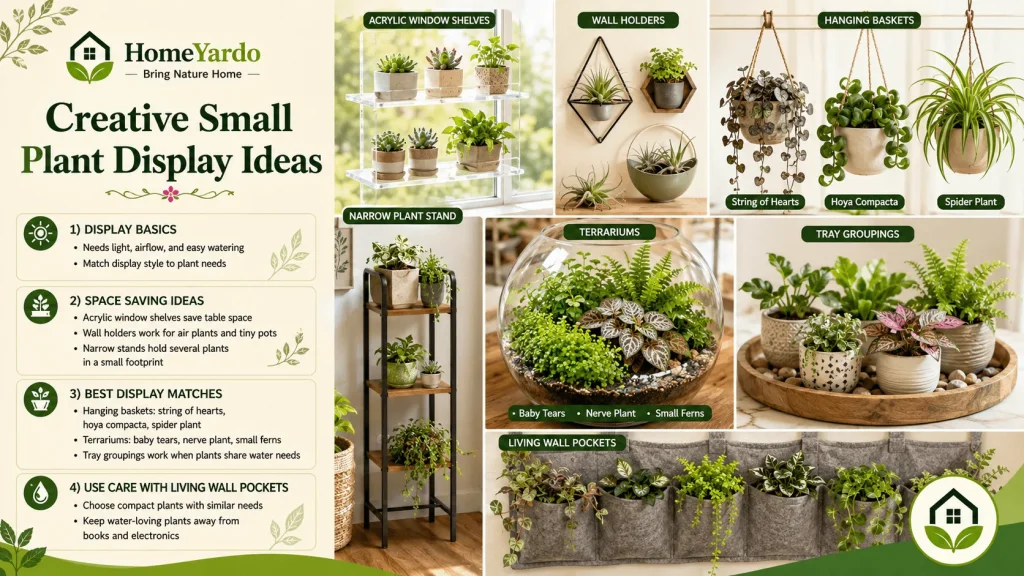
Plants can take up more space than a typical windowsill. The most effective display requires lighting, safe access to water and enough circulation of air around your plant.
Acrylic window shelves work great for tiny window plants since they allow pots to be close to the light without requiring tables. Wall-mounted holders work well with small pots and air plants. Plant stands that are narrow can accommodate several plants without taking up much floor space.
Hanging baskets are great for strings of hearts, hoya compacta and spider plants. Terrariums are ideal for baby tears, nerve plant and ferns that are small with steady humidity. Smaller tray groups can look fresh on a shelf or table in the event that the plants share the same water requirements. If you prefer a compact glass display, explore these terrarium plants to find species suited to enclosed and open setups.
Living wall pockets are gorgeous; however, they require cautious plant selection. Plants that are compact should have similar lighting and watering requirements. Avoid placing water-loving plants over electronics, books, or even fabric.
Best Room Plants For Compact Indoor Spaces
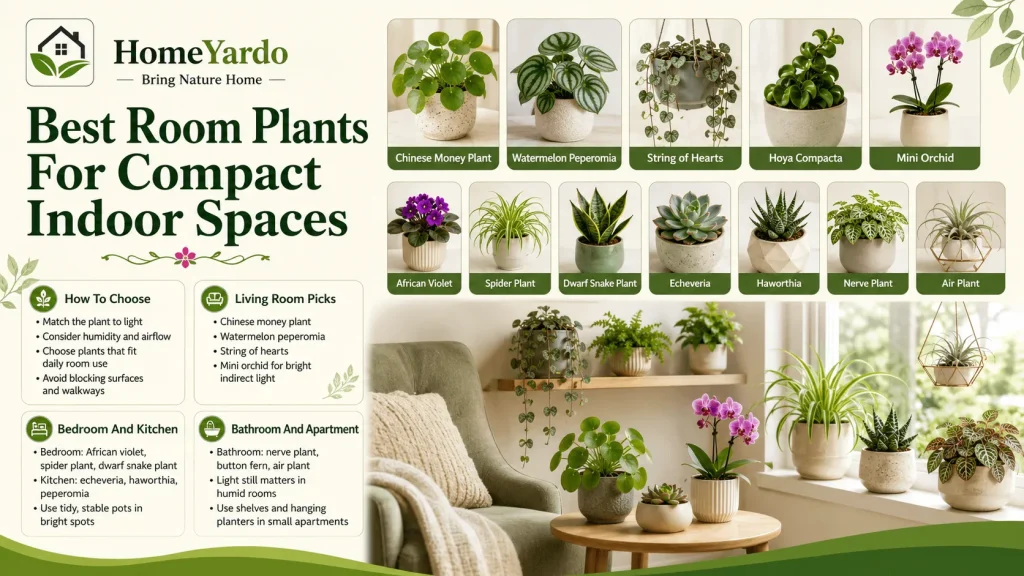
Plants for rooms should be chosen based on the light and humidity, airflow and the way in which the room is used throughout the day. The kitchen can be bright and warm. A bedroom might be cooler. Bathrooms may be humid but dim. A hallway may be dim and have less lighting and fluctuating temperatures.
The plant that is right for you should be able to fit in the space without blocking the walls and dropping leaves in adverse locations, or requiring maintenance that the room is unable to provide.
Small Plants For Living Room
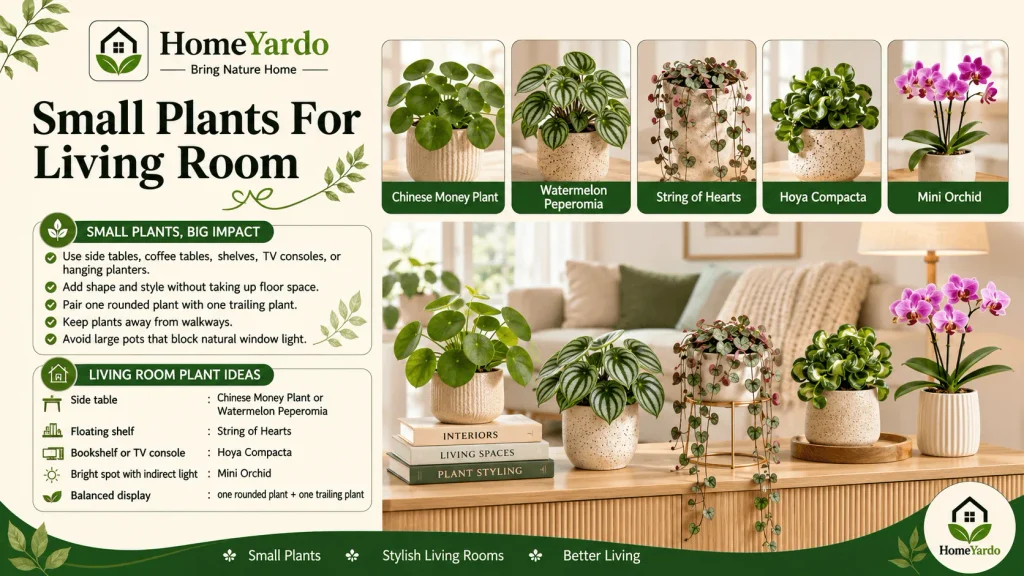
Plants suitable for a living room style can be placed on side tables, coffee tables, floating shelves, bookshelves, TV consoles or even hanging planters. The most effective options add form without taking up the floor space.
Chinese Money plant, as well as peperomia from watermelon work great on tables with side tables. The string of hearts and the hoya compacta are suitable for shelves that allow vines to trail gently. Mini orchids are a nice addition to the room when the room is flooded with indirect lighting.
A well-balanced living room display could be created by using one plant that is rounded and one trailing plant. Plants should be kept away from paths and don’t let big pots should not block the light of windows.
Small Plants For Bedroom Decor
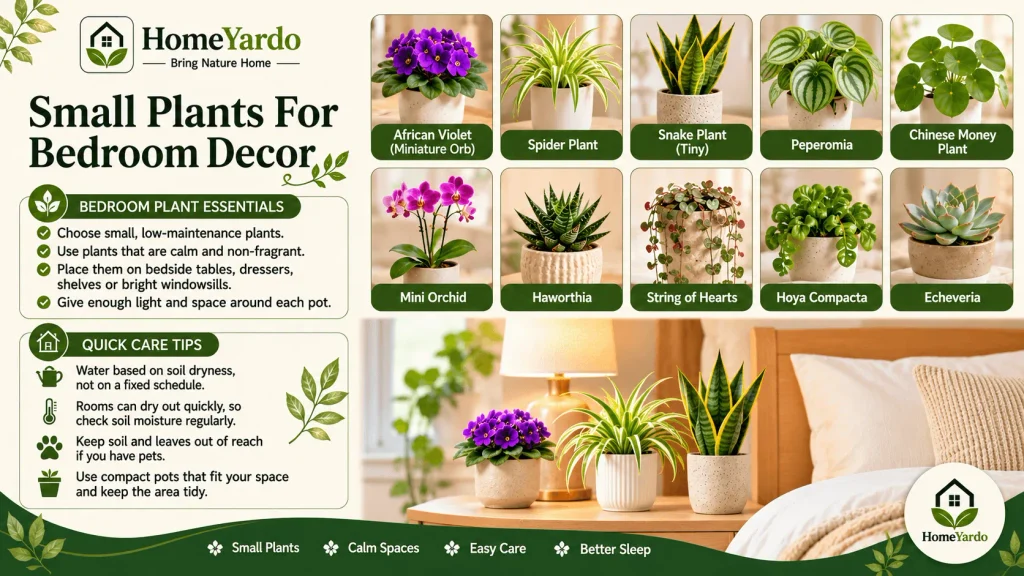
Smaller plants for decorating bedrooms must be calm, neat and simple to care for. A good choice does not require messy watering routines or strong scents near the mattress.
African violet miniature orb, spider plant tiny snake plant, as well as peperomia work well on the bedside tables, dressers, shelves, or even bright windowsills. The ideal spot must have sufficient light and space around the container.
Rooms with cooler temperatures can dry out quickly, so be sure to make sure to water the soil prior to doing so. If pets wander into the room, make sure that soil and leaves are out of their reach.
Small Kitchen Plants And Small Modern Kitchen Plants
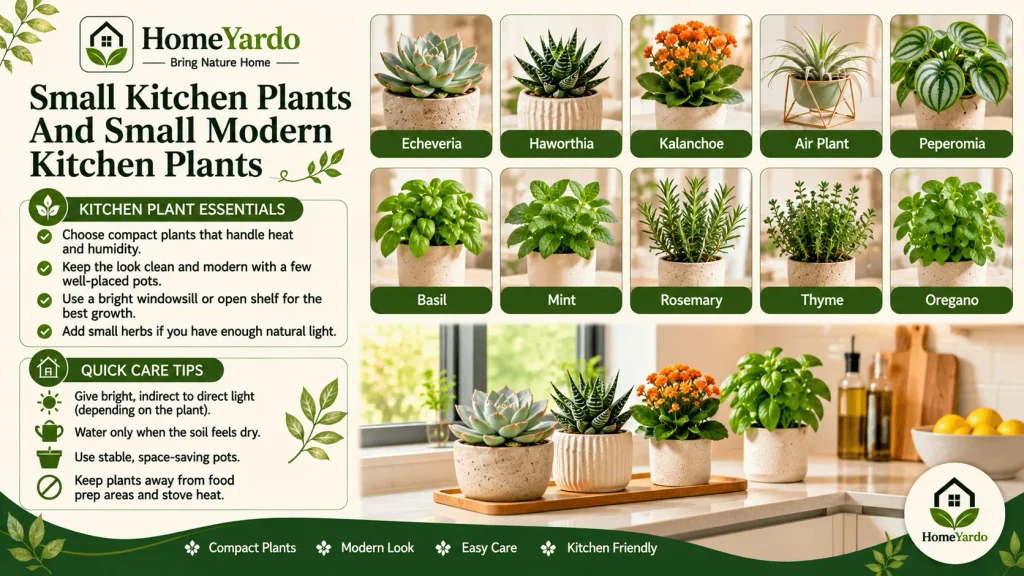
Small kitchen plants need to withstand the heat, humidity, and limited counter space. Modern kitchens usually look better with a clean, tidy arrangement of plants rather than a full row of pots.
Echeveria, Haworthia, Kalanchoe air plant, Haworthia, and Peperomia are all good options for kitchens that are bright. Small herbs can also be used but only if the kitchen window is bright enough to allow lighting.
Select pots with stability and keep plants out of areas for food preparation. A sunny windowsill or an open shelf is preferable to a counter that is busy.
Small Bathroom Plants
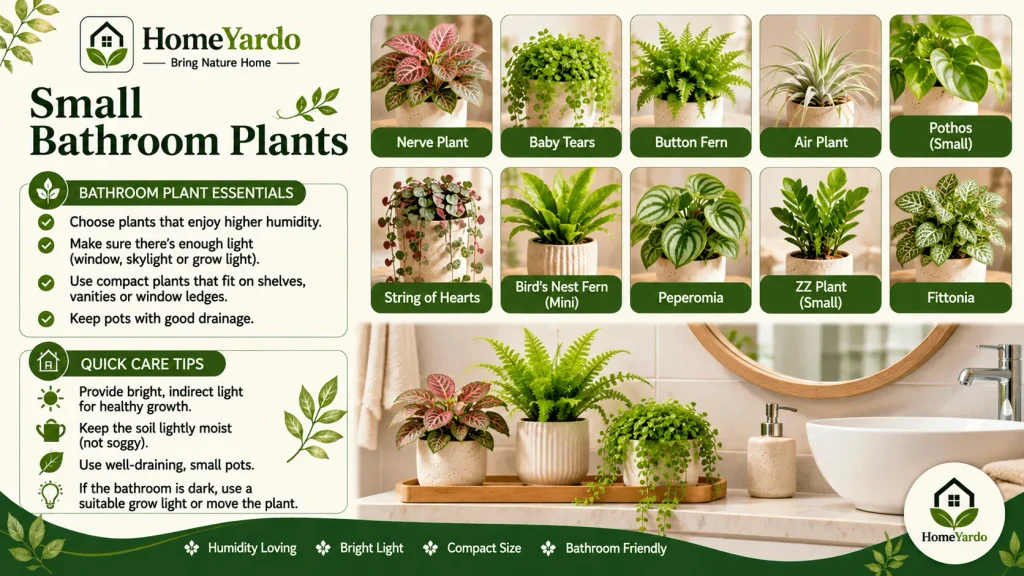
Plants in bathrooms can soften mirrors, tiles and hard surfaces. Certain plants can benefit from humidity but the light source is crucial.
Nerve plants, baby tears button ferns, as well as air plants, work great in bathrooms with bright lighting. A skylight, window or strong grow light is required for consistent growth.
A dark, dim bathroom isn’t the ideal place to grow most plants. If there isn’t any usable lighting, put the plant somewhere else or use a suitable growth light.
Small Apartment Plants
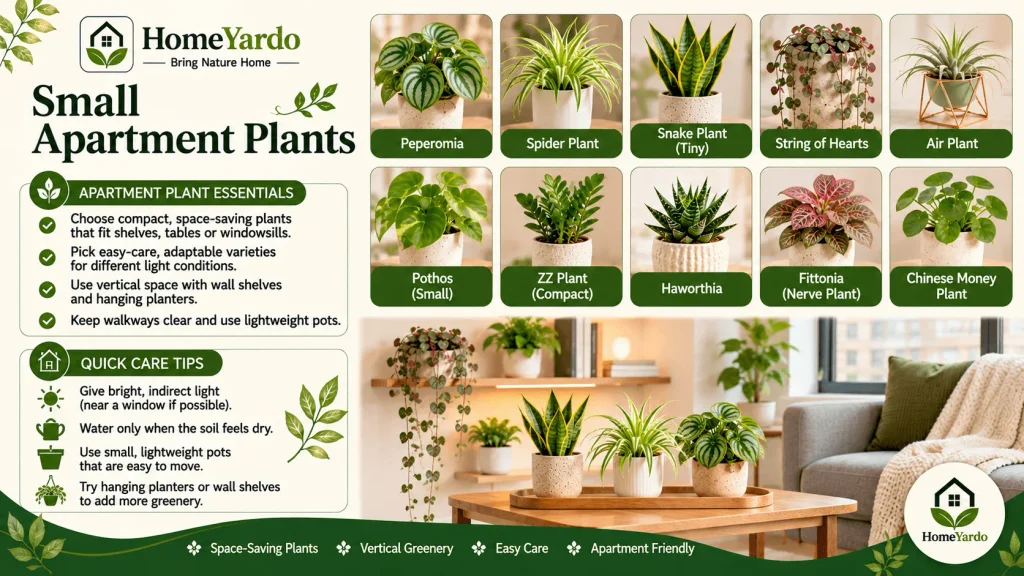
Small plants must be able to earn their space. They must be able to fit shelves or tables, windowsills or windows, hanging pots, or moveable stands that do not hinder daily movement.
Peperomia, spider plant, tiny snake plant, string of hearts and air plant are all practical alternatives for your home. They are easy to manage and adapt to various spaces.
Vertical space can help make a tiny home feel more green, without taking up lots of floor space. Wall-mounted shelves, shelves as well as pots that are lightweight and hanging planters are all great options when the surfaces are tight.
Table Plants For Small Indoor Surfaces
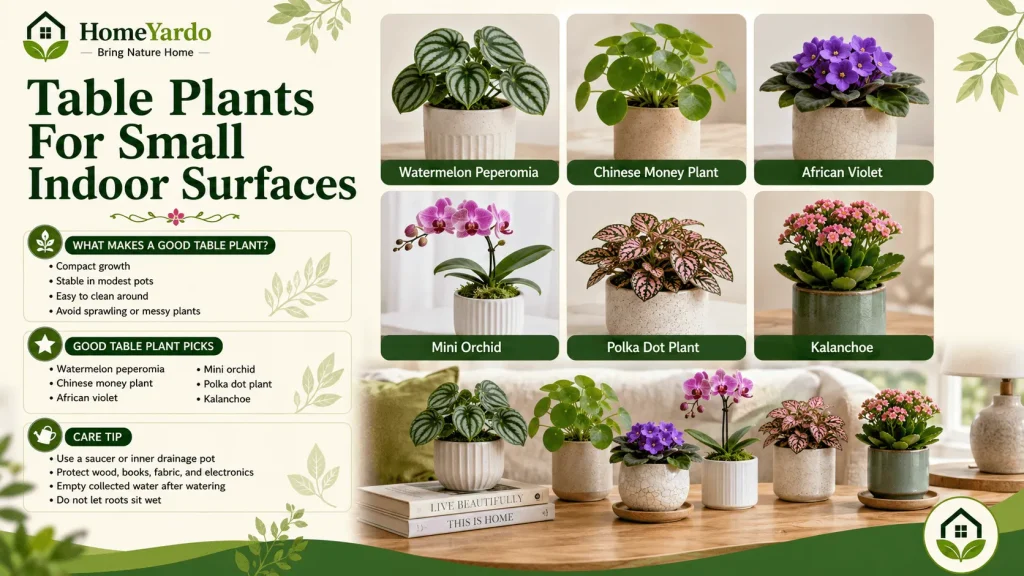
Table plants must be small sturdy, steady and easy to sweep around. Tables, coffee tables, bedside tables and dining areas console tables, and side tables don’t require plants that sprawl out and shed a lot or require a lot of watering.
Peperomia of watermelon, Chinese money plant, African violet, miniature orchids, the polka dots plant, and kalanchoe make excellent table plants. They add shape or color but are still manageable in smaller pots.
Use a saucer or a drainage pot to safeguard books, wood, fabrics as well as electronics. After watering, flush any water that is collected to ensure roots don’t get wet.
Desk Plants And Mini Plants For Office Desk Setup
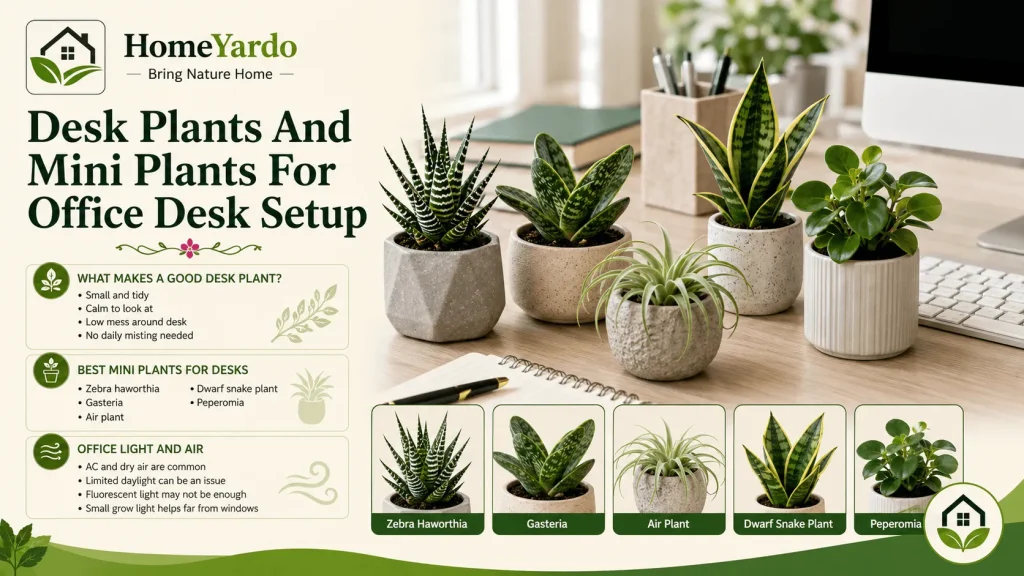
Desk plants must be neat, compact and peaceful to look at during the long hours of work. Plants near the notebook or keyboard should not have foliage that falls, spills dirt or requires a daily spray of mist.
Zebra haworthia, gasteria air plant, a dwarf snake plant and peperomia are sturdy desk plants. They can be placed in miniature pots and are usually elegant in office environments.
A lot of offices have AC, dry air, and little daylight. Light from fluorescent lamps alone might not be sufficient for long-term growth. If your desk is situated away from windows or a grow light, a smaller one is the best option.
Small Shelf Plants For Bookcases And Floating Shelves
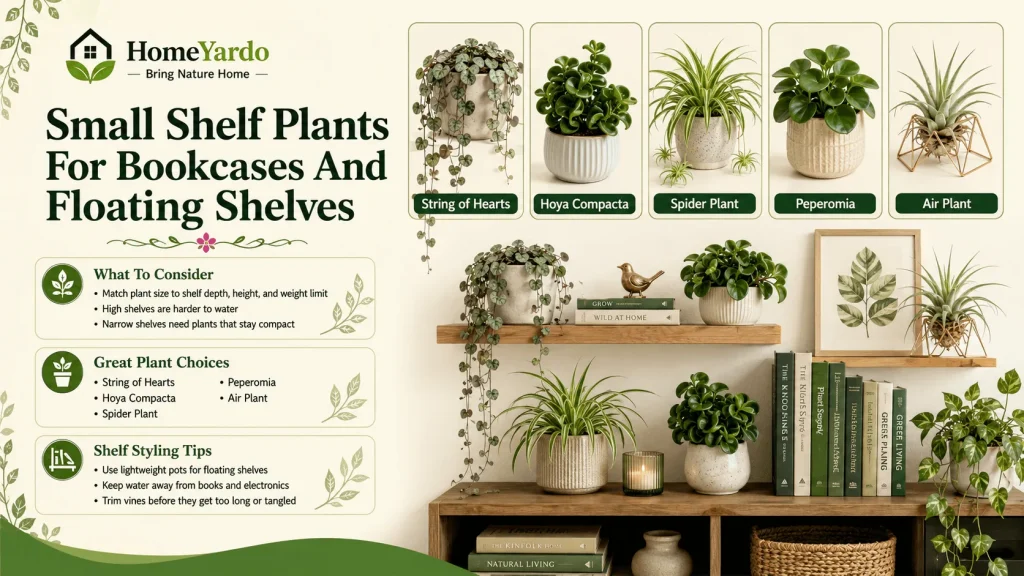
Smaller shelf plants are best suited to the shelf’s depth, height and the weight limit. A taller shelf is more difficult to water, whereas a narrow shelf requires plants that don’t sprawl too much.
String of Hearts, Hoya compacta, spider plants, air plants, and peperomia are ideal for bookcases and floating shelves. Plants that trail soften edges and smaller foliage plants fill tiny gaps.
Make use of pots that are lightweight to create floating shelves. Be careful not to water over electronic devices, books or other decorative items. Remove vines as soon as they get overgrown or tangled. the space.
Small Window Plants For Bright Indoor Spots
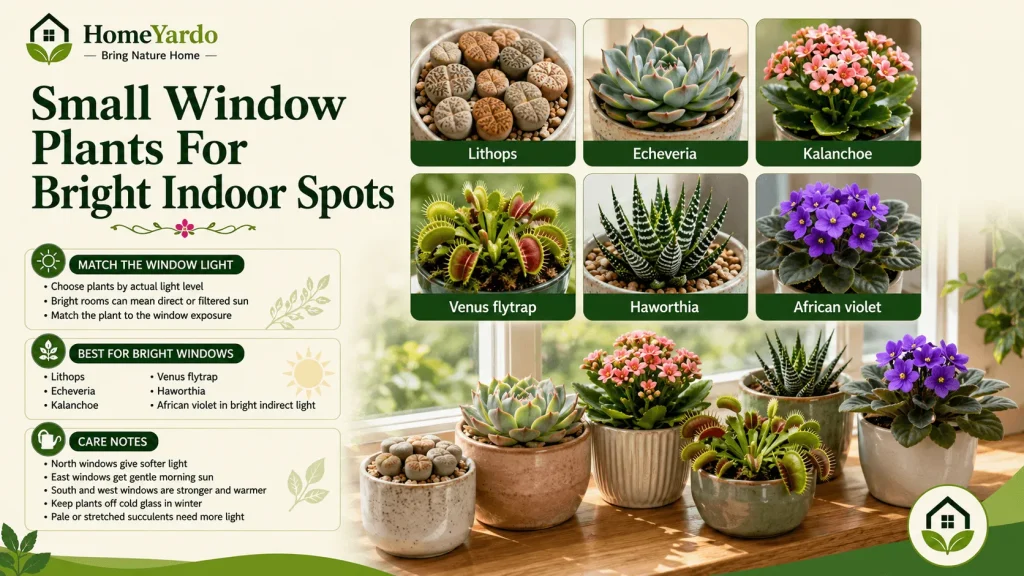
Small window plants have to meet the quality of the windows. Some windows provide direct sunlight. Other windows let in soft light. The design should reflect the actual lighting, not just the concept of a bright space.
North facing windows typically provide soft light. East-facing windows typically provide mild morning sunlight. South and west-facing windows are more durable and warmer, which could be ideal for succulents when heat is controlled.
Kalanchoe, echeveria, Lithops, Venus flytrap, and Haworthia prefer better lighting in windows. African violets like direct sunlight that is bright, instead of the harsh afternoon sun.
Be sure to keep plants out of cold glass in cold weather. If a succulent appears thin, pale or tight, then it requires more light.
Small Plants For Small Pots
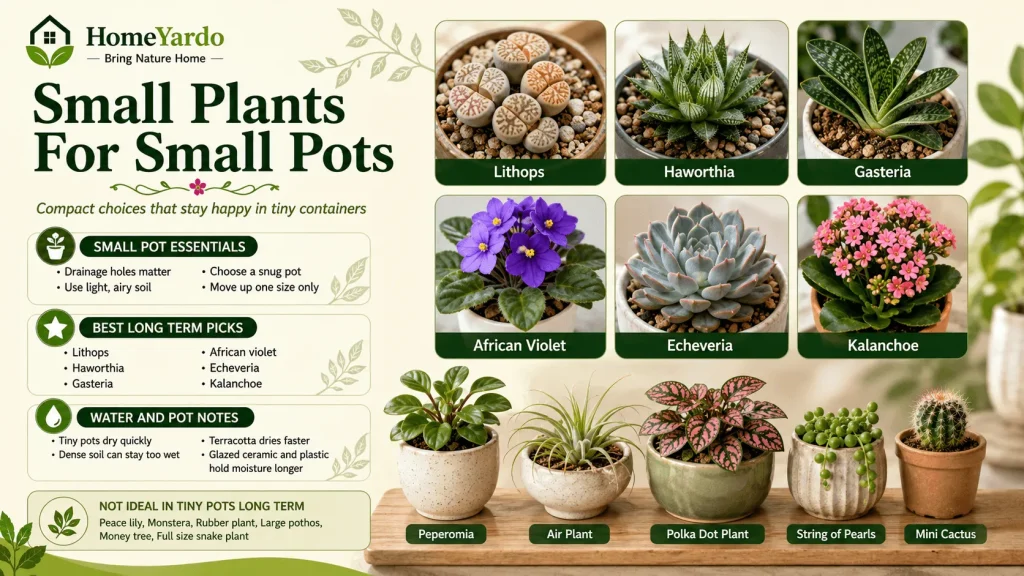
A small potted plant needs more than just a pretty container. A small pot should allow airflow and drainage around the roots, as well as the appropriate soil mix.
Small pots are prone to drying quickly, particularly in warm environments. In the same way soil may remain wet for too long when the soil is very dense or the pot does not have a drainage hole. Both of these extremes could harm the plant.
| Good indoor plants for small pots | Not Ideal For Tiny Pots Long Term |
|---|---|
| Lithops | Peace lily |
| Haworthia | Monstera |
| Gasteria | Rubber plant |
| Echeveria | Large pothos |
| African violet | Money tree |
| Kalanchoe | Full size snake plant |
Pot material changes the drying speed. Terracotta dries faster. Glazed ceramic and plastic retain the moisture for longer. Drainage holes are more important than the color or design.
Small roots typically prefer a smaller pot. When repotting, you should increase the size of the pot only. Larger containers may contain too many gallons of water for a small root system.
Don’t mix plants in a pot unless they share the same conditions of light, water and humidity requirements.
Some plants can stay in small pots for a long period of time since they are slow-growing or have small root systems. They are a good choice for desks, shelves, windowsills and other small display areas where frequent repotting isn’t the best option.
The plants that can be kept in small pots include Lithops and Haworthia. They also include Gasteria, African violet, Echeveria and Kalanchoe. They will require drainage, good soil and adequate lighting. A small pot must help the roots of the plant and not place them in damp soil.
Tiny potted plants require closer checking of the watering schedule because tiny containers dry out quickly. However small pot plants could get rotten if the pot has no drainage holes or if the soil becomes too compact. The most secure arrangement is to use a pot that is snug with light soil and a drainage hole.
| Small Pot Need | Best Choice |
|---|---|
| Plants that can stay in small pots | Haworthia, lithops, gasteria |
| Tiny potted plants | Lithops, echeveria, African violet |
| Tiny pot plants | Gasteria, kalanchoe, haworthia |
| Very small plants for pots | Air plant, lithops, baby tears |
| Little plants for small shelves | Peperomia, haworthia, polka dot plant |
Low Light Small Plants
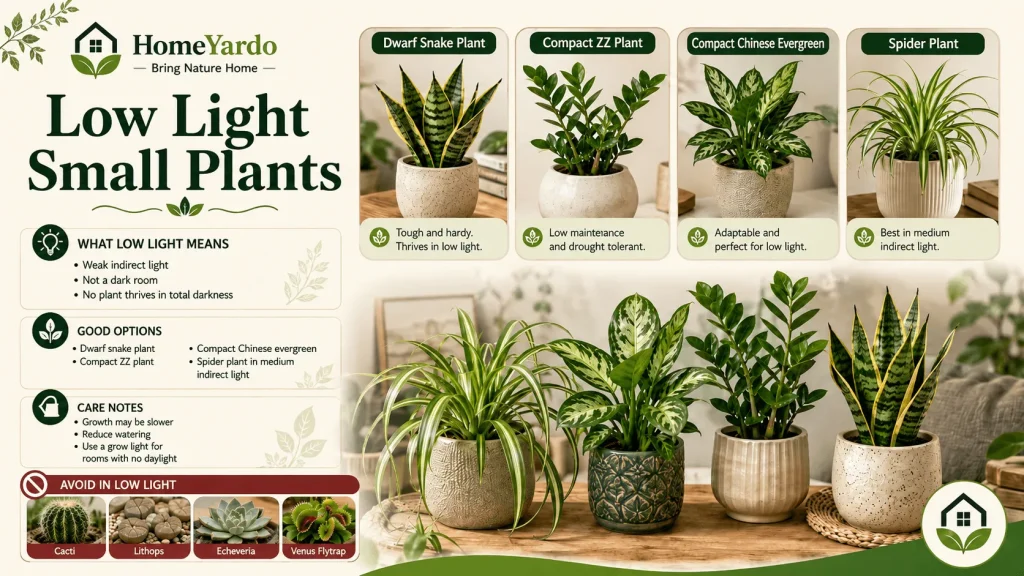
Low light refers to indirect light but not a dark place. A plant that is completely dark can’t be healthy in the absence of artificial light.
Small-sized Dwarf Snake Plant, ZZ plant, Compact Chinese evergreen and spider plants in indirect medium light are the best choices for areas with less light. The growth rate may be slower and watering must be regulated.
Avoid placing cacti or Echeveria, Lithops, or Venus flytraps in areas with dim lighting. These plants require brighter light to maintain their natural appearance. In a room that lacks sunlight that is usable sunlight, consider an indoor grow light or an alternative spot.
Small Plants That Survive In AC Rooms
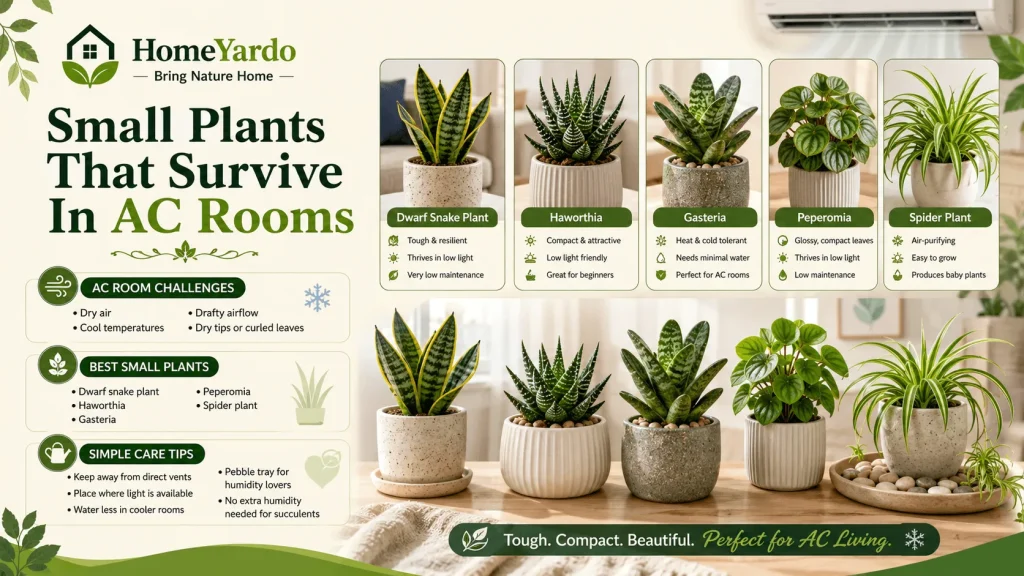
AC rooms are often hot, dry and drafty. A tiny plant that is placed in front of a vent could have dried tips and curled foliage, a low growth rate, and uneven moisture.
The dwarf snake plant, Haworthia gasteria, peperomia and spider plant are able to manage AC rooms more effectively than other delicate plants. Be sure to keep them out of the direct airflow and put them in areas where sunlight is accessible.
Cooler environments can slow the growth of plants and watering needs to be reduced. A pebble tray is a good option for the plants that are prone to humidity; it’s not necessary for succulents.
Pet Safe Small Indoor Plants
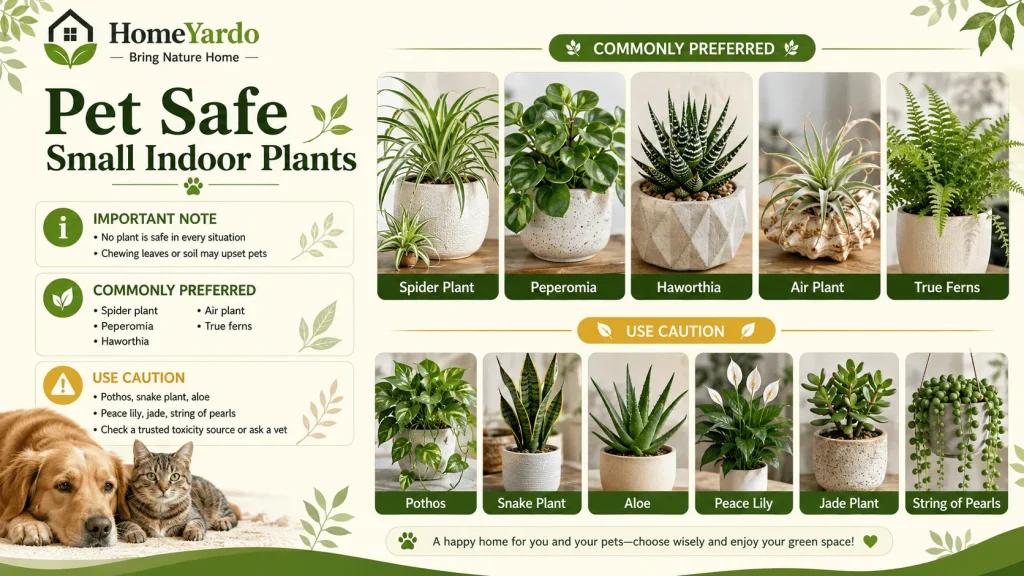
Plants that are safe for pets require cautious wording as plants are not suitable in every circumstance. Some plants are generally thought to be more secure, but chewing leaves or digging into soil may cause upset to the stomach of a pet.
Peperomia, spider plant, haworthia and air plant and some ferns that are truly ferns are commonly used in houses with pets. However, they should be planted in a place where pets aren’t able to cause damage to the plants or even eat the soil.
Take care when purchasing snake plant, pothos, aloe, peace lily jade plant, and strings of pearls. Before purchasing, verify an established source for the toxicity of plants or consult a vet to determine if pets regularly chew on plants.
Small Plants That Purify Air And Improve Room Feel
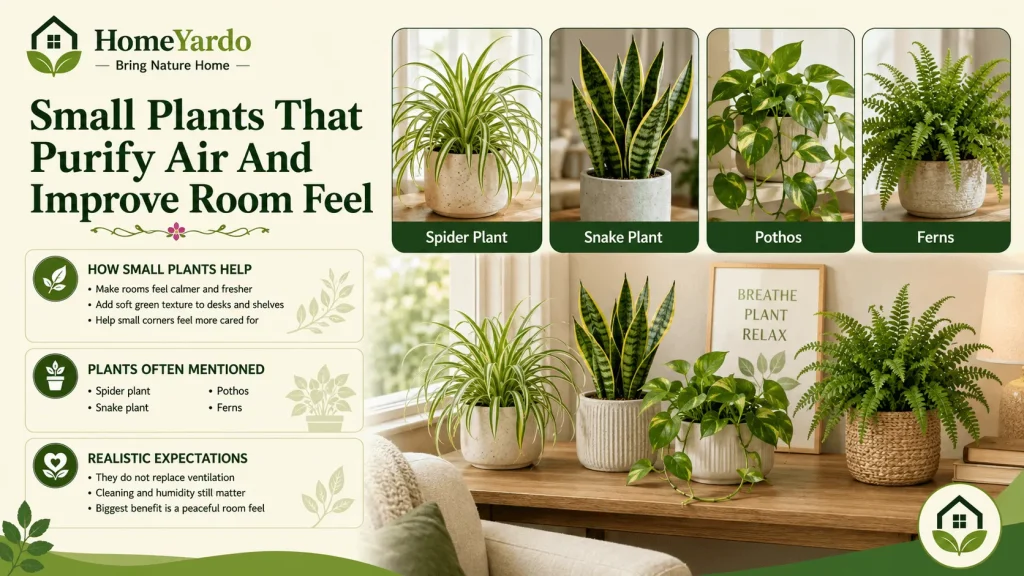
Plants can help make a space feel more peaceful, fresher and more tended to. Green leaves soothe desks, warm shelves, and add an inviting, living look to tiny corners.
Plants such as spider plants and snake plants, pothos and ferns are frequently considered to improve indoor air quality. However, these plants are not a substitute for the need for ventilation, clean or proper humidity control.
The most significant benefit that you can get from them is the sense of calm they provide. A small, healthy plant can help a room feel more spacious and tranquil.
How To Care For Small Indoor Plants
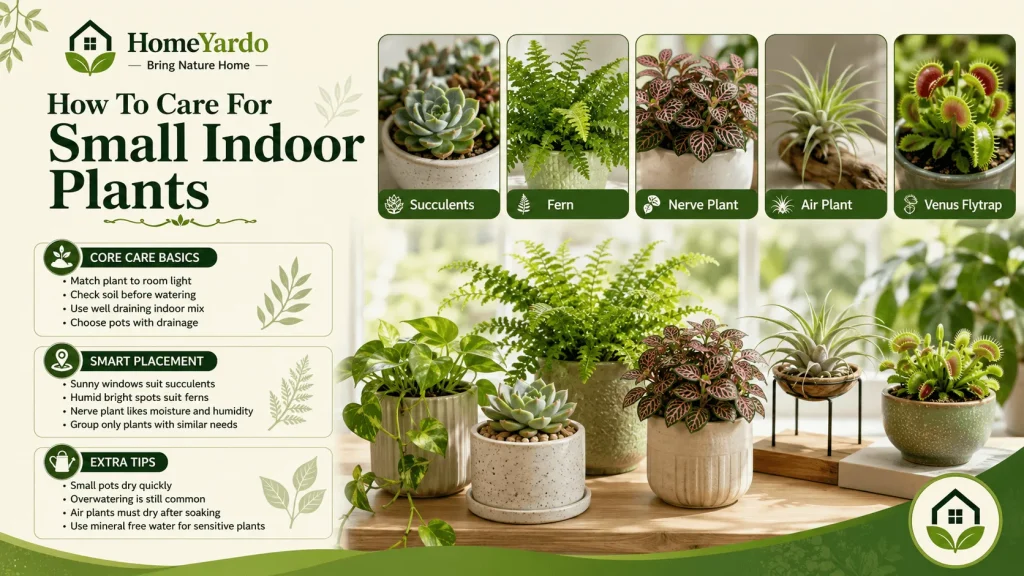
Plants in the indoor space require regular, easy maintenance. The correct lighting, pot, soil and watering schedule are more than purchasing a large number of plants in one go.
Begin by assessing the conditions of your room and then select an appropriate plant for the conditions. A bright window could support succulents, whereas a sunny humid bathroom might fit ferns or a nerve plant better.
| Care Factor | What To Do |
|---|---|
| Light | Match plant type to window strength |
| Water | Check the soil before watering |
| Soil | Use well draining indoor mix |
| Pot | Choose drainage over looks |
| Humidity | Match ferns and nerve plants to humid spots |
| Pruning | Trim trailing plants to control size |
| Repotting | Move up one pot size only when roots need it |
| Water quality | Use mineral free water for sensitive plants when needed |
| Plant grouping | Group plants only when care needs match |
Don’t water your plants by habit by yourself. Small pots are prone to drying quickly; however, it is not uncommon to overwater indoors. Check the soil by touching it, then check the pot’s weight and examine the leaves of the plant before adding water.
Some plants are concerned about the quality of their water. Venus flytrap requires mineral-free water. Air plants must dry completely after the soak. Plants with sensitive foliage may react better to filtered or distilled water, especially if the water in your tap is mineral heavy.
These plants should be grouped carefully. Succulents shouldn’t be in containers with ferns. Plants that love moisture shouldn’t be put in the same container with succulents that require dry soil. The new plants must also be inspected for pests prior to joining the rest of the collection. Before combining dry-loving species in glass, review the best succulents for terrariums and check whether the container provides enough airflow.
Why Small Indoor Plants Die Quickly
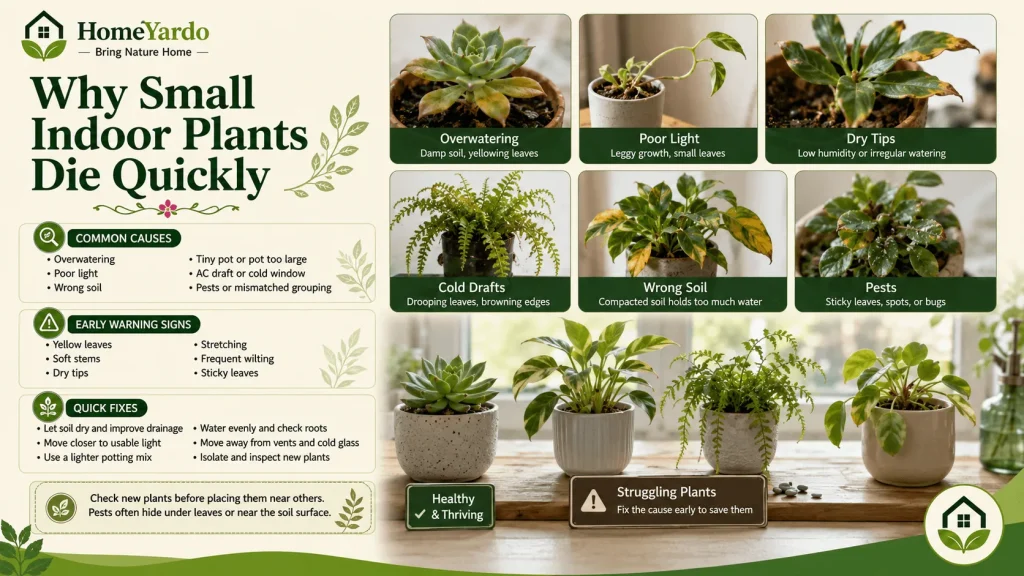
These plants usually fail due to the fact that the plant’s location doesn’t fit the plant. A succulent that is exposed to weak light or a fern growing in a dry environment or a small pot that is not draining can quickly decline.
The majority of problems are detected early. The yellowing of leaves, soft stems dry tips, stretching or wilting often, as well as sticky leaves are all indications of an unbalanced care system that is often corrected.
| Problem | Sign | Fix |
|---|---|---|
| Overwatering | Yellow leaves, wet soil | Let the soil dry and improve drainage |
| Poor light | Weak, stretched growth | Move closer to usable light |
| Wrong soil | Soil stays wet too long | Use a lighter mix |
| The tiny pot dries too fast | Frequent wilting | Water evenly and check roots |
| AC draft | Dry tips, slow growth | Move away from the vent |
| Pest issue | Sticky leaves, specks, webbing | Isolate and inspect the plant |
| Pot too large | Soil stays damp for days | Move to a snug pot with drainage |
| Mismatched grouping | One plant wilts while another rots | Separate plants by care needs |
| Cold window stress | Limp leaves or spotting near the glass | Move the plant away from the cold glass |
| Mineral sensitive plant | Brown tips or decline after watering | Try filtered or distilled water |
Check new plants before placing them near others. These plants can carry pests from shops, especially under leaves or near the soil surface.
Quick Plant Matching Guide
This becomes easier to choose when the space comes first. Match the plant to the room, light, pot size, and care routine.
| Need | Best Small Plants |
|---|---|
| Best small houseplants | Haworthia, peperomia, spider plant |
| Easy small indoor plants | Dwarf snake plant, gasteria, kalanchoe |
| Small decorative plants | African violet, mini orchid, polka dot plant |
| Room plants | Peperomia, spider plant, dwarf snake plant |
| Table plants | Peperomia, pilea, African violet |
| Desk plants | Haworthia, air plant, dwarf snake plant |
| Mini size plants for the office desk | Gasteria, air plant, Haworthia |
| Small shelf plants | String of hearts, hoya compacta, spider plant |
| Small window plants | Lithops, echeveria, kalanchoe |
| Small kitchen plants | Air plant, echeveria, peperomia |
| Small modern kitchen plants | Haworthia, air plant, kalanchoe |
| For the living room | Pilea, string of hearts, mini orchid |
| For bedroom decor | African violet, spider plant, dwarf snake plant |
| For small pots | Lithops, haworthia, gasteria |
| Best for bright windows | Echeveria, Lithops, Venus flytrap |
| Best for humid rooms | Nerve plant, baby tears, button fern |
| Best for gifts | African violet, mini orchid, peperomia |
| Best for pet cautious homes | Spider plant, peperomia, air plant |
Conclusion
The ideal small plant doesn’t always have to be the most compact pot that is on the shelves. It’s the plant that works in the space and gets the proper light and expands at a moderate rate, and is content in the pot that is provided.
For those who are new to gardening beginning to learn, gasteria, zebra haworthia and peperomia, as well as the spider plant and a dwarf snake plant, are good beginning places. If you want bright windows, echeveria, lithops, the kalanchoe and Venus flytrap may be useful if their needs for care are met.
Begin with a good match before filling up every surface. Utilize the small pot guide, light guide, and the room matching table to pick the right plant for your table, desk, shelf or bedroom stand or window in the kitche, bathroom ledge or even a tiny pot. A small, healthy plant can create a feeling of being more alive.
FAQ’s: Best Small Plants
For the home zebra haworthia, peperomia, spider plant, African violet, dwarf snake plant, and string of hearts. These plants stay compact, look neat indoors, and fit desks, shelves, windowsills, and small tables. Choose the final plant by matching it with the room’s light, pot size, and watering routine.
The best houseplants for beginners are zebra haworthia, gasteria, dwarf snake plant, spider plant, and peperomia. They are forgiving, compact, and less demanding than plants that need constant humidity or special care. A beginner should still use a pot with drainage and avoid watering on a fixed schedule.
For an office desk, haworthia, gasteria, air plant, peperomia, and dwarf snake plant. They stay tidy, do not spread too wide, and suit small pots or compact holders. If the desk has no window nearby, a small grow light is better than expecting the plant to survive in weak office light.
Good table plants include African violet, mini orchid, watermelon peperomia, Chinese money plant, polka dot plant, and kalanchoe. These plants add color, shape, or soft foliage without taking over the table surface. Use a stable pot and saucer so water does not damage wood, books, fabric, or decor.
The best small shelf plants are string of hearts, hoya compacta, spider plant, air plant, and peperomia. Trailing plants work well on shelves because they grow downward instead of spreading across the shelf. Keep pots lightweight, trim long vines, and avoid watering directly above books or electronics.
Small window plants that grow well indoors include lithops, echeveria, kalanchoe, haworthia, African violet, and Venus flytrap. Succulents and Venus flytrap need stronger light, while African violet prefers bright indirect light. Match the plant to the window direction because harsh afternoon sun and soft morning light affect plants differently.
The best small kitchen plants are echeveria, air plant, peperomia, kalanchoe, and haworthia. They stay compact, look clean, and can suit bright windowsills or open kitchen shelves. Keep plants away from food prep areas and avoid crowded counters where pots can be knocked over.
For bedroom decor include African violet, mini orchid, spider plant, dwarf snake plant, and peperomia. They bring a soft, calm look to bedside tables, dressers, shelves, and window ledges. Choose low-mess plants, avoid strong fragrance near the bed, and keep pet access in mind.
Lithops, haworthia, gasteria, echeveria, African violet, and kalanchoe are good plants for small pots. They have compact growth habits and can stay comfortable in modest containers when drainage is good. Use well-draining soil and avoid oversized pots because extra soil can hold too much moisture.
Some of them can survive in low light rooms, but no plant stays healthy in complete darkness. Dwarf snake plant, compact ZZ plant, and compact Chinese evergreen are better choices for lower light areas. Growth will usually be slower, so watering should be reduced to prevent soggy soil.
These plants should be watered when the soil needs it, not on a fixed calendar. Tiny pots may dry faster, while plants in low light, cool rooms, or AC spaces may need less water. Check the soil with a finger test and make sure extra water can drain away.
These plants often die because of overwatering, poor drainage, weak light, wrong soil, pests, or dry AC airflow. A plant may also decline when it is placed in a room that does not match its natural needs. Yellow leaves, soft stems, dry tips, stretching, or sticky leaves are early signs that care should be adjusted.
Not all plants stay small forever. Some are naturally tiny or slow growing, while others are only small because they are young. Lithops, haworthia, and gasteria are better long-term compact choices. Before buying, check mature height, spread, and growth habit so the plant does not outgrow the space.
Several plants can grow in one pot only when they need similar light, soil, water, and humidity. Succulents should not be mixed with moisture-loving ferns because their watering needs are different. For mixed pots, choose plants with matching care needs and leave enough space for roots to breathe.
No plant grows well in complete darkness because plants still need usable light to stay healthy. For rooms with weak indirect light, dwarf snake plant, compact ZZ plant, and compact Chinese evergreen are better choices. If the room has no window or natural light, use a small grow light instead of relying on normal room lighting.
The easiest plants for beginners are zebra haworthia, gasteria, dwarf snake plant, peperomia, and spider plant. These plants stay compact, do not need daily care, and forgive missed watering better than many delicate indoor plants. They still need a pot with drainage, suitable light, and careful watering to stay healthy.
Some plants can survive in low light rooms, but they usually grow slowly and need less water. Dwarf snake plant, compact ZZ plant, and spider plant handle lower light better than most succulents. Avoid lithops, echeveria, and Venus flytrap in low light because they need much brighter conditions.
These plants should be watered when the soil needs moisture, not on a fixed weekly schedule. Tiny pots may dry faster, while plants in low light, cool rooms, or AC spaces may stay wet longer. Check the soil first, then water only when the plant and pot actually need it.
Most small potted plants grow best in a light, well draining indoor potting mix. Succulents such as haworthia, gasteria, lithops, and echeveria need a grittier cactus or succulent mix. Avoid dense garden soil indoors because it can hold too much water around small roots.
Keep plants healthy indoors by matching each plant to the right light, soil, pot size, and watering routine. Use pots with drainage holes and keep plants away from direct AC vents or cold windows. Check leaves, stems, and soil often so small problems can be fixed early.
For apartments, it includes peperomia, spider plant, dwarf snake plant, string of hearts, air plant, and haworthia. They fit desks, shelves, windowsills, hanging pots, and small side tables without using much space. Vertical placement works especially well in apartments with limited floor area.
Zebra haworthia, gasteria, dwarf snake plant, echeveria, and compact ZZ plant need the least maintenance. They do not require daily watering and can stay neat in small pots. These plants are good choices for busy homes, office desks, and beginner indoor plant setups.
The best mini sized plants for pots and containers include lithops, haworthia, gasteria, echeveria, African violet, and kalanchoe. These plants have compact growth habits and can stay comfortable in smaller containers. Use a snug pot with drainage so extra soil does not hold too much moisture.
Spider plant, dwarf snake plant, pothos, and small ferns are often used in bedrooms for a fresher, greener room feel. These plants should not replace ventilation, cleaning, or proper airflow. For bedrooms, choose low mess plants that match the available light and are safe around pets if needed.
Indoor house plant varieties include foliage plants, flowering plants, succulents, trailing plants, ferns, air plants, and compact tropical plants. For small rooms, the best varieties are slow growing, short, narrow, or small pot friendly. Peperomia, haworthia, African violet, spider plant, and mini orchid are common small indoor choices.
Mini foliage plants are indoor plants grown mainly for their leaves instead of flowers. They often have compact shapes, colorful patterns, or tiny leaves that suit desks, shelves, and small pots. Good examples include peperomia, nerve plant, polka dot plant, baby tears, and small ferns.
Compact plants are plants that stay short, narrow, slow growing, or easy to manage in a small space. They are useful for desks, shelves, apartments, windowsills, and small pots. Haworthia, dwarf snake plant, lithops, peperomia, and African violet are good compact indoor plant examples.
Reference
- https://www.provenwinners.com/learn/houseplants/small
- https://www.joyusgarden.com/the-best-indoor-plants-for-small-spaces/
- https://www.gardenersworld.com/house-plants/small-house-plants/
- https://www.patchplants.com/collections/plants-indoor-small/
- https://www.quirkyplants.co.uk/collections/small-plants
- https://www.thespruce.com/small-indoor-plants-4586350
- https://www.proflowers.com/blog/small-indoor-plants
- https://costafarms.com/blogs/get-growing/small-plants-for-small-spaces
- https://www.aspca.org/pet-care/animal-poison-control/toxic-and-non-toxic-plants