Meaning of Gladiolus Flowers: Colors, And Care Guide
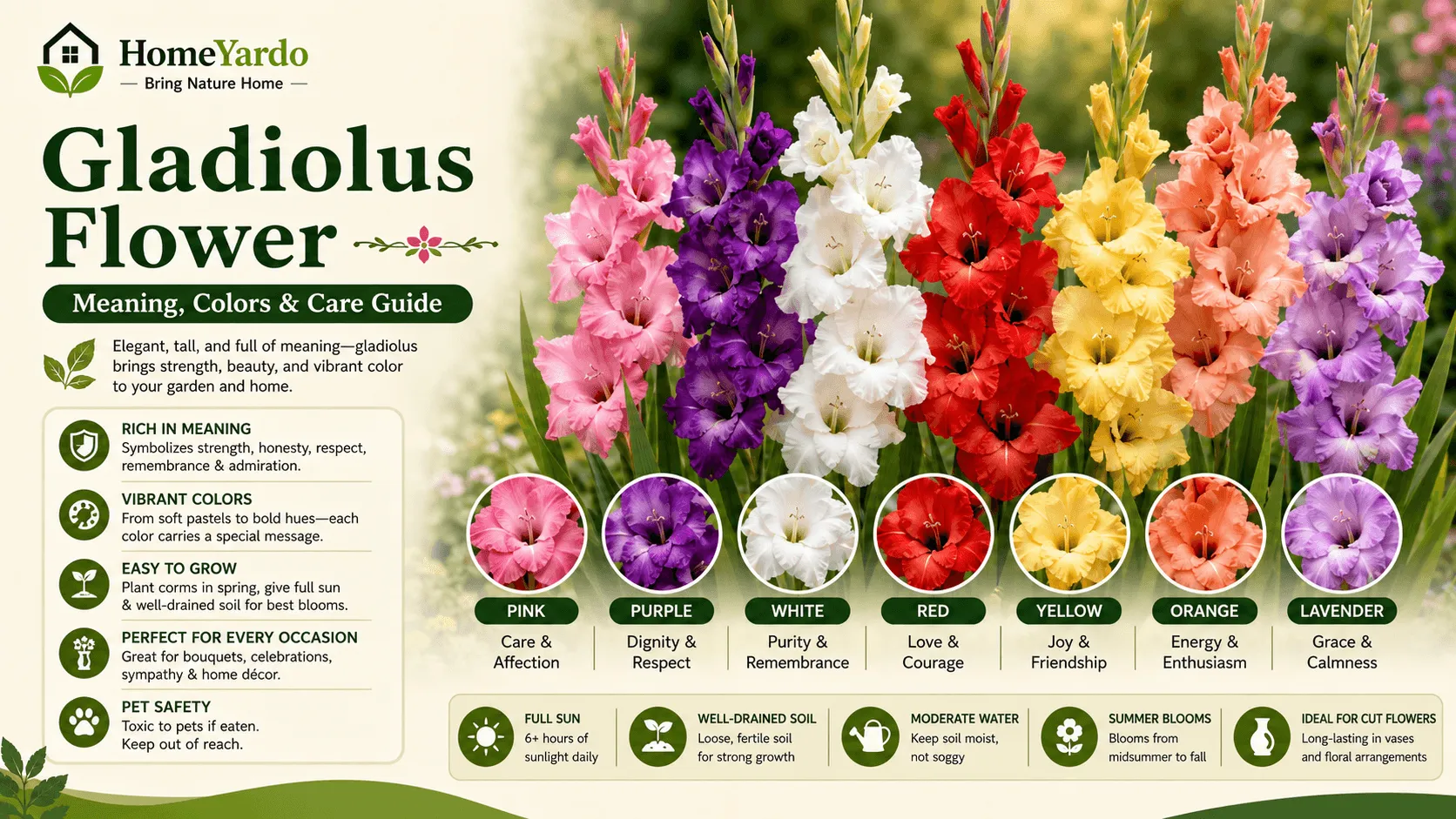
The gladiolus flower is an elegant, tall shape that instantly adds character to any garden. Its tall stems, sword-shaped leaves and bright flower spikes let it appear secure without appearing rough. In a vase, it could be elegant and emotionally charged. If it’s a border, it gives depth, color, and creates a striking seasonal design.
Gladiolus is often associated with honesty, strength as well as remembrance, appreciation dedication, and endurance. It’s also called sword lily for its large leaves and the historical relationship with courage. It is more than just a flower for decoration. It could be a symbol of messages for funeral flowers, birthdays or anniversaries, graduations and also for simple home displays.
This guide will explain the gladiolus flower meaning, color symbolism and flower varieties, as well as caring for the corm vase care, vase tips, typical issues, and pet safety. It also clarifies the distinction between gladiolus and gladiola, gladioli bulbs, glads, and corms.
Quick Answer: What Does The Gladiolus Flower Mean?
This typically signifies resilience, honesty, respect of sincerity, respect, and resiliency. The upright spike and sword-shaped leaves offer a bold solid look. That is why it is described as a flower that symbolizes strength.
Gladiolus also symbolizes honor, respect, encouragement and honesty. It is a plant that is a symbol of strength; the meaning can change based on the colour and time of year. Red can be romantic and strong white is warm while reflecting, yellow is warm, and purple is refined.
Gladiolus is also one of the August birthflowers making it an ideal choice for birthdays that fall in late summer and other personally important milestones.
| Meaning | Simple Message |
|---|---|
| Strength | Courage, endurance, and inner firmness |
| Integrity | Honesty and moral character |
| Remembrance | Memory, tribute, and sympathy |
| Admiration | Respect and appreciation |
| Sincerity | Honest feeling and clear intention |
What Is A Gladiolus Flower?
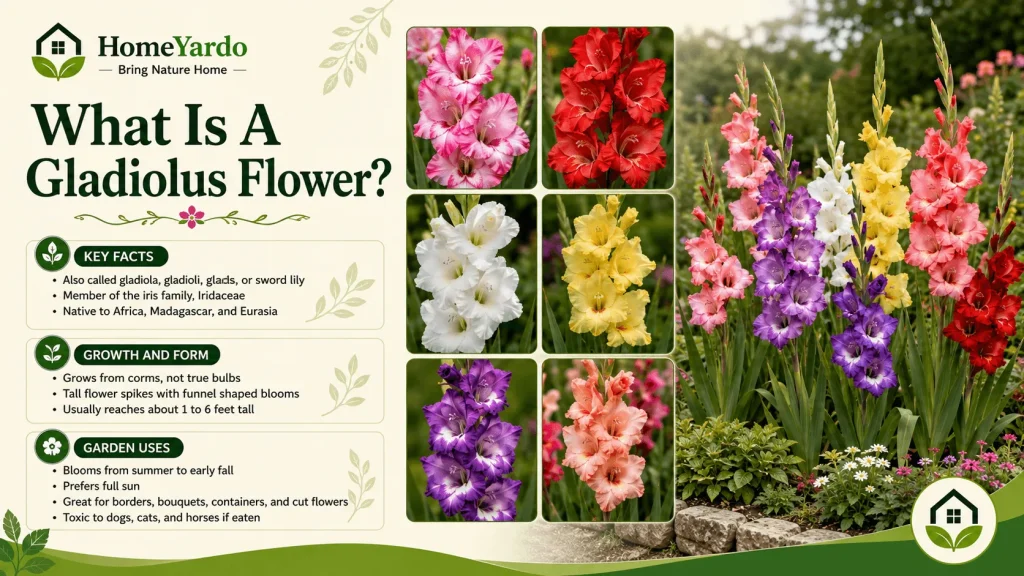
Gladiolus is a blooming plant with tall stems that are lined with bright flowers. Each stem has a bouquet of flowers, which usually extends from its base upwards and gives the spike a layered look.
The plant is part of the family of iris, Iridaceae. Gladiolus species originate from regions in Africa, Madagascar, and Eurasia. While the majority of garden varieties are hybrids cultivated for bigger flowers, brighter shades, and higher spikes.
A lot of people refer to these plants as bulbs, but in reality they develop from corms. Corms are a swelling base of the stem that stores energy for future growth. Based on the kind of plant, they can range between 1 and 6 feet tall.
| Feature | Gladiolus Details |
|---|---|
| Common names | Gladiolus, gladiola, gladioli, glads, sword lily |
| Plant family | Iridaceae |
| Native range | Africa, Madagascar, Eurasia |
| Grows from | Corms |
| Height | About 1 to 6 feet depending on type |
| Flower form | Tall spikes with funnel shaped blooms |
| Bloom season | Summer to early fall |
| Light | Full sun |
| Best uses | Borders, cut flowers, bouquets, containers |
| Pet safety | Toxic to dogs, cats, and horses if eaten |
Define Gladiolus, Gladiola, Gladioli, And Glads
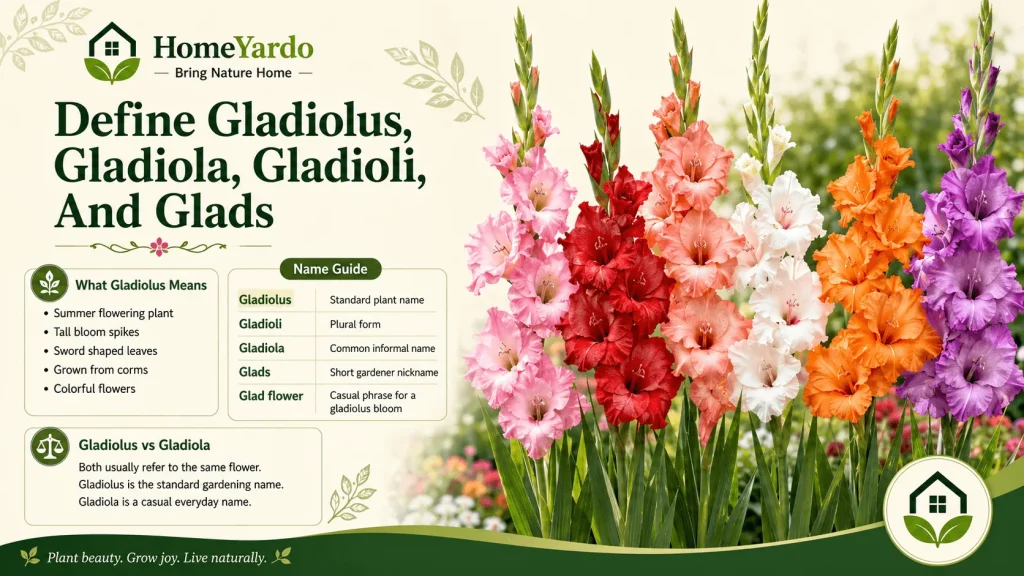
To define gladiolus simply, it is a summer flowering plant with tall bloom spikes, sword shaped leaves, and colorful flowers grown from corms. The name can feel confusing because several forms appear in gardening, floristry, and plant guides.
To compare gladiolus vs gladiola, both words usually refer to the same flower. Gladiolus is the standard plant name used in gardening guides, plant labels, and botanical writing. Gladiola is a more casual name often used in everyday conversation, bouquets, and informal flower descriptions.
| Term | Meaning |
|---|---|
| Gladiolus | Standard plant name |
| Gladioli | Plural form |
| Gladiola | Common informal name |
| Glads | Short gardener nickname |
| Glad flower | Casual phrase for a gladiolus bloom |
Why Gladiolus Is Called Sword Lily
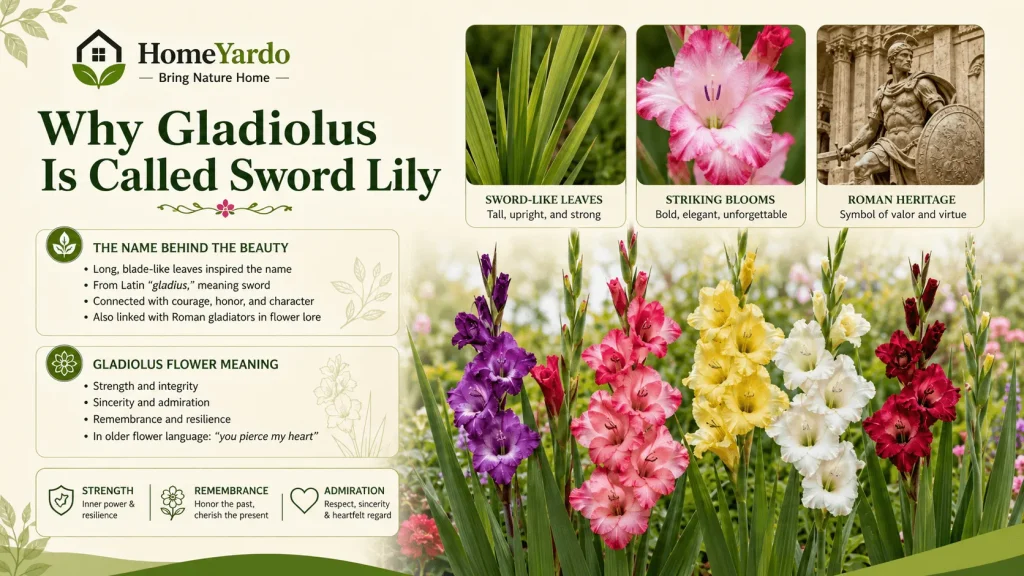
Gladiolus is also known as a sword lily due to its leaves being wide, long and shaped like blades. Its name is also associated with the Latin word” gladius,” meaning sword.
The name itself has a long history, and gives gladiolus an obvious connection with courage, honor and solid character. A few people also associate it with Roman gladiators, adding to its reputation as a bold form of flower language.
The word “gladiolus weapon” could be a result of the meaning of swords that lies behind its name. The plant itself isn’t an actual weapon. The concept comes from its form and its Latin root, and also its long-standing association with power. This is the reason why terms like sword flower or flower swords are often associated with gladiolus.
Gladiolus Flower Meaning
Gladiolus is a potent symbol that isn’t cold. The tall stems of the plant rise neatly from the ground, and its blossoms are slowly opened along the spike. The shape of the flower gives it the appearance of a steady and calm.
Gladiolus’ meaning is often linked to integrity, strength and sincerity. It is also a symbol of admiration, sincerity of memory, resilience, and strength. In the past, flower languages were more ancient. Gladiolus was also connected to affection and the expression “you pierce my heart.” The meaning of the word comes from the sword lily concept and the emotional heft of the flower.
Nowadays, gladiolus can be a perfect choice for numerous occasions. It can be a symbol of bravery, commemorate a moment or commemorate an accomplishment or simply add a genuine message to the bouquet. A purple or yellow bouquet may be uplifting, while white gladiolus may be a great choice to mark a moment of memory.
| Meaning | How Gladiolus Expresses It |
|---|---|
| Strength | Tall upright flower spikes and sword shaped leaves |
| Integrity | Linked with moral character and honesty |
| Remembrance | Used in memorial and sympathy arrangements |
| Admiration | Given to show respect or appreciation |
| Infatuation | Older flower language linked it with piercing the heart |
| Resilience | Upright growth gives it a strong visual message |
Gladiolus Symbolism And Spiritual Meaning
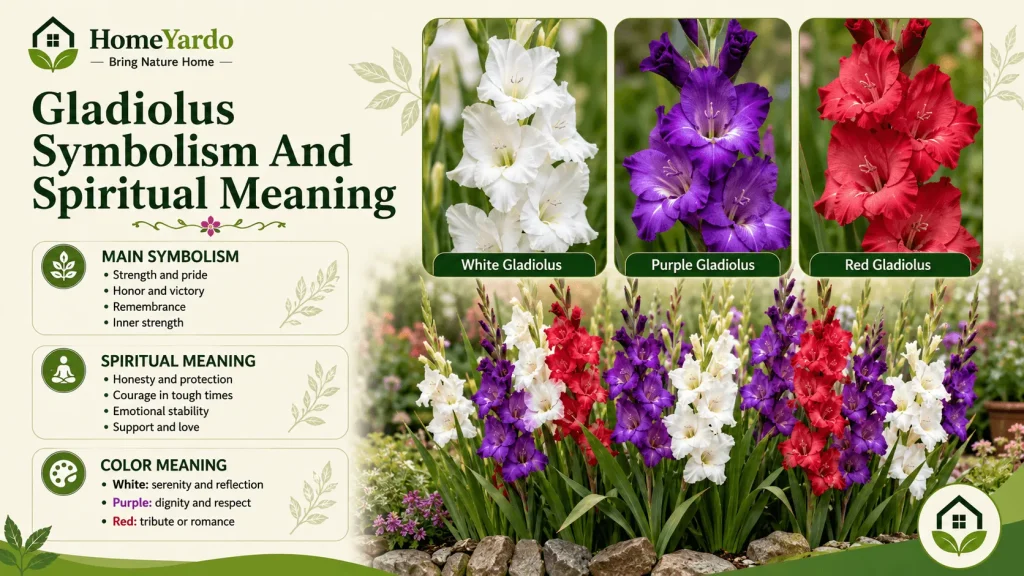
The symbolism of Gladiolus is often centered around strength an dpride, honor in victory, remembrance and inner strength. The flower is straight and calm and gives an ethereal impression of emotional stability.
The gladiolus spiritual meaning of the gladiolus is usually associated with honesty, protection as well as courage and staying strong during tough times. A white gladiolus is serene and contemplative. The spiritual significance of purple gladiolus is usually associated with respect, dignity and a calm confidence. Red is a more emotional tone, particularly when used in tribute or romantic arrangements.
Gladiolus is also regarded as symbolizing power. It could represent an individual who was in a steady position, performed hard work or walked through difficult times with grace. In less formal situations, it could function as a symbol of security or a flower that signifies protection, particularly when used to show support and love.
Gladiolus Symbolism In History And Flower Language
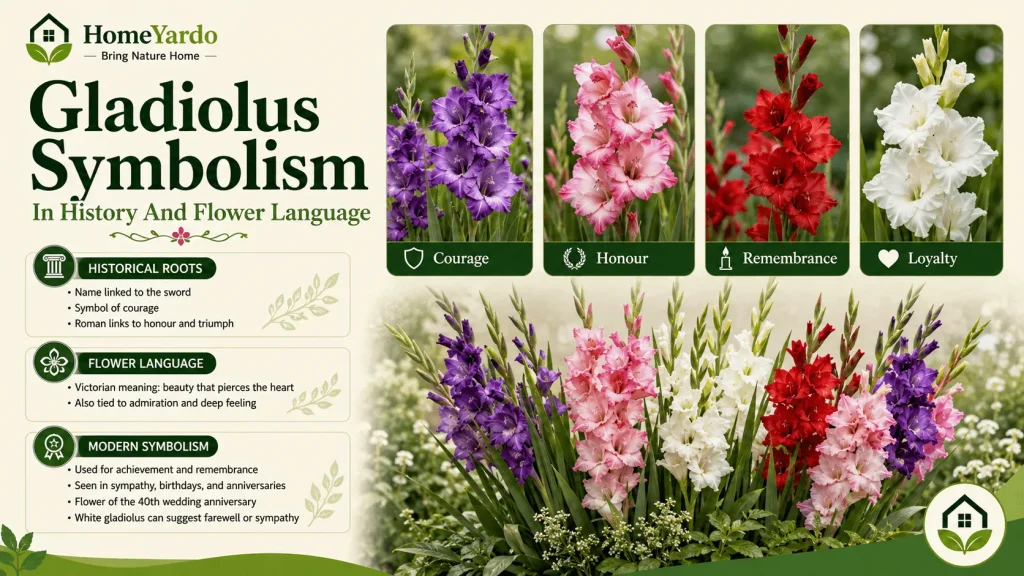
Gladiolus’ story is tightly tied to the concept of a sword. Its connection to gladius as well as its lengthy leaves contributed to its fame as a symbol of courage.
In Roman symbolic meaning, the word gladiolus is associated with gladiators, triumph, and honour. In Victorian flower languages it conveyed an emotional meaning. It could indicate that someone’s beauty or love was so beautiful that it “pierced the heart.”
Modern flower usage is more extensive and more delicate. These flowers are often used to commemorate achievement, remembrance as well as sympathy, birthdays and anniversary celebrations, and respectable bouquets. It’s also a symbol of the 40th anniversary of weddings which can show love as well as loyalty and admiration.
A few cultural references associate gladioli with loss or goodbye. Gladioli of white color can be featured in funeral arrangements. The significance of this flower should be treated gently as the significance of flowers is influenced according to the country, tradition and personal feelings.
Gladiolus Color Meaning
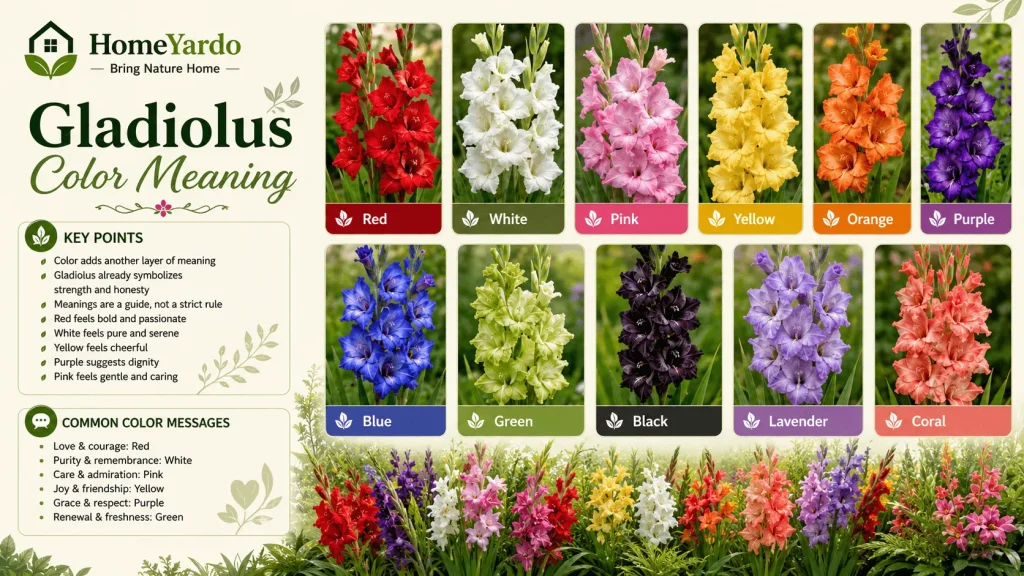
The significance of color is an additional layer of meaning to the message that the flower conveys. The flower is already a symbol of power and honesty. However, each color has the ability to alter the meaning behind it.
Color interpretations are a guideline and not a set of guidelines. A stem that is red can feel intense. A white stem may feel serene. Yellow is bright and cheerful. Purple brings dignity. Pink offers a more mellow emotional feel.
| Gladiolus Color | Common Meaning | Best Use |
|---|---|---|
| Red gladiolus flower meaning | Love, passion, courage | Romance, anniversaries, bold gifts |
| White gladiolus flower meaning | Purity, sincerity, remembrance | Weddings, sympathy, and memorial flowers |
| Pink gladiolus flower meaning | Care, affection, gentle admiration | Mother’s Day, thank you bouquets |
| Yellow gladiolus flower meaning | Joy, friendship, optimism | Birthdays, congratulations |
| Orange gladiolus flower meaning | Energy, warmth, enthusiasm | Summer gifts, celebrations |
| Purple gladiolus flower meaning | Grace, dignity, respect | Achievements, formal bouquets |
| Blue gladiolus flower meaning | Calm, rarity, uniqueness | Unusual floral themes |
| Green gladiolus flower meaning | Renewal, freshness, growth | Spring designs, garden style bouquets |
| Black gladiolus flower meaning | Mystery, drama, elegance | Dark floral arrangements |
| Lavender gladiolus flower meaing | Grace, softness, calm | Romantic or gentle displays |
| Coral gladiolus flower meaning | Warmth, affection, cheer | Summer borders and softer bright bouquets |
Popular Gladiolus Flower Colors For Gardens And Bouquets
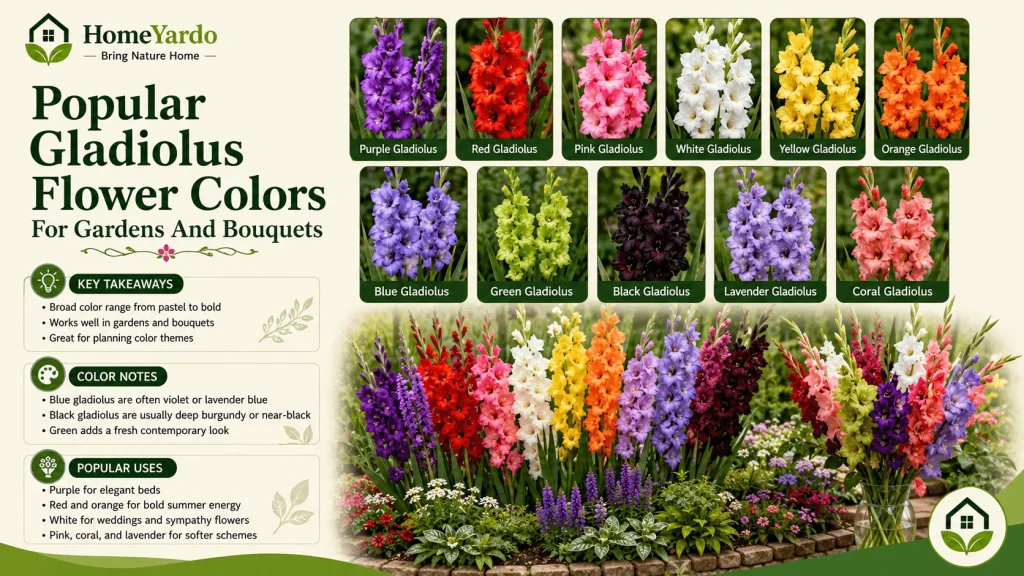
These flowers can be found in a broad range of colors that range from pastel tones to dramatic and intense tones. They are great in both garden planning and flower design.
Purple gladiolus looks great in elegant beds. Red gladiolus adds bold summer energy. Pink gladiolus is soft and romantic. White gladiolus is calming for funeral flowers, weddings, and garden designs that are clean. Gardeners building a coordinated violet planting scheme can combine it with purple perennials that flower before or after the gladiolus display.
Gladiolus of orange and yellow highlight borders with warmth. Blue gladiolus is typically blue-toned, violet or lavender blue instead of the true blue. Green gladiolus provides a fresh contemporary look. Black gladiolus are usually deep burgundy or deep purple, maroon or close to black, rather than pure black. Gladiolus of coral and lavender are softer choices for mixed plant schemes.
| Color | Garden Or Bouquet Use |
|---|---|
| Color | Garden Or Bouquet Use |
| Red gladiolus | Bold summer borders and romantic bouquets |
| Pink gladiolus | Cottage gardens and soft floral designs |
| White gladiolus | Clean garden beds, weddings, sympathy flowers |
| Yellow gladiolus | Cheerful displays and birthday bouquets |
| Orange gladiolus | Warm summer planting and celebration flowers |
| Blue gladiolus | Unusual color themes, often blue toned or violet |
| Green gladiolus | Fresh arrangements and modern floral designs |
| Black gladiolus flower | Drama and contrast, usually near black |
| Lavender gladiolus | Soft garden palettes and calm bouquets |
| Coral gladiolus | Warm pastel displays and summer arrangements |
When To Give Gladiolus Flowers
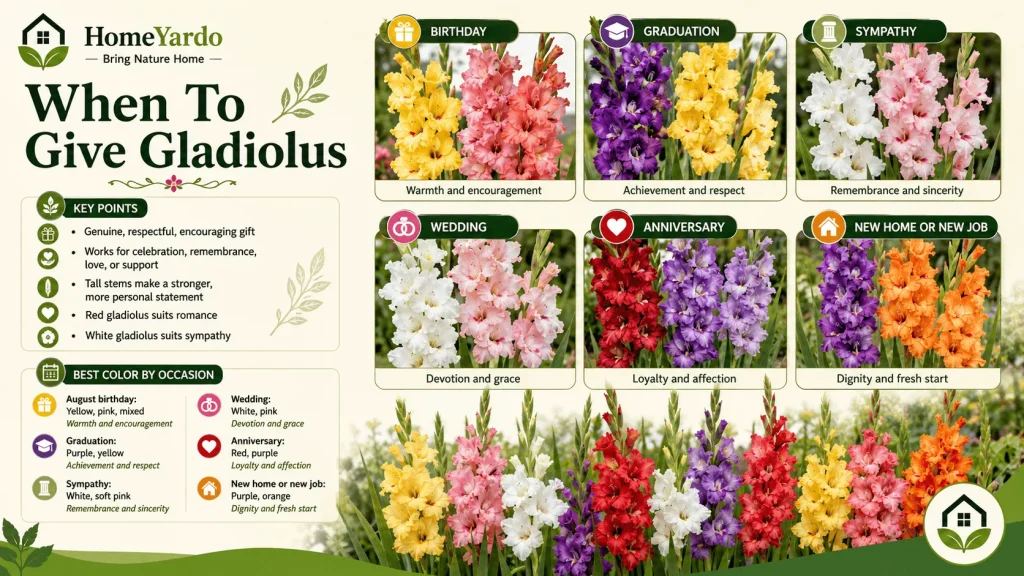
Gladiolus is a great choice for messages that need to be genuine and respectful. It can also be used to encourage. It can be used to convey celebration or remembrance of love, or even support, based on the colour and the setting.
Since the flower is tall as well as present, the flower may appear more personal as opposed to a typical mixed bouquet. It’s especially helpful when the gift is meant to say, “Your strength matters,” without sounding formal.
| Message | Good Gladiolus Use |
|---|---|
| Encouragement | Yellow or purple bouquet |
| Remembrance | White sympathy arrangement |
| Admiration | Purple or pink stems |
| Romantic feeling | Red gladiolus |
| Long devotion | 40th anniversary flowers |
What Does A Gladiolus Look Like?
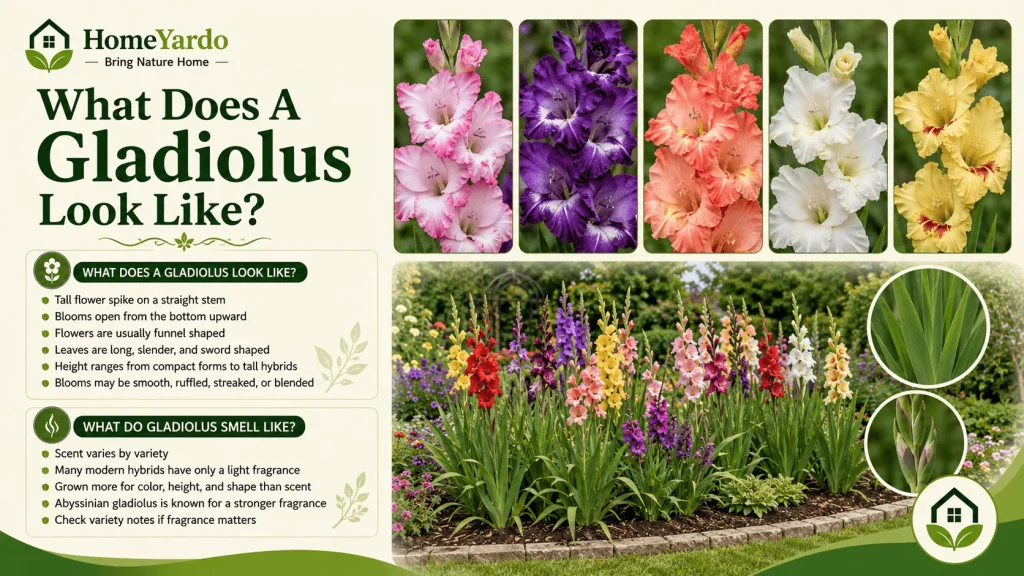
A gladiolus grows on a long straight stem that has flowers that are arranged on the upper portion of its spike. The flowers usually face the outside and emerge by opening from the buds below before they proceed upwards.
The leaves are broad, slender and shaped like swords. These leaves can help separate gladiolus from the other garden flowers. The single gladiolus flower is typically funnel-shaped, whereas an entire spike may appear like a tall, multi-layered and striking.
The height of the plant is contingent on the nature of the plant. The smaller varieties may be able to be as low as one or two feet, and tall hybrids of the garden can be several feet tall. The individual flowers can appear smooth, ruffled or blended or streaked with a distinctive throat. Certain varieties appear more formal and upright, whereas smaller varieties blend better into mixed beds.
What Do Gladiolus Smell Like?
The Gladiolus scent is different depending on the. Some flowers possess a mild sweet scent, while most modern large-flowered hybrids are cultivated more to enhance color, height and shape, rather than strong fragrance.
Abyssinian gladiolus is renowned for its fragrance over other common garden hybrids. For a plant that smells be sure to read the variety notes prior to purchasing corms as the fragrance differs across all gladiolus blooms.
A great method to think about gladiolus is to choose regular hybrids for height and color. Then, select the ones with a pleasant scent for scent.
Types Of Gladiolus Flowers
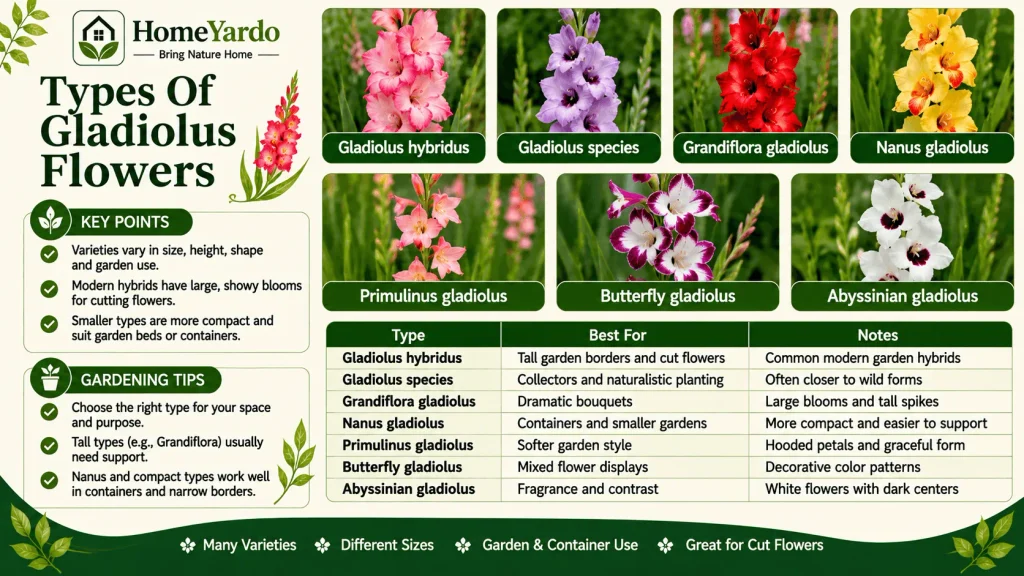
Gladiolus varieties vary in size, height, shape, hardiness and their use in gardens. Modern hybrids that are large in size are typically used for cutting flowers with a dramatic look, while smaller ones are more comfortable in the garden beds.
Gladiolus hybridus is the most commonly used name in a variety of modern hybrids for gardens. They typically come with tall spikes and huge flowers. Gladiolus species are more similar to wild species and could have a lighter, more open appearance.
Certain varieties work better in containers than others. The tall grandiflora varieties usually require support, whereas nanus or smaller flowering types are simpler to plant in pots, borders that are narrow as well as mixed beds.
| Type | Best For | Notes |
|---|---|---|
| Gladiolus hybridus | Tall garden borders and cut flowers | Common modern garden hybrids |
| Gladiolus species | Collectors and naturalistic planting | Often closer to wild forms |
| Grandiflora gladiolus | Dramatic bouquets | Large blooms and tall spikes |
| Nanus gladiolus | Containers and smaller gardens | More compact and easier to support |
| Primulinus gladiolus | Softer garden style | Hooded petals and graceful form |
| Butterfly gladiolus | Mixed flower displays | Decorative color patterns |
| Abyssinian gladiolus | Fragrance and contrast | White flowers with dark centers |
Popular Gladiolus Varieties To Know
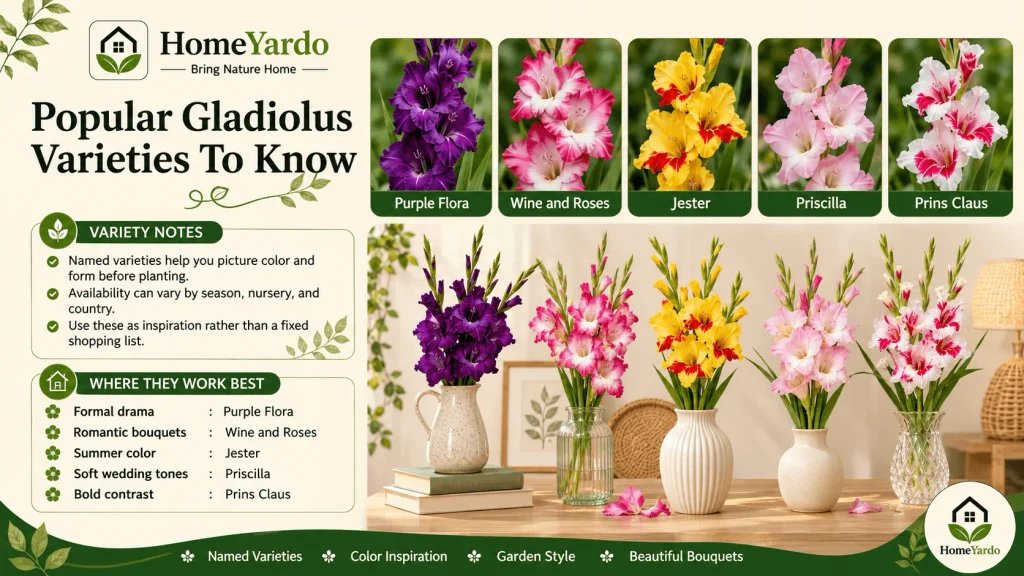
Gladiolus varieties that are named can be simpler to envision before planting. The availability of gladiolus can vary by season, nursery, and country, so consider these as a sample of color and design instead of a predetermined shopping list.
Certain kinds are strong and dramatic, whereas others are softer and appropriate for marriages, cottage beds, or soft summer borders.
| Variety | Look | Best Use |
|---|---|---|
| Purple Flora | Deep purple blooms | Drama and formal arrangements |
| Wine and Roses | Pink and white bicolor | Romantic bouquets |
| Jester | Yellow with red accents | Bright summer displays |
| Priscilla | Soft pink and white | Weddings and gentle palettes |
| Prins Claus | White with strong red-pink markings | Contrast and mixed designs |
Gladiolus As The August Birth Flower
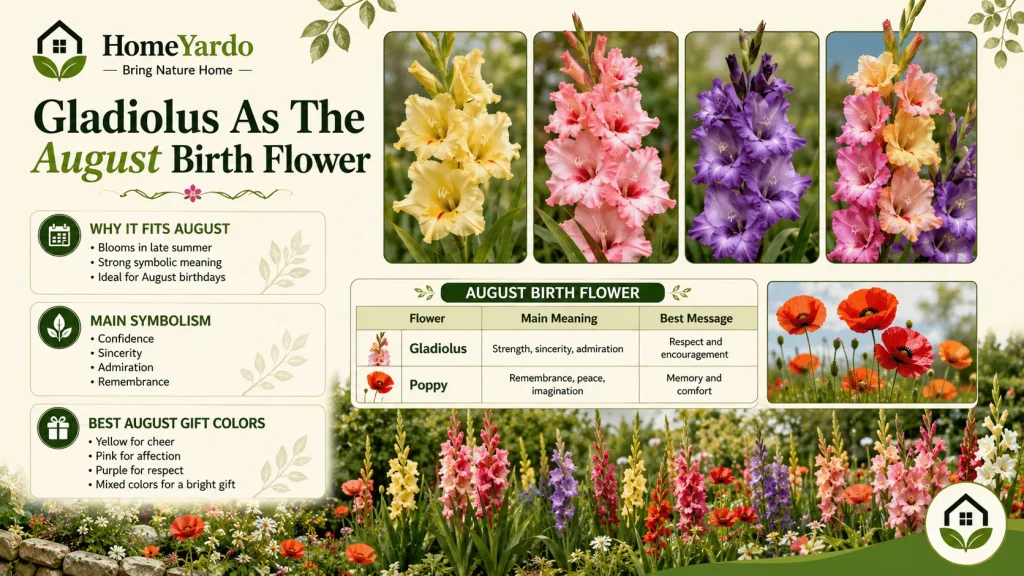
Gladiolus is among the flowers that bloom in August. It’s blooming season in late summer and its powerful symbolic significance makes it an appropriate flower to celebrate birthdays in the hottest time of the season.
As an August birth flower, the gladiolus is a symbol of confidence, sincerity and admiration and remembrance. It’s a good choice for anyone who has demonstrated the ability to endure and character or the ability to remain in the moment.
The poppy flower is often associated with August; the two flowers differ in shades. Gladiolus has a strong, upright feel but poppy can be soft and reflective. Gladiolus also has a connection to the 40th anniversary celebration and can imply dedication, loyalty and an unbreakable bond that has endured throughout the seasons.
| August Birth Flower | Main Meaning | Best Message |
|---|---|---|
| Gladiolus | Strength, sincerity, admiration | Respect and encouragement |
| Poppy | Remembrance, peace, imagination | Memory and comfort |
For August birthdays, yellow gladiolus feels cheerful, pink feels affectionate, purple feels respectful, and mixed colors can make a bright late summer gift.
How To Grow Gladiolus
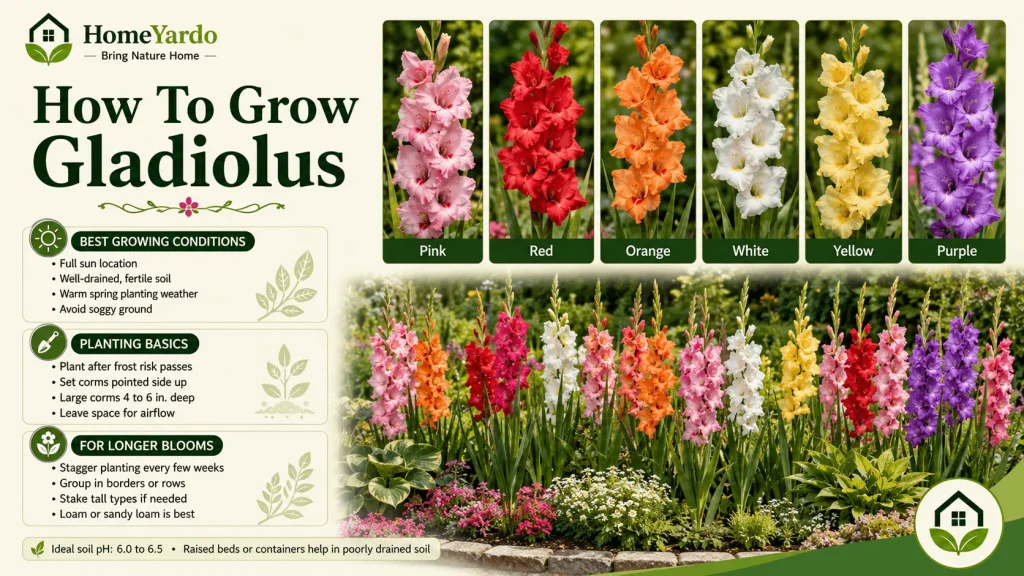
Gladiolus is best if it is planted in a sunny location with a well-drained, fertile soil. The corms require sufficient warm temperatures to get their bodies ready for the day and also enough drainage to avoid rotting.
The gladiolus corms are planted in spring following the frost risk. Set each corm with its inclined side facing upwards. Large corms usually are planted 4 to 6 inches deep, whereas smaller ones can be just a bit deeper.
For a longer-lasting display, plant some corms every few weeks instead of putting everything in all at one time. This extends the bloom time and helps keep fresh stems coming throughout summer. In a cut garden, the rows can be simple to control. In decorative borders, grouped planting looks more natural.
| Step | What to do | Why it helps |
|---|---|---|
| Choose the site | Full sun and good drainage | Better flowering and lower rot risk |
| Prepare soil | Loose, fertile soil | Supports strong roots and stems |
| Plant corms | Pointed side upward | Helps shoots emerge correctly |
| Set depth | About 4 to 6 inches for large corms | Improves stability |
| Space plants | Leave airflow room | Reduces crowding |
| Stagger planting | Plant every couple of weeks | Extends bloom season |
| Add support | Stake or group tall types | Prevents bending |
Loam or sandy loam is usually better than heavy wet soil. A slightly acidic to neutral soil around pH 6.0 to 6.5 can work well. Where drainage is poor, raised beds or large containers are safer than planting corms into soggy ground.
When To Plant Gladiolus
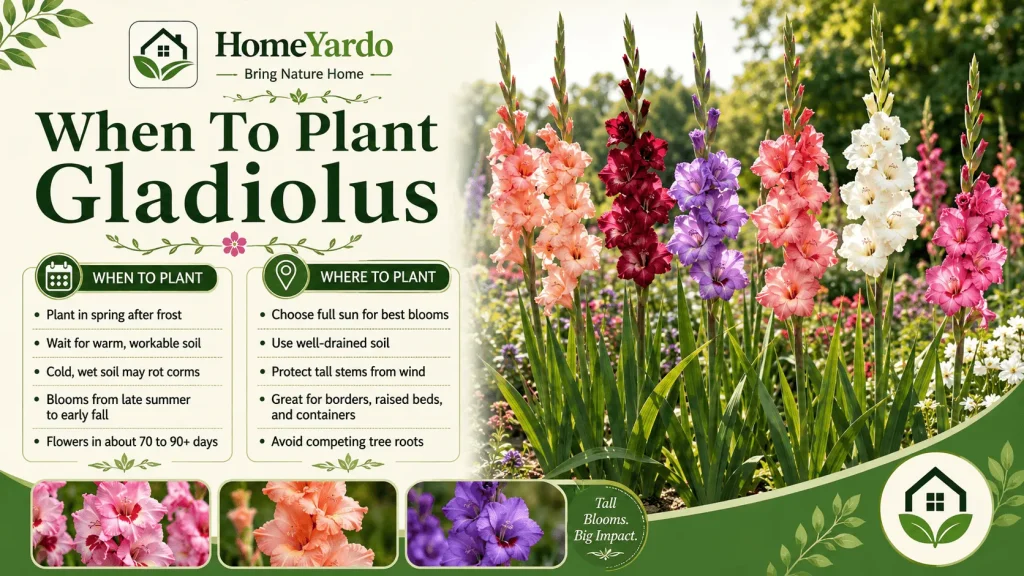
In spring, plant gladiolus once the danger of frost has passed so that the soil is in good condition. The cold, wet soil may hinder growth and increase the likelihood of rot in the corm.
The warmer regions tend to develop earlier than the colder regions. In cooler regions be patient until the ground has warmed up and the rainy spring has slowed down. In the event that your growing time is extremely short be sure to plant your seeds at the right time since the corms require sufficient time to flower before the frost.
The flower season for Gladiolus usually lasts from late summer until early autumn. The timing of blooming depends on the date of planting, the weather and the variety. Numerous varieties bloom between 70 and 90 or more days after the time of planting.
Where To Plant Gladiolus
Gladiolus requires full sunlight for the most robust stems and the best blooming. A sunny, well-lit area will help the plant grow more attractive flower spikes. When planning the surrounding bed, choose other full sun plants with similar light needs but enough space to avoid crowding the tall flower spikes.
Select a soil that drains properly after a rain. The soil that is wet and heavy can cause damage to corms. In gardens that are windy it is recommended to plant tall gladiolus next to an enclosure, along with the other vegetation, or in conjunction with the help of.
A good place to start is by putting in backyard borders, cutting gardens, fence lines with sun and cottage beds, as well as raised beds and large containers. Beware of planting near trees or trees whose roots compete for nutrients and water.
Gladiolus Bulbs Vs Corms
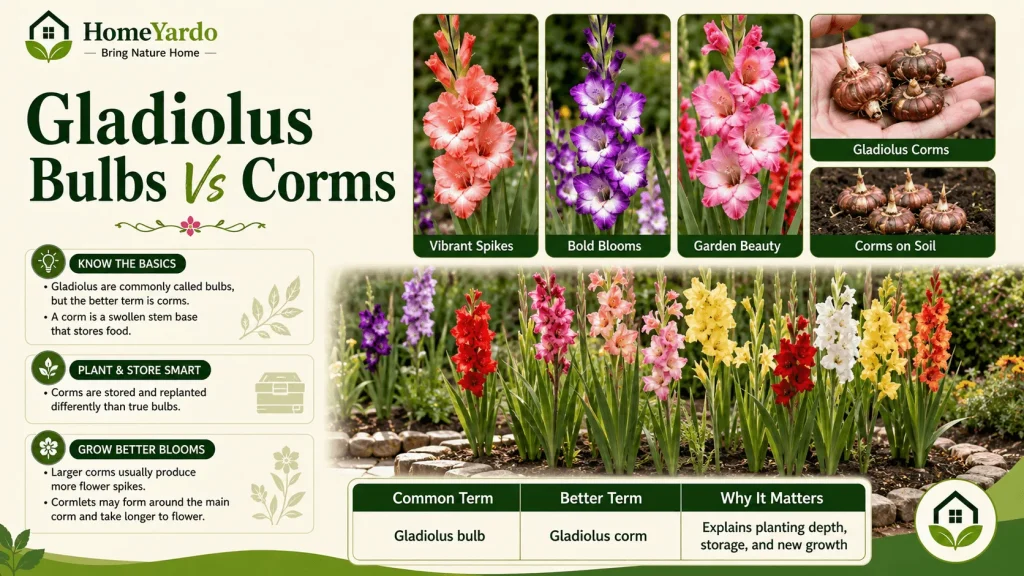
Many gardeners refer to them as gladiolus bulbs however, the more accurate term is gladiolus corms. Corms are a large stem base that is swollen and holds food for the plant.
The reason for this is that corms are dried, stored and then replanted in a different way than real bulbs. The term “bulb” in garden conversation is normal, corms is a better term.
Larger corms typically produce more flower spikes than smaller weak ones. Cormlets may develop around the corm’s main stem, but they generally require longer to develop before they can flower properly.
| Common Term | Better Term | Why It Matters |
|---|---|---|
| Gladiolus bulb | Gladiolus corm | Helps explain planting depth, storage, and new growth |
Gladiolus Plant Care
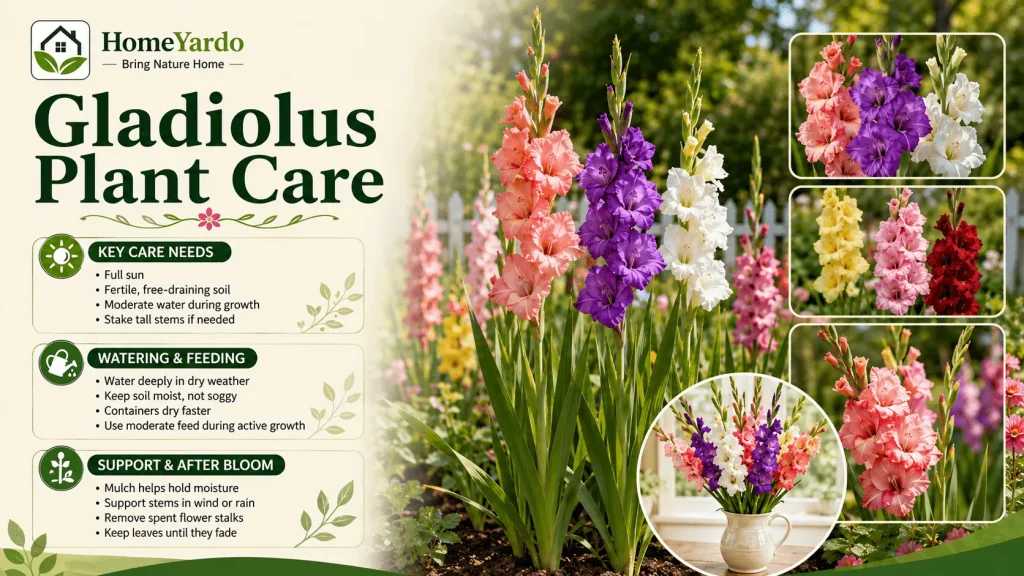
Gladiolus care isn’t too complicated, but the plant performs best when it is given constant care during its active growth. Full sun, draining soil with moderate water and solid support are the most important factors for growth.
Large flower spikes could require the staking procedure, especially in areas with wind. The leaves must remain in the plant until the flowers have faded as they assist the corm in storing energy until the coming season.
Mulch helps to conserve soil moisture and helps reduce the growth of weeds. A little weeding can be beneficial but be gentle when working with young shoots, as corms and young roots may be disrupted.
| Care Need | Best Practice |
|---|---|
| Light | Full sun |
| Soil | Fertile, free draining soil |
| Water | Deep watering in dry weather |
| Feeding | Moderate fertilizer during active growth |
| Support | Stake tall stems or plant in groups |
| Mulch | Helps hold moisture and reduce weeds |
| After bloom | Remove flower stalks, keep leaves until they fade |
| Containers | Keep compost evenly moist but not waterlogged |
Careful maintenance keeps the plants healthier, and it can also aid in the next year’s growth. The corm that has been worn out usually yields lower quality stems and smaller blooms, or a lack of return altogether.
Watering Gladiolus
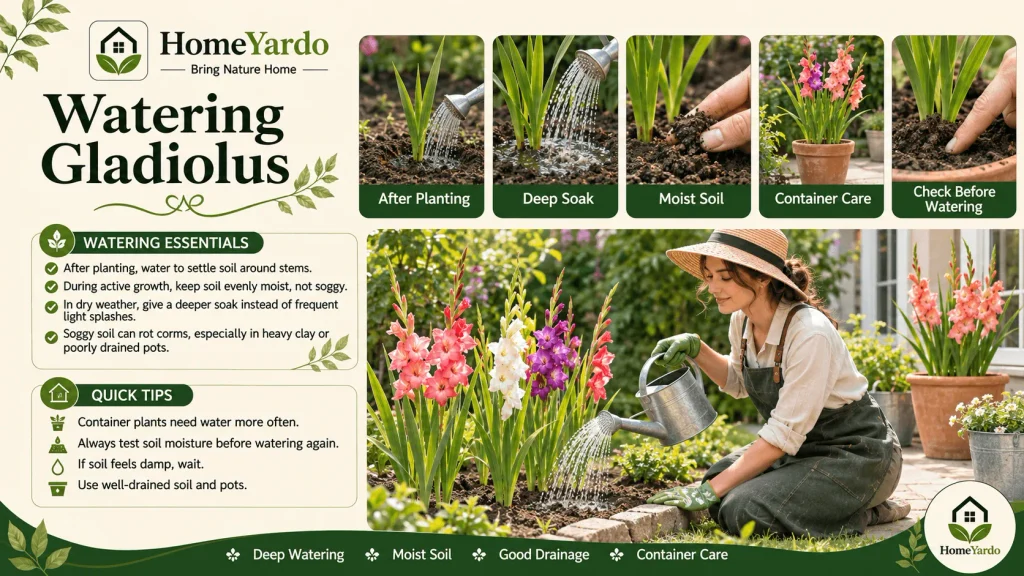
Sprinkle gladiolus water after planting to loosen the soil around the stems. In dry weather, provide more of a soak rather than frequent, light splashes.
The soil must remain humid during the growth phase but not too wet. A corm that is soggy could cause rot, particularly in clay that is heavy or pots that are not properly drained.
Gladiolus grown in containers may require regular watering since pots dry out faster than beds in the garden. Always test the water’s moisture prior to applying water again. If the soil feels damp you should wait before adding additional water.
Feeding Gladiolus
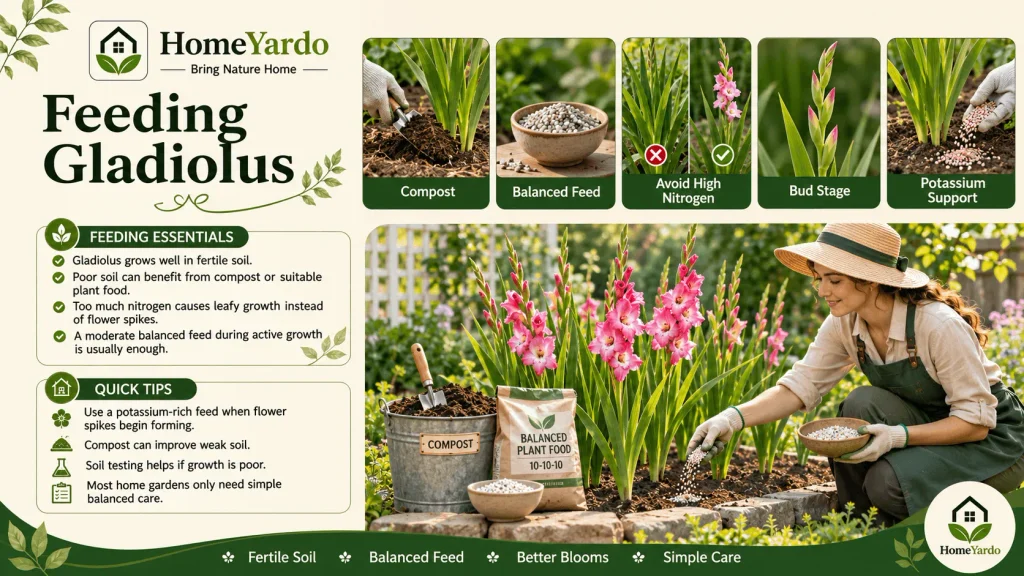
Gladiolus is a plant that thrives in fertile soils; excessive feeding is not required in all gardens. Compost or the right plant food will aid in areas of poor soil.
A high concentration of nitrogen can cause green growth, not flower spikes. A moderate amount of nitrogen in the midst of active growth is typically sufficient.
As flower spikes begin to develop, a potassium-rich feed can aid in ensuring bloom quality. Soil testing can aid when you have a garden that has had a lot of low growth. Most gardeners at home require simple, balanced maintenance.
Types Of Gladiolus Flowers
The stems of tall gladiolus can be bent in rain or wind particularly when the spike of flowers is large. Support is a way to keep the plant in place and prevents it from breaking.
The stakes can be put in place prior to the time when the plant is too large. Make sure the stake is kept a bit from the corm, so that it does not harm new roots. Planting groups can also benefit since nearby stems offer each other some protection.
In border areas that are relaxed, you can plant gladiolus in a shady border with sturdy perennials to make the support appear natural. When cutting rows, a horizontal mesh can be used to help keep tall stems up. The smaller varieties might require less or even no assistance in shaded areas.
What To Do With Gladioli After Flowering
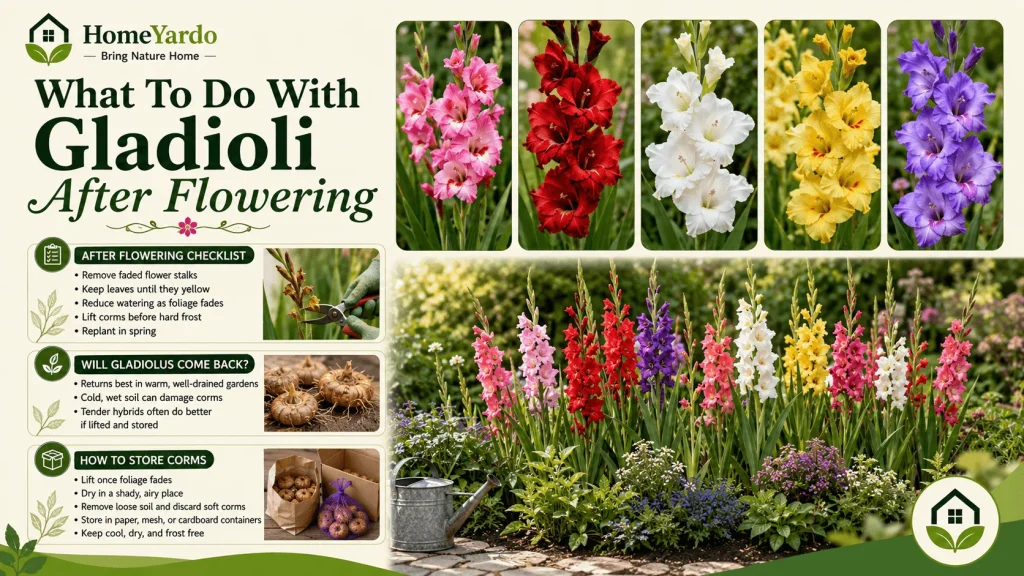
After the gladioli have finished flowering remove the flower stalks that have faded but keep the leaves on. The leaves have work to be done. It provides food for the corm and assists in storing energy.
Make sure the leaves start to brown or turn yellow before you remove them. Cutting the foliage of green too early could cause the corm to weaken and slow the growth of next year’s.
In colder areas, a lot of gardeners can lift gladiolus corms ahead of hard frost. In milder areas with good drainage, some varieties may remain in the soil. It is common for winter soil to be more destructive than cold by itself. As soon as the leaves begin to fade the watering rate can decrease.
After Flowering Checklist
- Get rid of the faded flower stalks.
- Maintain leaves until they start to fade.
- Reduce watering when foliage begins to yellow.
- Remove corms prior to hard frosts in cold areas.
- Dry and clean corms.
- Keep it in a cool, dry, and airy location.
- Replant in the spring.
The stage after the flowering is when the next year’s blooms begin. Being patient with the leaves can make a huge difference.
Do Gladiolus Come Back Every Year?
Gladiolus will bloom each season in warm climates and drainage that is free. In colder climates there are many large garden hybrids that aren’t really hardy throughout winter.
Cold, wet soil may cause damage to corms. Even if the temperatures aren’t extreme, poor drainage can lead to rot.
Some hardier types may return in suitable gardens. The more tender hybrids generally are more successful when they are lifted and stored. The climate, winter wetness, soil type, and the variety of plants all impact the likelihood of a good return for gladiolus.
How To Store Gladiolus Corms
Lift gladiolus corms once they have faded in foliage, or before the hard frost has arrived. Be careful when handling them as corms that are bruised may not store well.
Allow the corms to dry within a dry, shady location. After drying, take off any of the soil that is loose and dispose of any soft, spongy or broken pieces.
Keep healthy corms in breathable containers like cardboard boxes, paper bags or mesh bags. They can also be stored in an open tray. Avoid sealing plastics as the moist air can promote decay. Keep corms stored in a dry, cool and free from frost, away from children and pets.
How Long Do Gladioli Flower For?
These flowers have different durations of time based on the variety, date of planting weather conditions, and the care. The stems open slowly and the lower buds open prior to the higher buds.
One flower spike will not last the whole season long, staggered planting can produce a greater display. Smaller batches of flowers every couple of weeks provide an increased supply of blooms.
There are many garden areas that have the gladiolus blooms throughout the summer and into the beginning of fall. Warmer weather can speed up the growth process, while cold conditions can slow it down. A lot of varieties require 70 to 90 days from the time of planting until blooming. Therefore, timing is important when it comes to short-season gardens.
Gladiolus In Bouquets, Vases And Home Displays
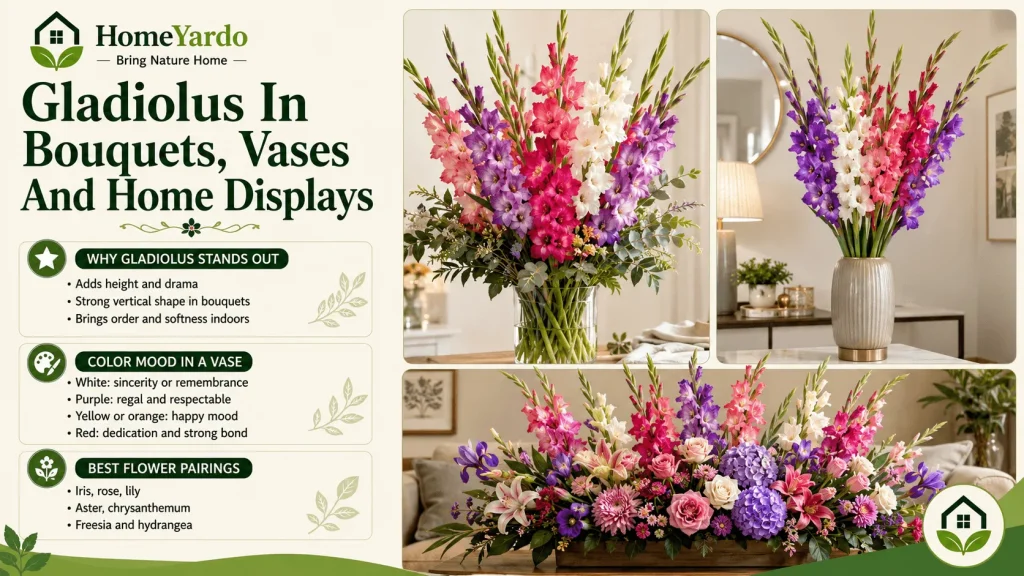
Gladiolus adds height and drama to bouquets. One stem can be the heaviest in the arrangement, and several stems can make a powerful vertical form.
The meaning of the vase for gladiolus typically depends on the color and the setting. A white gladiolus inside a vase can be a symbol of sincerity or remembrance. Purple gladiolus may feel regal and respectable. Orange or yellow stems can provide a more mellow, happy mood. Red gladiolus is a less popular alternative to roses if it conveys dedication or a strong bond.
Gladiolus is a great match for Irises, roses, lilies, asters, chrysanthemums, freesias and hydrangeas. It is informal or relaxed, based on the color and accompanying flowers. Different types of roses can be paired with gladiolus to create romantic, formal, or softly colored arrangements.
When displayed in a home, Gladiolus is a plant that feels steady and positive. The upright shape provides a feeling of order, and the flowers add a touch of an air of softness.
How To Choose Fresh Gladiolus Stems
Fresh gladiolus stems should be solid, clean and straight. Find stems with lower buds showing little colour and the top buds closed. This gives the flower the chance to open slowly indoors.
Avoid stems that have slimy bases, weak tips, browning buds and damaged blooms. The stems that are fully open may appear gorgeous when purchased, but they generally aren’t as long in a vase.
A great stem is characterized by the right balance between promise and freshness. Lower flowers are starting to show, whereas the top buds continue to hold for the next few days of colour.
Fresh Stem Checklist
- Straight, solid stem.
- Lower buds are showing color.
- Upper buds are still closed.
- There is no thin stem with a slimy base.
- There is no browning or broken buds.
- The leaves look nice and new.
How To Cut Gladiolus For A Vase
Cut gladiolus as soon as the bottom buds, or the first flower, show colour. At this point, higher buds will continue to open indoors.
Make sure you use sharp, clean cutting tools. Cut in the morning, after stems have been well-hydrated. The stems should be placed in water right away after cutting.
Leave enough leaves on the plant to ensure that the corm will continue to store energy. The removal of too many leaves could hinder growth in the future.
| Step | Why It Helps |
|---|---|
| Cut when lower buds open | Upper buds can continue opening indoors |
| Use sharp tools | Reduces stem damage |
| Leave foliage on the plant | Helps corms rebuild energy |
| Use a tall vase | Supports long stems |
| Remove submerged leaves | Keeps water cleaner |
| Refresh water | Extends vase life |
Choose a tall, sturdy vase as gladiolus stems may be heavy. Take leaves off that sit beneath the waterline. Change the water every few days, and trim the stems in between water changes.
Make sure the vase is away from direct sunlight or drafts, heaters as well as fruit bowls. The ripening of fruit can cut down the vase’s longevity for a variety of cut flowers. When lower flowers begin to fade get them removed so the higher buds keep opening in a neat manner.
If the stem is extremely heavy taking out the topmost bud will reduce the weight and allow the rest of the buds to open more equally.
Best Uses For Gladiolus In Gardens
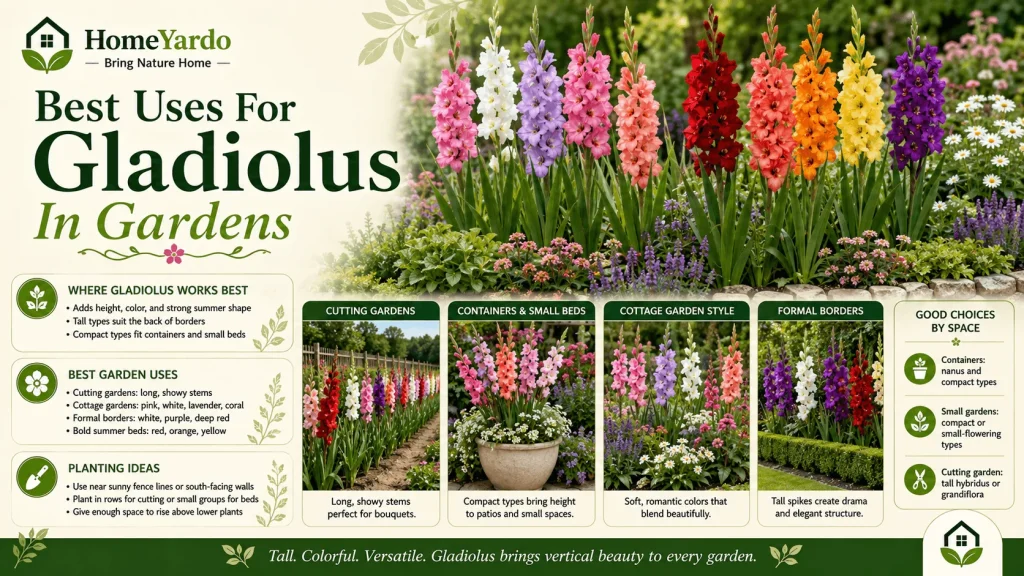
Gladiolus works well where height, color, and a strong summer shape are needed. Tall types are useful at the back of borders, while compact types fit better in containers and smaller beds.
In cutting gardens, gladiolus earns its place because the stems are long and showy. Rows are practical for cutting, while small groups look better in decorative beds. In cottage gardens, softer colors such as pink, white, lavender, and coral blend well with airy flowers and relaxed planting.
Bold colors such as red, orange, yellow, and purple can create a brighter summer display. White and deep red types suit formal spaces where clean contrast matters. Pairing gladiolus with other summer flowers can provide more color at different heights while keeping the bed lively throughout the season.
| Garden Use | Best Gladiolus Choice |
|---|---|
| Cutting garden | Tall hybridus or grandiflora types |
| Containers | Nanus and compact types |
| Cottage garden | Pink, white, lavender, coral |
| Formal border | White, purple, deep red |
| Bold summer bed | Red, orange, yellow |
| Small garden | Compact or small flowering types |
Gladiolus can also be planted near sunny fence lines, along south facing walls, or between sturdy perennials. It looks best when it has enough space to rise cleanly above lower plants. These full sun perennial plants can help fill the bed around gladiolus and provide lasting structure after its flowering season ends.
Flowers Like Gladiolus
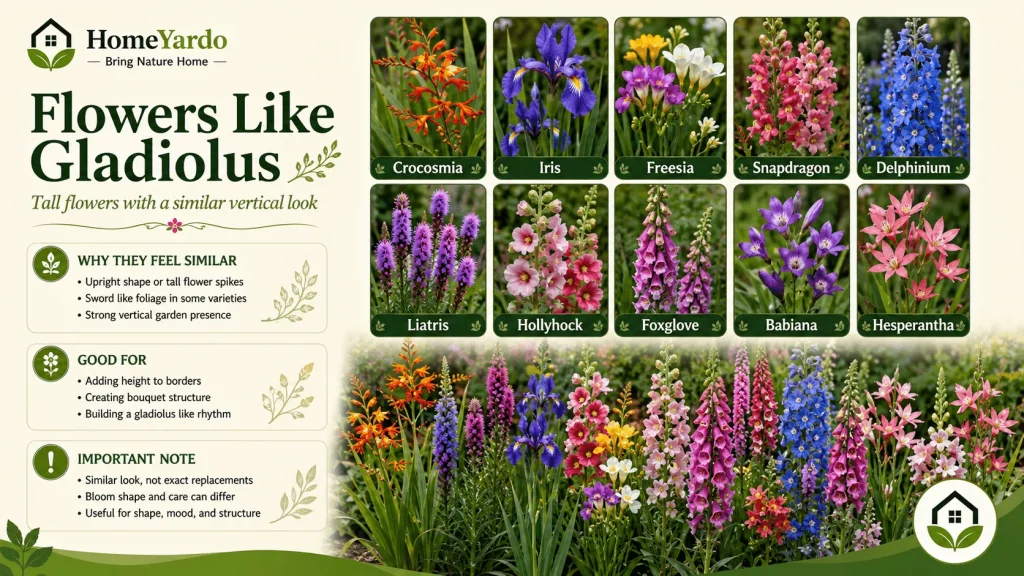
Several flowers give a similar upright shape, sword like foliage, or tall garden presence. These can help create the same vertical effect in borders or bouquets.
Crocosmia has narrow leaves and bright arching sprays. Iris shares a family connection and sword shaped foliage. Freesia grows from corms and has a softer, fragrant style.
Snapdragon, delphinium, liatris, hollyhock, foxglove, Babiana, and Hesperantha can also offer tall flower spikes, related foliage shapes, or a similar garden rhythm. They are not identical to gladiolus, but they can help build height and structure.
| Flower | Similarity To Gladiolus | Main Difference |
|---|---|---|
| Crocosmia | Sword like foliage and bright spikes | Smaller arching blooms |
| Iris | Related family and sword like leaves | Larger individual blooms |
| Freesia | Related family and corm growth | Shorter and often fragrant |
| Snapdragon | Upright flower spikes | Different flower shape |
| Delphinium | Tall vertical flower form | Cooler palette and different care |
| Liatris | Tall spike habit | Fuzzy bottlebrush blooms |
| Hollyhock | Tall garden impact | Rounder flowers and different growth habit |
| Foxglove | Upright spires | Bell shaped flowers and different safety profile |
| Babiana | Related iris family plant | Shorter and less spike-like |
| Hesperantha | Related family connection | Finer flowers and different seasonal use |
These flowers are not replacements in every garden, but they can help build a similar shape, mood, or height.
Are Gladiolus Flowers Poisonous?
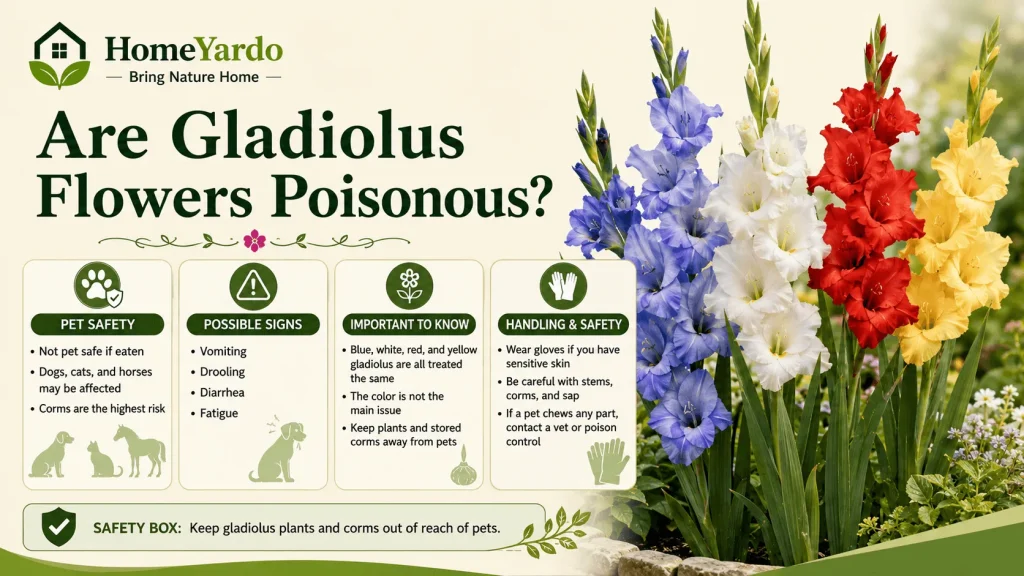
These flowers cannot be considered to be pet-safe if they are consumed. Pets, cats and even horses may suffer from the plants with corms being the most at risk.
In the aftermath of an incident, signs could include vomiting, drooling, diarrhea and fatigue. In the event of suspected ingestion, it should be treated with the help of a veterinarian.
Blue flowers poisonous, are often a mystery because it is not the color that is the primary problem with gladiolus. Blue gladiolus, white gladiolus, red gladiolus or yellow gladiolus ought to be treated equally to ensure the safety of your pet.
For flower cat horse safety, the most important thing to remember is straightforward. Gladiolus must be kept away from dogs, cats, and horses who may chew on plants or corms stored in the storage.
People with sensitive skin might prefer to wear gloves when working with stems, cut, corms or sap. This is a common sense precaution particularly during cutting, lifting or storage.
Safety Box
Keep gladiolus plants and corms out of reach of pets. If a pet is bitten by any portion of the plant consult a vet or poison control center to get advice.
Common Gladiolus Problems
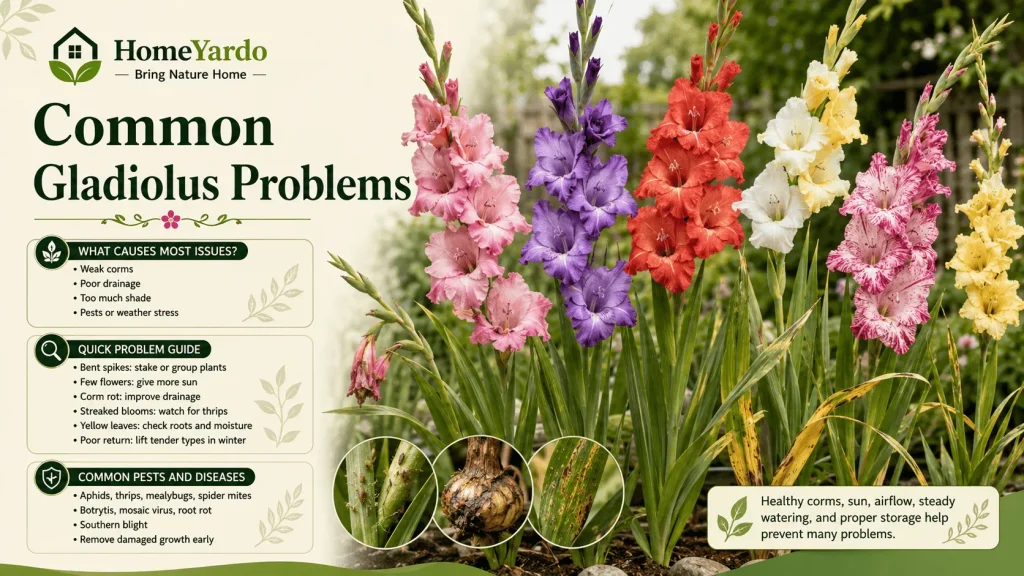
Gladiolus can generally be managed. However, it can be a problem because it is susceptible to weak growth, low flowering, damaged flowers, and corm rot in the wrong conditions.
The majority of problems start with weak corms, poor drainage or too much shade, pests, or weather stress. A sunny location healthy corms, constant flow of water, airflow, and the right storage can eliminate many problems before they start.
| Problem | Likely Cause | What To Do |
|---|---|---|
| Bent flower spikes | Wind, shallow planting, heavy blooms | Stake or group plants |
| Few flowers | Too much shade or weak corms | Improve sun exposure and plant firm corms |
| Corm rot | Wet soil or poor storage | Improve drainage and discard soft corms |
| Streaked blooms | Thrips | Remove damaged material and monitor |
| Leaves yellow early | Stress, disease, poor roots | Check soil moisture and corm health |
| Plants do not return | Cold or wet winter damage | Lift and store tender types |
Common diseases and pests include aphids, thrips, mealybugs and spider mites. Botrytis, the mosaic virus root rot as well as southern blight. If the damage is rapidly spreading then remove the affected area and evaluate the condition of the soil and airflow, as well as watering and corm storage conditions.
Conclusion
Gladiolus is much more than an elongated flower in the summer. It conveys a message of determination, sincerity, reverence and admiration. It also adds vibrant colors and structure to gardens and bouquets.
With plenty of sunshine, a drainage soil, careful watering and the proper care for corms when flowers are blooming, gladiolus will give a garden a boost with its striking spring spikes. Its vibrant colors allow it to be used for funeral flowers, birthdays, weddings, home vases, anniversaries, and cutting garden.
Make sure to keep your pet’s safety in mind, particularly around corn stored. Choose shades that complement both the garden’s style and the mood behind the flower.
FAQ’s: Gladiolus Flowers
These flowers symbolize strength, honor, remembrance, and moral character. Their tall stems and sword shaped leaves give them a brave, upright feeling. In older flower language, they can also suggest deep admiration or a love that feels emotionally powerful.
Gladiolus represents strength, sincerity, remembrance, admiration, and steady character. Its meaning can change slightly by color and occasion. White gladiolus often feels peaceful and respectful, while red gladiolus can carry a stronger message of love, courage, or devotion.
Gladiolus is one of the best known flowers that symbolize strength. Its sword shaped leaves, tall flower spikes, and old link with gladiators make it a natural symbol of courage. It is often chosen when a bouquet needs to feel respectful, encouraging, or emotionally steady.
Purple and red gladiolus are often used when the message is strength, courage, respect, or bold admiration. Purple gives a more dignified feeling, while red feels stronger and more passionate. White gladiolus can also show quiet strength in sympathy or remembrance flowers.
Yes, gladiolus is one of the August birth flowers. It is commonly linked with strength, sincerity, remembrance, and admiration. Because it blooms in late summer, it feels especially fitting for August birthdays, warm seasonal bouquets, and meaningful birthday gifts.
Gladiolus is called sword lily because its leaves are long, narrow, and sword shaped. The name is also connected with the Latin word gladius, which means sword. This name is one reason gladiolus is often linked with courage, honor, and strength.
Gladiolus may come back every year in mild climates with well-drained soil. In colder regions, many garden hybrids need to be lifted and stored before winter. Wet winter soil can damage the corms, so climate, drainage, and variety all affect whether they return.
After flowering, remove the faded flower stalk but leave the foliage until it naturally turns yellow or brown. The leaves help feed the corm for the next growing season. In cold climates, lift the corms, dry them, and store them in a cool, airy place.
Yes, gladiolus is toxic to cats, dogs, and horses if eaten. The corms carry the greatest concern, but leaves and flowers should also be kept away from pets that chew plants. If a pet eats gladiolus, contact a veterinarian or poison control service for guidance.
Yes, gladiolus can grow well in pots if the container is deep, drains well, and receives full sun. Compact types are easier to manage than very tall hybrids. Use firm corms, avoid soggy soil, and add support if the flower spikes become heavy.
Flowers similar to gladiolus include crocosmia, iris, freesia, snapdragon, delphinium, liatris, hollyhock, foxglove, Babiana, and Hesperantha. These flowers may share upright stems, tall spikes, sword shaped leaves, or strong garden height. They are not identical, but they can give a similar vertical effect.
A gladiolus tattoo usually represents strength, resilience, remembrance, or personal growth. Some people choose it as a tribute to someone they admire or miss. The meaning can also change by color, placement, and the personal story behind the design.
Gladiolus scent varies by type. Some have a light, sweet fragrance, while many large garden hybrids are grown more for color, height, and flower shape than for strong perfume. For fragrance, check the variety before buying corms.
Gladiolus is sometimes treated as a flower of protection because it symbolizes strength, courage, and standing firm. Its sword shaped leaves give it a protective feeling in flower language. Other flowers may also carry protective meanings, but gladiolus is one of the strongest choices for courage and support.
References
- https://www.rhs.org.uk/plants/gladioli/growing-guide
- https://extension.missouri.edu/publications/g6620
- https://plants.ces.ncsu.edu/plants/gladiolus/
- https://www.aspca.org/pet-care/aspca-poison-control/toxic-and-non-toxic-plants/gladiola
- https://www.plantsandflowersfoundationholland.org/en/flowerguide/gladiolus/
- https://www.floraly.com.au/blogs/news/gladiolus-flower-meanings
- https://www.bloomandwild.com/the-blog/august-birth-flower-meaning
- https://www.boesen.com/knowledge/flower-dictionary/gladiolus/
- https://urbanstems.com/blogs/news/august-birth-flower-gladiolus
- https://www.flowersofcharlotte.com/flower-meanings/gladiolus