Peonies Season: When Peonies Bloom And How Long They Last
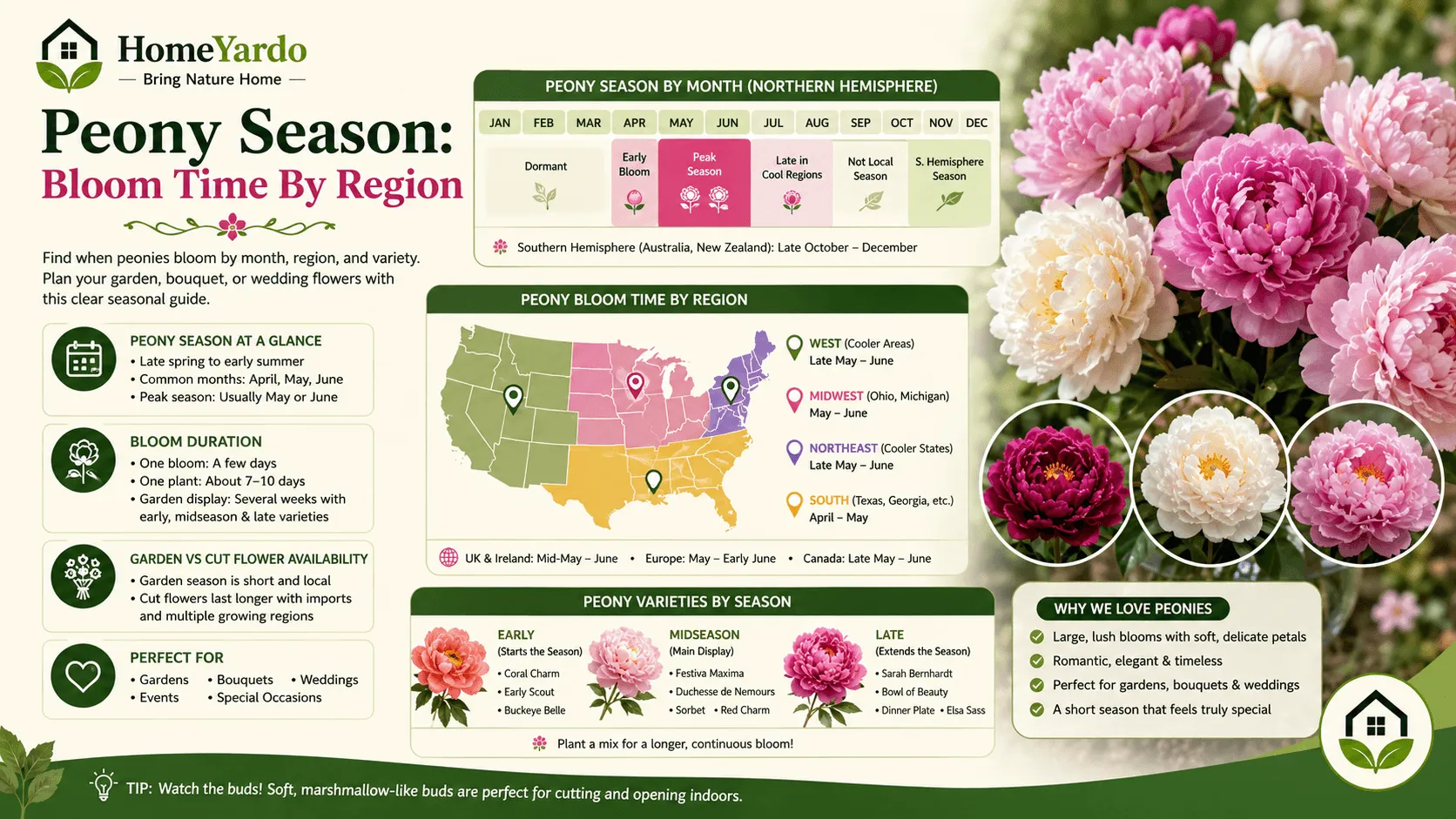
Peonies season is among the most beautiful flower moments in the whole year. The blossoms are adorned with soft, delicate petals, large round blooms and a sense it is like the gardens have kept something unique for the end of spring.
In the majority of Northern Hemisphere gardens, peonies bloom from late spring through the beginning of summer, usually in April, May and June. The warmer regions usually have flowers earlier. The cooler regions might enjoy the flowers later, and sometimes even in early July.
The exact timing is contingent on the climate, the spring weather as well as the type of flower, and if the primary focus is on gardening trees or flowers are cut. Cut peonies can be found in the garden beyond the time of the local season since florists are able to source stems from different regions where they grow.
Quick Answer: When Are Peonies In Season?
Peonies usually bloom from late spring until the beginning of summer. In a lot of gardens, the primary flowering period is in June or May, and warmer regions may have flowers in April.
The single peony flower blooms for only a few days however, a garden that is planted with mid-season, early and late varieties will have flowers blooming for several weeks.
| Question | Short Answer |
|---|---|
| Main season | Late spring to early summer |
| Common months | April, May, and June |
| Peak month | Usually May or June |
| Cooler region timing | Late May through June, sometimes early July |
| Warm region timing | Often April into May |
| Southern Hemisphere timing | Late October through December |
| Single plant bloom | Usually about 7 to 10 days |
| Extended garden display | Several weeks with mixed bloom groups |
| Florist availability | Wider than the garden season because of imports and storage |
The short blooming time is part of the beauty. Peonies aren’t able to keep blooming like other annuals in summer. They appear in a big flush, bursting the garden with colour and leave healthy green leaves throughout the season.
Peony Flower Month
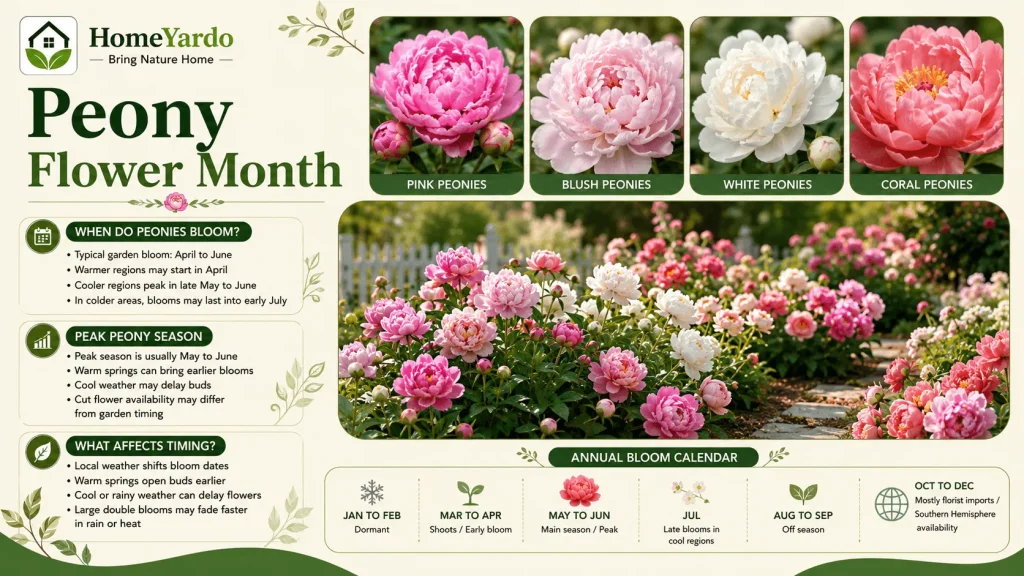
The timing of peonies is easier to grasp when the calendar is seen as an actual calendar. Garden blooms are influenced by local weather conditions, and the availability of cut flowers may change due to stems being taken from other regions.
| Month | Garden Bloom Status | Cut Flower Notes |
|---|---|---|
| January | Dormant in most cold climates | Imported or specialty stems only |
| February | Usually dormant | Imported or specialty stems only |
| March | Shoots may begin in mild areas | Limited florist availability |
| April | Early bloom in warmer regions | Early local or imported stems may appear |
| May | The main season in many regions | Strong buying month |
| June | Peak or late season in cooler regions | Strong availability in many markets |
| July | Late in cool regions only | Limited and often higher priced |
| August | Not a normal garden season | Specialty imports only |
| September | Not a normal local season in most Northern Hemisphere gardens | Possible through specialty florists |
| October | The Southern Hemisphere season begins in some areas | Imported stems may appear |
| November | Main Southern Hemisphere window | Imported stems may be available |
| December | Late Southern Hemisphere window | Imported stems may be available |
This calendar provides a helpful annual view, but the local weather is still important. Warm springs may open buds earlier. A cool spring may hold the buds behind. Rainy days can reduce the open bloom stage particularly on double flowers that are large.
What Month Do Peonies Bloom?
Peonies typically bloom in April, May and June for those living in their native Northern Hemisphere. In warmer regions, you may see flowers in April, and the gardens of temperate climates show their peak in May.
The cooler northern regions usually flower later, and the flowers begin to bloom in June or late May. In colder regions, late blooms may last into early July.
There isn’t a single set month for every garden. Peonies from Texas or a peony growing in Michigan could bloom a couple of weeks apart, despite the fact that the plants are alike.
What Is The Peak Peony Season?
The peak season for peonies is typically June or May in all temperate regions. The peony peak season is the brief period in which the majority of buds are blooming, stems appear full and local flower production is typically the greatest.
The peak of bloom in warmer regions could occur earlier, usually during April or at the beginning of May. In cooler climates, the peak may shift to June.
Peak blooms are not scheduled to the same week each year. An early spring may push the blooms forward, while cooler weather could delay blooms by a few days. A torrential downpour, a hot breeze or a sudden heat wave can make the perfect bloom time fast.
For cut flowers, the peak season can look different than the garden season. Florists are able to bring stems from different growing areas, which means that the availability at the shop could not exactly match the flowers blooming outside.
Are Peonies Spring Or Summer Flowers?
Peonies are mostly flowers that bloom in late spring. In colder regions they usually overlap with the early summer months, which is why many people associate them with gardens in June and weddings in early summer.
In warmer regions, peonies could appear more like spring flowers due to the speed at which heat gets there and cuts down the display. In cooler climates they are able to fill the gap between summer bulbs and spring perennials.
Cut peonies are also able to appear outside the window of the garden via imports, but garden peonies remain short-season plants.
Peony Bloom Time By Region
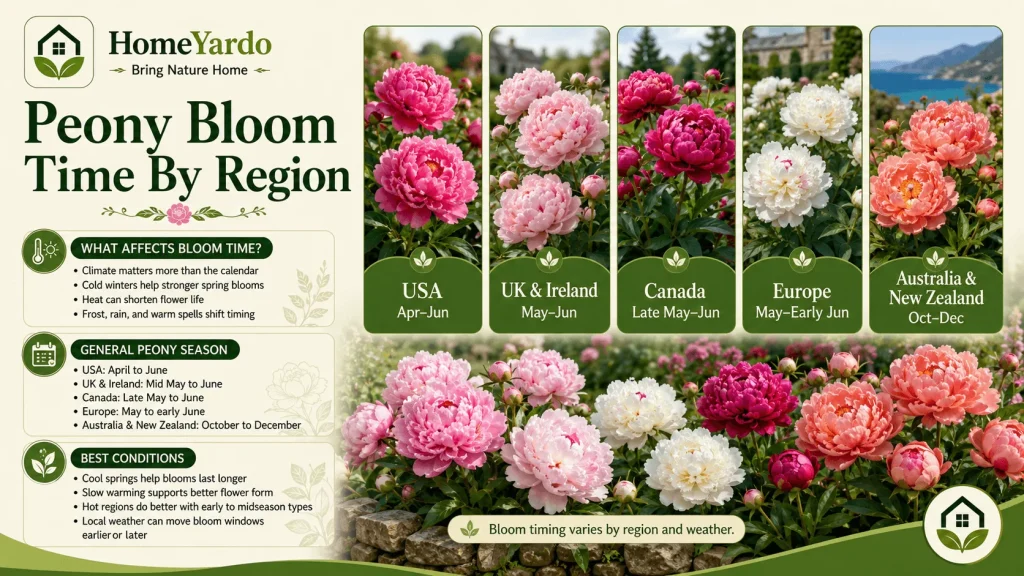
The region of the peony’s bloom determines its time more than the calendar itself. Cold winter nights, warm spring days elevation, rainfall and heat all influence the moment buds begin to appear and how long the flowers remain fresh.
The peony, which blooms early in the month of April within a garden that is warm and southern could not flower until June on the cooler northern border. This regional variation is normal.
Peony Season USA
In the United States, peonies often bloom from April through June. Southern states usually see flowers earlier, while cooler northern states may peak in late May or June.
For peonies in season in Texas, the usual garden window is April to May. Texas heat can shorten open flowers quickly, so early and midseason varieties often make more sense than very late bloomers.
For the question of when do peonies bloom in Georgia, the answer is often April to May. Warm spring weather can bring blooms earlier, but late heat may shorten the time flowers stay fresh.
For when do peonies bloom in Ohio, many gardens see flowers from May into June. Ohio has a strong temperate peony window, especially when spring stays mild.
For when do peonies bloom in Michigan, late May through June is usually the best planning range. Cool spring weather can delay bloom, but it can also help flowers last longer once they open.
These ranges are guides, not exact promises. A late frost, warm spell, or rainy week can move the bloom window forward or back.
What States Have The Best Peony Season?
States that experience cold winters as well as moderate spring temperatures typically have the most intense peony. A large portion of the Midwest, Northeast, Pacific Northwest and mountain regions with cooler temperatures are suitable for healthy peony growth.
Peonies generally prefer a clean winter time of rest. This cold winter weather helps the peonies bloom more strongly in the spring. Regions that have long, hot summers or cold winters could have fewer or more regular blooms.
Peony gardens that are beautiful can usually be located where the weather warms slowly in spring. Slowly opening the petals gives the flowers the chance to maintain their shape and colors before the heat diminishes them.
United Kingdom And Ireland
The United Kingdom and Ireland, peonies bloom in the United Kingdom and Ireland between mid-May and June. Certain varieties can bloom until the middle of July if the weather is warm or cool.
The effects of wind and rain are more challenging on flowers that are open more than the cold. Large double peonies can break or fall over in the event of heavy rain when they aren’t supported.
For stems that are freshly cut, local British peonies usually bloom best in the late spring and early summer period. The availability of flowers from florists may extend beyond that timeframe through other sources; local flowering gardens remain seasonal.
Canada And Cool Northern Areas
In Canada, as well as other cool northern regions, peonies usually bloom between late May and June. In regions that are colder the blooming season can extend to the end of June or July.
A cooler spring can be beneficial when flowers begin to bloom, as the heat can fade flowers quickly. A steady, mild spring will keep flowers fresher for longer.
Late blooming peonies are typically more suited to cooler regions rather than hot ones. In cool gardens, they can extend into the fall following the primary flush has finished.
Europe
Over the entire continent of Europe, peonies bloom between May and the beginning of June. Some regions that are warmer may begin blooming earlier, whereas cooler gardens, high elevations and areas in northern Europe may blossom later.
The time of year can be affected by the climate, country, and location of the garden. A garden wall with a shaded location may be warmer than an open-air garden which means that plants in the same zone may still bloom at different times of the year.
For a large European gardening space, the most secure time to plan is from late spring through the beginning of summer, with local climate determining the time of the peak.
Australia And New Zealand
The peonies of Australia and New Zealand have different peony timing from those in the Northern Hemisphere. Peonies bloom in a variety of colors from October through December.
Cooler climates are typically more suitable for peonies, rather than humid and hot regions. Peonies require enough cold winter temperatures to bloom properly, and therefore not every garden with a warm, coastal climate can be reliably productive.
Southern Hemisphere stems may be a reason why peonies are often seen in florist shops even when Northern Hemisphere gardens aren’t blooming.
Peonies Sydney Season
Peonies are a popular choice for Sydney time frames, season preparation, and the primary buying time usually falls in the latter part of Australia’s late spring or early summer. A lot of flower stems for florists bloom in the months of October and December according to the availability of the grower and the weather.
Peonies that are grown in Sydney are more challenging to purchase than purchasing them as cut flowers. Cool coastal conditions, a lack of winter chill and early temperatures can affect the performance of your garden.
For Sydney purchasers, florist timing is more important than the backyard flower timing. Quality of the stem, the source, and the time to order may change from year to year, which is why ordering early is beneficial for certain occasions.
Garden Bloom Season Vs Cut Flower Availability
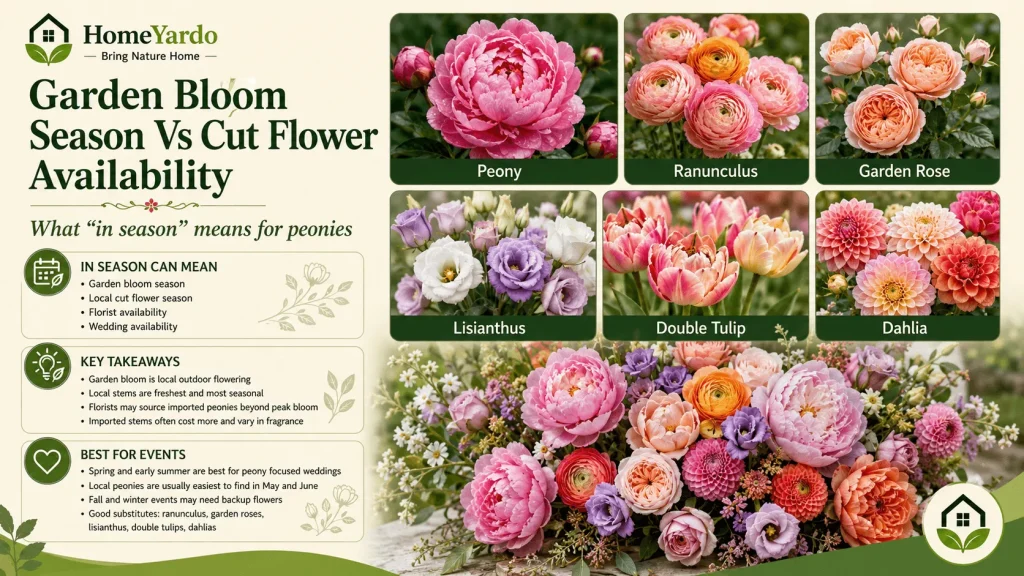
The expression “in season” can mean various things. A gardener may mean outdoor flowering time. A person who is planning a bouquet could refer to the time when stems are readily available for purchase. A florist could mean when an order is made with a reliable source.
Peonies are a natural part of the seasonal gardens, and cut flowers are available in a variety of sizes due to stems that originate from different regions.
| Term | Meaning | Best For |
|---|---|---|
| Garden bloom season | When local peony plants flower outdoors | Gardeners |
| Local cut flower season | When nearby growers harvest stems | Fresh bouquets |
| Florist availability | When shops can source stems locally or through imports | Shoppers |
| Wedding availability | When florists can reliably order enough stems | Events |
| Imported peonies | Stems brought from another growing region | Off season buying |
Knowing the difference helps with planning. A plant in the garden may be finished, while a florist may still be able to order stems from elsewhere.
Local Garden Season
Garden peonies typically bloom once every year. The plant grows buds, then opens its flowers and then returns to its leafy development after the blooming closes.
A single plant might appear to be sluggish, especially in the case of warm weather that arrives at the peak of bloom. A more extensive garden display typically requires a variety of plants that have different bloom times.
The weather can alter the pace. Buds can wait for cooler temperatures, but then be opened quickly when temperatures increase.
Local Cut Flower Season
Local cut flower season generally coincides with nearby flowering gardens. In the majority of Northern Hemisphere regions local peony flowers are the easiest to locate between May and June.
Local stems are often fresher due to the fact that they travel a shorter distance. They also may grow more naturally and possess strong seasonal characteristics.
The local harvest is shorter. After nearby farms stop cutting, shops might rely on imported or stored stems, if the demand is high.
Florist And Imported Availability
The florists can carry peonies outside of the local bloom window by using different sources. Peonies may appear to be available even when nearby gardens aren’t blooming.
Imported stems are useful however, they will cost more and provide fewer colors or choices. Freshness and fragrance can differ based on the time of travel and handling.
Peonies shouldn’t be regarded as a year-round flower. The availability of peonies outside of the season is contingent on the availability of suppliers and timing, budget and also the quality.
Wedding And Event Availability
Peonies are popular for weddings due to their perfect shape, soft and full, which is romantic and doesn’t require too much style. The short time of their blooms, however, makes planning a little more delicate.
The months of spring and early summer are the best times for arrangements that are peony-focused. Outside of that time frame, florists may still be able to find stems, but price and quality are less certain.
If you are planning a wedding or special event outside the main peony season, having backup flowers is a smart choice. Depending on the time of year, ranunculus and roses can provide a similarly soft, romantic appearance. Lisianthus, double tulips, and dahlias are also worth discussing with your florist, although their availability varies by season.
How Long Do Peonies Bloom?
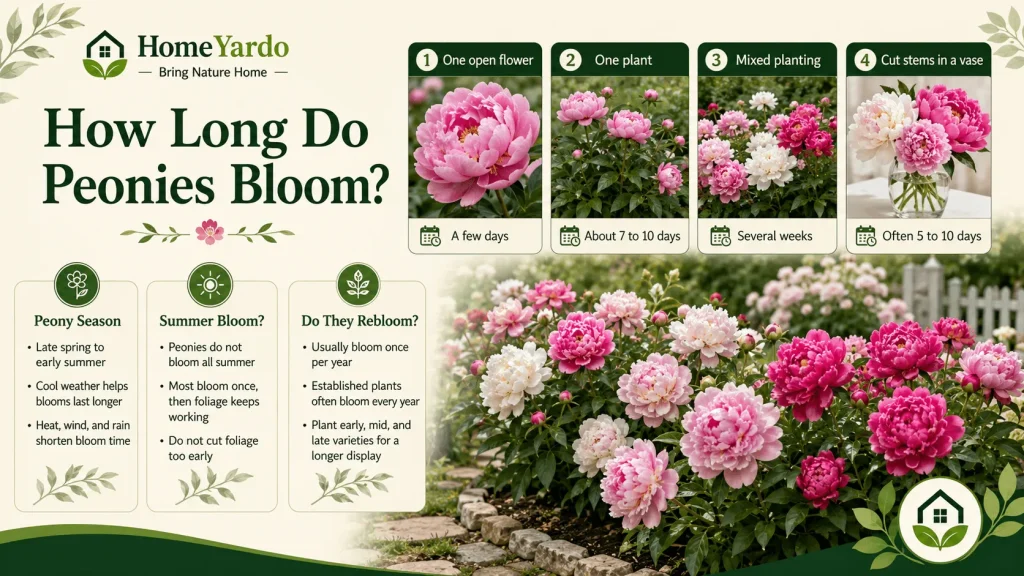
The length of the peony’s bloom depends on the measurement being used. One flower that is open or a plant with a mixed arrangement, as well as a vase can all last for a different amount of time.
| Situation | Typical Duration | What Affects It |
|---|---|---|
| One open flower | A few days | Heat, rain, wind, flower form |
| One plant | About 7 to 10 days | Bud count, variety, weather |
| Mixed planting | Several weeks | Early, midseason, late varieties |
| Cut stems in a vase | Often 5 to 10 days | Bud stage, water, room temperature |
The short window is why peonies feel so special. They are not background flowers. They arrive, make a full statement, then pass the stage to the next part of the garden.
How Long Does Peony Season Last?
The single flowering plant can bloom for 7 to 10 days. The flowers may open early on the plant and later buds appear within a few days.
The garden that has a lot of peonies will last for a longer time. The early, mid-season and late varieties may spread the show over many weeks.
Cool weather is often a factor in helping the flowers to last. The heat, the wind and rain can reduce the time of year, particularly after the blooms have fully opened.
Do Peonies Bloom All Summer?
To keep your garden colorful after peony season ends, consider adding longer-flowering plants such as zinnias, cosmos, dahlias, and coneflowers. Our guide to summer flowers that bloom can help you choose varieties that provide color through the warmer months.
After the flowering season the leaves are still useful. The green leaves provide vitality for plants and to ensure that the next year’s buds are well-nourished.
Pruning the foliage too early could reduce the chances of future blooms. The flowers might be gone but the plant continues to work.
Do Peonies Bloom More Than Once A Year?
Peonies bloom only once per year. They don’t rebloom and again as do some blooming roses.
A healthy plant is able to spend all its time storing energy. This quiet time is important since the strength of next year’s flowers is contingent on the plant’s bloom health.
If you are wondering if peonies bloom more often than once typically, the answer is no for the same year. Good care following flowering can help make a more impressive display the following spring, but not a second bloom in the summer.
Do Peonies Bloom Every Year?
Established peonies typically bloom each year if they are planted in the correct place. A mature plant that is in good sunlight and well-drained soil can bloom consistently throughout the year.
A weak flower can occur when the plant is still young, moved recently or planted in a way that is too deeply shaded or stress-induced by the weather. Late frosts can cause damage to buds prior to their opening.
If a peony does not bloom for a year, it’s not always a sign of a dying plant. The examination of plant depth and sun exposure as well as maintenance of the foliage, often reveals the cause.
Do Peonies Rebloom?
The majority of garden peonies don’t bloom again in the same year. They bloom only once, then transition into the growth stage of leaves which feeds the crown to ensure it blooms the following year again.
The expression “do peonies rebloom” could be confusing as mature plants may bloom multiple buds in an extended period. This is still a single bloom season, and not an actual repeat bloom.
The most effective method to have more blooms is to plant a variety with different bloom times instead of waiting for a single peony to bloom again.
Peonies Full Bloom
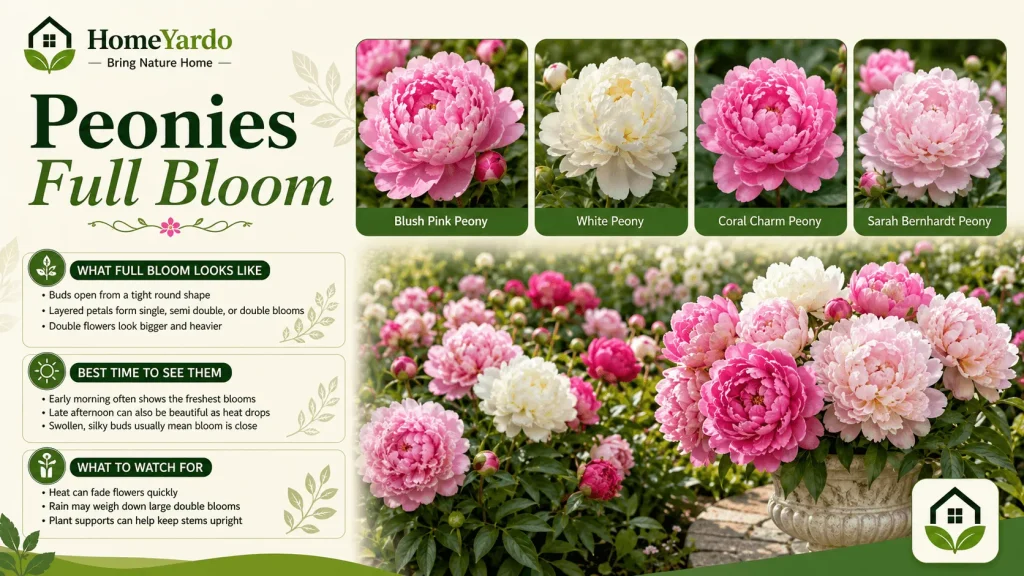
Full bloom is the time that many gardeners anticipate. Buds that were tightly round now open to reveal layered flowers, soft colors and scent.
The full blooming period is gorgeous, but it’s also short. It is possible for heat to fade flowers quickly and rain may weigh down the heavy flowers. Monitoring the buds carefully can help identify the most beautiful days.
What Full Bloom Looks Like
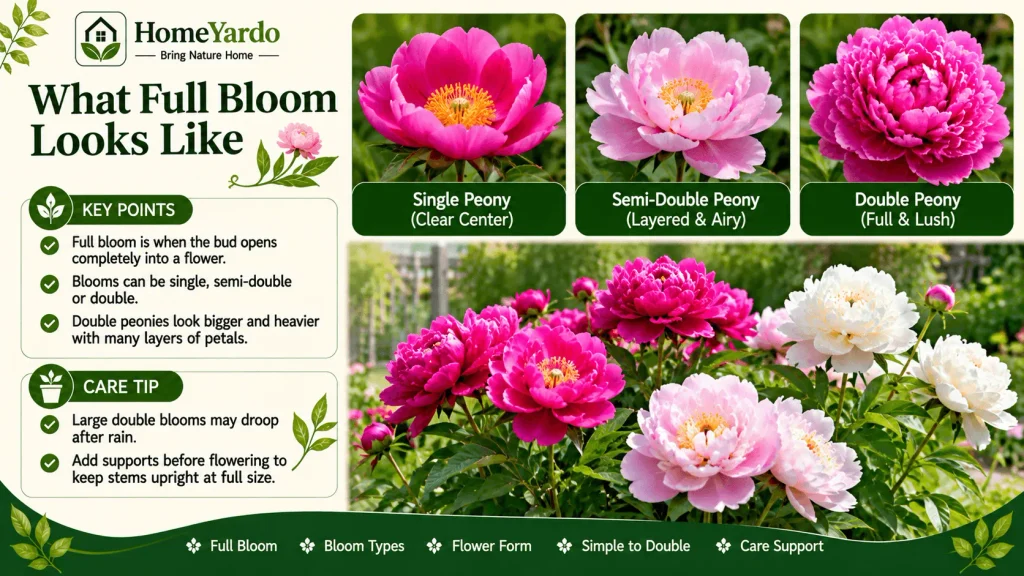
A peony that has fully bloomed is bursting out of the bud’s round shape into full bloom. The petals can make a simple cup shape or loose semi-double shape, or a thick double flower.
Single peonies display their centers better. Double peonies appear bigger and heavier, typically with multiple levels of flowers.
Large double blooms may droop after rain. Supports that are placed prior to flowering may assist in keeping the stems upright after they reach their largest stage.
Best Time To See Peonies In Full Bloom
The ideal time to view full peony blooms is typically early morning, just before the strong temperatures soften the petals. The afternoon hours can be a beautiful time when temperatures start to fall.
The public gardens usually keep track of bloom updates at the peak of the season. A few warm days could bring buds to life quickly so keeping track of the time of bloom is beneficial.
In your home, be on the lookout for buds that appear to be swelling and silky. Once they’ve reached that stage the full bloom could be on the way in the near future.
Peony Types And Bloom Order
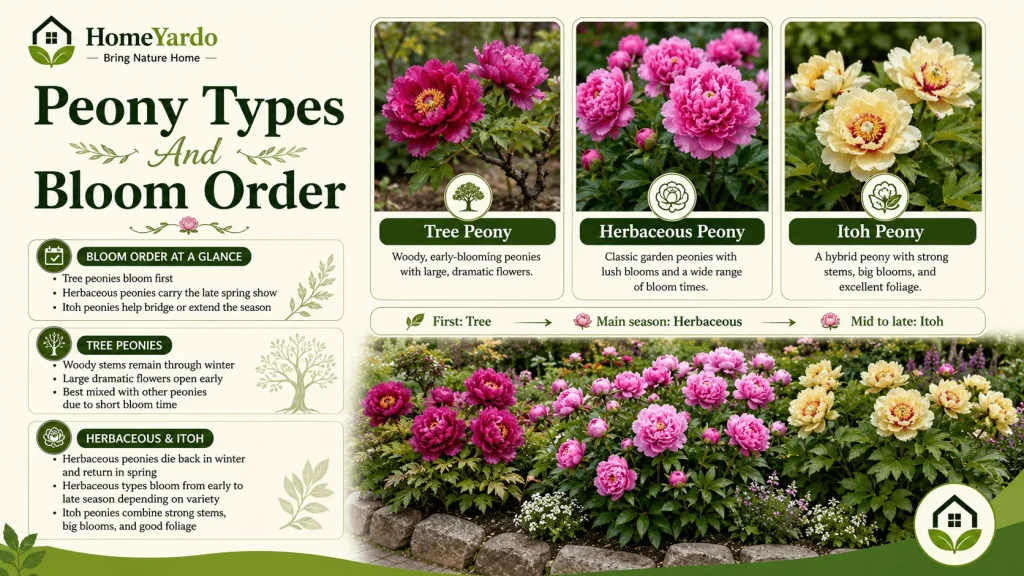
Peonies are not all blooming all at once. The kind of peony as well as the variety of peonies both influence what time of the season.
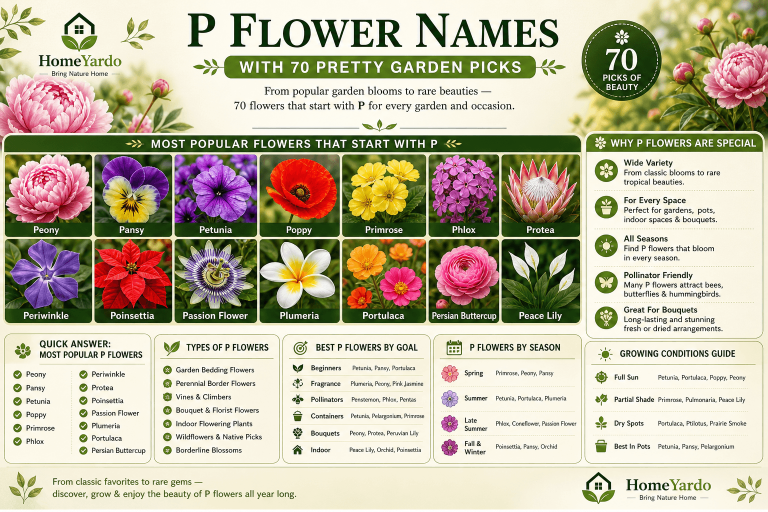
The peonies of the tree are often the first to appear in the show. The peonies that are cultivated by herbs make up a large part of the traditional late spring display. Peonies are only one of several beautiful spring garden favorites. If you want to compare them with pansies, poppies, primroses, and other seasonal blooms, explore our guide to flowers that start with P for more planting ideas.
Tree Peonies
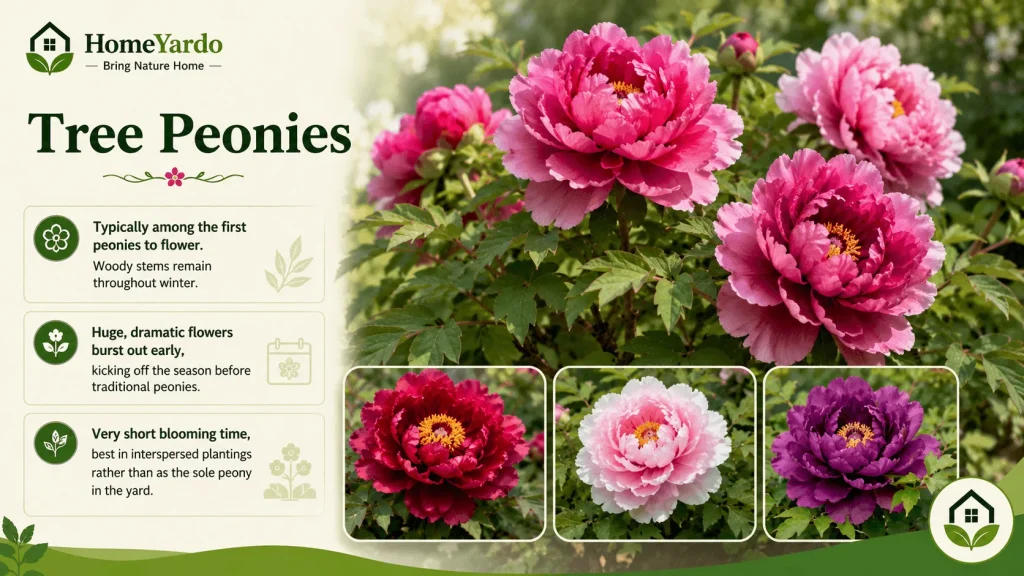
Tree peonies are typically among the first peonies to flower. In contrast to herbaceous varieties, they maintain their woody stems throughout winter.
The flowers of these plants can be huge and dramatic, bursting out prior to the time that traditional garden peonies get to their peak bloom. This is why they’re great for kicking off the season earlier.
Tree peonies can make an attractive focal point in a spring garden, particularly when paired with flowers that bloom at different times. For more ornamental options, explore our list of flowers that start with T, including tulips, trilliums, and tree peonies.
Herbaceous Peonies
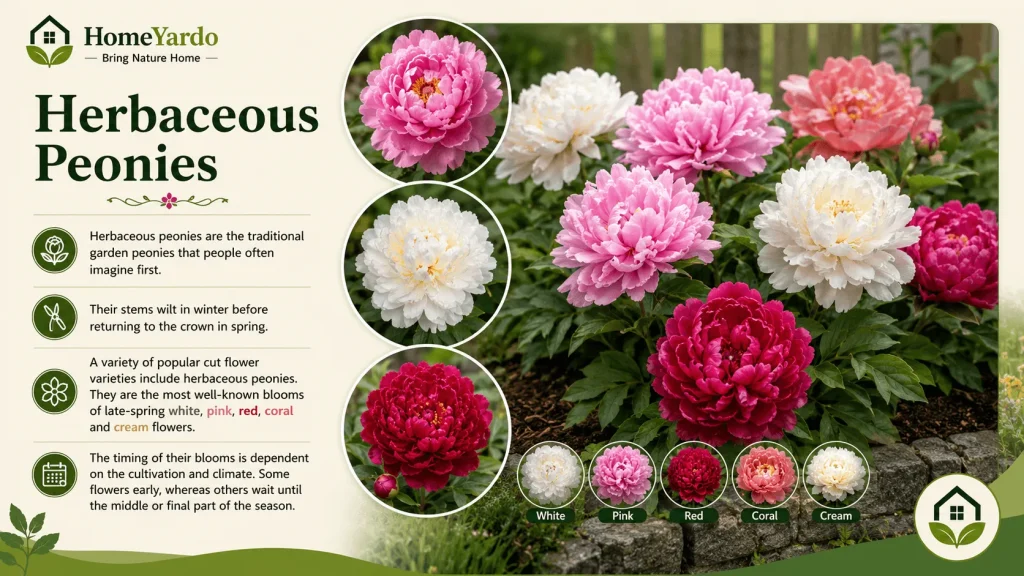
Herbaceous peonies are the traditional garden peonies that people often imagine first. Their stems wilt in winter before returning to the crown in spring.
A variety of popular cut flower varieties include herbaceous peonies. They are the most well-known blooms of late-spring white, pink, red, coral and cream flowers.
The timing of their blooms is dependent on the cultivation and climate. Some flowers early, whereas others wait until the middle or final part of the season.
Itoh Peonies
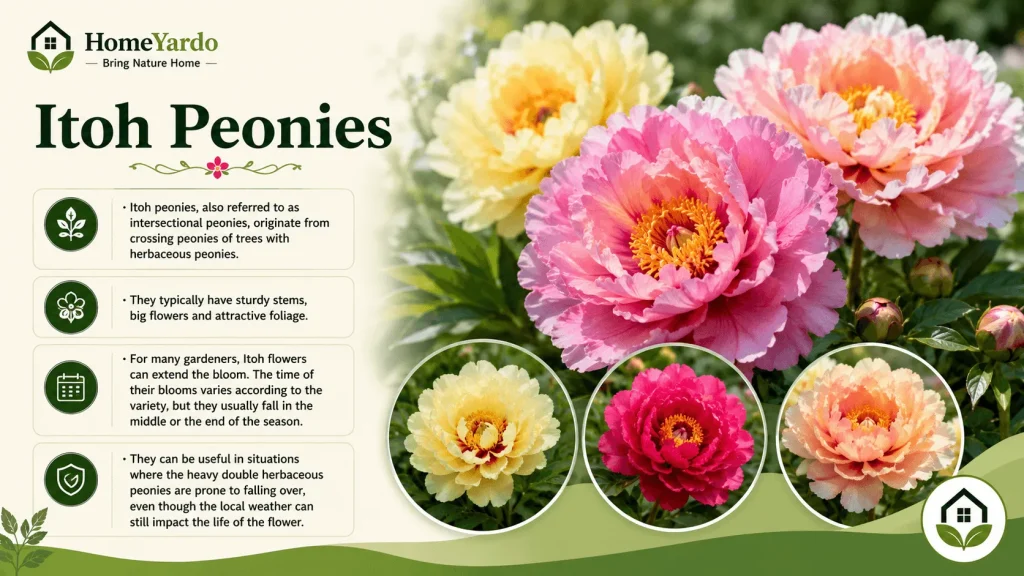
Itoh peonies, also referred to as intersectional peonies, originate from crossing peonies of trees with herbaceous peonies. They typically have sturdy stems, big flowers and attractive foliage.
For many gardeners, Itoh flowers can extend the bloom. The time of their blooms varies according to the variety, but they usually fall in the middle or the end of the season.
They can be useful in situations where the heavy double herbaceous peonies are prone to falling over, even though the local weather can still impact the life of the flower.
Tree Peony Vs Herbaceous Peony Bloom Time
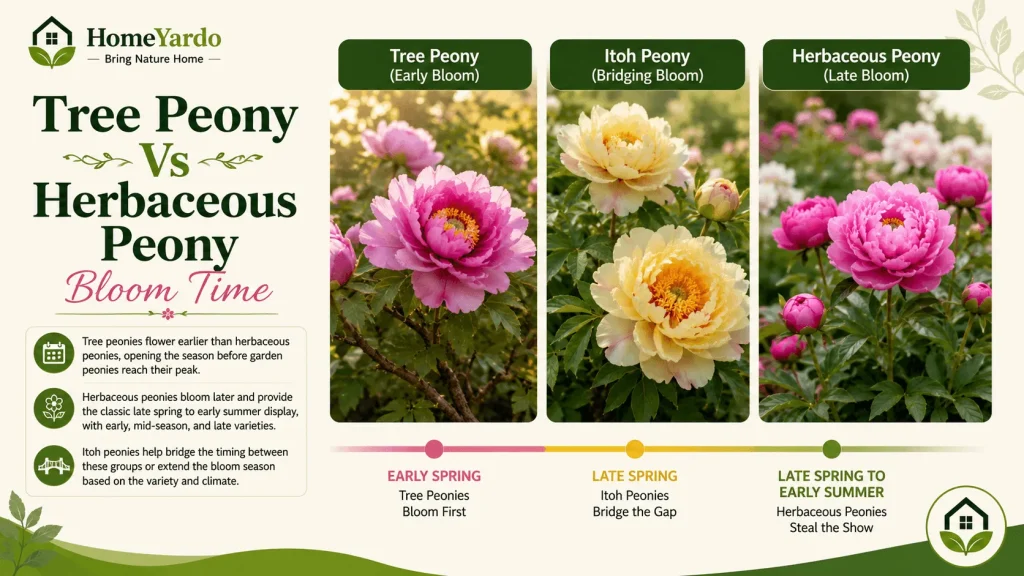
The peonies of the tree typically flower earlier than herbaceous peonies. They may open up the season prior to when the traditional garden peonies have reached their peak display.
Herbaceous peonies usually flower later and are the basis of the majority of the well-known late spring, early summer display. They come in the mid-season, early, along with late and midseason types.
Itoh peonies could assist in bridging the timing between these groups, or prolong the finish time, based on the variety and the climate.
Peony Varieties By Season
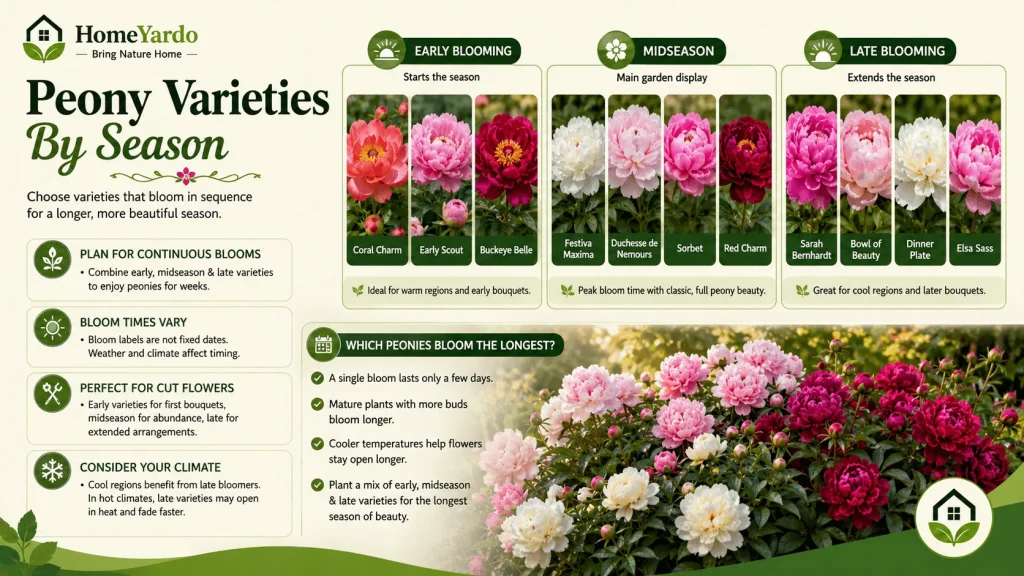
Named varieties make planning the season easy. Instead of planting just one kind, select a few varieties that bloom in a sequence.
| Bloom Group | Typical Role | Example Varieties | Best Use |
|---|---|---|---|
| Early | Starts the season | Coral Charm, Early Scout, Buckeye Belle | Warm regions and early bouquets |
| Midseason | Main display | Festiva Maxima, Duchesse de Nemours, Sorbet, Red Charm | Classic garden bloom |
| Late | Extends the season | Sarah Bernhardt, Bowl of Beauty, Dinner Plate, Elsa Sass | Cool regions and later bouquets |
Bloom labels are useful, but they are not fixed dates. The same variety can open earlier in a warm spring and later in a cool one.
Early Blooming Peonies
Fernleaf peony is another early-season species worth exploring, especially for gardeners who appreciate finely textured foliage and bright red spring flowers. You can find it among the ornamental plants in our guide to flowers that start with F.
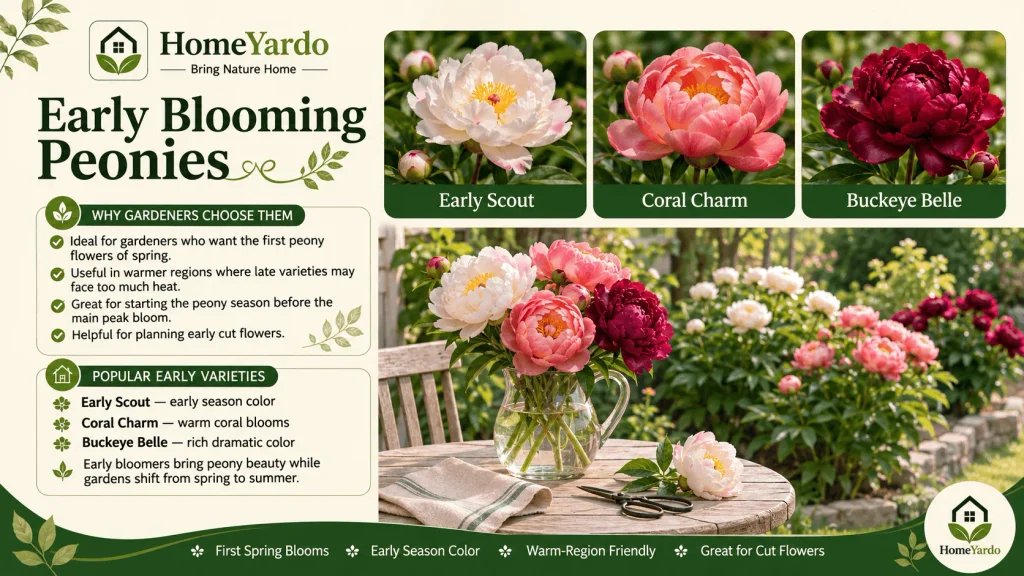
The examples could be Coral Charm and Early Scout. Some examples include Early Scout, Coral Charm, and Buckeye Belle. These types are usually chosen to kick off the peony show prior to the peak of the season. its highest point.
Early bloomers can also be useful in the planning of cut flowers. They provide that delicate peony appearance while other gardens are still undergoing a transition from spring to the summer season.
Midseason Peonies
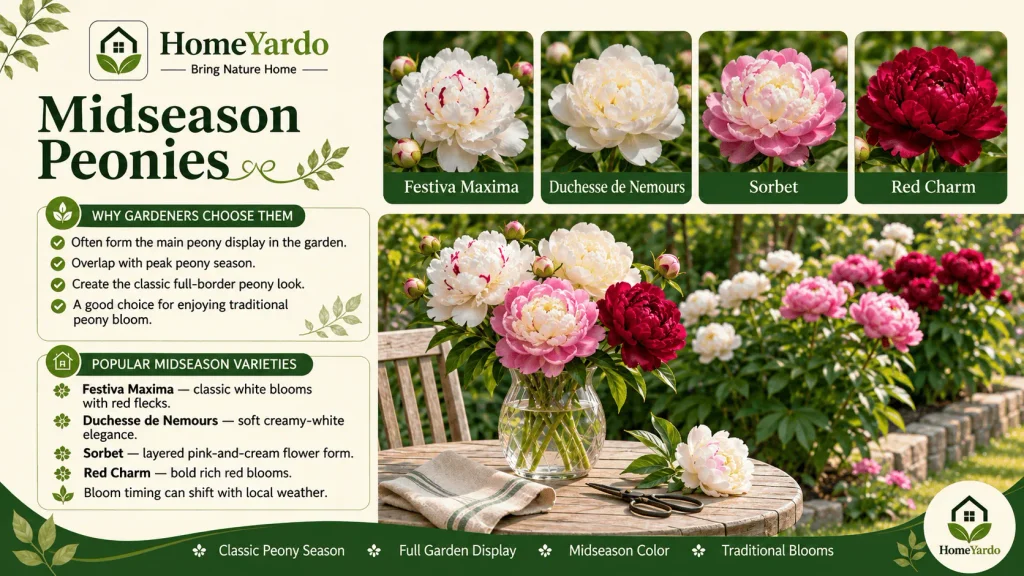
Peonies in the middle of the season are often the main garden display. They typically overlap with the peak peony season and create the classic full-border style.
Varieties like Festiva Maxima, Duchesse de Nemours Sorbet, Duchesse de Nemours and Red Charm can fit into this portion of the blooming window, contingent on the weather.
Midseason varieties are generally ideal for those who are looking to enjoy the classic peony bloom without the need to plan a huge collection.
Late Blooming Peonies
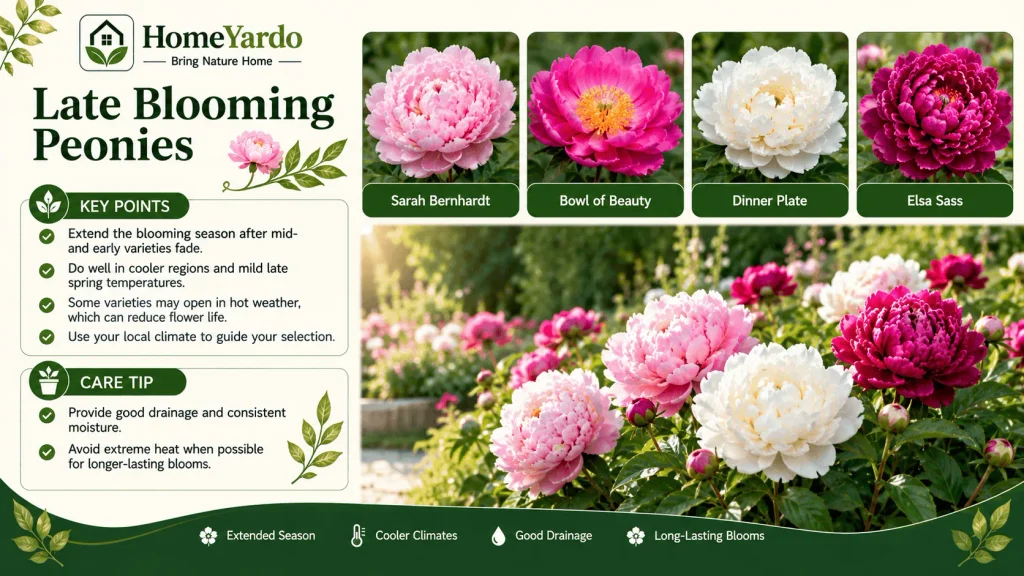
Peonies that bloom late help extend the length of the season once the mid- and early season varieties are beginning to fade. They are particularly beneficial in regions that are cooler and where the temperatures in late spring aren’t too harsh.
Some examples comprise Sarah Bernhardt, Bowl of Beauty, Dinner Plate, and Elsa Sass. These kinds of varieties may keep peony blooms in the garden close to the start of summer.
In hot areas, the peonies of late may open to increase temperatures, which could reduce the life of the flower. The local climate should be the guiding factor in selection.
Which Peonies Bloom The Longest?
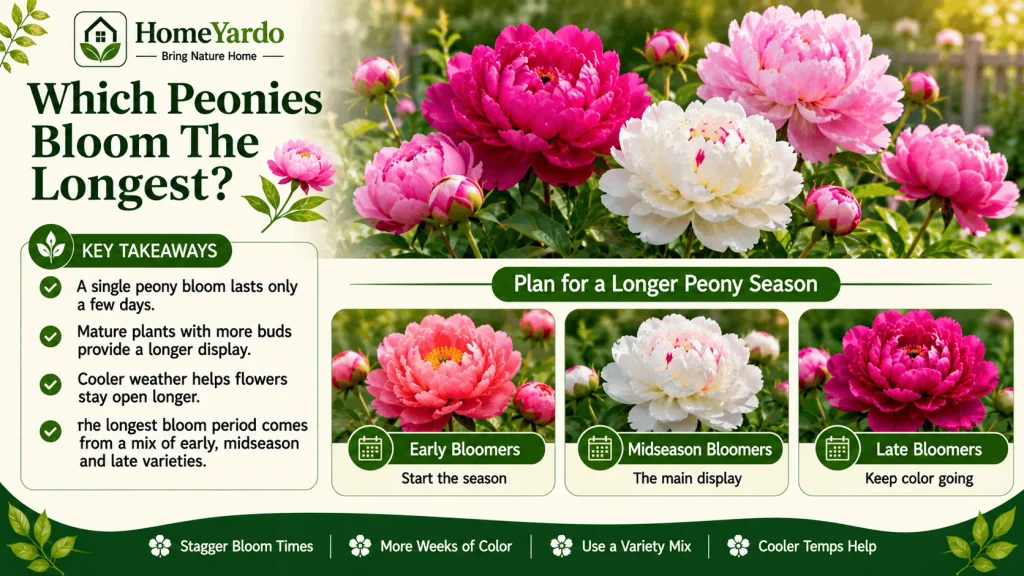
A single peony flower is not visible for months. They are the most prolific bloomers, and peonies appear when they plant different flower groups.
A mature plant with a lot of buds can appear fuller for longer than a plant that is young. However, each bloom can last for only a few days. Cooler temperatures can help keep the flowers open for longer.
To get the longest lasting peony feel in your garden, mix early, midseason, late, and early varieties instead of relying on only one flower.
What Affects Peony Bloom Time?
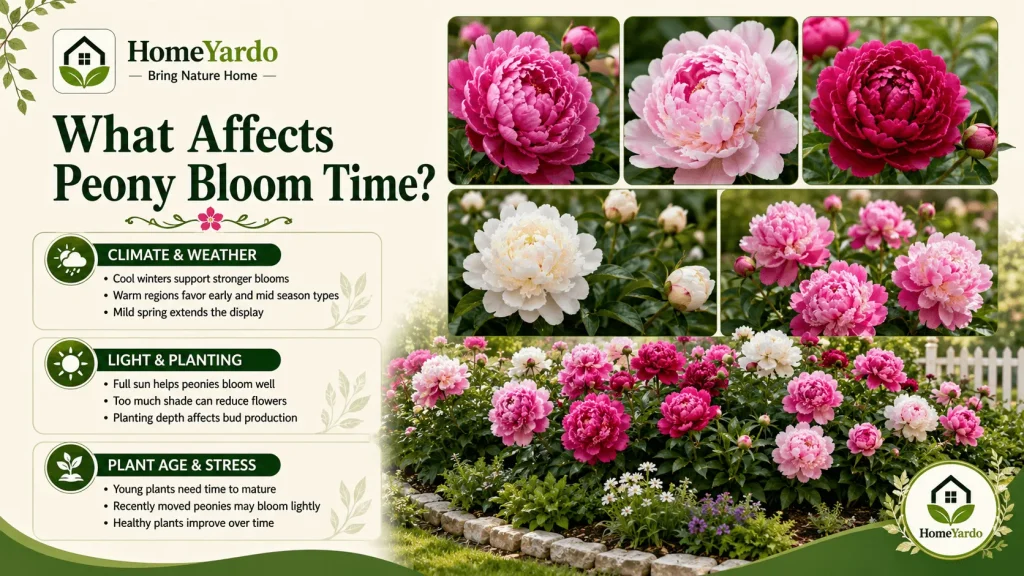
The same peony flower can appear on different dates within different gardens. Weather, climate and depth of planting, sun exposure, and the age of the plant all contribute to.
Understanding these aspects helps to explain the reason why one garden could appear to be bursting with flowers, while another one is still securing buds.
Climate And Hardiness Zone
Peonies typically perform best when they have a cool winter’s rest. The dormant season helps a variety of kinds to return vigorously in spring.
Regions that are cool and temperate usually have more stable blooms. Warmer climates may shorten the window for flowering, and winters that are very mild can affect the performance of certain peonies.
In warmer climates in warmer regions, the mid- and early-season types are generally safer than those that bloom later since they bloom before the temperature gets too hot.
Spring Weather
The spring weather can delay the blooming time of peonies by a few days and even weeks. A warm day can cause buds to open rapidly, whereas cool springs can delay blooms.
The heat waves can reduce bloom time after flowers begin to open. Wind and rain can cause damage to flowers or bend stems with heavy weight.
A consistent, mild spring typically provides the most beautiful display. The flowers open slowly, the colours last longer and the garden is given longer to take in the season.
Sun, Shade, And Planting Depth
Peonies require a lot of light in order to bloom properly. Insufficient shade can cause fewer flowers and weak stems, or a lack of bloom altogether.
The depth of the plant is important, particularly for the peonies with herbaceous flowers. When the plant’s crown has been placed in too much it could grow leaves but only produce a few flowers.
Tree peonies may have different requirements for planting, particularly transplanted plants. The principle is straightforward that a proper planting depth will result in the flowering process being more efficient.
Plant Age And Moving Stress
Young peonies usually require some time to mature before they can bloom fully. A new plant could take a couple of seasons to settle down and develop enough strength.
The plants that have been recently moved or split may also flower in a light way. Peonies last a long time however they may not react quickly to disturbances.
It’s all about patience. If the plant has good foliage, and the area is in good condition, a stronger bloom could be expected over the course of time.
Peony Planting Season And Peony Life Cycle
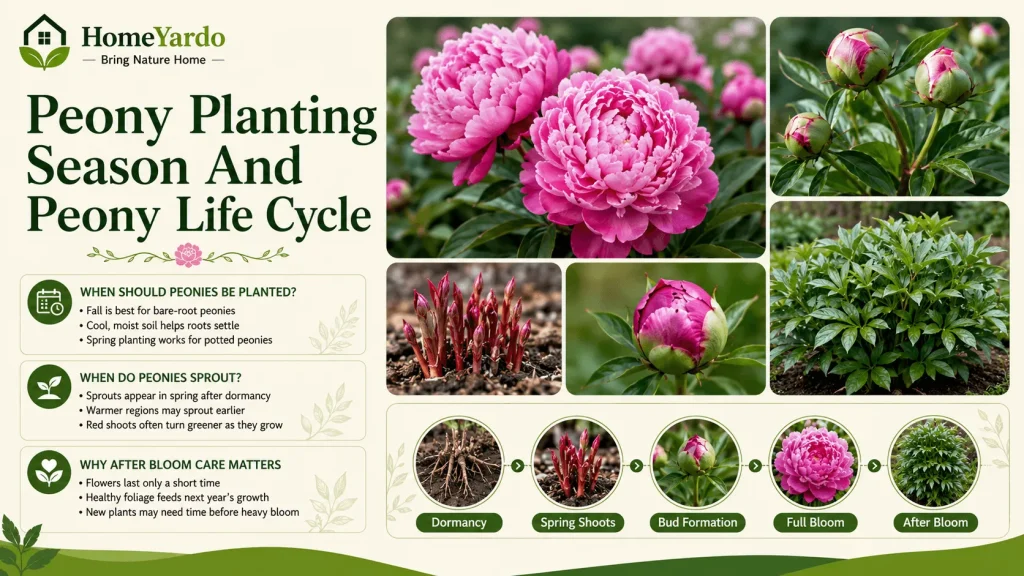
Peony planting season isn’t the same as peony flower season. The planting process begins prior to the show of flowers, and a good time can help support the future flowering.
A quick look at the life cycle will help you understand why post-flower care is so important. The flowers last a short time. However, the plant has been in operation for a longer time.
When Should Peonies Be Planted?
The fall season is the most popular season to plant rootless peonies across a wide range of temperate zones. A cooler, moister soil and a dry winter help roots to settle prior to the growth of spring.
Peonies in pots are also available in spring and are planted at that time. They will require some time to develop a robust display of flowers.
A peony that has just been planted shouldn’t be judged too fast. There are many plants that require a resting period prior to blooming heavily.
When Do Peonies Sprout?
Peonies usually sprout in the spring following winter dormancy. In warmer regions, buds could appear earlier, while regions with colder temperatures may delay until the soil gets warmer.
The peony blossoms of wide varieties appear in burgundy or red before becoming greener as they develop. This is common for all kinds.
The fact that flowers are spouting doesn’t mean they will bloom immediately. The stems require time to grow, develop buds and get to the soft buds stage.
Peony Flowering Stages
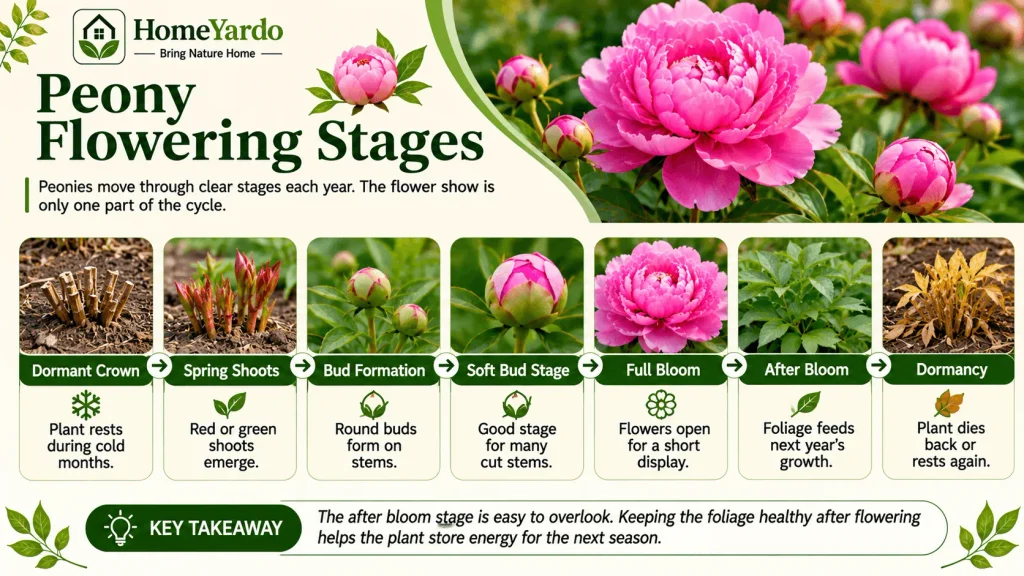
Peonies move through clear stages each year. The flower show is only one part of the cycle.
| Stage | What Happens |
|---|---|
| Dormant crown | Plant rests during cold months |
| Spring shoots | Red or green shoots emerge |
| Bud formation | Round buds form on stems |
| Soft bud stage | Good stage for many cut stems |
| Full bloom | Flowers open for a short display |
| After bloom | Foliage feeds next year’s growth |
| Dormancy | Plant dies back or rests again |
The after bloom stage is easy to overlook. Keeping the foliage healthy after flowering helps the plant store energy for the next season.
Where Do Peonies Grow Best
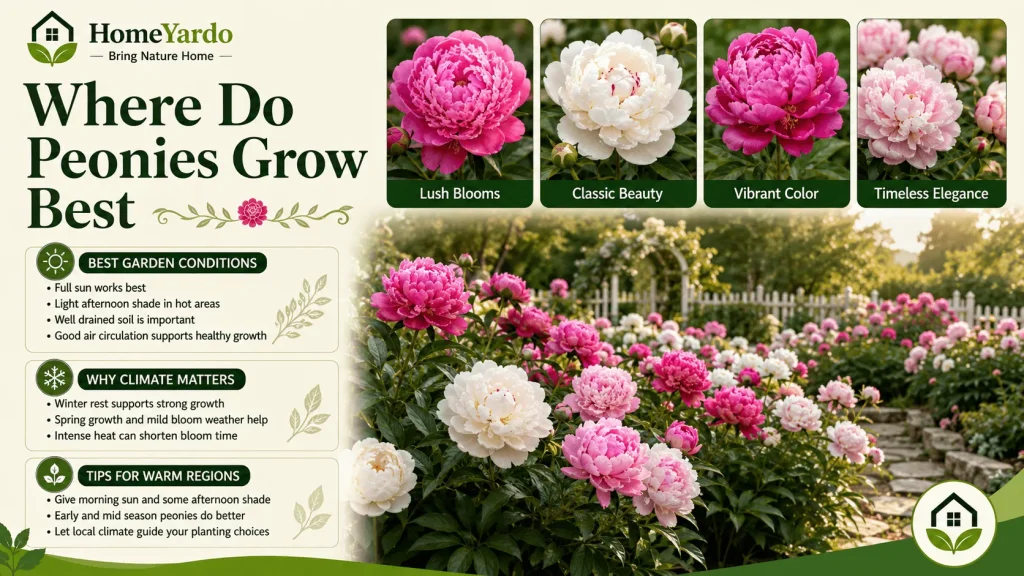
Peonies thrive best when the climate is conducive to the rest of winter, the growth of spring and a blooming time which is not interrupted due to intense temperatures.
The ideal location gives the plant enough sunlight with good drainage and air space to circulate through the foliage.
Best Garden Conditions
Peonies usually prefer a sunny location especially in warmer climates. In hotter areas, gentle afternoon shade can keep flowers safe from the harsh temperatures.
The soil should drain properly. Peonies are not a fan of being in soil that is wet particularly during dormancy.
A healthy air circulation system helps to reduce diseases and keep the plants healthy after flowering. A healthy and vigorous foliage is a good foundation for the following year’s flowering.
Warm Climate Limits
Warmer climates can make the growth of peonies more challenging. It can also shorten the blooming period in open bloom and cold winters might not provide certain varieties with enough time to enter dormancy.
A morning sun and a bit of afternoon shade can aid in hot regions. Mid- and early-season peonies tend to be better than those that bloom late because they bloom before the most intense heat sets in.
In regions with high temperatures purchasing cut stems can be less expensive than cultivating garden peonies properly. Local climate conditions should inform your choices.
How Can I Extend Peony Bloom Season
The season cannot be transformed into a continuous display, but it could be extended. The most effective method is to create a flower sequence.
A garden that has one peony can bloom for an hour or so. Gardening with a variety of types of peonies and groups of blooms can be more full over a longer period of time.
Plant A Bloom Sequence
The most reliable way to extend peony bloom time is to combine early, midseason, and late varieties. Adding tree peonies and Itoh peonies can widen the season even more.
| Planting Goal | Suggested Mix |
|---|---|
| Earlier start | Tree peony plus early herbaceous peony |
| Main display | Midseason herbaceous varieties |
| Longer finish | Late herbaceous or Itoh varieties |
| Cooler climate display | Add late cultivars |
| Warm climate display | Emphasize early and midseason types |
A simple garden plan might include one early coral variety, one midseason white variety, and one late pink variety. The colors can still feel soft and connected, while the bloom timing lasts longer.
Protect Blooms From Weather
The weather can determine how long peonies will remain gorgeous. A heavy downpour can flatten the largest peonies, while scorching sun can quickly fade the petals.
Supports must be inserted prior to when the flowers begin to open. If you wait until the stems are already leaning may make the task more difficult.
If there is a chance of a storm the soft flowers can be trimmed and brought inside. This will protect a few blooms from the wind and provide your home with a peony-filled moment.
Use Cut Buds To Enjoy Flowers Indoors
The peonies are cut off at the stage of soft buds. A healthy bud will appear like a soft marshmallow when gently squeezed, not as hard as a marble.
Make use of clean tools and put the stems quickly in water. Get rid of leaves that sit just below the waterline.
Indoors, store the peonies that you cut in a cool location away from intense sun and scorching heat. This will allow the flower to bloom more slowly and last for longer.
When To Buy Peonies
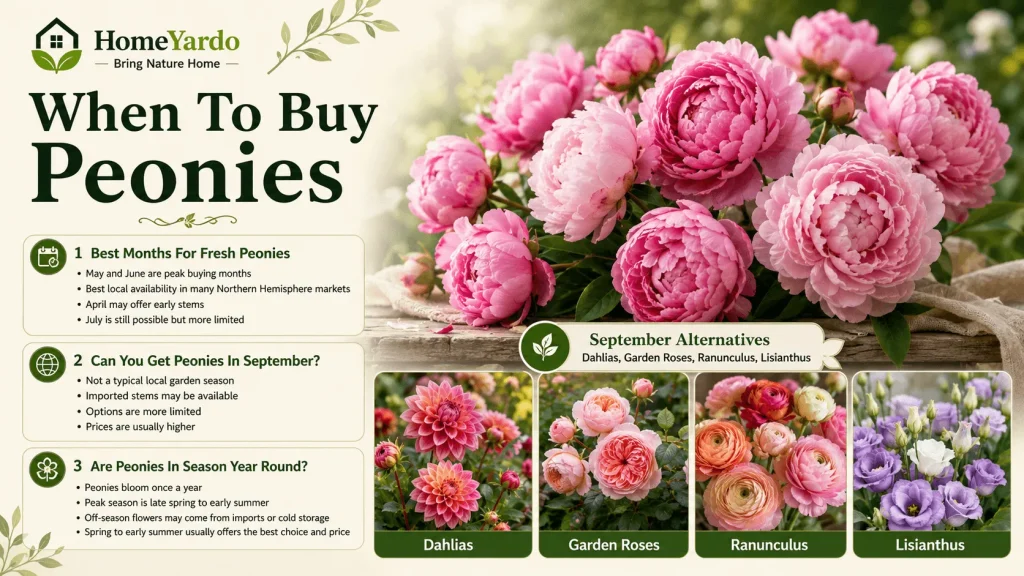
The process of buying peonies differs from cultivating the peonies. The garden is seasonal, florists might source flowers from elsewhere.
The most lucrative buying times generally coincide with the strongest locally or locally cut flowers. Peonies that are not in season may be available, but they are more expensive and provide fewer options.
Best Months For Fresh Peonies
May and June are usually the most popular months to purchase fresh peonies in a variety of Northern Hemisphere markets. The months of May and June are often correlated with the local harvest and peak flower availability.
April could be the month that brings early stems, mainly from warmer regions or imported. July is still able to offer some varieties, but it’s typically more restricted.
Between October and December, peonies could be seen in the fall from Southern Hemisphere sources. It is dependent on where the flowers are sourced and what local florists purchase.
Can You Get Peonies In September?
September isn’t a typical season for peonies for local gardens in the majority of Northern Hemisphere gardens. The peonies in the garden typically are done and have begun to build energy for the coming year.
Certain florists might be able to procure imported peonies during September. The availability of peonies may be limited and prices can be higher than in peak season.
For weddings in September, it is best to inquire about alternative flowers. Dahlias, garden roses, ranunculus and lisianthus could aid in creating a similar soft appearance.
Are Peonies In Season Year Round?
Peonies don’t always appear to be in bloom. When they are in the garden, they enjoy an extremely short blooming time. They generally bloom only once per year, usually between the end of spring and the beginning of summer.
The florists can source peonies outside of the local gardening season via imports and cold storage facilities, or specialist growers. It is not possible to guarantee availability all every day of the year, and it is dependent on the availability of global suppliers and shipping quality and access to local florists.
For the freshest and most vibrant stems, the most diverse selection and typically lower prices, the spring-to-early summer is the most secure buying time for many Northern Hemisphere regions.
Best Peonies For Cut Flowers
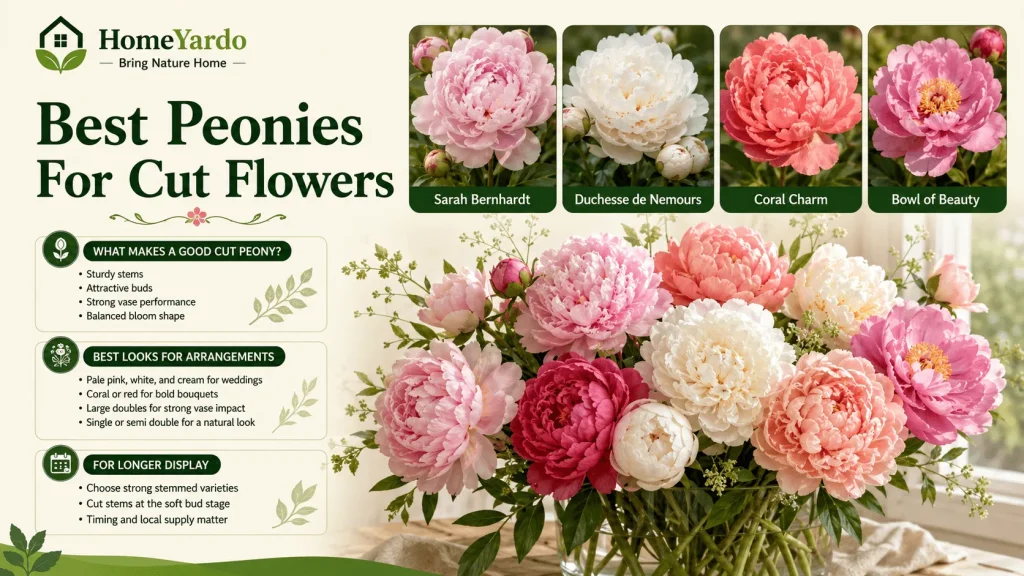
The most beautiful peonies for cut flowers typically have sturdy stems, attractive buds and excellent vase performance. The flower’s shape is also important since some double blooms are heavier than single or semi-double kinds.
Pale pink, white coral, cream as well as blush types are used for weddings and arrangements. A deeper red or bright coral peony can add more drama to bouquets.
| Cut Flower Need | Better Choice |
|---|---|
| Wedding softness | Pale pink, white, and cream varieties |
| Strong vase impact | Large double blooms |
| Easier handling | Strong stemmed varieties |
| Longer display | Stems cut at the soft bud stage |
| Natural garden look | Single or semi double types |
Peonies also pair beautifully with garden roses, ranunculus, tulips, and other seasonal flowers. If you are planning a wedding arrangement or a cutting garden, our guide to beautiful flowers for bouquets offers more options for combining flower shapes, colors, and textures.
How To Make Cut Peonies Last Longer
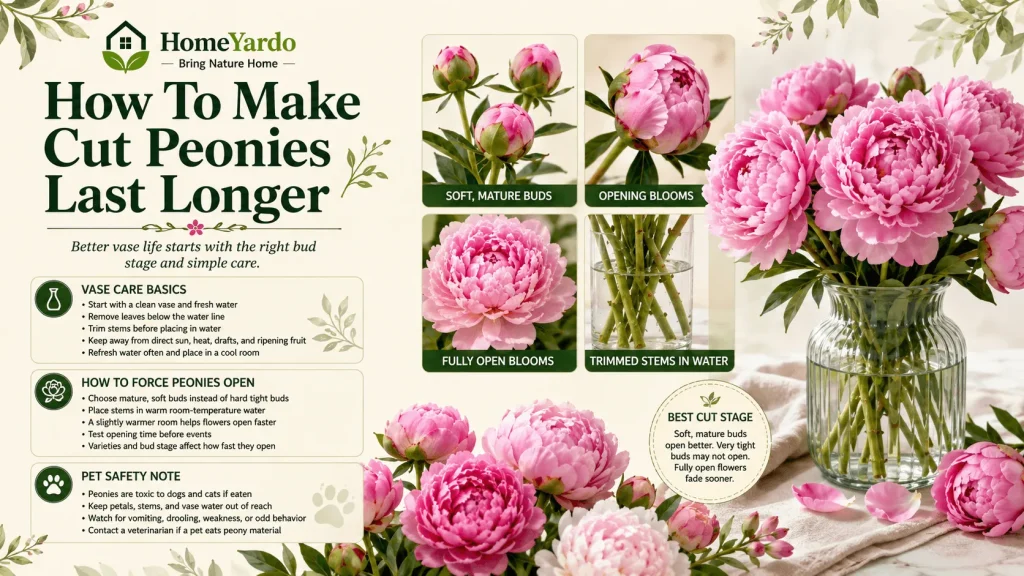
Cut peonies can last for several hours in an arrangement if they are properly handled. The stage of the peony is as important as the vase’s care.
A stem cut too tightly may never open well. Flowers that are fully open could look gorgeous at first, but will eventually fade.
Vase Care Basics
Begin with a clean vase and clean water. Get rid of any foliage that is in the water below the surface because leaves that are submerged could make the water more soiled.
Trim the stems prior to placing them in the water. Make sure the vase is protected from direct sunlight and drafts, heat and the ripening of fruit.
Keep the water hydrated regularly. Cooler rooms can help peonies open more slowly and also keep their petals longer.
How To Force Peonies Open
To speed up the process of opening peonies, choose mature, soft buds over the hard, tight ones. Buds that are soft and supple tend to open in the indoor environment.
Put the stems in warm water that is room temperature. A room that is slightly warmer could encourage flowering when flowers will be needed quickly.
If you are planning an event, perform an initial test of timing depending on the number of participants. Peonies open at various speeds based on the variety and stage of bud.
Pet Safety Note
Peonies are dangerous for dogs and cats, especially if they are consumed. The petals, stems and vase water must be kept out of reach of pets.
A pet that is curious might take a bite out of fallen petals or drink water from the vase. Keeping arrangements away from reach is a good idea.
If your pet is eating peony plant material and displays vomiting and drooling as well as weakness or other unusual behaviors, consult your veterinarian for help.
Common Mistakes That Shorten Peony Season
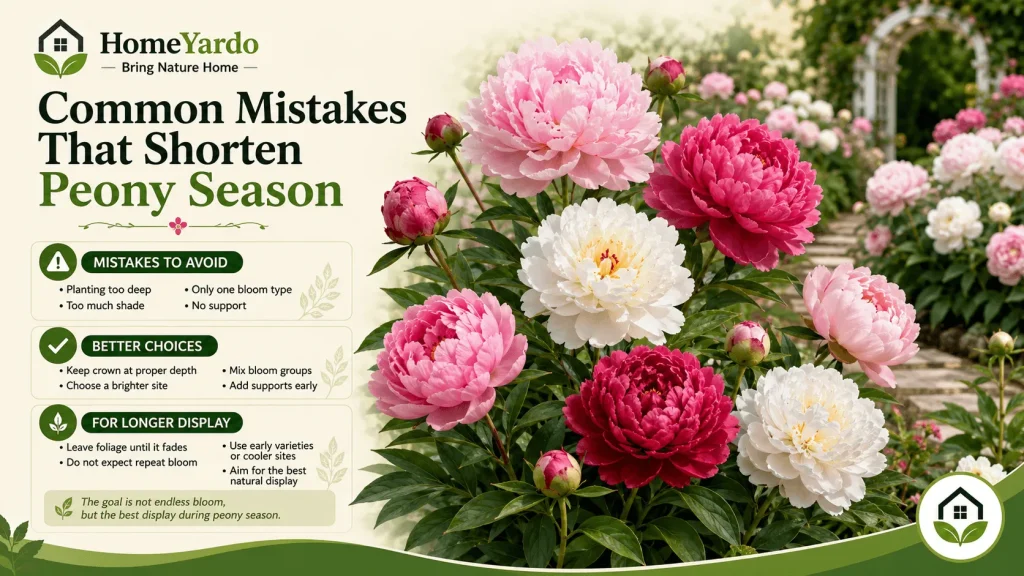
A few small mistakes can make the season seem shorter than it really is. Many issues stem from inadequate plant depth, light levels that are not optimal and weather exposure or cutting leaves too early.
| Mistake | Result | Better Choice |
|---|---|---|
| Mistake | Result | Better Choice |
| Planting too deep | Few or no flowers | Keep the crown depth suitable |
| Too much shade | Weak bloom | Choose a brighter site |
| Only planting one variety | Very short display | Mix bloom groups |
| No support | Flowers flop after rain | Add supports early |
| Cutting foliage early | Weaker next year | Leave foliage until it fades |
| Expecting a repeat bloom | Disappointment | Plan a longer bloom sequence |
| Ignoring heat | Shorter flowers | Use early varieties or cooler sites |
The goal is not to make peonies bloom forever. The goal is to help them give their best display during the short time they naturally flower.
Why Peonies Did Not Bloom This Season
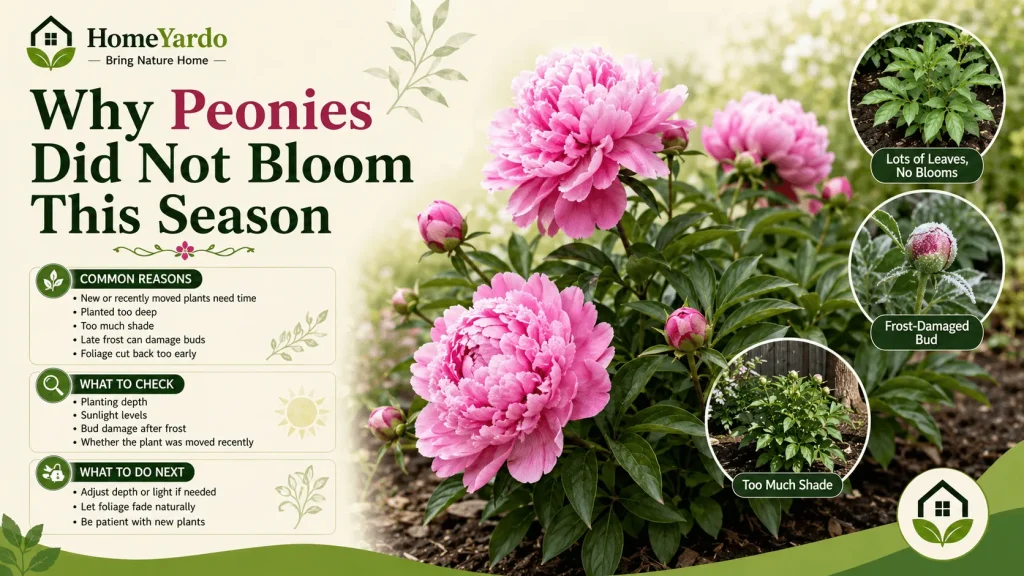
The peony’s growth of leaves, but not flowers, is a frustrating situation. However, the good news is that a lot of bloom issues are rooted in clear reasons.
Sometimes, the plant is too young. Sometimes the crown could not be deep enough, or the area might be too shaded or the foliage of the previous year could have been removed earlier than expected.
Common Reasons
Peonies can not bloom as well in the case of a plant that has been new or has recently been relocated. Roots require some time to get settled before the flower is established.
The planting depth is a different typical reason. A peony-like herbaceous crown that is planted in soil that is too deep in the surface could produce foliage that does not have flowers.
Shade can also reduce flowering. Peonies require enough light to create sturdy stems, buds and strong leaves.
Late frost may damage developing buds. Insufficient nitrogen can lead to leaves being left on the side at the expense of flowers. Cutting off foliage too early in the previous year could affect the next flower display.
What To Do Next
Begin by examining the plant’s depth and the amount of sunlight. When the plants are covered or have a lot of shade, the problem may require adjustment.
Keep the foliage in its place after flowers have finished until it fades naturally later in the year. These leaves feed the plant to ensure it will be healthy for the next season.
If the peony is new or has recently been moved take it easy and give it some time. A healthy plant might require patience and not require as much intervention.
Peony Season At A Glance
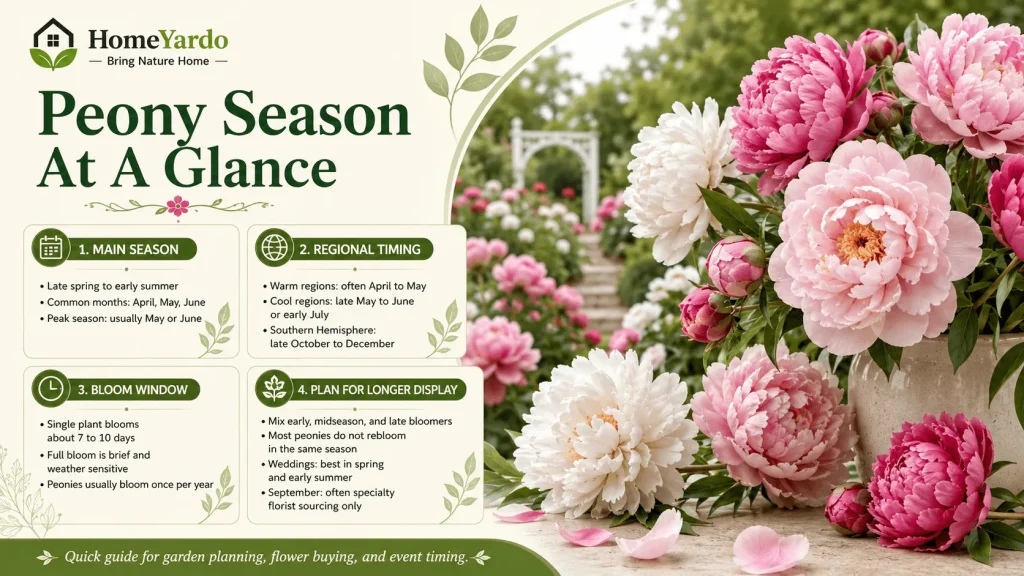
Peonies are easier to plan around when the main timing details are kept in one place.
| Planning Question | Best Answer |
|---|---|
| Main season | Late spring to early summer |
| Common months | April, May, and June |
| Peak season | Usually May or June |
| Peony peak season | The short window when the most flowers are open at once |
| Warm region timing | Often April to May |
| Cool region timing | Often late May to June or early July |
| Southern Hemisphere timing | Late October to December |
| Single plant bloom length | About 7 to 10 days |
| Longest garden display | Mix early, midseason, and late bloomers |
| Repeat bloom | Peonies usually bloom once per year |
| Rebloom habit | Most peonies do not rebloom in the same season |
| Wedding availability | Best in spring and early summer, imports may be possible |
| September availability | Specialty florist sourcing only in many markets |
| Full bloom timing | Short and weather sensitive |
This quick guide helps with garden planning, flower buying, and event timing.
Conclusion
Peonies are a flower with a shorter season but that’s one of the reasons they are beautiful. They bloom with full blooms, soft colors and the feeling that spring has arrived in the most generous moments.
In the majority of Northern Hemisphere gardens, peonies bloom from late spring through the middle of summer. In warmer regions, peonies bloom earlier, while in cooler regions might bloom later. Flowers that are cut can last beyond the local blooming time but the freshest and most reliable stems are generally located during peak seasons.
The majority of peonies don’t bloom again or bloom more than once during the same year; it is important to plan your garden. To create a more extensive garden display, you should plant the early, midseason and late-season varieties. Weddings or bouquets make a plan, inquire about the source of the stem and keep a variety of flower choices in your mind. The peony season isn’t long. However, with proper planning, it will feel luxurious, unforgettable and worth the wait.
FAQ
That depends on the month, region, and flower source. In the Northern Hemisphere, fresh local peonies are most common from late spring into early summer. Outside that window, florists may offer imported or specialty sourced stems.
Most peonies do not rebloom during the same growing season. A plant may open several buds over a short period, but that is still one bloom cycle. To enjoy peonies longer, plant early, midseason, and late varieties together.
Most peonies will not bloom more than once in the same year. They usually flower in late spring or early summer, then spend the rest of the season rebuilding energy. Healthy foliage after bloom helps support next year’s flowers.
In the United States, peonies often bloom from April to June. Texas and Georgia usually bloom earlier, often from April to May. Ohio and Michigan usually bloom later, often from May into June, depending on spring temperatures.
Peonies Sydney season in Sydney usually refers to florist availability during Australia’s late spring and early summer. Many stems appear from October to December, depending on the grower’s supply. Growing peonies near Sydney can be harder because warm coastal conditions may reduce garden performance.
Tree peonies and early herbaceous varieties often bloom first. Early examples may include Coral Charm, Early Scout, and Buckeye Belle. Exact timing still depends on local climate, spring warmth, and the plant’s growing conditions.
No single peony blooms for the whole season. The longest display comes from planting early, midseason, and late varieties together. Mature plants with many buds and cooler weather can also make the bloom period feel longer.
September is not a normal local season for peonies in most Northern Hemisphere gardens. Some florists may source imported stems, but cost and availability can vary. For events, it is safer to ask about backup flowers with a similar full look.
Peonies may be available outside of spring through imported or specialty florist stems. They are not naturally year round garden flowers, so off season supply can be limited, more expensive, or less predictable. For the freshest stems, spring to early summer is usually the safest window.
Most peonies do not bloom twice in the same year. They usually flower once in late spring or early summer, then spend the rest of the season storing energy for next year. A mature plant may open several buds over a short period, but that is still one bloom cycle, not true reblooming.
Peonies are most reliable for weddings during spring and early summer, especially in May and June in many Northern Hemisphere regions. Some florists may source imported peonies outside the local season, but price, color choice, and quality can vary. For off season weddings, backup flowers such as garden roses, ranunculus, lisianthus, or dahlias are useful.
Tree peonies have woody stems that stay above ground through winter, and they often bloom earlier in the season. Herbaceous peonies die back to the ground each year and return from the crown in spring. Herbaceous types are the classic garden and cut flower peonies that many people see in late spring bouquets.
Peonies may not bloom if they are too young, planted too deeply, shaded too much, recently moved, or stressed by a late frost. Cutting the foliage too early the year before can also weaken flowering because the leaves feed the plant after bloom. If the plant has healthy leaves, improving light, checking planting depth, and giving it time often helps.
Peonies are often best planted in the fall, especially bare root peonies in temperate climates. Fall planting gives roots time to settle before spring growth begins. Potted peonies can also be planted in spring, but they may need more time before they produce a strong flower display.
One open peony flower usually lasts only a few days, especially in heat, wind, or rain. A single plant often blooms for about 7 to 10 days as different buds open. Cut peonies in a vase can often last 5 to 10 days when cut at the soft bud stage and kept in clean water.
Peonies usually start to come up in spring after winter dormancy. In mild climates, shoots may appear earlier, while in colder regions may wait until the soil warms. Many peony shoots emerge red or burgundy at first, then turn greener as the stems grow.
It is the short time of year when peony plants naturally bloom. In many Northern Hemisphere gardens, this happens from late spring to early summer, often in April, May, or June. Florist availability can last beyond the local garden season if stems are imported or specialty sourced.
Peonies are naturally available in late spring to early summer in many Northern Hemisphere gardens and flower markets. In the Southern Hemisphere, fresh peonies often appear from late October into December. Florists may sometimes offer peonies outside these windows through imports, but the supply is less predictable.
Yes, peonies are seasonal flowers. Garden peonies usually bloom once a year for a short period, then keep their foliage through the rest of the growing season. Cut peonies may appear outside the local season through florist sourcing, but they are not naturally year round garden flowers.
Reference
- https://peonita.com/blogs/news/when-is-peony-season-blooming-guide-by-region-and-variety
- https://mbgna.umich.edu/when-visit-peony-garden
- https://www.flowerbx.com/flowers/peonies/peony-flower-guide
- https://my100yearoldhome.com/when-are-peonies-in-season/
- https://www.houseandgarden.co.uk/article/peony-flowers-how-to-plant-peonies
- https://labellefleurdesign.ca/blogs/flower-blog/everything-you-need-to-know-about-peonies-season
- https://udoragifts.co.uk/blog/en-peony-season/
- https://www.gardenia.net/guide/late-season-peonies-for-your-spring-garden
- https://www.lynseytaulbee.com/blog/when-are-peonies-in-season-and-where-do-they-grow
- https://www.marksandspencer.com/food/content/peony-season
- https://www.longfield-gardens.com/blogs/perennial-plants-how-to/how-to-stretch-the-peony-season
- https://www.fleursdevilles.com/post/full-bloom-peonies-for-spring