What A Fall Furnace Tune-Up Should Cover In Toronto
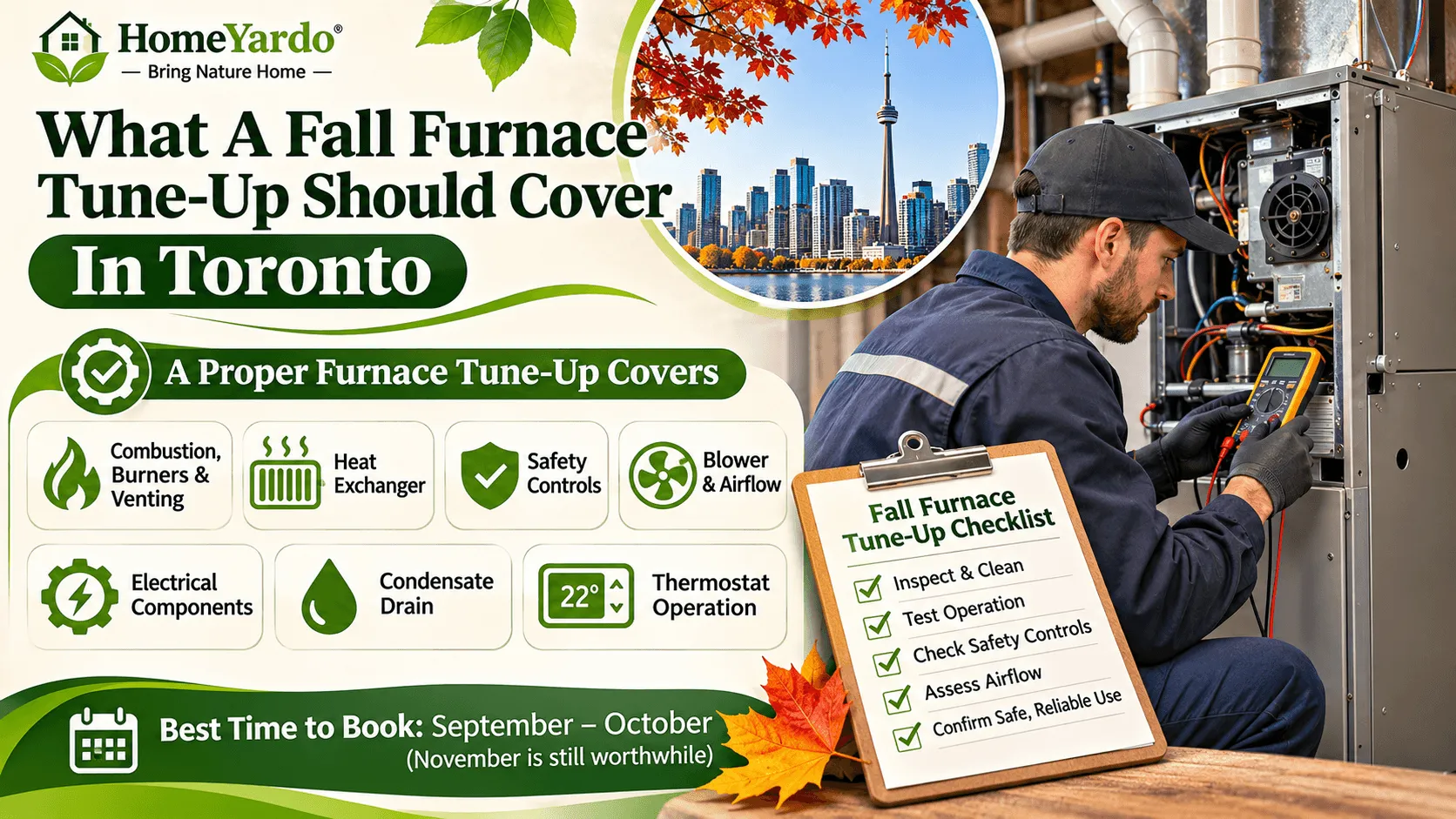
A fall furnace tune-up in Toronto should cover more than a filter replacement and a quick inspection. Before winter arrives, a qualified heating technician should check the furnace’s combustion system, venting, heat exchanger, safety controls, airflow and overall operation.
Toronto’s first extended stretch of cold weather can expose problems that went unnoticed during the warmer months. A furnace that ran properly last March may develop ignition problems, restricted airflow or blocked venting before its next heating season.
Scheduling a professional inspection in September or October is ideal, but an appointment in November is still worthwhile if the furnace has not been serviced. It is also a good opportunity to check your home’s carbon monoxide alarms, especially following Ontario’s expanded requirements that took effect on January 1, 2026.
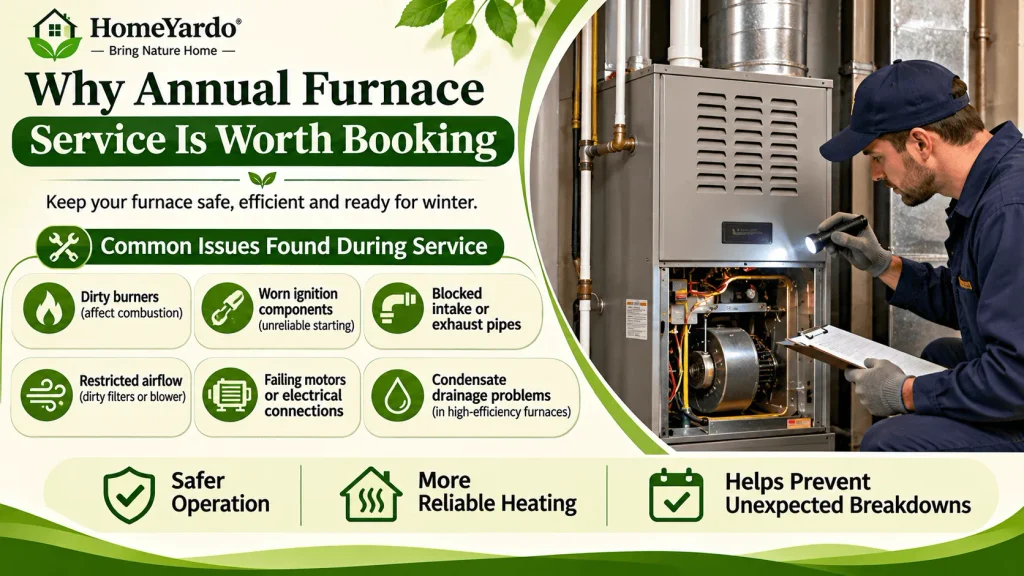
Why Annual Furnace Service Is Worth Booking
A gas furnace burns fuel to heat your home while directing combustion gases safely outdoors. When its components become dirty, worn or damaged, the system may struggle to heat rooms evenly or operate reliably.
The Government of Ontario recommends annual professional inspection and maintenance of fuel-burning appliances, chimneys and vents before the heating season.
Regular servicing gives technicians an opportunity to identify developing problems before they cause a breakdown.
Common issues include:
- Dirty burners that affect proper combustion.
- Worn ignition components that cause unreliable starting.
- Blocked intake or exhaust pipes.
- Restricted airflow caused by dirty filters or blower components.
- Failing motors or electrical connections.
- Condensate drainage problems in high-efficiency furnaces.
A maintenance visit cannot guarantee that a furnace will never fail. However, it can help identify existing problems, confirm operating conditions and reduce the likelihood of avoidable interruptions.
For Toronto homeowners, this becomes particularly useful during winter, when the furnace may run frequently to maintain comfortable indoor temperatures.
What a Proper Fall Furnace Tune-Up Includes
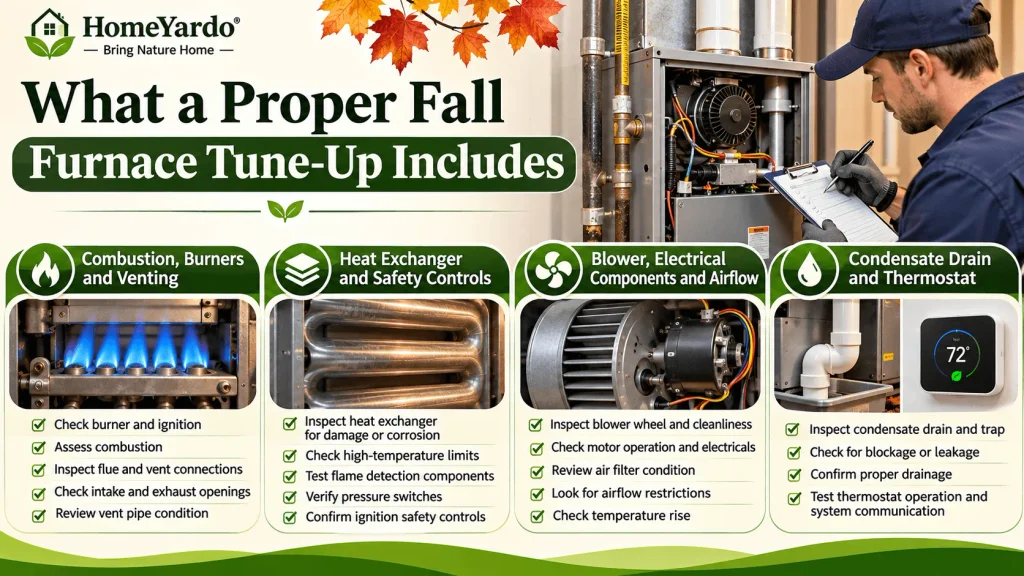
A professional furnace tune-up involves checking the equipment’s condition, testing its operation and completing appropriate maintenance.
The exact procedures depend on the furnace model, manufacturer recommendations, installation and current condition.
The following furnace tune-up checklist outlines the main areas homeowners should expect their technician to review.
Combustion, Burners and Venting
Safe combustion is one of the most important parts of a gas furnace inspection.
The technician should examine the burner assembly, ignition operation and venting system for signs of damage, corrosion, blockage or abnormal operation.
Depending on the equipment, the inspection may include:
- Checking burner condition and ignition performance.
- Assessing combustion using suitable testing instruments.
- Inspecting accessible flue and vent connections.
- Checking intake and exhaust openings for obstructions.
- Assessing vent pipe condition, support and drainage arrangements.
- Confirming appropriate operation of combustion-related components.
High-efficiency furnaces commonly use dedicated plastic intake and exhaust pipes that terminate outdoors.
In Toronto, these openings can become obstructed by fallen leaves, drifting snow or ice accumulation.
A blocked vent can trigger a safety shutdown. Some venting problems may also create dangerous conditions that require immediate professional attention.
Homeowners should never dismantle combustion components or bypass safety controls to restore heating.
Heat Exchanger and Safety Controls
The heat exchanger transfers heat from the combustion process to the circulating household air without intentionally allowing combustion gases to enter the supply airflow.
Damage, severe corrosion or other defects may compromise safe operation.
During servicing, the technician should assess the heat exchanger using inspection methods appropriate to the furnace’s design and condition.
The visit should also cover relevant protective devices, including:
- High-temperature limit controls.
- Flame detection components.
- Pressure switches.
- Ignition safety controls.
- Other manufacturer-specified protective devices.
These components help the furnace respond appropriately when abnormal conditions occur.
If a technician identifies a suspected heat exchanger defect, ask for an explanation of the findings and the recommended next steps.
A serious safety concern may require the equipment to remain out of service until it has been properly assessed and repaired or replaced.
Blower, Electrical Components and Airflow
A furnace depends on adequate airflow to distribute heated air throughout the home.
Dust accumulation, restricted filters or problems with the blower can reduce comfort and contribute to overheating.
A technician may inspect:
- Blower wheel condition and cleanliness.
- Motor operation and electrical measurements.
- Accessible electrical connections.
- Air filter condition and suitability.
- Return-air and supply-air restrictions.
- Temperature rise across the furnace, where appropriate.
- Other airflow-related conditions identified during testing.
For homeowners with cold bedrooms or uneven heating, this part of the inspection can be particularly helpful.
The technician should determine whether the problem relates to the furnace itself, restricted airflow or another part of the duct system.
Airflow restrictions can also contribute to repeated furnace shutdowns. HomeYardo’s guide to HVAC short cycling explains why heating equipment sometimes starts and stops more frequently than expected.
Condensate Drain and Thermostat
High-efficiency condensing furnaces produce water as moisture in the exhaust gases condenses.
That water must drain properly through the equipment’s condensate management system.
During a tune-up, the technician should inspect accessible drain components and check for signs of blockage, leakage or improper drainage.
A clogged condensate trap or line may lead to water around the furnace or cause the heating system to shut down.
The thermostat also deserves attention.
The technician should confirm that it requests heat correctly, communicates with the furnace and allows the system to complete its normal operating sequence.
For homes with smart thermostats, equipment compatibility and relevant heating settings should be checked when necessary.
Together, these inspections help establish whether the furnace can operate reliably before winter demand increases.
What Toronto Homeowners Can Check Between Visits
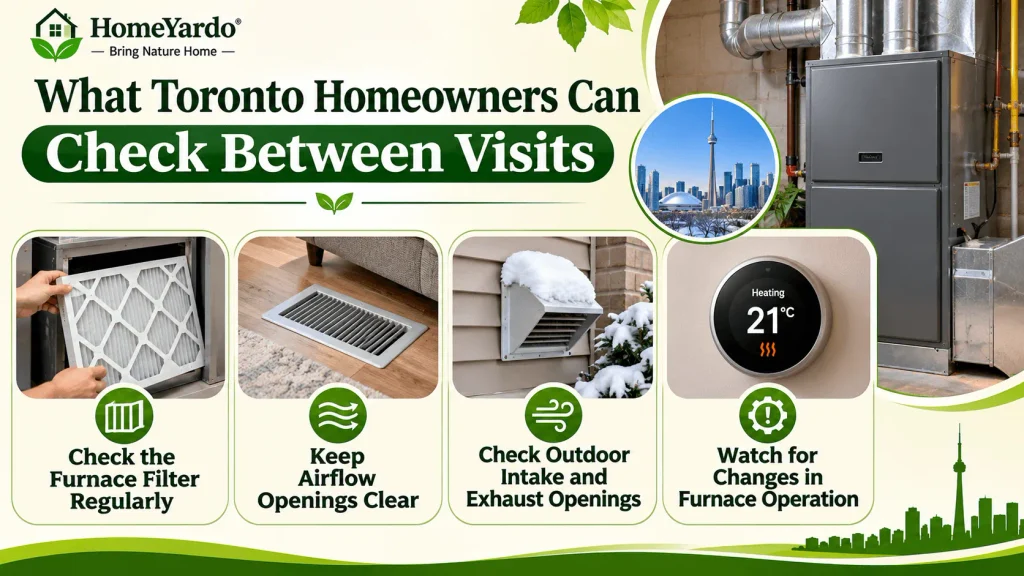
Professional maintenance remains necessary for combustion equipment, but homeowners can complete several simple checks between appointments.
These tasks help reduce preventable problems without requiring access to gas, electrical or internal safety components.
Check the furnace filter regularly.
Inspect the filter approximately once a month during the heating season and replace it according to its condition and the manufacturer’s instructions.
A clogged filter can restrict airflow and contribute to overheating or reduced heating performance.
Not every furnace benefits from the highest-rated filter available. Filters that create excessive resistance may restrict airflow, so confirm the appropriate filter type with your technician.
Keep airflow openings clear.
Check that furniture, rugs and storage items are not blocking supply registers or return-air grilles.
Avoid closing multiple supply vents in unused rooms without professional advice, since doing so can alter airflow and system performance.
Check outdoor intake and exhaust openings.
Look for visible obstructions such as leaves, snow or ice around accessible exterior vent terminations.
During Toronto’s winter, drifting snow may accumulate near low-mounted exhaust or intake pipes.
Do not climb onto a roof, dismantle venting or attempt to clear an obstruction that cannot be reached safely. Arrange professional assistance if necessary.
Watch for changes in furnace operation.
Unusual noises, repeated shutdowns, weak airflow or rooms that no longer heat properly should be documented.
Some problems can be minor, while others require prompt attention.
For additional symptom guidance, review HomeYardo’s article about HVAC warning signs.
Ontario’s 2026 Carbon Monoxide Alarm Requirements
Carbon monoxide is a colourless, odourless gas that can be produced by malfunctioning or improperly vented fuel-burning equipment.
Because people cannot reliably detect it through their senses, working carbon monoxide alarms are an important part of home safety.
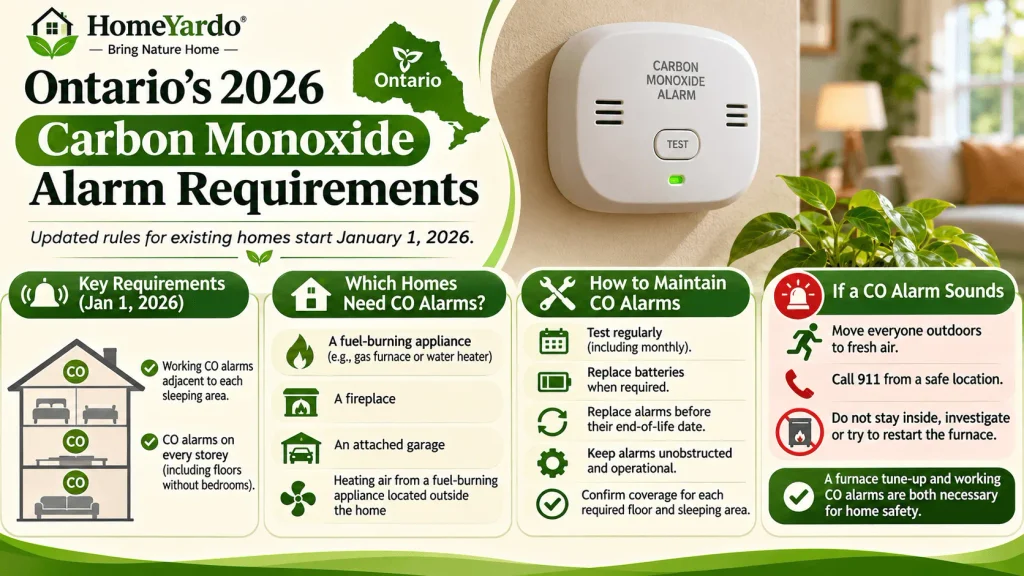
Ontario expanded its requirements for existing homes on January 1, 2026.
According to the Ministry of the Solicitor General’s guide to CO alarm requirements, qualifying houses must have working carbon monoxide alarms adjacent to each sleeping area and on every storey, including floors without bedrooms.
Which Toronto Homes Need Carbon Monoxide Alarms?
For houses, the requirements apply when the home has:
- A fuel-burning appliance, such as a gas furnace or water heater.
- A fireplace.
- An attached garage.
- Heating air supplied by a fuel-burning appliance located outside the home.
Apartments and condominiums have additional requirements based on their equipment, heating arrangements and proximity to garages or service rooms.
In qualifying houses, alarms must be installed in the required locations even when a particular storey has no sleeping area.
How to Maintain Carbon Monoxide Alarms
Ontario permits suitable hardwired, battery-operated and plug-in carbon monoxide alarms.
When selecting an alarm, look for certification from a recognized testing agency and follow the manufacturer’s installation instructions.
Homeowners should:
- Test alarms according to the manufacturer’s instructions, including monthly testing.
- Replace batteries when required.
- Replace alarms before their specified end-of-life date.
- Keep alarms unobstructed and operational.
- Verify that each required floor and sleeping area has suitable coverage.
Landlords are responsible for installing and maintaining required alarms in rental units. Tenants should report malfunctioning or missing alarms.
What to Do if a Carbon Monoxide Alarm Sounds
Possible carbon monoxide exposure symptoms include headache, dizziness, nausea, weakness, confusion and unusual drowsiness.
If a carbon monoxide alarm sounds, move everyone outdoors to fresh air and call 911 from a safe location.
Do not stay inside to investigate, attempt to restart the furnace or assume the alarm is malfunctioning.
A furnace tune-up does not replace working carbon monoxide alarms, and functioning alarms do not eliminate the need for professional maintenance.
Both are necessary parts of home safety.
Look Beyond The Furnace: Other Heating Equipment
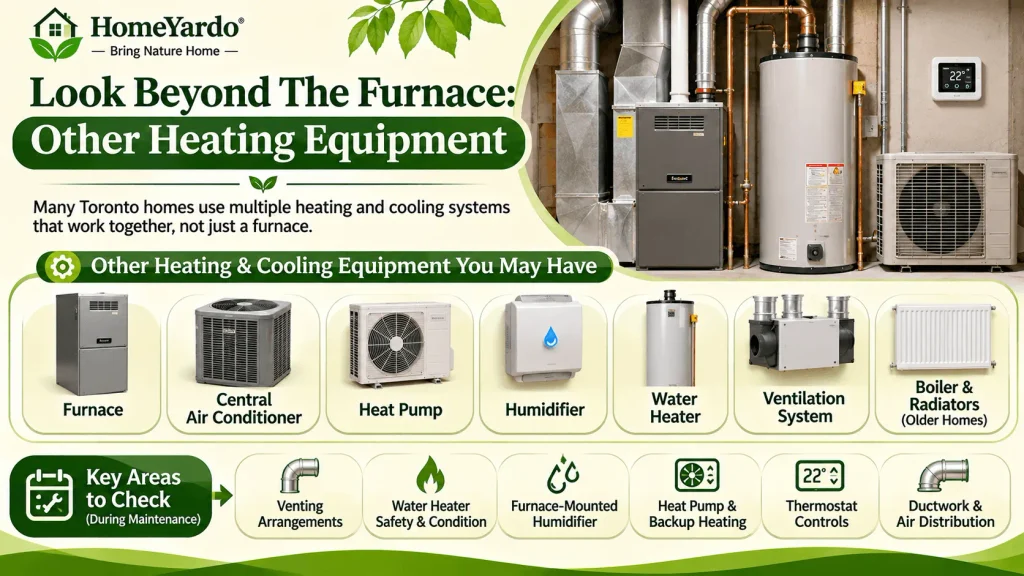
Many Toronto homes use multiple pieces of heating and cooling equipment.
A furnace may operate alongside a central air conditioner, heat pump, humidifier, water heater or ventilation system.
Some older properties also rely on boilers and radiators rather than forced-air furnaces.
When arranging seasonal maintenance, ask whether related equipment should be inspected during the same appointment.
Depending on the home’s setup, the technician may need to consider:
- Shared or interconnected venting arrangements.
- Water heater condition and combustion safety.
- Furnace-mounted humidifier operation.
- Heat pump and backup heating configuration.
- Thermostat controls for multiple heating sources.
- Accessible ductwork or air distribution concerns.
Each appliance has its own maintenance requirements. A furnace inspection does not automatically mean the technician has inspected every connected or nearby system.
If you are looking for HVAC services in Toronto that cover furnaces, boilers, heat pumps and water heaters, ask whether the provider can coordinate the appropriate inspections during one visit.
Having the equipment reviewed together may help identify interactions between systems while reducing the need for separate appointments.
Run a Heating Test Before Toronto’s Winter
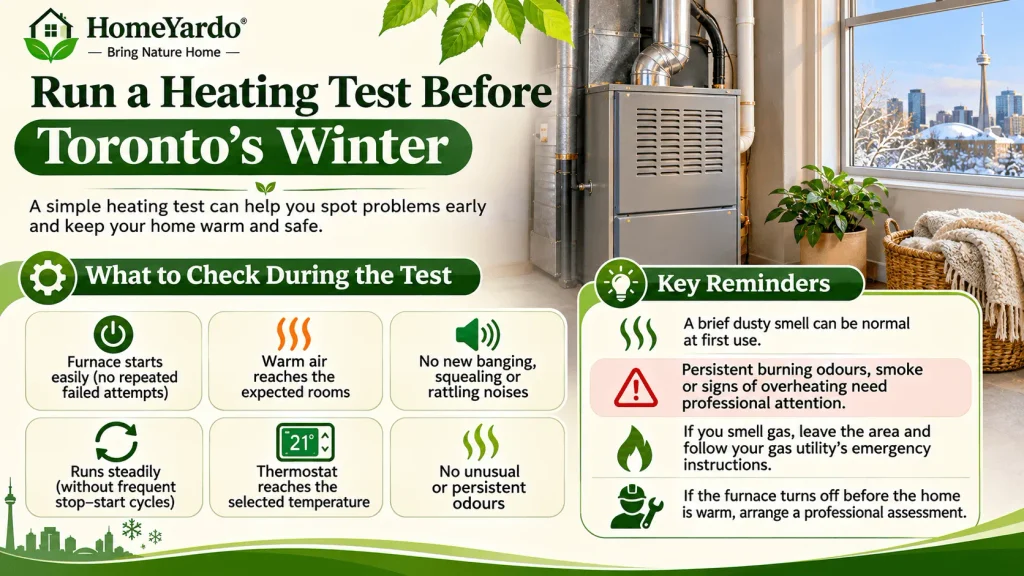
A simple heating test can help homeowners notice problems before sustained cold weather arrives.
Choose a mild afternoon when the house is comfortable and you have time to observe the furnace.
Increase the thermostat setting by a few degrees and allow the equipment to complete a normal heating cycle.
Pay attention to:
- Whether the furnace starts without repeated unsuccessful attempts.
- Whether warm air reaches the expected rooms.
- Whether new banging, squealing or rattling noises occur.
- Whether the furnace runs without repeatedly starting and stopping.
- Whether the thermostat reaches the selected temperature.
- Whether unusual odours persist.
A brief dusty smell during the first heating cycle can occur when accumulated dust warms up. Persistent burning odours, smoke or signs of overheating require professional attention.
If you smell gas, leave the area and follow your gas utility’s emergency instructions. Do not operate switches or attempt repairs.
If the furnace repeatedly turns off before the home is warm, arrange a professional assessment rather than repeatedly resetting the equipment.
A quick test cannot confirm combustion safety or replace an inspection, but it can help you recognize operating changes that deserve attention.
What to Ask After a Furnace Tune-Up
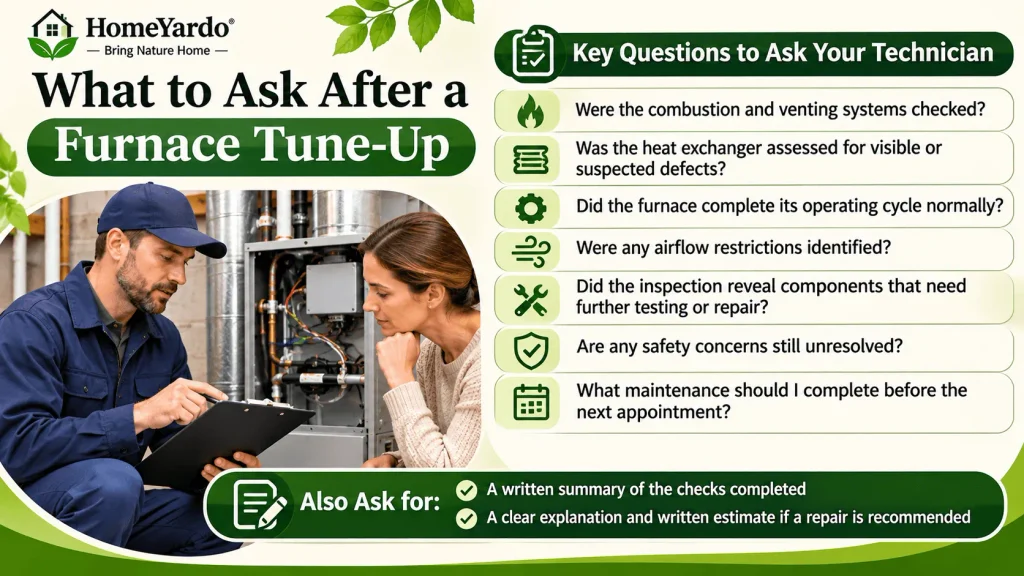
A useful furnace service appointment should end with more than a verbal assurance that everything looks fine.
Ask your technician for a written summary of the checks completed and any findings that require attention.
Questions worth asking include:
- Were the combustion and venting systems checked?
- Was the heat exchanger assessed for visible or suspected defects?
- Did the furnace complete its operating cycle normally?
- Were any airflow restrictions identified?
- Did the inspection reveal components that need further testing or repair?
- Are any safety concerns still unresolved?
- What maintenance should I complete before the next appointment?
If a repair is recommended, request an explanation of the problem and a written estimate before approving the work.
Not every worn component requires immediate replacement, but safety-related faults should never be postponed without appropriate professional guidance.
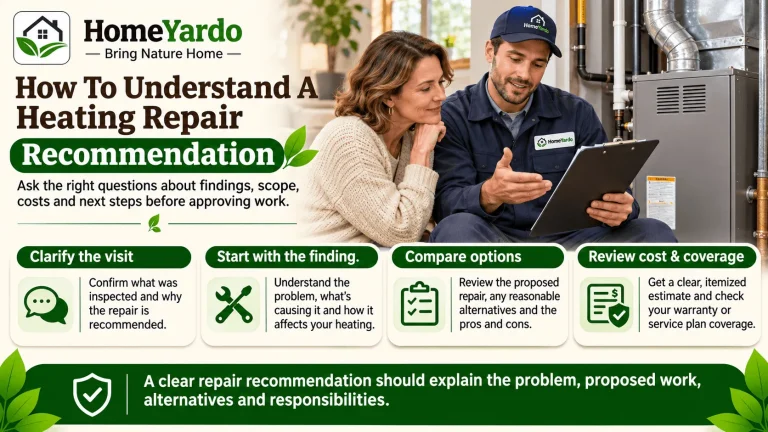
HomeYardo’s guide on understanding a heating repair recommendation can help homeowners assess findings, compare estimates and discuss the recommended work.
Keep the inspection summary with your furnace’s maintenance records. Over time, those records can help identify recurring problems and support future repair or replacement decisions.
Final Takeaway
A fall furnace tune-up in Toronto is an opportunity to confirm that your heating equipment is ready for winter and identify problems before they interrupt your home’s comfort.
A proper service visit should address combustion, venting, the heat exchanger, safety controls, airflow, electrical components, drainage and thermostat operation.
Homeowners can support that work by maintaining filters, keeping vents clear, watching for unusual operation and ensuring carbon monoxide alarms meet Ontario’s current requirements.
The goal is not simply to get the furnace running. It is to understand its condition, address safety concerns and enter winter with a reliable maintenance plan.
Frequently Asked Questions
A fall furnace tune-up should include inspection of combustion and venting components, the heat exchanger, ignition system, safety controls, blower, airflow, electrical connections, condensate drainage and thermostat operation. The exact checklist depends on the furnace model and manufacturer recommendations.
September and October are generally good months for a furnace tune-up in Toronto because the heating system can be inspected before sustained winter use. If you missed that period, scheduling professional maintenance later in the fall is still worthwhile.
Annual professional inspection and servicing are generally recommended for residential gas furnaces. Follow the manufacturer’s maintenance requirements and arrange additional inspections if unusual operation, safety concerns or recurring problems develop.
Homeowners can inspect filters, keep accessible vents clear and monitor furnace operation. Gas components, combustion testing, heat exchanger assessments, electrical repairs and safety control testing should be handled by appropriately qualified professionals.
Since January 1, 2026, qualifying Ontario houses must have working carbon monoxide alarms adjacent to each sleeping area and on every storey, including floors without bedrooms. The rules apply to homes with fuel-burning appliances, fireplaces, attached garages or certain external heating arrangements.
Warning signs include unreliable ignition, weak airflow, unusual noises, repeated short cycling, inconsistent room temperatures or persistent unusual odours. These symptoms should be assessed by a qualified heating technician.
A professional gas furnace inspection should address combustion and venting safety, using appropriate testing methods for the equipment. Ask the technician which combustion measurements and carbon monoxide checks are included in the service.
Yes. A tune-up focuses on routine inspection, servicing and evaluating system operation. Furnace repair addresses a specific fault or failed component. Problems discovered during maintenance may require a separate diagnosis, estimate or repair appointment.