HVAC Short Cycling: Signs, Causes, And How To Fix It
Your air conditioner starts, runs for a few minutes, and shuts off. Before the room feels comfortable, it starts again. In winter, your furnace might behave the same way, producing a little heat before switching off and restarting.
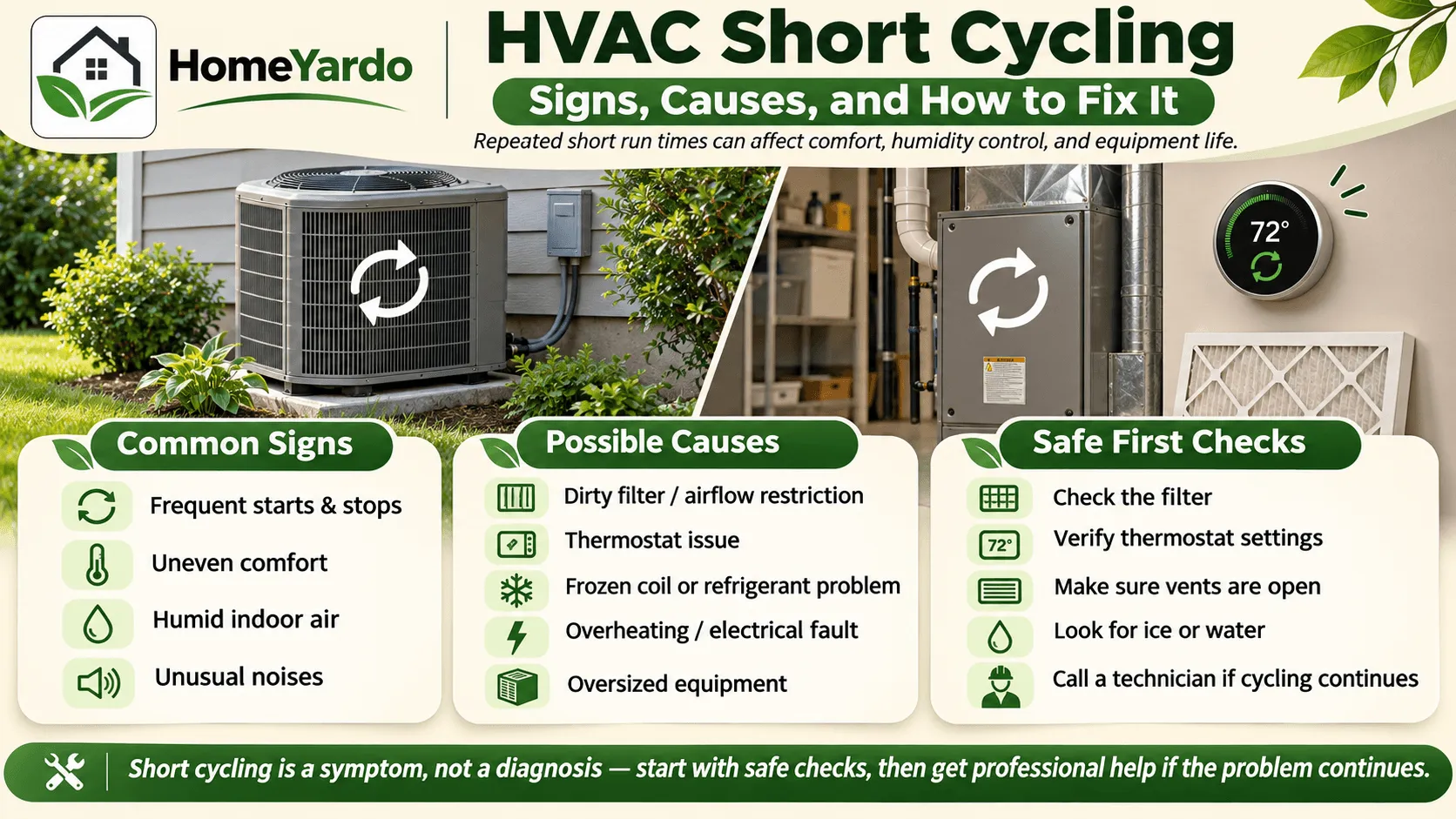
This repeated starting and stopping is known as HVAC short cycling. It can leave rooms uncomfortable, reduce cooling-season humidity control, and place unnecessary stress on equipment.
The cause is not always a major failure. A clogged filter or thermostat problem may be responsible, but repeated shutdowns can also involve refrigerant conditions, electrical components, overheating, or safety controls.
Understanding the pattern helps you recognize what needs attention and which checks are safe to handle yourself.
What Is HVAC Short Cycling?
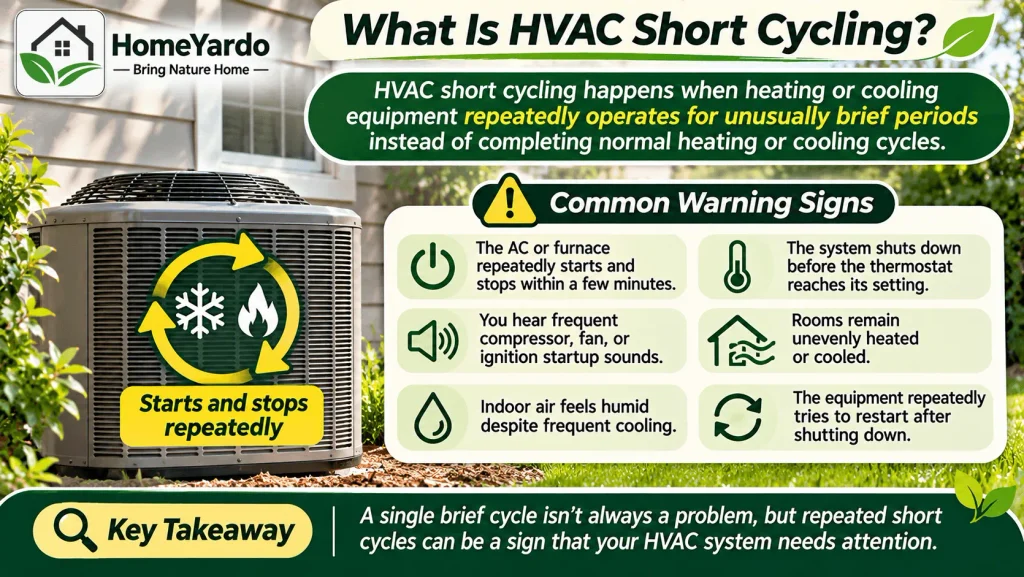
HVAC short cycling happens when heating or cooling equipment repeatedly operates for unusually brief periods instead of completing normal heating or cooling cycles.
A typical system starts when the thermostat calls for heating or cooling, runs until the required conditions are met, and then shuts off. The length of that cycle changes with outdoor temperature, indoor conditions, equipment capacity, and system design.
Short cycling becomes a concern when the system repeatedly stops well before it would normally finish heating or cooling the home.
What Short Cycling Looks and Sounds Like
Common warning signs include:
- The AC or furnace repeatedly starts and stops within a few minutes.
- The system shuts down before the thermostat reaches its setting.
- You hear frequent compressor, fan, or ignition startup sounds.
- Rooms remain unevenly heated or cooled.
- Indoor air feels humid despite frequent cooling.
- The equipment repeatedly tries to restart after shutting down.
A single brief operating cycle does not necessarily indicate a problem. Some systems behave differently during mild weather, staged operation, or certain control sequences.
There is no universal five-minute rule that identifies short cycling in every HVAC system. Equipment type and operating conditions matter more than one fixed runtime.
If repeated starts and stops are accompanied by weak airflow, strange noises, or unusual odors, compare those symptoms with other HVAC warning signs before deciding whether the issue needs immediate attention.
What Causes an AC System to Short Cycle?
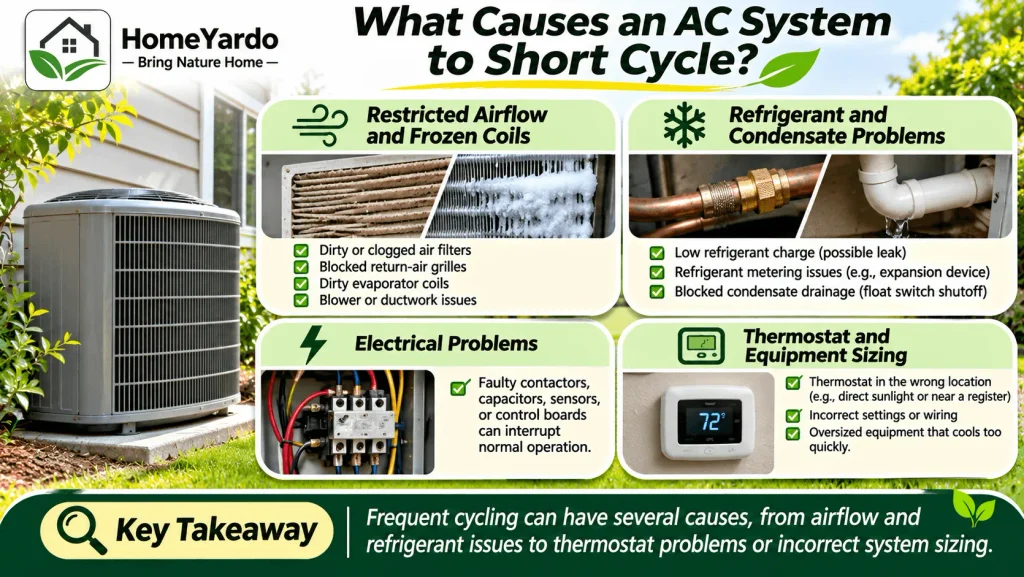
Air conditioners may cycle too frequently because of restricted airflow, refrigerant problems, drainage protection, electrical faults, thermostat controls, or incorrect equipment sizing.
These problems can produce similar symptoms, so the operating pattern alone cannot identify the defective component.
Restricted Airflow and Frozen Coils
An air conditioner needs sufficient airflow across its indoor evaporator coil to operate normally.
When airflow becomes restricted, the coil may become excessively cold. Under certain conditions, moisture freezes onto its surface, further reducing airflow and cooling performance.
Common restrictions include:
- Dirty or clogged air filters
- Blocked return-air grilles
- Excessively restrictive filtration
- Dirty evaporator coils
- Malfunctioning blower components
- Poorly designed or damaged ductwork
A frozen coil may cause a shutdown when the system has suitable protective controls. Other systems may continue operating while cooling performance deteriorates.
If you notice ice on the refrigerant line or indoor coil, turn off cooling and arrange an inspection. Running the system repeatedly while it freezes can make the problem worse.
Refrigerant, Condensate, and Electrical Problems
Not every short-cycling air conditioner has an airflow problem.
Low refrigerant charge: A refrigerant leak can change system pressures and coil temperatures. Some systems shut down through protective controls when operating conditions move outside acceptable limits.
Refrigerant metering problems: A malfunctioning expansion device may interfere with proper refrigerant flow and cause unstable operation.
Blocked condensate drainage: When a drain line clogs, accumulated water can activate a float switch that interrupts cooling. Depending on the control arrangement, cooling may resume when the switch resets.
Electrical components: Faulty contactors, capacitors, sensors, or control boards can interrupt normal operation.
A technician may need to check operating pressures, electrical measurements, temperature readings, and diagnostic fault information to identify the actual cause.
Do not open electrical compartments, handle refrigerant, or bypass safety switches. These tasks require appropriate training and equipment.
Thermostat Problems and Oversized Equipment
Sometimes the equipment is working as instructed, but the instructions are wrong.
A thermostat installed in direct sunlight, near a supply register, or beside a heat-producing appliance may sense temperatures that do not represent the rest of the home.
Incorrect control settings, wiring problems, or incompatible thermostat configurations can also affect cycling behavior.
Equipment sizing is another possibility.
An oversized air conditioner may lower the indoor temperature quickly enough to satisfy the thermostat before running long enough to remove much humidity. The result can be frequent starts, uneven comfort, and a cool but clammy home.
This is why equipment capacity should be selected using a proper residential cooling-load calculation rather than square footage alone.
Why Does a Furnace Keep Turning On and Off?
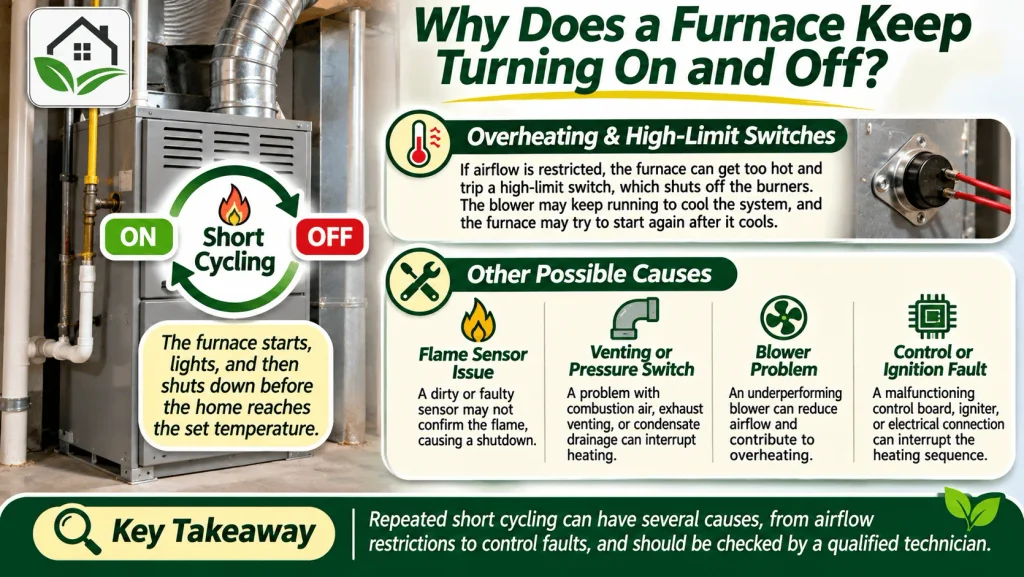
Furnace short cycling often follows a different sequence from air conditioner short cycling.
A gas furnace may begin its ignition cycle, light the burners, and then shut down before the home reaches the requested temperature.
Airflow restrictions, overheating, flame-detection problems, venting issues, and control faults are possible causes.
Overheating and High-Limit Switches
A high-limit switch helps protect a furnace against excessive temperatures.
If insufficient air moves across the heat exchanger, the furnace temperature may rise beyond its permitted operating range.
Possible causes include a dirty filter, blocked ductwork, blower problems, or unsuitable airflow settings.
When the high-limit switch opens, the burners shut down. The blower may continue operating to remove heat from the furnace.
After the equipment cools, some systems attempt another heating cycle.
Repeated overheating needs professional attention. It can place thermal stress on furnace components, and a repeatedly operating safety control should never be ignored or bypassed.
Flame Sensors, Venting, and Blower Problems
Several other furnace components can interrupt heating.
Dirty or faulty flame sensor: The burner may ignite briefly and shut off when the control system cannot confirm flame presence.
Pressure switch or venting issue: A problem with combustion-air supply, exhaust venting, condensate drainage, or associated components may prevent normal heating operation.
Blower motor problem: An underperforming blower can reduce airflow and contribute to overheating.
Control or ignition fault: Malfunctioning control boards, igniters, or electrical connections can interrupt a normal heating sequence.
The timing of the shutdown can provide useful diagnostic information, but it does not establish the cause on its own.
If the furnace repeatedly lights and shuts off, a qualified technician should inspect its safety controls, combustion system, and airflow.
Persistent furnace short cycling is also one of the possible signs your furnace is dying, although it does not automatically mean replacement is necessary.
Safe HVAC Short Cycling Checks for Homeowners
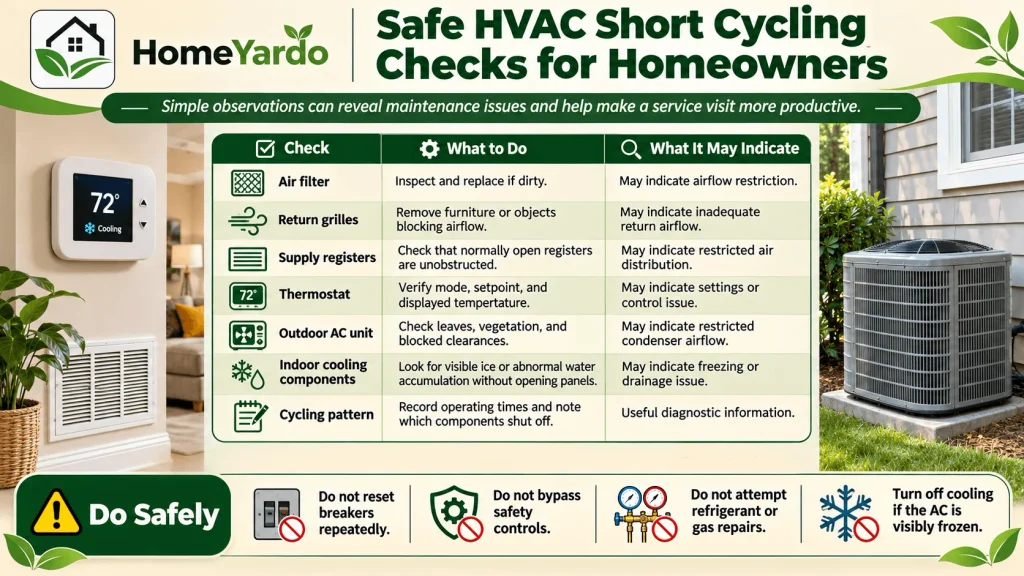
You do not need to diagnose electrical circuits or refrigerant pressures to gather useful information.
A few simple observations can help identify obvious maintenance issues and make a service appointment more productive.
| What to check | What to do safely | What the result may indicate |
|---|---|---|
| Air filter | Inspect and replace it if dirty, following manufacturer guidance | Possible airflow restriction |
| Return grilles | Remove furniture or objects blocking airflow | Inadequate return airflow |
| Supply registers | Check that normally open registers are unobstructed | Restricted air distribution |
| Thermostat | Verify the operating mode, setpoint, and displayed temperature | Settings or control issue |
| Outdoor AC unit | Check for leaves, vegetation, and blocked clearances | Restricted condenser airflow |
| Indoor cooling components | Look for visible ice or abnormal water accumulation without opening panels | Possible freezing or drainage issue |
| Cycling pattern | Record operating times and note which components shut off | Useful diagnostic information |
Start with the air filter. A heavily loaded filter can restrict airflow, but a higher MERV rating alone does not prove the filter is unsuitable.
Choose replacement filters compatible with the equipment and duct system. A contractor can measure pressure drop and airflow when filtration resistance is uncertain.
Next, inspect accessible vents and thermostat settings. Avoid changing advanced installer settings without manufacturer instructions.
Outside, remove loose leaves and nearby vegetation that obstruct airflow. Do not reach into the equipment or direct water at electrical components.
If the AC is visibly frozen, turn off cooling. If you notice an overflowing drain pan, stop using the affected system until the drainage problem is addressed.
Do not repeatedly reset breakers, override equipment lockouts, bypass safety controls, or attempt refrigerant and gas repairs.
These actions can conceal dangerous conditions or damage equipment.
When Should You Call an HVAC Technician?
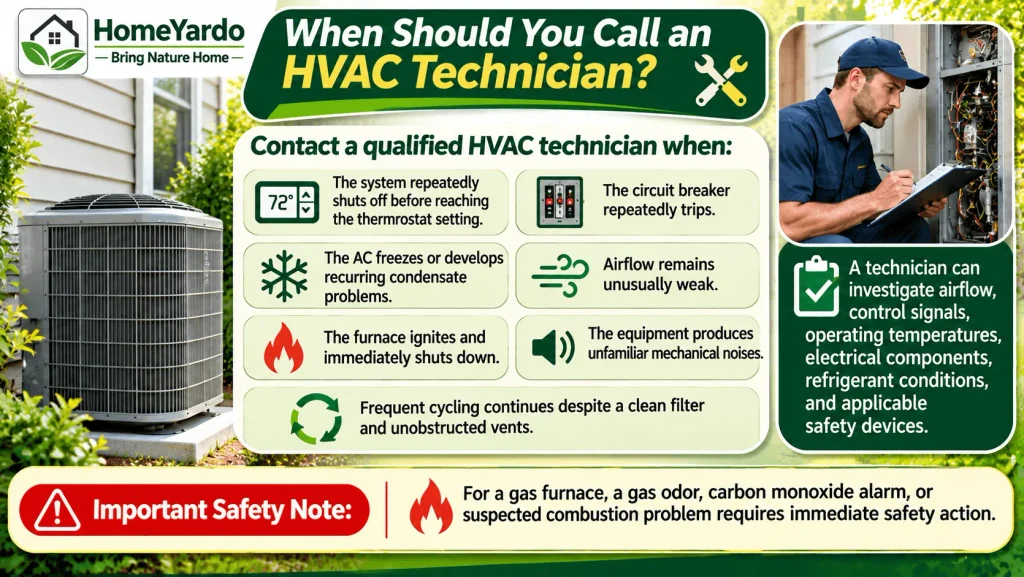
If short cycling continues after basic checks, a professional diagnosis is the next step.
Contact a qualified HVAC technician when:
- The system repeatedly shuts off before reaching the thermostat setting.
- The AC freezes or develops recurring condensate problems.
- The furnace ignites and immediately shuts down.
- The circuit breaker repeatedly trips.
- Airflow remains unusually weak.
- The equipment produces unfamiliar mechanical noises.
- Frequent cycling continues despite a clean filter and unobstructed vents.
A technician can investigate airflow, control signals, operating temperatures, electrical components, refrigerant conditions, and applicable safety devices.
If you need a local professional to evaluate recurring short cycling, a search for qualified service providers, such as Mitchell Heating & Cooling, is a practical next step.
For a gas furnace, a gas odor, carbon monoxide alarm, or suspected combustion problem requires immediate safety action, not routine troubleshooting.
If a carbon monoxide alarm sounds, leave the building and contact emergency services from outside. If you smell gas, leave the area and follow your gas utility’s emergency instructions. Do not operate electrical switches or attempt to locate the leak.
How to Prevent HVAC Short Cycling and Equipment Wear
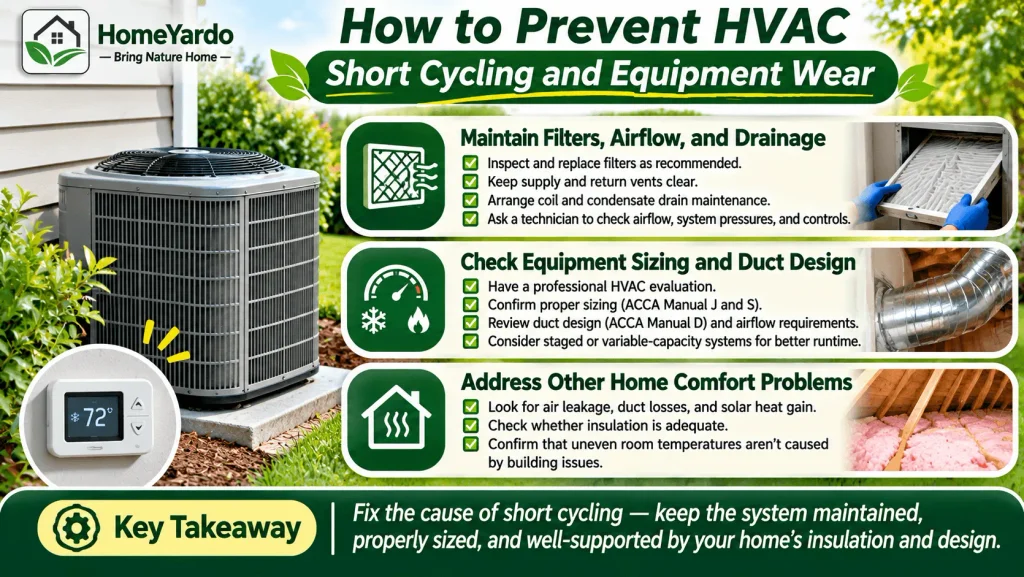
Preventing recurring short cycling means correcting the underlying problem, not simply forcing the equipment to run longer.
Maintain Filters, Airflow, and Drainage
Routine maintenance can help prevent avoidable operating interruptions.
Inspect filters according to manufacturer recommendations and household conditions. Keep supply and return openings unobstructed, and arrange appropriate coil and drainage maintenance.
During professional servicing, ask whether airflow measurements and system pressures fall within the manufacturer’s specifications.
A technician should also check relevant control settings and protective devices when repeated cycling has been reported.
If you want to reduce the likelihood of related cooling problems, review these practical steps to prevent AC breakdowns.
Check Equipment Sizing and Duct Design
A system that has short-cycled since installation may have a capacity or design problem rather than a failed component.
A professional HVAC evaluation can consider:
- ACCA Manual J for residential heating and cooling loads
- ACCA Manual S for equipment selection
- ACCA Manual D for duct design
- Manufacturer airflow and control requirements
- Actual room temperatures and humidity conditions
Replacing an oversized unit with another unit of identical capacity may repeat the problem.
Where suitable, staged or variable-capacity systems can operate at lower output during lighter heating or cooling demand, helping improve runtime and comfort.
However, equipment design and controls still need to be matched to the home.
Address Other Home Comfort Problems
Not every uncomfortable room points to short cycling.
Air leakage, duct losses, solar heat gain, and insufficient insulation can also produce inconsistent temperatures.
If your HVAC system operates normally but certain rooms remain uncomfortable, investigate the building itself.
Our guide to signs your home needs new insulation can help you distinguish possible insulation problems from equipment symptoms.
The goal is to improve the performance of the whole heating and cooling system rather than replace functioning components unnecessarily.
Final Takeaway
HVAC short cycling is a repeated pattern of unusually brief heating or cooling cycles. It can affect comfort, humidity control, energy use, and equipment reliability.
Start by checking the air filter, accessible vents, thermostat settings, and obvious signs of icing or drainage trouble.
If the problem continues, arrange a professional inspection instead of repeatedly restarting the equipment or changing safety-related settings.
The best long-term solution depends on the actual cause. Clean airflow paths, correctly configured controls, properly matched equipment, and routine maintenance help heating and cooling systems operate more reliably.
Frequently Asked Questions
Restricted airflow is a common contributor, particularly when filters are clogged or ducts are obstructed. Thermostat problems, equipment sizing, electrical faults, and protective shutdowns are other possibilities. The most likely cause depends on the type of equipment and the shutdown pattern.
There is no single correct runtime for every system. Cycle length depends on equipment capacity, outdoor conditions, thermostat controls, and heating or cooling demand. Repeated unusually brief cycles, especially when the thermostat setting is not reached, deserve investigation.
Yes. A heavily clogged filter can reduce airflow and contribute to evaporator coil freezing in cooling mode or high-temperature limit trips in heating mode. Replace a dirty filter with one compatible with the system.
Possible explanations include thermostat issues, restricted airflow, an oversized system, refrigerant conditions, drainage switches, or electrical faults. Note whether the indoor blower and outdoor unit stop together, then contact a technician if the pattern persists.
Possible causes include overheating, restricted airflow, flame-sensing issues, venting problems, or malfunctioning controls. Repeated burner shutdowns require professional assessment, particularly when a safety device may be involved.
Yes. Equipment with excessive capacity may satisfy the thermostat quickly and shut down after relatively brief operation. Oversized cooling equipment can also struggle with humidity control. Proper load calculations and equipment selection help prevent this problem.
The risk depends on the cause. Some problems are relatively straightforward, while others involve electrical faults, furnace overheating, or combustion safety. Persistent short cycling should be investigated, and gas odors or carbon monoxide alarms require immediate emergency action.
It can. Frequent startups and poor operating conditions may reduce seasonal efficiency. However, the effect on energy use depends on the equipment and the underlying problem. Short cycling alone cannot establish how much additional energy a household consumes.
You can inspect a dirty filter, verify thermostat settings, and clear blocked accessible vents. Do not attempt repairs involving refrigerant, live electrical components, gas systems, or safety switches. Persistent cycling should be diagnosed by a qualified technician.
A lasting repair requires identifying and correcting the cause. Solutions may include restoring airflow, repairing controls, fixing refrigerant or drainage problems, correcting duct issues, or addressing inappropriate equipment sizing. Routine maintenance can help prevent some problems from returning.