Burlington Flood Recovery: Lessons From The 2014 Floods
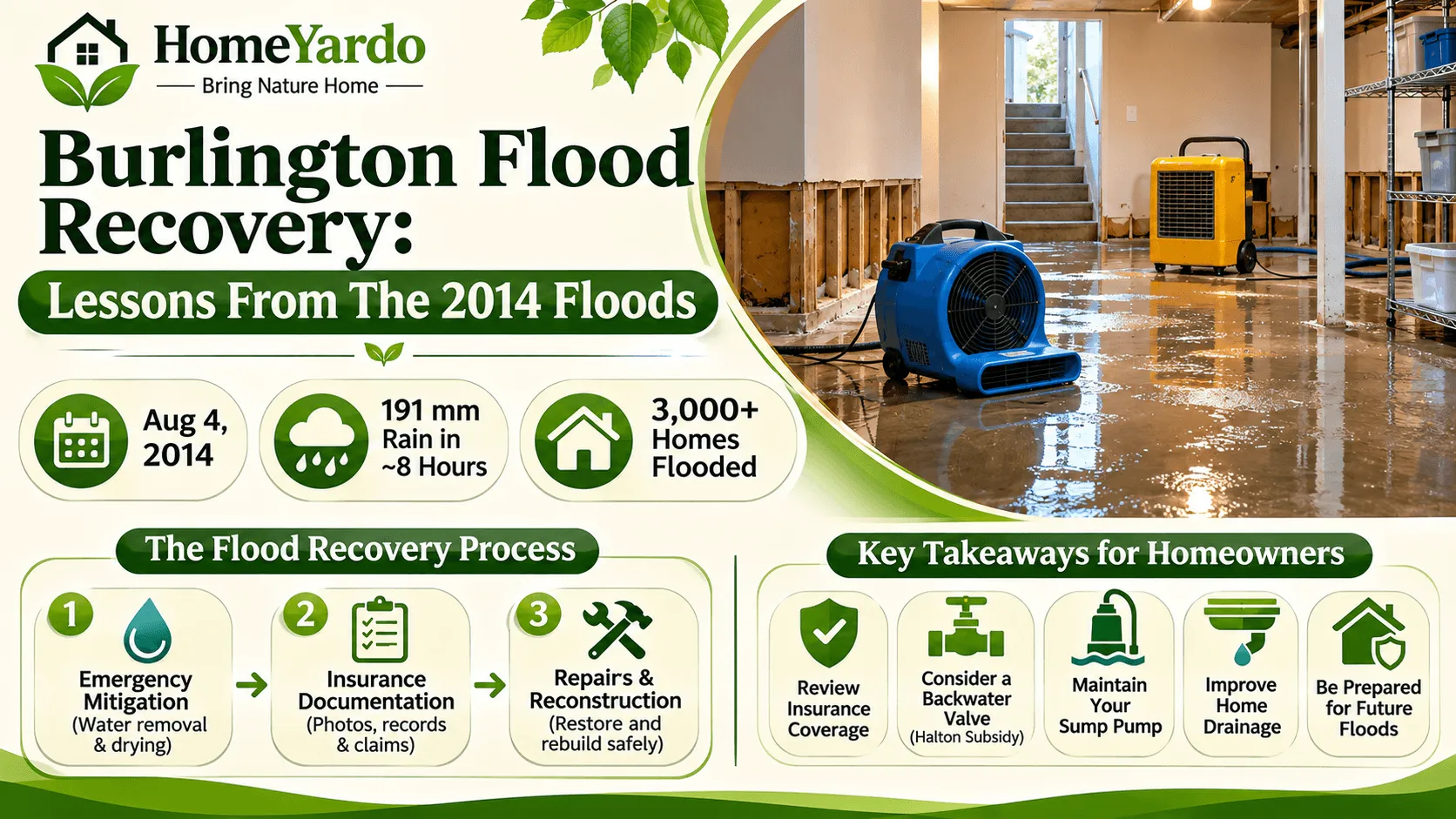
On August 4, 2014, a powerful storm stalled over Burlington, Ontario, dropping 191 millimetres of rain in approximately eight hours. More than 3,000 homes reported flooding, according to the Burlington Foundation, with basement flooding becoming one of the most damaging consequences.
For many families, the storm itself was only the beginning. Removing water, documenting damaged belongings, dealing with insurance claims, and rebuilding their homes took considerably longer.
The experience continues to offer important lessons about Burlington flood recovery, particularly when it comes to choosing restoration professionals, understanding insurance coverage, and protecting homes from future flooding.
The financial risks remain significant. Severe weather caused a record $8.5 billion in insured losses across Canada in 2024, the Insurance Bureau of Canada reported. Summer flooding in the Greater Toronto Area was among the major weather events contributing to those losses.
Burlington homeowners already know that heavy rainfall can overwhelm drainage systems. What often receives less attention is how the recovery process works once water enters a home.
What Burlington’s 2014 Floods Taught Homeowners About Recovery
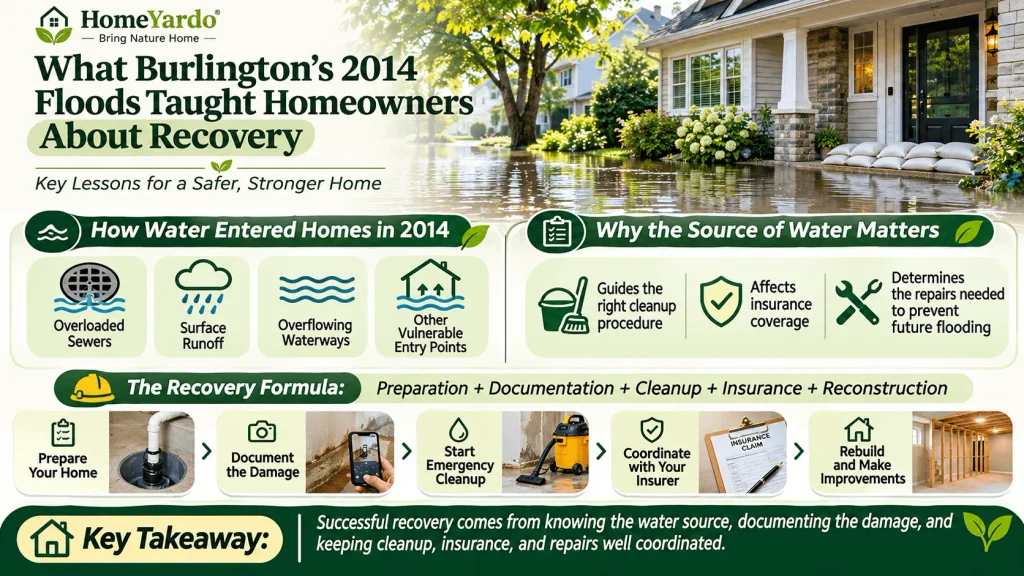
The 2014 storm exposed how quickly several drainage problems can combine during extreme rainfall.
Water entered properties through overloaded sewers, surface runoff, overflowing waterways, and other vulnerable entry points. Some homes experienced more than one type of flooding.
That distinction matters because the source of the water can affect cleanup procedures, insurance coverage, and the repairs needed to prevent another incident.
The larger lesson was that successful recovery depends on preparation and coordination. Homeowners need to understand the damage, document it properly, and make sure emergency cleanup connects smoothly with insurance assessment and reconstruction.
The same principles apply whether a basement experiences several centimetres of water or extensive damage requiring major renovations.
Flood Recovery Is Three Jobs, Not One
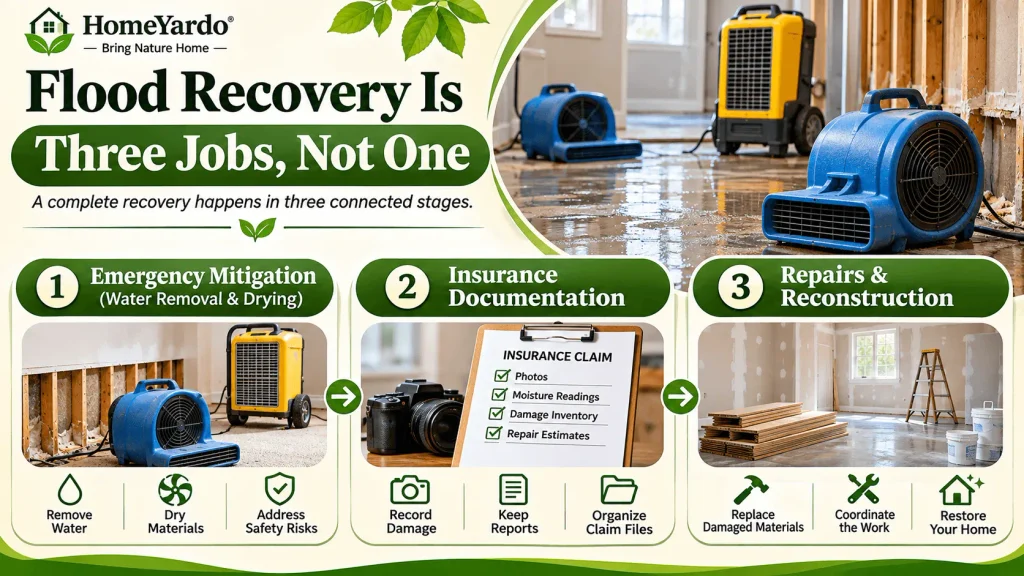
Many homeowners initially think of flood recovery as getting the standing water out of the basement.
In reality, the process involves three connected stages: emergency mitigation, insurance documentation, and rebuilding.
Each stage has different responsibilities, and mistakes in one can delay the others.
Emergency Water Removal and Structural Drying
Emergency mitigation begins when the property is safe to access.
Restoration technicians assess the water source, remove standing water, and identify materials that may require professional cleaning, drying, or replacement.
Wet drywall, insulation, carpet underlay, and flooring can retain moisture long after the visible water disappears. Depending on the contamination and extent of exposure, some materials cannot safely be reused.
Air movers, dehumidifiers, and moisture-measuring equipment help technicians monitor drying conditions.
The goal is not simply to make surfaces look dry. It is to establish that affected materials have reached appropriate moisture conditions before reconstruction begins.
Homeowners should not enter standing water when electrical equipment or wiring may be exposed. Suspected sewage contamination also requires professional assessment and suitable protective measures.
For more general emergency cleanup guidance, HomeYardo’s guide to handling a flooded home explains why water removal, documentation, and safe drying should be addressed promptly.
Insurance Documentation and Claims
Once the immediate dangers are controlled, attention turns to the insurance claim.
The damage must be recorded through photographs, moisture readings, inventories, inspection notes, and repair estimates.
An insurance adjuster may review the cause of the flooding, the affected materials, and the work required to return the home to its pre-loss condition.
Homeowners should preserve photographs, contractor reports, written estimates, and receipts for emergency work.
Problems can arise when different contractors handle extraction, drying, and reconstruction without sharing records.
For example, a damaged wall cavity may be opened during mitigation, but the person preparing the reconstruction estimate may not receive the original photographs or moisture measurements.
Incomplete documentation can lead to additional questions, revised estimates, and delays.
Keeping the claim records organized from the beginning makes the process easier to manage, although it does not guarantee that every repair will be covered.
Repairs and Reconstruction
Reconstruction begins once necessary mitigation is complete, affected areas have been assessed, and the appropriate repair scope has been established.
Depending on the damage, work may include replacing drywall, insulation, flooring, trim, cabinetry, or electrical components.
Some projects also require plumbing work, building permits, inspections, or specialist contractors.
The challenge is maintaining continuity between the professionals who identified the damage and those responsible for rebuilding.
That is one reason companies offering property restoration in Burlington may provide services covering multiple stages of recovery.
Property Worx, based on North Service Road in Burlington, offers an example of a restoration business that homeowners can investigate when seeking coordinated mitigation and reconstruction services.
When evaluating any provider, confirm which services are performed directly, which are subcontracted, and who is responsible for maintaining documentation and coordinating the work.
Having one company oversee the process may reduce communication problems, but homeowners should still compare written scopes, credentials, insurance arrangements, and contract terms.
Questions to Ask a Burlington Flood Restoration Company
The middle of a flood emergency is a difficult time to compare contractors.
Preparing a shortlist before severe weather arrives gives homeowners more time to check qualifications and understand what a restoration company actually provides.
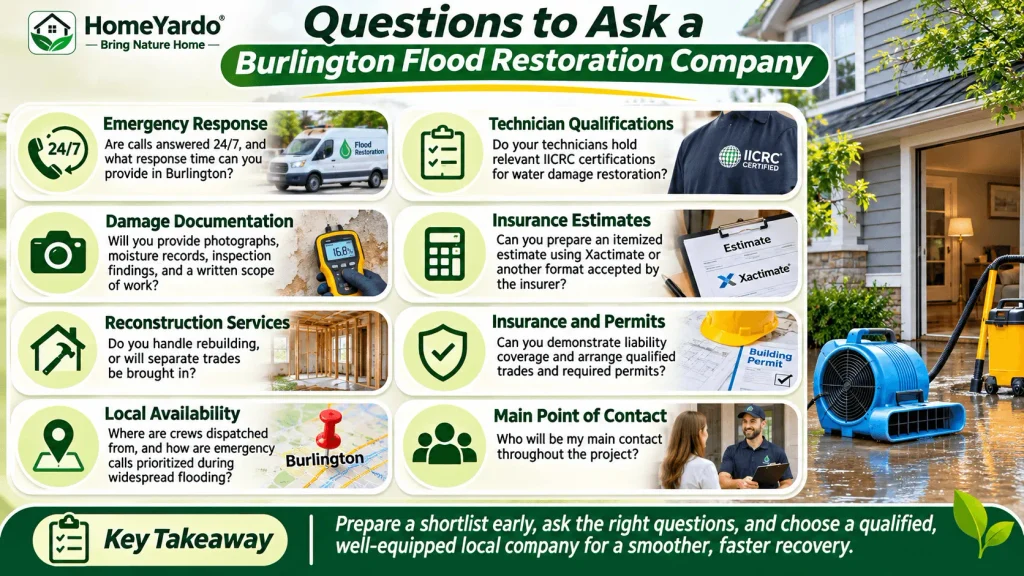
Before choosing a service, consider these questions:
- Emergency response: Is someone available to answer calls 24 hours a day, and what response time can the company realistically provide in Burlington?
- Technician qualifications: Do the technicians hold relevant IICRC certifications for water damage restoration?
- Damage documentation: Will the company provide photographs, moisture records, inspection findings, and a written scope of work?
- Insurance estimates: Can the contractor prepare an itemized estimate using Xactimate or another format accepted by the insurer?
- Reconstruction services: Does the same company handle rebuilding, or will separate trades be brought in?
- Insurance and permits: Can the company demonstrate appropriate liability coverage and arrange qualified trades and required permits?
- Local availability: Where are crews dispatched from, and how are emergency calls prioritized during widespread flooding?
A nearby company may have a logistical advantage, but location alone does not guarantee a faster response. During major storms, even local restoration businesses can face substantial demand.
Ask who will serve as the main contact throughout the project. Having a clearly identified person responsible for communication can make the recovery process more manageable.
What Does Home Insurance Cover After Basement Flooding?

One of the most difficult lessons from Burlington’s flooding is that water damage does not always mean an insurance claim will be covered.
Many Canadian homeowners assume that their standard home insurance policy protects them against every type of basement flooding.
However, sewer backup and overland flooding coverage are often optional add-ons to a standard home policy.
Coverage depends on the specific policy, endorsements, exclusions, limits, and cause of the damage.
The distinction is particularly important in Burlington.
A review of the 2014 storm described how multiple drainage issues contributed to flooding, including sewer surcharging, overflowing waterways, and stormwater entering vulnerable properties.
Water that backs up through a basement drain may be treated differently from surface water entering through a door or foundation opening.
Similarly, water entering through a storm-damaged roof may involve different policy provisions from groundwater seepage or sewer backup.
Before the next storm, contact your insurance broker and ask:
- Does my policy include sewer backup coverage?
- Am I covered for overland flooding?
- What are the coverage limits and deductibles?
- Are there exclusions for groundwater seepage or repeated water entry?
- Does coverage depend on maintaining a backwater valve or sump pump?
- What documentation must I provide after a flood?
If flooding occurs, notify your insurer promptly when it is safe to do so. Ask what emergency mitigation work you can authorize and what records the insurer needs.
Do not delay work necessary to address immediate safety hazards while waiting for a routine claim inspection. Follow the policy’s requirements and keep records of emergency decisions and expenses.
How Burlington Homeowners Can Prepare for the Next Flood
Flood recovery provides an opportunity to correct weaknesses that may have contributed to the original damage.
When basement walls or floors are already open for repair, it may be practical to inspect drainage connections, plumbing, and water-management systems before the space is finished again.
The right improvements depend on how water entered the property.
Backwater Valves and Halton Region Subsidies
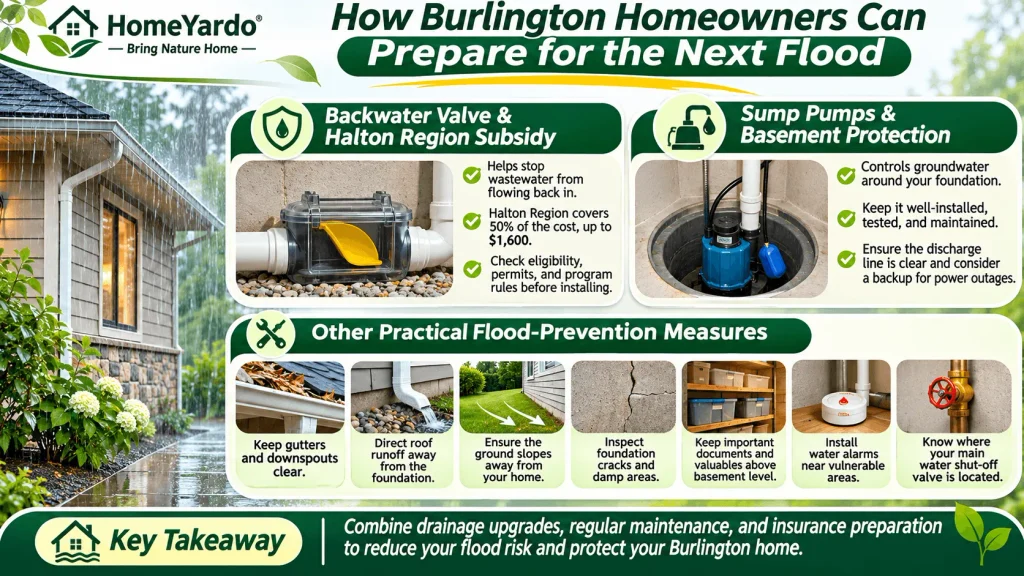
A backwater valve is designed to reduce the risk of wastewater flowing backward through a home’s sewer connection during a sewer surcharge.
It does not prevent every form of basement flooding. Surface runoff, groundwater seepage, and foundation drainage problems may require different solutions.
Halton Region offers a subsidy covering 50 per cent of the cost of installing a backwater valve, up to $1,600 for eligible installations completed after July 15, 2024.
The program has eligibility requirements. The property must meet applicable municipal wastewater connection conditions, and the installation must satisfy program rules.
A licensed plumber or qualified drainage professional should assess whether a backwater valve is appropriate for the home.
Homeowners should review current subsidy requirements, permit obligations, inspections, and application deadlines before arranging the work.
Sump Pumps, Drainage, and Basement Protection
A sump pump can help control groundwater that collects around or beneath a foundation.
However, it needs to be correctly installed, maintained, and connected to a suitable discharge system.
Homeowners should check whether the pump activates properly, whether the discharge line is clear, and whether a backup system would be worthwhile during power outages.
HomeYardo’s sump pump guide explains how these systems work and why regular testing matters.
Other practical flood-prevention measures include:
- Keeping gutters and downspouts clear of debris.
- Directing roof runoff away from the foundation in accordance with local requirements.
- Checking that the ground slopes away from the home where appropriate.
- Inspecting foundation cracks and recurring damp areas.
- Keeping important documents and valuable belongings above basement floor level.
- Installing water alarms near vulnerable appliances and drainage areas.
- Knowing where the main water shut-off valve is located.
A homeowner should also consider whether the property has experienced repeated drainage problems.
HomeYardo’s guide to protecting a home from weather damage covers broader maintenance steps that can help reduce exposure to severe weather.
No single improvement can make a property completely flood-proof. Combining suitable drainage controls, routine maintenance, and insurance preparation provides a more practical approach.
Final Takeaway
Burlington’s 2014 floods demonstrated that the consequences of severe rainfall can last long after the streets have dried.
The most difficult part of recovery is often coordinating emergency cleanup, insurance documentation, and reconstruction while trying to return to normal life.
Homeowners can prepare by checking their insurance coverage, identifying qualified restoration companies, maintaining drainage systems, and understanding the improvements available through Halton Region’s flood-prevention programs.
The aim is not to predict the next major storm. It is to know what to do when water enters the home and to reduce the damage a future event might cause.
Frequently Asked Questions
On August 4, 2014, Burlington experienced exceptionally heavy rainfall, with approximately 191 millimetres falling over eight hours in affected areas. Overwhelmed drainage systems, sewer surcharging, and overflowing waterways contributed to widespread flooding.
More than 3,000 Burlington homes reported flooding during the August 2014 storm. Many homeowners experienced basement damage and required cleanup, repairs, and assistance with recovery.
Prioritize safety and avoid entering water where electrical hazards or sewage contamination may be present. Once the property is safe, contact the insurer, document the damage, and arrange appropriate emergency water removal and drying.
The timeline depends on the amount of water, contamination, affected materials, structural drying requirements, insurance decisions, and reconstruction scope. Minor incidents may require limited repairs, while severe basement flooding can take weeks or months to resolve.
Coverage depends on the cause of the flooding and the terms of the individual policy. Sewer backup and overland flood protection may require separate endorsements, and exclusions or coverage limits may apply.
Look for relevant technician certifications, documented water-damage procedures, appropriate insurance, clear estimates, and experience coordinating mitigation and reconstruction. Ask about actual emergency response capacity and who will manage the project.
Yes. Halton Region operates a basement flooding prevention subsidy program covering certain eligible improvements. Its backwater valve installation subsidy currently covers 50% of eligible costs, up to $1,600 for qualifying work completed after July 15, 2024, subject to program rules.
No. A sump pump can help manage groundwater, but it cannot stop all sewer backups, surface flooding, or water entering through foundation defects. Effective protection depends on identifying and addressing the relevant water-entry risks.