What Winter Storm Uri Taught Texas Homeowners About Ice Melt and Concrete
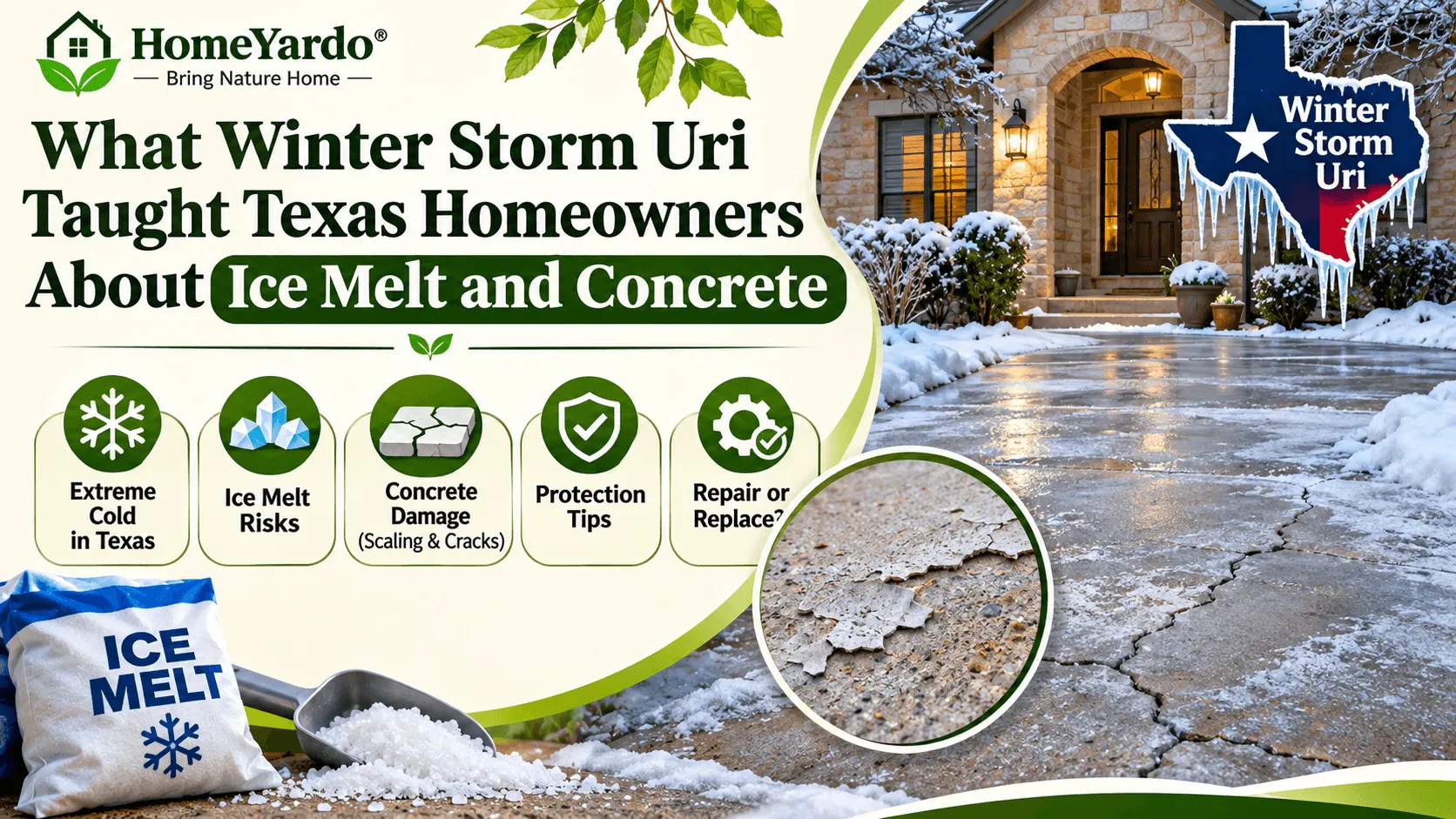
Winter Storm Uri concrete damage revealed an overlooked problem for Texas homeowners: driveways, patios, and walkways that handle extreme summer heat can still suffer serious damage during prolonged freezing weather.
In February 2021, Texas experienced one of its most disruptive winter storms in decades. Ice accumulated on steps and driveways, temperatures stayed below freezing for days, and homeowners reached for rock salt, ice melt, and even lawn fertilizer to make outdoor surfaces safer.
Unfortunately, some of those choices could make concrete deterioration worse. Deicing chemicals, trapped moisture, and repeated freezing can contribute to scaling, flaking, and cracking.
The lesson from Uri is straightforward: protecting concrete during a Texas winter requires more than removing ice. Homeowners also need to understand which deicers to avoid, how freezing affects concrete, and when a damaged slab needs professional attention.
Why Winter Storm Uri Was Different From a Typical Texas Freeze
Texas experiences freezing temperatures most winters, but prolonged cold is less common across much of the state.
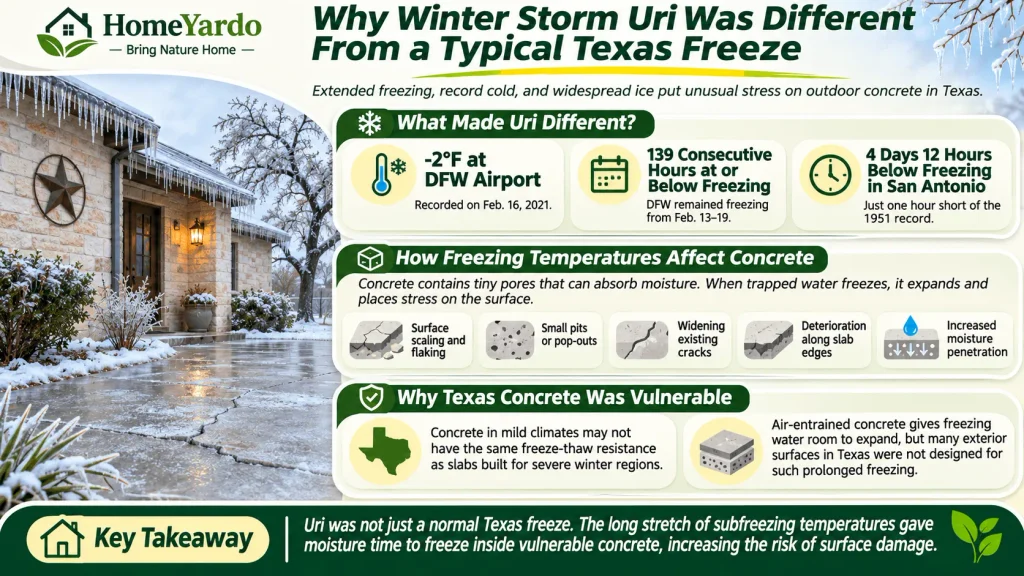
Winter Storm Uri brought a combination of record-breaking temperatures, widespread ice, and extended freezing conditions that put unusual pressure on outdoor concrete.
According to the National Weather Service office in Fort Worth, Dallas/Fort Worth International Airport recorded a temperature of -2°F on February 16, 2021.
The airport remained at or below freezing for 139 consecutive hours between February 13 and 19.
Farther south, San Antonio International Airport spent four days and 12 hours below freezing, just one hour short of the record set in 1951, according to the NWS Austin/San Antonio storm summary.
For Texas homeowners, this extended exposure meant that outdoor surfaces remained cold long enough for moisture to freeze within vulnerable areas of concrete.
How Freezing Temperatures Affect Concrete
Concrete appears solid, but it contains small pores that can absorb moisture.
When water inside those pores freezes, it expands. Repeated freezing and thawing can place stress on the concrete, particularly near the surface.
Over time, that stress may lead to:
- Surface scaling and flaking
- Small pits or pop-outs
- Widening of existing cracks
- Deterioration along slab edges
- Increased moisture penetration
The amount of damage depends on the concrete’s quality, moisture content, finishing, curing, and exposure to freezing conditions.
Concrete designed for severe winter climates often contains intentionally entrained microscopic air bubbles. These give freezing water room to expand and reduce internal pressure.
A driveway constructed for a relatively mild Texas climate may not have the same freeze-thaw resistance.
Homeowners planning new exterior installations can learn more about slab design, drainage, and curing in this guide to residential concrete projects.
Why Ice Melt Can Damage Concrete More Than Expected
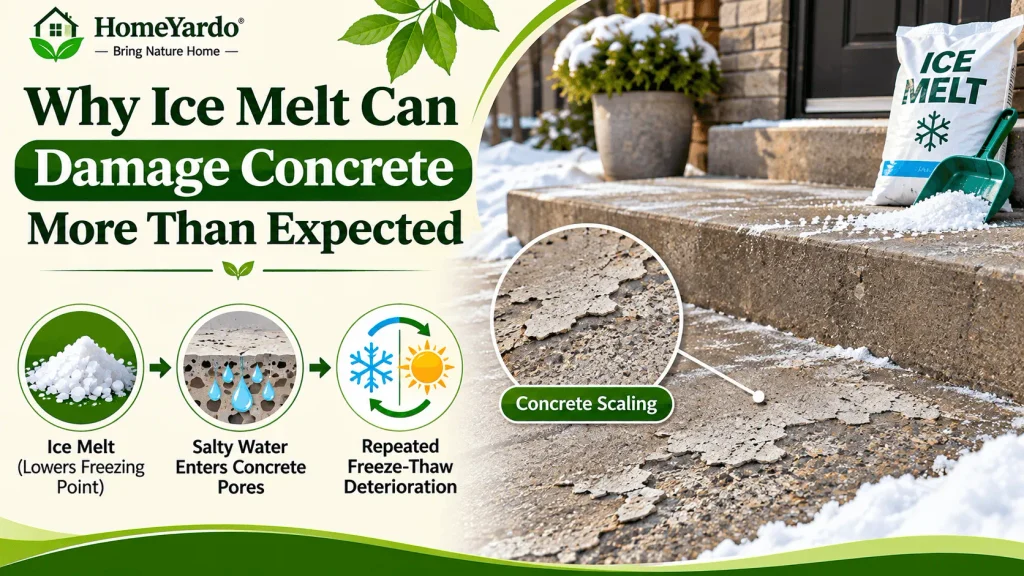
Ice melt helps reduce slippery conditions, but it can also contribute to concrete damage when used incorrectly.
The Pennsylvania Aggregates and Concrete Association explains that deicing chemicals can increase freeze-thaw deterioration.
These products lower the freezing point of water, helping ice melt at temperatures where untreated water would remain frozen.
However, the resulting salty water can enter the pores of concrete. Changes in temperature may then cause repeated freezing and thawing.
Deicers can also contribute to chemical deterioration, depending on their ingredients and the condition of the concrete.
What Is Concrete Scaling?
Concrete scaling occurs when the thin upper layer of hardened cement paste begins to flake or peel away.
It commonly appears as shallow, rough patches that gradually expose the underlying aggregate.
Homeowners may notice scaling:
- Near front entrances and steps
- Along frequently used walkways
- At the driveway entrance
- Around areas where ice melt was heavily applied
- On surfaces where water regularly collects
The damage may become more noticeable after the weather improves and loose material is removed.
Although scaling often begins as a surface problem, extensive deterioration deserves attention because repeated moisture exposure can worsen the condition.
Which Ice Melt Products Should Texas Homeowners Avoid?
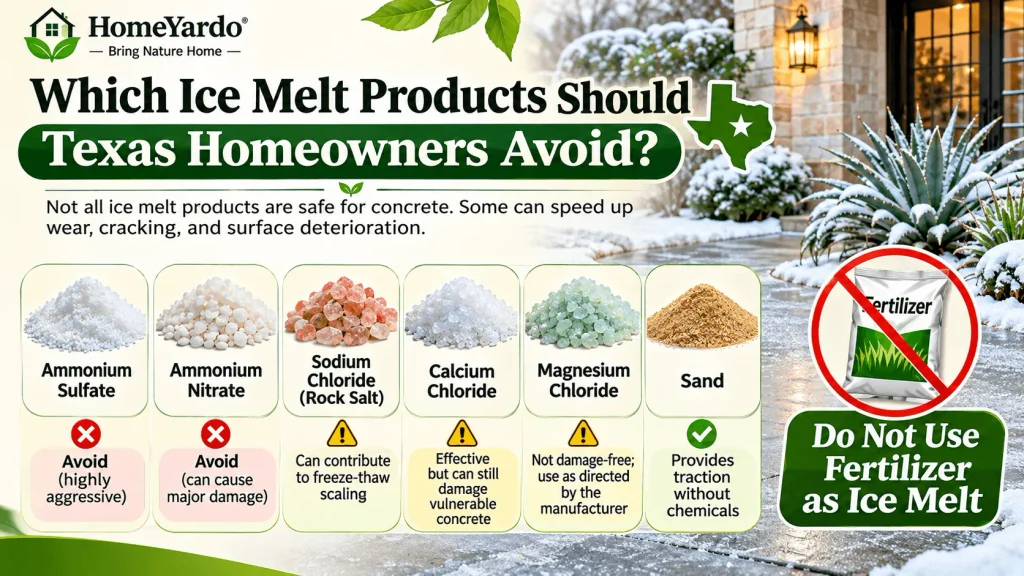
Not every ice melt product affects concrete in the same way.
The chemical ingredients, application rate, slab age, and freezing conditions all influence the risk of damage.
Guidance from University of Nebraska–Lincoln Extension identifies ammonium nitrate and ammonium sulfate as particularly damaging to concrete.
These compounds are sometimes present in lawn fertilizers, making fertilizer an unsuitable substitute for a purpose-made deicer.
Ice Melt Products and Concrete Damage Risks
| Product | Concrete considerations |
|---|---|
| Ammonium sulfate | Particularly aggressive; avoid using it on concrete |
| Ammonium nitrate | Can cause significant deterioration; avoid |
| Sodium chloride (rock salt) | Can contribute to freeze-thaw scaling |
| Calcium chloride | Effective at lower temperatures but can still damage vulnerable concrete |
| Magnesium chloride | Not damage-free; use only according to manufacturer guidance |
| Sand | Provides traction without chemically melting ice |
No chemical deicer should be considered completely harmless to every concrete surface.
Products marketed as concrete-safe may still cause problems when applied heavily or used on young, weak, or already damaged concrete.
Why Fertilizer Should Never Replace Ice Melt
During an unexpected freeze, homeowners may be tempted to spread leftover fertilizer across icy surfaces.
That is a mistake.
Some fertilizers contain ammonium-based compounds that can chemically attack concrete and accelerate surface deterioration.
Fertilizer runoff can also affect nearby plants and waterways.
Use a product specifically intended for winter traction or ice control, and follow its application instructions.
How to Remove Ice Without Damaging Concrete
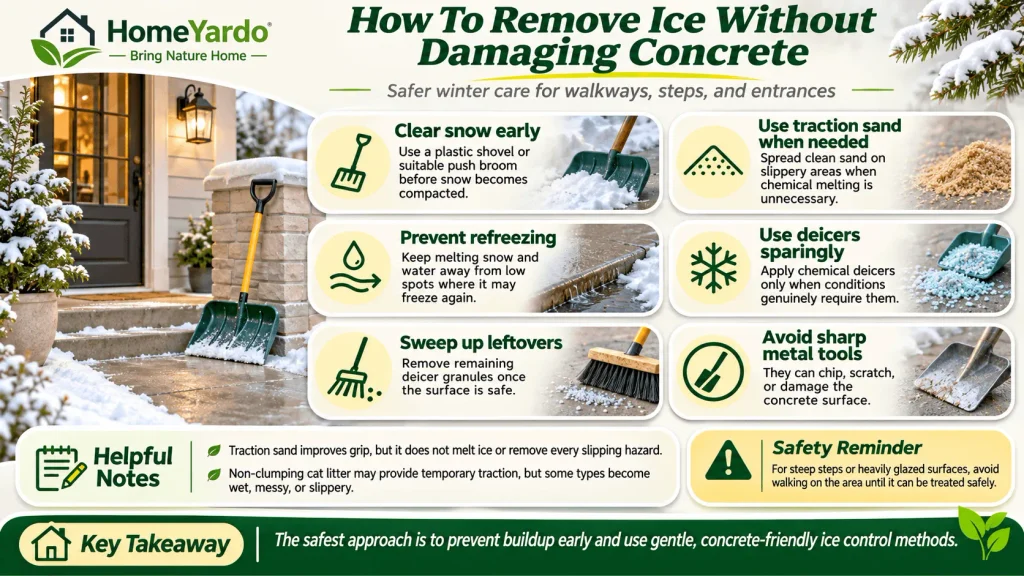
The safest approach is to reduce ice accumulation before it becomes difficult to manage.
Start by clearing snow and slush early, particularly around steps, walkways, and entrances.
A few practical habits can help:
- Remove snow with a plastic shovel or suitable push broom before it becomes compacted.
- Spread clean traction sand on slippery areas when chemical melting is unnecessary.
- Keep melting snow and water away from low spots where they may refreeze.
- Use chemical deicers sparingly when conditions genuinely require them.
- Sweep away remaining deicer granules after the surface is safe and the product is no longer needed.
- Avoid using sharp metal tools that can chip the concrete surface.
Traction sand helps improve grip, but it does not melt ice or eliminate every slipping hazard.
Non-clumping cat litter may provide temporary traction, although some types become slippery or messy when wet.
For steep steps or heavily glazed surfaces, avoid walking on the area until it can be treated safely.
Why New Concrete Needs Extra Protection During Winter
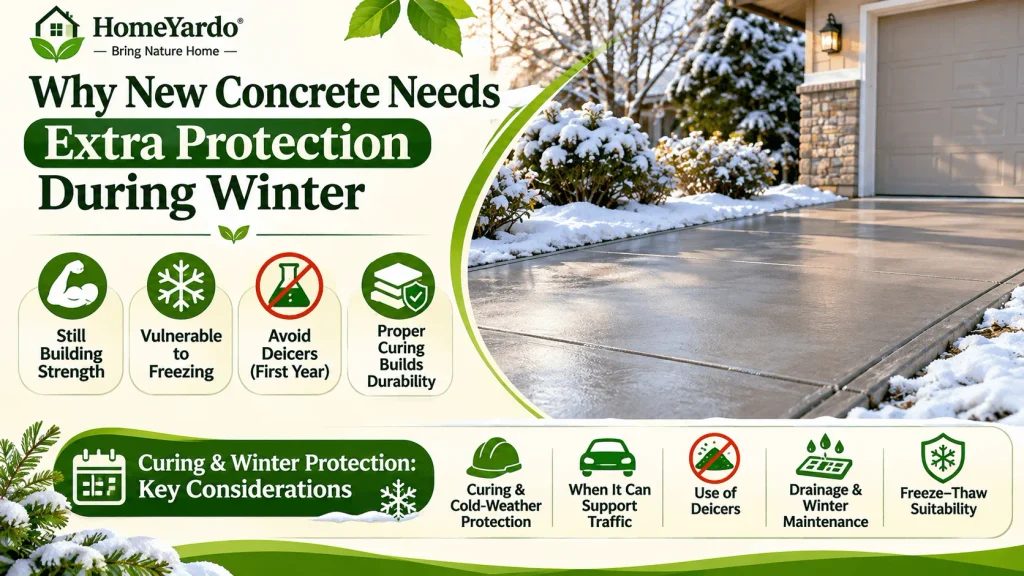
Freshly installed concrete is especially vulnerable to freezing conditions and chemical deicers.
Concrete continues developing strength after placement, and its durability depends heavily on proper curing.
The Pennsylvania Aggregates and Concrete Association recommends avoiding deicers during the first year of a new concrete pavement’s life.
Young concrete also needs protection from freezing before it has developed sufficient strength.
How Long Should New Concrete Cure Before Freezing?
Concrete commonly uses 28 days as a reference period for specified compressive strength, but that does not mean every slab is ready for freezing conditions or chemical exposure after exactly 28 days.
Curing, drying, and resistance to winter weather are different considerations.
The appropriate protection period depends on temperature, mix design, curing conditions, and the contractor’s specifications.
Homeowners installing a driveway or patio in late fall should ask their contractor about:
- Required curing and cold-weather protection
- When the surface can safely support traffic
- Whether deicing products should be avoided
- Recommended drainage and winter maintenance
- Whether the concrete is suitable for freeze-thaw exposure
Planning these details before winter can help prevent avoidable surface damage.
How to Identify Concrete Damage After a Winter Freeze
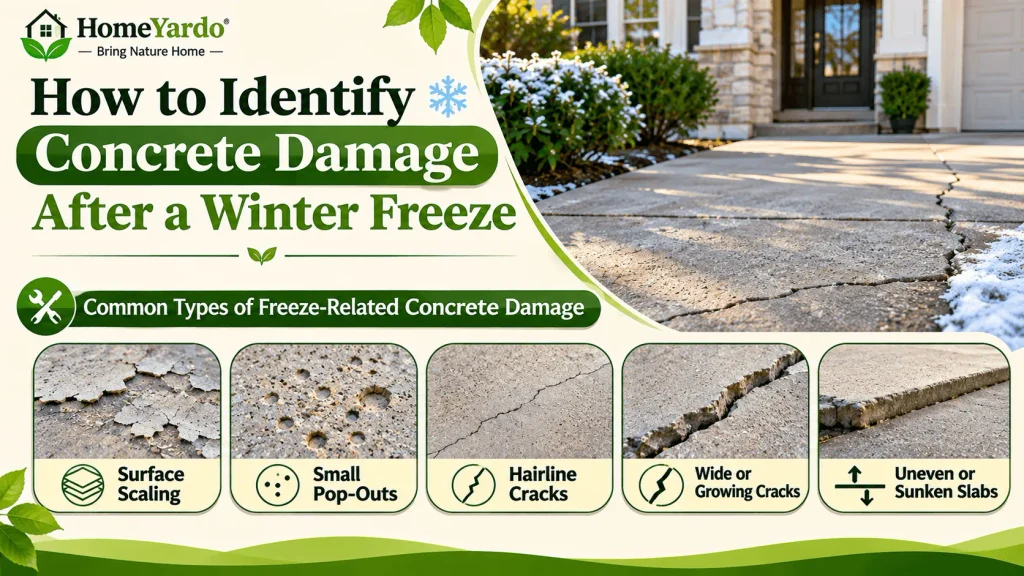
When temperatures rise and the surface dries, inspect outdoor concrete for visible changes.
Not every crack or rough patch means the entire slab needs replacement. Understanding the type of deterioration helps homeowners decide whether maintenance, resurfacing, or a professional assessment is appropriate.
Common Types of Freeze-Related Concrete Damage
| Damage type | Common appearance | Recommended next step |
|---|---|---|
| Surface scaling | Flaking or peeling upper layer | Assess depth and suitability for resurfacing |
| Small pop-outs | Localized pits or exposed aggregate | Monitor and assess the cause |
| Hairline cracks | Thin surface cracks | Check for movement or water entry |
| Wide or growing cracks | Larger openings or displaced edges | Arrange a professional inspection |
| Uneven or sunken slabs | Sections sitting at different heights | Investigate base conditions and drainage |
When Is Concrete Resurfacing Enough?
A concrete slab with shallow surface scaling may be suitable for professional repair or resurfacing when the underlying material remains stable and sound.
Surface preparation matters because a new coating or overlay will not perform well over loose or deteriorating concrete.
Homeowners should avoid covering damage before understanding its cause.
When Does Concrete Need Replacement?
Replacement may be more appropriate when the slab has extensive cracking, significant settlement, substantial material deterioration, or an unstable base.
Texas hardscape contractors such as Zion Outdoors, which serves homeowners in Austin, Dallas–Fort Worth, Houston, and San Antonio, can assess exterior concrete surfaces and discuss suitable improvement options.
Before choosing a repair, ask whether the damage is limited to the surface or involves movement beneath the slab.
If extensive deterioration makes replacement necessary, HomeYardo’s driveway replacement planning guide explains the drainage, layout, and contractor questions worth considering.
How Texas Homeowners Can Protect Concrete Before The Next Freeze
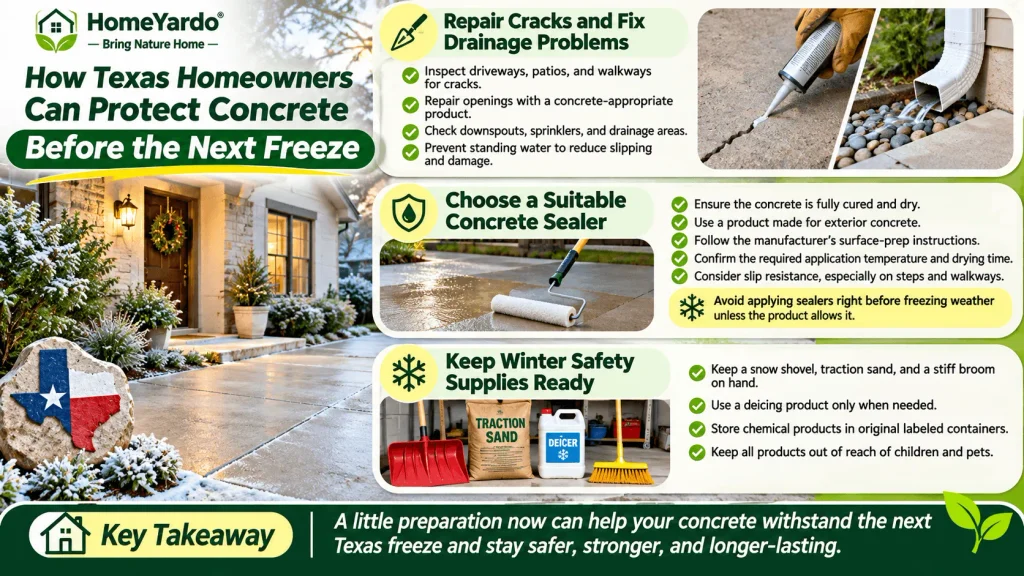
Winter Storm Uri demonstrated why preparation matters, even in regions that rarely experience prolonged winter weather.
A few maintenance steps taken before temperatures drop can help reduce the risk of damage.
Repair Cracks and Fix Drainage Problems
Inspect driveways, patios, walkways, and steps for existing cracks.
Where appropriate, repair openings using products compatible with the concrete and expected movement.
Check downspouts, sprinkler systems, and nearby drainage areas to prevent water from collecting on concrete before freezing weather.
Standing water can turn into a slipping hazard and contribute to deterioration.
Choose a Suitable Concrete Sealer
A properly selected and applied concrete sealer can help reduce moisture and chloride penetration.
However, sealers vary in formulation, performance, and suitability for particular surfaces.
Before applying one:
- Check whether the concrete is fully cured and dry enough.
- Choose a product intended for exterior concrete.
- Follow the manufacturer’s surface-preparation instructions.
- Confirm the required application temperature and drying conditions.
- Consider slip resistance, particularly on steps and walkways.
Avoid applying sealers immediately before freezing weather unless the product specifications permit those conditions.
Sealing is preventive maintenance, not a repair for significant cracking or unstable concrete.
Keep Winter Safety Supplies Ready
Texas homeowners may have little time to shop once a severe winter weather warning is issued.
Keeping basic supplies in the garage can prevent rushed decisions.
Useful items include a suitable snow shovel, traction sand, a stiff broom, and a carefully selected deicing product when needed.
Store chemical products in their original labeled containers and keep them away from children and pets.
Final Takeaway
Winter Storm Uri showed that Texas concrete can face serious stress when prolonged freezing temperatures, trapped moisture, and deicing chemicals combine.
The biggest lesson is not that homeowners should avoid ice control altogether. It is that the products and methods used to manage ice can affect the long-term condition of concrete.
Clear snow early, avoid fertilizer-based deicers, protect new concrete, and keep water from pooling on driveways and steps.
If surface deterioration appears after a freeze, determine whether it is cosmetic or a sign of deeper damage before investing in resurfacing or replacement.
A little preparation before the next Texas cold snap can help protect both your outdoor surfaces and the people using them.
Frequently Asked Questions
Winter Storm Uri created freezing conditions capable of damaging vulnerable concrete driveways. Prolonged cold, moisture penetration, and deicing chemicals can contribute to surface scaling and cracking. The actual damage depends on the condition and construction of each slab.
Yes. Some ice melt products can contribute to surface scaling, freeze-thaw deterioration, and chemical damage. The risk depends on the ingredients, application amount, concrete age, and weather conditions.
Avoid products containing ammonium nitrate or ammonium sulfate. Other chemical deicers can also damage vulnerable surfaces, so always follow the manufacturer’s guidance.
Rock salt can help melt ice, but it is not completely safe for concrete. Sodium chloride can contribute to freeze-thaw scaling, especially when moisture repeatedly enters and freezes within the surface.
It is generally best to avoid chemical deicers on new concrete during its first winter. The Pennsylvania Aggregates and Concrete Association recommends avoiding deicers during the first year after placement.
Sometimes. Minor surface scaling may be repairable or suitable for resurfacing, while extensive cracking, settlement, or deeper deterioration may require more substantial work.
A suitable concrete sealer can reduce water and chloride penetration, helping lower certain deterioration risks. However, sealing cannot guarantee protection against every type of freeze-related damage.
Remove snow early, improve drainage, avoid aggressive deicers, use traction sand where appropriate, and maintain cracks and sealers before freezing weather arrives.