
What Window Treatments Can And Can’t Do During A Hurricane
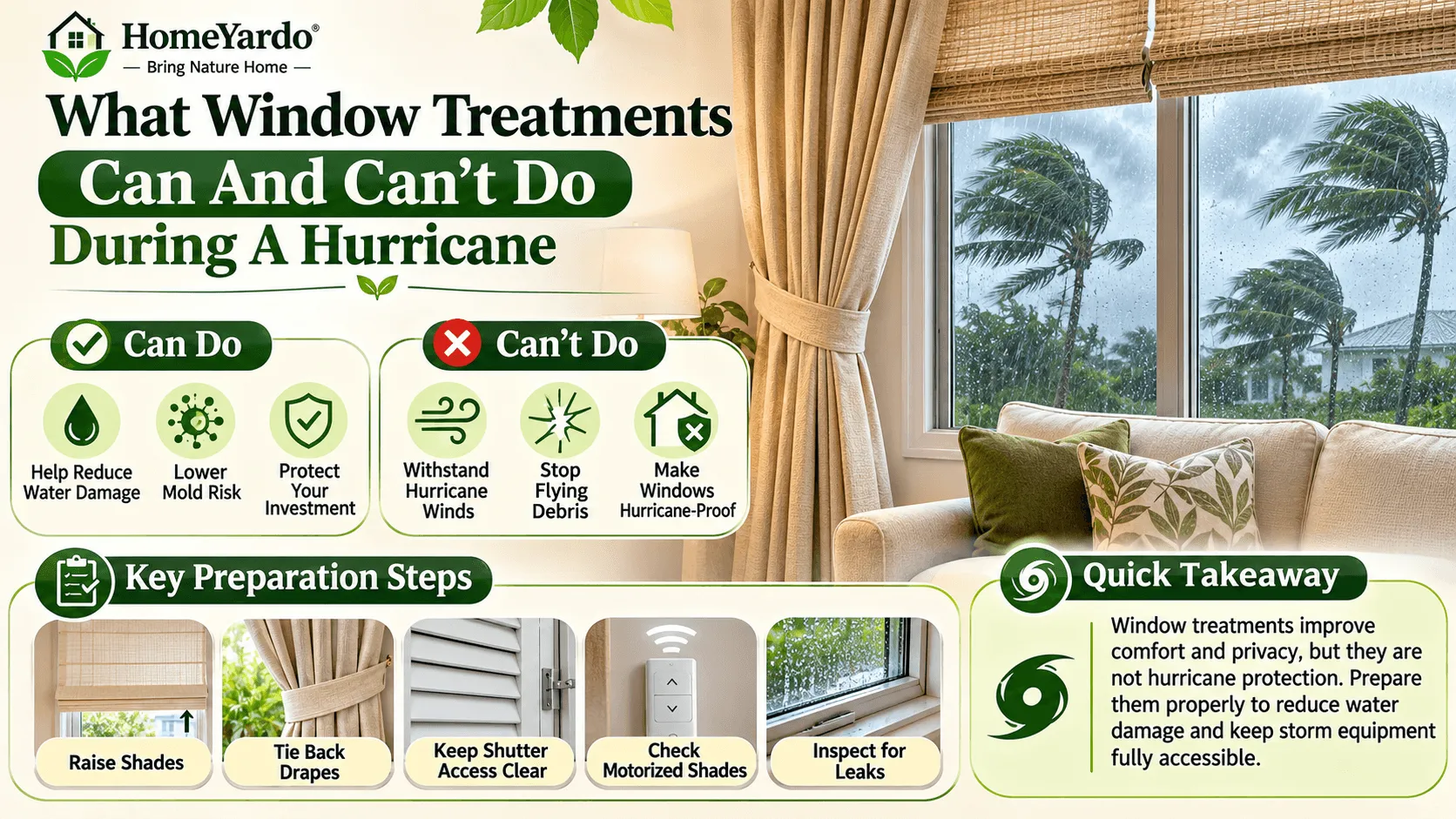
Every hurricane season in South Florida raises a familiar question for homeowners: what happens to your blinds, shades, curtains, and drapes when a major storm approaches?
Interior window treatments cannot protect your home from hurricane-force winds or flying debris. However, preparing them properly can reduce the risk of water damage, mold, and avoidable replacement costs.
For Miami homeowners and condo residents, the goal is simple: understand what window coverings can and cannot do, keep them clear of storm-protection equipment, and prepare them before severe weather arrives.
When Is Hurricane Season in South Florida?
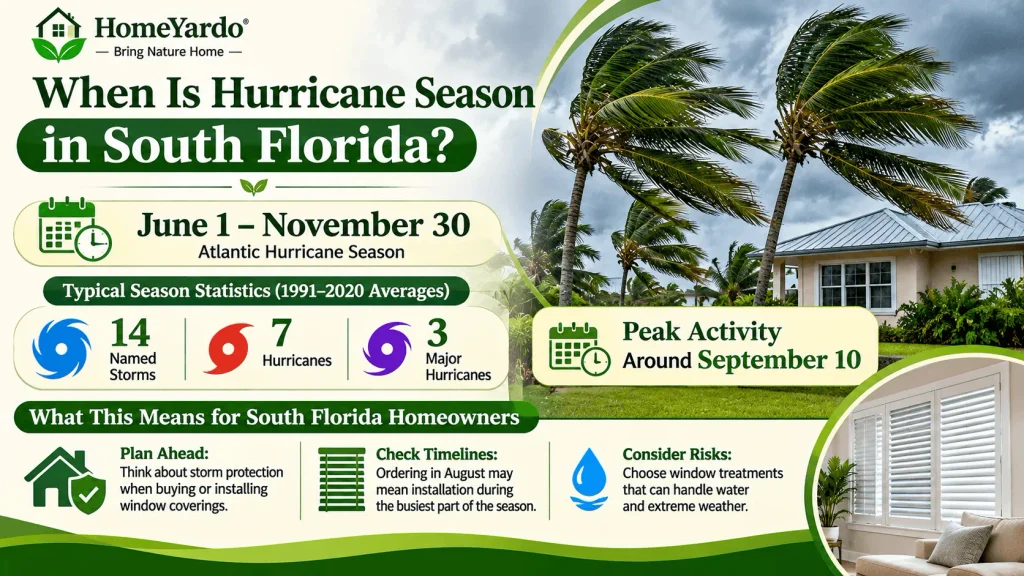
According to the National Hurricane Center, the Atlantic hurricane season runs from June 1 through November 30, with the historical peak occurring around September 10.
Based on 1991–2020 climate averages, a typical Atlantic season produces 14 named storms, seven hurricanes, and three major hurricanes. Storm activity remains possible well into October and November.
For South Florida homeowners, this lengthy season affects more than emergency supplies and exterior maintenance. It also influences decisions about purchasing, installing, and maintaining interior window coverings.
Ordering custom shades in August, for example, may mean installation takes place during the busiest part of hurricane season.
If you are planning new window treatments, consider storm-protection access, installation timelines, and potential water exposure before finalizing the design.
Can Window Treatments Protect Against Hurricanes?
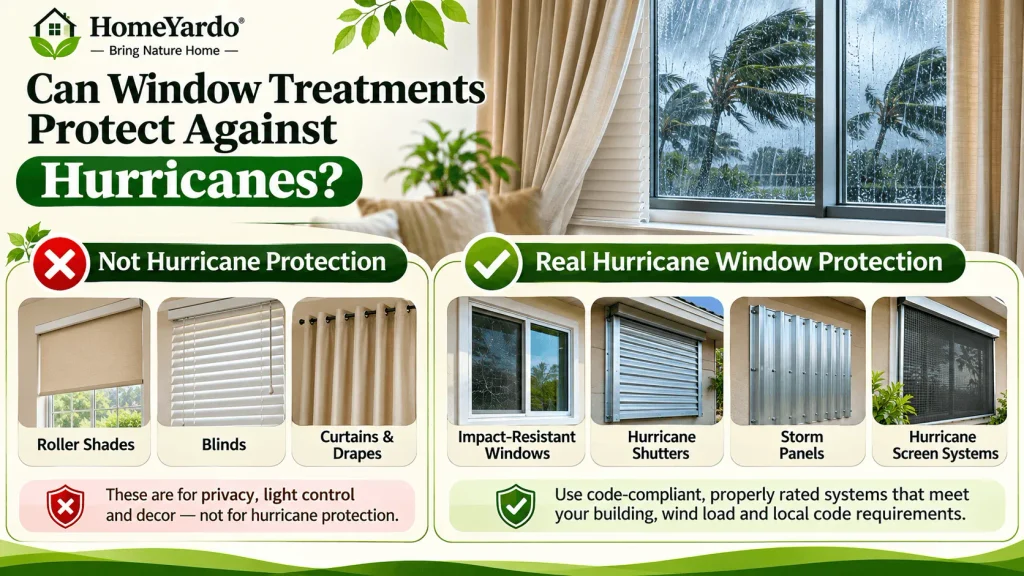
No. Ordinary interior roller shades, blinds, curtains, and drapes are not designed or approved to protect windows from hurricane-force winds, flying debris, or severe wind-driven rain.
Although heavy curtains may catch some loose glass fragments after a window breaks, they cannot be relied upon to prevent injuries or keep the building secure.
Actual hurricane protection comes from properly selected and installed systems, such as:
- Code-compliant impact-resistant windows and glass assemblies.
- Approved hurricane shutters.
- Properly rated storm panels.
- Approved exterior hurricane screen systems.
These protective systems must be suitable for the building, opening dimensions, applicable wind loads, and local code requirements.
Decorative interior shutters should not be confused with hurricane-rated shutters. They serve different purposes and are not interchangeable.
If severe weather threatens, follow local emergency guidance and shelter in a designated safe location away from windows. Never depend on closed blinds or curtains for personal protection.
Homeowners should also understand what gets damaged in a storm, since window failure is only one of several risks associated with severe weather.
How Hurricanes Cause Water and Mold Damage To Window Treatments
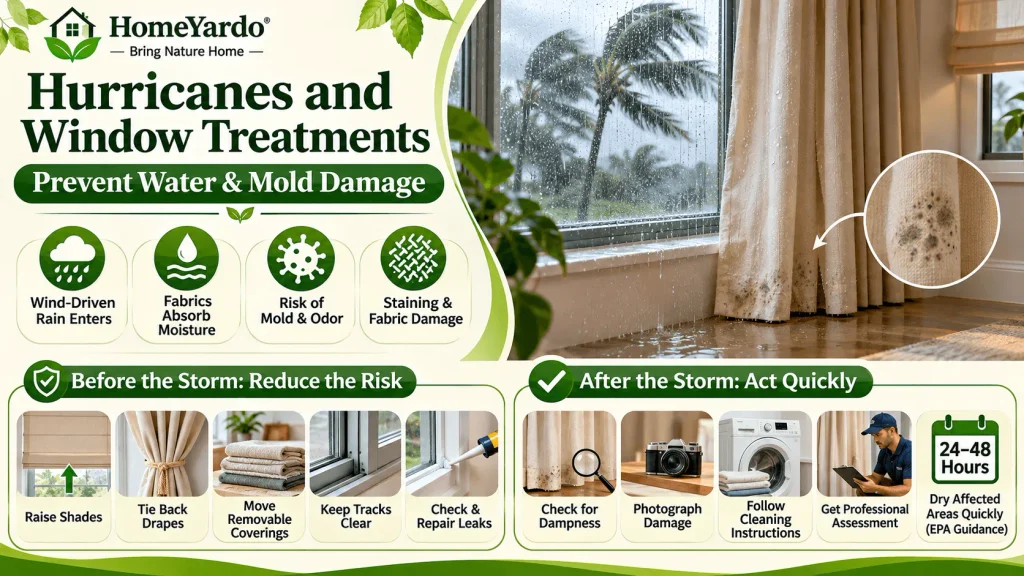
Water intrusion is one of the most realistic threats to interior window coverings during a hurricane.
Wind-driven rain may enter through aging window seals, sliding door tracks, balcony thresholds, damaged frames, or other vulnerable openings. Even when the glass remains intact, nearby fabrics can become wet.
Long drapes that touch the floor are particularly exposed. Roman shades near leaking frames, layered curtains, fabric valances, and upholstered cornices can also absorb moisture.
The concern is not simply that fabric becomes wet. Prolonged dampness can cause staining, unpleasant odors, fabric deterioration, and mold growth.
The EPA’s guide to mold and moisture recommends drying water-damaged areas and materials within 24 to 48 hours to help prevent mold growth.
In South Florida, high humidity and post-storm power outages may make drying considerably more difficult.
How to Protect Curtains, Blinds, and Shades From Water Damage
A few practical steps before and after a hurricane can help limit damage to window coverings.
Before the storm:
- Raise roller shades and Roman shades away from vulnerable windowsills.
- Tie back or lift long drapes so they do not touch the floor.
- Move removable fabric coverings away from windows with known leaks, when safe and practical.
- Keep window tracks, shutter controls, and storm-panel access points unobstructed.
- Check existing window seals and report leaks that require professional repair.
After the storm:
- Check the lower edges of curtains and shades for dampness or discoloration.
- Inspect windowsills and sliding door tracks for water intrusion.
- Photograph damaged coverings before removing or cleaning them.
- Follow manufacturer cleaning instructions for washable fabrics.
- Arrange prompt professional assessment for heavily soaked, lined, or difficult-to-dry materials.
Absorbent window coverings that remain wet or develop mold may not be suitable for reuse. Expensive custom drapes should be evaluated by a qualified textile-cleaning or restoration specialist.
Do not handle wet window treatments near damaged electrical wiring or outlets. If a window is broken or the surrounding structure is unstable, wait until the area has been made safe.
What Happens to Motorized Shades During a Power Outage?
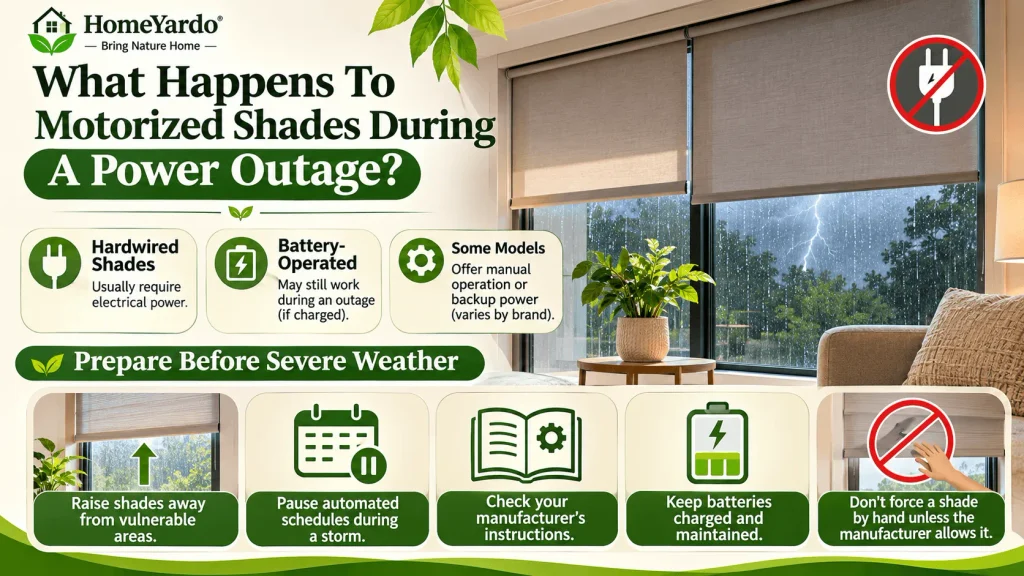
Motorized window treatments offer convenient daily light and privacy control, but their operation depends on the power system and motor design.
Hardwired shades generally require electrical power, while battery-operated systems may continue functioning during an outage if sufficient charge remains.
Some motorized products also support manual operation or backup power. These features vary by manufacturer and model.
The safest approach is to prepare motorized coverings before severe weather begins.
Raise shades away from vulnerable windowsills, sliding door tracks, and balcony thresholds while the system is operating normally.
If your system uses scheduled automation, consider pausing routines that could lower the shades during a storm. An automated setting intended for everyday sunlight control may be inconvenient when water intrusion becomes a concern.
For homes with several motorized coverings, check the manufacturer’s instructions for battery maintenance, manual overrides, and safe operation during power interruptions.
Avoid attempting to force a motorized shade by hand unless its manufacturer specifically permits manual operation.
Florida Condo Rules for Hurricane Protection and Window Treatments
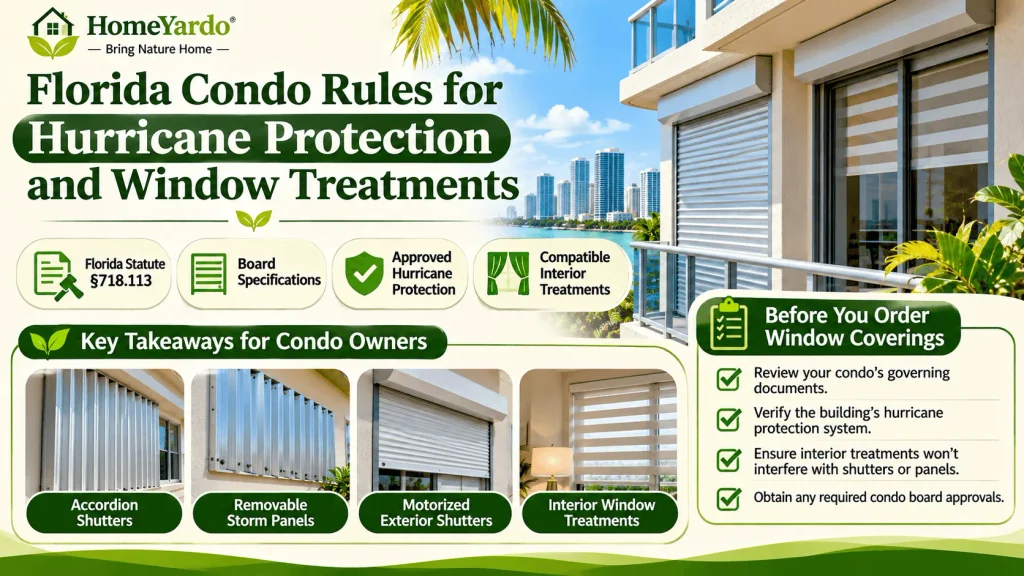
South Florida condominium owners often face additional considerations when planning window treatments around hurricane-protection equipment.
Under Section 718.113 of the Florida Statutes, residential and mixed-use condominium boards must adopt hurricane-protection specifications for their buildings.
These specifications may address exterior appearance, installation requirements, and compliance with applicable building codes.
Where condominium documents require approval, a board generally cannot refuse hurricane protection installed by an owner when the proposed system meets the adopted specifications. The board may still require consistency with the building’s exterior design.
The statute also permits a board to operate hurricane protection without an owner’s permission when necessary to preserve and protect condominium property or association property.
For individual condo owners, the practical consideration is ensuring that interior treatments do not interfere with approved exterior storm-protection systems.
Before ordering custom coverings, verify whether the building uses accordion shutters, removable storm panels, motorized exterior shutters, or other protective equipment.
For example, when a company such as Shades by Mia Casa measures windows for new coverings in a Miami high-rise, providing information about shutter tracks, panel anchors, and operating hardware can help prevent installation conflicts.
Condo owners should also review their association’s governing documents and obtain required approvals before modifying any exterior component.
How to Plan Window Treatment Installation Around Storm Protection
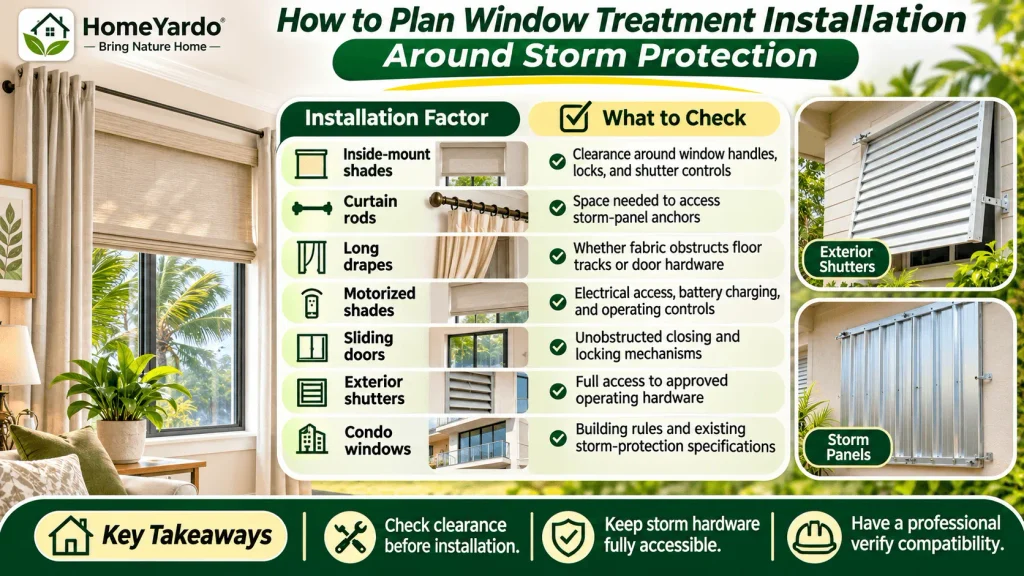
Planning window treatments and hurricane-protection equipment together can prevent practical problems during an emergency.
A shade may look attractive and operate smoothly under normal conditions but still obstruct access to a shutter latch or removable storm-panel anchor.
Similarly, long drapery panels may become tangled around nearby hardware, while poorly positioned brackets may interfere with the operation of sliding doors or windows.
The solution is to evaluate both systems before installation.
Start by checking the exact position and operating clearance required for the existing storm-protection equipment.
Consider the following installation factors:
| Installation factor | What to check |
|---|---|
| Inside-mount shades | Clearance around window handles, locks, and shutter controls |
| Curtain rods | Space needed to access storm-panel anchors |
| Long drapes | Whether fabric obstructs floor tracks or door hardware |
| Motorized shades | Electrical access, battery charging, and operating controls |
| Sliding doors | Unobstructed closing and locking mechanisms |
| Exterior shutters | Full access to approved operating hardware |
| Condo windows | Building rules and existing storm-protection specifications |
If an inside-mounted shade blocks critical equipment, an outside-mounted treatment may be more practical, provided its placement does not create another obstruction.
Window coverings should never prevent doors from closing, windows from locking, or approved hurricane-protection systems from operating correctly.
A professional installer should verify that new brackets, rods, and shade assemblies do not interfere with existing protective equipment.
For homeowners still comparing styles, HomeYardo’s guide to window treatments for your home explains how different coverings manage privacy, sunlight, and everyday indoor comfort.
Window Treatment Hurricane Preparation Checklist
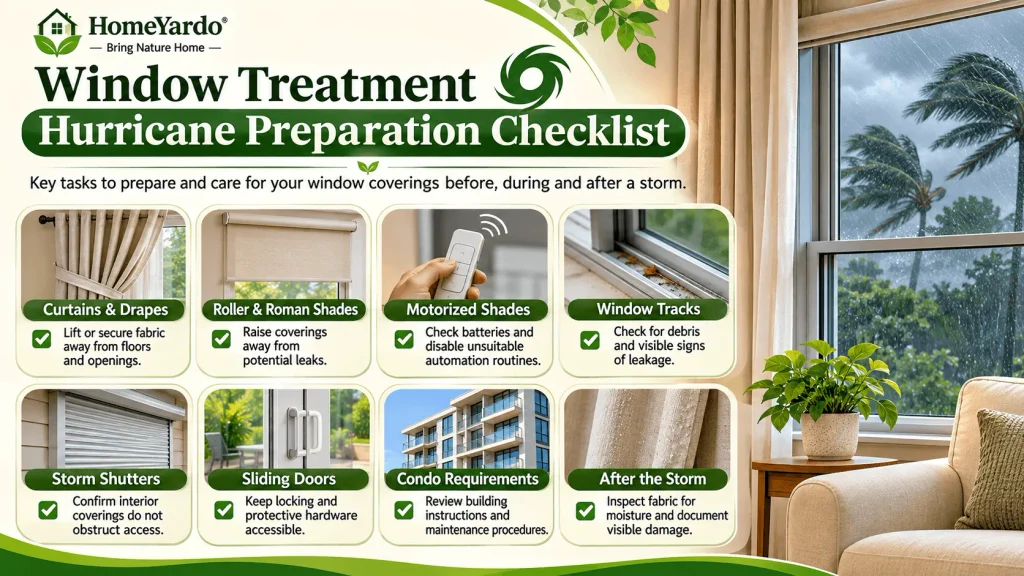
Window coverings should be included in your household storm-preparation routine, even though they are not protective safety equipment.
Use this checklist while conditions are still safe and before tropical-storm-force winds arrive.
| Task | Recommended action |
|---|---|
| Curtains and drapes | Lift or secure fabric away from floors and vulnerable openings |
| Roller and Roman shades | Raise coverings away from potential leaks |
| Motorized shades | Check batteries and disable unsuitable automation routines |
| Window tracks | Check for debris and visible signs of leakage |
| Storm shutters | Confirm that interior coverings do not obstruct access |
| Sliding doors | Keep locking and protective hardware accessible |
| Condo requirements | Review building instructions and maintenance procedures |
| After the storm | Inspect fabric for moisture and document visible damage |
This checklist supports the care of interior window treatments. It does not replace an official hurricane preparedness plan, evacuation instructions, or approved storm-protection systems.
Complete these tasks before conditions become dangerous. Never approach damaged windows or attempt last-minute adjustments during hurricane-force winds.
Final Takeaway
Window treatments can improve comfort, privacy, and the appearance of your home, but they cannot provide dependable hurricane protection.
For South Florida homeowners, preparation means keeping blinds, shades, and drapes away from potential water intrusion while ensuring that approved shutters, panels, and window systems remain fully accessible.
Whether you are installing new coverings or preparing existing ones for hurricane season, planning ahead can help reduce moisture damage, protect your investment, and make storm preparation easier.
Frequently Asked Questions
No. Ordinary interior blinds, shades, and curtains cannot withstand hurricane-force winds or flying debris. Use code-compliant hurricane-protection systems suitable for your property.
Raise blinds or shades before the storm when doing so keeps them away from potential leaks and leaves storm-protection hardware accessible. Their position does not make the windows hurricane-resistant.
Usually, removing curtains is unnecessary if they can be lifted or secured away from vulnerable areas. Removable fabrics near known leaks may be taken down in advance when safe.
Yes. If a window fails or wind-driven rain enters the building, indoor coverings can be torn, displaced, soaked, or damaged by broken glass.
Battery-powered shades may continue operating if sufficiently charged. Hardwired shades generally stop without electricity unless their system includes compatible backup power.
Yes. Damp curtains and other absorbent materials may develop mold when moisture remains trapped. Prompt drying and correcting the source of water intrusion help reduce the risk.
No. Ordinary decorative plantation shutters are not equivalent to approved exterior hurricane shutters. Only products and assemblies rated and approved for the relevant use should be relied upon for storm protection.
Condominium associations have adopted hurricane-protection specifications under Florida law. Owners should review those specifications and their governing documents before installing or replacing protective systems.
Raise shades, lift drapes away from floors, address known leaks, and keep storm-protection hardware accessible. After the storm, inspect coverings promptly and arrange professional care for heavily soaked fabrics.