
A Homeowner’s Planning Guide To Driveway Replacement
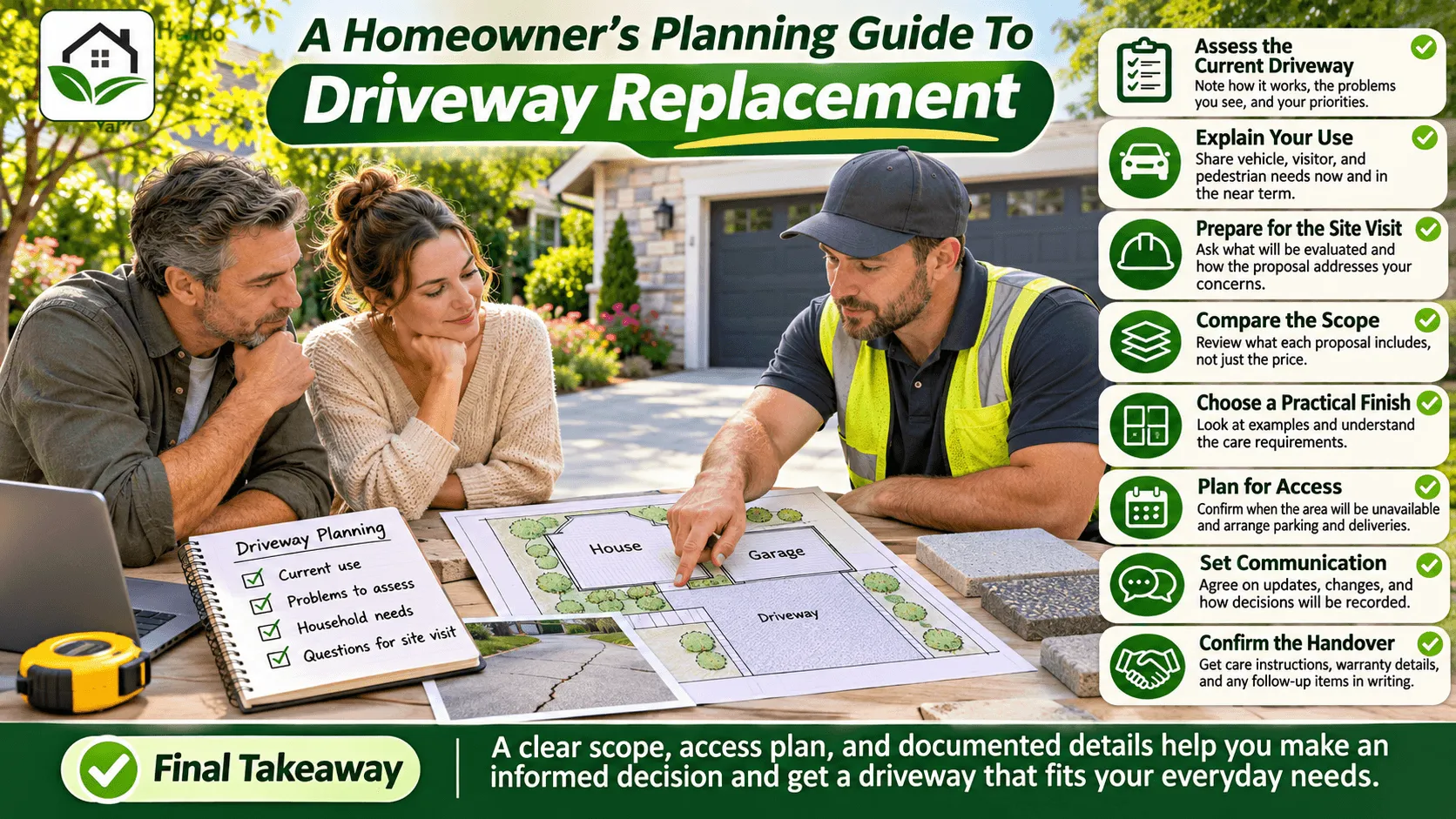
A driveway replacement affects more than the view from the street. It changes how vehicles reach the house, where deliveries arrive, and how people move between the sidewalk, garage, and front door. Planning those everyday details is as important as choosing a finish.
Before requesting proposals, spend a little time describing how the existing driveway works and where it causes frustration. You do not need to determine the construction method yourself. A useful brief gives the contractor observations, priorities, and questions that can be evaluated during a site visit.
Look At The Driveway As Part Of The Property
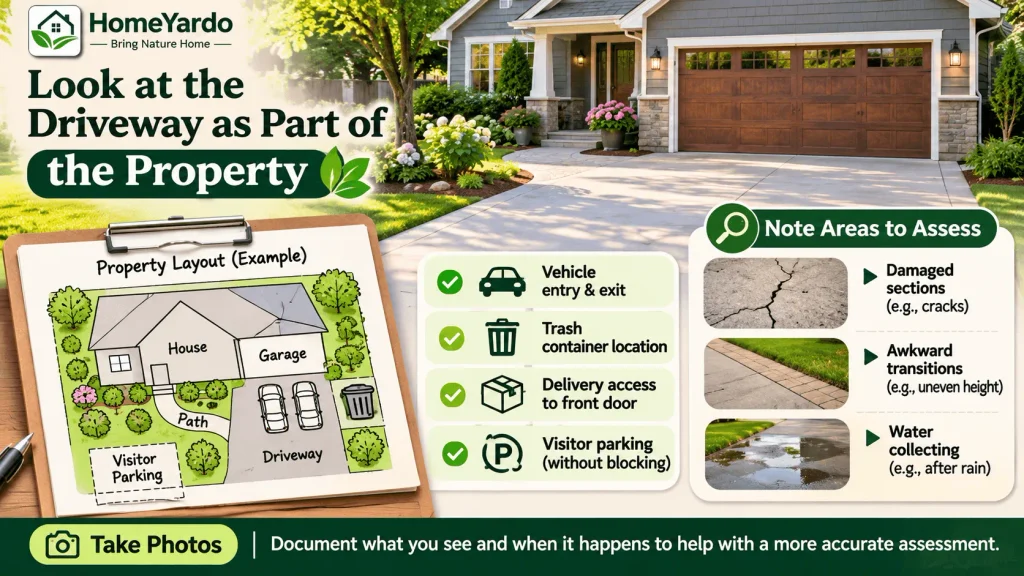
Begin with a simple sketch showing the house, garage, paths, planting beds, and driveway. Mark the places people use to enter and leave vehicles. Note where trash containers are stored, how deliveries reach the front door, and whether a visitor can park without blocking another vehicle.
Add the problems you want assessed. These might include damaged sections, an awkward transition, or water collecting in a particular area. Describe what you see and when you see it. Do not assume that a crack or puddle identifies its underlying cause. Photos taken safely from ground level can help explain the concern without replacing an in-person evaluation. For broader project considerations, homeowners can also review HomeYardo’s home improvement guide.
Explain How You Actually Use The Space
A driveway that serves one compact car may have different practical demands from one used by several vehicles and visiting relatives. Tell the contractor about your current use and any realistic changes you anticipate. Avoid guessing at construction specifications based on vehicle size; ask the professional to translate your needs into an appropriate proposal.
Consider pedestrian use too. Carrying groceries, moving a stroller, and walking from a parked car to the entrance are part of the driveway’s role. If someone has particular mobility needs, describe those needs and seek suitable professional input. An attractive layout should not be assumed to solve access concerns without assessment.
Ask What the Site Visit Will Establish
Request an explanation of the existing conditions the contractor will evaluate. Ask how the proposed work addresses the issues you have observed and which conditions may remain unknown until removal begins. A good planning conversation separates what is visible now from what can only be confirmed later. For concrete projects, base preparation, slab design, joint placement, and curing may also influence long-term performance. HomeYardo’s residential concrete guide provides additional background on those construction considerations.
Homeowners researching Midwest Hardscapes driveway replacement can use the service page to begin questions about removal, base preparation, drainage, and concrete finishing. Those topics should then be discussed in the context of the actual property rather than treated as identical requirements for every driveway.
Ask whether repair and replacement are both reasonable options to evaluate. If replacement is recommended, request the reasoning in plain language. Understanding the scope of the problem is more useful than assuming the most extensive project is automatically the appropriate one.
Compare Scope Before Comparing Prices
Have each proposal identify the area covered and the work included. Ask about removal and disposal, preparation, transitions to adjoining surfaces, and restoration of any areas affected by the project. If an item is not mentioned, request clarification rather than assuming it is included in the total.
Talk through any allowances or conditions that could change the price. Ask how unexpected findings would be documented and how additional work would be approved. Keep the current proposal together with any drawings or written clarifications. This makes it easier to understand what you are accepting before the site is disturbed.
It can help to create a comparison sheet with one column per proposal. Use rows for the same categories of work, not just the final figure. An unanswered question should remain marked as unanswered until you receive a response. Otherwise, a missing item can look like a saving when the two scopes are simply different.
Choose an Appearance With Everyday Use in Mind
Ask to see examples of the proposed finish and how it relates to the rest of the property. Consider the home’s exterior, nearby paths, and any surfaces you plan to retain. A close-up photograph of a finish may not show how it looks across a larger area, so request examples that help you understand scale.
Discuss care requirements before choosing decorative options. Ask what cleaning products and practices are appropriate for the proposed surface and what ongoing attention it may need. Avoid selecting a finish solely because a picture looks effortless; the practical question is whether its care requirements fit the way you maintain your home.
Make an Access Plan Before Work Starts
Find out when the driveway and adjoining areas will be unavailable. Ask the contractor for project-specific instructions about pedestrian access, vehicle access, and when different uses can resume. Do not substitute a generic online timetable for the instructions relevant to the materials and conditions of your project.
Arrange alternative parking and think through daily arrivals and departures. Tell household members where to leave vehicles before work begins. Discuss deliveries, service visits, school routines, and anyone who may need help reaching the entrance. If access affects a neighbor, coordinate practical arrangements rather than assuming everyone will know what is happening.
Ask where equipment and materials will be placed and which areas need to remain clear. Identify landscaping or other property features that should be discussed before work starts. Keep children and pets out of the work area and follow the contractor’s site-access instructions rather than trying to inspect active work at close range.
Agree on Communication And Project Records
Choose a primary contact and ask how updates will be shared. Discuss what happens if weather or another condition changes the sequence of work. A clear communication plan does not guarantee a particular completion date, but it can reduce confusion about what is happening next and what the household needs to do.
Keep approved selections, scope changes, and access instructions in one place. If a conversation changes the project, ask for the decision to be recorded. This is especially useful when more than one household member is involved and not everyone attends every discussion.
Finish With a Clear Handover
At completion, ask for the care instructions, applicable warranty information, and the right contact for future questions. Review any outstanding items with the contractor and record the agreed next steps. Clarify restrictions that still apply rather than assuming the surface is ready for every use because the crew has left.
A well-planned driveway project begins with ordinary questions about how the property functions. When those questions become a clear scope and an access plan, you can review the proposal with more confidence. The goal is not merely a new surface, but an informed decision about an important part of everyday life at home.
Final Takeaway
Planning a driveway replacement begins with understanding how the existing driveway functions, what problems need attention, and how construction will affect the household.
A clear site assessment, detailed written proposal, practical access arrangements, and documented handover can help homeowners avoid misunderstandings and evaluate the finished project against agreed expectations.
The objective is not simply to install a new surface. It is to make a carefully considered improvement that supports the property’s everyday use.
FAQ’s
Start by inspecting the current driveway, documenting damage and drainage concerns, and listing your household’s parking and access needs. Schedule contractor evaluations, compare written estimates, select an appropriate finish, and arrange alternative parking before work begins.
Widespread deterioration, recurring settlement, serious elevation differences, and persistent structural problems may indicate that replacement is worth considering. A contractor should evaluate the surface and underlying conditions before recommending repair or complete removal.
Ask about previous projects, site preparation, drainage, materials, permits, insurance, removal and disposal, construction timing, warranties, and unexpected costs. Request clear written explanations of the proposed work and any exclusions.