What Hail Does to Your Home’s Exterior Paint, and How Calgary Homeowners Should Repair It
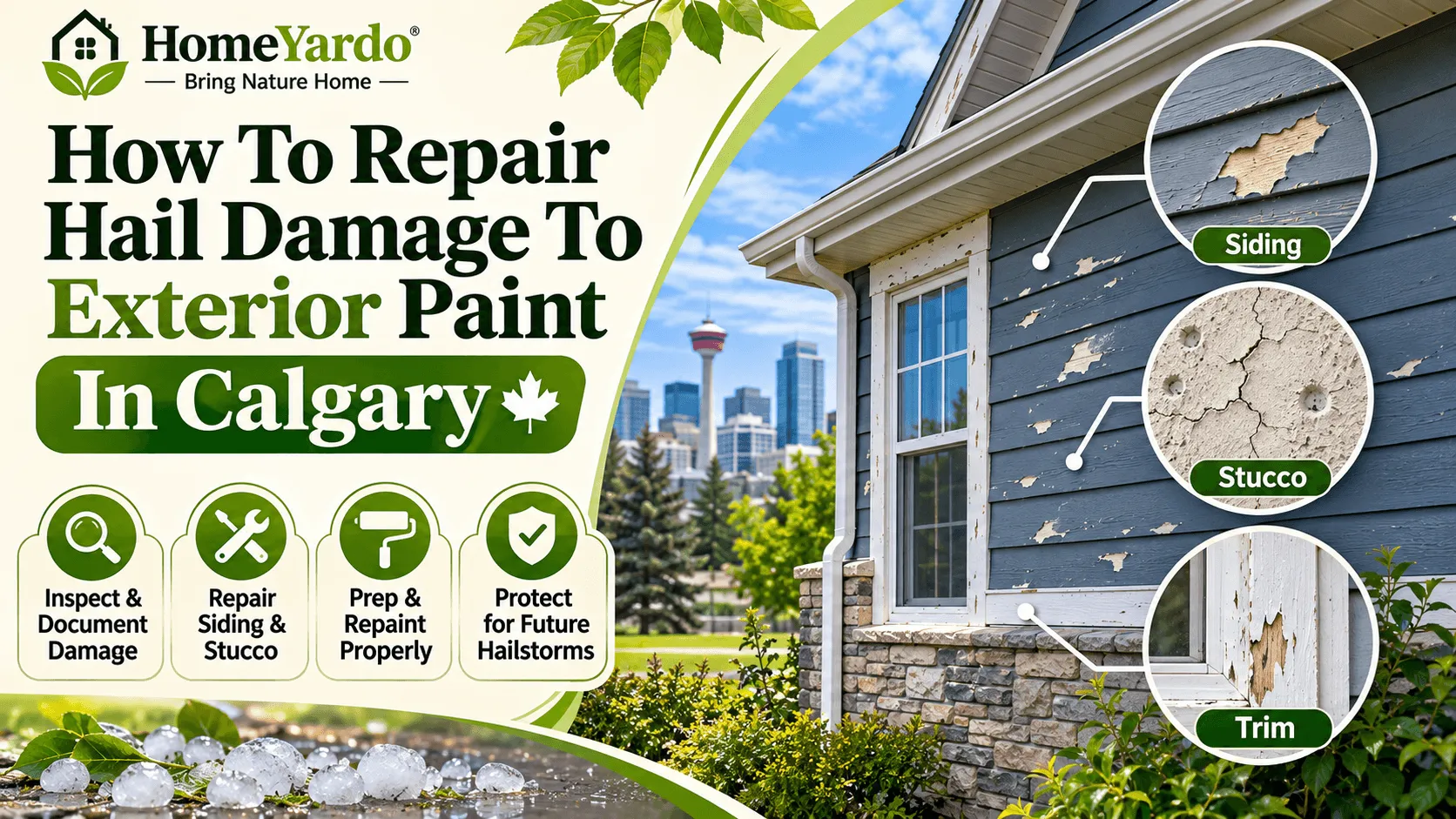
Hail damage to exterior paint can leave Calgary homes with chipped siding, cracked stucco, exposed wood, and damaged trim. These marks may seem cosmetic at first, but once moisture reaches the underlying material, the damage can become more expensive to repair.
After a Calgary hailstorm, most homeowners check their roofs, windows, and vehicles. The paint, stain, and stucco covering the rest of the house often receive less attention. Unfortunately, small cracks and chips can become bigger problems when freezing temperatures arrive.
Knowing where to inspect, how to document the damage, and when to repaint can help you protect your home’s exterior and avoid repairs that fail after one winter.
Why Hail Damage Is a Recurring Problem for Calgary Homes
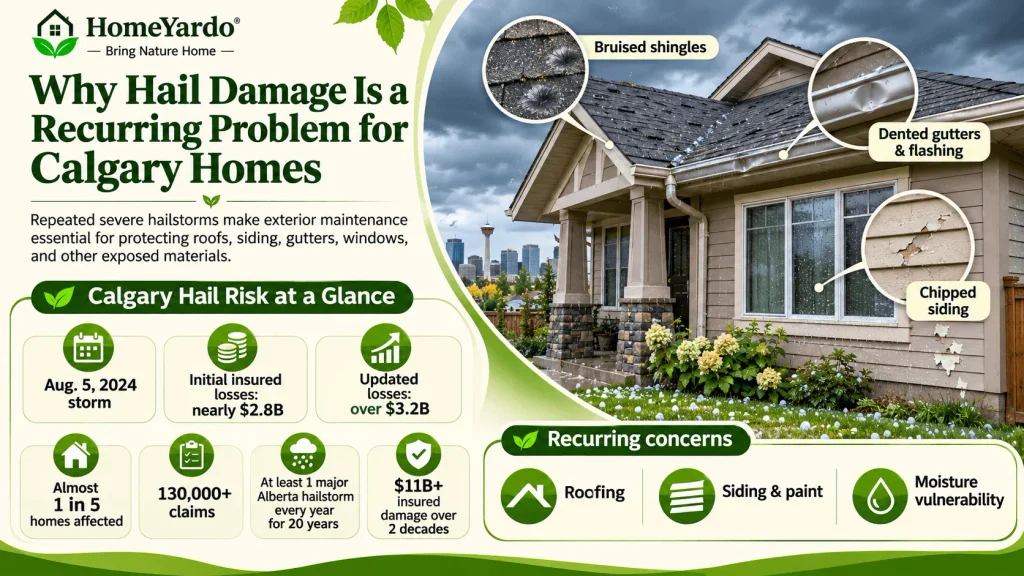
Calgary experiences repeated severe hailstorms, making exterior maintenance an important part of protecting residential properties.
The storm on August 5, 2024, demonstrated just how costly these events can become.
According to the Insurance Bureau of Canada, initial estimates placed insured losses at nearly $2.8 billion. Almost one in five Calgary homes was affected, and insurers were processing more than 130,000 claims.
The estimated losses were later revised to over $3.2 billion, making it the costliest hailstorm in Canadian history.
An August 2025 update reported that Alberta had experienced at least one major hailstorm every year for the preceding two decades, with more than $11 billion in total insured damage.
For Calgary homeowners, these figures highlight a practical concern: exterior finishes should be maintained with future hailstorms in mind.
Even when hail does not cause obvious structural damage, it can weaken protective coatings and leave surfaces vulnerable to moisture.
Where Hail Damage Hides on Exterior Painted Surfaces
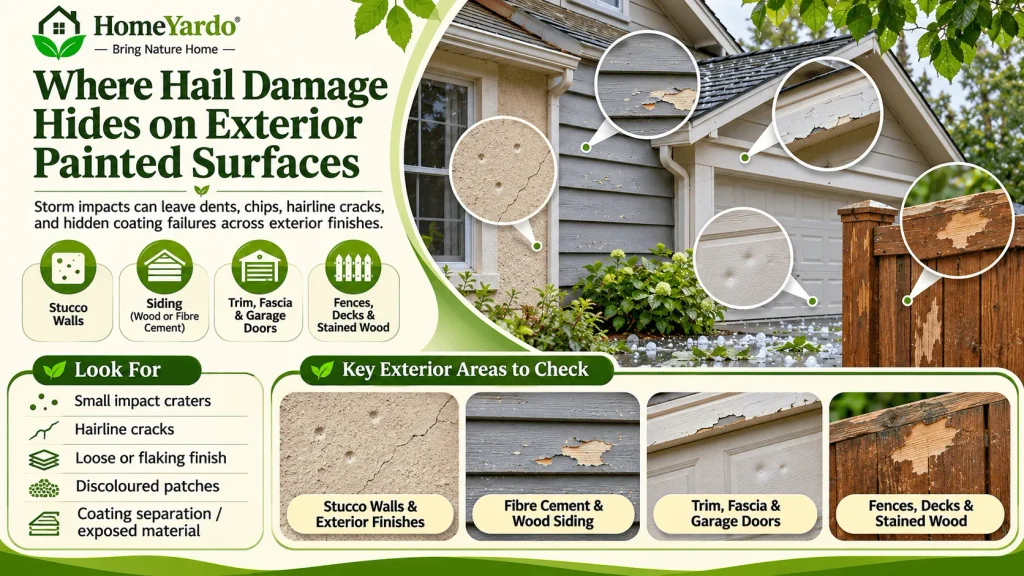
Hail damage is not always immediately visible. Some impacts leave noticeable dents, while others create tiny cracks or chips in protective coatings.
The appearance depends on the size and direction of the hailstones, the surface material, and the condition of the existing finish.
Stucco Walls and Exterior Finishes
Stucco can develop small craters, chipped finishes, and hairline cracks after a hailstorm.
These marks deserve attention because damaged stucco may allow water to enter the wall assembly.
During Calgary’s winter, moisture trapped in vulnerable areas can freeze and expand, worsening existing cracks.
Look for:
- Small impact craters
- Hairline cracks around impact points
- Loose or flaking finishes
- Discoloured patches
- Areas where the coating has separated
Not every surface crack indicates deep damage. However, widespread cracking, hollow-sounding areas, or signs of moisture should be assessed by a qualified stucco contractor.
Fibre Cement and Wood Siding
Painted wood and fibre cement siding can lose their protective coatings when struck by hail.
Wood is particularly vulnerable when chipped paint exposes untreated fibres. Moisture can penetrate the surface and contribute to swelling, peeling, or decay.
Fibre cement siding may also suffer coating damage, especially around exposed edges and joints.
Pay attention to corners, board ends, and areas where impact marks have exposed the underlying material.
Trim, Fascia, and Garage Doors
Exterior trim, fascia boards, and garage doors can show hail impacts more clearly than textured siding.
Painted metal garage doors may develop dents without losing their protective finish. However, chipped coatings on steel surfaces can expose the metal to corrosion.
Wooden trim and fascia require closer inspection because damaged paint can allow moisture into vulnerable joints and exposed ends.
Fences, Decks, and Stained Wood
Hail can also damage stained or painted outdoor wood.
Small impacts may remove portions of the finish, exposing lighter wood fibres beneath.
Over time, these exposed areas can weather unevenly, absorb moisture, and develop surface checking.
Inspect horizontal deck boards, railings, fence caps, and other surfaces that receive direct impacts.
The most affected areas may differ between storms. Wind-driven hail can strike one side of a home much harder than another.
For a broader inspection of storm-related problems, HomeYardo’s guide to what gets damaged during a storm explains other exterior and interior warning signs worth checking.
How To Document Hail Damage Before Starting Repairs
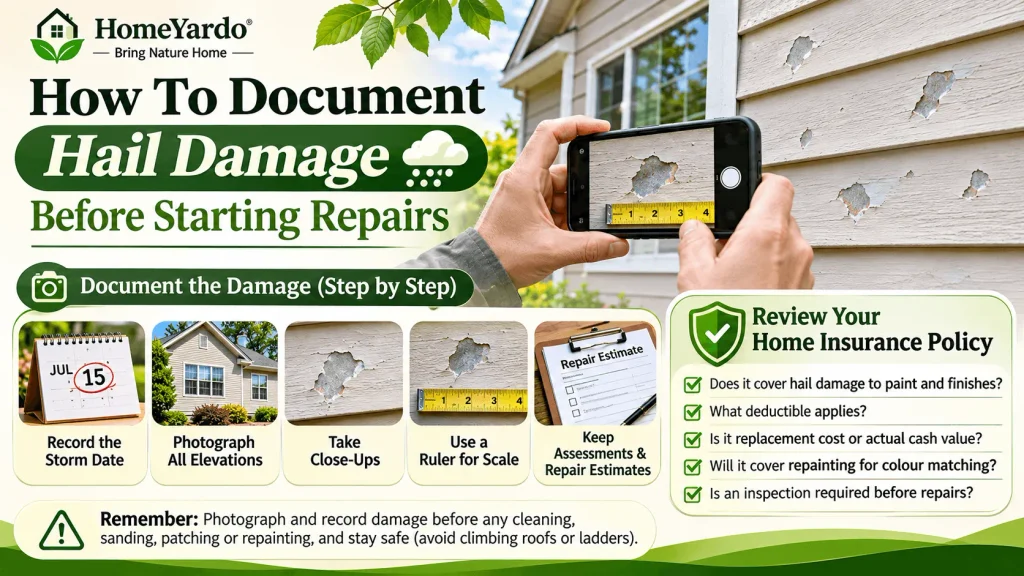
Proper documentation can help homeowners explain the damage to contractors and insurance adjusters.
It is best to record the condition of affected surfaces before cleaning, sanding, patching, or repainting them.
Photograph Every Affected Exterior Surface
Start by photographing each accessible exterior wall from a safe position.
Then take close-up photographs of individual impact marks.
For useful documentation:
- Record the date of the storm.
- Photograph all affected elevations.
- Take wide photographs to show the location of damage.
- Capture close-ups of chipped or cracked coatings.
- Place a ruler or tape measure near damage for scale.
- Keep copies of contractor assessments and repair estimates.
Avoid climbing ladders or accessing damaged roofs to obtain photographs.
If moisture is entering the building, arrange prompt protective measures rather than delaying necessary work solely for documentation. Record the conditions as safely as possible and notify your insurer.
Review Your Home Insurance Policy
Homeowners should check their policy terms before approving extensive repairs.
The IBC’s overview of Alberta hail losses explains that coverage, deductibles, exclusions, and available protection options can vary.
Ask your insurer:
- Does the policy cover hail damage to exterior paint and finishes?
- What deductible applies?
- Is the settlement based on replacement cost or actual cash value?
- Will the insurer consider repainting an entire wall for colour matching?
- Is an inspection required before repairs begin?
Do not assume that every cosmetic mark qualifies for full replacement or repainting. Coverage depends on the policy and the insurer’s assessment.
How Calgary Homeowners Should Repair Hail-Damaged Exterior Paint
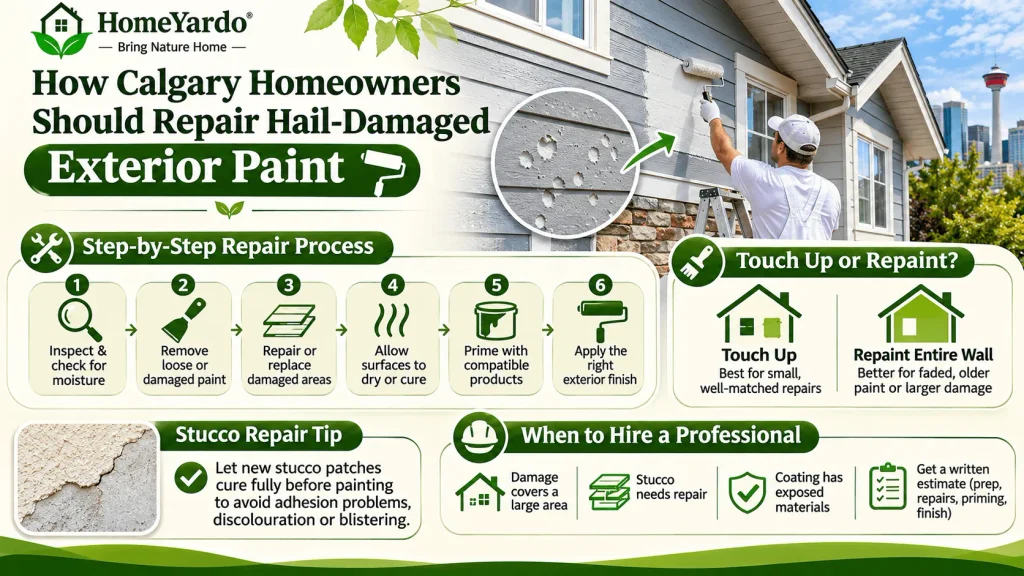
Repairing hail damage involves more than covering visible marks with fresh paint.
The underlying material must be sound, dry, and properly prepared before a new coating is applied.
Repair Damaged Siding and Stucco Before Painting
Start by evaluating the extent of the damage.
Cracked stucco, deteriorated wood, and damaged siding panels may need professional repairs before painting.
A typical repair sequence includes:
- Inspecting the affected areas and identifying moisture problems.
- Removing loose or deteriorated coatings.
- Repairing or replacing damaged exterior materials.
- Allowing repaired surfaces to dry or cure as required.
- Preparing and priming surfaces with compatible products.
- Applying the appropriate exterior finish.
Stucco repairs deserve particular care. New cement-based patches must cure according to the repair product’s instructions before receiving compatible coatings.
Painting too soon can contribute to adhesion problems, discolouration, or blistering.
Should You Touch Up the Paint or Repaint the Entire Wall?
Small areas of damage do not always require repainting the entire exterior.
A localised touch-up may work when the existing coating remains in good condition and the replacement colour and sheen match closely.
However, older exterior paint can fade from sunlight and weather exposure.
Applying the original colour to a small repaired area may create a noticeable patch.
For that reason, repainting the affected elevation from corner to corner can provide a more consistent appearance.
The appropriate approach depends on the extent of damage, surface condition, colour matching, budget, and insurance coverage.
Homeowners planning other exterior improvements can also review HomeYardo’s residential exterior refresh guide to coordinate painting with siding, drainage, and other repairs.
When to Hire a Professional Exterior Painting Contractor
A professional assessment is particularly useful when hail damage covers a large area, stucco requires repair, or the coating has exposed vulnerable materials.
A contractor should explain which surfaces need repairs, whether they can be safely repainted, and how different trades will coordinate their work.
Calgary painting companies such as Imagine Painting list weather-damage restoration among their services.
When comparing contractors, ask about their experience with hail-related repairs, surface preparation, moisture management, coating compatibility, and warranty terms.
A written estimate should clearly separate preparation, material repairs, priming, and finish painting.
Best Time to Repair Exterior Paint After a Calgary Hailstorm
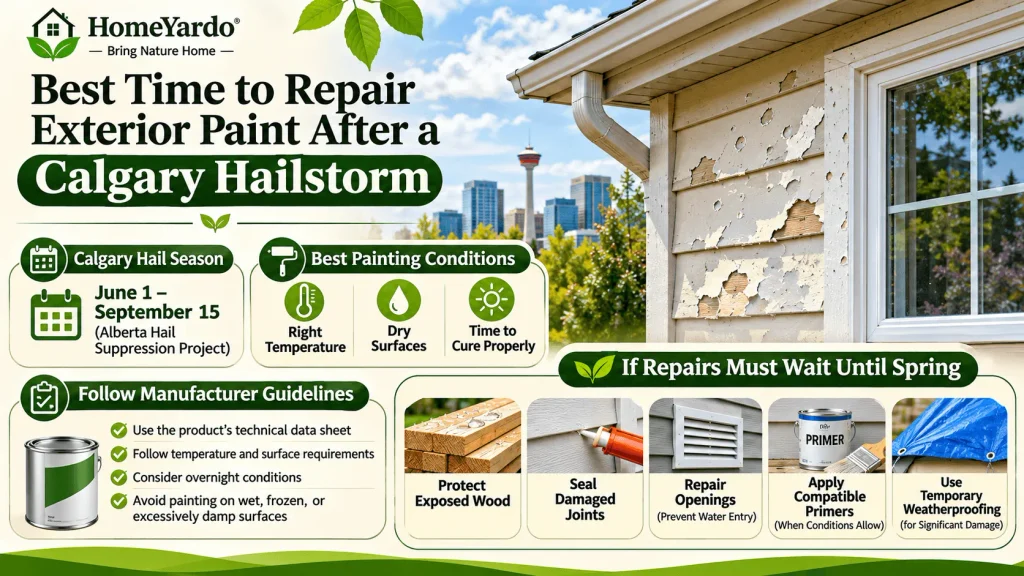
Calgary’s weather can make exterior painting difficult to schedule.
Hail damage commonly occurs during warmer months, but insurance assessments and contractor availability may push repair work into autumn.
The Alberta Hail Suppression Project traditionally operates from June 1 through September 15, reflecting the seasonal concentration of hail risk.
However, the best painting window depends on actual weather conditions rather than a fixed calendar date.
Why Temperature and Moisture Matter
Exterior paint requires suitable application and curing conditions.
Manufacturers specify acceptable temperatures, surface conditions, and drying requirements for each product.
These instructions apply to the surface being painted, not just the surrounding air.
Cold surfaces, frost, rain, and excessive moisture can interfere with coating performance.
Even if the daytime temperature is acceptable, overnight conditions may affect curing.
Always follow the specific coating manufacturer’s technical data sheet.
What to Do When Repairs Must Wait Until Spring
When temperatures become unsuitable for painting, homeowners should focus on protecting exposed materials.
Depending on the damage and product requirements, temporary measures may include:
- Protecting exposed wood from moisture
- Sealing appropriate damaged joints
- Repairing openings that allow water entry
- Applying compatible protective primers when conditions permit
- Arranging temporary weatherproofing for significant damage
Do not apply paint or sealants to wet, frozen, or otherwise unsuitable surfaces.
Where moisture intrusion is suspected, have the source evaluated before covering the damaged area.
Full cosmetic repainting can often wait until more reliable conditions return, provided vulnerable surfaces are properly protected.
Choosing Exterior Paint and Finishes for Calgary’s Climate
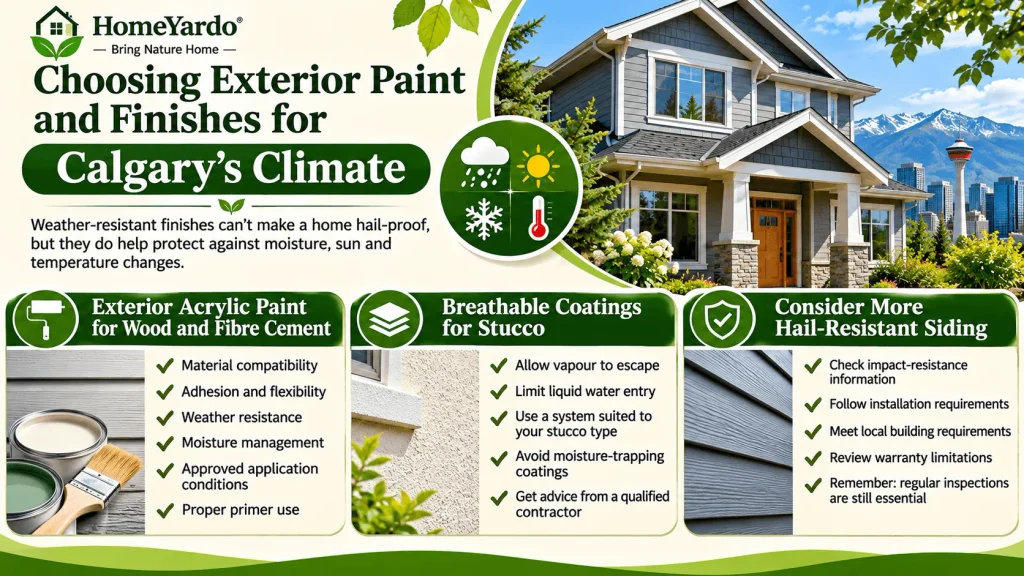
No conventional exterior paint can make a house completely hail-resistant.
Large hailstones can damage even properly maintained coatings and the materials beneath them.
However, choosing compatible, weather-resistant finishes can help protect exterior surfaces against everyday moisture, sunlight, and temperature changes.
Exterior Acrylic Paint for Wood and Fibre Cement
Quality exterior acrylic coatings are commonly used on properly prepared wood and compatible fibre cement surfaces.
When selecting a coating, consider:
- Compatibility with the siding material
- Adhesion and flexibility
- Resistance to weathering
- Moisture management
- Manufacturer-approved application conditions
- Appropriate primer requirements
The coating’s performance also depends on surface preparation and the condition of the underlying material.
Breathable Coatings for Stucco
Stucco assemblies require careful moisture management.
Some coating systems are designed to allow water vapour to escape while limiting liquid water penetration.
The appropriate product depends on whether the wall has traditional cement stucco, acrylic finishes, or another coating system.
Avoid applying an incompatible coating that could trap moisture or interfere with the wall’s existing design.
A qualified stucco or painting contractor can help determine the suitable repair system.
Consider More Hail-Resistant Materials When Replacing Siding
If a storm has damaged siding beyond practical repair, homeowners may have an opportunity to compare more impact-resistant replacement products.
Consider the manufacturer’s impact-resistance information, installation requirements, local building requirements, and warranty limitations.
The Insurance Bureau of Canada has also called for stronger hail-resistant roofing and siding requirements in high-risk areas.
Even with upgraded materials, regular inspections remain necessary.
How to Reduce Future Exterior Paint Damage
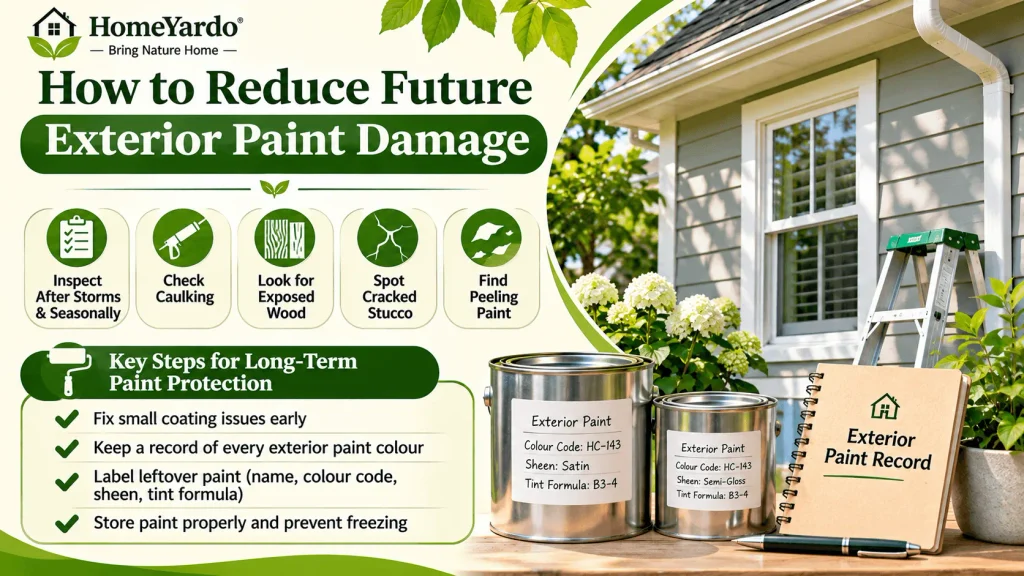
While homeowners cannot prevent severe hailstorms, routine maintenance can reduce the problems caused by damaged coatings.
Inspect exterior surfaces after major storms and during seasonal home maintenance.
Keep an eye on deteriorating caulking, exposed wood, cracked stucco, and peeling paint.
Repairing small coating failures before moisture reaches the underlying materials may help prevent more extensive repairs later.
One useful habit is keeping a record of every exterior paint colour.
Label leftover paint containers with the product name, colour code, sheen, and tint formula. Store usable paint according to the manufacturer’s instructions and protect water-based products from freezing.
These records make future colour matching easier, although older painted surfaces may still require blending or repainting.
Final Takeaway
Hail damage to exterior paint deserves attention even when the marks seem minor.
For Calgary homeowners, the safest approach is to inspect affected surfaces, document the damage, check insurance coverage, and repair vulnerable materials before repainting.
Small coating chips may need only limited repairs, while damaged stucco, exposed wood, or extensive surface deterioration may require professional attention.
The goal is not simply to restore the appearance of the house. It is to protect the exterior from moisture and prepare it for Calgary’s changing weather.
FAQ’s
Yes. Hail can chip, scratch, or crack a protective paint film without causing obvious damage to the underlying siding. Even small coating failures should be assessed because exposed materials may become vulnerable to moisture.
Start by documenting the damage and checking the underlying material. Repair any cracks or damaged siding, remove loose paint, prepare the surface, apply compatible primer where required, and repaint under suitable weather conditions.
Coverage depends on your individual insurance policy. Some policies cover qualifying hail-related damage, but deductibles, exclusions, cosmetic-damage provisions, and settlement conditions may apply. Contact your insurer before approving extensive repairs.
Not always. Small areas may be suitable for touch-ups. However, extensive damage, faded coatings, or noticeable colour differences may make repainting the full wall a better option.
Yes. Hail can chip stucco finishes and create small cracks or impact marks. If these defects allow moisture into the wall assembly, professional repairs may be required before repainting.
Late spring through early autumn often provides suitable opportunities for exterior painting. Actual temperature, rainfall, surface moisture, and product requirements should determine the schedule.
Painting directly over damaged material is not recommended. Loose coatings, cracks, exposed substrates, and moisture problems should be addressed before applying new paint.
Maintain protective coatings, repair cracks, seal appropriate joints, and inspect surfaces after major storms. When replacing siding, compare products with documented impact-resistance performance. No ordinary exterior paint can prevent all damage from severe hail.