Broken Window At Night: What To Do In The First Few Hours
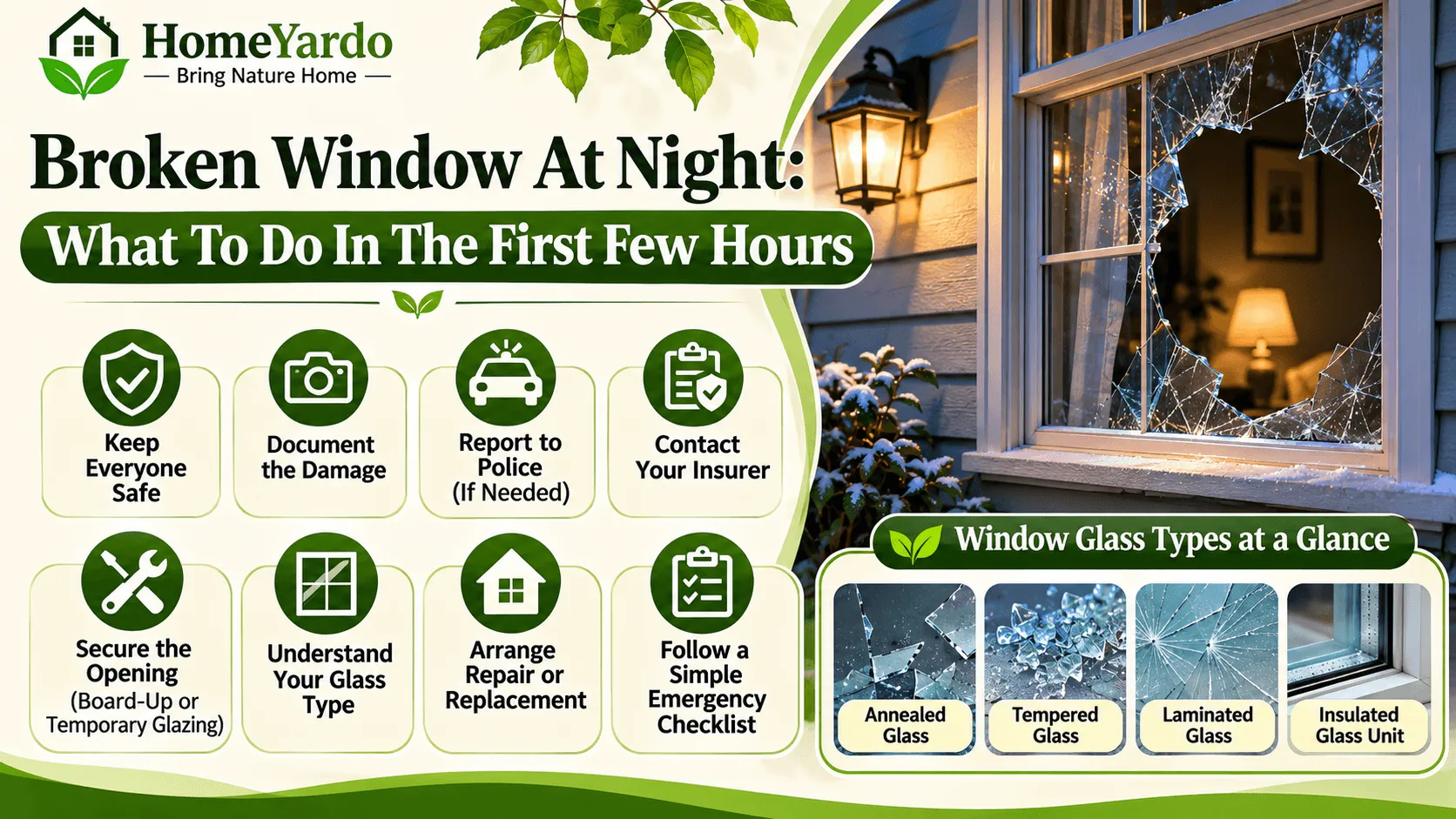
A broken window at night can leave your home exposed, unsafe, and difficult to secure. Whether the damage comes from a break-in, a stray baseball, a fallen tree branch, or an aging patio door, knowing what to do immediately can prevent a stressful situation from becoming worse.
Cold air can enter through the opening, broken glass may cover the floor, and your home’s security is suddenly compromised. During a Canadian winter, freezing temperatures and moisture make the situation even more urgent.
If a window breaks at night, check everyone’s safety, stay away from loose glass, photograph the damage, report suspected criminal activity, and arrange temporary protection as soon as possible. Contact your insurance provider and an emergency glass repair service when appropriate.
The first few hours matter. Taking the right steps can help protect your household, support an insurance claim, and make permanent repairs easier to arrange.
Start With Safety
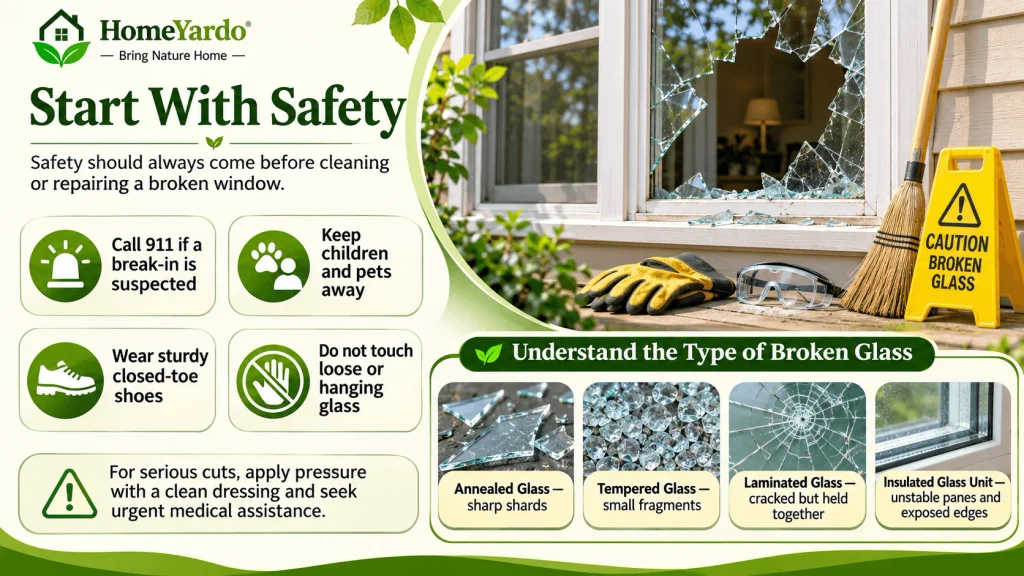
Safety should always come before cleaning or repairing a broken window.
If you suspect someone has broken into your home and may still be inside, leave immediately and call 911. Do not investigate the property or attempt to confront anyone.
Once the area is safe, keep children and pets away from the damaged window. Wear sturdy, closed-toe shoes before approaching the area, since glass fragments can spread well beyond the opening.
If anyone has suffered a serious cut, apply firm pressure with a clean dressing and seek urgent medical assistance. Do not remove deeply embedded glass yourself.
Avoid touching damaged panes that remain suspended in the frame. Even a small movement can cause loose pieces to fall.
Understand the Type of Broken Glass
Different types of window glass break in different ways. Understanding the differences can help you recognize potential hazards.
| Glass type | How it breaks | Main safety concern |
|---|---|---|
| Annealed glass | Breaks into irregular, sharp shards | Deep cuts from large fragments |
| Tempered glass | Breaks into many smaller pieces | Small fragments can still cause injuries |
| Laminated glass | Often cracks while fragments remain attached to an interlayer | Damaged sections may still shift or fall |
| Insulated glass unit | One or more panes may crack while others remain intact | Unstable glass, damaged seals, and exposed edges |
Many older residential windows contain annealed glass, while tempered glass is commonly used in locations requiring safety glazing.
Even when damaged glass appears stable, avoid applying pressure to it. Leave removing glass from the frame to a qualified technician.
Document Everything Before You Clean Up
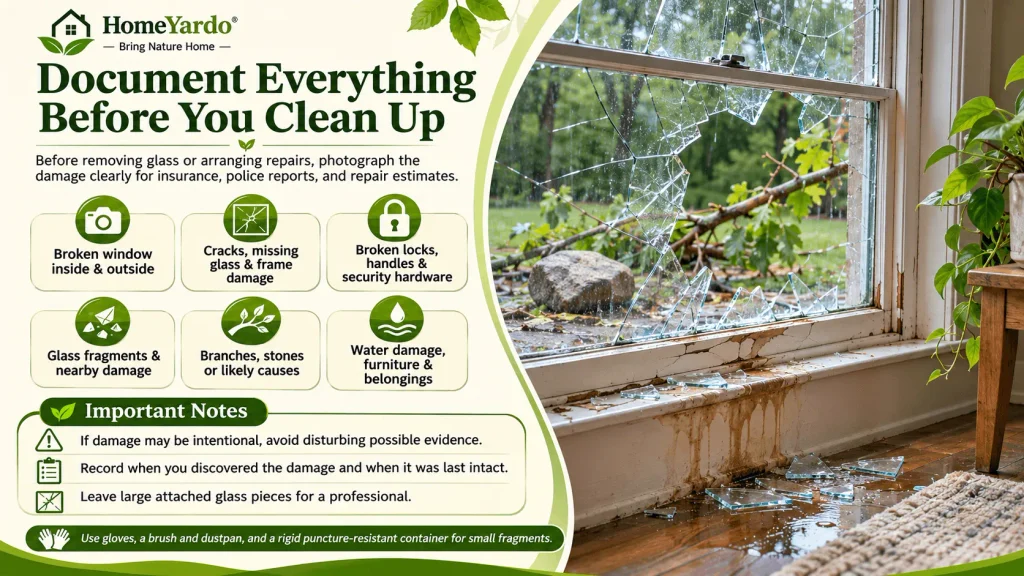
Before removing broken glass or arranging repairs, document the damage.
Photographs and videos can help establish what happened and provide useful evidence for insurance claims, police reports, and repair estimates.
Take clear photographs of:
- The broken window from inside and outside.
- Cracks, missing glass, and damaged frame sections.
- Broken locks, handles, or security hardware.
- Glass fragments and surrounding damage.
- Fallen branches, stones, or other possible causes.
- Water damage, damaged furniture, or affected belongings.
If you believe the window was intentionally broken, avoid disturbing possible evidence until police advise you it is appropriate to do so.
Record when you discovered the damage and when the window was last intact.
If property is missing, prepare a list while the details are still fresh.
Once documentation is complete and any necessary police instructions have been followed, small fragments on safe, accessible surfaces can be collected using appropriate protective equipment.
Use a brush and dustpan rather than bare hands. Place fragments in a rigid, puncture-resistant container and follow local disposal requirements.
If large pieces remain attached to the window, leave them for a professional.
Report the Damage the Right Way
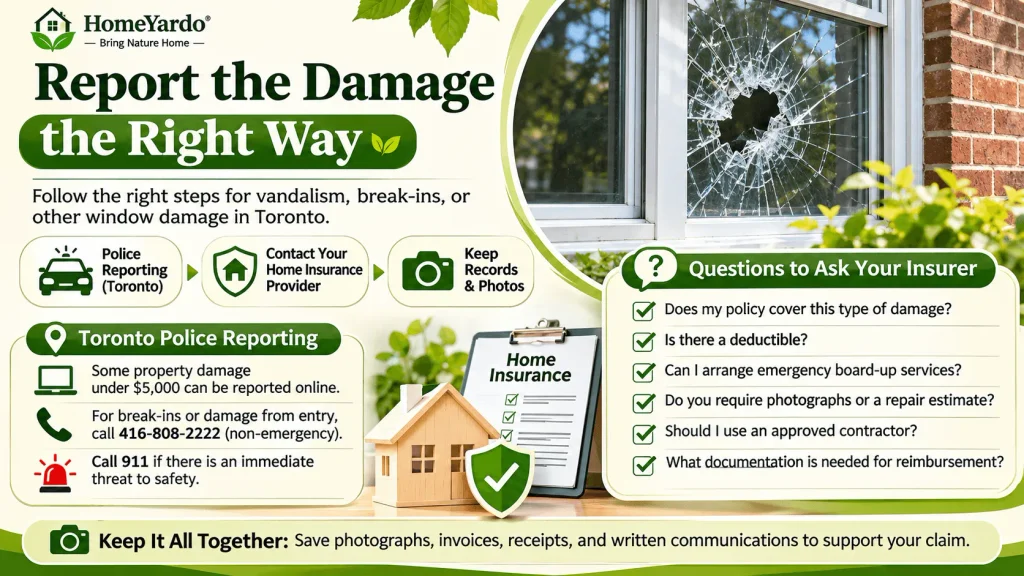
Not every broken window requires police involvement. However, damage caused by suspected vandalism, attempted entry, or burglary should be reported through the appropriate police channel.
In Toronto, certain incidents involving property damage under $5,000 online can be reported through the Toronto Police Service.
However, the online reporting service does not cover every situation.
If someone entered your home and caused damage, Toronto Police instruct residents to contact the non-emergency line at 416-808-2222. Call 911 when there is an immediate threat to safety.
After addressing any police reporting requirements, contact your home insurance provider or broker.
Explain what happened and ask:
- Does my policy cover this type of window damage?
- Is there a deductible?
- Can I arrange emergency board-up services immediately?
- Do you require photographs or a repair estimate?
- Should I use an approved contractor?
- What documentation is needed for reimbursement?
Home insurance coverage varies by policy and cause of damage. Accidental breakage, storm damage, and vandalism may be treated differently.
Many policies also require homeowners to take reasonable steps to prevent additional damage after an incident.
Keep photographs, invoices, receipts, and written communications together. These records can help when you submit a claim.
Secure the Opening Until Repairs Arrive
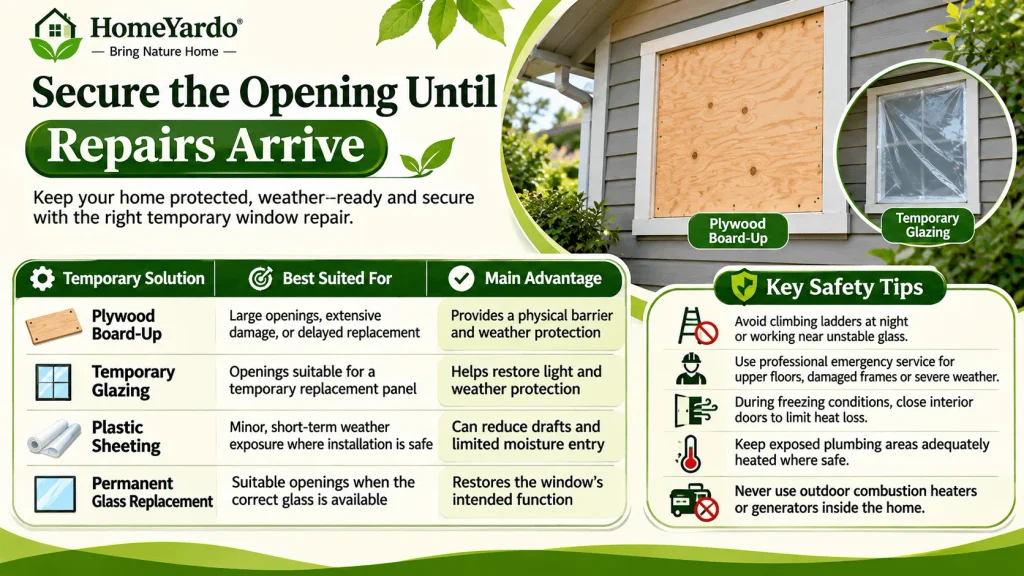
An exposed window can create immediate problems, particularly during cold or wet weather.
Rain and snow can enter the home, indoor temperatures can drop, and an unsecured opening may expose the property to further damage or unauthorized entry.
The safest temporary repair depends on the size of the opening, the condition of the frame, and whether the glass can be replaced immediately.
Temporary Board-Up vs. Temporary Glazing
Two common emergency solutions are temporary board-up and temporary glazing.
| Temporary solution | Best suited for | Main advantage |
|---|---|---|
| Plywood board-up | Large openings, extensive damage, or delayed replacement | Provides a physical barrier and weather protection when properly installed |
| Temporary glazing | Openings suitable for a temporary replacement panel | Helps restore light and weather protection |
| Plastic sheeting | Minor, short-term weather exposure where installation is safe | Can reduce drafts and limited moisture entry |
| Permanent glass replacement | Suitable openings when the correct glass is available | Restores the window’s intended function |
Temporary board-up is commonly used when the glass cannot be replaced immediately. A technician can secure an appropriate board over the opening without relying on damaged glass or unstable framing.
Temporary glazing may be suitable for smaller openings when a compatible temporary panel is available.
Plastic sheeting can reduce exposure to wind and moisture for a short period, but it is not a substitute for secure boarding or proper glazing.
Avoid climbing ladders at night, working near unstable glass, or attempting to repair large openings without appropriate equipment.
If the window is on an upper floor, has a damaged frame, or exposes your home to severe weather, professional emergency service is the safer choice.
During freezing conditions, close interior doors to limit heat loss and keep exposed plumbing areas adequately heated where safe. Never use outdoor combustion heaters or generators inside the home.
Think About What Comes Next
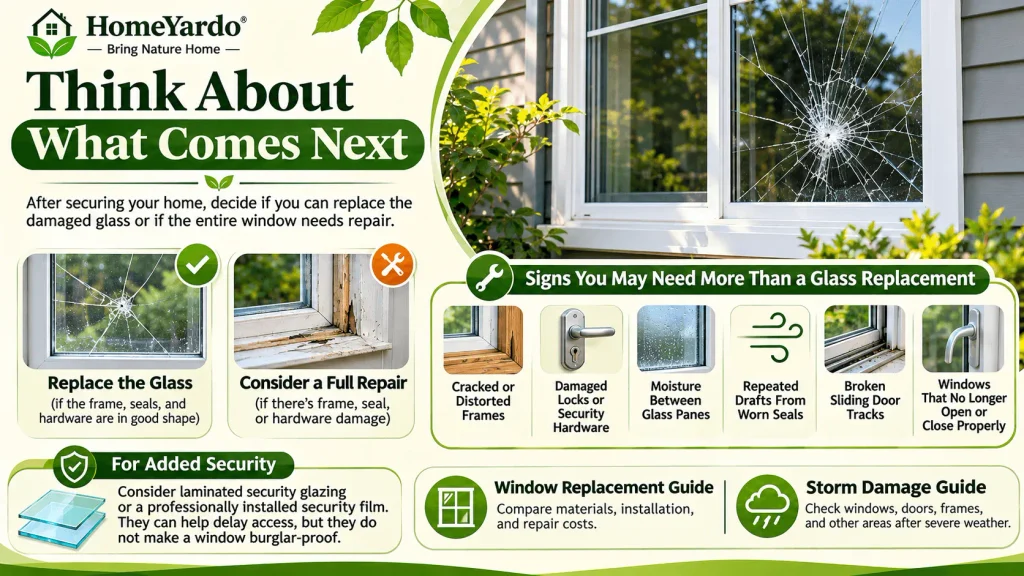
Once your home is secured, the next step is deciding whether the damaged glass can be replaced or the complete window needs attention.
Not every broken pane requires a full window replacement.
If the frame, seals, and operating hardware remain in good condition, replacing the damaged glass or insulated glass unit may be sufficient.
However, some situations justify a more complete repair.
These include:
- Cracked or distorted window frames.
- Damaged locks or security hardware.
- Moisture trapped between insulated glass panes.
- Repeated drafts caused by deteriorated seals.
- Broken sliding door tracks.
- Windows that no longer open or close correctly.
After a break-in, homeowners may consider laminated security glazing or professionally installed security film to improve resistance to forced entry.
These products can help delay access, but they do not make a window burglar-proof.
For homeowners deciding whether to replace the entire unit, our window replacement guide explains how to compare materials, installation requirements, and repair costs.
If the damage happened during severe weather, it is also worth checking the surrounding structure. Our guide to what gets damaged during a storm covers windows, doors, frames, and other areas that may need inspection.
Choosing Who to Call for Emergency Window Repair
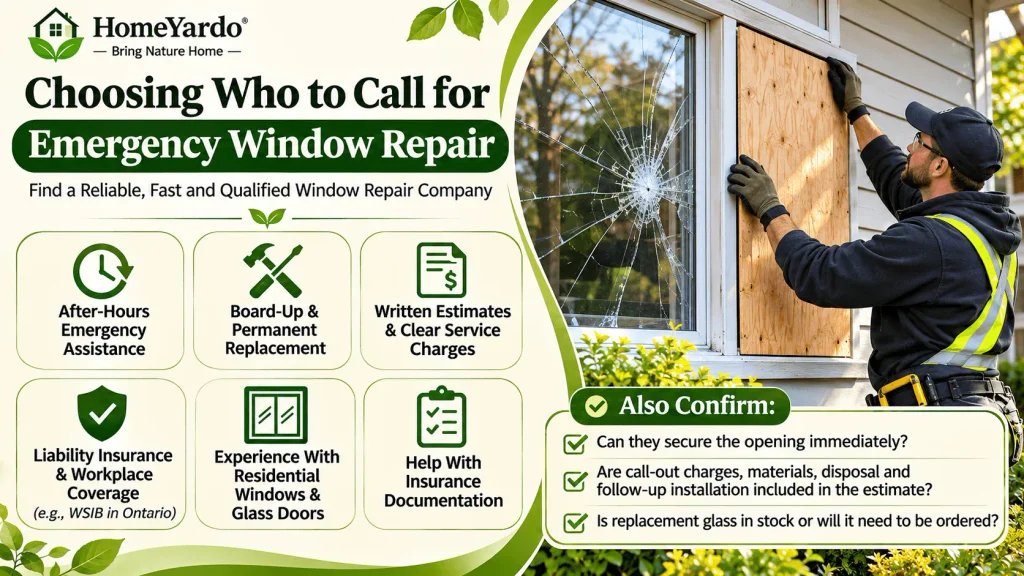
When a window breaks after regular business hours, finding a reliable emergency glass repair company becomes a priority.
However, fast service should not come at the expense of proper workmanship or clear pricing.
Look for a contractor who provides:
- Emergency assistance outside normal business hours.
- Temporary board-up and permanent glass replacement.
- Written estimates and clear service charges.
- Appropriate liability insurance and relevant workplace coverage.
- Experience with residential windows and glass doors.
- Assistance with documentation needed for insurance claims.
In Ontario, ask about appropriate WSIB coverage where applicable, along with any other credentials relevant to the work.
Confirm whether the company can secure the opening immediately or only schedule a future inspection.
Toronto-based Rhino Glass Repair, for example, provides emergency board-up and window and door glass replacement services. Using a company that handles both temporary protection and permanent repairs may reduce the need to coordinate multiple contractors.
Before approving work, ask whether emergency call-out charges, materials, disposal, and follow-up installation are included in the estimate.
It is also worth confirming whether replacement glass is available or will need to be ordered.
Custom-sized insulated or laminated glass may take longer to obtain than standard replacement materials.
Broken Window Emergency Checklist
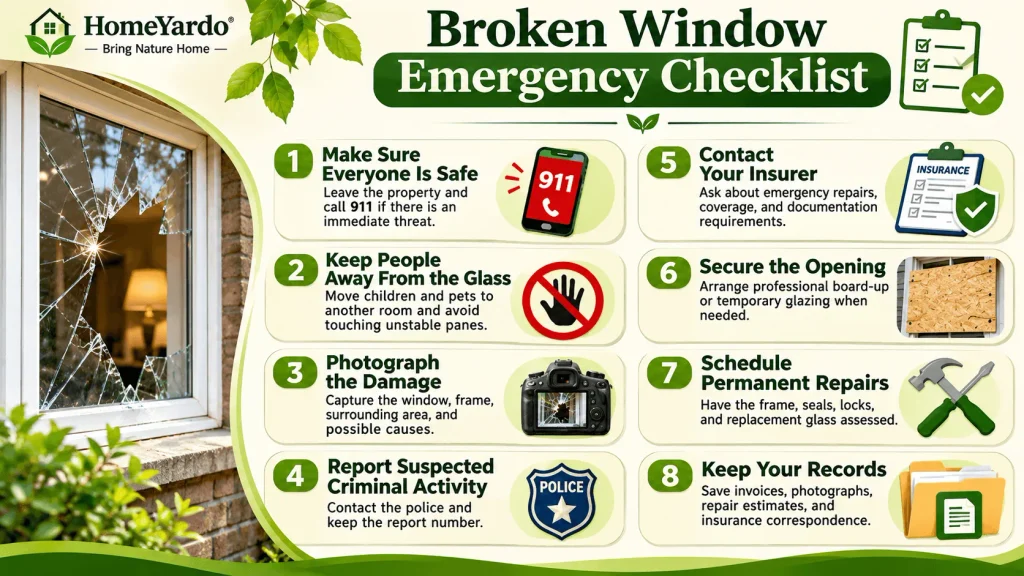
If you are dealing with a broken window in the middle of the night, follow these steps in order.
- Make sure everyone is safe. Leave the property and call 911 if there is an immediate threat or a suspected intruder.
- Keep people away from the glass. Move children and pets to another room and avoid touching unstable panes.
- Photograph the damage. Capture the window, frame, surrounding area, and possible causes before cleanup.
- Report suspected criminal activity. Contact the appropriate police service and keep the report number.
- Contact your insurer. Ask about emergency repairs, coverage, and documentation requirements.
- Secure the opening. Arrange professional board-up or temporary glazing when needed.
- Schedule permanent repairs. Have the frame, seals, locks, and replacement glass assessed.
- Keep your records. Save invoices, photographs, repair estimates, and insurance correspondence.
Following this sequence can help you respond without overlooking important safety or insurance considerations.
Final Takeaway
Finding a broken window at night is stressful, especially when the cause is unknown or the weather is severe.
The most important steps are straightforward: protect your household, document the damage, contact the appropriate authorities when necessary, and arrange temporary protection before the opening causes further problems.
Avoid risky repairs involving unstable glass, particularly in darkness or freezing weather.
Once the immediate danger has passed, a qualified glass technician can assess whether the window needs new glazing, replacement hardware, or a more extensive repair.
A broken window does not always mean a major renovation. With the right emergency response, you can restore security and make a sensible plan for the permanent repair.
FAQ’s
Move everyone away from the broken glass and check for immediate danger. If a break-in may be in progress, leave and call 911. When safe, document the damage and arrange temporary protection for the opening.
Leaving a damaged window unsecured can expose your home to weather, injury risks, and unauthorized entry. If permanent replacement is unavailable, arrange temporary boarding or glazing as soon as reasonably possible.
A professionally installed plywood board or temporary glazing panel can protect the opening until replacement glass is available. Plastic sheeting may provide limited short-term weather protection but does not restore security.
Report suspected vandalism, attempted entry, or burglary through the appropriate police channel. Call emergency services if someone may still be inside or there is an immediate threat.
Coverage depends on your policy and the cause of the damage. Some policies cover breakage from storms, vandalism, or other insured events. Contact your insurer to confirm the deductible and any conditions.
Yes. If the frame and hardware are undamaged, a technician may only need to replace the glass or insulated glass unit. Severe frame or structural damage may require a larger repair.
Some emergency glass companies offer overnight board-up services, while permanent repairs depend on technician availability, window dimensions, and glass type. Custom replacement units may take longer.
Small, loose fragments on accessible surfaces can sometimes be collected with appropriate protective equipment. Avoid handling large shards, unstable panes, or glass still attached to the frame. These hazards are better left to professionals.