How To Compare Slab Foundation Repair Proposals Without Guessing
Two foundation repair proposals can look similar at first glance and still describe different projects. One may emphasize a particular method, another may list a different amount of work, and both may use terminology that is unfamiliar to a homeowner. Comparing only the final price leaves those differences unresolved.
A better comparison begins with the assessment behind each proposal. Before deciding which offer represents value, understand what condition each professional believes is present, how the proposed work addresses it, and what is outside the scope. You do not need to design the repair yourself, but you should understand the decision you are being asked to approve.
Ask Whether The Proposals Address The Same Findings
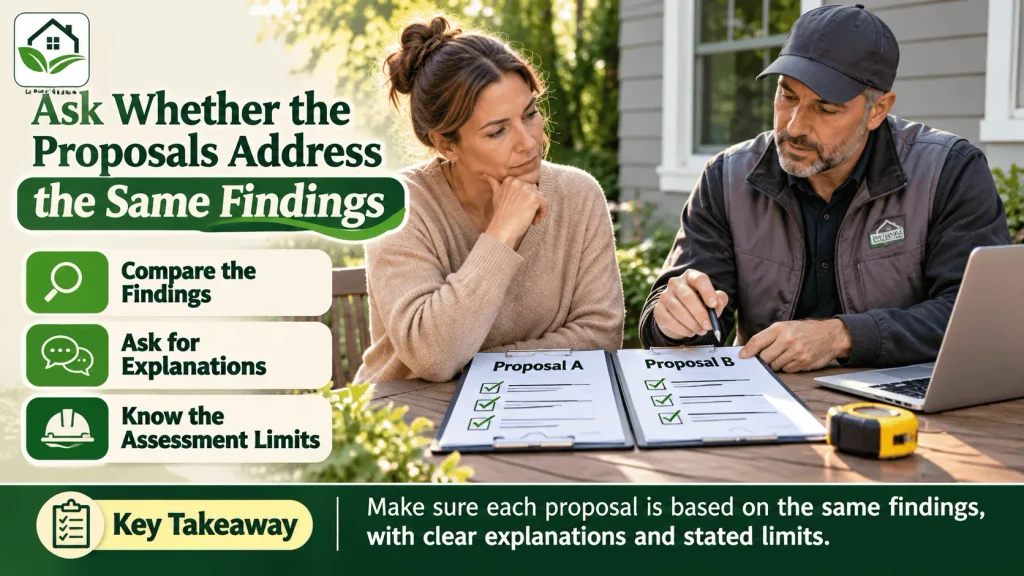
Begin by reading each description of the problem. Does it identify the same areas of concern? Does it rely on the same information? If one assessment differs from another, ask for an explanation rather than assuming that the longer or more expensive proposal is automatically more thorough.
Keep uncertainty visible. A recommendation may depend on information that has not yet been obtained or conditions that cannot be fully evaluated during an initial visit. Ask the professional to identify those limits and explain what additional assessment, if any, would be appropriate before you make a decision.
When the explanations conflict in a way you do not understand, consider seeking an appropriately qualified independent opinion. Ask about that person’s scope and role as carefully as you would with any service provider. The purpose is to clarify the property-specific questions, not to collect estimates until one matches the answer you hoped to hear.
Translate Technical Labels Into A Project Description
A proposal may name a repair system without making its practical meaning clear. Ask the contractor to explain the proposed work in ordinary language and show which parts of the property it concerns. Request clarification about the intended outcome and the limitations of that approach.
Homeowners researching slab foundation repair for Dallas homes can use Accurate Foundation Repair’s service page to become familiar with the company’s assessment and repair discussion. During a consultation, bring the focus back to the individual property: why this recommendation, what evidence supports it, and what the written scope actually includes.
Do not choose a method simply because its name appears frequently online. Different properties and findings may call for different responses. The comparison should help you understand the professional reasoning, not encourage you to replace an assessment with a general article or a neighbor’s experience.
Identify Included Work And Separate Responsibilities
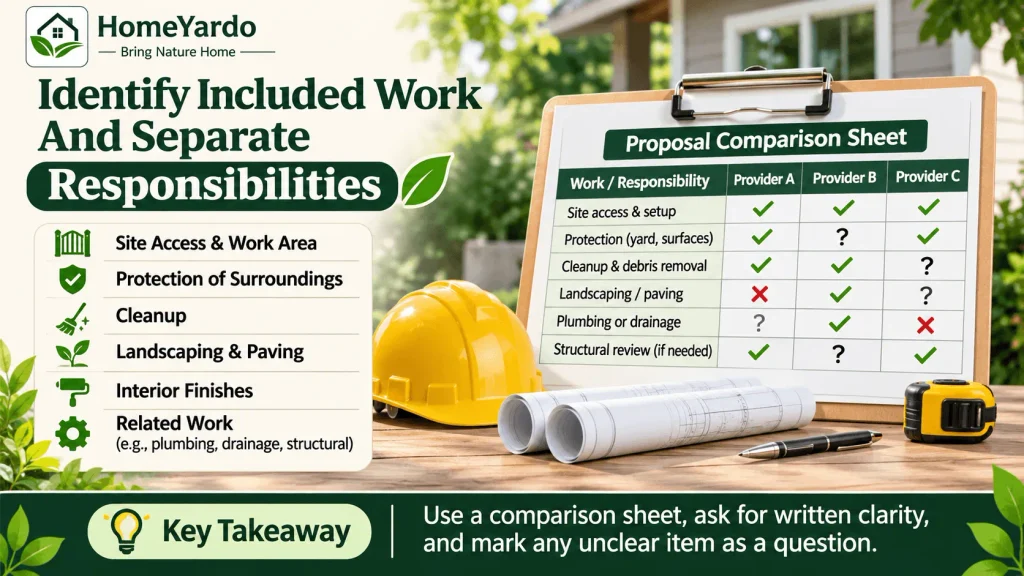
Ask each provider to clarify site access, the work area, protection of surrounding features, and cleanup. If the project affects landscaping, paving, or interior finishes, find out how those items are addressed. Avoid assuming that restoring an area to a particular appearance is included unless the agreement explains it.
Related work may involve other professionals. Ask whether any plumbing, drainage, structural review, or other assessment is recommended and who is responsible for arranging it. A proposal should make those boundaries understandable. An item that is excluded is not necessarily inappropriate, but its cost and coordination should not remain a surprise. For broader budgeting guidance, HomeYardo’s article on Unexpected Home Repair Costs discusses planning for construction-related expenses and the importance of written scopes.
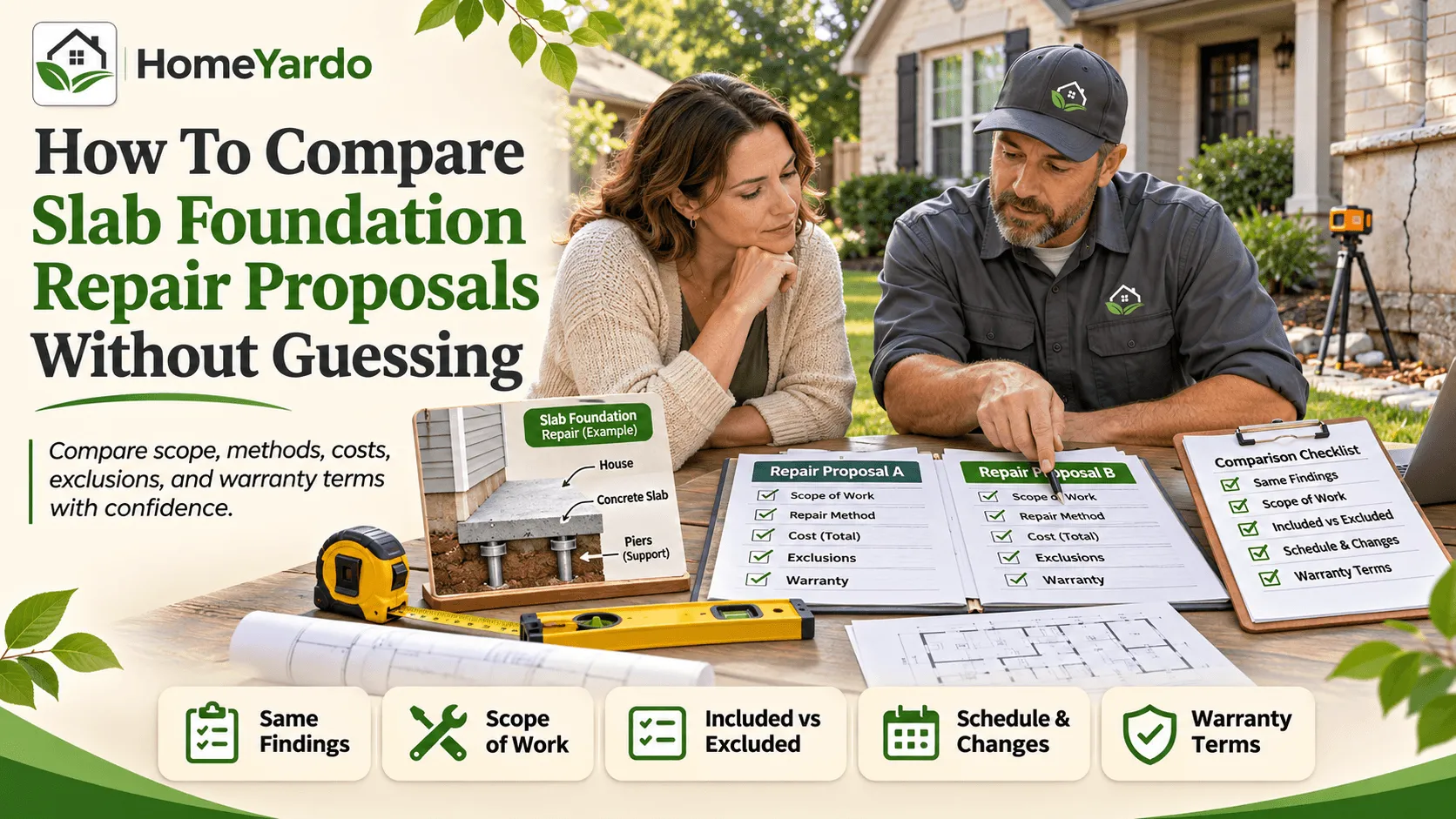
Use a comparison sheet to record each answer. Mark an unclear item as a question rather than filling the cell with an assumption. This simple habit helps prevent a lower figure from appearing more attractive merely because fewer responsibilities have been described.
Discuss Access Before Agreeing To A Schedule
The practical arrangements deserve attention before work begins. Explain how the household uses entrances, parking, outdoor areas, and any rooms near the proposed work. Mention pets, accessibility needs, or other circumstances that affect access. Ask the contractor which areas must remain available and what preparation is expected from you.
Request a project-specific sequence rather than relying on a general promise about how long foundation work takes. Ask what could change the schedule, how updates will be shared, and who will be your primary contact. A clear communication process can be established even when every timing detail cannot be guaranteed in advance.
Understand How Changes Will Be Approved
Ask what happens if the team discovers a condition not covered by the original scope. The agreement should explain how additional recommendations will be communicated and how any price or schedule change will be approved. Do not assume that a conversation at the work site automatically creates a complete record.
Keep approved changes with the original proposal. Identify what was added, removed, or revised, and retain the date and relevant documentation. If a new version replaces an earlier document, label it clearly. This makes later questions easier to resolve without relying on everyone’s memory of a busy day.
Read Warranty Terms As a Separate Document
A warranty heading can sound reassuring while leaving important questions unanswered. Request the full applicable terms before deciding. Identify who provides the warranty, what work or conditions it covers, and what responsibilities remain with the homeowner. Ask about exclusions instead of assuming that a broad title covers every future concern.
If transferability matters to you, ask for the actual process and conditions in writing. Avoid treating a transferable warranty as a promise about a future sale or property value. Those are different questions, and the document should be evaluated for what it says rather than what a buyer might someday expect.
Keep questions about insurance or other third-party coverage separate from the repair recommendation. Obtain answers from the relevant provider rather than treating a contractor estimate as confirmation that someone else will pay.
Agree On The Completion Record
Before work begins, ask what documentation you will receive afterward. That may include the final scope, applicable measurements or reports, warranty information, invoices, and the contact for follow-up questions. Have the contractor explain what each record represents and what it does not establish.
Ask how the completed work will be reviewed with you. If you notice something you do not understand, raise it through the agreed contact rather than attempting to investigate a work area yourself. Keep any recommended next steps separate from assumptions about cosmetic changes or unrelated maintenance.
Once the explanations are clear, return to the price comparison. You can now consider cost alongside the assessed need, defined responsibilities, communication process, and written terms. The strongest decision is not necessarily the cheapest or most elaborate proposal. It is the one you can evaluate with an accurate understanding of the work being proposed for your particular home.
Final Takeaway
The best way to compare slab foundation repair proposals is to establish whether contractors are addressing the same assessed problem and then compare the proposed methods, scope, costs, responsibilities, and written protections.
A detailed proposal should make the recommendation understandable without requiring you to become a foundation specialist.
If important findings conflict, obtain appropriate independent advice before proceeding. Once the uncertainties and exclusions are clear, you can evaluate the price in the context of the work your property actually needs.
FAQ’s
Start with the findings behind each estimate. Compare the proposed repair method, repair locations, scope, exclusions, total cost, warranty, and completion documentation. Ask contractors to explain meaningful differences before selecting an offer.
Getting more than one proposal can help homeowners understand available recommendations and differences in scope and pricing. However, multiple estimates do not replace an appropriate structural assessment when the underlying findings are disputed.
Quotes may differ because contractors identify different problems, recommend different methods, propose different quantities of work, or include different services. Labor, access conditions, materials, and warranty provisions may also affect prices.