How To Prepare For A Standby Generator Consultation
Shopping for backup power often starts with a simple wish: keep the household functioning when utility power is unavailable. Turning that wish into a suitable project takes a more detailed conversation. Different homes have different equipment, priorities, site conditions, and expectations, so a generator consultation should begin with questions rather than a model number.
You can make that conversation more productive without attempting electrical calculations or choosing installation locations yourself. The most useful preparation is an organized picture of your household: what you want to support, what information you already have, and what you need the professional to explain before you make a decision.
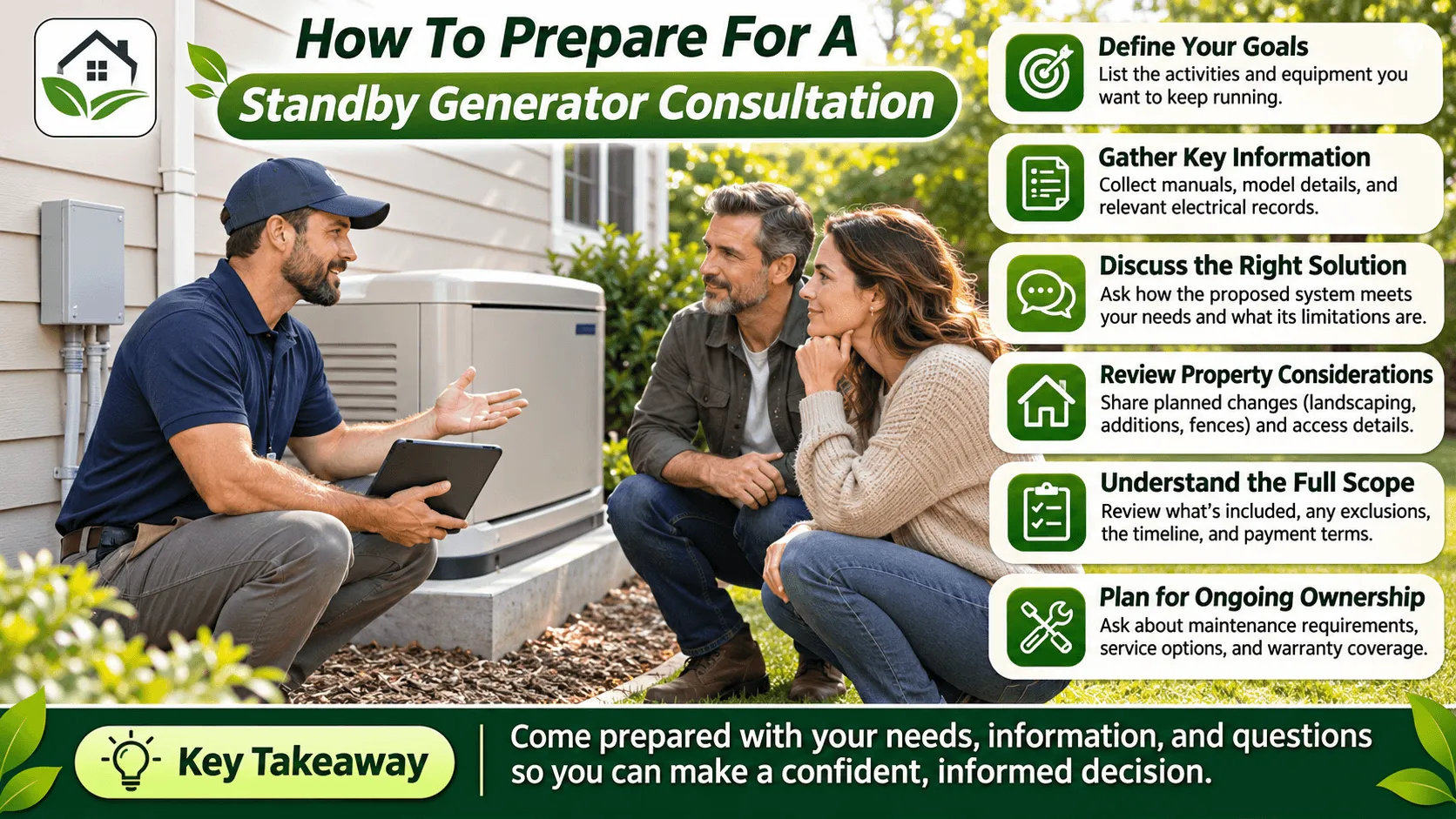
Define What You Want Backup Power To Accomplish
Make a list of the activities you would want to continue during an outage. Think about food storage, communication, essential household equipment, comfort, and work responsibilities. Separate priorities from conveniences. Writing everything down does not mean every item must be supported; it gives the professional a clearer understanding of your expectations.
Consider whether your goals change at different times. A household that is frequently away may have different concerns from one occupied throughout the day. If someone depends on powered medical equipment, develop an appropriate contingency plan with their care team and equipment provider. Do not assume that purchasing a generator replaces the need for that individualized planning.
Gather Information Without Opening Equipment
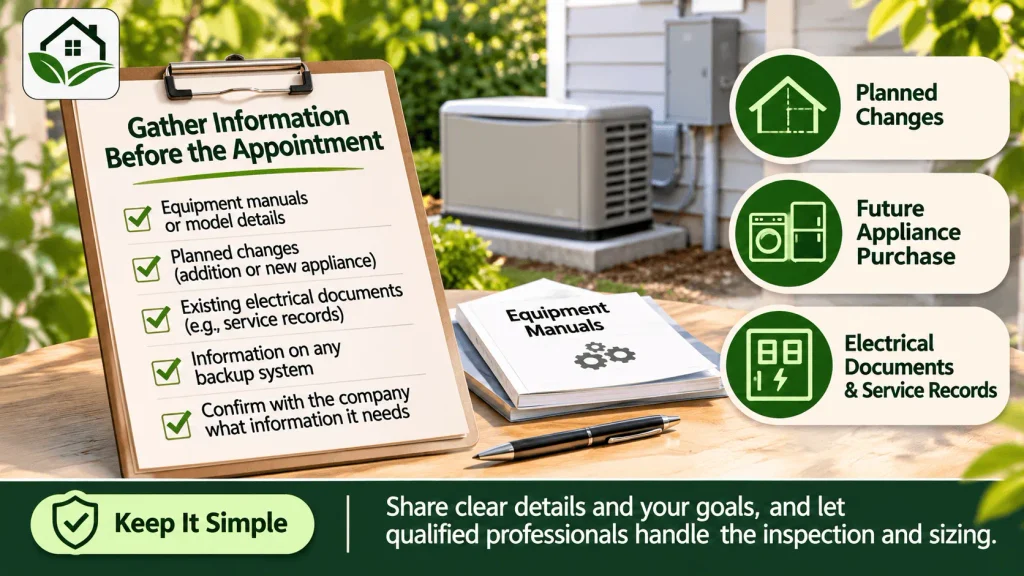
Collect manuals or readily available model information for major equipment you want to discuss. Note any planned changes, such as an addition or a future appliance purchase, so they can be considered during the assessment. Existing electrical documentation, previous service records, or information about an older backup system may also be useful.
Ask the company what information it wants before the appointment. You do not need to remove covers, enter unsafe areas, or handle wiring to complete a homeowner checklist. Leave technical inspection and calculations to qualified professionals. A clear description of the equipment and your priorities is more valuable than an unsupported estimate of what size generator the house needs. Homeowners considering a whole-home electrical upgrade should also mention those plans because future electrical improvements may affect the proposed backup power design.
Distinguish Your Goals From the Proposed Solution
During the consultation, ask the professional to explain the proposed approach in ordinary language. Which needs does it address? What limitations should you understand? Are there different options worth comparing? Avoid treating a broad phrase such as whole home as a substitute for a specific description of what the proposal is intended to support.
Homeowners exploring standby generator services from Tenax can use the company’s generator page to begin a conversation about selection, installation, and ongoing service. As with any provider, ask for recommendations tied to an assessment of your property rather than relying on a generic equipment comparison.
If technical terms are unfamiliar, ask for clarification before moving on. Understanding what you are buying does not require learning how to install it. It requires knowing what the system is expected to do, what the assessment considered, and what questions remain unresolved.
Discuss the Property as Part of the Project
Tell the contractor about planned landscaping, additions, fences, or other work that could affect the project. Identify areas you use regularly and any access concerns. These observations help the professional understand the property, but they do not determine a safe or compliant equipment location. Ask the installer to explain the applicable siting and approval process.
Discuss who will evaluate fuel arrangements, utility coordination, required approvals, and any related work. Ask which responsibilities belong to the installation company and which require someone else. Do not assume that all surrounding tasks are included simply because the quote names a generator. The written scope should make those boundaries understandable.
Compare the Complete Scope, Not Just The Equipment
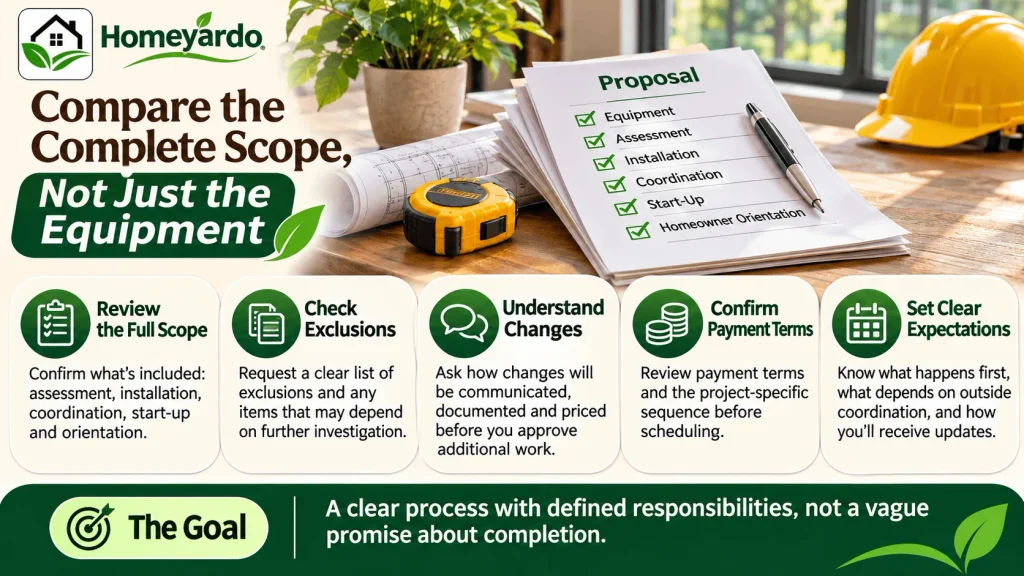
A useful proposal identifies the equipment and describes the work included with it. Ask about assessment, installation, necessary coordination, start-up, and homeowner orientation. Request a list of exclusions and any items that depend on further investigation. This makes it easier to compare proposals that might otherwise appear similar while covering different responsibilities.
Ask how changes would be communicated and approved. If the assessment reveals an additional requirement, understand how it will be documented and priced before authorizing work. Keep the final proposal and selection records together. Relying on a collection of informal messages can make it difficult to determine which version of the plan was actually approved.
Discuss payment terms and the project-specific sequence before scheduling. Ask what must happen first, what depends on outside coordination, and how you will receive updates. Avoid assuming that another homeowner’s schedule predicts yours. The goal is a clear process with identified responsibilities, not an unsupported promise about completion.
Ask About Ownership After Installation
Include ongoing service in the original conversation. Ask for the manufacturer’s maintenance requirements and who will perform the appropriate work. Request an explanation of any offered service arrangement, including what is included, what is excluded, and how appointments are handled. Keep maintenance expectations separate from broad statements about reliability.
Ask to review the applicable warranty documents and identify the contact for equipment concerns versus installation concerns. Understand any owner responsibilities and recordkeeping requirements. A warranty headline does not explain every condition, and no purchase should be treated as a guarantee that every possible outage situation will be handled without interruption.
It can help to create a simple ownership folder before installation begins. Include a page for unanswered questions and leave room for the final equipment details. When the project is handed over, compare the documents received with the items promised in the proposal. Ask for missing information while the project contacts and decisions are still easy to trace.
Prepare Questions for the Handover
Before the project is complete, arrange an explanation of the manufacturer’s operating instructions and the limits of homeowner involvement. Ask what observations should prompt a service call and how to contact the appropriate provider. Do not experiment with controls or connections to answer a question that should be addressed during professional orientation.
Choose a convenient place to store manuals, model information, warranty paperwork, and service contacts. Make sure other responsible adults in the household know where those records are. If a question arises later, having the correct documentation available can make the conversation with the service team more focused.
A successful consultation leaves you with a better understanding of your options, not pressure to guess at technical decisions. Bring your household priorities, ask for explanations, and keep unresolved items visible until they are answered. That preparation helps you evaluate a standby generator project as a complete ownership decision rather than a piece of equipment alone.
Final Takeaway
Preparing for a standby generator consultation is primarily about understanding your household’s needs and asking the right questions.
Identify your essential equipment, collect available electrical information, discuss property conditions, and request a written explanation of the proposed installation scope.
You do not need to select generator capacity, design electrical connections, or determine equipment placement yourself. Those responsibilities belong to qualified professionals.
A productive consultation should help you understand the proposed system’s capabilities, costs, limitations, and long-term ownership requirements before you commit to installation.
FAQ’s
Bring a list of essential appliances, available equipment manuals, previous electrical service records, information about planned home improvements, and questions about installation costs and maintenance. You do not need to perform electrical calculations.
Identify your backup power priorities, note relevant property conditions, and gather existing electrical documentation. Ask the contractor whether any additional information is needed before the appointment.
Ask which appliances the system will support, how generator capacity will be determined, what installation work is included, whether permits are required, how fuel arrangements will be handled, and what maintenance and warranty support is available.