
10 Smart Kitchen Storage Solutions to Maximize Every Inch of Space
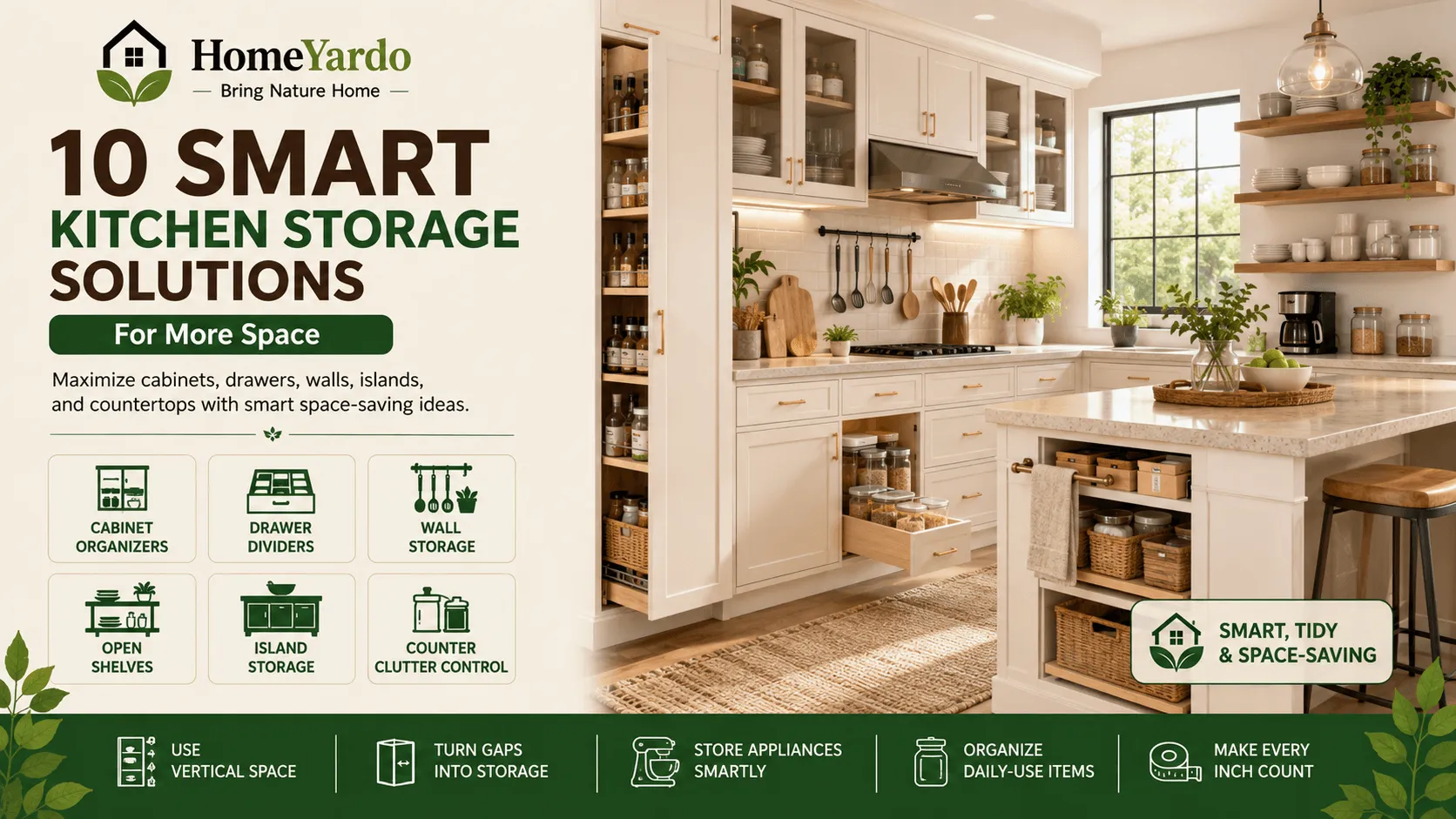
A kitchen has a strange habit of filling up, even when it seems like there should be plenty of room. You clear the counters on Sunday, and by Wednesday, the toaster is joined by a blender, a coffee maker, a fruit bowl, and three things you don’t remember leaving there.
The problem isn’t always a lack of storage. More often, it’s that we’re not making the best use of the space we already have.
Fortunately, you don’t need to knock down walls or invest in a completely new kitchen to make a difference. A few clever storage upgrades can help you reclaim forgotten corners, organize crowded cabinets, and make everyday cooking feel much easier, organize crowded cabinets, and make everyday cooking feel much easier. From the inside of cabinet doors to the space above your countertops, here are 10 practical ways to squeeze more functionality out of your kitchen.
Make Cabinets Work Harder
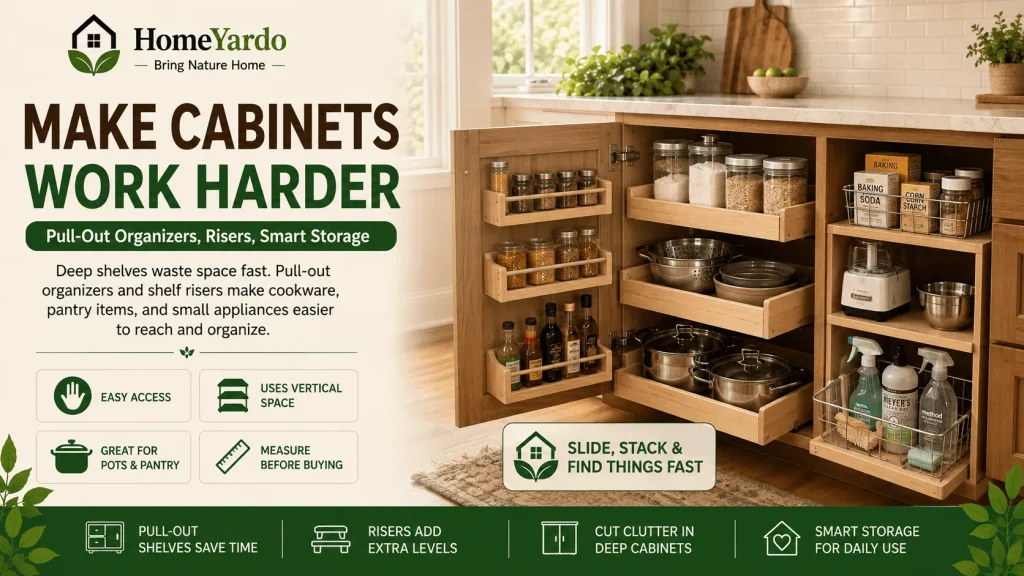
Kitchen cabinets may look spacious, but deep shelves can quickly become black holes for cookware and pantry supplies. How many times have you pushed something to the back, only to forget it exists?
Pull-out cabinet organizers can make a surprisingly big difference. Sliding shelves bring everything within reach, so you don’t have to move five pots just to find the one you need. They’re particularly useful for pots, pans, baking ingredients, cleaning supplies, and small appliances.
Shelf risers and stacking organizers are another inexpensive improvement. Instead of allowing plates, bowls, or cans to form one awkward pile, create additional levels inside the cabinet. Suddenly, the vertical space that was sitting unused becomes useful storage.
Before buying organizers, measure your cabinets carefully. A few minutes with a tape measure can save you from ordering something that looks perfect online but doesn’t quite fit.
Divide and Conquer Your Drawers
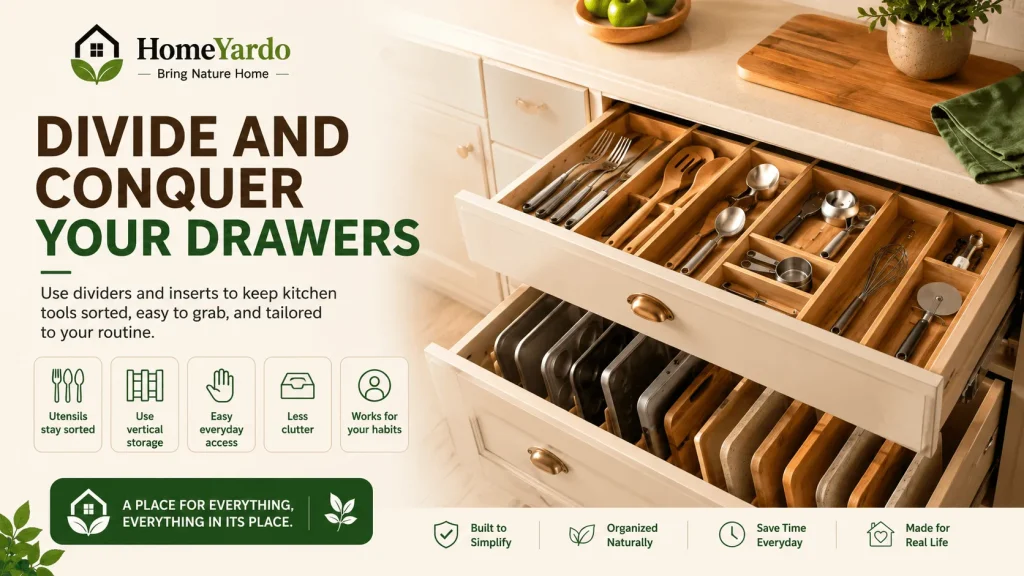
Few things are more frustrating than opening a kitchen drawer and finding a tangled collection of utensils. The measuring spoons are somewhere underneath the spatula, and the vegetable peeler has apparently vanished.
Drawer dividers and inserts can turn that daily frustration into a simple system. Give cutlery, cooking utensils, measuring tools, and smaller gadgets their own designated spaces.
Deep drawers can benefit from vertical organization too. Baking trays, chopping boards, and serving platters can often be stored upright with dividers rather than stacked horizontally. This makes them easier to grab without disturbing everything else.
And don’t feel obligated to organize every drawer in exactly the same way. Your kitchen should reflect your habits. If you use certain utensils every day, give them the easiest-to-reach spots.
Put the Space Above Your Cabinets to Work
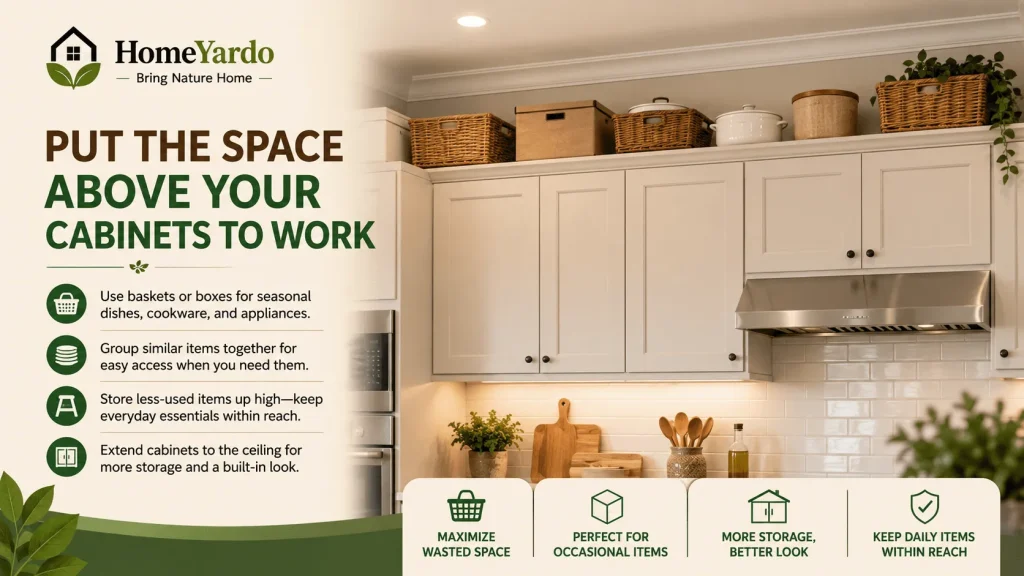
That empty strip between your cabinets and ceiling is easy to ignore. It can also become a useful storage area.
Large baskets or attractive boxes can hold seasonal dishes, specialty cookware, serving pieces, or appliances you only bring out occasionally. Grouping similar items together means you won’t have to dig through several containers when you need something.
There is a catch, though: this isn’t the best place for things you use every morning. If you need a step stool to reach it, reserve the space for items you don’t need regularly.
For homeowners planning a larger renovation, extending cabinets closer to the ceiling can provide even more storage while giving the kitchen a more finished, built-in appearance.
Give Narrow Gaps a Purpose
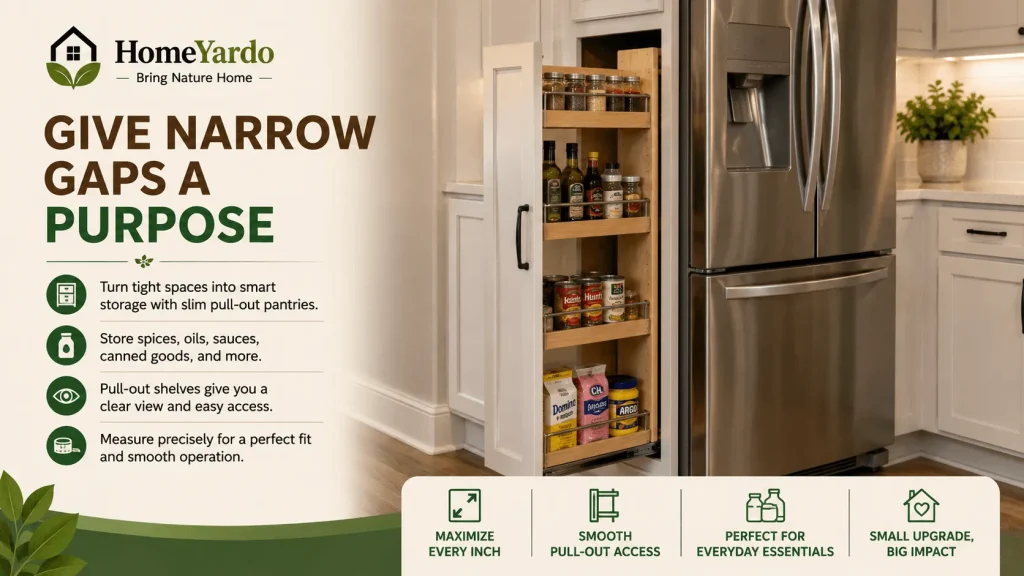
A narrow gap between a cabinet and an appliance might seem too small to be useful. In reality, even a few inches can become valuable storage.
A slim pull-out pantry can fit into surprisingly tight spaces and hold spices, oils, sauces, canned foods, or baking supplies. Because the shelves slide out, you can see the contents without having to reach into a dark corner.
Take precise measurements before installing one, including the clearance needed for the unit to open. You don’t want to discover after installation that the pantry door collides with the refrigerator.
This is one of those small upgrades that makes you wonder why the space was ever left empty.
Use the Back of Cabinet Doors
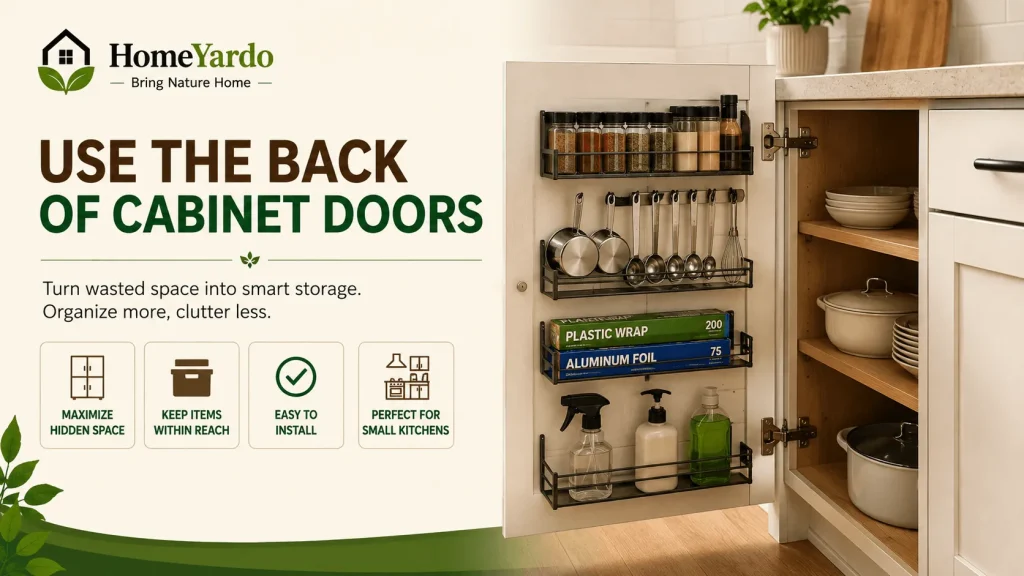
Here’s an easy storage opportunity that often gets overlooked: the inside of your cabinet doors.
A slim rack attached to a door can hold spices, measuring cups, food wraps, pot lids, or cleaning supplies. It essentially creates an extra storage surface without taking up much additional cabinet space.
This is particularly useful for small kitchens where every inch matters. Just make sure the organizer isn’t too deep and doesn’t interfere with shelves or hinges when the door closes.
Think of cabinet doors as hidden walls. Once you start looking at them that way, you’ll probably find several places where a little extra storage could fit.
Bring Storage Up Onto the Walls
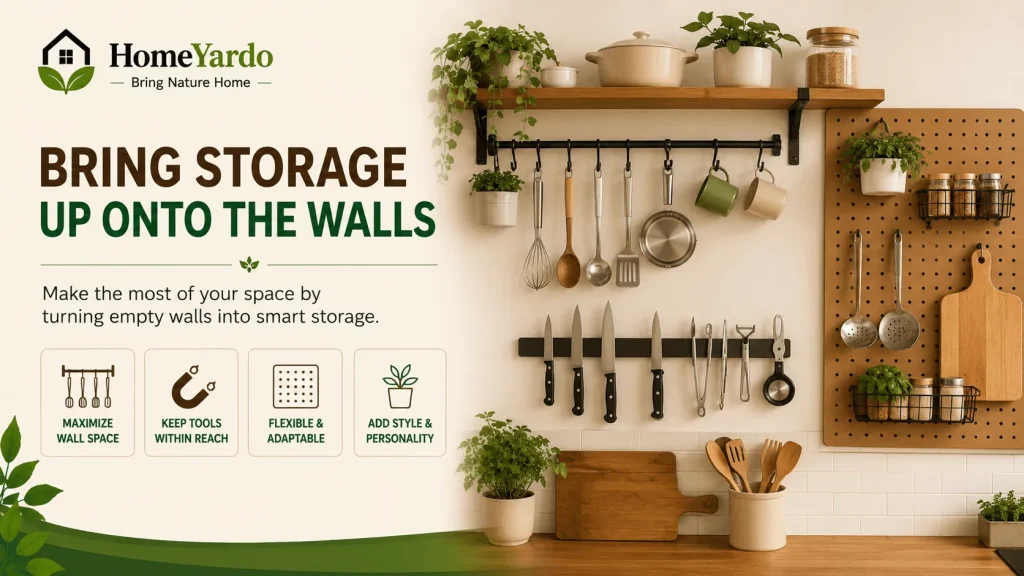
When you’ve run out of cabinet and drawer space, look up.
Wall-mounted storage can turn an otherwise empty wall into a useful organizational zone. A simple rail with hooks can hold cooking utensils, mugs, or lightweight pans. Magnetic strips can keep frequently used metal tools within easy reach, while pegboards offer flexible storage that can be rearranged whenever your needs change.
This approach can also add personality to a kitchen. Instead of hiding everything behind cabinet doors, you can display a few favorite pieces of cookware or attractive kitchen accessories.
Just resist the temptation to hang everything you own. A useful wall can quickly become a cluttered wall if every available hook gets filled.
Use Open Shelving Strategically
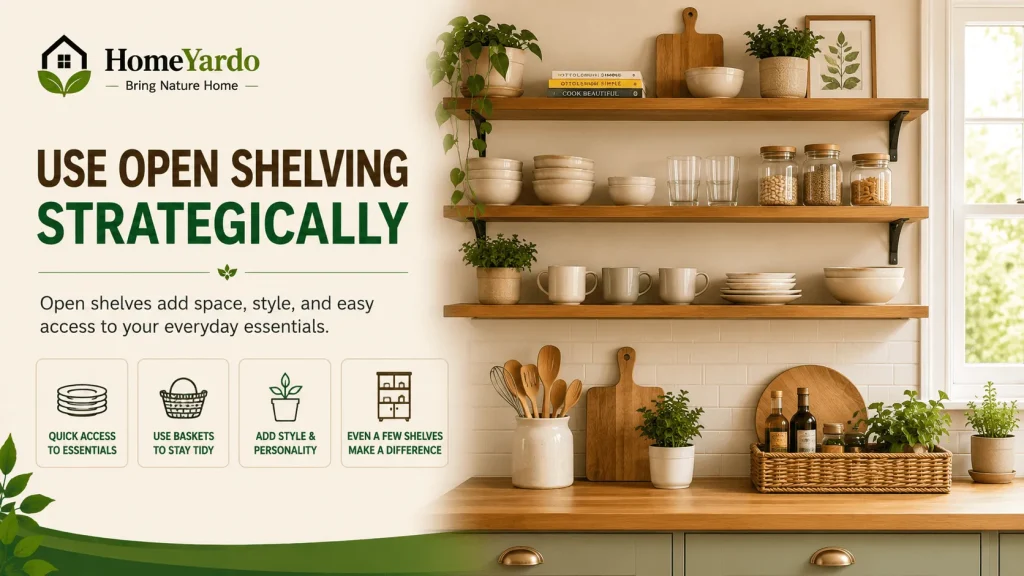
Open shelves can make a kitchen feel more spacious while giving you quick access to everyday essentials. They’re particularly handy for plates, glasses, jars, cookbooks, and attractive serving pieces.
The trick is to treat open shelving as both storage and part of the room’s visual design. Keep frequently used items on lower shelves and less essential pieces higher up. Baskets can also help contain smaller objects that would otherwise look messy.
You don’t need to remove all your upper cabinets to introduce open shelving. Even one or two shelves can create useful storage and add a little character to the room.
If you’re someone who likes a tidy kitchen but doesn’t enjoy constantly rearranging things, keep the number of displayed items fairly limited. Your future self will thank you.
Turn Your Kitchen Island Into a Storage Hub
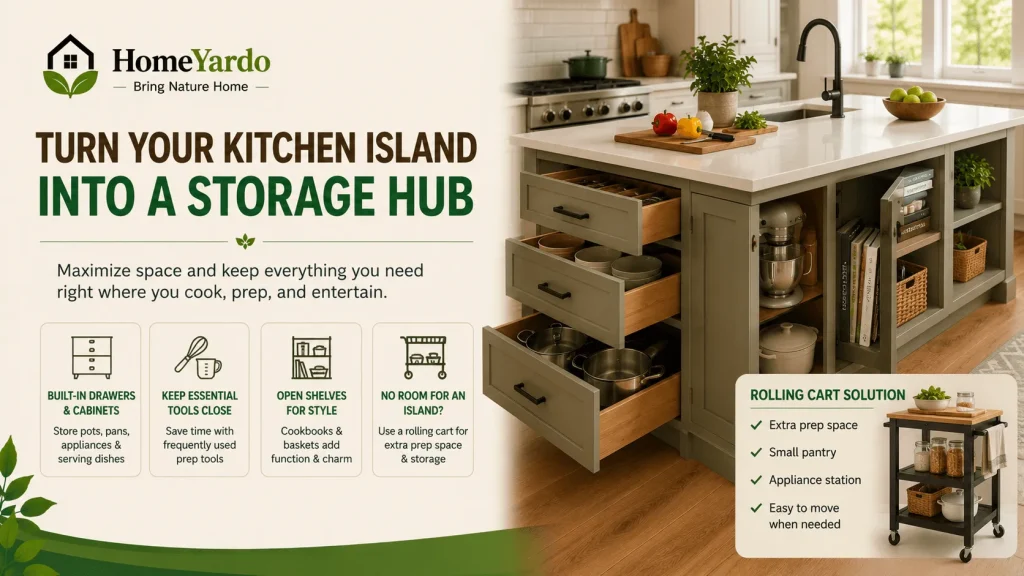
A kitchen island already provides valuable countertop space, so why not make the area underneath work harder too?
Built-in drawers and cabinets can store pots, pans, mixing bowls, appliances, or serving dishes. If you spend a lot of time preparing food on the island, consider keeping your most frequently used prep tools there. Having everything within arm’s reach can make cooking feel much more efficient.
You can also use open shelving for cookbooks or attractive baskets.
Don’t have enough space for a permanent island? A compact rolling cart can provide some of the same benefits. It can function as extra prep space, a small pantry, or even a home for countertop appliances, and then be moved out of the way when necessary.
Give Your Countertop Appliances a Home
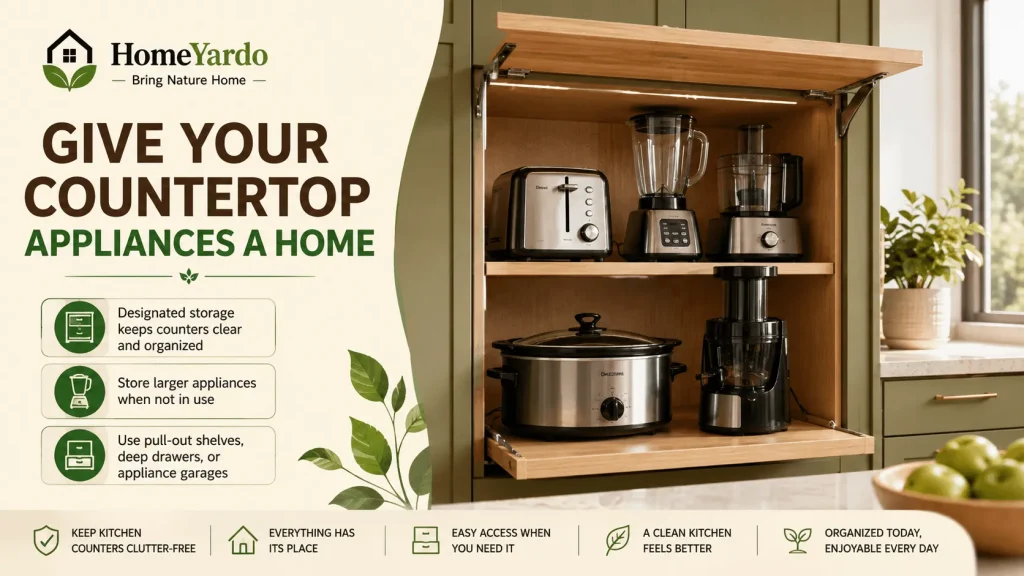
Countertops tend to become cluttered because appliances are convenient to leave out. If you use something every day, that’s understandable. But appliances that only come out occasionally don’t necessarily deserve permanent countertop real estate.
Consider creating a designated cabinet or shelf for larger gadgets. This is especially helpful when you have several appliances competing for space. For example, an easy to use slow juicer for home kitchens can be stored in an accessible cabinet when you’re not making fresh juice, freeing up valuable counter space between uses.
Appliance garages, pull-out shelves, and deep drawers can all make storing these items easier. The goal isn’t to hide everything. It’s to make sure the things you use most often are convenient without allowing rarely used appliances to take over the kitchen.
Organize Storage Around the Way You Actually Live
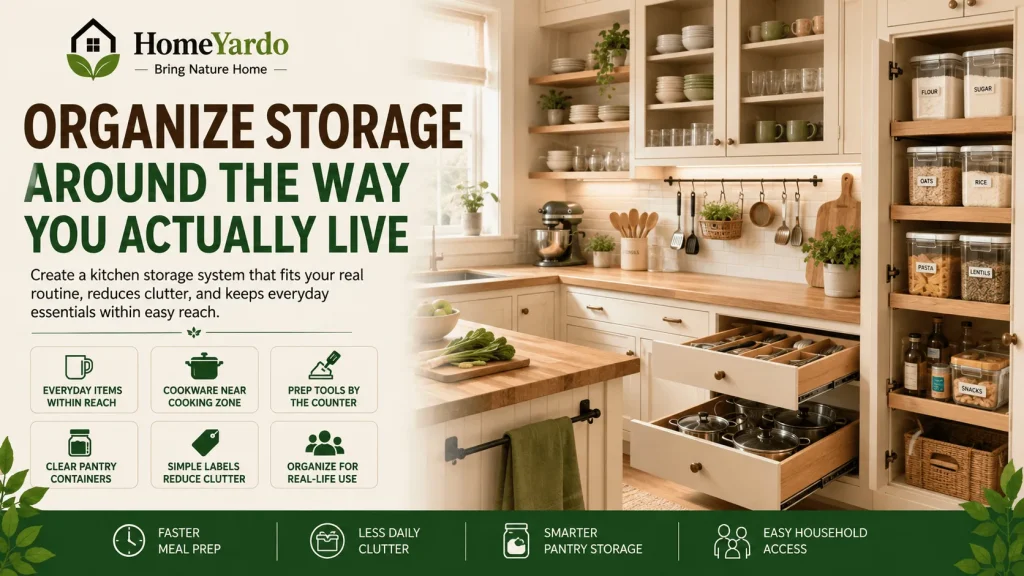
The best storage system isn’t necessarily the one that looks impressive in a showroom. It’s the one that makes your everyday routine easier.
Spend a day paying attention to how you move around your kitchen. Which items do you reach for constantly? Which cabinets are annoying to access? Where does clutter naturally accumulate?
Use those observations to decide where things should live.
Keep everyday cookware near the cooking area. Store glasses and mugs somewhere convenient for everyone in the household. Put food preparation tools close to the countertop where you usually chop and mix ingredients.
For pantry storage, clear containers and simple labels can make a big difference. Seeing exactly what you have can prevent duplicate purchases and make it easier to notice when ingredients are running low.
Most importantly, don’t organize your kitchen according to an idealized version of how you think you should cook. Organize it around how you actually cook.
Conclusion
Maximizing kitchen storage doesn’t have to mean adding more cabinets or starting an expensive renovation. Sometimes, the biggest improvements come from noticing the spaces that are already there but aren’t being used effectively.
A pull-out organizer can transform a deep cabinet. A few hooks can turn an empty wall into useful storage. A slim pantry can make a narrow gap worthwhile, while a better system for countertop appliances can instantly make the kitchen feel less crowded.
Start with the area that bothers you most and make one change at a time. Once you see how much difference a small improvement can make, you’ll probably start spotting storage opportunities everywhere, and your kitchen may have considerably more potential than you thought.
FAQ’s
Pullout organizers, drawer dividers, narrow pantry units, wall-mounted storage and cabinet-door racks can help small kitchens maximize their limited space.
Shelf risers, cabinet-door organizers, drawer inserts, hooks, magnetic strips, open shelves, rolling carts and pull-out organizers can provide storage without altering the kitchen layout.
Pull-out shelves and sliding cabinet organizers help make deep cabinets easier to use by allowing you to pull stored things toward you, rather than reaching behind other cookware or supplies.
Yes The area above cabinets can be utilized for seasonal dishes, specialty cookware, serving pieces and equipment not used on a regular basis. Keep them in order, using baskets or crates.
Designate a storage place for countertop appliances and keep those you use regularly within easy reach. Deep drawers, pull-out shelves, cabinets and appliance garages can save counter space.
Use drawer dividers or inserts to keep utensils, measuring instruments, gadgets and other small objects apart. Vertical dividers for chopping boards, baking trays and serving platters can also be installed in deep drawers.
Open shelves may make a kitchen feel more open and allow easy access to everyday things. They operate best when the amount of products exhibited is regulated and the shelves are structured around daily use.
A slim pull-out pantry for spices, oils, sauces, canned foods or baking ingredients is another great way to use the slim space between a cabinet or appliance for storage. Measure opening and clearance before to installation.