Sump Pumps for Your Home: Protection Against Basement Water and Flooding
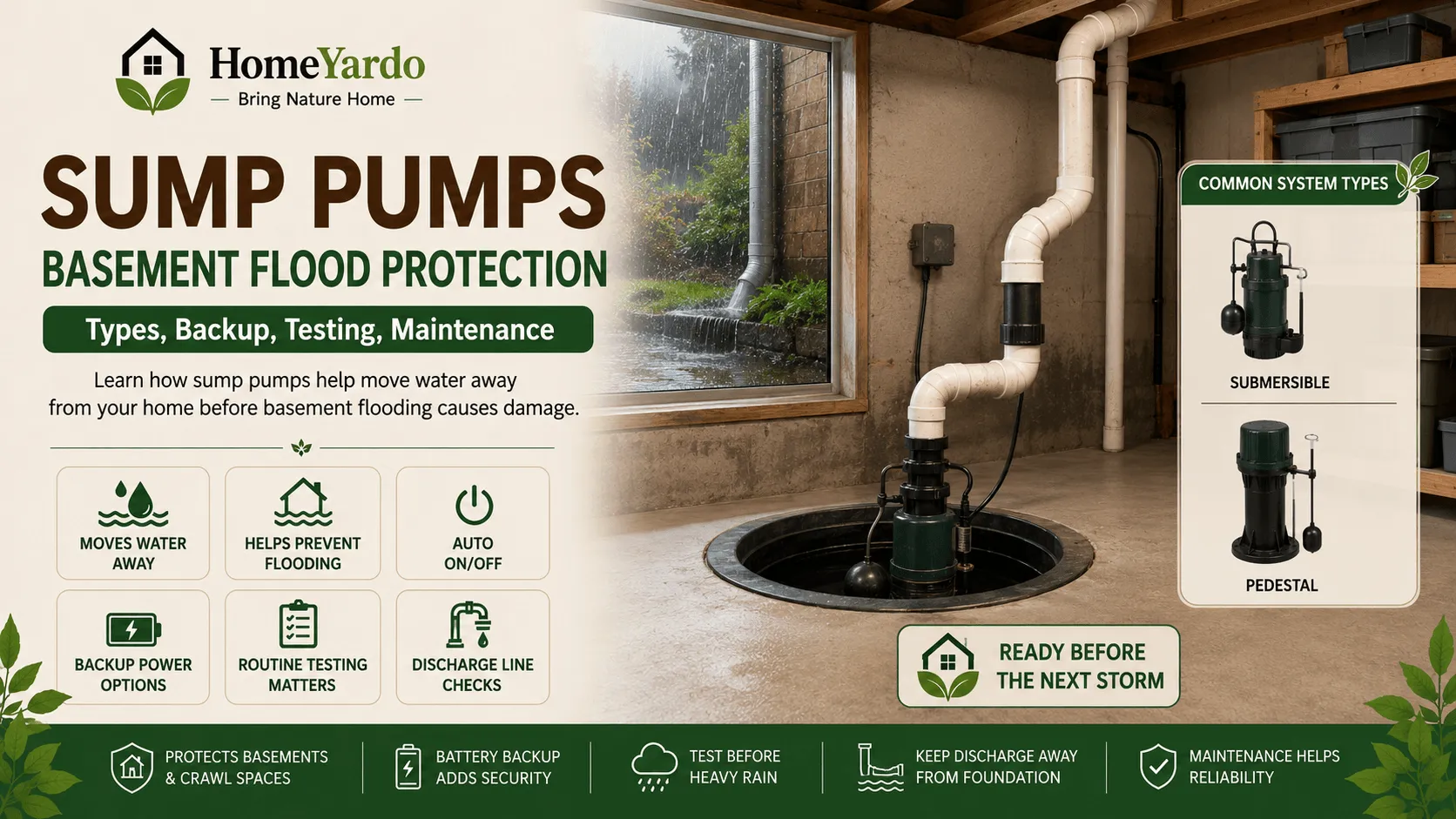
Water intrusion can be a costly problem for homeowners in a hurry. Heavy rains, rising groundwater, drainage problems and changing soil conditions all cause water to pool around a home’s foundation. For homes with basements or crawl spaces, a functioning sump pump can be a crucial first line of defense in terms of getting unwanted water away before it can do serious damage.
Learning how a sump pump functions, the times when a property may need one and how to maintain the system can help homeowners lessen the chance of basement water damage and get ready for times of severe rain or floods.
How Does a Sump Pump Work?
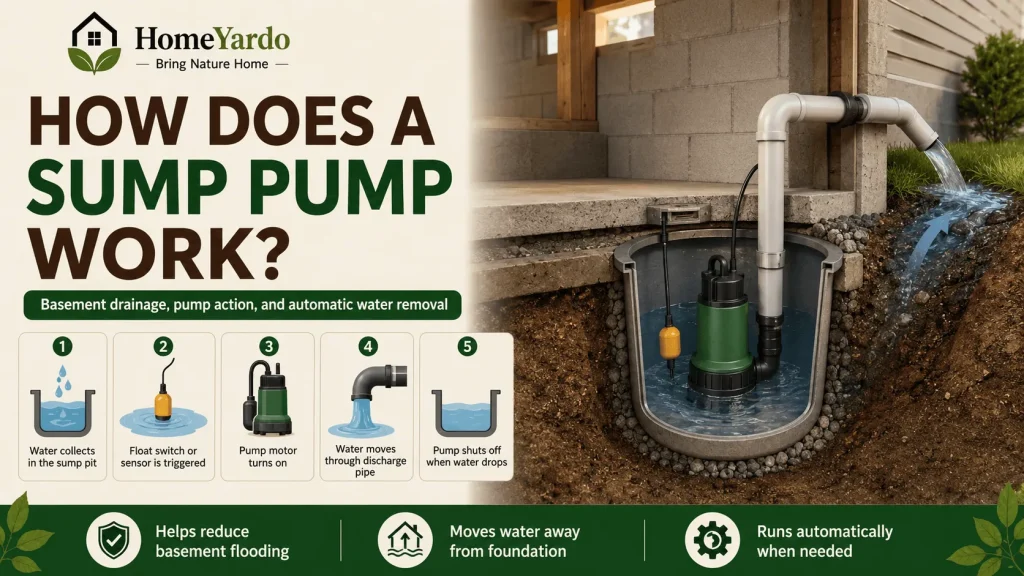
A sump pump is typically found in a sump pit located at one of the lowest places of a basement or crawlspace. Drainage systems surrounding the foundation can guide groundwater toward the pit, where it pools instead of spreading over the floor.
When the water level rises, a float switch or electronic sensor turns on the pump. Then the pump pushes water via a discharge pipe that takes the water away from the foundation. The pump will shut off automatically when the water level is to the desired level.
The system is configured to repeat this operation as new water is added to the sump pit.
What Happens When the Sump Pit is Full?
The basic technique is simple:
- Water gathers in or is directed to the sump pit.
- As the water level rises, it triggers the float switch or sensor.
- The pump motor is energized.
- Water is pumped through the discharge line.
- The water level goes down.
- And then the pump cuts out until it is needed again.
The exact layout is a function of the home, drainage design, pump type and discharge design.
Reasons Your House May Need a Sump Pump
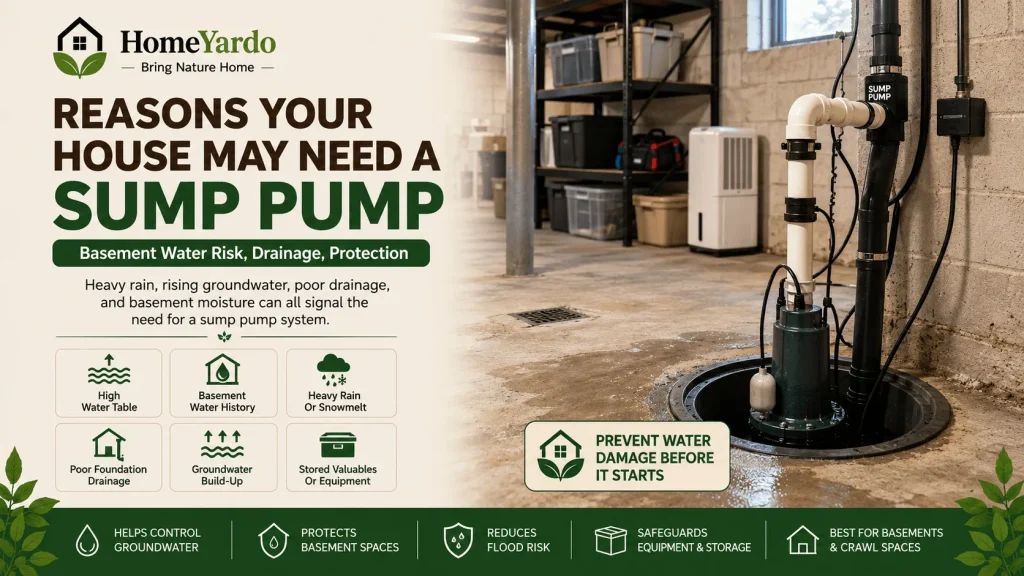
Even homes that have never had a major flood can have water problems in the basement. A very wet season, a heavy storm, rising groundwater, or changes in drainage surrounding the land might all cause problems that were not present before.
Homeowners researching sump pump Indianapolis services may want to evaluate both their home’s history and how vulnerable it may be to water infiltration in the future. A correctly designed sump pump can assist control the flow of ground water and limit the chances of water reaching finished areas, mechanical equipment, furniture or contents stored in a basement.
Prevention of water entry is far easier than fixing the damage after a basement has flooded.
Homes That Might Need a Sump Pump
If a property has a sump pump it may be worth considering:
- Basement or crawl area below or adjacent to the surrounding water table
- Water infiltration into basement – history
- Heavy rainfall or snowmelt often
- Bad drainage around the foundation
- Groundwater that gathers at the bottom
- A cellar with equipment or valuable goods
Drainage conditions and foundation design of a home should be evaluated prior to adopting a system.
Signs of a Sump Pump Problem
Homeowners may not even think about their sump pump because it is supposed to run automatically. Unfortunately, that might also mean problems go unnoticed until the pump is desperately needed.
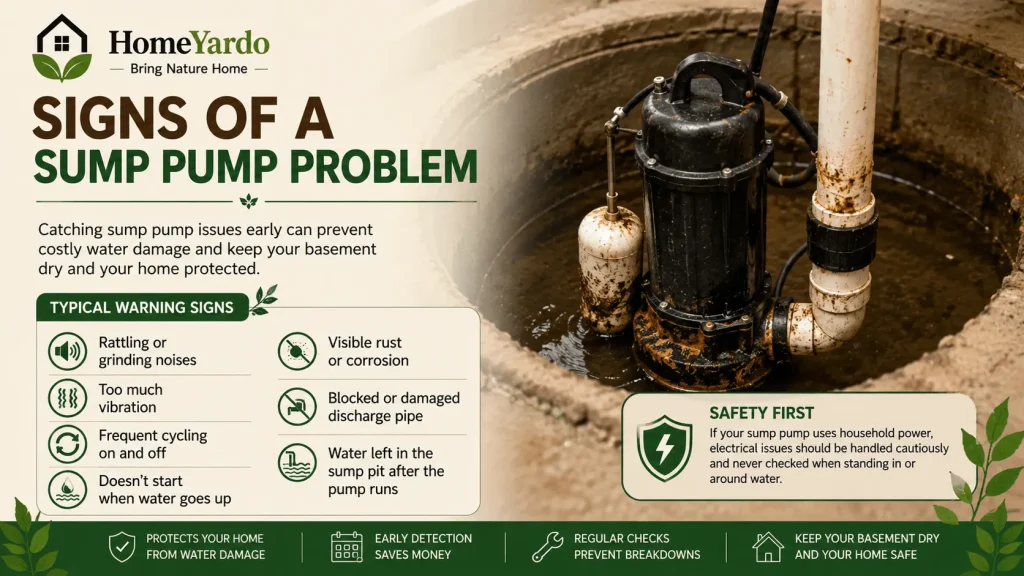
Unusual noises may indicate the pump needs servicing. Any change in the working sound such as grinding, rattling or excessive vibration should be checked.
Another red flag would be frequent cycling. A pump that cycles on and off frequently could be the result of a faulty float switch, being too big or too little, a clogged discharge line or too much water entering the sump pit.
Homeowners can also look for obvious rust, damaged electrical components or a pump that does not function when the water level rises.
Typical Warning Signs
Look for:
- Rattling or grinding noises
- Too much vibration
- Frequent cycling on and off
- Doesn’t start when water goes up
- Visible rust or corrosion
- Blocked or damaged discharge pipe
- Water left in the sump pit after the pump runs
If a sump pump uses household power, electrical problems should be handled cautiously and not examined when standing in or around water.
Selecting the Right Sump Pump
Sump pumps come in many sizes and combinations. Submersible and pedestal pumps are two of the more typical styles.
The submersible pump is located in the sump pit, and works while submerged. These systems can give tremendous performance with much of the equipment inside the pit.
A pedestal pump keeps the motor above the sump pit. The right design will depend on the configuration of the home and how much room is available.
The pump capacity is also crucial. The system has to transport water fast enough to keep up with what’s coming into the pit during challenging conditions. The actual pumping will be affected by the vertical lift, length of discharge pipe, pipe diameter, number of bends, etc.
Submersible or Pedestal Sump Pumps
| Feature | Pump, Submersible | Pedestal, Pump |
|---|---|---|
| Location of the motor | In the pit | Noise over the pit |
| The Space | More restrained | Headroom over pit required |
| Typical usage | Demanding applications & basements | Smaller or more accessible sump wells |
| Access to maintenance | Need to get to pump inside pit | The easier access to the motor |
The proper decision relies on the water conditions of the home, the configuration of the sump pit, available space and the estimated pumping demand.
Look for Battery Backup Protection
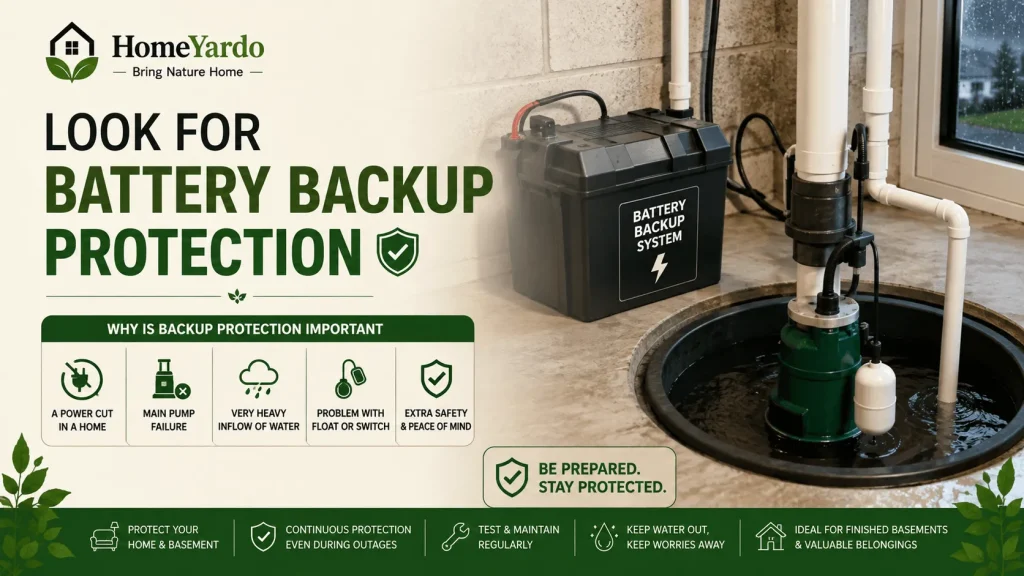
A typical sump pump generally relies on home electricity. This might be a concern since intense storms can bring heavy rain and electrical disruptions at the same time.
A battery backup sump pump offers an extra level of protection when the main system is not able to function. If you lose power, the backup mechanism instantly kicks in to continue eliminating water.
You may also want to have a backup pump in case the main pump has a mechanical breakdown or cannot handle a higher-than-normal flow of incoming water.
Backup protection might be especially helpful for homeowners with finished basements or expensive possessions stored in the basement.
Why is Backup Protection Important
A backup system can help to deal with a few situations:
- A power cut in a home
- Main pump failure
- Very heavy inflow of water
- Problem with the float or switch of the main pump
The backup should still be tested and maintained according to manufacturer’s specifications.
Test Your Sump Pump Frequently
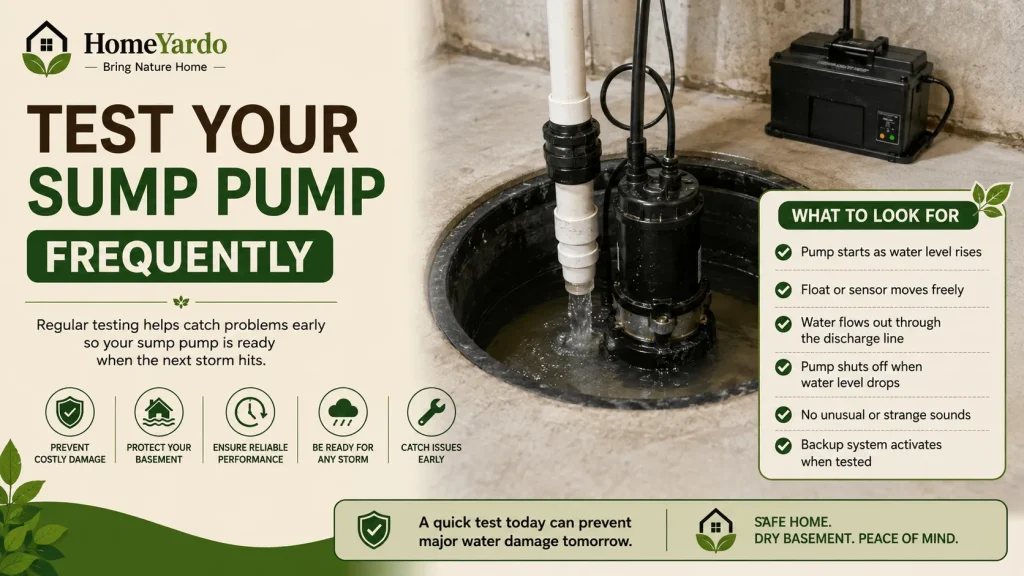
Homeowners can do periodic tests to identify problems before the next big storm. A typical test is to fill the sump pit with water gradually until the water level has raised the float.
The pump should automatically come on, pump the water out and then shut off at the correct level.
If the pump doesn’t start, runs strangely or doesn’t pump water adequately, you may need an expert to inspect it.
What to look for when testing
Homeowners can verify during a routine test if:
- The pump begins to run as the water level rises up
- The float or sensor can move freely
- Water leaves along the discharge line
- When the water level falls the pump stops off.
- The system is making weird sounds
- The backup system works when tested.
It should be done safely, especially around electrical connections and standing water.
Inspect The Drain System
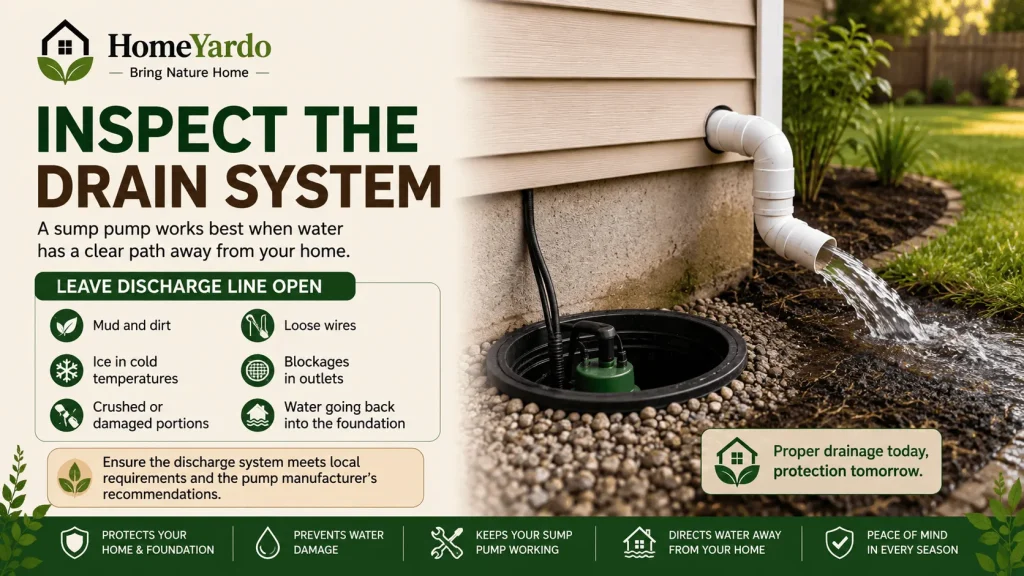
If there’s nowhere for the water to go, a sump pump can’t protect a property. The discharge line should drain water a good distance from the foundation.
Homeowners should frequently inspect the visible elements of the discharge system for obstruction, damage, freezing or other problems. Water released too close to the home could eventually flow back toward the foundation and sump pit.
Leave Discharge Line Open
Verify the discharge system for:
- mud and dirt
- Ice in cold temperatures
- Crushed or damaged portions
- Loose wires
- Blockages in outlets
- Water going back into the foundation
The discharge arrangement shall also comply with the local requirements and the recommendations of the pump manufacturer.
How To Service a Sump Pump
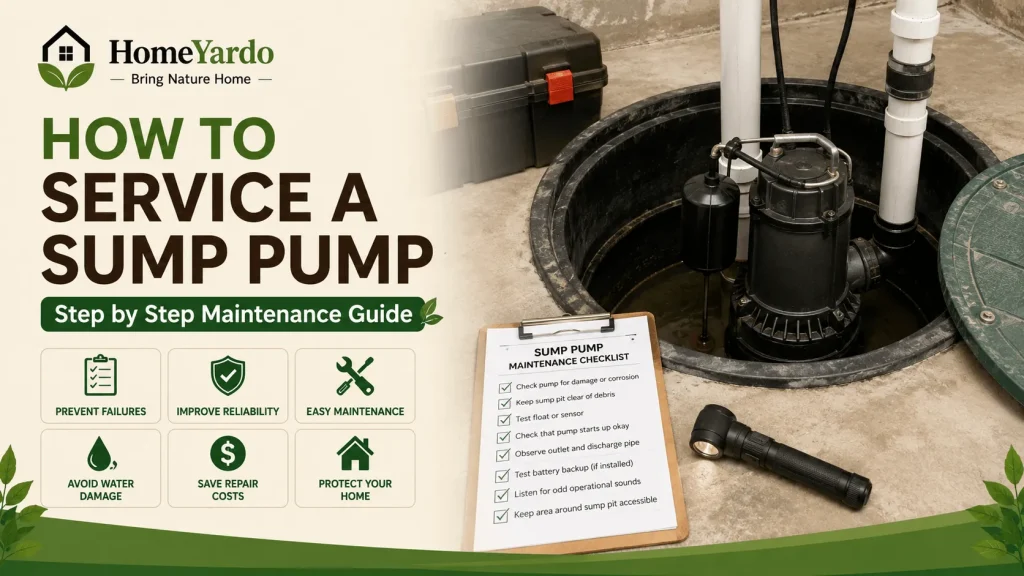
While regular maintenance will not prevent a pump from ever failing, it can assist uncover problems before the system is needed during extreme weather.
Homeowners should check the sump pit, pump, float or sensor, electrical connection and discharge line periodically. Do not let the pump get buried under stashed boxes or other stuff.
For older systems, you also need to take into account the age and operational history of the pump to decide whether it needs to be replaced or professionally inspected.
Sump Pump Maintenance Check List
- Check the pump for any obvious signs of damage or corrosion.
- Keep the sump pit clear of debris.
- Test float or sensor.
- Check that the pump starts up okay.
- Observe the outlet and discharge pipe.
- If a battery backup is installed, test it.
- Listen for odd operational sounds.
- The area around the sump pit should be kept accessible.
Home Protection Before the Next Storm
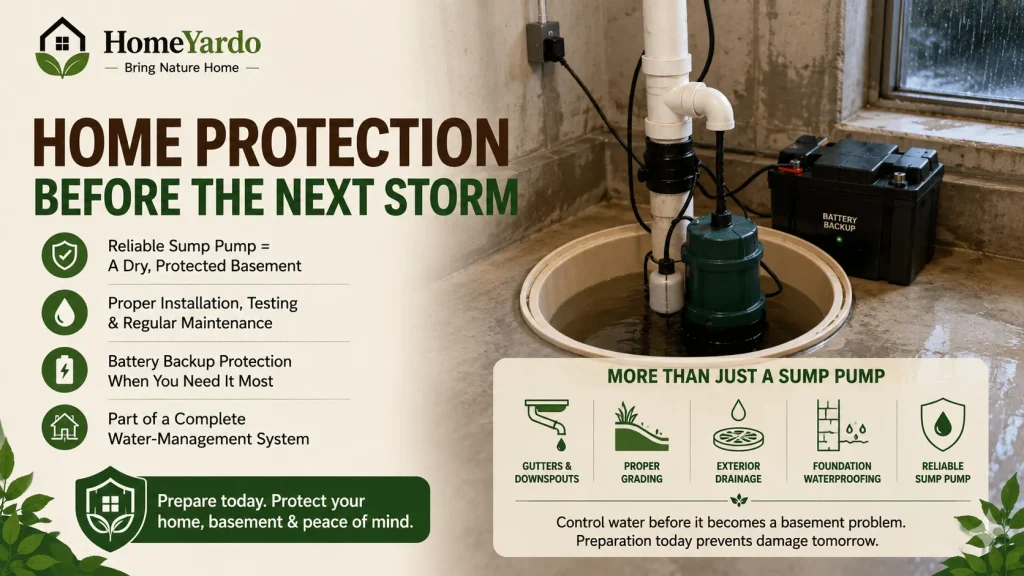
A sump pump can go unnoticed in a basement for its entire life, but its value becomes evident when basement flooding and water damage occur during extreme weather. Proper maintenance of your system can assist to minimize the chance of water damage in your basement, giving you greater peace of mind while it’s raining hard outside.
Proper installation, proper sizing, regular testing, a clean discharge line, and battery backup protection all help to have a reliable sump pump system.
Sump Pumps Are One Component of a Larger Water-Management System
Don’t think of a sump pump as the only defense against foundation water. Gutters, downspouts, grading, exterior drainage, foundation waterproofing, and other considerations can also affect the amount of water that reaches the foundation.
The idea is to control water before it’s a basement problem.” When groundwater hits the drainage system, a well-maintained sump pump can provide an added level of protection.
One of the greatest methods for homeowners to safeguard their basement, belongings and property against unexpected water intrusion is to prepare before water becomes an issue.
FAQ’s
A sump pump eliminates water that collects in a sump pit, and pumps it away from the home’s foundation. It can help to mitigate the risk of basement or crawl-space water infiltration.
Homeowners should test the pump often, not just when a storm is coming. “The pump should be tested to make sure it comes on, pumps water out and shuts off properly.
A battery backup can offer further safety against power failures or primary pump malfunction. This might be especially helpful for homes with completed basements, or a history of water problems.
Neither is automatically superior for all homes. Submersible pumps are inside the sump pit while pedestal pumps have motors above the pit. The best choice will depend on the sump pit, space available, water conditions and pumping requirements.
Heavy groundwater inflow, a float-switch malfunction, an undersized pump, or a discharge system failure might cause frequent or continuous operation. Persistent cycling should be checked.
Warning indicators include strange noises, heavy vibration, short cycling, obvious damage, failure to start, or water left in the pit after the pump has run.
The discharge system should carry water away from the foundation and not allow it to run back toward the house. The final layout shall be dependent on local needs, site conditions and the manufacturer’s installation instructions.
No. A sump pump can assist control groundwater, but it doesn’t guaranty against flooding. Basement water risk can be affected by foundation drainage, gutters, grading, discharge design, plumbing issues, and extreme weather.