How To Set Up A Metal-Cutting Station In A Home Garage Workshop
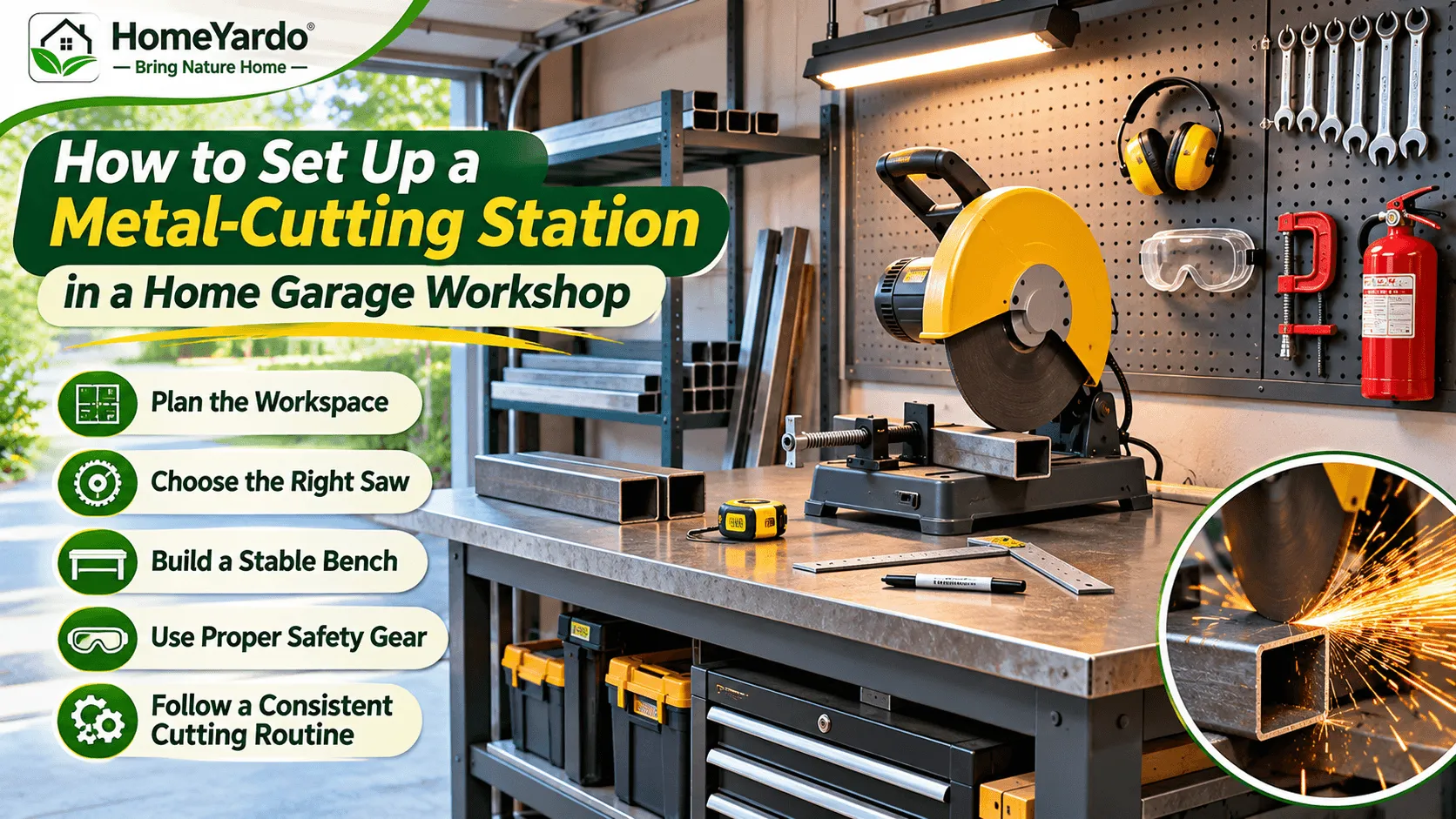
Cutting metal in a cluttered garage can turn a straightforward job into a frustrating one. Whether you’re trimming a bracket, cutting steel tubing, or preparing longer sections for a project, you need enough room to handle the material and operate your tools safely.
A dedicated metal-cutting station makes the work easier to organize. With a suitable saw, stable workbench, proper material support, and a plan for managing sparks and metal particles, you can create a practical cutting area without turning your entire garage into a fabrication workshop.
The setup doesn’t need to be complicated. It does need to match the materials you’re cutting, the equipment you’re using, and the space available.
This guide explains how to plan your cutting area, select equipment, secure your workpieces, manage common hazards, and establish a consistent cutting routine.
Give the Metal-Cutting Station Its Own Space
You need to have a good idea of what you’re going to be cutting on a day to day basis. If it’s only smaller brackets you will want a smaller footprint than if you’re cutting steel box sections to build gates for example.
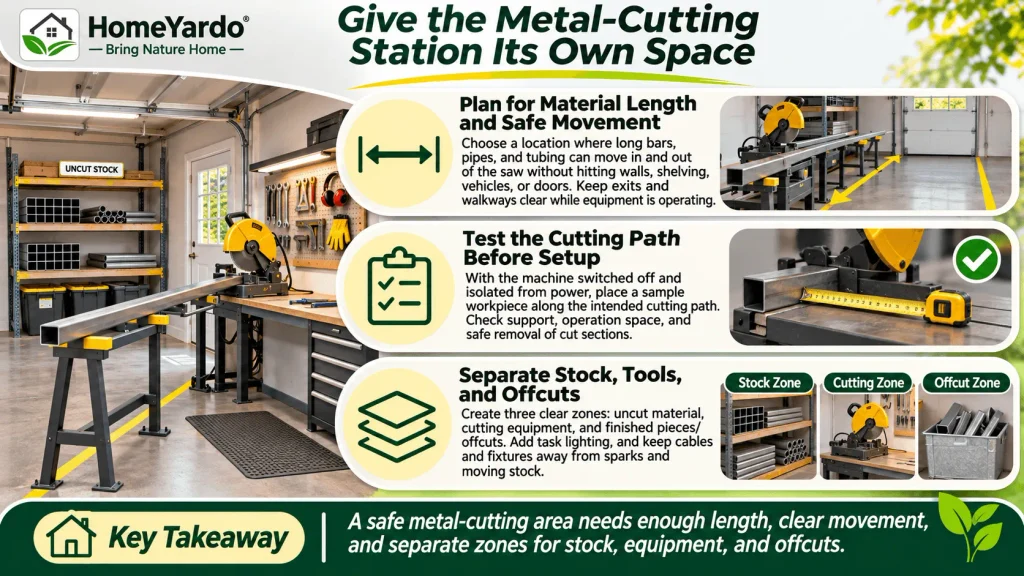
Have an idea of how long stock you need to feed towards the blade. Allow space on the far side to pull off cuts and get out of the area safely. Run your longest piece you will usually use through that space before fixing your bench to its final position. Remember the saw will be off!
Also allow yourself an escape route from your garage so no one is walking through your cutting area.
Allowing for three areas within your cutting station. Uncut material, cutting tools and offcuts. This will prevent sharp edged metal from being near your tape measures and other items you use.
Ensure you can see the line you’re marking out to cut along, and your clamp. Position task lights away from any flying debris and material path.
Choose a Metal-Cutting Saw and Blade That Fit
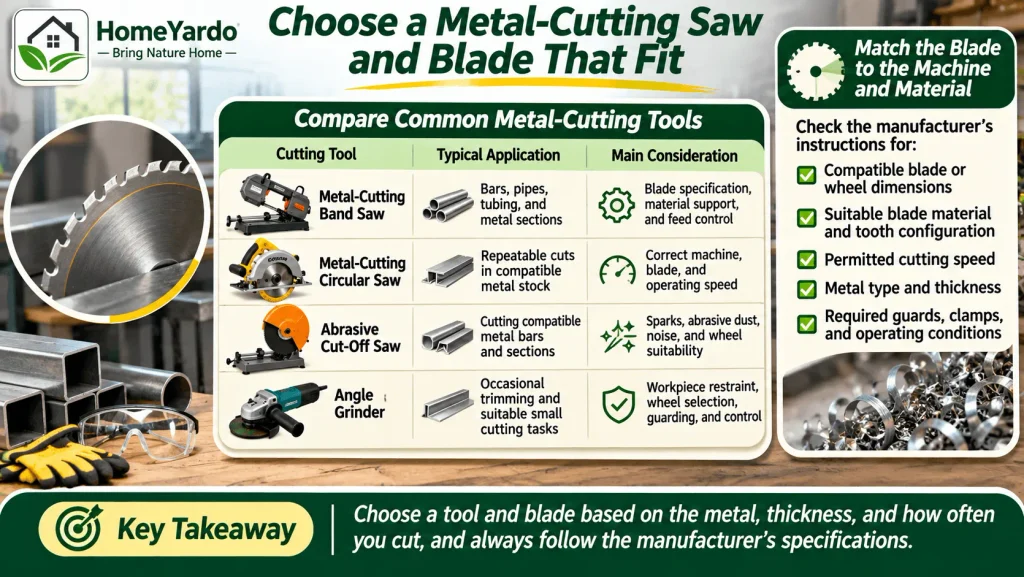
As with any cutting, there are several types of saws that can cut metal. What saw and blade is best for your application.
It’s the same in any cutting environment, ensure you are matching the correct tool with the correct application to your desired result.
Some saws and blades that can be used to cut metal at home are:
- Band saw, metal cutting: Depending on specification and usage, this can cut many types of metal. From the bar, tube and steel section.
- Circular saw, cold saw, metal cutting: Again, if matched with the correct machine and blade, can provide you with repeatable cuts.
- Cut off, abrasive metal cutting: Using an abrasive wheel this will give you more of a spark, noise and dust producing cut.
- Angle Grinder: Ideal for the odd cut, however can struggle to produce the same square cut on many lengths.
As stated, choose the right blade for your application. When looking at the wide variety of blade choices you’ll find for both band and circular saws on KRSaws.co.uk. It’s safe to say that the blade choice depends on the saw, metal type and cutting job. Consult your machine’s manual to see what size, teeth, material and speed of revolution.
Never fit a wood cutting blade or unsuitable blade, or cutting disc just because it will fit the spindle. Always ensure you are using the correct accessory for your machine, material and speed.
Build a Bench That Holds the Work Securely
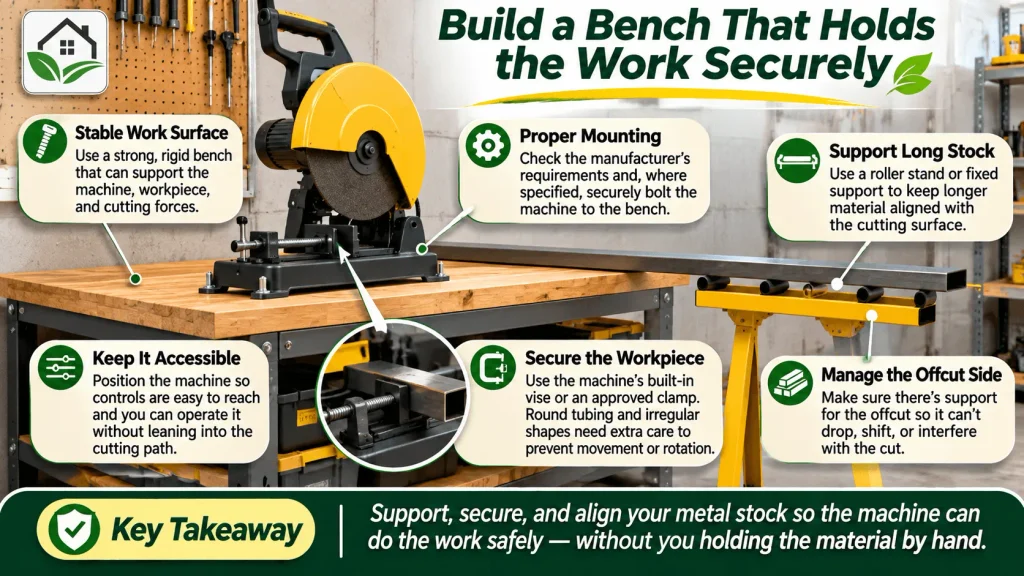
You want to make sure your work area, or bench, is strong enough and can accept the machine and any material you will be placing on it.
Make sure your machine is bolted down to your bench where instructed by the manufacturers. Allow enough height to cut comfortably, and have plenty of room to access the machine, away from the blade.
When feeding longer stock, ensure the end of it is supported at the correct height. Your off cuts will then be easier to remove and less likely to pinch or fall onto your feet. A roller stand can help, just make sure it’s stable and safe.
Make sure your stock is secured, either via your machines provided vice or use some form of clamping to hold your material in position. Round tubes, and other shapes, can prove difficult when it comes to holding them stationary, so if you’re unsure of a fix, don’t cut!
Allow some space next to your machine for a square, tape measure and marker pen, just make sure they are not in the area your offcuts or chips will end up. You can use a stop if you’re making multiple length’s, just allow for it not pinching the offcut against the cutting tool.
Ideally, your material should be supported, and your cutting tool should cut the length without needing to hold it yourself.
Deal With Sparks, Metal Dust, and Electrical Safety
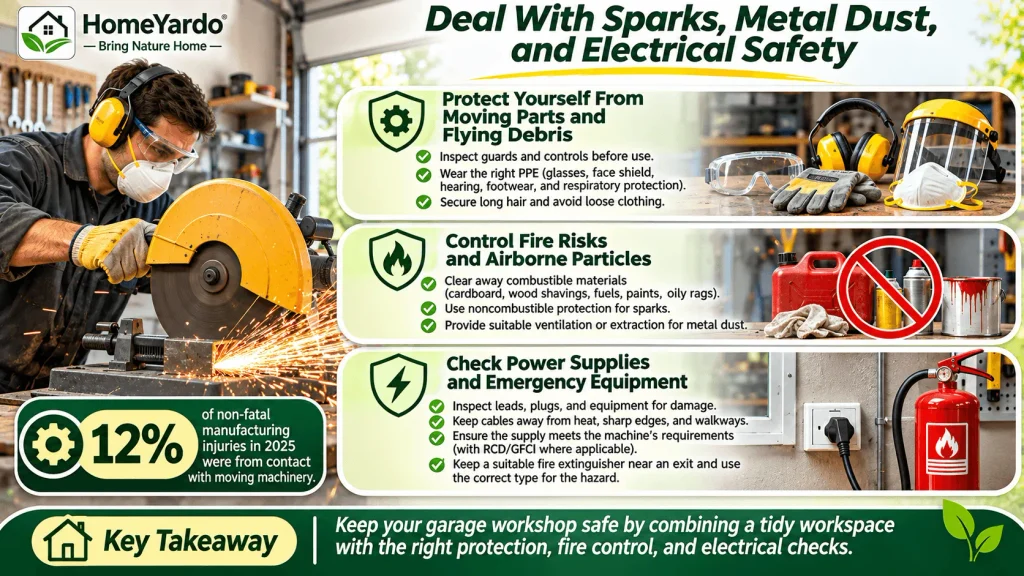
When reviewing HSE figures for 2025, the amount of injuries, by type of accident, caused by “contact with moving machinery” was 12% of reported non-fatal manufacturing injuries. Averaged over 2022/23, 2023/24, and 2024/25. While this isn’t from your average person at home, it’s worth noting that when using machines, always be careful and ensure you are operating them safely.
Ensure your machine has guards, and they are working correctly. PPE such as glasses, face visor, ear defenders etc, can help reduce particular risks when selected for the task. Tie back long hair jewellery and any clothing that could catch in any moving parts. Gloves could be helpful to protect your hands when handling sharp edged stock, just be aware of this near rotating machinery where they could snag.
Clear any cardboard, gas, paints, and other debris that can catch fire, or cause injury, in the area you’re going to be cutting in. Your work surface could benefit from something that won’t burn, but again, make sure your surroundings are clear of these objects.
Using an abrasive cutter will release particles into the air, which can be harmful if inhaled, and over a period of time, will contaminate your workshop area. There are many ways to extract dust, and vapors, when cutting metals, and it’s best to speak to the supplier about what will suit your application. Venting your garage may not cover all forms of cutting, but ensure you have enough if this is your go to solution, and if you’re unable to control, then use a workshop with suitable controls for that task.
Always make sure your leads and plugs are in good condition, and safe to use. Do not have leads near sharp material, or heat sources, and consider having your plug board RCD protected. Speak to an electrician if in doubt.
Always have a fire extinguisher that is suited to your environment, and know how far from your source your fire can travel. If in doubt, get out of the area and contact the relevant service provider.
Make Every Metal Cut a Repeatable Routine
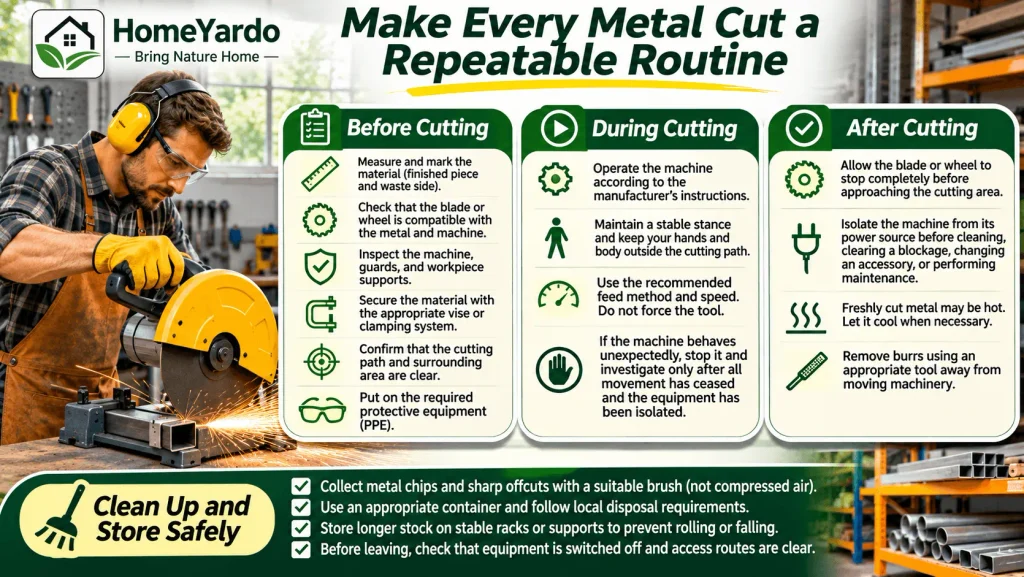
Now you have your cutting station, here’s some advice on making a procedure that will help when you’re making cuts, no matter how big or small they are.
- Measure and mark your material, remember to cut on the waste side of the mark for the finished length, and know which side to keep.
- Make sure the material is secure within your fixture, if you’re cutting longer pieces, you will need some form of support on the far side, and remember to allow space for your offcut.
- Check your machine, ensure you have a suitable blade, and are following the recommended speeds, and usage.
- Use your machine, ensure your standing is safe and your body, and hands, are away from the path your material will travel through, don’t force the machine, let it do its job, and feed material accordingly.
- Once you have completed your cut, wait for all movement to stop, then isolate your machine, clean, unblock, or maintain, whatever is required, but again, away from moving parts, and any hazards they may present.
Cut material can be very hot, so be careful, and if your stock has sharp edges, allow it to cool, and de-bur if necessary, away from a running saw. Clear away any debris, preferably with a suitable brush or swarf-cleaning tool, don’t blow any chips, or metal, around the garage.
Store long stock securely on a suitable rack or restrained support so it cannot roll or fall, and cannot fall, and dispose of any sharp edge waste, not in your general waste, and sweep up any small offcuts that may have fallen, before leaving the area.
You may want to make some test cuts, if you’re not too confident, this will also help you if you have bought a new blade, or you’re cutting unfamiliar stock.
Metal-Cutting Station Safety Checklist
Before using your garage metal-cutting station, review this checklist.
| Check | What to confirm |
|---|---|
| Layout | Clear cutting path, material support, and exits |
| Machine | Suitable equipment, guards, and correct setup |
| Blade or wheel | Compatible type, dimensions, condition, and speed |
| Workpiece | Properly restrained and supported |
| Bench | Stable and mounted according to instructions |
| Fire safety | Combustibles removed and suitable fire precautions |
| Air quality | Appropriate extraction or exposure controls |
| Electricity | Sound connections and suitable electrical protection |
| Personal protection | Task-appropriate eye, hearing, and other protection |
| Cleanup | Safe removal of hot chips, sharp edges, and waste |
If any part of the setup is unsafe or uncertain, correct the issue before operating the cutting equipment.
Final Takeaway
A useful home garage metal-cutting station doesn’t need to be large or expensive.
It needs enough space for the materials you use, a machine suited to the job, a stable bench, reliable workpiece support, and a sensible approach to sparks, particles, and electrical safety.
Plan the layout before purchasing equipment, check the machine manufacturer’s instructions, and keep your cutting process consistent.
A little preparation can make routine metalworking jobs easier to manage while reducing avoidable hazards in your garage.
FAQ’s
A basic metal-cutting station needs a suitable metal-cutting machine, compatible blade or wheel, stable workbench, secure clamping system, material supports, task lighting, and appropriate safety equipment. The exact setup depends on the metal and type of cutting work.
A metal-cutting band saw is useful for many bar, tube, and section-cutting tasks. Purpose-built metal-cutting circular saws may also suit repetitive work. The best option depends on material type, cutting capacity, machine compatibility, and how often you cut metal.
Metal can be cut in a home garage when the equipment, ventilation, fire precautions, electrical supply, and work area are suitable for the task. Spark-producing or dust-generating processes may require controls that an ordinary garage cannot provide.
Space requirements depend on the machine and the length of material being handled. Allow room for stock entering the cutting area, finished sections leaving it, safe machine operation, and unobstructed movement around the workstation.
Use the machine’s approved vise or a suitable clamping system designed for the workpiece. Support long sections correctly and make sure round or irregular material cannot rotate or shift during cutting.
Remove combustible materials from the area and use suitable spark protection and task-specific extraction where required. General ventilation alone may not adequately control airborne particles, and ordinary household vacuums may be unsuitable for collecting metal debris.
An angle grinder can be useful for occasional metal-cutting jobs when fitted with an approved cutting wheel and used according to the manufacturer’s instructions. For frequent, repeatable cuts, a properly selected metal-cutting saw may offer better workpiece support and consistency.
You need a stable bench that can support the machine and workpiece while meeting the equipment manufacturer’s mounting requirements. Additional supports may be necessary for long steel bars, pipes, or tubing.