How To Choose Living Room Furniture That Fits Your Style
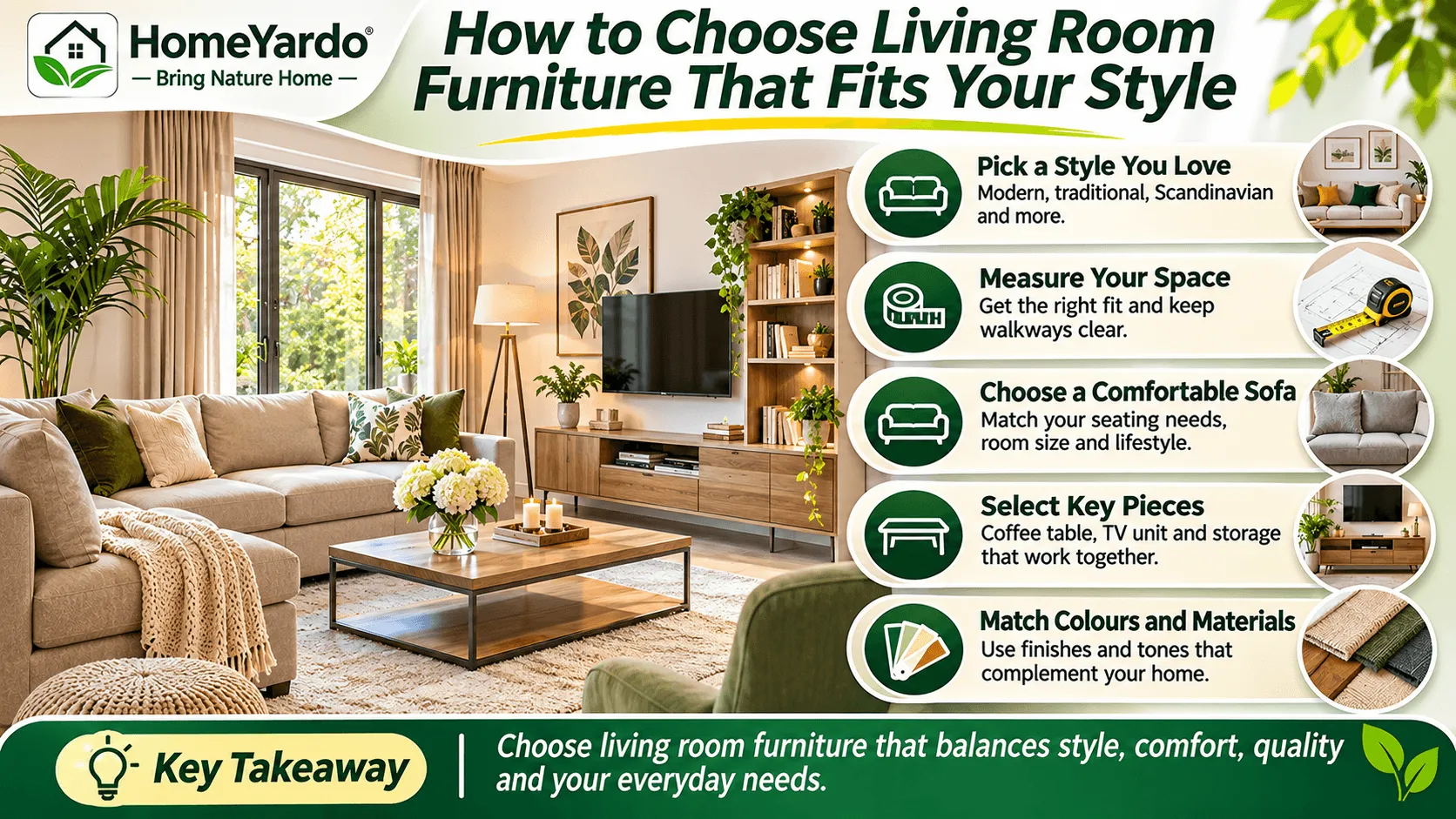
Your living room should feel comfortable, welcoming and easy to use. It is where you relax after work, spend time with family and entertain guests. Choosing the right furniture helps you create a space that looks appealing without sacrificing everyday practicality.
But buying living room furniture involves more than choosing a sofa you like. Room dimensions, seating requirements, storage, upholstery and budget all affect how well your furniture works together.
When exploring living room furniture UK collections, consider how each piece fits your space and lifestyle. From sofas and coffee tables to TV units and storage cabinets, the right combination can make your living room more organised, comfortable and attractive.
This guide explains ten practical steps to help you choose furniture that suits your home, reflects your personal style and provides lasting value.
1. Identify Your Preferred Living Room Style

Before buying furniture, decide how you want your living room to look and feel. A clear design direction helps you select complementary pieces without making everything look identical.
Popular Living Room Furniture Styles
| Furniture Style | Main Characteristics | Suitable Furniture |
|---|---|---|
| Modern | Clean lines, neutral colours and simple finishes | Streamlined sofas, glass tables and sleek TV units |
| Traditional | Decorative details, classic shapes and rich wood tones | Upholstered sofas, wooden cabinets and elegant tables |
| Scandinavian | Light colours, natural materials and practical designs | Compact sofas, pale wood furniture and simple shelving |
| Industrial | Metal frames, darker finishes and exposed textures | Metal coffee tables, leather seating and wooden shelving |
| Contemporary | Current designs, mixed textures and flexible colour schemes | Modular sofas, statement chairs and multifunctional furniture |
You do not need to follow one style rigidly. A contemporary sofa can work alongside a traditional wooden sideboard when their proportions and finishes complement each other.
If you want a more personal interior, HomeYardo’s guide on how to create a warm, lived-in home without clutter offers useful ideas for combining comfort with individual character.
Choose a style that you enjoy living with rather than buying pieces simply because they are fashionable.
2. Measure Your Living Room Before Buying Furniture

Furniture can look smaller in a showroom or online photograph than it does in your home. Measuring your room before shopping helps prevent expensive purchasing mistakes.
Start with the room’s length, width and ceiling height. Mark the positions of doors, windows, radiators, fireplaces and electrical sockets.
Check Furniture Dimensions and Walking Space
Record the width, depth and height of every large piece you intend to buy.
As practical starting points:
- Allow approximately 75–90 cm for frequently used walking routes where possible.
- Leave around 35–45 cm between a sofa and coffee table when suitable for the seating arrangement.
- Check that cabinet doors, drawers and reclining mechanisms can open without obstruction.
- Measure the space needed for people to enter and leave seating areas comfortably.
These measurements are general planning guidelines, not universal accessibility requirements.
For narrow rooms or households with mobility needs, allow more space where necessary.
Measure Doorways and Delivery Routes
A sofa that fits your living room may not fit through your front door.
Check hallways, staircases, lifts and tight corners before ordering. Ask the retailer whether large items arrive assembled, in sections or in flat-pack form.
You can also use HomeYardo’s room makeover planning guide to organise furniture placement before making a purchase.
3. Choose a Comfortable and Stylish Sofa

The sofa often becomes the main seating area and visual centre of a living room. Choose one that supports your daily routine, not simply one that looks attractive in photographs.
Which Sofa Type Is Best for Your Living Room?
| Sofa Type | Best Suited For | Main Consideration |
|---|---|---|
| Two-seater sofa | Small rooms and apartments | Compact seating |
| Three-seater sofa | Everyday family use | Balance between seating and floor space |
| Corner sofa | Larger households and suitable corner layouts | Overall footprint and access |
| L-shaped sofa | Open-plan and spacious rooms | Flexible seating arrangements |
| Recliner sofa | Relaxation and extended seating | Extra clearance for reclining |
| Sofa bed | Guest accommodation and multipurpose rooms | Sleeping comfort and opening space |
A corner or L-shaped sofa can work well in a compact room, but only when its dimensions and orientation preserve comfortable movement.
Check Comfort, Construction and Upholstery
When comparing sofas, examine seat depth, cushion support, frame construction and fabric quality.
Sit on the sofa whenever possible. Your feet should rest comfortably, and the back cushions should support your preferred sitting position.
Look for secure joints, suitable cushioning and upholstery that can withstand regular use.
Fabric upholstery offers many colours and textures. Leather can be practical in some homes, although different leather finishes have different cleaning and maintenance requirements.
For households with children or pets, removable covers and fabrics with suitable cleaning instructions may be particularly useful.
4. Select a Coffee Table That Complements Your Sofa
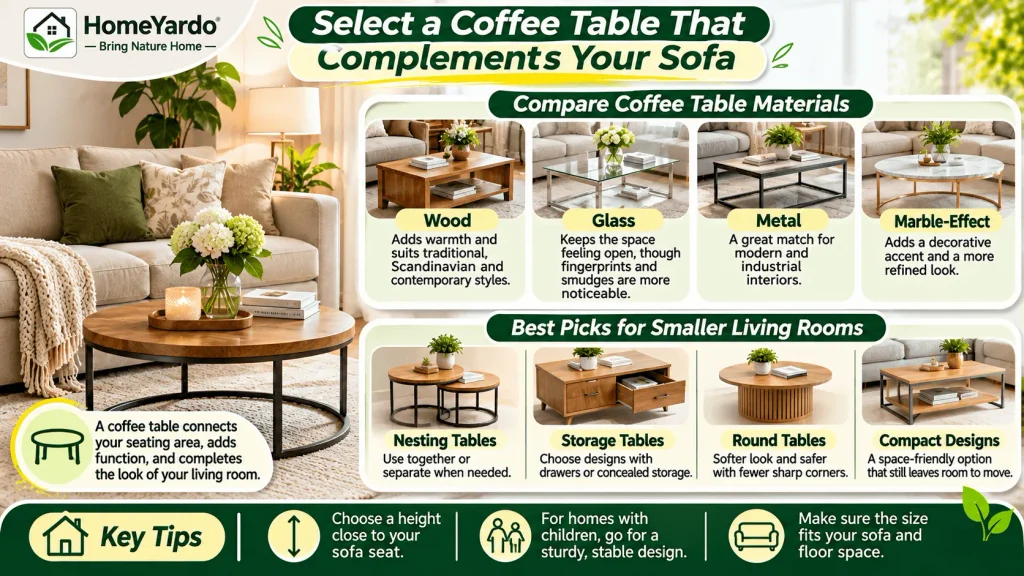
A coffee table provides a convenient surface for drinks, books and everyday essentials. It also helps connect the seating arrangement visually.
Choose a table that suits the proportions of your sofa and the available floor space.
Compare Coffee Table Materials
Wooden coffee tables introduce warmth and complement traditional, Scandinavian and contemporary interiors.
Glass tables can preserve open sightlines, although fingerprints and smudges may be more noticeable.
Metal-frame tables work particularly well with modern and industrial furniture, while marble-effect finishes can introduce a decorative accent.
For smaller living rooms, consider:
- Nesting tables that can be separated when needed.
- Coffee tables with drawers or concealed storage.
- Rounded tables that reduce sharp corners.
- Compact designs that leave adequate walking space.
A coffee table should generally sit close to the height of the sofa seat, depending on its intended use.
In homes with young children, consider stable construction, rounded edges and suitable materials.
5. Invest in a Functional TV Unit

A TV unit can provide storage for entertainment equipment while helping the room feel organised.
Before buying, check the television’s dimensions, the unit’s supported weight and the space required for accessories.
Choose the Right TV Unit Design
Floating TV units create a streamlined appearance and can make floor cleaning easier. However, they require appropriate wall construction, suitable fixings and correct installation.
Freestanding TV cabinets offer flexibility and are available in modern, traditional and industrial styles.
Choose a unit with:
- Sufficient width and suitable weight capacity.
- Storage for media equipment and accessories.
- Cable management openings.
- Appropriate ventilation for electronic devices.
- A stable structure that suits the intended installation.
Check the manufacturer’s safety instructions, particularly for wall-mounted units and households with children.
HomeYardo’s guide to modular living room storage explains how coordinated cabinets and entertainment units can work together.
6. Add Practical Living Room Storage Furniture
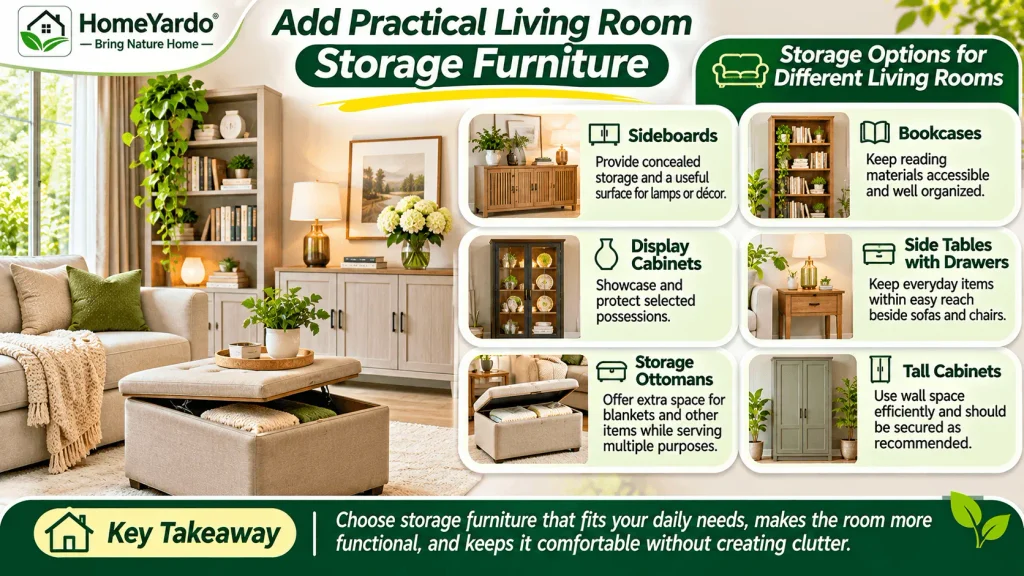
Living rooms often need storage for books, games, remote controls, blankets and personal belongings.
Choosing storage furniture that matches your daily needs can help keep the space comfortable without overcrowding it.
Storage Options for Different Living Rooms
Sideboards provide concealed storage and a useful surface for lamps or decorative pieces.
Bookcases keep reading materials accessible, while display cabinets can protect and showcase selected possessions.
Side tables with drawers are useful beside sofas and armchairs. Storage ottomans can provide additional space for blankets while serving other purposes when designed for them.
For small rooms, consider furniture that serves more than one function.
Tall cabinets may use wall space efficiently, but they should be secured where required by the manufacturer’s instructions, especially when children may be present.
Choose storage based on what you actually need rather than filling every available corner with cabinets.
7. Choose Complementary Furniture Colours and Materials
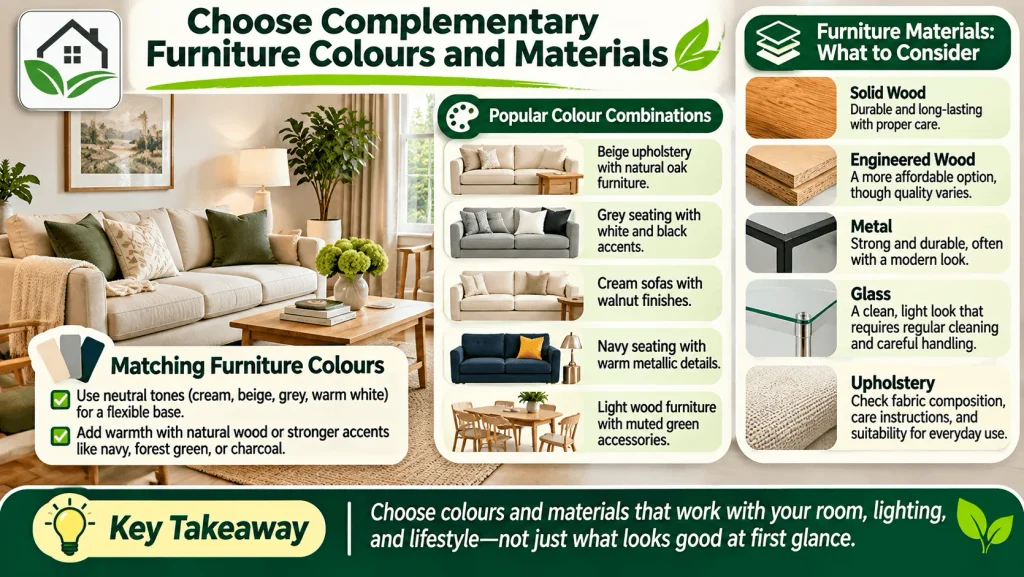
Your furniture should work with the room’s walls, flooring, curtains and lighting.
You can create a coordinated appearance without choosing identical colours or matching furniture sets.
How to Match Furniture Colours
Neutral colours such as cream, beige, grey and warm white create flexible backgrounds.
Natural wood finishes can introduce warmth, while navy, forest green and charcoal provide stronger accents.
Popular combinations include:
- Beige upholstery with natural oak furniture.
- Grey seating with white and black accents.
- Cream sofas with walnut finishes.
- Navy seating with warm metallic details.
- Light wood furniture with muted green accessories.
Consider how natural and artificial lighting affect each material before purchasing.
Which Furniture Materials Are Worth Buying?
Solid wood can offer long service when the furniture is properly constructed and maintained.
Engineered wood may provide a more affordable option, although quality varies considerably between products.
Metal furniture can offer structural strength, while glass surfaces require appropriate cleaning and careful handling.
For upholstered pieces, examine fabric composition, care instructions and suitability for regular use.
Aim for materials that suit your household rather than selecting finishes based on appearance alone.
8. Plan a Practical Living Room Furniture Layout
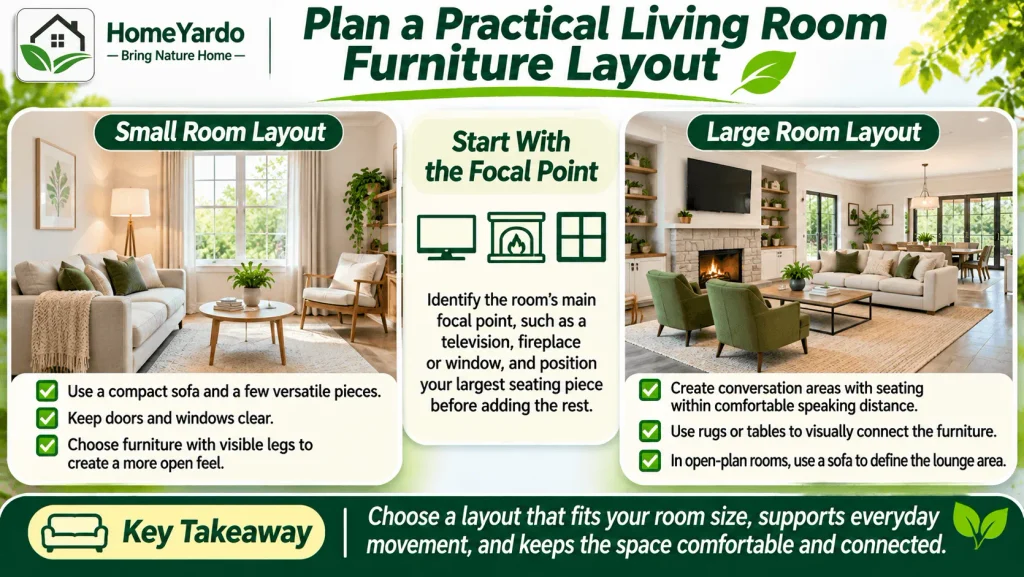
Good furniture placement makes the living room easier to use and helps individual pieces look connected.
Start by identifying the room’s main focal point, such as a television, fireplace or window.
Position your largest seating piece before arranging smaller furniture around it.
Furniture Layout Tips for Small and Large Rooms
In smaller rooms, avoid blocking doors and windows with bulky furniture. A compact sofa and a pair of occasional tables may work better than several large pieces.
Furniture with visible legs can make more of the floor visible, helping the arrangement appear less crowded.
If you prefer larger seating, read HomeYardo’s guide to oversized sofas for small spaces.
In larger rooms, arrange furniture into conversation areas. Position chairs within comfortable speaking distance and use rugs or tables to visually connect the seating.
Open-plan rooms may benefit from a sofa that separates the lounge from the dining area.
Whatever the room size, maintain clear routes and ensure furniture does not interfere with doors, heating equipment or everyday movement.
9. Set a Realistic Living Room Furniture Budget
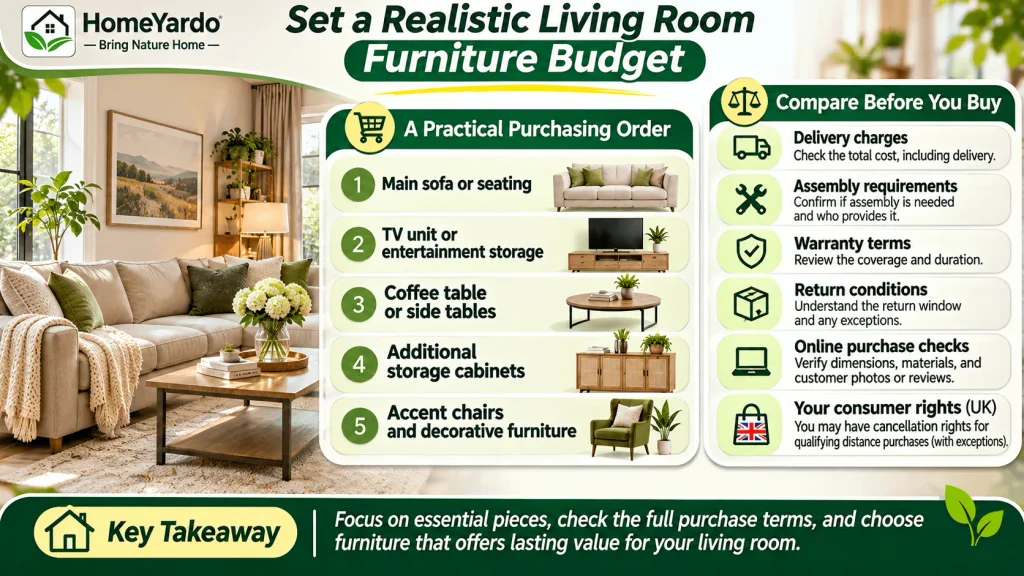
A clear budget helps you prioritise essential furniture without spending too much on decorative items.
Start with pieces you use most frequently, particularly the sofa and necessary storage.
A practical purchasing order might be:
- Main sofa or seating.
- TV unit or entertainment storage.
- Coffee table or side tables.
- Additional storage cabinets.
- Accent chairs and decorative furniture.
You do not need to purchase everything at once. Buying furniture gradually allows you to assess how individual pieces work together.
Compare Quality, Delivery and Return Policies
The listed price is only one part of the total cost.
Before purchasing, check delivery charges, assembly requirements, warranty terms and return conditions.
For online purchases, review product dimensions, material descriptions and customer photographs where available.
UK consumers may have statutory cancellation rights for qualifying distance purchases, although exceptions apply, including certain customised products.
Always check the retailer’s terms and your applicable consumer rights before ordering.
A slightly more expensive piece may provide better long-term value when its construction, comfort and maintenance requirements suit your needs.
10. Avoid Common Living Room Furniture-Buying Mistakes
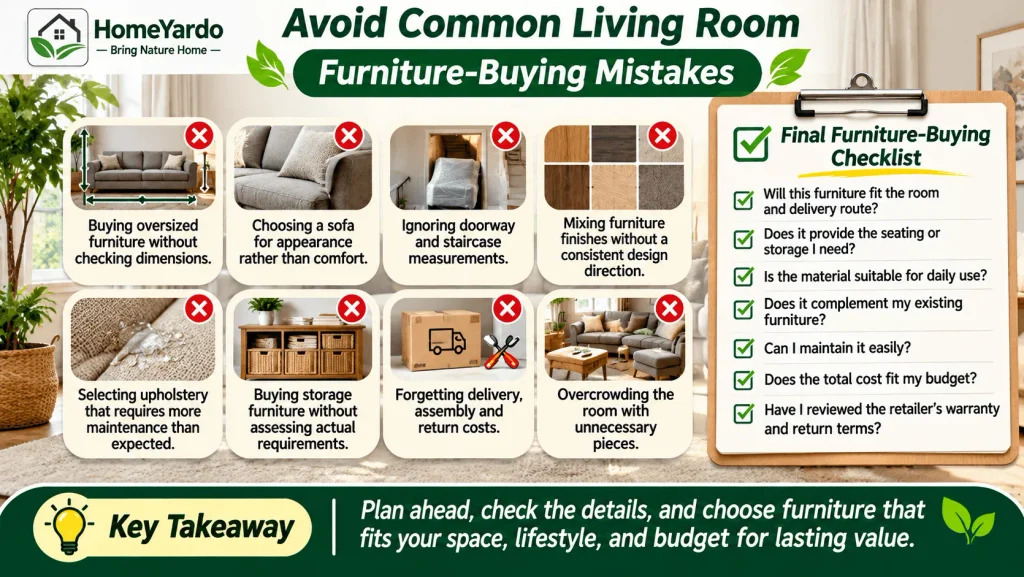
Even attractive furniture can be disappointing when it does not suit the room or household.
Common mistakes include:
- Buying oversized furniture without checking dimensions.
- Choosing a sofa for appearance rather than comfort.
- Ignoring doorway and staircase measurements.
- Mixing furniture finishes without a consistent design direction.
- Selecting upholstery that requires more maintenance than expected.
- Buying storage furniture without assessing actual requirements.
- Forgetting delivery, assembly and return costs.
- Overcrowding the room with unnecessary pieces.
Use a Final Furniture-Buying Checklist
Before placing your order, ask yourself:
- Will this furniture fit the room and delivery route?
- Does it provide the seating or storage I need?
- Is the material suitable for daily use?
- Does it complement my existing furniture?
- Can I maintain it easily?
- Does the total cost fit my budget?
- Have I reviewed the retailer’s warranty and return terms?
If you can answer these questions confidently, you are more likely to choose furniture that works well beyond the initial purchase.
Final Takeaway
Choosing living room furniture is about finding the right balance between style, comfort, quality and everyday practicality.
Start with your preferred interior style, measure your space and prioritise the furniture you use most. Select durable materials, plan your layout and compare the full purchasing costs before committing.
If you are updating your living room, you can explore the furniture collections at Furniture in Fashion for sofas, tables, TV units and storage options.
The best living room is not necessarily the one with the most expensive furniture. It is the one where every piece fits comfortably, serves a purpose and makes your home enjoyable to use.
Frequently Asked Questions
Start by measuring your room and identifying your preferred interior style. Choose furniture that offers suitable comfort, storage and durability while leaving enough space for everyday movement.
Most living rooms benefit from comfortable seating, a practical table and suitable storage. A TV unit, sideboard or bookcase may be useful depending on your household’s needs.
Compact sofas, nesting tables, storage ottomans and appropriately sized TV units can work well. Choose furniture that provides necessary functions without blocking walkways or making the room feel crowded.
Not necessarily. Different furniture pieces can work together when they share complementary colours, materials, proportions or design features. Matching every item is not required for a coordinated appearance.
Light shades such as cream, beige and pale grey can make a room feel more open, particularly when combined with good lighting. Furniture size, layout and visible floor space also affect how spacious a room appears.
Fabric offers a wide selection of colours and textures, while leather provides a different appearance and cleaning experience. The better choice depends on upholstery quality, maintenance preferences, comfort and household use.
Set a budget based on your available funds and prioritise frequently used pieces. Compare construction quality, delivery fees, warranty coverage and expected service life rather than relying on price alone.
Online shopping makes it easier to compare designs, dimensions and prices. Visiting a showroom allows you to assess comfort and materials personally. Combining both methods can help reduce purchasing mistakes.
Check product dimensions, materials, customer reviews, delivery access, assembly requirements, warranty coverage and return policies. Request fabric samples when available and confirm that large items can reach their intended room.