How to Create a Warm, Lived-In Home Without Clutter
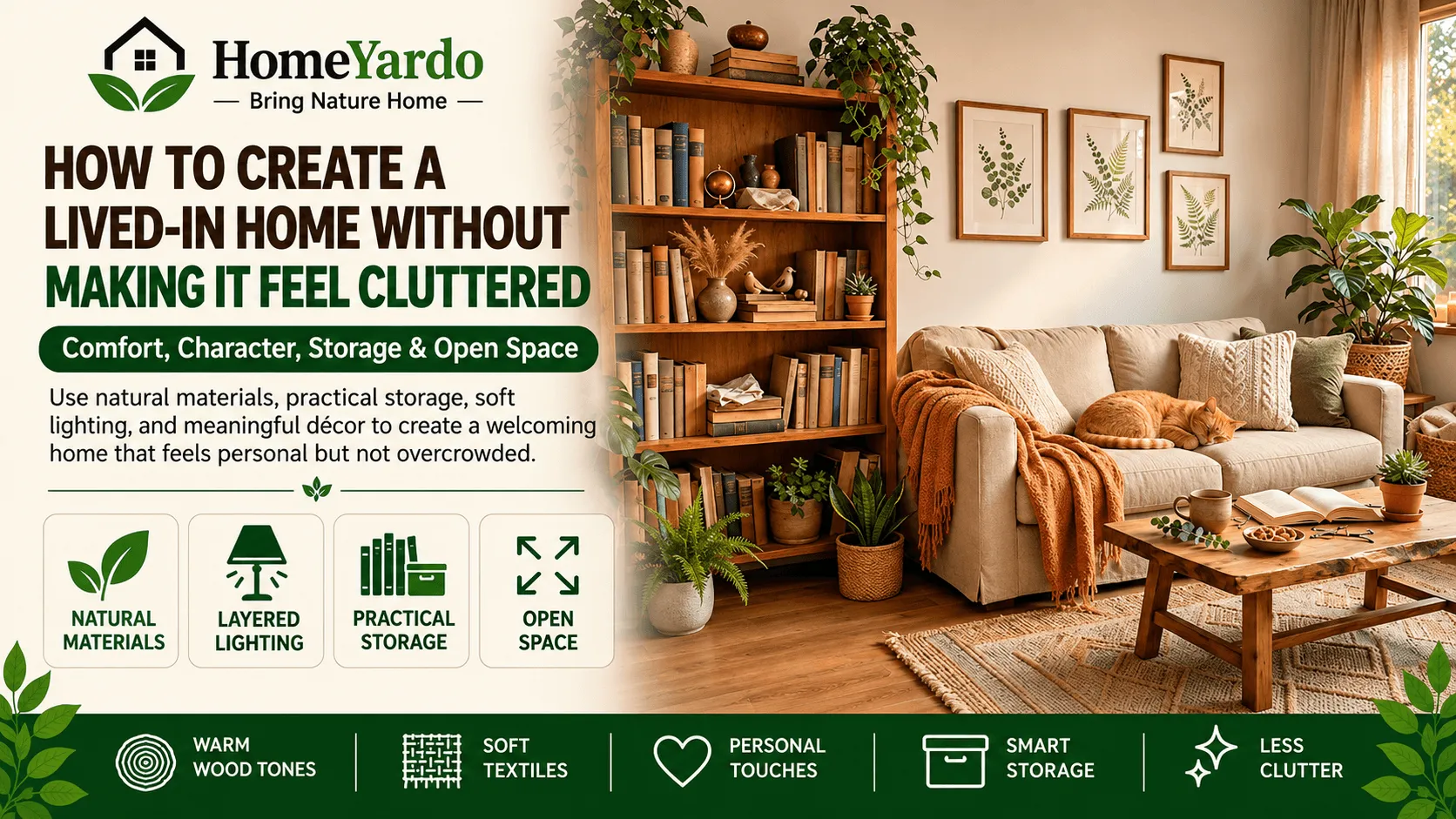
How to create a lived-in home without making it feel cluttered starts with choosing comfortable furniture, natural materials, meaningful possessions and practical storage. The aim is to make your rooms feel welcoming and personal without filling every surface.
Sometimes a home looks perfect in photographs but does not feel particularly comfortable. Beautiful displays leave nowhere to set down a cup of tea, and carefully arranged furniture can make an everyday living space feel more like a showroom.
A warmer atmosphere often comes from what is already there. The natural character of aged oak floors, soft fabrics, inherited furniture and objects collected over time can make a room feel established without adding unnecessary decoration.
According to IKEA’s 2026 Store & Organise Report, 59% of respondents preferred a lived-in home over a minimalist one. The study covered 31 markets and reflected growing interest in homes that accommodate meaningful possessions rather than hiding every sign of daily life.
The following ideas will help you bring that comfortable, lived-in feeling into your home while keeping the space organised and easy to maintain.
What Makes a Home Feel Warm and Lived-In?
A lived-in home feels comfortable, personal and functional. It usually combines natural materials, soft lighting, familiar possessions and furniture arranged around everyday routines.
Unlike a heavily decorated room, a lived-in interior does not need every corner filled. Empty space gives favourite objects room to stand out and makes the home easier to use.
| Design Element | How It Creates a Lived-In Feel |
|---|---|
| Aged oak floors | Add natural grain, warmth and character |
| Neutral colours | Create a calm background for furniture and artwork |
| Personal belongings | Reflect memories and individual taste |
| Natural textures | Make furniture and surfaces feel softer |
| Layered lighting | Create a welcoming atmosphere |
| Practical storage | Keep everyday belongings accessible but organised |
| Open space | Prevent rooms from feeling overcrowded |
The most effective approach is to start with the larger features of your room before adding smaller decorative details.
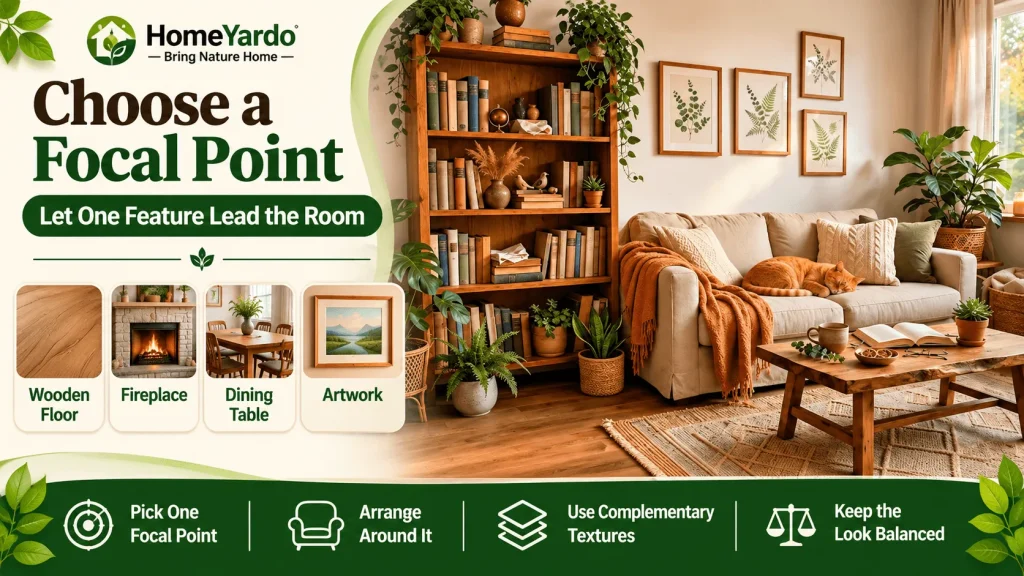
Choose a Focal Point
When trying to achieve this aesthetic, you do not need to rush out and buy cushions, ornaments or new furniture.
Many elements of your home already contribute to its appearance. Floors, walls, fireplaces and larger pieces of furniture establish the room’s character before any decorative accessories are added.
Identify one focal point that you want people to notice when they enter. It could be a beautiful wooden floor, an antique dining table, a fireplace or a favourite piece of artwork.
Once you have chosen your focus, arrange the rest of the room around it. An oak floor might work beautifully with a linen sofa, a simple wool rug, an old side table and a framed picture.
Let One Feature Lead the Room
Walk into your living room and notice what catches your attention first.
If your eye moves between several competing patterns, large ornaments and statement pieces, the space may need fewer decorative elements rather than more.
A single focal point helps the room feel balanced while allowing the textures and personal items around it to contribute naturally.
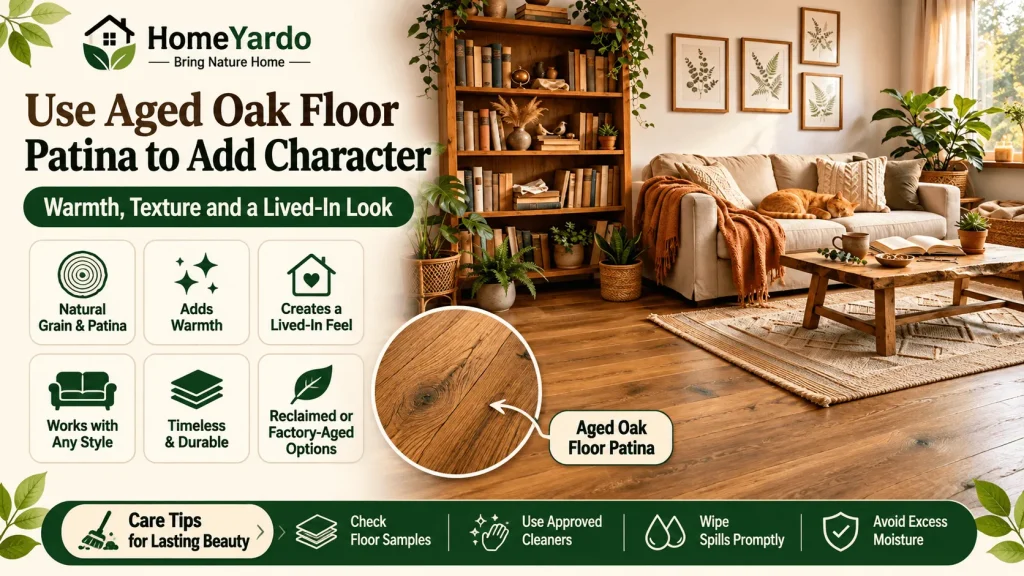
Use Aged Oak Floor Patina to Add Character
Wood is one of the easiest ways to introduce warmth because it adds natural colour, pattern and character without taking up additional floor space.
Whether it appears in flooring, wall panelling or furniture, timber can make both traditional and modern interiors feel more welcoming.
For a country-style interior, country oak floorboards can create an established look beneath simple furniture. In a modern setting, natural wood can soften clean lines and prevent the room from feeling too stark.
Why Aged Oak Works in a Lived-In Interior
Aged oak floor patina develops as the wood changes in colour and appearance through exposure to light, everyday use and the passage of time.
Its grain, knots and natural variations give the surface visual depth. These characteristics can make an interior feel more established without relying on distressed ornaments or heavily patterned furnishings.
A textured wooden floor can already act as a statement feature. Pair it with plain skirting boards and understated furniture rather than repeating the same weathered finish throughout the room.
You do not need to hide the floor beneath large rugs. A rug positioned partly beneath the sofa can create a comfortable seating area while leaving enough exposed wood to appreciate its natural appearance.
Choose and Care for Aged Oak Flooring
Before choosing aged oak flooring, examine samples in both natural daylight and the room’s artificial lighting.
Wood tones can appear quite different beside warm paint colours, grey upholstery or darker furniture.
Check whether the product has a factory-aged appearance, a textured finish or genuine reclaimed characteristics. Each can look different and may require different care.
Follow the flooring manufacturer’s cleaning recommendations and wipe up spills promptly. Avoid using abrasive cleaners or excessive moisture unless the specific floor finish permits them.
Patina should add character, but it should not be confused with preventable water damage, loose boards or deterioration that needs attention.
Use a Warm Neutral Colour Scheme
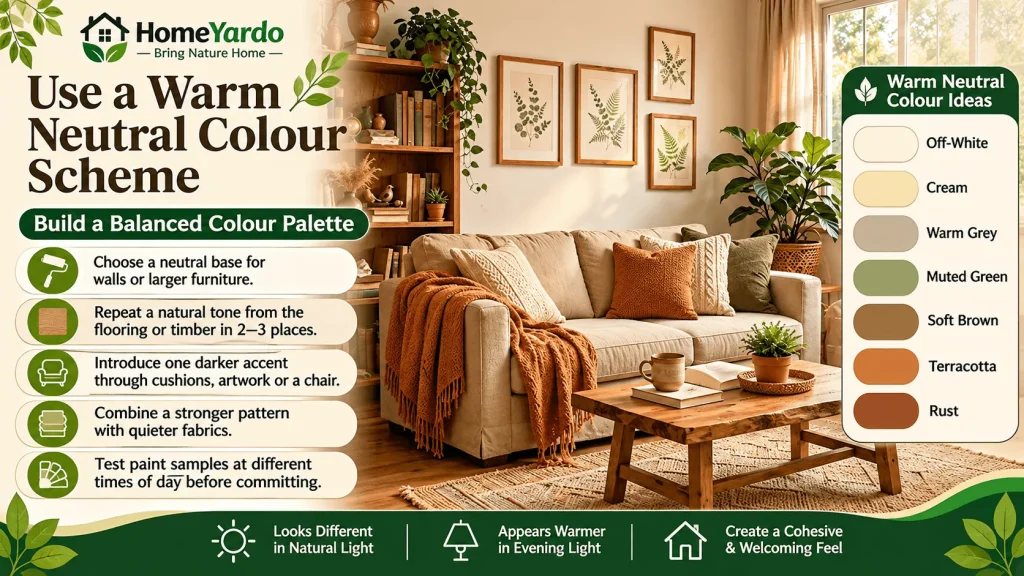
You don’t have to use all beige colours to have a warm, cozy home. Try not to match everything in your room; it can make it look too blank.
Have some neutral tones that match your oak, white, beige, green, brown, and maybe even orange. Having variations of these colours will keep your home cosy without being too loud.
As you did with your aged oak, make sure to see colours in different lighting. You can always paint over; it’s worth checking how it looks during different times of the day.
Build a Balanced Colour Palette
A few simple choices can help the space feel consistent:
- Choose a neutral base for the walls or larger furniture.
- Repeat a natural tone from the flooring or timber furniture in two or three places.
- Introduce one darker accent through cushions, artwork or a chair.
- Combine a stronger pattern with quieter fabrics and surfaces.
- Test paint samples at different times of day before committing.
Lighting changes how colours appear, especially in rooms with limited daylight.
A cream wall may look bright in the morning but considerably warmer beneath evening lamps. Testing colours in the actual room helps you find a combination that feels comfortable throughout the day.
Display Personal Items Without Overcrowding
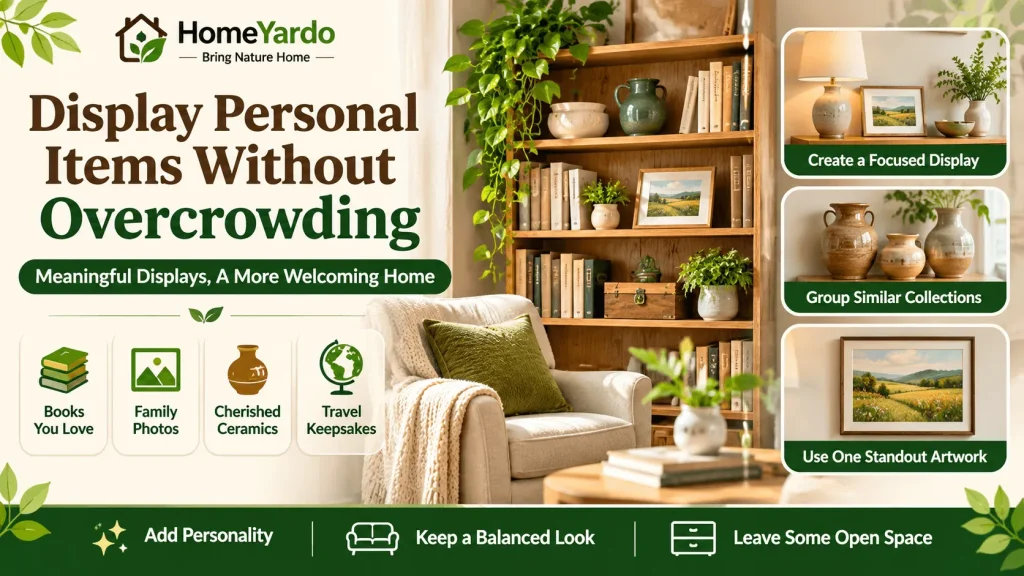
A home should reflect the people who live in it. Books, family photographs, inherited ceramics and objects collected while travelling can bring far more personality than shelves filled entirely with newly purchased decorations.
The challenge is choosing which possessions deserve to be displayed.
Rather than placing every meaningful item in view, select a smaller collection that suits the room and allows each piece to be appreciated.
Create Small, Meaningful Displays
A sideboard might hold a favourite photograph, a ceramic bowl and a table lamp. Leaving part of the surface clear gives the arrangement room to stand out.
If you collect pottery, consider displaying your favourite pieces together on one shelf rather than spreading them throughout the house.
The same principle works with artwork. One larger picture can sometimes create more interest than several small frames competing for attention.
Personal displays should feel natural, not overly arranged. A well-read book beside a comfortable chair can be just as effective as a carefully styled shelf.
For larger rooms, it is worth thinking about how furniture and decorative elements work together. A consistent approach to proportions, materials and finishes can help separate areas feel connected without making everything match.
Introduce Natural Textures and Soft Furnishings
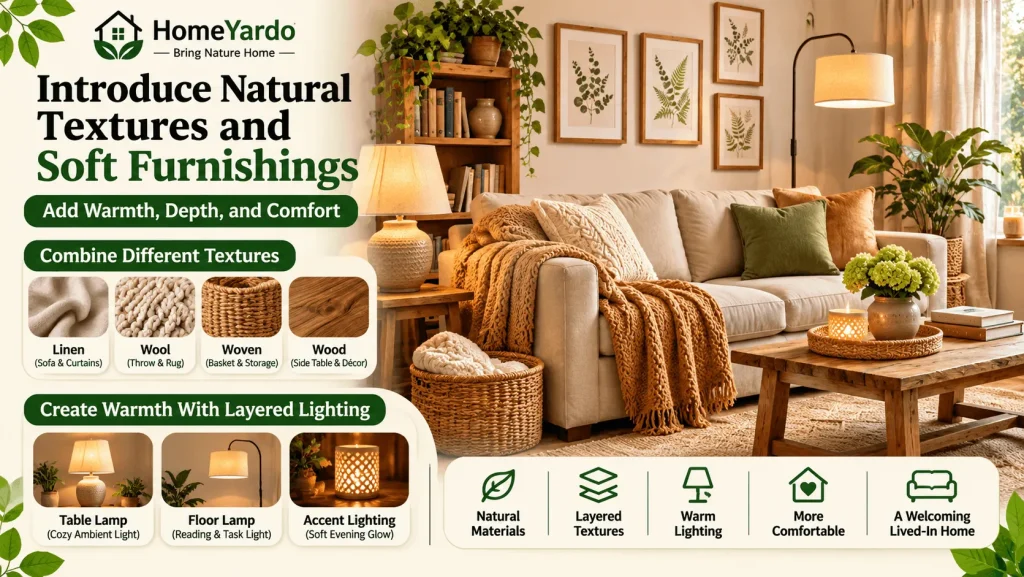
Texture is one of the simplest ways to make a room feel warmer.
A wool throw over a sofa, linen curtains or a woven basket can add depth without requiring bright colours or additional furniture.
Natural materials also tend to complement the character of wood, especially when their finishes are varied rather than identical.
Combine Different Textures Carefully
Try pairing a smooth linen sofa with a knitted blanket, a wool rug and a wooden side table.
You can introduce other materials through cushions, upholstered chairs and storage baskets.
The important thing is to give these items a practical purpose. A throw should be comfortable enough to use, and a basket should ideally provide useful storage.
Too many textures can make a room feel busy, particularly when several strong patterns are involved. Keep some surfaces plain so that the more tactile materials remain noticeable.
Create Warmth With Layered Lighting
Lighting has just as much influence on atmosphere as the furniture itself.
Instead of relying on one bright ceiling light, distribute smaller light sources around the room.
A table lamp beside the sofa, a floor lamp near a reading chair and soft accent lighting on a sideboard can make the space more inviting in the evening.
Choose warm-white bulbs where appropriate, and make sure reading areas still have enough light for comfortable use.
For a cohesive result, keep the appearance of the lamps relatively simple and allow their placement to support the way the room is used.
Use Smart Storage to Keep Everyday Clutter Under Control
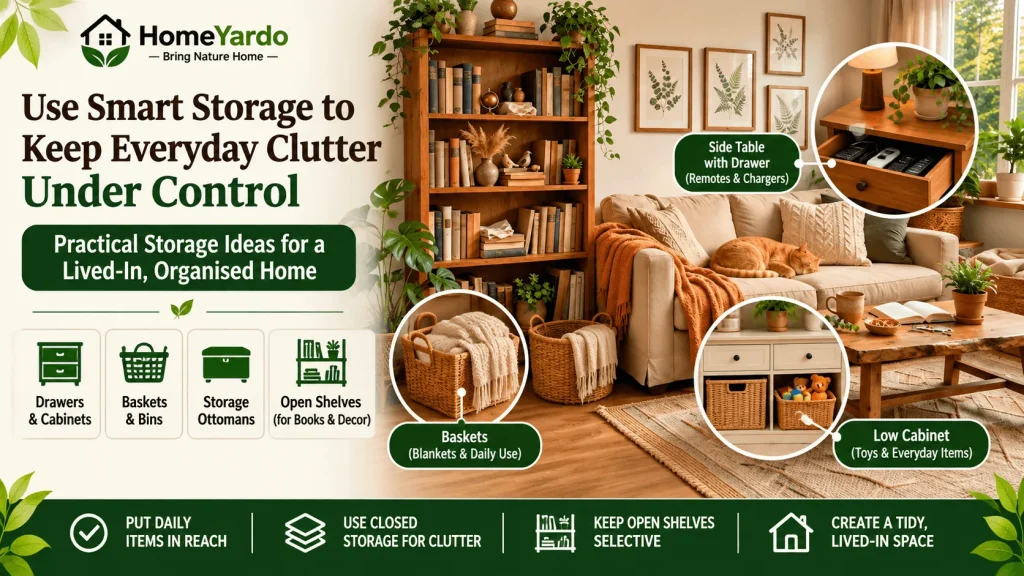
Even a beautifully decorated home can become frustrating when there is nowhere to put remote controls, chargers, mail, blankets and children’s toys.
Everyday belongings are unavoidable. The solution is to make storage convenient enough that returning things to their proper places becomes part of the normal routine.
Baskets, cupboards, drawers and furniture with built-in compartments can help keep these items nearby without leaving everything on display.
Give Frequently Used Items a Home
Think about where clutter tends to accumulate.
If remote controls and chargers collect beside the sofa, a side table with a drawer may be more useful than a decorative basket across the room.
If children’s toys regularly appear in the living room, a low cabinet or accessible storage box can make tidying easier.
Use closed storage for visually busy items such as cables, paperwork and small accessories. Open shelves are generally better suited to books, plants and selected decorative objects.
The goal is not to hide every possession. It is to create an easy distinction between what should be visible and what needs a practical place to be stored.
Leave Breathing Room Around Furniture and Decor
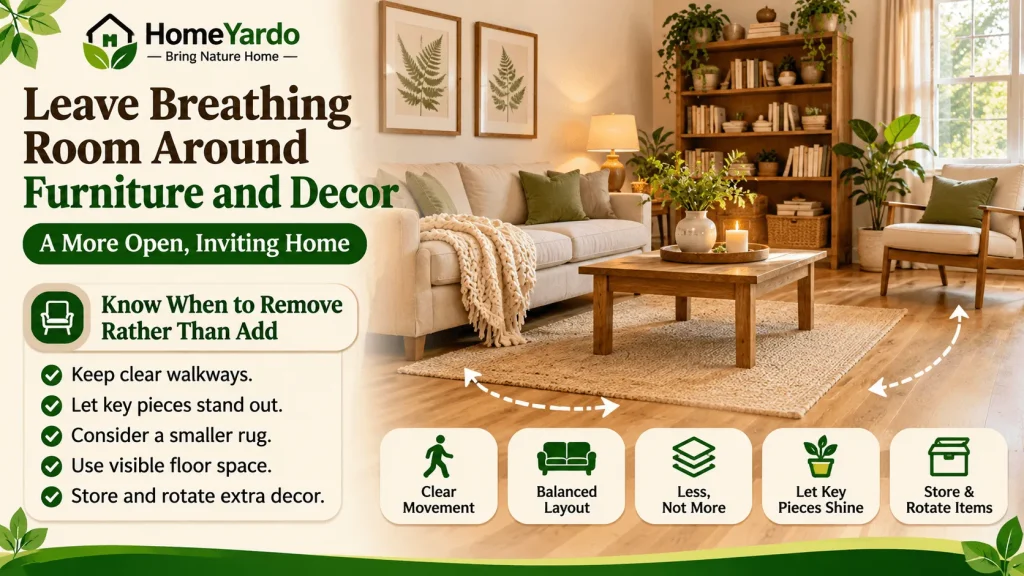
An inviting home needs enough open space for people to move comfortably.
Before buying anything new, look at how furniture is positioned and whether the room feels easy to navigate.
You should be able to reach doors, seating and frequently used storage without moving around unnecessary obstacles.
Know When to Remove Rather Than Add
Take a moment to look at your shelves, side tables and walls.
Would removing one ornament make the remaining pieces easier to appreciate? Could moving a chair improve the room’s layout? Would a smaller rug expose more of your attractive flooring?
A bare section of wall, an uncluttered sideboard or visible floor space can make the whole room feel calmer.
If you have more meaningful possessions than you can comfortably display, store some safely and rotate them occasionally.
This keeps the home personal without requiring every favourite object to be visible at once.
Common Mistakes That Make a Lived-In Home Feel Cluttered
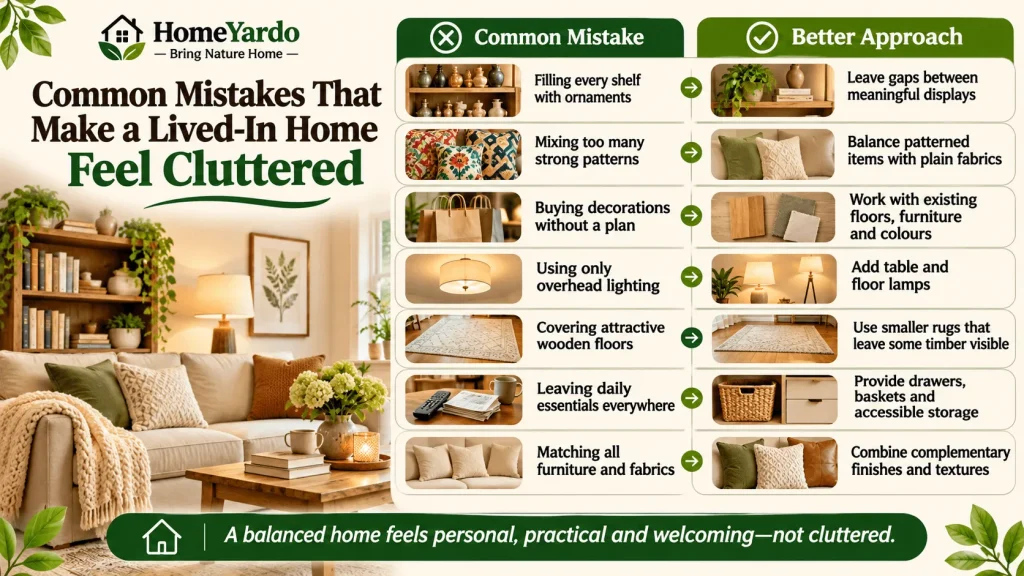
A comfortable interior can quickly become overcrowded when decoration takes priority over function.
The following mistakes are particularly worth avoiding.
| Common Mistake | Better Approach |
|---|---|
| Filling every shelf with ornaments | Leave gaps between meaningful displays |
| Mixing too many strong patterns | Balance patterned items with plain fabrics |
| Buying decorations without a plan | Work with existing floors, furniture and colours |
| Using only overhead lighting | Add table and floor lamps |
| Covering attractive wooden floors | Use smaller rugs that leave some timber visible |
| Leaving daily essentials everywhere | Provide drawers, baskets and accessible storage |
| Matching all furniture and fabrics | Combine complementary finishes and textures |
Want to feel like your home, but can clean it up in minutes, have that lived-in feel, but can still relax at night, without worrying about the mess that surrounds you.
How to Create a Lived-In Feel on a Budget
You can make a room to life feel more welcoming without replacing the furniture or carrying out major renovations.
Start by rearranging what you already own. Moving a lamp, changing the position of a chair or grouping family photographs can improve how the space feels.
Look for unused throws, baskets and decorative pieces in other rooms before purchasing new accessories.
Second-hand furniture can also bring character, especially when an older wooden table or cabinet complements the existing interior. Check any second-hand piece for structural problems, pests and unsafe finishes before bringing it into regular use.
Small changes often work best when they address something specific, such as poor lighting, awkward storage or an empty seating area.
Final Takeaway
Creating a lived-in home is about making everyday spaces comfortable, meaningful and easy to use.
Natural materials such as aged oak floors provide warmth and character, while neutral colours, soft fabrics and personal belongings help the home feel welcoming.
Keep decorative displays selective, choose storage that suits your routines and leave enough open space for people to move comfortably.
The best result is a home that reflects your life without making you feel surrounded by clutter.
FAQ’s
Use natural materials, soft textiles, warm lighting and meaningful personal items. Wooden flooring, comfortable seating and a few familiar possessions can make a room feel established without overcrowding it.
Choose one focal point, limit decorative displays and give everyday essentials dedicated storage. Layered lighting and tactile fabrics can make the space feel cosy without adding unnecessary objects.
A lived-in interior design style prioritises comfort, personality and everyday function. It often combines older and newer furniture, natural textures, personal belongings and practical storage instead of creating a perfectly matched showroom appearance.
Introduce timber, woven fabrics, soft furnishings and warmer lighting. A restrained colour palette can remain simple while natural textures and a few personal objects make the space feel more welcoming.
Aged oak flooring can make a room feel warmer through its natural grain, colour variation and established appearance. Combining it with soft textiles, complementary furniture and suitable lighting can strengthen that effect.
Display a limited number of books, photographs or decorative objects and leave visible space between arrangements. Group smaller items together and keep practical clutter in drawers or closed cabinets.
Cream, off-white, soft brown, muted green, terracotta and warm grey can create a welcoming atmosphere. The best combination depends on natural light, flooring tones and the existing furniture.
Choose furniture that fits the available space, add a few comfortable textures and use storage that keeps daily essentials accessible. Avoid oversized decorative arrangements and preserve clear walking routes.
Use accessible storage for toys, blankets and everyday belongings. Keep frequently used objects close to where they are needed, and reserve open shelves for selected items rather than general household clutter.
No. A lived-in home contains the signs of everyday life, but its possessions still have a purpose or a place. Clutter becomes a problem when objects interfere with movement, comfort, cleaning or normal activities.