Houston Curbside Composting: How It Is Changing Urban Waste Management
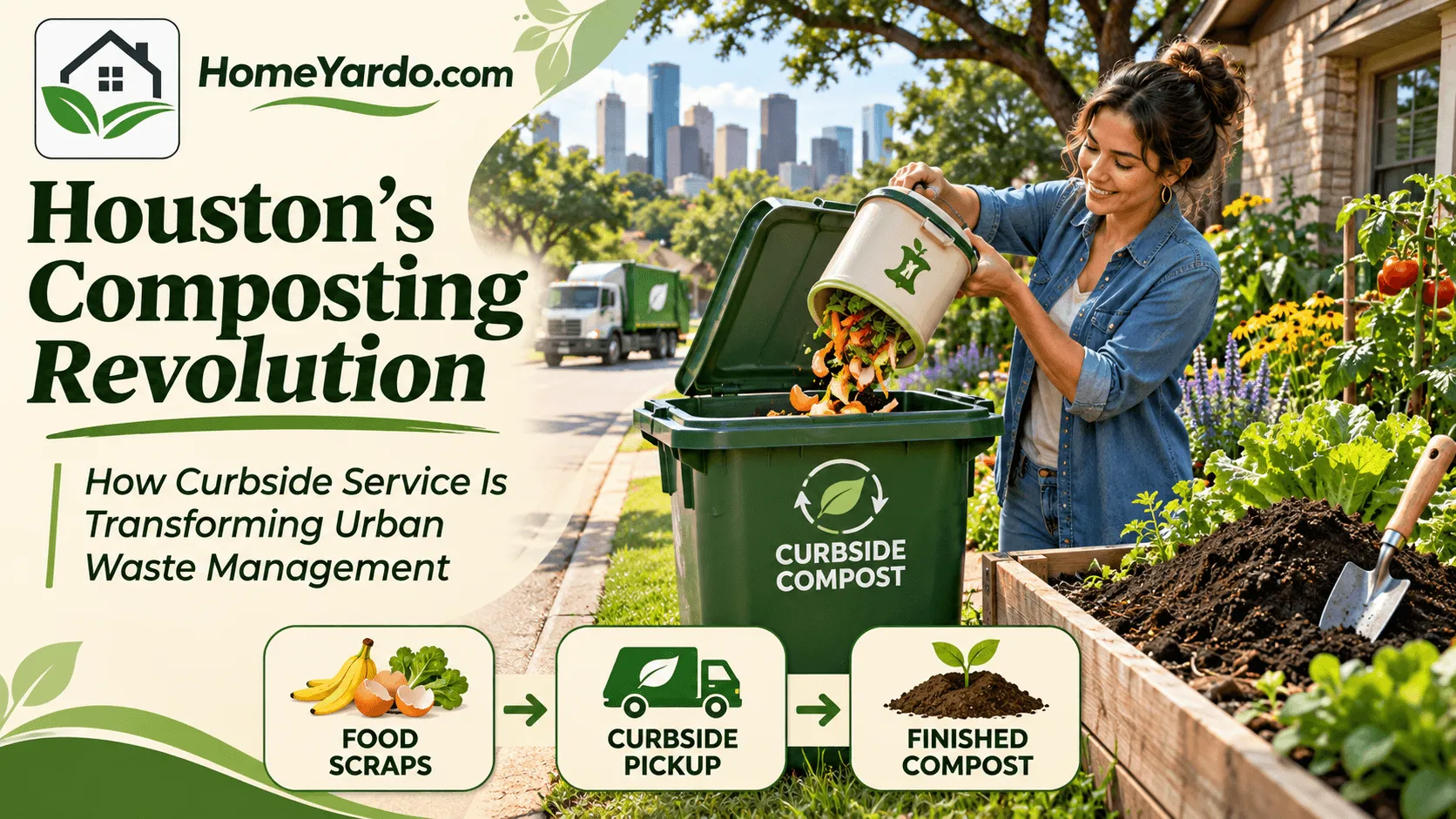
As Houston continues its rapid expansion, the city faces mounting pressure to manage waste more sustainably. Composting—the natural process of converting organic materials into nutrient-rich soil—offers a practical solution that’s gaining traction among environmentally conscious residents. By diverting food scraps and yard waste from landfills, composting reduces methane emissions while creating valuable soil amendments that support urban agriculture and healthier landscapes.
This shift toward organic waste management represents more than an environmental trend; it’s becoming essential infrastructure for sustainable urban living in America’s fourth-largest city.
The Local Advantage: Why Houston-Based Composting Services Matter
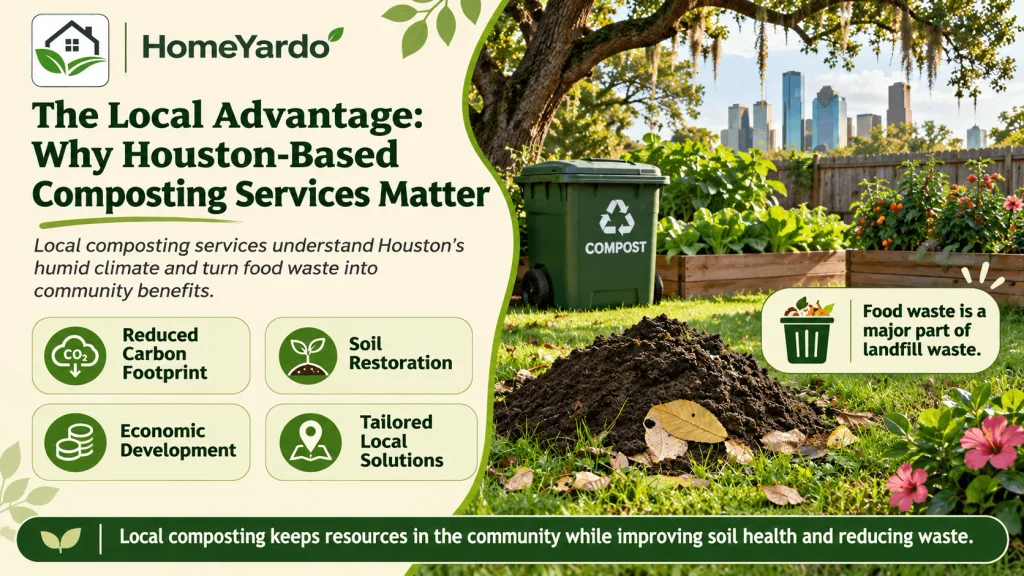
Choosing a Houston-based composting service delivers benefits that extend beyond your backyard. Local operations understand the unique challenges of composting in Southeast Texas’s humid subtropical climate, where high temperatures and moisture levels require specific handling techniques. Food waste accounts for roughly 24% of municipal solid waste sent to landfills, where it generates methane—a greenhouse gas 25 times more potent than carbon dioxide.
Local composting services address this problem while delivering tangible community benefits:
- Reduced Carbon Footprint: Shorter transportation distances mean less fuel consumption and lower emissions compared to regional waste facilities.
- Soil Restoration: Finished compost returns to Houston-area gardens and farms, improving soil structure and organic matter. Homeowners can also learn how to choose mulch for garden beds to protect soil moisture and support long-term soil health.
- Economic Development: Local services create green jobs and keep waste management dollars circulating within the community.
- Tailored Solutions: Houston-specific services accommodate local collection schedules, understand neighborhood logistics, and respond quickly to customer needs.
The economic case strengthens when considering long-term waste management costs. As landfill capacity diminishes and tipping fees rise, composting presents an increasingly cost-effective alternative for municipalities and residents alike.
How Curbside Composting Works For Houston Homeowners
Curbside composting eliminates the barriers that have traditionally kept urban residents from participating in organic waste diversion. Rather than maintaining backyard compost piles or driving to drop-off locations, homeowners simply place organic materials in designated bins for regular collection—much like traditional recycling programs.
The service model offers several practical advantages for busy households:
- Zero-Effort Participation: No need to manage moisture levels, turn piles, or monitor decomposition—professional facilities handle the technical aspects.
- Odor Control: Regular collection prevents the smell issues that discourage many would-be composters.
- Year-Round Convenience: Professional processing continues regardless of weather, unlike backyard systems that slow during Houston’s occasional cold snaps.
- Volume Capacity: Curbside bins accommodate more material than most home composting systems, particularly valuable for households that cook frequently or maintain landscaping.
Curbside collection dramatically increases participation rates compared to drop-off programs, with some municipalities seeing organic waste diversion rates exceed 50% when convenient collection is available.
The Collection Process: From Curb To Compost
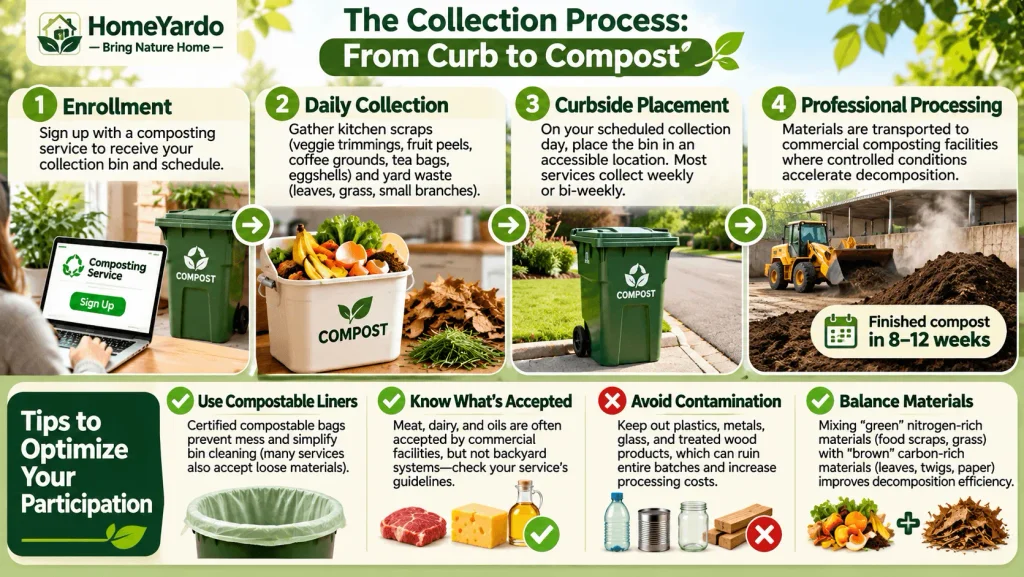
Understanding the collection workflow helps homeowners maximize their participation and avoid common mistakes that can contaminate batches:
- Enrollment: Sign up with a composting service to receive your collection bin and schedule. Most providers offer various bin sizes to match household needs.
- Daily Collection: Gather kitchen scraps, including vegetable trimmings, fruit peels, coffee grounds, tea bags, and eggshells. Yard waste like leaves, grass clippings, and small branches can also be included.
- Curbside Placement: On your scheduled collection day, place the bin in an accessible location. Most services collect weekly or bi-weekly.
- Professional Processing: Collected materials are transported to commercial composting facilities where controlled conditions accelerate decomposition, typically producing finished compost within 8-12 weeks.
To optimize your participation and maintain system efficiency:
- Use Compostable Liners: Certified compostable bags prevent mess and simplify bin cleaning, though many services also accept loose materials
- Know What’s Accepted: Meat, dairy, and oils are often accepted by commercial facilities but not backyard systems—check your service’s specific guidelines
- Avoid Contamination: Keep out plastics, metals, glass, and treated wood products, which can ruin entire batches and increase processing costs
- Balance Materials: While not critical for curbside collection, mixing “green” nitrogen-rich materials with “brown” carbon-rich materials improves decomposition efficiency
Compost Houston and Bootstrap Compost both run residential pickup routes in the area, as does Happy Earth Compost, so check the service details for your neighborhood before you pick a plan.
Infrastructure Support: The Role Of Processing Facilities
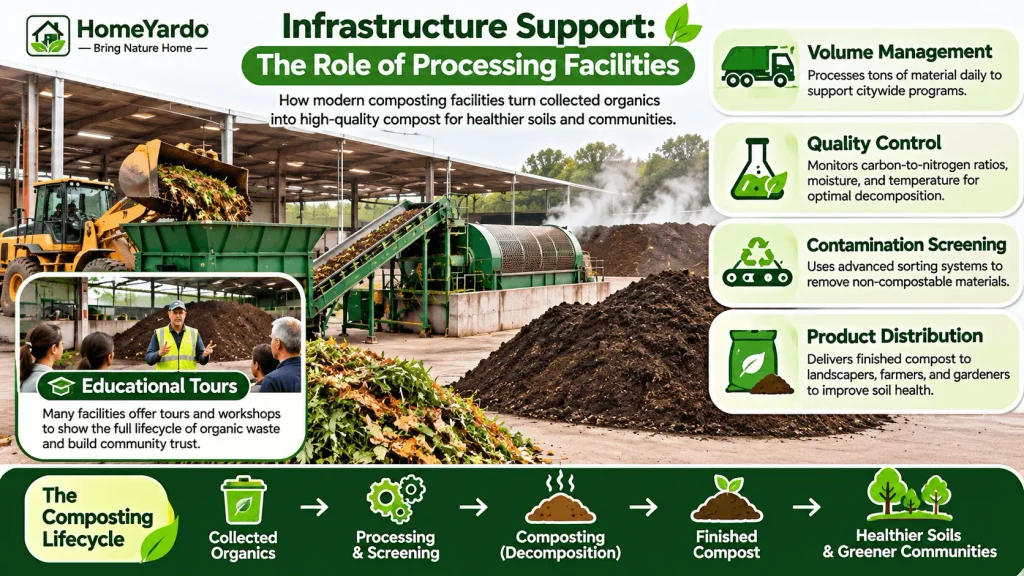
Behind every successful curbside program stands a network of processing facilities that transform collected organics into usable compost. These operations have evolved significantly from the simple windrow systems of decades past. Modern facilities employ sophisticated techniques to manage large volumes while controlling odors and accelerating decomposition.
Houston-area processing centers contribute to the composting ecosystem through several key functions:
- Volume Management: Industrial-scale facilities process tons of material daily, providing the capacity needed for citywide programs.
- Quality Control: Professional monitoring ensures proper carbon-to-nitrogen ratios, moisture levels, and temperatures for optimal decomposition.
- Contamination Screening: Advanced sorting systems remove non-compostable materials that inevitably enter collection streams.
- Product Distribution: Finished compost reaches landscapers, farmers, and gardeners who use it to improve soil health across the region.
Many facilities also serve as educational resources, offering tours and workshops that help residents understand the complete lifecycle of their organic waste. This transparency builds trust and encourages continued participation in diversion programs.
Technology Advances Driving Efficiency
Recent innovations in composting technology have addressed many challenges that previously limited urban composting programs. These developments make large-scale operations more feasible in dense metropolitan areas where space constraints and odor concerns have historically created obstacles.
Key technological improvements reshaping the industry include:
- Aerated Static Pile Systems: Forced air circulation through compost piles maintains optimal oxygen levels, accelerating decomposition while reducing manual turning requirements.
- In-Vessel Composting: Enclosed systems provide precise environmental control, enabling faster processing in smaller footprints—critical for urban facilities.
- Biofilter Systems: Advanced odor control technology captures and neutralizes volatile compounds, making facilities viable in populated areas.
- Automated Monitoring: Sensors track temperature, moisture, and oxygen levels in real-time, allowing operators to optimize conditions and identify problems before they impact quality.
These innovations have reduced processing times by up to 40% while cutting operational costs, making composting increasingly competitive with traditional waste disposal methods. Houston facilities have begun adopting these technologies, improving throughput and expanding capacity to serve growing demand.
Community-Scale Programs Building Grassroots Support
While curbside collection serves individual households, community composting initiatives create shared resources that strengthen neighborhood connections while advancing environmental goals. These programs often emerge in areas where municipal services haven’t yet reached or where residents want more direct involvement in the composting process.
Houston’s community composting landscape includes diverse models:
- Neighborhood Drop-Off Sites: Centralized collection points where residents bring organic waste, often managed by volunteer coordinators who oversee processing
- School-Based Programs: Educational initiatives that teach students about decomposition and nutrient cycles while diverting cafeteria waste
- Community Garden Integration: Shared gardens that compost on-site, creating closed-loop systems where food waste becomes soil amendments for future crops
- Faith Community Projects: Churches and religious organizations that operate composting programs as environmental stewardship initiatives
The EPA provides guidance for communities interested in launching composting programs, covering everything from site selection to volunteer management. These grassroots efforts complement commercial services by building awareness and demonstrating composting’s benefits at a human scale.
Community programs also serve as testing grounds for broader initiatives. Lessons learned from neighborhood-scale operations often inform municipal policy decisions and help identify challenges before citywide rollouts.
Practical Applications Beyond The Bin
The true value of composting becomes apparent when finished product reaches gardens, farms, and landscapes. In nearby Kyle, Texas, residents have embraced compost as a solution to the region’s challenging soil conditions, demonstrating applications that Houston gardeners can readily adopt.
Compost addresses several common landscaping challenges in Central Texas:
- Clay Soil Amendment: Mixing compost into heavy clay can improve soil structure and aeration, creating better growing conditions for vegetables and ornamentals. Proper soil preparation when planning a wildflower garden also matters where compaction or poor drainage limits root development.
- Water Retention: Organic matter helps sandy soils retain moisture during dry periods, potentially reducing irrigation needs. Homeowners interested in conserving water can also explore low-maintenance landscaping strategies that combine suitable plants, efficient irrigation, and soil protection.
- Nutrient Delivery: Compost provides slow-release nutrients that support plant growth without the runoff problems associated with synthetic fertilizers.
- Mulch Alternative: Applied as a top dressing, compost suppresses weeds while gradually improving soil as it breaks down.
Community gardens throughout the region have documented impressive results from compost applications. Vegetable yields often increase 20-30% in amended beds, while perennial plantings show improved drought tolerance and disease resistance. These outcomes demonstrate that composting delivers measurable benefits beyond waste diversion statistics.
For homeowners new to using compost, starting small yields the best results. Apply a two-inch layer to existing beds each spring, or mix compost 50-50 with native soil when establishing new plantings. As soil structure improves over successive seasons, plants require less supplemental water and fertilizer—reducing both costs and environmental impact.
Final Takeaway
Houston curbside composting offers homeowners a practical way to reduce food waste sent to landfills while supporting the production of useful soil amendments.
Private collection services make participation possible for residents who cannot or do not want to maintain backyard compost systems. Processing facilities, community initiatives, and better waste-separation habits all contribute to the broader effort.
Before subscribing, verify your address, collection schedule, accepted materials, and subscription terms. A few minutes of research can help make composting a manageable part of your household routine.
Frequently Asked Questions About Houston Curbside Composting
Yes. Private companies offer curbside composting in parts of Houston and surrounding communities. However, this should not be confused with a universal city-run residential food-scrap collection service. Coverage depends on the provider and address.
Pricing varies by provider, pickup frequency, container capacity, and service area. Companies may offer weekly, biweekly, or monthly subscriptions. Check current prices and any additional fees directly before enrolling.
Many services accept fruit and vegetable scraps, coffee grounds, eggshells, and certain paper products. Some also accept meat, dairy, and cooked food. Always follow the provider’s approved-materials list.
Some commercial composting services accept meat and dairy because their facilities are designed to process a wider range of organic materials. Others do not. Confirm acceptance before adding these items.