Ice Maker Not Making Ice? Why It Stops and What to Do Next
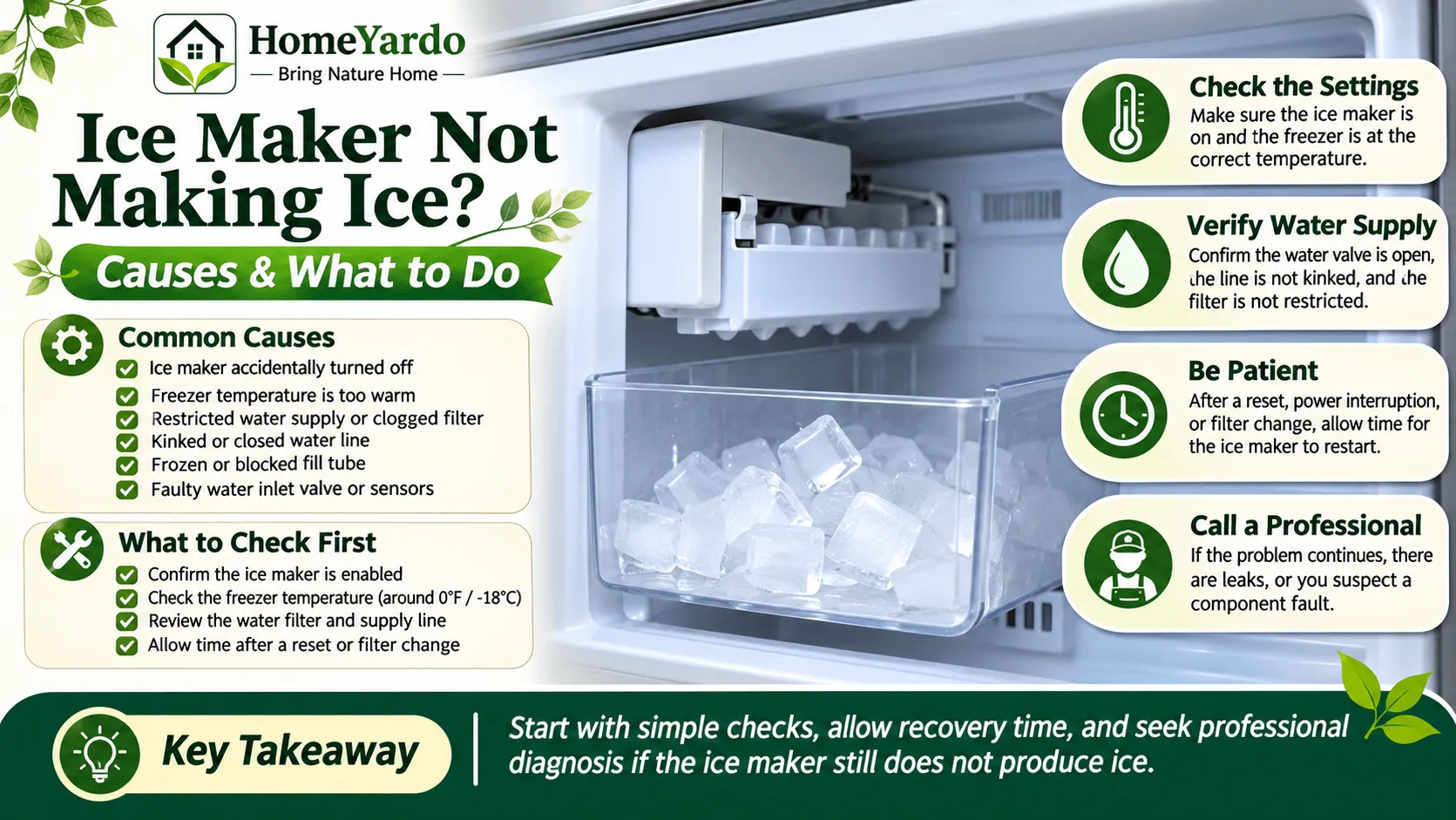
Ice maker not making ice? A disabled setting, incorrect freezer temperature, restricted water supply, or faulty internal component could be responsible. Before requesting repairs, homeowners can check the appliance controls, freezer temperature, water filter, and safely accessible connections.
An empty ice bin is frustrating, especially when the refrigerator appears to be working normally. However, the problem does not always mean the ice maker needs replacing. Some interruptions are temporary, while others require a professional diagnosis.
The best approach is to identify the symptoms, perform basic checks, and avoid repeated resets or unnecessary parts replacement.
Why an Ice Maker Suddenly Stops Producing Ice
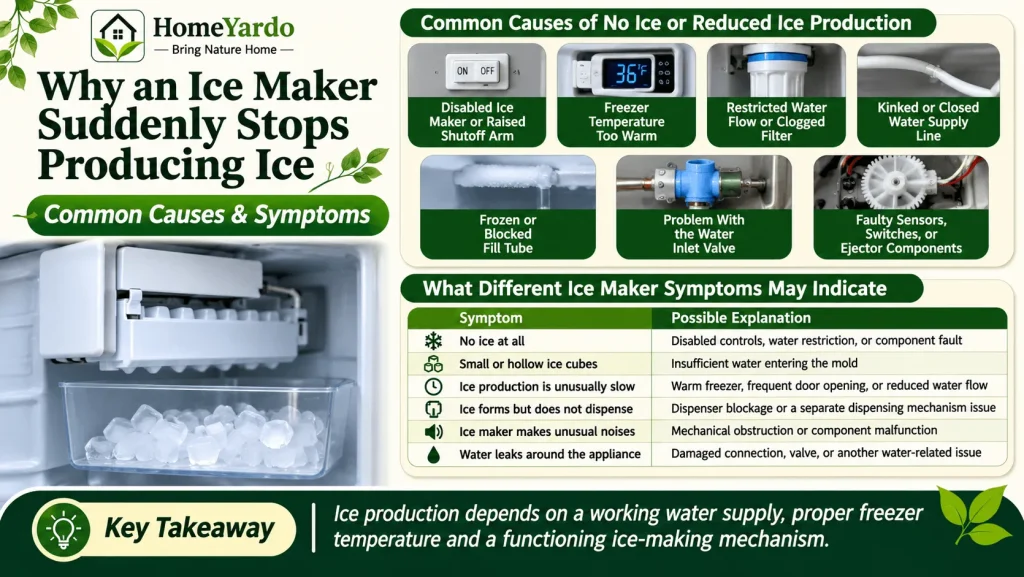
A residential ice maker depends on three basic conditions: a reliable water supply, sufficiently low freezer temperature, and a functioning ice-making mechanism.
Water enters the ice mold, freezes, and is released into the storage bin. Sensors, switches, and other controls help regulate this process. If one stage fails, production may slow down or stop.
Common causes include:
- An accidentally disabled ice maker or raised shutoff arm
- Freezer temperatures that are too warm
- Restricted water flow or a clogged filter
- A kinked or closed water supply line
- A frozen or blocked water fill tube
- A problem with the water inlet valve
- Malfunctioning sensors, switches, or ejector components
Some changes are temporary. After removing a large amount of ice, changing a water filter, or restoring power, the appliance may need additional time to resume normal output.
The manufacturer’s instructions provide the most reliable guidance for the specific model.
What Different Ice Maker Symptoms May Indicate
The type of problem can help narrow down possible causes.
| Symptom | Possible Explanation |
|---|---|
| No ice at all | Disabled controls, water restriction, or component fault |
| Small or hollow ice cubes | Insufficient water entering the mold |
| Ice production is unusually slow | Warm freezer, frequent door opening, or reduced water flow |
| Ice forms but does not dispense | Dispenser blockage or a separate dispensing mechanism issue |
| Ice maker makes unusual noises | Mechanical obstruction or component malfunction |
| Water leaks around the appliance | Damaged connection, valve, or another water-related issue |
These symptoms are useful starting points, not confirmed diagnoses. Different problems can produce similar results.
What to Check Before Requesting Service
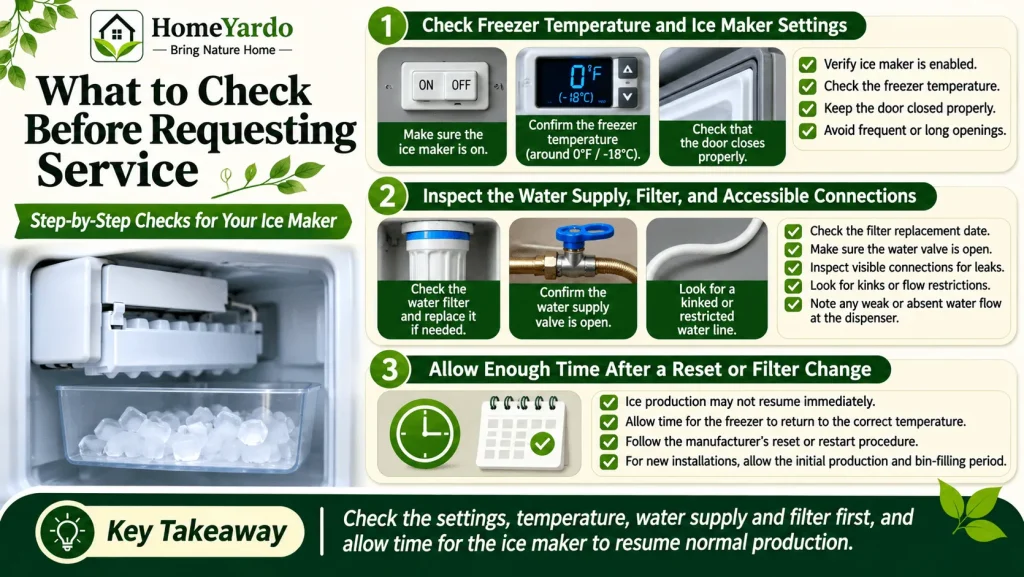
Start with controls and components that are intended for ordinary homeowner access. Avoid removing electrical panels, forcing mechanical parts, or moving heavy appliances to reach hidden connections.
1. Check Freezer Temperature and Ice Maker Settings
Confirm that the ice maker is switched on. Some refrigerators use a control-panel setting, while others have a physical shutoff arm or switch.
An accidental change during cleaning, unloading, or rearranging frozen food can interrupt production.
Next, check the freezer temperature.
Many residential freezers are designed to operate around 0°F (-18°C), although the correct setting and ice production requirements depend on the manufacturer.
A separate freezer thermometer can help determine whether the compartment is maintaining the intended temperature.
If frozen food feels unusually soft or the freezer is warmer than expected, the cooling system may need attention.
Check that the door closes properly, avoid unnecessary openings, and follow appropriate food-safety guidance if stored food has warmed.
Refrigerators also need suitable ventilation to operate properly. HomeYardo’s guide to beverage refrigerator power usage explains how airflow, temperature settings, and operating conditions can affect refrigeration performance.
2. Inspect the Water Supply, Filter, and Accessible Connections
An ice maker cannot produce cubes without an adequate water supply.
A partially closed supply valve, restricted filter, or kinked water line can interfere with the filling process.
Start by checking the water filter’s replacement schedule. If a replacement is due, use a compatible filter and follow the manufacturer’s installation and flushing instructions.
Inspect only water connections that are visible and safely accessible.
Do not force fittings, disconnect plumbing without the appropriate precautions, or pull a heavy refrigerator away from the wall.
Useful observations include:
- Whether the ice maker is enabled
- The actual freezer temperature
- Recent power interruptions
- The date of the last water filter replacement
- Visible leaks or moisture around accessible fittings
- Any noticeable restrictions in an exposed water line
A water dispenser that also has weak or absent flow may suggest a supply-related issue, although not every refrigerator uses the same water-delivery arrangement.
Homeowners who want to reduce future water-related problems can also review these plumbing prevention tips for checking accessible connections, recognizing leaks, and maintaining household plumbing.
3. Allow Enough Time After a Reset or Filter Change
Ice production does not always resume immediately after a power interruption, filter replacement, or control adjustment.
Depending on the refrigerator, the freezer may need time to return to its operating temperature before another ice-making cycle begins.
Some models also have specific reset or restart procedures.
Follow the appliance manual rather than repeatedly switching controls on and off.
If the refrigerator has recently been installed, allow the initial production and bin-filling period stated by the manufacturer.
When the expected recovery period has passed without improvement, move on to a more detailed assessment.
Mechanical and Electrical Faults Behind Recurring Problems
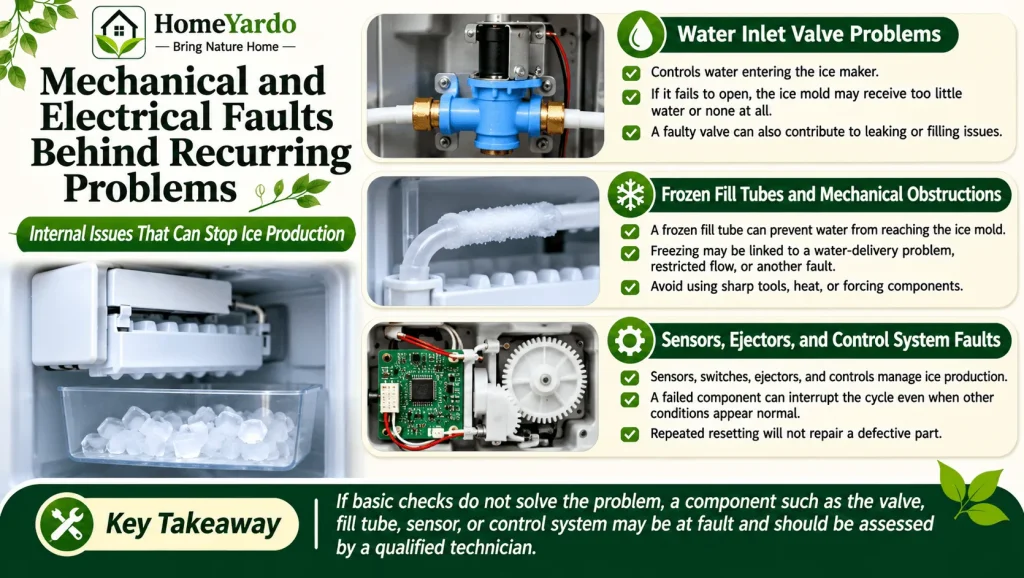
When basic settings and water-supply checks do not reveal the cause, an internal component may be malfunctioning.
Several parts contribute to the ice-making cycle, and a fault in one can produce symptoms that resemble another problem.
Water Inlet Valve Problems
The water inlet valve controls water entering the appliance.
If it fails to open correctly, the ice mold may receive too little water or none at all.
A faulty valve can also contribute to certain leaking or filling problems.
However, an empty ice mold does not automatically confirm valve failure. Water pressure, restrictions, controls, and other components may produce similar symptoms.
Testing or replacing the valve should be handled by someone qualified to work on the appliance.
Frozen Fill Tubes and Mechanical Obstructions
A frozen fill tube can prevent water from reaching the ice mold.
Depending on the appliance design, freezing may be associated with a water-delivery problem, restricted flow, or another fault.
Avoid inserting sharp tools, applying uncontrolled heat, or forcing ice maker components.
If the manufacturer provides a specific procedure for dealing with a frozen fill tube, follow those instructions. Otherwise, seek professional assistance.
Sensors, Ejectors, and Control System Faults
Sensors, switches, ejector mechanisms, and electronic controls help manage ice production and release.
A failed component may interrupt a cycle even when the freezer temperature and water supply appear normal.
Repeated resetting will not repair a defective part.
Opening electrical housings or attempting to force a jammed mechanism can create additional damage and safety risks.
A qualified technician can assess the relevant components and identify whether replacement is necessary.
How to Tell Whether the Problem Is With the Ice Maker or the Refrigerator
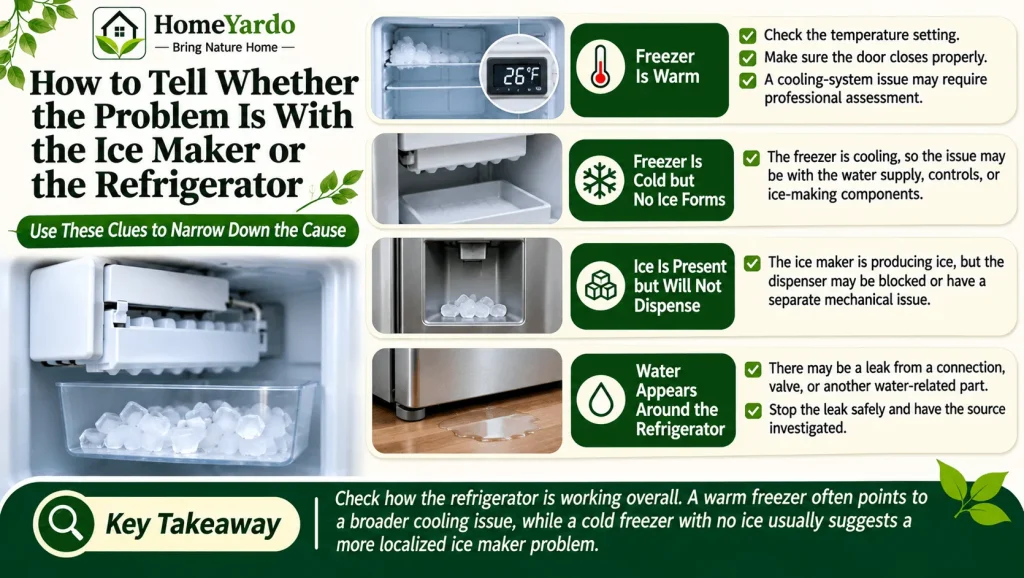
One useful distinction is whether the refrigerator is cooling normally.
If the freezer is too warm, the issue may involve the appliance’s broader cooling performance rather than the ice-making mechanism alone.
If the freezer maintains the correct temperature and other functions operate normally, the problem may be more localized.
Look for these differences:
- Freezer is warm: Check temperature settings, door closure, and whether professional cooling-system assessment is needed.
- Freezer is cold but no ice forms: The water supply, controls, or ice-making components may need investigation.
- Ice is present but will not dispense: The dispenser may have a separate problem.
- Water appears around the refrigerator: Stop the leak safely and have the source investigated.
These distinctions help explain the problem to a technician without attempting an unsafe diagnosis.
When an Ice Maker Needs Professional Repair
A temporary reduction in production after heavy use may resolve as the storage bin refills.
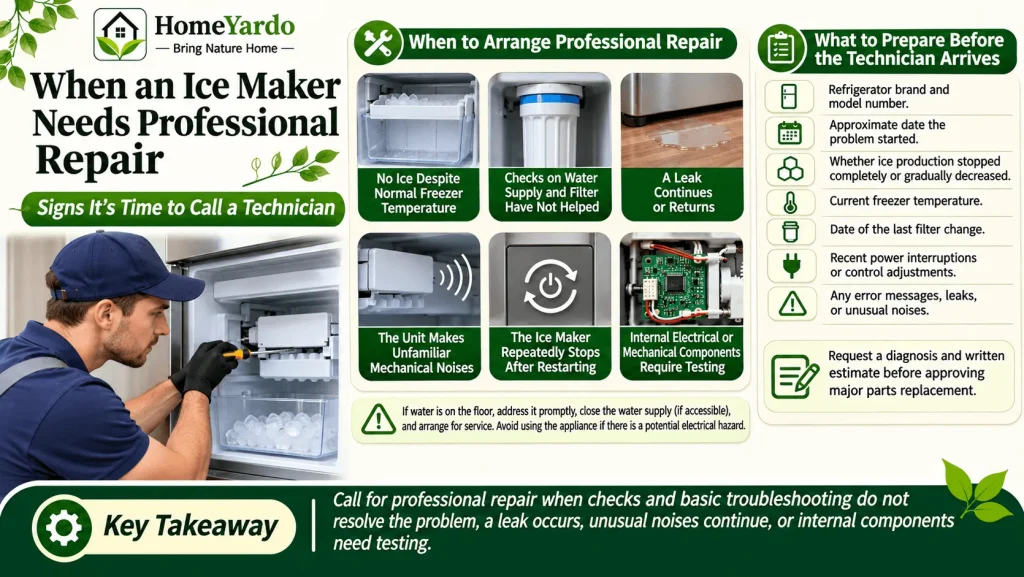
Persistent failure, abnormal noises, visible leaks, or repeated interruptions are stronger reasons to arrange an assessment.
A local provider of ice machine repair can be asked whether it services the refrigerator’s residential ice maker and specific model.
Professional assistance is particularly appropriate when:
- The freezer is maintaining its temperature, but ice production remains absent.
- Water supply and filter checks have not resolved the issue.
- A leak continues or returns.
- The unit produces unfamiliar mechanical noises.
- The ice maker repeatedly stops after restarting.
- Internal electrical or mechanical components require testing.
Water on the floor should be addressed promptly. If the water supply shutoff is safely accessible, close it and arrange assistance. Avoid using the appliance if there are signs of an electrical hazard.
What to Prepare Before the Technician Arrives
A short record of the symptoms can help the technician determine what needs checking.
Prepare the following information:
- Refrigerator brand and model number
- Approximate date the problem started
- Whether ice production stopped completely or gradually decreased
- Current freezer temperature
- Date of the last filter change
- Recent power interruptions or control adjustments
- Any error messages, leaks, or unusual noises
Request a diagnosis and written estimate before approving major parts replacement.
The estimated repair cost, condition of the refrigerator, and availability of replacement parts can help determine whether repairing the ice maker is worthwhile.
HomeYardo’s guide to unexpected home repair costs also explains why setting aside money for appliance and household repairs can make unplanned maintenance easier to manage.
How to Reduce Future Ice Maker Problems
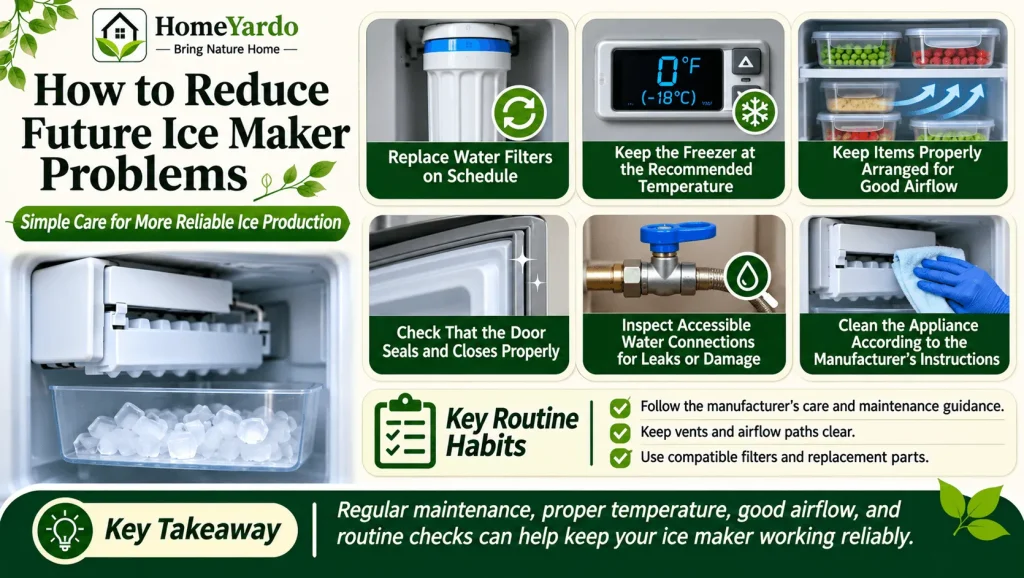
Not every ice maker failure can be prevented. However, routine care can reduce avoidable interruptions and make developing problems easier to notice.
Replace water filters according to the refrigerator manufacturer’s instructions and the actual condition of the water supply.
Keep the freezer at the recommended temperature, avoid leaving the door open unnecessarily, and make sure stored items do not interfere with internal airflow or ice maker controls.
Check accessible water connections periodically for moisture or damage.
When cleaning the appliance, follow its maintenance instructions and avoid forcing components or using unsuitable cleaning products.
Regular refrigerator care is also worth considering. HomeYardo’s article on hidden cleaning problems at home discusses overlooked areas, including refrigerator seals and accessible ventilation components.
Final Takeaway
When an ice maker stops producing ice, the cause may be as simple as a disabled switch or as involved as a faulty internal component.
Start with safe checks: confirm the settings, verify the freezer temperature, review the water filter, and inspect accessible water connections.
Allow the manufacturer-recommended recovery time after changes or interruptions.
If the problem continues, professional diagnosis is usually more useful than repeated resets or replacing parts without testing.
The goal is to identify the actual fault, avoid unnecessary expense, and restore reliable ice production without creating additional problems.
FAQ’s
The freezer may be cooling properly while a separate issue prevents ice production. Possible causes include a disabled ice maker, restricted water supply, faulty inlet valve, frozen fill tube, or malfunctioning controls.
Reset procedures vary by refrigerator brand and model. Some appliances have a dedicated reset function, while others require a specific control sequence. Check the owner’s manual before attempting a reset.
Yes. A severely restricted filter may reduce water flow enough to interfere with filling the ice mold. Replace the filter according to manufacturer instructions, but investigate other possible causes if production does not resume.
Many household freezers are set around 0°F (-18°C). However, the exact temperature required for ice production depends on the model. Consult the manufacturer’s instructions and verify the actual freezer temperature.
Small or hollow cubes may indicate insufficient water entering the ice mold. Potential causes include a restricted filter, low water pressure, or a water-delivery fault.
Recovery time varies by appliance, initial freezer temperature, and the reason production stopped. After installation, a power interruption, or certain maintenance tasks, follow the manufacturer’s stated recovery period rather than assuming an immediate restart.
A working water dispenser does not guarantee that the ice maker’s water delivery and controls are functioning. The ice maker may have a separate restriction, valve issue, frozen fill tube, or mechanical fault.
Arrange service when basic checks do not resolve the problem, a leak develops, unusual noises continue, or an internal electrical or mechanical fault is suspected. A technician can diagnose the appliance before parts are replaced.