The Importance Of Safety Identification During Home Renovation Projects
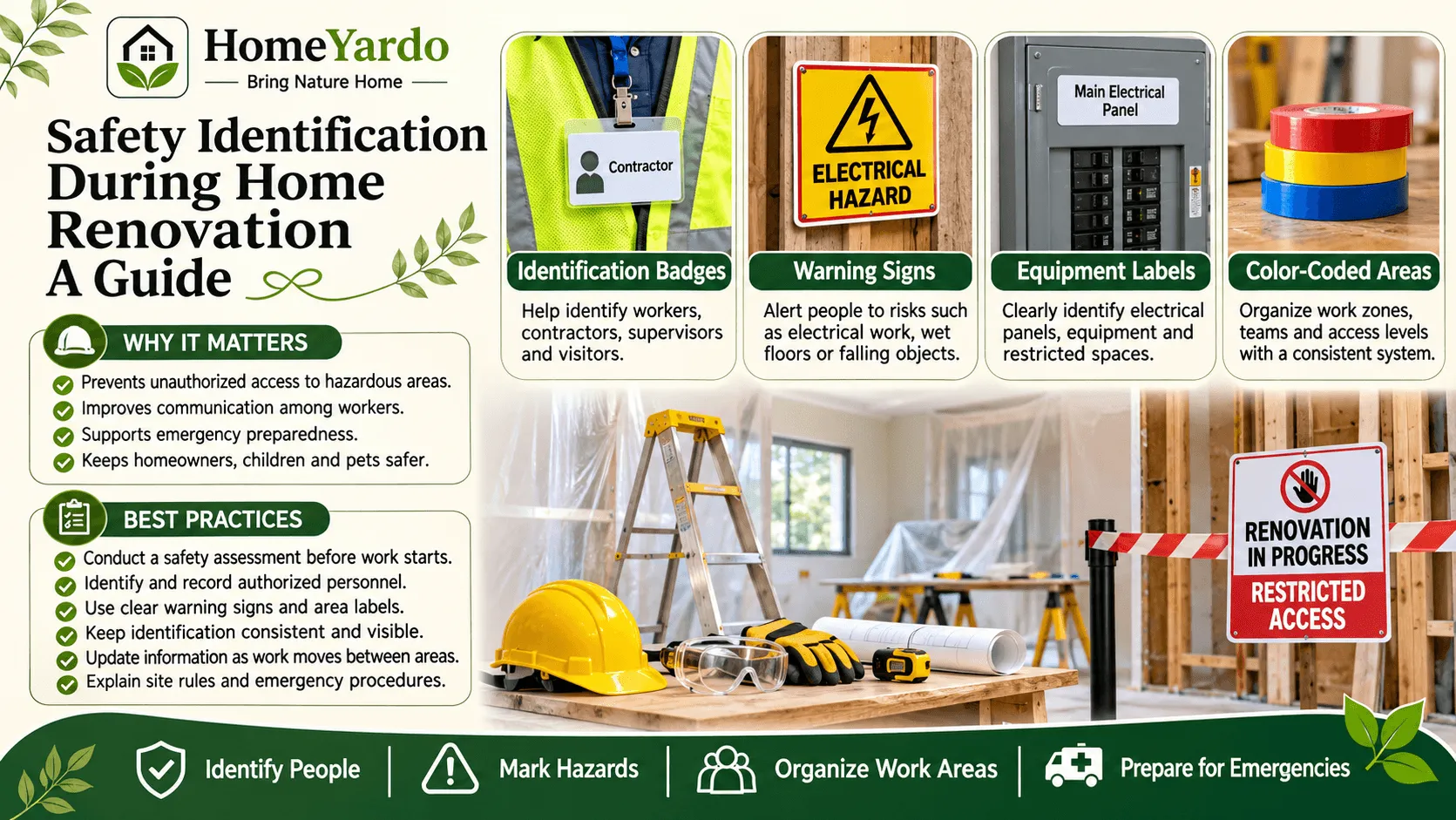
Home improvement projects frequently require more than simply painting walls, laying new flooring, or changing light fixtures. In fact, home improvements may present a variety of temporary hazards that must be planned for and managed. Home improvement projects can produce many types of hazardous conditions such as: exposed electric wires; use of power tools; accumulation of debris from demolition; and uncompleted surface areas. Therefore, home improvement projects can create hazardous conditions for any person entering the area without knowledge of those hazards. Regardless of whether home owners employ professional contractors or complete some of the work themselves, establishing and maintaining a safe environment is an essential part of completing a successful home improvement project.
An effective method of increasing employee awareness of their surroundings as well as organization of the work area would be to implement a safety identification system. Safety identification systems will provide a means for employees to identify co-workers, contract employees, supervisory personnel, and guests; furthermore, this type of system will make it easier to communicate to employees what their responsibilities are and where they are restricted from entering. When implemented in conjunction with appropriate safety protocols, safety identification systems can lead to an organized renovation environment.
Understanding Safety Identification in Home Renovation Projects
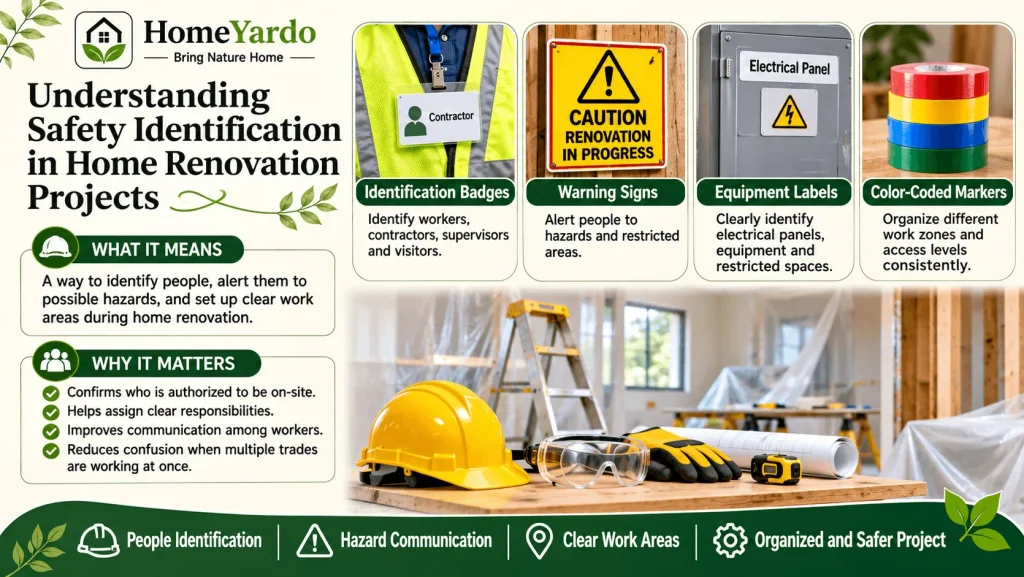
Safety Identification means how you identify people, let them know about things that could harm them, and set up clear areas in which they will be working. When working on your house, there can be many different types of professionals that come into your home, such as electricians, plumbers, carpenters, painters, and general contractors.
If there isn’t a clear way to identify individuals, then it will be difficult for homeowners to know if a person entering their home has permission to enter those areas, and it will also be difficult for homeowners to assign responsibilities to each individual.
Common identification methods include:
- Personal identification badges for workers and contractors.
- Warning signs near hazardous areas.
- Labels identifying electrical panels, equipment, and restricted spaces.
- Color-coded markers for organizing different work zones.
These techniques provide a way to pass along critical details and eliminate ambiguity, especially if there are many renovations occurring at one time.
Why Safety Identification Is Important During Home Renovations
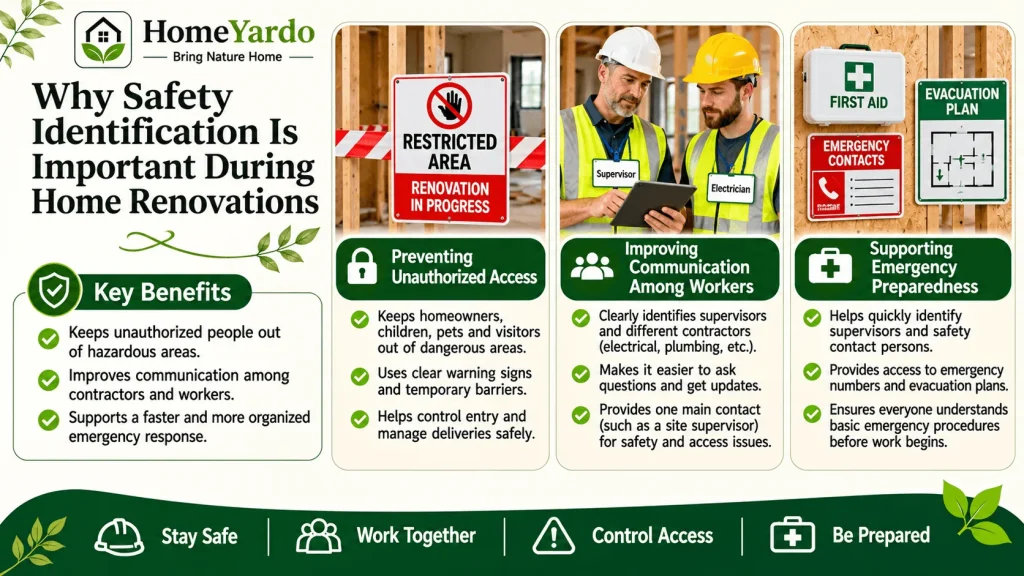
Safety identification helps maintain a safer and more organized renovation site by making hazards, restricted areas, and worker responsibilities easier to recognize. It also improves communication between homeowners and contractors while supporting faster responses when unexpected situations occur.
Preventing Unauthorized Access
There may be many risks for anyone who enters a renovation area including exposure to nails, sharp objects, unstable footing, electrical equipment, and heavy machinery. Therefore, it is important that everyone in the home, homeowners, children, pets, and even visitors understands what could happen to them in such a location.
Areas that are clearly marked off from use help keep individuals from going into these areas while work is being done. For instance, if you have a warning sign posted at the entrance of a location that contains electrical equipment, it will let people know not to enter that area and/or touch the equipment.
Homeowners need to have established rules on how to handle visitors and deliveries. Barriers that are temporary in nature, signage with a warning message that is clearly displayed, and having a system where entry into the property can be controlled will all contribute to keeping individuals out of potential harm’s way.
Improving Communication Among Workers
Renovations often include multiple contractors, each with their own area of expertise. For example, knowing which contractor is responsible for electrical work, plumbing, structural repairs, and/or general maintenance will help you communicate better with all of them.
Visible identification badges can assist both homeowners and workers in identifying supervisors, contractors, and other authorized individuals. Identification badges are especially beneficial when there are new workers present on a job site, or if multiple groups are working in various areas of the home.
For instance, if you have a clearly defined site supervisor role, that person will be the single point of contact for employees who need to ask about their work schedule, are concerned about safety issues at the jobsite, or are entering a restricted area. Having one central contact for these types of inquiries will reduce employee confusion and help guarantee that employees receive timely responses from the appropriate individual.
Supporting Emergency Preparedness
Even with careful planning of your renovation project, there are times that unexpected things will happen. When something does go wrong such as an injury, electrical problem, equipment failure, etc. it is important to have a plan for how you will deal with the situation.
Workers can use identification systems to identify assigned supervisors and safety contact persons immediately. Also, employees should have access to emergency contact numbers, and evacuation plans and first aid stations should be well-defined.
Homeowners need to ensure that each individual understands the fundamentals of emergency response prior to beginning any project. While identification itself will not eliminate the possibility of an accident, it may help coordinate efforts more effectively if an event occurs requiring rapid intervention.
Common Safety Identification Methods Used on Renovation Sites
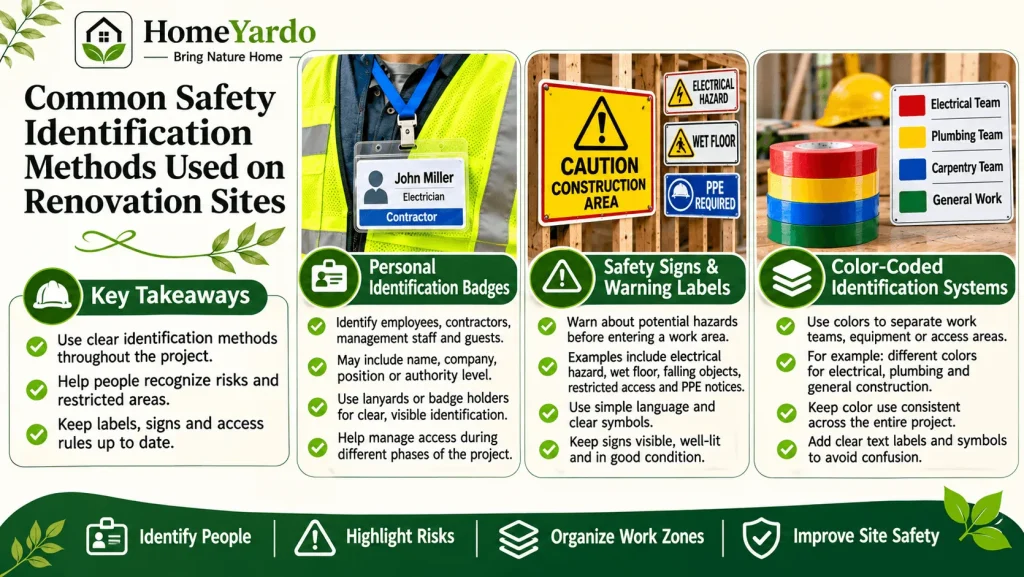
Several safety identification methods can help homeowners and contractors maintain an organized renovation site. The most common approaches include identification badges, warning signs, and color-coded systems that make responsibilities, hazards, and restricted areas easier to recognize.
Personal Identification Badges
Identification badges assist with differentiating between employees, independent contractors, management staff and guests. Badges are especially valuable during the entire renovation process as multiple professional groups will be on-site at various times.
Badges may show a person’s name, company, position, or authority level. Lanyards and badge holders allow the badges to be displayed and identified more easily.
Suppliers such as 4inlanyards provide lanyards and other identification accessories that can be utilized within organized workspaces and events. These items are beneficial when it is necessary for employees to easily identify which individuals are authorized to enter certain areas. In addition, projects with multiple contractors may have the ability to create a standardized system for identifying those working on the project.
However, badging should not be used in lieu of verifying identities, supervising individuals, and controlling access to specific areas of the organization. Badging is an organizational tool that helps to facilitate access; it does not indicate whether or not a person has been trained to complete a certain task.
Safety Signs and Warning Labels
Warning signs are crucial in informing individuals entering a construction zone about potential risks. These signs must be placed at a distance from the risk zone so that people can view the sign prior to entering the hazardous zone.
Common examples include:
- Electrical hazard signs near exposed wiring or electrical panels.
- Wet floor notices around recently cleaned or treated surfaces.
- Falling object warnings near overhead work.
- Restricted access signs around active construction zones.
- Protective equipment notices in areas requiring specific safety gear.
Signs are required to use simple language, easily identifiable symbols, and adequate lighting. Signs that have been damaged or are outdated should be updated when working conditions evolve.
Color-Coded Identification Systems
Using color to code may make it easier to separate work teams, different types of equipment, or areas with specific access rights. For instance, a project manager could use separate colors for the electric team, the plumbing team, and the general construction team.
However, colors should be used in a way that provides consistency in their usage across the entire project. Labels written out on the computer screen as well as symbols used to represent concepts should provide additional context for the user when they view a color indication. This will help make the content accessible to all users, especially those who may find it challenging to differentiate between specific colors.
Best Practices for Implementing Safety Identification at Home Renovation Sites
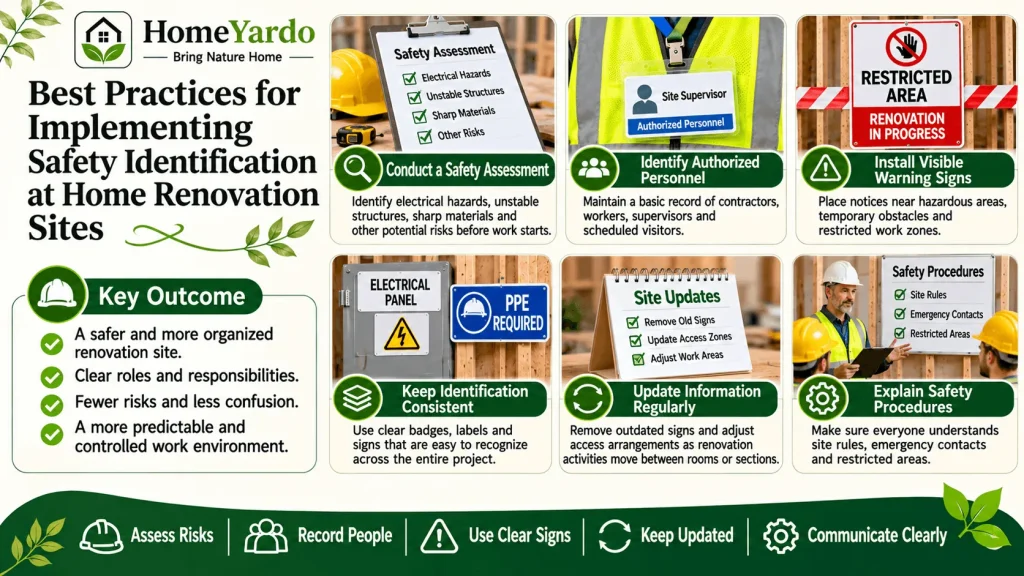
A successful identification system will begin prior to starting any renovations on your home. Property owners and construction professionals must perform a preliminary assessment of the property to determine what types of hazards exist, and what areas need to be restricted.
The following practices can help:
- Conduct a safety assessment: Identify electrical hazards, unstable structures, sharp materials, and other potential risks before work starts.
- Identify authorized personnel: Maintain a basic record of contractors, workers, supervisors, and scheduled visitors.
- Install visible warning signs: Place notices near hazardous areas, temporary obstacles, and restricted work zones.
- Keep identification consistent: Use clear badges, labels, and signs that are easy to recognize.
- Update information regularly: Remove outdated signs and adjust access arrangements as renovation activities move between rooms or sections.
- Explain safety procedures: Make sure everyone understands site rules, emergency contacts, and restricted areas.
The above steps will allow for a more predictable working atmosphere, and make the responsibilities clearer.
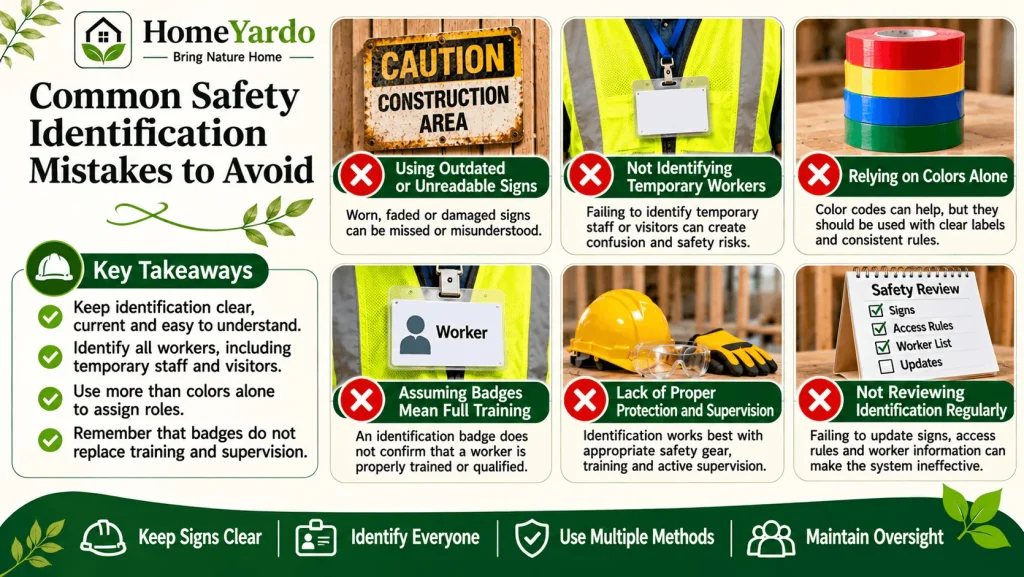
Common Safety Identification Mistakes to Avoid
Poorly-maintained, simple identification systems will also be ineffective. A frequent error is to use warning signs that are either outdated or unreadable due to changes in job site conditions.
In addition to the above, another problem is identifying temporary workers and/or visitors. If someone enters a construction/renovation area and doesn’t know what they are supposed to do, then it will be difficult for everyone else in the area to keep track of everyone who is working there.
Home owners shouldn’t just rely on colors alone to identify workers. And workers wearing an identification badge shouldn’t make people feel safer than they really are. Workers still require adequate training, the proper protection, and supervision.
A review of how you define identification on a regular basis will help guarantee that it is used during the renovation process.
Final Thoughts
The use of safety identification is a key factor when planning home renovation projects and as a means of improving communications between the homeowner(s), contractor(s) and worker(s). There are several types of safety identification that may include personal identification badges, warning signs, equipment labeling and consistent access procedures. All of these types of safety identification will allow individuals to identify their respective roles and responsibilities while also understanding potential hazards.
Safety planning is most effective when integrated into a larger safety program. Such programs include appropriate training, protective gear, adequate supervision and preparedness for emergencies. When homeowners integrate safety planning throughout each phase of the renovation process, they can develop a more structured work area and minimize unnecessary risks associated with upgrading their homes.
FAQ’s
Safety identification during home renovation involves using worker identification badges, warning signs, equipment labels, and access controls to help people recognize hazards, identify authorized personnel, and understand restricted work areas.
Safety identification helps homeowners, contractors, and visitors recognize potentially hazardous areas and understand who is responsible for different tasks. It also supports communication, access management, and emergency preparedness throughout the renovation.
Common renovation safety signs include electrical hazard warnings, wet floor notices, falling object warnings, restricted access signs, and personal protective equipment notices. Signs should be clearly visible and updated when site conditions change.
Identification badges help homeowners and workers recognize contractors, supervisors, and visitors. They can improve coordination and make access management easier. However, badges do not replace proper training, supervision, or verification of worker qualifications.
Homeowners should establish restricted work areas, use physical barriers where necessary, display clear warnings, and prevent children and pets from entering active construction zones. Hazardous tools, materials, and debris should also be stored securely.
Safety responsibilities depend on the project, applicable regulations, and contractual arrangements. Contractors and employers are responsible for meeting relevant workplace safety obligations, while homeowners should coordinate household access and communicate concerns. Identification systems support these responsibilities but do not replace them.
Common mistakes include using unclear warning signs, failing to identify temporary workers, leaving outdated labels in place, relying only on color-coded markers, and assuming that an identification badge proves a worker is qualified.
Safety identification should be planned before renovation work begins. Worker identification, warning signs, restricted zones, and emergency contacts should be established during initial site preparation and updated as the project progresses.