Cleaning Wildfire Ash and Smoke Film Off An Okanagan Home Before Winter

Cleaning wildfire ash off an Okanagan home before winter helps remove smoke residue from windows, siding, decks, and other exterior surfaces before colder weather makes the job more difficult.
Anyone who has lived through a few Okanagan summers knows the grey film that settles on everything after a smoky stretch. It coats deck rails, collects in window tracks, and dulls the glass on the side of the house facing the prevailing wind.
When that residue sits through autumn rain and winter weather, it can mix with dirt and grime, leaving stubborn marks on exterior surfaces.
For homeowners in Kelowna, West Kelowna, Vernon, and surrounding communities, the weeks before freezing temperatures arrive provide a useful opportunity to clean away the buildup.
The safest approach is straightforward: protect yourself from airborne ash, choose gentle cleaning methods, work from the roofline down, and give every cleaned surface enough time to dry.
Why Wildfire Ash Keeps Showing Up in the Okanagan Valley

Smoke and fine ash can travel considerable distances. A property does not need to be close to an active wildfire to collect soot and particulate residue.
British Columbia has experienced several major wildfire seasons in recent years.
The BC Wildfire Service season summary records more than 2.84 million hectares burned in 2023, the largest area recorded in a single wildfire season in the province’s history. Approximately 1.08 million hectares burned in 2024, followed by about 886,300 hectares in 2025.
The Central Okanagan’s valley setting can contribute to smoke lingering during periods of stagnant air.
As fine particles settle, they collect on siding, soffits, windows, patio furniture, and other exposed surfaces.
Rain and sprinkler water may wash away some loose dust, but they can also leave streaks when soot and other residue mix with moisture.
This is why a house may still appear dirty long after the smoke clears.
Protect Yourself Before Cleaning Wildfire Ash
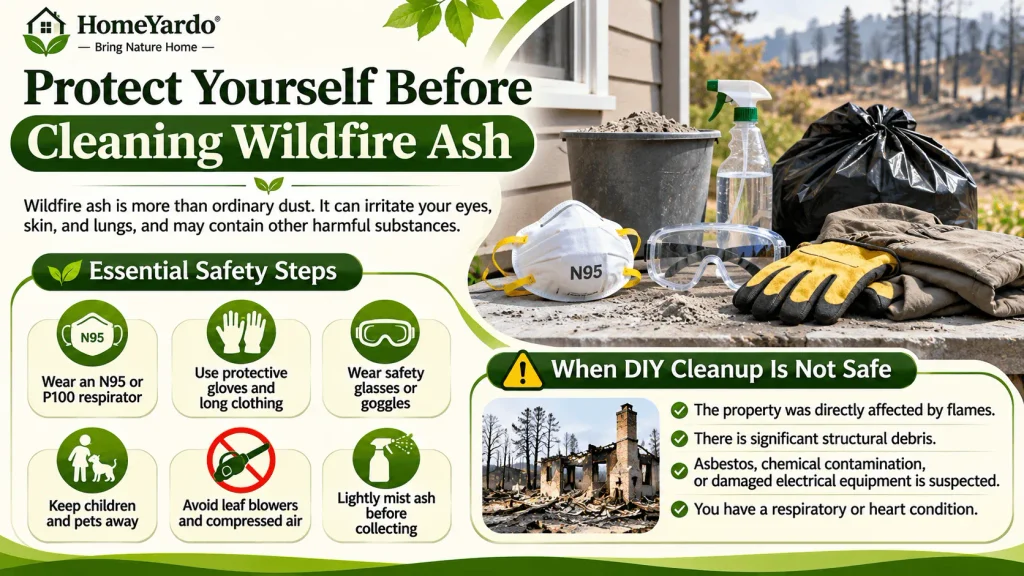
Wildfire ash is more than ordinary household dust. Fine particles can irritate the eyes, skin, and respiratory system, particularly when disturbed during cleaning.
Ash from burned buildings or other developed areas may contain additional hazardous substances.
The Interior Health guide for returning home after wildfires recommends protective equipment and careful handling of contaminated material.
Before starting exterior cleanup:
- Wear a properly fitted N95 or P100 respirator when ash exposure is possible.
- Use protective gloves, long sleeves, long pants, and sturdy footwear.
- Wear safety glasses or goggles to protect your eyes.
- Keep children and pets away from contaminated work areas.
- Avoid leaf blowers and compressed-air hoses that send ash back into the air.
- Lightly mist loose ash before collecting it, rather than sweeping it dry.
The U.S. Environmental Protection Agency recommends minimizing airborne dust and avoiding washing collected ash into storm drains.
Use only enough water to control dust. Collect heavier deposits before washing surrounding surfaces.
Bag ash securely and follow local waste-disposal requirements.
When DIY Cleanup Is Not Safe
Not every wildfire cleanup is suitable for homeowners.
If the property was directly affected by flames, contains significant structural-fire debris, or has suspected asbestos, chemical contamination, or damaged electrical equipment, stop and seek professional assistance.
People with significant respiratory or heart conditions should also avoid direct ash-cleanup work.
For ordinary light smoke residue on an otherwise undamaged home, careful cleaning with suitable products may be manageable.
Clean Wildfire Ash From The Top Down
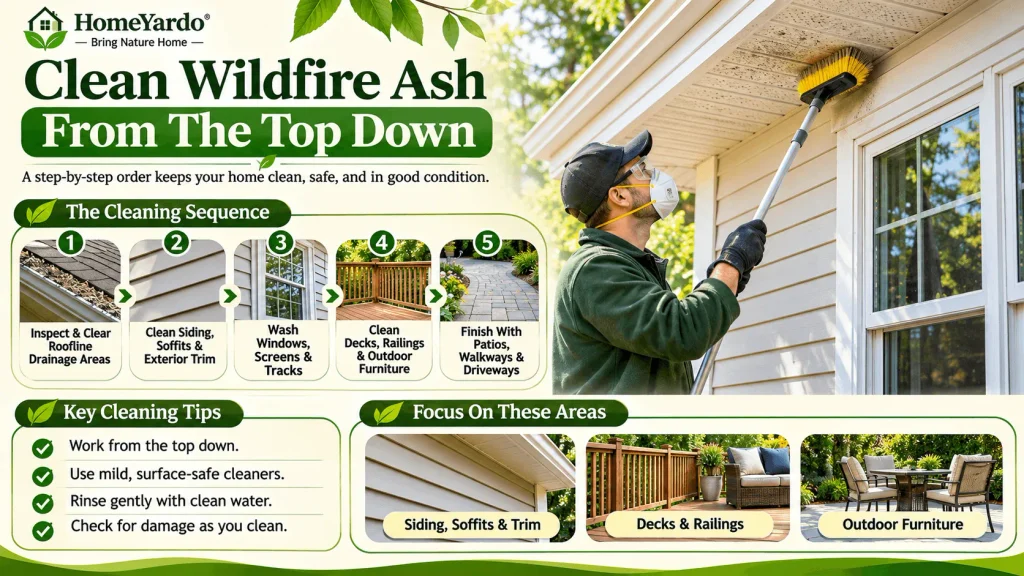
The order of cleaning matters.
Working from the top down helps prevent dirty water and loose residue from falling onto areas you have already cleaned. Removing wildfire residue is also a good opportunity to inspect your siding, gutters, and other exterior surfaces for signs of wear. Regular upkeep can help you spot small problems before winter weather makes them worse. For more practical ideas, explore these easy ways to improve your home’s exterior and keep your property in better condition throughout the year.
Start by inspecting the roof edges, eavestroughs, and gutters from a safe position on the ground.
Remove accessible accumulated debris using appropriate protective equipment. Roofs and elevated gutters should be left to trained professionals when safe access is not possible.
Then follow this sequence:
- Inspect and clear roofline drainage areas.
- Clean siding, soffits, and exterior trim.
- Wash windows, screens, and tracks.
- Clean decks, railings, and outdoor furniture.
- Finish with patios, walkways, and driveways.
Avoid directing contaminated runoff into storm drains, vegetable gardens, or areas where children and pets play.
Clean Siding, Soffits, and Exterior Trim
Exterior siding can collect smoke residue across large areas, especially on walls exposed to prevailing winds.
Before cleaning, inspect the siding for loose panels, peeling paint, deteriorated caulking, and other damage.
For compatible surfaces, use a soft brush or microfiber cleaning tool with a mild detergent diluted according to its label.
Work in manageable sections and rinse gently with clean water.
Avoid harsh scrubbing or aggressive pressure washing. High-pressure water can damage painted finishes or force moisture behind siding. If you’re considering using a pressure washer for other outdoor cleaning tasks, it’s worth understanding which settings are suitable for different materials. Our guide to choosing a pressure washer explains how water pressure, flow rate, and surface compatibility can affect cleaning results without causing unnecessary damage.
If a section has persistent staining, test a manufacturer-approved cleaner on an inconspicuous area before treating the entire wall.
Wash Decks, Railings, and Outdoor Furniture
Deck boards and railings often hold residue in textured surfaces, seams, and corners.
Lightly mist loose ash before gathering it. For suitable outdoor surfaces, follow with a gentle wash using an appropriate cleaning solution.
Composite decking, painted wood, and coated metal may require different products, so check the manufacturer’s care instructions.
Outdoor cushions and fabrics should be cleaned according to their care labels.
For patio tables, chairs, and children’s outdoor equipment, mild detergent and clean water are often suitable when the materials permit.
Rinse washable items thoroughly and allow them to dry before storing them for winter.
How To Remove Smoke Film From Windows, Screens, and Tracks

Windows often reveal smoke residue more clearly than other exterior surfaces.
A thin layer of soot can make otherwise clean glass look cloudy, particularly in direct sunlight.
The main concern is removing particles without scratching the surface or forcing moisture into the frame.
Start by gently rinsing compatible exterior glass with clean water to loosen surface particles.
Then wash with a non-abrasive window-cleaning solution and a clean microfiber applicator.
Avoid wiping heavy, dry ash directly across the glass. Fine particles mixed with grit can scratch glass or surrounding finishes.
For the final rinse, purified water may help reduce mineral spotting.
Window screens and tracks need separate attention.
Remove screens carefully when the design permits, place them on a clean protected surface, and wash them using a soft brush and mild detergent.
Rinse gently and let them dry before reinstalling.
For tracks, first collect loose dry residue with a HEPA-equipped vacuum appropriate for ash cleanup. Then wipe the remaining dirt with a damp cloth or soft brush.
Check the drainage openings, commonly called weep holes, near the base of suitable window frames.
These openings help water escape. When blocked by dirt or ash, moisture can collect in the tracks during heavy rain.
Do not force debris deeper into the drainage channels or damage the window seals while cleaning.
Cleaning Upper-Storey Windows Safely
Second-storey windows present an additional challenge.
Climbing ladders while carrying cleaning equipment increases the risk of falls, particularly when working on uneven ground or wet surfaces.
Many homeowners prefer to clean the windows they can safely reach and leave elevated glass to a professional.
Professional window cleaners may use water-fed poles and filtered water systems to clean suitable upper-floor windows from the ground.
If you would rather avoid ladder work, you can learn more about professional window cleaning in Kelowna and the services available for exterior glass, frames, screens, and tracks.
Before hiring, confirm which areas are included in the service and whether the cleaning method is appropriate for your windows.
Don’t Forget Your Home’s Air Intakes and Vents

Smoke residue does not settle only on visible surfaces.
Exterior vents, air intakes, and HVAC equipment can also collect ash, dust, and windblown debris.
After a smoky summer, check accessible exterior air openings for obvious blockages.
Look at:
- Dryer exhaust outlets
- Bathroom fan exhaust vents
- Fresh-air intakes
- Soffit ventilation openings
- Outdoor heat pump and air-conditioning units
Remove accessible debris carefully without pushing contaminants deeper into the openings.
For air conditioners and heat pumps, switch off equipment as directed by the manufacturer before performing permitted maintenance.
Clean only the components identified as homeowner-serviceable. Avoid directing water toward electrical controls or forcing debris into delicate fins.
If the equipment is heavily contaminated or difficult to access, contact an HVAC technician.
Check the furnace or HVAC filter as well.
Filters may require replacement after periods of heavy smoke exposure, depending on the system, filter type, and operating conditions.
Follow the manufacturer’s instructions and use a compatible replacement filter. Smoke residue can also draw attention to overlooked areas where dust, moisture, and debris collect. Window tracks, ventilation openings, and other hard-to-reach spaces deserve occasional inspection as part of seasonal maintenance. Learning about hidden cleaning problems around the home can help you identify areas that are easy to miss during routine cleaning.
A clean exterior and properly maintained ventilation system help prepare the property for the months when windows remain closed.
Finish Exterior Cleaning Before Freezing Temperatures
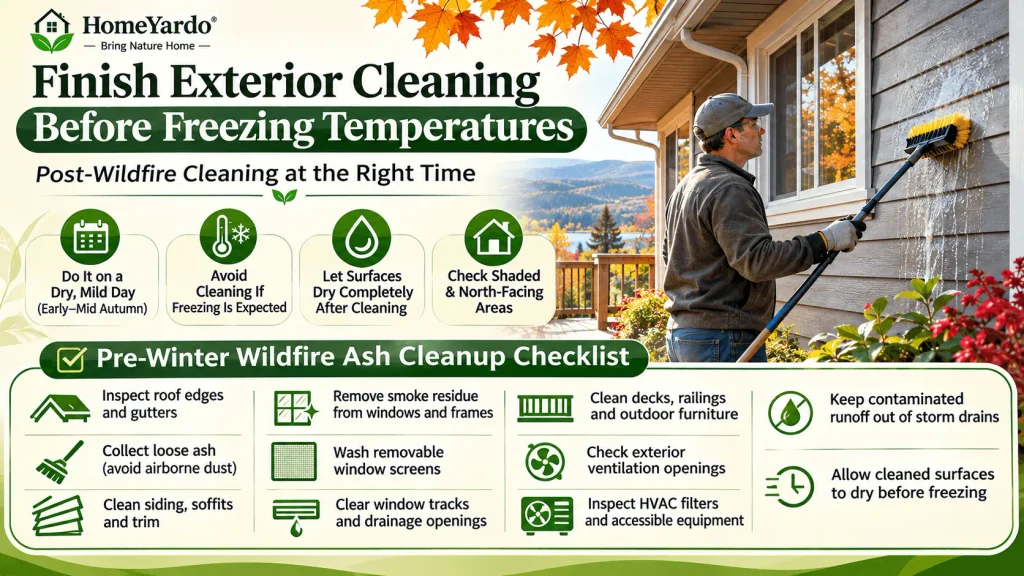
The best time for post-wildfire exterior cleaning is a dry, mild day before sustained freezing weather arrives.
In the Okanagan, this opportunity often falls during early to mid-autumn, although conditions vary by location and year.
Avoid washing outdoor surfaces when freezing temperatures are expected before they can dry.
Water left inside window tracks, gutter sections, deck gaps, and other narrow spaces may freeze.
This can contribute to drainage problems or damage vulnerable materials.
After cleaning, inspect the house for remaining moisture and make sure accessible drainage channels are clear.
Pay particular attention to shaded areas and north-facing walls, where drying may take longer.
Pre-Winter Wildfire Ash Cleanup Checklist
Before wrapping up the job, use this checklist to make sure the main areas have been addressed.
- Inspect roof edges and gutters for accumulated debris.
- Collect loose ash without creating airborne dust.
- Clean siding, soffits, and exterior trim.
- Remove smoke residue from windows and frames.
- Wash removable window screens.
- Clear accessible window tracks and drainage openings.
- Clean decks, railings, and outdoor furniture.
- Check exterior ventilation openings.
- Inspect HVAC filters and accessible equipment.
- Keep contaminated runoff out of storm drains.
- Allow cleaned surfaces to dry before freezing weather.
It is also helpful to record which sides of the house collected the most smoke residue.
That information can guide future cleaning and help you identify areas that need closer attention during the next wildfire season.
Final Takeaway
Cleaning wildfire ash and smoke film from an Okanagan home is an important part of seasonal exterior maintenance.
The work does not always require aggressive cleaning products or high-pressure equipment. In many cases, gentle washing, suitable protective equipment, and careful attention to windows, siding, and drainage areas are the better approach.
The main priorities are to keep ash out of the air, avoid damaging exterior materials, manage contaminated residue responsibly, and complete wet cleaning before freezing weather.
For Kelowna and other Okanagan homeowners, a little attention after smoke season can make the exterior easier to maintain through autumn and winter.
FAQ’s
Wear appropriate protective equipment, lightly mist loose ash, collect heavier deposits, and wash compatible exterior surfaces with mild detergent and clean water. Work from the top down and avoid spreading ash into the air or storm drains.
Wildfire ash can leave staining and residue on exterior siding. Abrasive cleaning methods may also damage certain finishes. Remove buildup using products and techniques approved for the siding material.
Gently rinse loose particles from the glass, wash with a non-abrasive window cleaner, and finish with clean water. Avoid rubbing dry ash across the surface, and clean screens and tracks separately.
Pressure washing may be suitable for some exterior materials, but excessive pressure can damage siding, paint, seals, and window frames. Check the manufacturer’s recommendations and use gentler methods on sensitive surfaces.
Yes. Fine ash can irritate the respiratory system and may contain harmful contaminants. Wear a properly fitted N95 or P100 respirator when appropriate and avoid dry sweeping or using leaf blowers.