Storm-Resistant Windows: What To Know Before You Upgrade
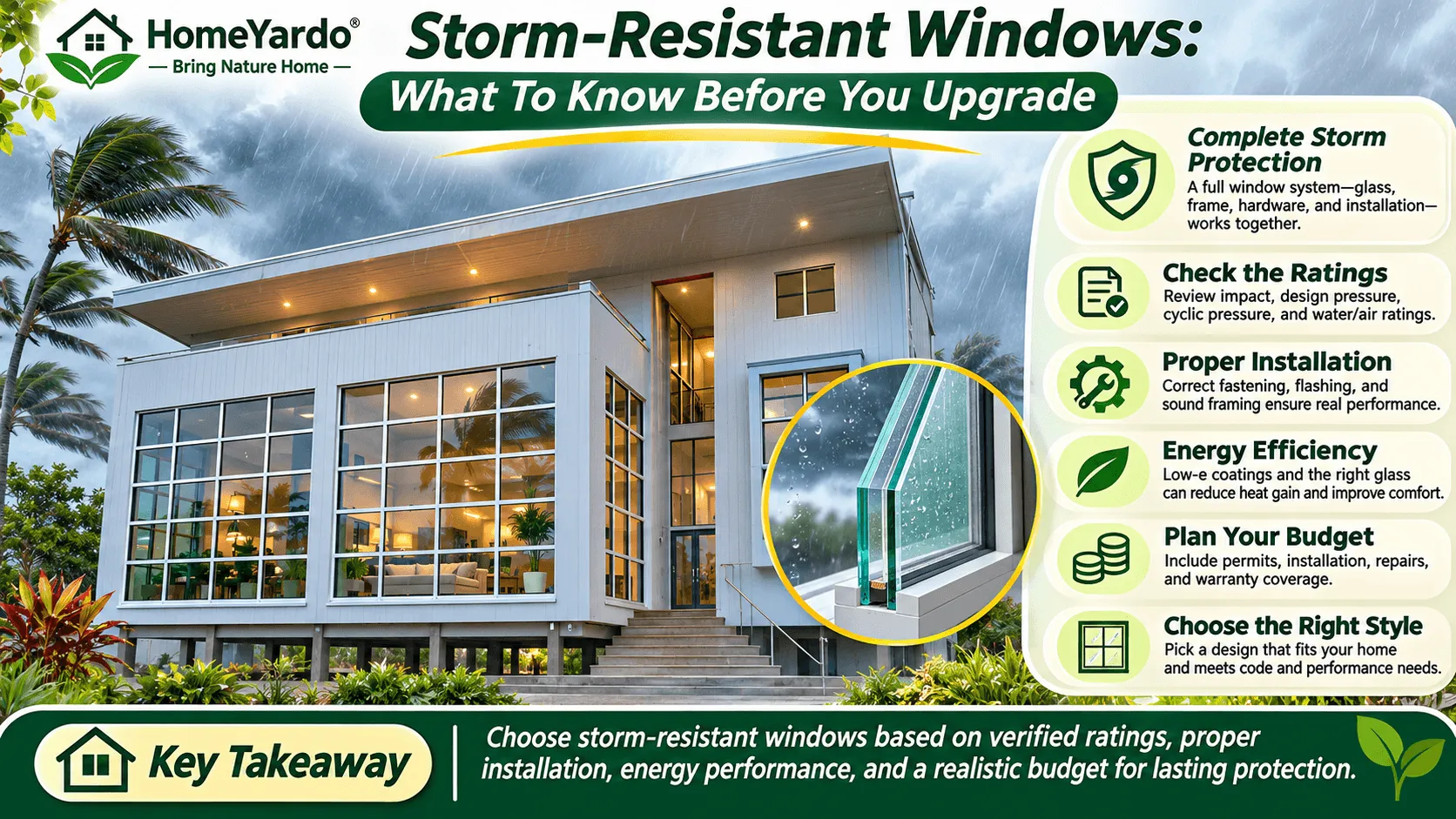
In hurricane-prone areas such as Orlando, Florida, windows are more than a design feature. They are part of the building envelope, helping protect the home from wind pressure, flying debris, and wind-driven rain. The right upgrade can also improve comfort and energy performance throughout the year. Before choosing new windows, understand how impact protection works, which ratings matter, and why careful installation is just as important as the product itself.
Storm Protection Involves the Entire Window
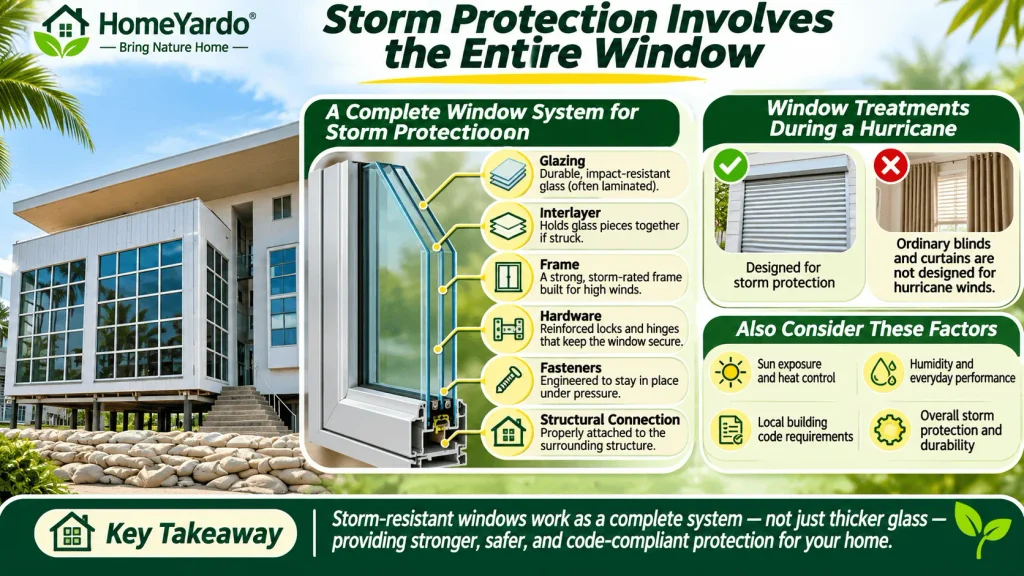
Storm-resistant windows are not simply ordinary windows with thicker glass. Their performance depends on the complete assembly: glazing, interlayer, frame, hardware, fasteners, and the way the unit connects to the surrounding structure.
Many impact-resistant products use laminated glass, which holds broken pieces together if the glass is struck. A broken opening can also affect pressure inside a building. Wind entering through a failed window may increase stress on other parts of the structure. That is why opening protection is an important part of hurricane preparation, rather than a cosmetic upgrade. Storm protection also involves understanding which window accessories actually provide safety. Ordinary blinds and curtains are not designed to stop hurricane-force winds or flying debris. Homeowners should understand what window treatments can and can’t do during a hurricane before relying on interior coverings for protection.
For homeowners comparing impact windows in Orlando, it is worth evaluating both storm protection and everyday performance. Sun exposure, humidity, cooling demands, and local code requirements should all influence the selection.
Understand the Ratings Before Comparing Prices
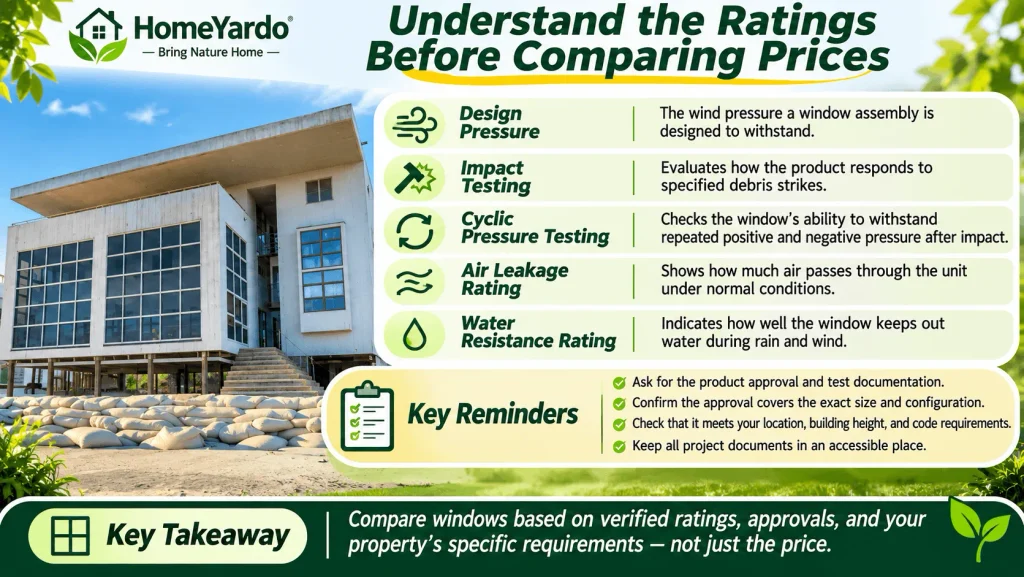
Product descriptions can make different windows sound equally protective. The technical documentation is more useful. Ask for the product approval, test information, and performance ratings for the exact size and configuration being proposed.
Design pressure describes the wind pressure a window assembly is designed to withstand. Impact testing evaluates how the product responds to specified debris strikes, while cyclic pressure testing assesses its ability to withstand repeated positive and negative pressure after impact. Air leakage and water resistance ratings help explain how the unit performs under ordinary weather conditions.
A window that resists an impact is not automatically suitable for every wind exposure or opening size. Requirements vary by location, building height, exposure, and applicable code. Confirm that the specific product has the required approval and is being installed within the conditions stated in that approval.
The official product approval system provides a way to check approved construction products and their documentation. Keep project documents together in an accessible place. Check that approval covers the exact product configuration and intended use.
Installation Determines Real-World Performance
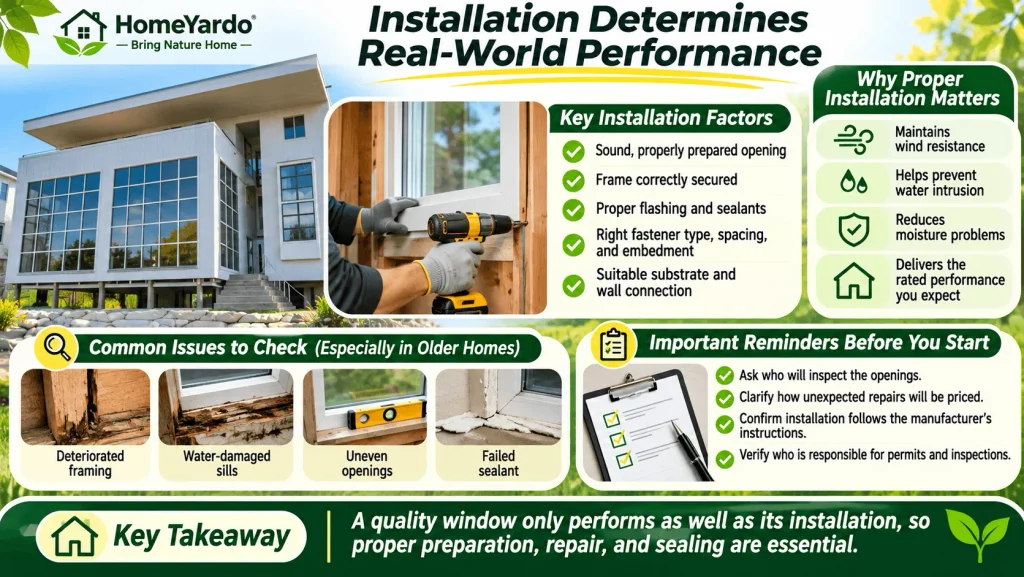
Even a tested window can underperform when installed incorrectly. The opening must be sound, the frame properly secured, and the flashing and sealants suited to the assembly and surrounding wall. Fastener type, spacing, embedment, and substrate condition all matter.
Older homes may reveal deteriorated framing, water-damaged sills, uneven openings, or failed sealant once existing windows are removed. These issues should be addressed before the replacement unit is fitted. Installing over damaged material can leave a weak connection or create a path for water intrusion. Correct flashing and sealing also help reduce moisture problems during severe weather. However, water entering a home does not always mean the window itself has failed. Understanding wind-driven rain vs. roof leaks can help homeowners identify possible entry points and determine which building components need further inspection.
Before work begins, ask who will inspect the openings, how unexpected repairs will be priced, and whether the installation will follow the manufacturer’s instructions and approved details. Confirm who is responsible for permits and inspections. FEMA’s Wind Retrofit Guide for Residential Buildings explains how rated openings and proper installation contribute to wind protection.
Energy Efficiency Matters Every Day
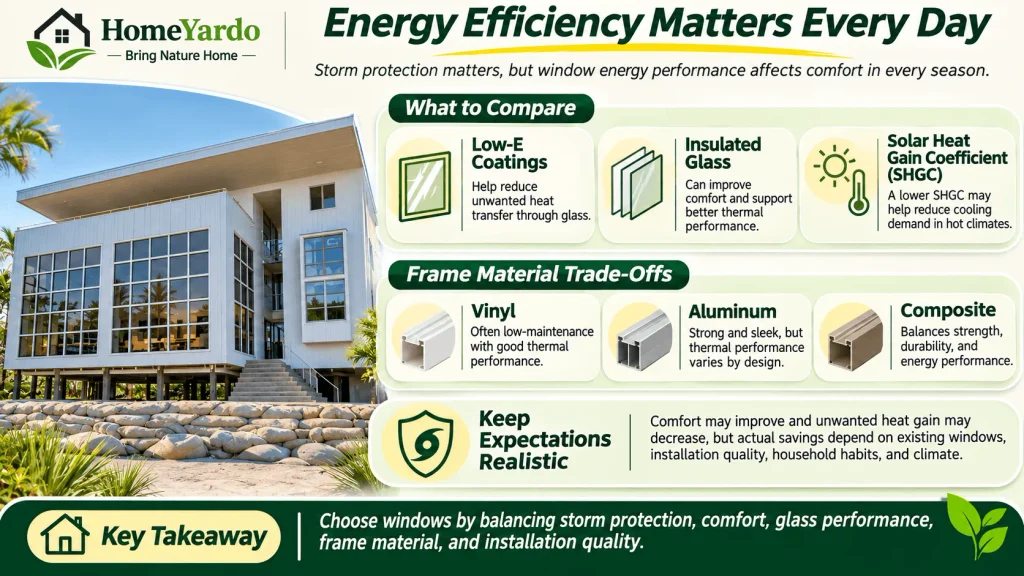
Storm protection is a major reason to upgrade, but energy performance affects the home in every season. In hot, humid climates, poorly performing glass can admit substantial solar heat, making rooms uncomfortable and increasing the workload on air-conditioning equipment.
Compare low-emissivity coatings, insulated glass options, and solar heat gain coefficient. The latter indicates how much solar heat passes through the window; a lower value can be useful where reducing cooling demand is a priority.
Frame materials involve trade-offs. Vinyl, aluminum, and composite options differ in strength, maintenance, cost, and thermal performance.
A window upgrade may improve comfort and reduce unwanted heat gain, but actual savings depend on the existing windows, installation quality, household habits, and climate. Treat energy benefits as one part of the decision, not a guaranteed payback figure.
Build a Complete and Realistic Budget
A per-window price rarely tells the whole story. Costs can change with opening dimensions, custom shapes, glass specification, frame material, hardware, access, labor, permits, disposal, and repairs discovered during removal.
Compare written estimates with the same scope. Check whether each includes permits, product approvals, removal, flashing, sealants, trim, finish repairs, and cleanup. A low quote may exclude work that another contractor has included. Ask how additional damage will be documented and approved before extra charges are incurred.
Also review warranty coverage. Product warranties and installation warranties may cover different issues, and neither necessarily covers every type of storm damage. Understand exclusions, maintenance requirements, transferability, and the process for making a claim.
Design Should Follow Performance
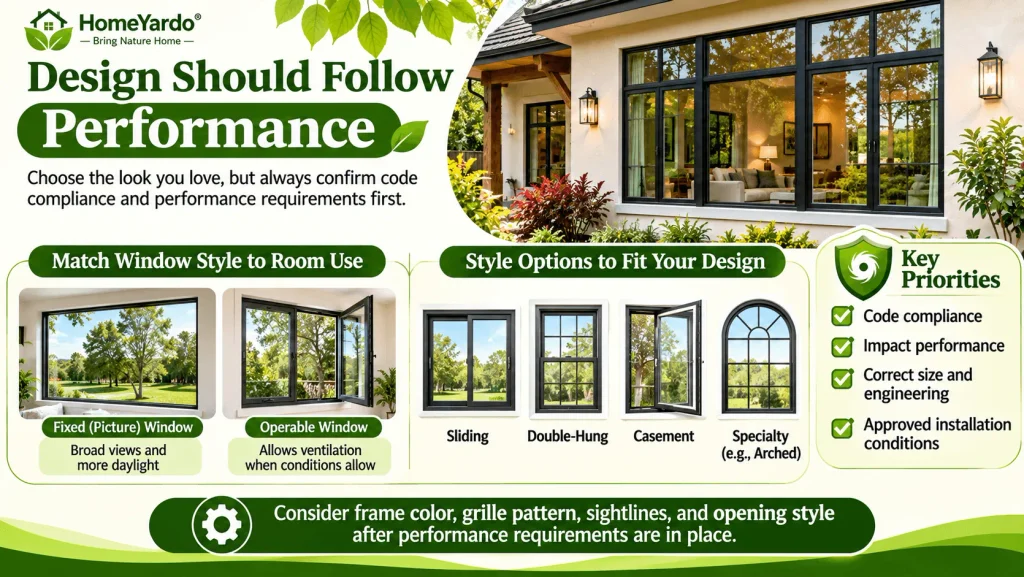
Modern impact-rated windows are available in styles that suit many architectural designs. Frame color, grille pattern, sightlines, and opening style can all influence the finished appearance. Those choices matter, but they should come after code compliance and performance requirements have been established.
Think about how each room is used. Fixed picture windows provide broad views and daylight, while operable units can support ventilation when outdoor conditions allow. Large openings may require different engineering and product configurations from smaller windows. Confirm that the chosen style is approved for the actual dimensions and installation conditions.
Plan Before the Next Storm
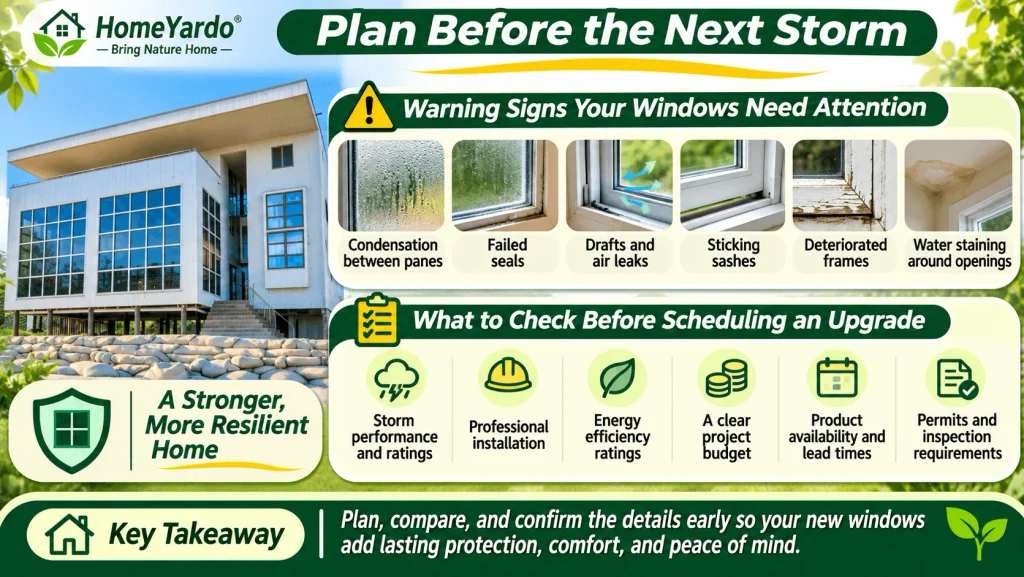
Replacing windows under pressure after a storm warning, leak, or broken pane limits the time available to compare products and contractors. Planning ahead allows you to check lead times, review warranties, arrange permits, and make informed decisions.
Look for warning signs in existing units, including failed seals, condensation between panes, drafts, sticking sashes, deteriorated frames, and water staining around openings.
The strongest upgrade balances tested protection, correct installation, energy performance, and a realistic budget. Choose based on documented requirements rather than showroom appearance or broad marketing promises. When each part of the project is considered together, new windows can help make the home more resilient, comfortable, and dependable year-round.
What to Check Before Scheduling an Upgrade
Before committing to a project, establish which windows need attention and what you want the upgrade to accomplish.
Prioritize documented storm performance, correct installation, suitable energy ratings, and a clear project budget.
Confirm product availability, expected installation schedules, permits, and inspection responsibilities.
Remember that storm-resistant windows are one part of home protection.
Roofing, exterior doors, garage doors, and other building-envelope components also contribute to overall storm resilience.
Final Takeaway
Storm-resistant windows can be a worthwhile upgrade for homeowners in hurricane-prone areas, but the right product requires careful selection.
Focus on verified impact and wind ratings, suitable installation details, climate-appropriate energy performance, and complete contractor estimates.
A strong window assembly is only as dependable as its approved application and installation.
By planning ahead and checking documentation rather than relying on marketing promises, homeowners can choose windows that offer better protection, improved comfort, and dependable everyday performance.
Frequently Asked Questions
The terms are often used interchangeably, but not every window marketed as storm-resistant meets hurricane-impact requirements. Check the product’s approved impact classification, wind-pressure ratings, and installation conditions.
Yes. Impact-resistant glass can crack when struck by debris. Its laminated construction is designed to help retain fragments and meet specified test requirements, but no window is guaranteed to withstand every storm.
Requirements depend on the property, project scope, applicable building code, and local windborne-debris provisions. Confirm the specific requirements with the building department before purchasing windows.
Both can provide suitable protection when properly rated and installed. Impact windows offer permanent protection without deploying separate shutters, while approved shutters can protect compatible existing windows. The better choice depends on the home, budget, and applicable requirements.
Service life depends on product quality, climate exposure, installation, maintenance, and component durability. Manufacturer warranties can help indicate coverage, but they do not guarantee a specific service life.