Are Termites Active In Winter? What Homeowners Should Know
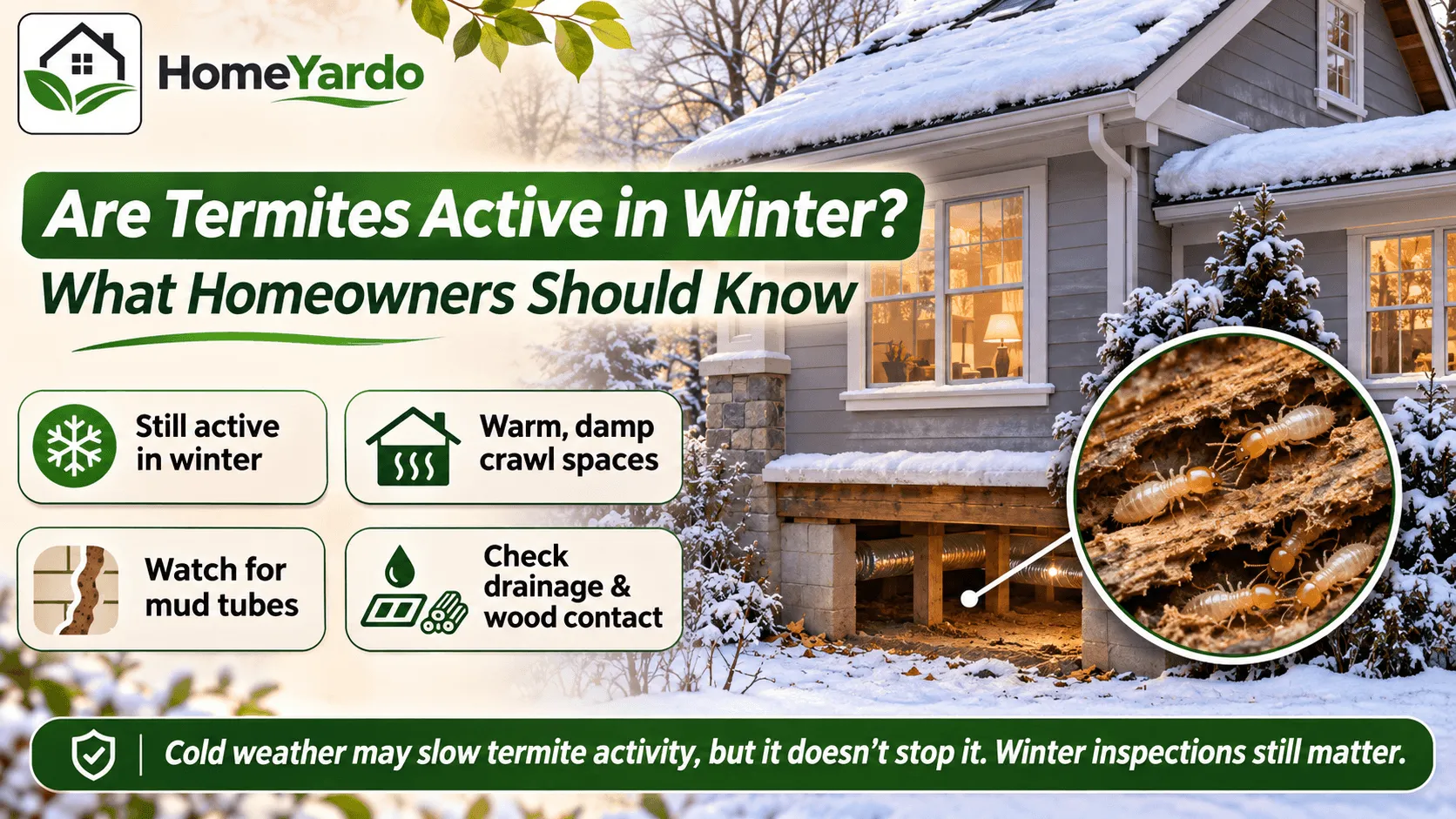
Are termites active in winter? Yes. Subterranean termites can remain active during cold weather, particularly when they have access to unfrozen soil, moisture, and warmth from a heated home. Although freezing temperatures can reduce their movement near the soil surface, they do not necessarily stop feeding or disappear until spring.
The furnace kicks on for the first cold night of the year, the patio furniture goes under covers, and pests get mentally filed under “next spring.” Meanwhile, the crawl space under the kitchen may remain damp and relatively warm, and the wooden framing above it may sit close to soil that hasn’t frozen.
That temperature difference explains why termite inspections should remain part of winter home maintenance. Crawl spaces, foundation walls, drainage systems, decks, and wooden flooring all deserve attention when outdoor temperatures drop.
If you have ever searched for termites active in winter, the important point is that seasonal cold may change where termites travel without eliminating an existing colony.
Why Are Termites Still Active During Winter?
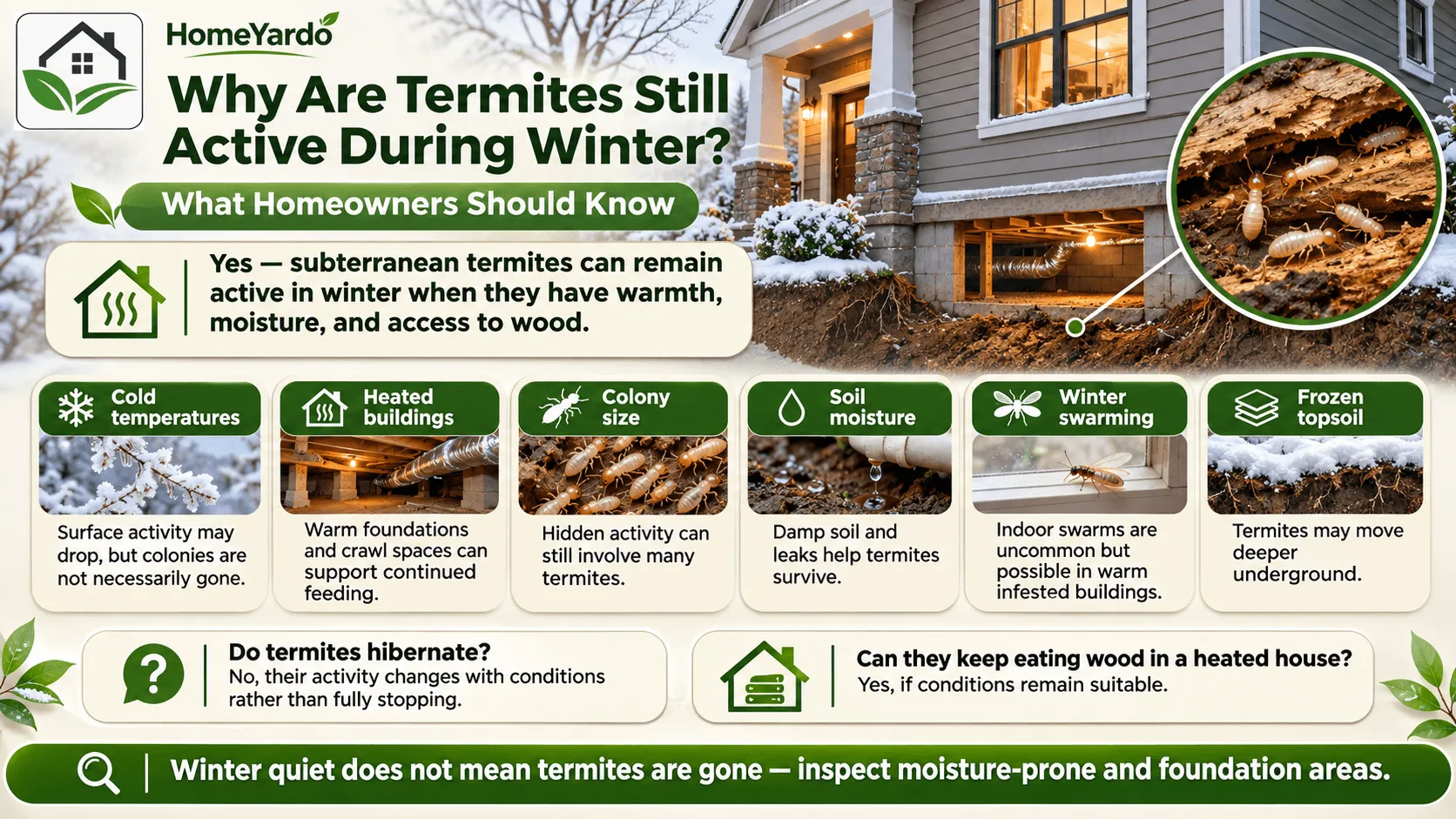
Termites respond to temperature, moisture, and available food. As the ground cools, subterranean colonies may move farther below the surface, where temperatures remain more suitable for survival.
A heated house can create favorable conditions near foundations, crawl spaces, and other protected structural areas. Termites with access to these locations may continue feeding even while outdoor activity becomes harder to observe.
According to the CAES Field Report, subterranean termites are likely to remain active during cold weather when the structure they are infesting is heated.
The following table summarizes how seasonal conditions may affect activity.
| Factor | What Happens in Winter | What It Means for Homeowners |
|---|---|---|
| Cold temperatures | Surface foraging often decreases when soil becomes very cold or freezes | Less visible activity does not prove a colony is gone |
| Heated buildings | Protected areas can remain warm enough for continued activity | Foundations and crawl spaces still need attention |
| Colony size | Established colonies can contain thousands to millions of termites | Hidden feeding can involve many workers |
| Soil moisture | Damp soil and protected galleries help termites avoid drying out | Drainage and plumbing leaks deserve inspection |
| Winter swarming | Swarms inside warm, infested buildings are possible but uncommon | Indoor swarmers warrant professional identification |
| Frozen topsoil | Termites may move deeper into suitable soil | Outdoor inspections may reveal fewer signs |
Do Termites Hibernate or Die When It Gets Cold?
Subterranean termites do not undergo a conventional winter hibernation in the way some animals do. Instead, their activity changes according to the conditions surrounding their colony.
Freezing temperatures can kill exposed termites, but those sheltered in deeper soil or protected galleries may survive.
For homeowners, the distinction matters. A quiet winter does not confirm that an infestation has ended, particularly when termites have access to a warm building.
Can Termites Continue Eating Wood in a Heated House?
Yes. Subterranean termites may continue feeding on accessible wood when conditions remain suitable.
Heated basements, protected crawl spaces, and structural areas near unfrozen soil can provide opportunities for activity. The presence of heat alone does not create an infestation, but it may help an existing colony remain active.
This is why waiting until warmer weather to investigate suspicious wood damage can be a mistake.
How Moisture, Gutters, And Crawl Spaces Affect Winter Termite Activity
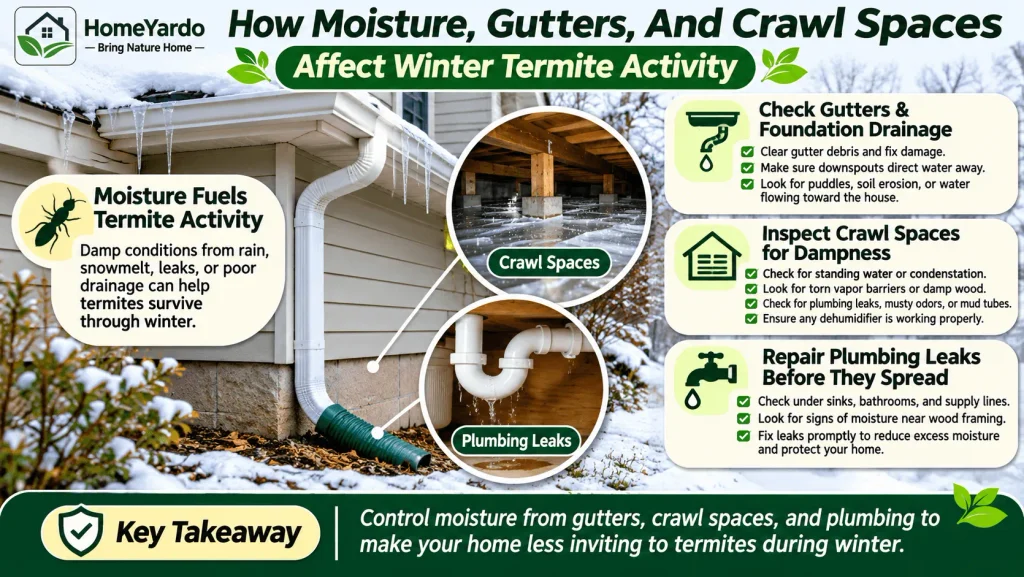
Moisture is one of the strongest influences on subterranean termite survival. These insects lose water easily and depend on protected, humid environments.
Cold weather does not remove moisture problems around a home. Winter rain, snowmelt, plumbing leaks, and poor drainage can leave soil and building materials damp for extended periods.
Reducing unnecessary moisture helps make these conditions less favorable while protecting the structure from other forms of deterioration.
Check Gutters and Foundation Drainage
Clogged gutters can overflow during winter rain, allowing water to collect near foundation walls.
Downspouts that release water directly beside the building may repeatedly saturate the surrounding soil. Snowmelt and poor grading can create similar problems.
During a safe exterior inspection:
- Clear accessible gutter debris.
- Check for disconnected or damaged downspouts.
- Direct roof runoff away from the foundation using suitable drainage arrangements.
- Look for persistent puddles beside exterior walls.
- Check for soil erosion or areas where water flows toward the building.
Homeowners can also review HomeYardo’s guide to gutter warning signs to check before the first freeze to identify drainage problems before winter conditions make repairs more difficult.
The appropriate downspout extension length depends on the property’s grading, soil, and drainage setup. The goal is to prevent repeated water accumulation against the foundation.
Inspect Crawl Spaces for Dampness
Crawl spaces can hide moisture problems because they receive little everyday attention.
If the space is safely accessible, use a flashlight to check for standing water, condensation, damaged vapor barriers, or visibly damp wooden framing.
Watch for:
- Water collecting on top of the ground vapor barrier.
- Torn or displaced vapor-barrier material.
- Damp foundation walls or wooden supports.
- Plumbing leaks or condensation on pipes.
- Unusual musty odors.
- Mud tubes along accessible foundation surfaces.
An encapsulated crawl space may contain a dehumidifier. Check that it operates correctly and maintains the conditions recommended for the system.
Persistent humidity should be investigated rather than treated as proof of termites. Mold, condensation, and drainage problems can affect crawl spaces even when no infestation is present.
Never enter a crawl space with standing water near electrical equipment, unsafe access, suspected structural instability, or other hazardous conditions.
Repair Plumbing Leaks Before They Spread
A slow leak beneath a kitchen sink or bathroom floor can keep surrounding materials damp even when there is no obvious standing water.
Leaks near wooden framing are particularly worth investigating because moisture can contribute to both deterioration and conditions favorable to certain termites.
Check accessible supply lines, drains, and fixture connections for unusual dampness.
HomeYardo’s guide to preventing plumbing problems explains how routine checks can identify leaks before they become larger repairs.
Fixing a plumbing leak does not eliminate an established termite colony. It removes one condition that may support termite activity and protects the affected building materials.
How To Protect Wood, Decks, and Floors Before Spring

Termites feed on cellulose, a natural component of wood and other plant-based materials. Wood close to damp soil can provide an accessible food source for subterranean colonies.
Winter is a useful time to inspect vulnerable areas before spring vegetation and outdoor activity make some locations harder to access.
The focus should be on reducing unnecessary ground contact, managing moisture, and recognizing damage that needs professional attention.
Remove Wood-to-Soil Contact Around the Foundation
Wooden materials resting directly on soil can create favorable conditions for termite access.
Walk around the house and look for:
- Firewood stacked against exterior walls.
- Wooden boards or construction debris resting on the ground.
- Fence components touching the building.
- Wooden steps or trim extending into soil.
- Dense mulch covering foundation inspection areas.
- Fallen branches and damp wood stored beneath porches.
Store firewood on a raised rack away from the house where practical. Keep mulch from covering siding, foundation vents, or other areas that need to remain visible for inspection.
Avoid allowing soil or landscaping materials to conceal the lower edges of exterior wooden structures.
Inspect Deck Posts and Framing
Composite deck boards are not a typical food source for termites when made without digestible wood material. However, the supporting structure may still contain wood that needs inspection.
Pressure-treated lumber provides resistance according to its treatment and intended use, but it should not be assumed immune to damage.
Check accessible areas for:
- Damp or deteriorating deck posts.
- Damaged wood around connections.
- Soil collecting against wooden framing.
- Mud tubes on support piers.
- Unexplained hollow areas or visible galleries.
- Posts or beams showing movement or structural deterioration.
Do not puncture or aggressively probe load-bearing deck components simply to test for termites.
If a support appears damaged, restrict access to the affected area and arrange an assessment by a qualified contractor or pest professional.
Look for Changes in Flooring and Baseboards
Termite damage is not always visible from the outside of a wooden component.
Wood can retain a relatively normal-looking surface while internal galleries develop beneath it.
Inside the home, pay attention to flooring or trim that develops:
- Unexplained hollow-sounding areas.
- Localized softness.
- Cracking or damaged wooden surfaces.
- Unusual movement underfoot.
- Changes near damp exterior walls.
- Visible soil-like material associated with concealed gaps.
These symptoms are not exclusive to termites. Water damage, age, installation problems, and ordinary seasonal movement may cause similar changes.
A professional inspection can help distinguish termite activity from other building defects.
What Are The Warning Signs of Termites In Winter?
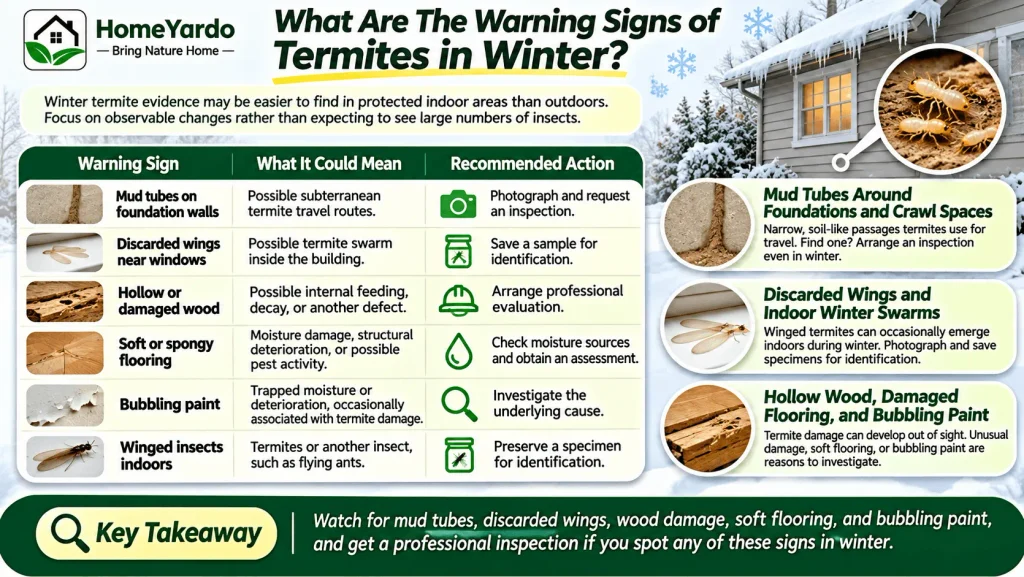
Winter termite evidence may be easier to find in protected indoor areas than outdoors.
Because active colonies often remain concealed, homeowners should focus on observable changes rather than expecting to see large numbers of insects.
| Warning Sign | What It Could Mean | Recommended Action |
|---|---|---|
| Mud tubes on foundation walls | Possible subterranean termite travel routes | Photograph and request an inspection |
| Discarded wings near windows | Possible termite swarm inside the building | Save a sample for identification |
| Hollow or damaged wood | Possible internal feeding, decay, or another defect | Arrange professional evaluation |
| Soft or spongy flooring | Moisture damage, structural deterioration, or possible pest activity | Check moisture sources and obtain an assessment |
| Bubbling paint | Trapped moisture or deterioration, occasionally associated with termite damage | Investigate the underlying cause |
| Winged insects indoors | Termites or another insect, such as flying ants | Preserve a specimen for identification |
Mud Tubes Around Foundations and Crawl Spaces
Subterranean termites build protective shelter tubes using soil particles and other materials.
These narrow, soil-like passages can appear on concrete foundations, masonry surfaces, crawl space supports, and other locations between soil and accessible wood.
Finding a mud tube is a significant reason to arrange an inspection, even during cold weather.
However, an existing tube does not independently establish that termites are currently using it. A professional can evaluate activity and determine whether treatment is necessary.
Avoid destroying suspected tubes before they can be examined.
Discarded Wings and Indoor Winter Swarms
Termite swarming usually occurs during warmer periods, with timing varying by species and location.
However, winged termites can occasionally emerge inside warm, infested structures during winter.
Discarded wings on windowsills or around interior light sources may be evidence of a swarm.
Flying ants can look similar, so identification matters.
If you discover winged insects indoors, photograph them and save a few specimens in a sealed container for a pest professional.
Do not assume that insects appearing indoors during winter are harmless simply because outdoor temperatures are low.
Hollow Wood, Damaged Flooring, and Bubbling Paint
Termite damage can develop out of sight. Interior galleries may weaken wood before the full extent of the problem becomes visible.
Possible symptoms include unusual surface damage, weakened trim, hollow areas, or flooring that no longer feels firm.
Bubbling paint and sticking doors are less specific. They can also result from condensation, water intrusion, humidity changes, or structural movement.
Treat these symptoms as reasons to investigate, not as confirmation of an infestation.
What Should You Do if You Find Termites During Winter?
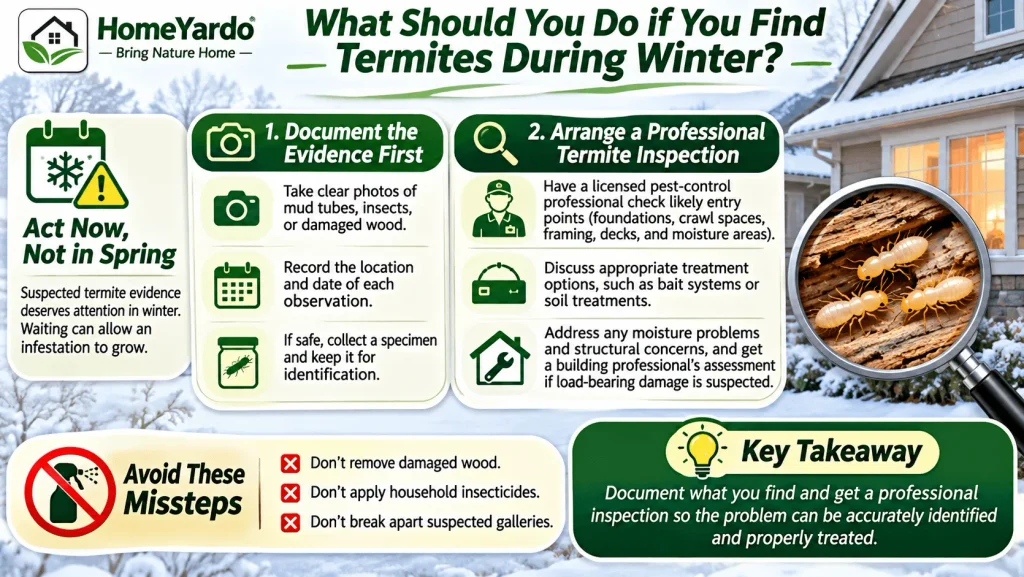
Suspected termite evidence deserves attention regardless of the season.
Waiting for spring can allow an established infestation to remain undetected, particularly when the colony has access to favorable conditions inside or beneath the structure.
The appropriate response depends on the evidence found, the termite species, the extent of any damage, and the home’s existing treatment history.
Document the Evidence Before Disturbing It
Take clear photographs of suspicious mud tubes, insects, damaged wood, or other unusual conditions.
Record the location and date of each observation.
If you can safely collect a specimen, keep it for identification.
Avoid removing damaged wood, applying household insecticides, or breaking apart suspected galleries before a qualified professional has inspected them.
These actions may make the original evidence harder to evaluate without addressing the underlying colony.
Arrange a Professional Termite Inspection
A licensed pest-control professional can examine likely entry points, determine whether evidence is consistent with termites, and recommend an appropriate response.
Depending on the property, an inspection may include accessible foundations, crawl spaces, wooden framing, decks, moisture-prone areas, and previous treatment locations.
Treatment options may include bait systems or appropriately applied soil treatments, depending on termite species, site conditions, and local regulations.
An inspection should also identify moisture problems and structural concerns that require separate repairs.
If damage affects load-bearing components, a qualified building professional may be needed to assess their safety.
Winter Termite Prevention Checklist for Homeowners
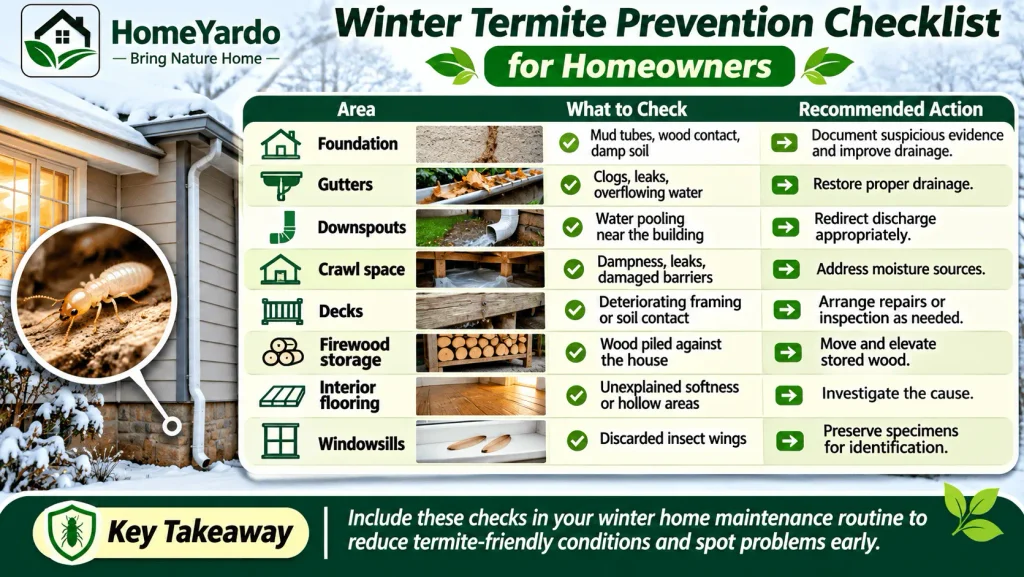
Termite prevention works best when it becomes part of ordinary home maintenance.
Homeowners already inspecting gutters, repairing leaks, and preparing outdoor spaces for cold weather can include termite-related checks without creating an entirely separate maintenance routine.
Use this checklist during a safe winter walkaround.
| Area | What to Check | Recommended Action |
|---|---|---|
| Foundation | Mud tubes, wood contact, damp soil | Document suspicious evidence and improve drainage |
| Gutters | Clogs, leaks, overflowing water | Restore proper drainage |
| Downspouts | Water pooling near the building | Redirect discharge appropriately |
| Crawl space | Dampness, leaks, damaged barriers | Address moisture sources |
| Decks | Deteriorating framing or soil contact | Arrange repairs or inspection as needed |
| Firewood storage | Wood piled against the house | Move and elevate stored wood |
| Interior flooring | Unexplained softness or hollow areas | Investigate the cause |
| Windowsills | Discarded insect wings | Preserve specimens for identification |
Homeowners who want to combine these checks with other seasonal tasks can follow HomeYardo’s guide to seasonal pest checks.
These maintenance steps can reduce favorable conditions for termites, but they cannot guarantee that an infestation will not occur.
Where subterranean termite risk is significant, professional monitoring or preventive treatment may be appropriate.
Final Takeaway
Cold weather may reduce visible termite activity outdoors, but it does not guarantee that termites have stopped feeding.
Subterranean colonies can remain active in protected soil and heated structures, especially where moisture and accessible wood provide favorable conditions.
The practical response is to keep termite awareness on the winter maintenance checklist. Inspect accessible foundations, manage drainage, repair leaks, and watch for mud tubes, discarded wings, or unexplained wood damage.
If you discover suspicious evidence, document it and contact a licensed pest professional rather than waiting for spring.
A small amount of attention during winter can help identify hidden problems before they become more expensive repairs.
Frequently Asked Questions
Yes. Freezing temperatures can reduce termite activity near the surface, but subterranean colonies may remain active deeper underground or near heated structures where conditions are more suitable.
Subterranean termites do not undergo a conventional seasonal hibernation. Their movement and feeding patterns respond to temperature and moisture, so activity may decrease without stopping completely.
There is no single outdoor temperature that guarantees all termites in a colony will die or stop feeding. Soil temperatures, exposure duration, shelter, and local conditions all affect survival and activity.
Yes. Termites may continue feeding on accessible wooden materials during winter when suitable conditions exist. Hidden damage can develop even when no insects are visible outdoors.
Winter swarming is uncommon for many subterranean termite species, but swarms can sometimes occur inside warm, infested buildings. Winged insects or discarded wings indoors should be professionally identified.
Subterranean termites may move into deeper, warmer soil or remain in protected areas with suitable temperatures and moisture. Their exact movements depend on local conditions and the colony.
A heated building can provide conditions that support termite activity during cold weather. However, heating alone does not attract or create an infestation. Moisture, access, and an existing colony are also important.
Look for mud tubes along accessible foundations, discarded wings, damaged wood, and unusual signs of deterioration. These clues require professional evaluation because other problems can produce similar symptoms.