How To Evaluate A Backyard’s Potential Before Making An Offer
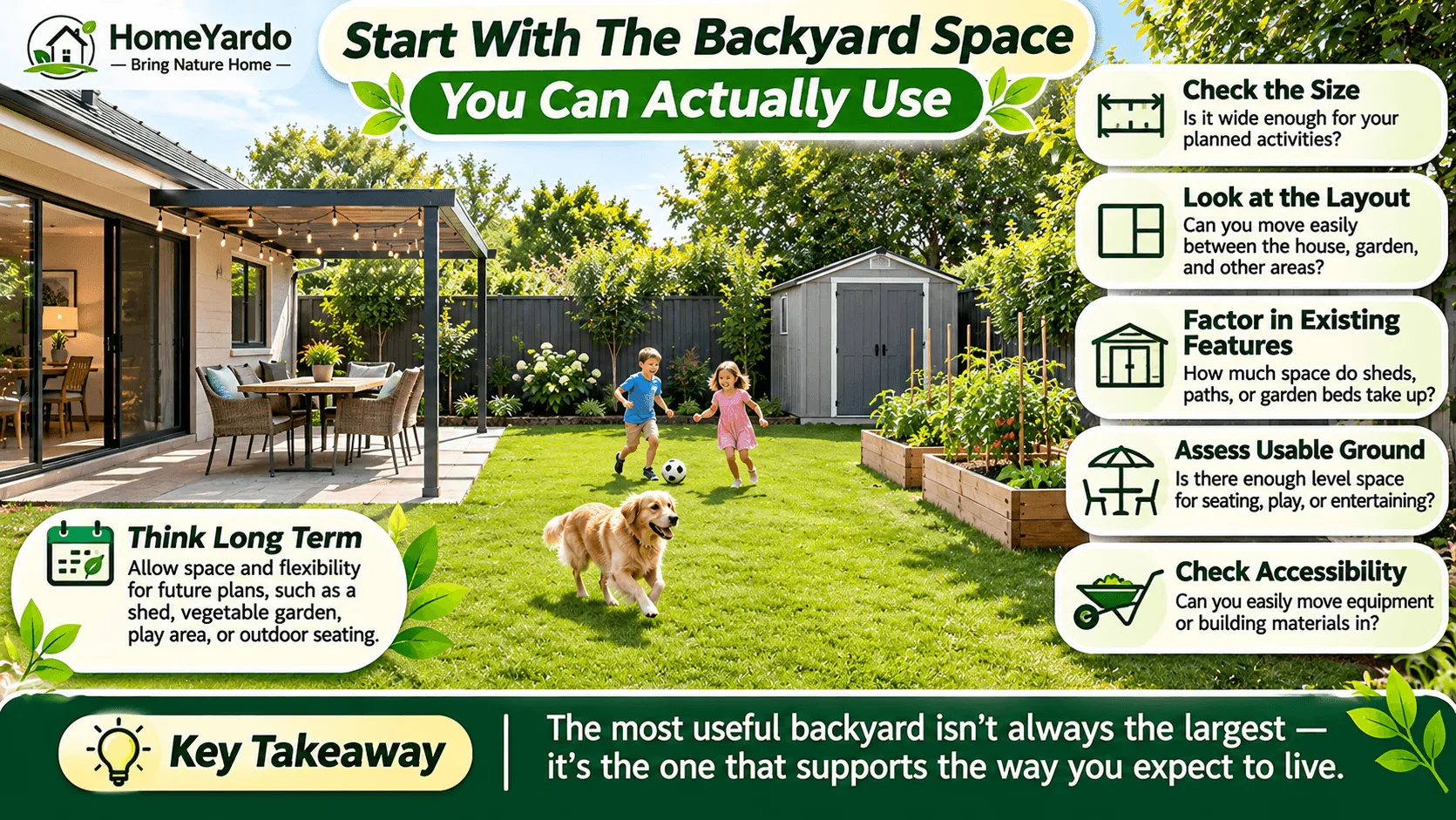
A backyard can look perfect in property listing photos but turn out to be difficult or expensive to use. Fresh grass might hide drainage problems, wide-angle photography can make a small garden look larger, and a beautiful outdoor space may have restrictions that limit what you can build.
Knowing how to evaluate a backyard before buying a home helps you look beyond appearances. You need to consider usable space, sunlight, privacy, ground conditions, legal restrictions, and the cost of any improvements you have in mind.
For buyers in Melbourne and across Victoria, these checks can help identify problems before they become expensive surprises.
The goal isn’t necessarily to find a flawless backyard. It’s to understand what you’re buying, how well the outdoor space suits your lifestyle, and whether your plans are realistic.
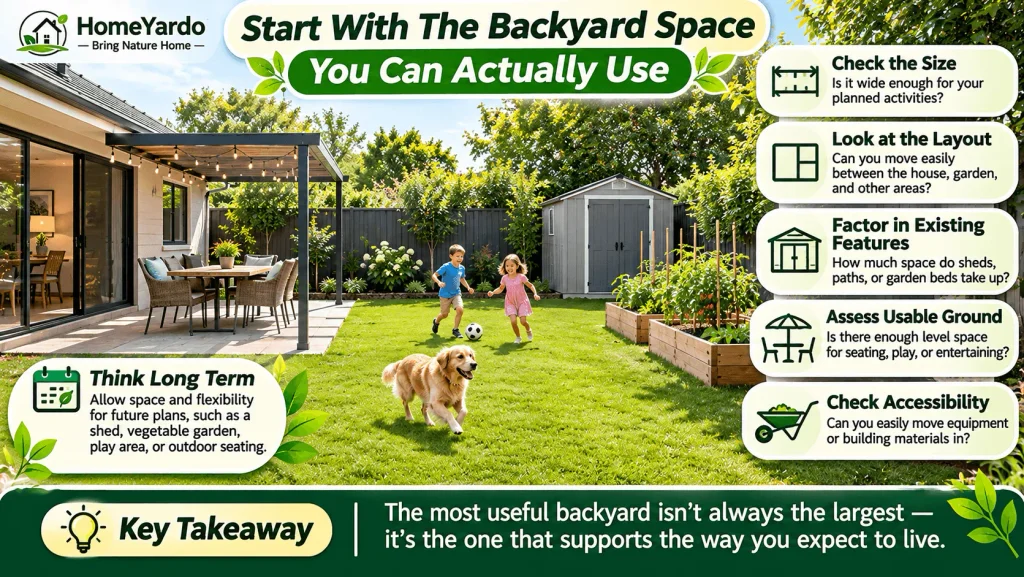
Start With The Backyard Space You Can Actually Use
A property’s advertised land size doesn’t tell you how much usable outdoor space you’ll have. A large block might have a steep slope, narrow side access, established garden beds, or structures that leave surprisingly little room for everyday activities.
When inspecting the backyard, think about what you want to do there rather than focusing only on its appearance.
Assess the Layout and Usable Garden Area
Imagine stepping outside the back door on an ordinary weekend.
Could you comfortably fit an outdoor dining table without pushing the chairs against a fence? Would children have somewhere safe to play? Is there enough space for a dog to move around or for a vegetable garden that receives adequate sunlight?
Consider these practical questions:
- Is the backyard wide enough for your intended activities?
- Does the layout allow easy movement between the house and garden?
- How much space is occupied by sheds, pathways, garden beds, or existing structures?
- Is there enough level ground for seating, play equipment, or outdoor entertaining?
- Can you move equipment or building materials into the backyard without difficulty?
A long, narrow garden may offer plenty of total area but limited room for a patio. A smaller, well-shaped backyard might provide more usable space.
If outdoor dining is a priority, understanding the difference between a porch and patio can also help you decide which arrangement suits the property.
Consider How Your Needs May Change
Think beyond how you intend to use the space immediately after moving in.
You might want to add a shed, establish a vegetable garden, create a play area, or install outdoor seating in the future. Each of these plans requires suitable space and, in some cases, additional access or approvals.
A backyard that works for your current lifestyle should ideally offer enough flexibility to accommodate reasonable changes.
The most useful outdoor area isn’t always the largest. It’s the one that supports the way you expect to live.
Check Sun, Shade, and Everyday Privacy
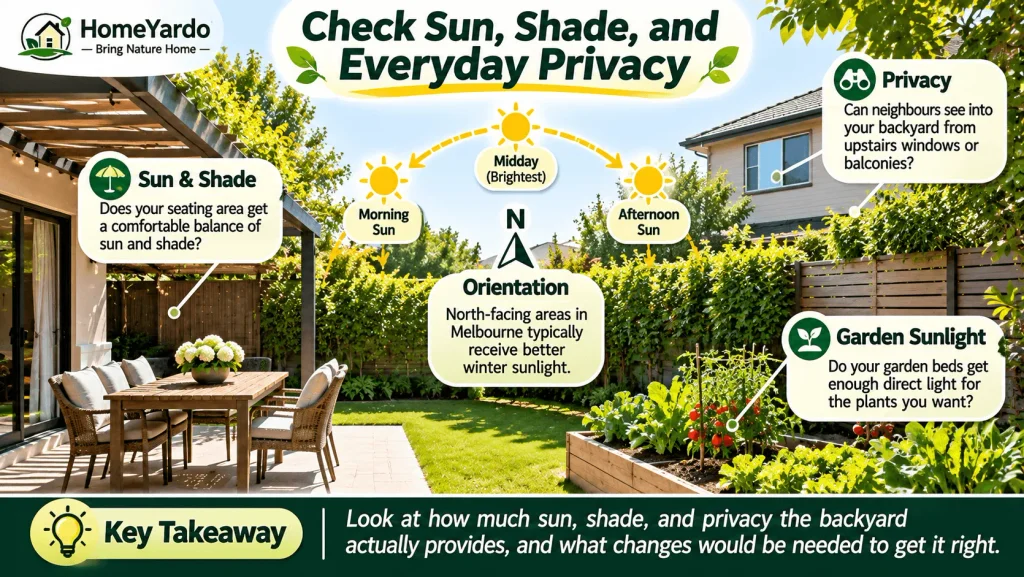
Sunlight can make a significant difference to how comfortable and practical a backyard feels throughout the year.
A garden that looks bright during a midday inspection might be shaded by neighbouring buildings in the afternoon. Conversely, an exposed paved area may become uncomfortable during Melbourne’s warmer months.
Understand the Backyard’s Sunlight and Orientation
In Melbourne, north-facing outdoor areas generally receive better access to winter sunlight because the sun travels across the northern part of the sky.
However, orientation alone doesn’t guarantee good sunlight.
Neighbouring houses, tall fences, trees, and other structures can create substantial shade.
If possible, visit the property at different times of day and consider:
- Where the sun falls during the morning and afternoon
- Whether your preferred outdoor seating area receives comfortable shade
- How nearby buildings affect winter sunlight
- Whether garden beds receive enough direct light for the plants you want to grow
- Whether exposed paving could become excessively hot in summer
If you hope to grow vegetables or flowering plants, remember that different species have different sunlight requirements.
Evaluate Privacy From Neighbouring Properties
Privacy is another factor that can be difficult to judge from listing photographs.
Stand where you would place your outdoor table or lounge chairs and look towards neighbouring properties.
Can people see directly into the backyard from upstairs windows? Are nearby balconies overlooking the space? Would you feel comfortable spending time outside?
Fencing, screening plants, or a pergola may improve privacy, but these additions take up space and can require approval.
These details are especially relevant when viewing prestige properties, where outdoor entertaining areas and privacy expectations may be particularly important.
A luxury buyers agent from Buyer’s Advocate can assist you in understanding these concepts when looking at a prestige home.
The important question is whether the backyard already provides the privacy you want or whether achieving it would require significant changes.
Look Below The Lawn For Drainage And Ground Problems
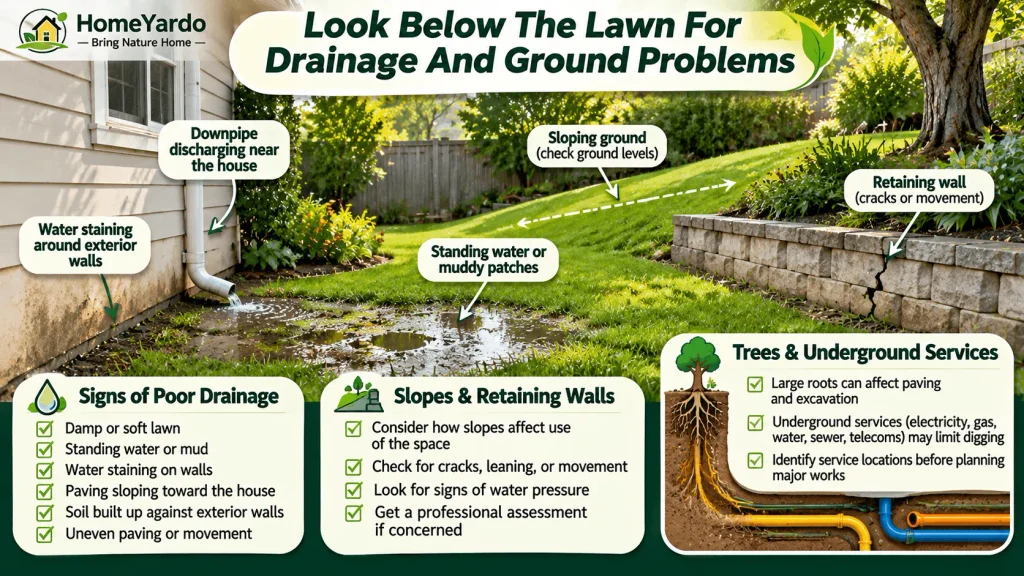
Fresh turf and well-maintained garden beds can make a backyard look appealing, but they don’t necessarily reveal what is happening beneath the surface.
Poor drainage, unstable ground, and difficult slopes can affect how you use the space and how much future improvements might cost.
Look for Signs of Poor Drainage
Walk around the garden and pay attention to areas where water might collect.
Warning signs include:
- Damp or unusually soft sections of lawn
- Standing water or persistent muddy patches
- Water staining around exterior walls
- Paving that appears to slope towards the house
- Soil built up against exterior walls
- Downpipes that discharge water near the building
- Uneven paving or evidence of ground movement
These signs don’t automatically indicate a serious defect. However, they can suggest that further investigation is needed.
If possible, inspect the property after rainfall or ask about previous drainage problems.
Also consider where water travels during heavy rain. A backyard that directs surface water towards the house may require drainage improvements.
A visual inspection cannot establish the condition of underground drainage or confirm that the property’s stormwater system meets applicable requirements. If you notice concerning signs, engage an appropriately qualified professional.
Assess Slopes, Retaining Walls, and Ground Levels
A sloping backyard can be attractive, particularly when it creates different garden levels. However, substantial changes in elevation may restrict how the space can be used.
For example, creating a level play area might require excavation, retaining walls, drainage work, and safe access between levels.
Existing retaining walls deserve attention too. Look for leaning, cracking, movement, or signs of water pressure behind the wall.
A structural engineer or other suitably qualified professional should assess significant concerns before you commit to the property.
A garden that needs extensive earthworks may still be worth buying, but those costs belong in your purchasing calculations.
Check Trees and Underground Services
Established trees can provide shade, privacy, and character, but their roots and location may affect future construction.
Large roots can interfere with paving and limit excavation options. Underground electricity, gas, water, sewer, and telecommunications infrastructure can also restrict where you can safely dig.
Before planning a major backyard project, identify the likely location of buried services and obtain appropriate utility information.
HomeYardo’s guide to protecting your yard from buried utility surprises explains why underground infrastructure should be considered before excavation begins.
Healthy plants and attractive landscaping are not proof that a site is suitable for a pool, studio, or extensive structural work.
Find Out What You Can Legally Change
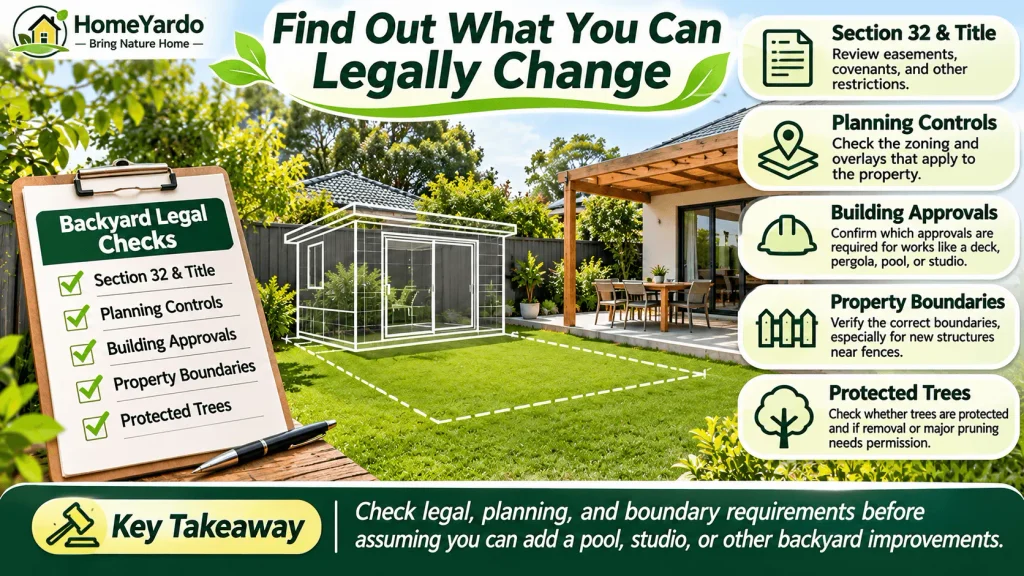
A spacious backyard does not automatically give you permission to build whatever you want.
Property boundaries, easements, planning controls, and building requirements can affect whether your proposed improvements are possible.
For buyers in Victoria, checking these restrictions before making an offer can prevent expensive disappointments.
Review the Section 32 Statement and Property Title
The Section 32 vendor’s statement provides important information about the property, including matters such as easements, covenants, zoning, and other disclosed title-related issues.
Ask your conveyancer or legal practitioner to review it alongside the title and plan of subdivision.
Pay particular attention to restrictions that could affect your backyard plans.
An easement might run through an area where you want to install a pool, garden room, or other permanent structure.
A restrictive covenant may also limit certain changes, depending on its wording.
Remember that a Section 32 statement does not establish whether the backyard is physically suitable for your proposed construction. That requires separate investigation.
Check Planning Controls and Building Approvals
Before assuming you can build a deck, pergola, pool, or backyard studio, check which approvals may be required.
Victoria’s planning property report can help identify the planning zone and overlays affecting a property.
These may relate to heritage, environmental protection, vegetation, flood risk, or other planning considerations.
However, a planning report does not replace advice from the relevant council or establish that a particular project will be approved.
Contact the local council and, where appropriate, a registered building practitioner to understand the planning and building requirements associated with your intended works.
Confirm Boundaries and Protected Trees
Existing fences do not always sit exactly on legal property boundaries.
If your backyard is small or a proposed structure would sit close to a boundary, a licensed surveyor can help establish where the boundaries are located.
Mature trees also deserve attention.
Some trees may be protected under local planning controls or other applicable rules. Their removal or significant pruning may require permission.
Before buying a property with plans to remove trees or build near them, establish whether those changes are permitted.
The last thing you want is to purchase a home based on an improvement that cannot legally proceed.
Put A Realistic Price On Your Backyard Plans
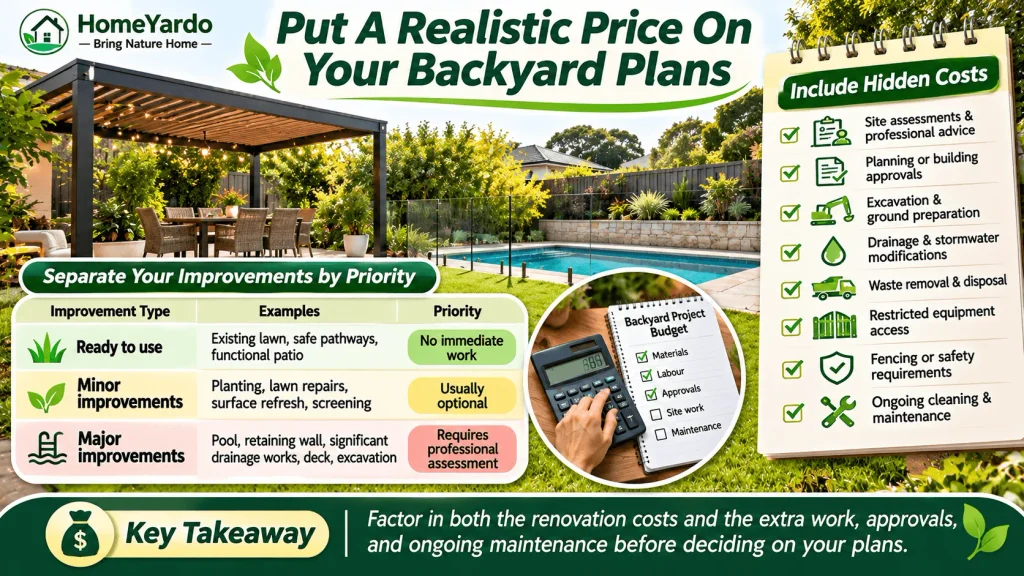
It’s easy to imagine backyard improvements on how we want to improve our backyards, but the reality of cost is sometimes overwhelming.
An attractive renovation idea can become a significant expense when excavation, drainage, access, labour, and approvals are involved.
Before making an offer, separate the backyard’s existing features from the improvements you would need to make.
Separate Essential Work From Optional Upgrades
A simple way to assess the property is to divide potential improvements into three groups.
| Improvement type | Examples | Priority |
|---|---|---|
| Ready to use | Existing lawn, safe pathways, functional patio | No immediate work |
| Minor improvements | Planting, lawn repairs, surface refresh, screening | Usually optional |
| Major improvements | Pool, retaining wall, significant drainage works, deck, excavation | Requires professional assessment |
This distinction helps you understand whether the backyard is already suitable for your needs or depends on substantial work.
If you want to add an outdoor entertaining area, review different designs before choosing one. A luxury pergola may suit some gardens, but the available space, sunlight, structural requirements, and budget should determine whether it is practical.
Include Hidden Costs In Your Budget
The price of the finished installation is only part of the project budget.
Depending on the work, you may also need to allow for:
- Site assessments and professional advice
- Planning or building approvals
- Excavation and ground preparation
- Drainage and stormwater modifications
- Waste removal and disposal
- Restricted equipment access
- Fencing or safety requirements
- Ongoing cleaning and maintenance
For major improvements, seek quotes from appropriately qualified professionals rather than relying on broad online estimates.
A narrow accessway, difficult soil conditions, or extensive excavation can change the cost of an otherwise straightforward project.
Also distinguish between work that makes the backyard usable and upgrades that would simply make it more enjoyable.
A new pool may be optional. Fixing significant drainage problems that threaten the home’s condition is a different matter.
Decide What Needs Resolving Before You Make an Offer
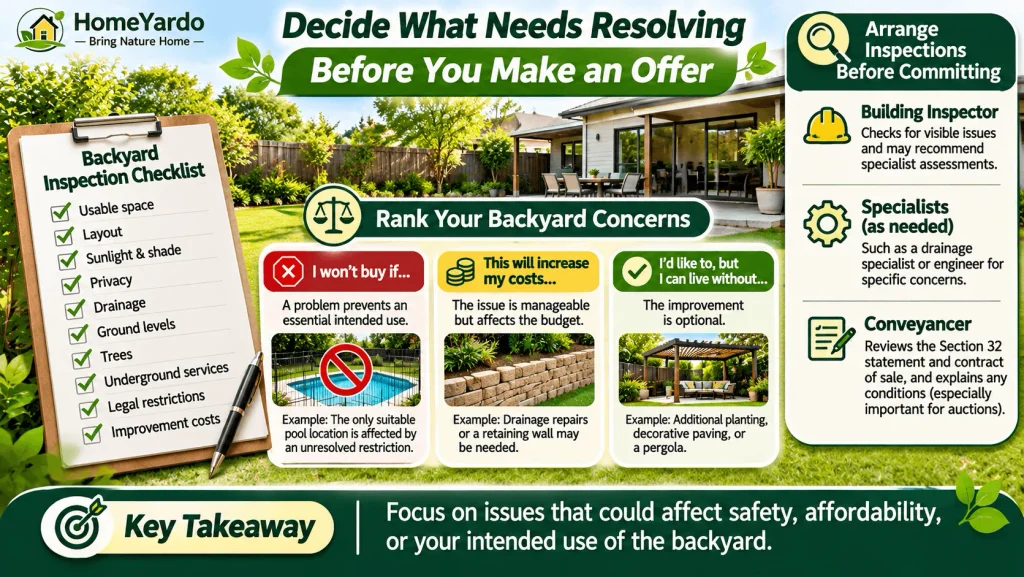
Once you’ve assessed the space, sunlight, ground conditions, legal restrictions, and potential costs, you should have a clearer picture of what you’re buying.
The next step is deciding which concerns could change your offer or stop you from purchasing the property altogether.
Rank Your Backyard Concerns
Place your findings into three categories.
| Decision category | What it means | Example |
|---|---|---|
| I won’t buy if… | A problem prevents an essential intended use | The only suitable pool location is affected by an unresolved restriction |
| This will increase my costs… | The issue is manageable but affects the budget | Drainage repairs or a retaining wall may be needed |
| I’d like to, but I can live without… | The improvement is optional | Additional planting, decorative paving, or a pergola |
This approach can help separate serious problems from features that would simply be nice to have.
A backyard doesn’t need to satisfy every preference. It does need to be workable within your budget and purchasing priorities.
Arrange Inspections Before Committing
If you identify concerns involving drainage, structures, soil movement, or retaining walls, consider obtaining an independent professional inspection.
A building inspector may identify visible defects and recommend further assessment by a drainage specialist, engineer, or other professional.
Your conveyancer should also review the Section 32 statement and contract of sale before you sign.
This is particularly important when buying at auction in Victoria.
Auction purchases generally do not provide a cooling-off period, and buyers cannot assume they will be able to add finance or inspection conditions after a successful bid.
For private sales, speak to your conveyancer about whether appropriate conditions can be negotiated before signing.
Use a Backyard Inspection Checklist
Take this checklist with you when inspecting a property. It can help you remember concerns that are easy to overlook during a busy open home.
| What to check | Question to ask |
|---|---|
| Usable space | Can the backyard accommodate my planned activities? |
| Layout | Are the dimensions and access points practical? |
| Sunlight | Will the important areas receive suitable sun and shade? |
| Privacy | Are neighbouring windows or balconies overlooking the garden? |
| Drainage | Are there signs of pooling water or moisture problems? |
| Ground levels | Will slopes or retaining walls require work? |
| Trees | Could roots or tree protection affect future plans? |
| Underground services | Are there services or easements that limit excavation? |
| Legal restrictions | Have the title, Section 32, zoning, and overlays been reviewed? |
| Improvement costs | Do I have realistic estimates for essential work? |
You don’t need to resolve every cosmetic detail before buying. Focus on issues that could affect safety, affordability, or your intended use of the property.
Final Takeaway
Evaluating a backyard before making an offer is about understanding what the space can realistically provide, not simply deciding whether it looks attractive.
Consider usable area, sunlight, privacy, drainage, ground levels, legal restrictions, and the cost of future improvements.
A smaller, practical backyard may suit your lifestyle better than a larger block with expensive limitations.
When something looks concerning, get professional advice before committing to the purchase. A little investigation now can help you avoid buying a property that cannot support the outdoor space you want.
Frequently Asked Questions
Start by checking the usable area, layout, sunlight, privacy, drainage, slopes, and existing structures. Review property restrictions and estimate the cost of essential improvements. Arrange professional inspections when you notice signs of significant problems.
Look for standing water, soft ground, uneven paving, leaning retaining walls, overgrown trees, poor access, and limited usable space. Consider whether the backyard suits your everyday activities and future plans.
Possible signs include water pooling after rain, persistently wet soil, muddy areas, water staining, and paving that slopes towards the house. These signs warrant further investigation but do not establish the cause without professional assessment.
Yes. North-facing outdoor spaces in Melbourne generally receive more winter sunlight. However, surrounding buildings, trees, fences, and seasonal changes can significantly affect the actual light reaching a backyard.
No. Pool construction can be affected by available space, easements, planning controls, building requirements, underground services, and site conditions. Confirm feasibility and relevant approvals with the council and qualified professionals before relying on a proposed pool installation.
A Section 32 statement is a legal disclosure document provided by the seller. It includes information about matters such as easements, covenants, zoning, and property-related obligations. Buyers should have it reviewed by their conveyancer or legal practitioner before purchasing.
Many backyard improvements are possible, but the type of work determines whether approvals or specialist assessments are required. Projects involving structures, excavation, drainage changes, protected trees, or swimming pools may be subject to additional restrictions.
If possible, yes. A visit after rainfall may reveal water pooling, wet ground, or drainage patterns that were not visible during a dry inspection. A dry backyard does not necessarily indicate that the drainage system is functioning properly.