
A Denver Property Owner’s Guide to Public Adjusters and Insurance Claims
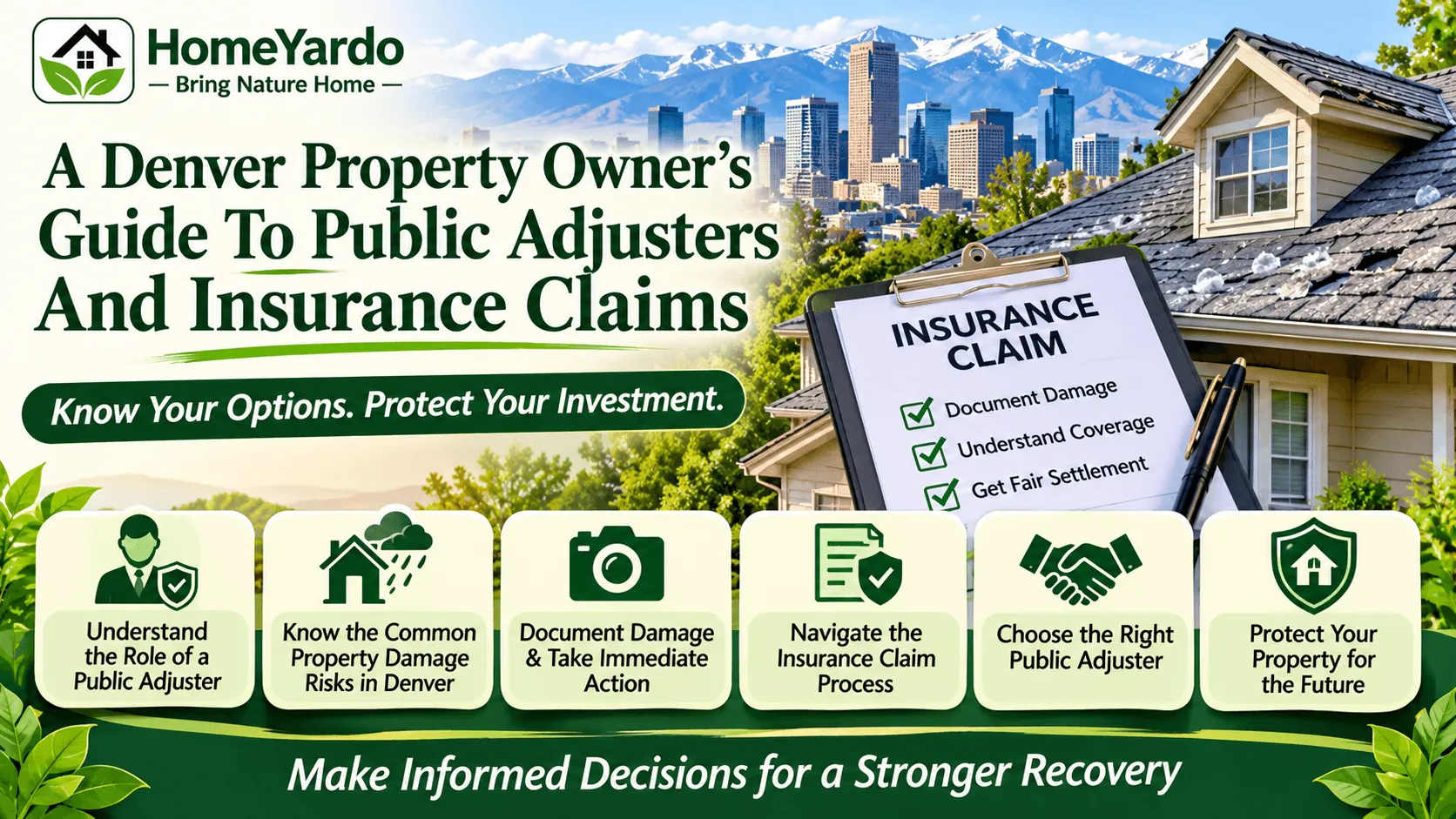
Owning property in Denver means preparing for more than routine maintenance. Hailstorms, strong winds, winter freezes, and unexpected water damage can leave homeowners and commercial property owners facing costly repairs. Insurance may help cover those losses, but understanding what a policy includes and how claims are evaluated can be challenging.
A public adjuster in Denver represents the policyholder during the property insurance claims process. Unlike an insurance company adjuster, who works for the insurer, a public adjuster helps the property owner document damage, prepare estimates, review coverage, and negotiate a claim settlement.
Not every claim requires professional representation. However, understanding when a public adjuster can help, how Colorado regulates these professionals, and what to expect from an insurance claim can make a difficult situation easier to manage.
Understanding the Role of a Public Adjuster
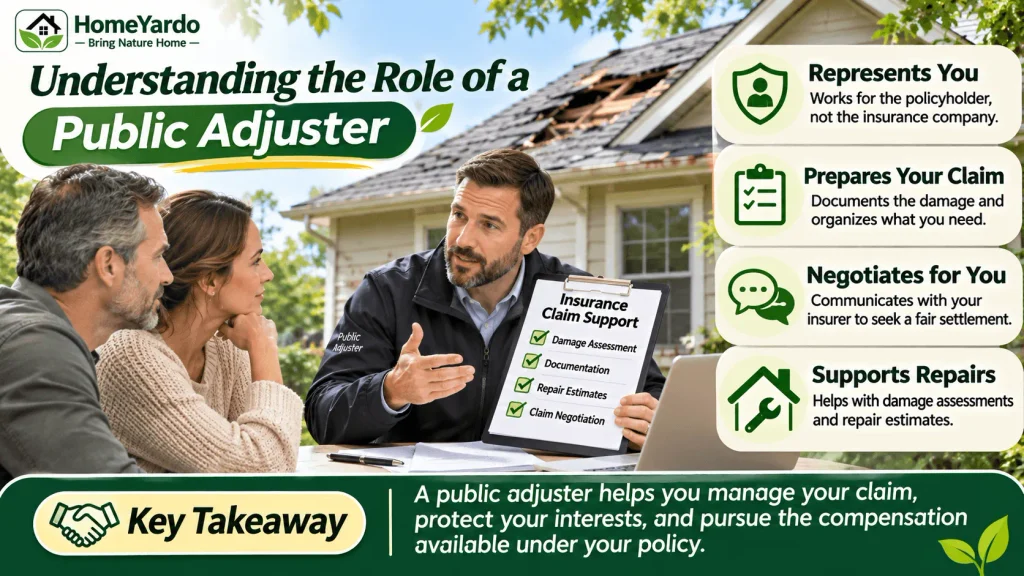
A public adjuster is a licensed insurance professional hired by a policyholder to assist with preparing, presenting, and negotiating a property insurance claim.
When damage occurs, an insurance company typically assigns an adjuster to investigate the loss. That adjuster evaluates the damage on behalf of the insurer.
A public adjuster has a different responsibility: representing the property owner’s interests within the terms of the insurance policy.
What Does A Public Adjuster Do?
A public adjuster’s responsibilities may include:
- Inspecting and documenting visible property damage.
- Reviewing relevant insurance policy provisions.
- Preparing repair estimates and supporting records.
- Identifying damage that may require further investigation.
- Communicating with the insurance company.
- Reviewing settlement calculations and disputed items.
- Assisting with supplemental claims when additional damage is discovered.
For homeowners managing extensive property damage, consulting a qualified public adjuster in Denver may provide additional support.
All City Adjusting, for example, offers services involving property damage assessments, claim documentation, estimates, and communication with insurance companies.
Professional representation does not guarantee claim approval or a higher settlement. Any payment remains subject to the policy’s coverage, exclusions, limits, and supporting evidence.
Public Adjuster vs. Insurance Company Adjuster
Understanding who represents whom is important before discussing a claim settlement.
| Type of Adjuster | Who They Represent | Primary Responsibility |
|---|---|---|
| Public adjuster | Policyholder | Prepare and negotiate claims on the owner’s behalf |
| Company adjuster | Insurance company | Investigate and evaluate claims for the insurer |
| Independent adjuster | Insurance company that hires them | Conduct assigned claims investigations for insurers |
An independent adjuster is not the same as a public adjuster. Although independent adjusters may work as contractors rather than employees, they represent the insurer that hires them.
Common Property Damage Risks In Denver

Denver’s weather conditions can create several types of property damage. Hail, wind, snow, freezing temperatures, and sudden water intrusion can affect residential and commercial buildings.
Recognizing these risks helps property owners document losses and determine when professional inspections may be necessary.
Hail and Roof Damage
Hailstorms can damage asphalt shingles, roofing membranes, gutters, siding, skylights, and windows.
Some damage is visible from the ground, while other problems require closer inspection. Property owners should avoid climbing onto potentially damaged roofs and use qualified roofing professionals when an inspection involves safety risks.
For additional repair planning, HomeYardo’s guide on what to know before replacing your roof explains when roof damage may justify replacement rather than isolated repairs.
Wind Damage
Strong winds can loosen roofing materials, damage fences, break windows, and cause falling branches to strike buildings.
Wind-driven rain may also enter through damaged or vulnerable exterior openings. Identifying the actual source of water intrusion matters because insurance coverage can depend on the cause of the damage.
Water Damage
Burst pipes, appliance failures, roof leaks, and plumbing problems can damage flooring, insulation, drywall, and electrical systems.
Insurance coverage depends on the source and circumstances of the water damage. Sudden accidental leaks may be treated differently from gradual seepage, neglected maintenance, sewer backup, or flooding.
Standard property insurance generally treats flood damage separately, and separate flood coverage may be necessary.
Snow and Ice Damage
Heavy snow accumulation, ice buildup, and freezing temperatures can contribute to roof problems, frozen pipes, and water intrusion.
However, not every winter-related loss qualifies for reimbursement. Policy exclusions, maintenance obligations, and the circumstances of the loss must be considered.
What to Do Immediately After Property Damage
The first actions after property damage should focus on personal safety, limiting additional losses, and preserving evidence.
Good documentation can make it easier for the insurance company to understand what happened and what repairs may be necessary.
Check for Immediate Safety Hazards
Before entering a damaged building, look for structural instability, exposed electrical components, standing water, or other dangerous conditions.
If the building may be unsafe, stay outside and contact the appropriate emergency service or qualified professional.
Do not attempt electrical work, structural repairs, or rooftop inspections without appropriate training.
Document the Damage
Once it is safe, take photographs and videos showing the affected areas.
Include wide-angle views of rooms and exterior surfaces, followed by close-up photographs of damaged materials.
Record the date of the event, the areas affected, and any immediate actions taken. Save relevant contractor reports, repair estimates, and receipts.
Prevent Additional Damage
Insurance policies generally require policyholders to take reasonable steps to prevent further damage after a loss.
Depending on the situation, this may involve shutting off the water supply, arranging emergency plumbing repairs, covering a damaged opening, or hiring a water-removal company.
Keep receipts and ask your insurer about reimbursement requirements.
Avoid permanent repairs that could interfere with the insurer’s investigation unless urgent conditions make them necessary.
Notify Your Insurance Company
Contact your insurer promptly and explain what happened.
Ask for a claim number, documentation instructions, inspection arrangements, and any applicable reporting deadlines.
Keep copies of all correspondence and record the dates of important conversations.
Preserve Damaged Materials
Do not discard damaged materials before documenting them and checking whether the insurer needs to inspect them.
If materials present a health or safety concern, follow appropriate cleanup guidance and retain photographs, invoices, and other evidence.
Quick checklist after property damage:
- Confirm the property is safe.
- Photograph and record visible damage.
- Take reasonable steps to prevent additional losses.
- Notify the insurer.
- Save emergency repair receipts.
- Keep damaged materials or supporting evidence when practical.
- Track claim communications and inspection dates.
Understanding The Property Insurance Claim Process
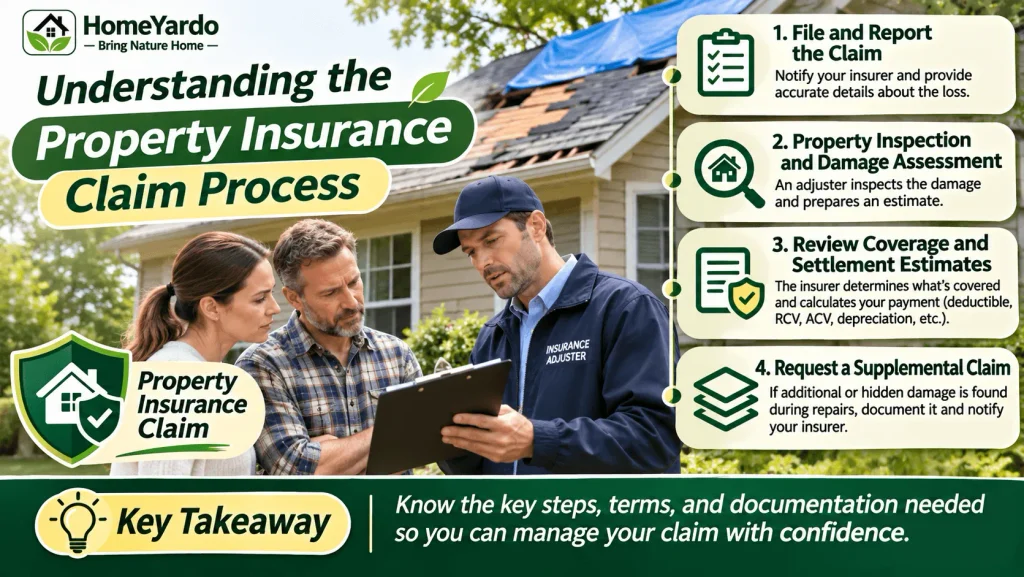
Most property insurance claims follow a similar sequence, although individual policies and the circumstances of a loss can change the requirements.
Understanding each stage helps property owners recognize when additional documentation or professional support may be necessary.
Filing and Reporting The Claim
The process begins when the property owner notifies the insurer of the loss.
The insurer may request information about the incident date, damage location, suspected cause, and immediate repairs.
Provide accurate information and avoid guessing about damage that has not yet been inspected.
Property Inspection and Damage Assessment
An insurance adjuster may visit the property to inspect affected areas, collect evidence, and prepare an estimate.
The property owner can also obtain assessments from qualified contractors.
For significant losses, detailed estimates may need to address repair materials, labor, building components, and related work.
Reviewing Coverage and Settlement Estimates
After investigating the loss, the insurer determines which damages are covered and calculates payment according to the policy.
Several terms may affect the settlement:
| Insurance Term | What It Means |
|---|---|
| Deductible | The portion of a covered loss the policyholder must pay under the policy |
| Replacement Cost Value (RCV) | The estimated cost to repair or replace covered property using comparable materials, subject to policy terms |
| Actual Cash Value (ACV) | A valuation that generally accounts for depreciation |
| Depreciation | A reduction in assessed value based on factors such as age and condition |
| Supplemental Claim | A request for additional consideration or payment supported by further damage information or repair costs |
Some replacement-cost policies initially pay an amount reflecting depreciation and release eligible recoverable depreciation after required repairs or replacement are documented.
The exact process depends on the policy.
Requesting a Supplemental Claim
Sometimes, hidden damage becomes apparent only after contractors begin repairs.
For example, removing storm-damaged roofing materials may reveal damaged decking or other concealed components.
If additional damage is discovered, document it and notify the insurer promptly. Ask whether another inspection or approval is required before the additional work proceeds.
Why Insurance Claims Sometimes Become Complicated
Property insurance claims can become difficult when repair estimates, coverage interpretations, or supporting documentation do not agree.
These disagreements do not automatically indicate misconduct. They may reflect differences in assessments, incomplete evidence, or genuine questions about policy terms.
Differences In Repair Estimates
A contractor may identify damaged components that were not included in the initial insurance estimate.
Differences can also arise over labor rates, material quantities, repair methods, and whether particular components must be replaced.
Property owners should request an itemized explanation of disputed estimates and provide supporting documentation when asking for reconsideration.
Coverage Exclusions and Limitations
Insurance policies distinguish covered losses from excluded conditions.
For example, sudden storm damage may be evaluated differently from gradual deterioration or long-term maintenance problems.
Owners should review the relevant policy language and ask the insurer to identify the provisions used when denying or limiting coverage.
Missing Documentation
Incomplete photographs, unclear loss descriptions, or missing contractor estimates can slow an investigation.
Keeping a claim file with repair records, inspection reports, correspondence, and receipts makes it easier to respond to requests.
Delayed or Disputed Claims
A claim may require additional inspections, technical reports, or clarification of repair costs.
If a disagreement remains unresolved, property owners can request a written explanation, submit additional evidence, review applicable policy dispute procedures, or consider assistance from a licensed public adjuster or qualified attorney.
When Should You Consider Hiring A Public Adjuster?
Hiring a public adjuster may be useful when property damage is extensive, the claim involves complicated documentation, or the policyholder disagrees with the insurer’s assessment.
However, a straightforward claim involving limited damage and a satisfactory settlement may not require paid representation.
Situations Where Professional Assistance May Help
Consider professional support when:
- The insurance estimate appears to omit damaged building components.
- Property damage affects multiple rooms or building systems.
- The cause or extent of the loss is disputed.
- A commercial property claim involves substantial repair costs or potential business interruption.
- Supplemental damage is discovered during repairs.
- The policyholder needs help organizing technical estimates and correspondence.
- The insurer has denied or partially approved a claim, and the policyholder wants the decision reviewed.
A public adjuster can review claim evidence and communicate with the insurer, but cannot change the policy’s terms or guarantee payment.
How Much Does A Public Adjuster Cost in Colorado?
Public adjusters commonly receive compensation based on a percentage of an insurance settlement, although other written compensation arrangements may be used.
The exact fee depends on the contract. Property owners should not assume there is one standard Colorado rate.
Before hiring an adjuster, ask:
- What percentage or fixed fee will apply?
- Does the fee apply to the entire settlement or only additional money recovered?
- Are inspection or other expenses charged separately?
- Will the adjuster be named as a co-payee on an insurance payment?
- What happens if the claim is denied or no additional money is recovered?
Understanding the fee calculation helps owners evaluate whether the potential service is worthwhile.
How To Choose The Right Public Adjuster in Colorado
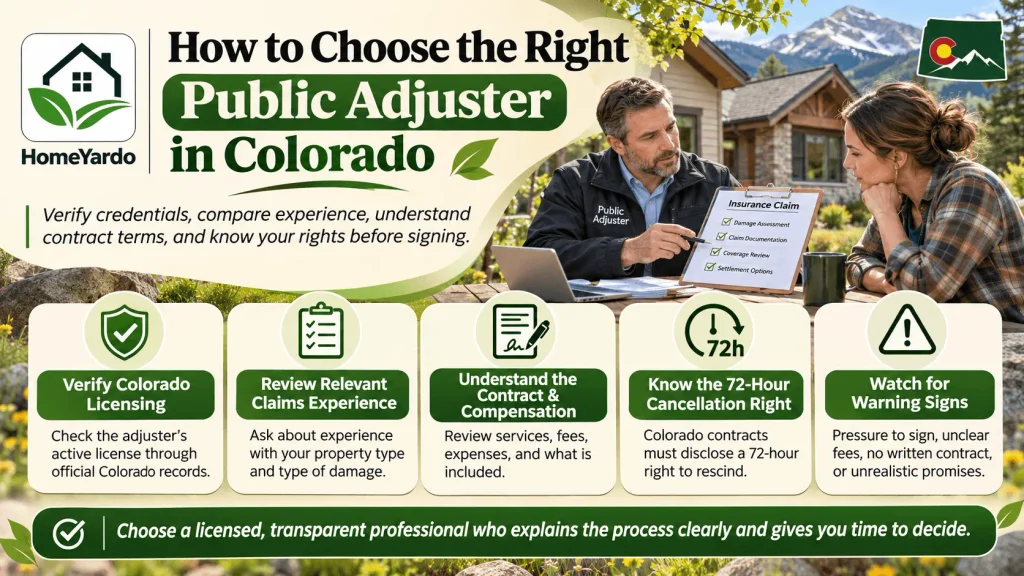
Colorado regulates public adjusters through licensing requirements and standards of conduct.
Property owners should verify credentials, review contract terms, and understand their rights before hiring someone to represent a claim.
Verify Colorado Licensing
Confirm that the individual holds an appropriate active license through the Colorado Division of Insurance.
Do not rely solely on website claims, marketing materials, or a company name.
Ask for the adjuster’s license number and verify that the information matches official records.
Review Relevant Claims Experience
Look for experience involving the specific property type and damage involved.
A professional who regularly handles residential hail claims may have different experience from someone who specializes in large commercial losses.
Ask how the adjuster documents damage, prepares estimates, and communicates with insurers.
Understand the Contract and Compensation
Colorado public-adjuster rules require written contracts containing specified information, including licensing details, services, compensation provisions, and cancellation rights.
Read the complete agreement before signing.
Check whether additional expenses require approval, how compensation is calculated, and which services are included.
Understand Colorado’s 72-Hour Cancellation Right
Colorado’s public-adjuster contract regulations provide a right to rescind the agreement within 72 hours after signing, subject to the applicable notice procedures.
The contract must disclose that right.
Owners should follow the written cancellation instructions and retain proof of delivery if they decide to cancel.
Colorado law also prohibits a public adjuster from agreeing to a loss settlement without the insured’s knowledge and consent.
Watch for Warning Signs
Be cautious of anyone who:
- Refuses to provide licensing information.
- Pressures you to sign immediately.
- Guarantees a specific insurance settlement.
- Cannot clearly explain fees.
- Encourages inaccurate or exaggerated damage claims.
- Refuses to provide a written contract.
A qualified professional should explain the claims process, responsibilities, and compensation without making unrealistic promises.
Protecting Your Property and Insurance Records for the Future
Preparation before a loss can reduce confusion when property damage occurs.
Although maintenance cannot prevent every weather-related incident, current records and regular inspections can help owners demonstrate the property’s condition before a claim.
Review Your Insurance Coverage Annually
Check policy limits, deductibles, exclusions, and replacement-cost provisions.
Denver property owners should pay particular attention to wind and hail deductibles, water-damage restrictions, and coverage for detached structures.
Contact an insurance professional if coverage terms are unclear.
Maintain a Property Inventory
Keep photographs of rooms, exterior areas, major appliances, and valuable belongings.
Store copies of purchase receipts, renovation records, and inspection reports when available.
Digital backups can help preserve documentation if the property itself is damaged.
Schedule Regular Property Inspections
Inspect roofing, drainage systems, plumbing, exterior openings, and other vulnerable components.
HomeYardo’s guide to roof maintenance decisions that can prevent costly repairs explains how regular upkeep can help property owners identify developing problems.
Keep Commercial Property Records Organized
Landlords and commercial building owners should maintain records of repairs, inspections, tenant communications, and significant maintenance work.
These documents may help distinguish pre-existing conditions from damage associated with a specific event.
Protecting Your Investment Through Informed Decisions
Property damage can create financial uncertainty for Denver homeowners, landlords, and commercial property owners. Understanding insurance coverage, preserving documentation, and reviewing settlement estimates are important steps in managing a claim.
A public adjuster may be useful when damage is extensive, documentation becomes complicated, or the insurer’s assessment is disputed. However, professional representation involves costs and does not guarantee a particular outcome.
By reviewing insurance policies, verifying professional credentials, and maintaining clear property records, Denver property owners can approach insurance claims with a better understanding of their options and responsibilities.
Frequently Asked Questions About Public Adjusters in Denver
A public adjuster represents a policyholder during the property insurance claims process. Their work may include inspecting damage, reviewing coverage, preparing estimates, documenting losses, and negotiating with an insurance company.
It depends on the claim’s complexity, the amount at stake, and the proposed fee. Professional assistance may be useful for extensive damage or disputed estimates, while straightforward claims may be manageable without an adjuster.
Yes. Colorado requires public adjusters to hold the appropriate license. Property owners should verify licensing through the Colorado Division of Insurance before signing a representation agreement.
Many public adjusters charge a percentage of the insurance settlement, although other arrangements are possible. The exact compensation and additional expenses should be stated in the written contract.
A public adjuster may review the denial, examine supporting evidence, and assist with claim reconsideration or negotiation. However, they cannot guarantee that the insurer will reverse its decision. Legal disputes may require an attorney.
Yes. Property owners can report losses, submit evidence, communicate with insurers, and negotiate claims themselves. Hiring a public adjuster is optional.
Colorado regulations provide a 72-hour rescission right after signing a public-adjuster contract. Property owners must follow the applicable written notice requirements and should retain proof that cancellation was submitted.
Many homeowners policies cover certain hail-related losses, but the amount payable depends on the policy’s terms, deductibles, exclusions, and damage assessment. Some policies have special wind or hail deductibles.