
Wind-Driven Rain vs. Roof Leaks: How to Tell the Difference and Why It Matters for Your Claim

Understanding wind-driven rain vs. roof leaks can help you identify why water has entered your home after a storm, determine what needs repairing, and better understand your homeowners insurance coverage.
After a major storm, most homeowners follow a familiar routine. They check their ceilings for stains, look for moisture around windows, and inspect the attic if it is safe to enter.
If you discover water inside your home, your first instinct might be to look for roof leak repair services. That is a reasonable response, but there is something worth understanding before deciding what needs fixing: water entering your home during a storm does not always mean the roof covering has failed.
Rain can enter through roof vents, soffits, window assemblies, siding joints, and other openings. It can also penetrate a roof that has been physically damaged by wind or hail.
Sometimes, both problems happen together.
Quick answer: Wind-driven rain occurs when wind pushes rainwater into vulnerable openings in a building. A roof leak occurs when water penetrates the roofing system through damaged, deteriorated, or improperly installed components. Wind-driven rain can also cause a roof leak. For insurance purposes, the actual entry point, cause of damage, and policy wording matter more than the label used to describe the problem.
What Is Wind-Driven Rain?

Wind-driven rain is rainfall that moves at an angle because of wind. Rather than falling mainly downward, the water can strike exterior walls, windows, roof edges, and other surfaces from the side.
Residential roofing and exterior wall systems are designed to manage rainwater. However, strong winds can create pressure differences and push water into openings that would receive little direct rainfall under calmer conditions.
There is no universal wind speed at which this type of infiltration begins. The amount of water entering a building depends on wind direction, rainfall intensity, building design, exposure, and the condition of exterior components.
Where Can Wind-Driven Rain Enter Your Home?
Common entry points include:
- Soffit vents beneath roof overhangs.
- Ridge vents and gable vents.
- Window and exterior door assemblies.
- Siding joints and wall penetrations.
- Roof-to-wall connections.
- Chimney and skylight flashing.
- Gaps around fascia and roof edges.
Research from the Insurance Institute for Business & Home Safety has examined how wind-driven rain can enter through roof sheathing joints and attic ventilation openings. These findings help explain why interior water damage can occur even when some exterior roofing components appear undamaged.
For example, rain may enter through an exposed gable vent during a storm and soak insulation near the attic wall. The resulting ceiling stain may look like a leaking shingle, even though the primary entry point is the vent.
Wind-driven rain is therefore a description of how water moves and enters a building. It does not automatically identify a roofing defect or establish whether the resulting damage is covered by insurance.
What Is a Roof Leak?

A roof leak occurs when water passes through the roofing assembly and reaches areas that should remain protected from moisture.
The problem may involve the roof covering, flashing, underlayment, roof penetrations, or another component responsible for directing water away from the building.
Some leaks develop gradually as materials age. Others begin suddenly when a storm damages the roof.
Common Causes of Roof Leaks
Several roofing problems can allow water to enter a home:
- Missing, cracked, or displaced shingles.
- Damaged flashing around chimneys and skylights.
- Deteriorated plumbing vent boots.
- Defective roof-to-wall flashing.
- Compromised underlayment.
- Damaged roof valleys.
- Improper installation or previous repairs.
- Punctures caused by falling branches or debris.
Repeated exposure to sun, temperature changes, wind, ice, and rainfall can also weaken roofing materials over time.
Homeowners can learn more about these gradual changes in HomeYardo’s guide to how harsh weather causes roof damage.
An important distinction is that a roof leak does not have to occur during every rainfall. Certain roofing defects only allow water inside during heavy rain, prolonged rainfall, or storms with wind coming from a particular direction.
That is why a roof that leaks only during storms should not automatically be classified as having wind-driven rain infiltration through an otherwise sound exterior.
Wind-Driven Rain vs. Roof Leaks: Key Differences
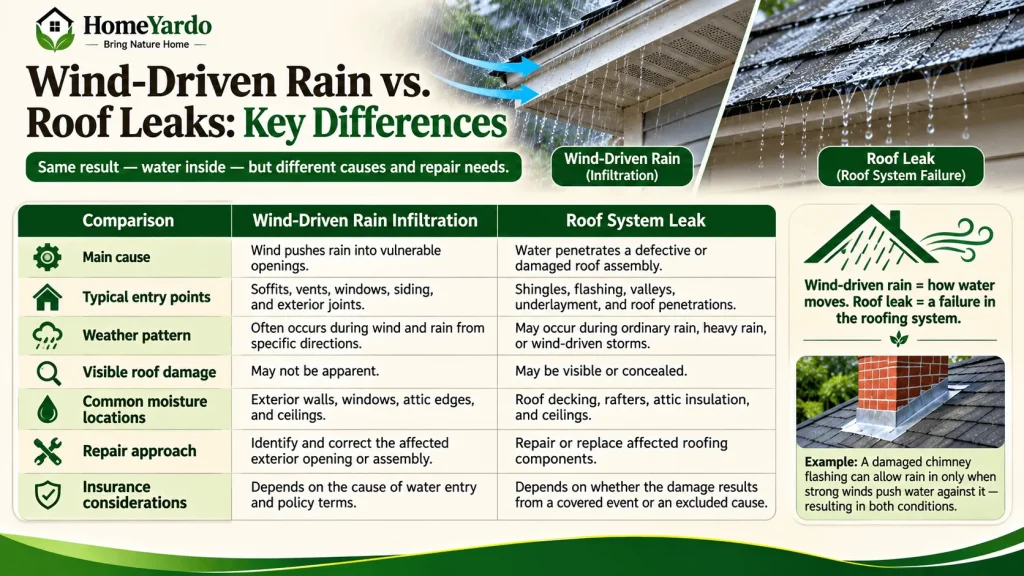
The easiest way to understand the difference is to separate the weather conditions from the path the water takes into the home.
Wind-driven rain describes the movement of rainwater. A roof leak describes a failure of the roofing assembly to keep water out. The two conditions can occur independently or together.
| Comparison | Wind-Driven Rain Infiltration | Roof System Leak |
|---|---|---|
| Main cause | Wind pushes rain into vulnerable openings | Water penetrates a defective or damaged roof assembly |
| Typical entry points | Soffits, vents, windows, siding, and exterior joints | Shingles, flashing, valleys, underlayment, and roof penetrations |
| Weather pattern | Often occurs during wind and rain from specific directions | May occur during ordinary rain, heavy rain, or wind-driven storms |
| Visible roof damage | May not be apparent | May be visible or concealed |
| Common moisture locations | Exterior walls, windows, attic edges, and ceilings | Roof decking, rafters, attic insulation, and ceilings |
| Repair approach | Identify and correct the affected exterior opening or assembly | Repair or replace affected roofing components |
| Insurance considerations | Depends on the cause of water entry and policy terms | Depends on whether the damage results from a covered event or an excluded cause |
These differences are useful starting points, not a substitute for a professional assessment.
For example, a damaged chimney flashing assembly may allow rain into the attic only when strong winds push water against the chimney. In that situation, the home has both a wind-driven rain exposure and a roof leak.
How to Tell Whether Water Is Coming From Wind-Driven Rain or a Roof Leak

The symptoms of both problems can look remarkably similar from inside a house. A ceiling stain, damp attic insulation, or peeling paint does not immediately reveal where the water entered.
Instead of relying on a single symptom, consider the location of the moisture, the weather conditions, and the condition of the surrounding exterior components.
1. Check Where the Moisture First Appears
Water appearing around a window frame, along an exterior wall, or near the edge of an attic may suggest that rain is entering through a nearby exterior opening.
Possible sources include window flashing, siding joints, soffits, or ventilation openings.
Moisture around roof decking, rafters, chimneys, or skylights may point toward a roofing-related entry point.
However, water does not always travel straight downward. It can run along framing, follow pipes, move behind walls, or spread through insulation before becoming visible.
A ceiling stain several feet from a chimney, for example, could still originate from damaged chimney flashing.
2. Consider Whether the Leak Requires Wind
Think about when the problem occurs.
If moisture appears only when rain strikes one side of the home during strong winds, an exposed vent, window assembly, or exterior wall connection deserves attention.
If water enters during ordinary rainfall without much wind, a roofing defect becomes more likely.
However, neither pattern is conclusive. A small roof defect may remain dry during light rain but leak when rainfall becomes heavy or wind changes the direction of water movement.
Keeping a short record of weather conditions when each leak occurs can help a contractor identify recurring patterns.
3. Look for Signs of Storm-Caused Roof Damage
Once the weather has cleared, inspect the roof from ground level.
Look for visible changes such as:
- Missing or lifted shingles.
- Displaced ridge caps.
- Loose or bent flashing.
- Damaged roof vents.
- Roofing fragments in the yard.
- Fallen branches or impact damage.
- Detached soffit or fascia sections.
These observations may indicate that the storm created a new water entry point.
An intact appearance does not rule out hidden damage. Roofing components can become loosened or compromised without producing an obvious opening that is visible from the ground.
For a more complete inspection checklist, see what to check after a storm hits your roof.
4. Examine the Timing and History of the Damage
Consider whether you have experienced moisture in the same location before.
A new stain that appears immediately after a documented storm is useful information. It establishes when you first noticed the problem, although it does not prove that the storm created the underlying defect.
Older stains, softened materials, previous patches, or signs of recurring dampness may suggest that moisture has been entering for some time.
If available, gather photographs from before the storm, roof inspection reports, maintenance records, and receipts from previous work.
These records can help establish the roof’s condition before the recent event.
5. Consider Other Sources of Water Intrusion
Not all ceiling moisture originates from rain.
Other possibilities include plumbing leaks, HVAC condensate problems, attic condensation, and water backing up behind blocked drainage systems.
If moisture appears during dry weather, remains present long after rainfall, or occurs beneath plumbing equipment, the investigation should extend beyond the roof.
A professional should identify the source before recommending permanent roofing repairs.
What If Your Roof Only Leaks During Heavy Rain and Wind?
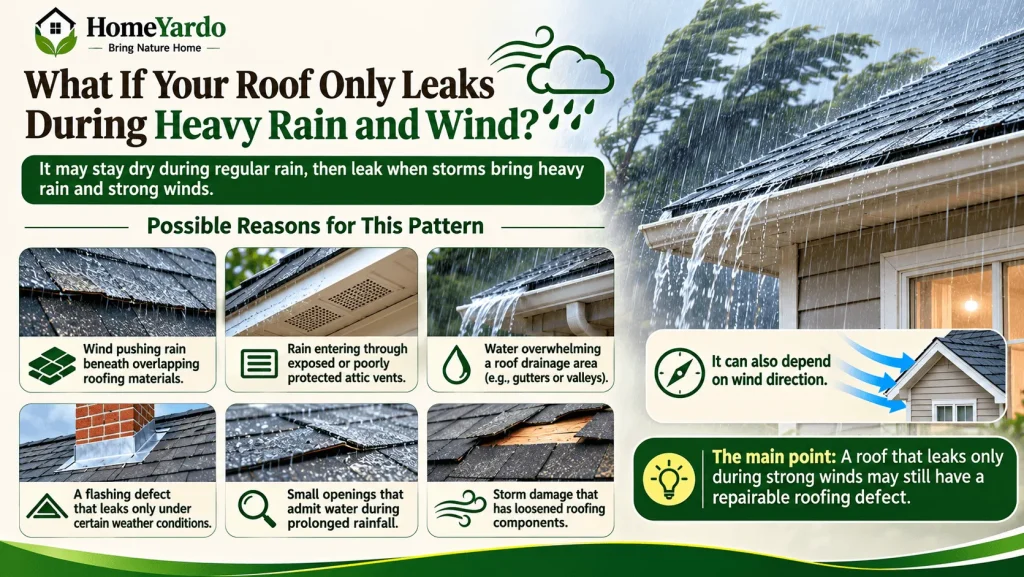
An intermittent roof leak can be particularly frustrating because the home may remain completely dry during several ordinary rainstorms.
Then, during one severe weather event, water suddenly appears.
This pattern can result from:
- Wind pushing rain beneath overlapping roofing materials.
- Rain entering through exposed or poorly protected attic vents.
- Water overwhelming a roof drainage area.
- A flashing defect that leaks only under particular weather conditions.
- Small openings that admit water during prolonged rainfall.
- Storm damage that has loosened roofing components.
The location of the moisture may also depend on wind direction.
For example, a house might experience water entry near a west-facing roof-to-wall connection during storms approaching from the west, while rainfall from another direction causes no visible problem.
The main point: A roof that leaks only during strong winds may still have a repairable roofing defect. The weather pattern provides a diagnostic clue, but the actual entry point determines the appropriate repair.
How Professionals Identify the Source of Storm-Related Water Intrusion
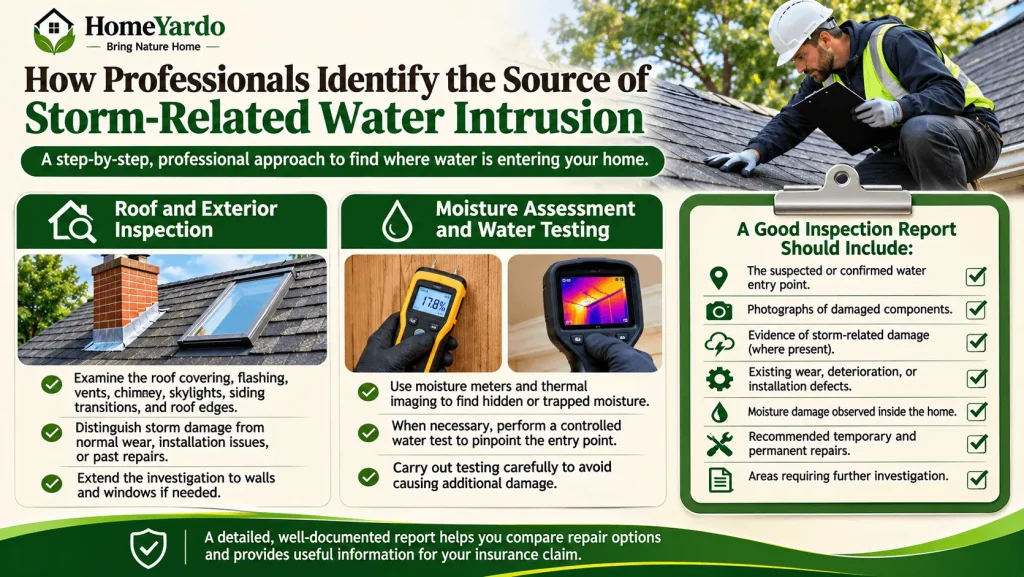
A roofing contractor or building-envelope specialist can investigate areas that are difficult for a homeowner to inspect safely.
The assessment should consider both the roofing system and nearby exterior components, particularly when the source of the leak is uncertain.
Roof and Exterior Inspection
A professional may examine the roof covering, flashing assemblies, ventilation openings, chimney connections, skylights, siding transitions, and roof edges.
The inspection should distinguish visible storm damage from deterioration, installation deficiencies, and evidence of previous repairs.
When water appears near an exterior wall or window, the investigation may need to extend beyond the roof itself.
Moisture Assessment and Water Testing
Moisture meters and thermal imaging may help identify areas of trapped moisture that are not immediately visible.
These tools can support an investigation, but they do not independently establish when a leak began or what caused it.
In some cases, a professional may use a controlled water test to isolate the affected area. The process involves testing selected exterior components in a planned sequence while observing where moisture appears inside.
Such testing should be performed carefully because adding water to an already damaged assembly can worsen the problem.
What Should a Written Inspection Report Include?
A useful report should identify the observations supporting the contractor’s findings, rather than simply state that the roof is leaking.
Ask for documentation of:
- The suspected or confirmed water entry point.
- Photographs of damaged components.
- Evidence of storm-related damage, where present.
- Existing wear, deterioration, or installation defects.
- Moisture damage observed inside the home.
- Recommended temporary and permanent repairs.
- Areas requiring further investigation.
The report should distinguish confirmed findings from professional opinions or unresolved questions.
This makes the assessment more useful when comparing repair estimates or discussing the damage with your insurance company.
Why the Difference Matters for Your Homeowners Insurance Claim

Homeowners insurance claims depend on more than the presence of water inside a building.
The insurer will generally consider the cause of the loss, the applicable coverage, exclusions, deductibles, and any policy endorsements.
Many U.S. homeowners insurance policies cover certain sudden losses caused by windstorms or hail. However, policies commonly exclude or limit losses caused by wear and tear, maintenance deficiencies, gradual deterioration, and certain forms of water intrusion.
The exact terms vary by insurer, policy type, and location.
Does Homeowners Insurance Cover Wind-Driven Rain?
Wind-driven rain may be covered when the loss meets the requirements of a homeowners insurance policy.
Some policies cover interior water damage resulting from a covered windstorm. Others require wind or hail to physically damage the roof or exterior wall and create an opening through which rain enters.
For example, if a storm tears shingles from a roof and rain enters through the damaged area, the resulting loss may qualify for coverage under the applicable policy.
If rain enters through an undamaged but poorly sealed window assembly, the coverage outcome may be different.
Neither situation should be treated as automatically covered or automatically excluded. The policy language and documented cause of loss determine the outcome.
What Is a Storm-Created Opening?
A storm-created opening is a breach in the roof or exterior wall that results from the physical force of a storm.
Examples may include:
- Roofing materials torn away by wind, allowing rainwater to enter.
- A tree branch puncturing the roof.
- Wind damage to a roof vent or exterior wall assembly.
- A window broken by storm-related debris.
Some insurance provisions require evidence that a covered event created an opening before the resulting interior rainwater damage is eligible for coverage.
The opening may be difficult to identify without a detailed inspection. A contractor’s photographs and observations can help establish whether storm-related physical damage exists.
How Pre-Existing Roof Conditions Affect Coverage
An older roof can still suffer new storm damage.
However, if an inspection identifies deteriorated flashing, worn roofing materials, or evidence of a long-standing leak, the insurer may need to distinguish the new damage from conditions that existed before the storm.
That distinction can affect which repairs are covered.
Consider these examples:
| Situation | Possible Insurance Consideration |
|---|---|
| Wind removes shingles, followed by rainwater entering the attic | May qualify as covered wind-related damage, subject to policy terms |
| Rain enters around an aging vent boot during an ordinary storm | Repair of the deteriorated component may be excluded as maintenance |
| Wind damages a soffit and rain enters through the new opening | Coverage may apply if the event meets policy requirements |
| Rain enters through an existing window gap without new storm damage | Coverage depends on rainwater exclusions and applicable policy terms |
| Long-term moisture damage becomes visible after a storm | The insurer may investigate whether the damage developed gradually |
| Rising floodwater enters the house from outside | Generally requires separate flood insurance coverage |
These examples illustrate common claim considerations. They do not predict the outcome of an individual insurance claim.
Is Wind-Driven Rain the Same as Flood Damage?
No. Wind-driven rain and flooding are different causes of water damage for insurance purposes.
Wind-driven rain enters through an opening in the building, while flooding generally involves water accumulating or rising on normally dry land and entering the property.
FEMA distinguishes rainwater entering through wind-damaged roofing from water damage directly caused by flooding.
Most standard homeowners policies do not cover flooding, and separate flood coverage may be necessary.
If a storm causes both roof damage and rising floodwater, the source of each part of the damage may need to be documented separately.
What to Do When Water Enters Your Home After a Storm

Once you discover water inside your home, focus on safety, preventing additional damage, and preserving useful evidence.
You do not need to determine the exact cause of the leak before taking reasonable steps to protect your property or contacting your insurer.
Step 1: Make Sure the Affected Area Is Safe
Keep people and pets away from sagging ceilings, exposed wiring, unstable materials, and areas where water has reached electrical equipment.
Do not enter an attic if the structure appears damaged, the access route is unsafe, or there is a risk of electrical exposure.
Never climb onto a wet or storm-damaged roof to search for an opening.
If the situation involves suspected structural failure or electrical hazards, seek appropriate emergency or professional assistance.
Step 2: Document the Damage
Photograph the affected rooms, visible stains, wet materials, and exterior damage from safe locations.
Useful documentation may include:
- Wide photographs showing the affected room.
- Close-up photographs of visible moisture damage.
- Images of damaged roofing or exterior components.
- The date and approximate time of the storm.
- The time you first noticed water entering.
- Available local weather reports.
- Previous roof inspections or maintenance records.
Photographs taken soon after the event can provide a useful record of the property’s condition before cleanup and repair.
For broader damage assessment beyond the roof, review HomeYardo’s guide to what gets damaged in a storm.
Step 3: Notify Your Insurance Company Promptly
If the damage may be covered, contact your insurance company or agent as soon as reasonably possible.
Ask about reporting requirements, documentation, emergency repairs, and whether the insurer needs to inspect the property before permanent work begins.
Do not delay notification simply because you are waiting for a contractor’s report. Some policies impose reporting obligations and deadlines.
You can arrange a roofing inspection and continue collecting documentation while the claim is being opened.
Step 4: Arrange Temporary Protection and Drying
Reasonable temporary measures may help limit further water intrusion while permanent repairs are being arranged.
Depending on the situation, this could include professional roof tarping, temporary weather protection, water extraction, or drying affected building materials.
Keep invoices and receipts for emergency work.
Avoid delaying necessary mitigation while waiting for an adjuster. At the same time, document the original damage and coordinate permanent repairs with your insurer whenever possible.
Water-damaged materials can also develop mold if they remain wet. Prompt drying and appropriate restoration may help reduce additional damage.
Step 5: Obtain a Written Professional Assessment
Ask a qualified contractor to identify the source of the water intrusion and document the affected roofing or exterior components.
A written assessment can help clarify whether the storm caused new physical damage, whether existing defects contributed to the problem, and what repairs are needed.
A roofing contractor can provide technical observations about the roof’s condition, but the contractor does not determine what your insurance policy covers.
Coverage questions should be directed to your insurer or a qualified insurance professional.
How to Reduce the Risk of Future Rainwater Intrusion

You cannot control the direction of the wind or the intensity of the next storm, but you can address exterior vulnerabilities before severe weather exposes them.
Consider arranging periodic roof inspections and checking the condition of flashing, vents, roof edges, window assemblies, gutters, and downspouts.
Damaged materials should be repaired using methods appropriate for the specific roofing or exterior wall system.
In areas that regularly experience hurricanes or severe windstorms, homeowners may also benefit from improved roof-deck sealing, wind-resistant roofing assemblies, and ventilation products designed to resist wind-driven rain.
Do not simply seal every attic ventilation opening. Roof ventilation has an important function in many homes, and modifications should be appropriate for the roof and attic design.
A practical maintenance plan can help identify small defects before they develop into expensive water damage. HomeYardo’s guide to roof maintenance decisions that can prevent costly repairs explains how regular attention to roofing components can reduce avoidable problems.
Final Takeaway
Water entering your home after a storm always deserves attention, but the first visible stain rarely tells the whole story.
Wind-driven rain can enter through vents, soffits, windows, walls, or roofing components. A roof leak may develop because of sudden storm damage, gradual deterioration, or an installation defect. Both conditions can also exist at the same time.
The best approach is to identify where the water entered, document the condition of the property, and arrange professional assessment when needed.
If you intend to file an insurance claim, report the damage promptly, preserve your records, and review the terms of your policy. Avoid assuming that all storm-related water damage is covered or that water entering through an apparently intact exterior is automatically excluded.
A clear understanding of the actual cause can help you arrange the right repairs and communicate more effectively with your contractor and insurer.
FAQ’s
Yes. Wind can push rain beneath roofing materials or into vulnerable flashing and ventilation openings. If the water penetrates the roofing assembly, it is a roof leak caused or exposed by wind-driven rain.
Yes. Water can enter through attic vents, soffits, flashing defects, roof-to-wall connections, or other openings even when the shingles appear intact.
Heavy rainfall can expose small flashing defects, overwhelm drainage areas, or allow water to penetrate vulnerable roofing components. Wind may also push water into areas that remain dry during lighter rain.
The location of the stain provides a clue, but water can travel through framing and wall cavities before becoming visible. Moisture inspection and examination of nearby roof and window assemblies may be needed to confirm the source.
It may cover damage resulting from a covered storm event, such as wind or hail. Leaks caused by gradual deterioration, neglected maintenance, or other excluded conditions may not qualify. Check your specific policy.
Sometimes. Coverage depends on the policy’s rainwater provisions, the cause of the loss, and whether a storm-created opening is required. An apparently undamaged roof does not independently establish whether coverage applies.
It is a policy provision that limits or excludes certain rainwater losses. Some policies require prior physical damage to the roof or exterior wall from a covered event before interior rain damage is covered.
Address immediate safety concerns and notify your insurer promptly if the damage may be covered. A roofing contractor can inspect the property and provide supporting documentation. Emergency protective work should not be unnecessarily delayed.
Yes. Water may collect in insulation, travel along framing, or remain concealed behind finished surfaces before visible staining or dripping appears. A delayed symptom does not establish the cause on its own.
A roofing contractor can document physical damage, identify likely water entry points, and recommend repairs. Insurance coverage is determined by the policy terms and the insurer’s evaluation of the claim.
Disclaimer: This article provides general educational information about residential roofing, water intrusion, and U.S. homeowners insurance. It does not provide an individual roof diagnosis, legal advice, or an insurance coverage determination. Policy terms and claim requirements vary. Consult a qualified roofing professional and your insurer or a licensed insurance professional for guidance on your specific situation.